1. Introduction
The extraordinary challenge of improving the genetic architecture of hexaploid sweetpotato (
Ipomoea batatas [L.] Lam.) through conventional breeding lies in its complexity. As a hexaploid species (2n = 6x = 90) with polysomic inheritance [
1], it exhibits extreme heterozygosity, which, while a driver of vigor, creates a complex and highly variable genetic backdrop for selection. For allele frequencies between 0.2 and 0.8, heterozygosity exceeds 75% [
2], and the potential allelic combinations in an F
1 progeny are astronomically high (>10
39). This generates vast, yet challenging-to-navigate, segregating populations [
3]. This complexity is further compounded by its large genome (2–3 Gb) [
4] and its intricate evolutionary history involving successive polyploidization events [
5,
6]. Consequently, identifying rare transgressive segregants that combine multiple desirable traits such as high yield, stress tolerance, and nutritional quality from a background of overwhelming genetic noise remains the central task of sweetpotato breeders [
7,
8].
The origins of modern plant breeding can be traced back to Gregor Mendel’s seminal work in 1865, which elucidated the fundamental rules of inheritance. Rediscovered in 1900, these principles laid the foundation for modern genetics and enabled researchers to deliberately create hybrids with desirable characteristics [
9]. This post-Mendelian approach has driven remarkable yield increases in staple crops such as maize, rice, and wheat, as exemplified by the “Green Revolution” [
10,
11]. However, the genetic improvement of tropical root crops, such as sweetpotato, has lagged considerably behind, hindered precisely by their complex genetic architecture. While cereals experienced remarkable advances, tropical root crops lagged in genetic innovation, a gap fundamentally attributed to this complexity.
Despite these challenges, the sweetpotato is a cornerstone of global food security. It is the twelfth most important food crop worldwide and the third most important root and tuber crop, with production exceeding 100 million tons [
12]. Its ability to grow in marginal soils, its high photosynthetic efficiency, and the availability of biofortified clones with elevated β-carotene content highlight its strategic value, especially in vulnerable tropical regions [
13].
In Cuba, a fundamental milestone in sweetpotato breeding occurred in 1972, when Dr. Alfredo Morales Tejón established the first systematic Genetic Improvement Program at the Instituto de Investigaciones de Viandas Tropicales (INIVIT). The program was based on three fundamental pillars: an exhaustive germplasm collection of 731 accessions, directed hybridizations with specific objectives, and rigorous phenotypic selection, giving rise to the most important germplasm collection in Central America and the Caribbean [
8,
14,
15]. For over 50 years, INIVIT has implemented a conventional breeding scheme based on controlled crosses with 30–40 elite parents annually, the generation of large segregating populations (>40,000 individuals/year) and the phenotypic selection of transgressive segregants. This approach has enabled the release of 24 commercial cultivars covering 98% of the cultivated area in Cuba. Notably, ‘INIVIT B2-2005’ exceeds other cultivars by more than 7 t ha
−1, occupies 52% of the national area, and has increased the average yield from 4 to 11 t ha
−1 [
8]. Recent genetic gain analyses demonstrate an accumulated progress of 256% in yield, with annual increments ranging from 0.20 to 0.37 t ha
−1 year
−1 [
8].
Despite its successes in increasing productivity, Cuba faces nutritional challenges that transcend mere yield. Vitamin A deficiency affects significant sectors of the population [
16]. In this context, biofortification of staple crops emerges as a priority strategy to combat nutritional deficiencies in a sustainable and culturally accepted manner [
17]. Orange-fleshed sweetpotato, rich in β-carotene (a precursor of vitamin A), has been successfully promoted in sub-Saharan Africa to mitigate vitamin A deficiency, with remarkable results in countries such as Mozambique and Uganda [
18]. Early biofortification efforts in Cuba date back to 1985, when the first orange-fleshed sweetpotato cultivar, ‘CEMSA 80-77’, was developed. Despite its potential, this variety had limited adoption due to a lack of consumer familiarity. It was not until 2006 that another orange-fleshed variety, ‘INIVIT BS-16’, was released, initially reaching approximately 2000 ha under cultivation (3% of the national area dedicated to sweetpotato). However, despite its nutritional potential, this cultivar exhibited several agronomic limitations, including thin vine cuttings with poor field establishment, a tendency to develop deep longitudinal fissures in the roots, and limited adoption by farmers over time. These constraints ultimately restricted its sustained commercial expansion.
A powerful strategy for introducing new diversity and accelerating genetic gain, particularly for complex traits like β-carotene, is the introduction of elite exotic germplasm from international breeding hubs. The International Potato Center (CIP) in Peru maintains one of the most diverse sweetpotato germplasm banks in the world [
19]. The introduction of full-sib families generated from elite CIP parents, selected specifically for their high β-carotene content, yield, and tropical adaptation, offers an unprecedented strategic opportunity.
In this context, the INIVIT breeding program developed a biofortification-specific strategy using 19 full-sib families introduced from CIP as its foundational genetic platform. The objective of this research was to develop biofortified sweetpotato cultivars adapted to Cuban conditions through the strategic introduction and selection of elite CIP germplasm. To achieve this objective, a comprehensive breeding program was implemented. This program included the estimation of parental combining ability, determination of heritability for key agronomic and quality traits, evaluation of phenotypic stability across multiple environments, and quantification of the realized genetic gain throughout the successive selection stages.
This work is based on the hypothesis that the introduction of CIP full-sib families carrying favorable alleles for β-carotene and other key traits enables, through rigorous phenotypic selection and advanced statistical methods such as AMMI, GGE biplot, and MGIDI multi-trait selection index, will result in the development of sweetpotato genotypes that significantly surpass traditional cultivars in yield, nutritional quality, and stability. Confirmation of this hypothesis would be a new milestone in INIVIT’s five-decade breeding history, demonstrating that biofortification is achievable with limited resources and that international collaboration with centers like CIP can generate substantive impacts on food and nutritional security in the Caribbean. The resulting candidate cultivars for release under denominations recognizing their origin and purpose would not only contribute to alleviating vitamin A deficiency in Cuba, but also offer productive alternatives for export and agroindustry, strengthening agricultural resilience against climate change. Ultimately, this study aims to provide a replicable methodological model for other countries facing similar challenges, showcasing the potential of CIP germplasm and INIVIT’s accumulated experience to advance sweetpotato biofortification in the Caribbean and beyond.
2. Materials and Methods
2.1. Plant Material and Origin
The genetic material used in this study consisted of 19 full-sib families of sweetpotato introduced from the International Potato Center (CIP), based in Lima, Peru, in the form of botanical seed. Each family comprised 100 seeds, originating from controlled biparental crosses carried out in the CIP sweetpotato breeding program. The complete list of families and their respective cross combinations is presented in
Table 1.
The parents involved in the crosses were selected by the CIP sweetpotato breeding program, each representing two different gene pools (PJ: jewel population and PZ: zapallo population), based on their agronomic performance, short season, root quality, and resistance/tolerance to biotic and abiotic stresses. The parents exhibit a wide diversity of skin colors (cream, yellow, orange, pink and purple) and flesh colors (orange). The specific combination of these parents gave rise to the 19 full-sib families evaluated in the present breeding program.
The parents involved in the crosses were selected by the CIP breeding program based on their agronomic performance, root quality, and resistance/tolerance to biotic and abiotic stresses. The specific combination of these parents gave rise to the 19 full-sib families evaluated in the present breeding program.
All seeds were received under the quarantine protocol of the Research Institute of Tropical Roots and Tuber Crops (INIVIT), registered, and stored under controlled conditions (temperature: 18 ± 2 °C; relative humidity: 45 ± 5%) until sowing.
2.2. Stage I: Establishment and Visual Selection of the F1 Population
The 1900 botanical seeds corresponding to the 19 full-sib families were subjected to a mechanical scarification process to break physical dormancy. For this purpose, a superficial cut was made at the distal end of each seed using sterilized nail clippers, avoiding damage to the embryo. Subsequently, the scarified seeds were placed in Petri dishes with distilled water (2 mm depth) and maintained at room temperature (25 ± 2 °C) for 24 h.
After this period, the seeds were sown individually in growth chambers at a density of 5 cm between plants and 20 cm between rows under controlled conditions of temperature (28 ± 2 °C), relative humidity (75 ± 10%) and constant automated irrigation. After 50 days, plant material was obtained for field trial establishment. From each seedling, an apical cutting approximately 30 cm in length was taken, which was planted directly in the definitive field.
The experiment was established in May 2023 in field areas of INIVIT, located in Santo Domingo, Villa Clara, Cuba (22°24′ N, 79°57′ W; 125 masl). The soil corresponds to a brown soil with carbonates of sandy-loam texture, with pH 6.8 and organic matter content of 2.3%.
A completely randomized design was used with individual plants (one from each established seedling) distributed across 19 families with an average of 91 ± 5 plants per family. Of the 1900 seeds sown, 1732 seedlings were successfully established for field evaluation. The planting distance was 0.90 m between rows and 0.50 m between plants, corresponding to an approximate density of 32,000 plants ha−1. Each family was individually identified with a numbered plastic tag. At this early selection stage, individual plants were evaluated without replication, which is standard in breeding programs for the initial screening of large populations. This limitation is explicitly acknowledged, and replicated evaluations were implemented in subsequent stages.
Agronomic management was carried out following technical recommendations for sweetpotato cultivation in Cuba, with the particularity that no fertilizer products or synthetic chemical phytosanitary products were applied throughout the entire crop cycle.
At 120 days after planting, coinciding with the optimal harvest time for tropical conditions, a comprehensive phenotypic evaluation was carried out on each of the plants. Harvesting was performed manually, extracting all tuberous roots from each individual plant and recording data in the field.
The discard criteria were established as mutually exclusive, assigning each plant to a single category based on the most limiting defect observed, following a predefined hierarchy (morphological defects > pest damage > diseases > minor defects). The criteria applied were:
Insufficient number of commercial roots: plants with fewer than three tuberous roots weighing 80 g or more;
Deep longitudinal fissures;
Severe horizontal constrictions;
Severe damage by Cylas formicarius;
Clear symptoms of viral diseases;
Active fungal rot and severe nematode attack;
Superficial cracks and minor shape defects.
For the estimation of General Combining Ability (GCA) and Specific Combining Ability (SCA) of the parents involved, the statistical model proposed by Griffing [
20] for partial diallel crosses (Method 4, Model I) was used. The 19 full-sib families were generated by CIP using a partial mating design that, although not fully connected, provides sufficient genetic links to estimate GCA and SCA effects. Griffing’s Method 4, Model I was selected as an analytical tool to partition the genetic variance into additive and non-additive components, following the approach commonly used for partial diallels and introduced germplasm sets where not all parental combinations are available. The model employed was:
where Yijk is the phenotypic value of the k-th individual of the progeny derived from the cross between parents i and j, μ is the overall mean, gi and gj are the GCA effects of parents i and j, respectively, sij is the SCA effect specific to the i × j combination, and εijk is the experimental error associated with the individual observation.
GCA effects were estimated for the traits of yield (expressed in t ha
−1) and number of commercial roots per plant. GCA values were presented in units of deviation from the overall mean with their respective confidence intervals (α = 0.05). SCA was calculated for each cross as the deviation of the observed yield from that expected based on the GCAs of its parents.
The analyses were performed using the agricolae package (version 1.3-5) of the R statistical software (version 4.3.0), implementing specific functions for partial diallel designs. The GCA and SCA results were visualized using horizontal bar charts and heat maps, respectively, employing the ggplot2 package.
2.3. Stage II: Initial Clonal Evaluation (C1)
From each of the genotypes selected in Stage I, 20 apical (or pre-apical) cuttings of approximately 30 cm in length were taken. The cuttings were planted in a completely randomized block design with two replications, where each experimental plot consisted of one row of 10 plants per genotype, for a total of 20 plants per genotype evaluated in this stage. The planting distance was 0.90 m between rows and 0.30 m between plants.
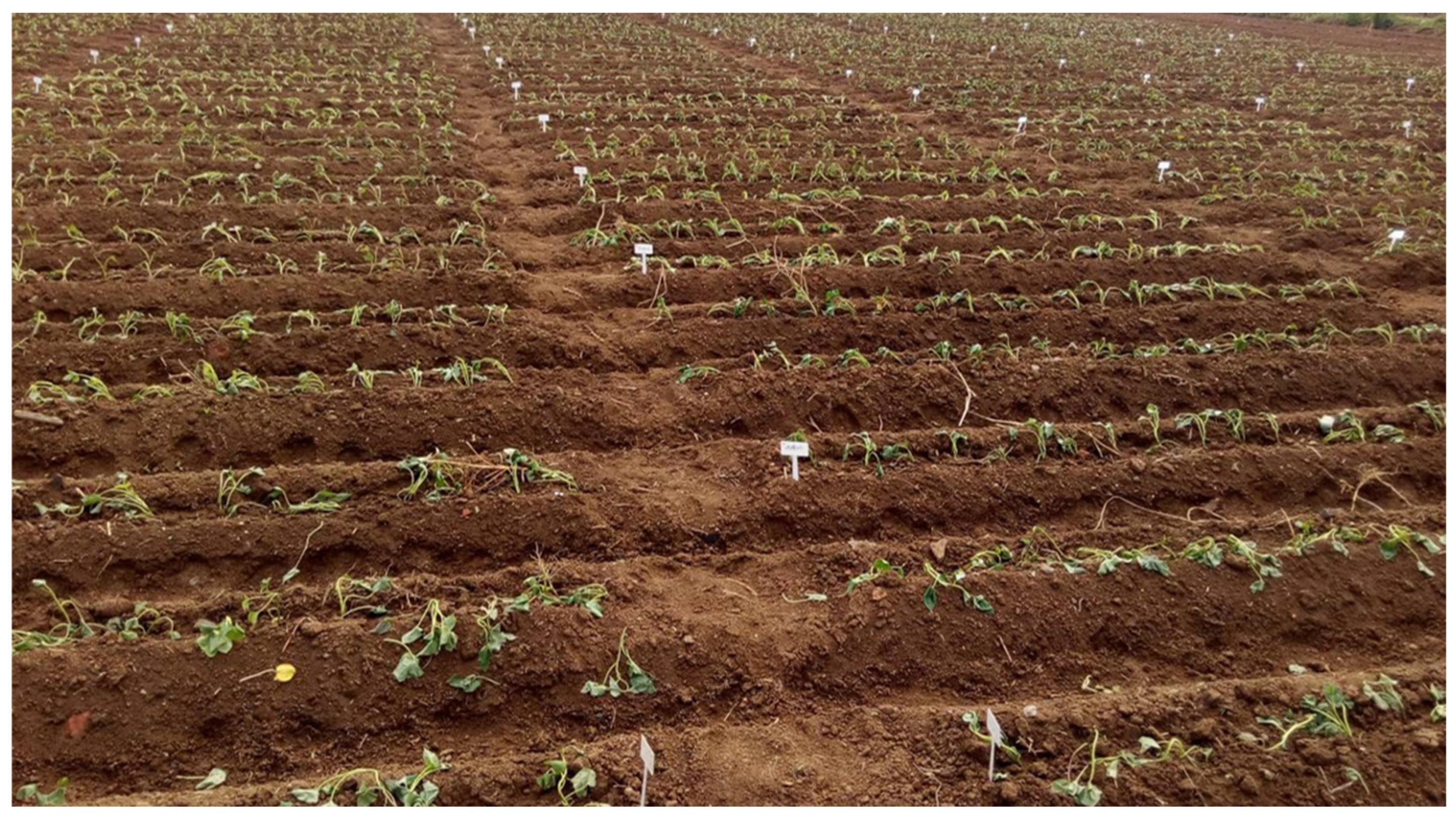
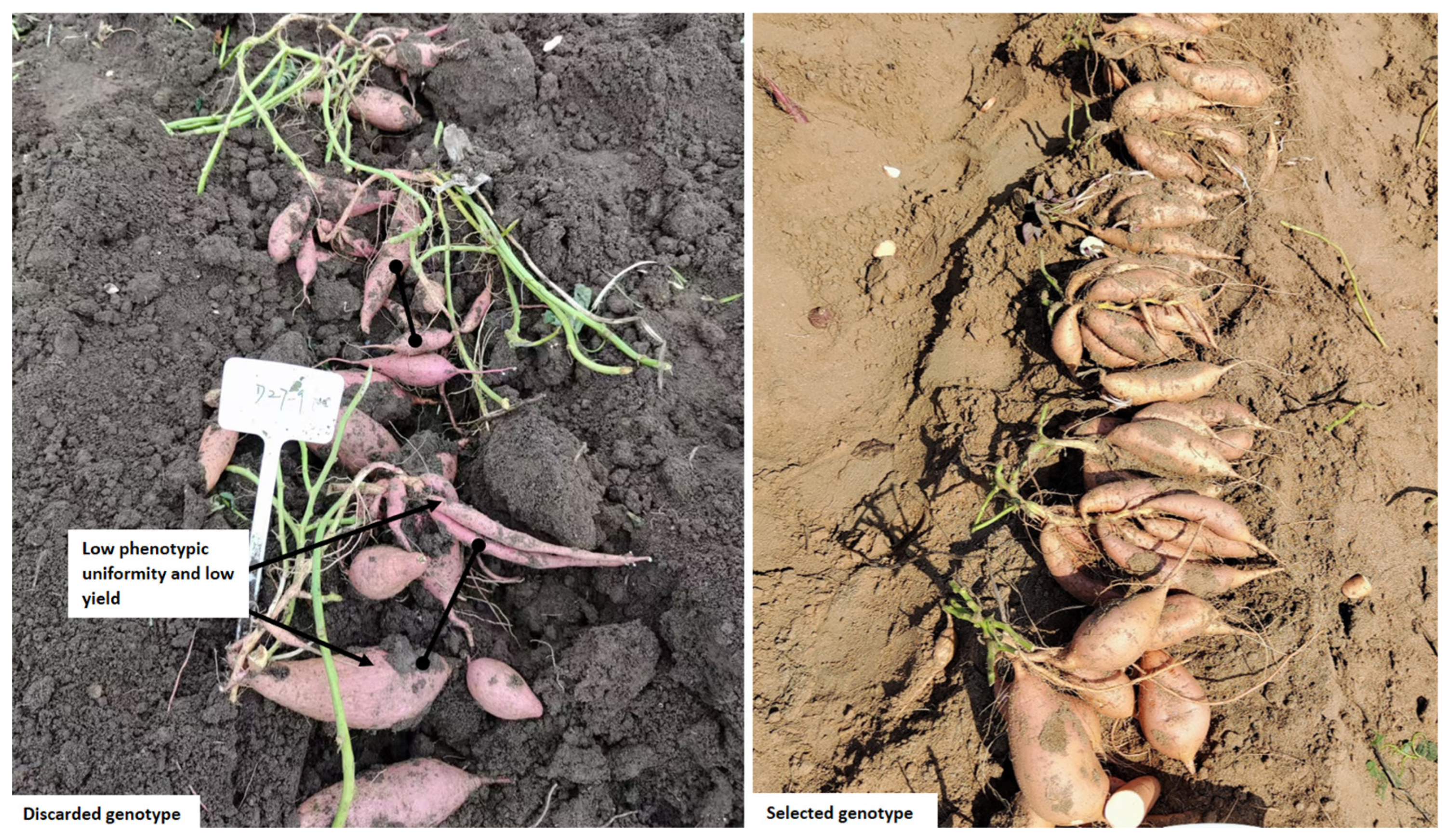
The trial was established in October 2023 in the same experimental area of the INIVIT Experimental Station, Santo Domingo, Villa Clara. The edaphoclimatic conditions and agronomic management were identical to those described in Stage I, maintaining the absence of phytosanitary applications to allow for the expression of natural resistance to pests and diseases (
Figure 1).
Harvesting and individual evaluation of each genotype were carried out at 120 days after planting. The traits evaluated were:
Yield per plant (kg plant−1), determined by weighing all commercial tuberous roots harvested per plant;
Number of commercial roots per plant, counting of roots weighing 80 g or more;
Shape uniformity, evaluated using a visual scale from 1 to 5, where 1 corresponded to very deformed roots or roots with multiple morphological defects and 5 to roots of ideal shape (regular elliptical or ovoid), with smooth surface and absence of constrictions or fissures;
Dry matter content (%), determined on a composite sample of three roots per genotype, oven-dried at 80 °C until constant weight (Convection Oven, Thermo Fisher Scientific, Waltham, MA, USA);
Incidence of Cylas formicarius damage, evaluated using a visual scale from 1 to 5, where 1 corresponded to total absence of damage, 2 to slight superficial damage (<10% of affected roots), 3 to moderate damage (10–25% of roots with superficial galleries), 4 to severe damage (25–50% of roots with internal damage), and 5 to very severe damage (>50% of roots destroyed).
Broad-sense heritability (H
2) was estimated for each trait from variance components obtained through a linear mixed model, considering genotypes as random effects. The model employed was:
where Yij is the phenotypic value of the j-th plant of the i-th genotype, μ is the overall mean, Gi is the random effect of genotype i, and εij is the experimental error associated with the individual observation.
Variance components (genotypic variance σ
2G and environmental variance σ
2E) were estimated using the restricted maximum likelihood (REML) method with the lme4 package in R. Broad-sense heritability was calculated as follows.
Standard errors of heritability estimates were obtained using the delta method implemented in the sommer package.
To integrate information from the multiple evaluated traits and select the superior genotypes that would advance to Stage III, a selection index was constructed based on the Smith–Hazel methodology. Previously, each trait was standardized to eliminate scale differences using the transformation:
where Zic is the standardized value of trait c for genotype i, Xic is the original value, μc is the population mean, and σc is the population standard deviation.
The selection index (I) was calculated as the weighted sum of standardized values.
All statistical analyses corresponding to this stage were performed using R software version 4.3.0 (R Core Team, 2024, Vienna, Austria;
https://www.R-project.org/), employing the lme4 package for mixed models, emmeans for adjusted means, and ggplot2 for result visualization.
2.4. Stage III: Advanced Evaluation of Elite Genotypes
The genotypes selected in Stage II were clonally propagated to establish advanced evaluation trials. From each genotype, 100 apical cuttings of 30 cm in length were taken.
The trial was established using a completely randomized block design with three replications. Each experimental plot consisted of five rows of 20 plants per row (100 plants per genotype in total), with a planting density of 0.90 m between rows and 0.30 m between plants.
The experiment was established in two growing seasons corresponding to spring (May–August) and winter (November–February) cycles. This strategy allowed for the evaluation of phenotypic stability of genotypes under contrasting environmental conditions. The commercial variety INIVIT B2-2005 was included as a control and planted under the same experimental conditions.
At 120 days after planting in each cycle, harvest and evaluation of the three central rows of each plot (60 plants per genotype) were carried out, discarding borders to avoid competition effects. The traits evaluated were the same as in Stage II, with the addition of β-carotene content. β-carotene content (ppm) was determined using the acetone–hexane (2:3) extraction method and spectrophotometer reading at 450 nm (UV-1800 UV-Vis Spectrophotometer, Shimadzu Corporation, Kyoto, Japan), following the methodology described by Rodríguez-Amaya [
21]. Measurements were performed in triplicate for each sample. β-carotene content was measured only in Stage III (elite genotypes) and Stage IV (G × E trials). It was not measured in earlier stages (F
1 or C1), where the focus was on yield and morphological traits. Samples were collected from five representative commercial roots per genotype at harvest. A transverse slice was taken from the middle portion of each root, and the slices were pooled, freeze-dried, and ground for analysis. β-carotene content was determined on a dry weight basis and expressed in ppm (μg g
−1 dry weight).
To refine the selection of genotypes for genotype × environment interaction studies, a multi-trait selection index was constructed incorporating all traits evaluated in this stage. The weights were assigned based on economic importance of each trait within the breeding program:
where ZCylas corresponds to the standardized value of
Cylas damage, with inverted sign so that lower damage contributes positively to the index.
The index was calculated for each genotype in each season separately, subsequently obtaining an average value integrating performance across both cycles. Genotypes were ordered according to their index value, and the superior ones were selected to advance to G × E interaction studies in Stage IV.
All statistical analyses for this stage were performed using R version 4.3.0, employing the lme4, breedR, emmeans, and ggplot2 packages. Multiple comparisons among genotypes were performed using Tukey’s test (α = 0.05) implemented in the multcomp package.
2.5. Stage IV: Genotype × Environment Interaction (G × E) Studies
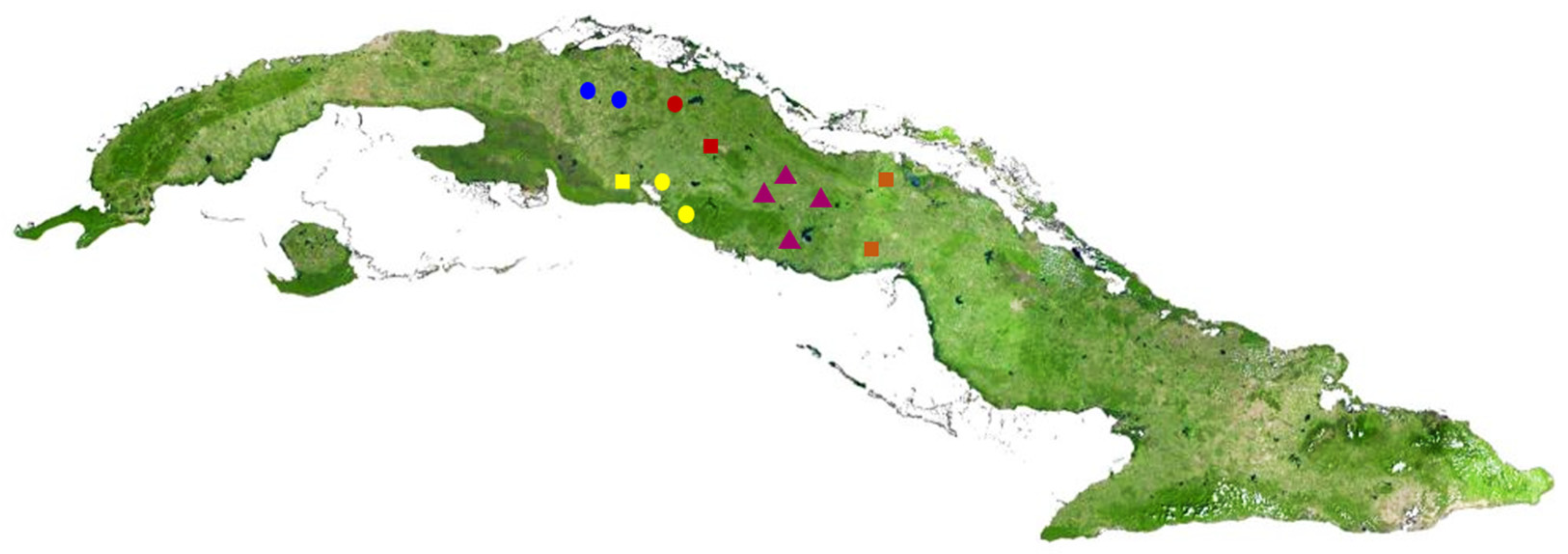
The 10 elite genotypes selected from Stage III, together with the commercial control INIVIT B2-2005, were evaluated in 13 representative environments. To facilitate identification and interpretation in the subsequent figures and tables, these genotypes were assigned new denominations based on their agronomic performance and phenotypic characteristics, as follows: 113665-2 (Dorado-2), 117228-2 (B-30), 117620-3 (B-60), 117620-1 (Dorado-3), 117620-2 (Dorado-5), 114645-1 (Dorado-4), 117228-1 (Dorado-7), 114645-4 (Dorado-1), 117219 (B-20), 117603-1 (Dorado-6) and INIVIT B2-2005 (Testigo). These new designations are used throughout the G × E analysis and the rest of the manuscript.
The selected locations covered a gradient of edaphoclimatic conditions, including clay-, loam- and sandy-texture soils, as well as contrasting precipitation regimes. The geographic distribution of these experimental sites is shown in
Figure 2.
The 13 environments represented a wide gradient of water availability and soil types across the main sweetpotato-producing regions of Cuba. Water regimes ranged from optimal (with adequate rainfall or supplementary irrigation) to moderate (occasional water stress) and restrictive (rainfed conditions with frequent drought periods). Soil types included clay, loam, sandy-loam, and sandy textures, providing a representative set of conditions for evaluating genotype × environment interactions under tropical production systems.
A randomized complete block design with three replications was established at each location. Each experimental plot consisted of four rows of 20 plants per row (80 plants per plot), with a planting density of 0.90 m between rows and 0.30 m between plants. The useful plot for evaluations corresponded to the two central rows (40 plants). Agronomic management at each location was carried out following conventional local practices.
At 120 days after planting at each location, harvest and evaluation of the useful plot were carried out. The traits evaluated were the same as in the previous stage (Stage III).
A combined analysis of variance was performed for yield using the following linear mixed model:
where Yijkl is the observed yield, μ is the overall mean, Gi is the fixed effect of genotype i, Ej is the random effect of environment j, (GE)ij is the genotype × environment interaction effect, R(E)jk is the effect of replication k nested within environment j, and εijkl is the experimental error.
Variance components (σ
2G, σ
2E, σ
2G × E, σ
2ε) were estimated using the restricted maximum likelihood (REML) method with the lme4 package in R. Broad-sense heritability at the mean level was calculated as:
where E is the number of environments (13) and R is the number of replications (3). Selective accuracy (rgg) was estimated as the square root of H
2.
Genotype × environment interaction was decomposed using the Additive Main Effects and Multiplicative Interaction (AMMI) model. The fitted model was:
where λk is the singular value of the k-th interaction component (IPCA), γik is the score of genotype i on component k, and δjk is the score of environment j on component k.
The analysis was performed using the metan package in R. Two biplots were generated to visualize the results:
AMMI1 biplot: graphical representation of IPCA1 values versus mean yield of genotypes and environments, allowing for identification of genotypes with high yield and stability (close to IPCA1 = 0);
AMMI2 biplot: representation of IPCA1 versus IPCA2, visualizing interaction patterns and clustering of similar environments.
Complementarily, a GGE biplot (genotype + genotype-by-environment) analysis was performed using the following model.
The analysis was carried out with the metan package, generating three biplots:
Which-won-where: identification of mega-environments and winning genotypes in each polygon sector;
Mean vs. stability: visualization of the relationship between mean yield and phenotypic stability, with the ideal genotype arrow and concentric selection circles;
Discriminativeness vs. representativeness: evaluation of the discriminatory ability of environments and their representativeness of the average mega-environment.
For the final selection of candidate genotypes for release, the multi-trait genotype–ideotype distance index (MGIDI) implemented in the metan package was applied. The analysis was based on BLUP (best linear unbiased prediction) values obtained from the mixed model for each trait, allowing for the integration of yield, quality and stability information into a single metric.
The traits included in the analysis were: yield (t ha−1), dry matter (%), β-carotene (ppm), uniformity (1–5), Cylas damage (1–5, with “lower is better” direction), and the WAASB value (stability, with “lower is better” direction) obtained from the AMMI model.
The relative weights assigned were:
Yield: 0.35, dry matter: 0.20, β-carotene: 0.10, uniformity: 0.10, Cylas damage: 0.10, WAASB (stability): 0.15.
The factor analysis prior to MGIDI retained two factors (FA1 and FA2). Results were visualized using:
Radar plot: representation of the distance of each genotype to the ideotype, with selected genotypes on the periphery of the circle;
Factor contribution plot: bars showing the relative importance of each factor in the selection.
All analyses for this stage were performed using R version 4.3.0, employing the metan (version 1.18.0), lme4, emmeans, ggplot2 and patchwork packages.
2.6. Estimation of Selection Response and Breeding Efficiency
Realized selection response (ΔR) for yield was estimated as the percentage increase in mean phenotypic value between successive stages of the breeding program, as well as the cumulative gain from the base population to the released cultivars. For each stage transition, partial ΔR was calculated as:
where μstage n is the mean yield of genotypes in stage n and μstage n + 1 is the mean yield of selected genotypes advancing to the next stage.
Total cumulative selection response was calculated as:
where μreleased is the mean yield of the three finally released cultivars and μF
1 is the mean yield of the initial F
1 population. Absolute gain in t ha
−1 was also calculated for each transition, allowing for direct agronomic interpretation of the achieved genetic progress.
The selection differential (S) for each stage was estimated as the difference between the mean of selected genotypes and the mean of the original population in that stage: S = μselected − μpopulation. The response to selection (R) was calculated as R = S × h2, where h2 is the heritability of the trait in the corresponding stage. This allowed comparison between observed and theoretically expected gain, evaluating the effectiveness of the applied selection criteria.
Breeding program efficiency was quantified using the following two complementary indicators.
Efficiency per year: total selection response (percentage and absolute) divided by the number of years elapsed from F
1 establishment to variety release:
where T is the total program duration in years.
Efficiency per selection cycle: total selection response divided by the number of effective selection cycles completed:
where C is the number of selection cycles (stages with genotype evaluation and discard) implemented during the program.
Global selection intensity was estimated as the percentage of genotypes retained from the initial population to the released cultivars.
This indicator summarizes the total selection pressure applied throughout the four program stages.
Total selection differential was calculated as the cumulative difference between the mean yield of released cultivars and the mean yield of the initial F
1 population.
This value represents the total absolute gain achieved by the breeding program and constitutes a direct measure of selection impact.
All selection response and efficiency calculations were performed using R software version 4.3.0, implementing custom functions for processing data from the different program stages.
2.7. Statistical Analyses
All statistical analyses were performed using R software version 4.3.0. Prior to the analyses, the assumptions of normality and homogeneity of variance were evaluated. Normality was assessed using the Shapiro–Wilk test, and homogeneity of variances was verified using Levene’s test. Model diagnostics were performed through residual analysis to ensure the validity of the statistical inferences. The specific packages used for each analysis are indicated in the corresponding sections above.
3. Results
3.1. Stage I
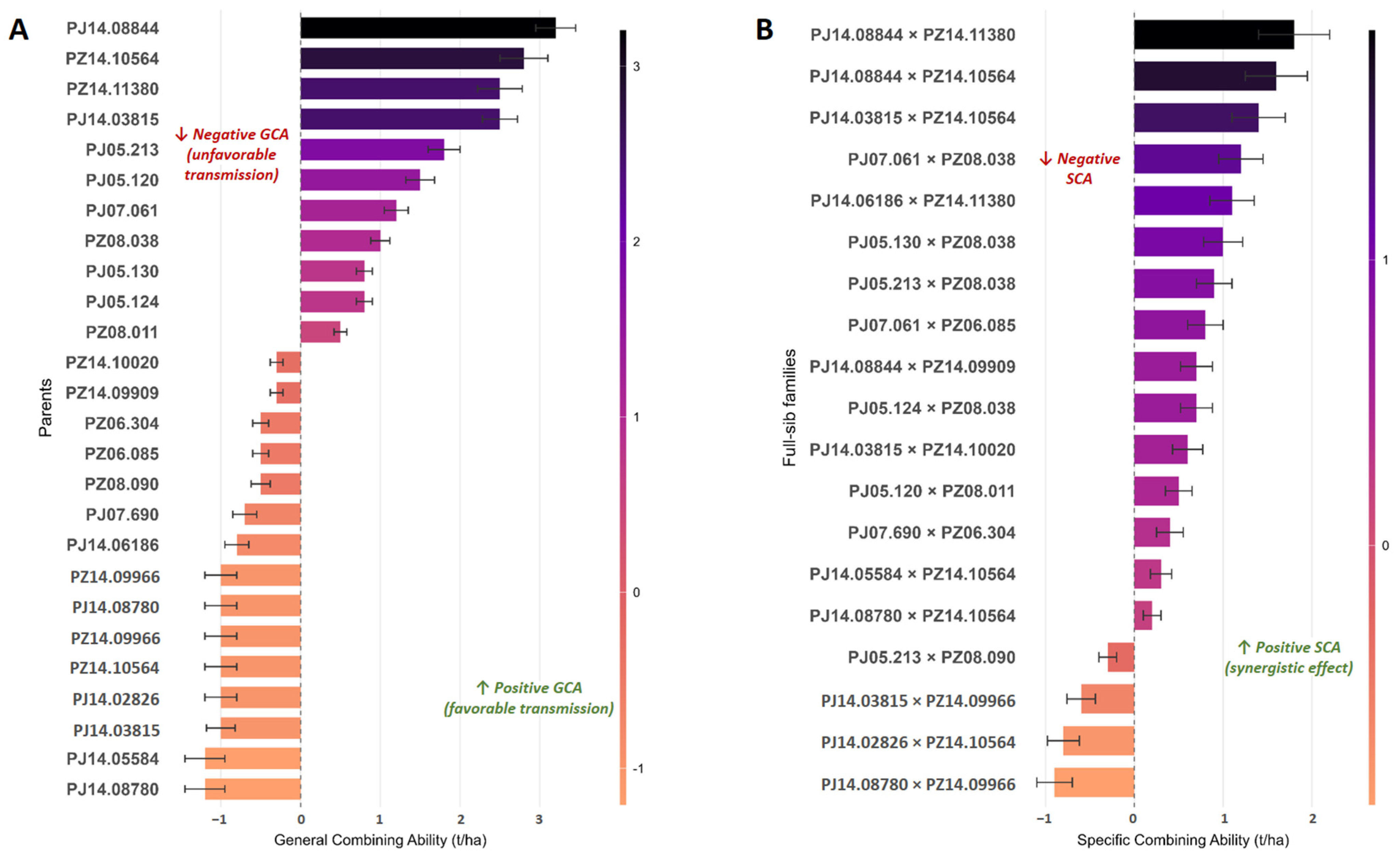
General Combining Ability (GCA) analysis revealed wide variability in the capacity of CIP parents to transmit productive traits to their progeny under Cuban conditions. Parents PJ14.08844 and PZ14.10564 showed the highest GCA values for yield (+3.2 and +2.8 t ha
−1, respectively), being identified as superior general combiners. These results indicate that these genotypes possess a high frequency of favorable additive alleles, making them elite candidates for recurrent breeding programs. In contrast, parents such as PJ14.08780 and PJ14.05584 presented negative GCA values (−1.2 t ha
−1), suggesting an unfavorable genetic contribution under the implemented selection conditions. The bimodal distribution of GCA values (11 parents with positive GCA, 15 with negative) reflects the genetic diversity of the introduced germplasm (
Figure 3A).
Specific Combining Ability (SCA) evaluation allowed for the identification of non-additive genetic interactions in biparental crosses. Three combinations with highly positive SCA stood out: PJ14.08844 × PZ14.11380 (+1.8 t ha
−1), PJ14.08844 × PZ14.10564 (+1.6 t ha
−1), and PJ14.03815 × PZ14.10564 (+1.4 t ha
−1). These specific synergies exceeded expectations based on the individual GCA of their parents, indicating favorable dominance and/or epistasis effects. Notably, parent PZ14.10564, which showed high individual GCA, also participated in multiple combinations with positive SCA, confirming its value as a versatile parent. On the other hand, four crosses presented negative SCA (range: −0.3 to −0.9 t ha
−1), with 113431.1 × 113498.1 standing out as the most antagonistic combination. These unfavorable crosses, although involving parents with moderate GCA, demonstrated that specific genetic complementarity is a critical factor that can limit expected genetic progress (
Figure 3B).
From the 1900 botanical seeds received from CIP (100 seeds per each of the 19 full-sib families), a total of 1732 seedlings were successfully established under field conditions. This 8.8% reduction from the initial seed quantity is attributed to two main factors: (1) an average establishment rate of 91.2% (range: 85–96% among families) and (2) post-transplant mortality of 5.1% during the first 30 days, mainly associated with establishment stress and extreme climatic conditions typical of the planting season (May 2023). The final population of 1732 plants, uniformly distributed among the 19 families, constituted the basis for phenotypic evaluation and visual selection at 120 days after planting.
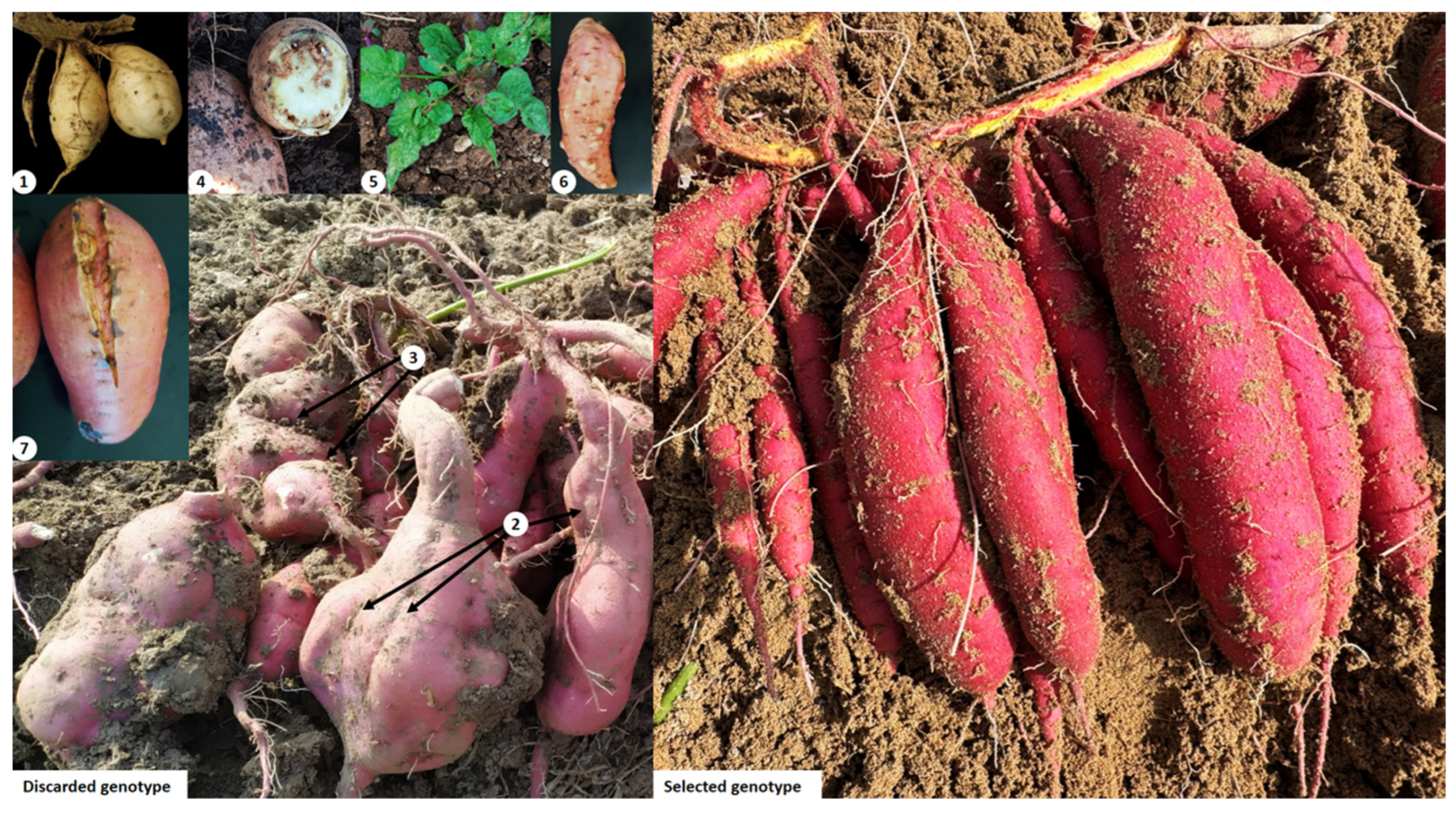
The initial phenotypic evaluation of the 1732 seedlings resulted in the selection of 103 genotypes, representing a selection rate of 5.9% (
Table 2;
Figure 4). The discard of 94.1% of the population was distributed among seven mutually exclusive visual criteria. The main cause of elimination was the production of fewer than three commercial tuberous roots per plant (35.2% of individuals), followed by the presence of deep longitudinal fissures (24.0%) and severe horizontal constrictions (15.0%). Together, these morphological and potential yield defects represented 74.2% of total discards.
The incidence of damage by Cylas formicarius was observed in 8.9% of the population, confirming the constant pressure of this pest under Caribbean conditions. Virus symptoms (2.6%), fungal rot (Fusarium spp.), and severe nematode attack (Meloidogyne spp.) (3.5%) presented a minor but biologically significant incidence, acting as additional resistance/tolerance filters under field conditions without chemical control. The category of superficial cracks (4.9%) grouped individuals that reduced their commercial potential.
The unequal distribution of selected individuals among families from 0 selected in family 114710 (PJ05.213 × PZ08.090) to 14 selected in family 117620 (PJ14.08844 × PZ14.11380) reflects the underlying genetic variability. The 103 selected genotypes, representing the first clonal generation (C1), advance to Stage II of the program carrying favorable combinations of yield traits, morphological quality, and biotic stress resistance.
3.2. Stage II
Broad-sense heritability (H
2) was estimated for six agronomic and quality traits in the first clonal generation (C1) derived from the 103 genotypes selected in the initial stage (
Table 3). H
2 values ranged from 0.35 ± 0.06 for root yield to 0.72 ± 0.05 for number of commercial roots per plant, revealing a wide spectrum of genetic control among traits. The number of commercial roots (≥80 g) and shape uniformity showed the highest heritability (H
2 > 0.68), indicating strong genetic control and high clonal repeatability under the evaluation conditions. In contrast, yield presented the lowest heritability (H
2 = 0.35), reflecting its high sensitivity to environmental variations. Dry matter and incidence of
Cylas formicarius damage exhibited moderate heritabilities (H
2 = 0.48–0.55), suggesting that selection for these traits can be effective, although this requires replicated evaluations.
Evaluation of the 103 clonal genotypes (C1) using a multi-trait selection index allowed for the identification of the 19 genotypes with the highest combined value for yield, number of commercial roots, uniformity, and dry matter (
Table 4).
Genotype 114645-1 presented the highest index (2.58), standing out for its high yield (2.03 kg/plant) combined with good number of commercial roots (9) and high quality (uniformity = 4.2, dry matter = 30.5%). It was followed in ranking by 117620-1 (index = 2.45) and 114645-3 (index = 2.38), both with balanced profiles between productivity and quality. Genotype 114410 showed the highest number of commercial roots (17), compensating for its moderate uniformity (3.2) to achieve an index of 2.32 and the fourth position.
The selection threshold was set at an index of 1.80, corresponding to the value of the genotype in 19th position (114706). This cutoff point allowed for the selection of 18.4% of the evaluated population, maintaining a moderately high selection intensity. Among the discarded genotypes, those with unbalanced combinations stand out, such as 114637-1, which, despite its high individual yield (1.85 kg/plant), presented an insufficient number of commercial roots (3) and low uniformity (2.8), resulting in an index of 1.75.
The distribution of indices revealed continuous variability among genotypes, without marked discontinuities, supporting the quantitative nature of the evaluated traits and the usefulness of the index to integrate multiple selection criteria into a single metric. The 19 selected genotypes advance to Stage III of the program, where they will be evaluated in replicated designs under multiple environments (
Figure 5).
3.3. Stage III
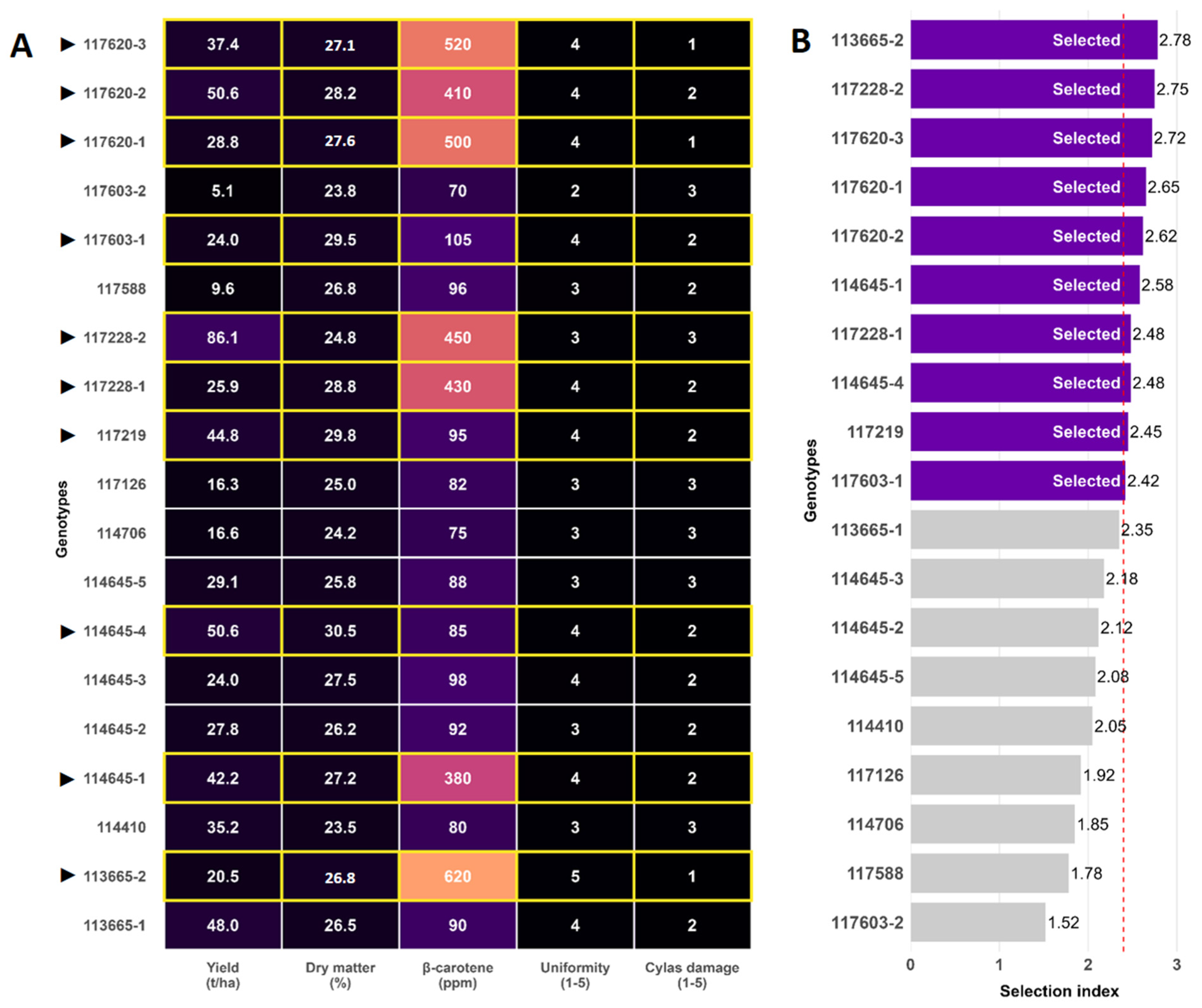
The comprehensive phenotypic characterization of the 19 sweetpotato genotypes through a heatmap of six key traits (
Figure 6A) revealed differential patterns of genotypic specialization that underpinned the strategic selection for the next stage of the program. Visual multivariate analysis allowed for the identification of three predominant profiles: high-yielding genotypes (117228-2, 114645-4), high-nutritional-quality genotypes (113665-2, 117620-3 with >26% dry matter and >500 ppm β-carotene), and balanced genotypes (117219, 117603-1) that combined productive and qualitative attributes in intermediate proportions.
The application of a multi-trait selection index (
Figure 6B) objectively quantified the integrated value of each genotype. This approach avoided bias towards exclusive productivity, allowing for the identification of genotypes such as 113665-2 that, despite its moderate yield (20.48 t ha
−1), achieved the highest index (2.78) due to its excellence in quality and resistance. The selection threshold set at 2.40 excluded genotypes with unbalanced or unstable profiles, even when they presented outstanding individual values for isolated traits.
The 10 selected genotypes (52.6% of the evaluated population) represented the diversity of identified profiles, ensuring that the genetic pool that advanced to G × E studies includes both materials with high productive potential and specialized genotypes for value-added markets. The inclusion of phenotypic stability as an implicit criterion through evaluation in two contrasting seasons added a critical temporal dimension to the selection (
Figure 7).
3.4. Stage IV
The combined analysis of variance for yield in the 10 sweetpotato genotypes evaluated across 13 environments in Cuba revealed highly significant effects (
p < 0.001) for genotypes, environments, and their interaction (
Table 5). The genotypic variance component (σ
2G = 22.8) explained 34.2% of the total variation, while the environmental effect (σ
2E = 20.1) represented 30.2%. The genotype × environment interaction (σ
2G × E = 12.5) contributed 18.8% of the total variability, a moderate magnitude that fully justifies the implementation of phenotypic stability analyses.
Broad-sense heritability at the mean level was high (H2 = 0.89), indicating that the largest proportion of the observed phenotypic variation is attributable to genetic differences among the evaluated genotypes. Selective accuracy (rgg = 0.94) confirms the high reliability of the experiment. The experimental coefficient of variation (CV = 18.7%) is within the acceptable range for sweetpotato field trials under tropical conditions.
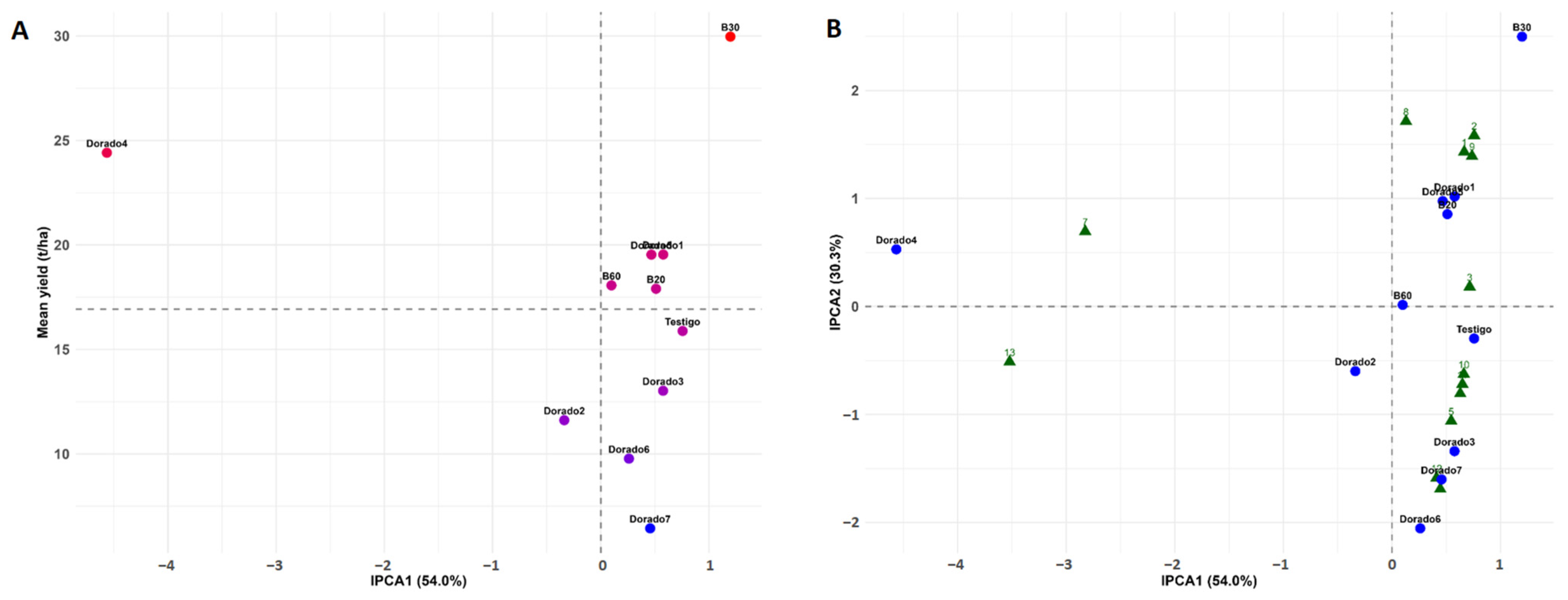
Phenotypic stability analysis using AMMI models allowed for the decomposition of the complex genotype × environment interaction into its principal components, explaining 54.0% and 30.3% of the variation in the first and second axes, respectively (84.3% cumulative).
The AMMI1 biplot evidenced a marked differentiation among the evaluated genotypes based on their productivity and contribution to the interaction. The overall mean yield was 16.2 t ha
−1. Six genotypes exceeded this average value. Genotype B-30 (117228-2) stood out for presenting the maximum yield of the trial (30.8 t ha
−1), located in the upper right extreme of the biplot with a positive IPCA1 value (+1.2), indicating a pronounced specific adaptation to high-productivity environments. In contrast, Dorado-4 (114645-1) showed outstanding yield (24.5 t ha
−1) with a strongly negative IPCA1 value (−4.5), positioning it as the genotype with the most contrasting behavior and marked adaptation to specific conditions. Genotypes Dorado-1 and Dorado-5 exhibited above-average yields with moderate IPCA1 values, suggesting differential adaptation to restrictive environments. The control INIVIT B2-2005 was located slightly below the mean (15.8 t ha
−1) with a positive IPCA1 close to 0.8, confirming its known stability but limited relative productivity (
Figure 8A).
The AMMI2 biplot revealed the underlying structure of the G × A interaction and allowed for the identification of specific associations between genotypes and environments. The upper left quadrant (negative IPCA1, positive IPCA2) harbors Dorado-4 at its extreme (−4.5, 0.5), which is closely associated with the restrictive environments Majagua (E7) and Cabaiguán (E13). This vector proximity indicates a specific adaptation of Dorado-4 to stress conditions, particularly in soils of Ciego de Ávila and Sancti Spíritus. The upper right quadrant (positive IPCA1, positive IPCA2) contains B-30 in a peripheral position (+2.5, +1.2), constituting the highest-yielding genotype. The high-productivity environments Santo Domingo (E1), Cienfuegos (E2), Chamba (E8), and Santa Clara (E9) are oriented towards this region of the biplot, confirming the specific behavior of B-30, which maximizes its yield under optimal conditions. The lower right quadrant (positive IPCA1, negative IPCA2) concentrates most of the evaluated environments (Perico E3, Colón E4, Abreu E6, Fomento E10, Jatibonico E11, Sancti Spíritus E12), configuring the intermediate-to-low-productivity mega-environment where genotypic differences are attenuated (
Figure 8B).
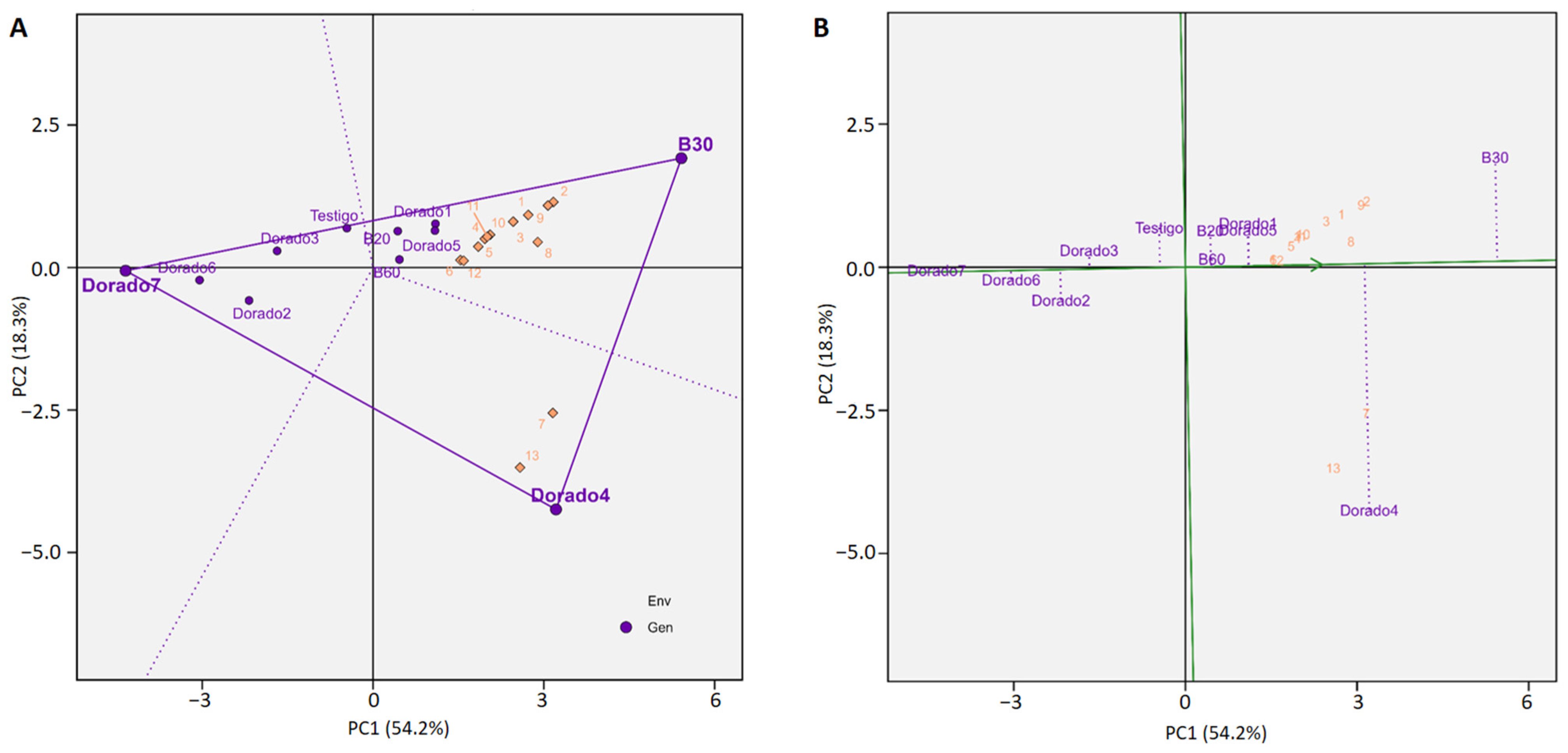
The GGE biplot with symmetrical partitioning revealed a clear mega-environment structure through the polygon of vertices, explaining 72.5% of the total variation (PC1 = 54.2%, PC2 = 18.3%). Three genotypes occupied the polygon vertices, defining the respective mega-environments. Genotype B-30 dominated the upper right vertex, associated with most of the evaluated environments. This genotype is positioned as the one with the highest yield potential, although with limited stability, being the undisputed winner in high-productivity environments. Dorado-7 defined the left vertex, forming a mega-environment without representation of evaluated environments. This quadrant groups low-yielding genotypes with atypical behavior. The absence of environments in this sector indicates that these genotypes did not find favorable conditions in any evaluated location. Dorado-4 occupied the lower right vertex, exclusively associated with the Majagua and Cabaiguán environments. This configuration reveals a specific adaptation of Dorado-4 to restrictive conditions, particularly in the soils of Ciego de Ávila and Sancti Spíritus, where it consistently outperforms the rest of the genotypes (
Figure 9A).
The mean performance versus stability biplot, based on the GGE model with symmetrical partitioning, allowed for the visualization of the projection of the 11 genotypes onto the ideal genotype axis, represented by a green arrow emerging from the origin and oriented slightly to the right and upward. B-30 was positioned in the upper right extreme of the biplot, significantly ahead of the ideotype arrow and with a pronounced positive perpendicular deviation. This configuration indicates that B-30 possesses the maximum yield of the trial (30.8 t ha
−1). Genotype Dorado-4 was located in the lower right extreme of the biplot, positioned ahead of the ideotype arrow head. This location indicates that Dorado-4 possesses a highly specialized phenotypic profile. Its projection perpendicular to the ideotype direction reveals a marked deviation from the yield–stability balance, characterized by specific adaptation to particular environmental conditions. Several genotypes were grouped near the origin of the axis, along the arrow trajectory but with low magnitude on PC1. This position reflects high stability (minimum deviation from the axis) but moderate yield (19.2 and 19.8 t ha
−1, respectively), characterizing them as genotypes with predictable response under restrictive conditions (
Figure 9B).
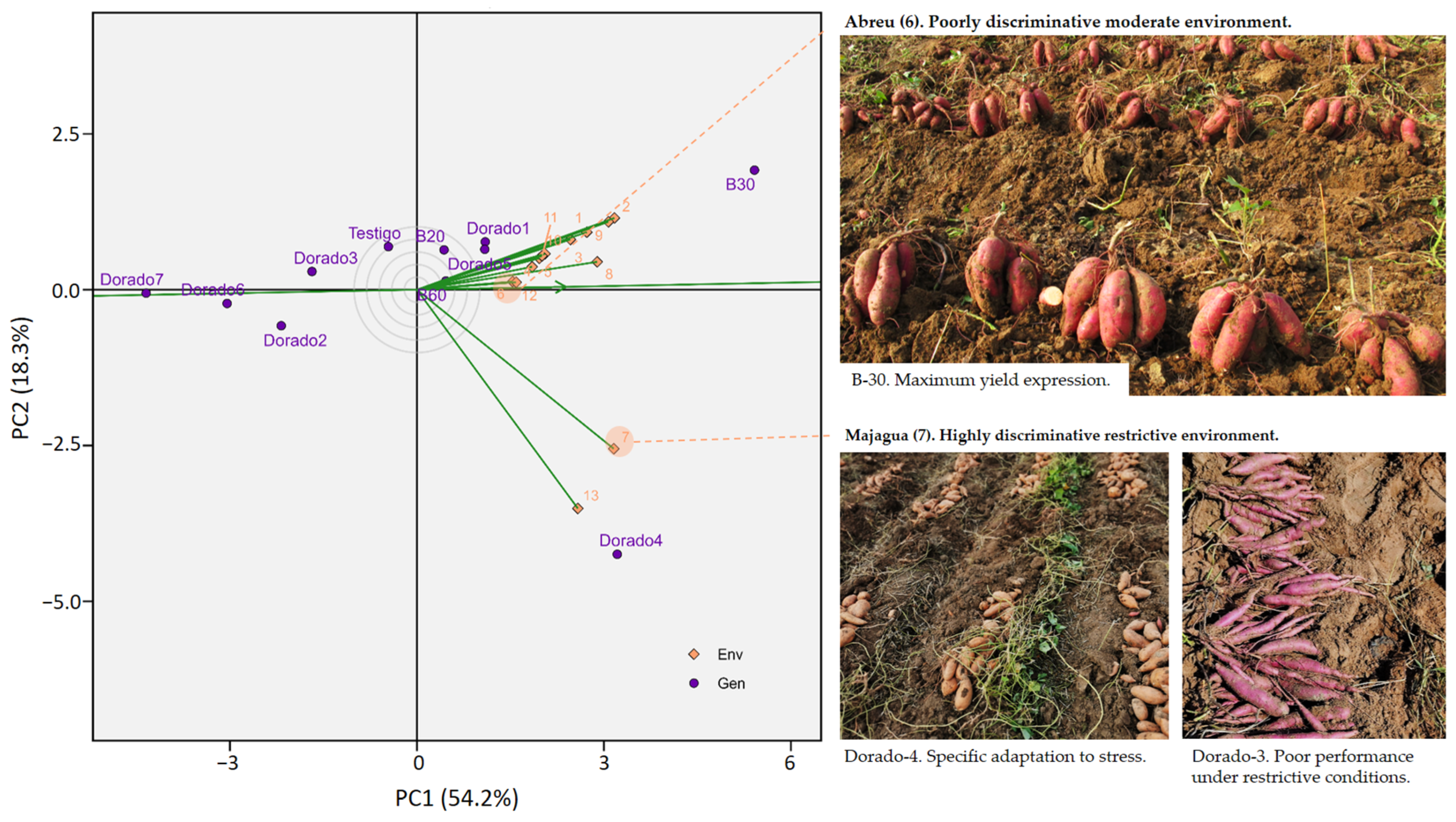
The discriminativeness versus representativeness biplot allowed for the classification of the 13 environments according to their capacity to discriminate genotypes (indicated by vector length) and their representativeness of the average mega-environment (proximity to the concentric circles representing the ideal environment). The municipalities Cabaiguán (13) and Majagua (7) presented the longest vectors, indicating maximum discriminating ability among genotypes. These environments are the most effective for differentiating genotypic performance. Abreu (6) and Sancti Spíritus (12) showed the shortest vectors, indicating low discriminating ability and limited utility for differentiating genotypes in future trials. Several environments were located near the concentric circles (representing the ideal environment) with vectors of short-to-moderate length (
Figure 10).
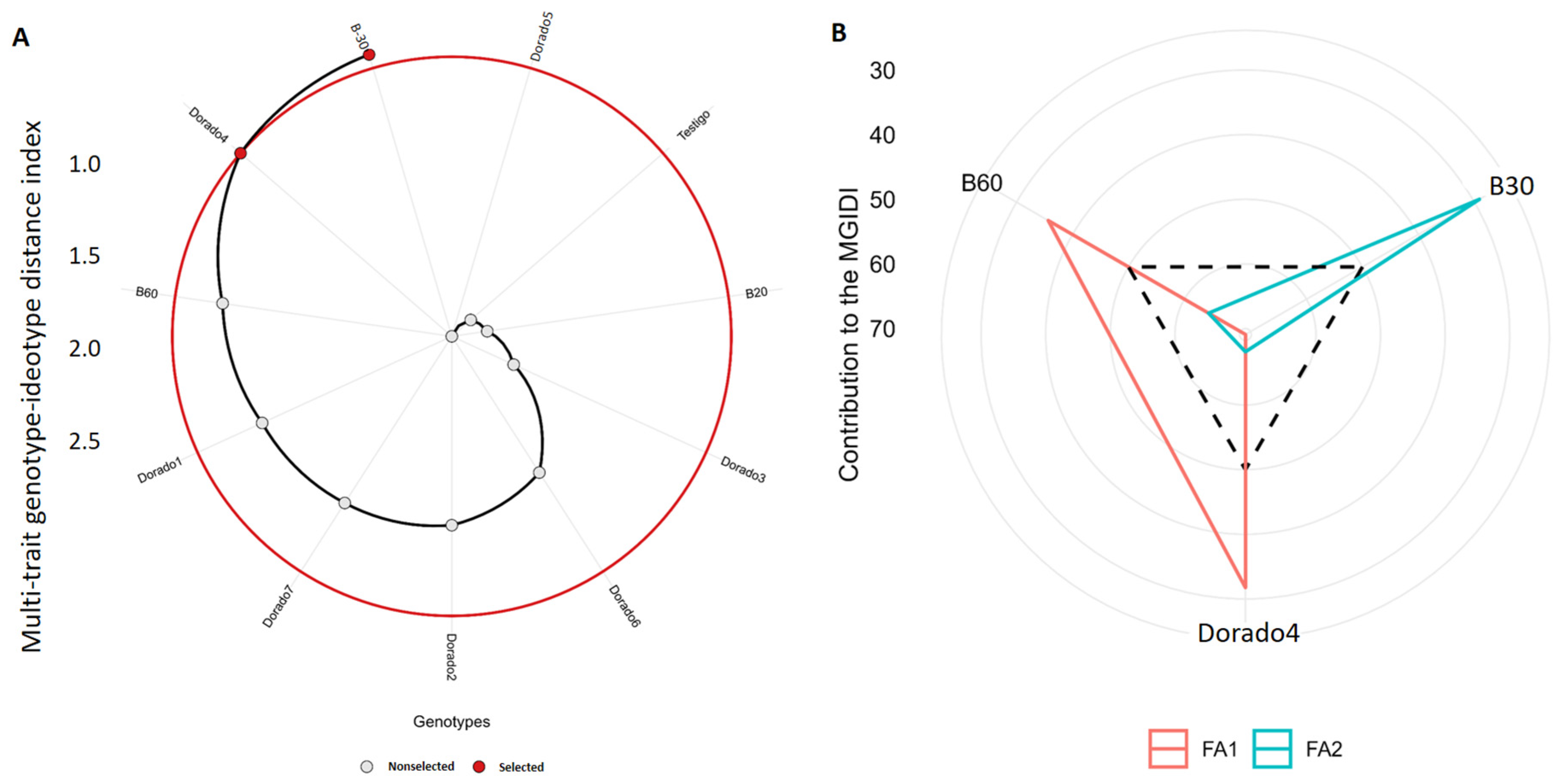
Two genotypes were automatically selected by the MGIDI algorithm with a 30% selection intensity (SI = 30): B-30 and Dorado-4. In the radar plot, B-30 is located on the outer edge, while Dorado-4 lies on the selection circle line, both indicating their superiority in the weighted combination of evaluated traits. Genotype B-60, although visually inside the circle, was included as a third elite candidate through complementary breeder’s criteria. This decision was based on its excellent quality profile, high resistance to
Cylas formicarius, high dry matter content, good uniformity, and outstanding phenotypic stability (WAASB = 1.0) (
Figure 11A).
Factor analysis prior to MGIDI retained two main factors explaining 84.4% of the total variance. FA1 (58.2%) was highly correlated with dry matter (r = 0.95), root uniformity (r = 0.96),
Cylas resistance (r = 0.98), and phenotypic stability (WAASB, r = 0.93), representing the axis of commercial quality and stability as the main selection determinant. FA2 (26.2%) was strongly associated with yield (r = 0.94) and β-carotene content (r = 0.84), defining the productivity and biofortification axis. FA3 contributed with less than 15.6% of the variance, indicating its residual nature and limited relevance in the trait correlation structure (
Figure 11B).
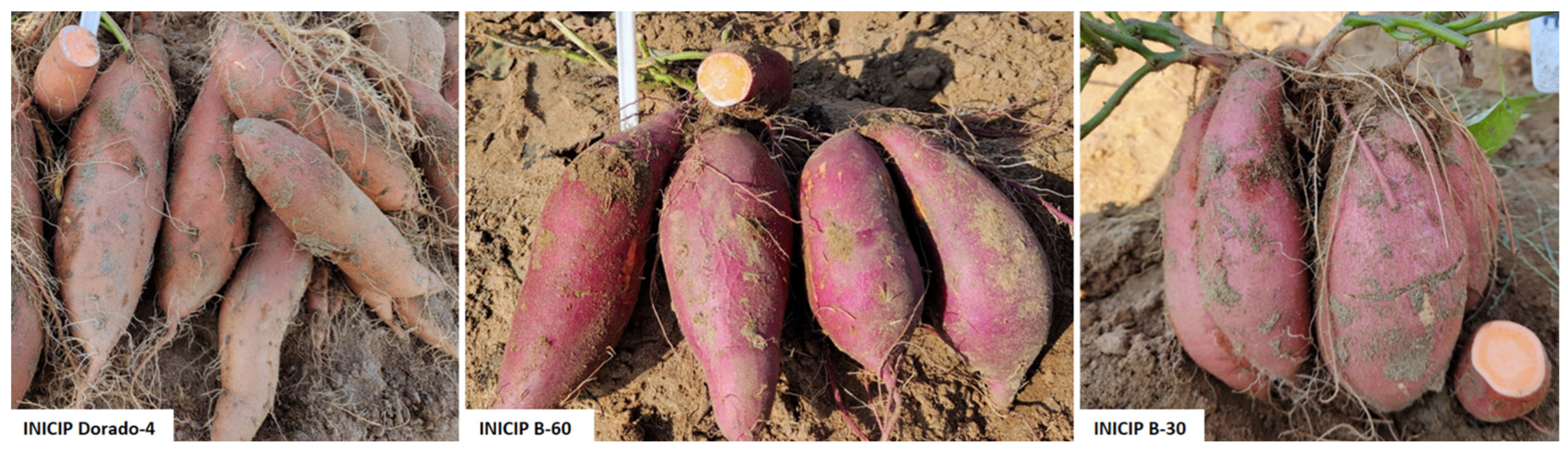
Three elite genotypes were selected for commercial release. The prefix INICIP (INIVIT + CIP) was adopted to reflect this institutional synergy, where CIP-origin germplasm was introduced, evaluated, and selected under Cuban conditions by the INIVIT breeding program.
The three cultivars to be released are:
INICIP Dorado-4 (Original code: 114645-1);
INICIP B-30 (Original code: 117228-2);
INICIP B-60 (Original code: 117620-3).
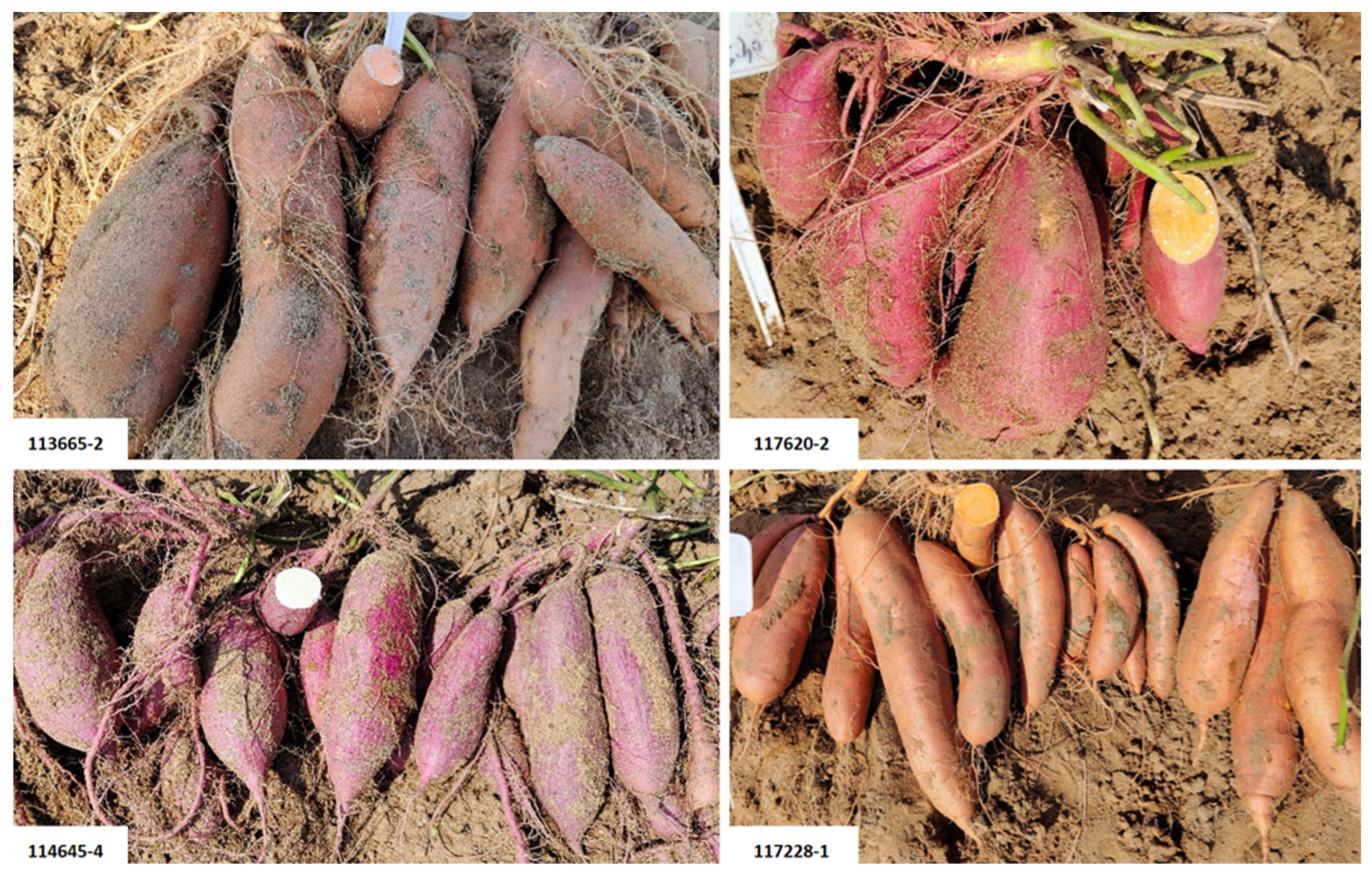
Parentage analysis reveals that INICIP Dorado-4 and INICIP B-60 originate from the same full-sib family 114645, derived from the cross PJ05.130 × PZ08.038, thus being full siblings. Meanwhile, INICIP B-30 belongs to family 117228 (PJ14.03815 × PZ14.10564), genetically independent from the former. The main agronomic, morphological, and quality characteristics of the three released cultivars are summarized in
Table 6 (
Figure 12).
3.5. Selection Response and Breeding Program Efficiency
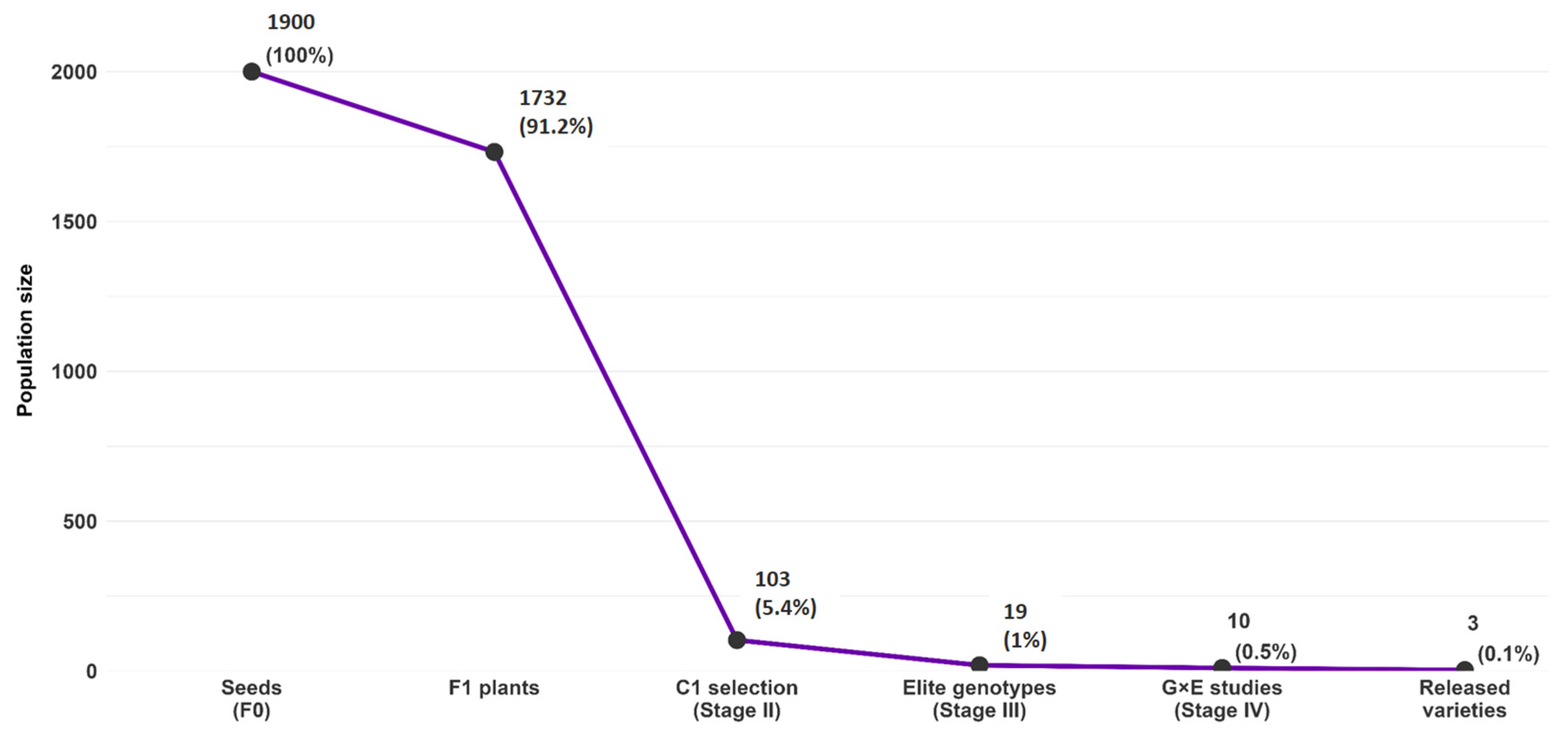
The breeding program involved intense and sustained selection pressure throughout four consecutive stages, which drastically reduced the number of genotypes from a total of 1900 botanical seeds (F0) to the three finally released cultivars. The first major reduction occurred between germination and field establishment, where, from the initial 1900 seeds, 1732 F1 plants were obtained (91.2% survival rate). The most severe selection pressure was applied in Stage I (C1 selection), where, from 1732 genotypes, only 103 were selected, representing a selection rate of 5.9% with respect to the population evaluated in that phase. This initial filter, based on highly heritable traits such as number of commercial roots and absence of morphological defects, eliminated more than 94% of the genotypes.
In Stage II (intermediate), selection was reduced from 103 to 19 genotypes, retaining only 18.4% of the clones evaluated in that stage. Stage III (advanced) reduced the number to 10 elite genotypes (52.6% retention), which were subjected to genotype × environment interaction (G × E) studies across multiple locations. Finally, from those 10 genotypes, the three released cultivars were selected (30% of the genotypes evaluated in G × E), which showed the best balance among yield, resistance, quality, and phenotypic stability.
This selection funnel evidences the program’s efficiency in progressively eliminating non-promising material, concentrating evaluation efforts in the final stages with a reduced number of high-potential genotypes. The cumulative selection rate from the initial population to the released cultivars was 0.16% (3/1900) (
Figure 13).
The progressive selection applied throughout the four breeding stages resulted in substantial and cumulative yield gains. From the highly variable F
1 population (7.2 t ha
−1, CV > 65%), the initial clonal selection (Stage II) generated the most dramatic increase (+169.4%), demonstrating the effectiveness of early visual selection based on highly heritable traits. Subsequent stages contributed to refining and stabilizing yield, with elite genotypes (Stage III) reaching 24.8 t ha
−1 and G × E-tested genotypes (Stage IV) averaging 28.3 t ha
−1. The three released cultivars achieved a final mean yield of 32.6 t ha
−1, representing a total accumulated phenotypic gain of +352.8% relative to the initial population. This progression confirms that the greatest gains are achieved in early selection, while later stages enhance stability and consistency across environments (
Table 7).
The breeding program demonstrated exceptional efficiency, achieving a total phenotypic gain of +352.8% (+25.4 t ha
−1 in absolute terms) over a 3-year period with four effective selection cycles. Annual efficiency reached +117.6% year
−1 (8.47 t ha
−1 year
−1), reflecting the intense selection pressure applied throughout the program. Efficiency per cycle (+88.2% cycle
−1) confirms that each selection stage contributed significantly to overall progress. The extremely low cumulative selection intensity (0.17%, three genotypes retained out of 1732) evidences the rigorous discard process and the high standards applied to a variety of candidates. The total selection differential (25.4 t ha
−1) quantifies the phenotypic difference between released cultivars and the original population, validating the implemented breeding strategy and confirming the suitability of CIP-introduced germplasm for generating well-adapted tropical cultivars (
Table 8).
4. Discussion
The combining ability analysis revealed wide genetic variability among the CIP parents, with a bimodal distribution of GCA values (11 parents with positive GCA values and 15 with negative GCA values). This genetic diversity is consistent with the highly heterozygous nature of sweetpotato, where heterozygosity frequency exceeds 75% when allele frequencies range between q = 0.2 and 0.8 [
2]. Parents PJ14.08844 and PZ14.10564 stood out as having the highest GCA for yield (+3.2 and +2.8 t ha
−1, respectively), indicating a high frequency of favorable additive alleles. Mugisa et al. [
22] reported highly significant variance components for GCA effects in root yield and dry matter content in sweetpotato populations, reinforcing the relevance of additive variance in the expression of these traits. The three combinations with highly positive SCA (PJ14.08844 × PZ14.11380, PJ14.08844 × PZ14.10564, and PJ14.03815 × PZ14.10564) demonstrate favorable non-additive genetic effects. Mugisa et al. [
22] found that SCA variances were significant for root yield and dry matter content, suggesting that non-additive effects are relevant for productivity traits.
Broad-sense heritability (H
2) values estimated in Stage II ranged from 0.35 for yield to 0.72 for the number of commercial roots. Ottoboni et al. [
23] evaluated genotypes with high beta-carotene content and reported heritability values ranging from 0.42 to 0.88, with higher values observed for total and commercial yield. The high heritability observed for root number and uniformity in our study coincides with these reports and suggests that these traits respond efficiently to selection in early stages. This justifies their use as primary selection criteria in initial program phases.
However, the low heritability for yield (0.35) contrasts with the exceptionally high heritability (>87%) reported by Nurul-Afza et al. [
24] for yield. This discrepancy may be explained by differences in the genetic base of the evaluated populations. Boer et al. [
25] also found that yield presented the lowest heritability among the 14 traits evaluated in local sweetpotato cultivars, confirming that yield, as a complex trait highly influenced by the environment, tends to show lower heritability than its components. This finding has important methodological implications, suggesting that indirect selection through yield components (e.g., root number) may be more effective than direct yield selection in the early stages.
The implementation of a multi-trait selection index with weights of 0.40, 0.35, 0.15, and 0.10 for yield, root number, uniformity, and dry matter enabled the identification of 19 superior genotypes out of the 103 evaluated. Ottoboni et al. [
23] highlighted the importance of using selection indices to achieve balanced gains across multiple traits, since direct selection can favor individual traits. Genotype 114645-1, with the highest index (2.58), exemplifies the possibility of combining high yield with excellent quality, a profile similar to genotype 0113-672COR, which was selected by Rosero et al. [
26] in Colombia and released as the ‘Agrosavia Aurora’ cultivar. This result demonstrates that balanced selection can identify genotypes that simultaneously maximize multiple agronomic and commercial attributes simultaneously.
The AMMI1 biplot showed clear differentiation among genotypes. B-30 stood out for its maximum yield (30.8 t ha
−1) with positive IPCA1, indicating specific adaptation to high-productivity environments. In contrast, ‘INICIP Dorado-4’ showed strongly negative IPCA1. Rosero et al. [
26] observed that genotypes with greater stability were not necessarily those with the highest yield, and that the combination of superior yield and multi-trait performance may prevail over stability as a selection criterion. The AMMI2 biplot revealed the close association of Dorado-4 with the restrictive environments Majagua (E7) and Cabaiguán (E13), a pattern of specific adaptation documented by Karuniawan et al. [
27] and Ngailo et al. [
28]. This information is valuable for cultivar recommendation strategies, allowing each genotype to be directed to environments where it maximizes its phenotypic expression.
The discriminative biplot classified Cabaiguán and Majagua as highly discriminating environments and Abreu and Sancti Spíritus as poorly informative, suggesting their possible exclusion in future evaluations to optimize resources [
29,
30].
Factor analysis prior to MGIDI retained two factors, explaining 84.4% of the variance. FA1 (58.2%) was associated with commercial quality and stability, while FA2 (26.2%) was linked to productivity and biofortification. The radar plot illustrates phenotypic diversity: B-60 (high quality, medium yield), Dorado-4 (high nutritional quality), and B-30 (high yield). The integration of multiple methods (MGIDI, AMMI, and GGE) enabled robust selection, coinciding with approaches reported in Bangladesh [
31], Indonesia [
32], and Colombia [
26].
The released cultivars ‘INICIP Dorado-4’, ‘INICIP B-30’, and ‘INICIP B-60’ constitute excellent sources of provitamin A. The β-carotene content of ‘INICIP Dorado-4’ is comparable to international biofortified cultivars such as ‘Bhu Sona’ and ‘Bhu Kanti’ in India [
33]. A 125 g serving of boiled orange-fleshed sweetpotato can provide more than 100% of the recommended daily vitamin A intake for children [
26].
The cumulative phenotypic gain of +352.8% in yield (from 7.2 to 32.6 t ha
−1) in just 3 years far exceeds the historical advances of the INIVIT program (256% over 50 years) [
8]. This exceptional achievement can be explained by three main factors. First, the 19 elite families that originated from CIP parents with high GCA for yield, particularly PJ14.08844 and PZ14.10564, raised the initial population mean. Second, the 169% gain from Stage I to Stage II reflects the rapid elimination of very-low-yielding genotypes, which is consistent with the high heritability observed for root number (0.72) and uniformity (0.68) in this study. Third, the multi-trait selection indices applied in Stages II and III enabled balanced genetic progress across yield, quality, and stability.
Efficiency per year reached +117.6% year
−1, reflecting rapid pipeline progression (3 years for four cycles). Atlin and Econopouly [
30] demonstrated that shortening cycle duration is key to maximizing annual gain.
The development of these biofortified cultivars has direct implications for contributing to the alleviation of vitamin A deficiency in vulnerable Cuban populations [
8,
16]. The high retention of β-carotene during processing (>75% in boiled, fried, or roasted forms) ensures their nutritional effectiveness [
34,
35]. Complementary sensory profiles increase the probability of their adoption. However, as Ighoro [
36] warns, knowledge of the benefits does not guarantee consumption; strategies addressing accessibility and integration into institutional food systems are required.
The developed model, involving the strategic introduction of CIP germplasm, massive phenotypic selection without molecular tools, and application of advanced indices (MGIDI, GGE, and AMMI), constitutes a benchmark for programs with limited resources. This study demonstrates that exceptional genetic advances in sweetpotato are achievable through a well-designed conventional program. The released cultivars represent a milestone in Cuban biofortification and offer a replicable model for the Caribbean by combining high yield, superior nutritional quality, and stability.
Several considerations should be noted. First, the use of phenotypic selection without molecular tools was effective, but marker-assisted selection could further enhance future breeding cycles. Second, although G × E trials were conducted across 13 Cuban locations, evaluation in other tropical regions would be a valuable next step. Third, β-carotene was measured at 120 days (commercial harvest), but studying its dynamics across maturity stages could optimize harvesting recommendations.




 ,
,