

Article

Shelf-Life Evaluation of Stored Vermicompost Organic Fertilizer via PCA-PLS Modeling
1
Key Laboratory of Low-Carbon Green Agriculture in Tropical Region of China, Ministry of Agriculture and Rural Affairs, China/Hainan Key Laboratory of Tropical Eco-Circular Agriculture, Environment and Plant Protection Institute, Chinese Academy of Tropical Agricultural Sciences, Haikou 571101, China
2
Hainan Danzhou Tropical Agro-Ecosystem National Observation and Research Station/National Agricultural Experimental Station for Agricultural Environment, Chinese Academy of Tropical Agricultural Sciences, Danzhou 571737, China
3
College of Resource and Environmental Science, Huazhong Agricultural University, Wuhan 430070, China
*
Author to whom correspondence should be addressed.
These authors contributed equally to this work.
Agriculture 2026, 16(13), 1377; https://doi.org/10.3390/agriculture16131377 (registering DOI)
Submission received: 20 May 2026 / Revised: 18 June 2026 / Accepted: 19 June 2026 / Published: 24 June 2026

Abstract

Vermicomposting is an eco-friendly biotechnology for organic waste valorization. As the primary product of earthworm biotransformation, vermicompost is a high-value bio-organic fertilizer abundant in diverse biologically active components. To date, most studies have focused on quality variation during the earthworm transformation process, while research on quality variations in the resulting vermicompost fertilizer during long-term storage remains scarce. To explore the shelf-life of vermicompost fertilizer and its key influencing indicators, this study investigated the changes in quality indicators in sealed-packaged vermicompost over a 180-day period using two typical vermicompost, namely cattle manure vermicompost (CM) and straw-amended cattle manure vermicompost (CMS). The temporal dynamics of physicochemical properties, nutrient contents, humification indices, enzyme activities, and microbial communities were monitored. The vermicompost quality was evaluated, and core quality drivers were identified using an integrated principal component analysis-partial least squares (PCA-PLS) approach. The results indicated that moisture content (MC), total organic carbon (TOC), and total nitrogen (TN) declined progressively, whereas available phosphorus (AP) and available potassium (AK) peaked at day 150 and day 120, respectively, and the humification rate (HR) increased by 2.6–4.0-fold. Bacterial diversity and relative abundance slightly decreased, accompanied by taxonomic differentiation, whereas fungal communities maintained stable diversity. Most enzyme activities, including urease, phosphatase, catalase, and dehydrogenase, reached their maxima at day 120. Comprehensive quality scores peaked at day 150, with a marked decline observed by day 180. The recommended shelf-life of vermicompost fertilizer is 150 days. The key quality determinants include TN, electrical conductivity (EC), pH, actinomycete abundance, TOC, TP, bacterial abundance, AP, AK, and HR. These findings provide theoretical support and references for the storage management and quality control of commercial vermicompost products in practice.

1. Introduction

Vermicompost is a mature organic substrate derived from the biotransformation of agricultural wastes such as crop straw and livestock manure via earthworm ingestion and digestion. As a residual organic matter of biotransformation, vermicompost contains stabilized humic substances, metabolically active microorganisms, and a diverse array of extracellular enzymes [1,2,3], which have been widely acknowledged for their superior soil-improving and fertilizing performance in agricultural production. Relative to conventional compost fertilizer, vermicompost exhibits a higher degree of humification [4], greater concentrations of plant-available nutrients, and more favorable organic matter composition. These properties underlie its documented effects on the improvement of soil structure and the enhancement of crop yields [5,6,7] and have positioned vermicompost as a widely adopted biofertilizer in agricultural systems.
Generally, earthworms and vermicompost are separated and harvested promptly after the completion of vermicomposting. The harvested vermicompost is then stockpiled in an open-air environment until its moisture content decreases to an appropriate level. After that, the vermicompost is processed and packaged, typically in 20–50 kg sealed bags, for distribution or storage under cool, dry conditions. However, to date, these packaging and storage practices for vermicompost, as well as recommendations regarding fertilization timing, remain largely empirical within the industry. Fresh vermicompost is commonly recommended to be used within six months of production [8]. During storage, vermicompost is subject to degradation driven by environmental factors, including temperature, humidity, oxygen, and by internal microbial activity, particularly residual microbial metabolic activity. These processes can alter physical properties, modify nutrient content, and diminish microbial viability [9]. Regarding these potential issues, research on vermicompost storage dynamics remains limited. Critically, the successional patterns of microbial communities under the oligotrophic, sealed conditions of standard packaging have not been characterized. Given that vermicompost is distinguished from conventional organic fertilizers by its uniquely active and distinctive microbiome and associated enzyme activities, monitoring variation in vermicompost in nutrient status, humic composition, enzymatic activity, and microbial characteristics during sealed storage is essential. “Shelf-life” could be recognized as the storage period during which these key quality indicators of vermicompost, such as physicochemical, nutrient, humification, enzyme activity and microbiological characteristics, remain at favorable levels or exhibit a gradual upward trend. Once storage exceeds a specific critical threshold time, the overall quality of vermicompost begins to decline progressively. Hence, establishing evidence-based criteria and identifying the threshold time for the shelf-life and application window of stored vermicompost is necessary to inform production protocols, quality assurance, and field application strategies.
Despite growing recognition of vermicompost as a superior organic fertilizer, systematic research addressing its post-production stability and shelf-life dynamics remains limited. In particular, the temporal dynamics of physicochemical properties and biological characteristics during storage have received insufficient attention, and microbial community succession and changes in enzymatic activity remain largely unexplored. Existing studies indicate that sealed storage combined with thermal pretreatment at 32 °C effectively preserves organic matter content and microbial activity [10]. Similarly, Kumar et al. [11] reported that sealed storage efficiently mitigated the losses of total nitrogen (TN) and total phosphorus (TP), with TP loss rates remaining below 5% within 6 months. However, long-term storage exceeding 12 months led to the accumulative emission of hydrogen sulfide (H2S) and acidification under anaerobic conditions, thereby resulting in fertilizer deterioration. Elevated electrical conductivity in sealed relative to unsealed conditions has also been reported, with increases of approximately 26.7 ± 0.1% observed after three months [12].
Therefore, considering the significant impacts of bag-packaging and storage on vermicompost quality, two key issues need to be addressed in this study: how its primary quality indicators change with storage time and how to evaluate its overall quality for determining the shelf-life threshold. In addition, the key vermicompost indicators that dominate its quality during storage are essential and needed to identify for management and development of storage strategy in practical application.
To address these knowledge gaps, the present study monitored the fertilizer quality of two vermicompost types prevalent in agricultural practices, namely the cattle manure-derived vermicompost (CM) and the cattle manure—rice straw blended vermicompost (CMS). Following earthworm separation and substrate maturation, both vermicompost were subjected to ambient-temperature storage for an extended duration, with periodic sampling to characterize temporal variations in physicochemical properties, nutrient availability, carbon fractions and humification indices, extracellular enzymatic activities, and microbial community composition through 16S-rRNA and ITS amplicon sequencing. Principal component analysis (PCA) and partial least squares (PLS) regression were employed to integrate multivariate datasets, assess comprehensive quality trajectories, and identify determinants of quality deterioration or stabilization across storage stages. The findings of this study provide empirical data to define evidence-based shelf-life thresholds and offer solid theoretical guidance for optimizing packaging schemes, standardizing storage management, and producing high-quality vermicompost fertilizers commercially.

2. Materials and Methods

2.1. Experimental Materials

In this study, two vermicompost types were used, namely cattle manure-derived vermicompost (CM) and a cattle manure—rice straw blend (CMS) with an original mixed ratio of cattle manure and rice straw of 3:1 (dry mass ratio). Both were produced through a 60-day vermicomposting process with Eisenia fetida and produced in three independent vermicomposting batches. The raw materials (cattle manure and rice straw) were sourced from the Earthworm Conversion Base for Waste Recycling at Team 7, Danzhou Liangyuan Campus, Environment and Plant Protection Institute, Chinese Academy of Tropical Agricultural Sciences (CATAS, Danzhou, China). Polypropylene woven bags with polyethylene (PE) inner film, purchased from the organic fertilizer market at the Danzhou experimental station, were used for packaging and storage in the experiment. The initial physicochemical properties of CM and CMS are listed in Table 1.

2.2. Experimental Design and Treatments

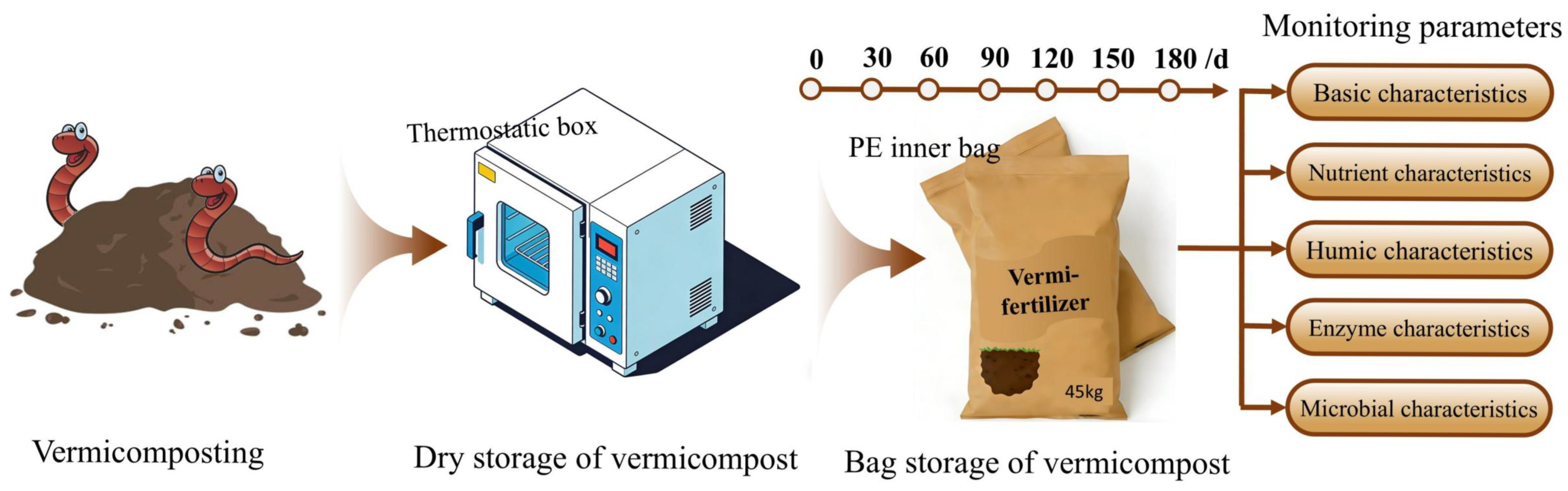
To simulate actual and commercial storage conditions in practice, each vermicompost type was packed into woven polypropylene bags (45 kg capacity) fitted with a PE inner film and sealed with knitted stitching. Samples were collected at 0, 30, 60, 90, 120, 150, and 180 days of storage. Prior to packing, the moisture content of each vermicompost type was adjusted to 45 ± 2%. The experimental bags were stored in a climate chamber with static airflow maintained at 25 °C and 60 ± 8% relative humidity (RH). Each treatment comprised three replicated bags.
At each sampling time point, approximately 30 to 50 g of the material was retrieved from different layers of each bag using a five-point sampling method and thoroughly mixed to generate a composite sample per replicate. A total of 200 g composite sample was collected per replicate, of which 100 g was immediately frozen at −80 °C for microbial analysis while 100 g was air-dried for physicochemical, nutrient, and carbon component analyses. A schematic of the experimental procedure is shown in Figure 1.

2.3. Analytical Methods

Sample analyses were performed according to previously published methods. pH and electrical conductivity (EC) were measured potentiometrically in a 1:10 (w/v, fresh sample-to-water) aqueous extract [13]. Total organic carbon (TOC) was determined by external heating digestion with potassium dichromate titration [13]. Total nitrogen (TN) was analyzed by the Kjeldahl method [13]. Available nitrogen (AN) was measured by alkaline hydrolysis diffusion [14]. Total potassium (TK) and available potassium (AK) were determined by flame photometry [15]. Total phosphorus (TP) and available phosphorus (AP) were measured by the molybdenum-antimony spectrophotometric method [16]. Total microbial counts, including bacteria, fungi, and actinomycetes, were enumerated by the hemocytometer counting method. Enzyme activities, including urease, catalase, phosphatase, and dehydrogenase, were assayed. The commercial ELISA kits were purchased from Elabscience (EliKine, Wuhan, China). Enzyme activity was measured by a colorimetric method including sample pretreatment, enzymatic incubation and absorbance detection and a Multiskan FC microplate reader (Thermo Fisher Scientific, Vantaa, Finland) was used for all photometric determinations and analyses [17]. Humic substances (HS), humic acid (HA), and fulvic acid (FA) were extracted with NaOH and quantified by K2Cr2O7 volumetric titration according to the method reported in [18] (Sodium pyrophosphate alkaline extraction–potassium dichromate oxidation volumetric method).
Integrating the two testing methods, including the counting method and high-throughput sequencing, can efficiently reveal the microbiological characteristics of vermicompost. The abundance and diversity of microbial community structure were characterized by high-throughput gene sequencing on the Illumina NovaSeq 6000 platform [17]: the bacterial community structure was analyzed via high-throughput 16S rRNA gene sequencing method. The V4 hypervariable region of the bacterial 16S rRNA gene was amplified using the primer pair 515F/806R. Fungal community composition was determined by the high-throughput 18S-ITS sequencing method. The ITS1 hypervariable region of fungal genes was amplified using the primer pair ITS1F/ITS2. Following DNA extraction, library construction, sequencing, denoising and quality control procedures, bioinformatic analysis of bacterial and fungal sequencing data was conducted. The sequencing datasets used in the study are available from the corresponding author on reasonable request.
All raw data were organized in Microsoft Excel and statistically analyzed using SPSS 27.0 (IBM Corp., Armonk, NY, USA). Data visualization and correlation analysis were performed using Origin 2021 (OriginLab Corp., Northampton, MA, USA). PCA [19], partial least squares discriminant analysis (PLS-DA), PLS model construction, and variable importance in projection (VIP) analysis were conducted using SIMCA-P 14.0 (Umetrics, Umeå, Sweden) [20] to identify the key indicators affecting vermicompost quality during storage.
Generally, standalone PCA merely describes data distribution without precise predictive capacity, and individual PLS suffers severely from high-dimensional noise and multicollinearity. The combination of the PCA-PLS strategy in this study can perform dimension reduction prior to targeted regression, filtering irrelevant noise and preserving variable-related valid signals to greatly enhance model stability and calculation efficiency. The parameters adopted in the model consist of physicochemical, nutrient, humification, enzyme activity and microbial indicators monitored in this study.
A comprehensive PCA scoring method [18] was applied to derive overall quality scores across storage durations. The principal component scores were calculated as follows:
W i = λ i i x λ
F = i = 1 x W i × F i    
where Fi is the score of the i-th principal component, Wi is the weight of the component, x is the number of principal components retained from the PCA, λ is the corresponding eigenvalue, and F is the comprehensive score integrating all parameters.

3. Results and Discussion

3.1. Temporal Dynamics of Basic Physicochemical Properties in Vermicompost During Storage

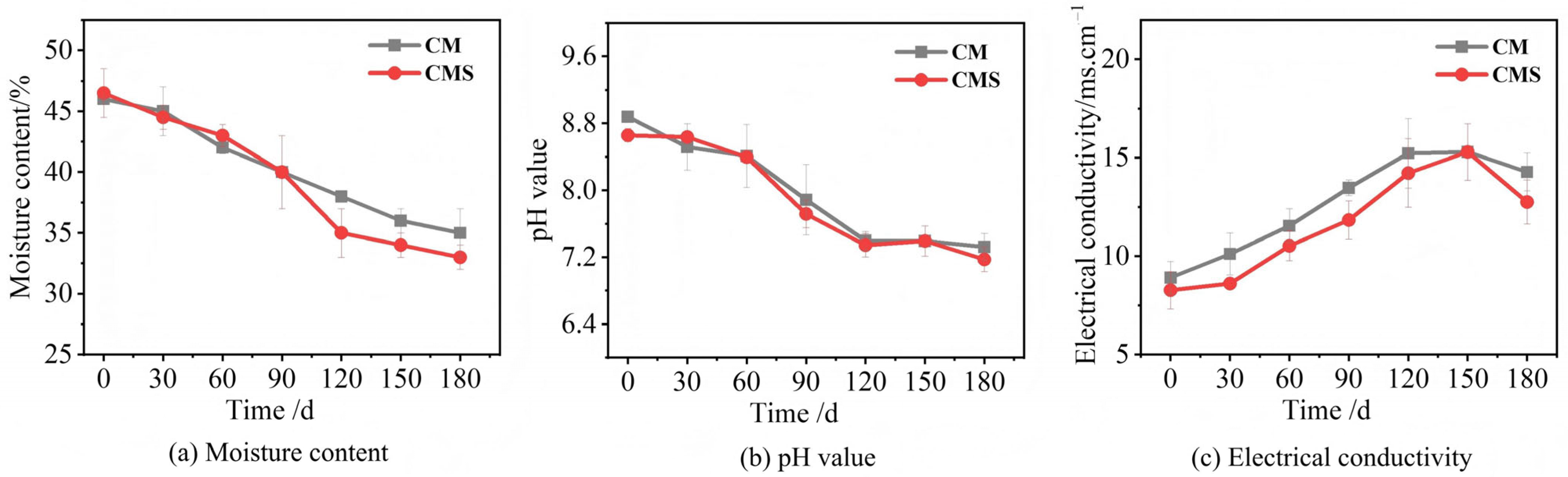
The temporal dynamics of key physicochemical parameters in vermicompost are illustrated in Figure 2a–c. The moisture content (mass basis) of both vermicompost types decreased gradually throughout the storage period. Notably, CMS exhibited a 6% decline in MC from day 90 to day 120, indicating that moisture loss proceeded slowly even within sealed packaging. The experiment was designed to closely simulate the practical production and storage environments of commercially packaged organic fertilizers. Extremely minute residual pores may exist at the sealed joints, leading to slow and continuous moisture loss throughout the storage period. Yet after 180 days, the MC values for CM and CMS were still maintained at 35% and 33%, respectively, suggesting that sealed packaging effectively mitigated excessive dehydration of vermicompost.
As shown in Figure 2b, the pH values of both vermicompost types displayed a gradual downward trend over time, progressively approaching neutrality (7.2–7.5). This shift may possibly be attributed to organic acid production during microbial decomposition of residual organic matter in vermicompost, which was moderated by the buffering capacity of abundant humic substances that regulate acid–base equilibrium through proton adsorption and release. As storage progressed, the gradual stabilization of humus components was accompanied by a concomitant stabilization of pH values [21]. Meanwhile, EC values for both vermicompost types generally increased with prolonged storage, peaking at 1.53 mS·cm−1 on day 150 before declining. Throughout the experiment, CM consistently maintained higher EC values than CMS, with a comparatively steeper rate of increase. The increase in EC likely reflects both a concentration effect arising from organic matter decomposition and dry mass loss and sustained microbial mineralization of organic matter, which releases soluble ions (e.g., ammonium, nitrate, and potassium) into the aqueous extract [18,22]. These findings align with previous reports documenting elevated EC in vermicompost under sealed storage conditions [22].

3.2. Temporal Dynamics of Nutrient Characteristics in Vermicompost During Storage

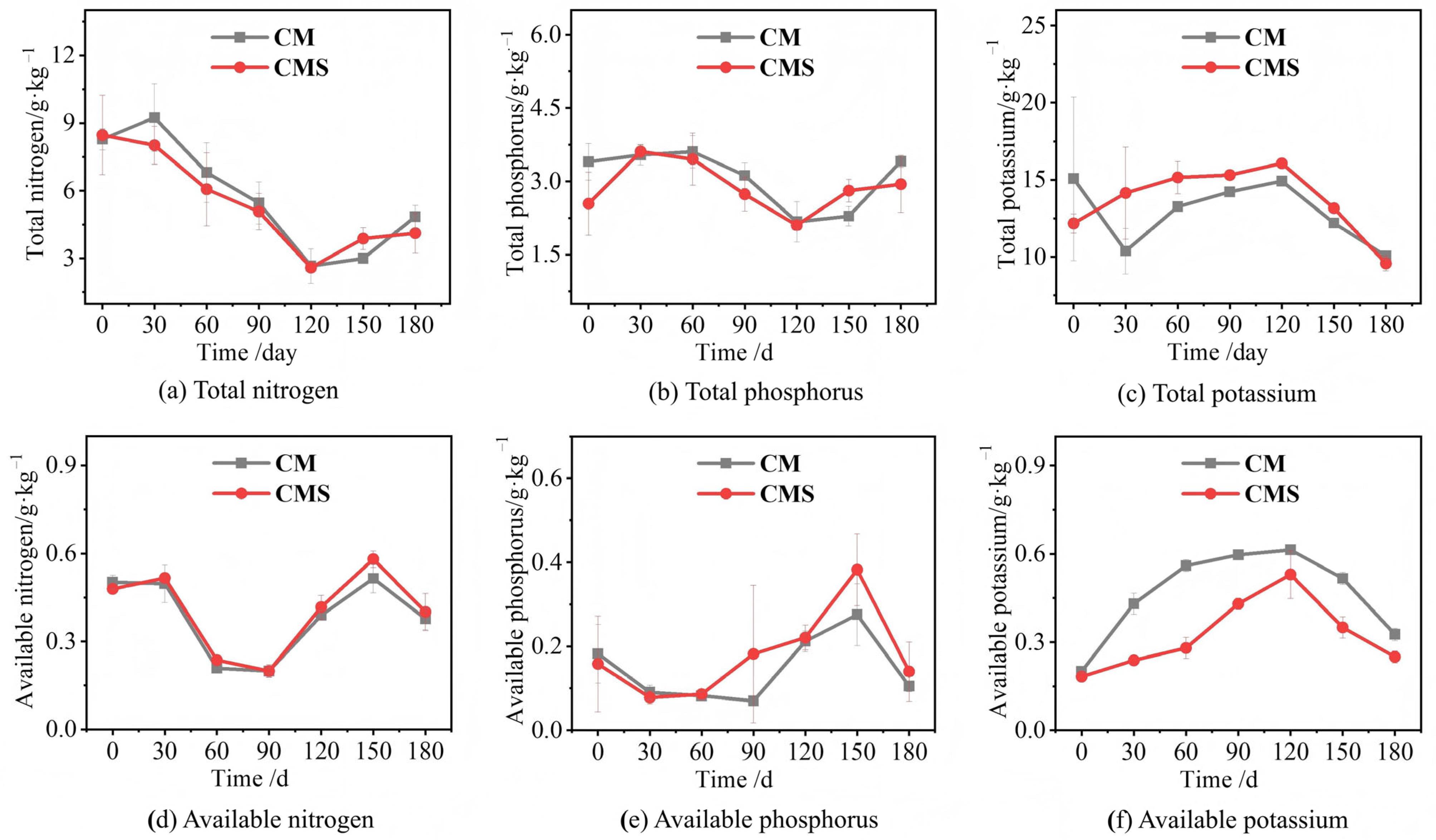
Nutrient variations in vermicompost across different storage periods are illustrated in Figure 3a–c. The total nitrogen (TN) content exhibited a declining trend after the initial 30 days of storage, suggesting progressive nitrogen loss over time. This trend may be attributed to the aerobic decomposition of organic matter coupled with nitrification in vermicompost [18], whereby carbon mineralization facilitates nutrient release from organic substances. With oxygen gradually depleted over prolonged storage, anaerobic environments formed, which may further accelerate nitrogen loss through volatilization. This phenomenon was consistent with the findings of [23]. In contrast, the total phosphorus (TP) remained relatively stable throughout the entire storage period. TK in both vermicompost types displayed an initial increase followed by a modest decline (Figure 3c). Thus, with the exception of TN, total nutrient contents in vermicompost remained largely constant.
Available nutrient fractions serve as important indicators for evaluating vermicompost quality. Fluctuations in enzymatic activity, combined with the proliferation of nutrient-cycling microorganisms, promote the conversion of recalcitrant nutrient forms into plant-available fractions [24]. Variations in available nutrients are shown in Figure 3d–f. Available nitrogen (AN) decreased gradually from day 0 to day 90, attributable to microbial denitrification triggered by oxygen depletion [25]. Subsequently, AN recovered, peaking on day 150 at 0.52 g·kg−1 for CM and 0.58 g·kg−1 for CMS. Available phosphorus (AP) increased monotonically from day 0 to day 150, reaching maxima of 0.28 g·kg−1 and 0.38 g·kg−1 for CM and CMS, respectively. This upward trajectory likely reflects enhanced phosphatase activity driven by intensified microbial metabolism during storage, which promotes the mineralization of organic phosphorus into soluble phosphate, as corroborated by [22,26]. The subsequent decline in AP after day 180 may reflect complexation with humic substances, which reduces phosphorus solubility. Available potassium (AK), an essential macronutrient involved in enzymatic regulation and metabolic processes, is considered a key quality metric for vermicompost [27]. During the early storage stage, microbial decomposition of organic matter in vermicompost liberated exchangeable potassium, causing AK to rise sharply and peak on day 120, at 0.61 g·kg−1 for CM and 0.53 g·kg−1 for CMS. Beyond this point, diminishing organic matter substrates and attenuated microbial activity curtailed potassium release, resulting in a gradual decline. Additionally, the formation of stable organo-mineral complexes in the later storage stages may have sequestered nutrients through encapsulation or adsorption, thereby reducing their bioavailability [22]. Overall, available nutrient contents in vermicompost remained relatively stable during the 120- to 150-day window, followed by a pronounced decline thereafter.

3.3. Temporal Dynamics of Organic Matter and Humification Components in Vermicompost During Storage

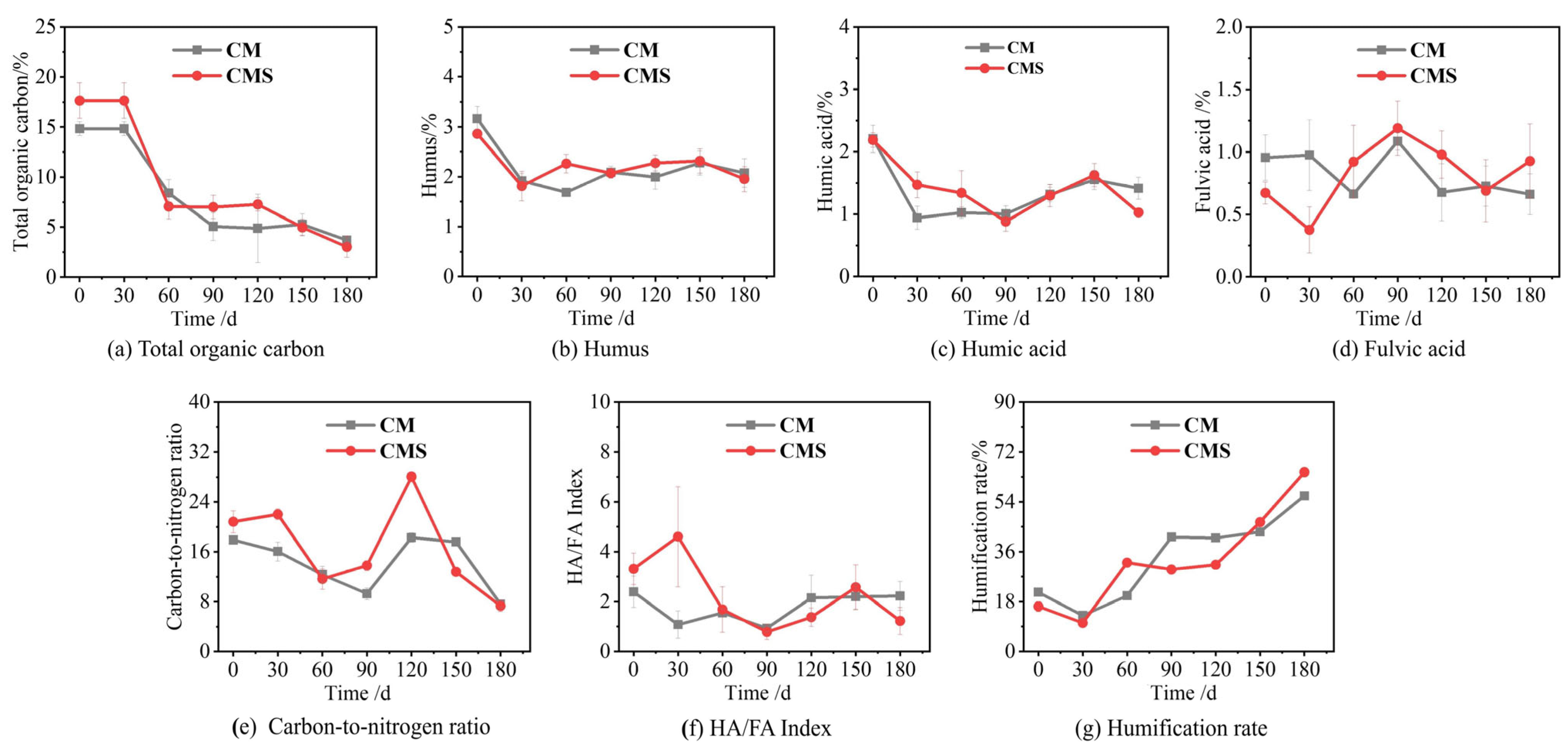
As illustrated in Figure 4a, TOC concentration in CM and CMS decreased by 75.1% and 82.8%, respectively, over the 180-day storage period. The most pronounced reduction occurred between days 30 and 60, indicating that metabolically active indigenous microorganisms, predominantly Firmicutes and Actinobacteria, persistently decomposed organic matter throughout storage [18]. This decline was primarily attributed to extracellular enzyme-mediated degradation of labile carbon fractions, including dissolved sugars and proteinaceous compounds. Coupled with early-stage aerobic respiration, these processes resulted in the mineralization and subsequent loss of organic carbon as CO2 [28].
The temporal dynamics of humification fractions are presented in Figure 4b–d. Both humus (HS) and humic acid (HA) exhibited concordant patterns across the two vermicompost types. From day 0 to 30, HS contents in CM and CMS declined by 1.3% and 1.1%, respectively, while HA contents decreased by 1.3% and 0.7%. Thereafter, HS and HA concentrations gradually increased from day 120 to 150, followed by a continuous decline. The initial reduction in HS was driven by rapid microbial decomposition, during which bacteria and fungi depolymerized macromolecular HS into low-molecular-weight (MW) fractions [29]. Concurrently, intensive mineralization of organic matter and nitrogenous compounds promoted the formation of fulvic acid (FA), elevating FA concentrations while reducing overall HS concentration [18,30]. FA, enriched in carboxyl and hydroxyl functional groups and characterized by low structural stability, became the dominant proportion within the humic fraction at day 90. After day 90, FA underwent substantial degradation, generating soluble low-MW carbon and nitrogen metabolites [30,31]. Previous studies have demonstrated that FA and proteinaceous compounds can be sequentially transformed into HA during late-stage humification [32]. Accordingly, aromatic macromolecules (e.g., lignin) may possibly be degraded into aldehydes, ketones, and phenolic derivatives after storage day 90, which subsequently polymerize to form HA, accounting for the increased HA abundance observed between days 90 and 150. Notably, CMS showed a greater increment in HA content at day 150 than CM, which can be ascribed to the incorporation of rice straw [18].
The C/N ratio dynamics during storage are shown in Figure 4e. Continuous TOC consumption produced a fluctuating C/N trajectory, characterized by an initial decrease, a transient rebound, and a subsequent decline. After 180 days, the C/N ratios of CM and CMS were 7.6 and 7.3, respectively. The HA/FA index (HI) and humification rate (HR) are critical indicators for evaluating vermicompost maturity, which is often used to reflect the balance between humification and mineralization of organic materials [18,30]. As shown in Figure 4f, HI in both treatments decreased initially and then increased, reaching minima at day 90 and then rose to 2.19 (CM) and 2.60 (CMS) at day 150. By contrast, HR exhibited an overall increasing trend throughout storage (Figure 4g), with a sharp elevation between days 120 and 180. During this period, HR increased by 15.23% and 33.40% for CM and CMS, respectively. Final values at day 180 were 56.17% (HR) and 2.23 (HI) for CM, and 64.68% (HR) and 1.23 (HI) for CMS. It is generally acknowledged that organic fertilizers with HI values exceeding 1.2 possess satisfactory humification maturity [18]. Compared with initial HR in CM (21.3%) and CMS (16.2%), the HR increased by 2.6- and 4.0-fold at day 180, respectively. The dominance of stable humic substance accumulation in carbon transformation suggests that both vermicompost treatments achieved adequate humification levels after 120 days of sealed storage.
Overall, both CM and CMS exhibited similar humification levels between 120 and 150 days of storage, particularly regarding HA accumulation. Nevertheless, prolonged storage induced continuous TOC decomposition and decreased; notably, the rate of TOC loss attenuated after day 60. Integrating carbon fraction dynamics across storage stages, the optimal duration for maintaining the humification quality of vermicompost appears to be 150 days.

3.4. Temporal Dynamics of Enzymatic Activities in Vermicompost During Storage

Extracellular enzyme activities serve as sensitive indicators for biochemical reactivity in vermicompost and represent key determinants of its performance [26]. This study monitored the activities of four representative enzymes over the entire storage period: urease and phosphatase, which mediate nitrogen and phosphorus cycling, respectively; dehydrogenase, an indicator of oxidative metabolic activity; and catalase, which mirrors microbial antioxidant capacity under oxidative stress [33,34]. Urease is strongly linked to the transformation of protein and amino nitrogen substrates. Phosphatase acts as a key regulatory enzyme that mediates metabolic pathways, signal transduction and physiological processes via hydrolytic cleavage of phosphate groups from organic substrates and plays an indispensable role in phosphorus biogeochemical cycling. Dehydrogenase participates in electron transfer reactions linked to energy generation and microbial detoxification processes. Catalase, as a core antioxidant enzyme, modulates cellular redox homeostasis within the vermicompost microbial community [34].
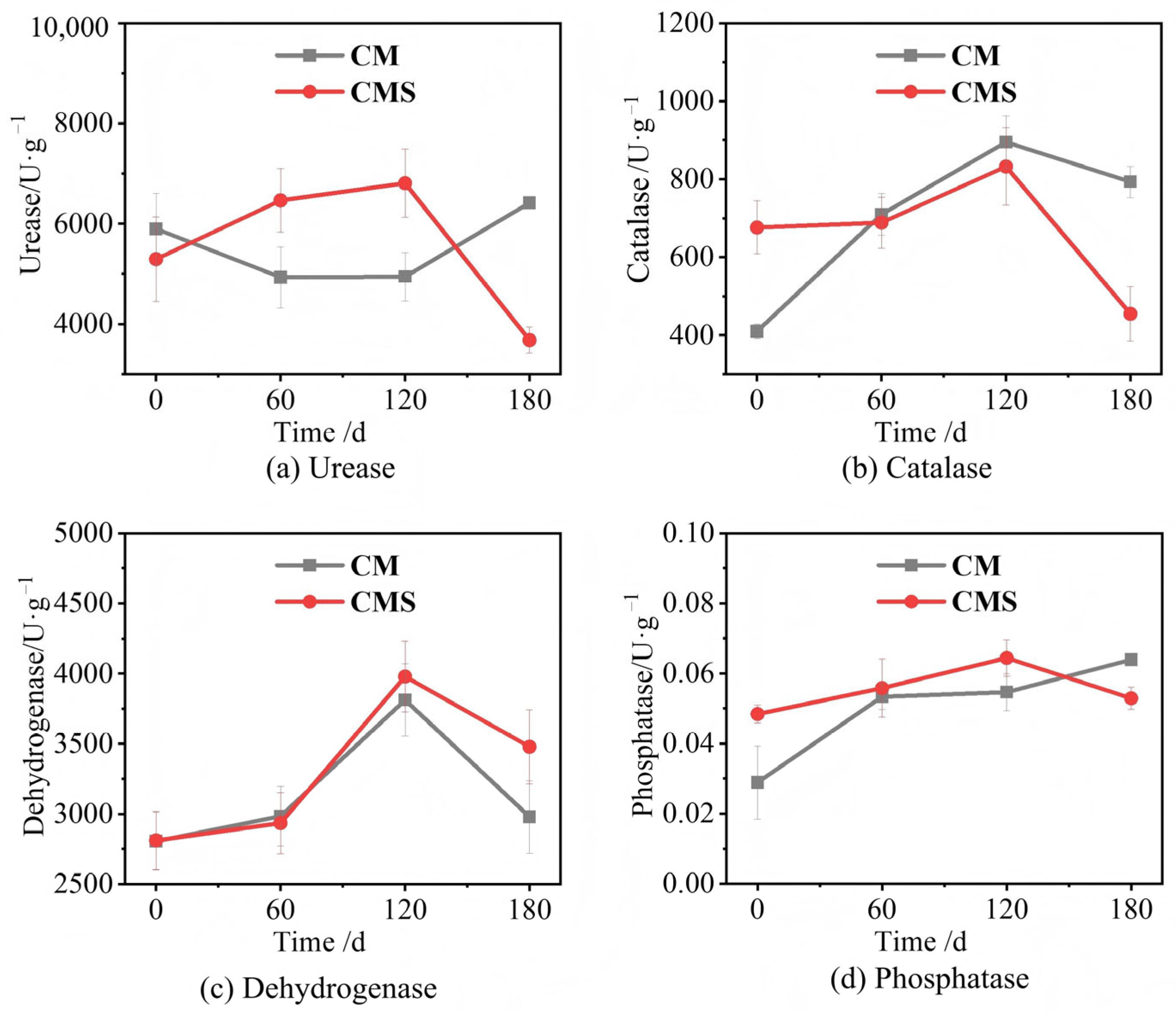
The temporal patterns of enzymatic activity are illustrated in Figure 5a–d. During the initial 120 days of storage, most enzymes exhibited a unimodal trajectory, peaking before declining. Notably, urease in both compost types and phosphatase in CM reached maxima at day 120 instead of at intermediate time points. At day 120, catalase activity attained 895.17 U·g−1 (CM) and 832.60 U·g−1 (CMS), while corresponding dehydrogenase values were 3811.89 U·g−1 and 3978.56 U·g−1. By contrast, CMS phosphatase activity peaked earlier at 0.0644 U·g−1 (150-day), whereas CM phosphatase reached its maximum of 0.0630 U·g−1 only at day 180. The initial elevation of enzymatic activity likely reflects the metabolic vigor of early-colonizing Actinobacteria and associated bacteria, which secreted substantial amounts of nitrogen- and phosphorus-hydrolyzing enzymes [33]. As storage progressed, intensified resource competition and shifts in community composition favored humus-degrading specialists over primary decomposers. The concomitant decline in substrate moisture content further constrained enzymatic reaction kinetics, leading to a general decrease in activity by day 180 [17]. Furthermore, residual earthworm-derived digestive enzymes persisted following earthworm removal, contributing to the sustained enzymatic potential observed during the early storage stage [17]. This residual activity suggests that vermicompost retains considerable biochemical functionality for a long period following maturation.
Overall, enzymatic activity in both vermicompost types remained at or near peak levels through day 120 but underwent substantial attenuation by day 180. These results indicate that prolonged storage beyond 120 days compromises the enzymatic potential of vermicompost. Consequently, to maintain relatively high enzyme activity in vermicompost fertilizer, a storage period of no more than 180 days is recommended to maximize the enzyme efficacy of vermicompost.

3.5. Temporal Dynamics of Microbial Abundance and Community Succession in Vermicompost During Storage

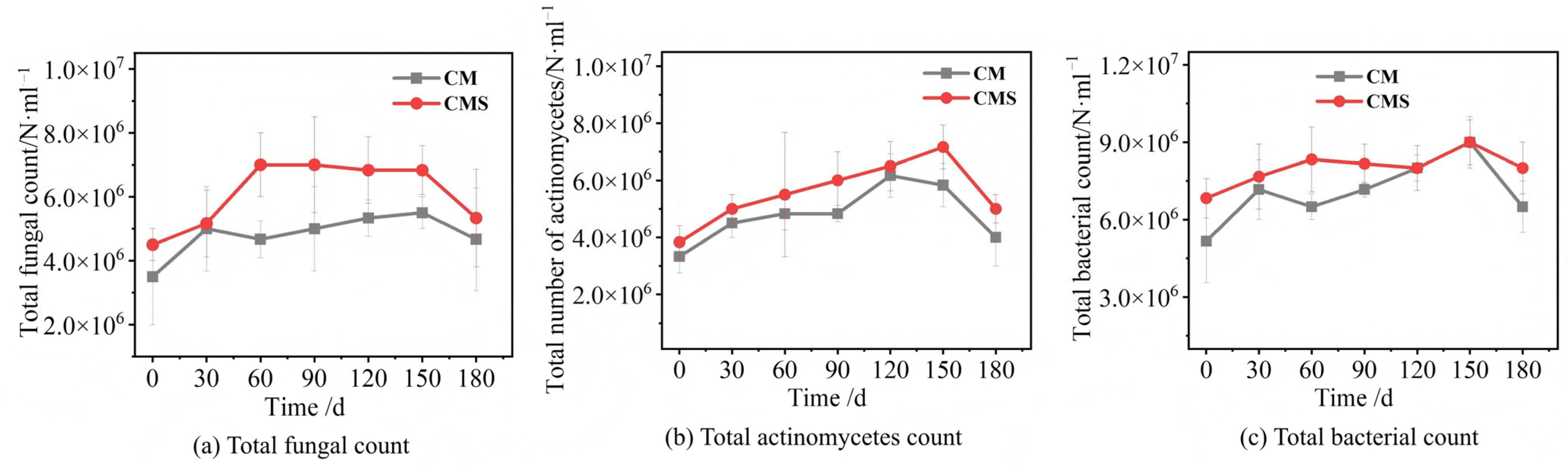
The quantity of active microbes in biofertilizers directly determines their application efficacy, rendering this parameter one of the core quality evaluation indicators. The total counts of bacteria, fungi, and actinomycetes determined by hemocytometer counting in two types of vermicompost fertilizer are presented in Figure 6a–c. The microbial abundance in both vermicompost types increased continuously from day 0, reaching a peak at day 150, and subsequently declined. During the 150-day period, the bacterial, fungal, and actinomycete counts in CM increased by 38.33 × 10⁶ N·mL−1, 20.0 × 10⁶ N·mL−1, and 25.0 × 10⁶ N·mL−1, respectively. The corresponding increments in CMS were 21.63 × 10⁶ N·mL−1, 23.0 × 10⁶ N·mL−1, and 33.34 × 10⁶ N·mL−1. The total microbial counts in CMS were consistently higher than those in CM, though differences in bacterial and fungal numbers were not pronounced [35].
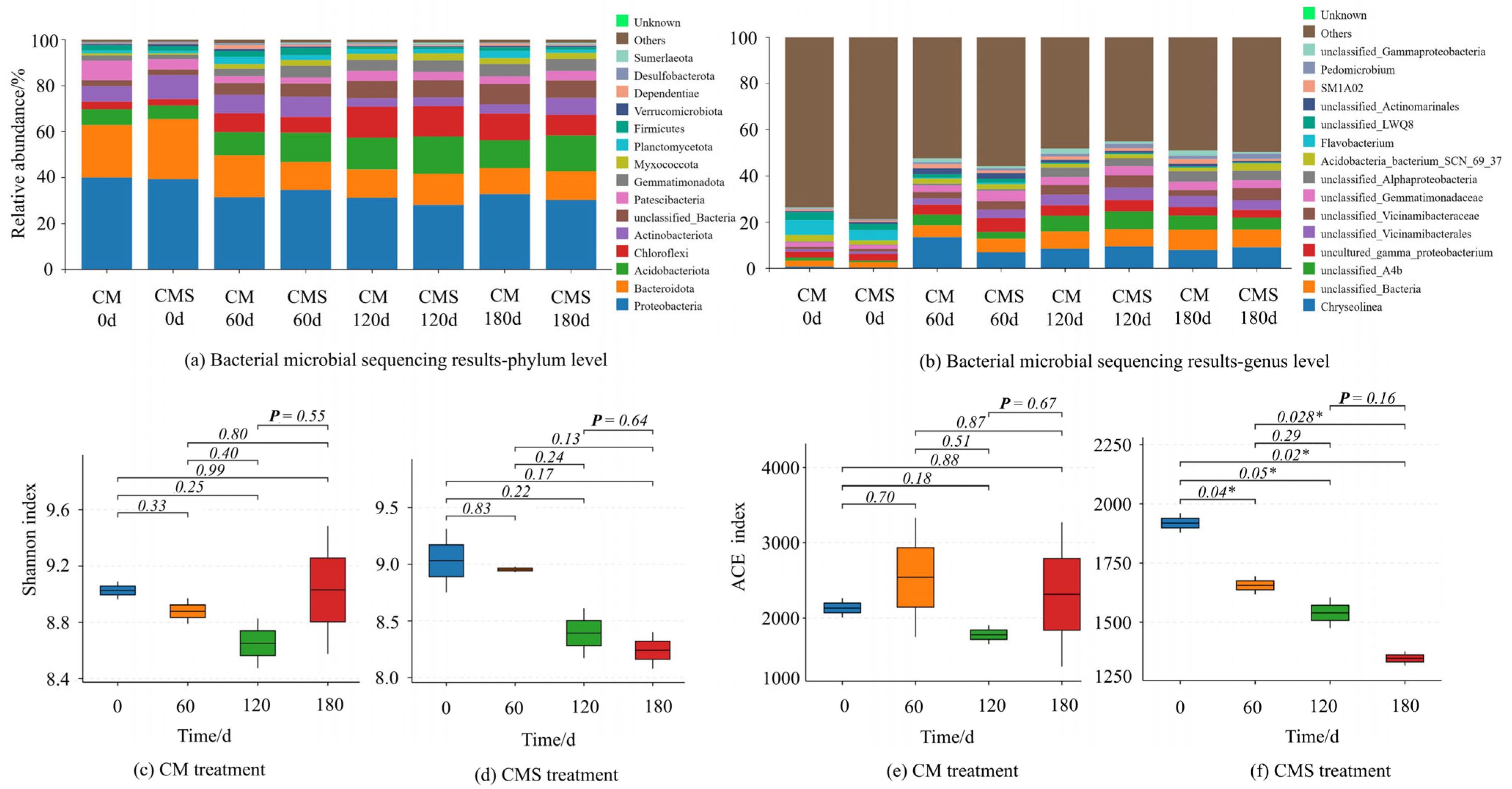
In this study, the abundance and diversity of bacterial communities were determined and analyzed via high-throughput 16S rRNA gene sequencing. Bacterial community structures at the phylum and genus levels are illustrated in Figure 7a,b. Five dominant bacterial phyla, namely Proteobacteria, Bacteroidetes, Acidobacteria, Chloroflexi, and Actinobacteria, collectively accounted for 71.94–84.65% of the total bacterial community. Biochemical metabolism of symbiotic microorganisms in earthworm and environment intestines dominate earthworm-mediated biotransformation [18]. Among them, Proteobacteria were predominantly involved in sugar and nitrogen transformations; Bacteroidetes served as primary cellulose degraders; and Actinobacteria played a pivotal role in lignin decomposition [18]. As storage progressed, labile carbon substrates (e.g., reducing sugars and organic acids) were gradually depleted, while mineralization of nitrogenous organic compounds drove a reduction in the relative abundances of Proteobacteria and Bacteroidetes [36]. In contrast, the relative abundances of Acidobacteria, Actinobacteria, and Chloroflexi increased progressively. This successional shift was governed by the continued decomposition of recalcitrant fractions such as cellulose and lignin, pH alterations induced by organic acid accumulation and subsequent neutralization, and the development of microaerophilic and anaerobic microhabitats under sealed storage conditions [35,37]. During the late storage period, synergistic interactions between Chloroflexi and Actinobacteria became prevalent. These taxa secrete laccase and lignin-degrading enzymes to decompose refractory organic matter, while Chloroflexi further stabilize the community structure by liberating available carbon via the breakdown of complex organic polymers [36,37]. At the genus level (Figure 7b), the relative abundances of Chryseolinea and Flavobacterium increased continuously throughout the storage period. As reported by [18], these genera secrete proteases, cellulases, chitinases, and other hydrolases that depolymerize macromolecular polysaccharides and cellulosic substances. The Shannon index reflects community relative diversity and evenness, while the ACE index reflects relative richness [35,38].
Bacterial alpha-diversity metrics across storage stages are summarized in Figure 7c–f. With prolonged storage, the Shannon and ACE indices for CM decreased slightly, with the reduction in ACE reaching statistical significance (p < 0.05). These results revealed that rice straw amendment reduced bacterial abundance and community diversity in vermicompost. Exogenous carbon derived from rice straw selectively enriched specific functional microorganisms, driving community succession toward preferential utilization of lignocellulosic substrates [18]. Consistent with this, Lin et al. [18] reported that the relative abundance and diversity of bacteria decreased significantly in cattle-dung vermicomposting with the increase in refractory carbon sources. As storage progressed, the number of unique operational taxonomic units (OTUs) gradually decreased indicating that external carbon input lowered the bacterial richness. Previous studies have confirmed that many microbial taxa fail to adapt to high-lignin substrates and are selectively eliminated during lignocellulose biodegradation [23,39].
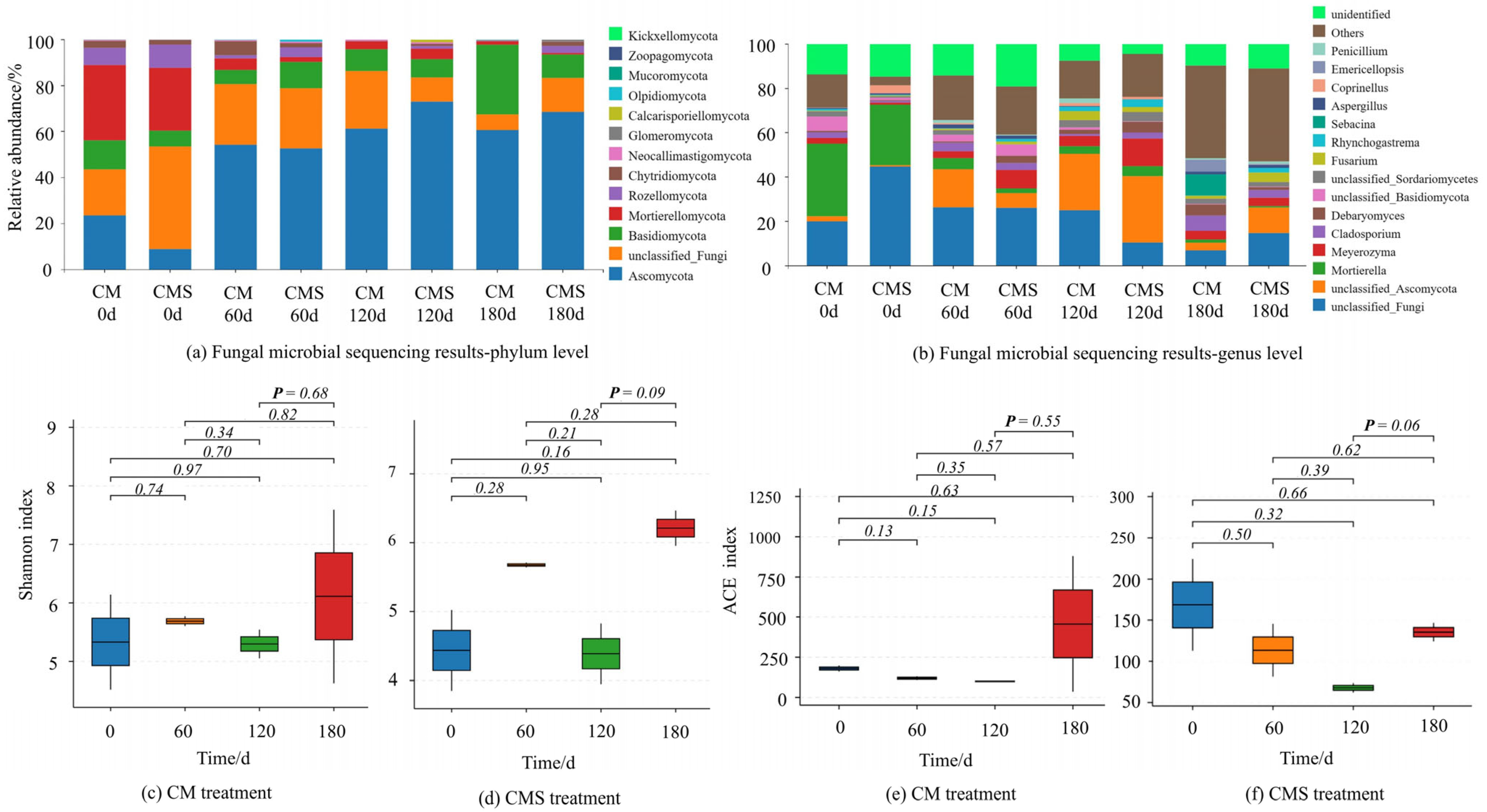
The abundance and diversity of fungal communities were determined and analyzed via high-throughput ITS gene sequencing. Fungal community compositions at the phylum and genus levels are displayed in Figure 8a,b. The dominant fungal phyla in both vermicompost treatments included Ascomycota (8.86–73.07%), Basidiomycota (6.02–30.32%), and unclassified fungi (6.86–44.73%). Due to the relatively short duration of vermicomposting and subsequent sealed storage, Ascomycota maintained absolute predominance throughout the experimental period. Ascomycetous genera such as Aspergillus and Penicillium secrete lignin peroxidase and cellulase to decompose cellulosic substrates, thereby sustaining their competitive dominance during storage [36]. Meanwhile, organic acids generated by microbial metabolism were gradually neutralized, generating a near-neutral microenvironment that favored the survival and proliferation of Ascomycota [36].
The relative abundance of Basidiomycota fluctuated dynamically, reaching a peak at day 180. During early storage, fast-growing bacterial taxa, including Proteobacteria and ascomycetous fungi such as Penicillium, occupied dominant niches, placing slow-metabolizing Basidiomycota at a competitive disadvantage. In the late storage phase, as pH stabilized near neutrality and the C/N ratio declined, Basidiomycota presented high nitrogen-use efficiency and strong lignin-degrading capability, leading to a marked recovery in their metabolic activity and relative abundance [36,39].
At the genus level (Figure 8b), the predominant fungal groups were unclassified Ascomycota, unclassified fungi, Mortierella, and Cladosporium. Mortierella, a fast-growing genus that preferentially utilizes labile carbohydrates such as hemicellulose, declined in relative abundance after day 120 due to substrate depletion and intensified interspecific competition [39]. After 120 days, readily degradable organic matter was largely exhausted, coinciding with a continuous increase in Cladosporium, which specializes in decomposing recalcitrant organic compounds. As a member of Ascomycota, Cladosporium produces cellulase and lignin-modifying enzymes (e.g., laccase) to efficiently utilize refractory carbon sources. Additionally, Cladosporium exhibits strong adaptability to neutral pH and nitrogen-rich environments; the sufficient nitrogen supply in vermicompost substantially promoted its hyphal growth and strengthened its competitive advantage [23,39].
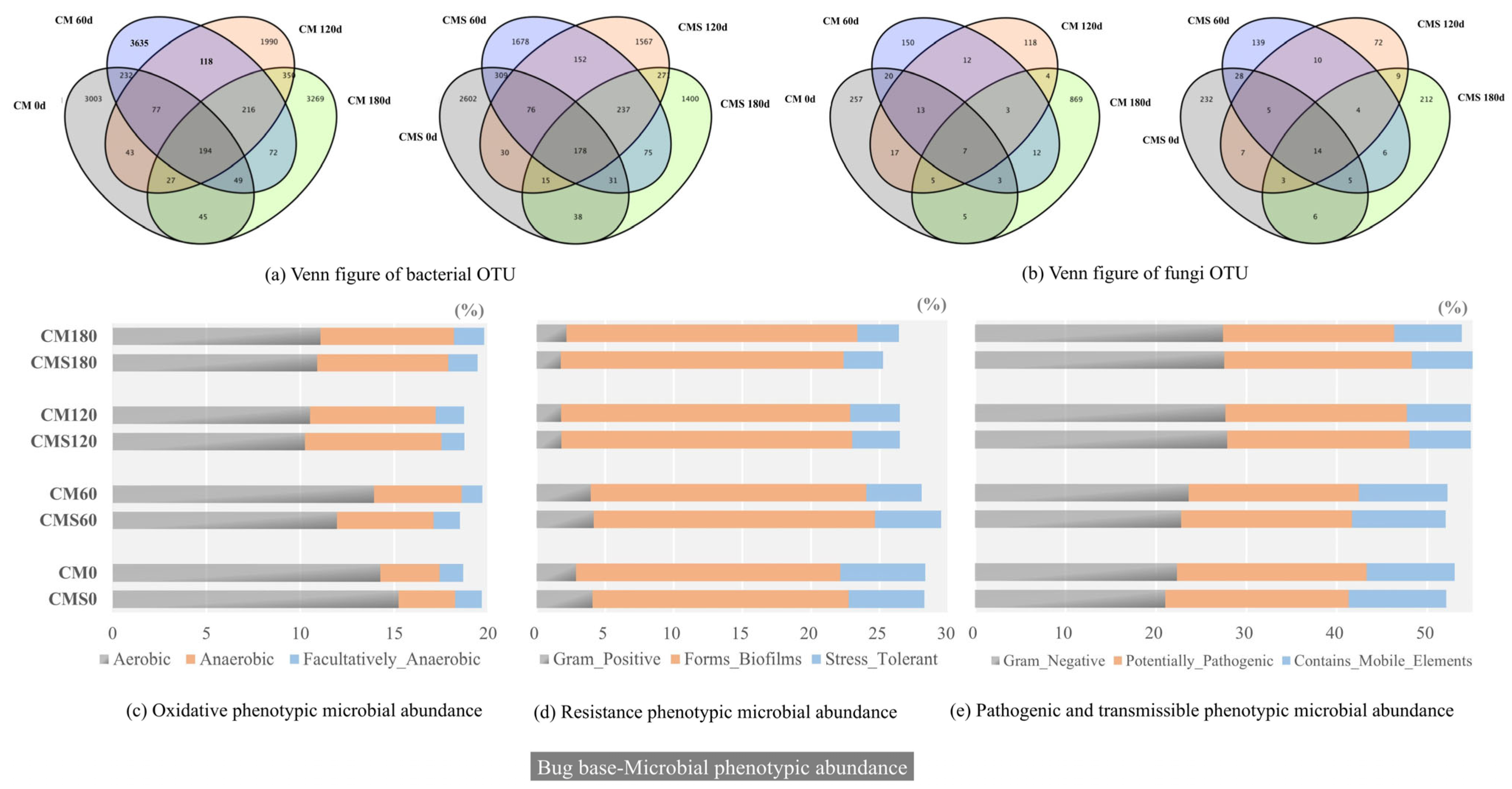
Fungal Shannon and ACE indices increased slightly in CM, suggesting a modest improvement in fungal diversity and richness. Nevertheless, no significant temporal differences were observed in these indices across storage stages, also in OTUs (Figure 9a,b), indicating that fungal community richness and diversity changed moderately and that the overall fungal community structure remained relatively stable after 180 days of storage.
Previous research confirms that bacteria dominate and regulate vermicomposting. Functional profiling of bacterial communities facilitates the identification of variation patterns of pivotal functional taxa throughout vermicompost storage from a macro perspective, thereby indirectly reflecting microbial functional performance in vermicompost. Phenotypic abundance patterns were inferred from 16S rRNA sequencing data using BugBase [40]. Variations in microbial phenotype serve as important indicators for analyzing microorganism-environment interactions in vermicompost. As shown in Figure 9c, the abundance of aerobic microorganisms gradually decreased during storage, while that of anaerobic and facultative microorganisms increased. This pattern suggests that sealed packaging, even with vent holes, resulted in significant oxygen consumption and the formation of anaerobic zones within the bags [18]. Gram-positive bacteria, which possess a thick peptidoglycan cell wall and generally include environmentally beneficial taxa such as Bacillus spp. and lactic acid bacteria (LAB), declined in abundance with prolonged storage (Figure 9d). The concomitant reduction in stress-tolerant microbial groups indicated that these progressive changes in oxygen availability, moisture content, and nutrient status posed significant selective pressure on the vermicompost microbiome, leading to decreased community diversity and population size.
Microorganisms capable of forming biofilms increased markedly during the 180-day storage period (Figure 9d). These taxa secrete polysaccharide-rich extracellular polymeric substances (EPS) to form biofilms, which function as a defense mechanism against environmental fluctuations such as desiccation and nutrient deprivation [40]. Under long-term storage conditions, biofilm-forming microorganisms became dominant populations within the vermicompost. Conversely, Gram-negative bacteria, which possess a thin peptidoglycan layer and an outer membrane, gradually increased in abundance over the storage period (Figure 9e). This rise may reflect the environmental deterioration associated with excessively prolonged storage, favoring the emergence of potentially deleterious microorganisms. In addition, potentially pathogenic phenotypes and microorganisms carrying mobile genetic elements increased over time, indicating that the possibility of risk increases as the storage progresses.

3.6. Vermicompost Evaluation and Key Drivers Identification Using Integrated PCA-PLS Modeling

To identify the critical indicators governing vermicompost quality across different storage durations, PCA scoring, PLS-DA, and PLS regression were jointly applied to integrate routine physicochemical properties, nutrient parameters, microbial characteristics, and carbon fraction indices (humification component).
Comprehensive quality scores for the two vermicompost types were derived from the PCA-established principal component model. The resulting scores indirectly reflected the comprehensive quality level of vermicompost at each storage stage. The composite evaluation models for CM and CMS were constructed as follows:
Fcm = 0.4814 × F1 + 0.2643 × F2;
Fcms = 0.5166 × F1 + 0.1785 × F2
where Fcm and Fcms denote the comprehensive evaluation scores for CM and CMS, respectively, and F1 and F2 represent the scores of components 1 and 2, respectively.
The comprehensive scores derived from the model can be used to rank the overall quality of vermicompost and clarify the dynamic varying trend of quality during packaged storage. The threshold time point at which vermicompost quality begins to decline can be identified, and further deduce the shelf-life of vermicompost fertilizer. As shown in Table 2, CM ranked among the top three treatments during the 120–180-day storage period, and the optimal treatment was obtained on day 150, whereas CMS achieved its highest comprehensive score on day 150. These results indicate that both vermicompost treatments attained optimal quality at day 150. These findings suggest that sealed packaging and storage facilitate continued nutrient transformation and humus stabilization in vermicompost. Accordingly, the recommended optimal shelf life for agricultural application was 150 days.
PCA was combined with PLS regression to screen primary indicators and construct an initial regression model. PLS-DA was subsequently employed as a supervised classification method to discriminate among storage stages and reveal intrinsic correlations between response and explanatory variables [20].
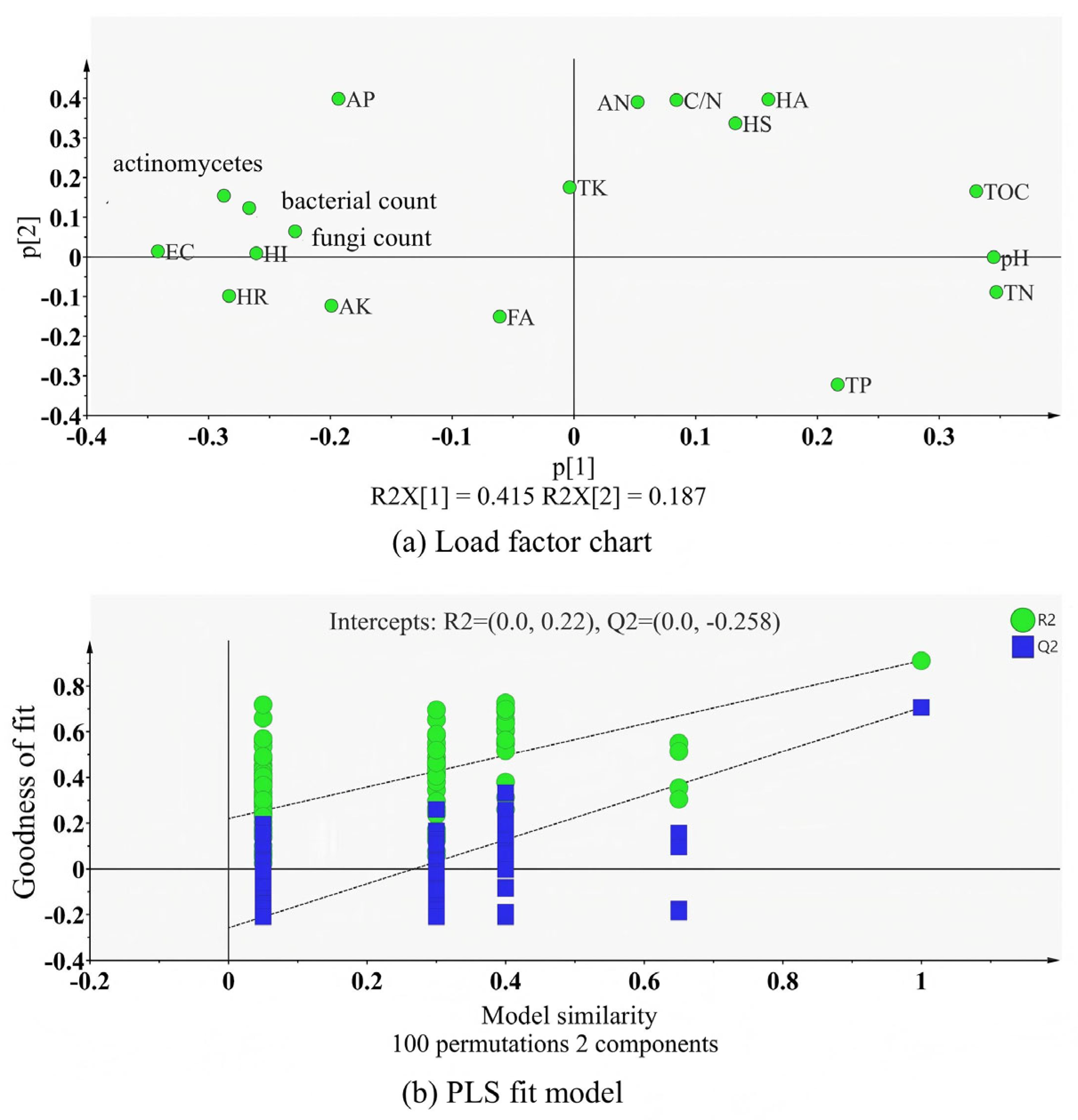
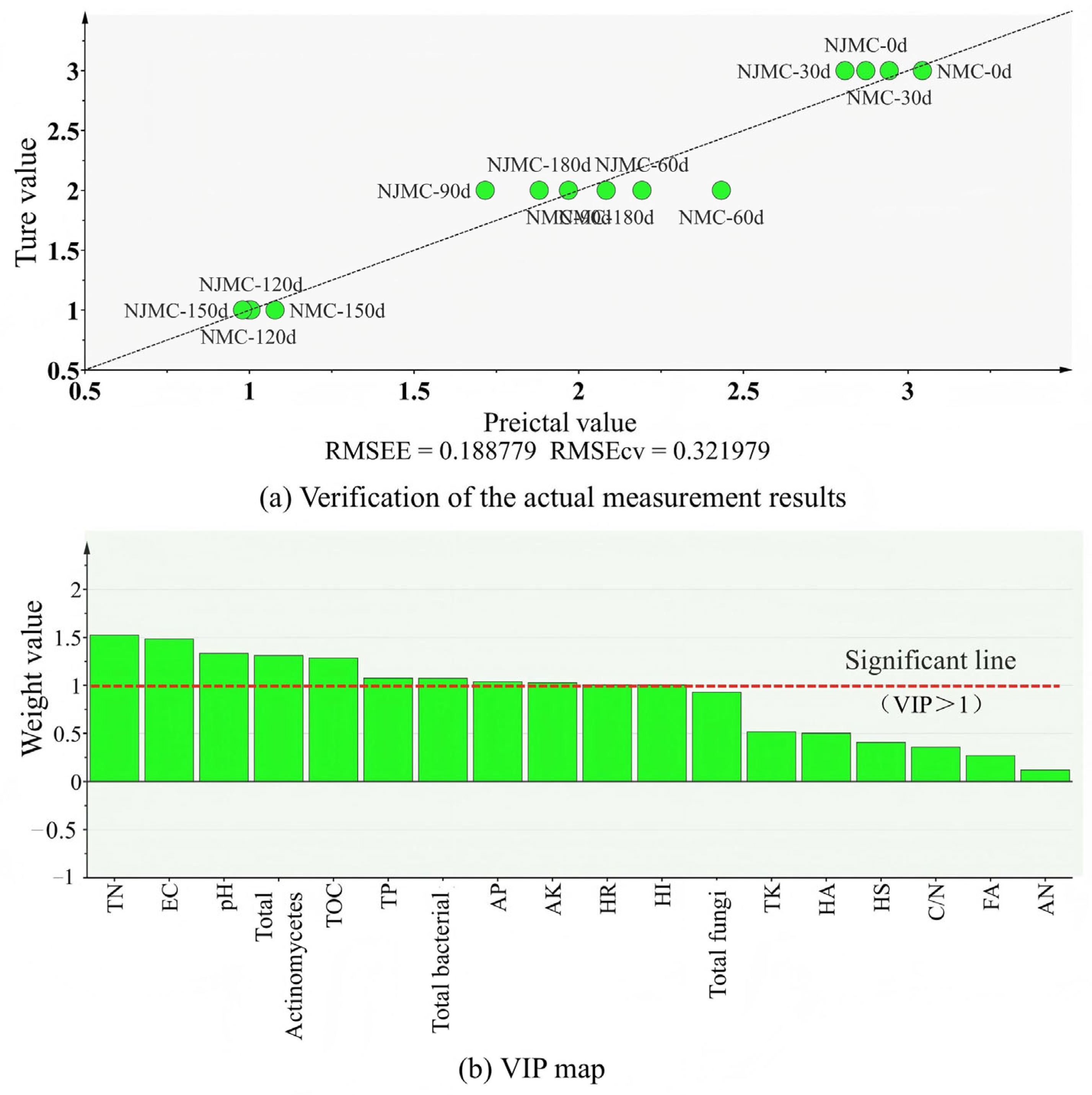
To verify the reliability and predictive performance of the established PLS model, model validation was conducted, and permutation tests (n = 100) were adopted to evaluate model goodness-of-fit (GOF) and similarity (Figure 10a,b and Figure 11a). The results showed that the R2 intercept remained below 0.3 and the Q2 intercept below 0.05 (Table 3). Furthermore, the R2Y and Q2Y values of the authentic model exceeded those of the permutation test models, demonstrating satisfactory predictive capacity [20]. Additional verification using actual measured values indicated good agreement between measured and predicted values (Figure 10b). The root mean square error of estimation (RMSEE = 0.18) was lower than the cross-validated root mean square error (RMSEcv = 0.32), with a ratio below 1.5. Collectively, these validation metrics confirm that the regression model exhibits excellent fitting performance [41].
Variable importance in projection (VIP) scores derived from the PLS regression model are presented in Figure 11b. Variables with VIP > 1 were identified as critically influential indicators [42], comprising TN, EC, pH, total actinomycete abundance, TOC, TP, total bacterial abundance, AP, AK, and HR in descending order of importance. VIP analysis revealed that the key drivers of vermicompost quality across storage stages comprised bacterial community parameters, carbon-nitrogen-phosphorus nutrient indices, and humification degree metrics. These findings were corroborated by the loading plot (correlation plot, Figure 10a), in which variables with high loadings on PC1 were predominantly associated with the physicochemical properties, microbial parameters, partial nutrient fractions, and humus components, thereby validating the key indicators identified through VIP screening.
In summary, the integrated PCA-PLS evaluation revealed that the storage threshold time of vermicompost is estimated at 150 days. Beyond this threshold time, particularly after 180 days of sealed bag storage, nutrient availability, enzymatic activity, and microbial functionality in vermicompost may start to decline.

4. Discussion of Practical Implications

The value of vermicompost depends substantially on its microbial communities, enzyme functionality, and nutrient bioavailability; establishing evidence-based storage parameters is essential for quality optimization, standardized storage protocols, and informed field application. The indicators selected in this study are comprehensive, cost-effective, and technically accessible, facilitating their adoption across diverse vermicomposting systems and commercial contexts.
This study characterized the temporal evolution of packaged vermicompost quality during sealed storage and identified a shelf life of 150 days under normal temperature and air humidity conditions (25 °C, 60% RH). This finding provides a theoretical basis for quality control and production management guidance in the vermicomposting industry.
In practice, given the labile nature of the enzymatic and microbial communities that underpin vermicompost efficacy, packaged storage beyond this window risks progressive degradation of bioactive components. The storage time of 150 days is a recommended window rather than a strict and fixed one. Field application or downstream processing should therefore be recommended to be scheduled within the 150-day interval. While substrate-specific variations may influence absolute quality trajectories, the methodological framework and storage thresholds established herein are broadly transferable across lignocellulosic-amended vermicomposting systems. The conditions controlled in this study simulate the actual warehouse environment and cannot fully reproduce real storage conditions, where temperature, humidity and oxygen concentration fluctuate continuously during practical storage. Future research can be conducted on evaluating the vermicompost under different conditions, such as temperature, climate zone, types of raw materials for vermicompost, etc. In addition, further tasks should concentrate on developing low-cost storage strategies and enhanced protocols to facilitate the standardized commercial production of vermicompost products.

5. Conclusions

Sealed bag storage produced substantial yet temporally divergent effects on the physicochemical and biological attributes of vermicompost. Over the monitored 180-day period, CM and CMS exhibited progressive declines in MC, TOC and TN, concomitant with increases in AP, AK and HR, with HR rising by a factor of 2.6–4.0. Extracellular enzyme activities, including urease, catalase, phosphatase, and dehydrogenase, remained functionally robust through day 120 before undergoing pronounced attenuation at day 180. Gene sequencing analysis revealed that bacterial diversity and relative richness slightly decreased progressively, whereas fungal communities remained comparatively stable throughout storage. Multivariate modeling using the integrated PCA-PLS model identified a core set of ten quality determinants, ranked by variable importance as TN, EC, pH, actinomycete abundance, TOC, TP, bacterial abundance, AP, AK, and HR. The comprehensive quality scores for both vermicompost types peaked at day 150 and declined after this threshold time. 150 days is recommended as shelf life for sealed and bag-packaged storage of vermicompost under ambient conditions.
In light of the results obtained in the present study, future efforts can focus more on developing rapid diagnostic tools for quality assessment and exploring modified storage technologies to extend product stability. In the long run, integrating these shelf-life thresholds and quality metrics into industry standards or technical regulations could support a shift from empirical stockpiling toward standardized, time-controlled quality management in vermicomposting production.

Author Contributions

K.W.: Writing—original draft, Writing—review and editing. D.W.: Writing—original draft, Writing—review and Editing, Software. Y.P.: Visualization, Formal analysis. X.Y.: Validation. L.M.: Methodology, Investigation. S.P.: Resources. Q.L.: Project administration. J.L.: Conceptualization, Writing—review and Editing, Funding acquisition, Project administration. All authors have read and agreed to the published version of the manuscript.

Funding

The authors would like to acknowledge the financial support from the Natural Science Foundation of China (32402827); The Innovational Fund for Scientific and Technological Personnel of Hainan Province (KJRC2023D20); Hainan Key Research and Development Program (ZDYF2024XDNY273); Central Public-interest Scientific Institution Basal Research Fund of the Chinese Academy of Tropical Agricultural Sciences, China (No.1630042026024; 1630042026001; 1630042025025).

Data Availability Statement

All the experimental data have been submitted within the manuscript. Data is contained within the article. The raw data supporting the conclusions of this article will be made available by the authors on request.

Conflicts of Interest

The authors declare that they have no known competing financial interests or personal relationships that could have appeared to influence the work reported in this paper.

Abbreviations

CM(cattle manure) vermicompost
CMS(cattle manure+rice straw in 3:1) vermicompost
PCAprincipal component analysis
PLSPartial Least Squares Regression
PLS-DAPartial Least Squares Discriminant Analysis
GOFGoodness of Fit
HSHumus
HAHumic acid
FAFulvic acid
HIHumic acid/Fulvic acid index
HRHumic ratio
FiEvaluation score
16S-rRNA16S ribosomal RNA sequencing technology
pHPotential of Hydrogen
ECElectrical Conductivity
MCMoisture content
TOCTotal Organic Carbon
TNTotal nitrogen
C/NCarbon to nitrogen ratio
TPTotal phosphorus
TKTotal potassium
ANAvailable Nitrogen
AKAvailable Potassium
APAvailable Phosphorus
EPSExtracellular Polymeric Substances
ITSInternal Transcribed Spacer sequencing technology

References

  1. Fornes, F.; Mendoza-Hernández, D.; García-De-La-Fuente, R.; Abad, M.; Belda, R.M. Composting versus vermicomposting: A comparative study of organic matter evolution through straight and combined processes. Bioresour. Technol. 2012, 118, 296–305. [Google Scholar] [CrossRef] [PubMed]
  2. Lin, J.; Zhao, S.; Yuan, Q. A novel technology for separating live earthworm from vermicompost: Experiment, mechanism analysis, and simulation. Waste Manag. 2021, 131, 50–60. [Google Scholar] [CrossRef] [PubMed]
  3. Ducasse, V.; Watteau, F.; Kowalewski, I.; Ravelojaona, H.; Capowiez, Y.; Peigné, J. The amending potential of vermicompost, compost and digestate from urban biowaste: Evaluation using biochemical, Rock-Eval® thermal analyses and transmission electronic microscopy. Bioresour. Technol. Rep. 2023, 22, 101405. [Google Scholar] [CrossRef]
  4. Wang, D.; Mai, L.; Yu, Z.; Wang, K.; Meng, Z.; Wang, X.; Li, Q.; Lin, J.; Wu, D. Deciphering the bioavailability of dissolved organic matter in thermophilic compost and vermicompost at the molecular level. Bioresour. Technol. 2024, 391, 129947. [Google Scholar] [PubMed]
  5. Chen, Y.; Zhang, Y.; Shi, X.; Shi, E.; Zhao, T.; Zhang, Y.; Xu, L. The contribution of earthworms to carbon mineralization during vermicomposting of maize stover and cow dung. Bioresour. Technol. 2023, 368, 128283. [Google Scholar] [PubMed]
  6. Głąb, T.; Gondek, K.; Mierzwa-Hersztek, M. Impact of vermicompost addition on water availability of differently textured soils. Heliyon 2024, 10, e35699. [Google Scholar] [CrossRef]
  7. Zhu, B.; Kardol, P.; Jiang, L.; Cheng, Y.; Tian, S.; Chen, X.; Liu, M. Organic amendments enhance the temporal stability of crop productivity through stimulating multitrophic network complexity. Soil Tillage Res. 2026, 257, 106988. [Google Scholar]
  8. Tayebi Sudkolai, S.; Nourbakhsh, F.; Hosseiny, M. The Age-Induced Quality Shift of Vermicompost Influenced the Biodegradation Kinetics in Soils. Commun. Soil Sci. Plant Anal. 2024, 55, 2285–2294. [Google Scholar] [CrossRef]
  9. Das, D.; Powell, M.A.; Bhattacharyya, P.; Banik, P. Changes of carbon, nitrogen, phosphorous, and potassium content during storage of vermicomposts prepared from different substrates. Environ. Monit. Assess. 2014, 186, 8827–8832. [Google Scholar] [CrossRef] [PubMed]
  10. Harit, A.K.; Karthikeyan, M.; Gajalakshmi, S.; Abbasi, S.A. Effect of storage on some physical and chemical characteristics of vermicast. J. Appl. Hortic. 2014, 16, 112–116. [Google Scholar] [CrossRef]
  11. Kumar, P.; Sharma, P.; Kumar, T.R.; Sharma, H.C.; Dubey, R.C. Effect of storage conditions on vermicompost quality. Curr. Sci. 2020, 118, 297–300. [Google Scholar] [CrossRef]
  12. Karthikeyan, M.; Gajalakshmi, S.; Abbasi, S.A. Effect of storage on the properties of vermicompost generated from paper waste: With focus on pre-drying and extent of sealing. Int. J. Energy Environ. Eng. 2014, 5, 291–301. [Google Scholar] [CrossRef]
  13. Bhat, S.A.; Singh, J.; Vig, A.P. Instrumental characterization of organic wastes for evaluation of vermicompost maturity. J. Anal. Sci. Technol. 2017, 8, 2. [Google Scholar] [CrossRef]
  14. Khan, S.A.; Mulvaney, R.L.; Hoeft, R.G. Direct-diffusion methods for inorganic-nitrogen analysis of soil. Soil Sci. Soc. Am. J. 2000, 64, 1083–1089. [Google Scholar] [CrossRef]
  15. Wijesekara, H.; Vithanage, M. Comparison of extraction and detection methods of exchangeable potassium in paddy soils in Sri Lanka. J. Natl. Sci. Found. Sri Lanka 2021, 49, 35–44. [Google Scholar]
  16. Song, S.-H.; Wen, Y.-J.; Zhang, J.-Y.; Wang, H. Rapid spectrophotometric measurement with a microplate reader for determining phosphorus in NaHCO3 soil extracts. Microchem. J. 2019, 146, 210–213. [Google Scholar] [CrossRef]
  17. Aira, M.; Monroy, F.; Domínguez, J. Microbial biomass governs enzyme activity decay during aging of worm-worked substrates through vermicomposting. J. Environ. Qual. 2007, 36, 448–452. [Google Scholar] [PubMed]
  18. Lin, J.; Wang, D.; Kong, L.; Mai, L.; Peng, S.; Li, Q.; Wu, Y.; Yuan, J.; Li, G.; Meng, Z. Oriented regulation of earthworm production and vermicompost quality by carbon bioavailability management. Sci. Total Environ. 2024, 954, 176238. [Google Scholar] [CrossRef] [PubMed]
  19. Zhao, Z.Q.; Mai, L.W.; Wang, D.M.; Liu, H.; Yu, X.L.; Wu, W.X.; Li, Q.F.; Lin, J.C.; Zhang, P. Comprehensive Evaluation of the Quality of Earthworm Manure Dried at Different Temperatures Based on Partial Least Squares Model Combined with Principal Component Analysis. Soil Fertil. Sci. China 2025, 8, 233–247. [Google Scholar]
  20. Triba, M.N.; Le Moyec, L.; Amathieu, R.; Goossens, C.; Bouchemal, N.; Nahon, P.; Rutledge, D.N.; Savarin, P. PLS/OPLS models in metabolomics: The impact of permutation of dataset rows on the K-fold cross-validation quality parameters. Mol. Biosyst. 2015, 11, 13–19. [Google Scholar] [PubMed]
  21. López, R.; Antelo, J.; Silva, A.; Bento, F.; Fiol, S. Factors that affect physicochemical and acid-base properties of compost and vermicompost and its potential use as a soil amendment. J. Environ. Manag. 2021, 300, 113702. [Google Scholar] [CrossRef]
  22. Kleawklaharn, N.; Iwai, C.B. Effect of storage duration in the quality of vermicompost. Int. J. Environ. Rural. Dev. 2014, 5, 116–120. [Google Scholar]
  23. Raza, S.T.; Wu, J.; Rene, E.R.; Ali, Z.; Chen, Z. Reuse of agricultural wastes, manure, and biochar as an organic amendment: A review on its implications for vermicomposting technology. J. Clean. Prod. 2022, 353, 234–254. [Google Scholar]
  24. Zhou, Y.; Li, H.; Guo, W.; Liu, H.; Cai, M. The synergistic effect between bio-fertility properties and biological activities in vermicomposting: A comparable study of pig manure. J. Environ. Manag. 2022, 324, 116280. [Google Scholar]
  25. Zheng, G.; Hao, X.; Hong, B.; Jiang, D.; Qian, H.; Bai, L. Thermophilic-vermicomposting enhances nitrogen retention and reduces greenhouse gas emissions via microbial gene regulation. Int. Biodeterior. Biodegrad. 2026, 207, 106231. [Google Scholar] [CrossRef]
  26. Saha, S.; Mina, B.L.; Gopinath, K.A.; Kundu, S.; Gupta, H.S. Relative changes in phosphatase activities as influenced by source and application rate of organic composts in field crops. Bioresour. Technol. 2008, 99, 1750–1757. [Google Scholar] [CrossRef] [PubMed]
  27. Jakubus, M.; Michalak-Oparowska, W. Valorization of quality of vermicomposts and composts using various parameters. Agriculture 2022, 12, 293. [Google Scholar] [CrossRef]
  28. Ducasse, V.; Capowiez, L.; Peigné, J.; Capowiez, Y. Earthworms and plants can decrease soil greenhouse gases emissions by modulating soil moisture fluctuations and soil macroporosity in a mesocosm experiment. PLoS ONE 2024, 19, e0289859. [Google Scholar]
  29. Wang, D.; Mao, Y.; Mai, L.; Yu, Z.; Lin, J.; Li, Q.; Yuan, J.; Li, G. Insight into Humification of Mushroom Residues under Addition of Rich-N Sources: Comparing Key Molecular Evolution Processes Using EEM-PARAFAC and 2D-FTIR-COS Analysis. J. Environ. Manag. 2023, 329, 117079. [Google Scholar]
  30. Zhang, X.; Zhao, Y.; Meng, H.; Li, L.; Cui, H.-Y.; Wei, Z.; Yang, T.; Dang, Q. Revealing the inner dynamics of fulvic acid from different compost-amended soils through microbial and chemical analyses. J. Agric. Food Chem. 2020, 68, 4100–4108. [Google Scholar] [CrossRef]
  31. Xue, S.; Yi, X.; Peng, J.; Bak, F.; Zhang, L.; Duan, G.; Liesack, W.; Zhu, Y. Fulvic acid enhances nitrogen fixation and retention in paddy soils through microbial-coupled carbon and nitrogen cycling. Environ. Sci. Technol. 2024, 58, 18777–18787. [Google Scholar] [CrossRef] [PubMed]
  32. Yu, Z.; Liu, X.; Zhao, M.; Zhao, W.; Liu, J.; Tang, J.; Liao, H.; Chen, Z.; Zhou, S. Hyperthermophilic composting accelerates the humification process of sewage sludge: Molecular characterization of dissolved organic matter using EEM–PARAFAC and two-dimensional correlation spectroscopy. Bioresour. Technol. 2019, 274, 198–206. [Google Scholar] [CrossRef] [PubMed]
  33. Gusain, R.; Pandey, B.; Suthar, S. Vermicomposting of invasive weed Ageratum conyzoides: Assessment of nutrient mineralization, enzymatic activities, and microbial properties. Bioresour. Technol. 2020, 312, 123537. [Google Scholar] [CrossRef] [PubMed]
  34. Zhang, J.Y.; Fang, H.Y.; Zhao, Y.S.; Zheng, Y.; Jiang, J.M.; Gu, X. Responses of soil nutrients and rhizosphere microbial communities of a medicinal plant Pinellia ternata to vermicompost. 3 Biotech 2023, 13, 353. [Google Scholar] [CrossRef] [PubMed]
  35. Cai, L.; Gong, X.; Sun, X.; Li, S.; Yu, X. Comparison of chemical and microbiological changes during the aerobic composting and vermicomposting of green waste. PLoS ONE 2018, 13, e0207494. [Google Scholar] [CrossRef] [PubMed]
  36. Gopal, M.; Bhute, S.S.; Gupta, A.; Prabhu, S.R.; Thomas, G.V.; Whitman, W.B.; Jangid, K. Changes in structure and function of bacterial communities during coconut leaf vermicomposting. Antonie Van Leeuwenhoek 2017, 110, 1339–1355. [Google Scholar] [CrossRef] [PubMed]
  37. Kurakov, A.V.; Bilanenko, E.N. Structure of the fungal community during the transformation of organic waste by Eisenia fetida worms. Contemp. Probl. Ecol. 2023, 16, 426–439. [Google Scholar] [CrossRef]
  38. Xia, H.; Shi, J.W.; Huang, K.; Pei, W.; Jiang, Y. Antagonistic effects of actinobacteria on fecal coliforms in sludge vermicomposting: Studies based on ecological and biochemical perspectives. J. Hazard. Mater. 2025, 496, 139507. [Google Scholar] [CrossRef] [PubMed]
  39. Hao, X.; Ma, X.; Zeng, B.; Zhu, L.; Shen, L.; Yang, M.; Hu, H.; Jiang, D.; Bai, L. Efficiency and mechanism of a vermicompost additive in enhancing composting of swine manure. Environ. Sci. Pollut. Res. 2021, 28, 65791–65801. [Google Scholar] [CrossRef]
  40. Liang, Z.; Dong, C.B.; Liang, H.; Zhen, Y.X. A microbiome study reveals the potential relationship between the bacterial diversity of a gymnastics hall and human health. Sci. Rep. 2022, 12, 5663. [Google Scholar] [CrossRef] [PubMed]
  41. Buyukcan, M.B.; Kavdir, I. Prediction of some internal quality parameters of apricot using FT-NIR spectroscopy. J. Food Meas. Charact. 2016, 11, 651–659. [Google Scholar] [CrossRef]
  42. Xu, S.; Bai, C.; Chen, Y.; Yu, L.; Wu, W.; Hu, K. Comparing univariate filtration preceding and succeeding PLS-DA analysis on the differential variables/metabolites identified from untargeted LC-MS metabolomics data. Anal. Chim. Acta 2024, 1287, 342103. [Google Scholar] [PubMed]
Figure 1. Vermicompost storage shelf duration monitoring experiment.
Agriculture 16 01377 g001
Figure 2. Conventional characteristics of vermicompost.
Agriculture 16 01377 g002
Figure 3. Variation in nutrient characteristics.
Agriculture 16 01377 g003
Figure 4. Variation of carbon and humification components.
Agriculture 16 01377 g004
Figure 5. Variation in enzyme activity.
Agriculture 16 01377 g005
Figure 6. Variation in microbial quantity.
Agriculture 16 01377 g006
Figure 7. Bacterial abundance and diversity.
Agriculture 16 01377 g007
Figure 8. Fungal abundance and diversity.
Agriculture 16 01377 g008
Figure 9. Venn analysis and BugBase microbial phenotypic abundance.
Agriculture 16 01377 g009
Figure 10. Load factor and PLS fit model.
Agriculture 16 01377 g010
Figure 11. Model validation and VIP result.
Agriculture 16 01377 g011
Table 1. Initial vermicompost properties.
IndexCMCMSIndexCMCMS
pH8.888.66AN/g·kg−10.500.48
EC (us/cm)891.00827.33AP/g·kg−10.180.16
TOC/g·kg−1148.30176.40AK/g·kg−10.200.18
Total fungal count/N·ml−13.50 × 1064.50 × 106TN g·kg−18.288.47
Total actinomycetes count/N·ml−13.33 × 1063.83 × 106TP/g·kg−13.402.54
Total bacteria count/N·ml−15.17 × 1066.83 × 107TK/g·kg−115.0712.18
Table 2. Comprehensive evaluation score of vermicompost fertilizer quality.
CMF1F2FcmRankCMSF1F2FcmsRank
CM-0d−5.1722.911−1.7217CMS-0d2.7301.2671.6374
CM-30d−1.956−2.115−1.5006CMS-30d3.837−0.5161.8902
CM-60d−0.402−2.138−0.7595CMS-60d−0.031−2.084−0.3886
CM-90d0.570−2.380−0.3544CMS-90d−2.400−1.970−1.5917
CM-120d3.4981.1811.9962CMS-120d3.0140.7741.6953
CM-150d3.2532.2192.1531CMS-150d3.7301.0112.1071
CM-180d0.2090.3210.1863CMS-180d0.839−0.4830.3475
Table 3. Model parameters.
ComponentR2XR2X(Cum)EigenvalueR2YR2Y(Cum)Q2LimitQ2(Cum)Sig
Cent.
F10.4120.4125.770.9100.910.8220.0500.822R
F20.1640.5762.290.04140.951−0.06880.0500.810R
Disclaimer/Publisher’s Note: The statements, opinions and data contained in all publications are solely those of the individual author(s) and contributor(s) and not of MDPI and/or the editor(s). MDPI and/or the editor(s) disclaim responsibility for any injury to people or property resulting from any ideas, methods, instructions or products referred to in the content.