Article

Valorization of Tung Cake Waste into a Multifunctional Bio-Based Protective Formulation for Rubberwood Mold Control and Postharvest Fruit Preservation


1
Yunnan Provincial Key Laboratory of Wood Adhesives and Glued Products, Southwest Forestry University, Kunming 650224, China
2
Department of Wood Science & Engineering, Chonnam National University, Gwangju 61186, Republic of Korea
*
Author to whom correspondence should be addressed.
Agriculture 2026, 16(12), 1318; https://doi.org/10.3390/agriculture16121318 (registering DOI)
Submission received: 27 April 2026 / Revised: 4 June 2026 / Accepted: 11 June 2026 / Published: 15 June 2026
(This article belongs to the Section Crop Protection, Diseases, Pests and Weeds)

Abstract

Tung cake, a by-product of Vernicia fordii oil extraction, is an underutilized biomass residue rich in natural bioactive constituents and therefore shows potential for the development of sustainable protective formulations. In this study, tung cake-derived systems, including the aqueous extract, fermentation broth, and extract–ethanol mixtures with different ethanol volume fractions, were prepared and systematically evaluated as a unified protective system on two representative biological surfaces, namely rubberwood and fresh fruit. For rubberwood, the formulations were assessed in terms of uptake behavior, antifungal efficacy against Aspergillus niger, resistance to moisture swelling, and physicochemical characteristics using X-ray diffraction (XRD), Fourier transform infrared spectroscopy (FTIR), and Scanning Electron Microscopy (SEM). For fruit surfaces, preservation performance was evaluated through weight loss, decay rate, and color retention during storage. The results showed that formulation performance depended strongly on the preparation route and extract–ethanol mixture. In rubberwood, the 60–90% mixtures and the extract displayed showed better performance antifungal activity, with the 60%, 80%, and 90% mixtures reaching a control efficacy of 75.00% and the extract achieving 68.75%. The treatments also improved the dimensional stability of wood, and the water-saturated volumetric swelling rate decreased from 8.98% in the control to 5.63% in the extract-treated group. FTIR and XRD analyses indicated that the basic lignocellulosic chemical framework and cellulose-related diffraction features of rubberwood were largely retained after treatment, while treatment-dependent qualitative spectral and apparent diffraction differences were observed. SEM provided more direct evidence of surface-associated covering and reduced fungal attachment. A comparable protective tendency was also observed on fruit surfaces. In oranges, the 80% extract–ethanol mixture showed the most favorable preservation performance under the tested storage conditions, maintaining a decay rate of 0 throughout 10 days of storage, reducing weight loss to 17.76%, and preserving surface color more effectively than the control. Overall, the 80% ethanol mixture achieved the best balance between antimicrobial activity and barrier-related protection across both rubberwood and fruit surfaces. These findings demonstrate that tung cake waste can be converted into a bio-based protective system with potential mold-inhibiting and preservation functions across different biological substrates.

1. Introduction

Against the backdrop of global efforts to achieve the “dual carbon” goals, namely carbon peaking and carbon neutrality and promote green and sustainable development, the high-value utilization of agricultural and forestry residues has become a key focus in the field of biomass materials [1,2]. How to transform low-value byproducts into green, high-value-added functional materials is not only critical to the efficiency of resource recycling but is also closely linked to the sustainable development of the wood processing and agricultural product processing industries [3,4]. In recent years, the development of natural bioactive compounds to replace traditional chemical agents in the fields of wood preservation and post-harvest preservation of fruits and vegetables has become a research hotspot [5,6].
Rubberwood is the timber obtained from Hevea brasiliensis, a species of the Euphorbiaceae family, usually from plantation trees after their latex productivity declines. Native to South America, it is widely cultivated in southern Chinese provinces such as Yunnan and Hainan [7,8]. Rubberwood features a delicate color, uniform grain, low shrinkage, and an air-dry density of approximately 0.40–0.64 g/cm3, which places it within the light-to-medium density range for hardwoods. It exhibits good machinability and finishability, making it widely used in furniture and flooring applications [9,10]. However, this species has inherent defects such as susceptibility to mold, insect infestation, and decay. Studies have shown that the total content of free sugars and starch in rubberwood is approximately 8%, higher than the 1–3% level typically found in ordinary wood. Additionally, it contains relatively high levels of protein and ash, providing a rich nutrient medium for fungal growth [11]. Under suitable temperature and humidity conditions, rubberwood is highly susceptible to attack by molds, blue-stain fungi, and decay fungi, leading to material degradation, deterioration in appearance, and significant economic losses [12]. Common infecting fungi include Trichoderma viride, Penicillium citrinum, Aspergillus niger, and Lasiodiplodia theobromae, the primary species responsible for blue stain. Therefore, effective anti-mold and preservative treatment must be applied promptly after rubberwood is harvested [13].
Tung cake has been reported to contain bioactive constituents such as saponins, phenolics, and flavonoids, which may contribute to its antimicrobial potential. However, the present study focused on the application performance of tung cake-derived formulations rather than on the quantitative identification of individual active compounds. Previous studies have shown that extracts from some oilseed cakes and meals exhibit inhibitory effects on fungal growth. For example, aqueous extracts of camellia seeds and camellia seed cake and meal can inhibit the growth of Aspergillus flavus by 87.96% to 88.87%, and their 80% methanol extracts also demonstrate significant inhibitory effects [14,15]. The n-butanol fraction of camellia seed cake not only inhibits the growth of Aspergillus flavus but also reduces the production of aflatoxin B1 to a certain extent [16]. These studies provide useful background for considering oilseed cake byproducts as potential sources of antifungal constituents. Saponins, as one of the key active components in tung cake, have demonstrated certain antibacterial effects in the food and agricultural sectors; however, research on their application in wood mold prevention remains limited. Therefore, the inhibitory effects of tung cake extracts or fermentation broths on mold fungi associated with rubberwood surface contamination warrant further evaluation.
As a major byproduct of oil processing, oilseed cake is rich in various bioactive compounds such as saponins, flavonoids, polyphenols, and protein peptides. It exhibits strong antibacterial and preservative properties and holds potential for application in fruit and vegetable preservation.
Among various types of oilseed cakes, research on camellia seed cake has been relatively extensive. Wang Chengrui et al [17]. conducted a systematic review on the role of active components in camellia seed cake in fruit and vegetable preservation, noting that substances such as saponins, flavonoids, and polyphenols exert antibacterial and preservative effects through mechanisms including the disruption of microbial cell membrane structures and the inhibition of metabolic enzyme activity. From an applied research perspective, camellia seed cake extract demonstrates certain preservative effects on cherry tomatoes, and its inhibitory action against common microorganisms helps extend the storage life of cherry tomatoes [18]. Pre-harvest foliar application of a 1.00% camellia cake extract solution to dragon fruit effectively reduces the fruit’s rot index, inhibits respiration and ethylene release rates, and enhances the activity of antioxidant enzymes such as catalase (CAT) and superoxide dismutase (SOD). Simultaneously, it boosts the activity of defense-related enzymes such as PAL, POD, chitinase (CHI), and β-1,3-glucanase (GLU), thereby enhancing the fruit’s disease resistance [19]. Furthermore, polyphenol extracts from camellia cake meal exhibit certain antibacterial activity against pathogens of red grapes, indicating their role in preserving red grapes [20]. In terms of patented technologies, a fruit and vegetable fungicide containing camellia cake extract has been developed. This formulation combines the extract with biological fungicides such as Trichoderma, Streptococcus lactis, or natamycin for use in preserving fruits and vegetables and preventing bacterial growth [21].
Therefore, the objective of this study was to develop tung cake-derived formulations through extraction, fermentation, and ethanol-assisted fractionation, and to evaluate them as a unified protective system rather than as two separate applications. Rubberwood and fresh fruit were selected as two representative biological surfaces to examine whether the same tung cake-derived formulations could provide consistent protection against microbial deterioration while also improving surface-associated stability. Particular emphasis was placed on identifying the optimal extract–ethanol mixture and clarifying whether its protective performance was associated with a common mechanism involving antimicrobial activity and barrier-related regulation. In this way, the study aims to establish a feasible route for the high-value utilization of tung cake waste in the development of environmentally friendly biomass-derived protective formulations.

2. Materials and Methods

2.1. Experimental Procedure

In this study, tung cake was used as the raw material to prepare tung cake extracts and fermentation broths via extraction and fermentation methods, respectively. Rubberwood was selected as the test material, and Aspergillus niger was used as the test mold. Untreated rubberwood and ethanol-treated rubberwood were used as control groups. The rubberwood specimens were impregnated with tung cake-derived formulations using a vacuum-assisted treatment process. The mold-inhibiting performance of the tung cake-derived formulations against A. niger was evaluated by comparing rubberwood specimens before and after treatment, including solution uptake, anti-A. niger performance, resistance to moisture swelling, Fourier Transform Infrared Spectroscopy (FTIR), X-ray Diffraction (XRD), and Scanning Electron Microscopy (SEM). Furthermore, using oranges and grapes as test fruits, this study investigated the effects of selected tung cake-derived formulations on fruit appearance, weight loss, color parameters, and visible decay under storage conditions. Overall, the experimental workflow included formulation preparation, rubberwood impregnation treatment, mold-resistance evaluation against A. niger, moisture-related swelling assessment, FTIR, XRD, SEM characterization, and preliminary fruit preservation evaluation.

2.2. Test Materials

Tung oil cake (protein content 45%), provided by Shuanglong Oil & Fat Co., Ltd., Qiubei County, Wenshan Zhuang and Miao Autonomous Prefecture, Yunnan Province, China; rubberwood, with a measured moisture content of 8.6% and a density of 0.83 g/cm3, purchased from Linyi Tenglong Wood Industry Co., Ltd., Linyi, Shandong, China; rubberwood specimens with dimensions of 50 mm × 20 mm × 5 mm were used for the mold-resistance test and related surface characterization, whereas separate 20 mm × 20 mm × 20 mm specimens were used for the moisture-induced swelling test; Test strain: Aspergillus niger (40048), purchased from the China Industrial Microbial Culture Collection., Beijing, China; fresh oranges and grapes of similar ripeness were both purchased from Daerduo Supermarket in Panlong District, Kunming City, Yunnan Province, Chian.

2.3. Experimental Methods

2.3.1. Preparation of Tung Cake Extract, Ethanol Mixture, and Fermentation Broth

For the preparation of tung cake extract, the tung cake powder was first passed through a 100-mesh sieve. Prepare a crude tung cake extract using a ratio of tung cake to ultra-pure water of 1:5. Stir with a glass rod until homogeneous. The suspension was centrifuged at 4000 rpm for 20 min using an MK-21A high-speed centrifuge with a 4 × 100 mL rotor capacity (Hunan Michael Experimental Instrument Co., Ltd., Hunan, China). The precipitate was removed, and the supernatant was collected and filtered through a 0.45 μm microporous membrane. The resulting filtrate was used as the tung cake extract.
Extract-Ethanol Mixtures: The prepared tung cake extract was mixed with anhydrous ethanol at volume ratios of tung cake extract = 7:3, 5:5, 4:6, 3:7, 2:8, and 1:9 (v/v), corresponding to final ethanol volume fractions of 30%, 50%, 60%, 70%, 80%, and 90%, respectively. These treatments are hereafter referred to as the 30%, 50%, 60%, 70%, 80%, and 90% extract-ethanol mixtures. The percentages refer to the final ethanol volume fraction in the tung cake extract-ethanol system, calculated based on the initial mixing volumes, with volume contraction after mixing ignored. These samples were directly used as extract-ethanol mixtures with different final ethanol volume fractions and were not obtained by precipitation-based ethanol fractionation, solvent removal, or further purification.
Preparation of tung cake fermentation broth: Rubberwood contains free sugars and starch and lacks natural antimicrobial substances; therefore, it is prone to mold growth during use and storage. Bacillus licheniformis (10037) was used in this study to ferment tung cake, not rubberwood. The strain was selected for its ability to grow in biomass-based substrates and to produce extracellular enzymes during fermentation, which may modify the soluble constituents of tung cake. The obtained fermentation broth was then used as a tung cake-derived formulation for subsequent mold-resistance evaluation.
(1)
Disinfection and Sterilization: First, rinse and disinfect laboratory tools such as petri dishes, extractors, and forceps, then sterilize them in a vertical autoclave sterilized at 121 °C for 20 min;
(2)
Strain activation and seed culture preparation: The Bacillus licheniformis (10037) strain was aseptically inoculated onto a fresh beef extract peptone agar slant in a test tube under a laminar flow hood. The slant culture was incubated at 28 °C for 48 h in an HWS-series constant-temperature and humidity incubator to obtain the activated strain. Subsequently, a loopful of cells from the activated slant culture was aseptically transferred into beef extract peptone liquid seed medium and incubated at 30 °C for 24 h in a shaking incubator to obtain the seed culture;
(3)
Fermentation medium preparation: Place 5 g of tung cake powder, 0.1 g of glucose, 0.5 g of sodium chloride, and 100 mL of distilled water into a 250 mL conical flask; sterilize at 121 °C for 20 min, then cool;
(4)
Tung cake fermentation: Inoculate Bacillus licheniformis into the seed culture medium and incubate on a shaking incubator at 30 °C for 24 h; subsequently, inoculate each bacterial strain into the fermentation medium at a 2% inoculation rate for fermentation at 30 °C for 48 h;
(5)
Collection of tung cake fermentation broth: After fermentation, the culture was centrifuged at 4000 rpm for 20 min to remove precipitated bacterial cells and unfermented tung cake residues. The supernatant was collected and filtered through a 0.45 μm microporous membrane to remove remaining suspended particles and larger microbial cells. The resulting filtrate was used as the filtered tung cake fermentation broth. The fermentation broth was not heat-sterilized after fermentation to avoid possible thermal alteration of fermentation-derived constituents.

2.3.2. Preparation of Rubberwood Specimens

In accordance with GB/T 18261-2013 “Test method for anti-mildew agents in controlling wood mould and stain fungi,” [22] rubberwood specimens must be free of insect damage, discoloration, and mold spots. with dimensions of 50 mm (length along the grain) × 20 mm × 5 mm. If not used immediately, the specimens must be placed in plastic storage bags and temporarily stored at approximately 0 °C in sealed plastic bags for short-term preservation and equilibrated to room temperature before treatment.

2.3.3. Determination of Solution Uptake

Before chemical impregnation, each rubberwood sample is individually numbered, and its length (L), width (W), and thickness (H) are measured. The mass of each sample is also weighed (in grams). The vacuum-assisted cold impregnation method was used for treatment. Specimens from the same group were stacked vertically in a grid pattern within a beaker and weighted down to prevent floating. Next, pour in the prepared tung cake solution, ensuring that the liquid level remains 1–2 cm above the top of the sample. An untreated inoculated control group was established; specimens in this group were not impregnated with any treatment solution before exposure to Aspergillus niger. In this study, the untreated inoculated group was used as the negative control for evaluating A. niger colonization on rubberwood, while the 100% ethanol-treated group was used as a solvent control. No commercial antifungal preservative was included because the aim of this study was to evaluate the mold-inhibiting potential of tung cake-derived formulations rather than to benchmark them against established wood preservatives. A 100% ethanol-treated group was included as a solvent control to evaluate whether high-concentration ethanol treatment alone contributed to mold inhibition under the tested conditions. Each group consisted of 6 specimens. The specimens were immersed in the corresponding treatment solution and subjected to vacuum at −0.065 MPa for 60 min. The vacuum was then released, and the specimens were soaked at atmospheric pressure for 30 min. This vacuum–atmospheric pressure cycle was repeated three times. After impregnation, seal the beaker opening with a layer of plastic film to prevent drying and let stand overnight. Before inoculation, remove the specimens and place them in a petri dish, then weigh the mass of the impregnated specimens (unit: g).
Finally, the solution uptake of rubberwood specimens was calculated based on the mass difference before and after impregnation and the total surface area of the specimen, using Equation (1), and the result was expressed in g/m2. The area used in the calculation refers to the total surface area of the rectangular specimen, including all six faces.
R = m 2 m 1 2 H W + W L + H L × 10 6
R—Solution uptake, g/m2;
m2—Mass after impregnation, in g;
m1—Mass before impregnation, in g;
H—Sample thickness, in mm;
L—Sample length, in mm;
W—Sample width, in mm.

2.3.4. Mold-Resistance Testing

In accordance with GB/T 18261-2013 “Test Method for the Efficacy of Antifungal Agents against Molds and Discoloration-Causing Bacteria in Wood,” rubberwood specimens impregnated with a solution prepared from tung cake were placed in petri dishes containing cultured Aspergillus niger and incubated in a constant temperature and humidity incubator (28 ± 2) °C and 85% relative humidity for at least 4 weeks. Each group consisted of 6 specimens. Because only Aspergillus niger was used as the test fungus, the mold-resistance results in this study were interpreted specifically as inhibition of A. niger under the tested conditions. The specific procedure is as follows:
(1)
Preparation of Culture Media: First, rinse and disinfect experimental tools such as petri dishes, pipettes, and forceps. Place these, along with the prepared potato-glucose agar medium, in a vertical autoclave and sterilize at 121 °C for 20 min. After cooling to a safe temperature in a laminar flow hood, pour 15–20 mL of the potato dextrose agar (PDA) medium into each sterilized Petri dish (9 cm diameter) to prepare solid agar plates (i.e., PDA plates), and set aside;
(2)
Inoculation and Cultivation of Test Strains: On a laminar flow hood, use a loop and forceps to inoculate Aspergillus niger into the exact center of the PDA medium to facilitate fungal expansion and proliferation. Wrap the bottom of the petri dish with plastic wrap, then place it in a constant temperature and humidity incubator at 28 ± 2 °C and 85% relative humidity. Observe fungal growth and colony distribution. Incubate for one week until colonies mature, then use them for the anti-mold testing of rubberwood samples;
(3)
Mold Resistance Testing of Samples: All rubberwood specimens in the treatment groups were impregnated with the corresponding tung cake-derived formulations before exposure to Aspergillus niger. Prior to testing, wrap samples from the same group in multiple layers of gauze and sterilize them in a vertical autoclave at 121 °C for 20 min. Allow them to cool on a laminar flow hood. On the PDA medium pre-colonized by A. niger mycelium, first place two sterilized glass rods (5 mm in diameter) arranged in parallel. Then, the rubberwood specimens treated with tung cake-derived formulations and the untreated inoculated control specimens were horizontally placed on the glass rods, with two specimens in each Petri dish. After completion, return the Petri dishes to the incubator at 28 ± 2 °C and 85% relative humidity. Observe and record fungal growth daily for 4 weeks;
(4)
Processing and Analysis of Fungal Infection Area on Samples: After the mold resistance test is completed, ImageJ software (version 1.54g, National Institutes of Health, Bethesda, MD, USA) is used to process the fungal infection area on the samples. First, the infected area and total area of the sample in the photographed images are marked to form a closed region;
Subsequently, the proportion of the infected area on the rubberwood samples was calculated using the following Formula (2), expressed in %:
S = S 1 S 0 × 100 %
S—the percentage of the sample’s infected area, in %;
S0—the total area of the sample, in cm2;
S1—the infected area of the sample, in cm2;
Statistics on fungal infection levels and control efficacy: The classification of surface fungal infection levels in rubberwood samples is shown in Table 1 below. The lower the infection level, the greater the efficacy of the fungicide;
Calculate the statistical control efficacy based on the surface mold infestation scores of the samples above using Formula (3), expressed as a percentage:
E = 1 D 1 D 0 × 100 %
E—Efficacy, %;
D1—Average infection grade of the untreated control group;
D0—Average infection grade of the treated group.

2.3.5. Test for Resistance to Swelling

Before the swelling test, the 20 mm × 20 mm × 20 mm rubberwood cube specimens were treated with the same corresponding formulations selected from the mold-resistance test, including tung cake extract, fermentation broth, and selected extract–ethanol mixtures. The impregnation procedure was the same as described in Section 2.3.3. In accordance with the relevant provisions of GB/T 1934.2-2009 “Test Method for Swelling of Wood” [23] and GB/T 1932-2009 “Test Method for Shrinkage of Wood” [24], the dimensional stability of the wood before and after treatment was tested. The dimensions of the test specimens were standardized to 20 mm (radial) × 20 mm (tangential) × 20 mm (axial), with six replicates prepared for each treatment group. First, the specimens were placed in an oven at 60 °C and dried for 6 h; the temperature was then raised to (103 ± 2) °C and drying was continued until the specimens reached the oven-dry state. The radial and tangential directions were identified according to the growth-ring orientation and marked before measurement. After removal and cooling, the initial oven-dry dimensions (L0) of each specimen in the radial, tangential, and axial directions were recorded using a measuring instrument with an accuracy of 0.01 mm, rounded to the nearest 0.01 mm. The specimens were then transferred to a constant temperature and humidity chamber and allowed to absorb moisture under conditions of (20 ± 1) °C and (65 ± 5)% relative humidity until the moisture-equilibrated state was reached. The dimensions in the three directions were measured again and recorded as (Lw), accurate to 0.01 mm. Finally, completely immerse the specimen in distilled water, replacing the water every 2–3 days. After the specimens reached the water-saturated state and their dimensions no longer change, measure the final dimensions in each direction at the same positions and record them as (Lmax), accurate to 0.01 mm.
The linear swelling rates in the radial and tangential directions from the oven-dry state to the moisture-equilibrated state are calculated using Equation (4):
a w = L w L 0 L 0 × 100
aw—Linear swelling rate in the radial and tangential directions of the specimen from the oven-dry state to the moisture-equilibrated state, %;
Lw—Radial and tangential lengths of the specimen at moisture equilibrium (mm);
L0—Radial and tangential lengths of the specimen in the oven-dry state (mm).
The linear swelling rates in the radial and tangential directions as the specimen transitions from the oven-dry state to the water-saturated state are calculated using Equation (5):
a m a x = L max L 0 L 0 × 100
amax—Radial and tangential linear swelling rates of the specimen from oven-dry state to water-saturated state, %;
Lmax—Radial and tangential lengths of the specimen when saturated (mm).
The volumetric swelling rate of the specimen from air-dry to moisture-stable is calculated using Equation (6):
a v w = v w v 0 v 0 × 100
avw—Volume expansion rate of the specimen from the oven-dry state to the moisture-equilibrated state, %;
vw—Volume of the specimen at the moisture-equilibrated state (mm3);
v0—Volume of the specimen in the oven-dry state (mm3).
The volume expansion rate of the specimen from the oven-dry state to the water-saturated state is calculated using Equation (7):
a v m a x = v max v 0 v 0 × 100
avmax—the rate of volumetric swelling of the specimen from the oven-dry state to the water-saturated state, %;
vmax—the volume of the specimen when saturated (mm3).

2.3.6. Fourier Transform Infrared Spectroscopy (FTIR)

FTIR spectroscopy was performed using a Thermo Scientific Nicolet iS50 Fourier transform infrared spectrometer (Thermo Fisher Scientific, Waltham, MA, USA) on raw rubberwood, mold-infected rubberwood, mold-infected rubberwood treated with ethanol, and mold-infected rubberwood treated with fermentation broth, extract, or a mixture of the two. Using the potassium bromide pellet method, the prepared samples were placed in a forced-air oven at 120 °C and dried to constant weight. They were then ground into powder (passing through a 200-mesh sieve), with a wavenumber range of 4000–500 cm−1 and 32 scans. The FTIR spectra were used for qualitative comparison of characteristic functional groups among the different treatment groups. Therefore, the FTIR results were interpreted mainly based on peak positions and qualitative spectral variations.

2.3.7. X-Ray Diffraction (XRD)

An Ultima IV X-ray diffractometer (Shimadzu Corporation, Kyoto, Japan) was used to test samples: untreated rubberwood, mold-infected rubberwood, mold-infected rubberwood impregnated with ethanol, and mold-infected rubberwood impregnated with fermentation broth, extract, or a mixture of both. One representative specimen from each treatment group was selected for XRD characterization after the mold-resistance test. Therefore, the XRD-derived values were used as descriptive indices for comparing apparent diffraction behavior among treatments rather than as parameters for inferential statistical comparison. Solid samples were ground into powder using an agate mortar (passed through a 200-mesh sieve). XRD analysis was performed on the powder at room temperature using X-rays (λ = 0.15406 nm), with a scanning angle of 2θ, a scanning range of 10° to 80°, and a scanning rate of 10° min−1. The apparent relative crystallinity index was calculated using the method described by Nara and Komiya [25]. In the Origin software (OriginPro 2018C (64-bit) SR1, OriginLab Corporation, Northampton, MA, USA), the Savitzky-Golay method was used to smooth the diffraction spectrum. Subsequently, a baseline was constructed for peak area analysis. The contributions of the total area and the amorphous area were determined, and based on this, the apparent relative crystallinity index was calculated. All calculations were performed using Origin software.

2.3.8. Scanning Electron Microscopy (SEM)

A scanning electron microscope (Hitachi Regulus 8100, Hitachi Scientific Instruments Co., Ltd., Beijing, China) was used to observe and analyze the cross-sectional structural morphology of types of cured specimens: raw rubberwood, mold-infected rubberwood, mold-infected rubberwood impregnated with ethanol, and mold-infected rubberwood impregnated with fermentation broth, extract, or a mixture of both. Prior to observation, the specimen cross-sections were gold-sputtered. SEM observations were used for qualitative comparison of the surface and cross-sectional morphology of rubberwood after different treatments, with emphasis on visible surface deposits, vessel/cavity exposure, and hyphae-like structures.

2.3.9. Preparation of Samples for Fruit Preservation Experiments

To evaluate the effects of different treatment solutions on fruit storage quality, experiments were conducted using oranges and grapes as test materials. Fruits of similar size, uniform color, and free from mechanical damage or pests and diseases were selected and gently rinsed with deionized water to remove surface impurities. The washed fruits were immersed separately in tung cake extract, an 80% extract–ethanol mixture, and fermentation broth. After dipping for 3 min, the fruits were removed and air-dried at room temperature until no visible surface liquid remained. The fruits were then placed in airtight containers and stored in an incubator at 20 ± 1 °C and 55 ± 5% relative humidity. Fruits in the control group were rinsed with deionized water in the same way as the treated fruits, but were not subjected to an additional 3-min dipping treatment. Therefore, this group was used as a water-rinsed untreated control under natural storage conditions [26].
Samples were divided into two groups based on fruit type: the orange group and the grape group. Each group included the aforementioned treatment groups and a blank control, with a storage period of 10 days. For the orange preservation experiment, each treatment group contained three oranges (n = 3). Each orange was regarded as one biological replicate. For the grape preservation experiment, each treatment group contained four individual grape berries (n = 4), and each berry was regarded as one observation unit for visible decay assessment. Because the grape experiment used only four individual berries per treatment group, the grape decay results were interpreted descriptively as preliminary visual observations. The fruits were randomly assigned to the control group, 80% extract–ethanol mixture group, tung cake extract group, and fermentation broth group. Samples were collected every 2 days to measure fruit weight loss rate, decay index, and color changes. For oranges, each treatment contained three fruits, and each fruit was regarded as one biological replicate. Results are presented as mean values where applicable. This experiment was conducted under natural storage conditions without artificial pathogen inoculation; therefore, no standardized pathogen inoculum was applied. No concentration-matched ethanol-only control was included in this preliminary fruit preservation experiment; therefore, the contribution of ethanol itself to the performance of the 80% extract–ethanol mixture cannot be completely excluded.

2.3.10. Weight Loss Rate

Using a weighing method, oranges and grapes were soaked in different tung cake extracts, mixtures, fermentation broth. After air-drying indoors, the weights of the oranges and grapes in each group were accurately measured and recorded as Z0; Weigh the oranges and grapes in each group of different treatments every 2 days and record the weight as Z2, continuing until Z10. Sample weights were measured using an electronic balance with a precision of 0.01 g. The weight loss rate, weight loss, and percentage of initial weight were determined. The formula is as follows:
W L = Z 0 Z 2 Z 0 × 100 %
WL—Weight loss rate, in %;
Z0—Initial weight of the sample, in g;
Z1—Weight of the sample after storage, in g.

2.3.11. Rot Rate

A visual assessment of the samples was conducted using the observation method to check for signs of rot on the surface of the orange and grape samples, including color changes, or visible microbial infection or mold growth. A fruit was recorded as decayed when visible mold growth, obvious soft rot, water-soaked lesions, tissue collapse, or expanding decay spots were observed on the fruit surface. Slight color variation without visible mold growth or tissue softening was not counted as decay. The rot rate is expressed as the percentage of infected samples in each group. The calculation formula is [27]:
D R = n m × 100 %
In the formula:
DR—Decay rate, in %;
n—Number of decayed samples;
m—Total number of samples.
For grapes, the decay rate was calculated as the number of visibly decayed berries divided by the total number of berries in each treatment group.

2.3.12. Color

The color parameters (L*, a*, and b*) of each orange and grape sample were measured using an NR100C precision colorimeter (Guangdong Sanenshi Intelligent Technology Co., Ltd., Guangzhou, China). Measurements were performed under the same lighting conditions and at the same marked position on each fruit during storage. For each sample, three repeated measurements were taken at the same position, and the average value was used for analysis. L* represents the lightness of the sample surface, a* represents the red–green chromaticity, and b* represents the yellow–blue chromaticity. In this study, L*, a*, and b* values were used to compare changes in fruit surface color during storage, and total color difference (ΔE) was not calculated.

2.3.13. Data Analysis

Microsoft Excel was used for data processing, and Origin 2018 and ImageJ 1.54g were used for graphing and image-based area analysis. The experimental results are presented as mean ± standard deviation where applicable. Mold infection grades and control efficacy were calculated according to the grading criteria and equations described above. Fruit decay rate was calculated based on the number of decayed samples and the total number of samples in each group. In the revised manuscript, the comparisons among treatments are interpreted descriptively based on mean values, standard deviations, infection grades, control efficacy, and observed storage-performance trends. No inferential statistical significance is claimed.

3. Results

3.1. Analysis of Solution Uptake

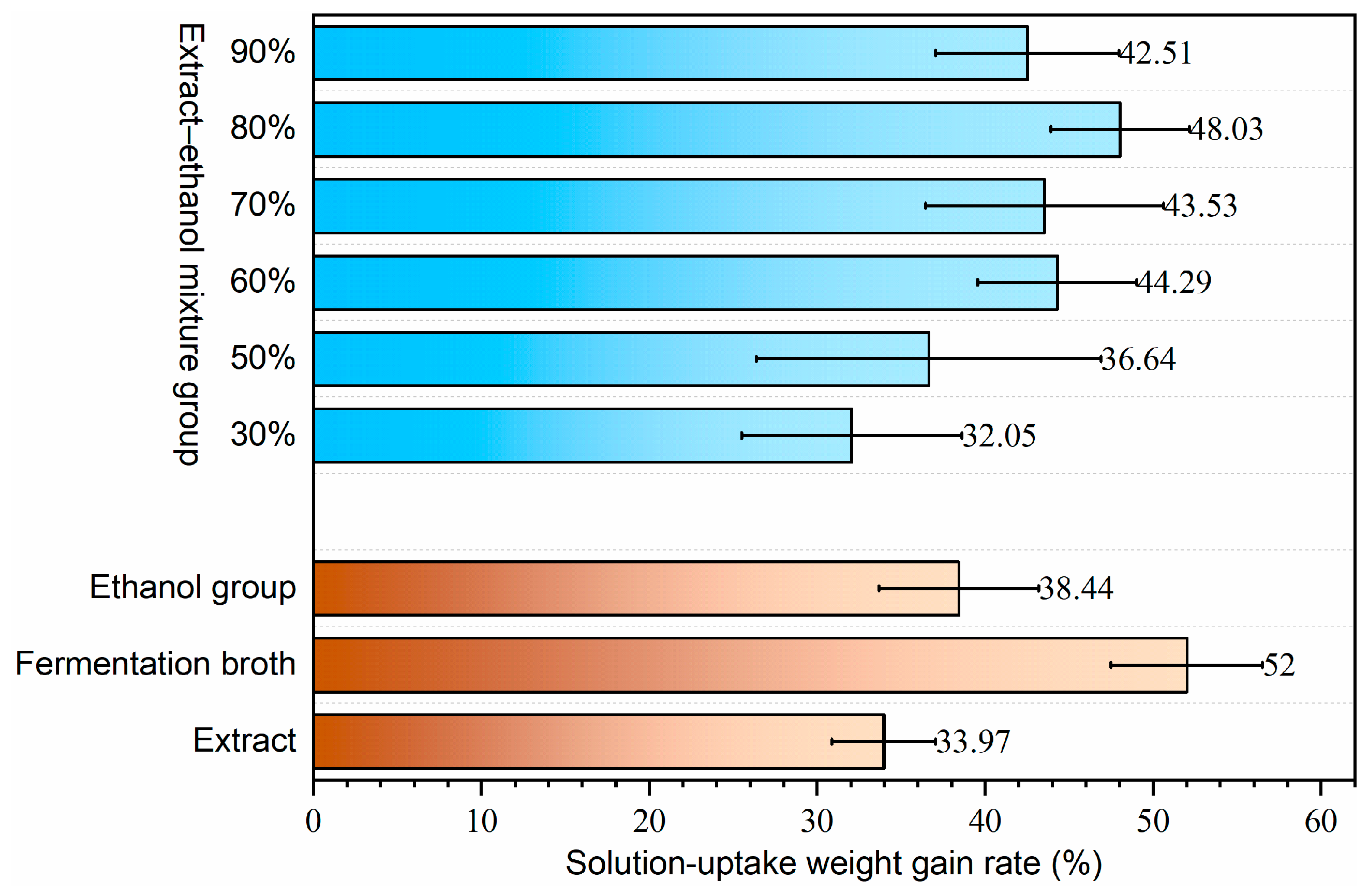
Solution uptake analysis was first used to compare the impregnation weight gain of rubberwood treated with different tung cake-derived formulations. Calculations were performed using Equation (1), and the results are shown in Figure 1. The solution-uptake weight gain rates varied among the different treatment groups. Among all treatment groups, the fermented tung cake solution group exhibited the highest solution uptake weight gain rate, at 52.00% ± 4.52%; followed by the 80% mixed solution group and the 60% mixed solution group, with solution uptake weight increases of 48.03% ± 4.12% and 44.29% ± 4.74%, respectively. Next were the 70% mixed solution group and the 90% mixed solution group, whose solution uptake weight increases were relatively close, at 43.53% ± 7.10% and 42.51% ± 5.46%, respectively. The ethanol group recorded 38.44% ± 4.75%, while the tung cake extract group, the 50% mixture group, and the 30% mixture group showed relatively lower values at 33.97% ± 3.09%, 36.64% ± 10.26%, and 32.05% ± 6.57%, respectively.
Based on the mean values of the extract–ethanol mixture groups, the solution-uptake weight gain rate showed an increasing tendency from 30% to 80%, followed by a slight decrease at 90%. The weight gain rates were lower in the 30% and 50% mixture groups, increased in the 60% group, reached a maximum in the 80% group, and then declined slightly in the 90% group. This pattern suggests that the final ethanol volume fraction may influence the impregnation weight gain of the extract–ethanol mixtures in rubberwood. Appropriately increasing in the final ethanol volume fraction may be associated with higher mean solution-uptake weight gain; however, when the ethanol concentration was further increased to 90%, the mean weight gain did not continue to increase.
Furthermore, the uptake weight gain rate in the fermented tung cake solution group was higher than that in the extracted tung cake solution group, suggesting that fermentation treatment may have increased the mean impregnation weight gain of the liquid system within rubberwood. Based on these results, differences were observed in the solution-uptake weight gain of rubberwood among the different treatment solutions, with fermented tung cake solution and mixtures containing higher ethanol concentrations exhibiting higher uptake weight gain rates. However, higher solution-uptake weight gain did not necessarily correspond to better anti-A. niger performance, indicating that formulation efficacy was not determined solely by impregnation weight gain but may also be related to the properties and surface-associated behavior of the tung cake-derived formulations.

3.2. Analysis of Antifungal Performance

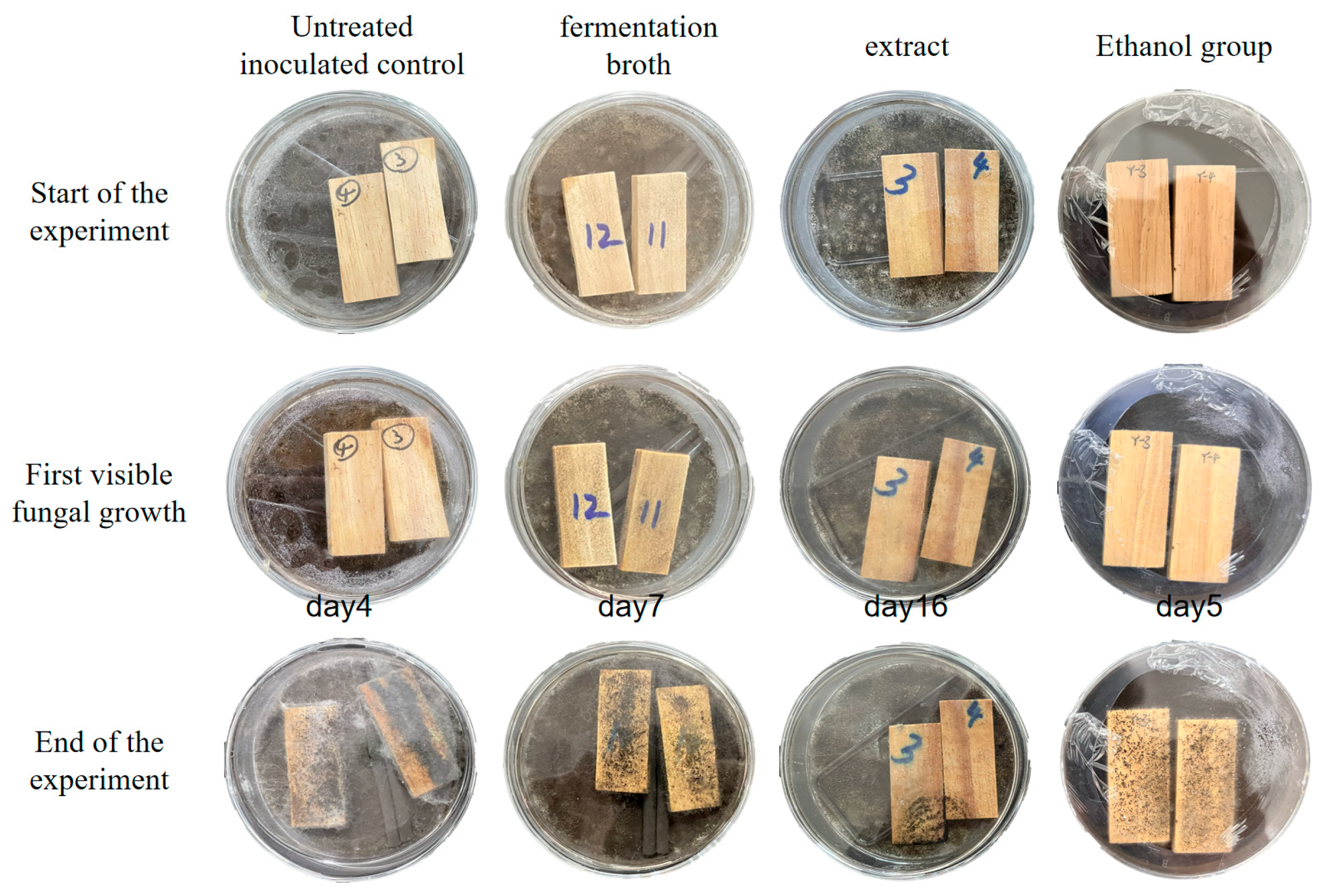
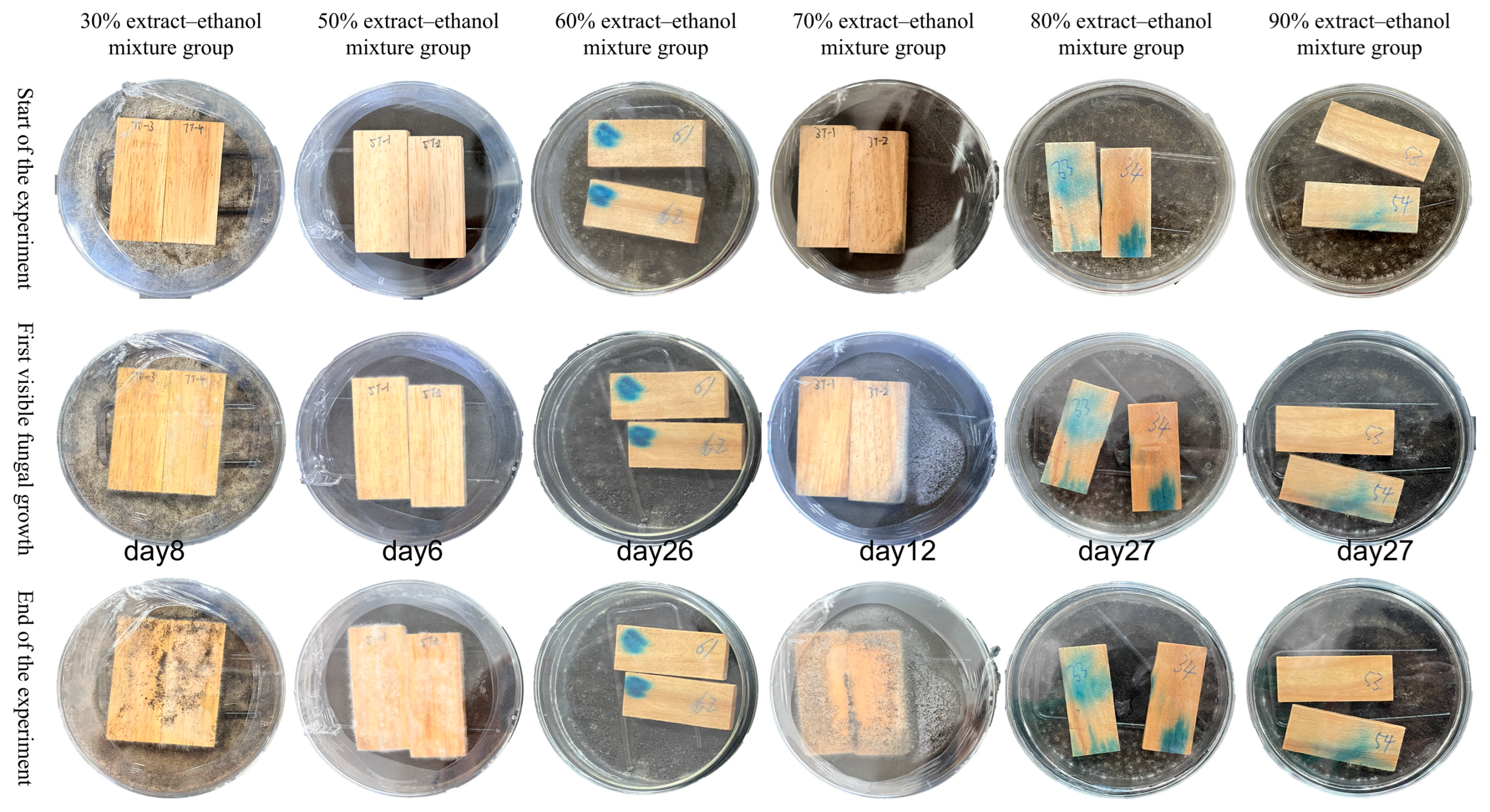
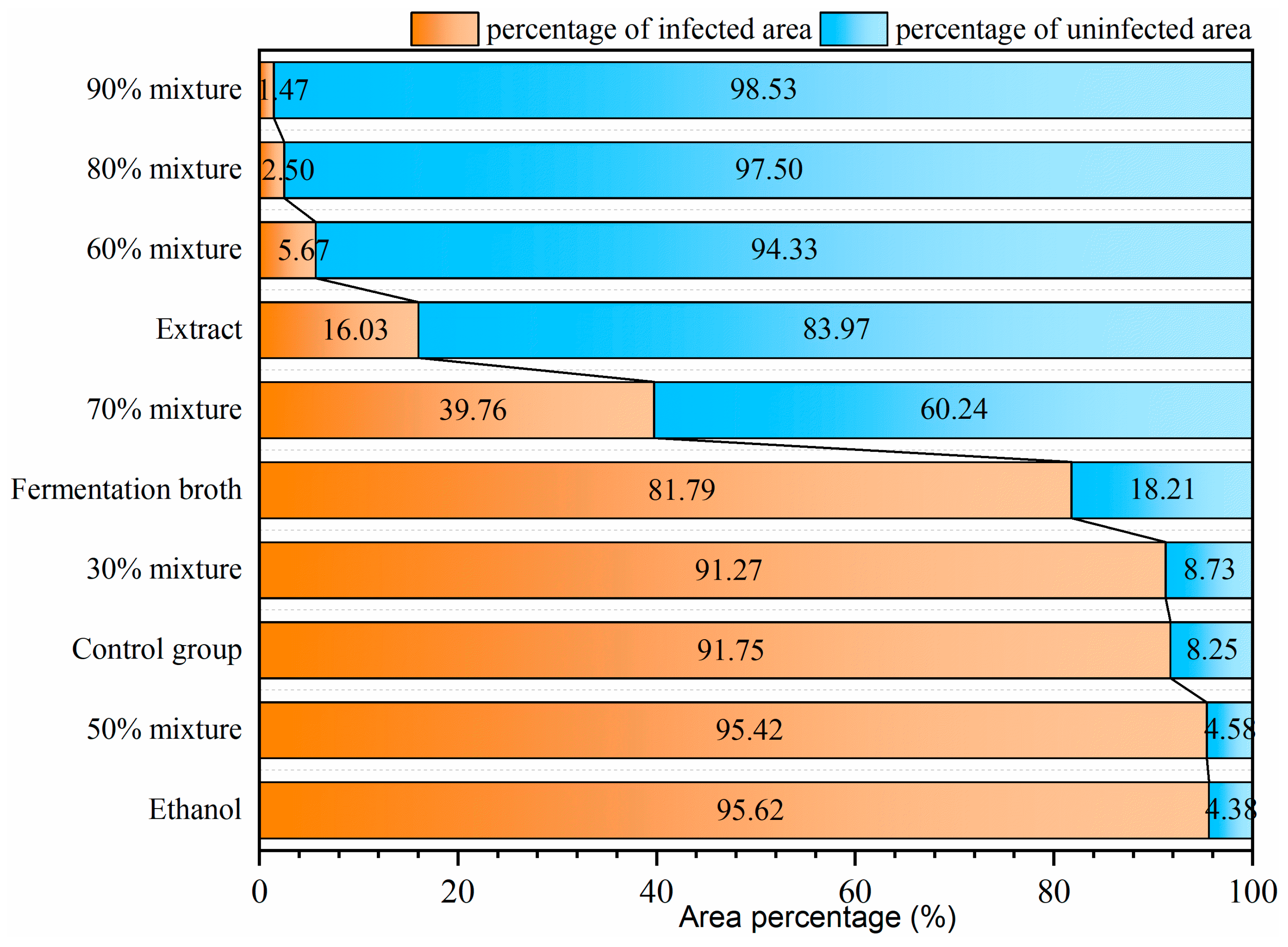
As shown in Figure 2, Figure 3 and Figure 4, the antifungal experiments revealed differences were observed in the timing and extent of fungal infection among the various sample groups.
The blank control group was infected earliest; fungal hyphae were observed growing within the wood blocks as early as Day 4. The fungus then spread rapidly, and by the end of the experiment, the sample surface was almost entirely covered by mold; The ethanol control group showed the first signs of infection on Day 5, but the mold spread rapidly, and the final extent of infection was similar to that of the blank control group. The fermented tung cake group showed the first signs of infection on Day 7; although this was later than the control group, by the end of the experiment, most of the sample surface had been infected. The tung cake extract group did not show the first signs of infection until Day 16, indicating that it has a certain inhibitory effect on mold. Among the groups treated with ethanol mixtures of different concentrations, the 50% and 30% groups showed initial infection on days 6 and 8, respectively, while the 70% group showed initial infection on day 12. In contrast, the 60%, 80%, and 90% groups did not show infection until days 26, 27, and 27, respectively, and even by the end of the experiment, only minor fungal growth and localized, limited infection were observed. Combining the ratio of infected area to uninfected area with Figure 4 shows that the infected area ratios for the ethanol group, 50% mixture group, control group, and 30% mixture group reached 96%, 95%, 92%, and 91%, respectively, indicating a relatively weak antifungal effect; the infected area ratio for the fermentation broth group was 82%, which, although slightly lower than the control group, still represented a relatively severe overall infection; the proportion of infected area in the 70% mixture group decreased to 40%, indicating improved antifungal efficacy; the proportions of uninfected area in the extract group and the 60%, 80%, and 90% mixture groups reached 84%, 94%, 98%, and 99%, respectively, indicating an apparent inhibitory effect on the spread of mold on the rubberwood surface, with the 80% and 90% mixture groups performing best.
Based on the infection area ratios of the rubberwood samples described above, and in conjunction with the D-grade classification of surface fungal infection values, the infection area ratios for each group were converted into infection values. Using the average infection value of the blank control group as the standard, the efficacy of the samples in preventing fungal infection was calculated according to Formula (3), as shown in Table 2 below. As shown in the table, the average infection value for the blank control group was 4.00. The average infection values for the ethanol group, the 30% mixture group, and the 50% mixture group were also 4.00, with corresponding control efficacies of 0.00%, indicating that these treatments had virtually no inhibitory effect on fungal infection. The average infection value for the fermented tung cake extract group was 3.83, with a control efficacy of only 4.17%, indicating limited antifungal effectiveness. The 70% mixture group had an average infection value of 2.50 and a control efficacy of 37.50%, demonstrating some inhibitory effect, though with variation within the group. In contrast, the average infection value for the tung cake extract group was 1.25, with a control efficacy of 68.75%, which was superior to that of the fermentation liquid group and the low-concentration mixture groups. The average infection values for the 60%, 80%, and 90% mixture groups were all 1.00, with control efficacies of 75.00% each, indicating a strong inhibitory effect on fungal infection of the rubberwood surface. Overall, these results identify the 80% ethanol-containing mixture as the best-performing formulation under the tested conditions, with the 90% and 60% mixtures and the crude extract also exhibited good antifungal activity, whereas the fermentation broth, the low-ethanol mixtures, and the ethanol control were markedly less effective. The lower performance of the 50% extract–ethanol mixture compared with the crude extract may be related to changes in the solution system after ethanol addition, such as dilution of water-soluble constituents, partial precipitation, or altered availability of tung cake-derived constituents. This indicates that the anti-A. niger performance of the mixtures was not simply proportional to ethanol concentration. The ethanol-treated group showed limited inhibition compared with the effective extract–ethanol mixtures, indicating that ethanol treatment alone was not sufficient to account for the improved anti-A. niger performance of the high-ethanol extract–ethanol mixtures under the tested conditions.
It should be noted that the infection value was calculated according to the infection grading scale. Therefore, the 60%, 80%, and 90% extract–ethanol mixture groups were all assigned an infection value of 1.00 because their infected areas fell within the same grade interval. However, the infected surface area still differed among these groups, with the 80% and 90% mixtures showing lower infected area proportions than the 60% mixture. Therefore, the infected and uninfected surface area percentages were used as supplementary indicators to provide additional resolution beyond the ordinal infection grade.

3.3. Moisture Stabilization and Barrier-Related Protection of Treated Rubberwood

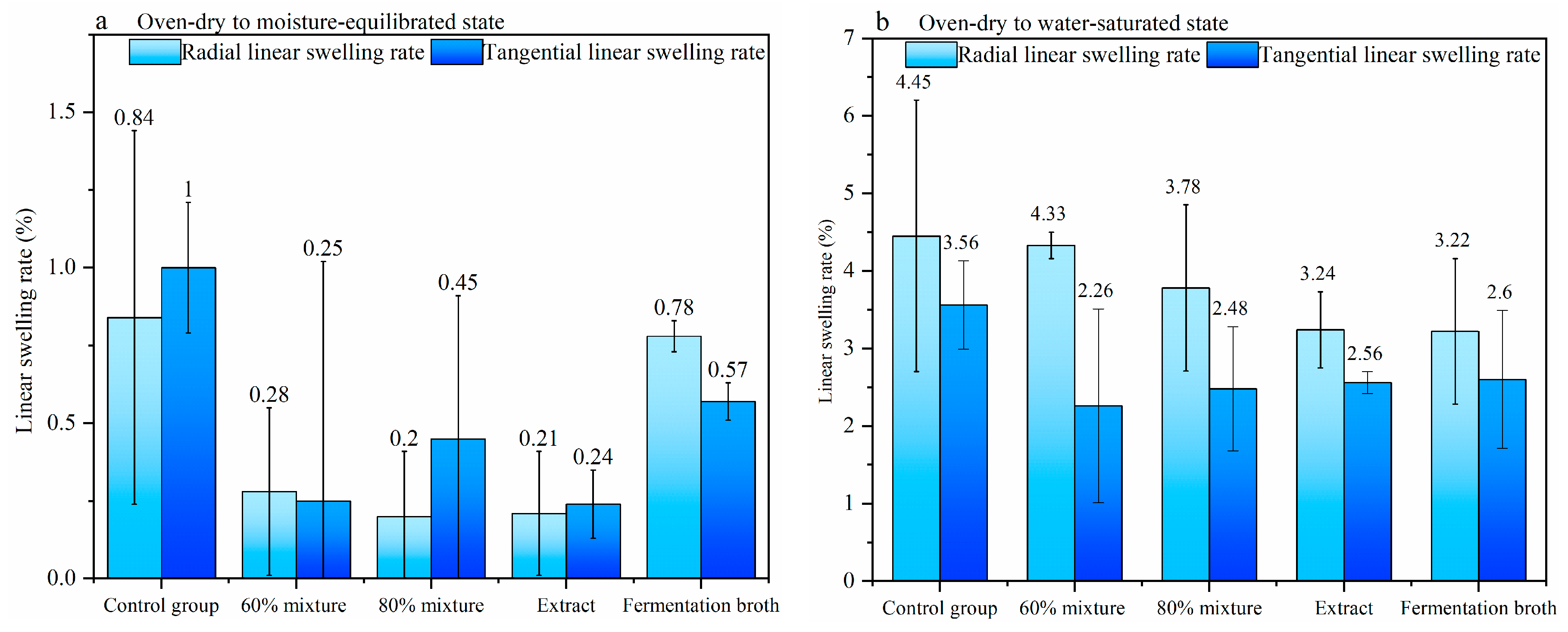
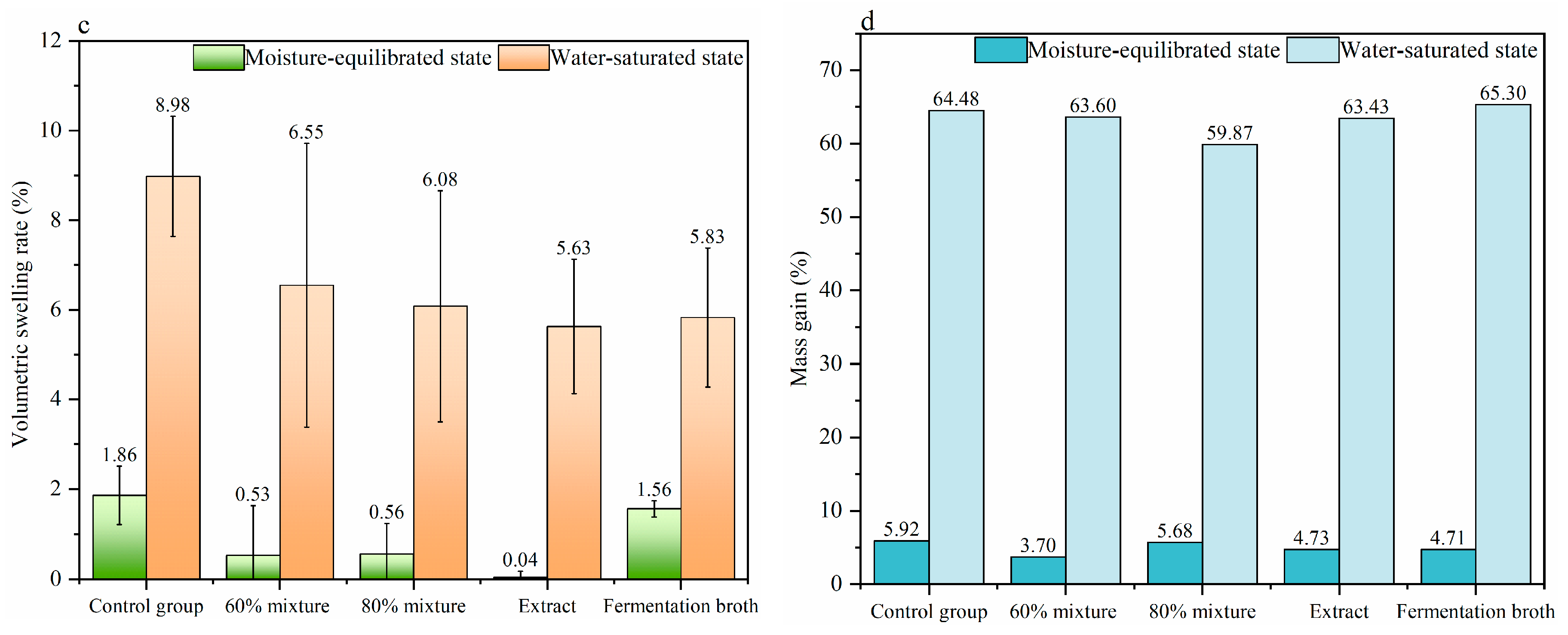
Because persistent surface moisture is a key factor promoting fungal colonization on rubberwood, the swelling and moisture-uptake behavior of the treated specimens was further evaluated to determine whether tung cake-derived formulations could provide additional protection through moisture stabilization. Based on the mold-resistance results, selected representative treatment groups were further evaluated for moisture-induced swelling behavior. The linear swelling rate, volumetric swelling rate, and mass change rate were calculated using Equations (4)–(7), and the average values were determined for each treatment group. As shown in Figure 5, the different treatments affected the linear swelling, volumetric swelling, and mass gain of rubberwood to varying extents. As shown in Figure 5a, from the oven-dry state to the moisture-equilibrated state, the untreated control showed the largest dimensional change, with radial and tangential linear swelling rates of 0.84% and 1.00%, respectively. In contrast, the extract group and the 60% and 80% mixtures generally exhibited lower values, indicating a reduced tendency for early-stage moisture-induced expansion. Notably, the radial linear swelling of the extract-treated specimens approached zero, suggesting a pronounced restriction of dimensional change at the onset of moisture uptake. Although the fermentation broth group also showed lower swelling than the control, the improvement was comparatively limited.
As shown in Figure 5b, a similar trend was observed under saturated conditions. The treatment groups presented in Figure generally showed lower mean linear swelling than the control under the tested conditions, which reached 4.45% in the radial direction and 3.56% in the tangential direction. The radial and tangential directions were rechecked against the marked specimen orientation, and the values are reported according to the actual measured directions. The extract group, fermentation broth group, and the 60% and 80% mixtures all mitigated swelling to some extent, indicating that tung cake-derived formulations can improve dimensional stability even under high-moisture exposure.
As shown in Figure 5c, the volumetric swelling results further supported the observed tendency of reduced swelling after treatment. The control group showed the highest volumetric swelling, reaching 1.86% in the moisture-equilibrated state and 8.98% under saturated conditions. After treatment, the groups presented in Figure showed lower mean volumetric swelling than the control to varying extents. The extract group exhibited the lowest volumetric swelling in the moisture-equilibrated state (0.04%), while the extract, fermentation broth, and 80% mixture groups showed lower mean values than the control under the tested conditions, with values of 5.63%, 5.83%, and 6.08%, respectively. These results indicate that the selected treatments tended to improve the moisture-related dimensional stability of rubberwood under the tested conditions, particularly when moisture exposure became more severe.
As shown in Figure 5d, the mass-gain data showed a similar tendency. Although differences in moisture-uptake weight gain among groups were relatively small, the 80% mixture exhibited the lowest water-saturated weight gain, suggesting lower water uptake under the tested conditions. By contrast, the fermentation broth group showed the highest water-saturated mass gain, indicating a weaker effect on reducing water-saturated mass gain.
Taken together, these results indicate that the selected tung cake-derived formulations presented in Figure tended to improve the moisture-related dimensional stability of rubberwood under the tested conditions. This effect may be associated with surface-associated deposition and partial shielding of exposed wood structures, which could contribute to the reduced swelling observed under the present experimental conditions [28]. Because fungal growth on rubberwood is strongly favored by persistent high-moisture conditions, the reduced swelling and water uptake observed after treatment may contribute indirectly to the enhanced antifungal performance. Thus, in addition to the intrinsic bioactivity of the extracted constituents, moisture stabilization appears to be an important auxiliary mechanism underlying the mold resistance of the treated wood [29].

3.4. FTIR Analysis

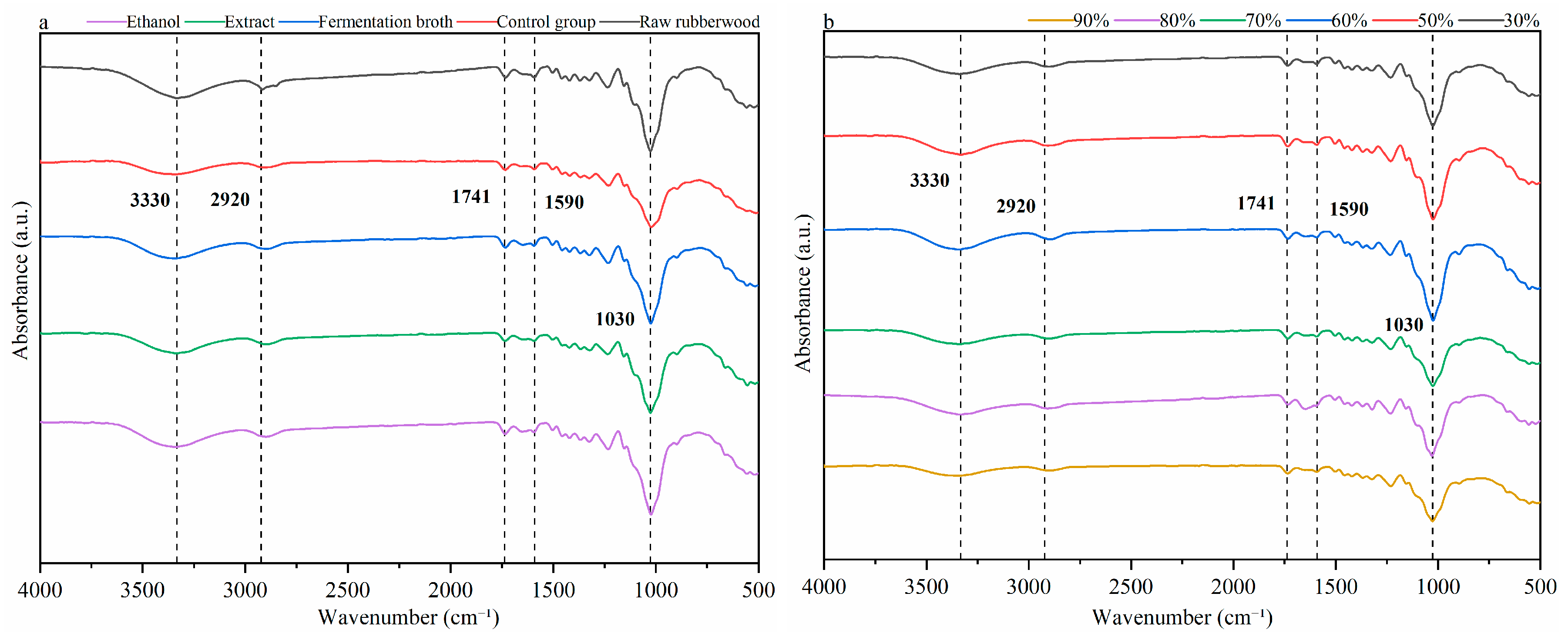
The FTIR spectra of raw rubberwood, the control group, the ethanol control group, the tung cake extract group, and the fermented tung cake group are shown in Figure 6a. As can be seen from the figure, the positions of the main peaks are essentially consistent across all treatment groups, indicating that rubberwood retains its basic structure—composed primarily of cellulose, hemicellulose, and lignin—even after different treatments. The peak near 3330 cm−1 primarily corresponds to the stretching vibration of hydroxyl groups (–OH), the peak near 2920 cm−1 corresponds to the stretching vibration of aliphatic C–H bonds, the peak near 1741 cm−1 is related to the carbonyl (C=O) vibration in hemicellulose, the region around 1590 cm−1 primarily reflects the vibration of the aromatic ring backbone in lignin, while the region around 1030 cm−1 is associated with C–O and C–O–C vibrations in cellulose and hemicellulose [30,31]. The changes in peak intensity near 1741, 1590, and 1030 cm−1 were relatively more pronounced in the extract group and the fermentation broth group. These qualitative spectral variations suggest that the tung cake-derived treatments changed the surface-associated spectral features of rubberwood, probably due to the presence or redistribution of treatment-derived constituents on the wood surface. However, the main absorption bands remained present, indicating that the main lignocellulosic framework of rubberwood was not substantially altered.
Figure 6b shows the FTIR spectra of rubberwood treated with tung cake extracts at different ethanol concentrations. As can be seen from the figure, Figure 6b is similar to Figure 6a, with the positions of the main peaks remaining largely consistent across the various mixture groups. This indicates that the main structural framework of the rubberwood remains relatively stable after treatment under different ethanol concentration conditions. The differences between the various concentration groups are primarily reflected in changes in peak intensity, particularly around 1741 cm−1, 1590 cm−1, and 1030 cm−1. These differences may be associated with variations in the surface-associated constituents introduced by the different extract–ethanol mixtures, which could contribute to differences in the apparent physicochemical characteristics of the treated wood surface [32]. Among these, the high-concentration ethanol extract group exhibited relatively more pronounced changes in peak shapes in the fingerprint region, indicating a stronger impact on the functional group environment of the rubberwood surface.
As shown in Figure 6, the positions of the main peaks in the FTIR spectra of rubberwood did not undergo changes after different treatments. This indicates that neither the extract group, the fermentation broth group, nor the groups treated with mixtures of different ethanol concentrations disrupted the basic structural framework of rubberwood, which consists primarily of cellulose, hemicellulose, and lignin. The differences were primarily concentrated around 3330 cm−1, 1741 cm−1, 1590 cm−1, and 1030 cm−1, reflecting that the treatment solutions exerted varying degrees of influence on the hydroxyl groups, carbonyl groups, aromatic structures of lignin, and the environment of C–O functional groups on the wood surface [30,31,32,33]. Compared to the base treatment group, the changes in the fingerprint region were more distinct in the groups treated with mixtures of different ethanol concentrations, indicating that ethanol concentration not only affects the types and proportions of active components extracted from the tung cake but also further influences the interaction modes between these components and the wood surface. These qualitative spectral variations suggest that the tung cake-derived treatments changed the surface-associated spectral features of rubberwood, probably due to the presence or redistribution of treatment-derived constituents on the wood surface. However, the FTIR results were used mainly as qualitative evidence and should not be interpreted alone as direct proof of specific chemical bonding or molecular-level adsorption mechanisms. Overall, the FTIR results indicate that the tung cake-derived formulations did not substantially alter the main chemical framework of rubberwood, while treatment-dependent qualitative spectral differences were observed on the treated wood surfaces.

3.5. XRD Analysis

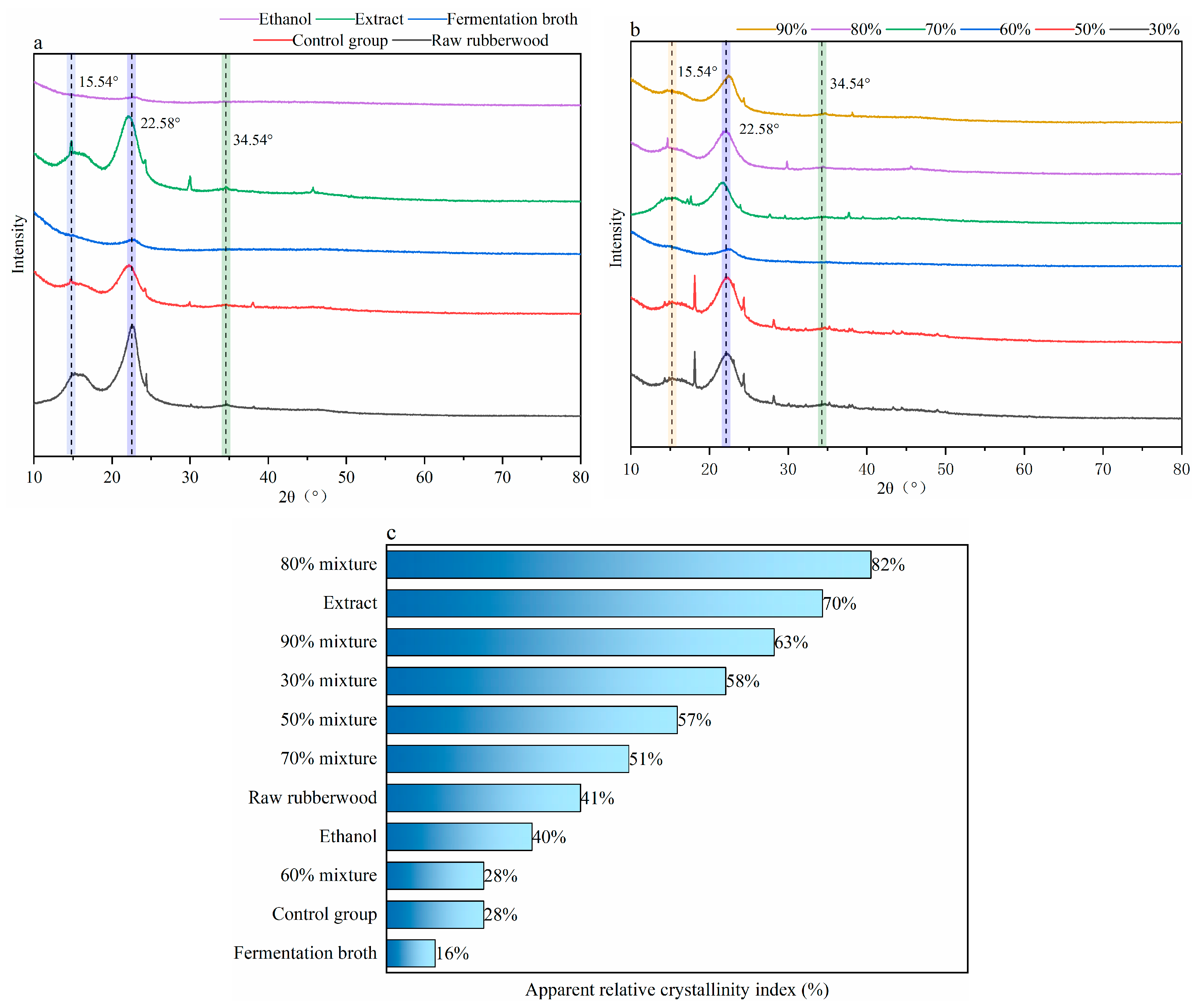
The XRD patterns of raw rubberwood, the control group, the ethanol group, the extract group, the fermentation broth group, and rubberwood treated with mixtures of different ethanol concentrations are shown in Figure 7. Characteristic diffraction positions of cellulose can still be observed near 2θ = 15.54°, 22.58°, and 34.54° in all treatment groups, with 22.58° being the main diffraction peak, indicating that cellulose I remains the predominant structure in rubberwood after various treatments; however, differences in peak intensity, peak shape, and background scattering were observed among the groups, indicating that the different treatment solutions had altered the apparent diffraction behavior [34,35,36,37,38].
Based on peak-area calculations, the apparent relative crystallinity index values of raw rubberwood, the ethanol group, and the control group were 40.61%, 40.00%, and 28.00%, respectively; the extract group increased to 70.00%, while the fermentation broth group decreased to 16.00%. Notably, the main peak in the extract group was enhanced near 22.58°, indicating a higher relative contribution of cellulose-related diffraction peaks; in contrast, the main peak in the fermentation broth group was markedly weakened, and the pattern became flatter, suggesting a greater contribution from the amorphous phase or surface deposition background.
The apparent relative crystallinity index values among the tested groups were ranked as follows: 80% extract–ethanol mixture (82.00%) > extract (70.00%) > 90% extract–ethanol mixture (63.00%) > 30% extract–ethanol mixture (58.00%) ≈ 50% extract–ethanol mixture (57.00%) > 70% extract–ethanol mixture (51.00%) > raw rubberwood (40.61%) ≈ ethanol group (40.00%) > 60% extract–ethanol mixture (28.00%) = control group (28.00%) > fermentation broth (16.00%). The 80% and 90% extract–ethanol mixtures exhibited relatively prominent main peaks near 22.58°. However, the apparent relative crystallinity index values did not show a simple monotonic relationship with ethanol volume fraction, as the 60% mixture showed a much lower value than the 30%, 50%, 70%, 80%, and 90% mixtures. In addition, the 30% and 50% mixtures showed relatively high apparent relative crystallinity index values but did not show correspondingly strong anti-A. niger performance. Therefore, the apparent relative crystallinity index values should not be interpreted as a direct explanation for mold-resistance performance.
Based on the above results, it can be concluded that the different tung cake treatment solutions did not alter the basic crystalline structure of rubberwood but did affect the apparent relative crystallinity index of the crystalline and amorphous regions. The extract group and the high-concentration mixture group, particularly the 80% mixture group, exhibited higher apparent relative crystallinity index, indicating that they are more likely to form a stable coating or deposit layer on the wood surface, thereby reducing the exposure of amorphous regions and hydrophilic sites [39,40]. In contrast, the fermentation broth group and the 60% mixed solution group exhibited lower crystallinity, suggesting a weaker regulatory effect on the wood surface structure. Taken together with the antifungal data, the increased apparent crystallinity of the 80% ethanol-containing mixture is more reasonably interpreted as evidence of a more stable surface-associated deposition/coating state than as a fundamental transformation of the wood crystal structure [41]. Therefore, the XRD results were used as supplementary structural information rather than as direct evidence explaining mold resistance. The 80% extract–ethanol mixture showed the highest apparent relative crystallinity index value, but its overall performance should be discussed together with anti-A. niger performance, infected surface area, moisture-related swelling behavior, and SEM observations, rather than on the basis of XRD crystallinity alone.
Raw rubberwood refers to untreated and uninoculated rubberwood. The control group refers to untreated rubberwood exposed to A. niger without impregnation treatment. The other groups refer to rubberwood specimens impregnated with the corresponding treatment solutions before exposure to A. niger.

3.6. SEM Analysis

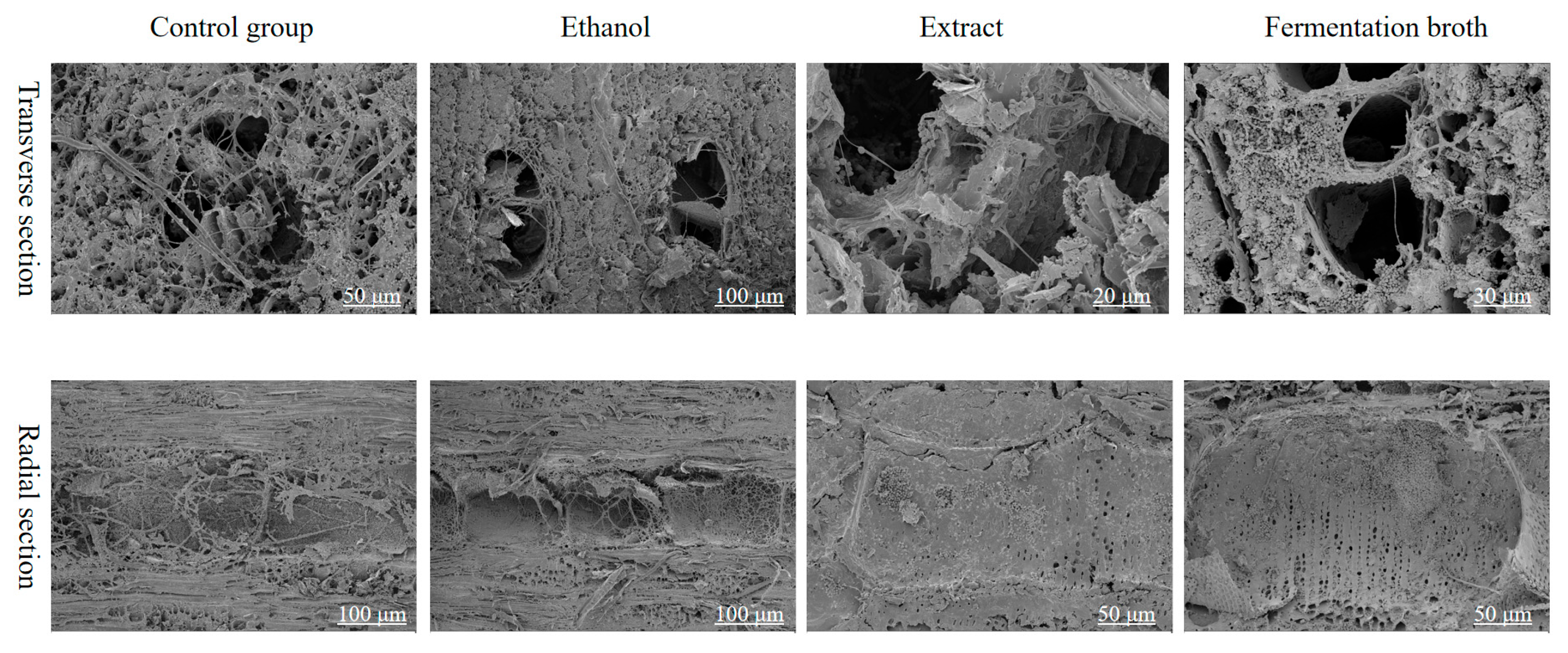
Scanning electron microscopy (SEM) was used to characterize the microscopic morphology of untreated rubberwood, as well as rubberwood samples impregnated with ethanol and those impregnated with a mixture of tung cake fermentation broth, extract, and ethanol, following the antifungal experiments. See Figure 8 and Figure 9. Because the SEM samples were collected after the mold-resistance test, the observed filamentous and reticulate structures were interpreted in the context of fungal colonization and are described here as visible hyphae-like structures. In contrast, non-filamentous surface materials are described more cautiously as surface-associated deposits or covering-like features. SEM observation was used to visualize the surface morphology and fungal colonization characteristics of rubberwood after different treatments. Because fungal coverage differed greatly among groups, magnification was adjusted where necessary to clearly present representative hyphal distribution and surface features. As shown in Figure 8, the 200× transverse section of the control group reveals distinct flocculent and reticulate deposits; the surfaces of the vessels and surrounding tissues are relatively rough, with localized cavities covered by filamentous structures and granular substances. The 100× radial section similarly exhibits numerous filamentous connections and loose accumulations, suggesting extensive visible fungal colonization on the wood surface and near the cell cavities after mold exposure. In the ethanol group, the 100× transverse and radial sections showed fewer visible visible fungal hyphae structures than the control group; however, residual infection was still visible at the edges of the vessels and surrounding areas, suggesting that ethanol treatment provided only limited morphological protection under the present conditions. In the extract group, the 500× transverse section and 200× radial section showed relatively intact structures, with clear outlines of the vessels and cell cavities. Continuous or patchy covering-like surface features were observed, and visible hyphae-like structures were fewer than in the control group. These observations suggest that extract treatment was associated with surface morphological changes and reduced visible fungal colonization in the observed SEM fields. In the fermentation broth group, the 300× transverse and 200× radial sections revealed some surface-associated deposits and partial shielding of visible cavities, but there were numerous granular deposits on the surface, and distinct attachments were still visible in some areas, indicating that its morphological protection was less evident than that of the extract group. Previous studies have reported that surface-associated covering layers, deposits within visible cavities, and reduced hyphal attachment are commonly associated with barrier-type protection in treated wood and may contribute to limiting fungal colonization and spread [42,43,44]. In the present study, similar covering-like surface features and fewer visible fungal hyphae were observed in the extract and high-ethanol mixture groups, suggesting a possible barrier-related morphological contribution.
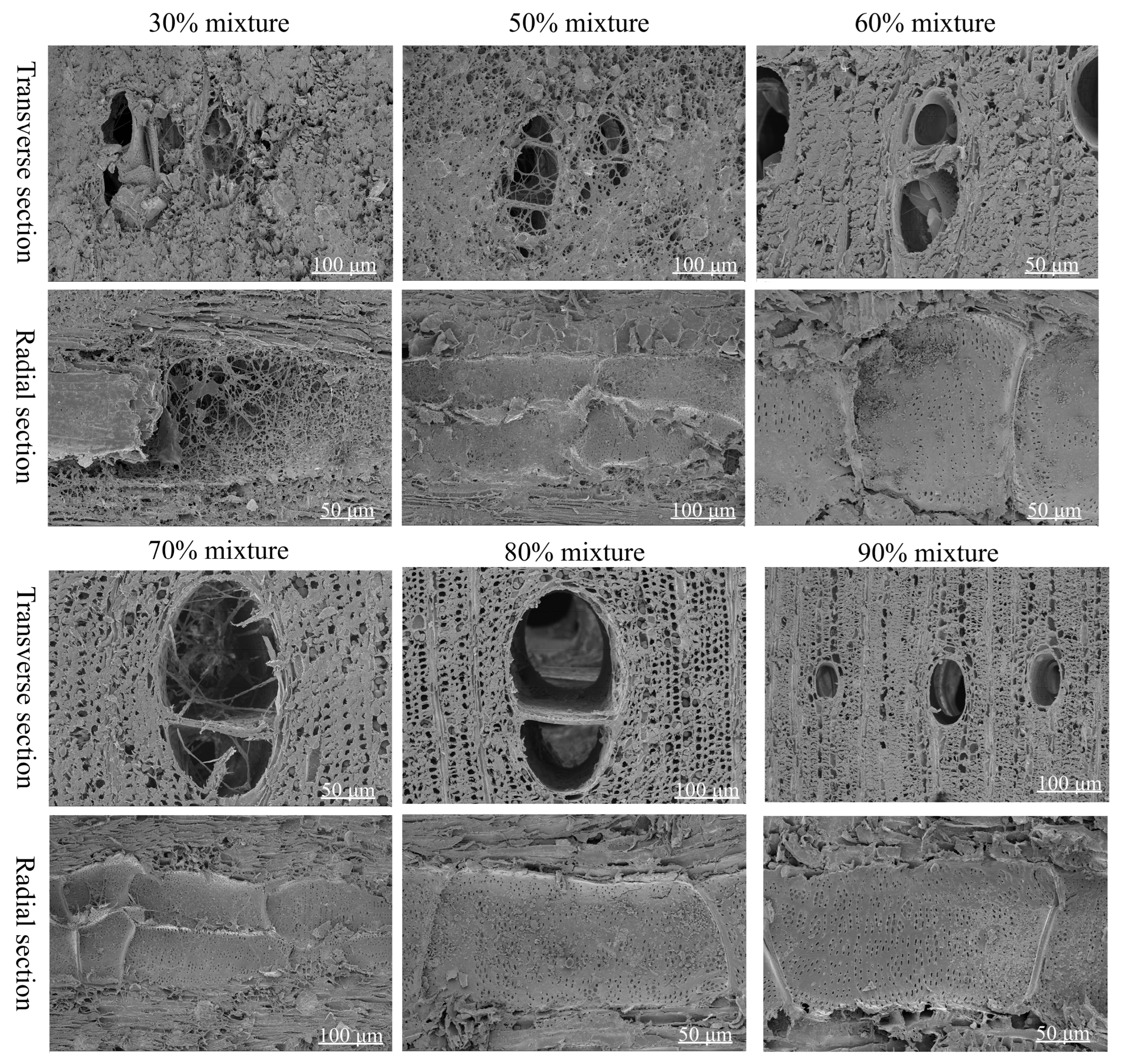
As shown in Figure 9, the 100× cross-sections of the 30% and 50% mixture groups reveal a relatively large amount of aggregated deposits and reticulated attachment structures, with some vessels visibly covered or partially shielded by surface materials and hyphae-like structures. The radial sections also exhibit noticeable accumulation, suggesting that although low-concentration mixtures produced some surface-associated deposits, their ability to reduce visible hyphae-like colonization remained limited. In the 60% and 70% mixture groups, the boundaries between the vessels and surrounding tissues were clearer than in the previous two groups, with more uniform covering-like surface features and fewer visible hyphae-like structures in the observed regions. This suggests that as the concentration of the mixture increases, the adhesion and protective effects of the treatment solution on the wood surface are enhanced. The 80% and 90% mixture groups exhibited more intact cellular structures and clearer vessel outlines; in particular, the tissue surrounding the vessels was denser in the cross-sections, the cell wall surfaces were relatively smooth in the radial sections, and hyphae-like attachment structures were reduced. This indicates that high-concentration mixtures were associated with more continuous covering-like surface features and fewer visible fungal hyphae in the observed SEM fields. Previous studies have reported that deposits or coating-like features within cell cavities and on cell wall surfaces are commonly associated with improved wood mold resistance and durability.
As shown in the two SEM images, the tung cake extract solution has a effect on the microstructure of rubberwood. The control group and the ethanol group exhibited a large number of mycelium-like deposits and noticeable structural damage; in contrast, the extract group and the high-concentration mixture group displayed more intact vessel and cellular structures. Combined with the mold-resistance, moisture-stability, and XRD results, the SEM observations support the interpretation that tung cake extract and high-ethanol mixtures may contribute to mold inhibition through the combined effects of bioactive constituents, surface-associated deposition, and a barrier-like morphological effect. Although some deposition was observed in the fermentation broth group, its surface structural uniformity and shielding effect were relatively weak, resulting in limited antifungal activity. SEM observations further supported the view that the optimized tung cake fractions were associated with fewer visible fungal hyphae and more continuous surface-associated covering features, which were consistent with a possible barrier-like protective effect on the wood surface.

3.7. Weight Loss Rate of Fruits and Vegetables

During storage, fruits continuously lose water due to respiration and transpiration, resulting in a gradual increase in the weight loss rate. A higher weight loss rate indicates more severe water loss in the fruit, making it more prone to mold and wrinkling, and leading to a faster decline in storage quality [45,46]. Therefore, the weight loss rate serves as an important indicator for evaluating the effectiveness of preservation.
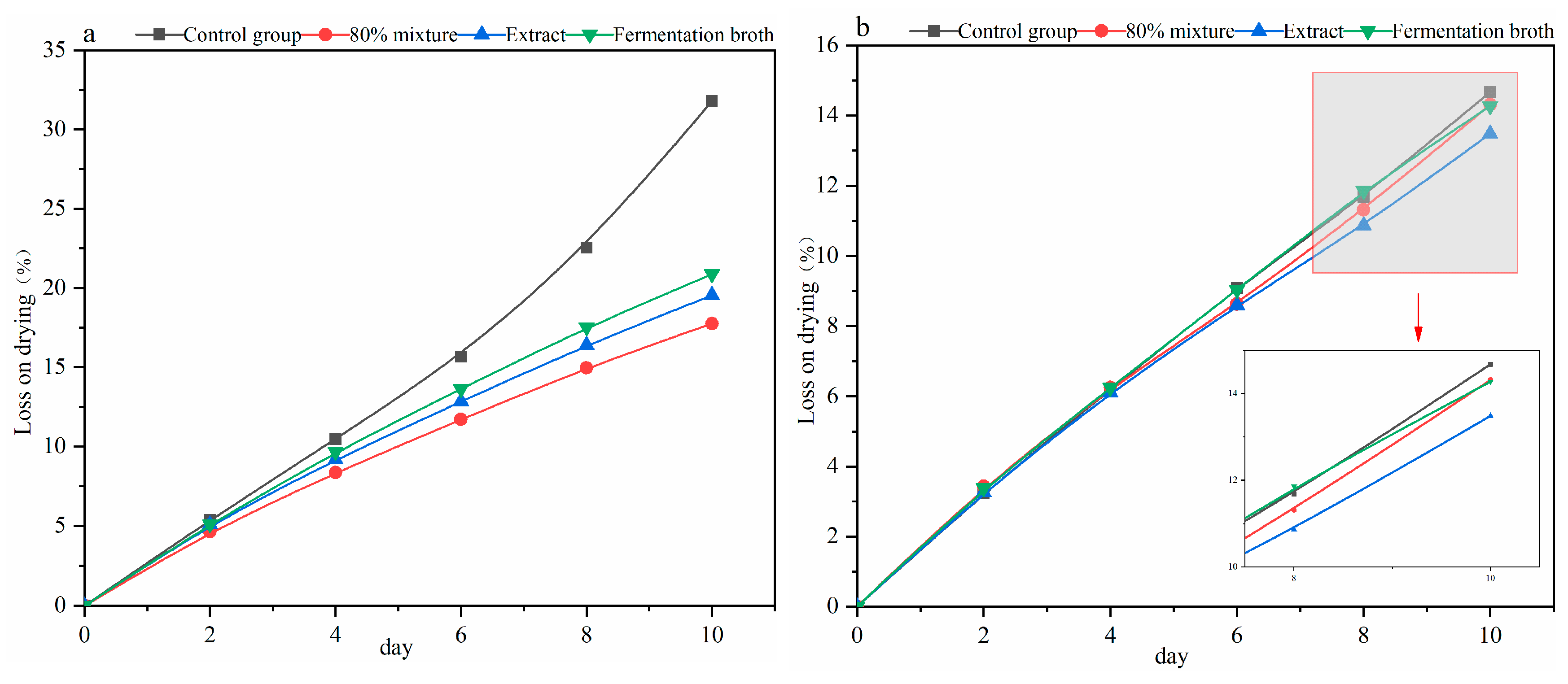
As shown in Figure 10a, the changes in weight loss rates during storage were quite pronounced across the different treatment groups. The control group consistently exhibited the highest weight loss rate, reaching 31.79% by day 10, indicating the most severe water loss in untreated fruit. All treatment groups showed lower mean weight loss than the control group to varying extents, with the 80% extract–ethanol mixture showing the lowest mean weight loss among the orange treatments, with a weight loss rate of only 17.76% by day 10; followed by the tung cake extract group and the fermentation broth group, at 19.54% and 20.87%, respectively. Overall, the results indicate that treatments with 80% ethanol in tung cake and tung cake extract are effective in delaying water loss in oranges.
As shown in Figure 10b, the weight loss rates of the various treatment groups for grapes also increased gradually with prolonged storage, but the overall magnitude of change was smaller than that for oranges. By the 10th day of storage, the weight loss rate of the control group was the highest, at 14.67%. Compared with the control group, the treated groups showed slightly lower mean weight loss than the control, but the differences were relatively small, but the differences between groups were relatively small. Among them, the tung cake extract group had the lowest weight loss rate, at 13.48%. The remaining treatment groups, such as the fermentation broth group and the 80% ethanol tung cake group, had weight loss rates of 14.27% and 14.31%, respectively, at the end of storage. This indicates that, compared to oranges, the differences in response to the various treatment groups were smaller for grapes; however, the tung cake extract group showed the lowest mean value among the grape treatments; however, this difference should be interpreted cautiously.
Overall, different treatments can delay fruit water loss to some extent, but their effects vary across different fruits. Oranges lose weight more rapidly during storage, and the differences in treatment effects are more pronounced; grapes exhibit lower overall weight loss, with relatively minor differences among the treatments. Overall, the 80% ethanol tung cake group provided the best preservation effect for oranges, while the tung cake extract group showed a slightly lower mean weight loss in grapes, but the differences among grape treatments were limited.

3.8. Decay Rate Evaluation

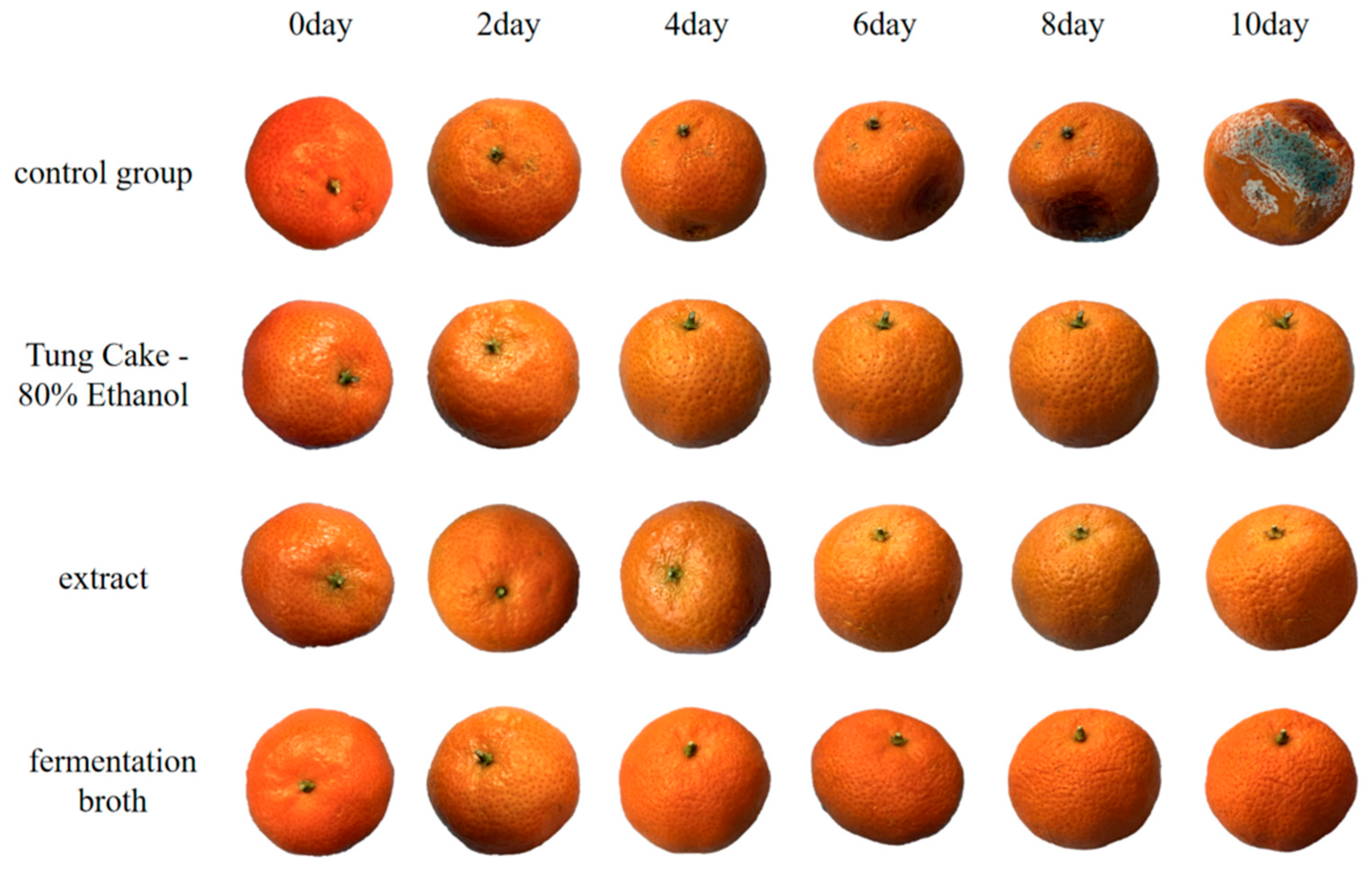
The changes in the appearance of oranges and grapes during storage under different treatments are shown in Figure 11 and Figure 12, respectively; the rot rates were calculated using the formula. As shown in Figure 11, there were no differences were observed in appearance among the groups during the early stages of storage, and the color and shape of the peel remained largely stable. As storage time increased, the control group was the first to show obvious signs of rot. By the fourth day, localized rot had already appeared in the orange control group; by the eighth day, the rot had worsened; and by the tenth day, extensive mold had developed on the surface, rendering the fruit virtually worthless for commercial sale. In contrast, the other treatment groups maintained a relatively intact overall appearance throughout the entire storage period, with no significant rot observed.
Data Processing and Descriptive Analysis of the rot rates further confirmed these observations (Table 3). The rot rate in the orange control group reached 33.33% on the fourth day, rose to 66.67% on the sixth day, and reached 100.00% on both the eighth and tenth days; in contrast, the rot rate in the other treatment groups remained at 0% throughout the entire storage period. Under the present natural storage conditions, no visible decay was observed in the treated orange groups during the 10-day storage period, whereas the control group showed visible decay from day 4 onward.
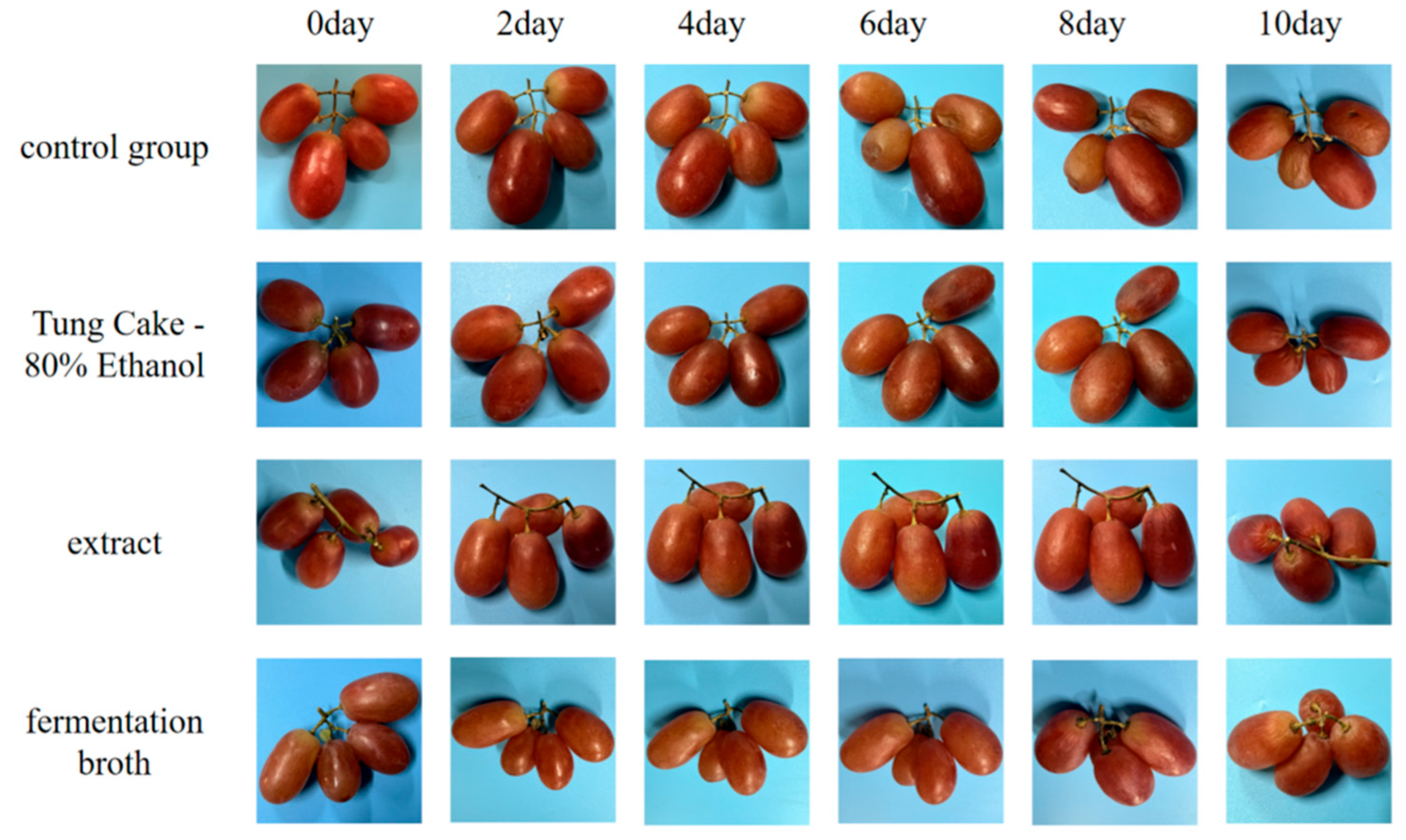
As shown in Figure 12, the overall appearance of grapes changed more gradually than that of oranges during storage, and the control group was also the first to show signs of spoilage and rot. By Day 4, isolated instances of rot had already appeared in the control group; by Days 6 and 8, the number of rotten grapes had increased further; and by Day 10, most grapes had lost their normal color and integrity. In contrast, grapes in the other treatment groups remained largely intact throughout the storage period, with good attachment between the stems and berries, and no significant spread of rot was observed.
The rot rate in the control group of grapes was 25.00% on day 4, 50.00% on day 6, and 75.00% on both days 8 and 10; in contrast, the rot rate in all treatment groups remained at 0% throughout the storage period. This indicates that each treatment effectively inhibited grape rot. This indicates that under the conditions of this experiment, grapes respond relatively consistently to preservation treatments, and all treatments effectively delay the onset of rot.
A comprehensive analysis of the appearance images and rot rates reveals that while all treatments delayed fruit rot to some extent, their effects varied across different fruits. In the control group, both oranges and grapes began to rot first, indicating that untreated fruits have poor storage stability; conversely, all treatment groups reduced rot rates, suggesting that treatments involving tung cake extract hold good potential for preserving fruits and vegetables.
Because each grape treatment group contained only four individual berries, the grape decay results should be interpreted descriptively as preliminary visual observations.

3.9. Color Retention of Stored Fruit

To evaluate the effects of different treatments on the visual quality of fruits, a universal colorimeter was used to measure changes in the comprehensive surface color parameters L*, a*, and b* of oranges and grapes during storage. L* represents lightness; a higher value indicates a brighter sample surface. a* represents changes along the red-green axis; a higher positive value indicates a more reddish sample. b* represents changes along the yellow-blue axis; a higher positive value indicates a more yellowish sample [47,48]. Details of the color changes in all fruits are shown in Table 4, Table 5 and Table 6.
As shown in the tables, after a 10-day experiment, the L* value of the orange control group decreased from 51.22 to 39.54 during storage, representing the largest decline. This indicates a reduction in peel brightness, with the surface gradually losing its luster and showing a tendency toward browning. In contrast, the L* values of the treatment groups remained relatively stable overall. The 80% ethanol tung cake group consistently maintained a value around 52, remaining at 52.33 on day 10; the tung cake extract group also maintained high brightness during the later stages of storage, indicating that these treatments effectively preserved the appearance of the orange peel. Regarding the a* value, the control group decreased from 29.66 to 23.49, while most treatment groups showed an upward trend. The 80% ethanol tung cake group reached 35.84 on day 10, and the extract and fermentation liquid groups reached 35.40 and 34.55, respectively, in the later stages of storage, indicating that the red-orange color of the orange peel was better preserved after treatment. Regarding the b* value, the control group decreased from 49.16 to 37.32, showing a reduction in yellowness; whereas the 80% ethanol from tung cake group increased from 50.47 to 55.18, the fermentation broth group increased from 49.49 to 54.49, and the extract treatment group remained at 50.54, suggesting that these treatments effectively delayed the yellowing and dulling of the peel color. Overall, the 80% ethanol treatment with tung cake and the extract treatment showed better effects in maintaining the comprehensive color of oranges, which is generally consistent with the results of lower weight loss and lower rot rates [49].
For grapes, the overall magnitude of color changes across treatment groups was smaller than that observed in oranges. L* values showed that the control group decreased from 28.89 to 24.46, indicating a gradual reduction in brightness; in contrast, the extract treatment group consistently maintained a higher brightness, ranging from 26.55 to 26.74, making it one of the treatments with the best overall color retention among all groups. The 80% ethanol tung cake group and the fermentation broth group also showed only a slight decrease in L* values during the later stages of storage, at 26.09 and 25.58, respectively. Regarding the a* value, the control group decreased from 11.61 to 8.72, indicating a reduction in redness; in contrast, the treated groups showed relatively gradual changes overall. Specifically, the 80% ethanol tung cake group, the extract group, and the fermentation broth group recorded values of 13.41, 12.56, and 10.65, respectively, at the end of storage—all higher than the control group—suggesting that these treatments help preserve the red appearance of the grapes to some extent. Regarding the b* value, the changes across groups were minor. The control group decreased from 10.51 to 10.08, while the tung cake extract group reached 11.92, indicating that some treatments can maintain the stability of the grapes’ overall color to a certain extent. Overall, the color changes in grapes were relatively slow, and the differences between treatments were not as pronounced as those in oranges; however, the tung cake extract treatment demonstrated relatively better retention of overall color [50].
Combining the results of color changes in oranges and grapes reveals that all treatments can, to some extent, delay the loss of luster, fading, and deterioration of overall color during fruit storage. Among these, oranges exhibited a more pronounced response to treatment differences, while the overall changes in grapes were relatively gradual. Combined with the results on weight loss and rot rates, it is evident that treatments with better comprehensive color retention generally also exhibit better preservation effects. This indicates that these treatments not only inhibit fruit water loss and rot but also effectively maintain the appearance quality of the fruit peel or berries. These fruit preservation results should be interpreted as the overall storage performance of the selected tung cake-derived formulations under natural storage conditions, rather than as evidence distinguishing among antimicrobial activity, surface barrier effects, ethanol action, or reduced water loss as separate mechanisms.

4. Conclusions

This study systematically evaluated tung cake-derived treatment systems, including the aqueous extract, fermentation broth, and extract–ethanol mixtures with different ethanol volume fractions, as a unified protective formulation for mold inhibition and microbial deterioration control on two representative biological surfaces, namely rubberwood and fresh fruit. Their performance was assessed through solution uptake, antifungal efficacy, swelling resistance, FTIR, XRD, and SEM analyses in rubberwood, together with weight loss, decay rate, and color retention in oranges and grapes.
The results showed that tung cake-derived formulations exhibited clear protective effects in both application scenarios, although their performance depended strongly on the preparation route and extract-ethanol mixture. In rubberwood, the fermentation broth showed the highest uptake, but greater retention did not correspond to better mold resistance. By contrast, the extract and the 60–90% mixtures displayed showed better performance inhibition of Aspergillus niger, with the 60%, 80%, and 90% mixtures reaching a control efficacy of 75.00% and the extract achieving 68.75%. Although concentration-matched ethanol controls were not included, the limited performance of the 100% ethanol-treated group suggested that ethanol alone was unlikely to be the sole factor responsible for the anti-A. niger performance of the high-ethanol extract–ethanol mixtures under the tested conditions. It should be noted that the rubberwood mold-resistance test was conducted using only A. niger; therefore, the antifungal conclusions for rubberwood are limited to inhibition of A. niger under the tested conditions. In parallel, these treatments also improved the moisture-related dimensional stability of rubberwood; notably, the water-saturated volumetric swelling rate decreased from 8.98% in the control to 5.63% in the extract-treated group, indicating that the formulations could also suppress the moisture conditions favorable for fungal colonization.
FTIR, XRD, and SEM analyses provided complementary information on the effect of tung cake-derived formulations on rubberwood. FTIR analysis showed that the main characteristic absorption bands of rubberwood were largely retained after treatment, indicating that the basic lignocellulosic chemical framework was not substantially disrupted, although treatment-dependent qualitative spectral differences were observed. XRD analysis showed that the characteristic cellulose-related diffraction peaks remained present, while the apparent relative crystallinity index and diffraction behavior varied among treatments. These XRD changes were interpreted as apparent diffraction differences rather than as direct evidence of a substantial increase in intrinsic cellulose crystallinity. SEM observations provided more direct morphological evidence that the extract and high-ethanol mixtures, especially the 80% mixture, formed surface-associated covering layers, shielded pores, and reduced hyphal attachment. Taken together, these results support the interpretation that the optimized tung cake-derived formulation acted mainly by preserving the bulk lignocellulosic framework while modifying the surface-associated physicochemical and morphological state of rubberwood. The improved mold resistance was therefore likely related to the combined effects of bioactive constituents, surface-associated deposition, physical barrier formation, and reduced moisture/fungal attachment, rather than to substantial modification of the wood cell-wall framework.
A comparable protective tendency was also observed on fruit surfaces. In oranges, the 80% extract-ethanol mixture showed the most favorable preservation performance under the tested storage conditions, maintaining a decay rate of 0 throughout 10 days of storage, reducing weight loss to 17.76%, and preserving peel color more effectively than the control. In grapes, all treatment groups suppressed visible decay, whereas differences in weight loss and color retention among treatments were relatively small. In grapes, all treatment groups effectively suppressed visible decay, while differences in weight loss and color retention among treatments were less pronounced than those in oranges. Taken together, these results indicate that the tung cake-derived systems showed potential for reducing visible postharvest deterioration under the tested storage conditions by limiting decay, slowing water loss, and maintaining surface appearance, although the preservation effect, especially water-loss reduction, was more pronounced in oranges than in grapes. However, because mechanism-separating tests such as ethanol-only controls, coating, barrier characterization, and direct antimicrobial assays on fruit pathogens were not conducted, the fruit results are interpreted as preliminary application performance rather than as confirmation of a specific preservation mechanism.
Overall, the 80% extract-ethanol mixture showed favorable comprehensive performance among the tested formulations, especially in anti-A. niger performance on rubberwood and preservation performance in oranges. Therefore, the significance of this study lies not in two separate applications, but in demonstrating that tung cake waste can be converted into one bio-based protective system with potential mold-inhibiting and preservation functions across different biological substrates. This work provides experimental support for the high-value utilization of tung cake by-products and for the development of environmentally friendly biomass-derived protective formulations.
Because the chemical composition of the extract, fermentation broth, and extract-ethanol mixtures with different ethanol volume fractions was not characterized in this study, the specific active constituents responsible for the antifungal effect remain unclear. Future work should include compositional analyses, such as total phenolic, flavonoid, saponin assays and chromatographic identification, to clarify the contribution of individual compounds. Further studies may include non-inoculated controls and commercial preservative controls to further benchmark the performance of tung cake-derived formulations. Because an ethanol-only dipping control was not included in the fruit preservation experiment, the contribution of ethanol itself to the preservation performance of the 80% ethanol-containing tung cake mixture cannot be fully excluded. Therefore, the fruit preservation results should be interpreted as a preliminary application evaluation of the selected tung cake-derived formulations under the tested natural storage conditions.

Author Contributions

Conceptualization, methodology, formal analysis and visualization, J.W., J.Q., H.W., Y.S.K. and J.G.; writing—review and editing, J.W. and J.G.; supervision, J.Q., H.W., Y.S.K. and J.G. All authors have read and agreed to the published version of the manuscript.

Funding

This study received financial supported by the center for international cooperation and disciplinary innovation (111 center): (D21027).

Data Availability Statement

All the data are provided in the manuscript.

Acknowledgments

The authors would like to express their sincere gratitude to their colleagues, laboratories, and the reviewers who provided helpful suggestions for this manuscript.

Conflicts of Interest

The authors declare no conflicts of interest.

References

  1. Mki, E.; Hennig, C.; Thrn, D.; Lange, N.; Schildhauer, T.; Schipfer, F. Defining Bioenergy System Services to Accelerate the Integration of Bioenergy into a Low-Carbon Economy. Biofuels Bioprod. Biorefining 2024, 18, 793–803. [Google Scholar] [CrossRef]
  2. Zhou, Y.; Wang, J.; Wang, S.; Xi, F.; Bing, L.; Yin, Y.; Hu, Q.; Zhang, L. Assessment of Biomass Resources for Energy Use Potential in China. Chin. J. Ecol. 2024, 43, 2702–2713. [Google Scholar] [CrossRef]
  3. Jin, S.; Xie, S.; Li, S.; Wang, J.; Zhang, A.; Xiao, Z. Research Progress of the Properties, Preparation, and Application of Cellulose Nanocrystal. Biomass Chem. Eng. 2024, 58, 60–72. [Google Scholar] [CrossRef]
  4. Gao, L.; Zhao, X.; Zhou, Q.; Li, H. Current Status of High Value-Added Industrial Applications of Straw. J. Anhui Agric. Sci. 2024, 52, 1–6. [Google Scholar]
  5. Papoutsis, K.; Shams, Z.; Yazdani, M.; Muneer, F.; Rahmatov, M.; Shariatipour, N.; Villanueva-Gutierrez, E.E.; Sahoo, M. Natural Preservation Strategies: The Potential of Bioactive Compounds from Fruit and Vegetable Waste to Reduce Postharvest Losses. Food Chem. X 2025, 30, 102917. [Google Scholar] [CrossRef]
  6. Liu, L.; Zhou, Z.; Yang, C.; Liu, Y.; Qiu, J. Efficacy and Mechanism of Plant-Derived Active Components against Wood Rot Fungi. Yunnan Chem. Technol. 2024, 51, 1–5. [Google Scholar]
  7. Purnawan, E.I.; Jemi, R.; Kasim, H.; Uthan, L.A.; Regalino, J.; Hamidi, A. Vegetation Diversity of Hevea Brasiliensis Agroforest System in Tumbang Mantuhe Village, Gunung Mas Regency, Central Kalimantan, Indonesia. IOP Conf. Ser. Earth Environ. Sci. 2021, 886, 012013. [Google Scholar] [CrossRef]
  8. Liu, S.; Zhou, G.; Fang, S. Climatic Suitability Regionalization of Rubber Plantation in China. Sci. Agric. Sin. 2015, 48, 2335–2345. [Google Scholar] [CrossRef]
  9. Chen, Y.-H. Inhibition Efficiency of Wood Vinegar on Grey Mould of Table Grapes. Food Biosci. 2020, 38, 100755. [Google Scholar] [CrossRef]
  10. Li, K. Synthesis of Triazine Based Wood Modifierand Their Modification to Rubber Wood. Master’s Thesis, North University of China, Taiyuan, China, 2020. [Google Scholar]
  11. Qin, S.; Li, M.; Li, X.; Li, J.; Lin, W.; Xie, G. Effects of Treatment Temperature on the Physical and Mechanical Rroperties of Thermal Modified Rubber Wood. Chin. J. Trop. Crops 2011, 32, 533–539. [Google Scholar]
  12. He, J. Effects of Hydrophobic Formula, Flame Retardant Formula, and Treatment Process on Properties of Rubberwood. Master’s Thesis, North University of China, Taiyuan, China, 2021. [Google Scholar]
  13. Wang, G. Study of the Modification Treatment against Mould Infection and Stain of Rubberwood. Master’s Thesis, Nanjing Forestry University, Nanjing, China, 2012. [Google Scholar]
  14. Zhang, F.; Wang, Y.; Yao, X.; Zhong, S.; Fei, X. Antagonistic Effects of Camellia Seed and Seed Cake on Aspergillus flavus. J. Anhui Agric. Sci. 2016, 44, 108–111. [Google Scholar] [CrossRef]
  15. Wang, Y.; Fei, X.; Lu, K.; Yao, X.; Guo, S.; Wang, K. Inhibitory effect of Aspergillus flavus and component analysis of methanol extraction from camellia seed cake. Trans. Chin. Soc. Agric. Eng. 2019, 35, 322–329. [Google Scholar] [CrossRef]
  16. Wang, Y.; Yang, L.; Fei, X.; Yao, X.; Gao, D.; Guo, S. Antifungal Effect of Camellia Seed Cake Extract on Aspergillus Flavus. J. Food Prot. 2019, 82, 463–469. [Google Scholar] [CrossRef] [PubMed]
  17. Wang, C.; Liu, S.; Yi, Y.; Li, C.; Xiao, Z.; Liu, R. Advance in the Effect of Active Ingredients of Oil-Tea Camellia Seed Cake and Meal on the Preservation of Fruits and Vegetables. China Oils Fats 2021, 46, 121–126. [Google Scholar] [CrossRef]
  18. Xiao, X.; Hu, S.; Zhou, J. Study on cherry tomatoes preservation by use of defatted cake of oil-tea camellia extract. Sci. Technol. Food Ind. 2011, 32, 141–143. [Google Scholar] [CrossRef]
  19. Ye, X.; Wu, Q.; Xie, G. Effect of Preharvest Spraying Extract from Camellia oleifera Cake on the Disease Resistance of Postharvest Pitaya Fruit. Chin. J. Trop. Crops 2023, 44, 2093–2101. [Google Scholar] [CrossRef]
  20. Chen, P.; Chen, X.; Sun, W.; Zhu, H. Study on Antibacterial Activity of Polyphenol from Camellia Oleifera Cake Against Pathogenic Bacteria of Red Grape. Mod. Food 2022, 28, 195–199. [Google Scholar] [CrossRef]
  21. Xie, G.; Yang, F.; Zhang, J.; Wang, Y.; Ma, L. A Fruit and Vegetable Fungicide Containing an Extract of Oil-Containing Tea Cake and Its Applications. CN107467077A, 16 August 2017. [Google Scholar]
  22. GB/T 18261-2013; Test Method for Anti-Mildew Agents in Controlling Wood Mould and Stain Fungi. Standards Press of China: Beijing, China, 2013.
  23. GB/T 1934.2-2009; Method for Determination of the Swelling of Wood. Standards Press of China: Beijing, China, 2009.
  24. GB/T 1932-2009; Method for Determination of the Shrinkage of Wood. Standards Press of China: Beijing, China, 2009.
  25. Nara, S.; Komiya, T. Studies on the Relationship Between Water-satured State and Crystallinity by the Diffraction Method for Moistened Potato Starch. Starch Stärke 1983, 35, 407–410. [Google Scholar] [CrossRef]
  26. Xue, R. Refining and Application of Wood Vinegar Based on Eucommia Branches Pyrolysis. Master’s Thesis, Northwest A&F University, Xianyang, China, 2024. [Google Scholar]
  27. Tahir, H.E.; Xiaobo, Z.; Jiyong, S.; Mahunu, G.K.; Zhai, X.; Mariod, A.A. Quality and Postharvest-Shelf Life of Cold-Stored Strawberry Fruit as Affected by Gum Arabic (Acacia Senegal) Edible Coating. J. Food Biochem. 2018, 42, e12527. [Google Scholar] [CrossRef]
  28. Qin, Z.; Zhang, Y.; Liu, M.; Li, C. Research Progress on Efect of Impregnation Treatment on Dimensional Stability of Wood. China For. Prod. Ind. 2021, 58, 22–25. [Google Scholar] [CrossRef]
  29. Li, Y.; Lu, P.; Yun, H. Improvement of Rubber Wood in Moisture Absorption/Anti-mildew and Anti-corrosion Function. Packag. Eng. 2023, 44, 32–38. [Google Scholar] [CrossRef]
  30. Pandey, K.K. A Study of Chemical Structure of Soft and Hardwood and Wood Polymers by FTIR Spectroscopy. J. Appl. Polym. Sci. 1999, 71, 1969–1975. [Google Scholar] [CrossRef]
  31. Li, J. Wood Spectroscopy; China Science Publishing & Media Ltd.: Beijing, China, 2003. [Google Scholar]
  32. Báder, M.; Németh, R.; Sandak, J.; Sandak, A. FTIR Analysis of Chemical Changes in Wood Induced by Steaming and Longitudinal Compression. Cellulose 2020, 27, 6811–6829. [Google Scholar] [CrossRef]
  33. Chen, H.; Ferrari, C.; Angiuli, M.; Yao, J.; Raspi, C.; Bramanti, E. Qualitative and Quantitative Analysis of Wood Samples by Fourier Transform Infrared Spectroscopy and Multivariate Analysis. Carbohydr. Polym. 2010, 82, 772–778. [Google Scholar] [CrossRef]
  34. Deraman, M.; Zakaria, S.; Husin, M.; Aziz, A.A.; Sahri, M.H. X-Ray Diffraction Studies on Fiber of Oil Palm Empty Fruit Bunch and Rubberwood for Medium-Density Fiberboard. J. Mater. Sci. Lett. 1999, 18, 249–253. [Google Scholar] [CrossRef]
  35. Zheng, D.; Li, M.; Zhang, X.; Yue, J. Preparation of Cellulose Nanofibrils from Rubber Wood. Packag. Eng. 2019, 40, 100–107. [Google Scholar] [CrossRef]
  36. French, A.D. Idealized Powder Diffraction Patterns for Cellulose Polymorphs. Cellulose 2014, 21, 885–896. [Google Scholar] [CrossRef]
  37. Hamdan, M.H. Characterization of Non-Treated & Chemically Treated Sawdust (Oil Palm Trunk & Rubber Wood). PLoS ONE 2015, 7, 324–325. [Google Scholar] [CrossRef]
  38. You, Z.; Sun, H.; Wu, Y.; He, Z.; Han, Y.; Zeng, S.; Chen, T. Enhancing Rubberwood Properties via Sodium Silicate Modification: A Study on Mechanical and Thermal Stability. BioResources 2025, 20, 6033–6053. [Google Scholar] [CrossRef]
  39. Zafeiropoulos, N.E.; Baillie, C.A.; Hodgkinson, J.M. Engineering and Characterisation of the Interface in Flax Fibre/Polypropylene Composite Materials. Part II. The Effect of Surface Treatments on the Interface. Compos. Part A Appl. Sci. Manuf. 2002, 33, 1185–1190. [Google Scholar] [CrossRef]
  40. Xie, Y.; Fu, Q.; Wang, Q.; Wang, H. Wood Chemical Modification: The State of the Art of Technologies and Commercialization. Sci. Silvae Sin. 2012, 48, 154–163. [Google Scholar] [CrossRef]
  41. Li, Q.; Wang, X.; Lin, J. Spectroscopic Analysis of the Decay Resistance of Wood Treated with Extracts from the Xylem of Cinnamomum Camphora with XRD and FTIR Approaches. Spectrosc. Spectr. Anal. 2014, 34, 823–826. [Google Scholar] [CrossRef]
  42. Liu, R.; Zeng, Z.; Li, Q. Study on Color Difference and Decay Resistance Performance of Four Kinds of Preservative Treated Rubberwood and Its Carbonized Wood. China For. Prod. Ind. 2023, 60, 7–11. [Google Scholar] [CrossRef]
  43. Li, J.; Yang, D.; Su, W. Study on Effect of Larix olgensis var. changpaiensis Extractives on Wood Preservation. Chem. Ind. For. Prod. 2007, 27, 49–52. [Google Scholar] [CrossRef]
  44. Yves, K.G.; Chen, T.; Aladejana, J.T.; Wu, Z.; Xie, Y. Preparation, Test, and Analysis of a Novel Aluminosilicate-Based Antimildew Agent Applied on the Microporous Structure of Wood. ACS Omega 2020, 5, 8784–8793. [Google Scholar] [CrossRef]
  45. Miele, N.A.; Volpe, S.; Torrieri, E.; Cavella, S. Improving Physical Properties of Sodium Caseinate Based Coating with the Optimal Formulation: Effect on Strawberries’ Respiration and Transpiration Rates. J. Food Eng. 2022, 331, 111123. [Google Scholar] [CrossRef]
  46. Huang, H.; Ji, Y.; Liu, Y.; Huang, J. Study on water loss control of postharvest “Sweetspring” tangelo fruits. J. Fruit Sci. 2021, 38, 403–410. [Google Scholar] [CrossRef]
  47. Waskale, H.S.; Bhong, M.G. Experimental CIE L*a*b* D50 Colour and Moisture Analysis of Fruits and Vegetables Stored in Different Conditions. J. Emerg. Technol. Innov. Res. 2017, 4, 518–519. [Google Scholar]
  48. Shi, X.; Chen, Y.; Fu, Y.; Luo, J. Application of color difference meter in the quality inspection of food. Sci. Technol. Food Ind. 2009, 30, 373–375. [Google Scholar] [CrossRef]
  49. Wang, T.; Luo, M.; Tao, R.; Chen, L.; Li, J.; Huang, S. Study on Peel Color and Physico-Chemical Qualities of Three Citrus Fruits During Post-Harvest Storage. J. Imaging Sci. Technol. 2024, 68, 020402. [Google Scholar] [CrossRef]
  50. Zhu, D.; Wu, X.F.; Zhang, Q.M.; Meng, X.J.; Li, J.R. Rapid Analysis of Table Grape Maturity Based on Color Difference. AMM 2013, 448–453, 1133–1137. [Google Scholar] [CrossRef]
Figure 1. The weight gain rate of the sample after impregnation treatment with the Solution.
Agriculture 16 01318 g001
Figure 2. The mold infection process of rubberwood treated with ethanol control, tung cake extract solution and fermentation liquid.
Agriculture 16 01318 g002
Figure 3. The mold infection process of rubberwood treated with different ethanol concentration alcohol-extraction mixed solutions.
Agriculture 16 01318 g003
Figure 4. Percentage of infected and uninfected surface areas of rubberwood specimens after exposure to A. niger under different treatments. The infected surface area percentage was determined from the visible hyphal or spore-covered area, and the uninfected surface area percentage was calculated as 100% minus the infected surface area percentage. Values are shown with two decimal places to avoid rounding-related inconsistencies. Data are presented as mean values of six specimens per treatment group (n = 6).
Agriculture 16 01318 g004
Figure 5. Moisture-related dimensional stability and mass gain of selected rubberwood treatment groups. (a) Linear swelling rate of specimens from the oven-dry state to the moisture-equilibrated state; (b) linear swelling rate of specimens from the oven-dry state to the water-saturated state; (c) volumetric swelling rate of specimens from the oven-dry state to the moisture-equilibrated and water-saturated states; (d) mass gain of specimens from the oven-dry state to the moisture-equilibrated and water-saturated states. The 60% and 80% mixtures refer to tung cake extract–ethanol mixtures with final ethanol volume fractions of 60% and 80%, respectively. Only selected representative treatment groups evaluated in the swelling test are shown. Data are presented as mean ± standard deviation (n = 6). The relatively large error bars reflect specimen-to-specimen variability in swelling and moisture uptake behavior.
Agriculture 16 01318 g005aAgriculture 16 01318 g005b
Figure 6. (a) FTIR analysis of raw rubberwood and different treatment groups; (b) FTIR analysis of rubberwood after treatment with mixtures of different ethanol concentrations. Raw rubberwood was untreated and uninoculated; the control group was untreated but exposed to A. niger; the treated groups were impregnated with the corresponding tung cake-derived formulations before exposure to A. niger.
Agriculture 16 01318 g006
Figure 7. (a) XRD patterns of raw rubberwood, control group, ethanol group, extract solution group and fermentation liquid group; (b) XRD patterns of rubberwood after treatment with different concentrations of mixed solutions; The shaded areas indicate the characteristic diffraction peaks; (c) Apparent relative crystallinity index of rubberwood in each treatment group.
Agriculture 16 01318 g007
Figure 8. SEM images of the transverse section and radial section of rubberwood specimens under different treatment conditions.
Agriculture 16 01318 g008
Figure 9. SEM images of rubberwood specimens treated with extract–ethanol mixtures with different ethanol volume fractions. The percentages indicate the final ethanol volume fraction in the tung cake extract–ethanol mixtures.
Agriculture 16 01318 g009
Figure 10. (a) The change in weight loss rate of oranges during storage in different treatment groups; (b) The changes in weight loss rate of grapes during storage in different treatment groups.
Agriculture 16 01318 g010
Figure 11. Appearance changes of oranges during storage in different treatment groups.
Agriculture 16 01318 g011
Figure 12. Appearance changes of grapes during storage in different treatment groups.
Agriculture 16 01318 g012
Table 1. Grading of fungal surface infection values of specimens.
GradeInfected Surface Area of Specimen
0Surface free of hyphae and mold spots
1Infected area < 1/4
2Infected area 1/4–1/2
3Infected area 1/2–3/4
4Infected area > 3/4
Table 2. Statistics on the control efficacy of sample mold infection.
Treatment GroupAverage Infection Value DControl Efficacy E (%)
Control group4.00--
Ethanol group4.000.00
Extract group1.2568.75
Fermentation broth group3.834.17
30% mixture group4.000.00
50% mixture group4.000.00
60% mixture group1.0075.00
70% mixture group2.5037.50
80% mixture group1.0075.00
90% mixture group1.0075.00
Table 3. The influence of different treatments on the decay rate of oranges and grapes during storage.
SampleTreatment SolutionDay 0Day 2Day 4Day 6Day 8Day 10
OrangesControl group0.000.0033.3366.67100.00100.00
Tung cake in 80% ethanol0.000.000.000.000.000.00
Tung cake extract0.000.000.000.000.000.00
Fermentation broth0.000.000.000.000.000.00
grapesControl group0.000.0025.0050.0075.0075.00
Tung cake in 80% ethanol0.000.000.000.000.000.00
Tung cake extract0.000.000.000.000.000.00
Fermentation broth0.000.000.000.000.000.00
Table 4. The effects of different treatments on the L* value of oranges and grapes during storage.
SampleTreatment SolutionDay 0Day 2Day 4Day 6Day 8Day 10
OrangesControl group51.2251.1749.9544.7441.3139.54
Tung cake in 80% ethanol52.4352.6552.2152.4352.8252.33
Tung cake extract50.4851.8451.3151.8150.3551.98
Fermentation broth49.6148.0549.2348.6849.0549.98
grapesControl group28.8927.3324.4927.5726.6524.46
Tung cake in 80% ethanol26.3426.2225.8525.8328.2326.09
Tung cake extract26.5526.9427.8826.7427.1326.74
Fermentation broth25.9125.6726.4925.2326.0525.58
Table 5. The effects of different treatments on the a* value of oranges and grapes during storage.
SampleTreatment SolutionDay 0Day 2Day 4Day 6Day 8Day 10
OrangesControl group29.6629.8425.8127.4124.6623.49
Tung cake in 80% ethanol29.0129.9031.1832.7632.2035.84
Tung cake extract27.5526.9829.6635.9335.1135.40
Fermentation broth31.6635.7635.3538.4337.8834.55
grapesControl group11.6113.1110.589.349.148.72
Tung cake in 80% ethanol13.9012.4412.5912.8512.1513.41
Tung cake extract10.7110.7211.0412.1112.0812.56
Fermentation broth10.4110.9110.9910.5110.7410.65
Table 6. The effects of different treatments on the b* value of oranges and grapes during storage.
SampleTreatment SolutionDay 0Day 2Day 4Day 6Day 8Day 10
OrangesControl group49.1650.2150.1042.7837.8637.32
Tung cake in 80% ethanol50.4750.5550.7954.1154.3955.18
Tung cake extract45.9047.5549.2949.9150.3250.54
Fermentation broth49.4947.9849.4350.5852.5654.49
grapesControl group10.5111.0010.4810.2011.8110.08
Tung cake in 80% ethanol13.3512.0811.1411.1210.2112.46
Tung cake extract10.0910.4411.4111.0811.4311.92
Fermentation broth10.179.209.8110.3911.4110.97
Disclaimer/Publisher’s Note: The statements, opinions and data contained in all publications are solely those of the individual author(s) and contributor(s) and not of MDPI and/or the editor(s). MDPI and/or the editor(s) disclaim responsibility for any injury to people or property resulting from any ideas, methods, instructions or products referred to in the content.