1. Introduction
The gastrointestinal tract (GIT) of the pig is a highly dynamic and adaptive system responsible not only for nutrient digestion and absorption, but also for regulation of epithelial integrity, microbial activity and mucosal immunity. Development of these functions begins during gestation and continues throughout the suckling and post-weaning periods, allowing the piglet to transition progressively from a milk-based diet to increasingly complex plant-derived substrates [
1,
2,
3]. Under commercial production conditions, however, weaning typically occurs at 2–4 weeks of age, before several aspects of digestive and immune maturation have fully developed [
1,
3].
Commercial weaning imposes abrupt nutritional, environmental and social stressors at a stage when gastric acidification, pancreatic secretion, brush-border enzyme activity and mucosal immune competence remain functionally immature. The sudden transition from highly digestible sow’s milk to cereal- and protein-based diets creates a transient mismatch between digestive capacity and dietary substrate supply. Reduced feed intake immediately after weaning further exacerbates this challenge by impairing digestive secretion, epithelial integrity and nutrient absorption [
3,
4,
5,
6].
Post-weaning diarrhoea (PWD) remains one of the most significant health and economic challenges in pig production systems. Traditionally, PWD has been viewed primarily as an infectious disorder associated with proliferation of enterotoxigenic
Escherichia coli (ETEC). However, pathogen exposure alone does not adequately explain the marked variability in disease expression observed among pigs, diets and production systems [
7]. Gastrointestinal stability following weaning is influenced not only by pathogen challenge, but also by interactions among digestive capacity, nutrient flow, microbial metabolism, epithelial barrier integrity and host immune responses [
4,
5,
6].
In this review, substrate flow refers to the quantity, composition and regional distribution of undigested dietary and endogenous substrates moving through the GIT and becoming available for microbial fermentation. Microbial metabolism is therefore regulated not simply by bacterial composition, but by the nature and amount of substrates reaching the distal intestine [
8,
9,
10,
11]. When digestion within the upper GIT is effective, fermentation remains predominantly saccharolytic, favouring production of short-chain fatty acids (SCFAs), maintenance of lower luminal pH and preservation of epithelial integrity [
8,
12,
13]. In contrast, impaired digestive adaptation increases delivery of undigested nutrients to the hindgut. This promotes proteolytic fermentation associated with production of ammonia, phenols, indoles, biogenic amines and branched-chain fatty acids, metabolites linked with epithelial dysfunction and microbial instability [
10,
14,
15].
Importantly, substrate flow should not be viewed as the sole determinant of post-weaning gastrointestinal stability, but rather as one component within a broader multifactorial system involving host immunity, epithelial barrier function, pathogen exposure, environmental stress and management conditions. The framework proposed in this review therefore aims to integrate digestive physiology and microbial metabolism within this wider biological context rather than replace existing pathogen- or immunity-based interpretations of PWD. Microbial dysbiosis is therefore more accurately interpreted as a metabolic consequence of altered nutrient availability and fermentation dynamics rather than simply as a compositional imbalance of bacterial taxa.
Recent advances in sequencing technologies have substantially expanded the understanding of the porcine gut microbiota. However, many studies remain largely descriptive and provide limited mechanistic insight into microbial functionality. Similar microbial profiles may generate markedly different metabolic outputs depending on nutrient digestibility, feed intake and substrate availability within the gastrointestinal tract [
10,
16]. Microbial taxonomic changes should therefore be interpreted alongside nutrient flow, microbial metabolites and host physiological responses.
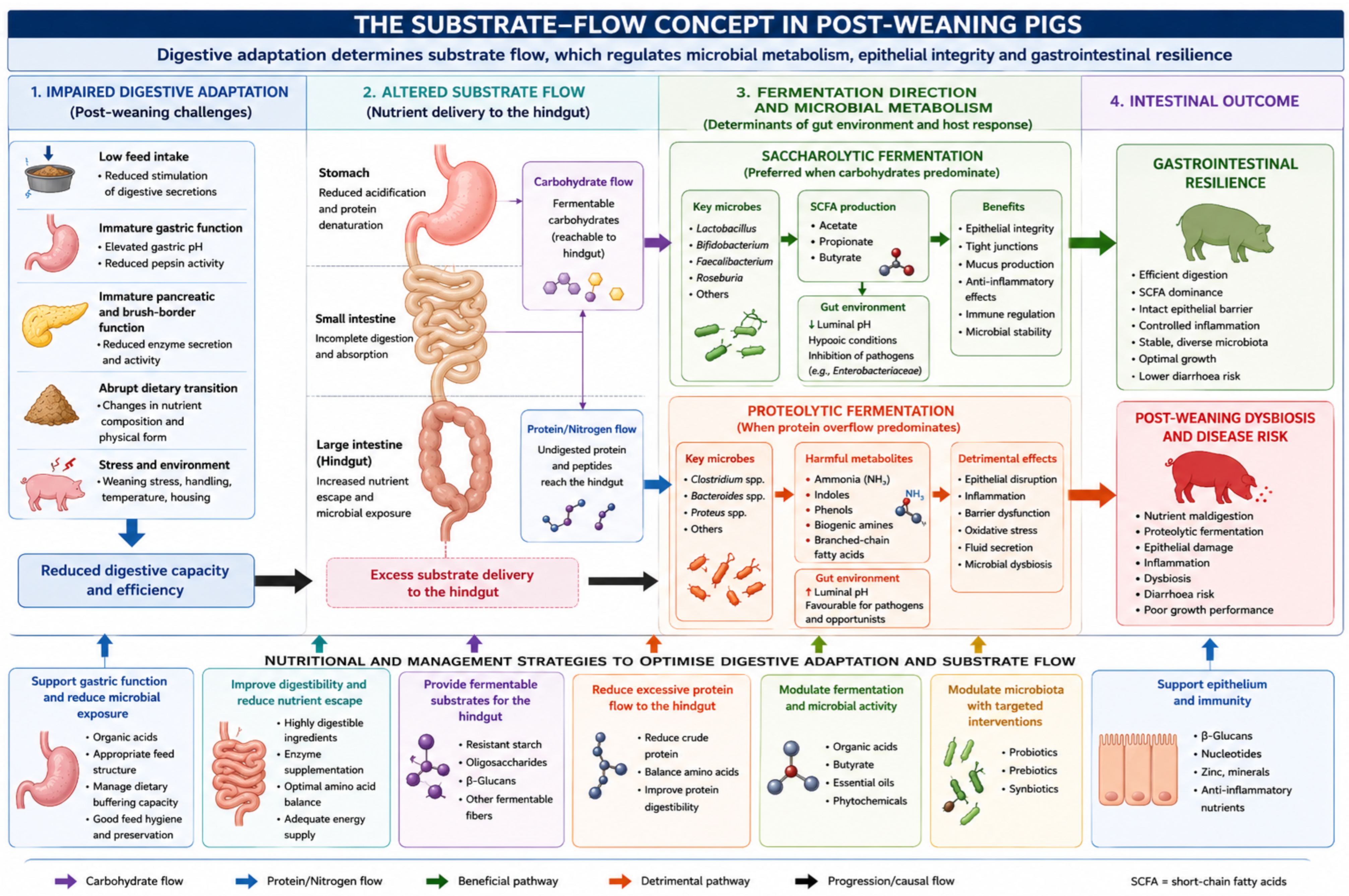
Figure 1 summarises the substrate-flow framework proposed in this review. The model illustrates how impaired digestive adaptation following weaning alters substrate availability within the hindgut, thereby influencing microbial metabolism, fermentation patterns, epithelial integrity and gastrointestinal stability. Nutritional and management interventions may influence these processes through their effects on digestion, nutrient delivery and microbial metabolic activity during the post-weaning transition.
2. Development of the Gastrointestinal Tract and Resident Microbiota
Development of the porcine GIT begins during gestation and continues throughout the suckling and post-weaning periods. Structural growth, digestive enzyme expression, epithelial maturation and microbial colonisation occur concurrently, and disruption of these coordinated processes during early life can influence subsequent digestive function, microbial stability and disease susceptibility [
3,
5]. Progressive maturation of gastric acidification, pancreatic secretion, intestinal enzyme activity and absorptive capacity strongly influences the efficiency with which nutrients are digested and absorbed before reaching the distal intestine [
17,
18]. Digestive maturation is therefore not a discrete event completed at weaning, but a progressive adaptive process extending from late gestation into the post-weaning period, ultimately influencing the quantity and composition of substrates available for microbial fermentation during gastrointestinal development.
Prenatal development establishes the structural and functional foundation required for postnatal adaptation. During late gestation, gastric acid secretion capacity increases markedly, accompanied by reductions in gastric pH and increased chymosin production, preparing the neonate for enteral feeding and microbial exposure after birth [
19,
20]. Rapid intestinal growth also occurs during this period, including increases in villous surface area, digestive enzyme activity and glucose absorptive capacity [
20]. Maternal nutrient supply and endocrine signalling therefore contribute substantially to prenatal gastrointestinal development and later digestive competence [
21].
At birth, the GIT remains structurally immature but highly responsive to luminal stimulation. Colostrum intake rapidly stimulates intestinal growth, villous expansion and absorptive capacity while supplying immunoglobulins, antimicrobial compounds and growth factors required for epithelial and immune development [
22]. During the suckling period, digestive function remains adapted primarily to the utilisation of milk-derived nutrients. Lactase activity remains high, whereas amylase, maltase and proteolytic capacity remain comparatively limited [
23,
24]. Gastric acid secretion is also developmentally restricted due to incomplete maturation of parietal cell function [
25,
26].
Beyond structural growth, early postnatal gastrointestinal maturation also involves rapid functional adaptation of the intestinal epithelium. Enterocyte proliferation, goblet cell differentiation and mucus layer development increase substantially during the suckling period and contribute to the establishment of epithelial barrier integrity and protection against luminal microbial challenge [
3,
5]. Tight junction proteins including claudins and occludins also undergo progressive maturation during early life, helping regulate intestinal permeability and mucosal barrier function [
6]. Abrupt reductions in feed intake following weaning may disrupt these coordinated developmental processes by impairing digestive stimulation, epithelial maintenance and mucosal integrity during a period of continued gastrointestinal adaptation.
Microbial colonisation develops alongside digestive and immune maturation. Initial colonisation occurs immediately after birth and is influenced primarily by maternal and environmental exposure through contact with the sow, colostrum, milk and the surrounding farrowing environment [
27,
28]. Early microbial populations are initially dominated by facultative anaerobes, which reduce luminal oxygen tension and facilitate establishment of strict anaerobic bacterial communities [
29].
During the suckling period, the microbiota becomes enriched in organisms adapted to milk-derived substrates, including Lactobacillus, Bacteroides and members of the Lachnospiraceae family [
28]. Considerable variation nevertheless exists between litters and production systems, indicating that early microbial development is highly dynamic and strongly influenced by maternal, dietary and environmental factors [
30,
31].
Digestive maturation and microbial colonisation are closely interconnected processes. Microbial metabolites contribute to epithelial development, immune maturation and nutrient metabolism, while digestive function strongly influences the substrates available for microbial utilisation [
32,
33]. Alterations in feed intake, digestive secretion or nutrient digestion may therefore rapidly influence microbial fermentation patterns and luminal ecology during the post-weaning transition.
Microbial signalling during early life may additionally influence development of immune tolerance and mucosal immune responsiveness. Short-chain fatty acids and other microbial metabolites contribute to epithelial differentiation, mucus production and immune regulation, supporting the concept that gastrointestinal development involves coordinated maturation of digestive, epithelial, microbial and immune systems rather than independent processes.
3. Maternal Nutrition and Early-Life Programming of the Gut Microbiota
The conditions under which piglets enter the post-weaning period are shaped long before weaning occurs. Maternal nutrition, microbial status and the farrowing environment influence establishment of the neonatal microbiota, epithelial development, digestive maturation and mucosal immune competence. Early-life gastrointestinal programming therefore extends beyond simple microbial colonisation and involves coordinated interactions among nutrient supply, microbial exposure, immune signalling and substrate availability within the GIT.
The sow represents the primary source of microbial exposure during early life. Microorganisms are transferred to piglets through the birth canal, skin contact, colostrum, milk and ingestion of maternal faeces, thereby establishing the first microbial populations within the neonatal GIT [
27,
28]. These pioneer microbial communities influence subsequent microbial succession and contribute to development of intestinal metabolic and fermentative capacity. Maternal diet can substantially influence this process by modifying the sow microbiota, altering bacterial populations transferred to piglets and changing the nutritional and physicochemical characteristics of colostrum and milk [
34,
35]. Maternal dietary effects therefore influence not only microbial composition, but also microbial fermentation patterns and substrate exposure during early gastrointestinal development.
Colostrum and milk further contribute directly to gastrointestinal maturation through provision of immunoglobulins, antimicrobial compounds, growth factors and bioactive peptides required for epithelial development and immune competence [
22]. Milk oligosaccharides also act as selective fermentable substrates that favour saccharolytic bacterial populations and support the establishment of a relatively low-pH microbial ecosystem dominated by carbohydrate fermentation [
36]. In parallel, early microbial exposure contributes to the development of immune tolerance towards commensal bacteria while maintaining the capacity to respond appropriately to pathogenic challenge [
32,
37,
38]. Consequently, piglets entering weaning with improved epithelial integrity, greater digestive resilience and a more stable microbiota are more likely to maintain favourable fermentation patterns after weaning.
Several maternal dietary interventions have been shown to influence post-weaning gastrointestinal health and performance. Maternal supplementation with fermented liquid feed reduced pathogenic bacterial populations in the sow and altered microbial colonisation patterns in offspring [
34]. Similarly, the supplementation of sow diets with seaweed extracts and fish oil improved gastrointestinal health, immune responses and performance in weaned piglets [
35,
39]. The beneficial effects of these interventions are unlikely to be mediated through substrate flow alone. Maternal supplementation with β-glucans and other bioactive compounds may additionally influence piglet gastrointestinal development through modulation of maternal microbiota, altered microbial exposure during early life, immune signalling pathways and improved epithelial maturation [
35,
39]. Substrate flow should therefore be viewed as one important mechanistic component operating alongside immunological and microbial programming processes during early gastrointestinal development.
More recently, maternal feeding strategies aimed at improving feed hygiene and digestive stability have also shown promise. Maternal feeding of organic acid-preserved cereal grains has been associated with improvements in digestive health, microbial stability and growth performance extending from birth to slaughter [
40]. These findings further support the concept that maternal dietary interventions can influence the digestive and microbial starting point from which piglets adapt to weaning.
Collectively, the mechanisms underlying these maternal effects are likely multifactorial and involve interactions among microbial exposure, immune maturation, digestive development and nutrient utilisation. Maternal nutrition may additionally influence the quantity, composition and regional distribution of substrates entering the gastrointestinal tract of the developing piglet, thereby shaping microbial fermentation patterns during later adaptation to post-weaning diets. Maternal nutrition therefore acts upstream of post-weaning gastrointestinal stability by influencing digestive capacity, epithelial resilience and microbial metabolic function before weaning occurs.
4. Weaning-Associated Gastrointestinal Dysfunction
Weaning represents one of the most physiologically challenging periods in pig production and is characterised by abrupt nutritional, environmental and social stressors occurring during a period of continuing gastrointestinal development [
1,
5]. The post-weaning period is characterised by a transient mismatch between digestive capacity and dietary substrate supply.
4.1. Reduced Feed Intake and Digestive Dysfunction
One of the earliest and most important responses to weaning is a marked reduction in voluntary feed intake. Newly weaned piglets commonly consume little feed during the first 24–72 h after weaning, resulting in reduced luminal stimulation of the gastrointestinal tract [
41]. Reduced nutrient intake rapidly affects intestinal structure and function. Villous height commonly declines by 20–50% during the immediate post-weaning period, while crypt depth increases due to elevated epithelial turnover and crypt hyperplasia [
3,
4,
42]. Research has demonstrated that post-weaning villous atrophy is closely associated with impaired absorptive function and increased susceptibility to diarrhoeal disease. Importantly, these changes reflect both reduced nutrient intake and the inability of the immature intestine to rapidly adapt to abrupt dietary and environmental transition after weaning [
43]. Brush-border digestive enzyme activity also declines markedly following weaning. Activities of lactase, sucrase, aminopeptidases and other enzymes decrease substantially during the first days after weaning, impairing nutrient digestion and absorption [
42,
44]. Gastric acidification and pancreatic secretion similarly remain incompletely adapted to digestion of cereal- and plant-derived diets [
24,
25]. Reduced feed intake further exacerbates this process by decreasing gastric stimulation, pancreatic secretion and intestinal motility, thereby limiting digestive adaptation during a period of rapidly changing dietary substrate exposure.
Under normal digestive conditions, most starch, protein and lipid digestion occurs within the proximal small intestine. During the immediate post-weaning period, however, incomplete digestion and absorption increase the quantity of undigested nutrients reaching the distal intestine and hindgut [
3,
45]. Increased delivery of undigested protein to the hindgut promotes proteolytic fermentation and production of ammonia, phenols, indoles, biogenic amines and branched-chain fatty acids [
14,
15]. These metabolites impair epithelial integrity, alter luminal pH and favour proliferation of facultative anaerobic bacteria such as Enterobacteriaceae [
46]. Digestive dysfunction following weaning therefore reflects not simply reduced nutrient digestibility, but a broader disruption in nutrient distribution and microbial metabolic activity throughout the gastrointestinal tract. Reduced feed intake, impaired digestive adaptation and altered substrate availability collectively increase nutrient overflow to the hindgut and shift microbial metabolism towards less favourable proteolytic pathways.
4.2. Epithelial Barrier Disruption and Immune Activation
Weaning-associated gastrointestinal dysfunction also involves disruption of epithelial barrier integrity and activation of inflammatory pathways. Increased intestinal permeability has been consistently reported following weaning and is associated with altered tight junction integrity, reduced mucosal barrier function and increased inflammatory activation [
6,
47]. Tight junction proteins such as claudins and occludins form a critical barrier between the luminal and systemic environments, and their disruption increases translocation of luminal antigens and bacteria [
48]. Inflammatory activation further amplifies gastrointestinal dysfunction through effects on epithelial turnover, nutrient absorption and intestinal oxygen dynamics. Disruption of epithelial metabolism and increased oxygen diffusion into the intestinal lumen favour facultative anaerobic bacterial populations, including members of the Enterobacteriaceae, at the expense of obligate anaerobes associated with saccharolytic fermentation and microbial stability [
49,
50]. Digestive dysfunction, altered microbial fermentation and epithelial injury therefore exist within a self-reinforcing cycle rather than as isolated pathological events.
Although ETEC remains an important contributor to PWD, pathogen exposure alone does not fully explain disease expression. Many pigs are exposed to ETEC without developing clinical diarrhoea, indicating that the luminal and physiological environment strongly influences disease susceptibility [
7]. Post-weaning dysbiosis and intestinal dysfunction are therefore more accurately viewed as consequences of disrupted digestive adaptation and altered microbial metabolism, with pathogen proliferation occurring secondary to these luminal changes.
Digestive dysfunction following weaning should not be interpreted as complete developmental failure. The piglet digestive system continues to mature naturally after weaning, with gradual increases in gastric acid secretion, pancreatic enzyme production and digestive capacity occurring over subsequent weeks [
25,
51]. Commercial weaning, however, accelerates dietary and environmental change faster than physiological adaptation can occur. Nutritional and management strategies that minimise this mismatch between digestive capacity and dietary substrate supply are therefore central to maintaining gastrointestinal stability and reducing susceptibility to post-weaning diarrhoea.
5. Digestive Capacity, Substrate Flow and Microbial Metabolism
The defining feature of the post-weaning period is not simply reduced nutrient digestibility, but altered nutrient distribution throughout the GIT. Diets may be formulated to meet the nutritional requirements of the pig; however, when digestive function is insufficient to effectively hydrolyse and absorb those nutrients, increasing quantities escape proximal digestion and become available for microbial fermentation within the distal intestine and hindgut. Microbial metabolism is therefore regulated not solely by dietary composition, but by the quantity, composition and regional distribution of undigested substrates moving through the GIT.
5.1. Digestive Adaptation and Nutrient Overflow
Altered substrate flow arises through the combined effects of reduced feed intake, elevated gastric pH, incomplete pancreatic adaptation and reduced brush-border enzyme activity during the immediate post-weaning period [
3,
42,
44]. Gastric acidification remains developmentally limited following weaning, impairing protein denaturation and pepsin activation [
25]. Pancreatic secretion of amylase, lipase and proteolytic enzymes also remains incompletely adapted to digestion of cereal- and plant-derived diets [
24]. Collectively, these changes reduce digestive efficiency and increase nutrient escape to the distal intestine. Standardised ileal digestibility (SID) concepts further highlight the importance of distinguishing between dietary nutrient content and the proportion of nutrients actually absorbed prior to reaching the hindgut [
52]. From a substrate-flow perspective, nutrients escaping ileal digestion rather than total dietary inclusion ultimately determine microbial substrate availability within the distal intestine.
Even short-term reductions in feed intake following weaning may reduce digestive secretions, impair intestinal motility and increase nutrient escape to the hindgut [
41]. Studies evaluating ileal digestibility have demonstrated that protein and starch disappearance are often substantially reduced during the immediate post-weaning period, particularly in younger pigs and under conditions of low feed intake or poor digestive adaptation [
3,
45]. Consequently, increased quantities of undigested dietary and endogenous substrates become available for microbial fermentation within the distal intestine.
5.2. Saccharolytic Versus Proteolytic Fermentation
Microbial metabolism within the hindgut is fundamentally dependent on substrate availability. Fermentation patterns are influenced primarily by the relative availability of fermentable carbohydrates and protein-derived substrates entering the hindgut [
8,
12]. When carbohydrate-derived substrates predominate, microbial metabolism remains primarily saccharolytic. Under these conditions, SCFAs, including acetate, propionate and butyrate, are produced in greater quantities, lowering luminal pH and supporting epithelial integrity [
13,
53]. Butyrate is particularly important because it serves as a major energy source for colonocytes and promotes epithelial proliferation, differentiation and repair [
54,
55]. These SCFAs also support maintenance of epithelial hypoxia, thereby favouring obligate anaerobic bacterial populations and limiting expansion of facultative anaerobes associated with dysbiosis [
49,
50].
In contrast, when excessive quantities of undigested protein reach the hindgut, microbial metabolism shifts increasingly towards proteolytic fermentation. This results in increased production of ammonia, phenols, indoles, biogenic amines and branched-chain fatty acids, metabolites associated with impaired epithelial integrity and altered barrier function [
14,
15]. Proteolytic fermentation alters both the physicochemical and immunological environment of the intestine, creating conditions favourable to facultative anaerobes and opportunistic pathogens such as Enterobacteriaceae. Microbial dysbiosis is therefore more accurately viewed as a metabolic consequence of altered nutrient availability and fermentation dynamics rather than simply as a compositional imbalance of bacterial taxa.
Observed post-weaning increases in Enterobacteriaceae abundance and reductions in microbial diversity may therefore reflect altered luminal conditions and substrate availability rather than representing primary initiating events [
7]. The balance between fermentable carbohydrate availability and distal nitrogen flow is consequently a major determinant of microbial metabolic direction within the post-weaning intestine.
5.3. Feed Structure, Transit and Regional Substrate Availability
Feed processing technologies also influence substrate flow dynamics. Thermal processing, pelleting, particle size reduction and grain preservation methods may alter starch gelatinisation, protein digestibility and physicochemical characteristics of feed ingredients, thereby modifying the quantity and composition of nutrients reaching the hindgut. Diets formulated to identical nutrient specifications may therefore produce substantially different microbial and physiological responses depending on ingredient processing and preservation methods [
56,
57]. Feed structure and gastrointestinal transit additionally influence microbial metabolism. Coarser diets generally increase gastric retention time and improve acidification, whereas finely ground diets may accelerate passage rate and increase nutrient escape to the distal intestine [
58,
59]. Microbial fermentation should therefore be viewed as the functional outcome of interactions among digestive physiology, feed structure, nutrient characteristics and gastrointestinal transit rather than microbial composition alone.
Microbial metabolic activity may also further modify digestive and epithelial function. Proteolytic metabolites can impair epithelial integrity and increase inflammatory activation, while SCFAs support epithelial repair and mucosal stability. Digestion and microbial metabolism therefore operate within a bidirectional system in which altered substrate flow modifies microbial activity, and microbial metabolites subsequently influence epithelial and digestive function.
Despite major advances in sequencing technologies, many microbiome studies remain largely descriptive and provide limited mechanistic insight into microbial functionality [
16]. Taxonomic profiling alone cannot fully determine metabolic activity, nutrient utilisation or epithelial consequences within the GIT. Interpretation of microbiome data therefore requires integration with measurements of nutrient digestibility, microbial metabolites, epithelial integrity and host inflammatory responses. Post-weaning microbial stability depends fundamentally on alignment between digestive capacity and substrate supply.
Substrate flow therefore represents the central mechanistic interface linking digestion, microbial metabolism and host physiology during the post-weaning transition. Accordingly, the following sections will discuss the importance of dietary crude protein optimisation, strategic carbohydrate supplementation, organic acid supplementation, feed formulation and preservation strategies, and prebiotic, probiotic and symbiotic supplementation in shaping substrate flow, GIT function and gut microbiota composition. Together, these nutritional strategies influence nutrient utilisation, microbial fermentation patterns and intestinal health, thereby contributing to improved resilience and performance in the post-weaned pig.
6. Dietary Protein and the Proteolytic Fermentation Axis
Dietary crude protein is one of the principal determinants of hindgut nitrogen supply and therefore plays a central role in regulating microbial metabolism following weaning. During the immediate post-weaning period, reduced gastric acidification, limited pancreatic protease secretion and incomplete brush-border maturation reduce the efficiency of protein digestion within the upper gastrointestinal tract [
25,
44]. Consequently, a greater proportion of dietary and endogenous protein escapes proximal digestion and enters the distal intestine, where it becomes available for microbial fermentation. The biological relevance of dietary protein therefore lies not simply in crude protein concentration, but in the quantity of undigested nitrogenous substrate reaching the hindgut.
6.1. Protein Digestibility and Hindgut Nitrogen Flow
Once undigested protein reaches the hindgut, microbial metabolism shifts increasingly towards proteolytic pathways. This process generates metabolites including ammonia, phenols, indoles, biogenic amines and branched-chain fatty acids, many of which negatively affect epithelial integrity and luminal conditions [
14,
15]. Elevated luminal ammonia concentrations may impair epithelial cell metabolism and increase luminal pH, while phenolic and indolic compounds have been associated with epithelial irritation, oxidative stress and disruption of barrier integrity [
10,
46]. These changes favour facultative anaerobic bacteria such as Enterobacteriaceae and contribute to post-weaning dysbiosis.
The extent of amino acid fermentation is strongly influenced by dietary protein supply. High-crude-protein diets increase hindgut nitrogen availability and promote microbial pathways associated with proteolysis [
60,
61]. In contrast, moderate reductions in dietary crude protein, when appropriately balanced with digestible amino acids, consistently reduce concentrations of ammonia and branched-chain fatty acids while improving faecal consistency and reducing incidence of PWD [
60,
62].
Protein digestibility is equally important as dietary protein concentration. Studies highlight that intestinal adaptation after weaning involves progressive recovery of absorptive and digestive function over time. Nutritional strategies that improve digestibility during this transition may therefore help reduce excessive nutrient overflow and support more stable microbial fermentation patterns [
63]. Poorly digestible protein ingredients increase the quantity of undigested nitrogenous substrate entering the distal intestine, thereby promoting proteolytic metabolism and destabilising microbial activity.
Feed intake further modifies this relationship. Reduced feed intake following weaning decreases gastric and pancreatic secretion, impairs enzyme activity and alters gastrointestinal motility, thereby increasing the proportion of protein escaping digestion [
41]. This may partly explain why post-weaning dysbiosis frequently develops even in nutritionally balanced diets if digestive function and feed intake remain compromised.
6.2. Low-Protein Diets and Amino Acid Balance
Dietary protein and microbial metabolism also influence host inflammatory responses. Increased proteolytic fermentation has been associated with elevated expression of pro-inflammatory cytokines, disruption of tight junction proteins and impaired epithelial barrier function [
64,
65]. Reduced dietary crude protein levels and improved digestibility are associated with lower inflammatory activation and improved epithelial integrity [
60,
66]. Proteolytic metabolites may additionally influence intestinal oxygen dynamics. Epithelial disruption and inflammatory activation increase oxygen diffusion into the intestinal lumen, favouring facultative anaerobes such as Enterobacteriaceae at the expense of obligate anaerobic bacterial populations associated with saccharolytic fermentation [
49,
50].
Excessive reductions in dietary crude protein may nevertheless compromise growth performance and intestinal development if amino acid supply becomes limiting [
67]. Protein restriction may reduce nitrogen availability required for tissue accretion, enzyme synthesis and mucosal development, particularly in rapidly growing nursery pigs. The objective of post-weaning protein nutrition is therefore not minimisation of crude protein per se, but optimisation of protein supply relative to digestive capacity and amino acid requirements.
Balancing diets according to SID amino acid requirements allows reductions in crude protein while maintaining adequate amino acid supply for growth and intestinal development [
68]. Such approaches reduce hindgut nitrogen flow without compromising productive performance, thereby supporting more favourable microbial fermentation patterns during the post-weaning period.
6.3. Protein Source and Antigenic Effects
In addition to dietary crude protein content, protein source also influences nutrient digestibility, substrate flow, gut microbiota and GIT health in the post-weaned pig. Animal-derived proteins, milk proteins and highly refined vegetable proteins generally exhibit greater digestibility than less processed plant protein sources. In contrast, certain soybean meal fractions and other poorly digestible plant proteins may increase antigenic stimulation and hindgut nitrogen supply, particularly in younger pigs with immature digestive capacity [
69,
70].
The relationship between dietary protein and fermentable carbohydrate availability is also important. When fermentable carbohydrates remain available in sufficient quantities, microbial metabolism is directed preferentially towards saccharolytic pathways, thereby reducing reliance on amino acid fermentation as an energy source. Conversely, excessive protein overflow relative to carbohydrate availability promotes proteolytic metabolism and increases production of potentially detrimental microbial metabolites.
This helps explain why reductions in dietary crude protein are often most effective when combined with strategies that support saccharolytic fermentation, including inclusion of resistant starch, fermentable fibres or other carbohydrate substrates capable of supporting SCFA production within the hindgut.
Dietary protein should therefore be viewed as an important regulator of hindgut microbial metabolism. Excessive protein overflow favours proteolytic fermentation and epithelial instability, whereas improved protein digestibility and balanced amino acid supply help maintain more favourable saccharolytic fermentation patterns within the hindgut. Within the substrate-flow framework proposed in this review, dietary protein influences post-weaning gastrointestinal stability primarily through effects on distal nitrogen flow and microbial metabolic activity rather than crude protein concentration alone.
7. Carbohydrate Fermentation, SCFA Production and Microbial Stability
Fermentable carbohydrates play a central role in regulating microbial metabolism within the hindgut of the post-weaned pig. Their importance lies not simply in supplying energy for microbial growth, but in directing microbial metabolism towards saccharolytic rather than proteolytic fermentation pathways. Fermentable carbohydrates therefore influence luminal pH, microbial metabolite production, epithelial integrity and microbial stability following weaning.
7.1. Fermentable Carbohydrates and SCFA Production
When carbohydrate-derived substrates predominate within the hindgut, microbial fermentation remains primarily saccharolytic. Under these conditions, SCFAs including acetate, propionate and butyrate are produced in greater quantities [
12]. These metabolites contribute to maintenance of a relatively low luminal pH and hypoxic intestinal environment, thereby limiting expansion of opportunistic bacterial populations such as Enterobacteriaceae [
13,
49,
50]. These SCFAs also contribute to regulation of intestinal inflammation and epithelial barrier function [
53], while butyrate in particular serves as a major energy source for colonocytes and supports epithelial proliferation, differentiation and repair [
54,
55].
The effects of fermentable carbohydrates depend strongly on their physicochemical properties, including solubility, fermentability and resistance to enzymatic digestion. Rapidly fermentable substrates such as lactose are utilised primarily within the proximal intestine and early hindgut, whereas resistant starches and selected oligosaccharides reach the distal intestine and support sustained hindgut fermentation [
71,
72]. Dietary inclusion of fermentable carbohydrates and resistant starches has consistently been associated with increased abundance of bacterial populations linked with saccharolytic metabolism including Lactobacillus, Bifidobacterium, Faecalibacterium and Roseburia species [
61,
73]. These microbial shifts are typically accompanied by increased SCFA production and improved epithelial barrier function.
Importantly, these compositional changes are likely secondary to altered substrate availability and fermentation conditions rather than direct selective effects on microbial populations. The beneficial effects of fermentable carbohydrates are therefore highly dependent on alignment with digestive capacity and overall nutrient flow within the gastrointestinal tract.
During the immediate post-weaning period, excessive inclusion of poorly digestible or highly viscous carbohydrates may impair nutrient digestibility and alter gastrointestinal transit [
74]. Fermentable carbohydrate supply must therefore be balanced carefully with digestive function and overall dietary composition to avoid unintended increases in nutrient escape to the hindgut.
7.2. Resistant Starch and Microbial Stability
The relationship between fermentable carbohydrates and dietary protein is particularly important. When fermentable carbohydrates remain available in sufficient quantities, microbial metabolism is directed preferentially towards saccharolytic pathways, thereby reducing reliance on amino acid fermentation as an energy source. Conversely, limited carbohydrate availability relative to hindgut nitrogen supply promotes proteolytic fermentation and production of potentially detrimental microbial metabolites.
Resistant starch has received particular attention because of its ability to increase butyrate production and support epithelial integrity. Resistant starch escapes enzymatic digestion within the small intestine and undergoes fermentation predominantly within the hindgut, increasing SCFA concentrations and promoting growth of butyrate-producing bacteria such as Faecalibacterium and Roseburia [
71,
75].
Recent studies combining resistant starch with butyric acid supplementation and reduced crude protein diets have demonstrated improvements in growth performance, microbial stability and intestinal morphology in weaned pigs [
76,
77,
78]. These findings support the concept that successful nutritional regulation of the post-weaning microbiota depends not on individual ingredients alone, but on maintenance of fermentation conditions favouring saccharolytic metabolism and epithelial stability.
Not all fermentable carbohydrates exert equivalent effects within the gastrointestinal tract. Soluble fibres may undergo rapid proximal fermentation, whereas more resistant substrates support fermentation further distally within the colon. The regional distribution of carbohydrate fermentation may therefore influence epithelial responses, microbial ecology and luminal pH differently throughout the intestine.
7.3. β-Glucans and Immunomodulatory Effects
β-glucans provide a useful example of the complexity of carbohydrate-mediated microbial regulation. Cereal-, yeast- and seaweed-derived β-glucans differ substantially in molecular structure, solubility and biological activity, and therefore exert distinct effects on microbial fermentation and gastrointestinal physiology [
79,
80]. Cereal-derived β-glucans, composed predominantly of mixed linkage β-(1,3)/(1,4)-D-glucans, can increase digesta viscosity and alter nutrient digestion when included at excessive levels [
81]. Moderate inclusion levels, however, may exert prebiotic effects through promotion of saccharolytic fermentation and increased SCFA production [
82].
Microbial- and seaweed-derived β-glucans exert more pronounced immunomodulatory effects. Yeast-derived β-glucans, characterised by β-(1,3)-linked backbones with β-(1,6)-linked branching, interact with pattern recognition receptors such as dectin-1 and modulate innate immune responses [
83]. Seaweed-derived laminarin has been associated with reductions in Enterobacteriaceae, improvements in butyrate production and reduced inflammatory signalling in weaned pigs [
84,
85].
The biological effects of β-glucans therefore cannot be generalised across sources because their physiological activity depends heavily on molecular structure, branching pattern, solubility, extraction methodology and the broader nutritional environment in which they are used. Differences in feed intake, digestive maturity, dietary protein level and gastrointestinal transit may all alter the quantity and location of fermentable substrates reaching the hindgut. Consequently, identical carbohydrate interventions may produce markedly different microbial and physiological responses depending on the nutritional and physiological context in which they are applied.
8. Gastric Function, Organic Acids and the Control of Microbial Exposure
The stomach represents a major control point for both nutrient digestion and microbial exposure within the gastrointestinal tract. Effective gastric acidification is essential for protein denaturation, activation of pepsin and regulation of microbial survival and entry to the distal intestine [
86]. Gastric function therefore strongly influences digestive efficiency, substrate flow and microbial stability within the post-weaning pig.
8.1. Gastric Acidification and Digestive Adaptation
Under commercial conditions, gastric acid secretion remains developmentally limited during the immediate post-weaning period due to incomplete maturation of parietal cell function [
25,
26,
87]. Elevated gastric pH reduces protein denaturation and pepsin activity, impairing digestion of dietary protein within the stomach and proximal small intestine. Higher gastric pH also allows greater survival of ingested microorganisms, increasing microbial exposure within the distal intestine [
88]. Impaired gastric acidification therefore contributes simultaneously to increased nutrient overflow and increased microbial challenge within the hindgut.
The relationship between gastric function and substrate flow is particularly important for protein digestion. Reduced gastric acidification limits hydrolysis of protein structures and delays activation of proteolytic digestion in the proximal intestine. Larger quantities of undigested protein may therefore reach the hindgut and become available for proteolytic fermentation [
89]. The stomach should therefore be viewed not only as a digestive organ, but also as a major regulator of nutrient delivery and microbial exposure throughout the gastrointestinal tract.
Developmental limitations in gastric function are further exacerbated by the marked reduction in feed intake commonly observed after weaning. Reduced nutrient intake decreases gastric stimulation and acid secretion, impairing digestive efficiency and weakening the antimicrobial barrier function of the stomach [
41,
45]. Under these conditions, both microbial survival and nutrient escape to the distal intestine increase simultaneously.
8.2. Organic Acids and Antimicrobial Effects
Organic acids have been used extensively within post-weaning diets to support gastric function and regulate microbial exposure. Their antimicrobial activity depends largely on the undissociated form of the acid, which diffuses across bacterial membranes and disrupts intracellular pH homeostasis [
90]. Organic acids also reduce dietary buffering capacity and support gastric acidification, thereby improving conditions for protein digestion and limiting survival of opportunistic bacteria within the upper gastrointestinal tract [
86,
91].
Numerous studies have demonstrated that dietary organic acids can improve nutrient digestibility, reduce gastric pH and improve growth performance in weaned pigs [
86,
89,
92]. Their effects appear particularly important in low-buffering diets where acidification can be maintained more effectively [
93]. Different organic acids exert distinct physiological effects depending on their dissociation characteristics, antimicrobial spectrum and site of activity within the gastrointestinal tract. Formic, fumaric, citric and lactic acids are among the most commonly used dietary acidifiers in nursery pig diets, while combinations of multiple acids may provide broader antimicrobial and digestive effects [
94].
Responses to dietary acidifiers nevertheless vary considerably among studies, reflecting interactions among diet composition, buffering capacity, feed intake, gastric maturation and microbial challenge. Dietary buffering capacity is another important determinant of gastric function. Ingredients with high buffering capacity, including calcium carbonate and certain protein-rich ingredients, reduce the effectiveness of gastric acidification and may limit the efficacy of dietary acidifiers [
93]. The effectiveness of organic acid supplementation therefore depends not only on acid inclusion level, but also on the broader physicochemical characteristics of the diet.
8.3. Feed Structure, Buffering Capacity and Grain Preservation
Feed structure and gastric retention time further influence substrate flow and microbial exposure. Coarser diets generally increase gastric retention time and improve acidification, whereas finely ground diets may accelerate passage rate and increase nutrient escape to the distal intestine [
58,
59]. Excessively fine grinding may reduce gastric retention time and impair stomach stratification, thereby limiting the effectiveness of gastric acidification despite improving nutrient accessibility.
The role of feed preservation has also received increasing attention within this context. Organic acid preservation of cereal grains reduces fungal growth, improves feed hygiene and alters grain microbial ecology before ingestion [
95,
96]. Preservation of cereal grains with organic acids may therefore influence substrate flow indirectly through effects on grain quality, nutrient availability and microbial contamination prior to feed consumption.
Recent studies have demonstrated that pigs fed organic acid-preserved grains exhibit improved growth performance, improved nutrient digestibility and beneficial shifts in microbial fermentation patterns, including increased abundance of butyrate-producing bacterial populations such as Faecalibacterium [
96,
97]. Organic acid-preserved grain has also been associated with reductions in mycotoxin contamination, including deoxynivalenol and ochratoxin A, during grain storage. This is particularly relevant because mycotoxins may impair feed intake, epithelial integrity and immune function, thereby exacerbating post-weaning gastrointestinal dysfunction [
98,
99].
Organic acids may additionally influence microbial metabolism indirectly through effects on nutrient utilisation. Lower gastric pH improves activation of pepsin and enhances protein digestion within the proximal intestine, thereby reducing nitrogen flow to the hindgut. This may decrease substrate availability for proteolytic bacteria and help maintain more favourable fermentation patterns after weaning.
Effective gastric acidification therefore limits microbial survival, improves proximal digestion and reduces nutrient overflow to the hindgut. Conversely, impaired gastric function increases both microbial challenge and availability of undigested substrates for proteolytic fermentation. Strategies aimed at supporting gastric function, including optimisation of dietary buffering capacity, feed structure and organic acid inclusion, should therefore be considered central components of integrated approaches to improving post-weaning gastrointestinal stability.
9. Probiotics, Prebiotics and Synbiotics in the Context of Substrate Flow
Probiotics, prebiotics and synbiotics are widely used nutritional strategies aimed at improving gut health and reducing the incidence of PWD in pigs. Proposed mechanisms include competitive exclusion of pathogens, production of antimicrobial compounds, modulation of immune responses and support of epithelial integrity [
100,
101]. Responses to these interventions, however, remain highly inconsistent across studies.
The efficacy of probiotics and prebiotics depends heavily on the nutritional and physiological environment into which they are introduced. Microbial interventions cannot be considered independently of digestive function and nutrient availability within the gastrointestinal tract. The metabolic activity of the microbiota is fundamentally regulated by the type and quantity of substrates reaching the hindgut. Probiotics and prebiotics are therefore more likely to be effective when introduced into a gastrointestinal environment favouring saccharolytic rather than proteolytic fermentation.
9.1. Probiotics and Microbial Modulation
Probiotics may exert beneficial effects through several mechanisms, including competitive exclusion of pathogens, production of bacteriocins and organic acids, enhancement of epithelial barrier function and modulation of immune signalling pathways [
102,
103]. Lactobacillus- and Bifidobacterium-based probiotics are among the most commonly used in pig nutrition and have been associated with improvements in gut morphology, reductions in diarrhoea incidence and modulation of inflammatory responses [
104,
105].
The effectiveness of probiotic supplementation nevertheless appears highly dependent on the surrounding fermentation environment within the hindgut. Under conditions favouring saccharolytic fermentation and SCFA production, probiotic organisms are more likely to establish beneficial metabolic activity and contribute to epithelial stability. In contrast, when excessive protein overflow and impaired digestion promote proteolytic fermentation, probiotic responses become considerably less consistent. This interaction between probiotic efficacy and substrate-flow conditions may help explain much of the variability reported within the probiotic literature.
Several studies support this interpretation. Improved probiotic responses are frequently observed when probiotic supplementation is combined with highly digestible diets or fermentable carbohydrate inclusion capable of supporting SCFA production and microbial stability [
103,
105]. Conversely, under conditions of impaired digestion, elevated gastric pH or excessive hindgut nitrogen flow, probiotic organisms may fail to establish stable functional effects despite detectable colonisation.
9.2. Prebiotics and Fermentable Substrate Supply
Prebiotics act primarily by supplying fermentable substrates that selectively support saccharolytic bacterial populations and SCFA production [
106]. Resistant starches, oligosaccharides and β-glucans have all been associated with increased abundance of Lactobacillus, Bifidobacterium and butyrate-producing bacterial populations [
72,
82].
The efficacy of prebiotic supplementation, however, also depends strongly on digestive capacity and overall nutrient flow. Under conditions of impaired digestion and excessive protein overflow, provision of additional fermentable substrates may not fully restore microbial stability if proteolytic fermentation remains dominant. Excessive inclusion of poorly digestible fermentable substrates may additionally increase substrate accumulation within the hindgut and contribute to osmotic disturbances or altered gastrointestinal transit [
74]. Prebiotics should therefore be viewed not simply as microbial stimulants, but as regulators of microbial metabolic direction, through their effects on substrate availability and fermentation dynamics.
9.3. Synbiotics Within the Substrate-Flow Framework
Synbiotics combine probiotic organisms with complementary fermentable substrates in an attempt to improve survival, colonisation and metabolic activity of beneficial bacteria [
107]. Several studies have demonstrated improved growth performance, intestinal morphology and immune responses following synbiotic supplementation in weaned pigs [
108,
109,
110].
Responses to synbiotic strategies are generally more consistent when the latter are combined with diets that support digestive efficiency and limit excessive nutrient overflow to the hindgut. Recent studies investigating integrated nutritional approaches support this interpretation. Combinations of reduced crude protein diets, resistant starch, butyric acid and organic acid-preserved grains have been associated with improvements in microbial fermentation patterns, intestinal morphology and growth performance in weaned pigs [
56,
76,
77].
The timing of microbial intervention may also influence efficacy. Newly weaned pigs undergo rapid shifts in feed intake, digestive secretion and microbial composition during the first days after weaning. Microbial additives introduced during periods of severe digestive instability may therefore be less effective than interventions supporting gastrointestinal adaptation before or immediately at weaning.
The substrate-flow concept also helps explain why many studies report changes in microbial composition without consistent improvements in health or performance outcomes. Alterations in bacterial abundance alone may not necessarily reflect meaningful changes in microbial metabolic activity. Evaluation of probiotics and prebiotics should therefore increasingly focus on functional outcomes including SCFA production, nutrient digestibility, epithelial integrity and inflammatory responses rather than relying solely on taxonomic shifts within the microbiota.
Probiotics, prebiotics and synbiotics should therefore be viewed as modulators of microbial metabolic activity within the broader context of digestive physiology and nutrient flow. Their efficacy is greatest when digestive function, nutrient supply and fermentation patterns remain aligned in a manner that supports saccharolytic metabolism and epithelial stability following weaning.
10. Management, Environment and Feeding Practices
Management conditions strongly influence feed intake, digestive function and microbial exposure, and therefore affect substrate flow within the gastrointestinal tract. Post-weaning gut health is determined not only by diet composition, but also by the management environment within which digestion and microbial fermentation occur.
Reduced feed intake immediately after weaning remains one of the major drivers of gastrointestinal dysfunction. Strategies that encourage early feed intake, including creep feeding before weaning, appropriate feeder design and adequate water availability, help maintain digestive function and reduce nutrient overflow to the distal intestine [
111,
112]. Environmental stress also contributes significantly to post-weaning instability. Thermal stress reduces feed intake and increases intestinal permeability, while social stress associated with mixing and stocking density disrupts feeding behaviour and intestinal function [
113,
114]. Stress-associated neuroendocrine activation may additionally impair epithelial integrity and alter gastrointestinal motility, further increasing nutrient escape to the distal intestine [
6].
Poor hygiene increases pathogen exposure and may amplify the effects of digestive instability during the immediate post-weaning period [
115]. However, pathogen exposure alone does not necessarily result in clinical disease. Disease expression depends strongly on the interaction between microbial challenge, digestive adaptation and luminal conditions within the gastrointestinal tract. Management-associated stressors may therefore influence gastrointestinal stability largely through their effects on digestion, nutrient delivery and microbial metabolism rather than through direct effects on microbial composition alone.
11. A Systems-Based Model of Gut Microbiota Regulation in Post-Weaned Pigs
The evidence presented throughout this review supports a systems-based model in which post-weaning gastrointestinal stability is determined by the interaction between digestive capacity, substrate flow and microbial metabolism. Within this model, microbial composition is viewed primarily as a consequence of the nutritional and physiological environment within the gastrointestinal tract rather than as the sole driver of intestinal dysfunction.
When gastric function, enzyme secretion and feed intake are sufficient to support effective digestion, most dietary nutrients are absorbed before reaching the hindgut. Under these conditions, microbial fermentation remains predominantly saccharolytic, favouring production of SCFAs, maintenance of lower luminal pH and preservation of epithelial integrity [
12]. These SCFAs also support epithelial hypoxia and favour obligate anaerobic bacterial populations associated with gastrointestinal stability [
49,
116]. Conversely, when digestive capacity is insufficient relative to dietary substrate supply, increased quantities of undigested nutrients reach the distal intestine, promoting proteolytic fermentation and production of metabolites associated with epithelial dysfunction and dysbiosis [
14,
15]. These metabolites impair epithelial integrity, alter luminal conditions and favour expansion of facultative anaerobes such as Enterobacteriaceae. Substrate flow therefore represents the central mechanistic interface linking digestion with microbial metabolic activity. Substrate flow should therefore be viewed as an important mechanistic interface linking digestion with microbial metabolic activity rather than as an isolated determinant of post-weaning gastrointestinal dysfunction.
This interpretation integrates many apparently separate nutritional and management strategies within a common physiological mechanism. Dietary protein level, fermentable carbohydrate supply, gastric acidification, maternal nutrition, feed structure and management conditions all influence post-weaning gut health largely through their effects on digestion, nutrient delivery and microbial fermentation patterns.
Successful regulation of the post-weaning microbiota depends less on direct manipulation of microbial composition alone and more on maintaining alignment between digestive capacity and substrate supply. At the same time, post-weaning gastrointestinal stability is also strongly influenced by mucosal immunity, epithelial barrier function, pathogen exposure, environmental hygiene, social stress and host adaptive responses. The substrate-flow framework proposed in this review therefore complements rather than replaces existing pathogen- and immunity-based interpretations of PWD.
Digestive function, epithelial integrity and microbial metabolism interact dynamically to determine whether the post-weaning intestine remains stable or progresses towards dysbiosis. The substrate-flow framework may also help explain why traditional interventions such as pharmacological zinc oxide and in-feed antimicrobials were historically effective in reducing PWD. Beyond direct antimicrobial effects, these strategies likely improved gastrointestinal stability indirectly by limiting nutrient overflow, reducing proteolytic fermentation and stabilising luminal conditions during the immediate post-weaning period. This framework may additionally explain the inconsistent responses often reported for probiotics and other microbial interventions, particularly when introduced into gastrointestinal environments characterised by impaired digestion and excessive hindgut nitrogen flow. Consequently, future nutritional strategies should focus not only on microbial composition, but also on maintaining alignment among digestive capacity, substrate availability and microbial metabolic activity following weaning.
Limitations and Future Research Directions
A major limitation of the current evidence base is that microbial composition is often characterised more readily than microbial metabolic activity, making functional interpretation difficult. Many studies describe taxonomic shifts without fully determining their physiological significance or metabolic consequences. Furthermore, faecal sampling may not accurately reflect microbial populations within the small intestine or mucosa-associated communities more directly involved in epithelial interactions and nutrient metabolism. Taxonomic profiling alone therefore provides limited insight into functional host–microbe interactions, particularly as sequencing methodologies vary considerably in taxonomic and functional resolution [
16]. Interpretation of microbial compositional data without complementary metabolomic, transcriptomic or physiological measurements may consequently oversimplify gastrointestinal microbial function.
Another important limitation is the difficulty associated with directly quantifying substrate flow within different regions of the gastrointestinal tract under commercial production conditions. Much of the current evidence linking nutrient overflow with microbial fermentation patterns remains indirect and is inferred from digestibility measurements, faecal metabolites or microbial compositional changes rather than direct regional assessment of nutrient availability along the intestine. Greater use of cannulation studies, isotope tracing approaches and integrated digestibility–metabolomic methodologies may improve understanding of nutrient movement and microbial substrate utilisation during the post-weaning period.
Considerable variability also exists among studies due to differences in weaning age, diet composition, feed processing, housing conditions, microbial challenge status and analytical methodology. These factors complicate direct comparison across studies and may partly explain inconsistencies observed in responses to probiotics, prebiotics, dietary protein reduction and fermentable carbohydrate supplementation. In addition, many experimental studies are conducted under controlled research conditions that may not fully replicate the multifactorial stressors encountered within commercial production systems.
The interaction between digestive physiology, microbial metabolism and mucosal immunity also remains incompletely understood. While increasing evidence supports important links between microbial metabolites, epithelial integrity and immune regulation, the temporal sequence and relative contribution of these interactions during development of post-weaning dysbiosis remain unclear. Future research should therefore place greater emphasis on functional outputs including nutrient flow, microbial metabolites, epithelial integrity and inflammatory responses rather than relying solely on microbiome composition. Particularly important areas for future investigation include direct quantification of nutrient flow along the gastrointestinal tract, integration of metabolomic and transcriptomic approaches with microbiome analysis, and evaluation of epithelial and immune responses under commercial production conditions.
12. Conclusions
This review proposes that post-weaning gastrointestinal stability is best understood as the outcome of interactions among digestive physiology, nutrient flow, microbial metabolism and host responses rather than as a consequence of microbial composition alone. The evidence reviewed supports a systems-based framework in which digestive capacity strongly influences the quantity and composition of substrates reaching the distal intestine, thereby shaping microbial metabolic activity, epithelial integrity and gastrointestinal resilience following weaning.
Within this framework, nutritional and management strategies including optimisation of dietary protein supply, fermentable carbohydrate inclusion, gastric acidification, maternal nutrition, feed structure and environmental management can be interpreted through their collective effects on digestive adaptation and microbial fermentation dynamics. The substrate-flow concept therefore helps integrate digestive physiology, microbial ecology and nutritional management within a common mechanistic model of post-weaning gut health.
Importantly, this framework complements rather than replaces existing pathogen- and immunity-based interpretations of post-weaning diarrhoea. Gastrointestinal stability following weaning reflects dynamic interactions among digestion, microbial metabolism, epithelial barrier function, immune regulation, pathogen exposure and environmental stressors. Understanding these interactions may help explain the variability often observed in responses to probiotics, dietary interventions and antimicrobial alternatives across production systems.
Shifting emphasis from microbial composition alone towards regulation of microbial metabolic activity and fermentation conditions may support development of more biologically coherent nutritional and management strategies aimed at improving gastrointestinal resilience while reducing reliance on pharmacological zinc oxide and in-feed antimicrobials in modern pig production systems.