Article

Effects of Parametarhizium changbaiense on the Growth and Physiological Characteristics of Sugar Beet Seedlings Under Salt–Alkali Stress

1
National Beet Medium-Term Gene Bank, Heilongjiang University, Harbin 150040, China
2
College of Advanced Agriculture and Ecological Environment, Heilongjiang University, Harbin 150040, China
*
Authors to whom correspondence should be addressed.
Agriculture 2026, 16(11), 1224; https://doi.org/10.3390/agriculture16111224
Submission received: 17 April 2026 / Revised: 23 May 2026 / Accepted: 29 May 2026 / Published: 1 June 2026

Abstract

Global crop production faces serious threats from soil salinization. Microbial resources are often exploited to be used as fertilizers or seed coatings to address this issue. Parametarhizium changbaiense, as a novel beneficial microorganism, has been discovered to be capable of assisting limited crops such as mung bean in resisting salt–alkali stress. To investigate the effects of P. changbaiense on sugar beet under salt–alkali stress, the salt (NaCl:Na2SO4, molar ratio 9:1) and alkali (NaHCO3:Na2CO3, molar ratio 9:1) stress were set on sugar beet germplasm 780016B. Results demonstrated that P. changbaiense improved the phenotypic characteristics of sugar beet seedlings under salt–alkali stress. The biomass parameters such as plant height and fresh weight significantly increased by growth-promoting effect. The elevated antioxidant enzyme activity could help protect plants from ROS damage induced by stress. Relative electrical conductivity and MDA content decreased with inoculation, thereby mitigating membrane lipid peroxidation and improving membrane system stability. The higher content of soluble sugar could maintain cell turgor pressure and alleviate osmotic stress. Inoculation with P. changbaiense enhanced chlorophyll content, fluorescence, and photosynthetic capacity. The more superior root vitality and architecture were suitable for the functions of metabolism and absorption. P. changbaiense could promote the growth and physiological characteristics under salt–alkali stress, so it has practical application value in agricultural production.

1. Introduction

Land salt–alkalization severely threatens crop production worldwide. There is a large area of salt–alkali land in China that is distributed across several provinces of the northwest, northeast, and central regions [1]. In the northeast region, the predominant cation in salt–alkali soil is Na+, accompanied by an array of anions, including Cl, SO42−, CO32−, and HCO3 [2]. A high concentration of Na+ disrupts ion balance, induces oxidative stress, and disrupts the photosynthetic apparatus, resulting in significant growth inhibition [3,4,5]. The presence of HCO3 and CO32− in the soil increases pH value, thereby enhancing the absorption of Na+ and suppressing the effectiveness of essential nutrients such as Ca2+ and Mg2+. Consequently, it exerts cumulative stress on plants and causes more detriment to plants than neutral salt stress [6].
As an important sugar crop, sugar beet (Beta vulgaris L.) possesses certain salt tolerance characteristics. However, its seedlings are particularly sensitive to the salt–alkali environment [7]. When the intensity and duration of salt–alkali stress increases, the growth of sugar beet seedlings is significantly inhibited. This is manifested by a marked decrease in germination rate, impeded biomass accumulation, reduced leaf area, and decreased chlorophyll content. Concurrently, cell membrane permeability increases, membrane lipid peroxidation intensifies, and the activity of antioxidant enzyme systems is significantly suppressed. Ultimately, these factors modulate both seedling survival rates and subsequent physiological performance [8,9]. Salinity and alkalinity stress disrupts the balance of reactive oxygen species (ROS) metabolism, leading to the excessive accumulation of ROS, which attacks biological membranes and causes lipid peroxidation damage. Malondialdehyde (MDA), as the primary end-product of lipid peroxidation, serves as a key indicator for evaluating membrane stability and the extent of damage under stress, as its concentration directly reflects the severity of membrane damage [10]. To scavenge excess ROS, plants activate an antioxidant defense system. Superoxide dismutase (SOD) and peroxidase (POD) are key functional enzymes that work synergistically to maintain redox homeostasis. The changes in their activity accurately characterize the antioxidant response capacity and tolerance potential of seedlings [11]. Furthermore, salinity and alkalinity stress induce osmotic imbalance and water loss. Seedlings mitigate osmotic damage by actively synthesizing and accumulating osmotic regulators, such as soluble sugars, to lower cellular osmotic potential and enhance water uptake capacity [12].
Facing the challenge of salt–alkali stress, microbial technology has emerged as an effective solution due to eco-friendly and sustainable characteristics [13]. Plant growth-promoting bacteria (PGPB) not only enhance plant growth under normal conditions but also play crucial roles in mitigating biotic and abiotic stress through symbiotic relationships with plants [14]. Some PGPB strains could increase the solubilization of phosphate and potassium under salt–alkali conditions, subsequently promoting crop growth. Compared with bacteria, the research on the mutualistic interactions between fungi and plants is limited. Most of the studies have focused on improving the crop adaptability, yield, and soil quality of known arbuscular mycorrhizae and Trichoderma.
Parametarhizium is a novel genus of fungus belonging to the Ascomycota phylum and Clavicipitaceae family, isolated from forest litter in the northeast of China. This fungus has a candelabrum-like arrangement of cylindrical or obpyriform phialides, and small subglobose to ellipsoidal conidia. It exhibited anti-insect activities against three farmland pests [15]. It also alleviated the growth inhibition of mung beans under salt–alkali stress but not proven on sugar beet. By analyzing the growth and physiological changes in sugar beet seedlings, this study aims to prove whether P. changbaiense has the possibility of being used as a biological agent for salt and alkaline tolerance.

2. Materials and Methods

2.1. Experimental Materials

The fungus P. changbaiense (CGMCC 19143) was cultured on a YM culture medium (yeast extract 2 g, malt extract 8 g, agar 20 g, and 1 L distilled water) at 25 °C for 7 days. The plate was scraped with 10 mL sterile water, then the spore suspension was filtered with cotton. The spore suspension was quantified to 108 spores/mL using a hemocytometer.
The beet germplasm 780016B was from the National Beet Medium-term Gene Bank. It has excellent yield and disease-resistance traits, but it is relatively sensitive to saline–alkali stress. For sterilization, the seeds were soaked in 2% thiram solution for 12 h and then washed with water for 5 min. The seeds were incubated at 25 °C on a cycle of 16 h of light and 8 h of darkness for 72 h germination.

2.2. Experimental Treatments

Seeds from the experimental group (TP) were immersed in a mixture of spore suspension and 10% Arabic gum solution, while seeds from the control group (CK) were immersed in a mixture of distilled water and 10% Arabic gum solution. Arabic gum can ensure that the spores adhere to the surface of the seeds. In order to ensure the vitality of the spores, the spore suspension was prepared immediately before use, and thermal stress was avoided. After 30 min of agitation with spore suspension, the seeds were sown in sterilized soil with a volume ratio of 1:3 vermiculite to nutrient soil. A 4 × 8 seedling pot was used for each treatment, and the pots were placed in a controlled environmental chamber at 25 °C on a cycle of 16 h of light and 8 h of darkness for cultivation.
Experimental design for salt and alkali stress was set according to previous studies [16]. Salt stress (NaCl:Na2SO4, 9:1 molar ratio) concentration gradients were set at 0, 25, 50, 100, and 150 mmol/L. Alkali stress (NaHCO3:Na2CO3, 9:1 molar ratio) concentration gradients were set at 0, 25, 50, 75, and 100 mmol/L. When the seedlings reached four-leaves stage, each plant received a daily irrigation with either saline or alkaline solution (20 mL) for 7 days.

2.3. Measuring Indicators

After 7 days of treatment, the plants were harvested. The root length and plant height were measured by ruler. The fresh weight of aboveground and underground parts was measured by electronic balance. The root volume and surface area were analyzed using a root systems scanner (Regent Instruments Inc., Quebec QC, Canada). Twenty seedlings were measured in each treatment group.
The minimum fluorescence (F0), maximum fluorescence (Fm), variable fluorescence (Fv), and maximum photochemical efficiency of PSII (Fv/Fm) were analyzed by chlorophyll fluorometer (Walz Heinz GmbH, Effeltrich, Germany) after dark-adapted treatment. The content of photosynthetic pigments in leaves was determined using an ethanol extraction method. Peroxidase (POD) activity was measured using the guaiacol method. Superoxide dismutase (SOD) activity was determined using the nitroblue tetrazolium (NBT) assay [17]. Soluble sugar (SS) content was measured by the anthrone method [18]. Malondialdehyde (MDA) content was determined using the thiobarbituric acid method [19]. Root activity was measured by the trityl tetrazolium chloride (TTC) reduction method [20]. Leaf relative electrical conductivity was measured using an electrical conductivity meter (Bante, Shanghai, China).

2.4. Statistical Analysis

Data values are presented as mean ± standard deviation. Differences between the experimental and control groups for each indicator were calculated using one-way analysis of variance (ANOVA). Statistical significance was defined as p ≤ 0.05.

3. Results

3.1. Effects of Parametarhizium changbaiense on Growth Characteristics Under Salt–Alkali Stress

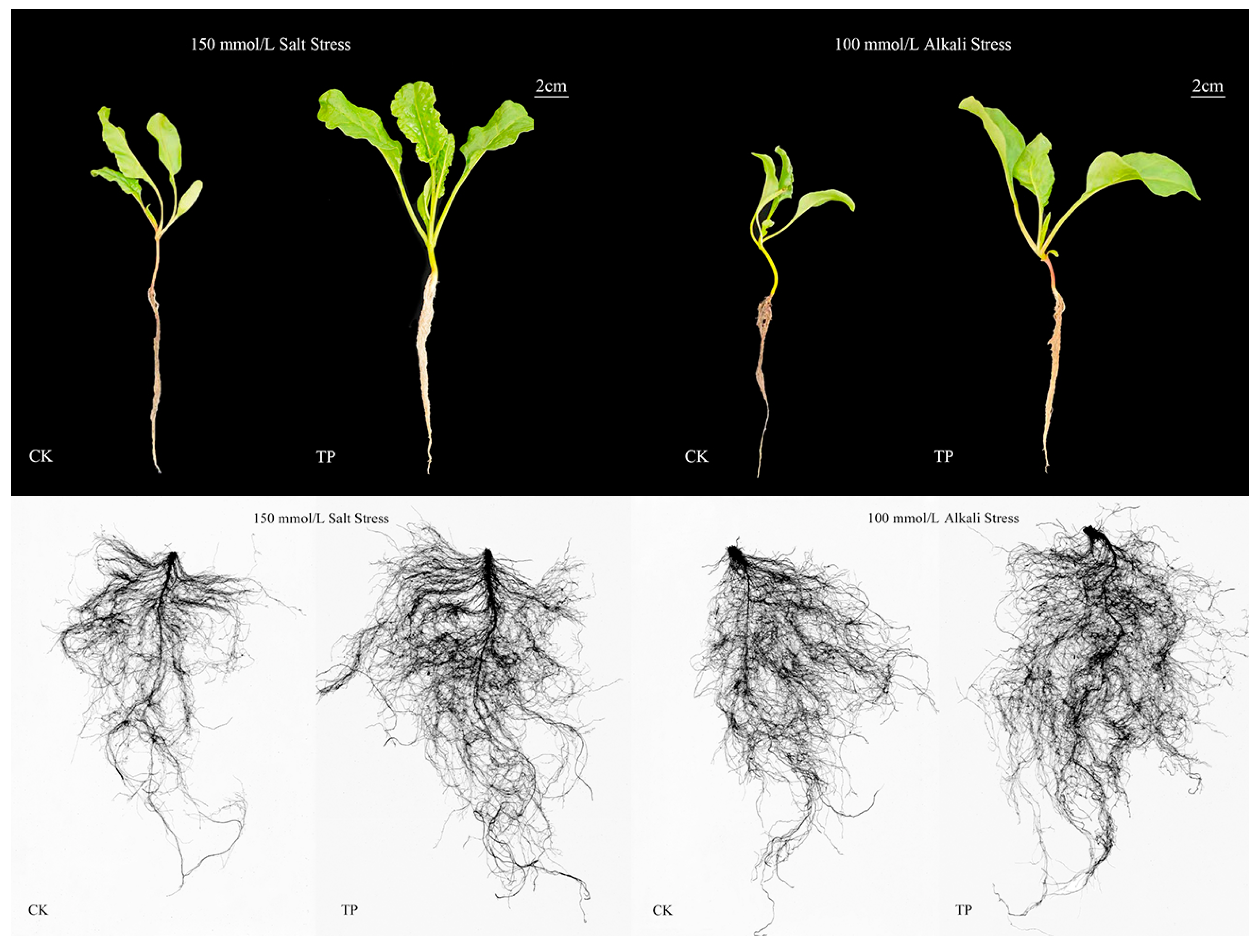
As shown in Table 1 and Table 2, under non-stress conditions the phenotypic indicators of the TP group were significantly higher than that with the CK group, indicating that P. changbaiense has the ability of growth-promotion for sugar beet. Along with increased saline–alkali stress, the plant height and fresh weight aboveground and underground initially rose with slight stimulant and then declined. The biomass of both groups was inhibited by severe stress. Nevertheless, the phenotypic characteristics of the TP group were obviously better than the CK group because of the growth-promoting effects (Figure 1).
Under salt stress, the plant height and fresh weight of aboveground and underground finally increased by 10.65%, 17.49%, and 30.57% for the TP group. Under alkali stress, these indicators finally increased by 14.16%, 30.86%, and 32.44% for the TP group. These phenomena were caused by the growth-promoting effects of P. changbaiense.
Under salt stress, the plant height and fresh weight of underground of the TP group (150 mmol/L) decreased by 8.88% and 21.20% respectively compared with non-stress treatment. That of the CK group decreased by 13.72% and 26.86% respectively. Under alkali stress, the plant height and fresh weight of aboveground and underground of the TP group (150 mmol/L) decreased by 12.21%, 26.15%, and 18.98% respectively compared with non-stress treatment. That of the CK group decreased by 19.43%, 31.44%, and 25.87% respectively. A lower degree of inhibition for the TP group indicates that P. changbaiense could alleviate salt and alkali stress on sugar beet seedlings.

3.2. Effects of Parametarhizium changbaiense on Physiological Characteristics Under Salt–Alkali Stress

3.2.1. Activity of Antioxidant Enzymes

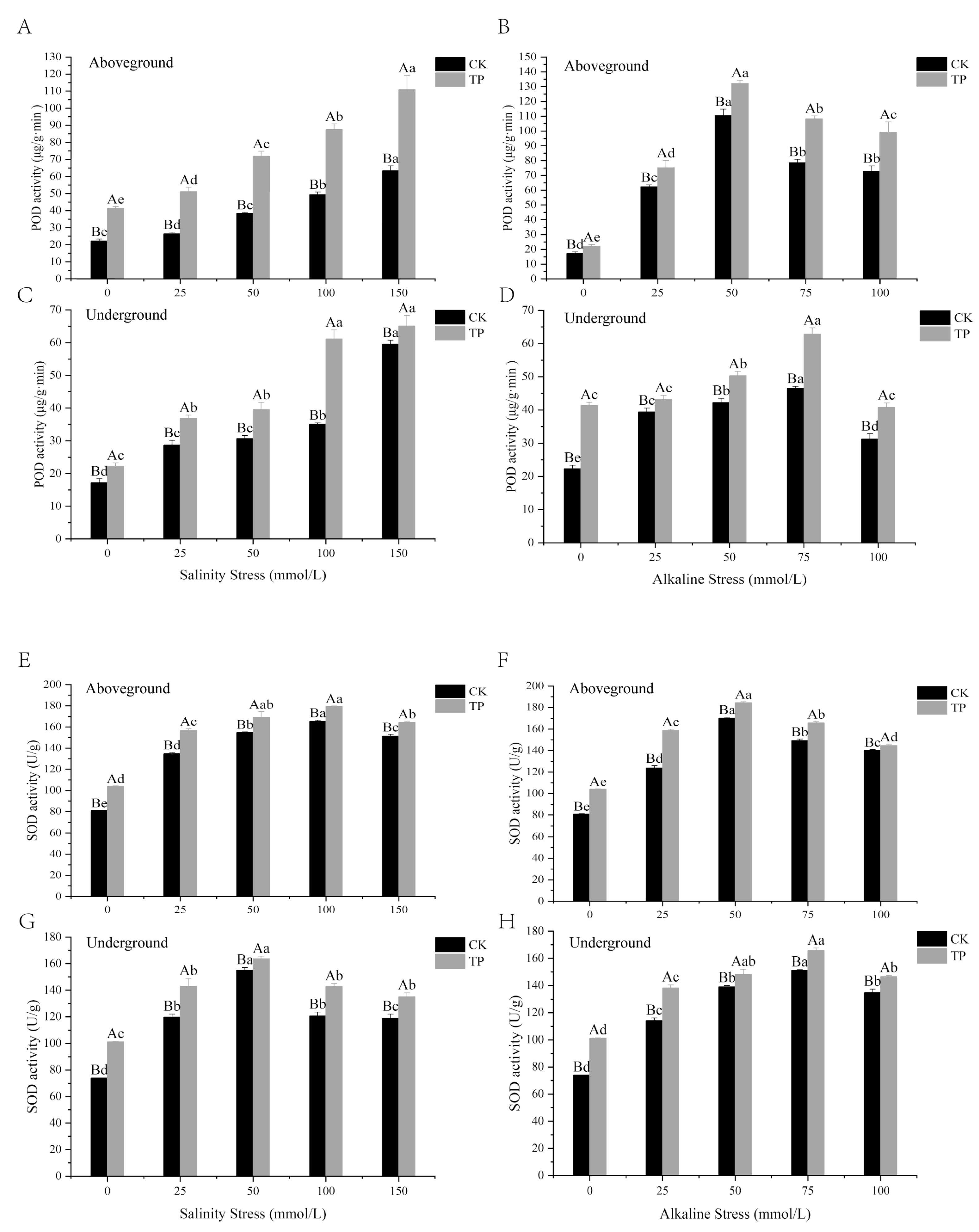
As shown in Figure 2, P. changbaiense significantly enhanced the activity of the antioxidant enzymes of sugar beet seedlings under salt–alkali stress. Under salt stress, POD activity increased with rising stress concentration in both groups. When the stress condition was most severe (150 mmol/L), the POD activity of the TP group (aboveground and underground) was 80.05% and 9.23% higher than that of the CK group respectively (Figure 2A,C). Under alkali stress, POD activity initially increased then decreased with rising alkalinity. At the peak, the POD activity of the TP group was 19.68% and 34.89% higher than that of the CK group respectively (Figure 2B,D).
The SOD activity of both groups initially increased then decreased with rising salt–alkali stress. Under salt stress, the SOD activity of TP (aboveground and underground) was 8.60% and 5.50% higher than that of the CK group at the peak (Figure 2E,G). Under alkali stress, the SOD activity of the TP group was 8.40% and 9.60% higher than that of the CK group at the peak (Figure 2F,H). These results indicate that P. changbaiense could enhance POD and SOD activity and then reduce the levels of reactive oxygen species and membrane lipid peroxidation.

3.2.2. Permeation Regulators

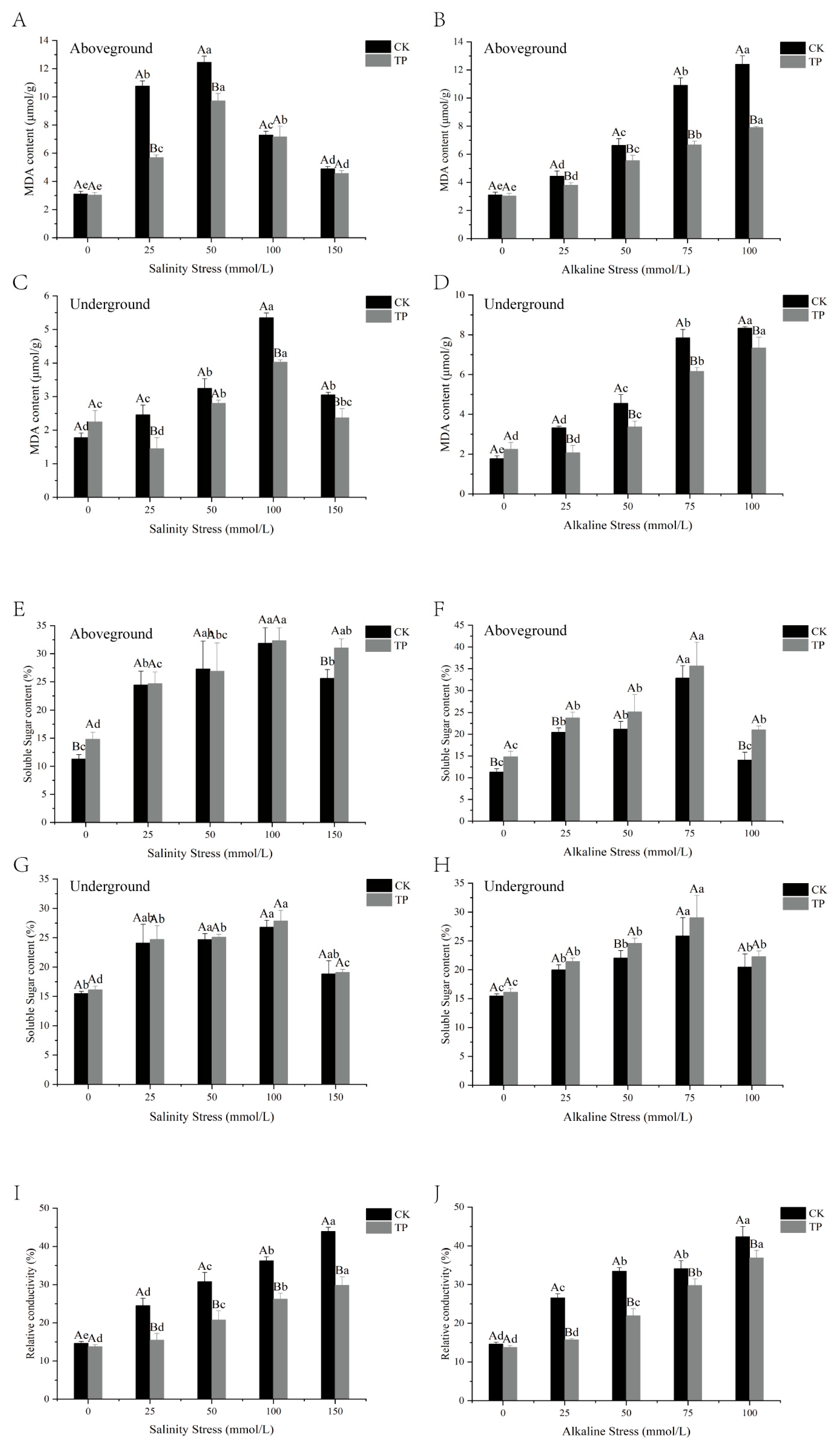
As shown in Figure 3, P. changbaiense significantly reduced the MDA content of sugar beet seedlings under salt–alkali stress. It results from P. changbaiense regulating antioxidant enzyme activity, thereby reducing stress-induced oxidative damage to the plasma membrane. Under alkali stress, MDA increased with rising stress levels. The MDA content of the TP group (aboveground and underground) decreased by 56.80% and 13.43% finally (Figure 3B,D).
The soluble sugar content exhibited a trend of initially increasing and decreased sharply under severe stress conditions. Meanwhile, the soluble sugar content of seedlings treated with P. changbaiense was always higher than in the CK group. Under 150 mmol/L salt stress, the soluble sugar content (aboveground and underground) of the TP group increased by 21.10% and 1.27% (Figure 3E,G). Under 100 mmol/L alkali stress, the soluble sugar content of the TP group increased by 49.57% and 8.90%, respectively (Figure 3F,H).
The relative electrical conductivity of seedlings increased accompanying rising stress concentration. The seedlings treated with P. changbaiense exhibited significantly lower relative electrical conductivity. At 150 mmol/L salt stress, relative electrical conductivity decreased by 32.15% compared with the control group. At 100 mmol/L alkaline stress, it decreased by 12.89% (Figure 3I,J); P. changbaiense can influence MDA accumulation in plants and reduce the extent of cell membrane damage.

3.3. Effects of Parametarhizium changbaiense on Photosynthetic System Under Salt–Alkali Stress

3.3.1. Chlorophyll Content

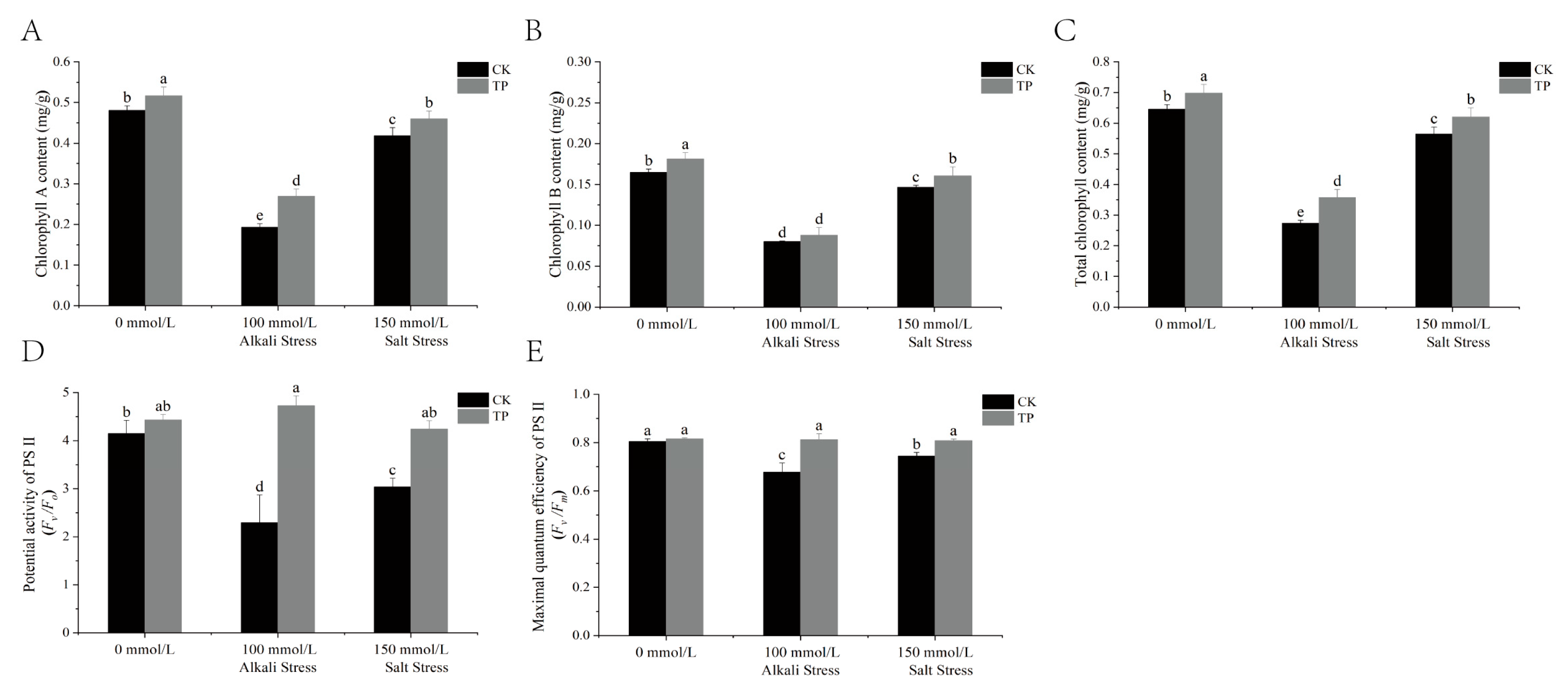
As shown in Figure 4, chlorophyll a, b, and total chlorophyll content all decreased significantly under high salt–alkali stress, with more severe damage observed under alkaline stress. Treatment with P. changbaiense significantly mitigated the degradation of chlorophyll a, b, and total chlorophyll. Under salt stress, the parameters increased by 9.79%, 9.52%, and 9.91%, respectively. Under alkali stress, the parameters increased by 39.90%, 10.00%, and 31.14%, respectively.

3.3.2. Chlorophyll Fluorescence

Under salt–alkali stress, the maximum potential activity (Fv/Fo) and photochemical efficiency (Fv/Fm) of PSII of seedlings decreased significantly. However, P. changbaiense-treated seedlings were not affected by stress. Under severe alkali stress, the Fv/Fo and Fv/Fm of the TP group increased by 106.19% and 19.11% respectively. Under severe salt stress, the Fv/Fo and Fv/Fm of the TP group increased by 39.47% and 9.46% respectively (Figure 4D,E).

3.4. Effects of Parametarhizium changbaiense on Root Configuration and Function Under Salt–Alkali Stress

3.4.1. Root Vitality

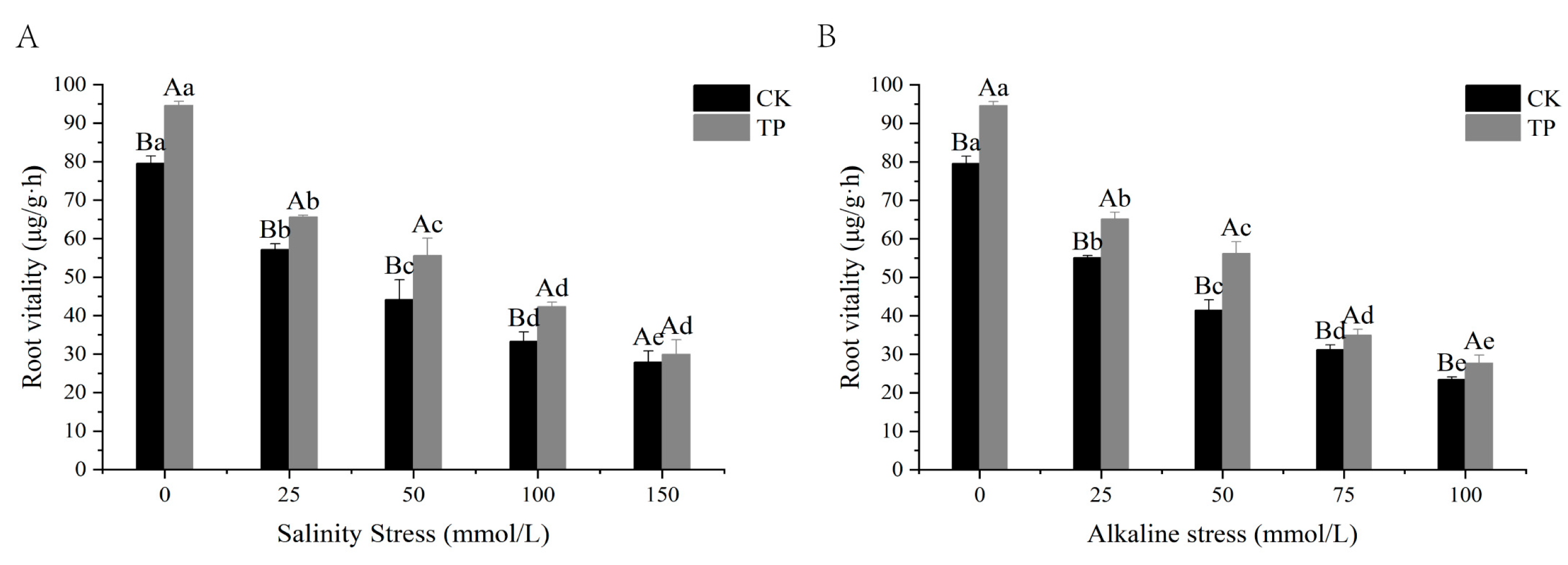
Plant root vitality serves as a key indicator for assessing root health and efficiency. The results indicate that root activity decreased correspondingly with increasing stress intensity. The root vitality of seedlings treated with P. changbaiense was significantly higher than that of the control group. Under salt–alkali stress, root vitality finally increased by 7.25% and 18.22% respectively (Figure 5).

3.4.2. Root Configuration

As shown in Table 3 and Table 4, salt–alkali treatment significantly affected the root volume, total root length, and root surface area of sugar beet seedlings. It exhibited a trend of initial increase followed by decrease with increasing concentration. Under salt stress, the root volume, total root length, and root surface area of sugar beet seedlings treated with P. changbaiense finally increased by 40.45%, 6.46%, and 12.21%, respectively. Under alkaline stress, the root volume, total root length, and root surface area of sugar beet seedlings treated with P. changbaiense finally increased by 28.38%, 18.82%, and 8.96%, respectively.

4. Discussion

4.1. Alleviating Effects of Parametarhizium changbaiense on Growth Inhibition Under Salt–Alkali Stress

Salt–alkali stress disrupts the dynamic balance reactive oxygen species (ROS) in plants. The accumulation of ROS can cause severe damage to proteins, lipids, nucleic acids, and other cellular components [21], thereby impairing plant growth. The results indicate that as the concentration of salt–alkali stress increases, sugar beet seedlings cannot alleviate the stress by adjusting physiological indicators. High concentrations induce severe osmotic stress and ion toxicity and ultimately inhibit plant development [22,23,24]. In contrast, seedlings inoculated with P. changbaiense exhibited superior growth and higher physiological homeostasis across all stress levels. Based on previous research, ion homeostasis may be partly regulated by P. changbaiense. It could reduce the uptake of toxic sodium ions while enhancing the acquisition of essential nutrients [25,26,27]. The induced osmoprotectants such as proline and soluble sugars help the plant maintain cell turgor and alleviate osmotic stress [28,29]. The enhanced activity of the antioxidant enzyme is important for maintaining redox homeostasis [30,31]. As a rhizosphere microorganism, it may competitively secrete antimicrobial compounds. It could indirectly promote plant health by modulating the rhizosphere microbial community [32].

4.2. Improving Effects of Parametarhizium changbaiense on Photosynthetic Apparatus and Light-Energy Utilizing Efficiency Under Salt–Alkali Stress

Chlorophyll content and fluorescence parameters serve as sensitive indicators of plant photosynthetic capacity and photosystem health [33]. In this study, salt–alkali stress reduced the content of chlorophyll a and b in sugar beet, consistent with previous reports that stress induced chlorophyll degradation or inhibited its synthesis [34,35]. The decline in photosynthetic pigments not only restrained light energy capture but also diminished the potential activity and maximal photochemical efficiency of PSII, which was caused by impaired reaction centers and reduced energy conversion efficiency [36,37]. Inoculation with P. changbaiense significantly alleviated chlorophyll degradation and maintained higher values of Fv/Fm and Fv/Fo. The plants inoculated with P. changbaiense could protect chloroplast structure from damage and preserve the stability of PSII. P. changbaiense could drive the activation of phosphorus and potassium in soil and convert insoluble elements into plant-available forms [38]. This enhancement in uptake efficiency supplies the essential nutrients required for chlorophyll biosynthesis [39,40]. Higher photosynthetic capacity provides sufficient photoassimilates for stress tolerance and biomass accumulation.

4.3. Promoting Effects of Parametarhizium changbaiense on Root Vitality and Configuration Under Salt–Alkali Stress

Root activity serves as a key indicator of root metabolic intensity and nutrient uptake capacity. Under salt–alkali stress, decreased water potential and ion imbalance directly damages root cells, leading to a sharp decline in root activity in sugar beet seedlings. It severely impairs their ability to absorb water and mineral nutrients [41,42]. In this study, sugar beet inoculated with P. changbaiense maintained significantly higher root activity and more optimized root architecture under stress conditions. Beneficial fungi could colonize the rhizosphere and directly stimulate root cell proliferation and elongation through the synthesis of phytohormones. It may indirectly optimize root architecture by modulating endogenous hormone levels in the host plant [43,44,45]. A more developed and metabolically active root system enables more a efficient uptake of water and nutrients from stressed soils, along with an enhanced capacity for selective absorption, which are essential for maintaining ion homeostasis and physiological function in plants.

5. Conclusions

The phenotypic characteristics of sugar beet seedlings inoculated with P. changbaiense improved under salt–alkali stress. The biomass parameters such as plant height and fresh weight significantly increased by growth-promoting effect. The elevated antioxidant enzyme activity could scavenge ROS from stress effectively. Relative electrical conductivity and MDA content decreased with inoculation, thereby mitigating membrane lipid peroxidation and improving membrane system stability. The higher content of soluble sugar maintained cell turgor pressure and alleviated osmotic stress. Inoculation with P. changbaiense enhanced chlorophyll content, fluorescence, and photosynthetic capacity. The more superior root vitality and architecture were suitable for the functions of metabolism and absorption.

Author Contributions

Conceptualization, W.T. and L.X.; methodology, L.W.; validation, W.T. and L.X.; formal analysis, L.W.; investigation, L.W.; resources, H.W.; data curation, L.W.; writing—original draft preparation, L.W.; writing—review and editing, W.T.; supervision, W.T.; project administration, W.T.; funding acquisition, W.T. All authors have read and agreed to the published version of the manuscript.

Funding

This research was funded by the National Key R&D Program of China, grant number 2025YFF1000400; the Heilongjiang Provincial Natural Science Foundation of China, grant number LH2023C090; the Earmarked Fund, grant number CARS-17; the Precision Identification Project of Germplasm Resources, grant number 22250677; the Hainan Province Science and Technology Project, grant number B24CQ008P.

Institutional Review Board Statement

This study does not fall within the scope of ethical research, as it does not involve animal or human clinical experiments and is not unethical. All participants provided informed consent before participating in the study. All participant involvement was conducted under the premise of ensuring anonymity, and participants were fully informed of the reasons for conducting the survey and the use of relevant data. No personal identity information was collected during the survey process. Participants can withdraw at any time, and their anonymity and confidentiality are guaranteed. Participation is completely voluntary, and there are no conflicts of interest or potential risks for power holders.

Data Availability Statement

The data that support the findings of this study are available from the corresponding author upon reasonable request.

Conflicts of Interest

The authors declare no conflicts of interest.

References

  1. Zhang, K.H.; Tang, J.R.; Wang, Y.; Kang, H.Y.; Zeng, J. The tolerance to saline-alkaline stress was dependent on the roots in wheat. Physiol. Mol. Biol. Pla. 2020, 26, 947–954. [Google Scholar] [CrossRef]
  2. Gao, Z.W.; Han, J.Y.; Mu, C.S.; Lin, J.X.; Li, X.; Lin, L.D.; Sun, S.N. Effects of saline and alkaline stresses on growth and physiological changes in oat (Avena sativa L.) seedlings. Not. Bot. Horti. Agrobo. 2014, 42, 357–362. [Google Scholar] [CrossRef]
  3. Guo, R.; Zhou, J.; Hao, W.P.; Gu, F.X.; Liu, Q.; Li, H.R.; Xia, X.; Mao, L.L. Germination, growth, chlorophyll fluorescence and ionic balance in linseed seedlings subjected to saline and alkaline stresses. Plant Prod. Sci. 2014, 17, 20–31. [Google Scholar] [CrossRef]
  4. Xu, Z.J.; Wang, J.C.; Zhen, W.T.; Sun, T.; Hu, X.H. Abscisic acid alleviates harmful effect of saline-alkaline stress on tomato seedlings. Plant Physiol. Bioch. 2022, 175, 58–67. [Google Scholar] [CrossRef]
  5. Fang, S.M.; Hou, X.; Liang, X.L. Response mechanisms of plants under saline-alkali stress. Front. Plant Sci. 2021, 12, 667458. [Google Scholar] [CrossRef]
  6. An, Y.M.; Song, L.L.; Liu, Y.R.; Shu, Y.J.; Guo, C.H. De novo transcriptional analysis of alfalfa in response to saline-alkaline stress. Front. Plant Sci. 2016, 7, 931. [Google Scholar] [CrossRef]
  7. Ghoulam, C.; Fares, K. Effect of salinity on seed germination and early seedling growth of sugar beet (Beta vulgaris L.). Seed Sci. Technol. 2001, 29, 357–364. [Google Scholar]
  8. Zou, C.L.; Wang, Y.; Liu, L.B.; Liu, D.; Wu, P.R.; Yang, F.F.; Wang, B.; Tong, T.; Liu, X.M.; Li, C.F. Photosynthetic capacity, osmotic adjustment and antioxidant system in sugar beet (Beta vulgaris L.) in response to alkaline stress. Photosynthetica 2019, 57, 350–360. [Google Scholar] [CrossRef]
  9. Ghoulam, C.; Foursy, A.; Fares, K. Effects of salt stress on growth, inorganic ions and proline accumulation in relation to osmotic adjustment in five sugar beet cultivars. Environ. Exp. Bot. 2002, 47, 39–50. [Google Scholar] [CrossRef]
  10. Htet, Z.M.; Li, X.; Yu, F. Enhanced seedling growth and physiological performances of Melia azedarach L. by foliar application of 24-epibrassinolide under salt stress. Forests 2024, 15, 427. [Google Scholar] [CrossRef]
  11. Chen, G.; Yang, A.; Wang, J.; Ke, L.; Chen, S.; Li, W. Effects of the synergistic treatments of arbuscular mycorrhizal fungi and trehalose on adaptability to salt stress in tomato seedlings. Microbiol. Spectr. 2024, 12, e03404-23. [Google Scholar] [CrossRef]
  12. Chen, Q.; Xie, H.; Wei, G.; Guo, X.; Zhang, J.; Lu, X.; Tang, Z. Metabolic differences of two constructive species in saline-alkali grassland in China. BMC Plant Biol. 2022, 22, 53. [Google Scholar] [CrossRef]
  13. Bisseling, T.; Dangl, J.L.; Schulze-Lefert, P. Next-generation communication. Science 2009, 324, 691. [Google Scholar] [CrossRef]
  14. Dhayalan, V.; Sudalaimuthu, K. Plant growth promoting rhizobacteria in promoting sustainable agriculture. Glob. J. Environ. Sci. Manag. 2021, 7, 1–18. [Google Scholar]
  15. Gao, S.Y.; Meng, W.; Zhang, L.X.; Yue, Q.; Zheng, X.; Xu, L.J. Parametarhizium (Clavicipitaceae) gen. nov. with two new species as a potential biocontrol agent isolated from forest litters in northeast China. Front. Microbiol. 2021, 12, 627744. [Google Scholar] [CrossRef]
  16. Geng, G.; Li, R.; Stevanato, P.; Lv, C.; Lu, Z.; Yu, L.; Wang, Y. Physiological and transcriptome analysis of sugar beet reveals different mechanisms of response to neutral salt and alkaline salt stresses. Front. Plant Sci. 2020, 11, 571864. [Google Scholar] [CrossRef]
  17. Quiles, F.A.; Galvez-Valdivieso, G.; Guerrero-Casado, J.; Pineda, M.; Piedras, P. Relationship between ureidic/amidic metabolism and antioxidant enzymatic activities in legume seedlings. Plant Physiol. Biochem. 2019, 138, 1–8. [Google Scholar] [CrossRef] [PubMed]
  18. Li, G.; Shi, M.; Wan, W.; Wang, Z.; Ji, S.; Yang, F.; Jin, S.; Zhang, J. Maize endophytic plant growth-promoting bacteria peribacillus simplex can alleviate plant saline and alkaline stress. Int. J. Mol. Sci. 2024, 25, 10870. [Google Scholar] [CrossRef] [PubMed]
  19. Song, Y.; Zhang, R.; Gao, S.; Pan, Z.; Guo, Z.; Yu, S.; Wang, Y.; Jin, Q.; Chen, X.; Zhang, L. Transcriptome analysis and phenotyp-ing of walnut seedling roots under nitrogen stresses. Sci. Rep. 2022, 12, 12066. [Google Scholar] [CrossRef] [PubMed]
  20. Khan, S.; Alvi, A.F.; Fatma, M.; Al-Hashimi, A.; Sofo, A.; Khan, N.A. Relative effects of melatonin and hydrogen sulfide treat-ments in mitigating salt damage in wheat. Front. Plant Sci. 2024, 15, 1406092. [Google Scholar] [CrossRef]
  21. Miller, G.; Suzuki, N.; Ciftci-Yilmaz, S.; Mittler, R. Reactive oxygen species homeostasis and signaling during drought and salinity stresses. Plant Cell Environ. 2010, 33, 453–467. [Google Scholar] [CrossRef]
  22. Flowers, T.J.; Colmer, T.D. Plant salt tolerance: Adaptations in halophytes. Ann. Bot. 2015, 115, 327–331. [Google Scholar] [CrossRef]
  23. Hajiboland, R.; Joudmand, A. The K/Na replacement and function of antioxidant defence system in sugar beet (Beta vulgaris L.) cultivars. Acta Agr. Scand. Sect. B—Soil Plant Sci. 2009, 59, 246–259. [Google Scholar]
  24. Zou, C.L.; Wang, Y.B.; Wang, B.; Liu, D.; Liu, L.; Li, C.F. Effects of alkali stress on dry matter accumulation, root morphology, ion balance, free polyamines, and organic acids of sugar beet. Acta Physi. Plant. 2021, 43, 13. [Google Scholar] [CrossRef]
  25. Hua, S.T.; Liu, R.Y.; Li, Z.; Zheng, H.; Zheng, Y.F.; Wang, Y.Q.; Zhang, C.S.; Wang, Z.Y.; Jiang, M.G. Endophytic bacteria Priestia megaterium 170T-4 improves soybean salt tolerance through regulation of ion homeostasis and phytohormone signaling pathways. Front. Microbio. 2025, 16, 1676456. [Google Scholar] [CrossRef]
  26. Sharma, S.; Kulkarni, J.; Jha, B. Halotolerant rhizobacteria promote growth and enhance salinity tolerance in peanut. Front. Microbio. 2016, 7, 1600. [Google Scholar] [CrossRef]
  27. Munns, R.; Tester, M. Mechanisms of salinity tolerance. Annu. Rev. Plant Biol. 2008, 59, 651–681. [Google Scholar] [CrossRef]
  28. Zhang, K.; Duan, F.R.; Li, Z.; Deng, X.L.; Ma, Q.L. Microbial community dynamics and rice adaptation in saline-alkali soils: Insights into plant-microbe interactions. Agriculture 2025, 15, 1869. [Google Scholar] [CrossRef]
  29. Tian, X.G.; Liu, Q.R.; Song, J.J.; Zhang, X.; Yang, G.P.; Li, M.; Qu, H.; Tastanbek, A.; Tan, Y.R. Effect of Enterobacter bugandensis R-18 on maize growth promotion under salt stress. Microorganisms 2025, 13, 1796. [Google Scholar] [CrossRef] [PubMed]
  30. Wang, X.; Ma, X.; Wang, S.; Zhang, P.; Sun, L.; Jia, Z.; Zhang, Y.; Bao, Q.; Bao, Y.; Wei, J. Transcriptomic and metabolomic insights into the effects of arbuscular mycorrhizal fungi on root vegetative growth and saline–alkali stress response in Oat (Avena sativa L.). J. Fungi 2025, 11, 587. [Google Scholar] [CrossRef]
  31. Castro, B.; Citterico, M.; Kimura, S.; Stevens, D.; Wrzaczek, M.; Coaker, G. Stress-induced reactive oxygen species compartmentalization, perception and signalling. Nat. Plants 2021, 7, 403–412. [Google Scholar] [CrossRef] [PubMed]
  32. Hashem, A.; Tabassum, B.; Abd Allah, E.F. Bacillus subtilis: A plant-growth promoting rhizobacterium that also impacts biotic stress. Saudi J. Biol. Sci. 2019, 26, 1291–1297. [Google Scholar] [CrossRef]
  33. Asada, K. Production and scavenging of reactive oxygen species in chloroplasts and their functions. Plant Physiol. 2006, 141, 391–396. [Google Scholar] [CrossRef]
  34. Abbas, F.; Al-Jbawi, E.; Ibrahim, M. Growth and chlorophyll fluorescence under salinity stress in sugar beet (Beta vulgaris L.). Int. J. Environ. 2014, 3, 1–9. [Google Scholar] [CrossRef]
  35. Zhang, P.F.; Yang, F.F.; Zhang, H.; Liu, L.; Liu, X.Y.; Chen, J.T.; Wang, X.; Wang, Y.B.; Li, C.F. Beneficial effects of biochar-based organic fertilizer on nitrogen assimilation, antioxidant capacities, and photosynthesis of sugar beet (Beta vulgaris L.) under saline-alkaline stress. Agronomy 2020, 10, 1562. [Google Scholar] [CrossRef]
  36. Netto, A.T.; Campostrini, E.; de Oliveira, J.G.; Bressan-Smith, R.E. Photosynthetic pigments, nitrogen, chlorophyll a fluorescence and SPAD-502 readings in coffee leaves. Sci. Hortic. 2005, 104, 199–209. [Google Scholar] [CrossRef]
  37. Behera, R.K.; Choudhury, N.K. Photosynthetic characteristics of chloroplasts of primary wheat leaves grown under different irradiance. Photosynthetica 2001, 39, 11–15. [Google Scholar] [CrossRef]
  38. Gao, Y.; Gao, S.Y.; Bai, Y.; Meng, W.; Xu, L.J. Parametarhizium hingganense, a novel ectomycorrhizal fungal species, promotes the growth of mung beans and enhances resistance to disease induced by Rhizoctonia solani. J. Fungi 2022, 8, 934. [Google Scholar] [CrossRef] [PubMed]
  39. Khan, M.A.; Sahile, A.A.; Jan, R.; Asaf, S.; Hamayun, M.; Imran, M.; Adhikari, A.; Kang, S.M.; Kim, K.M.; Lee, I.J. Halotolerant bacteria mitigate the effects of salinity stress on soybean growth by regulating secondary metabolites and molecular responses. Bmc Plant Biol. 2021, 21, 176. [Google Scholar] [CrossRef]
  40. Habib, S.H.; Kausar, H.; Saud, H.M. Plant growth-promoting rhizobacteria enhance salinity stress tolerance in okra through ROS-scavenging enzymes. BioMed Res. Int. 2016, 1, 6284547. [Google Scholar] [CrossRef]
  41. Cao, Y.; Song, H.; Zhang, L. New insight into plant saline-alkali tolerance mechanisms and application to breeding. Int. J. Mol. Sci. 2022, 23, 16048. [Google Scholar] [CrossRef] [PubMed]
  42. Liu, H.Q.; Lu, X.B.; Li, Z.H.; Tian, C.Y.; Song, J. The role of root-associated microbes in growth stimulation of plants under saline conditions. Land Degrad. Dev. 2021, 32, 3471–3486. [Google Scholar] [CrossRef]
  43. Dodd, I.C.; Pérez-Alfocea, F. Microbial amelioration of crop salinity stress. J. Exp. Bot. 2012, 63, 3415–3428. [Google Scholar] [CrossRef]
  44. Bottini, R.; Cassan, F.; Piccoli, P. Gibberellin production by bacteria and its involvement in plant growth promotion and yield increase. Appl. Microbiol. Biot. 2004, 65, 497–503. [Google Scholar] [CrossRef] [PubMed]
  45. Liu, R.; Wang, C.; Jin, J.; Zhu, X.; Chen, L.; Yang, Y.; Zheng, R.; Malik, K.; Wang, J.; Li, C. Achnatherum inebrians tolerance to salt stress is linked with the changes of rhizosphere microbiome and root exudates. Soil Ecol. Lett. 2025, 7, 250359. [Google Scholar] [CrossRef]
Figure 1. Growth characteristics of sugar beet seedlings under salt–alkali stress.
Agriculture 16 01224 g001
Figure 2. Antioxidant enzyme activity in sugar beet seedlings under salt–alkali stress. (AD), POD activity; (EH), SOD activity. Values are means ± SD (n = 20). Different lowercase letters indicate significant differences (p < 0.05) among mean values of the same treatment at different concentrations. Different capital letters indicate significant differences (p < 0.05) among mean values of different treatments at the same concentration.
Agriculture 16 01224 g002
Figure 3. Permeation regulators in sugar beet seedlings under salt–alkali stress. (AD), MDA content; (EH), soluble sugar content; (I,J), relative conductivity. Different lowercase letters indicate significant differences (p < 0.05) among mean values of the same treatment at different concentrations. Different capital letters indicate significant differences (p < 0.05) among mean values of different treatments at the same concentration.
Agriculture 16 01224 g003
Figure 4. Photosynthetic system of sugar beet seedlings under salt–alkali stress. (A) Chlorophyll a content; (B) Chlorophyll b content; (C) Total chlorophyll content; (D) Potential activity of photosystem II; (E) Maximum photochemical efficiency of photosystem II. Different lowercase letters indicate significant differences (p < 0.05) among mean values of the different treatments and stress concentrations.
Agriculture 16 01224 g004
Figure 5. Root activity of sugar beet seedlings under salt–alkali stress. (A) Root activity under salt stress; (B) Root activity under alkali stress. Different lowercase letters indicate significant differences (p < 0.05) among mean values of the same treatment at different concentrations. Different capital letters indicate significant differences (p < 0.05) among mean values of different treatments at the same concentration.
Agriculture 16 01224 g005
Table 1. Biomass of sugar beet seedlings under salt stress.
Phenotypic
Characteristics
Salt Stress Treatment Concentrations (mmol/L)
02550100150
Plant Height (cm)CK36.07 ± 2.94 Bbc37.19 ± 3.24 Ab39.84 ± 2.94 Ba34.84 ± 2.82 Ac31.12 ± 2.57 Bd
TP37.79 ± 1.83 Abc38.89 ± 2.77 Ab43.24 ± 1.75 Aa35.66 ± 3.49 Abc34.43 ± 2.89 Ac
Aboveground fresh weight (g)CK6.31 ± 0.55 Bc8.16 ± 0.98 Bb9.33 ± 0.71 Ba5.25 ± 0.57 Bd4.96 ± 0.39 Bd
TP7.66 ± 0.42 Ac9.98 ± 1.08 Ab10.91 ± 1.01 Aa6.32 ± 0.56 Ad5.82 ± 0.33 Ad
Underground fresh weight (g)CK2.31 ± 0.42 Bc2.54 ± 0.36 Bb2.90 ± 0.47 Ba1.79 ± 0.38 Bd1.69 ± 0.35 Bd
TP2.80 ± 0.44 Ac3.00 ± 0.46 Ab3.25 ± 0.49 Aa2.37 ± 0.28 Ad2.20 ± 0.41 Ad
Values are means ± SD (n = 20). Different lowercase letters indicate significant differences in the average values of the same treatment at different concentrations at the p < 0.05 level. Different capital letters represent significant differences in the average values of different treatments at the same concentration at the p < 0.05 level.
Table 2. Biomass of sugar beet seedlings under alkali stress.
Phenotypic
Characteristics
Alkali Stress Treatment Concentrations (mmol/L)
0255075100
Plant Height (cm)CK36.07 ± 2.94 Bb42.26 ± 4.00 Ba34.57 ± 3.73 Bbc32.05 ± 1.94 Bc29.06 ± 2.65 Bd
TP37.79 ± 1.83 Ab45.45 ± 5.17 Aa37.43 ± 3.01 Abc35.06 ± 1.90 Ac33.17 ± 2.46 Ad
Aboveground fresh weight (g)CK6.31 ± 0.55 Bb10.59 ± 1.42 Ba5.99 ± 0.67 Bc5.04 ± 0.61 Bd4.32 ± 0.55 Be
TP7.66 ± 0.42 Ab14.37 ± 1.17 Aa6.51 ± 0.49 Ac5.89 ± 0.77 Ad5.66 ± 0.85 Ad
Underground fresh weight (g)CK2.31 ± 0.42 Bb3.07 ± 0.33 Ba2.13 ± 0.34 Bbc1.96 ± 0.33 Bc1.71 ± 0.24 Bd
TP2.80 ± 0.44 Ab3.37 ± 0.30 Aa2.71 ± 0.38 Ab2.46 ± 0.34 Ac2.27 ± 0.27 Ac
Values are means ± SD (n = 20). Different lowercase letters indicate significant differences in the average values of the same treatment at different concentrations at the p < 0.05 level. Different capital letters represent significant differences in the average values of different treatments at the same concentration at the p < 0.05 level.
Table 3. Root configuration of sugar beet seedlings under salt stress.
Phenotypic
Characteristics
Salt Stress Treatment Concentrations (mmol/L)
02550100150
Root volume (cm3)CK2.02 ± 0.28 Ab2.28 ± 0.31 Bab2.55 ± 0.25 Ba1.40 ± 0.28 Bc0.96 ± 0.31 Bd
TP2.21 ± 0.22 Ab2.53 ± 0.24 Ab2.84 ± 0.27 Aa1.76 ± 0.38 Ad1.36 ± 0.21 Ae
Root length (cm)CK21.87 ± 2.44 Bb21.24 ± 1.99 Ab23.39 ± 1.41 Ba18.96 ± 1.72 Bc17.22 ± 1.95 Bd
TP24.04 ± 2.74 Ab24.93 ± 2.47 Aa25.29 ± 1.89 Aa21.61 ± 2.33 Ab18.33 ± 1.97 Ac
Root surface area (cm2)CK115.17 ± 17.68 Bbc130.16 ± 23.44 Ba136.09 ± 19.86 Aa96.65 ± 11.81 Bc82.35 ± 13.88 Bd
TP130.42 ± 14.02 Ab143.59 ± 18.07 Aa148.19 ± 23.44 Aa118.66 ± 16.91 Ac92.41 ± 9.52 Ad
Values are means ± SD (n = 20). Different lowercase letters indicate significant differences in the average values of the same treatment at different concentrations at the p < 0.05 level. Different capital letters represent significant differences in the average values of different treatments at the same concentration at the p < 0.05 level.
Table 4. Root configuration of sugar beet seedlings under alkali stress.
Phenotypic
Characteristics
Alkali Stress Treatment Concentrations (mmol/L)
0255075100
Root volume (cm3)CK2.02 ± 0.28 Ab2.45 ± 0.27 Ba1.88 ± 0.34 Bc1.53 ± 0.24 Bd0.96 ± 0.27 Be
TP2.21 ± 0.22 Ab2.69 ± 0.17 Aa2.02 ± 0.18 Ac1.79 ± 0.29 Ad1.24 ± 0.36 Ae
Root length (cm)CK21.87 ± 2.44 Bb24.23 ± 3.35 Aa21.36 ± 2.85 Ab21.22 ± 1.99 Ab17.33 ± 1.88 Bc
TP24.04 ± 2.74 Ab26.95 ± 3.52 Aa22.72 ± 2.85 Ab22.48 ± 2.30 Ab20.59 ± 2.35 Ac
Root surface area (cm2)CK115.17 ± 17.68 Bbc153.68 ± 22.08 Ba120.77 ± 22.55 Bb109.82 ± 15.41 Ac87.45 ± 14.62 Bd
TP130.42 ± 14.02 Ab166.45 ± 17.51 Aa130.99 ± 23.13 Ab116.57 ± 12.89 Ac95.29 ± 12.59 Ad
Values are means ± SD (n = 20). Different lowercase letters indicate significant differences in the average values of the same treatment at different concentrations at the p < 0.05 level. Different capital letters represent significant differences in the average values of different treatments at the same concentration at the p < 0.05 level.
Disclaimer/Publisher’s Note: The statements, opinions and data contained in all publications are solely those of the individual author(s) and contributor(s) and not of MDPI and/or the editor(s). MDPI and/or the editor(s) disclaim responsibility for any injury to people or property resulting from any ideas, methods, instructions or products referred to in the content.