Article

Field-Induced Chilling Injury in Banana: Physiological and Quality Responses of Cultivars to Natural Cold Front


by
Juliana Domingues Lima
1,*,
Mariane Rodrigues Pereira
1,
Danilo Eduardo Rozane
1,
Silvia Helena Modenese Gorla da Silva
1,
Eduardo Nardini Gomes
1,
Edson Shigueaki Nomura
2 and
Poliana Fernanda Giachetto
3
1
Faculty of Agricultural Sciences of Vale do Ribeira, São Paulo State University (UNESP), Registro 11900-000, Brazil
2
São Paulo’s Agency for Agribusiness Technology (APTA), Pariquera-Açu 11900-000, Brazil
3
Embrapa Digital Agriculture, Campinas 13083-886, Brazil
*
Author to whom correspondence should be addressed.
Agriculture 2026, 16(11), 1193; https://doi.org/10.3390/agriculture16111193
Submission received: 15 April 2026 / Revised: 8 May 2026 / Accepted: 10 May 2026 / Published: 29 May 2026

Abstract

Banana fruits are susceptible to chilling injury (CI) under field conditions, which significantly impairs fruit quality. Cold tolerance varies among genotypes; however, only a limited number of cultivars have been identified as tolerant and are commercially cultivated. This study aimed to investigate the physiological responses and quality attributes of banana cultivars exposed to natural cold fronts during development, compared with fruits developed under summer conditions. Furthermore, it evaluated whether the B genome confers greater cold tolerance, driven by a more efficient antioxidant mechanism, thereby supporting its recommendation for cultivation in regions prone to low temperatures. Bunches were harvested in winter following five natural cold fronts, during which air temperatures fell below 12 °C (137 h). The experimental design followed a completely randomized design in a factorial arrangement. Consecutive cold fronts intensified CI symptoms up to the fourth exposure event. CI severity was highest in ‘Grande Naine’ (AAA), which exhibited lower L*, a*, and b* values at the ripe stage compared to ‘BRS Princesa’ (AAAB) and ‘Prata Catarina’ (AAB), along with greater deviations relative to summer-harvested fruits. Malondialdehyde (MDA), total phenolic content, and antioxidant enzyme activities (SOD, CAT, APX, and POD) in the peel of unripe fruits were significantly higher during winter, particularly in ‘BRS Princesa’ and ‘Prata Catarina’, compared to ‘Grande Naine’. Proline accumulation followed a similar pattern, with the highest levels observed in ‘BRS Princesa’, followed by ‘Prata Catarina’ and ‘Grande Naine’. The findings indicate that ‘BRS Princesa’ exhibits greater tolerance to cold stress and highlights of the contribution of the B genome. Phenolic content was identified as a consistent marker of seasonal variation across cultivars.

1. Introduction

Banana (Musa spp.) is a perennial herbaceous plant and one of the most economically significant food crops in tropical and subtropical regions worldwide. Global production reached approximately 139 million metric tons in 2023 [1].
In general, bananas grow best within a temperature range of 24–32 °C [2], provided that other factors, such as nutrient and water availability, are non-limiting [3]. Growth typically ceases between 10 and 17 °C depending on the cultivar/variety, developmental stage, temperature, and duration of exposure to low temperature [3].
Low temperatures are frequent in winter and early spring in tropical and subtropical banana-production regions, posing a serious threat to cultivation [3]. Therefore, cold stress is a major environmental factor that significantly limits geographic distribution, productivity and fruit quality of banana [3,4].
Banana fruits are highly sensitive to low temperatures and are prone to chilling injury (CI) when exposed to temperatures below 12 °C during either pre- or postharvest stages [5]. CI manifests through irreversible symptoms such as peel browning, pitting, and abnormal ripening [6]. Loss of cell membrane integrity and oxidative stress are key events associated with browning [5,6].
Significant variation in cold tolerance exists among banana genotypes [7]. It is essential to investigate the mechanisms of cold tolerance in banana plants under field conditions and fruit quality. Improving cold tolerance is also critical for extending the storage life of bananas [8], which is crucial for enhancing marketability and minimizing postharvest losses. Ultimately, these advances will contribute to the sustainability and overall profitability of the banana industry [9].
Most banana varieties are derived from natural hybridization between Musa acuminata (A genome) and Musa balbisiana (B genome), with chromosome ploidy including diploids (AA, BB, AB), triploids (AAA, AAB, ABB) and tetraploids (AAAB, AABB, ABBB) [10,11]. The B genome is primarily related to photosynthesis and biosynthesis of secondary metabolites, compared to the A genome [7]. This feature accounts for the strong association of the B genome with increased stress tolerance and enhanced plant vitality [11,12].
Cold tolerance in banana plantlets of different genotypes under controlled growth conditions has been widely investigated [13,14,15,16,17,18], as well as strategies to enhance this tolerance [8,19]. However, few cultivars have been identified for cold tolerance [3]. Furthermore, field studies on the effects of cold stress associated with natural cold fronts remain scarce, particularly those addressing fruit development and peel color, which are key determinants of fruit quality and consumer acceptance. Understanding these responses is crucial as they may indicate cold tolerance during the postharvest period and vice versa.
We hypothesized that, under field conditions, cultivars carrying the B genome would exhibit superior cold tolerance compared to those restricted to the A genome, potentially due to a more efficient antioxidant system, which mitigates CI by maintaining redox homeostasis. In this context, the present study aimed to investigate the physiological responses and quality attributes of banana cultivars exposed to natural cold fronts during development, relative to fruits developed under summer conditions. Furthermore, we evaluated whether the B genome confers enhanced cold tolerance through a more efficient mobilization of enzymatic and non-enzymatic antioxidants in the fruit peel, thereby supporting its recommendation for cultivation in regions prone to low-temperature stress.
In this context, the present study aimed to investigate the physiological responses and quality attributes of banana cultivars exposed to natural cold fronts during development, compared with fruits developed under summer conditions. Furthemore, it evaluated whether the B genome confers greater cold tolerance via enzymatic and non-enzymatic antioxidants mechanisms in the fruit peel, thereby supporting its recommendation for cultivation in regions prone to low temperatures.

2. Materials and Methods

2.1. Experimental Site and Study Period

Bunches of the cultivars ‘BRS Princesa’ (Apple type, AAAB), ‘Prata Catarina’ (Silver type, AAB), and ‘Grande Naine’ (Cavendish type, AAA) were harvested from July 2023 to September 2024 at the Regional Research Station of Pariquera-Açu, SP, Brazil (24°36′31″ S, 47°53′48″ W; 47 m above sea level). All standard cultural practices recommended for commercial banana production were adopted throughout the experimental period, such as fertilization and phytosanitary treatment, removal of floral remnants, bunch bagging and identification of the flowering week [20].
According to the Köppen classification, the regional climate is Af, characterized by high rainfall and the absence of a dry season [21]. The mean minimum and maximum temperatures during the experimental period, from June 2023 to March 2024, were 14.1 and 28.5 °C, respectively. The soil was classified as an Alic Yellow Oxisol [22], with a clayey texture (34% clay, 9% silt, and 57% sand) in the A horizon.

2.2. Experimental Design and Sampling

The experiment was conducted in a completely randomized design in a factorial arrangement (cultivar × harvest × season), with six bunches (experimental unit or replications) per harvest. The factors included three cultivars, five harvests, and two seasons (winter and summer).
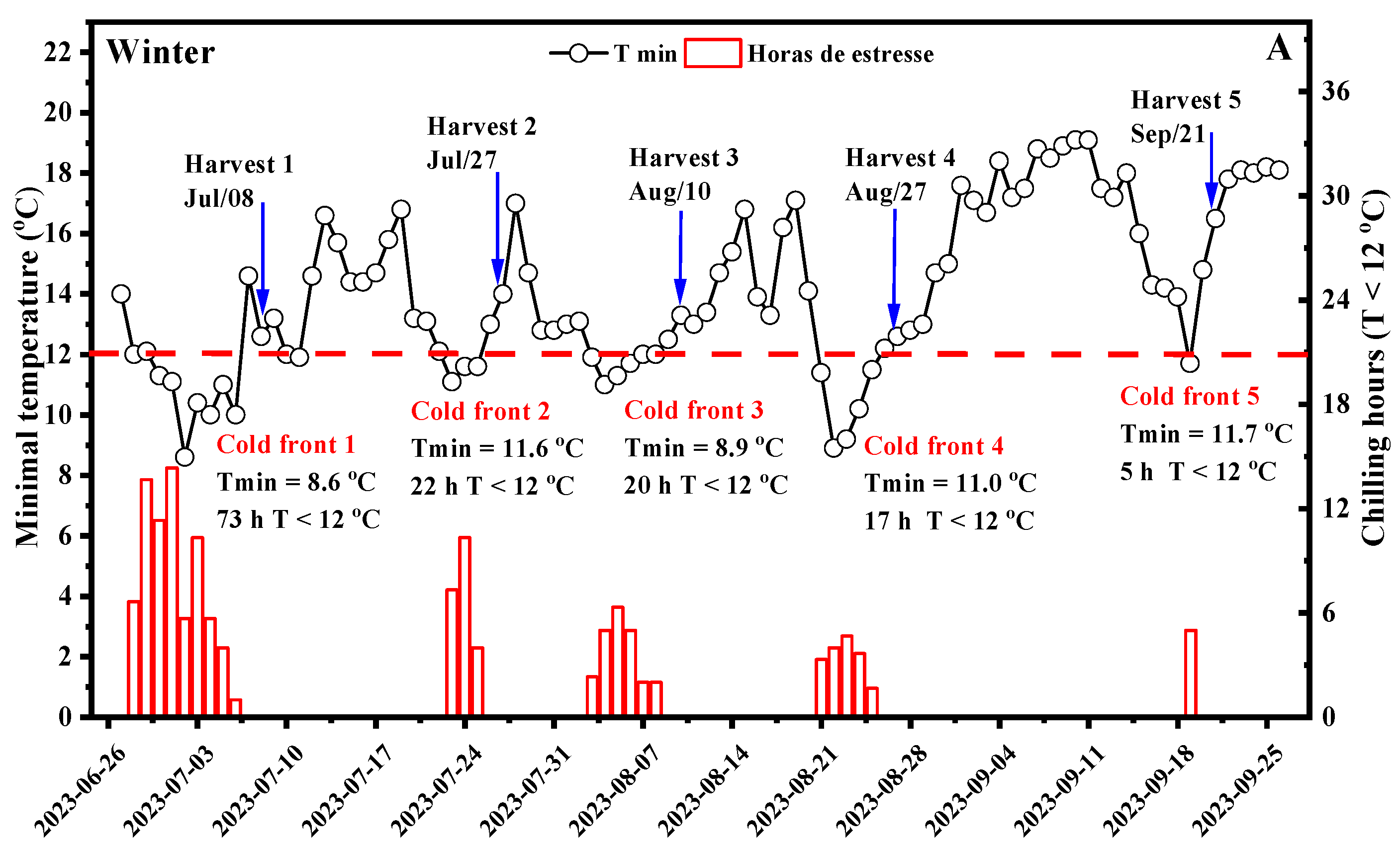
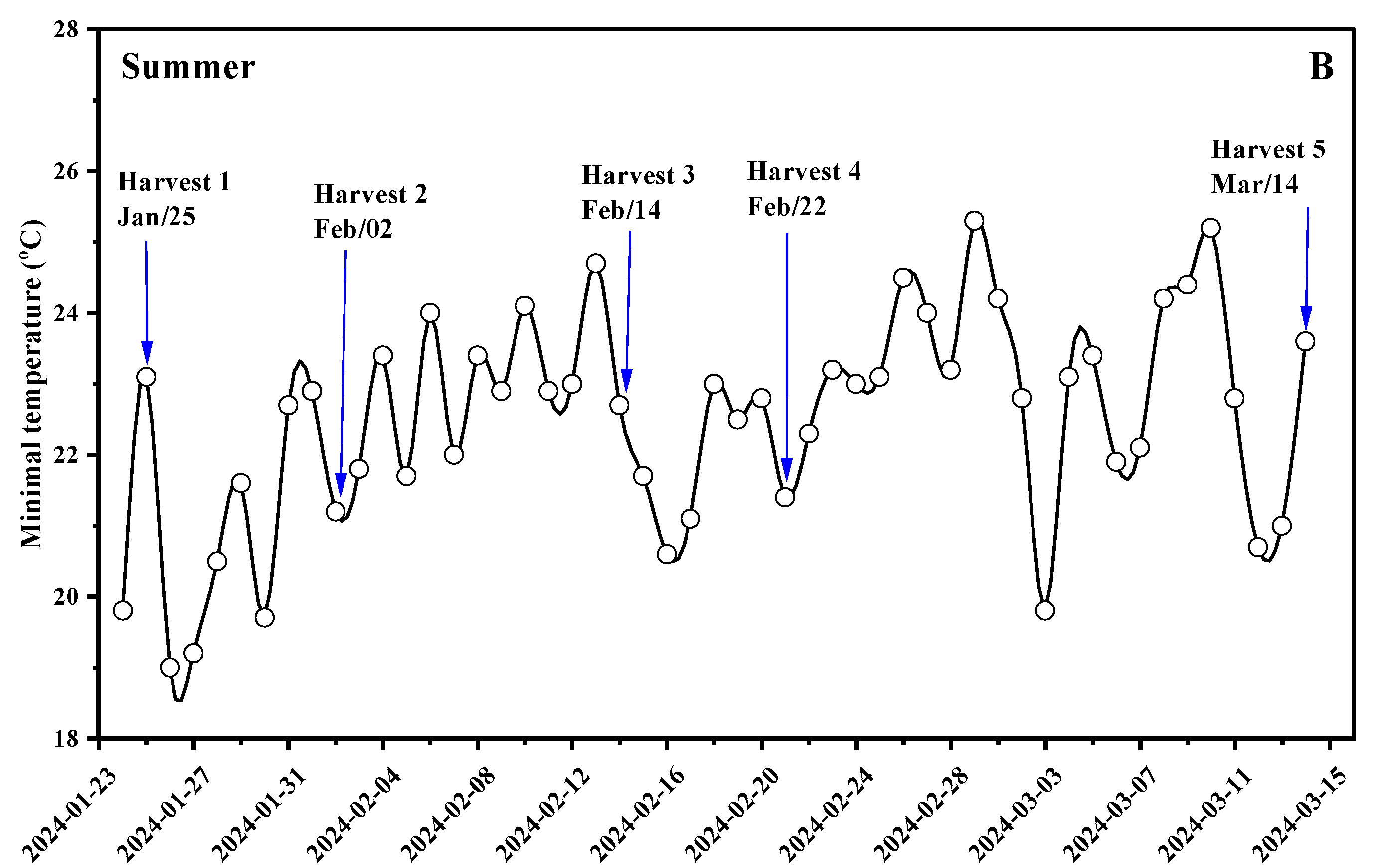
For bunches developed during the winter, identification at flowering occurred between the last week of April and the first week of May 2023. A harvest of these bunches was performed up to 48 h after fruit exposure to natural cold fronts with stressful temperatures (chilling hours). Harvest dates were 8 July (Tmin = 8.6 °C and 73 h with T < 12 °C), 27 July (Tmin = 11.6 °C and 22 h), 10 August (Tmin = 8.9 °C and 20 h), 27 August (Tmin = 11.0 °C and 17 h), and 21 September (Tmin = 11.7 °C and 5 h), representing cumulative exposure to cold fronts (Figure 1A). Minimum temperatures were recorded at a weather station located at the experimental site. For bunches developed during the summer, selection at flowering was conducted during the week of 21 December 2023, and harvests were carried out on 25 January, 2 February, 14 February, 22 February, and 14 March 2024 (Figure 1B).
After harvesting, the fourth hand from the base of each bunch was collected, washed, and transported to the laboratory at São Paulo State University (UNESP), School of Agricultural Sciences of the Vale do Ribeira, Registro, SPo, Brazil, for further analyses. This approach ensured that all fruits were of the same age and had received uniform protection from bagging using 5 µm thick polyethylene. Half of the fourth hand were immediately used for analysis, while the remaining fruits were stored at 25 ± 1 °C and 89 ± 3% relative humidity (RH) for 12 days until full natural ripening. All analytical measurements were performed in triplicate, using three fruits from the fourth hand.

2.3. Physiological and Quality Assessments

The chilling injury index (CI index) was estimated based on the extent of external browning area in unripe fruits [23], using a five-point scale: 1 = almost no browning; 2 = 1–25% browning; 3 = 25–50% browning; 4 = 50–75% browning; and 5 = 75–100% browning. Longitudinal sections were made using a blade in the subepidermal region of the peel of unripe fruits, where browning was immediately examined and photographed using a microscope (DM4 B, Leica Microsystems, Weltzlar, Germany) coupled to a digital camera (DMC5400, Leica Microsystems, Weltzlar, Germany).
Peel color was measured during ripening at three points around the equatorial region of each fruit using a colorimeter (CR-400, Minolta, Tokyo, Japan) according to the CIE L*a*b* system, after calibration using the instrument’s white reference plate. Lightness (L*) and chromatic co-ordinates a* and b* were recorded [24]. To determine the full ripening stage of winter-harvested fruits, firmness was monitored using a penetrometer (FT-327, QA Supplies, Varese, Italy) until values reached 1 N, ensuring that the fruit exhibited firmness changes characteristic of ripeness.
The malondialdehyde (MDA) content was determined using the thiobarbituric acid (TBA) method [25] with modifications. Unripe fruit peel tissue (1 g) was homogenized in 5 mL of 10% (w/v) TCA containing 0.5% (w/v) TBA. The mixture was incubated at 95 °C for 60 min, cooled in an ice bath, and centrifuged (NT 805, Nova Técnica, Piracicaba, Brazil) at 3000× g for 10 min. Absorbance was measured at 450, 532, and 600 nm in spectrophotometer (UV–VIS M51, BEL Engineering, Monza, Italy). MDA content was expressed in nmol g−1 FW.
Total phenolics were determined according to Singleton [26]. Unripe fruit peel tissue (0.5 g) was macerated in liquid nitrogen and extracted with 5 mL of methanol containing 2% (v/v) HCl for 24 h at 25 °C in the dark. After centrifugation (NT 805, Piracicaba, Brazil) at 12,000× g for 20 min at 4 °C, 0.5 mL of the supernatant was mixed with 0.5 mL of distilled water, 0.5 mL of diluted Folin–Ciocalteu reagent (1:4, v/v), and 2.5 mL of 4% (w/v) sodium carbonate. After incubation for 60 min in the dark, absorbance was measured at 765 nm in spectrophotometer (UV–VIS M51, BEL Engineering, Monza, Italy). The results were obtained using a calibration curve constructed with gallic acid as a standard (10–200 mg L−1) and expressed in mg g−1 FW.
Proline content was determined according to Bates [27]. Unripe fruit peel tissue (1 g) was macerated in liquid nitrogen and extracted with 5 mL of 10% sulfosalicylic acid at 100 °C for 10 min under stirring conditions. After centrifugation (NT 805, Piracicaba, Brazil) at 12,000× g for 5 min at 4 °C), the reaction mixture contained 0.5 mL of supernatant, 0.5 mL of acid ninhydrin solution, and 0.5 mL of glacial acetic acid. Samples were incubated at 100 °C for 1 h, cooled in an ice bath, and extracted with 2 mL of toluene. Absorbance of the organic phase was measured at 520 nm in spectrophotometer (UV–VIS M51, BEL Engineering, Monza, Italy), and proline concentration was determined using a standard curve (2.5–5 mg L−1) and expressed in µg g−1 FW.
For the antioxidant enzyme assays, all procedures were carried out at 4 °C. Unripe fruit peel tissue (1 g) was homogenized in 10 mL of 0.1 M potassium phosphate buffer (pH 6.8) containing 2% (w/v) polyvinylpolypyrrolidone (PVPP). The homogenate was centrifuged at 12,000× g for 15 min at 4 °C. The resulting supernatant was used as the crude enzyme extract for the determination of superoxide dismutase (SOD), peroxidase (POD), catalase (CAT), and ascorbate peroxidase (APX) activities.
SOD activity was determined by monitoring the inhibition of nitro blue tetrazolium (NBT) photoreduction, according to Giannopolitis and Ries [28]. The reaction mixture contained 50 μL of enzyme extract, 13 mM methionine, 75 μM NBT, 100 μM EDTA, and 2 μM riboflavin in 3.0 mL of 50 mM potassium phosphate buffer (pH 7.8). The reaction was initiated by exposing the tubes to fluorescent light (15 W) at 25 °C for 20 min, while the blank was maintained under identical conditions in the dark. Absorbance was measured at 560 nm in spectrophotometer (UV–VIS M51, BEL Engineering, Monza, Italy). One unit of SOD activity was defined as the amount of enzyme required to inhibit 50% of NBT photoreduction.
POD activity was determined according to Kar and Mishra [29] and Teisseire and Guy [30]. A 100 μL aliquot of enzyme extract (diluted 1:25, v/v) was added to 4.9 mL of 25 mM potassium phosphate buffer (pH 6.5) containing 40 mM guaiacol and 20 mM H2O2. After incubation at 25 °C for 1 min, the reaction was stopped by adding 0.5 mL of 5% (v/v) H2SO4. Enzyme activity was determined by monitoring the increase in absorbance at 470 nm in spectrophotometer (UV–VIS M51, BEL Engineering, Monza, Italy). One unit of POD activity was defined as a change of 0.01 in absorbance per minute.
CAT activity was determined according to Peixoto et al. [31]. The reaction mixture contained 950 μL of 50 mM potassium phosphate buffer (pH 7.0), H2O2 at a final concentration of 12.5 mM, and 0.5 mL of enzyme extract. The decomposition of H2O2 was monitored at 240 nm for 80 s. Enzyme activity was calculated using an extinction coefficient of 39.4 mM−1 cm−1. One unit of CAT activity was defined as a change of 0.01 in absorbance per minute at 240 nm in spectrophotometer (UV–VIS M51, BEL Engineering, Monza, Italy).
APX activity was determined according to Asada [32] by monitoring ascorbate oxidation. The reaction mixture contained 650 μL of 80 mM potassium phosphate buffer (pH 7.0), 100 μL of 5 mM ascorbate, 100 μL of 1 mM EDTA, 100 μL of 1 mM H2O2, and 50 μL of enzyme extract. Activity was determined in spectrophotometer (UV–VIS M51, BEL Engineering, Monza, Italy) by the decrease in absorbance at 290 nm over 1 min. One unit of APX activity was defined as the amount of enzyme required to oxidize 1 μmol of ascorbate per minute.

2.4. Statistical Analysis

Data normality was assessed using the Kolmogorov–Smirnov and Shapiro–Wilk tests, and homogeneity of variances was evaluated using Bartlett’s test. Data were subjected to analysis of variance using SISVAR software (version 5.7) [33]. The results are presented as mean ± standard deviation (SD) of six biological replicates (bunches), with analytical measurements performed in triplicate. Differences between factors (cultivars, harvest times and seasons) were evaluated using Tukey’s test at p < 0.05. The strength of association between variables was assessed using Pearson’s correlation coefficient, with statistical significance set at p ≤ 0.05. Principal component analysis (PCA) was performed to reduce data dimensionality and identify the main traits contributing to variation in banana response to cold stress. Biplot analysis was used to visualize the trait–genotype relationships. Correlation analyses were performed using OriginPro 10.3 software (OriginLab Corporation, Northampton, MA, USA), whereas multivariate analyses (PCA and biplot) and effect size calculations (Hedges’ g) were conducted using RStudio 2026.1.2.148 software (Posit Software, PBC, Boston, MA, USA).

3. Results

3.1. Chilling Injury and Peel Color Changes During Storage

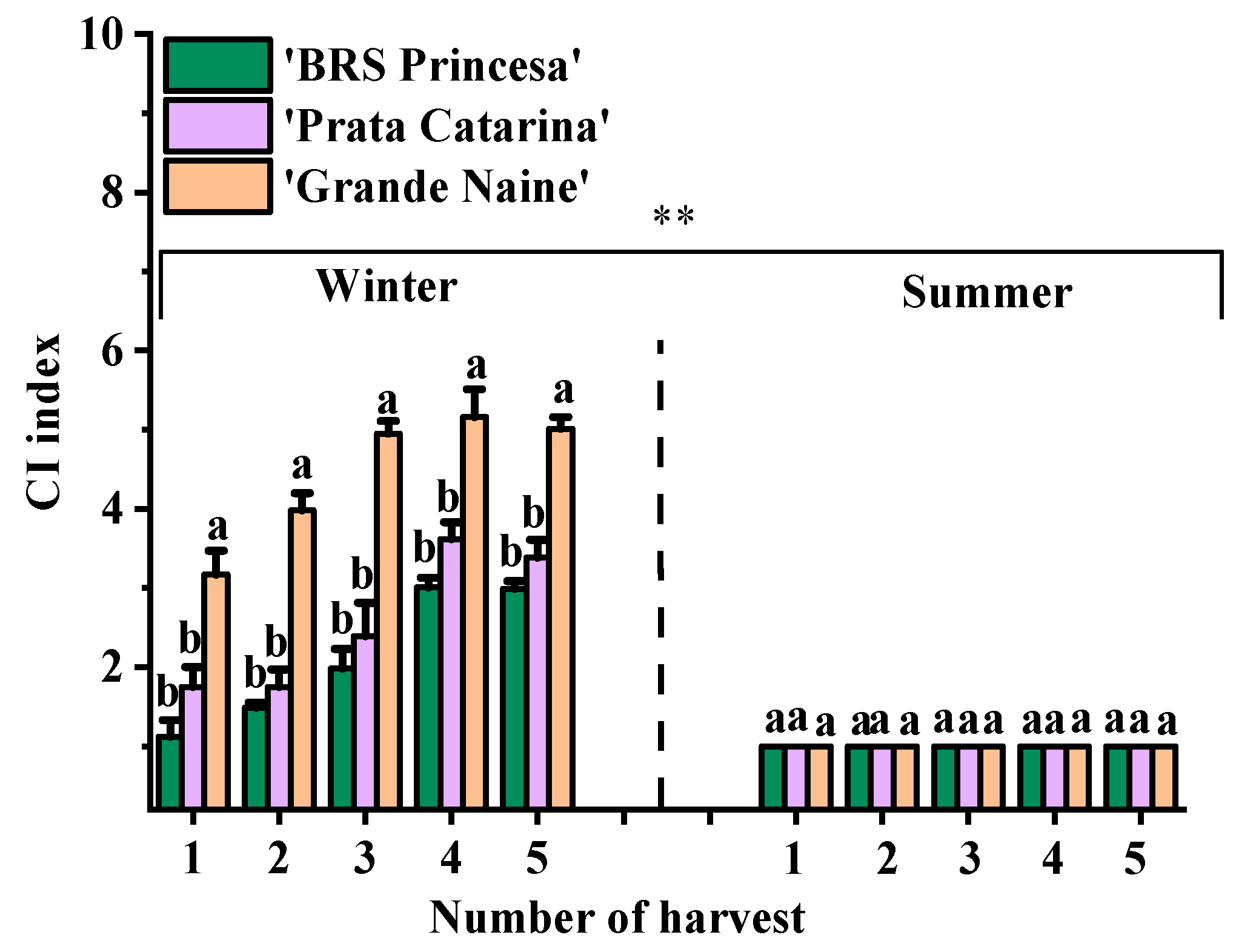
CI symptoms were influenced by the interaction between cultivar, harvest time, and season (p < 0.01). ‘Grande Naine’ fruits exhibited the highest CI index across all harvests, with values increasing until the third cold front (p < 0.05) (Figure 2). ‘BRS Princesa’ and ‘Prata Catarina’ exhibited similar CI indexes, with more gradual increases until the fourth cold front. No CI symptoms were detected in summer-harvested fruits.
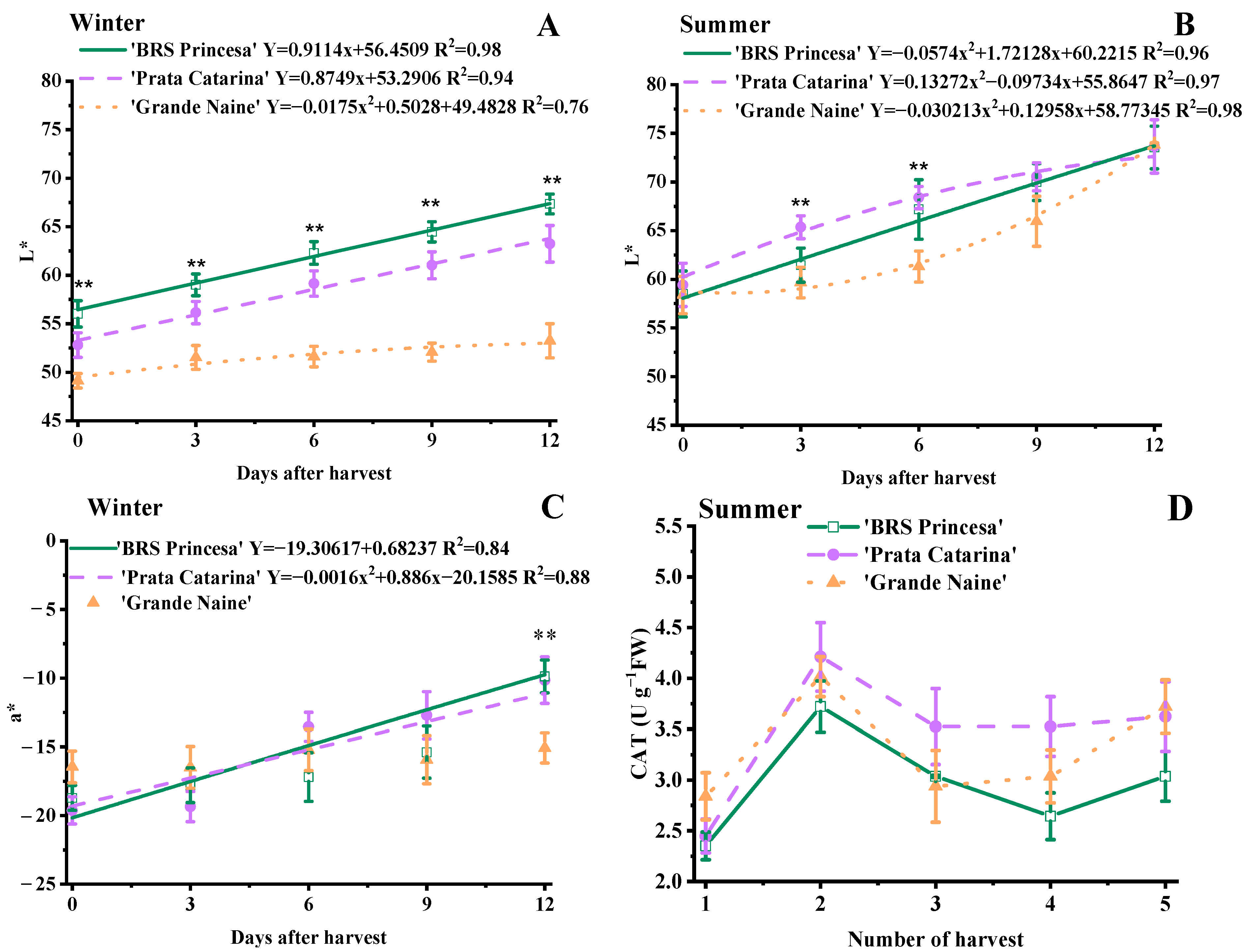
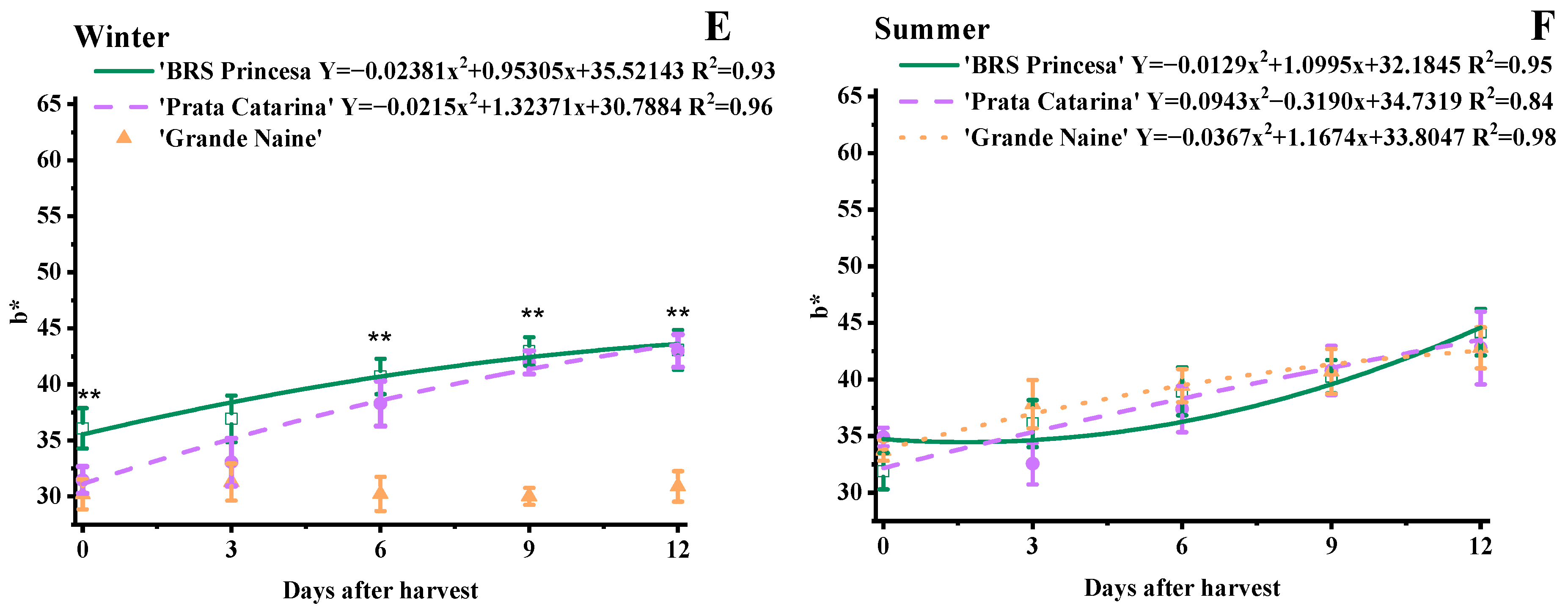
Fruits harvested after four cold fronts were selected to evaluate peel color changes and for comparison with summer-harvested fruits (Figure 3), unlike fruits from the fifth harvest, which were exposed to such temperatures for approximately 5 h. L* values in ripe winter fruits were highest for ‘BRS Princesa’ (67.35 ± 1.02), followed by ‘Prata Catarina’ (63.24 ± 1.89) and ‘Grande Naine’ (53.25 ± 1.75), a consistent response throughout the post-harvest period (Figure 3A). In the same fruits (12 days post-harvest), a* values were lower in ‘Grande Naine’ (−15.07 ± 1.10) compared to ‘BRS Princesa’ (−10.15 ± 1.19) and ‘Prata Catarina’ (−9.88 ± 1.20) (Figure 3C), as well as b* values which were 30.90 ± 1.36, 43.08 ± 1.77, and 42.99 ± 1.46, respectively, for ‘Grande Naine’, ‘BRS Princesa’, and ‘Prata Catarina’ (Figure 3E). In summer fruits, although some differences occurred during the color space transition, no significant differences were observed among cultivars in L*, a* or b* in values in ripe fruits, with mean values of 73.67, −0.88, and 42.63, respectively (Figure 3B, Figure 3D and Figure 3F).
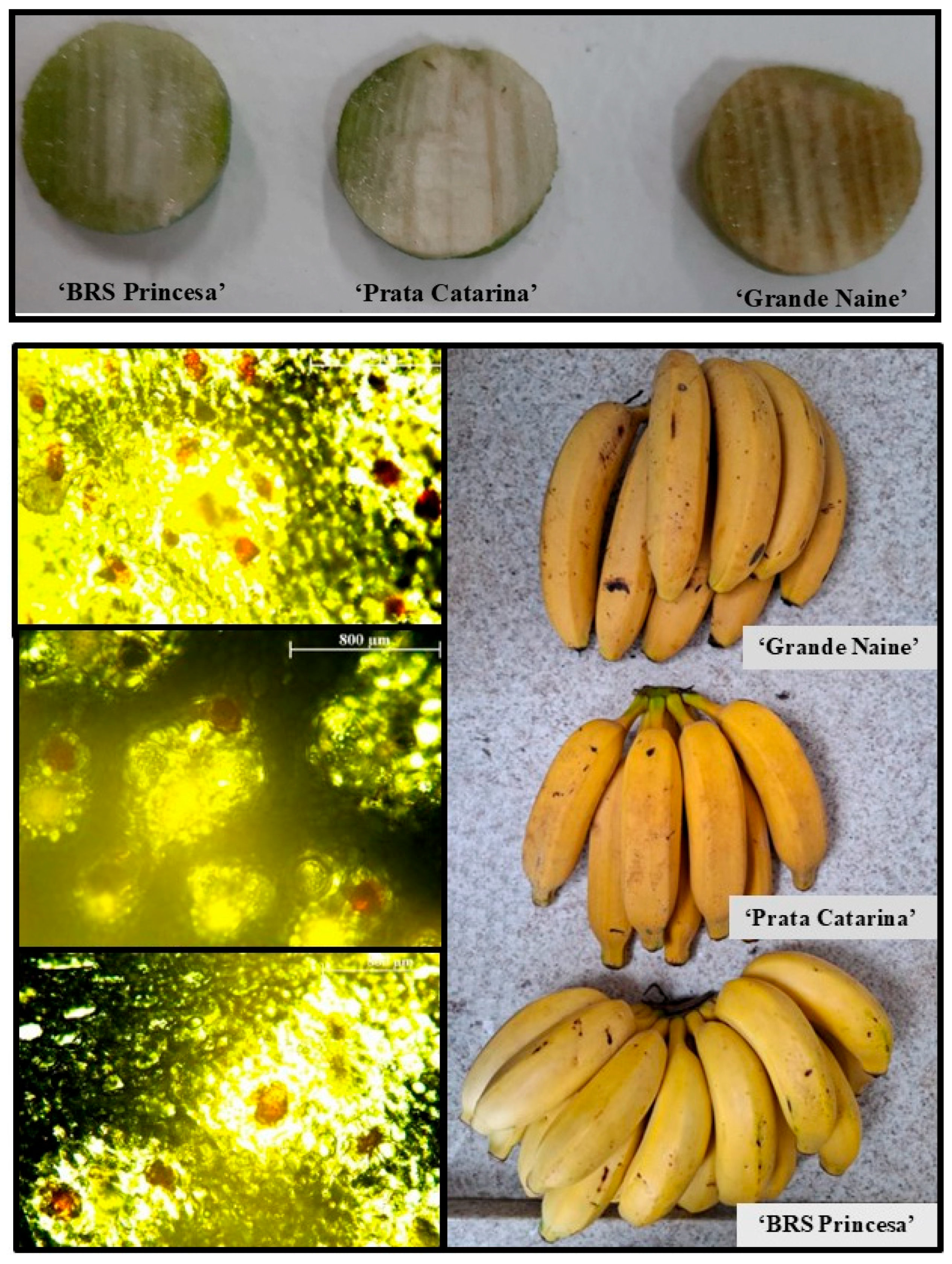
Microscopic observation of the sub-epidermal tissue of fruits harvested after the fourth cold front revealed a higher density of browned vascular vessels in ‘Grande Naine’ peel compared to the other cultivars (Figure 4). Visually, ripe ‘BRS Princesa’ fruits exhibited a brighter peel and superior visual quality.

3.2. Changes in MDA, Phenolic Compounds, Proline, and Antioxidant Enzyme Activities

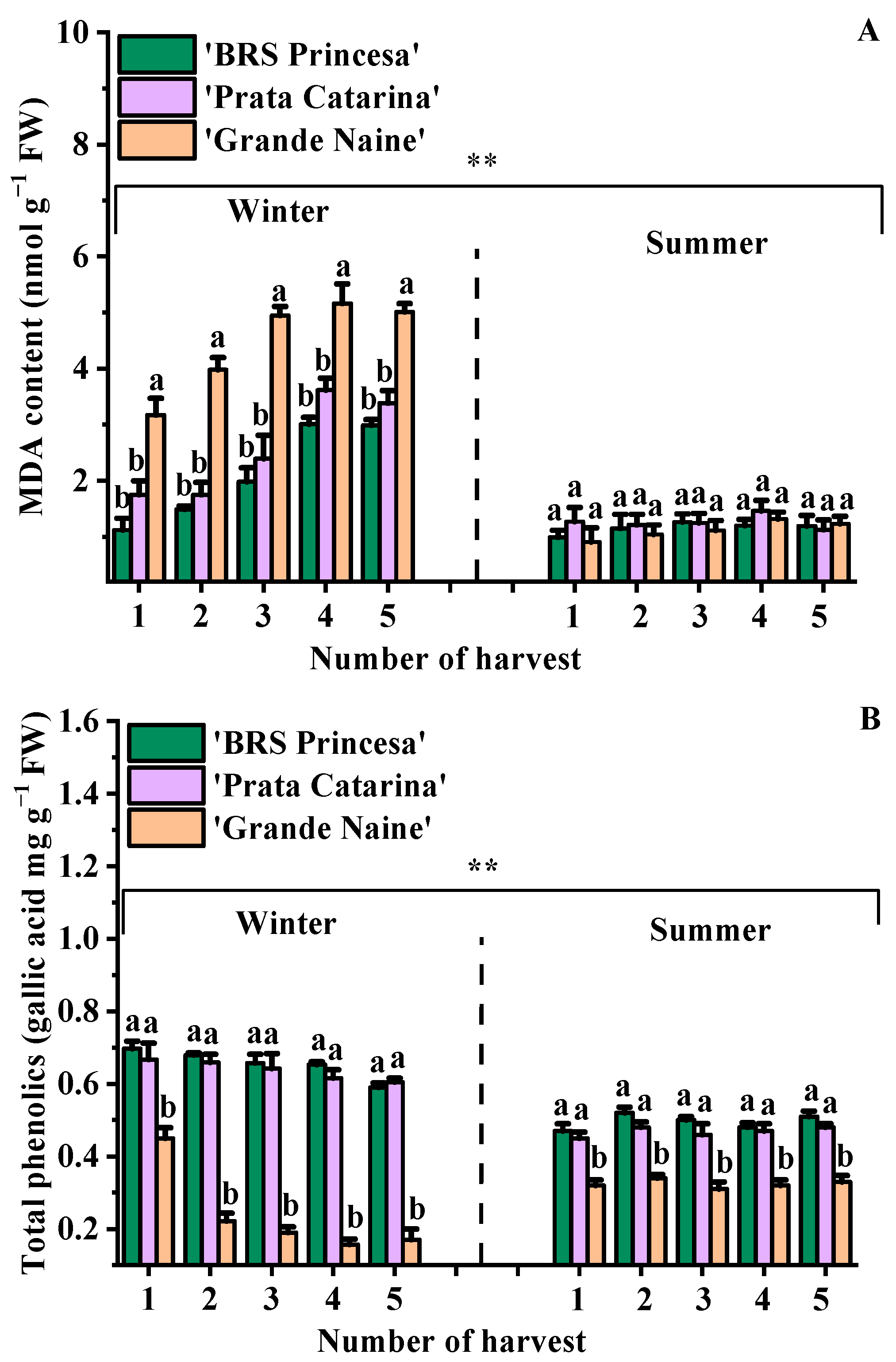
MDA content was influenced by the interaction between cultivar, season, and harvest time (p < 0.01). To assess oxidative damage, membrane lipid peroxidation was gauged through MDA levels (Figure 5A). In winter, MDA levels rose as the number of cold fronts increased until the fourth exposure. This likely occurred due to the shorter exposure time to stress-inducing temperatures during the fifth cold front. The mean values of MDA were 3.01 ± 0.12, 3.62 ± 0.21, and 5.16 ± 0,35, respectively, for ‘BRS Princesa’, ‘Prata Catarina’ and ‘Grande Naine’. However, ‘BRS Princesa’ and ‘Prata Catarina’ consistently maintained lower MDA content compared to ‘Grande Naine’ (p < 0.05), regardless of the number of cold fronts to which the fruits were subjected during their development (p < 0.05). In summer, MDA content did not differ across five consecutive harvests for the cultivars, with mean values significantly lower than those recorded in the winter (p < 0.05).
Cultivar, season and harvest time significantly affected the total phenolic content in peel fruit (p < 0.01). Except for ‘Grande Naine’, total phenolics was always higher in winter than in summer (p < 0.05) (Figure 5B). In both seasons, BRS Princesa’ and ‘Prata Catarina’ exhibited the highest mean values (with no significant difference between them), followed by ‘Grande Naine’. While ‘BRS Princesa’ and ‘Prata Catarina’ showed a slight decline in total phenolics after the fourth cold front, ‘Grande Naine’ exhibited an earlier and more pronounced decline after the second cold front, reaching values lower than its summer average.
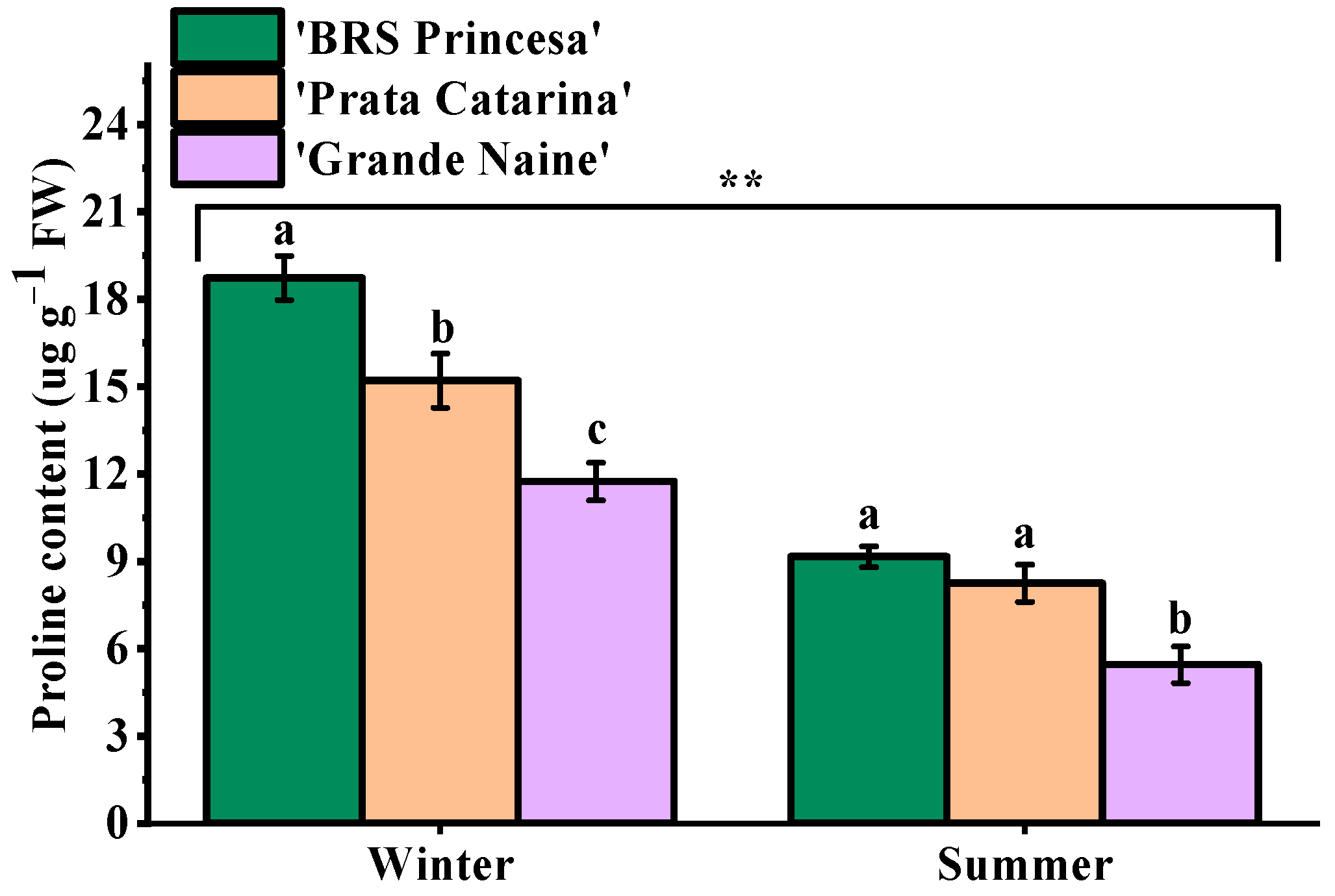
Only the interaction between cultivar and season affected the proline content in the fruit peel (p < 0.01). Proline content was also higher in winter (Figure 6), and regardless of harvest time, ‘BRS Princesa’ accumulated more proline in the peel, followed by ‘Prata Catarina’ and ‘Grande Naine’. In summer, ‘BRS Princesa’ and ‘Prata Catarina’ showed similar proline levels, both higher than those observed in ‘Grande Naine’.
Proline content also was higher in winter (Figure 6), and regardless of the harvest time, ‘BRS Princesa’ accumulated more proline in the peel, followed by ‘Prata Catarina’ and ‘Grande Naine’. In summer, ‘BRS Princesa’ and ‘Prata Catarina’ showed similar proline content, which remained higher than that of ‘Grande Naine’.
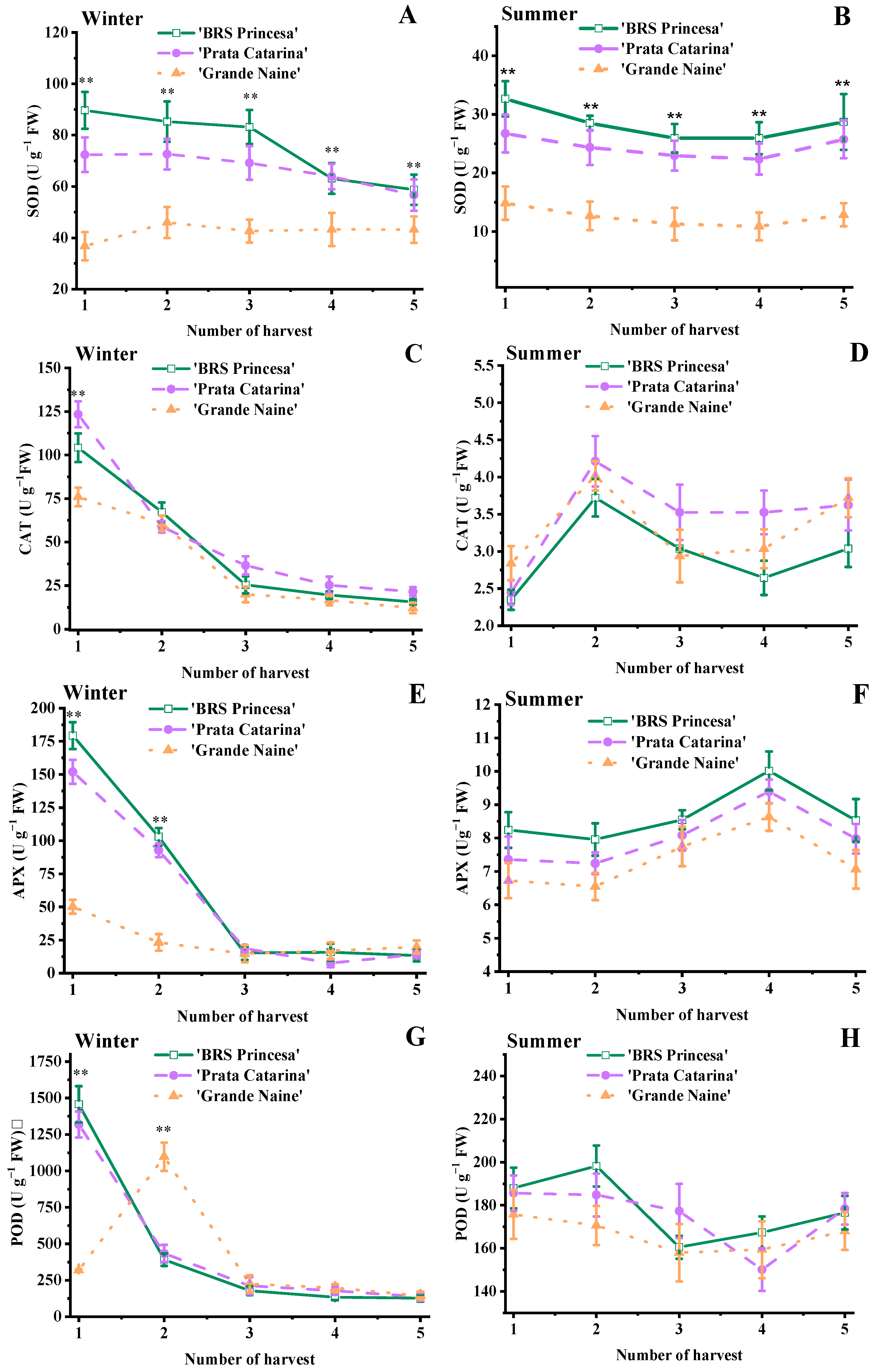
The activities of antioxidant enzymes (SOD, POD, CAT, and APX) were investigated as key contributors to cold tolerance and oxidative damage (Figure 7), and all were influenced by the three-way interaction (cultivar × season × harvest). In general, enzyme activity was higher in winter compared to summer for all cultivars, peaking after the initial cold fronts.
After the first cold front, SOD activity was higher in ‘BRS Princesa’, followed by ‘Prata Catarina’ and ‘Grande Naine’ (Figure 7A). From the second cold front onward, SOD activity in ‘BRS Princesa’ and ‘Prata Catarina’ followed a similar trend, consistently maintaining higher levels than those observed in ‘Grande Naine’. In summer, smaller variations in SOD activities were observed among harvests, and cultivar responses were similar to those observed in winter (Figure 7B).
CAT and APX activities showed a similar winter pattern, being significantly higher after the first and second cold fronts (Figure 7C,E). Similar to SOD (Figure 7A), after the first cold front, CAT and APX activities were highest in ‘BRS Princesa’, followed by ‘Prata Catarina’ and ‘Grande Naine’. After the second cold front, no significant differences were observed between cultivars. In summer, CAT and APX activities did not differ between cultivars (Figure 7D,F).
POD activity was higher in ‘BRS Princesa’ and ‘Prata Catarina’ than in ‘Grande Naine’ after the first cold front (Figure 7G). Interestingly, Grande Naine’ showed a peak in POD activity after the second cold front, surpassing the others. In subsequent harvests, there were no differences between cultivars. In summer, POD activity did not differ between cultivars (Figure 7H).
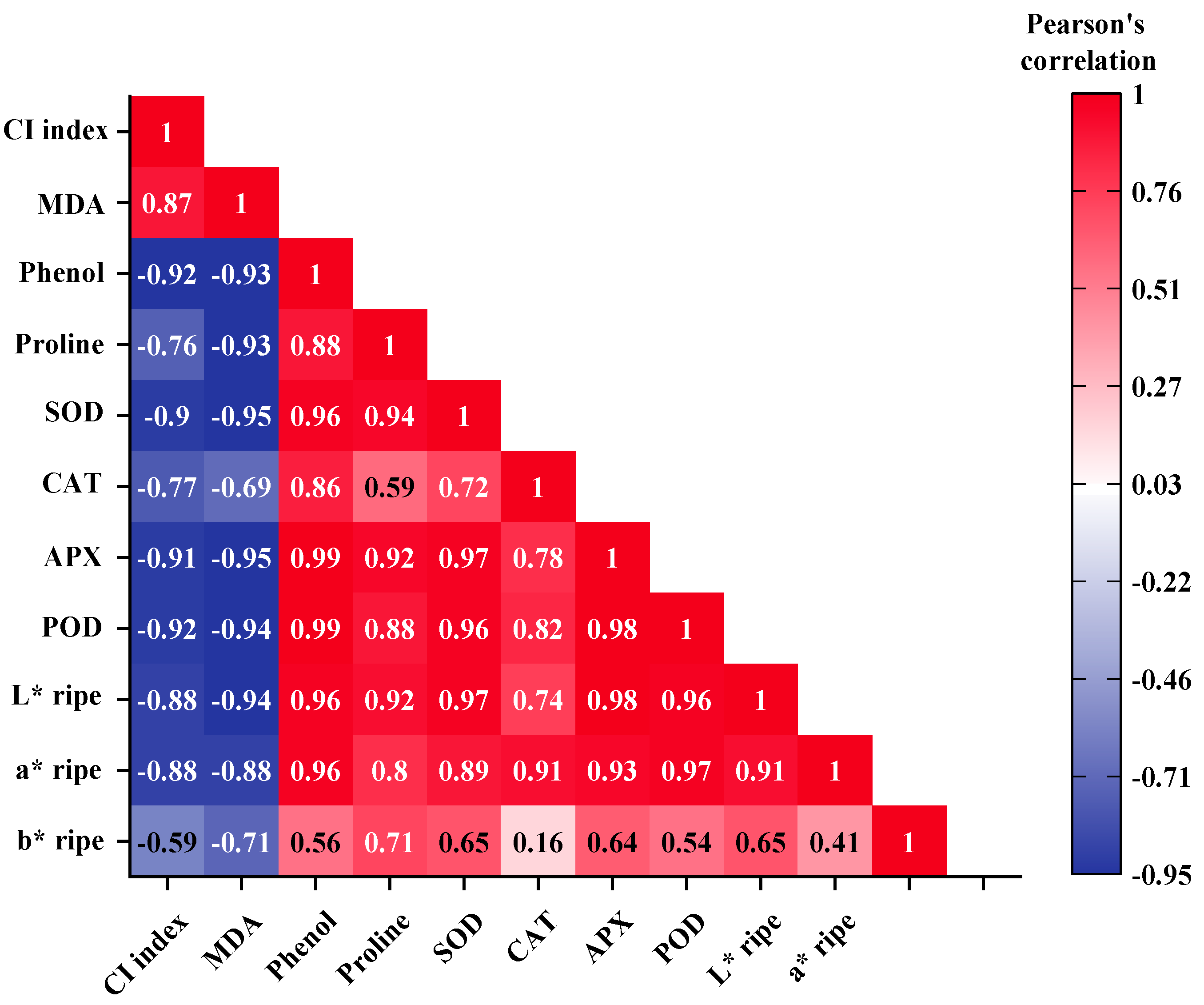
Correlation analysis revealed that the CI index and MDA levels were positively correlated with each other (p < 0.05), and notably, negatively correlated with all other variables, except for CI index and b* ripe (Figure 8). Phenolics, proline, SOD, CAT, APX, POD, L* ripe and a* ripe were all positively correlated to each other (p < 0.05), except for CAT and proline. The b* ripe showed few significant correlations, being negatively correlated with MDA and positively correlated with proline.
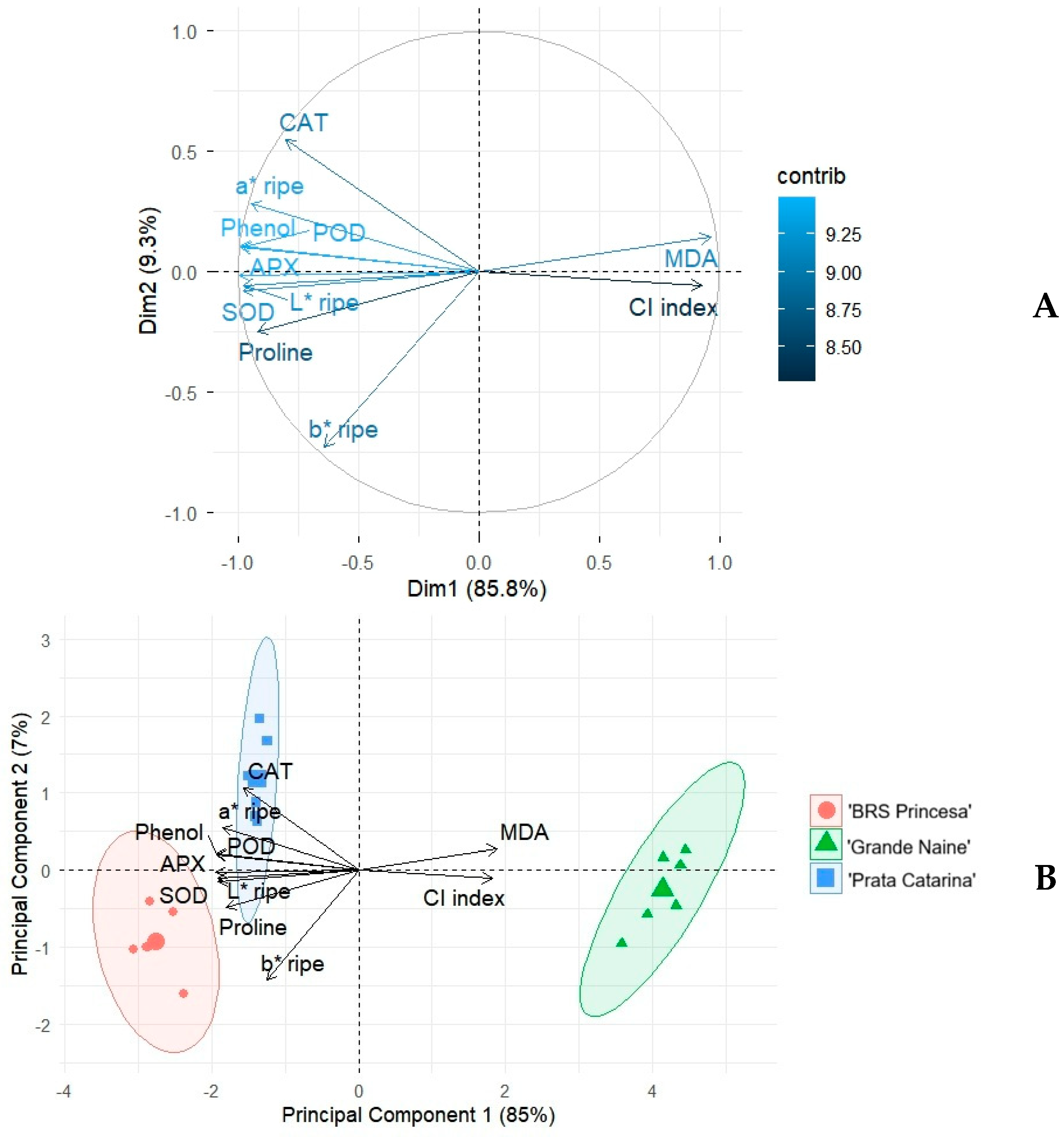
Principal component analysis (PCA) proved to be highly effective for the dataset of fruits harvested after the fourth cold front (Figure 9), with the first principal component (PC1) explaining more than 85% of the total variance. The cumulative variance explained by the first two components (PC1 and PC2) exceeded 92%, indicating high reliability for both visual and statistical interpretations. The correlation study and PCA loadings revealed two antagonistic blocks (Figure 9A). The positive block comprises traits phenol, SOD, APX, POD and L* ripe that are highly positively correlated with each other (r > 0.95) and are associated with the characterization of fruits of the ‘BRS Princesa’. In contrast, the negative block includes CI index and MDA, traits that define fruits of the ‘Grande Naine’, exhibiting an inverse relationship with the other variables evaluated.
The cultivars formed three distinct and well-separated groups, with no overlap of the 95% confidence ellipses (Figure 9B). ‘Grande Naine’ was positioned at the negative end of PC1 and exhibited the most divergent profile among the others. ‘BRS Princesa’ was located at the positive end of PC1, showing the highest expression for most of the traits analyzed, as well as the highest APX activity. ‘Prata Catarina’ displayed an intermediate profile, positioned on the positive side of the axis but closer to the center than ‘BRS Princesa’.
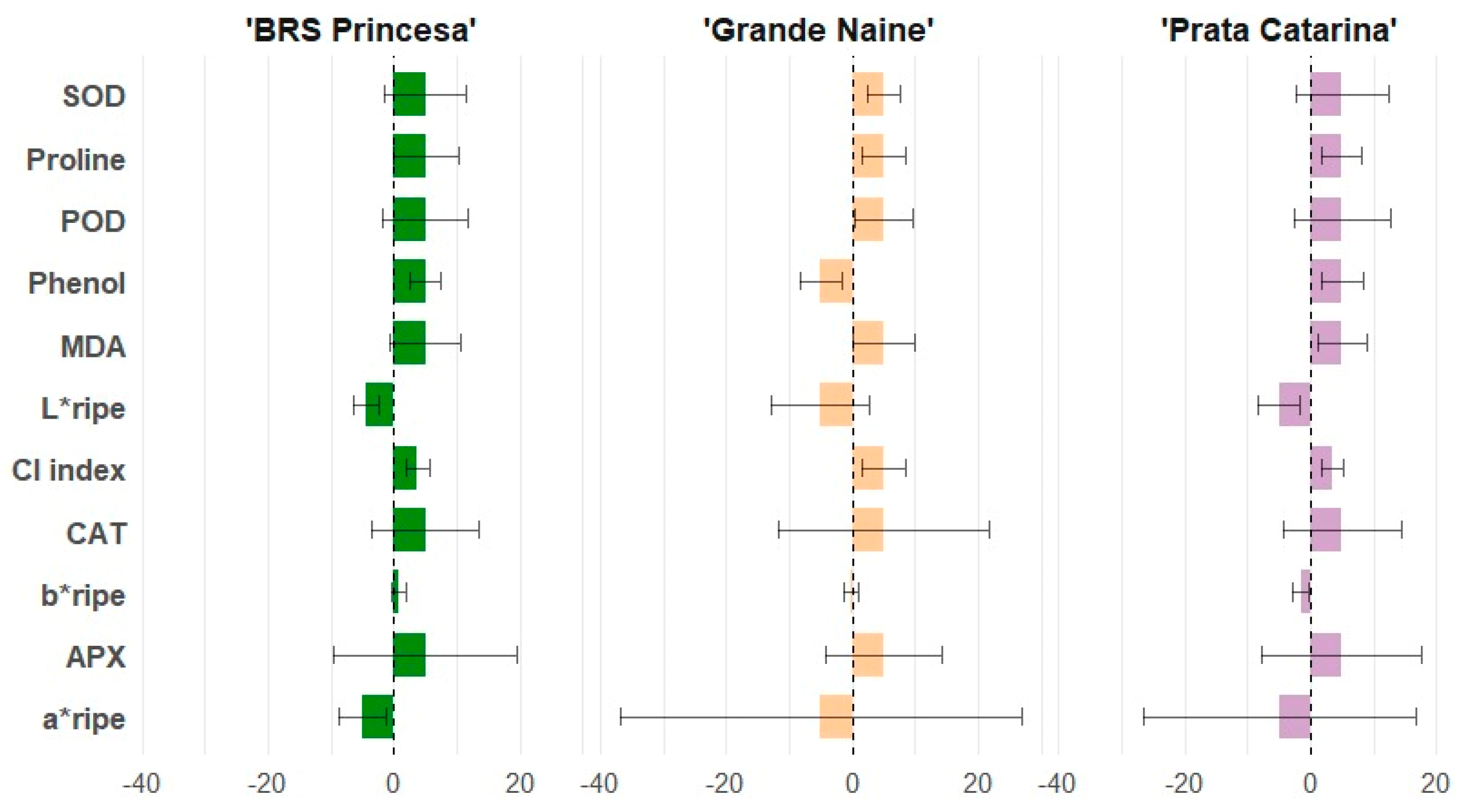
The effect size analysis (Hedges’ g) revealed that most variables exhibited extreme variation between seasons, with g values approaching 5.0; however, these differences were not always statistically significant (Figure 10). The CI index and total phenolic content showed significant differences for all cultivars (p < 0.05). Notably, phenolic content reached the highest magnitude across all cultivars but with an opposite direction in ‘Grande Naine’ compared with ‘BRS Princesa’ and ‘Prata Catarina’. Proline also exhibited a high effect size (g ≈ 5.0), although no significant differences were observed for ‘BRS Princesa’. Enzymatic activities (SOD, POD, CAT and APX), despite showing a consistent direction of response, displayed high within-group variability, suggesting the influence of factors beyond temperature on fruit development. The L parameter at the ripe stage showed significant seasonal variation only in ‘BRS Princesa’ (g = −4.37) and ‘Prata Catarina’ (g = 5.0). The a and b* parameters at the ripe stage also exhibited extreme effect sizes; however, statistical significance was observed only for a* in ‘BRS Princesa’.

4. Discussion

Fruits from the two seasons, harvested under the same criteria (30 mm diameter), exhibited distinct differences in appearance and metabolism due to prevailing climatic conditions in their development, particularly temperature. External appearance and peel color are critical quality indexes, which largely determine consumer purchase decisions. Chilling injury (CI) significantly reduces banana quality and marketability; however, studies on the effect of low temperatures during development fruit remain scarce, despite many global production areas being subject to such events in autumn and winter.
In this study, CI was detected in all winter-harvested fruits, with symptom intensity depending on the cultivar and aggravating with cumulative cold (Figure 2). Notably, the first cold front had the lowest temperature (8.6 °C), sufficient to induce negative effects. In postharvest, CI severity in bananas was cumulative, worsening with increased exposure duration or lower temperature [34,35].
Peel color analysis throughout the storage period provided objective insights into cultivar response to cold exposure. CI symptoms were more intense in ‘Grande Naine’, which exhibited lower L*, a* and b* values when ripe (Figure 3). Lower L* represents a darker peel, while lower a* and b* values indicate abnormal ripening due to failed chlorophyll degradation and impaired lutein appearance, respectively.
Lightness loss (ΔL*) between winter and summer freshly harvested fruits (time 0), was −2.47, −6.61, and −9.26, for ‘BRS Princesa’, ‘Prata Catarina’ and ‘Grande Naine’, respectively. These findings align with the intensity of the sub-epidermal vascular browning and general appearance of the ripe winter fruits (Figure 4), consistent with the fact that postharvest chilling stress promotes peel browning and inhibits normal ripening [36,37]. Compared with summer fruits, winter-harvested fruits became duller and more greenish, with less vivid color at ripening, depending on the cultivar, indicating alterations in pigment metabolism. This loss of quality would be readily perceived by consumers of ‘Grande Naine’ bananas due to the absence of the bright yellow appearance typical of the cultivar. Peel browning due to chilling injury (CI) after cold fronts is noticeable before harvest, which leads many producers to monitor their orchards to anticipate potential losses.
CI has been attributed to the alteration in cell membrane structure, the primary event in response to cold stress [38,39], whether due to protein denaturation or changes in lipid composition and structure [3]. The disruption of redox homeostasis and consequent accumulation of reactive oxygen species (ROS) also contribute to CI development in banana peel [38,40,41]. ROS bursts cause cell membrane lipid peroxidation and destruction of its structure [42]. MDA is an important indicator for evaluating this damage [43]. Lower MDA content is associated with membrane structural stability, whereas increased content indicates impaired membrane integrity. Regardless of the cold front, significantly higher MDA values were observed in unripe ‘Grande Naine’ fruits compared with ‘BRS Princesa’ and ‘Prata Catarina’, which maintained lower levels (Figure 5A).
Winter harvested peel tissues generally exhibited higher total phenolic content (Figure 5B), likely acting as non-enzymatic antioxidants essential for quenching harmful ROS and maintaining redox homeostasis [44]. Phenols act as free radical (R) scavengers by donating hydrogen atoms or electrons from hydroxyl groups linking with aromatic rings to R to form stable RH [45]. Polyphenol oxidase (PPO) and peroxidase (POD) are key enzymes involved in the oxidation of phenolic compounds in bananas subjected to cold stress and consequently browning [7,18,37]. In turn, their synthesis is mediated by phenylalanine ammonia-lyase (PAL), which is also induced by cold stress [37,38], as observed with genotype-independent response, A or B.
Lopes et al. [46] detected that low temperatures strongly modulate the banana metabolism harvest, increasing phenolic compounds to improve the antioxidant activity in banana peel. Conversely, the decline in phenolic content in ‘Grande Naine’ after the first cold fronts likely results from the oxidative polymerization of phenols (polyquinones), causing the browning associated with CI [38,47,48]. ‘Prata Catarina’ and ‘BRS Princesa’ fruits exhibit approximately 2.72 times more total phenolics than ‘Grande Naine’ (Figure 5B). In another study, total phenolics of ‘Prata Catarina’ (AAB) was associated with greater cold tolerance during fruit storage, compared to the ‘Nanicão’ (AAA) cultivar [49].
The superior cold tolerance of ‘BRS Princesa’ and ‘Prata Catarina’ was further evidenced by higher proline accumulation (Figure 6). Multiple functions have been attributed to proline under stress, such as signaling [50], redox balance, osmoprotection and stabilizing cellular proteins [4,51,52]. Enhanced proline levels are consistently associated with ameliorating chilling damage in banana fruits storage at low temperature [44,48,53,54], consistent with findings in banana plants, where proline accumulation also contributed to enhanced the cold stress tolerance [55,56,57,58]. Even in ‘Grande Naine’ (AAA), proline increased in winter, consistent with in vitro studies [16], where cold stressed (5 °C) banana shoots ‘Grande Naine’ and ‘Williams’ (AAA type) showed increase significant proline in leaves, with the highest content in ‘Grande Naine’ plants.
Peel color deterioration caused by CI is closely linked to enzymatic browning. SOD, CAT, APX and POD are crucial enzymes for ROS detoxification, and their activities are indicative of ROS metabolism [43]. All enzymes peaked after the first cold fronts (Figure 7), highlighting the activation of the antioxidant system. However, BRS Princesa’ and ‘Prata Catarina’ showed higher activity peaks after the first cold fronts than ‘Grande Naine’ (Figure 7). The delayed SOD activity peak in ‘Grande Naine’, detected only after the second front, suggests a slower adaptative response to cold, consistent with the differences in CI index (Figure 2 and Figure 4). In summer, only SOD activity varied between cultivars with higher levels observed in BRS Princesa’ and ‘Prata Catarina’. Notably, when stored at 6 °C, the ABB fruit (‘Pisang Awak’) displayed significantly higher SOD, CAT, and POD activities, as well as proline content, compared to AAA fruit (‘Cavendish’) [8].
The positive correlations between L* and a* and both enzymatic and non-enzymatic antioxidant systems (proline and total phenolics) indicate that enhanced oxidative protection plays a key role in maintaining peel brightness and reducing greenness (Figure 8). Weaker or absent correlations between b* at the ripe stage and the other variables indicate a limited influence of the antioxidant system on the development of peel yellow coloration. Despite exposure to consecutive cold fronts, BRS Princesa’ and ‘Prata Catarina’ fruits that developed during winter exhibited mean b* values like those of summer-grown fruits at the ripe stage (Figure 3 and Figure 4). In contrast, ‘Grande Naine’ fruits showed lower b* values and did not exhibit the typical yellow peel coloration.
PCA confirmed the differentiated responses, to the negative impact of cold—whose main effect is the excessive production of ROS, explaining 95.09% of the variance (Figure 9). Oxidation was more intense in ‘Grande Naine’, which was closely associated with CI index and MDA vectors, while ‘BRS Princesa’ and ‘Prata Catarina’ clustered near enzymatic antioxidant system, the osmoprotectant proline, and antioxidant phenols.
The effect size analysis (Hedges’ g) of winter–summer seasonal variation across the studied cultivars indicated that total phenolic content was the most consistent marker of antioxidant defense associated with cold tolerance (Figure 10). This pattern may be explained by the dual role of phenolic compounds: their synthesis is induced under low-temperature conditions, and their oxidation is closely linked to ROS dynamics. In addition, the higher baseline phenolic content typically associated with the B genome, compared with the A genome [49], was influenced by temperature during fruit development. Proline exhibited a less consistent response across cultivars, suggesting that its accumulation may reflect a general abiotic stress response rather than a reliable marker of cold tolerance. Enzymatic activities, in contrast, showed high variability, likely due to their dynamic nature and sensitivity to multiple interacting factors, including fruit developmental stage and microenvironmental conditions. In addition, in the present study, harvest timing may have contributed to masking cultivar-specific seasonal patterns as it did not capture the effects of the initial cold fronts (Figure 7), which appear to have exerted a stronger influence on these variables.
Musa spp. containing the B genome are recognized for superior abiotic stress resistance compared to those with only the A genome [59]. This explains the better field response of ‘BRS Princesa’ (AAAB), followed by ‘Prata Catarina’ (AAB), especially regarding the final color of the ripe fruit. Furthermore, it has been reported that Cavendish group (AAA) is comparatively more cold-sensitive [60].
Evidence suggests that the A and B genomes diverged following a whole-genome duplication event; notably, gene families expanded within the B genome are primarily associated with photosynthesis and the biosynthesis of secondary metabolites [7]. These genomic characteristics align with our findings, which revealed higher phenolics concentrations in the B-genome-containing cultivars ‘BRS Princesa’ and ‘Prata Catarina’.
Rebouças et al. [61] reported that ‘BRS Princesa’ was developed by the Embrapa banana breeding program and classified as a genotype resistant to yellow and black Sigatoka and Fusarium wilt (Race 1) while also exhibiting cold tolerance. However, comprehensive field studies characterizing its performance in the face of low-temperature stress remained scarce. This study confirms tolerance based on the fruit peel response during its development.
While improving cold hardiness may often compromise key quality traits such as flavor [62], ‘BRS Princesa’ appears to maintain its physiological integrity. According to Lédo et al. (2018) [63], this cultivar preserves its carbohydrate fractions, specifically total sugars and starch in the pulp, as well as its titratable acidity, showing no significant quality impairment. These findings align with the cultivar’s established reputation for producing high-quality and sweet fruits. Recently, the ‘BRS Princesa’ cultivar was confirmed to be resistant to Tropical Race 4 (TR4) in Colombia [64], establishing it as a globally significant genotype for sustainable banana production.
Bananas from the Cavendish group (Musa AAA), such as ‘Grande Naine’, are sensitive to cold stress; nonetheless, they remain the primary fresh fruit exported worldwide [65] and the most widely produced and consumed cultivars in Brazil [64]. Despite strong resistance from production systems, commercialization channels, global markets, and consumers to the adoption of non-Cavendish bananas, cropping practices are increasingly shifting toward agroecological management [65]. These emerging systems could benefit from the adoption of disease-resistant and climate-resilient cultivars, such as ‘BRS Princesa’, which demonstrated cold tolerance under field conditions in the present study.

5. Conclusions

Exposure of fruits to natural cold fronts during development significantly affected banana peel color and fruit quality, with the extent of damage being genotype-dependent. The ‘Grande Naine’ (AAA) cultivar exhibited the highest sensitivity to chilling injury, whereas ‘BRS Princesa’ (AAAB) showed greater tolerance. The presence of the B genome in ‘BRS Princesa’ and ‘Prata Catarina’ (AAB) likely contributes to increased resilience to cold stress. While these findings provide valuable insights into cultivar behavior under 137 h of chilling stress, with minimum temperature of 8.6 °C, they reflect the inherent variability of field conditions, which also influence fruit quality attributes. Further trials at even lower temperatures and in distinct environments are necessary to validate the stability of this genetic performance. Such investigations will strengthen the robustness and reliability of cultivar recommendations for regions prone to cold stress and frost.

Author Contributions

Planning and investigation, J.D.L., M.R.P., D.E.R., S.H.M.G.d.S. and P.F.G.; meteorological data collection E.N.G. and E.S.N.; plant management and fruit harvesting, E.N.G. and E.S.N.; statistical analysis, S.H.M.G.d.S. and J.D.L.; writing and review, J.D.L., D.E.R., S.H.M.G.d.S., E.N.G., E.S.N., S.H.M.G.d.S. and P.F.G.; editing, J.D.L. and M.R.P. All authors have read and agreed to the published version of the manuscript.

Funding

This research was conducted using equipment acquired with funding from São Paulo Research Foundation (FAPESP 2012/01167-3). São Paulo State University (UNESP) granted an undergraduate research scholarship (PIBIC—Rector’s Office Program) to the author MRP.

Data Availability Statement

The original contributions presented in this study are included in this article. Further inquiries can be directed at the corresponding author.

Acknowledgments

The authors appreciate Patrícia Soares Santiago (Institute of Advanced Marine Studies (IEAMar) for access to the use of Microscopy.

Conflicts of Interest

The authors declare that they have no conflicts of interest.

Abbreviations

The following abbreviations are used in this manuscript:
CIChilling injury
CI indexChilling injury index
SOD Superoxido dismutase
CAT Catalase
APX Ascorbate peroxidase
POD Peroxidase
MDA Malondialdehyde
PHENOL Total phenolic content
AAbsorbance
TminMinimum temperature
L*Lightness
a*Chromatic co-ordinates a*
b*Chromatic co-ordinates b*
PCAPrincipal component analysis
ROSReactive oxygen species

References

  1. FAO—Food and Agriculture Organization of the United Nations. Faostat. Available online: http://www.fao.org/faostat/en/#rankings/countries_by_commodity (accessed on 10 January 2026).
  2. Turner, D.W.; Lahav, E. The growth of banana plants in relation to temperature. Funct. Plant Biol. 1983, 10, 43–53. [Google Scholar] [CrossRef]
  3. Joshi, R.U.; Singh, A.K.; Singh, V.P.; Rai, R.; Joshi, P. A review on adaptation of banana (Musa spp.) to cold in subtropics. Plant Breed. 2023, 142, 269–283. [Google Scholar] [CrossRef]
  4. Liu, Y.; Li, Y.; Wang, A.; Xu, Z.; Li, C.; Wang, Z.; Guo, B.; Chen, Y.; Tang, F.; Li, J. Enhancing cold resistance in Banana (Musa spp.) through EMS-induced mutagenesis, L-Hyp pressure selection: Phenotypic alterations, biomass composition, and transcriptomic insights. BMC Plant Biol. 2024, 24, 101. [Google Scholar] [CrossRef]
  5. Chen, L.L.; Shan, W.; Cai, D.L.; Chen, J.Y.; Lu, W.J.; Su, X.G.; Kuang, J.F. Postharvest application of glycine betaine ameliorates chilling injury in cold-stored banana fruit by enhancing antioxidant system. Sci. Hortic. 2021, 287, 110264. [Google Scholar] [CrossRef]
  6. Chen, Y.N.; Lin, S.Q.; Song, W.; Wei, W.; Shan, W.; Kuang, J.F.; Lu, W.J. MaWRKY21 is involved in ethylene-mediated cold tolerance in banana fruit by regulating ROS accumulation. Postharvest Biol. Technol. 2025, 226, 13541. [Google Scholar] [CrossRef]
  7. Peng, K.; Kong, X.; Li, Y.; Dalmay, T.; Han, Y.; Jiang, Y.; Qu, H.; Zhu, H. Cu-miRNA-mediated redox homeostasis explains the differences in cold tolerance between AAA and ABB banana varieties. J. Adv. Res. 2025, 82, 241–253. [Google Scholar] [CrossRef] [PubMed]
  8. Liu, J.; Chen, C.; Chen, L.; Sharif, R.; Meng, J.; Gulzar, S.; Yi, Z.; Chen, S.; Zhan, H.; Liu, H.; et al. The banana MaFLA27 confers cold tolerance partially through modulating cell wall remodeling. Int. J. Biol. Macromol. 2025, 290, 138748. [Google Scholar] [CrossRef]
  9. Bai, L.; Wu, Y.; Lin, H.; Su, W.; Fan, Z. MaERF9 and MaERF113 transcription factors involve in chilling injury development by regulating membrane lipid metabolism of postharvest banana fruit. Postharvest Biol. Technol. 2025, 219, 113230. [Google Scholar] [CrossRef]
  10. Rouard, M.; Droc, G.; Martin, G.; Sardos, J.; Hueber, Y.; Guignon, V.; Cenci, A.; Geigle, B.; Hibbins, M.S.; Yahiaoui, N.; et al. Three new genome assemblies support a rapid radiation in Musa acuminata (wild banana). Genome Biol. Evol. 2018, 10, 3129–3140. [Google Scholar] [CrossRef] [PubMed]
  11. Wang, Z.; Miao, H.; Liu, J.; Xu, B.; Yao, X.; Xu, C.; Zhao, S.; Fang, X.; Jia, C.; Wang, J.; et al. Musa balbisiana genome reveals subgenome evolution and functional divergence. Nat. Plants 2019, 5, 810–821. [Google Scholar] [CrossRef]
  12. Gao, J.; Zhang, S.; He, W.D.; Shao, X.H.; Li, C.Y.; Wei, Y.R.; Deng, G.M.; Huang, R.B.; Chun, H.H.; Yi, G.J.; et al. Comparative phosphoproteomics reveals an important role of MKK2 in banana (Musa spp.) cold signal network. Sci. Rep. 2017, 7, 40852. [Google Scholar] [CrossRef] [PubMed]
  13. Zhang, Q.; Zhang, J.Z.; Chow, W.S.; Sun, L.L.; Chen, J.W.; Chen, Y.J.; Peng, C.L. The influence of low temperature on photosynthesis and antioxidant enzymes in sensitive banana and tolerant plantain (Musa sp.) cultivars. Photosynthetica 2011, 49, 201–208. [Google Scholar] [CrossRef]
  14. Zhang, J.Z.; Zhang, Q.; Chen, Y.J.; Sun, L.L.; Song, L.Y.; Peng, C.L. Improved tolerance toward low temperature in banana (Musa AAA group Cavendish Williams). S. Afr. J. Bot. 2012, 78, 290–294. [Google Scholar] [CrossRef]
  15. Hu, W.; Ding, Z.; Tie, W.; Yan, Y.; Liu, Y.; Wu, C.; Liu, J.; Wang, J.; Peng, M.; Xu, B.; et al. Comparative physiological and transcriptomic analyses provide integrated insight into osmotic, cold, and salt stress tolerance mechanisms in banana. Sci. Rep. 2017, 7, 43007. [Google Scholar] [CrossRef]
  16. El-Mahdy, M.T.; Youssef, M.; Eissa, M.A. Impact of in vitro cold stress on two banana genotypes based on physio-biochemical evaluation. S. Afr. J. Bot. 2018, 119, 219–225. [Google Scholar] [CrossRef]
  17. He, W.D.; Gao, J.; Dou, T.X.; Shao, X.H.; Bi, F.C.; Sheng, O.; Deng, G.M.; Li, Y.C.; Hu, C.H.; Liu, J.H.; et al. Early cold-induced peroxidases and aquaporins are associated with high cold tolerance in Dajiao (Musa spp. ‘Dajiao’). Front. Plant Sci. 2018, 9, 282. [Google Scholar] [CrossRef]
  18. Baysal, F. Effects of low-temperature acclimation on morphological and physiological indices of banana seedlings. Emir. J. Food Agric. 2022, 34, 446–454. [Google Scholar] [CrossRef]
  19. Liu, J.; Meng, J.; Chen, H.; Li, X.; Su, Z.; Chen, C.; Ning, T.; He, Z.; Dai, L.; Xu, C. Different responses of banana classical AGP genes and cell wall AGP components to low-temperature between chilling sensitive and tolerant cultivars. Plant Cell Rep. 2022, 41, 1693–1706. [Google Scholar] [CrossRef]
  20. EPAGRI—Empresa de Pesquisa Agropecuária e Extensão Rural de Santa Catarina. Available online: https://sistemas.epagri.sc.gov.br/semob/consulta.action?subFuncao=consultaPublicacoesDetalhe&cdDoc=59344 (accessed on 15 January 2023).
  21. Alvares, C.A.; Stape, J.L.; Sentelhas, P.C.; Gonçalves, J.D.M.; Sparovek, G. Köppen’s climate classification map for Brazil. Meteorol. Z. 2013, 22, 711–728. [Google Scholar] [CrossRef]
  22. Sakai, E.; Lepsch, I.F. Levantamento Pedológico detalhado da Estação Experimental de Pariquera-Açu; Instituto Agronômico: Campinas, Brazil, 1984; 56p. [Google Scholar]
  23. Luo, D.L.; Ba, L.J.; Shan, W.; Kuang, J.F.; Lu, W.J.; Chen, J.Y. Involvement of WRKY transcription factors in abscisic-acid-induced cold tolerance of banana fruit. J. Agric. Food Chem. 2017, 65, 3627–3635. [Google Scholar] [CrossRef]
  24. McGuire, R. Reporting of objective color measurements. HortScience 1992, 27, 1254–1255. [Google Scholar] [CrossRef]
  25. Heath, R.L.; Packer, L. Effect of light on lipid peroxidation in chloroplasts. Biochem. Biophys. Res. Commun. 1965, 19, 716–720. [Google Scholar] [CrossRef]
  26. Singleton, V.L. Analysis of total phenols and other oxidation substrates and antioxidants by means of Folin-Ciocalteu reagent. Methods Enzimol. 1999, 299, 152–178. [Google Scholar]
  27. Bates, L.S.; Waldren, R.P.A.; Teare, I.D. Rapid determination of free proline for water-stress studies. Plant Soil. 1973, 39, 205–207. [Google Scholar] [CrossRef]
  28. Giannopolitis, C.N.; Ries, S.K. Superoxide dismutases: I. Occurrence in higher plants. Plant Physiol. 1977, 59, 309–314. [Google Scholar] [CrossRef]
  29. Kar, M.; Mishra, D. Catalase, peroxidase, and polyphenoloxidase activities during rice leaf senescence. Plant Physiol. 1976, 57, 315–319. [Google Scholar] [CrossRef]
  30. Teisseire, H.; Guy, V. Copper-induced changes in antioxidant enzymes activities in fronds of duckweed (Lemna minor). Plant Sci. 2000, 153, 65–72. [Google Scholar] [CrossRef]
  31. Peixoto, P.H.P.; Cambraia, J.; Sant’Anna, R.; Mosquim, P.R.; Moreira, M.A. Aluminum effects on lipid peroxidation and on the activities of enzymes of oxidative metabolism in sorghum. Rev. Bras. Fisiol. Veg. 1999, 11, 137–143. [Google Scholar]
  32. Asada, K. Assay of ascorbate-specific peroxidases. Methods Enzymol. 1984, 105, 427–429. [Google Scholar]
  33. Ferreira, D.F. Sisvar: A computer statistical analysis system. Ciênc. Agrotec. 2011, 35, 1039–1042. [Google Scholar] [CrossRef]
  34. Trejo-Márquez, M.A.; Vendrell, M. Physiological response to chilling temperature of banana fruit (Musa acuminata cv. Dwarf cavendish). Acta Hortic. 2004, 864, 387–393. [Google Scholar] [CrossRef]
  35. Chang, L.Y.; Brecht, J.K. Early chilling injury symptom development and recovery of mature green banana: Involvement of ethylene under different severities of chilling stress. Horticulturae 2024, 10, 1050. [Google Scholar] [CrossRef]
  36. Li, Q.; Lin, H.; Lin, H.T.; Lin, M.S.; Wang, H.; Wei, W.; Chen, J.Y.; Lu, W.J.; Shao, X.F.; Fan, Z.Q. The metabolism of membrane lipid participates in the occurrence of chilling injury in cold-stored banana fruit. Food Res. Int. 2023, 173, 113415. [Google Scholar] [CrossRef] [PubMed]
  37. Ma, H.; Hu, L.; Zhao, J.; He, J.; Wen, A.; Lv, D.; Xu, Z.; Lan, W.; Pan, L. Comparative analysis of chilling injury in banana fruit during storage: Physicochemical and microstructural changes, and early optical-based nondestructive identification. Foods 2025, 14, 1319. [Google Scholar] [CrossRef] [PubMed]
  38. Xiao, L.; Jiang, X.; Deng, Y.; Xu, K.; Duan, X.; Wan, K.; Tang, X. Study on characteristics and lignification mechanism of postharvest banana fruit during chilling injury. Foods 2023, 12, 1097. [Google Scholar] [CrossRef] [PubMed]
  39. Hou, Y.; Gou, M.; Zhang, Z.; Meng, L.; Zhu, L.; Xu, X.; Li, T.; Jiang, Y.; Xiao, J.; Yang, J. Application of ferulic acid to alleviate chilling injury of banana fruit by regulating redox, phenylpropanoid, and energy metabolism. Food Front. 2025, 6, 1824–1837. [Google Scholar] [CrossRef]
  40. Hao, J.; Li, X.; Xu, G.; Huo, Y.; Yang, H. Exogenous progesterone treatment alleviates chilling injury in postharvest banana fruit associated with induction of alternative oxidase and antioxidant defense. Food Chem. 2019, 286, 329–337. [Google Scholar] [CrossRef] [PubMed]
  41. Ramírez-Sánchez, M.; Huber, D.J.; Vallejos, C.E. Abiotic stress triggers ROS-mediated programmed cell death in banana (Musa sp., AAA group, Cavendish sub-group) fruit. Sci. Hortic. 2022, 293, 110748. [Google Scholar] [CrossRef]
  42. Li, D.; Wu, X.; Li, L.; Wang, Y.; Xu, Y.; Luo, Z. Epibrassinolide enhanced chilling tolerance of postharvest banana fruit by regulate energy status and pyridine nucleotide homeostasis. Food Chem. 2022, 382, 132273. [Google Scholar] [CrossRef]
  43. Zhu, Y.; Zhou, Y.; Li, Z.; Zhong, R.; Jiang, Y.; Jiang, G.; Su, X. Tyr-Asp enhances chilling tolerance in banana fruit by modulating redox homeostasis. Postharvest Biol. Technol. 2025, 222, 113338. [Google Scholar] [CrossRef]
  44. Luo, Z.; Li, D.; Du, R.; Mou, W. Hydrogen sulfide alleviates chilling injury of banana fruit by enhanced antioxidant system and proline content. Sci. Hort. 2015, 183, 144–151. [Google Scholar] [CrossRef]
  45. Zhang, L.; Cao, X.; Wang, Z.; Zhang, Z.; Li, J.; Wang, Q.; Xu, X. Brassinolide alleviated chilling injury of banana fruit by regulating unsaturated fatty acids and phenolic compounds. Sci. Hortic. 2022, 297, 110922. [Google Scholar] [CrossRef]
  46. Lopes, S.; Moresco, R.; Peruch, L.A.M.; Rocha, M.; Maraschin, M. UV-Vis spectrophotometry and chemometrics as tools for recognition of the biochemical profiles of organic banana peels (Musa sp.) according to the seasonality in southern Brazil. In Proceedings of the 11th International Conference on Practical Applications of Computational Biology & Bioinformatics, Porto, Portugal, 21–23 June 2017; Springer International Publishing: Cham, Switzerland, 2017; pp. 289–296. [Google Scholar]
  47. Hashim, N.; Janius, R.B.; Baranyai, L.; Rahman, R.A.; Osman, A.; Zude, M. Kinetic model for colour changes in bananas during the appearance of chilling injury symptoms. Food Bioprocess Technol. 2012, 5, 2952–2963. [Google Scholar] [CrossRef]
  48. Nazari, J.; Nabigol, A.; Rasouli, M.; Aghdam, M.S. Exogenous dopamine ameliorates chilling injury of banana fruits during cold storage. Sci. Rep. 2024, 14, 25802. [Google Scholar] [CrossRef]
  49. Oliveira, J.A.A.; Salomão, L.C.C.; Siqueira, D.L.D.; Cecon, P.R. Cold tolerance of banana fruits of different cultivars. Rev. Caatinga 2016, 29, 629–641. [Google Scholar] [CrossRef]
  50. Hoermiller, I.I.; Funck, D.; Schonewolf, L.; May, H.; Heyer, A.G. Cytosolic proline is required for basal freezing tolerance in Arabidopsis. Plant Cell Environ. 2022, 245, 147–155. [Google Scholar] [CrossRef]
  51. Alvarez, M.E.; Savouré, A.; Szabados, L. Proline metabolism as regulatory hub. Trends Plant Sci. 2022, 27, 39–55. [Google Scholar] [CrossRef]
  52. Liao, H.S.; Chung, Y.H.; Hsieh, M.H. Glutamate: A multifunctional amino acid in plants. Plant Sci. 2022, 318, 111238. [Google Scholar] [CrossRef]
  53. Wang, Y.; Luo, Z.; Huang, X.; Yang, K.; Gao, S.; Du, R. Effect of exogenous γ-aminobutyric acid (GABA) treatment on chilling injury and antioxidant capacity in banana peel. Sci. Hortic. 2014, 168, 132–137. [Google Scholar] [CrossRef]
  54. Wang, D.; Huang, H.; Jiang, Y.; Duan, X.; Lin, X.; Aghdam, M.S.; Luo, Z. Exogenous phytosulfokine α (PSKα) alleviates chilling injury of banana by modulating metabolisms of nitric oxide, polyamine, proline, and γ-aminobutyric acid. Food Chem. 2022, 380, 132179. [Google Scholar] [CrossRef]
  55. Liu, J.; Wu, H.; Wang, B.; Zhang, Y.; Wang, J.; Cheng, C.; Huang, Y. Exogenous melatonin enhances cold resistance by improving antioxidant defense and cold-responsive genes’ expression in banana. Horticulturae 2022, 8, 260. [Google Scholar] [CrossRef]
  56. Wang, Y.; Luo, Z.; Du, R.; Liu, Y.; Ying, T.; Mao, L. Effect of nitric oxide on antioxidative response and proline metabolism in banana during cold storage. J. Agric. Food Chem. 2013, 61, 8880–8887. [Google Scholar] [CrossRef]
  57. Wang, A.; Li, J.; Al-Huqail, A.A.; Al-Harbi, M.S.; Ali, E.F.; Wang, J.; Ding, Z.; Rekaby, S.A.; Ghoneim, A.M.; Eissa, M.A. Mechanisms of chitosan nanoparticles in the regulation of cold stress resistance in banana plants. Nanomaterials 2021, 11, 2670. [Google Scholar] [CrossRef]
  58. Qin, L.; Tian, D.; Guo, C.; Wei, L.; He, Z.; Zhou, W.; Jiang, M. Discovery of gene regulation mechanisms associated with uniconazole-induced cold tolerance in banana using integrated transcriptome and metabolome analysis. BMC Plant Biol. 2024, 24, 342. [Google Scholar] [CrossRef]
  59. Saha, K.; Ihearahu, O.C.; Agbor, V.E.; Evans, T.; Naitchede, L.H.S.; Ray, S.; Ude, G. In Silico genome-wide profiling of conserved miRNAs in AAA, AAB, and ABB groups of Musa spp.: Unveiling microRNA-mediated drought response. Int. J. Mol. Sci. 2025, 26, 6385. [Google Scholar] [CrossRef]
  60. Lü, Q.F.; Feng, F.; Zhang, X.Z. Cold tolerance of banana in relation to cell structure in leaf tissue. J. Zhejiang Ocean Univ. 2000, 20, 48–51. [Google Scholar]
  61. Rebouças, T.A.; Haddad, F.; Ferreira, C.F.; Oliveira, S.A.S.; Ledo, C.A.S.; Amorim, E.P. Identification of banana genotypes resistant to Fusarium wilt race 1 under field and greenhouse conditions. Sci. Hortic. 2018, 239, 308–313. [Google Scholar] [CrossRef]
  62. Wang, S.; Yin, C.; Yuan, Y.; He, M.; Babalola, O.O.; Qiu, D.; Deng, W. Molecular mechanisms involved in the cold tolerance response and regulation of fruits and vegetables. Hortic. Adv. 2026, 4, 4. [Google Scholar] [CrossRef]
  63. Lédo, A.S.; Silva, T.N.; Martins, C.R.; Silva, A.V.C.; Lédo, C.A.S.; Amorim, E.P. Physcochemical characterization of banana friut by univariat and multivariate procedures. Biosci. J. 2018, 34, 24–33. [Google Scholar] [CrossRef]
  64. Embrapa. Available online: https://www.embrapa.br/busca-de-noticias/-/noticia/102605261/duas-cultivares-da-embrapa-sao-resistentes-a-mais-grave-doenca-mundial-das-bananeiras (accessed on 10 February 2026).
  65. Rapetti, M.; Dorel, M.; Damour, G. Environmental conditions impact Cavendish banana agronomic traits more than genotype. Sci. Hortic. 2025, 352, 114446. [Google Scholar] [CrossRef]
Figure 1. Minimal daily temperatures during the experimental period, in Pariquera-Açu, São Paulo, Brazil: (A) winter and (B) summer. The dashed red lines represent the critical chilling stress threshold (12 °C) in (A). Blue arrows indicate the five consecutive dates for harvesting bunches. Each point represents one day.
Agriculture 16 01193 g001aAgriculture 16 01193 g001b
Figure 2. CI index content in unripe fruit bananas peel as influenced by cultivar, number of cold front (harvest) and season. Vertical bars are standard errors of means (n = 6). ** Denotes differences between seasons for each cultivar and harvest (p < 0.01). Means followed by the same letter within each cold front do not differ significantly between cultivars according to Tukey’s test (p < 0.05).
Agriculture 16 01193 g002
Figure 3. Changes in peel color, L* winter (A), L* summer (B), a* winter (C), a* summer (D), b* winter (E) and b* summer (F) during ripening of ‘BRS Princesa’, ‘Prata Catarina’ and ‘Grande Naine’ bananas after the fourth cold front. Vertical bars represent the standard error of the mean (n = 6). Asterisks (**) denote difference in Tukey’s test (p < 0.05) among cultivars at time points after harvest. L* (lightness), a* (co-ordinates a*) and b* (co-ordinates b*) in peel of the fruits.
Agriculture 16 01193 g003aAgriculture 16 01193 g003b
Figure 4. Vascular browning in the sub-epidermal in unripe banana peel ((top) and (bottom left)) and general appearance of ripe fruits (bottom right) following exposure to four consecutive cold fronts during winter.
Agriculture 16 01193 g004
Figure 5. MDA (A) and total phenolic content (B) in the peel of unripe fruit bananas peel as influenced by cultivar, season and harvest time. Vertical bars represent standard errors of the means (n = 6). ** Denotes differences between seasons for each cultivar and harvest (p < 0.01). Means followed by the same letter within each harvest time do not differ significantly between cultivars according to Tukey’s test (p < 0.05).
Agriculture 16 01193 g005
Figure 6. Proline content in the peel of unripe fruit bananas peel as influenced by cultivar and season. Vertical bars represent standard errors of the means (n = 6). ** denote difference for seasons for each cultivar (p < 0.01). Means followed by the same letter within each season do not differ significantly between cultivars according to Tukey’s test (p < 0.05).
Agriculture 16 01193 g006
Figure 7. Activity of superoxide dismutase (SOD) in winter (A) and summer (B), catalase (CAT) in winter (C) and summer (D), ascorbate peroxidase (APX) in winter (E) and summer (F), and peroxidase (POD) in winter (G) and summer (H) in the peel of unripe bananas. Note: Y-axis scales vary between winter and summer charts. Vertical bars represent the standard error of the mean (n = 6). Asterisks (**) denote significant differences among cultivars at each harvest point according to Tukey’s test (p < 0.01).
Agriculture 16 01193 g007
Figure 8. Heatmap showing Pearson’s correlation coefficients among physiological and biochemical traits of banana cultivars harvested after the fourth harvest. Significant correlations (p < 0.05) are highlighted with their respective coefficients (white numbers). CI index (chilling injury index), MDA (malondialdehyde), phenol (total phenolic) and proline content, superoxide dismutase (SOD), catalase (CAT), ascorbate peroxidase (APX), peroxidase (POD), L* (lightness), a* (co-ordinate a*) and b* (co-ordinate b*) in peel of the ripe fruits.
Agriculture 16 01193 g008
Figure 9. Principal component analysis (PCA) of physiological and biochemical traits in banana cultivars harvested after the fourth harvest. (A) PCA loading and correlation study. (B) Biplot representation of traits and cultivars. CI index (chilling injury index), MDA (malondialdehyde), phenol (total phenolic) and proline content, superoxide dismutase (SOD), catalase (CAT), ascorbate peroxidase (APX), peroxidase (POD), L* (lightness), a* (co-ordinate a*) and b* (co-ordinate b*) in peel of the ripe fruits.
Agriculture 16 01193 g009
Figure 10. Standardized effect size (Hedges’ g) of physiological and biochemical traits in banana cultivars harvested after the fourth harvest between across seasons. Dates are presented as mean effect size with 95% confidence intervals (whiskers). Vertical dashed line at g = 0 indicates the null hypothesis of no difference between winter and summer. Positive values indicate higher levels during the winter, while negative values indicate higher levels during the summer. Data were standardized (Z-score). CI index (chilling injury index), MDA (malondialdehyde), phenol (total phenolic) and proline content, superoxide dismutase (SOD), catalase (CAT), ascorbate peroxidase (APX), peroxidase (POD), L* (lightness), a* (co-ordinate a*) and b* (co-ordinate b*) in peel of the ripe fruits.
Agriculture 16 01193 g010
Disclaimer/Publisher’s Note: The statements, opinions and data contained in all publications are solely those of the individual author(s) and contributor(s) and not of MDPI and/or the editor(s). MDPI and/or the editor(s) disclaim responsibility for any injury to people or property resulting from any ideas, methods, instructions or products referred to in the content.