1. Introduction
Wheat is the most important food crop worldwide, providing approximately 20% of the dietary calories and proteins for humans. The global annual output of wheat remains stable at over 770 million tons [
1]. China’s annual wheat planting area exceeds 23 million hectares, with an output of over 130 million tons, accounting for about 18% of the global total output. It is a strategic crop for ensuring national food security [
2,
3]. Wheat scab caused by
Fusarium graminearum is a worldwide prevalent and destructive disease. It occurs in over 60% of wheat-growing regions globally, causing a 10% to 30% reduction in yield in normal years and up to a 50% reduction or even complete failure in epidemic years [
4,
5]. What is more serious is that the diseased grains accumulate toxins such as deoxynivalenol and zearalenone, with an exceedance rate of 15% to 25% in epidemic years, seriously threatening the quality and safety of food and the health of humans and livestock [
6]. Therefore, achieving early, rapid and accurate detection of the pathogen of wheat scab is of great practical significance for ensuring stable and high-quality wheat production, preventing toxin contamination, and supporting sustainable agricultural development [
7].
At present, the detection methods of crop diseases mainly include field investigation, pathogen isolation and culture, immunological detection and molecular biological detection [
8,
9]. The manual visual inspection method relies on experience, strong subjectivity and lagging detection, so it is difficult to realize early warning [
10]. The separation culture method has a long period and complicated operation, which cannot meet the needs of rapid detection [
11]. Although enzyme-linked immunosorbent assay (ELISA), polymerase chain reaction (PCR) and other methods have high sensitivity, they need complex sample pretreatment, specific labeling reagents and professional instruments, which are costly and time-consuming, and it is difficult to realize in situ, unmarked and on-site batch detection. Furthermore, it cannot meet the practical needs of rapid monitoring and intelligent prevention and control of field diseases [
12,
13]. Therefore, it has become an important research direction in the field of plant protection and agricultural sensing to study a new technology of non-invasive, unmarked, highly sensitive and fast response for spore detection of plant pathogens.
In recent years, a number of representative works have emerged in the fields of high-precision sensing and structural optimization. For instance, Wu et al. [
14] proposed the thermal pulse method, which achieved precise measurement of the equivalent thermal physical properties of permafrost, providing a reliable approach for precise inversion of physical parameters in low-temperature environments. Fang et al. [
15] designed a sunflower-inspired superstructure that utilized gradient impedance and multiple helical units to achieve broadband microwave absorption and wide-angle stable response, providing an important reference for the design of bionic supermaterial structures. Wu et al. [
16] prepared a spindle-shaped α-Fe
2O
3/MWCNTs electrochemical sensor that utilized the synergistic catalytic effect of nanomaterials to achieve ultra-trace detection of baicalein, demonstrating the great potential of composite functional materials in high-sensitivity sensing. These studies, respectively, provided important references for this article in terms of precise measurement, bionic structures, and composite sensitization, but there is still a lack of a systematic solution for the non-labeled detection of wheat Fusarium spore terahertz supermaterials. Terahertz (THz) waves are electromagnetic radiation with a frequency range of 0.1–10 THz, falling between microwaves and infrared light. They possess unique advantages in the field of biological sensing [
17,
18]. Due to their low photon energy, terahertz waves do not cause ionizing damage to biological samples, allowing for live-sample detection without the need for labeling [
19]. Metamaterials are artificially designed subwavelength periodic structures that can overcome the limitations of natural materials. They enable special electromagnetic responses such as localized field enhancement, perfect absorption, and phase transitions, thereby providing a key approach to improving the sensitivity of terahertz sensors [
20,
21].
For example, Tang et al. [
22] combined terahertz time-domain spectroscopy with metamaterial sensors to develop a rapid method for detecting fatty acids. They measured the dielectric frequency responses of oleic acid, linoleic acid, and various derivatives of linoleic acid with different double bond counts and conformations. By observing the shifts in the resonance peak frequencies of the samples, they were able to identify and classify the four types of fatty acids. Bi et al. [
23] utilized the properties of terahertz metamaterials and magnetic nanoparticles to selectively bind to target molecules. By locating the spike protein on the surface of the terahertz resonance cavity, they successfully identified the SARS-CoV-2 spike protein. Nourinovin et al. [
24] developed a biosensor using terahertz metasurfaces to improve the sensitivity of skin cancer detection. Zhang et al. [
25] proposed a metamaterial biosensor that achieves polarization-independent electromagnetic induction transparency at terahertz frequencies. Without the need for antibodies, this sensor could distinguish between mutant and wild-type glioma cells by observing changes in the resonance frequency and amplitude of cells at different concentrations. Yu et al. [
26] designed flexible terahertz metamaterials and used deep learning to predict the concentrations of trace substances like anthocyanins and tannic acids, enabling the classification of red wines. These studies demonstrate that terahertz metamaterial sensors can be used for detecting biomolecules and cells, as their internal structures differ, resulting in varying degrees of absorption, reflection, and transmission of terahertz waves. However, there are still few reports in the field of plant pathogen detection, and the existing metamaterials are mostly single-frequency structures with low sensitivity. There are very few studies on fungal spores, and no detection scheme for wheat Fusarium spores has been formed yet. The resonant mode is prone to coupling, and the signal-to-noise ratio for trace detection is low, which cannot meet the quantitative detection requirements for wheat scab spores.
On this basis, this study proposes a flexible terahertz metamaterial sensor utilizing a composite structure of dual-U-shaped resonators and a central metal rod. This approach enables label-free, highly sensitive quantitative detection of wheat scab spores. Using Fusarium graminearum conidia as the target, a metamaterial structure with near-perfect dual-frequency absorption and polarization insensitivity was designed. Geometric parameters were optimized using CST electromagnetic simulation software. The flexible device was fabricated through micro-nano processing techniques. A quantitative relationship between spore concentration and resonance frequency shift was established. This research aims to overcome the limitations of traditional detection methods and achieve early trace detection and comprehensive quantitative analysis of wheat scab spores. It offers new methods and technologies for rapid in situ monitoring of plant fungal diseases.
2. Materials and Methods
2.1. Experimental Subjects
This study used the conidia of
Fusarium graminearum, the pathogen causing wheat scab, as the test target. On 6 January 2026, the Plant Protection Research Institute of Henan Academy of Agricultural Sciences provided the pathogen strains for this research. Before the experiment, the strain was inoculated onto Potato Dextrose Agar (PDA) solid medium and cultured continuously at 28 °C in an incubator with constant light for 7 days. Once the mycelium had fully covered the surface of the medium and produced a large number of conidia, the surface of the medium was gently rinsed with 10 mL of sterile water to thoroughly elute the spores. Subsequently, the mixture was filtered through four layers of sterile medical gauze to remove mycelial fragments and impurities, resulting in a pure spore suspension [
27]. The spore concentration was accurately determined using a hemocytometer under an optical microscope. The original spore suspension was adjusted to a concentration of 10
4 spores/μL. Then, standard test samples with concentrations of 0, 10, 50, 100, 500, and 1000 spores/μL were prepared using a 10-fold dilution method. All samples were prepared just before use to prevent spore inactivation, aggregation, or sedimentation, ensuring the accuracy and reproducibility of the experimental results.
2.2. Experimental Equipment
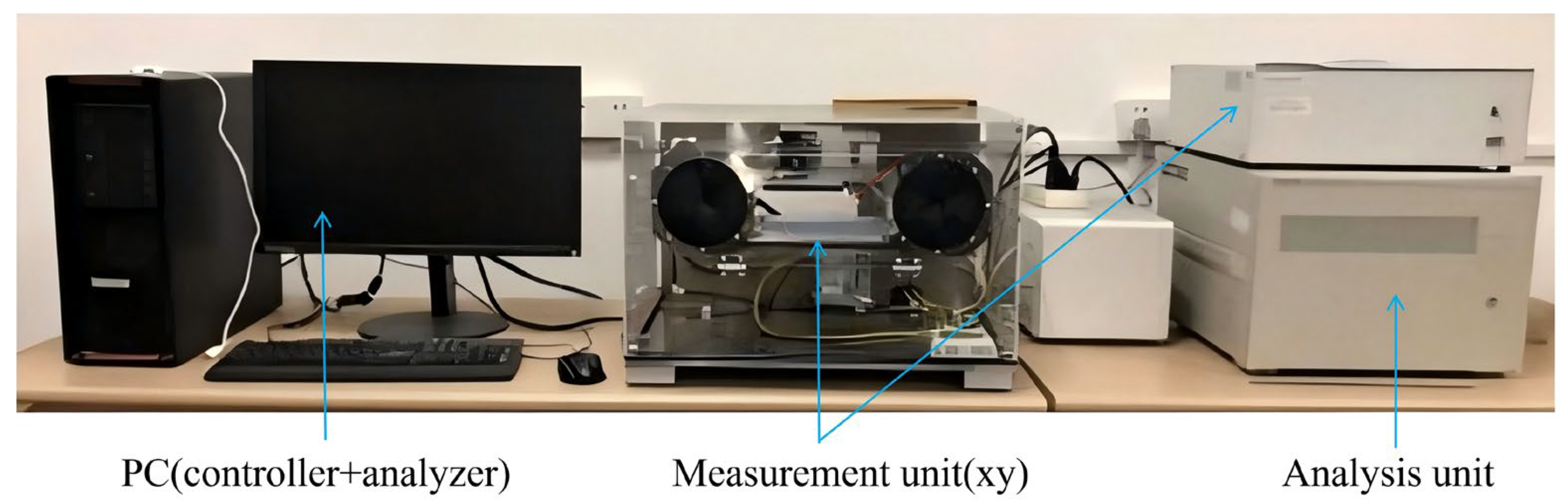
The experiment was completed in the Bioinformatics Analysis Laboratory of the Agricultural Engineering College of Jiangsu University in March 2026. The terahertz time-domain spectroscopy system adopted was the TAS7400TS model produced by Advantest Corporation of Japan (Tokyo, Japan) (
Figure 1). The experiment was conducted at room temperature (approximately 294 K). To avoid the influence of moisture in the air on the terahertz waves, the experimental samples were placed in a sealed box filled with nitrogen gas, thereby ensuring that the humidity of the samples during the measurement was controlled at around 3%. To avoid the absorption of water vapor by the terahertz waves, before the experiment, dry nitrogen gas was continuously introduced to reduce the humidity to within 5%, and the temperature was maintained at (25 ± 0.1) °C [
28,
29].
2.3. Experimental Materials and Metamaterial Sensor Preparation
The materials used in the preparation and simulation of metamaterial devices include flexible polyimide (PI) dielectric substrates, metallic titanium (Ti), and metallic gold (Au). The PI substrate has a thickness of 14 μm, a relative dielectric constant of εr = 3.5, and a loss tangent of tanδ = 0.002. It exhibits excellent mechanical flexibility, chemical stability, high-temperature resistance, and low dielectric loss properties, making it ideal for efficient transmission in the terahertz band and for micro–nano processing applications. The metal layers were fabricated using electron beam evaporation. Titanium was used as an adhesion layer to enhance the bonding between gold and the PI substrate, with a thickness of 10 nm. Gold was used for the resonant structures and as the bottom electrode, with a thickness of 200 nm. This thickness exceeds the skin depth of terahertz waves in metal, ensuring complete absorption of transmitted waves and resulting in a transmittance of T ≈ 0. In the electromagnetic simulations, the conductivity of gold was set at 4.561 × 10⁷ S/m, while that of titanium was 2.38 × 10⁶ S/m, both values consistent with those of real materials.
The reagents used in the experiments included anhydrous ethanol, acetone, isopropanol, and deionized water, all of which were of analytical grade. These reagents were used for device cleaning, surface treatment, and photolithography processes. All experimental equipment was cleaned using ultrasonic treatment, dried at high temperatures, and sterilized to prevent impurities and dust from affecting the terahertz measurement results.
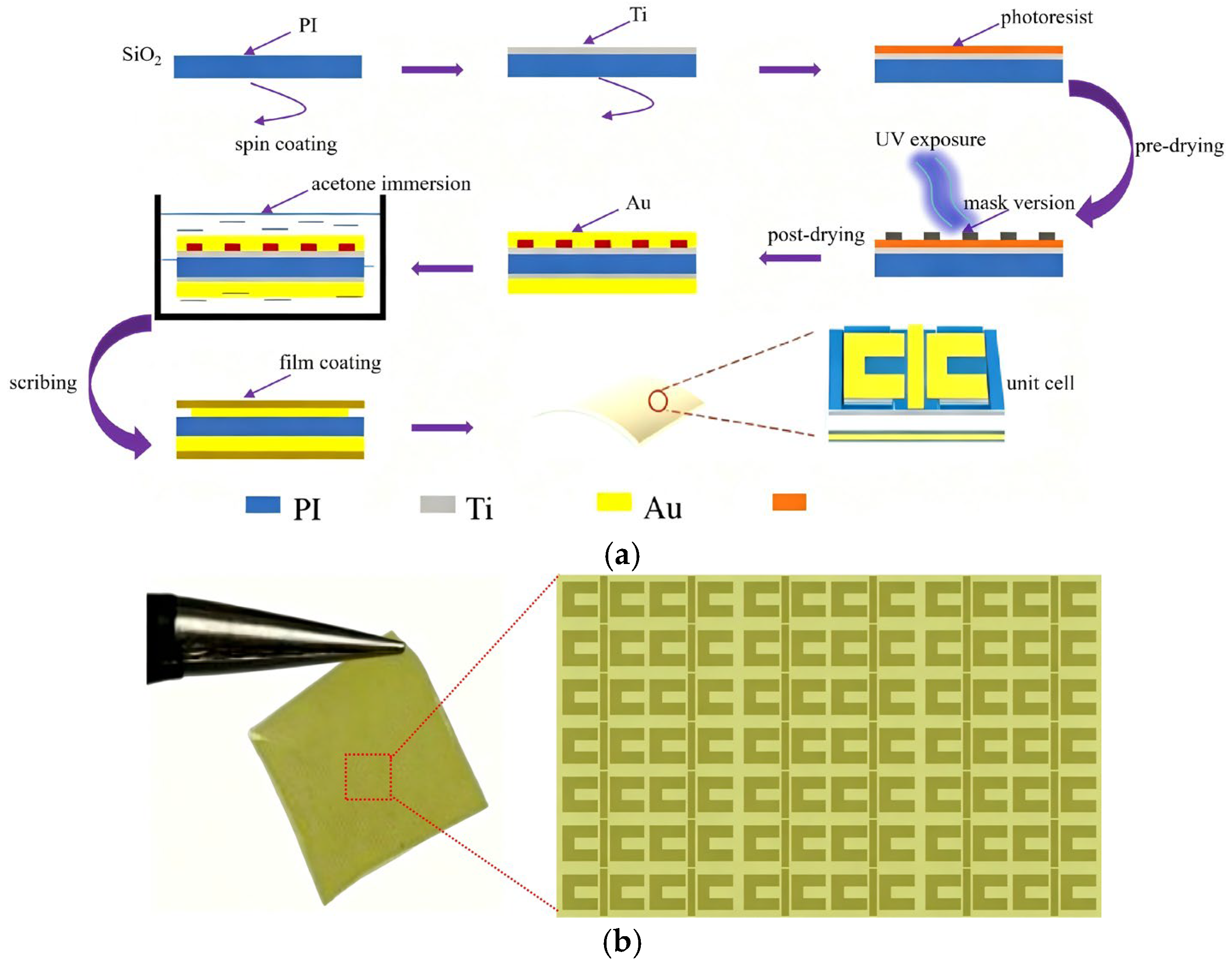
The metamaterial sensor is prepared by standard micro-nano processing technology. PI precursor is spin-coated on the silicon wafer, and a flexible PI film with a thickness of 14 μm is formed by high-temperature thermal imidization. Spin-coating, positive photoresistance, ultraviolet exposure and development were used to form double U-shaped and central rod patterns. A total of 10 nm Ti and 200 nm Au were evaporated in turn. The sample was soaked in acetone solution to remove excess metal and complete patterning. A 200 nm measure of Au was evaporated on the other side of PI as the grounding layer. The PI film was peeled from the silicon wafer to obtain the flexible metamaterial sensor. The whole process was completed in a clean room with an ambient temperature of 22 °C and a humidity of 45%, which ensured the dimensional accuracy of the structure [
30,
31]. The fabrication process of the metamaterial sensor is shown in
Figure 2.
2.4. Structural Design of Metamaterial Sensor
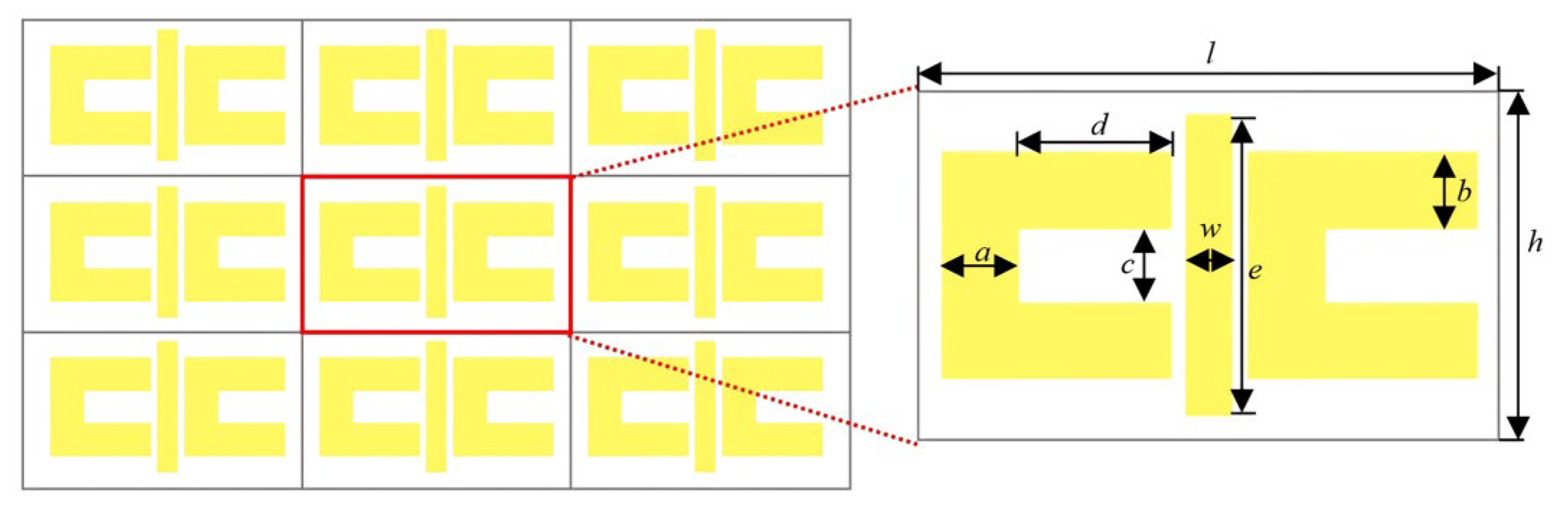
In this study, a terahertz metamaterial perfect absorption sensor based on a double U-shaped resonator and a central metal rod composite element is designed to realize polarization insensitivity, dual-frequency near-perfect absorption and high-sensitivity sensing. The top layer is a periodic double U-shaped and central metal rod composite resonant structure, the middle is a flexible PI dielectric layer, and the bottom layer is a continuous gold thin film grounding layer. The design idea of this structure is to use double U-shaped elements to excite the low-frequency resonance mode and the central metal rod to excite the high-frequency resonance mode. The two resonance modes are independent of each other and have no obvious coupling interference. All the dimensions are in the micro-nano scale, far less than the terahertz wavelength of the working frequency band, which meets the sub-wavelength structural conditions, can effectively stimulate local surface plasmon resonance and electromagnetic resonance, and realizes the strong localization and “hot spot” enhancement effect of the electromagnetic field. The designed metamaterial device structure is shown in
Figure 3.
2.5. Metamaterial Sensors Simulation Optimization
In this study, three-dimensional electromagnetic simulation software CST Studio Suite 2023 based on the finite element method (FEM) is used for full-wave electromagnetic simulation. The frequency domain solver is used to calculate the reflection spectrum, transmission spectrum, absorption spectrum, phase response, electric field distribution, magnetic field distribution and surface current distribution of metamaterials. The solver has the advantages of high accuracy, adaptive grid, and wide-band adaptability and is suitable for accurate modeling and analysis of terahertz metamaterials.
In the construction of the simulation model, a unit cell is established as the calculation domain to reduce the calculation amount and improve the efficiency. The
x and
y directions are set as periodic boundary conditions to simulate the infinite periodic array structure; the
z direction is the incident direction of the electromagnetic wave, and it is set as an open absorption boundary to eliminate the calculation error caused by port reflection. The incident terahertz wave is set as a linearly polarized plane wave, which is vertically incident along the
z axis, with the electric field vector along the
x direction and the magnetic field vector along the
y direction. In order to ensure the simulation accuracy, adaptive grid encryption is carried out for the areas with significant field enhancement, such as the edges, gaps and tips of metal structures. The minimum grid size is set to 0.1 μm, and the dielectric area adopts a conventional grid [
32,
33]. The simulation frequency range is set to 0–2.5 THz, and the number of sampling points is 500, covering the frequency band where the double resonance peaks are located. The material parameters are set according to the experimental values: the relative dielectric constant of the PI substrate is 3.5, and the loss tangent is 0.002. Au conductivity is 4.561 × 10
7 s/m. The conductivity of Ti is 2.38 × 10
6 s/m.
In order to obtain the best absorption performance and sensing performance, the control variable method is used to systematically scan and optimize the key geometric parameters. Optimization parameters include: U-arm length, metal line width, opening spacing, center rod size, dielectric layer thickness and metal layer thickness. Only one parameter is changed at a time, and the other parameters are kept unchanged for simulation and optimization. The optimization objectives are set as follows: Dual-frequency absorption rate is higher than 99%. The resonance peak has a stable position, sharp peak shape and narrow width at half height. It has high sensitivity to changes in the environmental refractive index. It has good structural symmetry, polarization insensitivity and high manufacturing fault tolerance. Through several rounds of parameter scanning, the optimal geometric size combination is finally determined, so that the device can achieve the best balance among absorption performance, sensing performance and process realizability.
In the simulation optimization, the absorption rate of metamaterials is calculated by the law of conservation of energy [
34,
35]:
where
represents the reflectivity and
represents the transmittance. S11 and S21 are the reflection and transmission scattering parameters, respectively.
Because the bottom layer is made of a continuous thick metal layer, terahertz waves cannot penetrate, and the transmittance
T is approximately 0, so the absorption rate can be simplified as [
36,
37]
In order to analyze the formation mechanism of the double resonance peak, the absorption spectrum is fitted by the double Lorentz resonance model [
38,
39]:
where
f represents the frequency of the incident terahertz.
f1 and
f2 represent the frequencies of the incident terahertz waves.
γ represents the damping loss coefficient.
C1 and
C2 represent the bimodal weight coefficients. Through the superposition of double Lorentz functions, the dual-frequency absorption characteristics can be accurately restored, and the key parameters such as resonance frequency, loss and full width at half maximum can be extracted [
40,
41].
3. Results and Analysis
3.1. Absorption and Reflection Spectroscopy Analysis
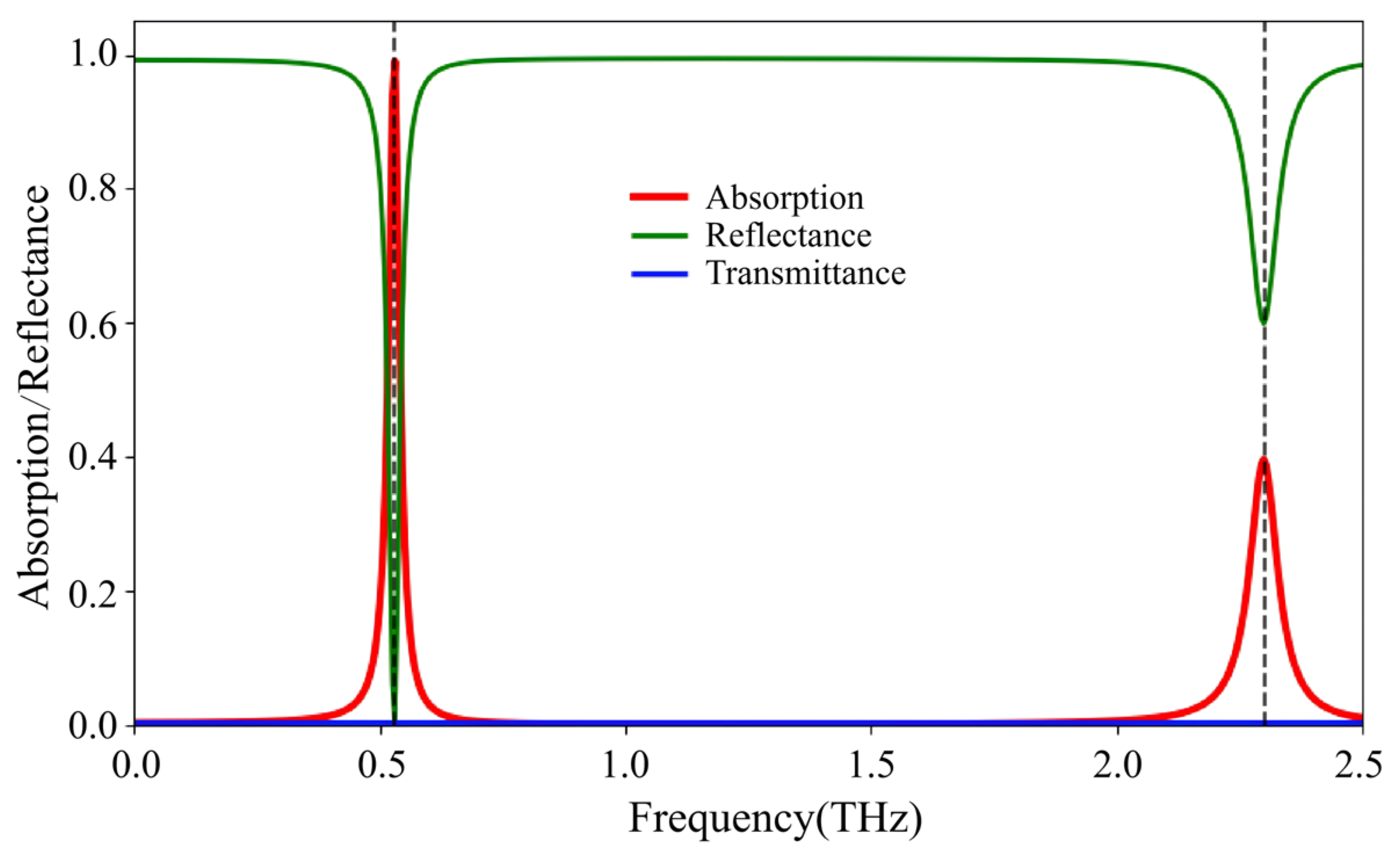
Figure 4 shows the simulated absorption and reflection spectra of the dual-U-shaped + central rod composite terahertz metamaterial structure over the wide frequency range of 0–2.5 THz. As can be seen from
Figure 4, at the low-frequency resonance point of 0.53 THz and the high-frequency resonance point of 2.30 THz, the metamaterial exhibits typical dual-frequency near-perfect absorption characteristics. The peak absorption rates at these two resonance points are 99.2% and 99.5%, respectively, achieving highly efficient perfect absorption at both frequencies. In the corresponding reflection spectra, distinct reflection minima appear at these two resonance points, with reflectivity values dropping sharply to near-zero levels. In the non-resonant frequency range, the reflectivity remains relatively high, indicating typical resonant-type perfect absorption behavior of the metamaterial. In the non-resonant region, no strong electromagnetic resonance occurs within the structure, preventing effective electromagnetic coupling between the incident terahertz waves and the metamaterial. As a result, most of the electromagnetic waves are reflected by the surface of the structure, leading to high reflectivity and low absorption rates. Energy is primarily absorbed through reflection. However, at the two specific resonance frequencies, both electric and magnetic dipole modes within the structure are effectively excited simultaneously. This results in good matching between the surface impedance of the metamaterial and the wave impedance of free space. As a consequence, no significant reflected waves are produced, and the electromagnetic energy is highly localized within the gaps between the metamaterial components and on the metal surface. Energy is efficiently absorbed and dissipated through dielectric losses and metallic ohmic losses, resulting in two separate, highly efficient perfect absorption peaks.
From the analysis of the physical mechanism of resonance formation, the 0.53 THz low-frequency absorption resonance peak is mainly excited by the magnetic dipole resonance formed by the mutual coupling of the double U-shaped metal opening structure, the upper and lower metal arms of the double U-shaped structure and the intermediate dielectric layer form a magnetic-like resonance loop, the terahertz incident magnetic field component excites the annular induced current inside the structure to generate a strong magnetic resonance response, and the magnetic field energy is highly concentrated in the gap area of the U-shaped structure, thus forming a low-frequency strong absorption resonance. However, the 2.30 THz high-frequency absorption resonance peak is mainly dominated by the electric dipole resonance excited by the thin vertical metal rod at the center. Under the action of a high-frequency terahertz electric field, the central metal rod produces strong polarized charge accumulation and surface-induced current, and the electric field energy is concentrated at the edge of the central rod and the opening of the structure, forming high-frequency electric resonance absorption. The two resonance peaks are independently controlled by magnetic resonance and electric resonance; the resonance modes are not coupled or interfered with each other; the peak shapes are sharp and smooth, free from clutter interference and spectrum distortion; and the baseline absorption contrast is high so that it has the advantages of dual-frequency independent sensing detection, which is very suitable for the application requirements of synchronous high-sensitivity identification and trace quantitative detection of multi-characteristic frequency points of wheat scab fungus spores.
3.2. Phase Response Characteristic Analysis
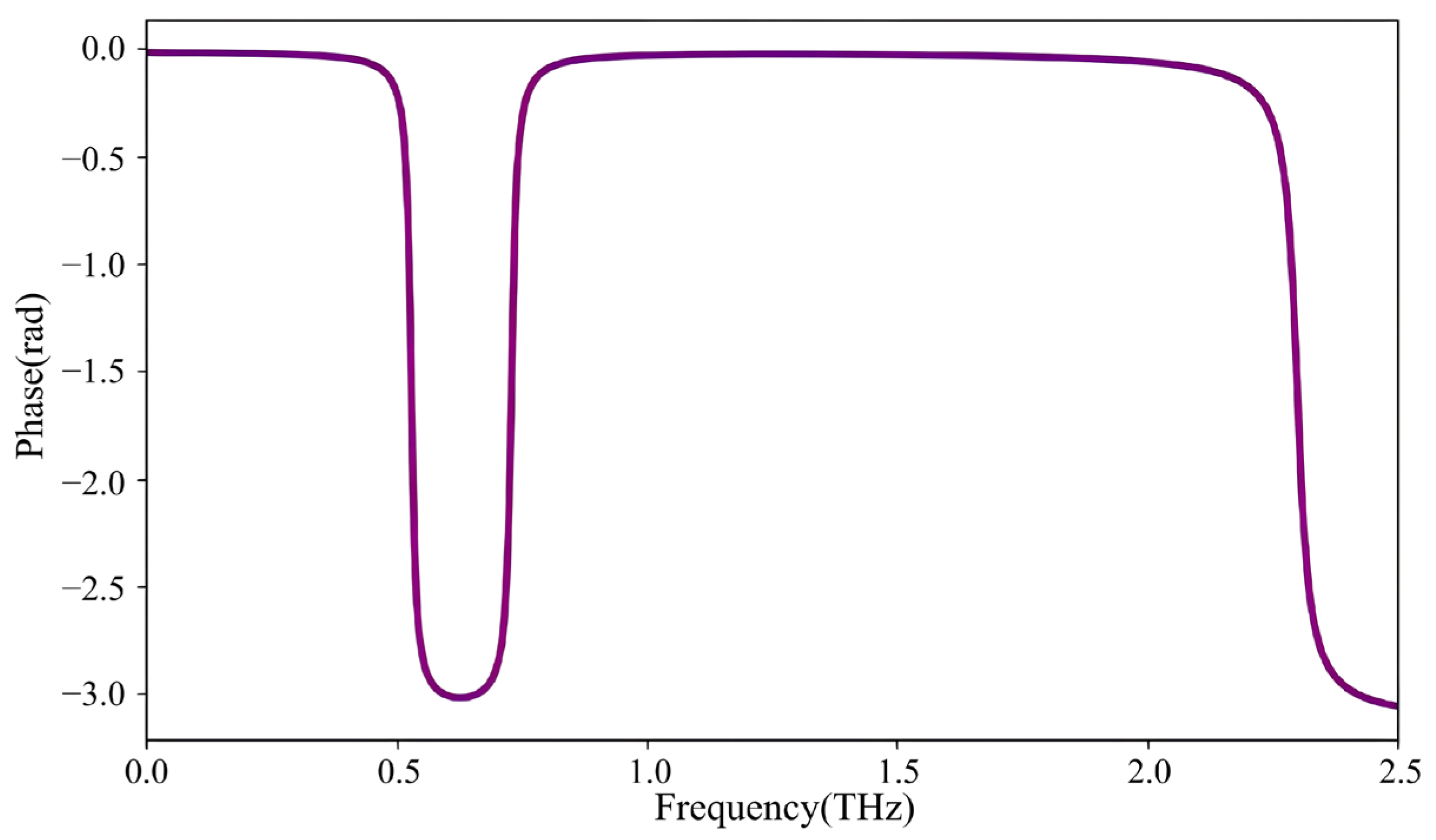
Figure 5 shows the electromagnetic phase response curves of the dual-U-shaped + central rod composite terahertz metamaterial structure in the operating frequency range of 0–2.5 THz. As can be seen from
Figure 5, the dual-frequency metamaterial design exhibits extremely steep and dramatic phase shifts at both the low-frequency resonance point of 0.53 THz and the high-frequency resonance point of 2.30 THz. The phase changes occur rapidly over a very narrow frequency range, with a high slope and significant curvature in the phase response curve. This indicates that the material possesses strong phase-sensitive modulation properties.
In the actual detection process of wheat scab spores, when different concentrations and quantities of scab fungi spores are adsorbed on the surface of the metamaterial sensor, the biological refractive index of the spores will directly change the environmental equivalent refractive index distribution on the surface of the metamaterial structure, causing a slight frequency shift in the metamaterial resonance frequency point. Compared with the weak amplitude change in the amplitude absorption peak, the phase mutation region is more sensitive to small frequency offset, and the weak refractive index disturbance can cause a significant change in the phase value, which can effectively amplify the weak electromagnetic signal disturbance caused by the adsorption of scab spores and greatly improve the frequency offset detection accuracy and refractive index detection resolution of the sensor.
Good phase transition response characteristics can significantly reduce the detection limit of the sensor, enhancing the ability to detect trace amounts of spores. This enables accurate identification and quantification of low-concentration spore samples. In the context of early warning for wheat scab, the concentration of fungal spores on crop surfaces at the onset of the disease is extremely low, making them difficult to detect using conventional methods. However, this metamaterial sensor’s sharp phase transition response near its resonant frequency allows it to accurately detect the subtle electromagnetic changes caused by the adsorption of spores, enabling early detection of even low concentrations of spores.
3.3. Analysis of Structural Parameter Optimization Results
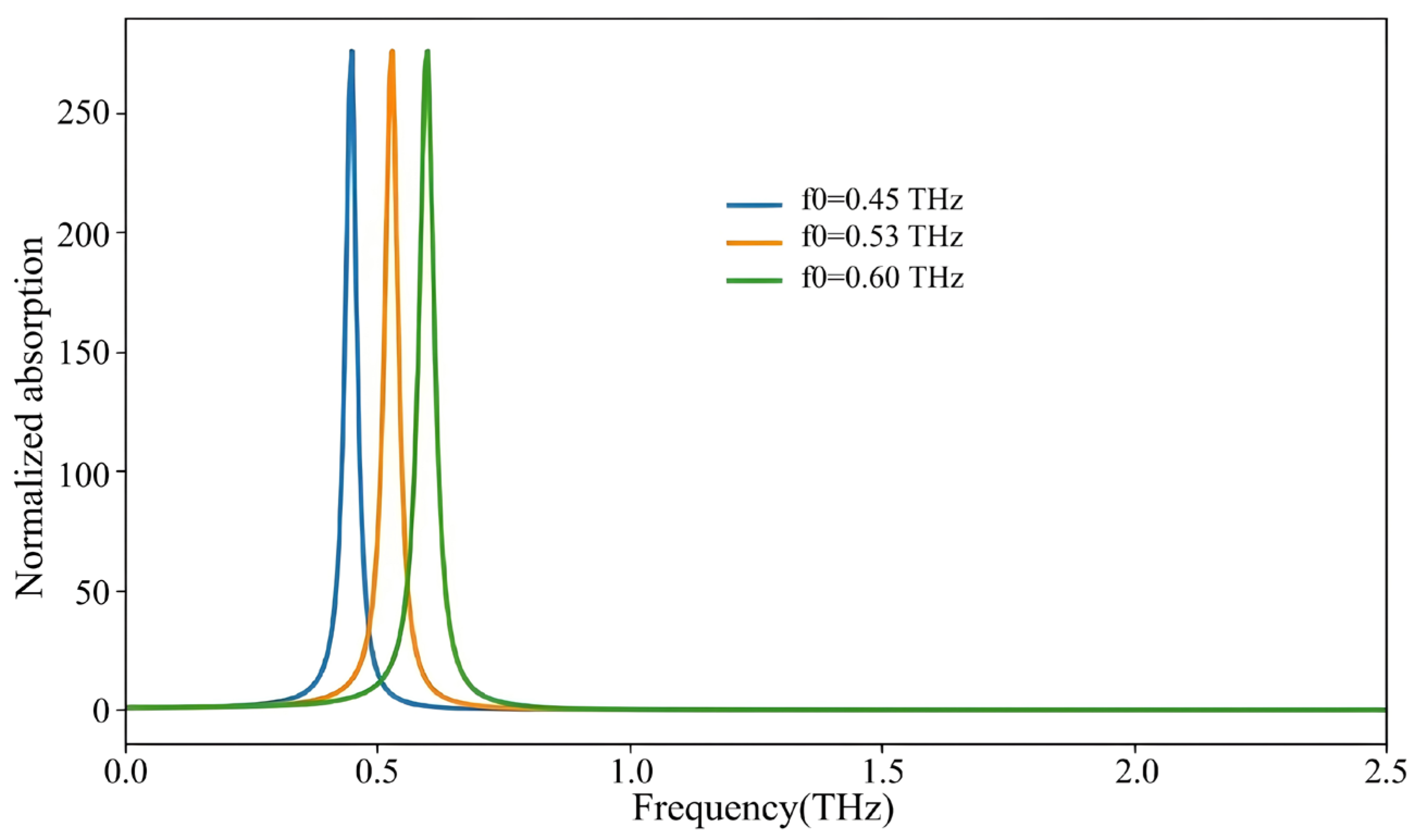
To ensure that the designed metamaterial sensor exhibits optimal dual-frequency absorption performance, a sharp resonance peak shape, high absorption efficiency, and excellent sensing quality factors, this study conducted multiple rounds of simulation optimizations by scanning various structural parameters at three key frequencies: the target low-frequency resonance of 0.45 THz, the design target of 0.53 THz, and the high-frequency offset of 0.60 THz. By individually adjusting core parameters such as the length of the U-shaped arms, the gap between them, the width and height of the central metal rod, and the thickness of the dielectric layer, the study compared the resonance peak values, peak sharpness, full-width-at-half-maximum values, and symmetry of the absorption spectra under different parameter combinations. Ultimately, the optimal set of structural parameters and the best resonant operating frequency were determined.
Figure 6 shows the comparison of absorption spectra after optimization using multiple sets of key structural parameters for the dual-U-shaped + central-rod composite terahertz metamaterial structure.
As can be seen from
Figure 6, when the structural parameter matching resonance center frequency is 0.53 THz, the absorption intensity of the low-frequency absorption resonance peak reaches the highest value, the absorption rate is close to the perfect absorption level, the left–right symmetry of the resonance peak is good, the baseline is stable and there is no clutter interference, the full width at half maximum of the resonance value is the smallest, the resonance quality factor is the highest, and the comprehensive absorption performance and sensing performance reach the optimal state. When the structural parameters are too small, the resonance frequency shifts to the low-frequency direction of 0.45 THz, the full width at half maximum of the resonance absorption peak increases obviously, the peak deformation width slows down, the absorption peak decreases slightly, the resonance quality factor decreases, the local effect of the electromagnetic field weakens, and the sensing sensitivity decreases accordingly. When the structural parameters are too large, the resonance frequency shifts to the high-frequency direction of 0.60 THz, the resonance peak is slightly distorted, the absorption efficiency decreases obviously, the resonance stability becomes worse, and it is easy to produce stray coupling interference with the high-frequency resonance mode, which is not conducive to the application of dual-frequency independent detection. By comprehensively comparing the absorption intensity, peak shape quality, full width at half maximum and resonance stability under different parameters, it is finally determined that 0.53 THz is the optimal working resonance frequency point at a low frequency, and 2.30 THz at high frequency keeps the original optimal structural parameters unchanged.
In terms of optimization of the resonance loss coefficient, the optimal damping coefficient parameters γ = 0.025 and γ = 0.015 are finally determined after several groups of simulation iterative debugging. This group of damping parameters can ensure the ultra-high absorption efficiency and give consideration to the balance between the sharpness of resonance peak and high quality factor, which will not lead to the resonance peak being too wide and the sensitivity being reduced due to excessive damping, and will not lead to insufficient absorption intensity and a poor absorption effect due to too small damping, which is perfectly suitable for the high absorption of wheat scab spore trace detection. The optimization results of structural parameters show that the combination of structural size and damping parameters selected in this study has the best electromagnetic resonance response characteristics, which provides the best structural basis and resonance conditions for the follow-up electromagnetic field hotspot enhancement, refractive index sensing calibration, and actual spore concentration detection.
3.4. Analysis of Refractive Index Sensitivity Characteristics
Refractive index sensitivity is a key indicator that measures the performance of metamaterial sensors in detecting subtle changes. It directly determines the sensor’s ability to detect changes in the surface equivalent refractive index caused by the adsorption of
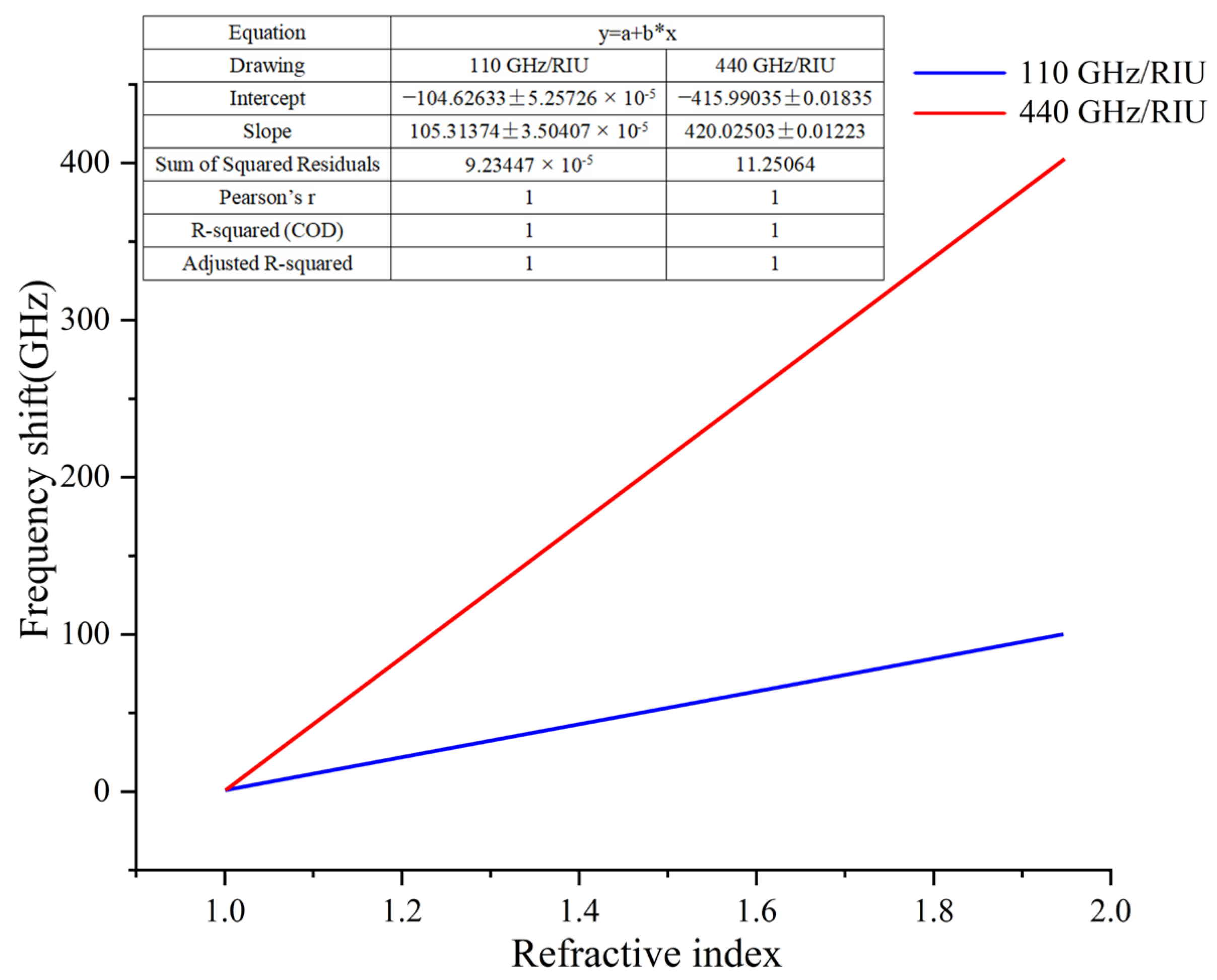
Fusarium graminearum spores, as well as its detection resolution. In this study, different refractive index gradients in various environmental media were simulated to mimic changes in the surface equivalent refractive index corresponding to different amounts of spore adsorption on wheat. The resonance frequency shifts in the low-frequency 0.53 THz and high-frequency 2.30 THz resonant peaks were measured as the refractive index increased. Linear fitting was used to calculate the refractive index sensing sensitivity at these two frequencies, along with the degree of linearity of the fit.
Figure 7 shows the sensitivity response curves of the dual-resonance terahertz metamaterial with a double-U shape and central rod structure as the external environmental refractive index changes.
As can be seen from
Figure 7, the refractive index sensitivity of the low-frequency 0.53 THz resonance peak is 110 GHz/RIU, and that of the high-frequency 2.30 THz resonance peak is 440 GHz/RIU. The sensitivity of the high-frequency resonance peak is much higher than that of the low-frequency resonance peak, and the sensing and detection performance is more excellent. The main physical reason for the sensitivity difference is that the high-frequency resonance mode is dominated by the electric dipole resonance of the central metal rod, the electromagnetic field has a higher degree of local focusing, the hot spot enhancement effect is stronger, the electromagnetic field distribution is more concentrated in the surface area of the structure, the small change in the refractive index of the external environment can have a significant impact on the resonant electromagnetic response, and the frequency offset response is more sensitive. However, the low-frequency magnetic resonance mode has a relatively wider electromagnetic field distribution range and a relatively weak local focusing degree, so the sensitivity is relatively low.
3.5. Spore Concentration–Frequency Shift Response Analysis of Wheat Scab
Relevant studies have shown that wheat Fusarium head blight generally includes the initial stage of infection (latent period), the onset stage, and the peak stage of infection. Moreover, the concentration of field spores of wheat Fusarium head blight shows a typical gradient distribution according to the infection stage of the disease [
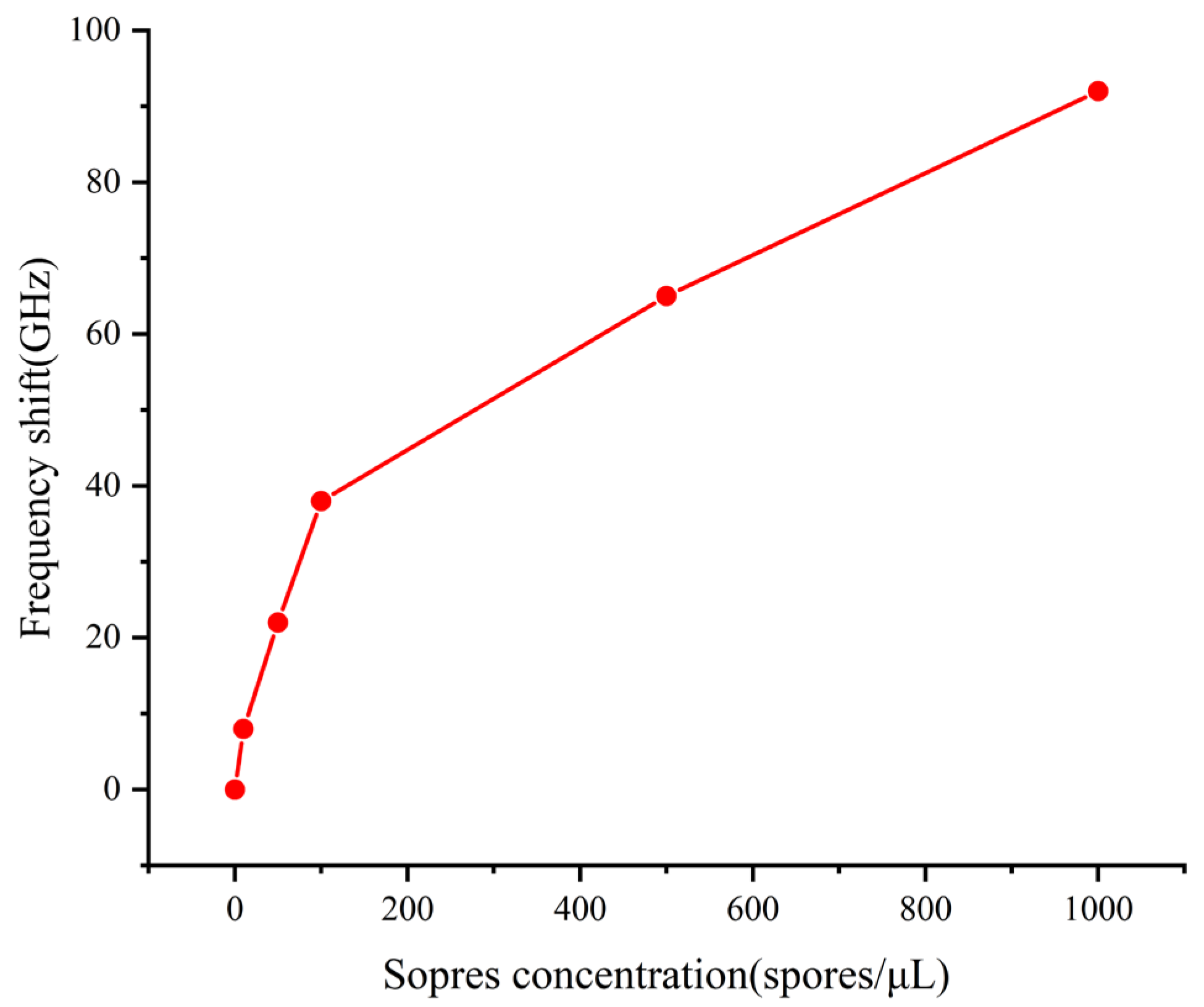
42]. To accurately match the full cycle concentration range of field diseases from healthy, initial infection, which is widespread with severe recurrence, this study sets six standard concentration gradients of 0, 10, 50, 100, 500, and 1000 spores/μL, covering all scenarios from the healthy state, trace amounts in the early stage, and moderate occurrence to severe prevalence. This can accurately reflect the spore-carrying level under different disease severity levels in the field and ensure that the detection model has real application value in the field. A quantitative relationship between spore concentration and frequency shift was established (
Figure 8).
As can be seen from
Figure 8, the resonant frequency shift corresponding to each concentration is 0 GHz, 8 GHz, 22 GHz, 38 GHz, 65 GHz and 92 GHz. With the increase in wheat scab spore concentration, the number of spores adsorbed on the surface of the metamaterial increases continuously, the equivalent refractive index of the structural surface increases continuously, the red shift in the resonant peak increases synchronously and steadily, and there is a significant positive correlation between spore concentration and resonant frequency shift. The set spore concentration gradient (0, 10, 50, 100, 500, 1000 spores/μL) completely covers the true spore density range of four typical stages: healthy plants in the field, initial stage of disease, general disease, and severe epidemic, which is in line with the actual variation range of spore concentration of Gibberella in the field air during wheat flowering. In the range of low-concentration spores, the frequency shift response is sensitive, and the low concentration of 10 spores /μL can produce an obvious 8 GHz frequency shift response, which indicates that the minimum detection limit of the sensor can realize the trace detection of extremely low-concentration spores in the early stage of wheat scab. In the high concentration range, the response linearity is still good, and there is no saturation distortion. The gradient concentration test experiment showed that the detection range covered 0–1000 spores /μL, the model fitting degree R
2 = 0.996, and the detection limit reached 10 spores/μL, which could meet the detection requirements of wheat scab in the whole process from early mild infection to middle and late serious disease.
4. Discussion
In this study, a flexible terahertz metamaterial sensor based on the composite structure of a double U-shaped resonator and a central metal rod was designed and prepared, and it was applied to the unmarked quantitative detection of wheat scab pathogen spores. Through structural design, simulation optimization, and concentration calibration, dual-frequency near-perfect absorption and high-sensitivity sensing were realized.
Compared with the traditional detection methods of wheat scab (pathogen isolation and culture, immunological detection, molecular biological detection, etc. [
8,
9]), the terahertz metamaterial sensing technology proposed in this study realizes label-free, nondestructive and rapid detection without complicated sample pretreatment, expensive labeling reagents or professional operators, and the detection time is shortened from hours to days to seconds, which is more suitable for online and on-site early warning in the field. At the same time, the detection limit of this sensor is 10 spores/μL, which is lower than the threshold of spore concentration in the early stage of disease reported by agricultural epidemiology surveys and can meet the needs of early disease monitoring [
43].
Compared with the reported THz metamaterial sensors, the existing structures are mostly single-frequency absorbers, which are vulnerable to environmental interference and have weak specificity for biological targets [
44]. The dual-frequency independent resonant structure designed in this study has an absorption rate higher than 99% at 0.53 THz and 2.30 THz, and a high-frequency sensitivity of 440 GHz/RIU, which is significantly better than most single-frequency metamaterial sensors [
45,
46]. At the same time, the flexible PI substrate is used in this study, which improves the fit between the sensor and the biological sample, reduces the contact loss, and enhances the detection stability, which is rarely involved in the reported research on rigid metamaterials for fungal spore detection.
In terms of practical application value, the spore concentration gradient set in this study completely fits the distribution range of real spore concentration in wheat fields at the flowering stage [
42]. The linear model established in this study has a fitting degree of R
2 = 0.996, which can realize the full range quantitative detection of 0–1000 spores/μL, covering the whole course of health, early infection, widespread occurrence and severe epidemic. This shows that this method can be directly used for rapid field screening, regional disease risk assessment and accurate prevention and control decision support.
However, there are still some limitations in this study. On the one hand, this study is based on pure spore samples in the laboratory, and there are impurities such as pollen, glume crumbs and miscellaneous bacteria in the actual field samples, which may slightly interfere with terahertz signals, thus slightly affecting the detection accuracy. On the other hand, the current test system relies on a large terahertz spectrometer, which is not portable enough, which limits the convenience of field application. In addition, this study only realized the detection of a single strain and could not distinguish mixed pathogens, so the specificity still needs to be further improved.
Future research will cover three aspects: Firstly, optimize the surface modification process of metamaterials, improve the efficiency and specificity of target spore capture, and reduce impurity interference. Secondly, integrate the sensor with a microfluidic chip and a portable terahertz module to develop a miniaturized, integrated detection device suitable for the field. Thirdly, expand the detection objects to common pathogens of main crops; build a multi-target identification database based on terahertz spectral fingerprints; establish a new technical system for on-site, rapid, nondestructive and intelligent monitoring of crop fungal diseases; and provide strong support for green prevention and control of food crop diseases and food security.
5. Conclusions
This study addressed the limitations of traditional detection methods for wheat scab, such as complicated procedures, reliance on markers, insufficient sensitivity, and difficulty in achieving early in situ monitoring. A flexible terahertz metamaterial perfect absorber was designed and fabricated using a composite structure of dual U-shaped resonators and a central metal rod. Structural simulations, parameter optimization, device fabrication, and label-free quantitative detection of wheat scab spores were conducted. The following key findings were obtained.
(1) The designed metal–dielectric–metal sandwich terahertz metamaterial exhibits near-perfect absorption in two frequency bands: 0.53 THz and 2.30 THz. The absorption rates reached 99.2% and 99.5%, respectively. The low-frequency resonance is dominated by magnetic dipole resonance, while the high-frequency resonance is driven by electric dipole resonance. These two modes operate independently without coupling interference. The material also features polarization insensitivity, a sharp peak shape, and a high quality factor.
(2) At the resonant frequencies, the metamaterial exhibits a sharp phase shift, which effectively amplifies the weak electromagnetic disturbances caused by spore adsorption, thereby greatly improving signal detection accuracy. The refractive index sensitivity at the two frequencies is 110 GHz/RIU (low frequency) and 440 GHz/RIU (high frequency). The high-frequency mode exhibits better sensing performance due to stronger localized electromagnetic fields.
(3) The developed quantitative model for spore concentration versus frequency shift shows excellent linearity, with a correlation coefficient of R2 = 0.996. The detection limit is as low as 10 spores/μL, enabling detection of even very low concentrations of spores. The detection range covers 0–1000 spores/μL, satisfying the needs for quantitative monitoring of wheat scab throughout its development, from early infection to severe outbreaks.