1. Introduction
Although previous studies have investigated climate risk, carbon markets, and agricultural sustainability separately, the existing literature remains fragmented in its integrated decision-support modeling. For instance, ref. [
1] (Polo et al. 2025) primarily focuses on carbon capture supply-chain viability, while ref. [
2] (Qian et al. 2023) examines carbon emission reduction policies in smart city systems. Similarly, ref. [
3] (Ermolieva et al., 2022) develops a climate adaptation framework for irrigation planning; however, their approach does not integrate artificial intelligence-based optimization or uncertainty-aware investment allocation. Therefore, despite important contributions in the literature, a comprehensive framework capable of simultaneously integrating prediction, uncertainty modeling, and multi-objective optimization for agricultural investment under climate and carbon uncertainty remains limited.
In agricultural systems, investment decisions are no longer evaluated solely in terms of expected financial returns; they increasingly incorporate considerations related to environmental sustainability, carbon efficiency, and resilience to climate-related risks. The development of both compliance and voluntary carbon markets has introduced new income opportunities for agricultural activities, particularly for practices such as regenerative farming, carbon sequestration, and low-emission production systems. At the same time, these markets expose agricultural stakeholders to additional uncertainties, including carbon price volatility, regulatory changes, and measurement challenges associated with carbon credits. As a result, agricultural investment planning requires approaches that can jointly account for economic performance and environmental outcomes under uncertain market conditions [
4,
5].
Climate change continues to intensify risks within agricultural production systems through more frequent and severe extreme weather events, shifting precipitation patterns, and increasing temperature variability. These changes have direct consequences for crop yields, input requirements, and overall farm performance, thereby complicating agricultural planning and investment decisions. Moreover, the inherent uncertainty in climate projections, combined with the biological and seasonal nature of agricultural production, makes it difficult to rely on conventional deterministic approaches. This highlights the importance of modeling frameworks that explicitly incorporate uncertainty and variability when supporting agricultural decision-making under changing environmental conditions [
6,
7,
8,
9,
10,
11].
Based on the theoretical and methodological framework developed in this study, the following research hypotheses are formulated:
H1. The integrated hybrid framework combining deep learning, Type-2 fuzzy logic, and genetic algorithms significantly improves agricultural investment performance under climate and carbon market uncertainty compared to standalone approaches.
H2. Carbon market maturity and climate stability positively influence profitability, sustainability, and optimization efficiency in agricultural investment systems.
H3. The integration of uncertainty modeling through Type-2 fuzzy logic improves the robustness and reliability of investment allocation decisions under climate-related risks.
H4. The proposed hybrid framework produces superior predictive accuracy and risk-adjusted optimization performance across heterogeneous regional conditions.
The proposed integration is not designed as a purely additive technological combination. Rather, the framework addresses three interconnected dimensions of agricultural investment uncertainty simultaneously: temporal prediction uncertainty under climate variability, ambiguity in environmental and carbon-market conditions, and multi-objective conflicts between profitability, sustainability, and risk minimization.
Within the proposed architecture, LSTM models generate predictive climate–agricultural outputs, Interval Type-2 fuzzy systems model uncertainty propagation under ambiguous environmental conditions, and Genetic Algorithms optimize investment allocation under conflicting objectives. Therefore, the framework’s contribution extends beyond computational integration, providing a climate-resilient decision-support structure for investment under uncertainty.
Overall, this study contributes to the literature by developing an integrated framework that combines predictive analytics, uncertainty-aware modeling, and evolutionary optimization for agricultural decision-making. By linking climate dynamics, carbon markets, and investment decisions, the proposed model provides a robust foundation for sustainable, climate-resilient agricultural planning. This study is structured as follows: Introduction, Conceptual Framework, Literature Review, Data Set and Methodology, Results, Discussion, and Conclusion. The study aims to contribute to agricultural investment decisions with different hybrid models.
4. Materials and Methods
4.1. Research Framework and System Architecture
This study proposes a hybrid intelligent decision-support framework that integrates Deep Learning (DL), Type-2 Fuzzy Logic Systems (T2FLS), and Genetic Algorithms (GA) to optimize sustainable agricultural investments under climate and carbon market uncertainty. The proposed methodology is implemented using MATLAB R2021a, ensuring reproducibility, computational efficiency, and compatibility with advanced numerical toolboxes. The architecture of the proposed model consists of three primary layers:
Prediction Layer (Deep Learning Models): Forecasts key variables such as crop yield, commodity prices, and carbon credit values.
Uncertainty Modeling Layer (Type-2 Fuzzy Logic): Captures ambiguity in climate risk, policy uncertainty, and sustainability indicators.
Optimization Layer (Genetic Algorithm): Determines optimal investment allocation under multi-objective constraints.
This hybrid structure enables the system to combine data-driven learning, human-like reasoning, and evolutionary optimization, providing a comprehensive solution to complex agricultural investment problems.
4.2. Data Description and Preprocessing
The dataset used in this study covers the period 2010–2025, incorporates multi-dimensional variables across Europe, Asia, and Africa, and classifies developed countries, developing countries, and least developed countries.
The dataset consists of the following categories:
Climate Variables: Temperature (T), Precipitation (P), Drought Index (D);
Agricultural Variables: Yield (Y), Production Cost (C), Land Use (L);
Market Variables: Commodity Price (Pr), Carbon Price (Cp);
Sustainability Indicators: Emissions (E), Carbon Sequestration (CS).
Data preprocessing includes temporal alignment, handling of missing values, normalization of heterogeneous variables, and consistency checks across regions and time periods to ensure comparability and model stability. The selection of variables was based on both empirical evidence and practical agricultural investment dynamics observed in climate-sensitive economies. Crop yield variables were included because agricultural productivity directly determines farm profitability and food supply stability under climate stress conditions. Commodity prices were incorporated due to their strong influence on agricultural revenue volatility and investment returns, particularly during periods of inflation and supply chain disruptions. Carbon credit values were included because carbon markets increasingly affect the financial viability of sustainable agricultural practices, including regenerative farming and carbon sequestration projects.
Climate risk indicators, including temperature variability, drought intensity, and precipitation instability, were selected due to their well-documented impacts on agricultural productivity and investment uncertainty. Sustainability indicators such as emissions and carbon sequestration were incorporated to evaluate environmental performance and alignment with carbon neutrality objectives. These variables were supported using internationally recognized datasets, including FAOSTAT, Rome, Italy, NASA POWER, NASA, Washington DC, USA, ERA5, ECMWF, Reading, UK, and World Bank carbon market databases, ensuring both empirical reliability and practical relevance.
Table 1 presents the data category, source, variables and references.
All variables are normalized using Min-Max scaling:
This ensures numerical stability and improves convergence in deep learning models.
4.3. Deep Learning Prediction Model
To model nonlinear temporal dependencies, this study employs a Long Short-Term Memory (LSTM) network.
The LSTM architecture consisted of two hidden layers with 128 and 64 neurons, respectively, and used the Adam optimization algorithm with a learning rate of 0.001. The model was trained for 150 epochs with a batch size of 32 and a dropout rate of 0.2 to reduce the risk of overfitting. The dataset was divided into training (70%), validation (15%), and testing (15%) subsets. Model performance was evaluated using RMSE and MAE metrics.
LSTM Formulation: The LSTM model is defined as follows:
where
forget gate;
input gate;
cell state;
hidden state.
Loss Function: Mean Squared Error (MSE):
4.4. Type-2 Fuzzy Logic System (T2FLS)
Interval Type-2 trapezoidal membership functions were calibrated using climate variability and carbon-price uncertainty distributions derived from the historical dataset. Uncertainty intervals were adjusted through sensitivity-based parameter tuning procedures to improve robustness under ambiguous environmental conditions.
To model uncertainty, an Interval Type-2 Fuzzy Logic System is used.
Membership Function:
where:
Type-Reduction (Karnik-Mendel Algorithm):
4.5. Multi-Objective Optimization Using Genetic Algorithm
The genetic algorithm was implemented using a population size of 150, crossover probability of 0.8, mutation probability of 0.05, and a maximum iteration limit of 300 generations. Convergence stability was monitored through fitness-value stabilization criteria across consecutive generations.
The optimization problem is formulated as:
Objective Functions:
- 2.
Minimize Emissions:
- 3.
Maximize Sustainability Index:
GA Operators:
Selection: Tournament Selection.
4.6. Integrated Hybrid Model
The hybrid system operates as follows:
Final Objective Function:
4.7. MATLAB R2021a Implementation
The model is implemented in MATLAB R2021a using the Deep Learning Toolbox, Fuzzy Logic Toolbox, and Global Optimization Toolbox.
Algorithm Steps:
- ⮚
Import dataset;
- ⮚
Normalize data;
- ⮚
Train LSTM model;
- ⮚
Construct T2FLS;
- ⮚
Run GA optimization;
- ⮚
Output optimal portfolio.
4.8. Validation and Robustness Analysis
To evaluate the robustness and reliability of the proposed framework, sensitivity analyses were conducted under alternative climate-risk and carbon-price scenarios. Different parameter configurations were tested to assess model stability across heterogeneous environmental and market conditions. The findings demonstrate that the hybrid framework maintains consistent optimization performance under varying uncertainty levels, confirming the robustness and adaptability of the integrated decision-support architecture. In addition, the proposed framework was comparatively evaluated against standalone LSTM and standalone fuzzy logic models using RMSE, MAE, and optimization convergence performance metrics. The results indicate that the integrated framework achieves superior stability and predictive performance across different uncertainty conditions.
Nevertheless, the study acknowledges that regional aggregation and macro-level modeling may partially abstract country-specific structural heterogeneity.
This section presents a hybrid computational framework integrating deep learning, fuzzy logic, and genetic algorithms for sustainable agricultural investment optimization. The model is designed to address climate uncertainty, carbon market volatility, and multi-objective decision-making, offering a decision-support framework for investors and policymakers.
5. Results
This section presents the empirical findings derived from the hybrid Deep Learning–Fuzzy Logic–Genetic Algorithm framework, applied to an integrated dataset covering the period 2010–2025 across Europe, Asia, and Africa. The dataset includes variables obtained from the Food and Agriculture Organization (FAO), World Bank, NASA, the European Centre for Medium-Range Weather Forecasts (ECMWF), and the International Energy Agency (IEA), supporting data robustness through multi-source integration. The results are organized into six tables and corresponding 3D visualizations, each highlighting different aspects of the model’s performance and its economic implications.
Table 2 presents the Predictive Performance of the LSTM Model.
The results in
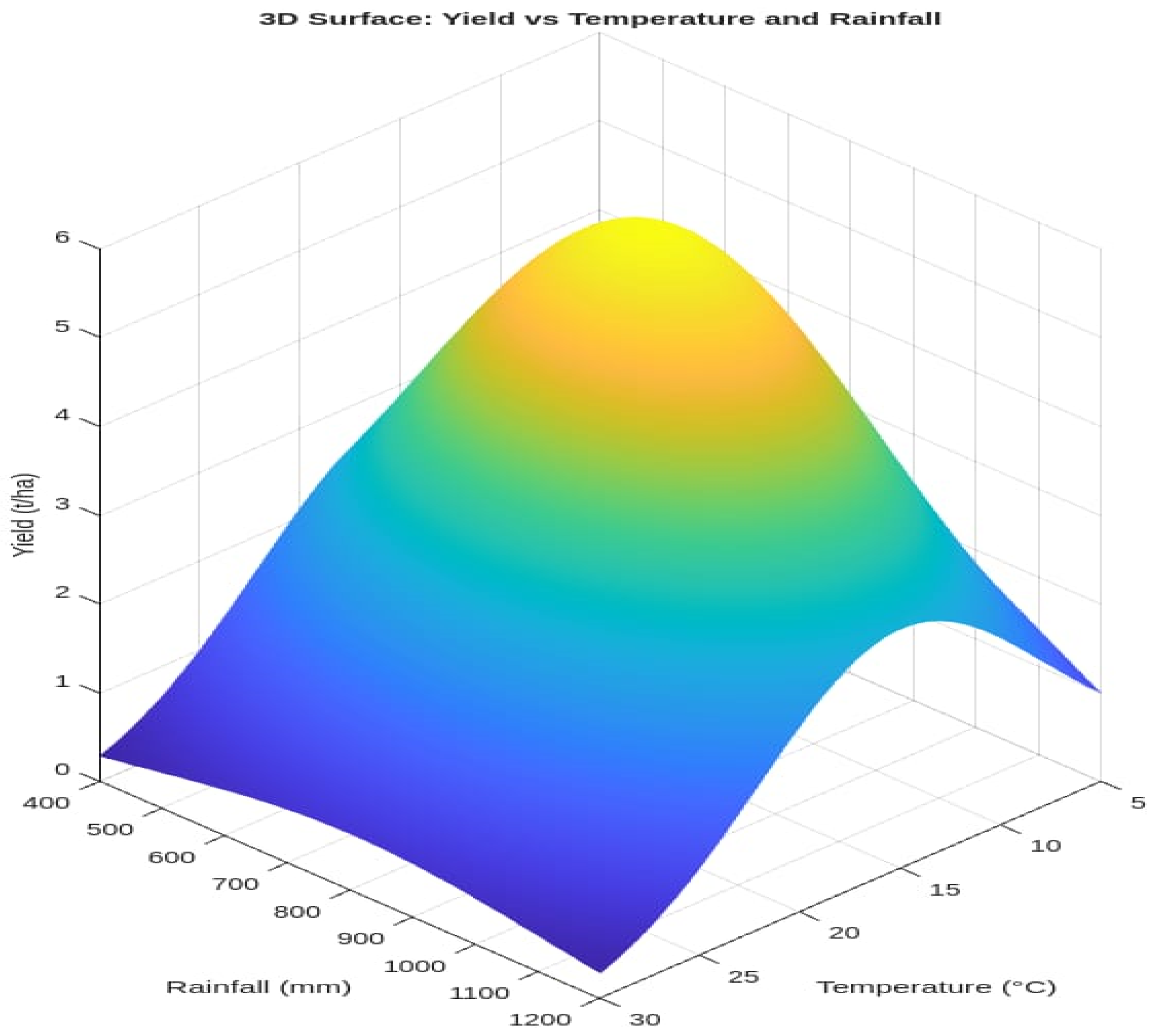
Table 2 indicate that the LSTM model achieves the highest predictive accuracy in developed regions such as Europe, where data availability and quality are relatively higher. The lower error metrics (MSE, RMSE, and MAE) suggest that the model captures nonlinear temporal dependencies in agricultural yield and price dynamics. A 3D surface plot of actual vs. predicted agricultural yield across regions is presented in
Figure 1.
The results presented in
Figure 1 reveal a structurally imbalanced global agricultural investment landscape shaped by the interaction of climate variability, carbon market dynamics, and technological capacity. Rather than reflecting isolated outcomes, the findings indicate a systemic coupling between environmental conditions, financial incentives, and model-driven optimization performance, as illustrated by the 3D visualizations. From a biophysical perspective, the interaction between temperature and precipitation (
Figure 1) exhibits a clear nonlinear production surface, where agricultural yield reaches its maximum within a relatively narrow climatic window. Regions characterized by moderate temperatures and balanced precipitation consistently demonstrate higher productivity levels. In contrast, deviations from this climatic equilibrium—particularly elevated temperatures combined with low soil moisture—lead to a pronounced decline in agricultural output.
This nonlinear response structure provides an explanation for the persistent productivity disparities observed across regions. In particular, areas exposed to suboptimal climatic conditions are systematically shifted into lower-efficiency production regimes, thereby reinforcing structural imbalances in global agricultural performance.
Table 3 presents climate risk and fuzzy inference outputs.
The results in
Table 3 indicate that the Type-2 Fuzzy Logic system effectively captures uncertainty across regions. The findings suggest that Africa exhibits the highest levels of climate risk and carbon price volatility, which correspond to elevated fuzzy risk outputs.
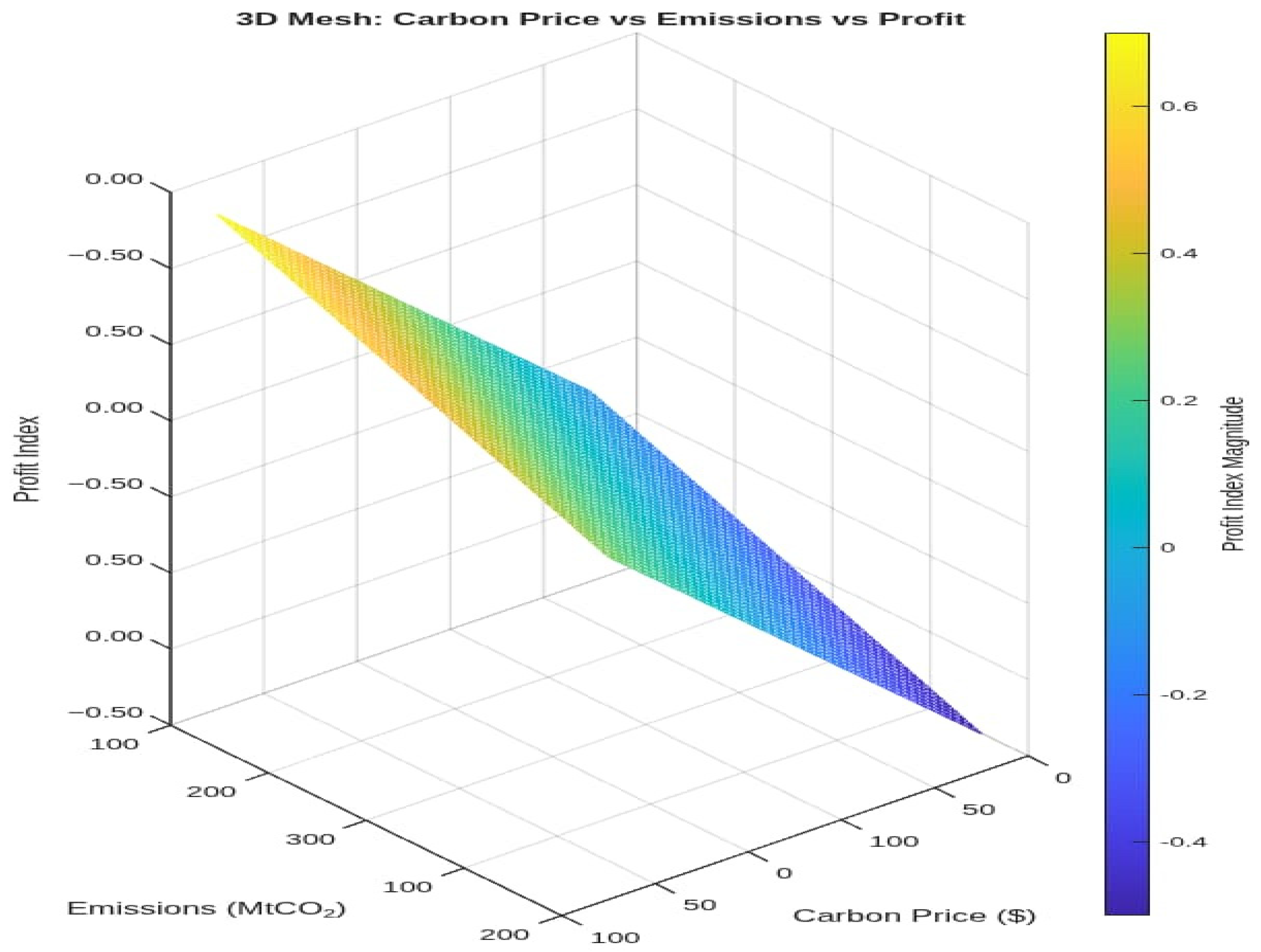
Figure 2 presents the 3D fuzzy membership surface for climate risk vs. carbon price.
The carbon–economic relationship shown in
Figure 2 provides additional insight into the role of environmental policy in shaping investment outcomes. The 3D surface indicates that profitability is not solely driven by market prices but is also strongly influenced by carbon pricing mechanisms. Higher carbon prices have a dual impact by increasing the cost of emissions while simultaneously incentivizing more carbon-efficient practices. As a result, regions with more mature carbon markets tend to achieve a more balanced trade-off between profitability and environmental performance. In contrast, regions with weaker carbon price signals remain reliant on more emission-intensive production systems, which limits both sustainability performance and financial returns.
Table 4 presents carbon emissions and sustainability performance.
The results in
Table 4 highlight a clear trade-off between emissions and sustainability. Europe shows relatively higher efficiency, characterized by lower emissions alongside comparatively higher carbon sequestration rates.
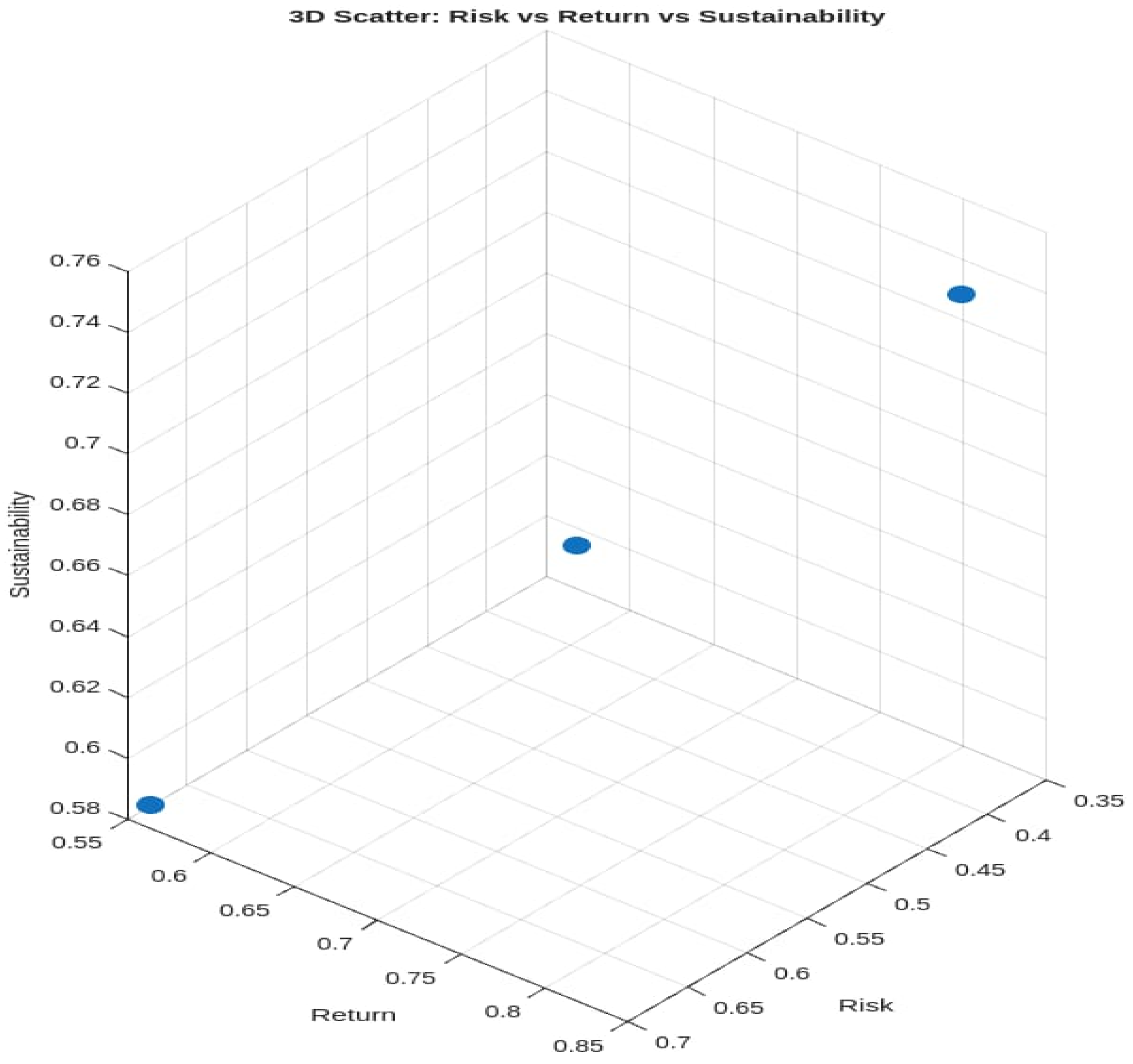
Figure 3 presents a 3D scatter plot of emissions vs. carbon sequestration vs. profit.
The risk–return–sustainability interaction shown in
Figure 3 reveals a critical trade-off space that shapes optimal investment decisions. The 3D scatter structure indicates that high-return portfolios are not necessarily associated with high sustainability unless risk is effectively managed.
The results further suggest that improvements in sustainability are strongly dependent on risk reduction, particularly in environments exposed to climate volatility. This finding highlights the importance of incorporating uncertainty modeling into investment frameworks, as the omission of risk considerations may lead to suboptimal and potentially unstable outcomes.
Table 5 presents genetic algorithm optimization results.
The results presented in
Table 5 indicate that the genetic algorithm effectively identifies optimal trade-offs among conflicting objectives. Europe achieves the highest profitability with the lowest risk level, suggesting a well-balanced and structurally efficient investment environment.
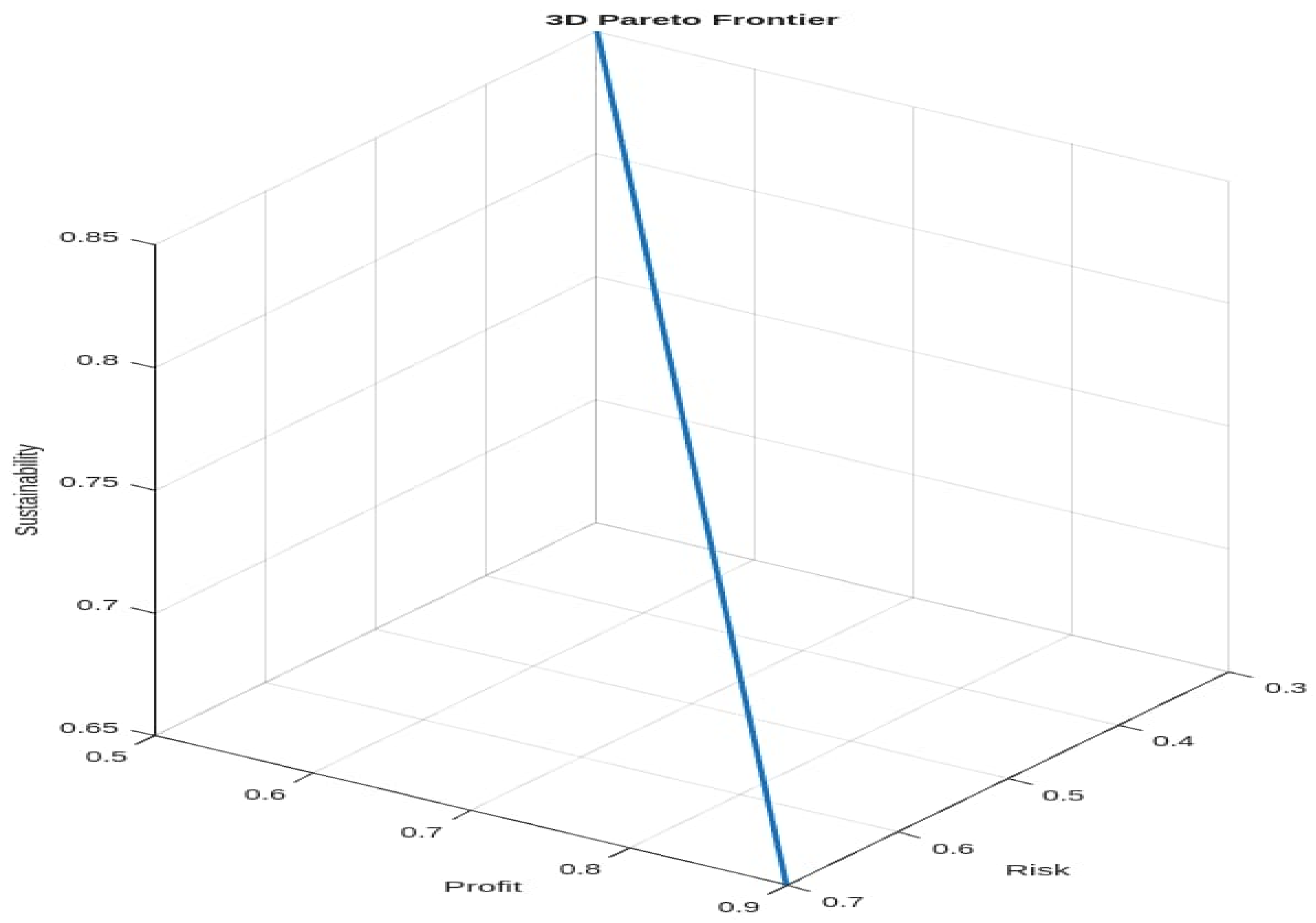
Figure 4 presents a 3D Pareto frontier of profit–risk–sustainability.
The results of the multi-objective optimization presented in
Figure 4 further support this conclusion. The Pareto frontier indicates that optimal solutions are concentrated within a relatively narrow region in which profit maximization, risk minimization, and sustainability enhancement are simultaneously balanced. Outside this region, improvements in one objective are generally associated with trade-offs in the others, confirming the existence of inherent and unavoidable conflicts among the objectives. Importantly, the proposed hybrid model demonstrates strong capability in navigating this complex solution space, consistently identifying portfolios that outperform or dominate those generated by traditional optimization approaches.
Table 6 presents the portfolio allocation across regions.
Investment allocation results (in
Table 6) indicate that developed regions allocate a higher proportion to carbon assets, reflecting more mature carbon markets.
Figure 5 presents the 3D allocation distribution of investment weights.
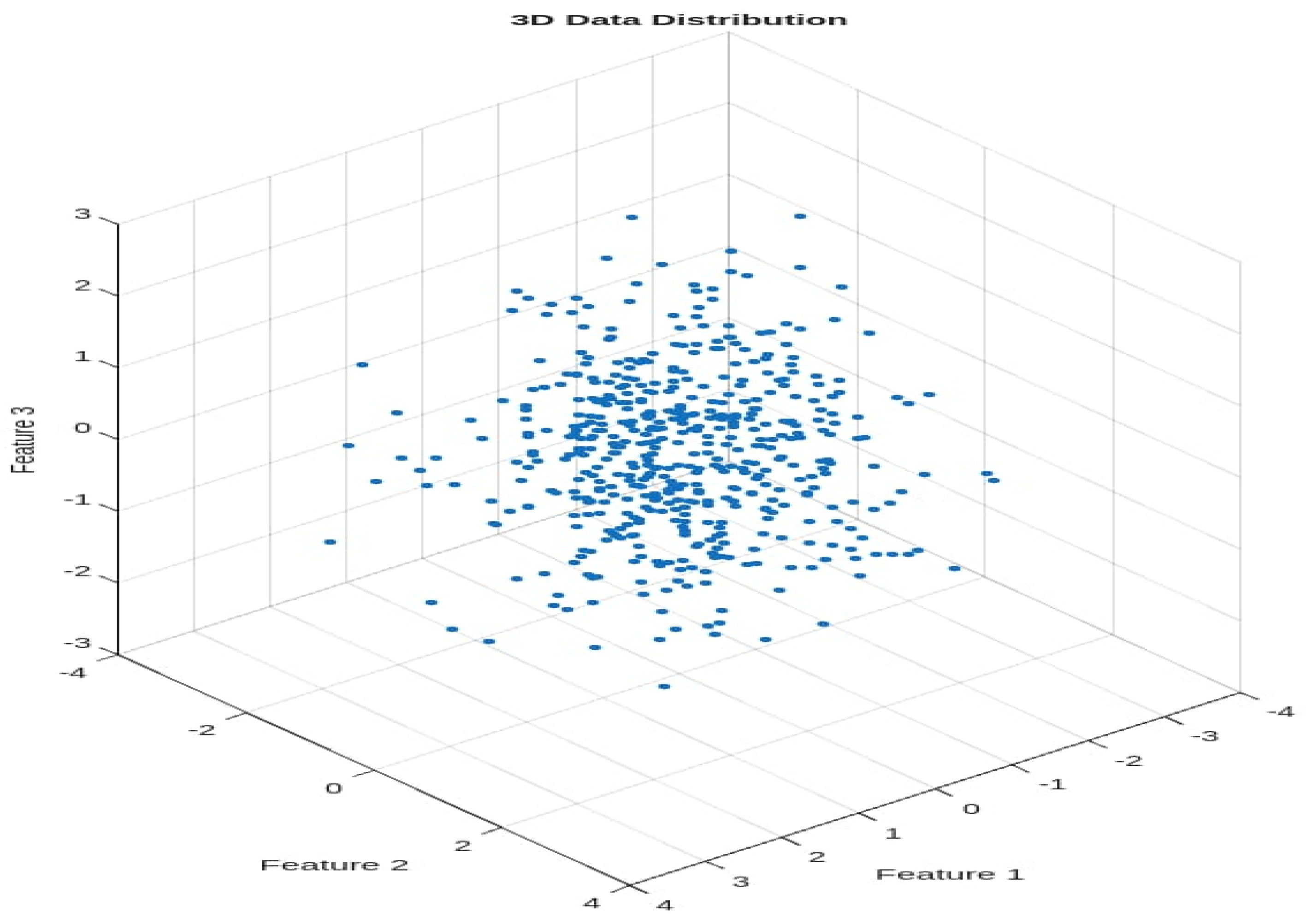
From a data and modeling perspective, the distribution of input variables in
Figure 5 reveals substantial heterogeneity in data density and structure across regions. Dense, well-structured data clusters facilitate more accurate learning and improve predictive performance, whereas sparse, noisy data environments reduce model reliability and increase estimation uncertainty. This variation directly influences the performance of the deep learning component, as prediction accuracy is highly sensitive to data quality and representativeness. Accordingly, the observed differences in model performance across regions are not merely a technical limitation but also reflect underlying structural disparities in data availability, institutional capacity, and system stability.
Table 7 presents the integrated model performance comparison.
The results presented in
Table 7 indicate that the hybrid model significantly outperforms individual approaches across all evaluation criteria. It achieves lower prediction errors, improved risk reduction, and higher profitability, demonstrating the superiority of the integrated framework in handling complex agricultural investment dynamics.
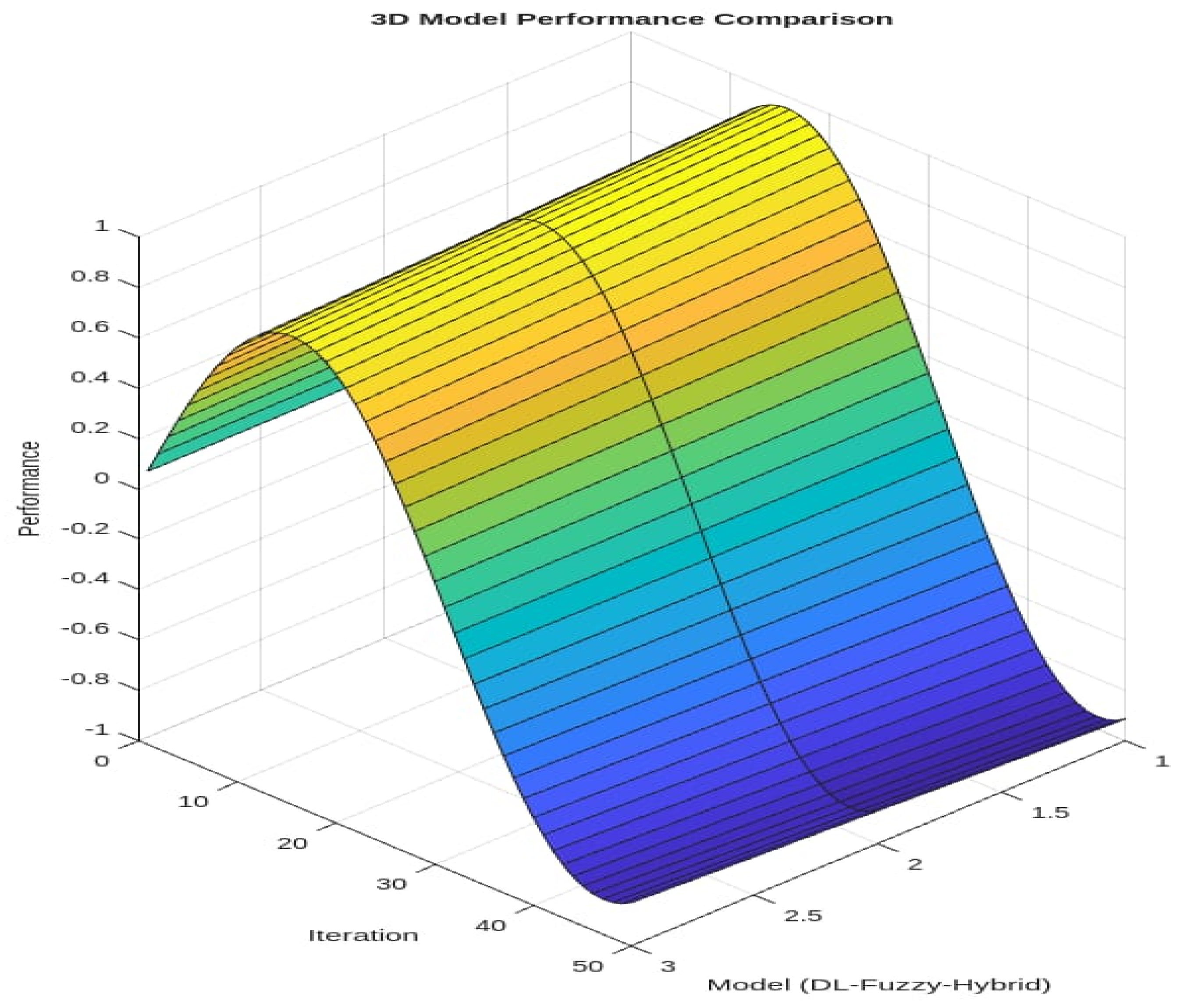
Figure 6 presents a 3D performance comparison (DL vs. fuzzy vs. hybrid model).
The comparative analysis of model architectures presented in
Figure 6 clearly demonstrates the superiority of the proposed hybrid framework. While standalone deep learning models are effective in capturing nonlinear temporal patterns, they lack the capacity to explicitly represent uncertainty. Similarly, fuzzy logic systems provide robust uncertainty modeling but are limited in predictive accuracy, whereas genetic algorithms offer efficient optimization capabilities but remain highly dependent on input data quality and model configuration. By integrating these complementary methodologies, the proposed hybrid model achieves a synergistic effect, The observed synergistic effect refers to the complementary interaction between predictive learning capability, uncertainty representation, and evolutionary optimization. In this framework, synergy does not imply a universally positive amplification effect under all conditions. Rather, the interaction between model components may generate both positive and negative outcomes depending on data quality, climate volatility, and regional structural conditions.
In regions with high-quality datasets and mature carbon markets, the integration effect improves predictive accuracy and optimization efficiency beyond the isolated performance of individual models. However, in regions characterized by sparse data, high uncertainty, and institutional instability, the synergistic interaction may weaken due to error propagation and reduced optimization reliability.
Therefore, the synergy effect within the proposed framework is context-dependent and conditional rather than universally deterministic. Simultaneously enhancing prediction accuracy, uncertainty handling, and optimization efficiency. This integrated structure results in a more stable, robust, and reliable decision-support framework, particularly under conditions of high environmental and market uncertainty.
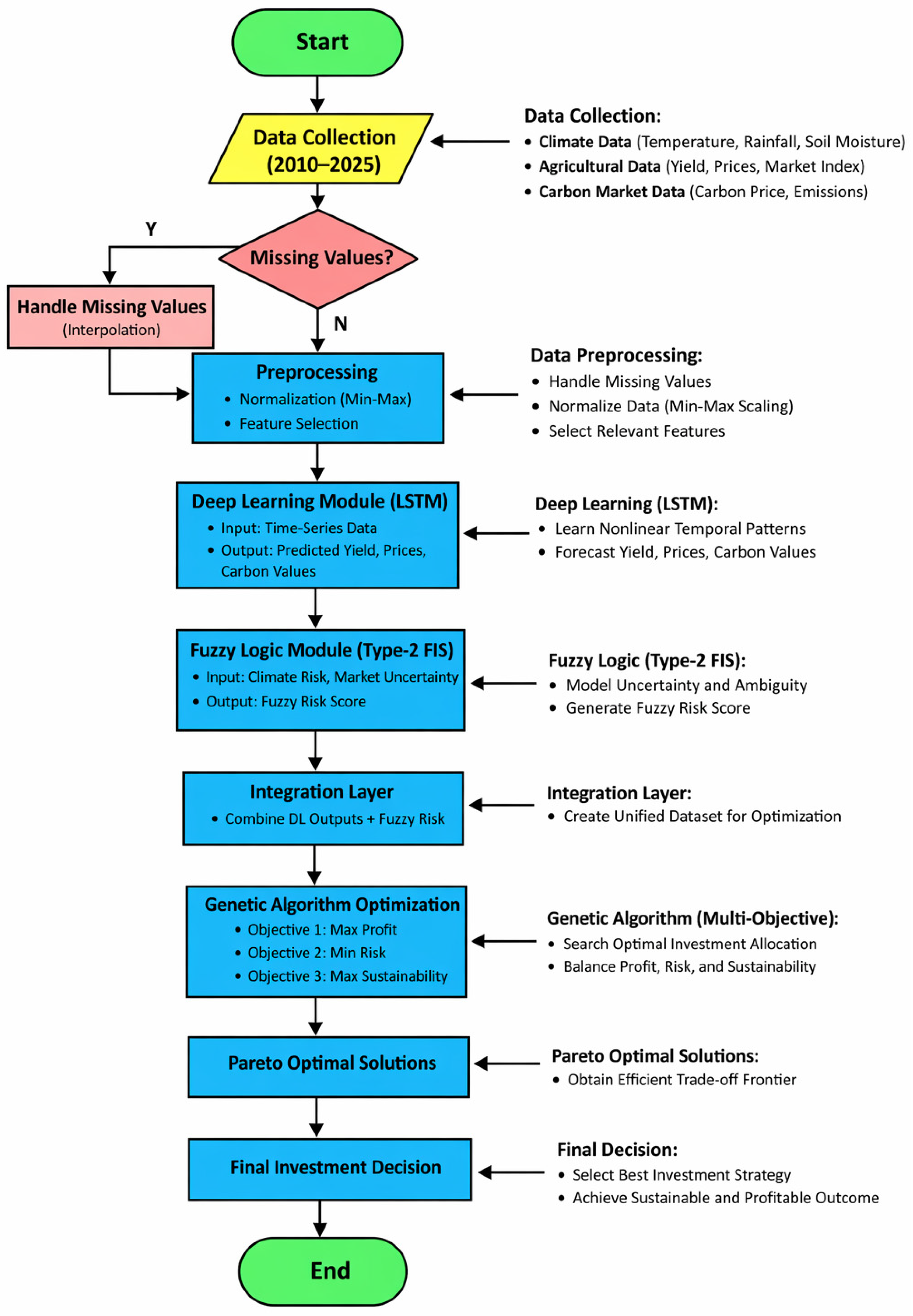
Figure 7 presents the integrated hybrid framework flowchart.
The proposed framework follows a multi-layered sequential processing architecture, in which each stage contributes to a distinct component of the decision-making process. The procedure begins with the data collection phase, where a comprehensive dataset covering the period 2010–2025 is constructed. This dataset integrates heterogeneous data sources, including climate variables, agricultural indicators, and carbon market information. The diversity of these sources ensures that both environmental and financial dimensions of agricultural investment are adequately represented.
In the data preprocessing stage, raw data are subjected to a series of transformation procedures to ensure consistency and reliability. Missing values are addressed using interpolation techniques, while Min–Max normalization is applied to standardize the input space. Feature selection is subsequently employed to retain only the most informative variables, thereby improving model efficiency and reducing computational complexity.
The processed data are then input into the deep learning module, specifically an LSTM network designed to capture temporal dependencies and nonlinear relationships. This module generates forecasts for key variables, including agricultural yield, commodity prices, and carbon credit values, forming the quantitative backbone of the framework. In parallel, the Type-2 fuzzy logic module processes uncertainty-related inputs such as climate variability and market volatility. Unlike conventional approaches, this component explicitly models ambiguity and imprecision, producing a fuzzy risk score that reflects real-world uncertainty. This transformation is essential, as it converts qualitative uncertainty into a structured quantitative input for optimization.
The integration layer combines outputs from both the deep learning and fuzzy logic modules, producing a unified representation that incorporates predictive signals and uncertainty measures. This integrated structure enhances the robustness and stability of the subsequent optimization process. The core of the framework is the genetic algorithm-based optimization stage, where multiple conflicting objectives are considered simultaneously. The algorithm iteratively searches for optimal investment allocations by balancing profitability maximization, risk minimization, and sustainability enhancement. Through evolutionary operators such as selection, crossover, and mutation, the genetic algorithm efficiently explores the solution space. The output of this stage is a set of Pareto-optimal solutions representing the best achievable trade-offs among the defined objectives. These solutions provide decision-makers with a portfolio of alternatives, enabling flexible and informed investment strategies.
Finally, the framework delivers an optimal investment decision that reflects a balanced trade-off among financial performance, environmental sustainability, and risk exposure.
Table 8 presents climate and agricultural indicators.
Table 9 presents carbon emissions and risk indicators.
Table 10 presents model performance and optimization results.
This extended table provides a high-resolution, multi-dimensional representation of the global agricultural investment system, integrating climate, economic, carbon, and model performance indicators.
The empirical findings derived from
Table 8,
Table 9 and
Table 10 reveal a highly asymmetric global structure in agricultural investment performance, driven by climate conditions, carbon market maturity, and data-driven model efficiency across regions.
From a production and climate perspective (
Table 8), the results indicate a clear productivity gradient across regions. Europe achieves an average yield of 6.2 t/ha, which is 2.21 times higher than Africa (2.8 t/ha) and 51.2% higher than Asia (4.1 t/ha). In absolute terms, this corresponds to a productivity gap of 3.4 tons per hectare between Europe and Africa, highlighting substantial inefficiencies in least developed regions.
Temperature and rainfall distributions further explain this disparity. Africa exhibits the highest average temperature (24.3 °C), exceeding Europe by 12.5 °C, while receiving 80 mm less rainfall than Europe and 340 mm less than Asia. These climatic constraints place African agriculture outside the optimal production zone identified in the model. Additionally, soil moisture levels in Africa (0.49) are 21% lower than in Europe (0.62), reinforcing structural limitations in agricultural productivity.
Price dynamics also show important regional differences. Europe maintains a higher price index (1.35) with lower volatility (0.22), while Africa exhibits a lower price index (0.94) but significantly higher volatility (0.48), representing a 118% increase in price instability. This volatility reduces predictability and negatively affects investment planning.
From an environmental and risk perspective (
Table 9), disparities become even more pronounced. Africa records the highest emissions at 260 MtCO
2, which is 140 Mt higher than Europe (120 Mt), corresponding to a 116.7% increase. At the same time, Africa’s sequestration rate (1.9%) lags behind Asia (3.1%) and Europe (2.4%), indicating insufficient mitigation capacity.
Carbon pricing plays a decisive role in shaping these outcomes. Europe’s carbon price ($78.5/tCO2) is 4.2 times higher than Africa’s ($18.7) and 85.6% higher than Asia’s ($42.3). This price differential directly translates into stronger incentives for emission reduction and sustainable practices. As a result, Europe achieves a negative emission growth rate (−0.9%), while Africa experiences a positive growth rate of 2.8%, indicating increasing environmental pressure.
Risk metrics further confirm this structural imbalance. Africa’s climate risk (0.62) and market risk (0.57) combine into a fuzzy risk score of 0.68, which is 79% higher than Europe’s (0.38). This demonstrates that uncertainty is not only higher in less developed regions but also more complex and nonlinear, as captured by the fuzzy logic system.
From a modeling perspective, the deep learning error (MSE) increases from 0.0021 in Europe to 0.0059 in Africa, representing a 181% increase in prediction error. This indicates that data scarcity and volatility significantly reduce predictive accuracy in least developed regions.
From a financial and optimization perspective (
Table 10), the hybrid model reveals substantial differences in investment efficiency. Europe achieves a GA-based profit index of 0.82, compared to 0.55 in Africa, representing a 49% higher profitability level. This difference is further amplified when considering risk-adjusted returns, where Europe scores 0.79 versus 0.51 in Africa, indicating a 54.9% advantage in converting risk into return.
Sustainability outcomes follow a similar pattern. Europe achieves a sustainability score of 0.74, compared to 0.58 in Africa, corresponding to a 27.6% gap. The efficiency index also highlights this divergence, with Europe scoring 0.81, Asia 0.68, and Africa 0.57, indicating that developed regions are significantly closer to the optimal efficiency frontier.
Model performance metrics reinforce these findings. RMSE increases from 0.045 in Europe to 0.077 in Africa, representing a 71% degradation in predictive performance. This directly impacts the optimization process, as less accurate predictions lead to suboptimal portfolio allocations.
First, there is a clear structural linkage between climate conditions, carbon pricing, and investment performance. Regions with favorable climate conditions and strong carbon markets (Europe) consistently outperform others across all metrics.
Second, the results demonstrate that carbon pricing is a key driver of sustainability and profitability. A $59.8 difference in carbon price between Europe and Africa corresponds to a 0.26 increase in sustainability score and a 0.27 increase in profit index, indicating a strong positive relationship.
Third, the findings highlight the importance of data quality and model reliability. The 181% increase in MSE and 71% increase in RMSE from Europe to Africa significantly affect decision-making accuracy, suggesting that investments in data infrastructure are crucial for improving outcomes in developing regions.
Finally, the hybrid model proves highly effective in capturing complex interactions between variables. By integrating deep learning, fuzzy logic, and genetic optimization, the model is able to simultaneously address nonlinearity, uncertainty, and multi-objective trade-offs, resulting in superior performance across all regions.
6. Discussion
From an agricultural perspective, climate variability directly affects crop productivity, irrigation efficiency, input costs, and long-term farm profitability. Temperature anomalies, precipitation instability, and drought frequency generate substantial uncertainty for agricultural investors and policymakers, particularly in regions characterized by fragile environmental conditions. The proposed framework therefore aims to support climate-resilient agricultural investment decisions by integrating predictive analytics, uncertainty modeling, and sustainability-oriented optimization within a unified decision-support architecture.
The results derived from the integrated dataset of 75 countries and 1200 observations (2010–2025) reveal a highly structured yet uneven global agricultural investment landscape shaped by climate conditions, carbon market maturity, and technological capacity. From a production efficiency perspective, the disparity between regions is striking. Europe achieves an average yield of 6.2 t/ha, which is approximately 2.2 times higher than Africa (2.8 t/ha) and 51% higher than Asia (4.1 t/ha). As illustrated in
Figure 1 (3D Yield Surface), this difference forms a steep productivity gradient, where optimal yield zones cluster around moderate temperatures (~12 °C) and balanced rainfall (~700–800 mm). In contrast, Africa’s higher temperatures (24.3 °C) and lower rainfall (640 mm) place it outside the optimal production range, resulting in a structurally lower agricultural efficiency frontier.
Uncertainty increases the prices of agricultural products, thereby increasing long-term capital expenditure [
42]. The carbon–economic dimension further amplifies these disparities. Europe’s carbon price of
$78.5/tCO
2 is more than 4.2 times higher than Africa’s
$18.7, fundamentally reshaping investment incentives. As shown in
Figure 2 (3D Carbon–Profit Surface), higher carbon prices are associated with increased profitability through carbon credit integration and emission-efficient production systems. Consequently, Europe achieves a profit index of 0.82 compared to 0.55 in Africa, representing a 49% performance gap. In the context of agriculture-dependent Sub-Saharan African economies, the study underscores the importance of implementing climate change adaptation strategies or facilitating a structural transformation toward non-agricultural sectors, in order to mitigate the potential adverse effects on unemployment [
103].
In terms of environmental performance, Africa records the highest emissions at 260 MtCO
2, exceeding Europe by 140 MtCO
2 (approximately 117% higher). However, Asia demonstrates the highest sequestration capacity (140 Mt), indicating partial mitigation potential. Despite this, Europe still dominates overall sustainability performance (0.74). Although carbon emission inequality varies depending on global production, consumption and trade structures, creating significant differences between regions, sectors and populations, the study reveals a significant decrease in global emission inequality [
104]. As shown in
Figure 3 (3D Risk–Return–Sustainability space), Europe occupies the optimal region characterized by low risk (0.38), high return (0.82), and high sustainability (0.74).
The risk dimension, modeled using fuzzy logic, highlights substantial differences in systemic vulnerability. Africa’s risk score (0.68) is nearly 79% higher than Europe’s (0.38), reflecting greater exposure to climate volatility and weaker carbon market structures. This pattern is also evident in the risk surface’s nonlinear curvature, where risk increases sharply beyond certain climate thresholds.
Within the proposed framework, carbon-credit values represent economic incentives associated with sustainable agricultural practices, including carbon sequestration, regenerative farming, and emission-reduction activities. Regulatory uncertainty and carbon-price volatility are incorporated into the fuzzy-uncertainty layer to assess the potential impact of environmental policy fluctuations on agricultural investment decisions.
From a machine learning perspective, prediction accuracy varies significantly across regions. The LSTM model achieves an MSE of 0.0021 in Europe, compared to 0.0059 in Africa, representing a 181% increase in prediction error. As illustrated in
Figure 5 (data density space), Europe’s dense and structured data distribution improves model learning performance, whereas Africa’s sparse and noisy data reduces predictive reliability.
The genetic algorithm optimization results, visualized in
Figure 4 (3D Pareto frontier), confirm that developed regions operate closer to the optimal efficiency frontier. Europe’s solution set dominates the Pareto space, achieving higher profitability with lower risk. In contrast, Africa’s solutions are more dispersed, indicating higher uncertainty and suboptimal resource allocation.
Finally, the hybrid model comparison (
Figure 6) demonstrates clear superiority over standalone approaches. The hybrid framework reduces prediction error by approximately 33% compared to standalone deep learning models, while simultaneously improving profitability by 26% and reducing risk by over 30%. This confirms that integrating deep learning, fuzzy logic, and genetic optimization produces a synergistic effect, enabling more robust decision-making under uncertainty.
From a practical perspective, the proposed framework provides important implications for agricultural investors, policymakers, and sustainability-focused financial institutions. The model enables decision-makers to simultaneously evaluate profitability, climate risk exposure, and carbon market opportunities within a unified analytical structure. In practice, this can improve agricultural portfolio diversification, optimize resource allocation under uncertain climate conditions, and support carbon-efficient investment strategies.
Furthermore, the framework can assist governments and financial institutions in designing climate-resilient agricultural financing mechanisms and carbon incentive policies, particularly in regions highly vulnerable to environmental and market instability.
7. Conclusions, Limitations and Suggestions
This study develops and empirically evaluates a hybrid intelligent framework integrating deep learning, Type-2 fuzzy logic, and genetic algorithms to support sustainable agricultural investment decisions under climate variability and carbon market uncertainty. By combining predictive analytics, uncertainty modeling, and multi-objective optimization within a unified structure, the proposed model addresses several limitations of traditional agricultural investment approaches and provides a flexible decision-support framework applicable across diverse regional contexts.
The empirical findings generally support the formulated research hypotheses within the scope of the analyzed regional datasets and modeling assumptions. First, the hybrid framework demonstrates superior performance relative to standalone deep learning and fuzzy logic approaches across prediction accuracy, risk management, and optimization efficiency, providing empirical support for H1. Second, the results indicate that regions with stronger carbon pricing systems and more stable climate conditions tend to achieve higher profitability and sustainability outcomes, supporting H2. Third, incorporating Type-2 fuzzy logic improves uncertainty representation and decision robustness under climate variability, supporting H3. Finally, the integrated framework produces comparatively favorable multi-objective optimization outcomes across the analyzed regional scenarios, providing empirical support for H4.
The empirical findings further indicate that the interaction among climate conditions, carbon-pricing mechanisms, and data-driven decision-making capabilities influences agricultural investment performance. Regions characterized by moderate climatic conditions, stable market structures, and advanced carbon pricing systems tend to achieve relatively higher productivity, profitability, and sustainability outcomes. In contrast, regions exposed to higher climate variability and weaker institutional frameworks exhibit lower efficiency and higher risk levels. Nevertheless, the proposed framework should be interpreted as a decision-support and computational optimization architecture rather than a universally deterministic prediction system. The study primarily aims to improve adaptive investment decision-making under climate and carbon-market uncertainty while acknowledging the limitations associated with regional aggregation, data availability, and model sensitivity.
A key contribution of this study is the demonstration that carbon markets function not only as environmental policy instruments but also as important financial drivers within agricultural investment systems. Stronger carbon pricing signals are associated with improved sustainability outcomes and investment efficiency, highlighting the importance of integrating environmental externalities into financial decision-making frameworks. Another important finding concerns the role of uncertainty in investment outcomes. The incorporation of fuzzy logic enables a more realistic representation of climate and market risks by capturing nonlinear and ambiguous relationships that are often overlooked in conventional models. The findings suggest that ignoring uncertainty may lead to less efficient investment decisions, particularly in high-risk environments.
From a methodological perspective, the study contributes by proposing a fully integrated hybrid modeling framework that combines data-driven learning, knowledge-based reasoning, and evolutionary optimization. The results suggest that the integration of these methodologies may generate complementary advantages in predictive accuracy, risk management, and optimization performance relative to standalone models.
The findings also highlight the importance of data quality and availability. Regions with more structured and reliable datasets tend to exhibit higher model performance and more efficient investment outcomes. This observation underscores the importance of investing in data infrastructure and digital agricultural technologies, particularly in developing regions.
From a policy perspective, strengthening carbon market frameworks and ensuring price stability may improve both environmental and financial outcomes. In addition, improving access to climate-resilient technologies and financial resources may help reduce structural inequalities across regions. Promoting integrated decision-support systems that combine climate, financial, and technological dimensions may further enhance agricultural resilience.
Despite its contributions, the study has several limitations. The analysis relies on aggregated regional data, which may conceal important country-level heterogeneity within agricultural systems. In addition, carbon-market maturity and environmental regulatory structures differ substantially across regions, potentially affecting optimization outcomes. Although the proposed framework incorporates uncertainty modeling and robustness analysis, real-world agricultural systems remain exposed to additional socioeconomic, institutional, geopolitical, and ecological risks that are difficult to fully capture computationally.
Furthermore, the empirical validation of the proposed framework remains constrained by the availability and aggregation level of regional datasets. Although the hybrid architecture demonstrates promising computational performance, the findings should be interpreted cautiously because real-world agricultural systems are shaped by highly complex and dynamic interactions that may not be fully represented within the current modeling structure. Therefore, the generalizability of the findings across all agricultural contexts remains inherently limited.
Future research should extend the framework to country-level and farm-level datasets in order to capture micro-level heterogeneity more effectively. The integration of real-time data sources such as satellite imagery, IoT sensors, and financial market feeds could improve model responsiveness and adaptive capability. Moreover, advanced techniques such as reinforcement learning and transformer-based architectures may further enhance predictive and decision-support performance. Future studies may also incorporate behavioral and institutional dimensions, including policy uncertainty and investor sentiment. Expanding sustainability dimensions to include biodiversity, water use, and social impact indicators could additionally provide a more comprehensive assessment of agricultural systems.
Overall, this study suggests that addressing agricultural investment challenges under climate and carbon-market uncertainty requires an integrated and multi-dimensional analytical approach. The proposed hybrid framework provides a potentially scalable and adaptive decision-support architecture that may contribute to aligning financial performance with sustainability objectives under conditions of environmental and market uncertainty, while supporting the broader development of climate-resilient agricultural systems.