Article

Transcriptomic Insights into the Effects of Iron, Potassium, and Manganese on Mycelial Growth of Lentinula edodes


1
Yantai Institute, China Agricultural University, Yantai 264670, China
2
Yantai Edible and Medicinal Mushroom Technology Innovation Center, Yantai 264670, China
*
Author to whom correspondence should be addressed.
These authors contributed equally to this work.
Agriculture 2026, 16(10), 1069; https://doi.org/10.3390/agriculture16101069
Submission received: 19 April 2026 / Revised: 7 May 2026 / Accepted: 11 May 2026 / Published: 13 May 2026
(This article belongs to the Section Crop Production)

Abstract

Lentinula edodes (L. edodes) is a significant edible and medicinal mushroom with essential nutrient elements for its growth, including Fe2+, K+, and Mn2+. However, the molecular mechanisms by which these metal ions regulate the mycelial growth of L. edodes have been poorly elucidated at the transcriptomic level. In this study, plate culture was performed using concentration gradients to screen for optimal concentrations. Based on the plate culture assay results, L. edodes strain 1303 was treated with 40 μg/mL Fe2+, 1200 μg/mL K+, and 50 μg/mL Mn2+, with a control group (CK) without additional metal ion supplementation. Three biological replicates were set for each treatment, and the mycelia were collected for transcriptome sequencing (RNA-seq). The results showed that Fe2+ at concentrations above 20 µg/mL significantly inhibited mycelial growth; K+ at 1200 µg/mL and Mn2+ at 50 µg/mL significantly promoted mycelial growth, with increases in mycelial growth radius on day 7 of 21.22% and 10.77%, respectively, compared with the control group (p < 0.05). Transcriptomic analysis revealed that Fe2+ was associated with impaired protein folding-related functions and suppressed material and energy metabolism, which may contribute to the inhibition of mycelial growth. Mycelial growth promotion by K+ was associated with enhanced detoxification and secondary metabolism, as well as suggested enrichment of mitochondrial function and the oxidative phosphorylation pathway. Mn2+ may contribute to mycelial growth via mechanisms related to DNA repair and recombination, cell cycle progression, and detoxification. This study elucidates the differential gene expression patterns and regulatory effects of the three exogenous metal ions on the mycelial growth of L. edodes at the transcriptomic level, offering a rationale basis for mineral nutrition optimization during the mycelial stage. However, these interpretations are based on transcriptomic data only and lack direct evidence from ion uptake, proteomic, or metabolomic validation. Future studies will focus on validating these results through multilevel omics and functional experiments.

1. Introduction

Lentinula edodes (L. edodes) is a prominent edible fungus in the phylum Basidiomycota with thick, fleshy fruiting bodies that have a unique flavor and are rich in various bioactive components, including polysaccharides, proteins, minerals, and ergosterol [1,2,3]. It contains nearly all amino acids considered essential for humans [4]. It offers both nutritional and medicinal benefits with multiple biological effects, including anti-tumor activity, regulation of cardiovascular functions, and immune system enhancement [1,5,6], and is cultivated widely across the globe [2].
Edible fungi possess a high capacity for absorbing metal ions from the culture medium due to their ability to bioaccumulate metal ions and convert them into bioavailable forms from the culture medium via mycelia [3,7,8]. Research indicates that edible fungi bioaccumulate essential elements from the culture medium into their edible tissues and that their size, shape, texture, or color, yield loss, fruiting body damage, or a reduction in biological efficiency are not altered by growth in the medium with appropriate element concentrations [9,10,11]. Studies have confirmed significant regulatory effects of common metal ions such as Fe2+ [8,12], Mn2+ [13,14,15], Mg2+ [16,17], and Zn2+ [9,10,17] on the mycelia, fruiting bodies, and nutritional components of edible fungi, including Pleurotus ostreatus, Antrodia cinnamomea, Ganoderma lucidum, and Pleurotus eryngii, and an obvious concentration-dependent pattern is observed in the effects of most metal ions.
Fe2+ play an important role in the growth and development of most filamentous fungi. Mycelial growth and sporulation of A. cinnamomea were significantly promoted by 0.1 mmol/L Fe2+, whereas concentrations above 0.4 mmol/L markedly inhibited its growth [12]. The significant inhibitory effect of 50 mg/L Fe2+ on L. edodes strains U6-11 and U6-12 was demonstrated by Umeo, S. H. et al. [6]. Thus, optimizing Fe2+ dosage and elucidating its regulatory roles are essential. In most fungi, mitochondria contain manganese-cofactored superoxide dismutase that stimulates catalase activity to efficiently scavenge superoxide anions [13]. In edible mushrooms, Mn2+ further modulates substrate biosynthesis, catabolism, and mitochondrial respiration, while optimal concentrations support mycelial growth and fruiting body production in species including Ganoderma lucidum and Pleurotus eryngii [13,14,15]. K+ performs essential physiological functions in organisms and ranks among the most abundant mineral elements in edible fungi. [18]. Previous studies have demonstrated that K+ reduces mitochondrial matrix pH, inhibits ROS production, enhances inner membrane polarization, and promotes ATP synthesis [19]. However, such research remains scarce in edible fungi. It is crucial to further investigate the regulatory mechanisms of these metal ions in edible fungi.
The response mechanisms of edible fungi to environmental factors and exogenous nutrients have been widely elucidated by transcriptomic technology [20,21,22,23,24]. However, transcriptomic studies on the regulation of L. edodes mycelial growth by metal ions remain insufficient, and the key regulatory genes and core metabolic pathways governing mycelial growth in L. edodes under diverse metal ions have not been precisely identified [2]. Based on this, this study systematically established concentration-gradient treatments for three metal ions (Fe2+, K+, and Mn2+) and determined the optimal concentrations of each ion for regulating L. edodes mycelial growth through plate culture experiments. Moreover, RNA sequencing (RNA-seq) was performed, and, together with differential expression and functional enrichment analyses, the regulatory effects by which different metal ions regulate L. edodes mycelial growth were interpreted at the transcriptomic level to identify key regulatory genes and core metabolic pathways. This study aims to advance the molecular theory of exogenous metal ion-regulated growth and development in edible fungi and to lay a scientific foundation for optimizing mineral nutrient levels in the culture medium and for developing high-yield, high-quality cultivation techniques for L. edodes.

2. Materials and Methods

2.1. Materials

2.1.1. Strain

Lentinula edodes strain 1303: Obtained from the Shandong Academy of Agricultural Sciences, and preserved at 4 °C in the Laboratory of Microbiology and Food, Yantai Institute of China Agricultural University.

2.1.2. Main Reagents

Potato Dextrose Agar (PDA) medium: Hangzhou Microbial Reagent Co., Ltd., Hangzhou, China; Potato Dextrose Broth (PDB) medium: Shanghai Boshui Biotechnology Co., Ltd., Shanghai, China; FeSO4·7H2O: Tianjin Beichen Fangzheng Reagent Factory, Tianjin, China; MnSO4·H2O: Shanghai Aladdin Biochemical Technology Co., Ltd., Shanghai, China; K2SO4: Tianjin Yongda Chemical Reagent Co., Ltd., Tianjin, China.

2.1.3. Reference Genome

Downloaded from the NCBI database (https://www.ncbi.nlm.nih.gov/datasets/genome/GCF_021015755.1/ (accessed on 10 December 2025)).

2.2. Methods

2.2.1. Plate Culture Assay

The strain was activated by incubation at 24 °C for 7 days after inoculating on PDA medium. PDA media were prepared with concentration gradients of Fe2+ (0, 10, 20, 30, 40 µg/mL), K+ (0, 400, 800, 1200, 1600, 2000 µg/mL), and Mn2+ (0, 50, 100, 150, 200, 250 µg/mL), respectively. Conventional plate inoculation of L. edodes was performed after autoclaving at 121 °C for 20 min [25]. K+ and Mn2+ were added directly to the medium before autoclaving at 121 °C for 20 min. Fe2+ stock solution was filter-sterilized and added to the cooled medium after autoclaving to prevent oxidation of Fe2+ [6]. Inoculation was completed within 1 h after the medium solidified, and all plates were incubated at 24 °C in the dark.
From day 3 to day 7 of incubation, the colony diameter was measured daily via the cross method [26], and the growth radius was calculated as (measured colony diameter—inoculum disc diameter)/2 accordingly. Mycelial plugs of 8 mm in diameter were used as inoculum. The plates were 90 mm in diameter. All plate culture assays were performed with six replicates. The significant differences among experimental data were analyzed using Duncan’s multiple range test in SPSS 26, with a p-value < 0.05 considered statistically significant. The experimental data of all groups were processed and organized using Origin 2024.

2.2.2. Transcriptome Sequencing

Based on plate culture assay results, L. edodes mycelia were treated with 40 µg/mL Fe2+, 1200 µg/mL K+, and 50 µg/mL Mn2+, with a control group (CK) lacking additional metal-ion supplementation set up simultaneously. Mycelia were harvested for RNA-seq after 7 days of incubation in liquid medium supplemented with metal ions. Given that Fe2+ significantly inhibited mycelial growth even at low concentrations, compared with the promotive concentrations of K+ and Mn2+, we selected 40 µg/mL Fe2+ for transcriptome sequencing to identify the key genes and pathways underlying its inhibitory effect. Total RNA was extracted from the samples using the Total RNA Extractor (Trizol) kit at Shanghai Sangon Biotech Co., Ltd., Shanghai, China. RNA purity was verified by absorbance measurement, and RNA integrity was checked using 1% agarose gel electrophoresis. mRNA was enriched from total RNA using oligo(dT) magnetic beads. Three biological replicates were performed for each treatment, and transcriptome sequencing (RNA-seq) was conducted on the DNBSEQ-T7 platform (MGI, Shenzhen, China) with 150-bp paired-end reads. The raw sequence data were subjected to FastQC 0.11.2 for visual quality assessment, and clean reads were obtained using fastp 0.23.4 [27]. The clean sequence reads were aligned with the reference genome using HISAT2 2.1.0 [28], and RSeQC 2.6.1 analyzed the alignment [29].

2.2.3. Gene Expression Level Analysis

The transcriptome assembly was performed using StringTie 1.3.3b on the basis of alignment results [30], followed by a known gene model comparison with GffCompare 0.10.1 to identify novel transcriptional regions. Gene expression levels were quantified using FeatureCounts v2.0.8 with the known gene model [31], and TPM (Transcripts Per Million) was used to estimate relative gene expression and was used for expression visualization and descriptive analyses [32].

2.2.4. Differential Gene Expression and Enrichment Analyses

Differential gene expression analysis was performed using the raw read count matrix generated by FeatureCounts as input through DESeq2 1.46.0 [33], topGO 2.58.0 for Gene Ontology (GO) functional enrichment analysis (GO database: http://www.geneontology.org (accessed on 23 December 2025)), and clusterProfiler 4.14.6 for Kyoto Encyclopedia of Genes and Genomes (KEGG) pathway enrichment analysis (KEGG database: http://www.kegg.jp (accessed on 24 December 2025)). The clusterProfiler 4.14.6 and enrichplot 1.26.6 packages in R were used to perform Gene Set Enrichment Analysis (GSEA). Significantly differentially expressed genes (DEGs) were screened with thresholds of qValue < 0.05 and |log2(FoldChange)| > 1.0. For GO, KEGG, and GSEA, terms or pathways with q-value ≤ 0.05 were considered significantly enriched and selected for further analysis.

2.2.5. Quantitative Real-Time PCR (qRT-PCR) Validation

Three common DEGs were selected for qRT-PCR validation. qRT-PCR was performed using a SYBR Green I-based PCR kit on an Applied Biosystems 7500 Real-Time PCR System. The primers used are presented in Table 1. The β-tubulin 2 gene (C8R40DRAFT_1124140) was taken as the reference gene for expression normalization. Relative expression levels were calculated using the 2−ΔΔCt method. Three biological replicates were set for each treatment, with three technical replicates for each sample.

3. Results

3.1. Mycelial Growth Results

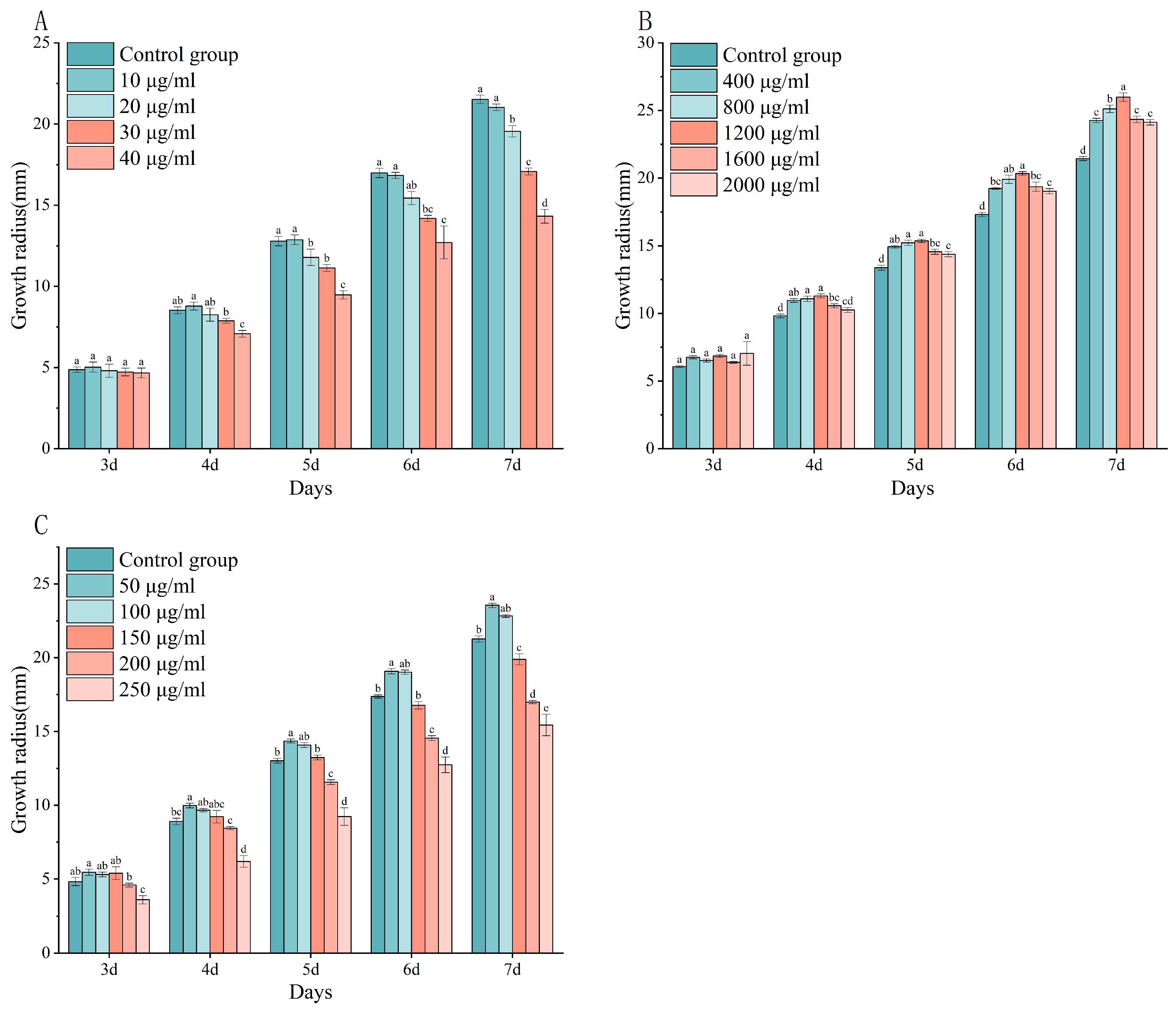
As shown in Figure 1A, Fe2+ at a concentration of 10 µg/mL had no significant effect on the mycelial growth of L. edodes, whereas at concentrations exceeding 20 µg/mL, it revealed a significant inhibitory effect, with the inhibitory efficacy intensifying as the concentration increased. At 40 µg/mL, the mycelial growth radius on day 7 of incubation decreased by 33.43% compared with the control group.
As shown in Figure 1B, the mycelial growth of L. edodes is significantly promoted by K+, with the most vigorous mycelial growth detected at a concentration of 1200 µg/mL. The mycelial growth radius was 25.99 ± 0.68 mm on day 7, an increase of 21.22% relative to the control group. Further increase in concentration deteriorated the promoting effect, yet K+ still exhibited a promotional effect even at 2000 µg/mL.
As shown in Figure 1C, the mycelial growth of L. edodes is significantly promoted by Mn2+ at concentrations of 50 µg/mL and 100 µg/mL, with the optimal effect observed at 50 µg/mL. In contrast to the control group, the mycelial growth radius reached 23.55 ± 0.37 mm on day 7 with an increase of 10.77%. An obvious inhibitory effect was observed when the concentration exceeded 150 µg/mL, and consequently, the inhibition became more prominent. Complete mean ± standard error (SE) values for all three treatment groups are presented in Supplementary Table S1.

3.2. Transcriptome Analysis

3.2.1. Raw Data and Sequencing Quality Assessment

All samples were examined and exhibited OD260/280 ratios ranging from 2.09 to 2.17. No obvious RNA degradation or genomic DNA contamination was observed by agarose gel electrophoresis. All samples were graded as class A and satisfied the quality requirements for library preparation and transcriptome sequencing. High-throughput sequencing was performed on 12 samples from four treatment groups (CK, Fe, K, Mn), with Q30 values exceeding 95% for all samples. Each sample yielded 13–16 gigabytes of high-quality sequencing data, with Q30 values all above 98%, stable GC content, and high data quality after quality control of the raw data. The alignment efficiency of each sample’s read length to the reference genome ranged from 80.93 to 84.56%. Uniquely mapped to the reference gene sequences included 79.61–83.25% of the filtered read length, and 1.11–1.40% were multi-mapped. These results indicated high-quality transcriptome sequencing data, suitable for downstream analyses (Table 2).

3.2.2. Expression Level Analysis

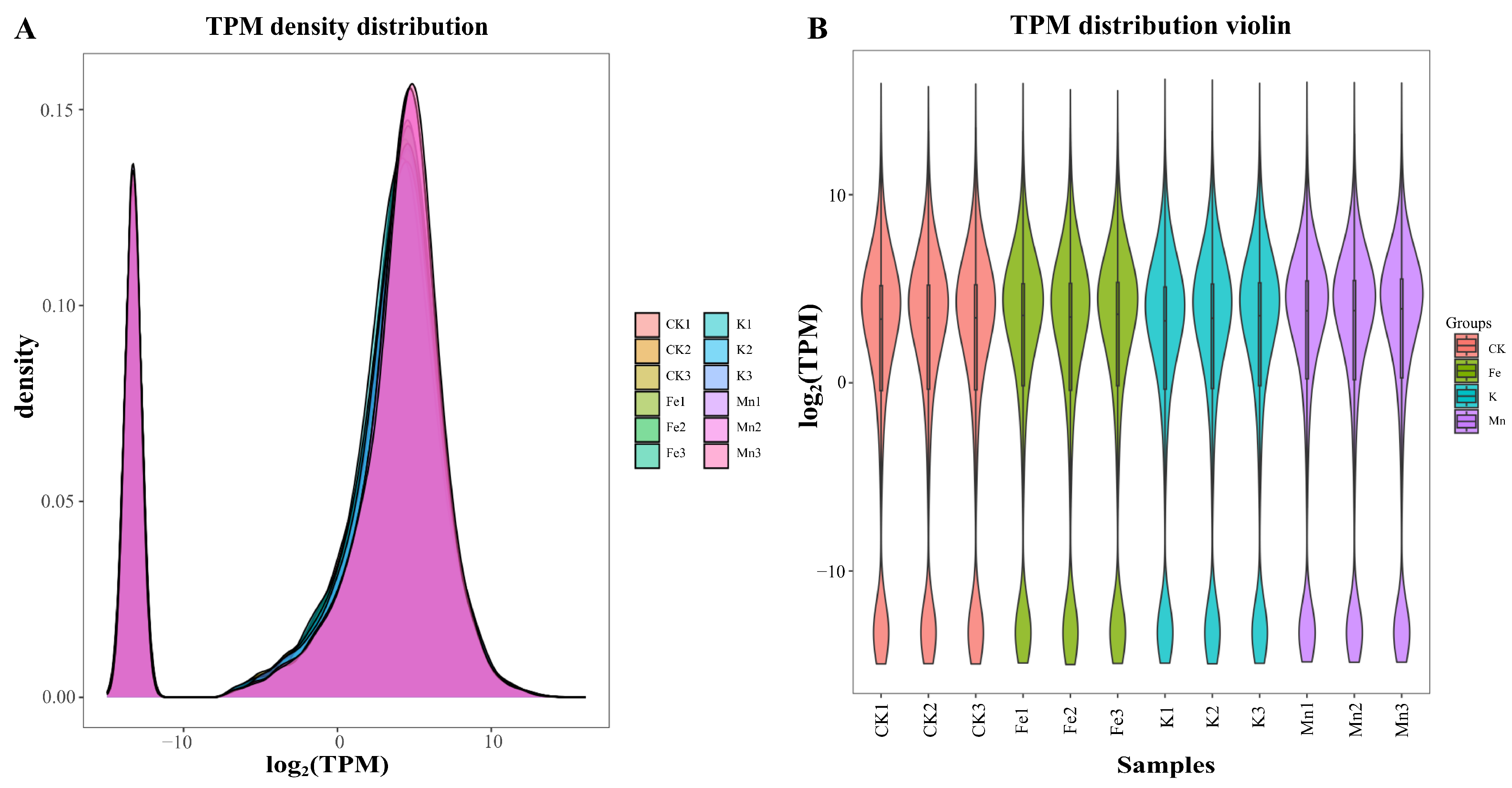
TPM values from the sequencing data for each sample were calculated, and density curves and violin plots of gene expression levels were subsequently generated (Figure 2). To avoid negative or undefined values during log2(TPM) calculation, a constant value of 1 was added to all TPM values before log2 transformation. A uniform distribution of gene expression levels across all L. edodes samples was revealed by the density curves and violin plots, with minor differences among samples, and the TPM values of most genes were concentrated in the range of 1–100 in each sample. Biological replicates had Pearson correlation coefficients above 0.94 (Supplementary Figure S1), indicating good repeatability. Samples from different treatment groups exhibited similar global expression trends, indicating that most genes remained unchanged, with only a small number of key genes altered.
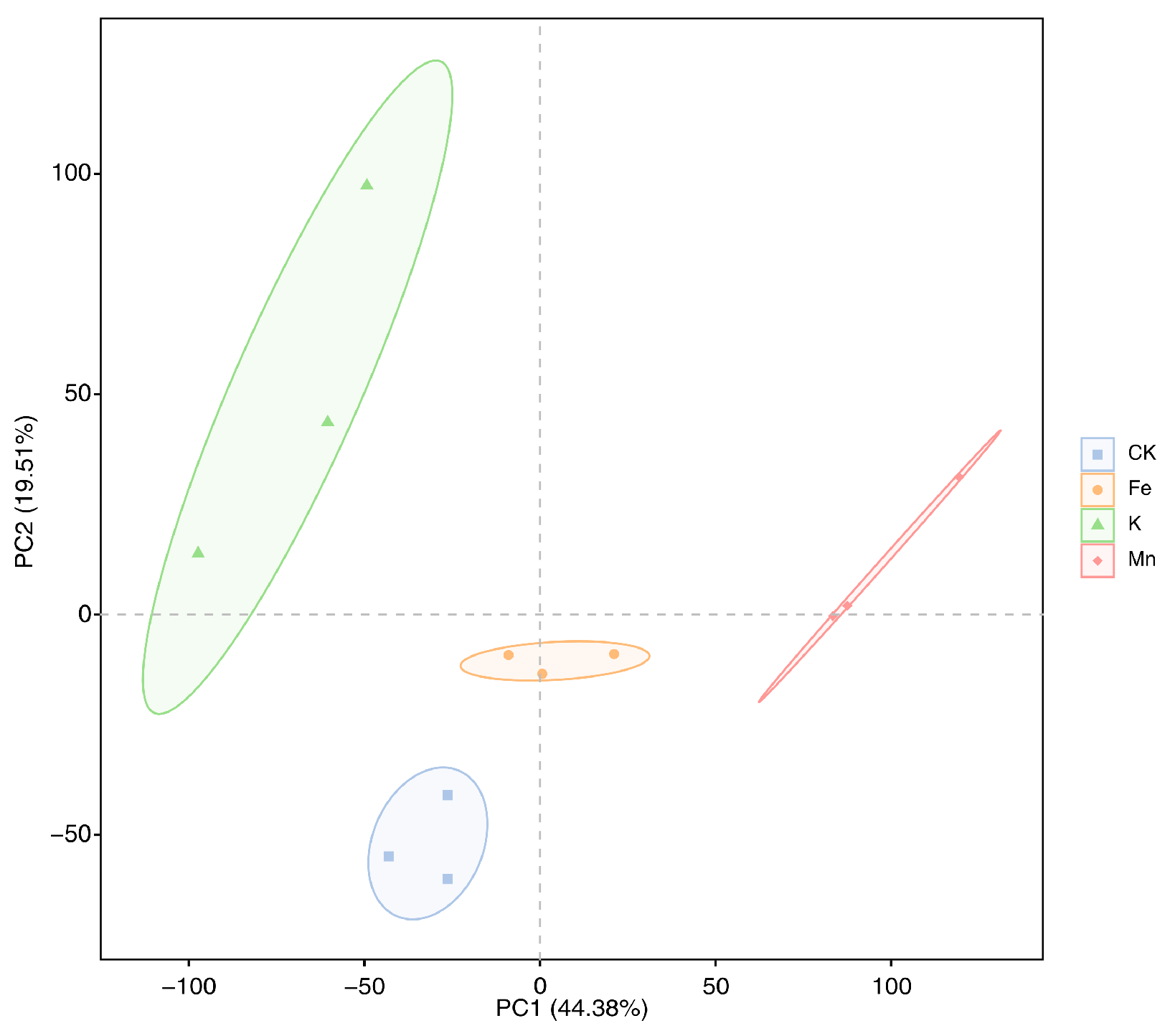
The PCA plot of L. edodes across all treatment groups (Figure 3) showed a high degree of similarity among biological replicates with close clustering. Samples from different treatments were widely dispersed, indicating significant differences among the treatment groups. PC1 and PC2 accounted for 44.38% and 19.51% of the total variance, respectively.

3.2.3. Differential Gene Expression Analysis

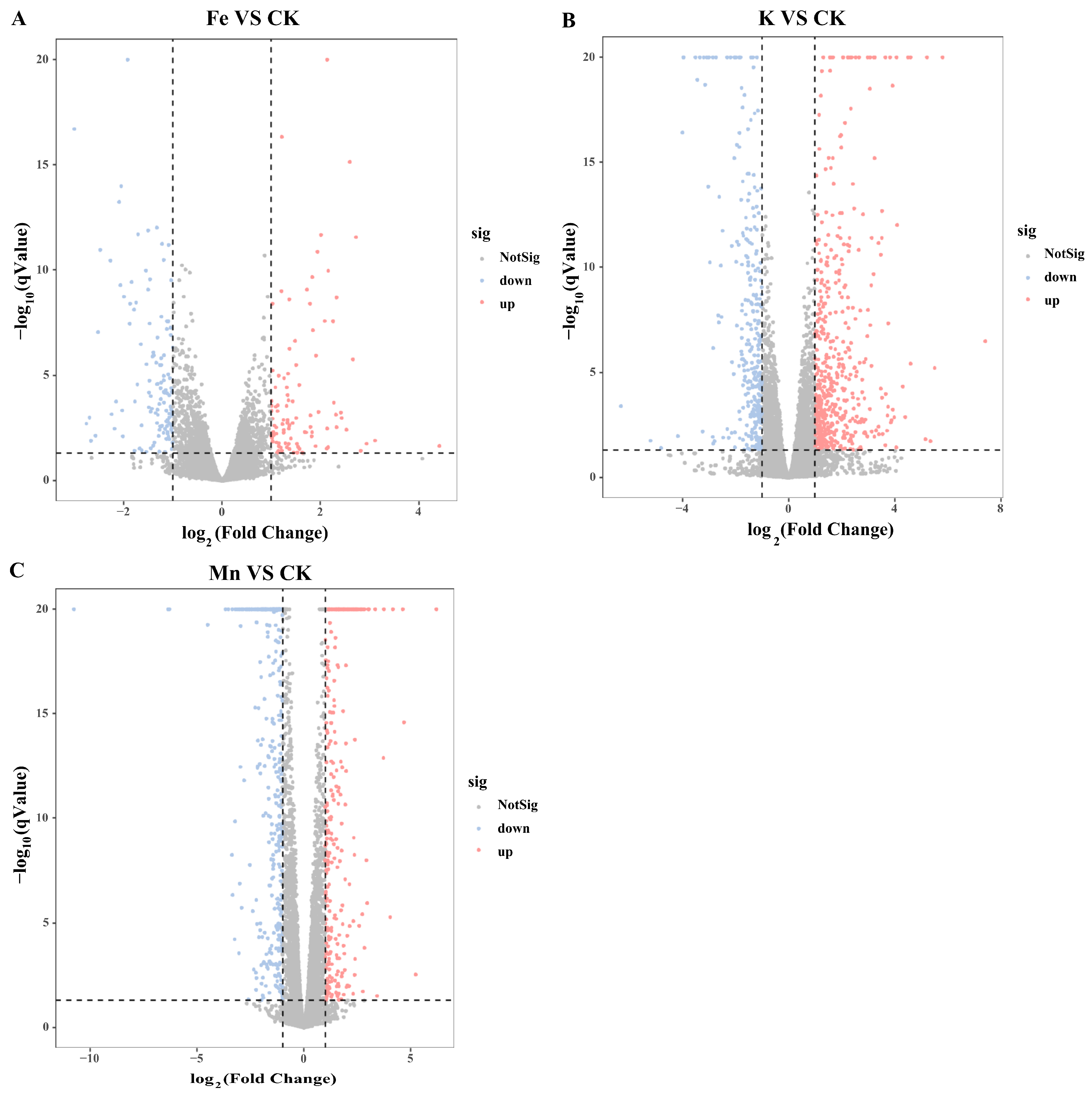
The statistics of the number of differentially expressed genes in L. edodes samples are presented in Table 3. Volcano plots visually displayed the up- and down-regulation of significant genes between the two sample groups (Figure 4). The names and annotations of differentially expressed genes are listed in Supplementary Table S2. In the Fe2+ treatment group, only a small number of genes displayed significant differential expression and a moderate magnitude of change. The K+ treatment group exhibited the strongest regulatory intensity over gene expression, significantly driving the high-magnitude expression of many genes. The Mn2+ treatment group had many genes showing extreme up- or down-regulation, indicating a more complex regulatory pattern.

3.2.4. GO Functional Enrichment Analysis

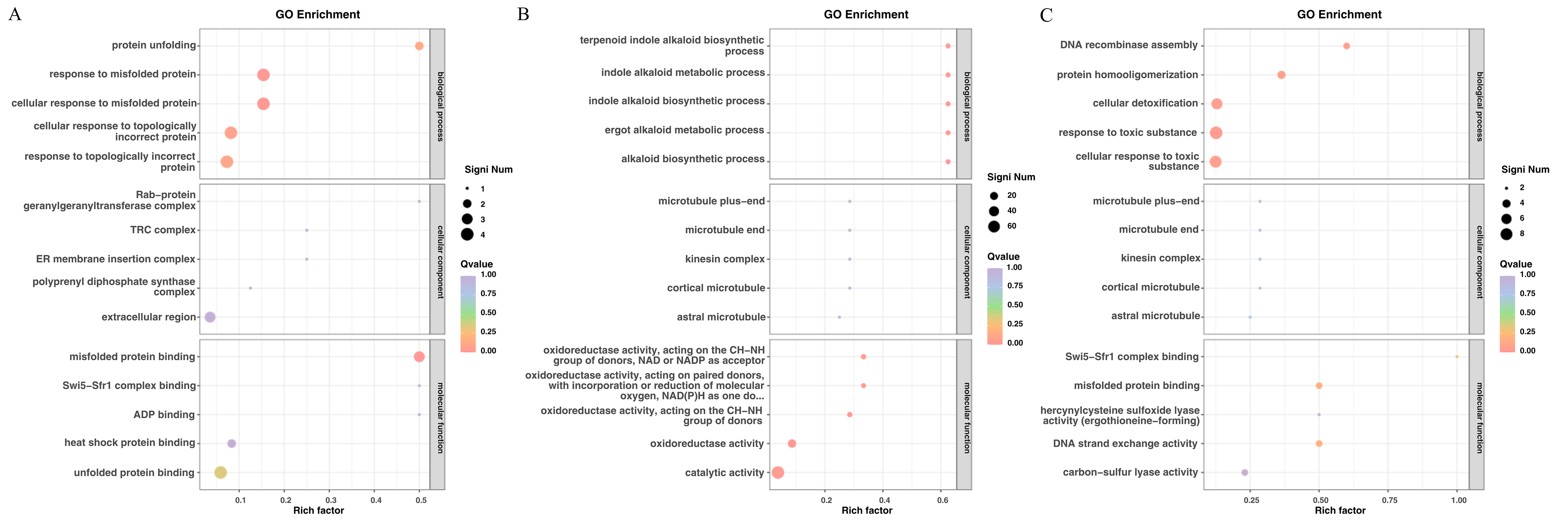
Gene Ontology (GO) functional enrichment analysis annotated the differentially expressed genes (DEGs) into three categories: molecular function (MF), cellular component (CC), and biological process (BP) [26]. In the Fe2+, K+, and Mn2+ treatment groups, 17, 106, and 76 DEGs were annotated in the GO database, assigned to 477, 1933, and 1797 GO terms, respectively, with 3, 19, and 1 terms presenting substantial enrichment (Figure 5, Supplementary Table S3).
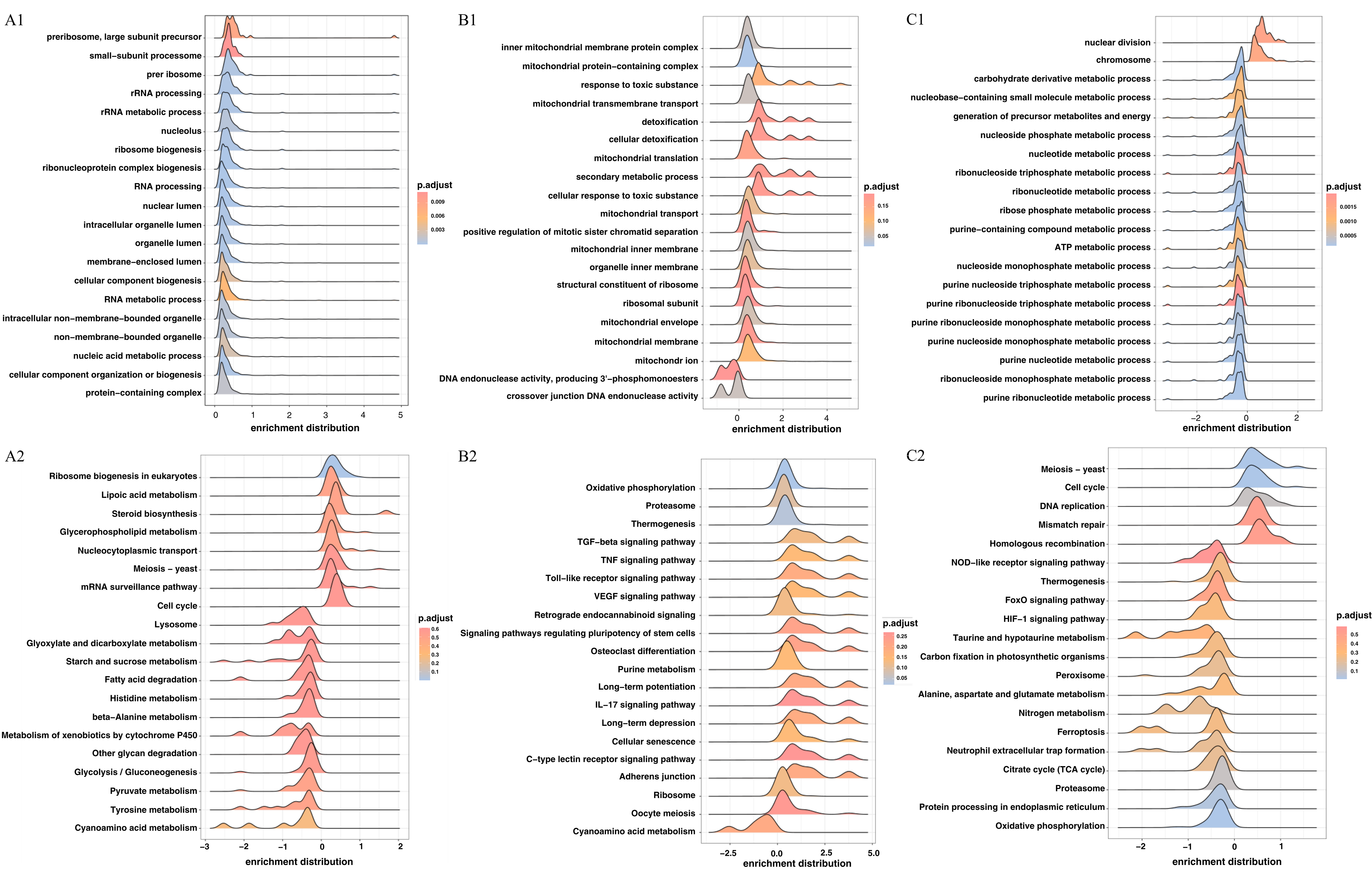
The differentially expressed genes were significantly enriched in biological processes under Fe2+ treatment, including responses to misfolded protein and cellular responses to misfolded protein, as well as the molecular function of misfolded protein binding, with significantly down-regulated genes. Gene Set Enrichment Analysis (Figure 6, Supplementary Table S5) revealed significantly upregulated ribosome biogenesis and RNA metabolism-associated functions, including ribonucleoprotein complex biogenesis, RNA processing, rRNA processing, rRNA metabolic process, ribosome biogenesis, preribosome, large subunit precursor, and small-subunit processome.
The differentially expressed genes were significantly enriched in biological processes, including alkaloid biosynthetic process, alkaloid metabolic process, cellular detoxification, secondary metabolite biosynthetic process, secondary metabolic process, and response to toxic substance under K+ treatment, with significantly up-regulated related genes. These genes were also significantly enriched in molecular functions, including oxidoreductase activity and catalytic activity, with the majority of related genes being up-regulated. GSEA results revealed strong enrichment and overall up-regulation of mitochondrial-related functions, including the significantly enriched mitochondrial protein-containing complex, along with the inner mitochondrial membrane protein complex, mitochondrial transmembrane transport, mitochondrial inner membrane, mitochondrial envelope, mitochondrial transport, and mitochondrial translation.
The differentially expressed genes were significantly enriched in response to toxic substances under Mn2+ treatment and primarily concentrated in biological processes, including protein homooligomerization, DNA recombinase assembly, DNA repair complex assembly, detoxification, and protein complex oligomerization. GSEA results revealed significant enrichment and overall down-regulation of purine ribonucleotide metabolic process, carbohydrate derivative metabolic process, and ATP metabolic process, while related functions, including chromosome, nuclear division, DNA recombination, DNA binding, cell cycle, DNA metabolic process, and DNA replication, were significantly enriched and exhibited overall up-regulation.

3.2.5. KEGG Pathway Enrichment Analysis

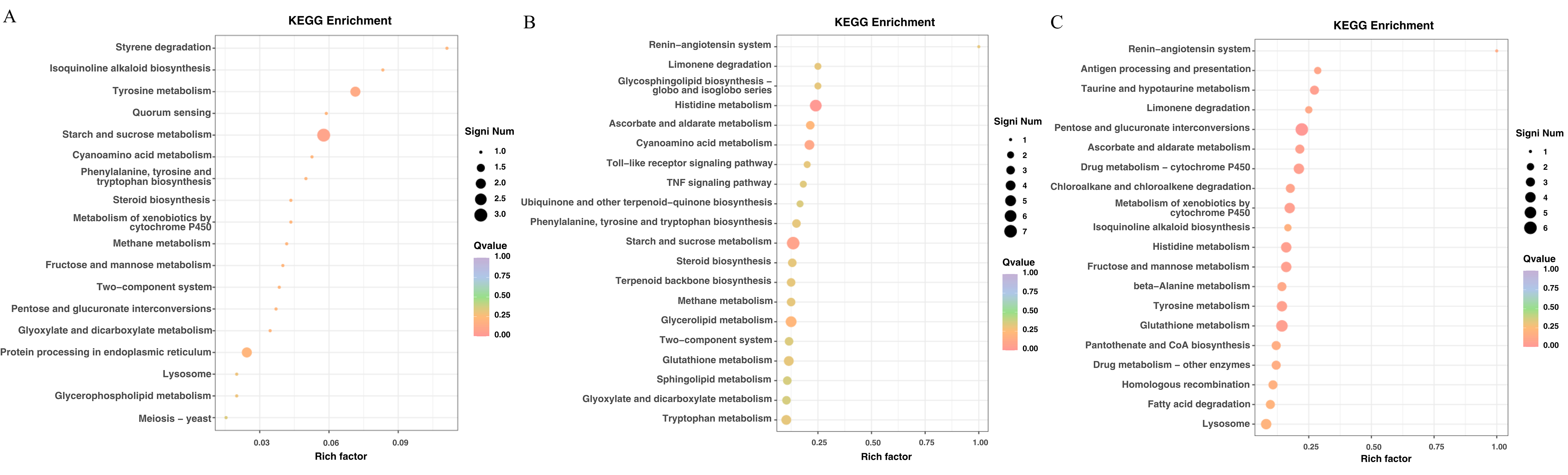
The Kyoto Encyclopedia of Genes and Genomes (KEGG) analyses are presented in Figure 7 and Supplementary Table S4. A total of 22, 134 and 115 differentially expressed genes from the Fe2+, K+, and Mn2+ treatment groups were annotated to 18, 113 and 81 pathways, respectively.
KEGG enrichment analysis of the Fe2+ treatment group revealed robust enrichment in the pathways of starch and sucrose metabolism, tyrosine metabolism, styrene degradation, isoquinoline alkaloid biosynthesis, and protein processing in the endoplasmic reticulum, with the corresponding genes significantly down-regulated. In eukaryotic pathways, GSEA indicated significant enrichment and up-regulation of ribosome biogenesis, while cyano amino acid metabolism, tyrosine metabolism, pyruvate metabolism, glycolysis/gluconeogenesis, starch and sucrose metabolism, other glycan degradation, histidine metabolism, and fatty acid degradation showed overall down-regulation. These metabolic pathways are essential for providing energy and carbon precursors for mycelial growth. We hypothesize that the downregulation of these pathways may reduce the availability of ATP and carbon precursors, thereby potentially limiting the normal growth of L. edodes mycelia.
The histidine metabolism pathway was significantly enriched in the K+ treatment group. Furthermore, the pathways of starch and sucrose metabolism, cyanoamino acid metabolism, glycerolipid metabolism, ascorbate and aldarate metabolism, limonene degradation, glutathione metabolism, steroid biosynthesis, tryptophan metabolism, and methane metabolism were strongly enriched. Significant enrichment and up-regulation of the oxidative phosphorylation and thermogenesis pathways were revealed by GSEA.
The pentose and glucuronate interconversion pathway was significantly enriched under Mn2+ treatment. Moreover, the strongly enriched pathways included drug metabolism—cytochrome P450, glutathione metabolism, taurine and hypotaurine metabolism, metabolism of xenobiotics by cytochrome P450, fructose and mannose metabolism, histidine metabolism, ascorbate and aldarate metabolism, and tyrosine metabolism. GSEA indicated significant enrichment and overall up-regulation of the meiosis-yeast and cell cycle pathways, as well as significant enrichment and overall down-regulation of the oxidative phosphorylation and protein processing in endoplasmic reticulum pathways.

3.3. Quantitative Real-Time PCR Validation

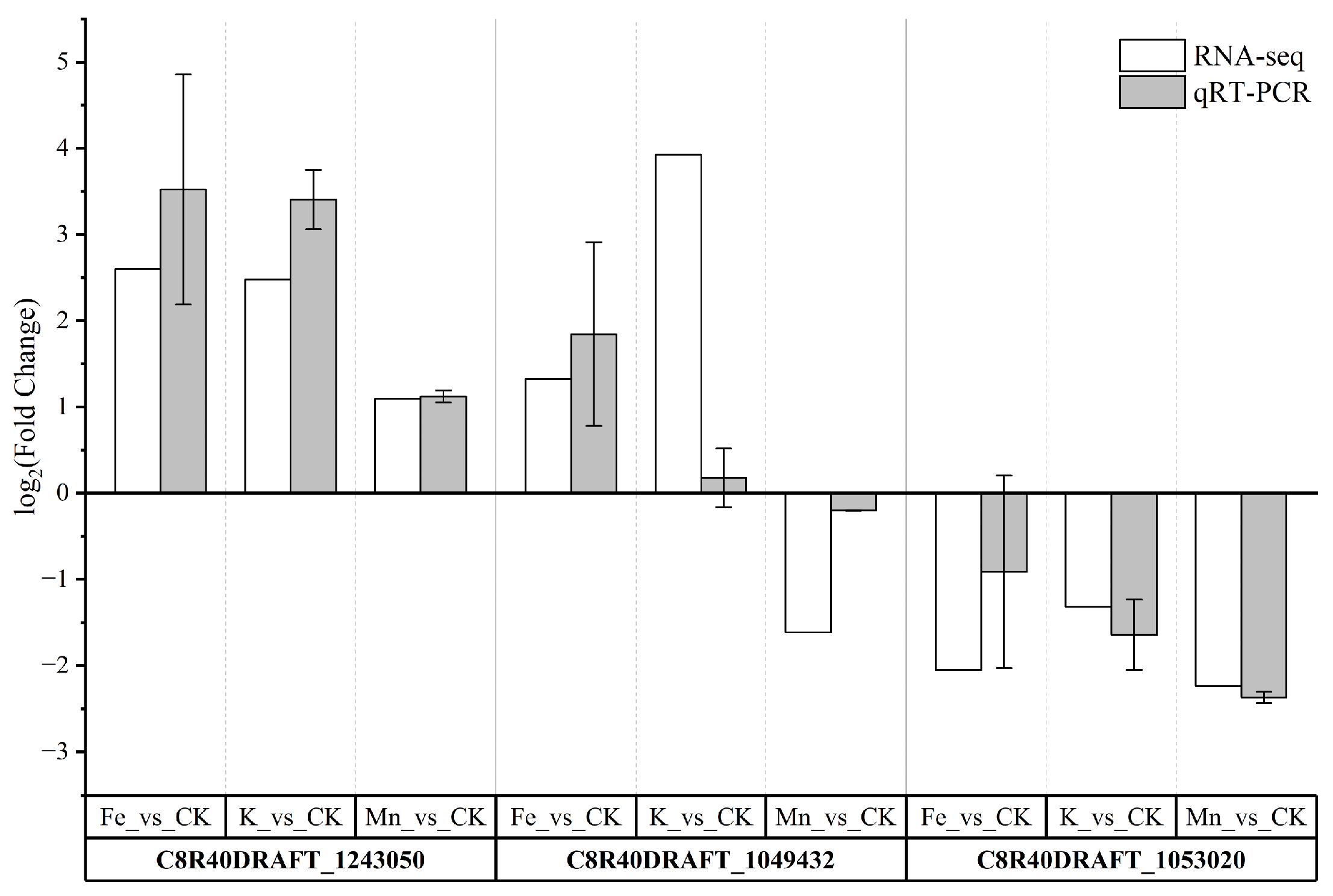
All primer sets showed single sharp peaks in melting curves, indicating high specific amplification without primer dimers or non-specific products. The expression profiles of the selected differentially expressed genes were generally consistent with the transcriptome sequencing data (Figure 8). Correlation analysis showed a significant positive correlation between the log2(Fold Change) values from RNA-seq and qRT-PCR (R2 = 0.57, p < 0.05), ensuring the reliability and accuracy of the transcriptome data and the research results. Original data are provided in Supplementary Table S6.

4. Discussion

In this study, combining plate culture with transcriptomics, we systematically elucidated the regulatory effects of three exogenous metal ions (Fe2+, K+, and Mn2+) on the mycelial growth of L. edodes strain 1303. It was confirmed that the effects of metal ions on L. edodes mycelial growth are concentration-dependent and element-specific. The phenotypic differences in mycelial growth promotion or inhibition may be related to the regulation of specific gene functions and metabolic pathways by different metal ions.
This study revealed that Fe2+ exerted a significant, concentration-dependent inhibitory effect on L. edodes mycelial growth at concentrations exceeding 20 µg/mL. This result is consistent with the previous study by Umeo, S. H. et al. [6], corroborating the conclusion that L. edodes has a weak capacity for biological accumulation and bioavailability of Fe2+ [6,7]. The HSP20-like chaperone gene and chaperonin 10-like protein gene were significantly down-regulated under Fe2+ treatment. Cellular homeostasis is maintained by oligomeric mitochondrial matrix chaperone proteins [34], heat shock proteins (HSPs), under various environmental stress conditions, with core functions that include ensuring proper protein folding during biosynthesis and preventing misfolding [35,36]. A protein quality-control network could be formed by HSP20 interacting with chaperones, thus maintaining the stability of enzyme function under stress [34]. The correct folding of partially folded or misfolded proteins could be promoted by molecular chaperonins (CPN) under stress; chaperonin 60 (CPN60) and co-chaperonin 10 (CPN10) facilitate the correct folding of nascent proteins by acting synergistically in an ATP-dependent manner [37]. Recycling of misfolded proteins is facilitated by the nucleotide exchange factor Fes1-domain-containing protein gene, which was also significantly down-regulated [38]. Several metal ion transport-related genes, including the IucC family-domain-containing protein gene and the MFS general substrate transporter gene, were significantly down-regulated. Furthermore, a large number of genes related to carbohydrate and amino acid metabolism were significantly down-regulated, including glycoside hydrolase family 5 protein, β-D-xylosidase/β-D-glucosidase, and pyridoxal phosphate-dependent transferase genes. The mycelial growth is likely inhibited due to a decline in metabolic function. Furthermore, the significant upregulation of chloroperoxidase and fungal peroxidase genes may suggest enhanced ROS scavenging capacity and oxidative stress tolerance under metal ion treatments, thereby alleviating oxidative damage induced by Fenton reactions [39].
Within the K+ concentration gradient used in this study, K+ consistently promoted L. edodes mycelial growth, with the most pronounced effect at 1200 µg/mL, making it the most effective promoter among the three core metal ions. This aligns with the function of K+ as one of the most important minerals in organisms, driving basic physiological processes, including regulating cellular osmotic pressure and activating enzymes [40,41]. This study revealed significant upregulation of numerous energy metabolism-related genes, including the NAD-P-binding protein gene and the FAD/NAD-binding domain-containing protein gene, providing the adenosine triphosphate (ATP) and reducing power necessary for mycelial growth [24,42]. Further, significant upregulation was observed in carbohydrate metabolism-related genes, including glucoamylase, short-chain dehydrogenase/reductase, and α-amylase genes, which provide sufficient carbon sources for mycelial growth. The HSP20-like chaperone gene and GroES-like protein gene [43] were significantly up-regulated and functional, in sharp contrast to Fe2+ treatment. This study is consistent with the previous findings that overexpression of HSP20 can promote mycelial growth in L. edodes [44]. A significant upregulation was observed in the glutamate–cysteine ligase catalytic subunit (GCLC) gene, a subunit of glutamate–cysteine ligase (GCL), and the rate-limiting enzyme for intracellular glutathione (GSH) synthesis, which can protect cells from oxidative stress-induced damage [23,45]. Based on the transcriptomic profiling, we hypothesize that K+ may enhance energy supply, metabolic processes, and detoxification capacity, promoting the mycelial growth of L. edodes.
A significant promotional effect of Mn2+ was observed on the mycelial growth of L. edodes at 50 µg/mL, but the effect shifted to inhibition at concentrations exceeding 150 µg/mL, signifying a typical concentration effect of promotion at low concentrations and inhibition at high concentrations. Research indicated that the mycelial growth of degenerated Volvariella volvacea is promoted by the optimal concentration of 50 mg/L manganese sulfate [13]. Transcriptomic results revealed a significant up-regulation in the Rad51-domain-containing protein gene and the recombination protein Rad52 gene. For the homologous recombination (HR) in eukaryotes, RAD51 acts as a core recombinase and a key catalytic protein for completing DNA double-strand break repair, while RAD52 loads RAD51, and both of them mutually facilitate homologous recombination repair [46]. Simultaneously, a considerable upregulation was observed in the SNF2 family N-terminal domain-containing protein gene and the helicase C-terminal domain-containing protein gene, both of which play critical roles in transcriptional regulation, DNA replication, and DNA damage repair [47,48]. Furthermore, the glutathione S-transferase III and glutathione-disulfide reductase genes were significantly up-regulated and annotated for multiple detoxification-related functions and pathways. These genes constitute the glutathione antioxidant system and participate in detoxification and secondary metabolic processes [49,50]. Combining the results of gene expression and gene enrichment analyses, these findings suggest that Mn2+ may mainly enhance the proliferative capacity of mycelial cells, promoting mycelial growth. However, further investigation is still required to elucidate the down-regulation of functions and pathways related to energy supply and substance metabolism.
A significant up-regulation was observed in the serine protease inhibitor genes across all three metal-ion treatments. The protease activity is partially or completely inhibited by serine protease inhibitors, which form complexes with their corresponding proteases, maintaining cellular homeostasis and responding to environmental stimuli [51]. This proposes that L. edodes can produce functional serine protease inhibitors by regulating metal ions. Many cytochrome P450-related genes showed significant changes across the three treatments and were involved in detoxification processes. Cytochromes P450 (CYP) belong to heme-containing monooxygenases, and fungi possess a more diverse family of cytochromes P450 than plants, animals, or bacteria. In fungi, a wide range of cytochrome P450 enzymes is involved not only in xenobiotic metabolism and virulence regulation but also in the production of numerous secondary metabolites [52].
Notably, this study provides novel transcriptomic insights into the regulatory roles of Fe2+, K+, and Mn2+ in L. edodes mycelial growth, advancing understanding of mineral nutrition regulation in this important edible mushroom. Compared with previous studies that mostly focused on a single metal ion, the present study simultaneously analyzed the transcriptomic responses of L. edodes mycelia to three key metal ions under the same experimental system. This parallel comparison represents the unique contribution of this work and helps to reveal the ion-specific effects on global gene expression. However, this study has certain limitations. First, we did not directly measure metal ion uptake or intracellular accumulation in mycelia, which weakens the link between metal ion treatments and transcriptomic responses. Second, no blank controls for sulfate anions, medium pH, or osmotic pressure were included in the experimental design. Third, neither proteomic/metabolomic validation nor determination of nutrient contents, secondary metabolites, or mitochondrial activity was performed to support the transcriptomic results. Future studies should supplement these key measurements and further investigate the critical functional genes and regulatory networks underlying metal ion regulation, thereby providing a more solid experimental basis for the high-quality and efficient cultivation of L. edodes.

5. Conclusions

This study investigated the effects of three exogenous metal ions on the mycelial growth of L. edodes. Among them, the optimal promoting effects were observed with 1200 µg/mL K+ and 50 µg/mL Mn2+, while mycelial growth was significantly inhibited by Fe2+ at concentrations beyond 20 µg/mL. Transcriptomic profiling revealed distinct gene expression patterns and functional pathways induced by each metal ion. Briefly, this study provides novel transcriptomic insights into the regulatory patterns of Fe2+, K+, and Mn2+ on mycelial growth in L. edodes strain 1303, offering an experimental basis for optimizing mineral nutrition in this important edible mushroom. Given the limitations of this study, priorities for future research include quantification of intracellular metal contents, control for sulfate and pH effects, functional validation of key genes, and determination of enzyme and metabolite levels.

Supplementary Materials

The following supporting information can be downloaded at https://www.mdpi.com/article/10.3390/agriculture16101069/s1. Figure S1. Pearson correlation heatmap of gene TPM values among all samples; Table S1. Growth radius of different treatments; Table S2. Differentially expressed genes (DEGs) of different treatment groups; Table S3. GO enrichment analysis in different treatment groups; Table S4. KEGG enrichment analysis in different treatment groups; Table S5. GSEA enrichment analysis in different treatment groups; Table S6. Results of qRT-PCR.

Author Contributions

Conceptualization, H.W. and S.Z.; methodology, H.W., S.Z. and R.H.; investigation, S.Z., R.H. and X.P.; resources, H.W. and S.Z.; data curation and visualization, S.Z. and R.H.; writing—original draft preparation, S.Z., X.P. and R.H.; writing—review and editing, H.W. and S.Z.; supervision and project administration, H.W.; funding acquisition, H.W. All authors have read and agreed to the published version of the manuscript.

Funding

This research was funded by the Shandong Modern Agricultural Industry Technology System Edible Fungi Innovation Team, grant number SDAIT-07-14; and the National Undergraduate Innovation and Entrepreneurship Training Program of China, grant number 202610019075.

Institutional Review Board Statement

Not applicable.

Informed Consent Statement

Not applicable.

Data Availability Statement

The original contributions presented in this study are included in the article and Supplementary Materials. Further inquiries can be directed to the corresponding authors. The raw RNA-seq data generated in this study were deposited in the NCBI Sequence Read Archive (SRA) under the accession number PRJNA1454314 (will be available upon publication).

Conflicts of Interest

The authors declare no conflicts of interest.

Abbreviations

The following abbreviations are used in this manuscript:
CYPcytochrome P450
DEGdifferentially expressed gene
GCLCglutamate–cysteine ligase catalytic subunit
GCLglutamate–cysteine ligase
GSHglutathione
GSEAgene set enrichment analysis
GOgene ontology
HSPheat shock protein
KEGGKyoto Encyclopedia of Genes and Genomes
MFmolecular function
CCcellular component
BPbiological process
PCAprincipal component analysis
qRT-PCRquantitative real-time polymerase chain reaction
RNA-seqRNA sequencing
TPMtranscripts per million

References

  1. Shi, D.; Yin, C.; Feng, X.; Zhou, R.; Fan, X.; Qiao, Y.; Yao, F.; Huang, W.; Liu, Y.; Gao, H.; et al. Effect of Ultrasound and Cellulase Pre-treatment on the Water Distribution, Physical Properties, and Nutritional Components of Lentinula edodes Chips. Food Bioprocess Technol. 2020, 13, 625–636. [Google Scholar] [CrossRef]
  2. Adil, B.; Xiang, Q.J.; He, M.L.; Wu, Y.T.; Asghar, M.A.; Arshad, M.; Qin, P.; Gu, Y.F.; Yu, X.M.; Zhao, K.; et al. Effect of sodium and calcium on polysaccharide production and the activities of enzymes involved in the polysaccharide synthesis of Lentinus edodes. AMB Express 2020, 10, 47. [Google Scholar] [CrossRef] [PubMed]
  3. Galgowska, M.; Pietrzak-Fiecko, R. Mineral Composition of Three Popular Wild Mushrooms from Poland. Molecules 2020, 25, 3588. [Google Scholar] [CrossRef]
  4. Gao, J.; Li, X.; Jia, S.; Zeng, H.; Zheng, B. Structural characterization and antioxidant activity of a glycoprotein isolated from shiitake mushrooms. Food Biosci. 2023, 53, 102608. [Google Scholar] [CrossRef]
  5. Zhang, J.; Rida, K.; Wen, J.; Yu, X.; Gu, Y.; He, M.; Chen, Q.; Xiang, Q. Screening of Lentinula edodes Strains for High Polysaccharide Production and In Vitro Antioxidant Activities. J. Fungi 2025, 11, 347. [Google Scholar] [CrossRef] [PubMed]
  6. Umeo, S.H.; Faria, M.G.I.; Dragunski, D.C.; Valle, J.S.D.; Colauto, N.B.; Linde, G.A. Iron or Zinc Bioaccumulated in Mycelial Biomass of Edible Basidiomycetes. An. Acad. Bras. Cienc. 2020, 92, e20191350. [Google Scholar] [CrossRef]
  7. Scheid, S.S.; Faria, M.G.I.; Velasquez, L.G.; do Valle, J.S.; Goncalves, A.C., Jr.; Dragunski, D.C.; Colauto, N.B.; Linde, G.A. Iron biofortification and availability in the mycelial biomass of edible and medicinal basidiomycetes cultivated in sugarcane molasses. Sci. Rep. 2020, 10, 12875. [Google Scholar] [CrossRef]
  8. Meniqueti, A.B.; Ruiz, S.P.; Faria, M.G.I.; do Valle, J.S.; Gonçalves, A.C., Jr.; Dragunski, D.C.; Colauto, N.B.; Linde, G.A. Iron-enriched mycelia of edible and medicinal basidiomycetes. Environ. Technol. 2022, 43, 1248–1254. [Google Scholar] [CrossRef]
  9. Ogidi, C.O.; Oyebode, K.O. Assessment of nutrient contents and bio-functional activities of edible fungus bio-fortified with copper, lithium and zinc. World J. Microbiol. Biotechnol. 2022, 39, 56. [Google Scholar] [CrossRef]
  10. Oyetayo, V.O.; Ogidi, C.O.; Bayode, S.O.; Enikanselu, F.F. Evaluation of biological efficiency, nutrient contents and antioxidant activity of Pleurotus pulmonarius enriched with Zinc and Iron. Indian Phytopathol. 2021, 74, 901–910. [Google Scholar] [CrossRef]
  11. Naeem, A.; Aslam, M.; Saifullah; Mühling, K.H. Lithium: Perspectives of nutritional beneficence, dietary intake, biogeochemistry, and biofortification of vegetables and mushrooms. Sci. Total Environ. 2021, 798, 149249. [Google Scholar] [CrossRef]
  12. Li, H.; Dai, J.; Shi, Y.; Zhu, X.; Jia, L.; Yang, Z. Molecular Regulatory Mechanism of the Iron-Ion-Promoted Asexual Sporulation of Antrodia cinnamomea in Submerged Fermentation Revealed by Comparative Transcriptomics. J. Fungi 2023, 9, 235. [Google Scholar] [CrossRef] [PubMed]
  13. Wang, Q.; Wang, W.; Wang, Y.; Yun, J.; Zhang, Y.; Zhao, F. Exogenous MnSO(4) Improves Productivity of Degenerated Volvariella volvacea by Regulating Antioxidant Activity. J. Fungi 2024, 10, 825. [Google Scholar] [CrossRef] [PubMed]
  14. Zhang, B.; Zhou, J.; Li, Q.; Gan, B.C.; Peng, W.H.; Zhang, X.P.; Tan, W.; Jiang, L.; Li, X.L. Manganese affects the growth and metabolism of Ganoderma lucidum based on LC-MS analysis. PeerJ 2019, 7, e6846. [Google Scholar] [CrossRef]
  15. Rodriguez Estrada, A.E.; Royse, D.J. Yield, size and bacterial blotch resistance of Pleurotus eryngii grown on cottonseed hulls/oak sawdust supplemented with manganese, copper and whole ground soybean. Bioresour. Technol. 2007, 98, 1898–1906. [Google Scholar] [CrossRef] [PubMed]
  16. Zieba, P.; Sekara, A.; Bernas, E.; Krakowska, A.; Sulkowska-Ziaja, K.; Kunicki, E.; Suchanek, M.; Muszynska, B. Supplementation with Magnesium Salts-A Strategy to Increase Nutraceutical Value of Pleurotus djamor Fruiting Bodies. Molecules 2021, 26, 3273. [Google Scholar] [CrossRef]
  17. Wlodarczyk, A.; Krakowska, A.; Sulkowska-Ziaja, K.; Suchanek, M.; Zieba, P.; Opoka, W.; Muszynska, B. Pleurotus spp. Mycelia Enriched in Magnesium and Zinc Salts as a Potential Functional Food. Molecules 2020, 26, 162. [Google Scholar] [CrossRef]
  18. Golian, M.; Hegedusova, A.; Mezeyova, I.; Chlebova, Z.; Hegedus, O.; Urminska, D.; Vollmannova, A.; Chlebo, P. Accumulation of Selected Metal Elements in Fruiting Bodies of Oyster Mushroom. Foods 2021, 11, 76. [Google Scholar] [CrossRef]
  19. Naima, J.; Ohta, Y. Potassium Ions Decrease Mitochondrial Matrix pH: Implications for ATP Production and Reactive Oxygen Species Generation. Int. J. Mol. Sci. 2024, 25, 1233. [Google Scholar] [CrossRef]
  20. Li, X.; Luo, L.; Wang, X.; Zhu, M. Further insights into the molecular mechanisms underlying tobacco straw cultivation of Pleurotus ostreatus by comparative transcriptome analyses. Genomics 2025, 117, 110992. [Google Scholar] [CrossRef]
  21. Xie, M.; Wang, F.; Zhou, X.; Zeng, J.; Zhou, Y.; Wei, T.; Chen, B.-X. Multi-omics approaches for advancing edible fungi: From genomics-enabled strain development to metabolomics-guided postharvest preservation. Food Biosci. 2025, 71, 107161. [Google Scholar] [CrossRef]
  22. Wang, J.; Cai, W.; Jin, Q.; Fan, L.; Guo, Z.; Feng, W. Improving the Yield and Quality of Morchella spp. Using Agricultural Waste. J. Fungi 2025, 11, 703. [Google Scholar] [CrossRef] [PubMed]
  23. Lu, F.; Sun, X.; Dai, X.; Zhang, P.; Ma, Y.; Xu, Y.; Wang, L.; Zhang, J. Integrated Multi-Omics Analysis to Investigate the Molecular Mechanisms Underlying the Response of Auricularia heimuer to High-Temperature Stress. J. Fungi 2025, 11, 167. [Google Scholar] [CrossRef] [PubMed]
  24. Kim, J.Y.; Kim, D.Y.; Park, Y.J.; Jang, M.J. Transcriptome analysis of the edible mushroom Lentinula edodes in response to blue light. PLoS ONE 2020, 15, e0230680. [Google Scholar] [CrossRef] [PubMed]
  25. Deshaware, S.; Marathe, S.J.; Bedade, D.; Deska, J.; Shamekh, S. Investigation on mycelial growth requirements of Cantharellus cibarius under laboratory conditions. Arch. Microbiol. 2021, 203, 1539–1545. [Google Scholar] [CrossRef]
  26. Shao, K.; Yao, F.; Fang, M.; Lu, L.; Ma, X.; Wang, W.; Meng, J.; Sun, X.; Cui, Y.; Sun, J. Transcriptome-Based Analysis of Mitochondrial Influence on Key Agronomic Traits and Nutritional Components in Auricularia heimuer. Agronomy 2025, 15, 2188. [Google Scholar] [CrossRef]
  27. Chen, S.F.; Zhou, Y.Q.; Chen, Y.R.; Gu, J. fastp: An ultra-fast all-in-one FASTQ preprocessor. Bioinformatics 2018, 34, 884–890. [Google Scholar] [CrossRef]
  28. Kim, D.; Paggi, J.M.; Park, C.; Bennett, C.; Salzberg, S.L. Graph-based genome alignment and genotyping with HISAT2 and HISAT-genotype. Nat. Biotechnol. 2019, 37, 907–915. [Google Scholar] [CrossRef]
  29. Wang, L.; Wang, S.; Li, W. RSeQC: Quality control of RNA-seq experiments. Bioinformatics 2012, 28, 2184–2185. [Google Scholar] [CrossRef]
  30. Pertea, M.; Pertea, G.M.; Antonescu, C.M.; Chang, T.C.; Mendell, J.T.; Salzberg, S.L. StringTie enables improved reconstruction of a transcriptome from RNA-seq reads. Nat. Biotechnol. 2015, 33, 290–295. [Google Scholar] [CrossRef]
  31. Liao, Y.; Smyth, G.K.; Shi, W. featureCounts: An efficient general purpose program for assigning sequence reads to genomic features. Bioinformatics 2014, 30, 923–930. [Google Scholar] [CrossRef]
  32. Zhao, S.R.; Ye, Z.; Stanton, R. Misuse of RPKM or TPM normalization when comparing across samples and sequencing protocols. RNA 2020, 26, 903–909. [Google Scholar] [CrossRef]
  33. Love, M.I.; Huber, W.; Anders, S. Moderated estimation of fold change and dispersion for RNA-seq data with DESeq2. Genome Biol. 2014, 15, 38. [Google Scholar] [CrossRef] [PubMed]
  34. Lang, B.J.; Guerrero, M.E.; Prince, T.L.; Okusha, Y.; Bonorino, C.; Calderwood, S.K. The functions and regulation of heat shock proteins; key orchestrators of proteostasis and the heat shock response. Arch. Toxicol. 2021, 95, 1943–1970. [Google Scholar] [CrossRef] [PubMed]
  35. Liang, Z.-Q.; Zhao, Y.; Tan, Y.-Z.; Wang, J.; Shao, Y.-L.; Zheng, Q.-W.; Zou, Y.; Lin, J.-F.; Chen, M.-T.; Ye, Z.-W. Functional characterization of the heat shock protein gene hsp78 in regulating carotenoid biosynthesis in the edible-medicinal fungus Cordyceps militaris. Food Biosci. 2025, 74, 107894. [Google Scholar] [CrossRef]
  36. Chen, C.; Li, Q.; Wang, Q.; Lu, D.; Zhang, H.; Wang, J.; Fu, R. Transcriptional profiling provides new insights into the role of nitric oxide in enhancing Ganoderma oregonense resistance to heat stress. Sci. Rep. 2017, 7, 15694. [Google Scholar] [CrossRef]
  37. Kumari, A.; Sutariya, J.A.; Rathore, A.P.; Rathore, M.S. The novel chaperonin 10 like protein (SbCPN10L) from Salicornia brachiata (Roxb.) augment the heat stress tolerance in transgenic tobacco. Gene 2024, 900, 148139. [Google Scholar] [CrossRef]
  38. Kumar, S.; Masison, D.C. Hsp70-nucleotide exchange factor (NEF) Fes1 has non-NEF roles in degradation of gluconeogenic enzymes and cell wall integrity. PLoS Genet. 2019, 15, e1008219. [Google Scholar] [CrossRef]
  39. Mattila, H.; Österman-Udd, J.; Mali, T.; Lundell, T. Basidiomycota Fungi and ROS: Genomic Perspective on Key Enzymes Involved in Generation and Mitigation of Reactive Oxygen Species. Front. Fungal Biol. 2022, 3, 837605. [Google Scholar] [CrossRef]
  40. Zhao, W.; Dong, H.; Zhou, Z.; Wang, Y.; Hu, W. Potassium (K) application alleviates the negative effect of drought on cotton fiber strength by sustaining higher sucrose content and carbohydrates conversion rate. Plant Physiol. Biochem. 2020, 157, 105–113. [Google Scholar] [CrossRef]
  41. Gao, Z.; Chen, F.; Zheng, J.; Peng, Q.; Chen, D.; Zhang, Y.; Zhou, L.; Liu, K.; Yang, Y.; Yuan, Q. Potassium-Selective Covalent Organic Framework Membranes Enable Dynamic Monitoring of Microbial K+ Metabolism. Small 2025, 21, e2502541. [Google Scholar] [CrossRef]
  42. Luo, C.; Song, Y.; Meng, L.; Cheng, Y.; Dai, H.; Qiao, Y.; Xie, X. Transcriptomic insights into the molecular mechanism of abietic acid promoting growth and branching in Armillaria gallica. Front. Microbiol. 2025, 16, 1632512. [Google Scholar] [CrossRef] [PubMed]
  43. Wang, W.; Vinocur, B.; Shoseyov, O.; Altman, A. Role of plant heat-shock proteins and molecular chaperones in the abiotic stress response. Trends Plant Sci. 2004, 9, 244–252. [Google Scholar] [CrossRef] [PubMed]
  44. Ling, Y.Y.; Ling, Z.L.; Zhao, R.L. Construction of a heat-resistant strain of Lentinus edodes by fungal Hsp20 protein overexpression and genetic transformation. Front. Microbiol. 2022, 13, 1009885. [Google Scholar] [CrossRef] [PubMed]
  45. Wenhong, L.; Yang, J.; Zhao, Y.; Zhang, N.; Zhao, B.; Rongxian, L.; Shiyan, G.; Zuoshun, H. Cadmium treatment induces oxidative damage and apoptosis in vitro skeletal muscle cells. Toxicology 2025, 515, 154139. [Google Scholar] [CrossRef]
  46. Deveryshetty, J.; Mistry, A.; Pangeni, S.; Ghoneim, M.; Tokmina-Lukaszewska, M.; Gore, S.K.; Liu, J.; Kaushik, V.; Karunakaran, S.; Taddei, A.; et al. Mechanism of Rad51 filament formation by Rad52 and Rad55-Rad57 in homologous recombination. Nat. Commun. 2025, 16, 6685. [Google Scholar] [CrossRef]
  47. Wang, J.; Sun, Z.; Liu, H.; Yue, L.; Wang, F.; Liu, S.; Su, B.; Liu, B.; Kong, F.; Fang, C. Genome-Wide Identification and Characterization of the Soybean Snf2 Gene Family and Expression Response to Rhizobia. Int. J. Mol. Sci. 2023, 24, 7250. [Google Scholar] [CrossRef]
  48. Villemain, J.; Rokosky, C. Abstract 1937 Intrinsic disorder in the C-terminal Domain of the Yeast Srs2 helicase Provides Structural Diversity Essential to Implementing Multi-functional Roles in replication, Recombination and Repair. J. Biol. Chem. 2024, 300, 107008. [Google Scholar] [CrossRef]
  49. Adam, A.M.A.; Refat, M.S.; Mohamed, M.A. Synthesis and spectroscopic characterizations of noble metal complexes (gold, silver, platinum) in the presence of selenium, and their biological applications as antibacterial, antifungal, and anticancer. Res. Chem. Intermed. 2013, 41, 965–1000. [Google Scholar] [CrossRef]
  50. Averill-Bates, D.A. The antioxidant glutathione. In Antioxidants; Litwack, G., Ed.; Elsevier Academic Press Inc.: San Diego, CA, USA, 2023; Volume 121, pp. 109–141. [Google Scholar] [CrossRef]
  51. Harish, B.S.; Uppuluri, K.B. Microbial serine protease inhibitors and their therapeutic applications. Int. J. Biol. Macromol. 2018, 107, 1373–1387. [Google Scholar] [CrossRef]
  52. Shin, J.; Kim, J.E.; Lee, Y.W.; Son, H. Fungal Cytochrome P450s and the P450 Complement (CYPome) of Fusarium graminearum. Toxins 2018, 10, 112. [Google Scholar] [CrossRef]
Figure 1. Bar chart of mycelial growth radius in different treatment groups. (A) Fe2+ treatment; (B) K+ treatment; (C) Mn2+ treatment. The data were stated as mean ± standard error (SE). Different lowercase letters above the bars indicate significant differences at p < 0.05.
Agriculture 16 01069 g001
Figure 2. Density curve (A) and violin plot (B) of gene expression levels.
Agriculture 16 01069 g002
Figure 3. PCA principal component analysis plot.
Agriculture 16 01069 g003
Figure 4. Volcano plot of gene differences in comparison groups. (A) Fe2+ treatment; (B) K+ treatment; (C) Mn2+ treatment. Limits defined by qValue ≤ 0.05 and |log2(Fold Change)| ≥ 1. Each dot in the plot represents a single gene, with red dots indicating up-regulated genes, blue dots indicating down-regulated genes, and the gray area represents insignificant genes.
Agriculture 16 01069 g004
Figure 5. Scatter plot of significantly enriched GO functions of differentially expressed genes. (A) Fe2+ treatment; (B) K+ treatment; (C) Mn2+ treatment. The vertical axis represents the functional annotation information, and the horizontal axis denotes the Rich factor corresponding to each function (the number of differentially expressed genes annotated to the function divided by the total number of genes annotated to the function). The magnitude of Qvalue is indicated by the color of the dots, with a smaller Qvalue corresponding to a color closer to red. The size of the dots reflects the number of differentially expressed genes included in each function. After sorting by Qvalue, the top 5 Terms for BP, CC, and MF were respectively selected and plotted in the order of the Rich factor.
Agriculture 16 01069 g005
Figure 6. GSEA ridge plot. (A) Fe2+ treatment; (B) K+ treatment; (C) Mn2+ treatment; (1) GO functional enrichment; (2) KEGG pathway enrichment. The horizontal axis represents the distribution range of log2-transformed fold change values of core-enriched genes in the enriched pathways, and the vertical axis denotes the frequency of enriched gene distribution in each pathway. The legend indicates the significance level of GSEA enrichment, with smaller values representing higher significance. The adjusted p-value (p.adjust) was used for analysis, and the top significant functions or pathways were selected and plotted in order of enrichment score.
Agriculture 16 01069 g006
Figure 7. Scatter plot of significantly enriched KEGG functions of differentially expressed genes. (A) Fe2+ treatment; (B) K+ treatment; (C) Mn2+ treatment. The vertical axis represents pathway annotation information, and the horizontal axis denotes the corresponding Rich factor (the number of differentially expressed genes annotated to a pathway divided by the total number of genes annotated to that pathway). The magnitude of Qvalue is indicated by the color of the dots, with a smaller Qvalue corresponding to a color closer to red. The size of the dots reflects the number of differentially expressed genes included in each pathway. The pathways with the top significance were selected and plotted in the order of the Rich factor.
Agriculture 16 01069 g007
Figure 8. Verification of differential gene expression by qRT-PCR. The qRT-PCR values for each gene are mean ± SD of three biological replicas.
Agriculture 16 01069 g008
Table 1. Primers for qRT-PCR.
GenePutative FunctionPrimer Sequence (5′ → 3′)Amplicon Size
ForwardReverse
C8R40DRAFT_1124140β-tubulin 2GTTCGCGGTCCCTTAGCTTGTAATCACCCACATCCTTTTGC116 bp
C8R40DRAFT_1243050pyridoxal phosphate-dependent transferaseCCCATTGACCACTGCCATCCCAGCCCACATCGACTCC150 bp
C8R40DRAFT_1049432fungal peroxidaseGCTACGCTGTCGCAAGTCCCCGTCCATGAATCCGAAATC200 bp
C8R40DRAFT_1053020uracil phosphoribosyltransferase-domain-containing proteinCTCTTGTGCTCGAGACAGGCTTCAGTGGCATCTTTGACCGTT162 bp
Table 2. Transcriptome sequencing data.
Sample No.Raw Reads CountRaw Bases CountClean Reads CountClean Bases CountQ30 (%)GC
(%)
Total MappedMutiple MappedUniquely Mapped
CK199,954,94414,993,241,60093,847,59213,266,192,73898.86%48.78%81.86%1.27%80.59%
CK2122,742,91218,411,436,800116,115,39816,309,407,24698.87%48.48%80.93%1.32%79.61%
CK3100,000,00015,000,000,00094,629,29813,353,955,54198.91%48.79%82.31%1.20%81.11%
Fe1100,000,00015,000,000,00093,037,64013,060,762,54898.81%48.84%83.01%1.30%81.71%
Fe2100,000,00015,000,000,00094,191,11813,167,217,37998.82%48.90%84.48%1.40%83.08%
Fe3100,000,00015,000,000,00094,475,11613,426,499,46698.79%48.85%83.81%1.30%82.51%
K1100,000,00015,000,000,00093,798,90813,141,156,02798.83%48.96%84.47%1.38%83.09%
K2100,000,00015,000,000,00094,796,36413,405,157,34398.87%48.91%84.56%1.31%83.25%
K3100,000,00015,000,000,00094,226,40813,230,205,43998.86%48.94%84.43%1.27%83.16%
Mn194,438,21814,165,732,70088,535,68012,526,057,80298.71%48.69%82.29%1.18%81.11%
Mn2100,000,00015,000,000,00094,218,92413,258,424,77698.88%48.74%82.63%1.14%81.49%
Mn3101,680,02815,252,004,20095,295,40613,439,817,74998.77%48.67%82.27%1.11%81.16%
Table 3. Number of DEGs in each treatment group.
TreatmentNumber of DEGsUp-Regulated GenesDown-Regulated Genes
Fe2+226101125
K+858536322
Mn2+696289407
Disclaimer/Publisher’s Note: The statements, opinions and data contained in all publications are solely those of the individual author(s) and contributor(s) and not of MDPI and/or the editor(s). MDPI and/or the editor(s) disclaim responsibility for any injury to people or property resulting from any ideas, methods, instructions or products referred to in the content.