Article

Chitosan-dsRNA Nanoparticles Targeting SlChitinase5 Enhance Insecticide Efficacy Against Spodoptera litura

1
Henan Key Laboratory of Insect Biology, Henan International Joint Laboratory of Insect Biology, College of Life Science, Nanyang Normal University, Nanyang 473061, China
2
CIIMAR/CIMAR LA, Interdisciplinary Centre of Marine and Environmental Research, University of Porto, Terminal de Cruzeiros do Porto de Leixões, Avda. General Norton de Matos s/n, 4450-208 Matosinhos, Portugal
3
School of Plant Protection and Environment, Henan Institute of Science and Technology, Xinxiang 453003, China
*
Authors to whom correspondence should be addressed.
Agriculture 2026, 16(10), 1030; https://doi.org/10.3390/agriculture16101030
Submission received: 5 March 2026 / Revised: 5 May 2026 / Accepted: 7 May 2026 / Published: 8 May 2026
(This article belongs to the Special Issue Harnessing Nanotechnology for Improved Crop Growth and Protection)

Abstract

Spodoptera litura is a highly destructive agricultural pest with increasing reliance on chemical insecticides. We aimed to develop nanotechnology-enabled strategies that enhance insecticide efficacy against S. litura and reduce chemical inputs. To this end, SlChitinase5 was identified and characterized as a potential RNAi target. This gene contains conserved domains typical of lepidopteran chitinases and is highly expressed during key developmental stages, including larval molting and the prepupal phase. RNAi-mediated suppression of SlChitinase5 through larval injection of double-stranded RNA (dsSlChitinase5) significantly reduced body weight, increased mortality, and disrupted molting. When RNAi-treated larvae were exposed to sublethal concentrations of emamectin benzoate (EB) or an emamectin benzoate–tebufenozide mixture (EBT), larval mortality reached 96.7% on day 5. To evaluate an alternative formulation and exposure approach, dsSlChitinase5 was incorporated into chitosan nanoparticles (CS) and applied topically. This treatment induced SlChitinase5 knockdown and, in combination with sublethal EB or EBT, resulted in complete larval mortality within five days under the conditions tested. These findings validate SlChitinase5 as a molecular target and suggest that CS-dsSlChitinase5 nanocarriers have the potential to enhance insecticide performance, which may support integrated pest management and future efforts toward reduced-input crop protection strategies.

1. Introduction

The oriental leafworm moth, Spodoptera litura (Lepidoptera: Noctuidae), is a highly destructive agricultural pest due to its extensive host range, high reproductive potential, and voracious feeding behavior [1,2]. As a polyphagous species, it infests more than 300 plant species, enabling rapid migration and proliferation across diverse cropping systems [3]. Spodoptera litura is widely distributed across tropical and subtropical zones throughout Asia and Oceania [4]. In China, it occurs in most regions except the colder areas of the Tibetan Plateau, with the most severe infestations occurring in the Yangtze River Basin, South China, and Southwest China. Effective management of S. litura remains challenging, as current integrated strategies rely heavily on chemical insecticides. Although compounds such as diamides (chlorantraniliprole and cyantraniliprole), pyrethroids (bifenthrin and beta-cypermethrin), insect growth regulators (methoxyfenozide), and other chemistries (indoxacarb, spinetoram, and chlorpyrifos) [5,6,7,8] provide rapid suppression, intensive and repeated use has resulted in widespread resistance to multiple insecticide classes [9,10,11]. These trends highlight the urgent need for alternative, target-specific, and environmentally compatible control approaches.
Chitinase enzymes hydrolyze β-1,4-glycosidic bonds in chitin and play a critical role in insect molting and metamorphosis [12,13]. Insect chitinases typically possess a modular structure comprising a chitin-binding domain (CBD), a linker region, and a catalytic domain (CAD), which function cooperatively to degrade cuticular chitin [14,15]. Expression of chitinase genes is tightly associated with molting events, and their suppression leads to defective ecdysis, developmental arrest, or abnormal adult emergence [16,17]. In addition to impairing molting, chitinase suppression affects key metabolic pathways, including carbohydrate homeostasis and the expression of chitin-related genes such as chitin synthase (CHSB) [18].
RNA interference (RNAi) is a conserved post-transcriptional gene-silencing mechanism triggered by double-stranded RNA (dsRNA) [19,20]. When dsRNA is designed to match essential insect genes, it can specifically suppress their expression, resulting in developmental disruption or mortality [21,22]. Recent advances have identified several effective RNAi targets, including chitin synthase A (CHSA), V-type ATPase (v-ATPase), and arginine kinase (AK) [23,24,25]. dsRNA targeting chitinase genes has produced molting defects and developmental abnormalities in several major pests, including Tribolium castaneum, Helicoverpa armigera, Spodoptera frugiperda, and Plutella xylostella [18,26,27], supporting chitinase as a promising molecular target for pest control. However, the practical application of RNAi in field settings is constrained by dsRNA instability and limited uptake. Nanocarrier-based systems, particularly those using chitosan, liposomes, or functionalized polymers, have been shown to improve dsRNA stability and biological activity in multiple insect species [28,29,30]. Chitosan is especially attractive due to its biocompatibility, biodegradability, and strong affinity for nucleic acids, enabling protection from environmental degradation and enhanced retention on insect surfaces [31,32,33,34]. Chitosan-dsRNA formulations have successfully induced gene knockdown in Anopheles gambiae and several lepidopteran pests [28,35,36], demonstrating their potential for RNAi-based pest management.
Despite these advances, the success of RNAi-based approaches still depends strongly on the selection of suitable molecular targets. In S. litura, the functional roles of specific chitinase genes and their suitability as RNAi targets remain insufficiently characterized. Moreover, RNAi efficiency in Lepidoptera is often inconsistent due to the rapid dsRNA degradation, limited cellular uptake, and weak systemic responses [21,37,38], which restricts its practical use as a standalone control strategy. These limitations have prompted growing interest in integrated approaches that combine RNAi with conventional insecticides. Silencing genes involved in molting or detoxification can increase insect susceptibility to chemical agents, while insecticide-induced physiological stress may further amplify RNAi effects. Chitosan-based dsRNA formulations may help address some of these delivery challenges by improving dsRNA stability and enhancing exposure in laboratory settings, providing a basis for exploring their potential in more applied contexts.
Emamectin benzoate (EB) is a widely used avermectin-class insecticide with proven efficacy against S. litura [39]. The EB–tebufenozide mixture (EBT) combines two complementary modes of action (neurotoxicity and growth regulation), representing a common strategy for resistance management and effective field control against lepidopteran pests. Both EB and EBT are extensively employed for the control of S. litura and other lepidopteran pests in China and were provided by our cooperator, Henan Xifunong Biotechnology Co., Ltd., Kaifeng, China. In this study, we identified and characterized a chitinase-encoding gene, SlChitinase5, in S. litura and evaluated its potential as a molecular target for RNAi-based control. We analyzed its spatiotemporal expression patterns using quantitative real-time PCR (qRT-PCR), assessed its functional role through RNAi-mediated knockdown, and explored the combined effects of SlChitinase5 silencing and sublethal doses of emamectin benzoate (EB) or an emamectin benzoate–tebufenozide mixture (EBT). Furthermore, to evaluate a formulation and exposure approach that may be amenable to future field application, we developed chitosan-encapsulated dsSlChitinase5 nanoparticles (CS-dsSlChitinase5) for topical application under laboratory conditions and evaluated their combined effects with both insecticides. Our findings provide functional validation of SlChitinase5 as an RNAi target and suggest that CS-dsSlChitinase5 formulations can enhance insecticide performance under the tested laboratory conditions, which may inform the future development of integrated management strategies for S. litura.

2. Materials and Methods

2.1. Insect Rearing and Sampling

A laboratory colony of S. litura was obtained from the Henan Institute of Science and Technology and maintained at Nanyang Normal University. Larvae were reared on a standardized artificial diet under controlled conditions (27 °C, 60–70% relative humidity, and a 14L:10D photoperiod), following established procedures [40]. Pupae were kept in complete darkness, and newly emerged adults were fed 10% sucrose solution to facilitate mating and oviposition.
For expression analysis, whole larvae at feeding and molting stages from the 1st to 6th instar were collected. Whole-body samples were also collected from prepupae during days 1 to 3 and from pupae during days 1 to 9. Additionally, larvae at three days of the 6th instar were dissected, and nine distinct tissue types (head, integument, hemolymph, midgut, Malpighian tubules, salivary glands, fat body, ovary, and testis) were collected. For developmental expression analysis, at least three individuals were collected per sample. For tissue-specific expression analysis, tissues were dissected from thirty 3-day-old sixth-instar larvae. Each sample was prepared for three biological replicates.

2.2. RNA Extraction and Gene Cloning

Total RNA was extracted from each sample using TRIzol reagent (Invitrogen, Carlsbad, CA, USA), according to the manufacturer’s protocol. RNA purity and concentration were assessed using a NanoDrop spectrophotometer (Thermo Fisher Scientific, Waltham, MA, USA). First-strand cDNA was synthesized using the RevertAid First Strand cDNA Synthesis Kit (Thermo Fisher Scientific, Waltham, MA, USA) with an oligo(dT) primer. Gene-specific primers (Table S1) were designed based on the SlChitinase5 sequence (GenBank accession no. AY325497) and used to amplify the open reading frame (ORF). PCR products were separated via agarose gel electrophoresis, purified, ligated into the pMD19-T vector (Takara, Dalian, China), and verified via Sanger sequencing.

2.3. Sequence Analysis of SlChitinase5

The predicted molecular weight (MW) and isoelectric point (pI) of the deduced SlChitinase5 protein were calculated using Lasergene 12.0 (DNASTAR Inc., Madison, WI, USA). Homologous chitinase protein sequences from other insects were retrieved from NCBI database (https://www.ncbi.nlm.nih.gov/, accessed on 14 July 2025). Multiple sequence alignments were performed using CLUSTALW (v2.1) and visualized using ESPript 3.0 [41]. A phylogenetic tree was constructed in MEGA 12 using the Neighbor-Joining method with the JTT matrix-based model and 1000 bootstrap replicates [42].

2.4. qRT-PCR Analysis

Quantitative real-time PCR (qRT-PCR) was performed in 10 µL reaction mixtures containing FastStart Universal SYBR Green Master Mix (Roche, Basel, Switzerland), cDNA template, gene-specific primers, and DEPC-treated water. Amplification was carried out on a CFX96 Real-Time PCR System (Bio-Rad, Hercules, CA, USA) using the following cycling conditions: an initial denaturation at 95 °C for 5 min, followed by 40 cycles at 95 °C for 15 s (denaturation), 55 °C for 30 s (annealing), and 72 °C for 30 s (extension). Transcript levels of SlChitinase5 were quantified using the comparative 2−ΔΔCt method, and the β-actin gene (DQ494753.1) of S. litura was used as the reference gene [43]. β-actin was selected as the reference gene because it has been validated as a stable internal control in S. litura across developmental stages, tissues, and stress conditions, including insecticide and microbial pesticide exposures [44,45,46], and its Ct values showed minimal variation across treatments in this study. Each biological replicate consisted of at least three individuals, and all reactions were run in triplicate using the primers listed in Table S1.

2.5. Functional Analysis of SlChitinase5 by RNAi

A 339 bp fragment of the SlChitinase5 ORF was amplified using primers containing T7 promoter sequences at the 5′ end (Table S1). Double-stranded RNA targeting SlChitinase5 (dsSlChitinase5) and control dsRNA targeting green fluorescent protein (dsGFP; GeneID: JQ733042.1) were synthesized in vitro using the T7 RiboMAX Express RNAi System (Promega, Madison, WI, USA). After dissolution in nuclease-free water, the dsRNA concentration was determined using a NanoDrop2000 spectrophotometer (Thermo Fisher Scientific, Rochester, NY, USA), and the final concentration was adjusted to 2.5 µg/µL prior to injection. Fifth-instar larvae (second day post-molt) were microinjected into the hemolymph with 2 µL (5 µg) of either dsSlChitinase5 or dsGFP using a CellTram microinjector (Eppendorf AG, Hamburg, Germany). Three biological replicates were performed, each consisting of 13 larvae per treatment. Three larvae per replicate were collected 48 h post-injection for qRT-PCR analysis to assess SlChitinase5 transcript knockdown, and the remaining 10 larvae were monitored daily for 5 days to record body weight, mortality, and molting status.

2.6. Chitosan Nanoparticle-Mediated RNAi Application

Chitosan/dsRNA (CS-dsRNA) nanoparticles were prepared following established procedures [47]. Briefly, 0.1 g of chitosan (degree of deacetylation ≥ 75%, Sigma-Aldrich, St. Louis, MO, USA) was dissolved in 100 mL solution including 59 mL 0.1 M acetic acid and 41 mL sodium acetate, and stirred overnight at room temperature to prepare 0.1% (w/v) chitosan working solution. For nanoparticle formation, 1 mL dsRNA (dsSlChitinase5 or dsGFP, 0.1 mg/mL) was first diluted with an equal volume of 0.1 mg/mL sodium sulfate solution. The diluted chitosan solution (0.1 mg/mL) was then added at chitosan-to-dsRNA mass ratios ranging from 5:1 to 1:5 to identify the ratio that yielded the most suitable nanoparticle formation. The mixtures were vortexed, briefly incubated at 55 °C for 1 min, vortexed again, and allowed to stand at room temperature for 1 h. CS-dsRNA nanoparticles were pelleted by centrifugation at 13,000× g for 10 min and resuspended in a suitable volume of DEPC-treated water to achieve the desired concentration. Nanoparticle formation was assessed qualitatively by agarose gel electrophoresis of pellets and corresponding supernatants. Particle size distribution and zeta potential of CS-dsRNA nanoparticles (0.05 mg/mL) were measured using a Malvern Zetasizer Nano-ZSE (Malvern Panalytical, Great Malvern, UK). These measurements were performed to confirm nanoparticle formation and assess key physicochemical parameters relevant to biological performance.
For topical application, a 1 µL droplet containing 500 ng dsRNA (CS-dsSlChitinase5 or CS-dsGFP) was applied to the dorsal surface of third-instar larvae (second day post-molt). After the droplet had dried on the cuticle, larvae were transferred to fresh diet. Each experimental group consisted of 15 larvae with three independent replicates. Five larvae were sampled 48 h post-treatment for qRT-PCR, and the remaining 10 larvae were monitored for 5 days to record body weight, mortality, and phenotype.

2.7. Bioassays with Insecticides

Emamectin benzoate (EB) and an emamectin benzoate–tebufenozide mixture (EBT) were kindly provided by Henan Xifunong Biological Technology Co., Ltd., Kaifeng, China. 1% (10 g/L) stock solutions of EB and EBT were prepared in 20% acetone. These stock solutions were then serially diluted with distilled water to obtain the desired working concentrations. As a result, the final acetone concentration in all working solutions was ≤0.8% (v/v). We tested a series of concentrations of EB (5–100 mg/L and 20–150 mg/L) and EBT (1–40 mg/L and 40–400 mg/L) for 3rd- and 5th-instar larvae, respectively. Artificial diet pieces were immersed in the respective insecticide solution for 30 min, air-dried for approximately 10 min, and fed to third- or fifth-instar larvae. Larval mortality was recorded every 24 h for 72 h. Survival curves were generated using the Kaplan–Meier method and compared using log-rank (Mantel–Cox) tests. The median lethal concentration (LC50) of emamectin benzoate (EB) and the EB–tebufenozide (EBT) were calculated via nonlinear regression using a log(dose)-response model in GraphPad Prism v8.0, and the 95% confidence intervals for each LC20 were automatically derived. Each concentration was tested with 10 larvae in triplicate.

2.8. Combined dsRNA-Insecticide Bioassays

The interaction between SlChitinase5 silencing and insecticide exposure was evaluated using larvae treated with either dsRNA microinjection or CS-dsRNA application. For dsRNA microinjection, fifth-instar larvae (second day post-molt) were injected with 5 µg of dsSlChitinase5 or dsGFP (control) as described in Section 2.5. Following injection, larvae from each treatment were divided into two subgroups: one subgroup was fed a standard artificial diet and the other was fed an insecticide-incorporated diet prepared as described in Section 2.7.
For nanoparticle-based assays, third-instar larvae were topically treated with 1 µL of CS-dsSlChitinase5 or CS-dsGFP (containing 500 ng dsRNA) as described in Section 2.6. Larvae from each nanoparticle treatment were similarly divided into subgroups and fed either a standard artificial diet or the insecticide-incorporated diet.
For both exposure methods, larval body weight, mortality, and phenotype were recorded daily for a 5-day period. Each experimental group comprised 10 larvae and was conducted in triplicate.

2.9. Data Analysis

Data are presented as mean ± standard deviation (SD) from three biological replicates and were analyzed using GraphPad Prism v8.0. Normality and homogeneity of variance were assessed using the Shapiro–Wilk test and Bartlett’s test, respectively. Two-group comparisons were performed using a two-tailed unpaired Student’s t-test. Multiple-group comparisons were conducted using one-way analysis of variance (ANOVA) followed by Tukey’s post hoc test. Time-course data were analyzed using two-way ANOVA with Tukey’s test. Survival curves were analyzed using the Kaplan–Meier method, and comparisons between groups were performed using the log-rank (Mantel–Cox) test. Larval mortality rates were compared using Fisher’s exact test; for comparisons involving more than two groups, pairwise comparisons were performed with Bonferroni correction. Statistical significance is indicated as follows: asterisks (* p < 0.05, ** p < 0.01, *** p < 0.001, **** p < 0.0001) indicate significant differences between two groups in pairwise comparisons. For bar graphs and line charts, different lowercase letters indicate significant differences among multiple groups at p < 0.05, while different uppercase letters indicate significant differences at p < 0.01 (one-way or two-way ANOVA with Tukey’s test). Groups sharing the same letter are not significantly different; groups with different letters are significantly different at the indicated significance level. Detailed results of statistical analyses, including exact p-values and test statistics, are provided in the figure legends and/or Table S2.
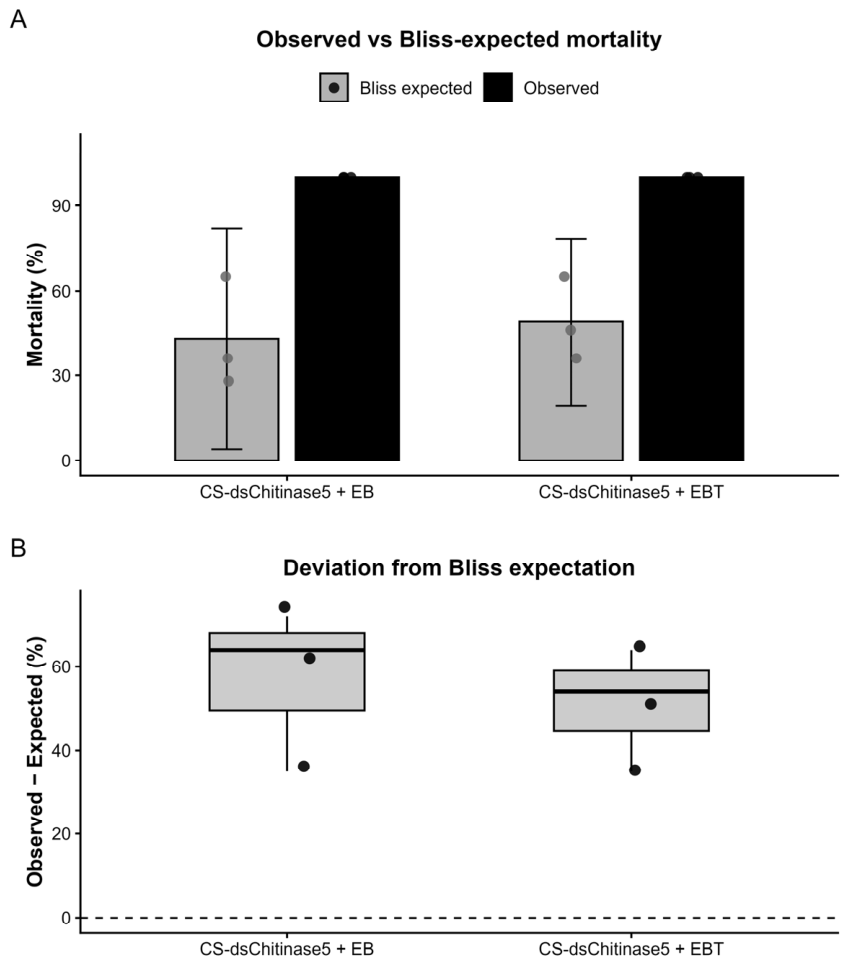
To explore the interaction between dsRNA treatment and insecticide exposure, an exploratory analysis based on the Bliss independence model was performed [48]. Expected mortality under the assumption of independent effects was calculated as: E = A + B − (A × B), where A and B represent the fractional mortality observed for dsRNA treatment and insecticide treatment alone, respectively. Observed mortality in combined treatments was then compared with the expected values. Deviation from Bliss expectation was calculated as follows: Δ = Observed − Expected. Positive deviations (Δ > 0) were interpreted as indicating a positive interaction between treatments, whereas values close to zero were considered consistent with additive effects. Bliss independence calculations and visualization were performed in R v4.5.2 using ggplot2.

3. Results

3.1. Identification and Characterization of SlChitinase5 in S. litura

The amplification of the SlChitinase5 full-length ORF sequence yielded a fragment of 1659 bp, corresponding to a 552-amino-acid protein, with a predicted molecular weight of 62.35 kDa and isoelectric point (pI) of 8.95. Domain analysis revealed three conserved structural features: an N-terminal signal peptide, a central glycoside hydrolase family 18 (GH18) catalytic domain responsible for chitin hydrolysis, and a C-terminal carbohydrate-binding domain (CBD) involved in substrate binding. The presence of GH18 and CBD domains is consistent with chitinase activity and supports a functional role in cuticle turnover and chitin remodeling in S. litura.
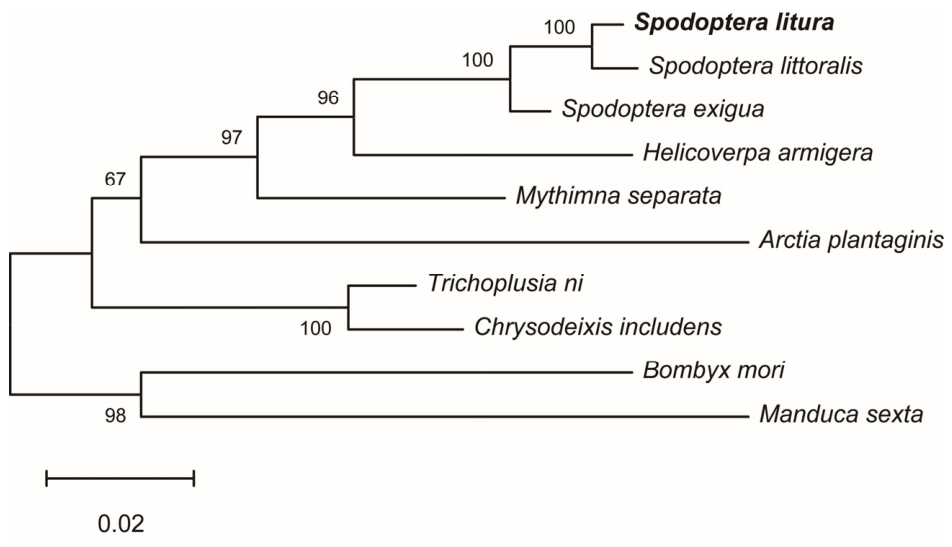
Multiple sequence alignment of SlChitinase5 with homologous lepidopteran chitinases showed strong conservation across the GH18 catalytic domain, including the canonical 139FDGXDLDWEYP149 motif (Figure S1). In contrast, the C-terminal region displayed greatest sequence divergence, with increased variability and insertion/deletion events across residues 450–552. Phylogenetic analysis further indicated that SlChitinase5 clusters closely with chitinases from S. litoralis and S. exigua, while showing a more distant relationship to those of B. mori and Manduca sexta (Figure 1).

3.2. Spatiotemporal Expression Profiling of SlChitinase5

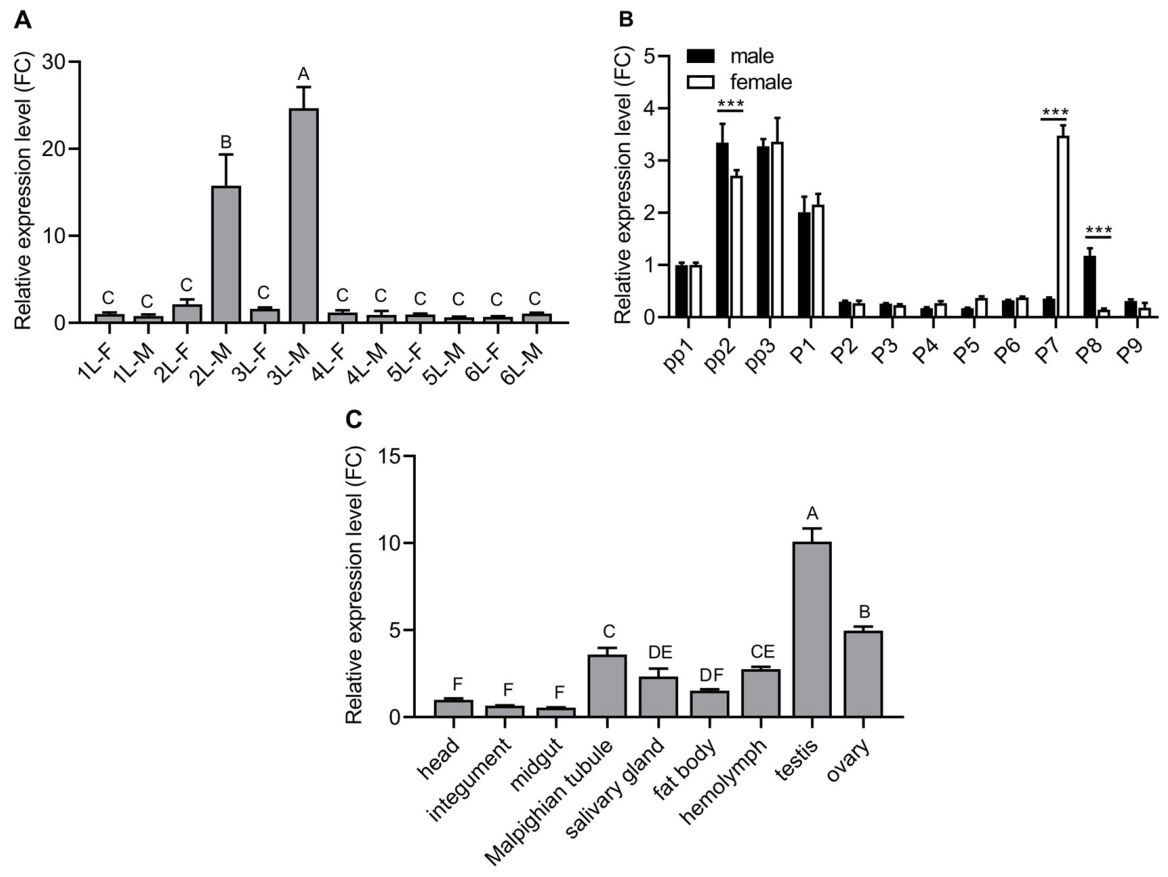
Expression profiling revealed distinct developmental and tissue-specific patterns of SlChitinase5 in S. litura. During larval stages, expression peaked significantly (p < 0.01) during the molting phases at the second and third instars compared with their corresponding feeding phases (Figure 2A), suggesting a role in cuticle remodeling during early larval molts. In the pupal stage, transcript abundance was highest during the prepupal phase, coinciding with major physiological transitions. Sex-specific differences were observed in late pupae: on day 7, SlChitinase5 expression was significantly (p < 0.001) higher in females, whereas on day 8, males exhibited higher transcript levels (Figure 2B). Tissue-specific analysis in sixth-instar larvae showed that SlChitinase5 expression was most abundant in reproductive tissues (testis and ovary), followed by the Malpighian tubules, salivary glands, fat body, and hemolymph. Lower expression was detected in the head, integument, and midgut (Figure 2C).

3.3. RNAi-Mediated Silencing of SlChitinase5 Impairs Larval Development and Survival

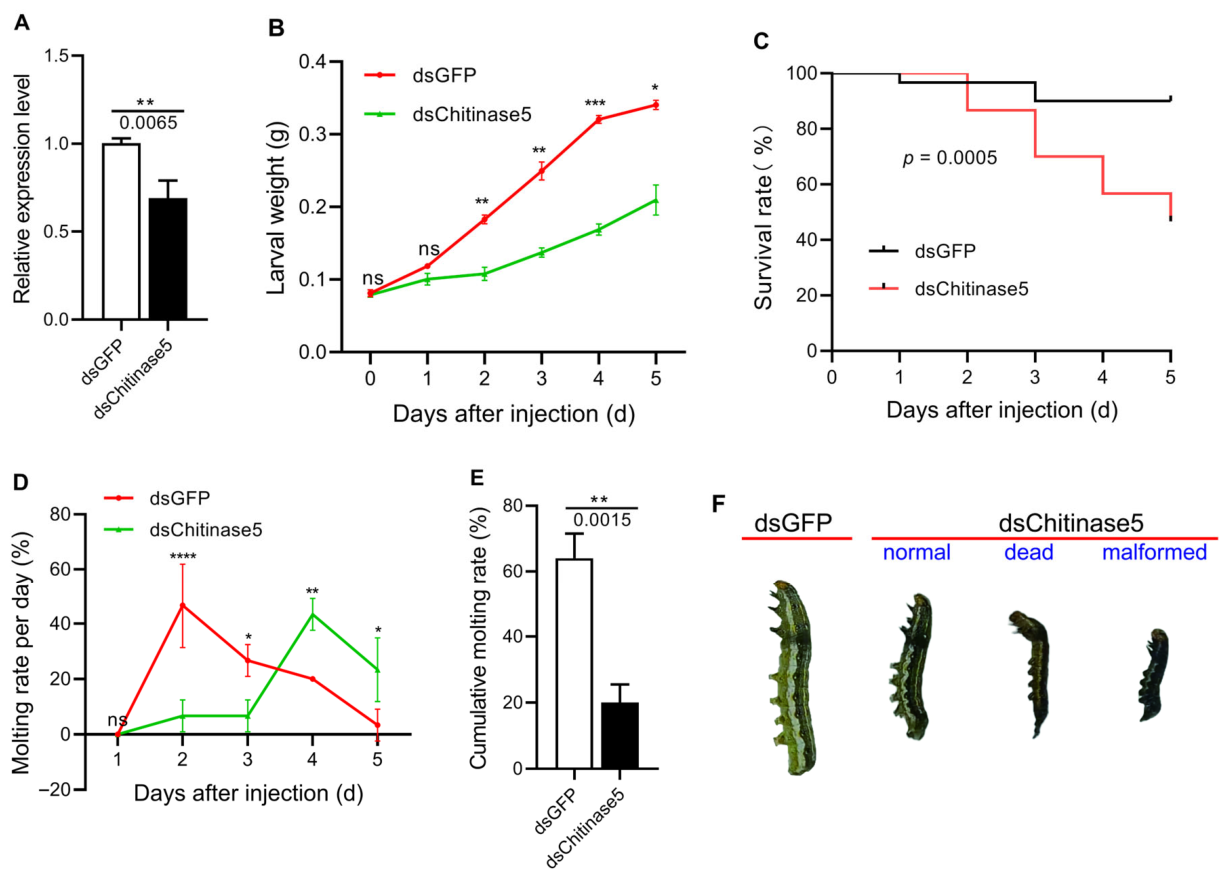
To investigate the functional role of SlChitinase5 in S. litura, gene expression was partially reduced by microinjecting dsSlChitinase5 into 5th-instar larvae, with dsGFP serving as a negative control. qRT-PCR confirmed a significant but limited reduction in transcript levels 48 h post-injection, with SlChitinase5 expression decreased by approximately 31% relative to the dsGFP group [t(4) = 5.209, p = 0.0065] (Figure 3A). This partial knockdown of SlChitinase5 was associated with noticeable developmental and physiological defects. Larvae injected with dsSlChitinase5 exhibited significantly reduced weight gain over the 5-day period compared with controls (Figure 3B). Survival was also significantly lower in the dsSlChitinase5 group (Figure 3C). Molting progression was markedly delayed: by 72 h post-injection, 64% of control larvae had molted to 6th instar, whereas only 20% of dsSlChitinase5-treated larvae had completed the molt (Figure 3D,E). Affected larvae frequently displayed molting abnormalities, characterized by incomplete ecdysis (Figure 3F). Closer examination of treated larvae revealed additional morphological signs consistent with impaired molting. In several individuals, the old cuticle was only partially shed and remained attached to the posterior body region, indicating incomplete exuviation. Some larvae appeared unable to fully emerge from the previous instar cuticle, which likely restricted normal movement and was followed by death. These observations are consistent with defective cuticle degradation during ecdysis.

3.4. Toxicity of Insecticides to S. litura Larvae

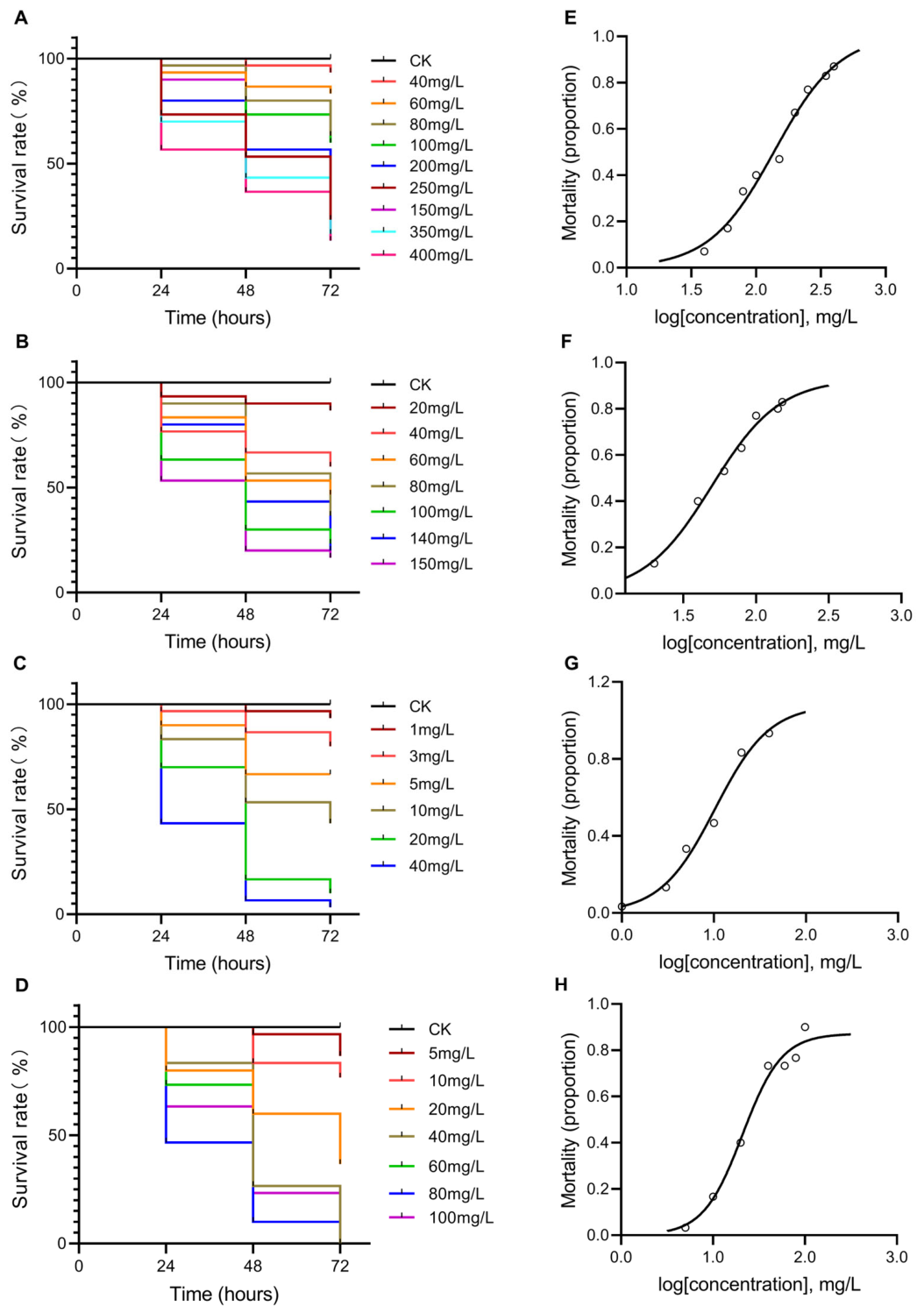
Preliminary experiments indicated that 72 h was sufficient to achieve a stable LC50 estimate for both 3rd- and 5th-instar larvae. To evaluate the lethal effects of the insecticides on 3rd- and 5th-instar larvae, mortality was assessed at 72 h post-treatment. The toxicity of EBT and EB to 5th- and 3rd-instar larvae is shown in Figure 4. Larval mortality increased with insecticide concentration, while no mortality was observed in the control group (Figure 4A–D). Dose-response relationships were observed for both insecticides in 5th-instar larvae. The LC50 of EBT for 5th-instar larvae was 138.8 mg/L (95% confidence interval (CI): 103.2–315.6 mg/L; log-transformed: 2.142), and the sublethal concentration LC20 was 61.8 mg/L (95% CI: 47.74–74.48 mg/L; log-transformed: 1.791) (Figure 4E). The LC50 and LC20 of EB for 5th-instar larvae were 49.51 mg/L (95% CI: 39.49–83.50 mg/L; log-transformed: 1.695) and 24.69 mg/L (95% CI: 18.16–30.34 mg/L; log-transformed: 1.393) (Figure 4F). For 3rd-instar larvae, the mortality caused by EBT and EB at 72 h was used for logistic regression analysis. The LC50 of EBT for 3rd-instar larvae was 8.99 mg/L (95% CI: 7.116–11.37 mg/L; log-transformed: 0.9542), and the sublethal concentration LC20 was 3.86 mg/L (95% CI: 2.64–5.37 mg/L; log-transformed: 0.587) (Figure 4G). The LC50 and LC20 of EB for 3rd-instar larvae were 20.96 mg/L (95% CI: 15.02–51.91 mg/L; log-transformed: 1.321) and 11.56 mg/L (95% CI: 7.62–15.74 mg/L; log-transformed: 1.063) (Figure 4H).

3.5. Combined SlChitinase5 RNAi and Insecticide Treatment Severely Impairs Larval Growth and Survival

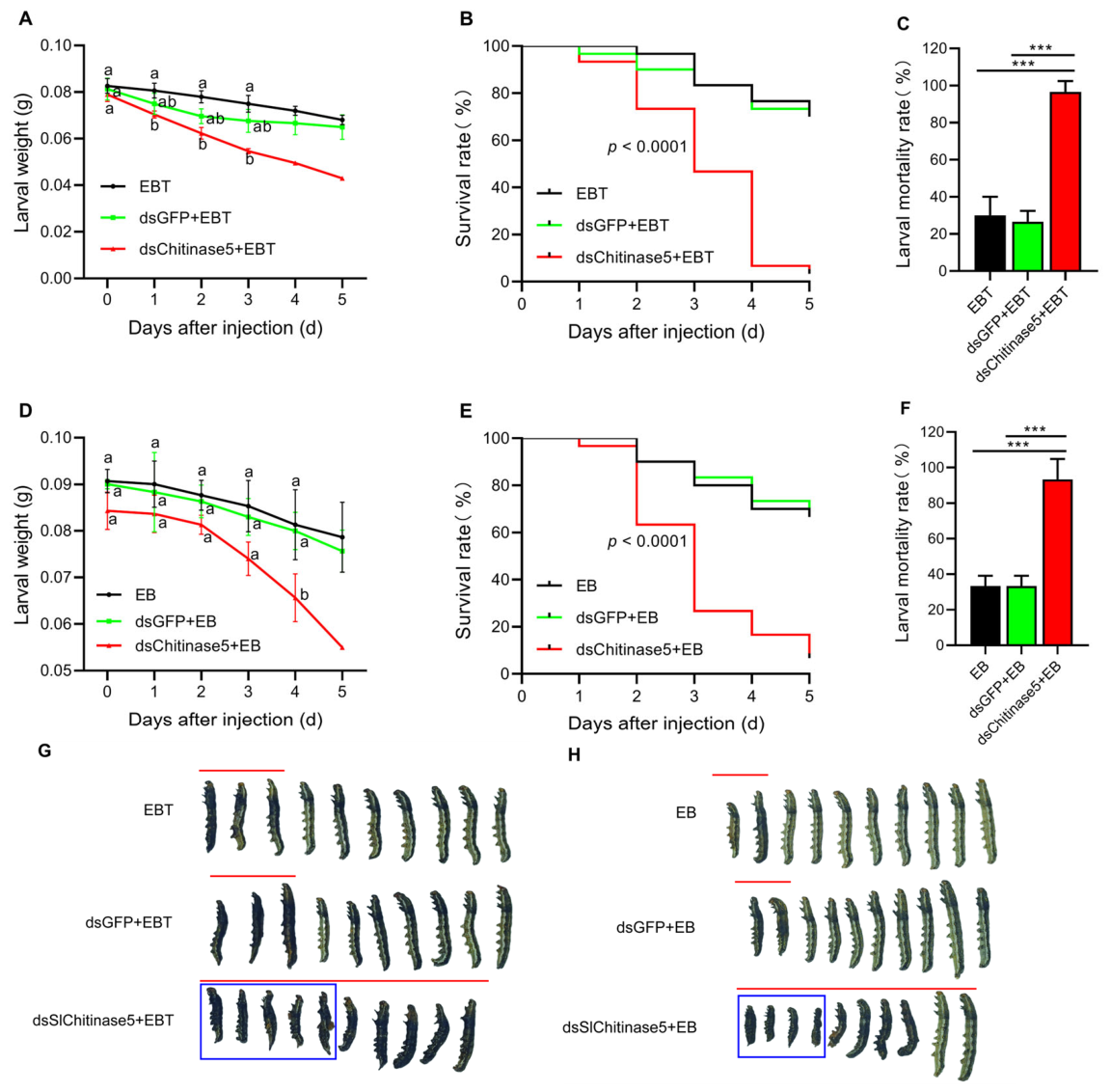
The potential for SlChitinase5 RNAi to enhance insecticide efficacy was investigated by exposing dsSlChitinase5-injected larvae to sublethal concentrations of insecticides (LC20) via a diet-incorporation method. Exposure to EBT over a five-day period revealed that the dsSlChitinase5 + EBT combination caused the greatest decrease in larval body weight (Figure 5A), and the survival rate of this group was also reduced significantly (Figure 5B). By day 5, mortality reached 96.7% in the dsSlChitinase5 + EBT group, compared to 30% in the EBT-alone group and 26.7% in the dsGFP + EBT group (Figure 5C), indicating a significant increase in mortality relative to individual treatments.
A similar pattern was observed with emamectin benzoate (EB). Larval body weight was significantly lower on day 4 (Figure 5D) and the survival rate was significantly lower (Figure 5E) in dsSlChitinase5 + EB group compared to controls. On day 5, larval mortality in dsSlChitinase5 + EB group reached 93.3%, compared with 33.3% in both the EB-alone and dsGFP + EB groups (Figure 5F), indicating significantly higher mortality than in the individual treatment groups. Larval phenotypes following combined dsRNA and pesticide treatments are shown in Figure 5G,H. In the EBT and dsGFP + EBT groups, larvae typically died before molting, whereas death in some larvae of the dsSlChitinase5 + EBT group was associated with incomplete ecdysis (Figure 5G). Similar results were observed in the dsRNA + EB treatment groups (Figure 5H).

3.6. Topical Application of CS-dsSlChitinase5 Nanoparticles Impairs Larval Development and Increases Mortality in S. litura

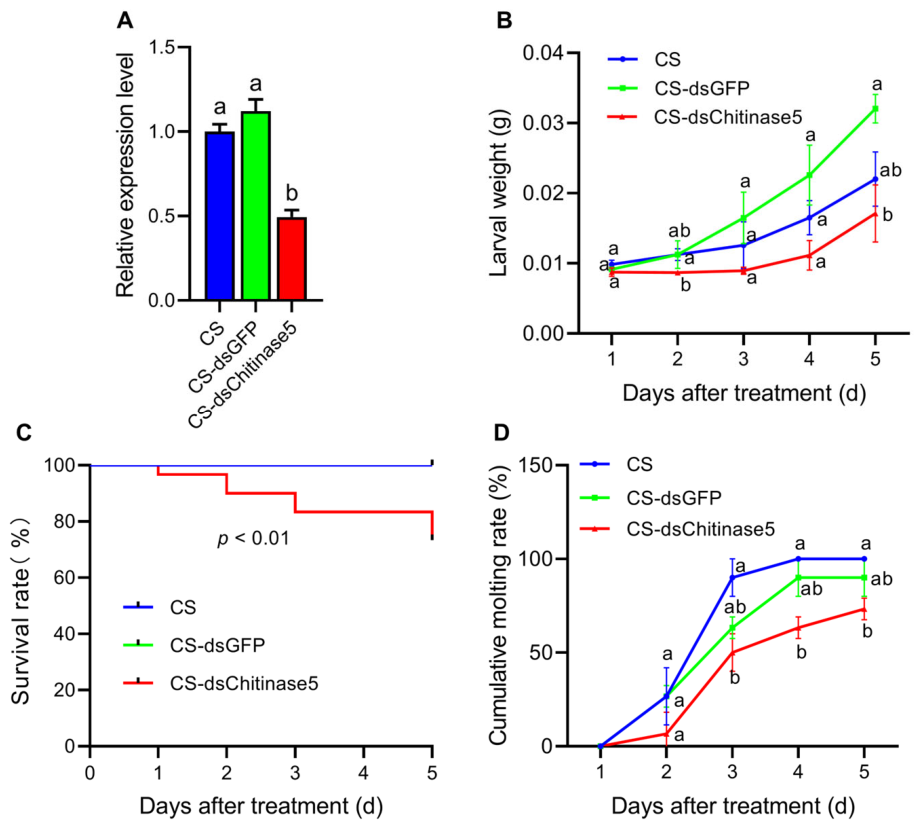
To evaluate an alternative application approach, dsSlChitinase5 was encapsulated in chitosan nanoparticles (CS-dsSlChitinase5) and topically applied to 3rd-instar larvae. Nanoparticle formation was evaluated via agarose gel electrophoresis, which indicated that a chitosan-to-dsRNA mass ratio of 1:1 produced stable complexes (Figure S2). Dynamic light scattering analysis revealed that the average size of CS, CS-dsGFP and CS-dsSlChitinase5 complexes was 273.9 nm, 307.4 nm and 282.2 nm, the zeta potentials were 25.3 mV, 24.8 mV and 25.4 mV, respectively (Figures S3–S5). CS-dsSlChitinase5 treated larvae showed significantly lower SlChitinase5 transcript levels compared with CS-dsGFP or CS-alone control insects (Figure 6A), and significantly lower body weight compared to the CS-dsGFP control on day 5 (Figure 6B). While no mortality was observed in the CS-dsGFP and CS-alone groups over 5 days, the survival rate in the CS-dsSlChitinase5 group gradually decreased, reaching 73.3% by day 5 (Figure 6C). The molting process was also significantly disrupted, and the molting rate in the CS-dsSlChitinase5 group was consistently lower than in controls throughout the observation period. By day 5, the molting rates in the CS-alone, CS-dsGFP, and CS-dsSlChitinase5 groups were 100%, 90% and 73.3%, respectively (Figure 6D).

3.7. Combined Topical CS-dsSlChitinase5 and Insecticide Treatment Led to Complete Larval Mortality

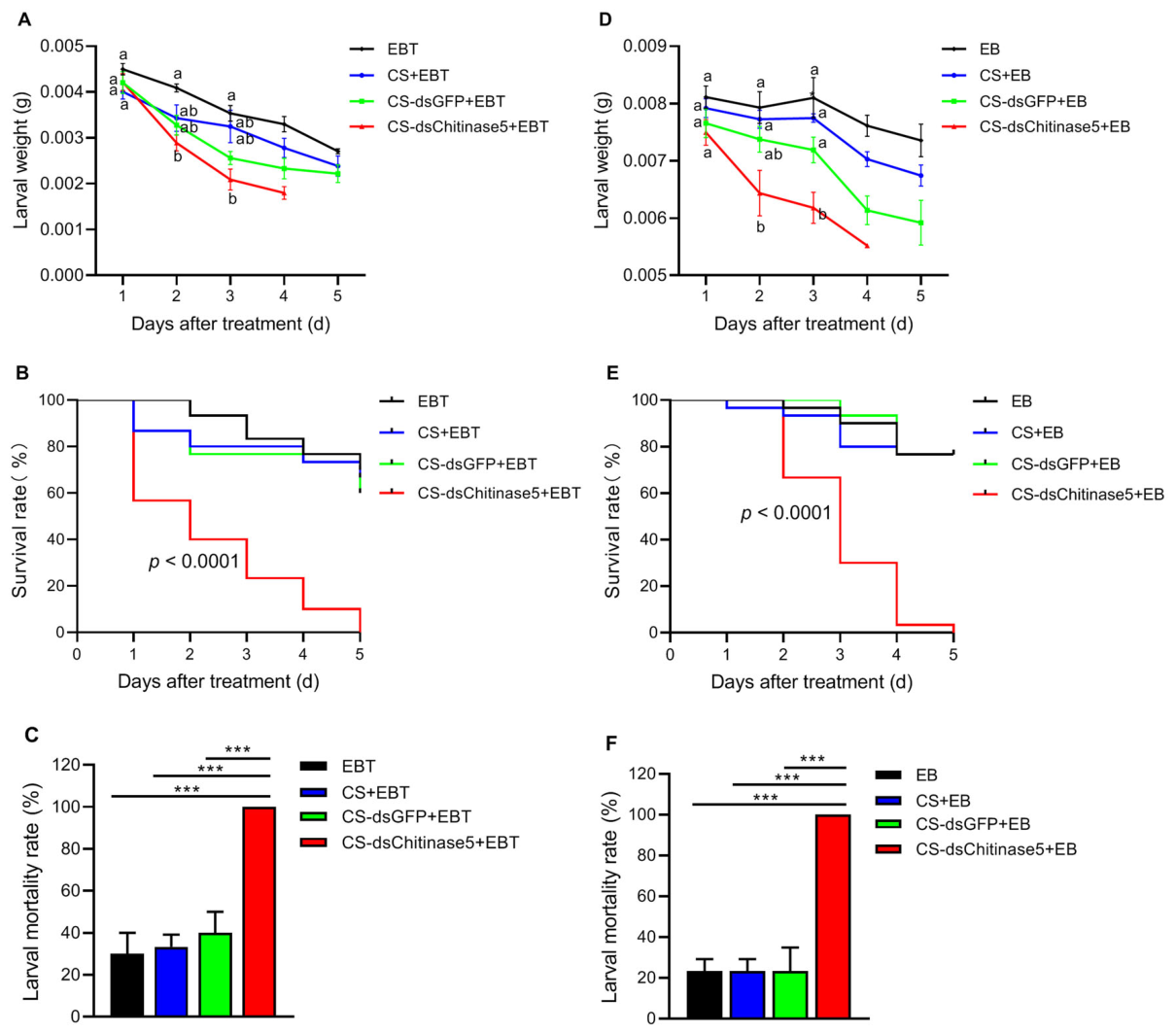
The potential for topical CS-dsSlChitinase5 nanoparticles to enhance insecticide efficacy was investigated by exposing treated 3rd-instar larvae to sublethal concentrations (LC20) of EBT or EB. When challenged with EBT, all treatment groups showed a similar decreasing trend in body weight. However, the body weight of CS-dsSlChitinase5 + EBT group was significantly lower than that of the EBT-alone group on days 2 and 3, and almost all larvae in this group died on days 4 and 5 (Figure 7A). Larval survival in the CS-dsSlChitinase5 + EBT group was significantly lower than in all other groups (Figure 7B). This effect was evident within the first few days of exposure. By day 5, mortality in the CS-dsSlChitinase5 + EBT group reached 100%, compared with 30–40% in the control groups (Figure 7C). A similar trend was observed with EB. Although larval body weight decreased in all groups, the body weight of the CS-dsSlChitinase5 + EB group was significantly lower than that of the EB-alone group on days 2 and 3, and nearly all larvae died on days 4 and 5 (Figure 7D). The CS-dsSlChitinase5 + EB combination also resulted in a significantly lower survival rate (Figure 7E). On day 5, mortality reached 100% in the CS-dsSlChitinase5 + EB group, compared with 23.3% mortality in the control groups (Figure 7F).
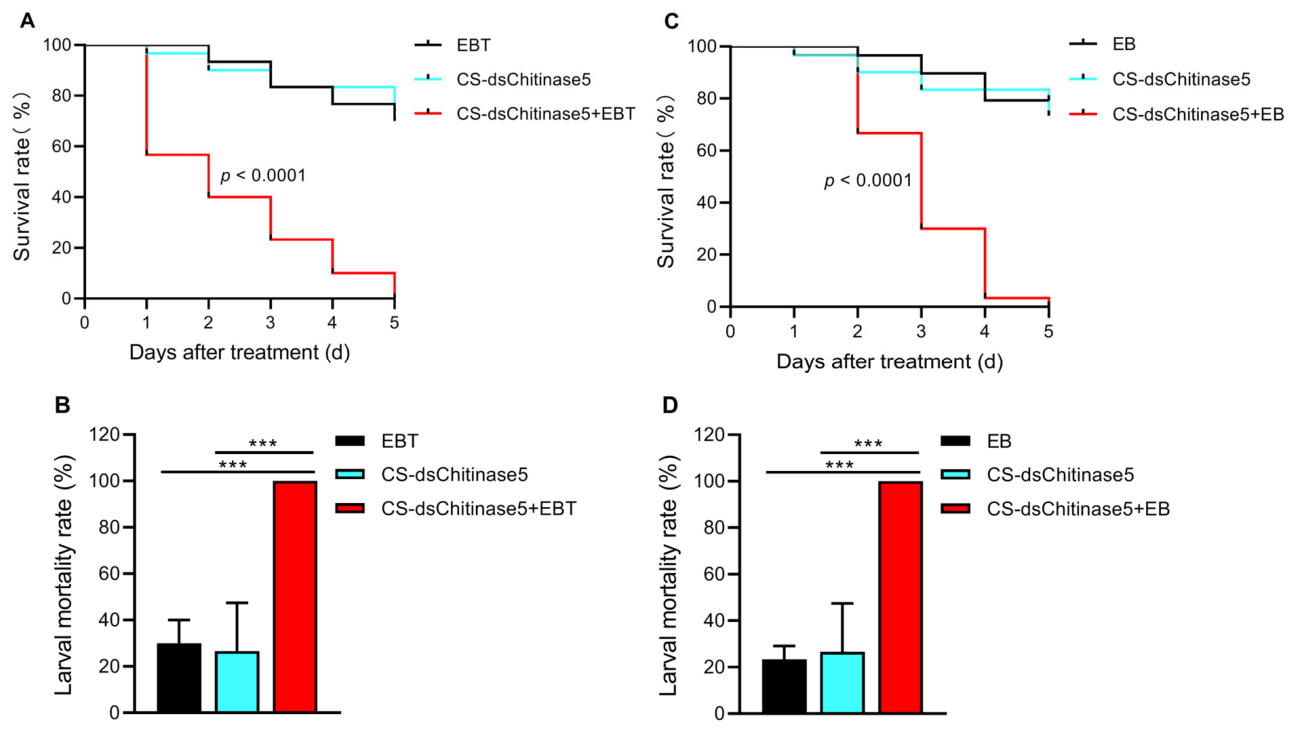
The larval survival rate of CS-dsSlChitinase5 + EBT was compared with CS-dsSlChitinase5 or EBT alone. The results showed that the survival trend of CS-dsSlChitinase5 + EBT was significantly lower than that of CS-dsSlChitinase5 or EBT (Figure 8A). The larval mortality in the CS-dsSlChitinase5 + EBT group reached 100% on day 5, while it was 30% for EBT and 26.7% for CS-dsSlChitinase5 (Figure 8B). A similar survival trend was also observed among the groups of CS-dsSlChitinase5 + EB, CS-dsSlChitinase5, and EB (Figure 8C), and their larval mortality values were 100%, 26.7% and 23.3%, respectively (Figure 8D).

3.8. Exploratory Analysis of Interaction Effects Using the Bliss Independence Model

To further examine the interaction between CS-dsSlChitinase5 treatment and insecticide exposure, an exploratory analysis based on the Bliss independence model was conducted (Figure 9). Across independent experiments, the observed mortality in combined treatments (CS-dsSlChitinase5 + EB and CS-dsSlChitinase5 + EBT) consistently exceeded the mortality expected under an additive model (Figure 9A). Analysis of deviation from Bliss expectation (Observed–Expected) showed positive values for all replicates, indicating a positive interaction between treatments (Figure 9B). Although variability was observed among replicates, the direction of the effect was consistent across experiments. Because the experimental design was not optimized for formal synergy testing across multiple dose combinations, these results are best interpreted as evidence of increased efficacy or enhanced susceptibility rather than definitive synergism.

4. Discussion

Spodoptera litura remains a major agricultural pest with increasing resistance to conventional insecticides, highlighting the need for alternative and complementary control strategies [49]. The S. litura genome contains 13 predicted chitinase genes that share low sequence similarity with each other, suggesting considerable functional diversification within this gene family. However, the roles of individual chitinases in larval development and their suitability as molecular targets for pest control remain insufficiently understood. In this study, we identified SlChitinase5 as a developmentally regulated chitinase gene in S. litura and demonstrated its functional importance through RNAi-mediated suppression. The multidomain architecture of SlChitinase5 is consistent with that of chitinases involved in insect molting [50]. A similar domain organization has been reported for the corresponding chitinase in the closely related species S. frugiperda [18]. Sequence alignment further showed that SlChitinase5 shares approximately 94.7–99.1% identity with those of other lepidopteran insects, including other Spodoptera species, while similarity falls to around 80.6–88.8% with more distantly related lepidopteran species. Phylogenetic analysis further corroborated these close relationships.
Spatiotemporal expression profiling showed that SlChitinase5 transcript levels peak during larval molting and the prepupal stages, a pattern consistent with the reported expression dynamics of chitinases in other lepidopteran species. For instance, Chitinase5 in B. mori is induced during larval molting and the larval-pupal transition [51]. Comparable upregulation of Chitinase5 during these developmental stages has also been documented in Chilo suppressalis and Spodoptera exigua [52,53]. These findings across multiple lepidopteran families reinforce the conserved role of group I chitinases in cuticle remodeling during developmental transitions. Beyond developmental regulation, tissue-specific expression of chitinases has also been observed across several insect species, further supporting their diverse physiological roles. A chitinase gene in H. armigera was detected in the integument, gut, and fat bodies but absent in hemocytes [54]. In P. xylostella, seven chitinase genes are mainly localized in the integument or midgut [55]. A more mechanistic insight comes from studies in female Anopheles adults, where a group I chitinase is highly expressed in the midgut, secreted as an inactive proenzyme into the intestinal lumen upon feeding, and subsequently activated by trypsin [56]. Together with the expression pattern observed for SlChitinase5, these studies suggest that group I chitinases are primarily involved in molting and metamorphosis across diverse insect species.
Based on its domain architecture, SlChitinase5 was predicted to be a secretory group I chitinase. In our study, SlChitinase5 showed high expression during the molting periods of 2nd- and 3rd-instar larvae, but lower expression during later larval molts. It has been reported that group I chitinases are highly expressed in the integument and up-regulated during molting and metamorphosis [57,58]. However, the expression of SlChitinase5 in the fifth-instar larvae, including the integument, was relatively low. Because chitinase genes belong to multiple functional groups, it is plausible that different chitinases contribute to molting at different developmental stages in S. litura. The relatively high expression of SlChitinase5 in the fat body (a central organ for energy metabolism and biosynthesis) and hemolymph (the material transport system) supports its predicted role as a secretory hydrolase, synthesized during molting and transported to the cuticle for function. In the late pupal stage, expression peaks of SlChitinase5 were detected at pupal day 7 (P7) in females and pupal day 8 (P8) in males, which may reflect sex-specific differences in pupation timing. Comparable sex-specific expression patterns have been reported for chitinases in Manduca sexta pupae and Diaphorina citri adults [15,59], although their developmental significance remains unclear.
RNAi-mediated silencing of SlChitinase5 confirmed its critical function. dsSlChitinase5 injection significantly suppressed transcript levels and led to impaired larval growth (reduced body weight), increased mortality, and delayed molting. RNAi-mediated silencing of chitinase genes across diverse insect species consistently produces molting defects, growth inhibition, and mortality, but with varying severity. For example, in P. xylostella and Agrotis ipsilon, chitinase knockdown disrupted larval molting, pupation, and eclosion, often accompanied by larval shrinkage and darkening [55,60]. In Hyphantria cunea, Monochamus alternatus, and Mythimna separata, similar treatments caused cuticular wrinkling, prolonged developmental duration, and body weight reduction [61,62,63]. Even in non-lepidopteran pests such as Tetranychus urticae, suppression of chitinase genes led to high mortality and molting aberrations [64]. These findings indicate that chitinase function is broadly required for successful cuticle remodeling across arthropods. Chitinases play a central role in cuticle remodeling during molting, particularly in the degradation of the old endocuticle following apolysis [13,14]. Disruption of chitinase activity is therefore expected to interfere with cuticle separation and degradation, leading to defective exuviation. Typical phenotypes associated with impaired chitinase function include incomplete shedding of the old cuticle, retention of exuvial material, and failure to complete the transition between instars. These defects ultimately result in developmental arrest or death due to the inability to successfully complete the molting process. Similar outcomes have been reported in RNAi-based studies targeting chitin metabolism-related genes in insects [60]. In our study, retention of the old cuticle and incomplete exuviation in dsSlChitinase5-treated larvae are fully consistent with this biological framework and support the functional importance of SlChitinase5 during larval development. Nevertheless, we note that the sample size used in the dsRNA injection assay was modest due to the technical constraints of microinjection in Lepidoptera, and larger cohorts would further strengthen future functional validation studies.
Although the reduction in SlChitinase5 transcript levels was limited, this does not exclude a strong biological effect. Molting is a highly coordinated and threshold-dependent developmental transition, and successful ecdysis requires precise and timely degradation of the old cuticle. Even partial disruption of this process may destabilize cuticle turnover and cause lethal developmental failure. Similar observations have been reported in RNAi studies targeting chitin metabolism-related genes, in which incomplete gene suppression still resulted in substantial developmental abnormalities and mortality [60,65,66]. Thus, the observed phenotypes in our study are biologically consistent with partial impairment of chitinase function.
An important finding of this study is that SlChitinase5 silencing increased larval susceptibility to chemical insecticides. Injection of dsSlChitinase5 followed by exposure to sublethal concentrations of EBT or EB caused mortality well above that observed for the corresponding individual treatments. Chitosan was selected as the nanocarrier in this study because it is widely used in RNAi and pesticide delivery systems and has favorable biocompatibility and biodegradability. The utility of nanoparticles for enhanced RNAi efficacy and increased insecticidal activity has been well documented across multiple insect species [67,68,69]. In Locusta migratoria, chitosan-delivered dsRNA targeting the Chitinase gene (dsLmCht10) improved dsRNA stability in midgut fluid, enhanced RNAi efficiency, and increased mortality [70]. Similarly, in H. armigera, chitosan/dsRNA complexes effectively silenced lipase and chitinase genes (2–2.7 fold downregulation) and inhibited their enzyme activities (2–5.3 fold), with chitosan also protecting dsRNA from nuclease degradation and gut pH [71,72]. Comparable results have been reported in other lepidopteran pests. In S. frugiperda, chitosan conjugation improved RNAi efficiency [36]. In B. mori, chitosan/dsRNA nanoparticles remained stable in larval midgut fluid while naked dsRNA was completely degraded [28]. These studies support the use of chitosan as an effective nanocarrier for dsRNA delivery, consistent with the enhanced efficacy observed in our study. In addition, our physicochemical characterization of the CS-dsRNA nanoparticles focused on hydrodynamic size, surface charge, and dsRNA complexation parameters most directly linked to biological performance and the values were consistent with those of previously reported functional chitosan-dsRNA formulations used in insect RNAi studies [73,74]. Nonetheless, additional analyses such as nanoparticle morphology by means of transmission electron microscopy would provide a more comprehensive profile and should be incorporated in future optimization studies.
In our study, CS-dsSlChitinase5 successfully induced RNAi of SlChitinase5, causing reduced larval weight, impaired molting, and increased mortality. Although the uptake route of CS-dsRNA following topical application was not investigated in this study, the observed transcript knockdown and associated phenotypic effects indicate biologically relevant dsRNA exposure. Several potential routes may account for the biological availability of dsRNA following topical application. First, ingestion during grooming or feeding behavior is considered a major exposure pathway in many insects, allowing dsRNA deposited on the cuticle to reach the gut epithelium, where uptake mechanisms are more established. Second, entry through spiracles or other natural openings may facilitate access to internal tissues, particularly for nanoscale formulations. Third, although the insect cuticle is generally considered a strong barrier, limited diffusion through intersegmental membranes or regions with reduced cuticular thickness cannot be excluded, especially when dsRNA is formulated with carriers such as chitosan that enhance adhesion and persistence on the insect surface. Previous studies have shown that nanoparticle-based dsRNA delivery systems can improve RNAi efficacy in insects by protecting dsRNA from degradation and increasing its interaction with biological interfaces [31,32,38,69]. Nevertheless, the relative contribution of these proposed routes remains uncharacterized in Lepidoptera, and this lack of direct evidence represents a significant limitation of the present work. Future studies employing different tracking methods are essential to determine the actual entry pathway(s) and to validate the presumed mechanisms.
Likewise, topical application of CS-dsSlChitinase5 followed by insecticide exposure resulted in complete larval mortality within five days, which was well above that observed for the corresponding individual treatments. This interpretation is further supported by an exploratory Bliss independence analysis, in which observed mortality consistently exceeded the expected additive effects, indicating a positive interaction between treatments under the conditions tested. A plausible mechanistic explanation for this interaction lies in the distinct but potentially complementary modes of action of the two insecticides. Tebufenozide is an ecdysone agonist that induces premature or accelerated molting [75]. Successful molting requires tightly coordinated degradation of the old cuticle, a process in which chitinases play a central role. Suppression of SlChitinase5 is therefore expected to reduce the capacity of larvae to properly degrade and shed the old cuticle. Under tebufenozide-induced molting, this impairment creates a mismatch between hormonally forced ecdysis and compromised cuticle degradation, pushing the system beyond the threshold required for successful exuviation. In addition to disrupting molting, tebufenozide also modulates immune functions, significantly affecting gut immunity, microbial populations, and antiviral responses [76]. EB, by contrast, acts primarily on the insect nervous system, interfering with neurotransmission and leading to paralysis and death. A recent study has also shown that EB can disrupt lipid metabolism and hormonal balance in H. cunea [77]. Thus, both compounds may therefore further compromise larvae already weakened by disrupted molting-related processes, but through different physiological routes.
Partial suppression of SlChitinase5 may not be lethal alone, but under hormonally forced molting it can push the system beyond the threshold required for successful exuviation. In S. frugiperda, an enhancement in pest control efficacy is achieved by combining chitosan/dsRNA nanoparticles with emamectin benzoate-lufenuron [78]. Overall, these results demonstrate the practical potential of nanoparticle-delivered RNAi as a complementary tool that can enhance insecticide performance and potentially reduce reliance on chemical insecticides. We note that the insecticide bioassays did not include a solvent-only control, and incorporating such a control would further strengthen future evaluations of insecticide-RNAi interactions. Nevertheless, acetone is widely used as a carrier solvent in Lepidoptera diet-incorporation assays, and published protocols report no adverse effects at the residual levels remaining after evaporation [79].

5. Conclusions

In conclusion, our results suggest that SlChitinase5 plays an important role in S. litura development and represents a potential RNAi target. The successful development of chitosan nanoparticles that enhanced the efficacy of conventional insecticides indicates a promising complementary approach for integrated pest management. Although mechanistic uptake pathways and formal synergism analyses were not addressed in this study, the combined use of RNAi and reduced insecticide doses offers preliminary evidence for lowering chemical inputs and advancing RNA-based biopesticide strategies.

Supplementary Materials

The following supporting information can be downloaded at https://www.mdpi.com/article/10.3390/agriculture16101030/s1. Figure S1: Multiple sequence alignment of S. litura SlChitinase5 with homologous chitinase sequences from closely related lepidopteran species; Figure S2: Electrophoretic detection of CS-dsSlChitinase5 nanoparticle pellet (A) and supernatant (B) at different chitosan-to-dsRNA mass ratios; Figure S3: Particle size distribution (A) and Zeta potential distribution (B) of CS-dsSlChitinase5 nanoparticle complexes; Figure S4: Particle size distribution of CS (A) and CS-dsGFP (B) nanoparticle complexes; Figure S5: Zeta potential distribution of CS (A) and CS-dsGFP (B) nanoparticle complexes; Table S1: Primer information in this study. Table S2: p-value data of all of the statistical results.

Author Contributions

Conceptualization, H.Q., Y.K. and D.L.; Methodology, H.S., Y.C. and Z.T.; Software, H.S., Y.C. and Z.T.; Validation, H.S. and Y.C.; Formal Analysis, H.S. and Y.C.; Investigation, H.S. and Y.C.; Data Curation, H.S. and Y.C.; Writing—Original Draft Preparation, H.S.; Writing—Review and Editing, H.Q., C.A.-P. and Y.K.; Visualization, H.S. and H.Q.; Supervision, H.Q., Y.K. and C.A.-P.; Project Administration, H.Q., D.L. and C.A.-P.; Funding Acquisition, H.Q. and Y.K. All authors have read and agreed to the published version of the manuscript.

Funding

This research was funded by the National Natural Science Foundation of China (32070503), the Key Research and Development Program of Henan Province, China (231111111000), Key Scientific Research Projects of Colleges and Universities in Henan Province, China (24A180020), and the Cultivation Fund of Nanyang Normal University (2022PY001). C.A-P. was funded through the Portuguese FCT—Fundação para a Ciência e a Tecnologia, I.P., under the Scientific Employment Stimulus program (2024.10667.CEECIND).

Data Availability Statement

The datasets generated and analyzed in this study include qRT-PCR Ct values, larval body-weight measurements, mortality records from insecticide bioassays, nanoparticle size and zeta-potential measurements, and Bliss independence analysis outputs. Summary data supporting the findings are provided within the article and its Supplementary Materials. The full underlying datasets are available from the corresponding authors upon reasonable request.

Acknowledgments

We thank Li Xu and Runqiang Liu from Henan Institute of Science and Technology for providing the S. litura strains. We also acknowledge Donghai Zhang from Henan Xifunong Biotechnology Co., Ltd. for supplying the chemical insecticides, and Huanhuan Xing and Xueguo Liu from Nanyang Institute of Technology for their technical assistance with the DLS analyses.

Conflicts of Interest

The authors declare no conflicts of interest.

Abbreviations

The following abbreviations are used in this manuscript:
RNAiRNA interference
dsRNADouble-stranded RNA
GFPGreen fluorescent protein
CADCatalytic domain
CBDChitin-binding domain
CHSChitin synthase
AKArginine kinase
CSChitosan
ORFOpen reading frame
DLSDynamic light scattering
EBEmamectin benzoate
EBTEmamectin benzoate–tebufenozide
SDStandard deviation
ANOVAOne-way analysis of variance

References

  1. EFSA Panel on Plant Health (PLH); Bragard, C.; Dehnen-Schmutz, K.; Di Serio, F.; Gonthier, P.; Jacques, M.A.; Jaques Miret, J.A.; Justesen, A.F.; Magnusson, C.S.; Milonas, P.; et al. Pest categorisation of Spodoptera litura. EFSA J. 2019, 17, e05765. [Google Scholar] [CrossRef]
  2. Zhou, Y.; Li, H.G.; Huang, Q.; Liang, S.; Huang, Q.; Zuo, M.; Bao, M.; He, B. Toosendanin inhibits the growth of Spodoptera litura by inducing metabolic dysfunction in the midgut. Pestic. Biochem. Physiol. 2025, 208, 106249. [Google Scholar] [CrossRef] [PubMed]
  3. Gong, J.; Cheng, T.; Wu, Y.; Yang, X.; Feng, Q.; Mita, K. Genome-wide patterns of copy number variations in Spodoptera litura. Genomics 2019, 111, 1231–1238. [Google Scholar] [CrossRef]
  4. Wang, R.L.; He, Y.N.; Staehelin, C.; Liu, S.W.; Su, Y.J.; Zhang, J.E. Identification of two cytochrome monooxygenase P450 genes, CYP321A7 and CYP321A9, from the tobacco cutworm moth (Spodoptera litura) and their expression in response to plant allelochemicals. Int. J. Mol. Sci. 2017, 18, 2278. [Google Scholar] [CrossRef]
  5. Xu, L.; Mei, Y.; Liu, R.; Chen, X.; Li, D.; Wang, C. Transcriptome analysis of Spodoptera litura reveals the molecular mechanism to pyrethroids resistance. Pestic. Biochem. Physiol. 2020, 169, 104649. [Google Scholar] [CrossRef]
  6. Liu, X.; Zhu, W.; Gai, X.; Liu, S.; Wang, C.; Lv, L.; Wang, Y.; Wang, X.; Lu, Z.; Wang, Z. Synergistic disruption of detoxification, immunity, and neural pathways in honeybees following co-exposure to cyantraniliprole and difenoconazole. Pestic. Biochem. Physiol. 2025, 214, 106640. [Google Scholar] [CrossRef]
  7. Yin, X.; Li, S.; Tian, Q.; Li, Y. Comparison of the toxicity and pharmacological effects of two insecticides against the Asian corn borer, Ostrinia furnacalis. Pestic. Biochem. Physiol. 2025, 214, 106597. [Google Scholar] [CrossRef]
  8. Roditakis, E.; Skarmoutsou, C.; Staurakaki, M. Toxicity of insecticides to populations of tomato borer Tuta absoluta (Meyrick) from Greece. Pest Manag. Sci. 2013, 69, 834–840. [Google Scholar] [CrossRef] [PubMed]
  9. Tudi, M.; Daniel Ruan, H.; Wang, L.; Lyu, J.; Sadler, R.; Connell, D.; Chu, C.; Phung, D.T. Agriculture development, pesticide application and its impact on the environment. Int. J. Environ. Res. Public. Health 2021, 18, 1112. [Google Scholar] [CrossRef] [PubMed]
  10. Kranthi, K.R.; Jadhav, D.R.; Wanjari, R.R.; Ali, S.S.; Russell, D. Carbamate and organophosphate resistance in cotton pests in India, 1995 to 1999. Bull. Entomol. Res. 2001, 91, 37–46. [Google Scholar] [CrossRef]
  11. Tong, H.; Su, Q.; Zhou, X.; Bai, L. Field resistance of Spodoptera litura (Lepidoptera: Noctuidae) to organophosphates, pyrethroids, carbamates and four newer chemistry insecticides in Hunan, China. J. Pest Sci. 2013, 86, 599–609. [Google Scholar] [CrossRef]
  12. Chen, W.; Yang, Q. Development of novel pesticides targeting insect chitinases: A minireview and perspective. J. Agric. Food Chem. 2020, 68, 4559–4565. [Google Scholar] [CrossRef]
  13. Merzendorfer, H.; Zimoch, L. Chitin metabolism in insects: Structure, function and regulation of chitin synthases and chitinases. J. Exp. Biol. 2003, 206, 4393–4412. [Google Scholar] [CrossRef]
  14. Arakane, Y.; Muthukrishnan, S. Insect chitinase and chitinase-like proteins. Cell Mol. Life Sci. 2010, 67, 201–216. [Google Scholar] [CrossRef] [PubMed]
  15. Tetreau, G.; Cao, X.; Chen, Y.R.; Muthukrishnan, S.; Jiang, H.; Blissard, G.W.; Kanost, M.R.; Wang, P. Overview of chitin metabolism enzymes in Manduca sexta: Identification, domain organization, phylogenetic analysis and gene expression. Insect Biochem. Mol. Biol. 2015, 62, 114–126. [Google Scholar] [CrossRef] [PubMed]
  16. Ding, X.; Gopalakrishnan, B.; Johnson, L.B.; White, F.F.; Wang, X.; Morgan, T.D.; Kramer, K.J.; Muthukrishnan, S. Insect resistance of transgenic tobacco expressing an insect chitinase gene. Transgenic Res. 1998, 7, 77–84. [Google Scholar] [CrossRef]
  17. Feng, Y.; Wang, S.; Yang, F.; Shang, Y.; Jocelin Ngando, F.; Huang, J.; Guo, Y. Molecular identification and functional analysis of chitinase genes reveal their importance in the metamorphosis of Sarcophaga peregrina (Diptera: Sarcophagidae). J. Insect Sci. 2023, 23, 10. [Google Scholar] [CrossRef]
  18. Liu, X.Y.; Wang, S.S.; Zhong, F.; Zhou, M.; Jiang, X.Y.; Cheng, Y.S.; Dan, Y.H.; Hu, G.; Li, C.; Tang, B.; et al. Chitinase (CHI) of Spodoptera frugiperda affects molting development by regulating the metabolism of chitin and trehalose. Front. Physiol. 2022, 13, 1034926. [Google Scholar] [CrossRef] [PubMed]
  19. Dietz-Pfeilstetter, A.; Mendelsohn, M.; Gathmann, A.; Klinkenbuß, D. Considerations and regulatory approaches in the USA and in the EU for dsRNA-Based externally applied pesticides for plant protection. Front. Plant Sci. 2021, 12, 682387. [Google Scholar] [CrossRef]
  20. Grishok, A. RNAi mechanisms in Caenorhabditis elegans. FEBS Lett. 2005, 579, 5932–5939. [Google Scholar] [CrossRef]
  21. Terenius, O.; Papanicolaou, A.; Garbutt, J.S.; Eleftherianos, I.; Huvenne, H.; Kanginakudru, S.; Albrechtsen, M.; An, C.; Aymeric, J.L.; Barthel, A.; et al. RNA interference in Lepidoptera: An overview of successful and unsuccessful studies and implications for experimental design. J. Insect Physiol. 2011, 57, 231–245. [Google Scholar] [CrossRef]
  22. Yan, T.; Chen, H.; Sun, Y.; Yu, X.; Xia, L. RNA interference of the ecdysone receptor genes EcR and USP in grain aphid (Sitobion avenae F.) affects its survival and fecundity upon feeding on wheat plants. Int. J. Mol. Sci. 2016, 17, 2098. [Google Scholar] [CrossRef] [PubMed]
  23. Rana, S.; Rajurkar, A.B.; Kumar, K.K.; Mohankumar, S. Comparative analysis of chitin synthaseA dsRNA mediated RNA interference for management of crop pests of different families of lepidoptera. Front. Plant Sci. 2020, 11, 427. [Google Scholar] [CrossRef] [PubMed]
  24. Liu, X.J.; Liang, X.Y.; Guo, J.; Shi, X.K.; Merzendorfer, H.; Zhu, K.Y.; Zhang, J.Z. V-ATPase subunit a is required for survival and midgut development of Locusta migratoria. Insect Mol. Biol. 2022, 31, 60–72. [Google Scholar] [CrossRef] [PubMed]
  25. Qian, K.; Guan, Q.; Zhang, H.; Zhang, N.; Meng, X.; Liu, H.; Wang, J. RNAi-mediated knockdown of arginine kinase genes leads to high mortality and negatively affect reproduction and blood-feeding behavior of Culex pipiens pallens. PLoS Negl. Trop. Dis. 2022, 16, e0010954. [Google Scholar] [CrossRef]
  26. Christiaens, O.; Tardajos, M.G.; Martinez Reyna, Z.L.; Dash, M.; Dubruel, P.; Smagghe, G. Increased RNAi efficacy in Spodoptera exigua via the formulation of dsRNA with guanylated polymers. Front. Physiol. 2018, 9, 316. [Google Scholar] [CrossRef]
  27. Li, H.; Jiang, W.; Zhang, Z.; Xing, Y.; Li, F. Transcriptome analysis and screening for potential target genes for RNAi-mediated pest control of the beet armyworm, Spodoptera exigua. PLoS ONE 2013, 8, e65931. [Google Scholar] [CrossRef]
  28. Liu, J.; Yang, Y.; Yang, Q.; Lin, X.; Liu, Y.; Li, Z.; Swevers, L. Successful oral RNA interference efficiency in the silkworm Bombyx mori through nanoparticle-shielded dsRNA delivery. J. Insect Physiol. 2025, 161, 104749. [Google Scholar] [CrossRef]
  29. Jiang, Y.; Zong, S.; Wang, X.; Zhu-Salzman, K.; Zhao, J.; Xiao, L.; Xu, D.; Xu, G.; Tan, Y. pH-responsive nanoparticles for oral delivery of RNAi for sustained protection against Spodoptera exigua. Int. J. Biol. Macromol. 2025, 306, 141763. [Google Scholar] [CrossRef]
  30. Sandal, S.; Singh, S.; Bansal, G.; Kaur, R.; Mogilicherla, K.; Pandher, S.; Roy, A.; Kaur, G.; Rathore, P.; Kalia, A. Nanoparticle-shielded dsRNA delivery for enhancing RNAi efficiency in cotton spotted Bollworm Earias vittella (Lepidoptera: Nolidae). Int. J. Mol. Sci. 2023, 24, 9161. [Google Scholar] [CrossRef]
  31. Liu, J.; He, Q.; Lin, X.; Smagghe, G. Recent progress in nanoparticle-mediated RNA interference in insects: Unveiling new frontiers in pest control. J. Insect Physiol. 2025, 167, 104884. [Google Scholar] [CrossRef]
  32. Yan, S.; Ren, B.Y.; Shen, J. Nanoparticle-mediated double-stranded RNA delivery system: A promising approach for sustainable pest management. Insect Sci. 2021, 28, 21–34. [Google Scholar] [CrossRef]
  33. Kashyap, P.L.; Xiang, X.; Heiden, P. Chitosan nanoparticle based delivery systems for sustainable agriculture. Int. J. Biol. Macromol. 2015, 77, 36–51. [Google Scholar] [CrossRef] [PubMed]
  34. Saberi Riseh, R.; Vatankhah, M.; Hassanisaadi, M.; Varma, R.S. A review of chitosan nanoparticles: Nature’s gift for transforming agriculture through smart and effective delivery mechanisms. Int. J. Biol. Macromol. 2024, 260, 129522. [Google Scholar] [CrossRef]
  35. Zhang, X.; Zhang, J.; Zhu, K.Y. Chitosan/double-stranded RNA nanoparticle-mediated RNA interference to silence chitin synthase genes through larval feeding in the African malaria mosquito (Anopheles gambiae). Insect Mol. Biol. 2010, 19, 683–693. [Google Scholar] [CrossRef] [PubMed]
  36. Gurusamy, D.; Mogilicherla, K.; Palli, S.R. Chitosan nanoparticles help double-stranded RNA escape from endosomes and improve RNA interference in the fall armyworm, Spodoptera frugiperda. Arch. Insect Biochem. Physiol. 2020, 104, e21677. [Google Scholar] [CrossRef] [PubMed]
  37. Cooper, A.M.; Silver, K.; Zhang, J.; Park, Y.; Zhu, K.Y. Molecular mechanisms influencing efficiency of RNA interference in insects. Pest Manag. Sci. 2019, 75, 18–28. [Google Scholar] [CrossRef]
  38. Christiaens, O.; Niu, J.; Nji Tizi Taning, C. RNAi in Insects: A Revolution in Fundamental Research and Pest Control Applications. Insects 2020, 11, 415. [Google Scholar] [CrossRef]
  39. Devi, M.; Mahajan, A.; Saini, H.S.; Kaur, S. The impact of lethal and sub-lethal exposure of emamectin benzoate on populations of Spodoptera litura (Lepidoptera: Noctuidae) under laboratory conditions. Toxicon 2024, 250, 108121. [Google Scholar] [CrossRef]
  40. Tong, Z.; Shi, H.; Liu, Z.; Zhang, D.; Li, D.; Kan, Y.; Qiao, H. Molecular identification and functional analysis of the putative ecdysone receptor in Spodoptera litura. J. Asia-Pac. Entomol. 2025, 28, 102390. [Google Scholar] [CrossRef]
  41. Robert, X.; Gouet, P. Deciphering key features in protein structures with the new ENDscript server. Nucleic Acids Res. 2014, 42, W320–W324. [Google Scholar] [CrossRef] [PubMed]
  42. Kumar, S.; Stecher, G.; Suleski, M.; Sanderford, M.; Sharma, S.; Tamura, K. MEGA12: Molecular evolutionary genetic analysis version 12 for adaptive and green computing. Mol. Biol. Evol. 2024, 41, msae263. [Google Scholar] [CrossRef]
  43. Livak, K.J.; Schmittgen, T.D. Analysis of relative gene expression data using real-time quantitative PCR and the 2−ΔΔCT method. Methods 2001, 25, 402–408. [Google Scholar] [CrossRef]
  44. Lu, Y.; Yuan, M.; Gao, X.; Kang, T.; Zhan, S.; Wan, H.; Li, J. Identification and Validation of Reference Genes for Gene Expression Analysis Using Quantitative PCR in Spodoptera litura (Lepidoptera: Noctuidae). PLoS ONE 2013, 8, e68059. [Google Scholar] [CrossRef] [PubMed]
  45. Shu, B.; Zhang, J.; Cui, G.; Sun, R.; Sethuraman, V.; Yi, X.; Zhong, G. Evaluation of Reference Genes for Real-Time Quantitative PCR Analysis in Larvae of Spodoptera litura Exposed to Azadirachtin Stress Conditions. Front. Physiol. 2018, 9, 372. [Google Scholar] [CrossRef]
  46. Wu, S.; Luo, Y.; Zeng, Z.; Yu, Y.; Zhang, S.; Hu, Y.; Chen, L. Determination of internal controls for quantitative gene expression of Spodoptera litura under microbial pesticide stress. Sci. Rep. 2024, 14, 6143. [Google Scholar] [CrossRef] [PubMed]
  47. Zhang, X.; Mysore, K.; Flannery, E.; Michel, K.; Severson, D.W.; Zhu, K.Y.; Duman-Scheel, M. Chitosan/interfering RNA nanoparticle mediated gene silencing in disease vector mosquito larvae. J. Vis. Exp. 2015, 25, 52523. [Google Scholar] [CrossRef]
  48. Bliss, C.I. The toxicity of poisons applied jointly. Ann. Appl. Biol. 1939, 26, 585–615. [Google Scholar] [CrossRef]
  49. Van den Berg, J.; du Plessis, H. Chemical control and insecticide resistance in Spodoptera frugiperda (Lepidoptera: Noctuidae). J. Econ. Entomol. 2022, 115, 1761–1771. [Google Scholar] [CrossRef]
  50. Huang, Q.S.; Xie, X.L.; Liang, G.; Gong, F.; Wang, Y.; Wei, X.Q.; Wang, Q.; Ji, Z.L.; Chen, Q.X. The GH18 family of chitinases: Their domain architectures, functions and evolutions. Glycobiology 2012, 22, 23–34. [Google Scholar] [CrossRef]
  51. Zhang, X.; Zheng, S. 20-hydroxyecdysone enhances the expression of the chitinase 5 via Broad-Complex Zinc-Finger 4 during metamorphosis in silkworm, Bombyx mori. Insect Mol. Biol. 2017, 26, 243–253. [Google Scholar] [CrossRef]
  52. Zhao, X.; Situ, G.; He, K.; Xiao, H.; Su, C.; Li, F. Functional Analysis of Eight Chitinase Genes in Rice Stem Borer and Their Potential Application in Pest Control. Insect Mol. Biol. 2018, 27, 835–846. [Google Scholar] [CrossRef]
  53. Zhang, D.; Chen, J.; Yao, Q.; Pan, Z.; Chen, J.; Zhang, W. Functional analysis of two chitinase genes during the pupation and eclosion stages of the beet armyworm Spodoptera exigua by RNA interference. Arch. Insect Biochem. Physiol. 2012, 79, 220–234. [Google Scholar] [CrossRef]
  54. Ahmad, T.; Rajagopal, R.; Bhatnagar, R.K. Molecular Characterization of Chitinase from Polyphagous Pest Helicoverpa Armigera. Biochem. Biophys. Res. Commun. 2003, 310, 188–195. [Google Scholar] [CrossRef]
  55. Zhu, B.; Shan, J.; Li, R.; Liang, P.; Gao, X. Identification and RNAi-based function analysis of chitinase family genes in diamondback moth, Plutella xylostella. Pest Manag. Sci. 2019, 75, 1951–1961. [Google Scholar] [CrossRef]
  56. Shen, Z.; Jacobs-Lorena, M. Characterization of a novel gut-specific chitinase gene from the human malaria vector Anopheles gambiae. J. Biol. Chem. 1997, 272, 28895–28900. [Google Scholar] [CrossRef]
  57. Kramer, K.J.; Corpuz, L.; Choi, H.K.; Muthukrishnan, S. Sequence of a cDNA and expression of the gene encoding epidermal and gut chitinases of Manduca sexta. Insect Biochem. Mol. Biol. 1993, 23, 691–701. [Google Scholar] [CrossRef]
  58. Kim, M.G.; Shin, S.W.; Bae, K.S.; Kim, S.C.; Park, H.Y. Molecular cloning of chitinase cDNAs from the silkworm, Bombyx mori and the fall webworm, Hyphantria cunea. Insect Biochem. Mol. Biol. 1998, 28, 163–171. [Google Scholar] [CrossRef]
  59. Wu, Z.Z.; Zhang, W.Y.; Lin, Y.Z.; Li, D.Q.; Shu, B.S.; Lin, J.T. Genome-wide identification, characterization and functional analysis of the chitianse and chitinase-like gene family in Diaphorina citri. Pest Manag. Sci. 2022, 78, 1740–1748. [Google Scholar] [CrossRef]
  60. Li, D.; Zhang, J.; Yang, Y.; Liu, J.; Lu, J.; Ren, M.; Abbas, M.; Zhu, K.Y.; Zhang, J. Identification and RNAi-based functional analysis of chitinase family genes in Agrotis ipsilon. Pest Manag. Sci. 2022, 78, 4278–4287. [Google Scholar] [CrossRef]
  61. Zhang, X.; Wang, Y.; Zhang, S.; Kong, X.; Liu, F.; Zhang, Z. RNAi-mediated silencing of the chitinase 5 gene for fall webworm (Hyphantria cunea) can inhibit larval molting depending on the timing of dsRNA injection. Insects 2021, 12, 406. [Google Scholar] [CrossRef]
  62. Fang, S.; Chang, X.; Chen, H.; Wu, Z.; Shi, J. Cloning and RNAi-mediated functional characterization of two Monochamus alternatus chitinase genes. Pest Manag. Sci. 2025, 81, 6609–6619. [Google Scholar] [CrossRef]
  63. Bao, W.; Cao, B.; Zhang, Y.; Wuriyanghan, H. Silencing of Mythimna separata chitinase genes via oral delivery of in planta-expressed RNAi effectors from a recombinant plant virus. Biotechnol. Lett. 2016, 38, 1961–1966. [Google Scholar] [CrossRef]
  64. Zhu, Q.; Arakane, Y.; Banerjee, D.; Beeman, R.W.; Kramer, K.J.; Muthukrishnan, S. Domain organization and phylogenetic analysis of the chitinase-like family of proteins in three species of insects. Insect Biochem. Mol. Biol. 2008, 38, 452–466. [Google Scholar] [CrossRef]
  65. Ullah, F.; Gul, H.; Wang, X.; Ding, Q.; Said, F.; Gao, X.; Desneux, N.; Song, D. RNAi-Mediated Knockdown of Chitin Synthase 1 (CHS1) Gene Causes Mortality and Decreased Longevity and Fecundity in Aphis gossypii. Insects 2019, 11, 22. [Google Scholar] [CrossRef]
  66. Liu, M.; Ge, R.; Song, L.; Chen, Y.; Yan, S.; Bu, C. The chitinase genes TuCht4 and TuCht10 are indispensable for molting and survival of Tetranychus urticae. Insect Biochem. Mol. Biol. 2024, 171, 104150. [Google Scholar] [CrossRef]
  67. Yan, S.; Hu, Q.; Li, J.; Chao, Z.; Cai, C.; Yin, M.; Du, X.; Shen, J. A star polycation acts as a drug nanocarrier to improve the toxicity and persistence of botanical pesticides. ACS Sustain. Chem. Eng. 2019, 7, 17406–17413. [Google Scholar] [CrossRef]
  68. Yan, S.; Ren, B.; Zeng, B.; Shen, J. Improving RNAi efficiency for pest control in crop species. BioTechniques 2020, 68, 283–290. [Google Scholar] [CrossRef]
  69. Liang, Y.; Gao, Y.; Wang, W.; Dong, H.; Tang, R.; Yang, J.; Niu, J.; Zhou, Z.; Jiang, N.; Cao, Y. Fabrication of smart stimuli-responsive mesoporous organosilica nano-vehicles for targeted pesticide delivery. J. Hazard. Mater. 2020, 389, 122075. [Google Scholar] [CrossRef]
  70. Liu, Y.; Zhang, J.; Li, S.; Chai, L.; Chang, B.H.; Malak, M.; El Wakil, A.; Moussian, B.; Zhao, Z.; Zeng, Z.; et al. Chitosan nanoparticle-mediated delivery of dsRNA for enhancing RNAi efficiency in Locusta migratoria. Pest Manag. Sci. 2025, 81, 5260–5269. [Google Scholar] [CrossRef]
  71. Kolge, H.; Kadam, K.; Ghormade, V. Chitosan nanocarriers mediated dsRNA delivery in gene silencing for Helicoverpa armigera biocontrol. Pestic. Biochem. Physiol. 2023, 189, 105292. [Google Scholar] [CrossRef]
  72. Kolge, H.; Kadam, K.; Galande, S.; Lanjekar, V.; Ghormade, V. New frontiers in pest control: Chitosan nanoparticles-shielded dsRNA as an effective topical RNAi spray for gram podborer biocontrol. ACS Appl. Bio Mater. 2021, 4, 5145–5157. [Google Scholar] [CrossRef]
  73. Petrônio, M.S.; Barros-Alexandrino, T.T.; Lima, A.M.F.; Assis, O.B.G.; Nagata, A.K.I.; Nakasu, E.Y.T.; Tiera, M.J.; Pilon, L. Physicochemical and toxicity investigation of chitosan-based dsRNA nanocarrier formation. Biointerface Res. Appl. Chem. 2022, 12, 5266–5279. [Google Scholar] [CrossRef]
  74. Sandal, S.; Bansal, G.; Kaur, R.; Singh, S. Overcoming gut and hemolymph barriers: Chitosan nanocarrier enhance dsRNA stability and RNAi in Helicoverpa armigera. Proc. Indian Natl. Sci. Acad. 2025. [Google Scholar] [CrossRef]
  75. Retnakaran, A.; Gelbic, I.; Sundaram, M.; Tomkins, W.; Ladd, T.; Primavera, M.; Feng, Q.; Arif, B.; Palli, R.; Krell, P. Mode of action of the ecdysone agonist tebufenozide (RH-5992), and an exclusion mechanism to explain resistance to it. Pest Manag. Sci. 2001, 57, 951–957. [Google Scholar] [CrossRef]
  76. Attarianfar, M.; Mikani, A.; Mehrabadi, M. Beyond molting disruption: Tebufenozide modifies gut immunity and antiviral responses in Helicoverpa armigera (Noctuidae). Comp. Biochem. Physiol. C Toxicol. Pharmacol. 2026, 303, 110455. [Google Scholar] [CrossRef]
  77. Kuerban, K.; Li, J.; Xu, Z.; Wickham, J.; Wu, Y.; Lv, N.; Fan, J. Emamectin benzoate inhibits growth and development of Hyphantria cunea, accompanied by disruptions in lipid metabolism and hormonal balance. Pestic. Biochem. Physiol. 2025, 215, 106720. [Google Scholar] [CrossRef]
  78. Guo, S.; Li, Z.; Zhao, X.; Zhang, D.; Ayra-Pardo, C.; Kan, Y.; Li, D. Additive Insecticidal Effects of Chitosan/dsRNA Nanoparticles Targeting V-ATPaseD and Emamectin Benzoate-Lufenuron Formulations Against Spodoptera frugiperda (J.E. Smith) (Lepidoptera: Noctuidae). Insects 2025, 16, 348. [Google Scholar] [CrossRef]
  79. Badder, C.; Bart, S.; Robinson, A.; Hesketh, H.; Kille, P.; Spurgeon, D.J. A Novel Lepidoptera bioassay analysed using a reduced GUTS model. Ecotoxicol. Environ. Saf. 2023, 251, 114504. [Google Scholar] [CrossRef]
Figure 1. Phylogram showing the relationship between SlChitinase5 (AY325497) and homologous chitinase sequences from closely related lepidopteran species. The original phylogenetic tree was constructed in MEGA 12 using the neighbor-joining method with 1000 bootstrap replications. The numbers associated with the branches represent the bootstrap support values (%), and the scale bar indicates the evolutionary distance. Species and accession numbers are as follows: S. littoralis (A0A9P0MYL6); S. exigua (A0A835LE66); Mythimna separata (A0AAD8DMW0); Helicoverpa armigera (A0A2W1BUR3); Trichoplusia ni (A0A7E5W4R2); Chrysodeixis includens (A0A9P0BVI3); Arctia plantaginis (A0A8S0ZK97); Bombyx mori (P90710); Manduca sexta (A0A921ZDW4).
Agriculture 16 01030 g001
Figure 2. Spatiotemporal expression patterns of SlChitinase5 in S. litura as determined via qRT-PCR. (A,B) Relative expression levels across different developmental stages. 1L-F to 6L-F indicate the feeding phases of 1st to 6th-instar larvae; 1L-M to 6L-M correspond to the molting phases of the same instars. PP1 to PP3 denote the 1st to 3rd day of the prepupal stage, while P1 to P9 represent day 1 through 9 of the pupal stage. (C) Tissue-specific expression profile in 6th-instar larvae. Tissues analyzed include reproductive organs (testis and ovary), hemolymph, fat body, salivary glands, Malpighian tubules, midgut, integument, and head. All data are shown as mean ± SD. Relative expression levels (fold change, FC) were normalized to the expression of 1L-F (A), PP1 (B), or head (C). For (A,C), statistical significance was determined via one-way ANOVA followed by Tukey’s test, different uppercase letters above the bars denote significant differences between samples (p < 0.01), while bars with the same letter have no significant differences. For (B), statistical significance was assessed using multiple t-test, *** p < 0.001.
Agriculture 16 01030 g002
Figure 3. Effects of RNAi-mediated silencing of SlChitinase5 on larval development and metamorphosis in S. litura. (A) Relative expression of SlChitinase5 at 48 h post-injection, measured via qRT-PCR. (B) Larval body weight over 5 days following dsRNA injection. (C) Larval survival over 5 days following dsRNA injection. (D) Daily molting rate over 5 days following dsRNA injection. (E) Cumulative molting rate at 72 h post-injection. (F) Representative larval phenotypes on day 5 post-injection. All Data are shown as mean ± SD. For (A,E), statistical significance was determined using an unpaired two-tailed Student’s t-test (** p < 0.01). For (B,D), statistical significance was assessed using two-way ANOVA followed by Sidak’s test (* p < 0.05, ** p < 0.01, *** p < 0.001, **** p < 0.0001). For (C), survival curves were compared using Log-rank (Mantel–Cox) tests with pairwise post hoc comparisons (p = 0.0005).
Agriculture 16 01030 g003
Figure 4. Toxicity of EBT and EB to S. litura larvae at different development stages. (A,B) Survival rate of 5th-instar larvae to EBT (A) and EB (B) at different concentration over 3 days. (C,D) Survival rate of 3rd-instar larvae to EBT (C) and EB (D) at different concentration over 3 days. (E,F) 3 days mortality of 5th-instar larvae to EBT (E) and EB (F) analyzed via logistic regression analysis. (G,H) 3 days mortality of 3rd-instar larvae to EBT (G) and EB (H) analyzed via logistic regression analysis.
Agriculture 16 01030 g004
Figure 5. RNAi-mediated silencing of SlChitinase5 enhances the toxicity of emamectin benzoate–tebufenozide (EBT) and emamectin benzoate (EB) in S. litura. Larvae were injected with dsSlChitinase5 or dsGFP (control) and subsequently fed a diet treated with LC20 of EBT (61.8 mg/L; (AC)) or EB (24.69 mg/L; (DF)). (A,D) Time-course of larval body weight over 5 days; (B,E) Time-course of larval survival over 5 days; (C,F) Larval mortality on day 5 post-treatment. (G,H) Larval phenotype after the combined treatments is shown, with dead larvae indicated by red lines and larvae that died while exhibiting abnormal molting marked by blue squares. All data are shown as mean ± SD. For (A,D), statistical significance was determined via two-way ANOVA followed by Tukey’s test; different letters indicate significant differences between samples (p < 0.05), whereas the same letter indicates no significantly difference. Due to insufficient data size, no significance analysis was performed for day 4 and/or day 5. For (B,E), survival curves were compared using the log-rank (Mantel–Cox) test with pairwise post hoc comparisons (p < 0.0001). For (C,F), mortality rates were compared using Fisher’s exact test with Bonferroni correction (*** p < 0.001).
Agriculture 16 01030 g005
Figure 6. Effects of topical CS-dsSlChitinase5 nanoparticle application on S. litura larval development and survival. Third-instar larvae were treated with CS-dsSlChitinase5 nanoparticles or control nanoparticles (CS-dsGFP/CS-alone). (A) Relative expression of SlChitinase5 at 48 h post-treatment, measured via qRT-PCR; (B) Time course of larval body weight over 5 days; (C) Time course of larval survival over 5 days; (D) Time course of larval cumulative molting rate over 5 days. All data are shown as mean ± SD. For (A), statistical significance was determined via one-way ANOVA followed by Tukey’s test. For (B,D), two-way ANOVA followed by Tukey’s test was used. Different letters indicate significant differences between samples (p < 0.05), whereas the same letter indicates no significant difference. For (C), survival curves were compared using the log-rank (Mantel–Cox) test with pairwise post hoc comparisons (p < 0.01), the green line overlaps with the blue line and is not visible.
Agriculture 16 01030 g006
Figure 7. Effects of combined topical CS-dsSlChitinase5 and insecticide treatment on S. litura larval development and survival. Third-instar larvae were topically treated with CS-dsSlChitinase5 or control nanoparticles (CS-dsGFP/CS-alone) and subsequently fed a diet containing LC20 of EBT (3.75 mg/L) or EB (11.56 mg/L). (A,D) Time course of larval body weight over 5 days following combined treatment with EBT (A) or EB (D). (B,E) Time course of survival rate over 5 days following combined treatment with EBT (B) or EB (E). (C,F) Larval mortality on day 5 post-treatment with EBT (C) or EB (F). All data are shown as mean ± SD. For (A,D), statistical significance was determined via two-way ANOVA followed by Tukey’s test; different letters indicate significant differences between samples (p < 0.05), whereas the same letter indicates no significant difference. Due to insufficient data size, no significance analysis was performed for day 4 and day 5. For (B,E), survival curves were compared using the log-rank (Mantel–Cox) test with pairwise post hoc comparisons (p < 0.0001). For (C,F), mortality rates were compared using Fisher’s exact test with Bonferroni correction (*** p < 0.001).
Agriculture 16 01030 g007
Figure 8. Enhanced mortality from combined topical CS-dsSlChitinase5 and insecticide treatment on S. litura larval survival. (A,C) Time course of larval survival over 5 days; (B,D) Larval mortality on day 5 post-treatment. All data are shown as mean ± SD. For (A,C), survival curves were compared using the log-rank (Mantel–Cox) test with pairwise post hoc comparisons (p < 0.0001). For (B,D), mortality rates were compared using Fisher’s exact test with Bonferroni correction (*** p < 0.001).
Agriculture 16 01030 g008
Figure 9. Exploratory Bliss independence analysis of combined CS-dsSlChitinase5 and insecticide treatments. (A) Observed mortality compared with Bliss-expected mortality for combined treatments with emamectin benzoate (EB) and emamectin benzoate–tebufenozide (EBT). Bars represent mean values, and points indicate independent biological replicates. (B) Deviation from Bliss expectation (Observed–Expected). Positive values indicate higher-than-expected mortality under an additive model. The dashed line represents zero deviation (additive expectation).
Agriculture 16 01030 g009
Disclaimer/Publisher’s Note: The statements, opinions and data contained in all publications are solely those of the individual author(s) and contributor(s) and not of MDPI and/or the editor(s). MDPI and/or the editor(s) disclaim responsibility for any injury to people or property resulting from any ideas, methods, instructions or products referred to in the content.