Article

Dose- and Application-Dependent Effects of Biogenic Selenium Nanoparticles on Germination, Growth, and Antioxidant Response of Capsicum annuum L.


by
Andrés de Jesús López-Gervacio
1,
Iliana Barrera-Martínez
2,
Joaquín Alejandro Qui-Zapata
1,
Mayra Itzcalotzin Montero-Cortés
3,
Graciela Dolores Ávila-Quezada
4 and
Soledad García-Morales
5,*
1
Department of Plant Biotechnology, Centro de Investigación y Asistencia en Tecnología y Diseño del Estado de Jalisco, Zapopan 45019, Mexico
2
Department of Industrial Biotechnology, SECIHTI-Centro de Investigación y Asistencia en Tecnología y Diseño del Estado de Jalisco, Zapopan 45019, Mexico
3
Tecnológico Nacional de México/Instituto Tecnológico de Tlajomulco, Km. 10 Carretera Tlajomulco-San Miguel Cuyutlán, Tlajomulco de Zúñiga 45640, Mexico
4
Facultad de Ciencias Agrotecnológicas, Universidad Autónoma de Chihuahua, Chihuahua 31000, Mexico
5
Department of Plant Biotechnology, SECIHTI-Centro de Investigación y Asistencia en Tecnología y Diseño del Estado de Jalisco, Zapopan 45019, Mexico
*
Author to whom correspondence should be addressed.
Agriculture 2026, 16(6), 707; https://doi.org/10.3390/agriculture16060707
Submission received: 15 January 2026 / Revised: 8 March 2026 / Accepted: 20 March 2026 / Published: 22 March 2026
(This article belongs to the Special Issue Harnessing Nanotechnology for Improved Crop Growth and Protection)

Abstract

Selenium nanoparticles (SeNPs) synthesized through green routes have emerged as promising nanobiostimulants in sustainable agriculture due to their ability to enhance plant growth and antioxidant defense. The aim of this study was to evaluate the biostimulant effect of SeNPs on Capsicum annuum at two stages of crop development to characterize the response to SeNP exposure and identify concentration-dependent effects and application methods. Physiological indicators, including growth, photosynthetic pigment content, and antioxidant activity, were evaluated. Different concentrations of SeNPs were tested during germination, and dosage and two types of application were compared during the vegetative phase in a hydroponic experiment. SeNPs at concentrations of 1.25, 2.5, 5, 10, 20, 40, and 80 µM were applied to chili seeds for 20 days. The plants were exposed to SeNPs concentrations ranging from 1.25 to 80 µM, applied through the roots and leaves. Germination parameters were not significantly affected except for the seed vigor index, which increased at all concentrations, particularly at 20 µM. Low to moderate doses (1.25–20 µM) acted as biostimulants, enhancing plant height, root length, biomass accumulation, photosynthetic pigment content, and phenolic and flavonoid compound synthesis. Conversely, high doses (80 µM) induced phytotoxic effects, especially via root exposure, reflected by growth inhibition, and reduced chlorophyll content. Foliar application demonstrated a systemic biostimulant response, improving root growth and photosynthetic activity without toxicity symptoms. Antioxidant assays (DPPH and ABTS) revealed dose-dependent modulation of redox balance, suggesting adaptive responses to SeNP-induced oxidative conditions. These findings highlight the potential of SeNPs as biostimulants that improve physiological performance in chili plants, while emphasizing the importance of an optimal dosing and application method for sustainable nanotechnology-based crop management.

1. Introduction

Selenium (Se) is a crucial element for many living organisms, including soil microorganisms, some bacteria, and mammals, while in plants, it plays a beneficial role depending on its concentration [1]. The effectiveness of Se in maintaining plant redox balance is determined by the type of stress it faces, its chemical form, the applied dose, and the macro- and micronutrient status [2]. Selenium can be supplied in the form of inorganic compounds, mainly as selenate (Se6+) and selenite (Se4+). These inorganic forms influence the absorption and accumulation of Se in plant tissues and are the most frequently used in biofortification and agronomic fertilization [1,3]. At optimal levels (1–25 µM ≅ 0.17–4.32 mg/L), Se promotes and modulates growth and development processes by interacting with phytohormones and improves stress tolerance by strengthening the ability to eliminate reactive oxygen species (ROS) through the induction of antioxidant compounds; however, at high concentrations (≥50 µM ≅ 8.65 mg/L), it can cause toxicity [2].
The use and application of selenium nanoparticles (SeNPs) on crops have been shown to reduce toxicity, increase absorption efficiency, and improve biological activity, owing to their high bioavailability, lower phytotoxicity, and better modulation of antioxidant and defense mechanisms [4]. Unlike SeNPs synthesized using conventional chemical methods, SeNPs obtained through green synthesis have distinctive surface characteristics due to biomolecule coatings, which confer greater stability, less aggregation, and greater bioavailability in plants [5]. SeNPs possess a high surface-to-volume ratio, enhanced surface reactivity, and the ability to form stable colloidal suspensions in aqueous media [6].
One application of SeNPs in agriculture is their use as biostimulants, as they simultaneously modulate physiological, biochemical, and molecular processes in plants [1]. Their application promotes the activation of both enzymatic and non-enzymatic antioxidant systems, reducing ROS accumulation and protecting the integrity of cell membranes and macromolecules [7]. SeNPs also influence primary and secondary metabolism, promoting the synthesis of carbohydrates, amino acids, and phenolic compounds, improving plant growth, biomass, and defensive capacity [8]. Overall, these mechanisms confirm that SeNPs are a multifunctional biostimulant with high potential to improve crop performance and resilience in modern agricultural systems [9].
The optimal concentration of SeNPs for biological activity depends on the method of application in plants, with foliar treatment (54%) being the most widely used, followed by nano-priming (22%), root application (19%), and fruit spraying (5%) [10]. Low doses of SeNPs have been used to biostimulate seed germination in various crops, including rice [11], pepper [12], tomato [13], and soybean [14]. SeNPs can biostimulate seed germination by activating germination enzymes, improving water imbibition, maintaining redox homeostasis, modulating ROS production, and protecting embryonic tissues from oxidative damage during the early stages of development, significantly increasing the germination rate and speed, as well as seedling vigor [11,12,13,14]. SeNP biostimulation varies with the surface charge of the seeds, their hydrophilicity or hydrophobicity, the state of suspension and aggregation of the nanoparticles (NPs), and the exposure method [13,14].
Foliar application involves spraying SeNPs onto the leaves, allowing them to enter the plant through the cuticle and structures such as stomata, trichomes, stigma, and hydatodes, reducing the influence of soil chemistry and microbial activity and promoting greater absorption efficiency even at low doses, where the Se doses applied and structural characteristics of the leaf surface are determining factors [10]. In chili pepper plants, foliar application of SeNPs at 20 mg/L showed a biostimulant effect by increasing the content of chlorophyll and soluble sugars, as well as the synthesis pathways of capsaicinoids, flavonoids, and phenols [15]. Similarly, in ginseng (Panax notoginseng) crops, foliar application of SeNPs at a low concentration (5 mg/L) increased saponin accumulation, improved physiological quality, and strengthened plant defense mechanisms [16].
Chili peppers are recognized for their high nutritional value, health benefits, and medicinal properties, making their production vitally important, as they play key roles in food, economics, society, and agriculture [17].
The use of SeNPs in chili pepper production offers a sustainable biotechnological alternative that optimizes early vigor and hydroponic yield by efficiently supplying selenium. Therefore, this study investigated the effect of SeNPs as a biostimulant on the germination and early development of chili pepper seedlings (Capsicum annuum L.). In addition, vegetative growth was analyzed in a hydroponic system, comparing two methods of SeNPs delivery: root and foliar application.

2. Materials and Methods

2.1. Biogenic Synthesis of SeNPs

The SeNPs used were previously synthesized from Calendula officinalis extracts and characterized [18]. Briefly, to 10 mL of a 10 mM sodium selenite (NaSeO3) solution, 20 μL of methanolic extract (100 mg/mL) from C. officinalis flowers was added every 2 min until a final volume of 120 μL was reached. Simultaneously, 500 μL of ascorbic acid (40 mM) was added every 5 min, bringing the total volume to 3.5 mL. The reaction was carried out on a heating plate at 40 °C and 950 rpm. The resulting SeNPs were stored at 4 °C until use. Recently, López-Gervacio et al. [17] reported, using dynamic light scattering (DLS) and UV-Vis spectroscopy, that SeNPs have an average hydrodynamic diameter of 87.70 nm, a polydispersity index (PDI) of 0.168, and a zeta potential of −52.72 mV. Likewise, a maximum absorbance peak was observed at 289 nm, a characteristic optical signal of SeNPs.

2.2. Germination of Chili Pepper Seeds

Seeds from serrano chili peppers (Capsicum annuum L.) of the Camino Real F1 variety from Harris Moran (Modesto, CA, USA) were used.
Forty homogeneous seeds were selected for surface disinfestation, immersed in 70% ethanol for 30 s, and then agitated in a 2% sodium hypochlorite solution for 5 min. The seeds were then rinsed five times with sterile distilled water under aseptic conditions. To evaluate the hormetic response of SeNPs, different concentrations were prepared: 1.25, 2.5, 5, 10, 20, 40, and 80 µM, corresponding to estimated concentrations of 0.22, 0.43, 0.87, 1.73, 3.46, 6.92, and 13.84 mg/L, respectively. The solutions containing SeNPs were subjected to ultrasound for 10 min to achieve uniform dispersion. Next, 5 mL of each SeNPs concentration was applied to 250 mL plastic containers with filter paper to maintain humidity, including a control (0 µM) containing sterile distilled water. Subsequently, forty disinfected seeds were placed in each container and incubated at 25 °C with a 16 h light period and 40% relative humidity. The experimental design was completely randomized with three replicates; the experiment was repeated twice. SeNPs were applied every two days (3 mL per container). The number of germinated seeds was recorded daily for seven days; radicle emergence was used as the criterion for germination. Seed germination parameters were calculated using Equations (1)–(5).
G e r m i n a t i o n   p e r c e n t a g e   G P = T o t a l   n u m b e r   o f   s e e d s   g e r m i n a t e d T o t a l   n u m b e r   o f   s e e d s × 100
G e r m i n a t i o n   e n e r g y   G E = N u m b e r   o f   s e e d s   g e r m i n a t e d   i n   d a y s T o t a l   n u m b e r   o f   s e e d s × 100
G e r m i n a t i o n   i n d e x   G I = G t T t
where Gt represents the number of seeds germinated on day t, and Tt represents the total number of days after germination.
G e r m i n a t i o n   t i m e   G T = n × d N
where n is the number of seeds germinated each day, d is the number of days since the start of the trial, and N is the total number of seeds germinated at the end of the experiment.
S e e d   v i g o r   i n d e x   S V I = S × G P
where S is the average fresh weight of the entire plant after germination, and GP is the germination percentage.

2.3. Growth of Chili Pepper Plants in Hydroponics with SeNPs

To assess the biostimulant effect of SeNPs on chili plant growth in hydroponics, healthy 30-day-old chili seedlings with four true leaves were transplanted into 5 L rectangular plastic containers with 25% Hoagland nutrient solution [19]. The pH was adjusted to 5.5, and continuous oxygenation was provided by air pumps at 1 h intervals for 10 min. To identify the optimal range and determine the phytotoxicity threshold, two methods of SeNP application were evaluated: foliar spraying and root delivery in nutrient solution. For the foliar method, 500 µL of commercial nonionic surfactant was mixed with each SeNP concentration (1.25, 5, 10, 20, 40, or 80 µM) in distilled water, and 20 mL of the mixture was sprayed directly onto the leaves of each plant. The root application consisted of adding SeNPs to the nutrient solution in the container and measuring 5 L to obtain final concentrations of 1.25, 5, 10, 20, 40, or 80 µM. The nutrient solution at all concentrations was topped up every third day and replaced once a week for five weeks before signs of flowering appeared.
Each treatment included 10 plants. In both methods, a control (0 µM) was included. For foliar spraying, the surfactant was mixed with distilled water; for root treatment, the nutrient solution without SeNPs was used.

2.4. Growth Parameters of Chili Pepper Plants During Germination and Hydroponics

After seven days, once the seeds had germinated, 10 seedlings under each SeNPs treatment were randomly selected, and plant height (PH) and root length (RL) were measured for 20 days.
In the hydroponic experiment, PH, number of leaves (NL), and stem diameter (SD) were measured weekly for five weeks, the period before flower buds appeared. At the end of the experiment, data were collected on the fresh weight of the shoot (FWS) and root (FWR), root volume (RV), and number of shoots (NS).
In both experiments, the plants were dried in a drying oven at 60 °C for three days to obtain the constant dry weight of the shoot (DWS) and root (DWR). The water content (%) was determined using Equation (6).
W a t e r   c o n t e n t   W C = F r e s h   w e i g h t D r y   w e i g h t F r e s h   w e i g h t × 100

2.5. Estimation of Photosynthetic Pigment Concentrations

The concentrations of chlorophyll a, b, and total (a + b), as well as the carotenoid content, were determined in the seedlings from the germination test and in the leaves of the chili plants from the hydroponic experiment. For each treatment, 0.15 g of fresh leaf tissue was first weighed in small pieces and placed in 5 mL conical tubes, and 5 mL of acetone (80%) was then added; the samples were incubated in the dark at 4 °C for 48 h. This variable was determined in triplicate. The absorbance of the extracts was measured using a cell spectrophotometer (Thermo ScientificTM GENESYS 10UV, Madison, WI, USA) at 645, 663, and 480 nm. The equations reported by Saldaña-Sánchez et al. [19] were used to estimate chlorophyll and carotenoid concentrations.

2.6. Determination of Non-Enzymatic Compounds and Antioxidant Activity

2.6.1. Sample Preparation

The plants harvested from the germination trial and the hydroponic experiment were placed in a constant-temperature drying oven (DX402, Yamato Scientific America Inc., Santa Clara, CA, USA) at 60 °C for 3 days. The germinated seedlings were pulverized in an MM400 mixer mill (Retsch GmbH, Haan, Germany) at 25 Hz for 1 min. The plants from the hydroponic culture were pulverized with a blender (Osterizer Blender, WI, USA) at 1500 W for 5 min. One gram of each ground sample was taken, and 5 mL of a 50% (v/v) ethanol/water mixture was added. The samples were then incubated in an LSI-3016R shaker incubator (LabTech, Daihan, Republic of Korea) at 220 rpm and 50 °C for 24 h. The samples were centrifuged at 10,000 rpm for 20 min in a Multifuge X3R (Thermo Scientific, Austin, TX, USA), and the supernatant was collected for further analysis.

2.6.2. Total Phenolic Compound Quantification

Total phenolic content was determined using the Folin–Ciocalteu colorimetric method described by Casa-Godoy et al. [20], with slight modifications. All samples were diluted 1:10 in a 50% (v/v) ethanol/water solution to obtain readings within the standard curve range. First, 25 µL of the diluted supernatant from each sample was mixed with 100 µL of distilled water, followed by 25 µL of Folin–Ciocalteu reagent, and allowed to stand for 6 min before adding 250 µL of a 7% sodium carbonate (Na2CO3) solution to make up a final volume of 600 µL with distilled water. The samples were incubated at room temperature in the dark for 90 min. Absorbance was measured at 760 nm using a microplate spectrophotometer (xMark™, Bio-Rad, Hercules, CA, USA). The phenolic content was determined using a gallic acid (GA) calibration curve, prepared under the conditions described above and in a concentration range of 0 to 700 µg/mL, and expressed in milligrams of gallic acid equivalents (GAE) per gram of dry weight (mg GAE/g DW), with six replicates per treatment (three biological replicates and two technical replicates).

2.6.3. Total Flavonoid Quantification

The total flavonoid content was determined using the colorimetric method described by Bao et al. [21], with slight modifications. A total of 100 µL of supernatant diluted 1:10 (50% ethanol/water (v/v)) was mixed with 400 µL of distilled water and 30 µL of 5% sodium nitrite (NaNO2) (w/v). After 5 min, 30 µL of a 10% (w/v) solution of aluminum chloride hexahydrate (AlCl3·6H2O) was added and allowed to stand for 5 min. Subsequently, 200 μL of 1 M sodium hydroxide (NaOH) was added, and the mixture was mixed thoroughly at room temperature in the dark for 15 min. After the incubation period, the absorbance was measured at 415 nm. The total flavonoid content was calculated using rutin as a standard, with a calibration curve spanning 0–1 mg/L; it was reported as micrograms of rutin equivalents per gram of sample (µg RE/g DW), in six replicates (as phenolics).

2.6.4. DPPH Free Radical Scavenging Capacity

The free radical scavenging activity of chili plant extracts was measured using the 2,2-diphenyl-1-picrylhydrazyl (DPPH) antioxidant scavenging method [20]. The reaction was carried out with a mixture of 15 μL of supernatant, diluted 1:40 (50% ethanol/water (v/v)), in 600 μL of 6 × 10⁻⁵ M DPPH methanolic solution (95% free radicals). The mixture was incubated at room temperature in the dark for 40 min; DPPH reduction was quantified by measuring absorbance at 515 nm. The radical scavenging capacity (RSC) was determined in triplicate using two technical replicates from a Trolox standard calibration curve (0–1000 μM/L) and expressed as μM Trolox equivalents (TE) per gram dry weight (μM TE/g DW).

2.6.5. Radical ABTS Scavenging Capacity

The Trolox equivalent antioxidant capacity (TEAC) was evaluated using the 2,2-azino-bis (3-ethylbenzothiazoline-6-sulfonic acid) diammonium salt (ABTS) radical cation scavenging assay [21]. The ABTS cation solution (ABTS+) was prepared by mixing ABTS (7.4 mM) with an aqueous solution of potassium persulfate (K2S2O8, 2.45 mM) in a 1:1 (v/v) ratio. The reaction was kept in the dark and at room temperature for 16 h. It was then diluted to an absorbance of 0.700 at 0.734 nm. Quantification was performed by combining 30 μL of 1:40 diluted supernatant (50% ethanol/water (v/v)) with 570 μL of ABTS+ solution. The reaction mixture was kept at room temperature and in the dark for 2 h, and the absorbance at 734 nm was recorded. TEAC was evaluated in triplicate using 6-hydroxy-2,5,7,8-tetramethylchroman-2-carboxylic acid (Trolox) as a standard, with a calibration curve spanning 0–100 mg/L, expressed as micromoles of Trolox equivalents per gram of dry weight (μM TE/g DW), using Equation (7).
T r o l o x   e q u i v a l e n t   a n t i o x i d a n t   c a p a c i t y   μ M   T E / g   D W = T E s × V s M s
where TEs is the antioxidant activity of each sample expressed in Trolox equivalents (µM), Vs is the sample volume (mL), and Ms is the sample mass (g).

2.7. Statistical Analysis

Shapiro–Wilk tests for normality and Bartlett’s test for homogeneity of variances were performed. Afterwards, analysis of variance (ANOVA), comparisons of means using Tukey’s HSD test, and correlation analysis with a heat map were performed using OriginLab Version 2025 (Northampton, MA, USA). For multivariate analysis, the data were imported into PRIMER 6 (version 6.1.11+) and PERMANOVA (version 1.0.1; PRIMER-E Ltd., Ivybridge, UK), and a permutation-based analysis of variance (PERMANOVA) was performed to identify differences among doses, application methods, and dose–application method interactions.

3. Results

3.1. Effect of SeNPs on Seed Germination and Seedling Growth of Chili Peppers

3.1.1. Impact of SeNPs on Chili Pepper Seed Germination Rates

The application of SeNPs to chili seed germination had no significant effect on the mean germination time (MGT), germination rate index (GRI), germination energy (GE), or final germination percentage (FGP) over the seven-day experiment (p ≥ 0.005). However, the highest values of MGT (2.94 and 2.93), GRI (20.52 and 20.33), and GE (69.30 and 69.16%) were recorded at the lowest concentrations tested (1.25 and 2.5 µM) compared to the control, which obtained an MGT of 2.88, GRI of 19.73, and GE of 65.27%. In the case of FGP, a 5–7% increase was observed relative to the control (Table 1).
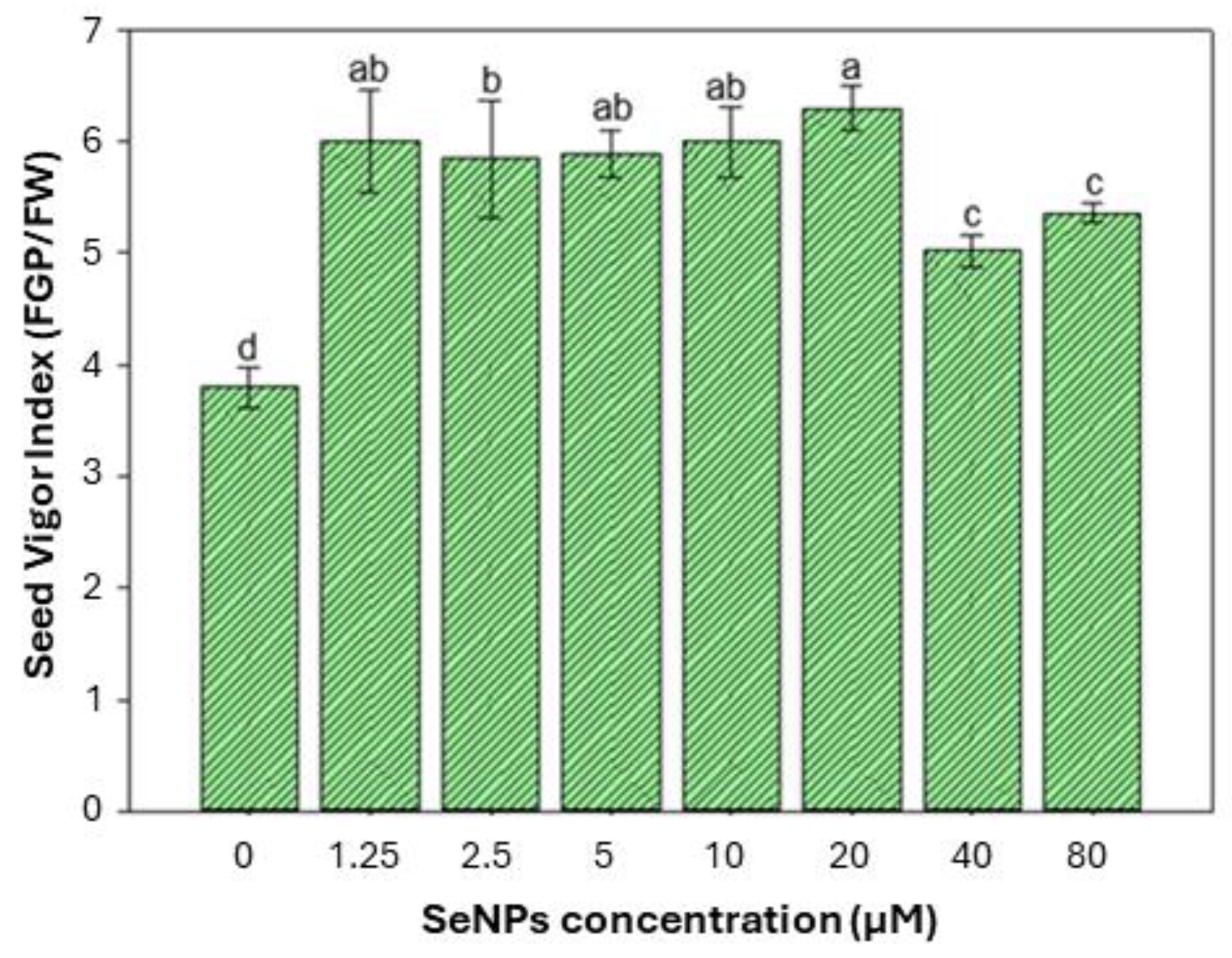
The seed vigor index (SVI) showed significant differences with the application of SeNPs (p ≤ 0.05), where the SVI increased significantly compared to the control (0 µM). The highest value was obtained at 20 µM (59%), whereas the highest concentrations (40 and 80 µM) reached only 28–38%, respectively. This suggests a dose-dependent effect, with a maximum at intermediate concentrations and a lower SVI at higher concentrations (Figure 1).

3.1.2. Influence of SeNPs on the Initial Growth of Chili Pepper Seedlings

Regarding chili pepper seedling growth parameters, SeNPs exhibited a biostimulant effect across all tested concentrations. The highest heights were observed at concentrations of 5, 20, and 40 µM (1.64 ± 0.05, 1.62 ± 0.16, and 1.62 ± 0.05 cm, respectively), compared to seedlings without SeNPs (1.52 ± 0.04 cm). The longest roots were observed at concentrations of 20 and 40 µM (10.90 ± 0.34 and 10.40 ± 0.18 cm, respectively). Likewise, the 80 µM concentration showed lower PH and RL than the control, with values of 1.24 ± 0.05 and 6.14 ± 0.27, respectively. For biomass, the highest SFW was observed at a concentration of 20 µM (65.35 mg), compared with the control (42.96 mg). Shoot dry weight (SDW) also increased compared to the control, with low concentrations (1.25, 2.5, and 5 µM) recording the highest values (4.84 ± 0.34, 5.01 ± 0.54, and 5.61 ± 0.42 mg) (Table 2). For seedling water content, percentages above 90% were observed across all concentrations (Table 2), with the highest value at 20 µM (92.87%). It should be noted that the 80 µM concentration, despite negative effects on the PH and RL variables, maintained high water content, suggesting that growth inhibition at high SeNPs doses was not solely due to reduced cell hydration. The 20 µM dose was optimal for biomass accumulation and root development; in contrast, the application of SeNPs at 80 µM indicated a toxicity threshold beyond which selenium shifted from a growth promoter to a growth inhibitor. ANOVA showed significant differences in SeNP concentrations 20 days after germination for the seedling height (p = 0.001) and root length (p = 0.001). These changes in growth were observed from the tenth day after germination (p = 0.025) to the 20th day (p = 0.001).

3.1.3. SeNPs in Photosynthetic Pigments in Chili Pepper Seedlings

The concentration of photosynthetic pigments varied among the SeNP treatments, with significant differences (p ≤ 0.05). Compared with the control, the 1.25 µM concentration induced the greatest increase in both pigments and was significantly higher than all other concentrations tested (Table 3). Chlorophyll a was 0.302 µg/g FW, and total Ch was 0.529 µg/g FW, representing increases of 36.09% and 27.29%, respectively, relative to the control. Concentrations of 20 and 80 µM also increased Chl a by 29.20% and 27.62%, and total Chl by 21.30% and 20.26%, respectively, which were statistically similar to each other but lower than the values for 1.25 µM. Chlorophyll b showed an increase of 15.60% at 1.25 µM, followed by the 5 µM concentration (13.03%); however, the lowest value was recorded at 10 µM, with a total of 0.198 µg/g FW, representing an increase of only 2.85% compared to the control (Table 3). For carotenoid content, the 1.25 µM concentration induced the largest increase (24.86%), followed by 20 µM (19.38%) and 80 µM (16.77%). These results suggest that a very low concentration of SeNPs (1.25 µM) induces biosynthetic pathways for photosynthetic pigments in chili pepper seedlings, whereas intermediate and high doses are less effective and do not elicit responses in certain pigments (Table 3). Furthermore, at this concentration, selenium acts as a biostimulant, improving the photosynthetic machinery and, therefore, the physiological vigor of the seedling.

3.1.4. Effects of SeNPs on Non-Enzymatic Antioxidant Compounds

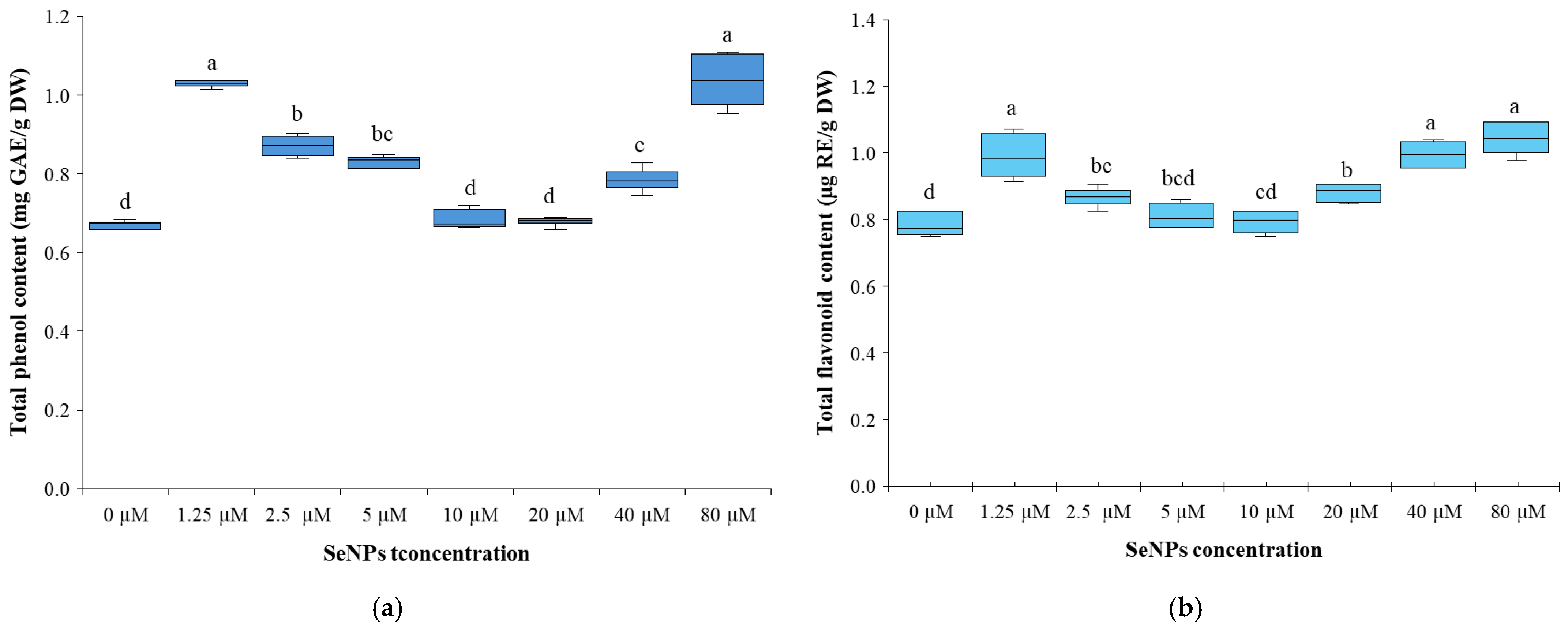
The total phenol content in chili pepper seedlings differed significantly among SeNP treatments (p ≤ 0.05). The control (0 µM) recorded the lowest value at 0.67 mg/g DW. The application of 1.25 µM SeNPs significantly increased the phenolic content to 1.03 mg/g DW, the highest value. The treatments at 2.5 and 5 µM showed intermediate phenolic contents, with values of 0.87 and 0.83 mg/g DW, respectively, which were lower than at 1.25 µM but higher than in the control. In addition, concentrations of 10 and 20 µM reduced the phenolic content to 0.68 and 0.68 mg/g PS, respectively, with no significant difference relative to the control. Subsequently, the 40 µM treatment showed a partial increase in phenolic content (0.7 mg/g DW). Meanwhile, the highest concentration evaluated (80 µM) increased significantly to 1.04 mg/g DW, a value statistically comparable to that observed at 1.25 µM (Figure 2a).
For flavonoid content, significant differences were observed between the SeNP treatments and the control (p ≤ 0.05), with the application of 1.25 µM SeNPs yielding the highest flavonoid content of 0.99 µg/g DW. The 2.5 µM concentration yielded 0.87 µg/g DW, which was higher than that of the control. Concentrations of 5 and 10 µM reduced the flavonoid content to 0.81 and 0.79 µg/g DW, respectively, showing values close to those of the control. Subsequently, the 20 µM treatment showed 0.88 µg/g DW, whereas the higher concentrations (40 and 80 µM) increased to 1.00 and 1.04 µg/g DW, respectively (Figure 2b). Likewise, the increase in phenolic compound content suggests an adaptive response to elevated stress caused by SeNPs at high concentrations, characterized by the activation of phenolic compound synthesis as a protective mechanism against oxidative damage.

3.1.5. Influence of SeNPs on Antioxidant Activity

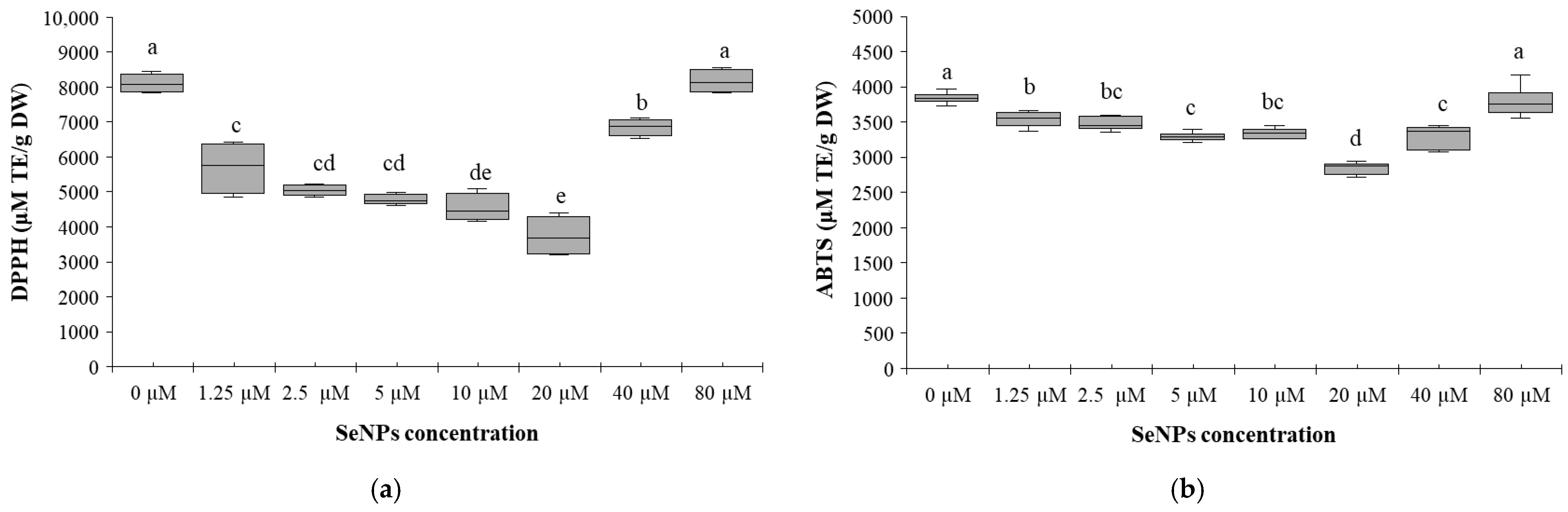
The activity of non-enzymatic compounds, determined by DPPH, showed significant differences between treatments with SeNPs (p ≤ 0.05). The control (0 µM) showed an activity of 8107.46 µM TE/g DW, whereas the application of 1.25 µM SeNPs significantly reduced the antioxidant activity to 5696.82 µM TE/g DW. The treatments at 2.5 and 5 µM showed intermediate values of 5042.08 and 4774.23 µM TE/g DW, respectively. Likewise, concentrations of 10 and 20 µM reduced TE/g DW to 4536.14 and 3732.59 µM, respectively, with the latter being the lowest value observed. Subsequently, the 40 µM treatment showed an activity of 6857.50 µM TE/g DW, whereas the highest concentration evaluated (80 µM) increased significantly to 8166.98 µM TE/g DW, a value comparable to that of the control (Figure 3a).
Antioxidant activity, measured using the ABTS method, also showed significant differences among the SeNPs treatments (p ≤ 0.05). The control (0 µM) showed antioxidant activity of 3842.66 µM TE/g DW. As with the DPPH method, the application of 1.25 µM SeNPs significantly reduced antioxidant activity to 3538.30 µM TE/g DW. The 2.5 and 10 µM treatments showed intermediate values of 3474.12 and 3339.54 µM TE/g DW, respectively, while the 5 µM treatment further reduced the activity to 3291.92 µM TE/g DW. The 20 µM treatment had the lowest antioxidant activity, with a value of 2846.77 µM TE/g DW. Subsequently, the 40 µM treatment showed an increase in antioxidant activity (3300.20 µM TE/g DW), while the highest concentration evaluated (80 µM) increased to 3788.83 µM TE/g DW (Figure 3b).
The decrease in antioxidant activity (DPPH and ABTS) observed at low and intermediate concentrations of SeNPs (1.25–20 µM) suggests that, in this range, selenium does not induce sufficient oxidative stress to activate non-enzymatic antioxidant systems. Meanwhile, the similarity between the values at 80 µM and the control indicates that the seedlings restore redox balance by activating SeNP-induced stress tolerance mechanisms (Figure 3). In contrast, the significant increase in antioxidant activity at 80 µM, observed in both ABTS and DPPH assays and accompanied by increases in total phenol and flavonoid content, indicates activation of adaptive antioxidant responses to oxidative stress induced by high concentrations of SeNPs.

3.1.6. Correlation Analysis in the Responses of Germination and Seedling Growth to SeNPs

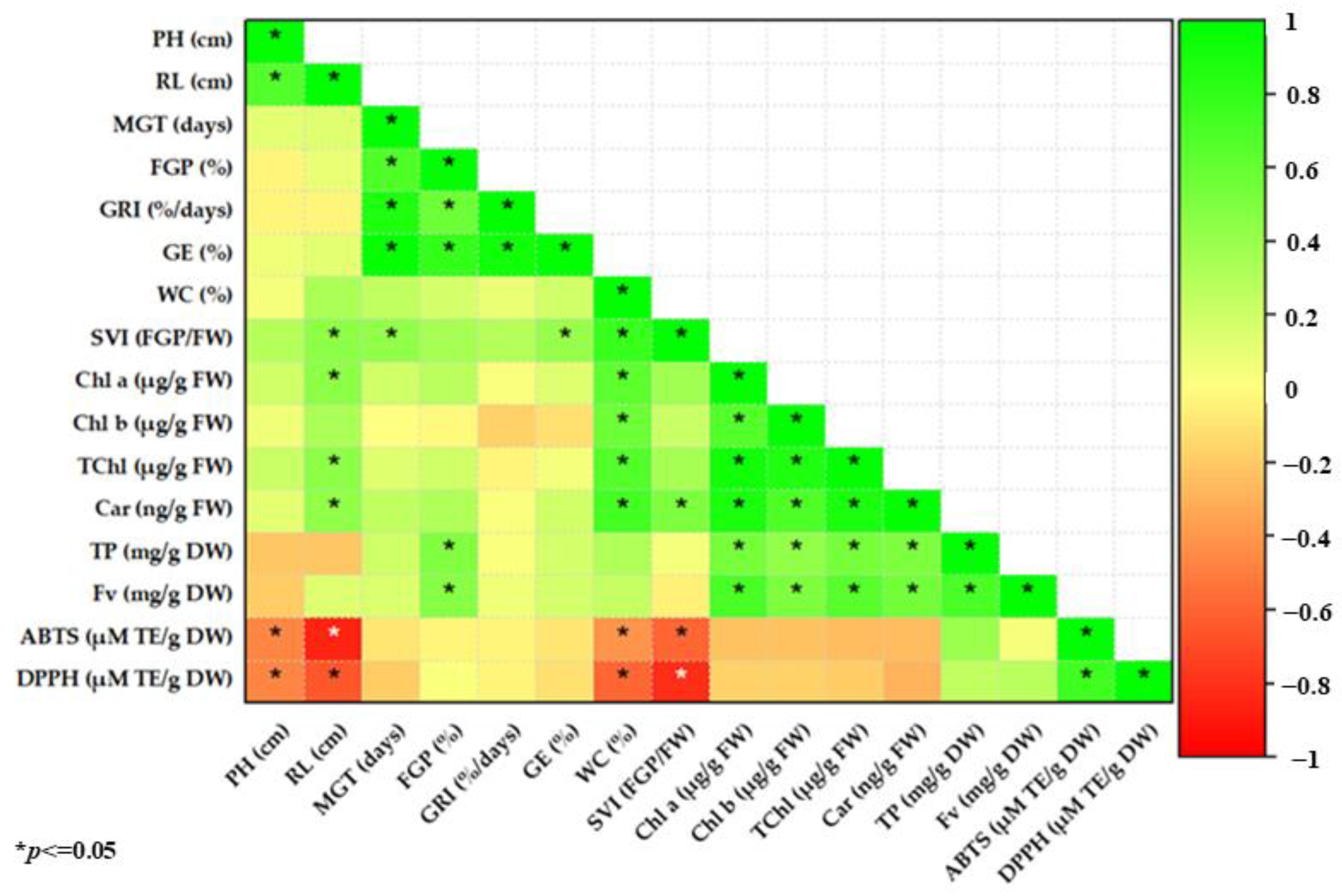
Correlation analysis revealed both positive and negative relationships among germination, growth, photosynthetic pigments, and non-enzymatic compounds (Figure 4). For example, GRI and GE correlated positively with FGP and MGT. Likewise, FGP correlated positively with TP and FV. In addition, bioactive compounds (TP and FV) also showed a positive correlation with photosynthetic pigments, suggesting a balance between the biosynthesis of secondary defense compounds and pigment accumulation. Similarly, photosynthetic pigments (Chl a, Chl b, and Car) showed strong positive correlations among themselves, indicating coordinated development of the photosynthetic apparatus. Furthermore, RL showed a positive correlation with the photosynthetic pigments Cl a, TChl, and Car. Conversely, negative correlations were observed in the antioxidant capacity

3.2. Effect of SeNPs on the Vegetative Growth of Chili Pepper Plants in Hydroponics

For the analysis of growth variables, biomass, photosynthetic pigments, and antioxidant capacity at the end of the experiment using the two SeNP application methods (foliar and root), PERMANOVA showed that there were significant differences between SeNPs doses (p = 0.0001), application method (p = 0.0001), and the interaction between dose and application method (p = 0.0001) (Table S1).

3.2.1. Effect of Application Method of SeNPs on Chili Pepper Plant Growth

Analysis of the vegetative growth of chili plants treated with SeNPs applied directly to the root showed significant differences between treatments (p ≤ 0.05). Plant height (PH) was significantly higher with 1.25 µM (54.03 ± 3.59 cm) compared to the control (42.72 ± 2.85 cm) and the 80 µM treatment, which had the lowest value (32.55 ± 4.51 cm), while the intermediate concentrations (5–40 µM) showed intermediate values with no statistically significant differences. The number of leaves (NL) showed no significant differences between treatments (p ≥ 0.05), with values ranging from 59.33 ± 12.06 at the highest dose (80 µM) to 82.66 ± 16.33 at the lowest (1.25 µM). For stem diameter (SD), the 80 µM concentration was significantly lower (4.03 ± 0.29 mm) than the other treatments (5.07–5.87 mm), indicating a negative effect for the highest dose. The number of branches (NB) increased significantly with 20 µM (30.0 ± 3.74) and 5 µM (29.16 ± 3.76) compared to the control (19.2 ± 2.95) and 80 µM (19.66 ± 4.32), suggesting a stimulating effect of low to intermediate doses on branching. Similarly, root length (RL) was greater at 5 µM (20.78 ± 1.91 cm) and 20 µM (19.91 ± 1.79 cm), whereas treatment with 80 µM resulted in the shortest root length (12.0 ± 1.35 cm), indicating an inhibitory effect at high concentrations (Table 4).
Meanwhile, analysis of biomass and water content using SeNPs applied at the root level revealed that low doses stimulate growth, whereas high doses inhibit development. Fresh shoot weight peaked at 1.25 µM (28.98 ± 2.91 g), representing a 30% increase over the control (22.28 ± 5.38 g), followed by a progressive decrease of more than 50% at 80 µM (9.40 ± 3.62 g). This trend was replicated in the dry weight of the stem, where the 1.25 µM dose (6.60 ± 0.75 g) stood out as the treatment significantly superior to the control (4.37 ± 1.06 g) and the doses of 40 and 80 µM obtained values below the control (3.79 ± 1.23 and 1.78 ± 0.64 g, respectively). At the root level, fresh and dry weight remained stable up to 20 µM; however, a drastic reduction of more than 50% in fresh root weight was recorded at concentrations of 40 and 80 µM (6.83 ± 3.43 g and 4.42 ± 1.83 g, respectively) and root dry weight at 80 µM (0.46 ± 0.10 g), coinciding with a 55% decrease in root volume (4.16 ± 0.75 mL) compared to the control (9.4 ± 2.07 mL). Regarding water status, stem water content (SWC) was higher in the control (87.67 ± 3.42%) and decreased significantly with the application of SeNPs, particularly at 5 µM (76.11 ± 3.36%). Conversely, the intermediate and high doses (10–80 µM) stabilized at around 80% compared to the control, while the root water content (CRW) remained high and relatively stable up to 20 µM (90–92%), but decreased at doses of 40 and 80 µM (85.25 ± 4.61% and 86.87 ± 5.41%, respectively) (Table 5). These results show that the root application of SeNPs promotes the accumulation of fresh and dry biomass mainly at low concentrations (1.25–20 µM), while high doses, especially 80 µM, induce negative effects on growth, root development, and biomass accumulation, probably associated with physiological stress and alterations in the plant’s water status.
With the foliar application of SeNPs, significant differences were observed between treatments (p ≤ 0.05; Table 6). Plant height was significantly greater at all SeNP concentrations, with the 40 µM (53.1 ± 2.33 cm) and 20 µM (52.33 ± 3.64 cm) doses standing out compared to the control (32.8 ± 5.83 cm). Unlike the root pathway, the number of leaves differed significantly (p ≤ 0.05), with all SeNP doses exceeding the control (39.16 ± 3.06), peaking at 40 µM (85.4 ± 7.40) and 1.25 µM (84.8 ± 12.89). In SD, plants treated with SeNPs showed significantly higher values (5.17–5.78 mm) than the control (4.14 ± 0.52 mm), without the negative effect reported in the root pathway at high doses. The number of branches increased significantly across all foliar treatments relative to the control (15.83 ± 2.63), with the highest value at 40 µM (31.2 ± 1.92). Finally, root length was favored by foliar application, as it was significantly greater at doses of 20 µM (21.75 ± 1.29 cm) and 5 µM (20.41 ± 2.04 cm) compared to the control (11.83 ± 1.72 cm) (Table 6), confirming a systemic stimulating effect of SeNPs on root development even through foliar assimilation.
In the analysis of biomass and water content through the foliar application of SeNPs, a generalized and significant increase in plant development was observed, without the inhibitory effects seen in the root pathway at high doses (Table 7). Shoot fresh weight increased dramatically across all treatments, reaching a maximum at 40 µM (27.2 ± 3.95 g), which represents more than 100% of the control (11.51 ± 2.11 g). This trend was consistent with the shoot dry weight, in which the 40 µM dose (5.92 ± 1.14 g) was significantly higher than the control (2.54 ± 0.30 g). At the root level, a notable stimulation was observed in fresh root weight across all concentrations, with the 1.25 µM dose (12.95 ± 1.81 g) standing out, increasing more than threefold relative to the control (3.96 ± 1.97 g). The dry weight of the root also increased significantly across all treatments, ranging from 0.84 to 1.21 g, compared with 0.31 ± 0.11 g in the control. Root volume showed a substantial improvement, reaching its maximum at 1.25 µM (10.2 ± 1.09 mL) and remaining above 9 mL in the other doses, exceeding the control value (7 ± 1.54 mL). Regarding water status, shoot water content did not differ significantly among treatments (p ≥ 0.05), with values ranging from 74.80% to 81.02%. Similarly, the water content of the root remained high and stable across all concentrations (88.8–91.9%), and was not adversely affected by high doses of SeNPs. These results demonstrate that the foliar application of SeNPs is an effective strategy for enhancing the accumulation of fresh and dry biomass in both aerial and root tissues, promoting vigorous growth without altering water balance or inducing the toxicity observed with root application at 80 µM.

3.2.2. Effect of Application Method of SeNPs on the Photosynthetic Pigments

The concentration of photosynthetic pigments in chili plants treated with root application with SeNPs showed significant variability between treatments (p ≤ 0.05), following a dose-dependent response pattern compared to the control (Table 8). The concentration of 1.25 µM induced the greatest increase in pigment biosynthesis, which was significantly higher than at all other concentrations tested. Chl a reached 0.557 µg/g DW and total Chl reached 0.890 µg/g DW, representing increases of 43.5% and 35.6%, respectively, relative to the control (0.388 and 0.656 µg/g DW). Concentrations of 5 and 10 µM also favored the accumulation of total Chl (0.884 and 0.873 µg/g DW, respectively), indicating efficacy comparable to that of the lowest dose. However, Chl b showed its lowest value at the 80 µM dose (0.242 µg/g DW), which was even lower than the control (0.267 µg/g DW), indicating an inhibitory effect at high concentrations. For carotenoid content, the 5 µM concentration induced the greatest increase (0.777 µg/g DW), followed by 40 µM (0.748 µg/g DW), representing increases of 26.9% and 22.2% compared to the control. These results suggest that low doses of SeNPs (1.25–10 µM) applied to the root significantly stimulate pigment metabolic pathways, whereas 80 µM is detrimental to photosynthetic machinery.
The foliar application of SeNPs also revealed significant differences between treatments (p ≤ 0.05) compared to the control (Table 8). Compared to the control, all SeNP doses increased pigment concentration, with the 20 and 80 µM doses being the most effective in increasing chlorophyll a (0.627 and 0.628 µg/g DW, respectively). Likewise, 20 µM showed the greatest increase in total chlorophyll (0.965 µg/g DW). Specifically, Chl a showed a constant increase from the 5 µM dose, reaching values significantly higher than the control (0.493 µg/g DW). Chl b reached its maximum at 10 µM (0.338 µg/g DW), representing a 14.18% increase relative to the control. For carotenoid content, the 10 µM dose induced the greatest increase (0.894 ng/g DW), followed by the 5 and 80 µM doses, all of which were significantly higher than the control value (0.740 ng/g DW). These results suggest that the foliar application of SeNPs, even at high doses (80 µM), acts as a potent biostimulant, whereas the root route is inhibitory at high doses.

3.2.3. Effect of Application Method of SeNPs on Phenolic Compounds

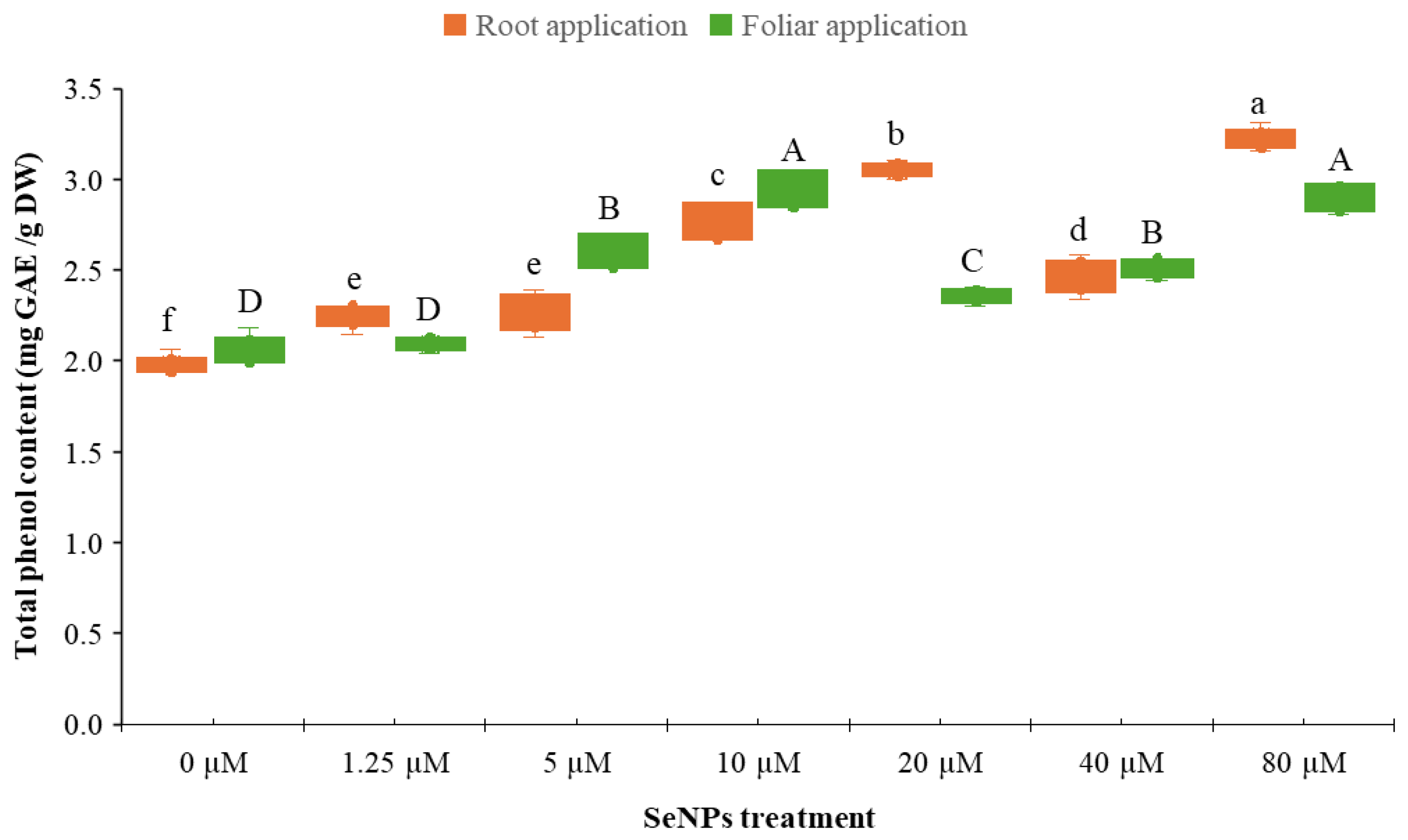
The total phenolic content in chili plants treated with SeNPs applied to the root shows a concentration-dependent response. Compared with the control (0 µM; 1.98 mg/g DW), all SeNP concentrations increased phenolic content, indicating the activation of secondary metabolism in response to SeNP exposure. At low concentrations (1.25 and 5 µM), the phenolic content increased moderately (2.23 and 2.26 mg/g DW, respectively). At intermediate concentrations (10 and 20 µM), a more pronounced increase was observed (2.77 and 3.06 mg/g DW), indicating a strong stimulation of phenolic compound synthesis, likely associated with the activation of antioxidant defense mechanisms in response to higher levels of radical stress. In contrast, at 40 µM, a relative decrease in phenolic content (2.47 mg/g DW) was observed, suggesting a physiological threshold or a transient metabolic adjustment in response to a higher SeNPs dose. Finally, the highest concentration (80 µM) exhibited the highest total phenol content (3.23 mg/g DW), indicating a defense response to severe SeNP exposure in the root (Figure 5).
With regard to the foliar application of SeNPs, a concentration-dependent response was also observed, though with a more moderate pattern and without the drastic physiological changes observed with root application. Compared to the control (0 µM; 2.07 mg/g DW), low concentrations (1.25 µM) did not show marked changes (2.09 mg/g DW), suggesting that very low doses of SeNPs did not significantly alter phenolic metabolism. However, at 5 µM, a noticeable increase was observed (2.60 mg/g DW), indicating early activation of secondary metabolism. The highest phenol content was observed at 10 µM (2.95 mg/g DW), suggesting that this concentration effectively promoted phenolic compound synthesis under foliar application. At intermediate–high concentrations, the phenolic content showed variable behavior; at 20 µM, a relative decrease was observed (2.36 mg/g DW), possibly associated with physiological adjustments in leaf tissue to increased SeNPs exposure. Subsequently, at 40 µM, a moderate increase was recorded (2.50 mg/g DW), while at the highest concentration (80 µM), the phenol content increased significantly (2.91 mg/g DW), approaching the maximum value observed (Figure 5). Taken together, these results indicate that the foliar application of SeNPs induces a controlled, non-linear activation of phenolic metabolism, consistent with an adaptive response of leaf tissue, in which phenol synthesis occurs without evidence of extreme activation associated with severe stress, unlike that observed with root application.

3.2.4. Effect of Application Method of SeNPs on Flavonoid Content

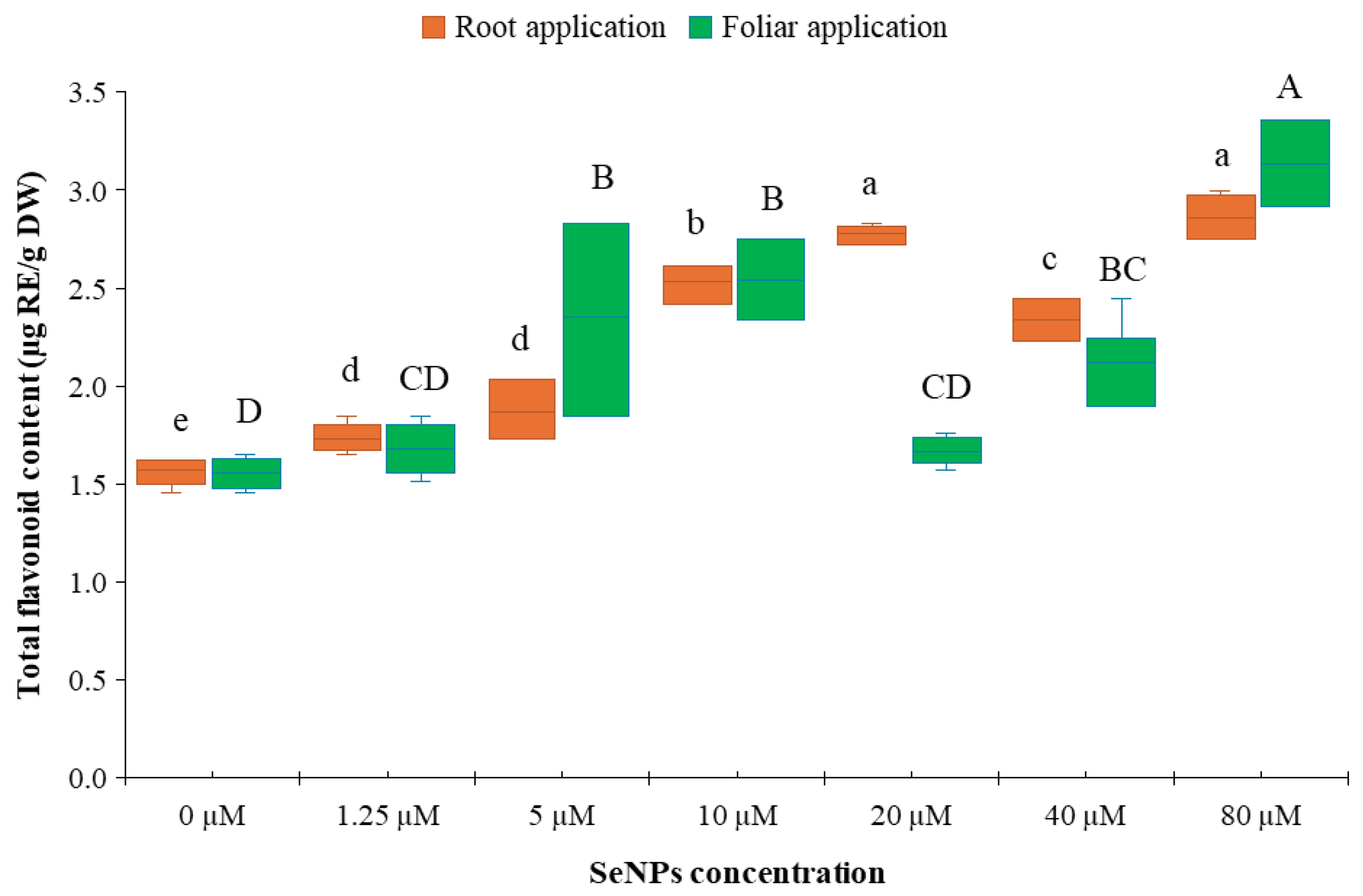
The flavonoid content of chili plants treated with SeNPs applied directly to the root showed a concentration-dependent response, similar to that observed for total phenolic content. Compared with the control (0 µM; 1.56 µg/g DW), all SeNP concentrations increased flavonoid levels, indicating the activation of metabolism associated with the antioxidant response at the level of free radicals. At low concentrations (1.25 and 5 µM), a moderate increase was observed (1.74 and 1.88 µg/g DW, respectively), suggesting an initial physiological adjustment response of the radical system. At intermediate concentrations (10 and 20 µM), the increase was more pronounced (2.52 and 2.77 µg/g DW), indicating a significant stimulation of antioxidant mechanisms, likely associated with increased oxidative stress induced by the root absorption of SeNPs. At 40 µM, a relative decrease in value was observed (2.34 µg/g DW), indicating a threshold for a higher SeNP dose in the root. Finally, at the highest concentration (80 µM), the parameter reached its maximum value (2.86 µg/g DW) (Figure 6), showing intense activation of the antioxidant response.
Moreover, the total flavonoid content in chili plants treated with SeNPs via foliar application also showed a concentration-dependent response. Compared to the control (0 µM; 1.55 µg/g DW), low concentrations (1.25 µM) induced a slight increase (1.68 µg/g DW), while at 5 and 10 µM, a marked increase was observed (2.34 and 2.54 µg/g DW, respectively), indicating a significant activation of flavonoids in the leaf tissue. At 20 µM, a notable decrease was observed (1.67 µg/g DW), suggesting a physiological adjustment or transient downregulation in response to increased SeNPs exposure. Subsequently, at 40 µM, a partial recovery of flavonoid content was observed (2.01 µg/g DW), and at the highest concentration (80 µM), the maximum value was reached (3.13 µg/g DW) (Figure 6), evidencing intense stimulation of secondary metabolism under foliar application. When comparing the flavonoid content of the two application routes, the foliar application of SeNPs induced a more dynamic and efficient response, with significant increases at intermediate and high concentrations, reaching maximum values higher than those observed with root application. In contrast, root application promoted a more gradual activation associated with stress responses, in which the increase in flavonoids was more closely linked to defensive mechanisms than to functional integration with growth. Taken together, these results indicate that the foliar route favors more effective regulation of flavonoid content without compromising physiological function, whereas the root route induces a dose-dependent antioxidant response, characterized by progressive increases and fluctuations at intermediate concentrations, consistent with physiological adaptation and the activation of defense mechanisms against oxidative stress.

3.2.5. Effect of Application Method of SeNPs on Antioxidant Activity

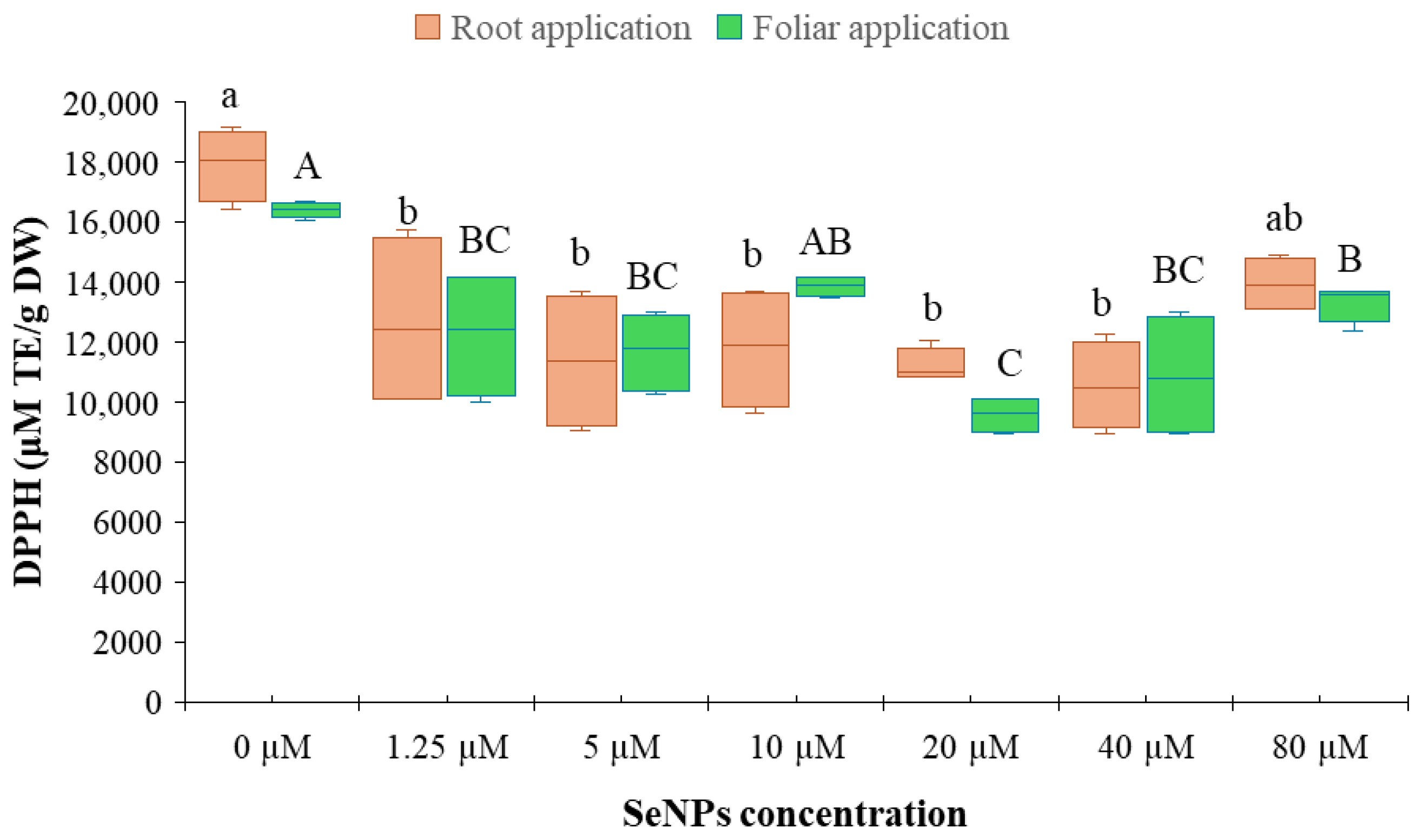
The antioxidant activity determined by the DPPH method in chili plants treated with SeNPs applied directly to the root showed a concentration-dependent response (Figure 7). The control treatment (0 µM) exhibited the highest DPPH antioxidant activity (17,898.83 μM TE/g DW), whereas all SeNP concentrations showed a significant reduction in this activity. This indicates that the application of SeNPs to the roots modified the DPPH radical neutralization capacity. At low concentrations (1.25 and 5 µM), the activity decreased (12,660.89 and 11,351.41 μM TE/g DW, respectively), suggesting an early response of the antioxidant system. At intermediate concentrations (10 and 20 µM), the values remained low (11,768.06 and 11,202.61 µM TE/g DW), with no significant differences between treatments, indicating a stabilization of the antioxidant response at these concentrations. At 40 µM, the lowest value was recorded (10,518.10 μM TE/g DW), suggesting a limitation of the non-enzymatic antioxidant system associated with the DPPH radical. Finally, at 80 µM, a relative increase in activity was observed (13,910.86 μM TE/g DW), reflecting compensatory activation of antioxidant metabolism in response to increased stress induced by SeNPs.
Plants treated with SeNPs via foliar application also showed a concentration-dependent response compared to the control. The control treatment (0 µM) had the highest radical scavenging capacity (16,381.02 μM TE/g DW), while the application of SeNPs at low concentrations (1.25 and 5 µM) showed an initial decrease in activity (12,244.24 and 11,678.78 μM TE/g DW, respectively), followed by a significant increase at 10 µM (13,821.57 μM TE/g DW) that was statistically equal to the control. However, at 20 µM, the lowest value of the entire experiment was observed (9565.75 μM TE/g DW), indicating a point of maximal depression of the non-enzymatic antioxidant system. Finally, at doses of 40 and 80 µM, a gradual recovery of activity was observed (10,845.47 and 13,285.87 µM TE/g DW), reflecting a compensatory response of secondary metabolism to counteract the oxidative effect induced by higher concentrations of SeNPs (Figure 7).
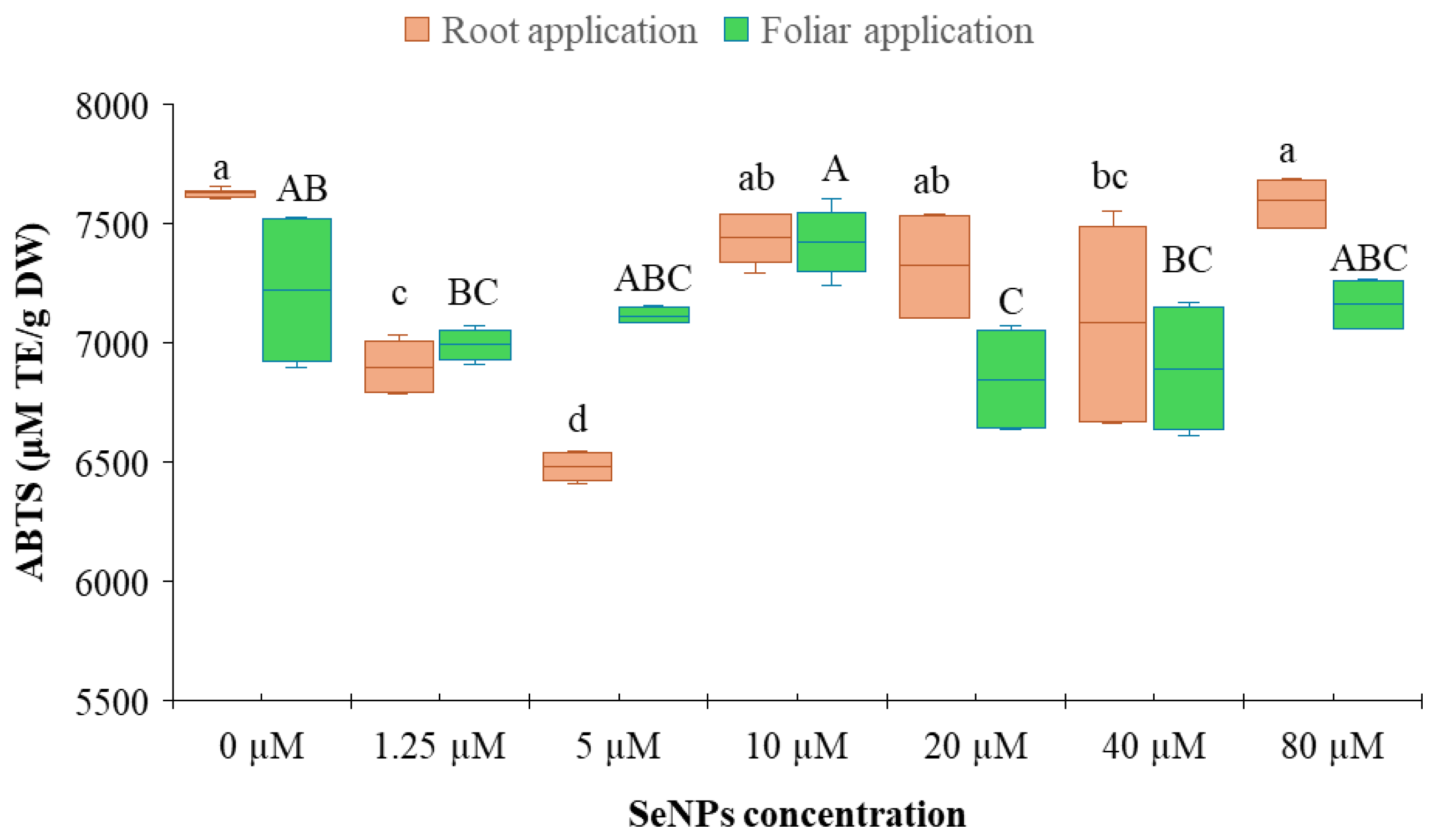
The determination of antioxidant capacity using the ABTS assay of chili plants treated with SeNPs applied directly to the root showed that, compared to the 0 μM control (7627.48 μM TE/g DW), low concentrations of SeNPs (1.25 and 5 μM) showed a slight decrease in antioxidant activity (6900.74 and 6480.44 μM TE/g DW, respectively), while at intermediate concentrations (10 and 20 μM), values close to the control (7436.99 and 7323.12 μM TE/g DW) were observed, indicating compensation of the antioxidant system. At higher concentrations (40 and 80 μM), ABTS activity remained stable or even slightly higher than that of the control, with a maximum at 80 μM (7588.14 μM TE/g DW), reflecting a more efficient induction of antioxidant mechanisms in response to a higher concentration of SeNPs absorbed through the roots (Figure 8).
The ABTS assay on plants treated with SeNPs through the foliar route showed that, compared to the control (0 μM; 7219.59 μM TE/g DW), low concentrations of SeNPs (1.25 and 5 µM) showed similar values (6991.84 and 7116.07 μM TE/g DW, respectively), indicating that at reduced doses, the foliar application of SeNPs did not significantly stimulate antioxidant activity. In contrast, the 10 µM concentration induced the greatest increase (7424.57 μM TE/g DW), suggesting efficient activation of non-enzymatic antioxidant systems at an optimal SeNPs dose. At higher concentrations, ABTS activity decreased again at 20 and 40 µM (6848.98 and 6892.46 μM TE/g DW), while at 80 µM, a partial recovery of antioxidant capacity was observed (7161.62 μM TE/g DW) (Figure 8).
Taken together, these results suggest that SeNPs modulate ABTS-based antioxidant capacity in a dose-dependent manner, with an initial stimulation phase at low concentrations and a more pronounced, sustained response at intermediate and high concentrations, which is consistent with the strengthening of the cellular redox system.

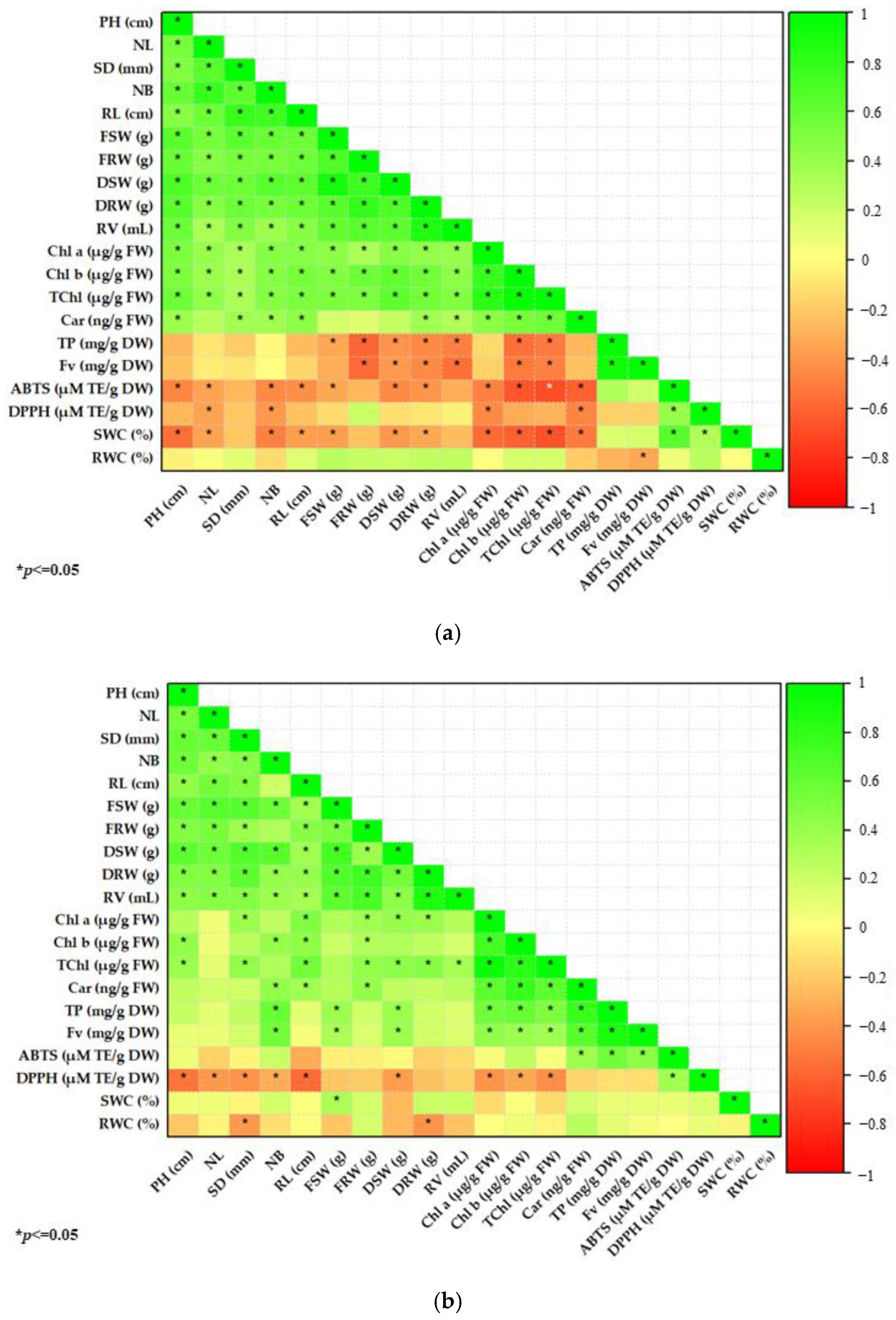
3.2.6. Correlation Analysis of Response Variables in Chili Plants Subjected to SeNP Doses and Application Methods

The correlation matrix for the application of SeNPs to the roots of serrano chili plants showed consistent integration among the variables of growth, biomass, photosynthetic pigments, secondary metabolism, and antioxidant activity (Figure 9). Morphological and growth variables (PH, NL, SD, NB, and RL) showed positive and significant correlations with each other, as well as with above-ground and root biomass parameters (FSW, FRW, DSW, DRW, and RV), indicating that plant structural development was closely linked to greater fresh and dry matter accumulation. Consistently, photosynthetic pigments (Chl a, Chl b, total Cl, and Car) showed positive correlations with growth and biomass variables, suggesting that increased photosynthetic capacity favored plant growth under the root application of SeNPs. In contrast, phenolic compounds (TP and FV) exhibited significant negative correlations with most growth variables, biomass, and photosynthetic pigments, as well as with antioxidant activity (ABTS and DPPH), suggesting that the root application of SeNPs may have induced a redistribution of plant metabolism, prioritizing the activation of defense and stress response mechanisms with a consequent limitation of plant growth. Likewise, antioxidant activities evaluated by ABTS and DPPH showed negative correlations with biomass and photosynthetic pigment content, indicating that increased antioxidant capacity was associated with a relative reduction in growth, possibly due to increased oxidative stress at the radical level. Finally, the water content of the shoot (CSW) and root (CRW) correlated positively with growth and biomass variables; however, CRW was negatively associated with antioxidant compounds. Taken together, these results show that the direct application of SeNPs to the root elicited a distinct physiological response, characterized by a balance among growth, water status, and antioxidant metabolism.
The correlation matrix shows significant correlations (p < 0.05) among the variables of growth, physiology, photosynthetic pigments, and antioxidant compounds in serrano chili plants treated with SeNPs directly on the surface of their leaves (Figure 9). The aerial growth variables—PH, NL, SD, and NB—showed positive and significant correlations with each other, indicating that an increase in PH is associated with higher NL, SD, and NB values. Likewise, these variables showed positive correlations with biomass parameters (FSW, FRW, DSW, and DRW), suggesting that greater growth is associated with greater accumulation of fresh and dry biomass. Root length and volume (RL and RV) showed positive correlations with root biomass (FRW and DRW), indicating that greater root system development is associated with more efficient water and nutrient absorption, which are determinants of vegetative growth. Photosynthetic pigments (Chl a, Chl b, total Chl, and Car) showed significant positive correlations with growth and biomass variables, indicating that higher chlorophyll and carotenoid content is associated with better photosynthetic performance and, consequently, greater plant growth.
The content of total phenols (TP) and flavonoids (Fv) showed significant positive correlations with photosynthetic pigments and biomass variables, indicating that secondary metabolism was activated in coordination with plant growth. Antioxidant activity measured by ABTS showed positive correlations with TP and Fv, confirming that these compounds contribute directly to non-enzymatic antioxidant capacity. In contrast, DPPH showed significant negative correlations with multiple growth variables, pigments, and metabolites, suggesting differences in the sensitivity of antioxidant methods and the physiological mechanisms they reflect. The water content of the shoot (CSW) and root (CRW) showed positive correlations with growth and biomass variables, indicating that better water status favors plant development. However, CRW showed negative correlations with antioxidant variables, suggesting that greater hydration may be associated with reduced activation of oxidative defense mechanisms.
Overall, the correlation matrix indicates that foliar application of SeNPs induced an integrated physiological response, in which growth, photosynthesis, water status, and antioxidant metabolism were closely linked. The positive correlations among pigments, biomass, and phenolic compounds suggest that SeNPs enhance both plant productivity and antioxidant capacity (Figure 9). Conversely, the negative correlations observed for DPPH indicate that the antioxidant response depends on the type of radical evaluated, which is consistent with reports in the literature on various antioxidant assays.

4. Discussion

4.1. The Role of SeNPs in Seed Germination and Initial Seedling Growth

According to Lutts et al. [22], seed treatment with SeNPs can biostimulate biochemical and metabolic changes, which increase germination, seedling development, and establishment [22]. In this study, the addition of SeNPs to chili seeds had no effect on in vitro germination parameters; however, all variables measured were increased at the lowest concentrations tested (1.25 and 2.5 µM), compared with the control. Likewise, only significant differences and an increase in the seed vigor index (IVS) were observed at all SeNP concentrations. This is consistent with several studies reporting increased germination parameters, including IVS [23]. For example, Tang et al. [24] demonstrated that the application of SeNPs in the germination of chili pepper seeds, var. Zunla n 9, and their effects under cadmium stress recorded a germination rate of 100% in plants treated with 5 and 10 mg/L of SeNPs but showed no difference relative to the control. Improvements were also recorded with regard to the germination vigor, germination index, and vitality index at low concentrations (2–10 mg/L), in contrast to the 100 mg/L dose, which completely inhibited germination [24].
Moreover, Sariñana-Navarrete et al. [25] applied SeNPs to jalapeño pepper seeds at concentrations of 1–45 mg/L; no differences were observed in the germination percentage, including the percentage of IVS, which decreased as SeNP doses increased, registering up to a 91.3% decrease at the highest dose and a stimulation limit dose between 5 and 15 mg/L [25]. In tomato plants, a dose of 10 ppm SeNPs increased all seed germination parameters, including up to a 25% increase in IVS, in contrast to seeds treated in trays, which showed up to 57% IVS compared to the control [23]. In watermelon plants (Citrullus lanatus), Acharya et al. [26] showed that increasing IVS via SeNPs can improve the integrity of seed cell membranes, increase mitochondrial oxidative phosphorylation efficiency, and thereby increase ATP availability during germination [26].
Additionally, SeNPs improve seed germination through mechanisms such as the modulation of plant hormone signaling pathways and modifications to seed metabolism, including upregulation of aquaporin genes, α-amylase activity, reactive oxygen species (ROS) production, and antioxidant systems [10]. Consequently, SeNPs during germination increase the absorption and movement of water and small solutes, stimulate starch hydrolysis by activating α-amylase, weaken the endosperm, mobilize seed reserves, protect against pathogens, and transmit environmental signals [27]. Water absorption by seeds is influenced by the dynamic balance between ABA and GA synthesis and catabolism, which controls the activation or deactivation of dormancy and germination, thereby modifying the water capacity thresholds for radicle development [10]. By inducing GA production and displacing storage proteins, SeNPs can generate an increase in ROS when they enter the seed coat through the intercellular spaces of the parenchyma tissue, where ROS at optimal levels play a crucial role in cell-to-cell transmission and in breaking the hydrolytic bonds between the polysaccharides of the cell wall of the endosperm of the seeds, breaking their dormancy [11,12,13,14]. In addition, increased ROS activate genes in the aquaporin signaling pathway and modify the phosphorylation sites of key aquaporin proteins, leading to increased water absorption in the seed [28]. By activating aquaporin genes, SeNPs are also likely to increase the accumulation and diffusion of H2O2 across the cell membrane, which influences hormonal balance by enhancing GA biosynthesis and decreasing ABA and ethylene via 1-aminocyclopropane-1-carboxylic acid (ACC), leading to the restart of metabolic activity that is essential for seed germination and seedling emergence [29].
Seedling growth and development may also increase due to synchronized germination and early establishment of plants treated with SeNPs [30]. This is consistent with our results, which showed a biostimulant effect on plant height, root length, and shoot biomass across all tested SeNP concentrations. The optimal concentration for seedling development was 20 µM, as it presented the highest biomass, water content, and root growth and development, similarly to that reported by Morales-Espinoza et al. [31] in chili seedlings, where the application of Se at concentrations of 50, 100, and 150 ppm, especially 50 ppm, increased agronomic parameters such as plant height, number of leaves, root weight and length, and seedling weight compared to the application of Cu, which decreased all the parameters analyzed compared to the control. In tomato seedlings, Ishtiaq et al. [13] reported that the application of 25, 50, 75, and 100 ppm SeNPs increased the germination and fresh weight of the aerial part, fresh root weight, stem length, and plant height, with an optimal concentration of 75 ppm [13]. Similarly, in pea seedlings, Tendenedzai et al. [32] demonstrated that SeNPs at 0.1, 1, 10, and 100 ppm showed dose-dependent effects, with greater increases in root number, root length, and stem length at the 10 ppm dose [32].
Seed germination and early seedling establishment involve complex metabolic reprogramming, in which phytohormones play a decisive role; these hormonal pathways can be modulated by SeNPs supplementation. For example, El-Badri et al. [33] demonstrated that the pretreatment of Brassica napus L. seeds with SeNPs modulated the expression levels of ABA and GA genes, which increased seed germination and improved the expression levels of BnCAM (calmodulin), BnPER (Peroxidase), BnEXP4 (Expansin 4), and BnRAB28 (RAB-related protein), promoting seed germination and early seedling growth under saline stress [33]. In another study, Sun et al. [34] found that nanoselenium promoted nitrogen metabolism and photosynthesis in alfalfa crops by increasing light energy capture capacity and the activities of key enzymes in the nitrogen metabolism process, leading to an increase in the total nitrogen content in shoots, stems, and roots by 14.03, 14.13, and 3.54%, respectively, in relation to an increase in dry biomass content [34].

4.2. Application Method of SeNPs Significantly Influences Plant Response

The biofortification of plants with SeNPs operates through physiological, biochemical, and molecular processes that facilitate selenium uptake, promoting growth and improving stress tolerance [1]. In this study, SeNPs increased growth parameters and yield in hydroponically grown serrano chili pepper plants. These results are consistent with those obtained in many other crops, such as chili pepper [7,12], rice [11], tomatoes [31], and fava beans [35].
The application of SeNPs induced a dose- and method-dependent response. For example, when administered directly to the root via hydroponics at low and intermediate concentrations (1.25 and 20 µM), there was a stimulating effect on the plant height, number of shoots, root length, and fresh and dry biomass of the whole plant. However, these same variables showed an inhibitory effect at high concentrations (40–80 µM). This effect was similar when concentrations of 15–45 mg/mL of SeNPs were applied by irrigation to jalapeño pepper plants, where there was a 52.75% increase in crop yield [12]. Similarly, the application of 3 mg/mL of SeNPs on tomato plants significantly improved fresh biomass in shoots and roots (35% and 20%, respectively), but there was a 20% and 23% decrease when 10 mg/mL of SeNPs were applied [36]. Reyes-Pérez et al. [37] showed that 5 mg/mL of SeNPs increased the growth and yield of tomatoes (Solanum lycopersicum cv. ‘Pomodoro’), whereas 15 and 30 mg/mL had phytotoxic effects [37]. Consequently, improvements in yield have been reported in hydroponic wheat crops at 5 µM SeNPs, suggesting the rapid absorption of SeNPs mainly through root aquaporins [38] and the activation of the expression of sulfate transporter OsSULTR1;2 [39]. Through the foliar application of SeNPs, the concentrations that most favored the morphology and physiology of all chili plants were 20–40 µM on their aerial surface and 1.25 µM at the root level, as these generated significant differences in the variables analyzed compared to the other treatments (p ≤ 0.05). The 40 µM dose showed 100% improvements over the control in the number of leaves, number of shoots, and fresh and dry weight of the stem, similarly to the values reported by Abdalla et al. [40], for which the foliar application of SeNPs at 20–40 ppm with an optimum point of 30 ppm increased similar growth parameters in pepper (Piper nigrum) crops, thereby suggesting that the effect of SeNPs depends on the plant species and its life stage [40]. Reyes-Pérez et al. [37] reported increases in plant height and stem diameter in the same crop at concentrations of 10, 15, and 20 mg/mL of SeNPs [37].
In the case of SeNPs, upon plant absorption, they are converted to selenite and selenate in roots and shoots, where they are bioavailable to plants [38]. Similarly, selenite can be taken up by plants via phosphate or silicon transporters and metabolized into usable organic selenium amino acids [1]. The absorption of nanoparticles depends on plant type and life stage, nanoparticle characteristics (concentration, size, shape), and application method (foliar or root) [10,37]. As selenium has properties similar to sulfur (S), studies have revealed that sulfate transporters may be the pathway for the absorption of inorganic selenite, which undergoes a cascade of reactions and is converted into selenide and selenium-containing amino acids such as organic selenomethionine (SeMet) and selenomethylselenocysteine (Me-SeCys) [3]. It has been proposed that the shape and size of SeNPs facilitate their entry into plant cells, altering cellular metabolism, affecting growth and development, and enhancing tolerance to biotic and abiotic stresses [4]. Additionally, SeNPs have a larger surface area, which facilitates their adhesion, absorption, and translocation within the plant and enables a controlled, gradual release of selenium ions, ensuring a more consistent supply of this element [39]. Once inside the plant, SeNPs can activate hormonal signaling pathways, including auxins such as indole-3-acetic acid (IAA), gibberellins (GA), cytokinins (CK), and other phytohormones such as abscisic acid (ABA), salicylic acid (SA), and jasmonic acid (JA), which is related to increased growth and differentiation of plant organs [10,15].
Moreover, the negative effects observed at 40 and 80 µM in this study are attributed to the replacement of S atoms with Se in sulfur-containing amino acids at high doses. This alters the structure and activity of Se-substituted proteins, leading to reduced plant growth [41]. It is also well established that, at high concentrations, Se acts as a pro-oxidant by catalyzing the oxidation of mercaptans and generating superoxide anions that damage cellular components [3,42]. Previous metabolomics studies have shown that at concentrations of 10 µM SeNPs in chili plants, SeNPs can modulate plant metabolism, especially in stress tolerance pathways, including ascorbate–aldarate metabolism, glyoxylate dicarboxylate metabolism, the Krebs cycle, and sugar and fatty acid metabolism [7].
In contrast, in this study, the improvement of the root system through the foliar route with 1.25 µM SeNPs can be attributed to a systemic effect within the plant. This is consistent with findings reported by Sotoodehnia-Korani et al. [43] in chili crops, where low doses of SeNPs increase indoleacetic acid (IAA) levels and induce transcription factors WRKY1 and bZIPs, which are involved in phytohormone regulation, favoring root biomass accumulation. Furthermore, this systemic effect may be associated with a regulation of the plant’s water status through the application of SeNPs, as suggested by Zahedi et al. [44], who recorded a positive correlation between water content and root biomass when increasing the contents of abscisic acid (ABA) and auxins in strawberry plants treated with SeNPs. This suggests that the SeNPs in this study were absorbed through the leaves and translocated to the roots, where activation of hormonal and water pathways contributed to increased root biomass and maintained an adequate osmotic state in chili plants. These results demonstrate that the foliar application of SeNPs is an effective strategy for enhancing the accumulation of fresh and dry biomass in both shoot and root tissues, promoting vigorous growth without altering water balance or inducing the toxicity observed with root application at 80 µM.
Moreover, the root application of SeNPs at low concentrations (1.25–20 µM ≅ 0.22–3.46 mg/L) involves direct and continuous exposure of the root, in which the NPs could enter through the epidermis and root hairs through the apoplastic and symplastic pathways and subsequently be transported by the xylem to the aerial organs, which would favor a biostimulant effect on the roots and shoots. However, when the physiological tolerance threshold is exceeded due to high SeNP accumulation, phytotoxic effects and oxidative stress in the plant may be triggered [2]. In contrast, systemic mobilization through the foliar application of SeNPs depends on their physicochemical properties (size, charge, surface area) and on the leaf’s morphological characteristics, which modulate the NPs’ efficiency and internal distribution without generating local toxicity [6]. Foliar spraying could promote a faster and more effective systemic response, even at concentrations that would be harmful when applied to the roots.
SeNPs may have a positive biostimulant effect on photosynthetic efficiency. In this study, SeNPs increased the content of photosynthetic pigments (chlorophyll and carotenoids) in serrano chili pepper crops. At the root level, the 1.25 µM concentration showed the greatest increase in pigments among all treatments. Likewise, through foliar applications with concentrations of 20 and 80 µM, pigment biosynthesis improved even at high doses, unlike the interaction of SeNPs with the root, which was detrimental at higher doses. This is similar to findings in jalapeño pepper plants, where despite the observance of no significant differences among SeNP treatments, the lowest (1 mg/mL) and highest (45 mg/mL) doses increased photosynthetic pigment content [12]. Ahmad et al. [45] reported that the foliar application of SeNPs at 100 mg/L and irrigation at 300 mg/L in tomato plants increased chlorophyll and carotenoid levels under both normal and cadmium stress conditions [45]. However, other studies have shown a dose-dependent decrease in pigments as the SeNP concentration increases to 50 mg/mL [46]. The increase in chlorophyll can be attributed to the protective effect of SeNPs on certain chloroplast enzymes involved in the biosynthesis of photosynthetic pigments and to their improvement of antioxidant capacity [45].
Due to the presence of bioactive molecules on their surfaces, SeNPs can cross cell membranes and enter living leaf cells, protecting enzymes and chloroplast structures, preventing oxidative damage by eliminating ROS, and promoting the production of photosynthetic pigments [42]. It has been suggested that SeNPs enhance light absorption in chloroplasts by increasing the expression of the light-harvesting complex II gene and osmolite levels [35]. It is also likely that the increase in pigments is related to the effect of selenium ions on the reduction–oxidation state of the leaves [31]. Neysanian et al. [36] linked the increase in carotenoids induced by SeNPs to the expression of the carotenoid isomerase (CRTISO) gene, whose transcriptional upregulation can improve photosynthetic performance, confer stress tolerance, and increase fruit quality in tomatoes. Moreover, the reduction in pigments observed in this study, associated with high concentrations of SeNPs, is attributable to increased oxygen (O2) and hydrogen peroxide (H2O2), which can also reduce the thickness of the chloroplast and thylakoid membranes in the leaves [47]. In addition, the donor side of photosystem II (PSII) is adversely affected by stressors, which impede electron flow from the reaction centers to plastoquinone, reduce interference with the electron transport chain, and lower photosynthetic efficiency [48].
Analysis of phenol and flavonoid content as non-enzymatic antioxidant indicators in this study revealed a SeNP dose-dependent effect. All concentrations increased the content of both compounds compared with plants not treated with SeNPs, with a maximum at the highest concentration (80 µM) of 63% and 83% at the root and leaf levels, respectively. A similar result was reported in tomato leaves treated with 1, 10, and 20 mg/mL of SeNPs by Hernández-Hernández et al. [49], who observed increased phenol and flavonoid concentrations relative to the control at 10 and 20 mg/mL. Likewise, increases of 21% and 17% in phenol concentrations were observed at 1 and 10 mg/mL of SeNPs, respectively, in similar crops [31]. Using metabolomics, the application of 5 mg/mL of SeNPs to chili pepper plants resulted in an increase in phenolic compounds such as vanillic acid, p-hydroxybenzoic acid, caffeic acid, syringic acid, and ferulic acid in their roots, as well as an increase in the content of p-hydroxybenzoic acid, syringic acid, and flavonoids apigenin, rutin, and luteolin in their leaves with the application of 1.5 and 20 mg/mL of SeNPs [15].
In plants, phenols are antioxidant compounds derived from the shikimate pathway via phenylpropanoid metabolism and can mediate cell signaling in response to abiotic stress [50]. Convsersely, flavonoids are phenolic compounds that function as signaling molecules, protect against UV radiation, and regulate plant hormones such as auxins and cytokinins [51]. However, under stress conditions, they function as antioxidants by undergoing a dihydroxy B-ring substitution, thereby eliminating ROS [52]. Metabolic and growth conditions, which may be linked to stress or signaling, are related to the accumulation of these compounds [52]. In this study, the increase in phenols and flavonoids can be explained as a physiological defense response to oxidative stress induced by SeNPs, which, at high doses, would increase ROS production by activating the phenylpropanoid pathway through the induction of key enzymes such as phenylalanine ammonia lyase (PAL) and transcriptional regulation by factors such as MYB, WRKY, and bHLH through regulatory proteins that respond to stress signals, resulting in an increase in these compounds [53]. Another mechanism by which they exert their protective function against oxidative damage lies in the ability of flavonoids and other polyphenols to interact with bimetallic ions, such as Fe(II) and Cu(I), acting as chelating agents that limit the generation of alkoxyl radicals (LO), which are directly involved in the lipid peroxidation of the membrane [54]. Complementarily, polyphenols neutralize ROS by donating hydrogen atoms or via electron transfer, interrupting chain reactions that damage lipids, proteins, and nucleic acids [55]. A recent study by Campos-García et al. [7] reported that foliar application of 10 µM SeNPs to chili plants increased the chlorogenic acid (CGA) content in the shoots; CGA is a polyphenol that acts as an antioxidant and protects against insect herbivory [7].
To continue evaluating antioxidant activity, we analyzed the ability of plants treated with SeNPs at the root and leaf levels to scavenge two representative free radicals: DPPH and ABTS. The DPPH radical-scavenging assay enabled us to evaluate the antioxidant capacity of a sample by reducing the stable nitrogen-containing organic radical. The presence of antioxidant compounds is evidenced by a decrease in absorbance and a corresponding color change in the solution, resulting from the transfer of electrons or hydrogen atoms from the antioxidants to the DPPH radical, reflecting their potential to neutralize reactive species [56]. Conversely, the ABTS cationic radical (ABTS•+) capture assay is based on an electron transfer mechanism, in which ABTS•+ is generated through the oxidation of ABTS with potassium persulfate (K2S2O8), producing a stable blue-green chromophore. When reacting with antioxidant compounds that can donate electrons, the radical is reduced, resulting in a decrease in the absorbance and discoloration of the solution, and this change is directly proportional to the antioxidant capacity of the plant extract [57].
The results of this study indicate that the DPPH and ABTS scavenging efficiencies decreased compared to the control with increasing SeNP concentration; at the root level, DPPH decreased by 29–41%, and at the leaf level, by 25–33%, while ABTS decreased by 2–9% in the root and 3–4.5% in the leaves. These decreases indicate increased antioxidant capacity, associated with the accumulation of phenolic compounds and flavonoids that may have neutralized both radicals, reflecting a protective effect and an improvement in the plant’s redox homeostasis. A similar trend was observed in another study on serrano chili plants, where a decrease of up to 50% in ABTS elimination activity was observed as the SeNPs concentration increased from 5 to 20 mg/L. However, DPPH elimination activity increased by 157% at a concentration of 10 mg/L [58]. In pea plants, SeNPs demonstrated antioxidant activity, DPPH radical-scavenging activity increased with increasing SeNP concentration, and when the concentration of biological SeNPs increased from 5 to 80 ppm, the percentage of inhibition increased significantly from 13.13 ± 1.09% to 80.41 ± 3.98% [32].
In another study, Hernández-Hernández et al. [49] recorded an increase in ABTS at concentrations of 1, 10, and 20 mg/mL of SeNPs with values of 77.16 ± 1.2, 81.16 ± 1.9, and 79.30 ± 1.2 µmol/g DW in the water-soluble fraction and 77.16 ± 1.2, 81.16 ± 1.9, and 79.30 ± 1.2 µmol/g DW in the fat-soluble fraction of tomato leaf extract compared to the control (73.49 ± 0.4 and 54.86 ± 0.3 µmol/g DW) [49]. Sariñana et al. [12] demonstrated an increase in the percentage of ABTS inhibition of 51–58% in jalapeño pepper plants with doses of 1, 15, 30, and 45 mg/mL of SeNPs, which they related to the increase in PAL enzyme activity, a key enzyme in the initiation of phenylpropanoid metabolism and considered a biochemical marker of defense and antioxidant response.
The increase in total phenols and flavonoids observed at higher SeNP concentrations, especially at 80 µM, suggests the activation of plant defense mechanisms associated with oxidative stress. However, the opposite behavior observed between the increase in phenolic compound content and the decrease in antioxidant activity could indicate the elimination of radicals at higher SeNP concentrations, which could reflect a stress-induced defensive response rather than an overall improvement in antioxidant performance [12]. At high doses (40–80 µM), SeNPs can induce oxidative stress that stimulates the phenylpropanoid pathway, leading to the accumulation of phenolic compounds and flavonoids as part of the plant’s protective response [53]. However, excessive exposure to SeNPs can simultaneously disrupt cellular homeostasis, causing phytotoxic effects that impair the efficacy of antioxidant systems [56]. Under such conditions, the accumulation of phenolic metabolites may indicate the activation of defense signals rather than effective detoxification of ROS [55]. Furthermore, the lower DPPH and ABTS scavenging efficiencies observed in this study could be associated with oxidative imbalance or with the consumption and oxidation of antioxidant molecules during ROS neutralization [58]. Therefore, while moderate concentrations of SeNPs may improve antioxidant capacity, higher doses may trigger stress responses that increase phenolic metabolism but are insufficient to completely counteract the oxidative damage generated by NP-induced stress.

5. Conclusions

The application of biogenic SeNPs synthesized from Calendula officinalis extracts exhibited a significant biostimulant effect on the growth and physiological performance of chili pepper (Capsicum annuum L.). During germination, SeNPs did not significantly affect the final germination rate but enhanced the seed vigor index (SVI) and early seedling growth parameters, particularly at low and moderate concentrations (1.25–20 µM). Under hydroponic conditions, foliar applications promoted superior vegetative growth, as evidenced by increased plant height, leaf number, stem diameter, and root length, whereas high doses (80 µM), primarily through root exposure, induced phytotoxic effects, as evidenced by reduced growth and chlorophyll content.
Correlation analysis revealed an integrated physiological response, in which growth, photosynthetic performance, water status, and antioxidant metabolism were closely associated. Increases in phenolic and flavonoid contents were observed, associated with an enhanced dose-dependent non-enzymatic antioxidant capacity. The present study demonstrated a biostimulant effect of SeNPs on chili plant germination and growth, optimizing multiple agronomic, physiological, and biochemical parameters. These findings indicate that SeNPs are a promising strategy for improving the productivity of this crop, while promoting ecological sustainability, attributable to the low toxicity of SeNPs. Finally, green-synthesized SeNPs represent an innovative approach to nanobiostimulants for sustainable crop production, provided that the concentration and method of application are optimized to avoid toxicity.

Supplementary Materials

The following supporting information can be downloaded at https://www.mdpi.com/article/10.3390/agriculture16060707/s1. Table S1: Output parameters of the MANOVA from the PERMANOVA analysis.

Author Contributions

Conceptualization, S.G.-M.; methodology, A.d.J.L.-G. and I.B.-M.; software, A.d.J.L.-G. and S.G.-M.; formal analysis, A.d.J.L.-G., J.A.Q.-Z., I.B.-M. and S.G.-M.; investigation, A.d.J.L.-G., S.G.-M., J.A.Q.-Z., M.I.M.-C., I.B.-M. and G.D.Á.-Q.; resources, I.B.-M., J.A.Q.-Z. and S.G.-M.; data curation, A.d.J.L.-G. and S.G.-M.; writing—original draft preparation, A.d.J.L.-G. and S.G.-M.; writing—review and editing, S.G.-M. and G.D.Á.-Q.; visualization, S.G.-M.; supervision, S.G.-M., J.A.Q.-Z., M.I.M.-C. and I.B.-M.; project administration, S.G.-M.; funding acquisition, S.G.-M., J.A.Q.-Z. and I.B.-M. All authors have read and agreed to the published version of the manuscript.

Funding

This research was funded by the Secretaría de Innovación, Ciencia y Tecnología de Jalisco and COECYTJAL, grant number 9851-2022, and Centro de Investigación y Asistencia en Tecnología y Diseño del Estado de Jalisco-PITs 2025, grant number 1005100008 NANOAGRÍCOLA.

Institutional Review Board Statement

Not applicable.

Data Availability Statement

Data are contained within the article.

Acknowledgments

We thank SECIHTI-Mexico for the PhD scholarship awarded to AdJ Lopez-Gervacio (grant 925124). JA Qui-Zapata, MI Montero-Cortés, and S García-Morales appreciate the support of the BioSecuraNet International Network. JA Qui-Zapata and S García-Morales are members of the PLANTECC National Laboratory. We also thank Carol Paola Jiménez Miranda for technical support.

Conflicts of Interest

The authors declare no conflicts of interest.

References

  1. Hernández-Fernández, O.B.; Hernández-Soltero, M.F.; García-Morales, S. Selenium Nanoparticles Improve Agricultural Crop Sustainability under Abiotic Stress and Boost Plant Food Biofortification. In Application of Nanotechnology for Sustainable Agriculture and Food Security; Thakur, S., Ed.; ACS Symposium Series; American Chemical Society: Washington, DC, USA, 2025; Volume 1, pp. 137–167. [Google Scholar]
  2. Ikram, S.; Li, Y.; Lin, C.; Yi, D.; Heng, W.; Li, Q.; Tao, L.; Hongjun, Y.; Weijie, J. Selenium in plants: A nexus of growth, antioxidants, and phytohormones. J. Plant Physiol. 2024, 296, 154237. [Google Scholar] [CrossRef] [PubMed]
  3. Garza-García, J.J.O.; Hernández-Díaz, J.A.; Zamudio-Ojeda, A.; León-Morales, J.M.; Guerrero-Guzmán, A.; Sánchez-Chiprés, D.R.; López-Velázquez, J.C.; García-Morales, S. The Role of Selenium Nanoparticles in Agriculture and Food Technology. Biol. Trace Elem. Res. 2022, 200, 2528–2548. [Google Scholar] [CrossRef] [PubMed]
  4. Garza-García, J.J.O.; Hernández-Díaz, J.A.; León-Morales, J.M.; Velázquez-Juárez, G.; Zamudio-Ojeda, A.; Arratia-Quijada, J.; Reyes-Maldonado, O.K.; López-Velázquez, J.C.; García-Morales, S. Selenium nanoparticles based on Amphipterygium glaucum extract with antibacterial, antioxidant, and plant biostimulant properties. J. Nanobiotechnol. 2023, 21, 252. [Google Scholar] [CrossRef] [PubMed]
  5. Hernández-Díaz, J.A.; Garza-García, J.J.; Zamudio-Ojeda, A.; León-Morales, J.M.; López-Velázquez, J.C.; García-Morales, S. Plant-mediated synthesis of nanoparticles and their antimicrobial activity against phytopathogens. J. Sci. Food Agric. 2021, 101, 1270–1287. [Google Scholar] [CrossRef]
  6. Samynathan, R.; Venkidasamy, B.; Ramya, K.; Muthuramalingam, P.; Shin, H.; Kumari, P.S.; Thangavel, S.; Sivanesan, I. A Recent Update on the Impact of Nano-Selenium on Plant Growth, Metabolism, and Stress Tolerance. Plants 2023, 12, 853. [Google Scholar] [CrossRef]
  7. Campos-García, T.; Hernández-Soltero, M.F.; Hernández-Fernández, O.B.; Vázquez-Martínez, J.; García-Morales, S. Selenium nanoparticles induce differential shoot/root response of Capsicum annuum seedlings revealed by non-targeted metabolomic analysis. Plant Nano Biol. 2025, 11, 100139. [Google Scholar] [CrossRef]
  8. Ahmed, E.Z.; Abd El-Sattar, A.M.; Mohamed, E.T.; Abdelmaksoud, M.G.; El-Sayed, H. Green synthesis of nanoselenium by Ferula assa-foetida (L.) root extract: Docking study, antimicrobial activity, and its role as a biostimulant in Vicia faba (L.) seedlings. BMC Plant Biol. 2025, 25, 932. [Google Scholar] [CrossRef]
  9. Desouky, A.F.; Desoukey, S.F.; Abdel-Aziz, H.S.; EL-kholy, R.I.; Hanafy, M.S. Exogenous Application of Selenium Nanoparticles (Se-NPs) to Mitigate Salt Stress in Soybean-Evaluation of Physiological, Molecular and Biochemical Processes. J. Soil Sci. Plant Nutr. 2024, 24, 6798–6813. [Google Scholar] [CrossRef]
  10. Burmistrov, D.E.; Shumeyko, S.A.; Semenova, N.A.; Dorokhov, A.S.; Gudkov, S.V. Selenium Nanoparticles (SeNPs) as Agents for Agriculture Crops with Multiple Activity: A Review. Agronomy 2025, 15, 1591. [Google Scholar] [CrossRef]
  11. Freire, B.M.; Lange, C.N.; Augusto, C.C.; Onwuatu, F.R.; Rodrigues, G.; Pieretti, J.C.; Seabra, A.B.; Batista, B.L. Foliar Application of SeNPs for Rice Biofortification: A Comparative Study with Selenite and Speciation Assessment. ACS Agric. Sci. Technol. 2025, 5, 94–107. [Google Scholar] [CrossRef]
  12. Sariñana-Navarrete, M.d.l.Á.; Morelos-Moreno, Á.; Sánchez, E.; Cadenas-Pliego, G.; Benavides-Mendoza, A.; Preciado-Rangel, P. Selenium Nanoparticles Improve Quality, Bioactive Compounds and Enzymatic Activity in Jalapeño Pepper Fruits. Agronomy 2023, 13, 652. [Google Scholar] [CrossRef]
  13. Ishtiaq, M.; Mazhar, M.W.; Maqbool, M.; Hussain, T.; Hussain, S.A.; Casini, R.; Abd-ElGawad, A.M.; Elansary, H.O. Seed Priming with the Selenium Nanoparticles Maintains the Redox Status in the Water Stressed Tomato Plants by Modulating the Antioxidant Defense Enzymes. Plants 2023, 12, 1556. [Google Scholar] [CrossRef] [PubMed]
  14. Abdelsalam, A.; El-Sayed, H.; Hamama, H.M.; Morad, M.Y.; Aloufi, A.S.; Abd El-Hameed, R.M. Biogenic Selenium Nanoparticles: Anticancer, Antimicrobial, Insecticidal Properties and Their Impact on Soybean (Glycine max L.) Seed Germination and Seedling Growth. Biology 2023, 12, 1361. [Google Scholar] [CrossRef] [PubMed]
  15. Li, D.; Zhou, C.; Zhang, J.; An, Q.; Wu, Y.; Li, J.-Q.; Pan, C. Nanoselenium Foliar Applications Enhance the Nutrient Quality of Pepper by Activating the Capsaicinoid Synthetic Pathway. J. Agric. Food Chem. 2020, 68, 9888–9895. [Google Scholar] [CrossRef]
  16. Liu, Y.; Liu, H.; Xayalath, S.; Yang, M.; Zeng, L.; Tian, G.; Luo, L.; Deng, W.; Huang, H.; Liu, Y.; et al. Foliar application of selenium nanoparticles enhance quality and mitigate negative plant-soil feedback in Panax notoginseng by modulating plant-microbiota interactions. Pestic. Biochem. Physiol. 2025, 214, 106589. [Google Scholar] [CrossRef]
  17. López-Gervacio, A.d.J.; Qui-Zapata, J.A.; Barrera-Martínez, I.; Montero-Cortés, M.I.; García-Morales, S. Selenium Nanoparticles (SeNPs) Inhibit the Growth and Proliferation of Reproductive Structures in Phytophthora capsici by Altering Cell Membrane Stability. Agronomy 2025, 15, 490. [Google Scholar] [CrossRef]
  18. Hernández-Díaz, J.A.; Garza-García, J.J.; León-Morales, J.M.; Zamudio-Ojeda, A.; Arratia-Quijada, J.; Velázquez-Juárez, G.; López-Velázquez, J.C.; García-Morales, S. Antibacterial Activity of Biosynthesized Selenium Nanoparticles Using Extracts of Calendula officinalis against Potentially Clinical Bacterial Strains. Molecules 2021, 26, 5929. [Google Scholar] [CrossRef]
  19. Saldaña-Sánchez, W.D.; León-Morales, J.M.; López-Bibiano, Y.; Hernández-Hernández, M.; Langarica-Velázquez, E.C.; García-Morales, S. Effect of V, Se, and Ce on Growth, Photosynthetic Pigments, and Total Phenol Content of Tomato and Pepper Seedlings. J. Soil Sci. Plant Nutr. 2019, 19, 678–688. [Google Scholar] [CrossRef]
  20. Casas-Godoy, L.; Campos-Valdez, A.R.; Alcázar-Valle, M.; Barrera-Martínez, I. Comparison of Extraction Techniques for the Recovery of Sugars, Antioxidant and Antimicrobial Compounds from Agro-Industrial Wastes. Sustainability 2022, 14, 5956. [Google Scholar] [CrossRef]
  21. Bao, J.; Cai, Y.; Sun, M.; Wang, G.; Corke, H. Anthocyanins, flavonols, and free radical scavenging activity of Chinese bayberry (Myrica rubra) extracts and their color properties and stability. J. Agric. Food Chem. 2005, 53, 2327–2332. [Google Scholar] [CrossRef]
  22. Lutts, S.; Benincasa, P.; Wojtyla, L.; Kubala, S.; Pace, R.; Lechowska, K.; Garnczarska, M. Seed priming: New comprehensive approaches for an old empirical technique. In New Challenges in Seed Biology-Basic and Translational Research Driving Seed Technology; Araujo, S., Balestrazzi, A., Eds.; IntechOpen: London, UK, 2016; Available online: https://www.intechopen.com/chapters/51934 (accessed on 1 December 2025).
  23. García-Locascio, E.; Valenzuela, E.I.; Cervantes-Avilés, P. Impact of seed priming with Selenium nanoparticles on germination and seedlings growth of tomato. Sci. Rep. 2024, 214, 6726. [Google Scholar] [CrossRef]
  24. Tang, Y.; He, G.; Guo, Z.; Su, M.; Liu, P.; Song, Y.; He, T.; Lee, S.L. Foliar application of biological nano-selenium reduces cadmium accumulation in peppers with concentration-associated regulation under controlled conditions. Environ. Technol. Innov. 2025, 40, 104598. [Google Scholar] [CrossRef]
  25. Sariñana-Navarrete, M.; Benavides-Mendoza, A.; González-Morales, S.; Juárez-Maldonado, A.; Preciado-Rangel, P.; Sánchez-Chávez, E.; Cadenas-Pliego, G.; Antonio-Bautista, A.; Morelos-Moreno, Á. Selenium Seed Priming and Biostimulation Influence the Seed Germination and Seedling Morphology of Jalapeño (Capsicum annuum L.). Horticulturae 2024, 10, 119. [Google Scholar] [CrossRef]
  26. Acharya, P.; Jayaprakasha, G.K.; Crosby, K.M.; Jifon, J.L.; Patil, B.S. Nanoparticle-Mediated Seed Priming Improves Germination, Growth, Yield, and Quality of Watermelons (Citrullus lanatus) at multi-locations in Texas. Sci. Rep. 2020, 10, 5037. [Google Scholar] [CrossRef] [PubMed]
  27. Mahakham, W.; Sarmah, A.K.; Maensiri, S.; Theerakulpisut, P. Nanopriming technology for enhancing germination and starch metabolism of aged rice seeds using phytosynthesized silver nanoparticles. Sci. Rep. 2017, 7, 8263. [Google Scholar] [CrossRef]
  28. Sun, X.; Chen, J.; Fan, W.; Liu, S.; Kamruzzaman, M. Production of Reactive Oxygen Species via Nanobubble Water Improves Radish Seed Water Absorption and the Expression of Aquaporin Genes. Langmuir 2022, 38, 11724–11731. [Google Scholar] [CrossRef]
  29. Anand, A.; Kumari, A.; Thakur, M.; Koul, A. Hydrogen peroxide signaling integrates with phytohormones during the germination of magnetoprimed tomato seeds. Sci. Rep. 2019, 9, 8814. [Google Scholar] [CrossRef]
  30. Setty, J.; Samant, S.B.; Yadav, M.K.; Manjubala, M.; Pandurangam, V. Beneficial effects of bio-fabricated selenium nanoparticles as seed nanopriming agent on seed germination in rice (Oryza sativa L.). Sci. Rep. 2023, 13, 22349. [Google Scholar] [CrossRef]
  31. Morales-Espinoza, M.C.; Cadenas-Pliego, G.; Pérez-Alvarez, M.; Hernández-Fuentes, A.D.; Cabrera de la Fuente, M.; Benavides-Mendoza, A.; Valdés-Reyna, J.; Juárez-Maldonado, A. Se Nanoparticles Induce Changes in the Growth, Antioxidant Responses, and Fruit Quality of Tomato Developed under NaCl Stress. Molecules 2019, 24, 3030. [Google Scholar] [CrossRef]
  32. Tendenedzai, J.T.; Chirwa, E.M.N.; Brink, H.G. Harnessing selenium nanoparticles (SeNPs) for enhancing growth and germination, and mitigating oxidative stress in Pisum sativum L. Sci. Rep. 2023, 13, 20379. [Google Scholar] [CrossRef]
  33. El-Badri, A.M.; Batool, M.; Wang, C.; Hashem, A.M.; Tabl, K.M.; Nishawy, E.; Kuai, J.; Zhou, G.; Wang, B. Selenium and zinc oxide nanoparticles modulate the molecular and morpho-physiological processes during seed germination of Brassica napus under salt stress. Ecotoxicol. Environ. Saf. 2021, 225, 112695. [Google Scholar] [CrossRef]
  34. Sun, P.; Ge, G.; Sun, L.; Bao, J.; Zhao, M.; Hao, J.; Zhang, Y.; Liu, G.; Wang, Z.; Jia, Y. Metabolomics combined with physiology and transcriptomics reveal the regulation of key nitrogen metabolic pathways in alfalfa by foliar spraying with nano-selenium. J. Nanobiotechnol. 2025, 23, 7. [Google Scholar] [CrossRef]
  35. Soliman, M.K.Y.; Amin, M.A.; Nowwar, A.I.; Hendy, M.H.; Salem, S.S. Green synthesis of selenium nanoparticles from Cassia javanica flowers extract and their medical and agricultural applications. Sci. Rep. 2024, 14, 26775. [Google Scholar] [CrossRef] [PubMed]
  36. Neysanian, M.; Iranbakhsh, A.; Ahmadvand, R.; Oraghi Ardebili, Z.; Ebadi, M. Comparative efficacy of selenate and selenium nanoparticles for improving growth, productivity, fruit quality, and postharvest longevity through modifying nutrition, metabolism, and gene expression in tomato; potential benefits and risk assessment. PLoS ONE 2020, 15, e0244207. [Google Scholar] [CrossRef] [PubMed]
  37. Reyes-Pérez, J.J.; Rivas-García, T.; Llerena-Ramos, L.T.; Ramos-Remache, R.A.; Vásquez Cortez, L.H.; Preciado-Rangel, P.; Martínez-Camacho, R.A. Selenium Nanoparticles Improve Morpho-Physiological and Fruit Quality Parameters of Tomato. Horticulturae 2025, 11, 876. [Google Scholar] [CrossRef]
  38. Hu, T.; Li, H.; Li, J.; Zhao, G.; Wu, W.; Liu, L.; Wang, Q.; Guo, Y. Absorption and Bio-Transformation of Selenium Nanoparticles by Wheat Seedlings (Triticum aestivum L.). Front. Plant Sci. 2018, 9, 597. [Google Scholar] [CrossRef]
  39. Yang, C.; Wang, C.; Khan, Z.; Duan, S.; Li, Z.; Shen, H. Algal polysaccharides-Selenium nanoparticles regulate the uptake and distribution of selenium in rice plants. Front. Plant Sci. 2023, 14, 1135080. [Google Scholar] [CrossRef]
  40. Abdalla, Z.F.; El-Bassiony, A.E.M.; El-Ramady, H.; Prokisch, J.; El-Sawy, S.; Mahmoud, S. Selenium nano-biofortification under soil nutrient deficiency: A comparative study between green bean and pepper. Egypt. J. Soil Sci. 2023, 63, 209–223. [Google Scholar] [CrossRef]
  41. Sindireva, A.; Golubkina, N.; Bezuglova, H.; Fedotov, M.; Alpatov, A.; Erdenotsogt, E.; Sękara, A.; Murariu, O.C.; Caruso, G. Effects of High Doses of Selenate, Selenite and Nano-Selenium on Biometrical Characteristics, Yield and Biofortification Levels of Vicia faba L. Cultivars. Plants 2023, 12, 2847. [Google Scholar] [CrossRef]
  42. Huang, S.; Qin, H.; Jiang, D.; Lu, J.; Zhu, Z.; Huang, X. Bio-nano selenium fertilizer improves the yield, quality, and organic selenium content in rice. J. Food Compos. Anal. 2024, 132, 106348. [Google Scholar] [CrossRef]
  43. Sotoodehnia-Korani, S.; Iranbakhsh, A.; Ebadi, M.; Majd, A.; Oraghi Ardebili, Z. Selenium nanoparticles induced variations in growth, morphology, anatomy, biochemistry, gene expression, and epigenetic DNA methylation in Capsicum annuum; an in vitro study. Environ. Pollut. 2020, 265, 114727. [Google Scholar] [CrossRef] [PubMed]
  44. Zahedi, S.M.; Abdelrahman, M.; Hosseini, M.S.; Hoveizeh, N.F.; Tran, L.P. Alleviation of the effect of salinity on growth and yield of strawberry by foliar spray of selenium-nanoparticles. Environ. Pollut. 2019, 253, 246–258. [Google Scholar] [CrossRef] [PubMed]
  45. Ahmad, A.; Javad, S.; Iqbal, S.; Shahzadi, K.; Gatasheh, M.K.; Javed, T. Alleviation potential of green-synthesized selenium nanoparticles for cadmium stress in Solanum lycopersicum L: Modulation of secondary metabolites and physiochemical attributes. Plant Cell Rep. 2024, 43, 113. [Google Scholar] [CrossRef] [PubMed]
  46. Ahmad, I.; Chen, C.; Younas, Z.; Yousaf, T.; Mashwani, Z.U. Seed and foliar application of nano-selenium improves sesame triacylglycerols and oil yield via photosynthetic pigment and enzymatic and chemical antioxidant enhancement revealed by spectrophotometric, UHPLC-analysis and chemometric modeling. Front. Plant Sci. 2024, 15, 1431877. [Google Scholar] [CrossRef]
  47. Wang, M.; Mu, C.; Li, Y.; Wang, Y.; Ma, W.; Ge, C.; Cheng, C.; Shi, G.; Li, H.; Zhou, D. Foliar application of selenium nanoparticles alleviates cadmium toxicity in maize (Zea mays L.) seedlings: Evidence on antioxidant, gene expression, and metabolomics analysis. Sci. Total Environ. 2023, 899, 165521. [Google Scholar] [CrossRef]
  48. Rahman, M.M.; Mostofa, M.G.; Keya, S.S.; Siddiqui, M.N.; Ansary, M.M.U.; Das, A.K.; Rahman, M.A.; Tran, L.S.-P. Adaptive Mechanisms of Halophytes and Their Potential in Improving Salinity Tolerance in Plants. Int. J. Mol. Sci. 2021, 22, 10733. [Google Scholar] [CrossRef]
  49. Hernández-Hernández, H.; Quiterio-Gutiérrez, T.; Cadenas-Pliego, G.; Ortega-Ortiz, H.; Hernández-Fuentes, A.D.; Cabrera de la Fuente, M.; Valdés-Reyna, J.; Juárez-Maldonado, A. Impact of Selenium and Copper Nanoparticles on Yield, Antioxidant System, and Fruit Quality of Tomato Plants. Plants 2019, 8, 355. [Google Scholar] [CrossRef]
  50. Kumar, K.; Debnath, P.; Singh, S.; Kumar, N. An Overview of Plant Phenolics and Their Involvement in Abiotic Stress Tolerance. Stresses 2023, 3, 570–585. [Google Scholar] [CrossRef]
  51. Kurepa, J.; Shull, T.E.; Karunadasa, S.S.; Smalle, J.A. Modulation of auxin and cytokinin responses by early steps of the phenylpropanoid pathway. BMC Plant Biol. 2018, 18, 278. [Google Scholar] [CrossRef]
  52. Shomali, A.; Das, S.; Arif, N.; Sarraf, M.; Zahra, N.; Yadav, V.; Aliniaeifard, S.; Chauhan, D.K.; Hasanuzzaman, M. Diverse Physiological Roles of Flavonoids in Plant Environmental Stress Responses and Tolerance. Plants 2022, 11, 3158. [Google Scholar] [CrossRef]
  53. Kołton, A.; Długosz-Grochowska, O.; Wojciechowska, R.; Czaja, M. Biosynthesis regulation of folates and phenols in plants. Sci. Hortic. 2022, 291, 110561. [Google Scholar] [CrossRef]
  54. Aboul-Enein, H.Y.; Kruk, I.; Kładna, A.; Lichszteld, K.; Michalska, T. Scavenging effects of phenolic compounds on reactive oxygen species. Biopolymers 2007, 86, 222–230. [Google Scholar] [CrossRef]
  55. Heim, K.E.; Tagliaferro, A.R.; Bobilya, D.J. Flavonoid antioxidants: Chemistry, metabolism and structure-activity relationships. J. Nutr. Biochem. 2002, 13, 572–584. [Google Scholar] [CrossRef]
  56. Gulcin, İ. Antioxidants and antioxidant methods: An updated overview. Arch. Toxicol. 2020, 94, 651–715. [Google Scholar] [CrossRef]
  57. Re, R.; Pellegrini, N.; Proteggente, A.; Pannala, A.; Yang, M.; Rice-Evans, C. Antioxidant activity applying an improved ABTS radical cation decolorization assay. Free Radic. Biol. Med. 1999, 26, 1231–1237. [Google Scholar] [CrossRef]
  58. Kanber, S.; Yildiztekin, M.; Firat Baran, M. Eco-Friendly Synthesis of Selenium Nanoparticles via Sternbergia candida: Enhancing Antioxidant Defense and Mitigating Salt Stress in Pepper (Capsicum annuum L.) Plants. ChemistryOpen 2025, 14, e202400341. [Google Scholar] [CrossRef]
Figure 1. Effect of SeNPs on the seed vigor index (SVI) of chili peppers. Means with different letters indicate significant differences according to Tukey’s test (p ≤ 0.05). FGP: final germination percentage; FW: fresh weight.
Agriculture 16 00707 g001
Figure 2. Effect of different concentrations of SeNPs on the content of non-enzymatic antioxidant compounds in chili pepper seedlings: (a) total phenolic compound content; (b) total flavonoid content. Means with different letters indicate significant differences according to Tukey’s test (p ≤ 0.05).
Agriculture 16 00707 g002
Figure 3. Effect of different concentrations of SeNPs on antioxidant activity in chili pepper seedlings: (a) DPPH assay; (b) ABTS assay. Means with different letters indicate significant differences according to Tukey’s test (p ≤ 0.05).
Agriculture 16 00707 g003
Figure 4. Spearman’s correlation matrix between physiological, kinetic, growth, pigment, and non-enzymatic compound variables in the germination of Capsicum annum L. under SeNPs treatments. The values in the boxes represent correlation coefficients. Red indicates a strong positive correlation, while green indicates a strong negative correlation. Asterisks (*) indicate correlations that are statistically significant (p < 0.05). PH = plant height, RL = root length, MGT = mean germination time, FGP = final germination percentage, GRI = germination rate index, GE = germination energy, WC = water content, SVI = seed vigor index, Chl a = chlorophyll a, Chl b = chlorophyll b, TChl = total chlorophyll, Car = carotenoids, TP = total phenols, Fv = flavonoids, ABTS = 2,2′-azinobis (3-ethylbenzothiazoline-6-sulfonic acid, DPPH = 2,2-diphenyl-1-picrylhydrazyl.
Agriculture 16 00707 g004
Figure 5. Total phenol content of chili plants treated with different concentrations of SeNPs using root and foliar application methods. Means with different letters, lowercase for root application or uppercase for foliar application, indicate significant differences according to Tukey’s test (p ≤ 0.05).
Agriculture 16 00707 g005
Figure 6. Flavonoid content of chili plants treated with different concentrations of SeNPs using root or foliar application methods. Means with different letters, lowercase for root application or uppercase for foliar application, indicate significant differences according to Tukey’s test (p ≤ 0.05).
Agriculture 16 00707 g006
Figure 7. DPPH radical scavenging capacity of chili plants treated with different concentrations of SeNPs and using root or foliar application methods. Means with different letters, lowercase for root application or uppercase for foliar application, indicate significant differences according to Tukey’s test (p ≤ 0.05).
Agriculture 16 00707 g007
Figure 8. ABTS radical scavenging capacity of chili plants treated with different concentrations of SeNPs using root or foliar application methods. Means with different letters, lowercase for root application or uppercase for foliar application, indicate significant differences according to Tukey’s test (p ≤ 0.05).
Agriculture 16 00707 g008
Figure 9. Spearman’s correlation matrix for physiological variables, growth, photosynthetic pigments, non-enzymatic compounds, and antioxidant activity under two SeNP application methods in serrano chili plants: (a) root application; (b) foliar application. The values in the boxes represent the correlation coefficients. Red indicates a positive correlation, while green indicates a negative correlation. Asterisks (*) indicate correlations that are statistically significant (p < 0.05). PH = plant height, NL = number of leaves, SD = stem diameter, NB = number of branches, RL = root length, FSW = fresh stem weight, FRW = fresh root weight, DSW = dry stem weight, DRW = dry root weight, RV = root volume, Chl a = chlorophyll a, Chl b = chlorophyll b, TChl = total chlorophyll, Car = carotenoids, TP = total phenols, Fv = flavonoids, ABTS = (2,2′-azinobis (3-ethylbenzothiazoline-6-sulfonic acid), DPPH = (2,2-diphenyl-1-picrylhydrazil), CSW = stem water content, CRW = root water content.
Agriculture 16 00707 g009
Table 1. Effect of different concentrations of SeNPs on the mean germination time (MGT), germination rate index (GRI), germination energy (GE), and final germination percentage (FGP) of Capsicum annuum L. seeds.
SeNPs (µM)Mean Germination Time (Days)Germination Rate Index (%/Day)Germination Energy (%)Final Germination Percentage (%)
02.88 ± 0.03 a19.73 ± 1.21 a65.27 ± 1.33 a91.6 ± 2.88 a
1.252.94 ± 0.15 a20.52 ± 1.62 a69.30 ± 6.32 a96.6 ± 5.77 a
2.52.93 ± 0.06 a20.33 ± 1.52 a69.16 ± 2.73 a98.3 ± 1.44 a
52.93 ± 0.15 a19.55 ± 1.54 a68.19 ± 4.97 a97.5 ± 2.50 a
102.90 ± 0.65 a19.96 ± 1.40 a67.22 ± 3.87 a95.8 ± 2.88 a
202.92 ± 0.05 a19.87 ± 1.36 a67.63 ± 2.09 a95.8 ± 1.44 a
402.89 ± 0.13 a19.87 ± 1.12 a67.77 ± 4.37 a98.3 ± 1.44 a
802.91 ± 0.18 a19.88 ± 1.45 a68.33 ± 6.46 a98.3 ± 1.44 a
CV0.040.080.064720.02942
Means with different letters within each column indicate significant differences according to Tukey’s test (p ≤ 0.05). CV: Coefficient of variation.
Table 2. Growth parameters of chili pepper seedlings after germination and application of SeNPs.
SeNPs (µM)Plant Height (cm)Root Length (cm)Shoot Fresh Weight
(mg)
Shoot Dry Weight
(mg)
Water Content (%)
01.52 ± 0.04 ab7.04 ± 0.38 e42.96 ± 3.39 d4.38 ± 0.28 ef89.76 ± 0.86 c
1.251.56 ± 0.05 ab8.48 ± 0.24 c61.93 ± 9.65 ab4.84 ± 0.34 bcd92.00 ± 1.34 ab
2.51.52 ± 0.08 ab7.88 ± 0.08 d56.39 ± 7.75 bc5.01 ± 0.54 bc90.90 ± 1.81 bc
51.64 ± 0.05 a9.62 ± 0.29 b61.27 ± 1.13 a5.61 ± 0.42 a91.56 ± 1.05 ab
101.53 ± 0.04 b10.12 ± 0.13 d62.39 ± 5.04 ab4.63 ± 0.31 cde92.53 ± 0.70 a
201.62 ± 0.04 a10.90 ± 0.34 a65.35 ± 5.94 a4.62 ± 0.22 de92.87 ± 0.70 a
401.62 ± 0.16 a10.40 ± 0.18 b51.45 ± 6.03 c5.02 ± 0.19 b90.09 ± 1.39 c
801.24 ± 0.05 c6.14 ± 0.27 f54.88 ± 5.18 bc4.08 ± 0.22 f92.49 ± 0.93 a
CV0.050.020.120.070.01
Means with different letters within each column indicate significant differences according to Tukey’s test (p ≤ 0.05). CV: coefficient of variation.
Table 3. Effect of SeNPs on photosynthetic pigments in chili seedlings.
SeNPs (µM)Chlorophyll a (µg/g FW)Chlorophyll b (µg/g FW)Total chlorophyll (µg/g FW) Carotenoids (ng/g FW)
00.193 ± 0.009 d0.192 ± 0.077 d0.384 ± 0.011 d0.308 ± 0.030 cd
1.250.302 ± 0.062 a0.227 ± 0.023 a0.529 ± 0.059 a0.410 ± 0.083 a
2.50.203 ± 0.009 d0.200 ± 0.006.4 cd0.403 ± 0.007 d0.290 ± 0.012 d
50.225 ± 0.023 cd0.221 ± 0.009 ab0.446 ± 0.019 c0.359 ± 0.010 bc
100.207 ± 0.005 d0.198 ± 0.006 d0.404 ± 0.009 d0.303 ± 0.076 d
200.272 ± 0.025 ab0.216 ± 0.014 bc0.489 ± 0.039 ab0.382 ± 0.026 ab
400.250 ± 0.004 bc0.205 ± 0.009 bcd0.455 ± 0.009 bc0.337 ± 0.012 bcd
800.216 ± 0.024 ab0.266 ± 0.010 abc0.482 ± 0.031 bc0.370 ± 0.040 ab
CV0.113130.058450.064910.10618
Means with different letters within each column indicate significant differences according to Tukey’s test (p ≤ 0.05). CV: coefficient of variation.
Table 4. Growth parameters of chili pepper plants grown hydroponically with direct application of SeNPs to the roots.
SeNPs (µM)Plant Height (cm)Number of LeavesStem Diameter (mm)Number of BranchesRoot Length (cm)
042.72 ± 2.85 b61.8 ± 3.70 a5.22 ± 0.62 a19.2 ± 2.94 c16.58 ± 2.13 bc
1.2554.03 ± 3.59 a82.66 ± 16.32 a5.42 ± 0.03 a27.16 ± 4.53 ab18.68 ± 3.40 abc
548.45 ± 3.63 ab77.66 ± 11.91 a5.63 ± 0.29 a29.16 ± 3.76 ab20.78 ± 1.91 a
1046.36 ± 6.79 ab73.16 ± 8.15 a5.61 ± 0.38 a27.16 ± 1.94 ab19.58 ± 1.44 abc
2051.26 ± 5.54 ab78.33 ± 17.63 a5.87 ± 0.45 a30 ± 3.74 a19.91 ± 1.79 ab
4048.92 ± 3.78 ab65.6 ± 18.31 a5.07 ± 0.59 a22.6 ± 4.15 bc15.74 ± 1.44 cd
8032.55 ± 4.51 c59.33 ± 12.06 a4.03 ± 0.28 b19.66 ± 4.32 c12.00 ± 1.35 d
CV0.099880.189170.081980.148130.11584
Means with different letters within each column indicate significant differences according to Tukey’s test (p ≤ 0.05). CV: coefficient of variation.
Table 5. Biomass production and water content of chili plants grown hydroponically with the direct application of SeNPs to the roots.
SeNPs (µM)Fresh Weight (g)Dry Weight (g)Root Volume (mL)Water Content (%)
ShootRootShootRootShootRoot
022.28 ± 5.38 ab13.86 ± 2.20 a4.37 ± 1.06 b1.08 ± 0.18 a9.4 ± 2.0 a87.7 ± 3.4 a92.2 ± 0.2 a
1.2528.98 ± 2.91 a15.20 ± 1.55 a6.60 ± 0.75 a1.26 ± 0.28 a11.6 ± 2.9 a77.6 ± 1.6 bc91.9 ± 1.8 a
524.88 ± 4.37 ab13.51 ± 2.40 a5.44 ± 0.81 ab1.28 ± 0.18 a10.5 ± 1.8 a76.1 ± 3.3 c90.6 ± 0.7 ab
1023.62 ± 4.03 ab12.12 ± 2.35 a4.53 ± 1.16 b1.07 ± 0.20 a8.83 ± 0.9 a81.5 ± 3.9 b90.7 ± 1.5 a
2027.06 ± 3.92 ab12.19 ± 3.76 a5.44 ± 0.77 ab1.16 ± 0.37 a9.33 ± 1.5 a80.0 ± 0.4 bc90.8 ± 1.4 a
4019.87 ± 5.67 b6.83 ± 3.43 b3.79 ± 1.23 b0.95 ± 0.07 a8.6 ± 0.5 a79.7 ± 2.3 bc85.3 ± 4.6 b
809.40 ± 3.62 c4.42 ± 1.83 b1.78 ± 0.64 c0.46 ± 0.10 b4.16 ± 0.7 b81.7 ± 1.7 b86.9 ± 5.4 ab
CV0.19180.232110.202970.219090.193310.0330.03201
Means with different letters within each column indicate significant differences according to Tukey’s test (p ≤ 0.05). CV: coefficient of variation.
Table 6. Foliar application of SeNPs on the growth parameters of chili plants grown in hydroponics.
SeNPs (µM)Plant Height (cm)Number of LeavesStem Diameter (mm)Number of BranchesRoot Length (cm)
032.80 ± 5.83 c39.162 ± 3.06 b4.14 ± 0.52 b15.83 ± 2.63 d11.83 ± 1.72 c
1.2546.76 ± 4.21 ab84.8 ± 12.89 a5.44 ± 0.65 a23.4 ± 2.70 c19.64 ± 2.32 ab
547.26 ± 7.30 ab77 ± 15.74 a5.17 ± 0.17 a28 ± 2.75 abc20.41 ± 2.04 ab
1051.48 ± 2.97 a70 ± 10.15 a5.39 ± 0.32 a29.5 ± 2.25 ab18.10 ± 2.23 b
2052.33 ± 3.64 a71.83 ± 22.67 a5.78 ± 0.77 a25.33 ± 3.93 bc21.75 ± 1.29 a
4053.1 ± 2.33 a85.4 ± 7.40 a5.75 ± 0.40 a31.2 ± 1.92 a17.54 ± 1.8 b
8041.22 ± 4.87 bc66.6 ± 8.61 a5.40 ± 0.46 a27.2 ± 4.08 abc18.36 ± 1.85 ab
CV0.103360.188080.09610.116570.10571
Means with different letters within each column indicate significant differences according to Tukey’s test (p ≤ 0.05). CV: coefficient of variation.
Table 7. Foliar application of SeNPs in the biomass production and water content of chili pepper plants grown hydroponically.
SeNPs (µM)Fresh Weight (g)Dry Weight (g)Root Volume (mL)Water Content (%)
ShootRootShootRootShootRoot
011.51 ± 2.11 b3.96 ± 1.97 b2.54 ± 0.30 c0.315 ± 0.11 b7 ± 1.54 b77.16 ± 4.33 a90.34 ± 3.93 a
1.2524.16 ± 3.58 a12.95 ± 1.81 a4.40 ± 0.77 ab1.21 ± 0.16 a10.2 ± 1.09 a81.02 ± 3.95 a91.03 ± 1.25 a
521.25 ± 3.87 a10.52 ± 1.23 a4.16 ± 1.04 bc0.84 ± 0.06 a9.16 ± 0.40 ab80.57 ± 2.60 a91.91 ± 0.96 a
1025.23 ± 1.84 a12.20 ± 2.73 a5.13 ± 0.47 ab1.09 ± 0.30 a9.66 ± 2.16 ab79.67 ± 1.25 a91.15 ± 0.59 a
2023.98 ± 5.01 a12.23 ± 3.83 a5.40 ± 0.89 ab1.13 ± 0.32 a9.83 ± 2.48 ab77.23 ± 2.37 a90.69 ± 0.77 a
4027.2 ± 3.95 a9.62 ± 2.34 a5.92 ± 1.14 a1.01 ± 0.05 a9.2 ± 0.44 ab77.82 ± 5.70 a88.87 ± 3.20 a
8023.66 ± 5.70 a9.83 ± 0.88 a5.36 ± 1.38 ab1.02 ± 0.22 a9.4 ± 1.34 b74.80 ± 7.65 a88.92 ± 2.73 a
CV0.174970.231540.194690.2220.172030.056480.03201
Means with different letters within each column indicate significant differences according to Tukey’s test (p ≤ 0.05). CV: coefficient of variation.
Table 8. The effect of the application method (root vs. foliar) of SeNPs on the content of photosynthetic pigments during the vegetative stage of chili pepper plants.
SeNPs (µM)Chlorophyll a (µg/g FW)Chlorophyll b (µg/g FW)Total Chlorophyll (µg/g FW) Carotenoids (ng/g FW)
Root application method for SeNPs
00.388 ± 0.006 e0.267 ± 0.008 d0.656 ± 0.011 e0.612 ± 0.010 d
1.250.557 ± 0.006 a0.333 ± 0.009 a0.890± 0.007 a0.703 ± 0.011 c
50.548 ± 0.004 b0.335 ± 0.006 a0.884 ± 0.004 a0.777 ± 0.013 a
100.559 ± 0.005 a0.314 ± 0.008 b0.873 ± 0.006 b0.717 ± 0.016 c
200.452 ± 0.006 d0.275 ± 0.009 cd0.728 ± 0.004 d0.708 ± 0.001 c
400.486 ± 0.005 c0.285 ± 0.008 c0.772 ± 0.006 c0.748 ± 0.093 b
800.390 ± 0.005 e0.242 ± 0.009 e0.632 ± 0.007 f0.583 ± 0.134 e
CV0.011010.02770.008920.01794
Foliar application method for SeNPs
00.493 ± 0.005 f0.296 ± 0.007 d0.790 ± 0.009 e0.740 ± 0.010 e
1.250.529 ± 0.005 d0.303 ± 0.009 cd0.832 ± 0.008 d0.834 ± 0.012 c
50.565 ± 0.005 c0.329 ± 0.007 a0.894 ± 0.004 c0.882 ± 0.009 ab
100.608 ± 0.006 b0.338 ± 0.008 a0.947 ± 0.006 b0.894 ± 0.009 a
200.627 ± 0005 a0.337 ± 0.006 a0.965 ± 0.004 a0.832 ± 0.015 c
400.519 ± 0.003 e0.308 ± 0.005 bc0.827 ± 0.008 d0.770 ± 0.009 d
800.628 ± 0.007 a0.318 ± 0.009 b0.946 ± 0.001 b0.866 ± 0.016 b
CV0.009090.023540.008290.01482
Means with different letters within each column indicate significant differences according to Tukey’s test (p ≤ 0.05). CV: coefficient of variation.
Disclaimer/Publisher’s Note: The statements, opinions and data contained in all publications are solely those of the individual author(s) and contributor(s) and not of MDPI and/or the editor(s). MDPI and/or the editor(s) disclaim responsibility for any injury to people or property resulting from any ideas, methods, instructions or products referred to in the content.