Article

The Influence of Nematocidal Plants on the Effectiveness of Pleurotus ostreatus Mycelium Against Caenorhabditis elegans and Heterodera schachtii

by
Ewa Moliszewska
1,*,
Małgorzata Nabrdalik
1,
Robert Nelke
2 and
Mirosław Nowakowski
2
1
Faculty of Natural Sciences and Technology, Institute of Environmental Engineering and Biotechnology, University of Opole, 45-040 Opole, Poland
2
Plant Breeding and Acclimatization Institute (IHAR)—National Research Institute in Radzików, Bydgoszcz Division, Root Crop’s Cultivation and Fundamental Breeding Department, 85-090 Bydgoszcz, Poland
*
Author to whom correspondence should be addressed.
Agriculture 2026, 16(1), 72; https://doi.org/10.3390/agriculture16010072 (registering DOI)
Submission received: 20 November 2025 / Revised: 17 December 2025 / Accepted: 23 December 2025 / Published: 29 December 2025
(This article belongs to the Section Crop Protection, Diseases, Pests and Weeds)

Abstract

The vegetative mycelium of Pleurotus ostreatus (oyster mushroom) exhibits the ability to reduce nematode populations. This property may be utilized in integrated management programs targeting harmful nematodes such as Heterodera schachtii, a major pest of sugar beet crops. In addition to sugar beet, many other plant species serve as hosts for this nematode; susceptible plants promote H. schachtii development and population growth. Current control strategies rely on integrated plant protection methods, including the use of tolerant cultivars, fallowing, and trap crops such as oilseed radish and white mustard. This study aimed to determine whether sugar beet cv. Janetka or nematocidal plants—oilseed radish cv. Romesa and white mustard cv. Bardena—affect the nematocidal activity of P. ostreatus mycelium when applied together. Specifically, the influence of root or seed secretions from these plants on the activity of ten P. ostreatus mycelial strains was assessed using the model nematode Caenorhabditis elegans and the target pest H. schachtii. Experiments were conducted under laboratory conditions on water agar media colonized by P. ostreatus mycelium. Seeds or root exudates of the tested plants were applied to the mycelial surface. Following incubation, nematode mobility (C. elegans) and cyst entwining by the mycelium (H. schachtii) were evaluated, along with the ability of the mycelium to produce toxocysts. The results indicate that trap plants did not significantly alter the nematocidal activity of the mycelium. However, certain mycelial strains were slightly stimulated by seed diffusates or root exudates. Oilseed radish moderately influenced the nematocidal activity of four mycelial strains against C. elegans, whereas in the case of H. schachtii, similar effects were observed with white mustard. The mycelial elimination of H. schachtii occurred through cyst entwining, which was generally more effective in the presence of plant exudates. Overall, the findings demonstrate that incorporating trap crops such as oilseed radish cv. Romesa or white mustard cv. Bardena, as green manure in crop rotation systems, does not interfere with the nematocidal activity of P. ostreatus mycelium and simultaneously may enrich the soil with nutrients. The study further confirms that P. ostreatus maintains its ability to effectively entwine and eliminate H. schachtii cysts even in the presence of sugar beet, supporting its potential role as a biological control agent. To our knowledge, this is the first experiment that integrates the activities of trap plants and sugar beet with the nematocidal effects of P. ostreatus mycelium.

1. Introduction

The nematocidal properties of Pleurotus ostreatus against phytopathogenic nematodes have been tested in various experiments since its discovery by G. Barron [1,2,3,4,5]. Nematodes infect many vegetable crops, as well as major agricultural crops, such as sugar beet. One of the most serious problems in sugar beet cultivation is Heterodera schachtii, a cyst nematode that significantly reduces root yield and sugar content, and is a globally significant pest of sugar beet [3,6]. A broad range of plants contribute to its persistence in the soil. Species from numerous families, including Chenopodiaceae and Brassicaceae, serve as hosts for this pest. Both crop plants, such as beets and spinach, and many weed species can be affected and support its survival [7]. For this reason, its control is difficult, and chemical treatments pose environmental risks; therefore, in many countries, including Poland, no chemical substances are officially registered for nematode control in sugar beet crops. Consequently, non-chemical strategies for managing phytopathogenic nematodes are highly desirable [6]. Currently, biological methods such as crop rotation and the use of tolerant cultivars are the most common approaches to H. schachtii control. Another possibility is the use of nematocidal plants, which prevent the pest from completing its life cycle [6]. Among these are oilseed radish (Raphanus sativus var. oleiformis) and white mustard (Sinapis alba), although not all varieties exhibit nematocidal properties [6]. Such trapping crops should be used as part of integrated plant protection strategies, together with crop rotation and tolerant sugar beet varieties. Currently, growing of nematode-resistant trap crops such as oil or mustard together with tolerant sugar beet varieties are a possible management strategy to combat H. schachtii in European agriculture [6]. The activity of trap crops against H. schachtii is mainly related to chemical signals released into the soil through roots’ exudates, although their effects depend on the nematode density and environmental conditions. The impact on cyst nematode population density is primarily due to on the stimulation of hatching by root exudates and the penetration of plant roots by the nematodes, which ultimately prevents them from completing their life cycle [8,9]. The efficacy of resistant trap crops in controlling nematodes depends on the establishment of a crop stand capable of producing sufficiently high biomass and root density. A key prerequisite for achieving this is early sowing, carried out immediately after the harvest of the preceding crop. However, substantial variation may occur depending on the trap crop cultivar and prevailing environmental conditions. Moreover, unfavorable autumn weather, such as prolonged drought or low temperatures, can negatively influence trap crop growth and, consequently, reduce their effectiveness in lowering nematode populations. The cultivation of trap crop mixtures composed of different plant species is increasingly promoted and adopted within the framework of European agricultural policies, however, their real nematocidal activity remains unclear [6].
The reduction in nematode populations in soil can also be achieved by incorporating various dried and powdered plant leaves or mushroom stems. For example, rubber plant leaves, orange peels, and oyster mushroom stems have been shown to reduce H. goldeni populations by at least 80% [10].
However, the effectiveness of trap crops, such as radish varieties, may be lower than other biological or chemical control methods, they offer notable environmental and economic benefits, such as serving as green manure, being harmless to agricultural soil, mitigating soil erosion, and lowering nematode management costs [8,9].
The mycelia of P. ostreatus may differ in their nematocidal activity [11,12]. Previous studies have shown that mycelia differ in their growth rate, optimal temperatures for vegetative growth and activity against nematodes [11,12]. When introduced into the field, P. ostreatus mycelia are influenced by multiple environmental factors, including the presence of other plants such as oilseed radish, white mustard and sugar beet. This mutual influence has not been previously studied, and the interactions between oyster mushroom mycelium and nematocidal plants remain unclear. Fulfilling this gap in knowledge may have a great importance in practical field applications.
This study aimed to examine whether the combined application of P. ostreatus mycelium with plant root exudates or seeds’ secretions, influence on nematode suppression. The research provides the first insight into whether trap plants may modify the effectiveness of P. ostreatus mycelium.

2. Materials and Methods

2.1. Organisms

The plant materials used in the experiment included the seeds and seedlings of sugar beet (Beta vulgaris L. subsp. vulgaris), variety Janetka, kindly provided by Kutnowska Hodowla Buraka Cukrowego (Kutnowska Sugar Beet Breeding Company, Kutno, Poland); oilseed radish (Raphanus sativus L. subsp. oleiformis Pers.) cv. Romesa; and white mustard (Sinapis alba L.) cv. Bardena, both purchased locally. All seeds were surface-sterilized prior to use, either directly in the experiments or before seedling production. Root exudates were obtained by immersing the roots of well-developed seedlings (10 plants per sample) in sterile deionized water (5 mL) for 24 h.
The Pleurotus ostreatus mycelial strains used in the experiments included the following: Po1-5dix27, Po2-15dix17, Po4-2dix1, Po4-14x17, Po4-3dix17, Po2-20dix23, Po4-8, Po4-30, R01, and R08. These strains represented laboratory-generated crossed strains (heterokaryons) (e.g., Po4-14x17), monokaryons (homokaryons) derived from basidiospores (Po4-8, Po4-30), and heterokaryons produced according to Buller’s rules (Po1-5dix27, Po2-15dix17, Po4-2dix1, Po4-3dix17, Po2-20dix23). Strains R01 and R08, commonly used in commercial oyster mushroom cultivation, served as reference controls. All strains were selected based on previous assessments of their direct nematocidal activity [9,10] and partially unpublished data. Prior to use in the laboratory pot experiment, the mycelia were pre-cultured on a PDA medium.
The cysts of Heterodera schachtii were isolated from naturally infested soil following the methodology described by Kaczorowski [13]. Prior to the main procedure, soil samples (100 ± 0.1 g) were air-dried at room temperature and sieved through a 2 mm mesh to remove straw residues. Cysts were then extracted using a Seinhorst apparatus, which employs a water–soil suspension and separates organic and inorganic fractions based on their density and flotation properties. Extraction was carried out at an ambient temperature of 20 °C for 8 min, with a flow rate of 1.6 dm3/min.
Cysts recovered from this process were further separated from smaller organic particles using a dissecting needle under a stereomicroscope (ProLab Scientific Motic SMZ160, Laval, QC, Canada). The isolated cysts were collected and stored in Petri dishes under refrigeration until use in the experiments.
Nematodes Caenorhabditis elegans N2 were used as a model culture and it was obtained from the Caenorhabditis Genetics Center (CGC) (University of Minnesota, Twin Cities, MN, USA) and propagated according to the methodology provided by Stiernagle [14].

2.2. Experiment Methodology

The experiments were conducted on an agar medium (water agar, WA) in Petri dishes previously inoculated with P. ostreatus mycelium. The mycelium was incubated for two weeks until it fully colonized the WA surface. Subsequently, either (1) seeds of white mustard, oilseed radish, or sugar beet were placed on the medium, or (2) root exudates obtained from seedlings of the same plant species were applied. In each experimental treatment, C. elegans nematodes or H. schachtii cysts (3 per point) were introduced at the point of seed placement or exudate application. Control dishes contained no seeds or exudates.
The aim of the study was to determine whether plant-derived materials (seed secretions or root exudates) influence potential changes in the activity of the mycelium against the tested nematodes. Parameters assessed included the degree of C. elegans immobilization, the extent of H. schachtii cyst overgrowth, and the ability of the mycelium to produce toxin-forming structures (toxocysts). Evaluations were performed according to previously established rating scales [11,12] ranging from 0 to 3, where a score of 3 indicated the highest level of nematode movement. The desired outcome—complete inhibition of movement, nematode death, and overgrowth of nematode bodies by mycelium—corresponded to a score of 0. For toxocyst formation, the highest score was 3.
Observations were conducted at 1, 3, 5, 24, and 48 h after inoculation, and additionally after 5 days in the H. schachtii treatments. The results are presented only for the most informative observation points. Each experimental variant was performed three times on separate plates, using the following scales for H. schachtii assessments:
Cysts of Heterodera schachtii overgrowing:
0—no hyphal reaction to the presence of the cyst;
1—mycelial hyphae directed towards the cyst;
2—fine hyphae entwining the cyst;
3—cyst entwined by growing hyphae (Supplementary Materials: Figure S1).
Toxocysts production:
0—no toxocysts developed;
1—few toxocysts;
2—average number of toxocysts;
3—abundant toxocysts (Supplementary Materials: Figure S2).
The result are presented in graphs as averages for all assessments. Data were collected in 2023–2024.

2.3. Calculations and Statistics

The statistical analysis was performed using Statistica v. 13.3. The data were evaluated using analysis of variance (ANOVA) and the Kruskal–Wallis test, and the significance of differences (p = 0.05) was determined based on multiple comparison tests.
Correlation coefficients were calculated, using Microsoft Excel, between toxocysts formation and movement of C. elegans.

3. Results

3.1. Influence of Plants and Caenorhabditis Elegans on the Mycelia Activity

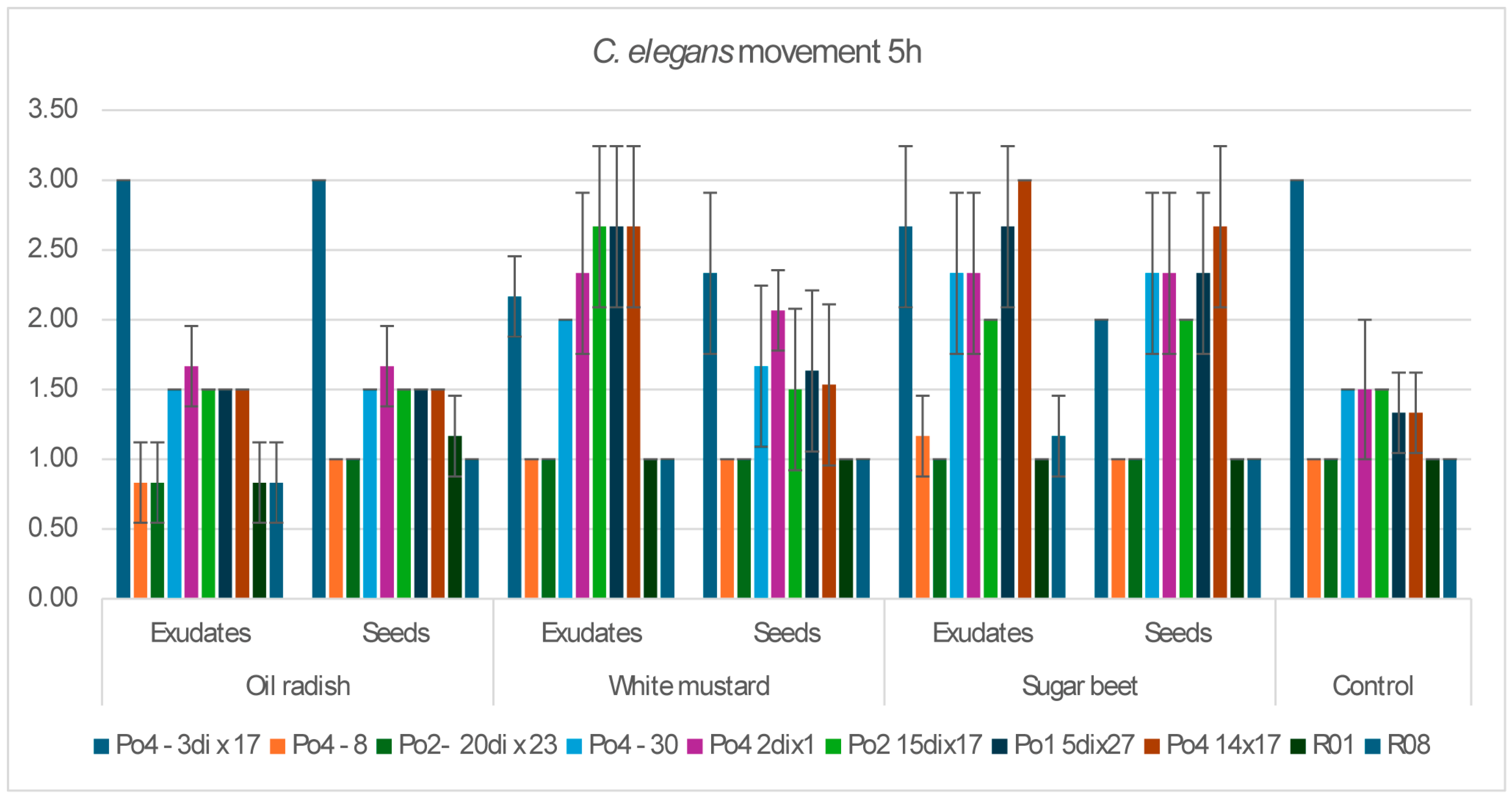
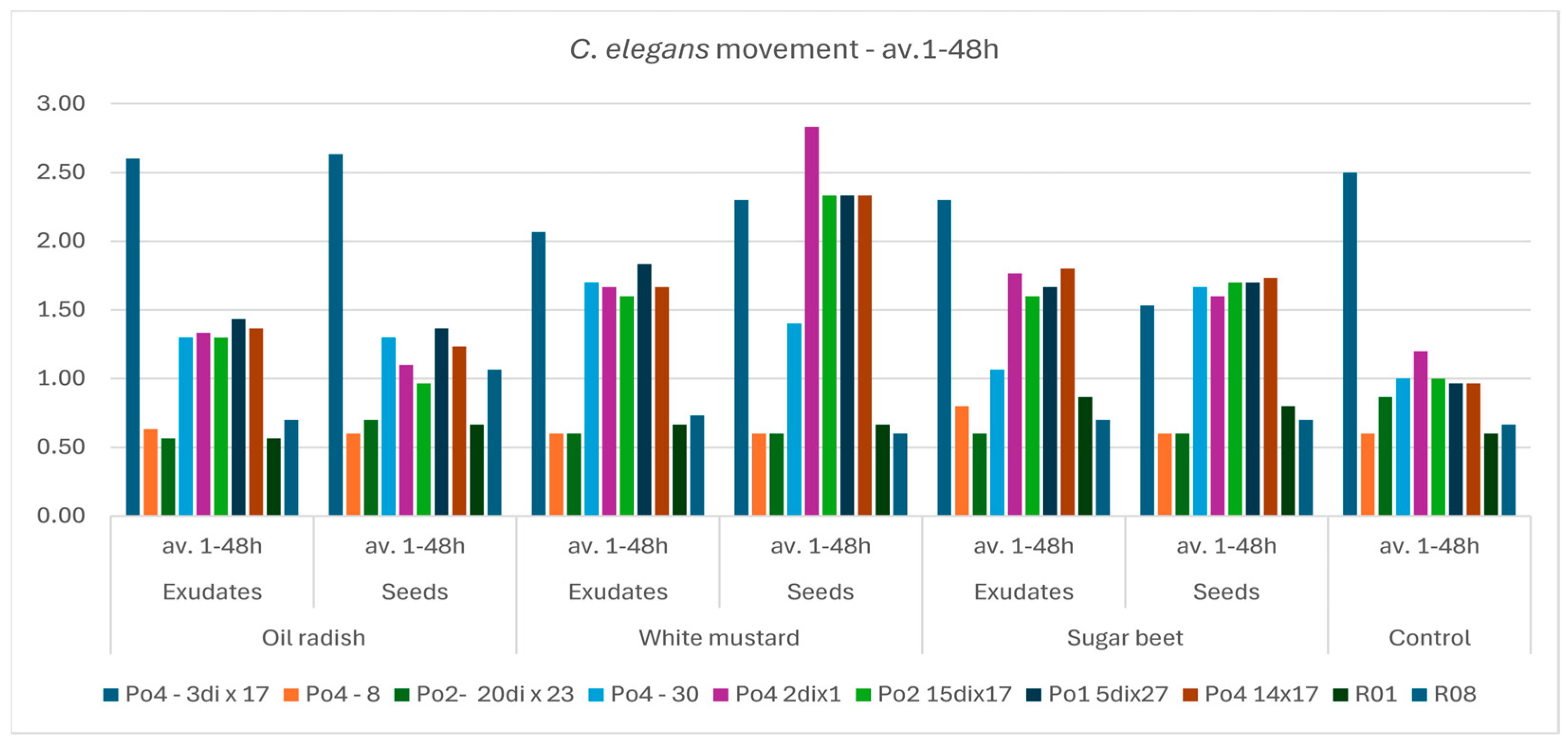
The tested mycelia presented variable activity against C. elegans nematodes. The activity was measured by the assessment of nematodes movement. The statistical analyses indicated no statistics significance in most of the obtained results; however, the clear trends were visible. The correlation coefficient between observed movement of C. elegans after 5 h of the experiment and the average assessment for their movement in the period 1 to 48 h was 0.89, indicating that the assessment in the 5th hour of the experiment gives enough information concerning the mycelium activity. When the toxocysts formation abilities were compared with the C. elegans mobility, the correlation coefficient between these two parameters was achieved as presented in Table 1. These coefficients achieved negative values (−0.44 to −0.49), which means that when the production of toxocysts increases, the movement of nematodes is slowed. This correlations are weak; however, they present trends observed in mycelia of P. ostreatus activity against nematodes.
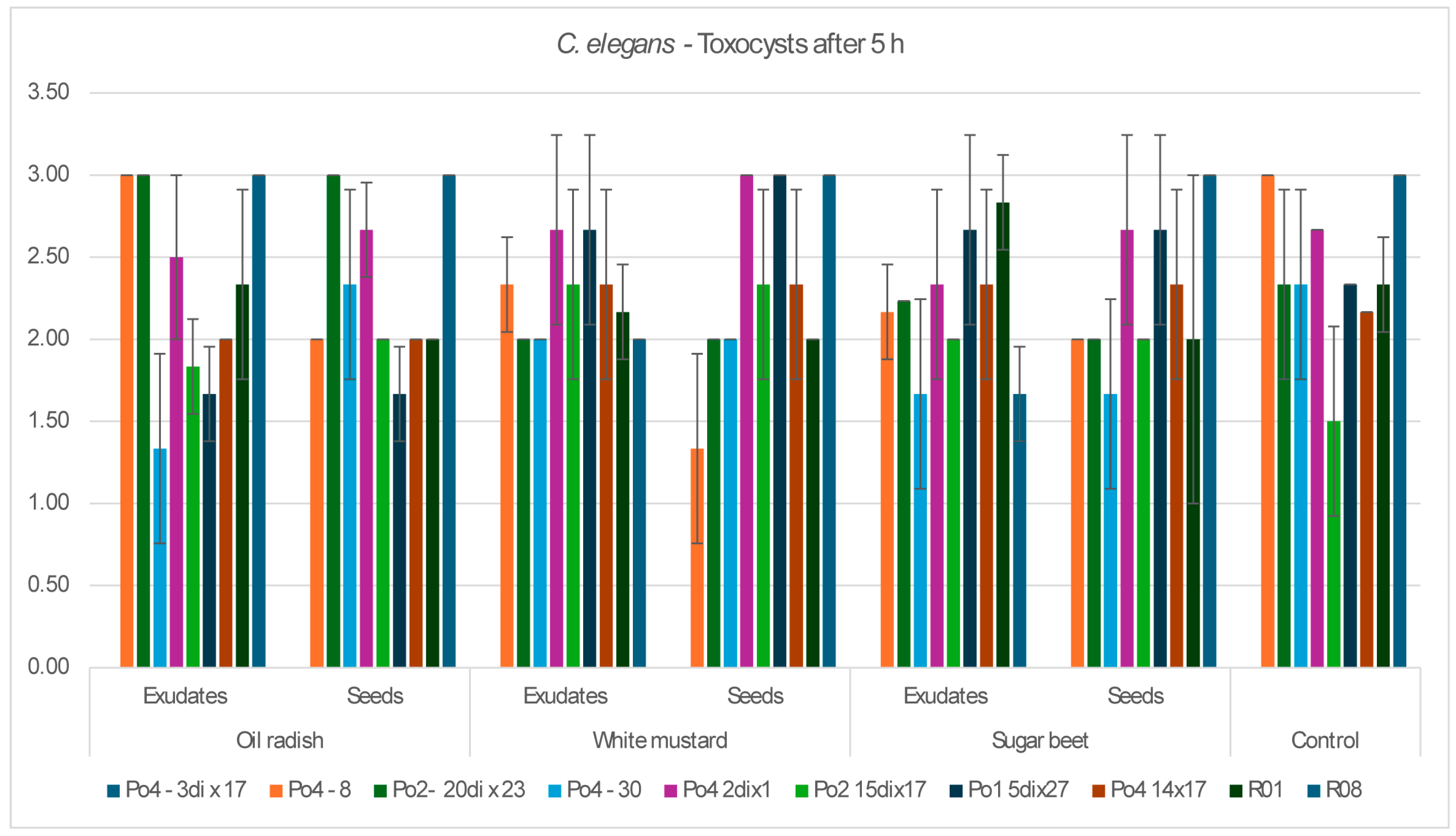
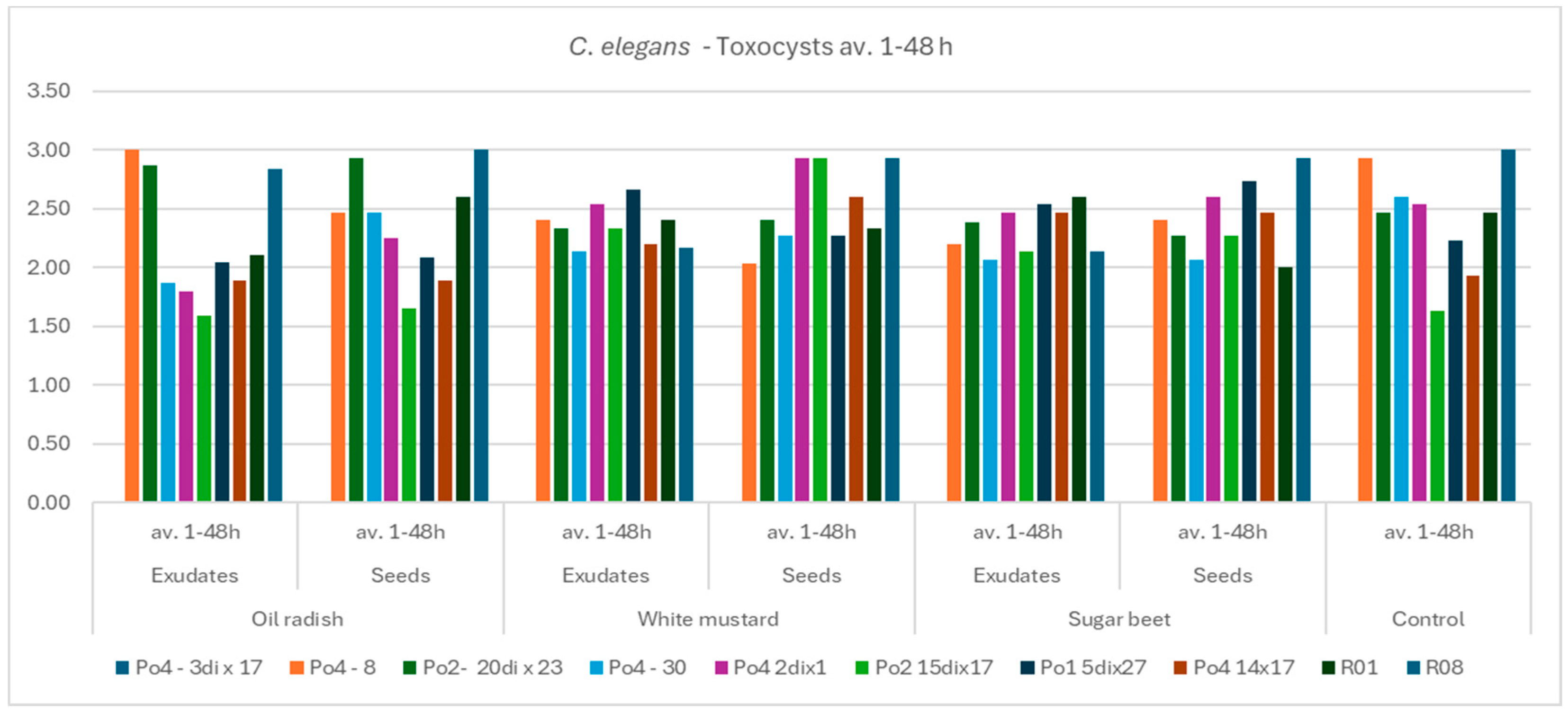
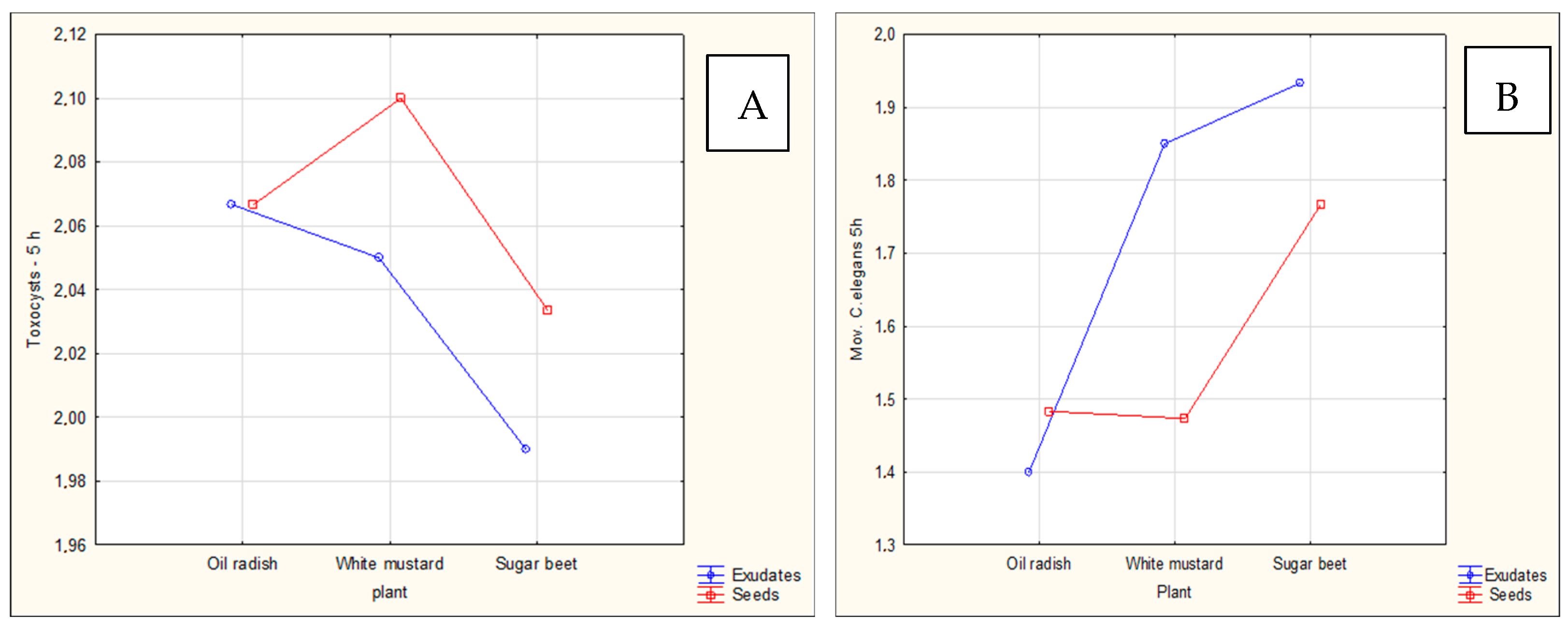
Two of the tested mycelia generated in our laboratory (Po4-8 and Po2-20dix23), and the control mycelia R01 and R08 were able to efficiently slow down the nematode mobility after 5 h of contact and in the whole experiment (Figure 1 and Figure 2). Their toxocysts productions reached high scores under the oil radish exudates influence after 5 h of the experiments, although, strain R01presented lower toxocysts production than other three mentioned above mycelia (Figure 3 and Figure 4). The remaining mycelial strains did not differ significantly across the entire experiment with respect to either parameter: reduction of nematode mobility or toxocyst formation. However, one example of mycelium, strain Po4-3dix17, was not able to slow down nematodes, did not produce toxocysts, and siggnificantly dffered in this parameters from other tested mycelia (Figure 1, Figure 2, Figure 3 and Figure 4). Oilseed radish—both its root exudates and seeds’ diffusates—exerted the most favorable influence on mycelial activity, resulting in the greatest reduction in nematode movement (Figure 1, Figure 2, Figure 3 and Figure 4). The effects of white mustard, whether in the form of exudates or seeds, varied among the different mycelial strains. However, across the experiment as a whole, the use of seeds generally produced better outcomes than the application of exudates these observations were not confirmed by statistical analyses what means that plants did not influenced negatively on the mycelia nematocidal activity (Figure 1, Figure 2, Figure 3, Figure 4 and Figure 5A,B).
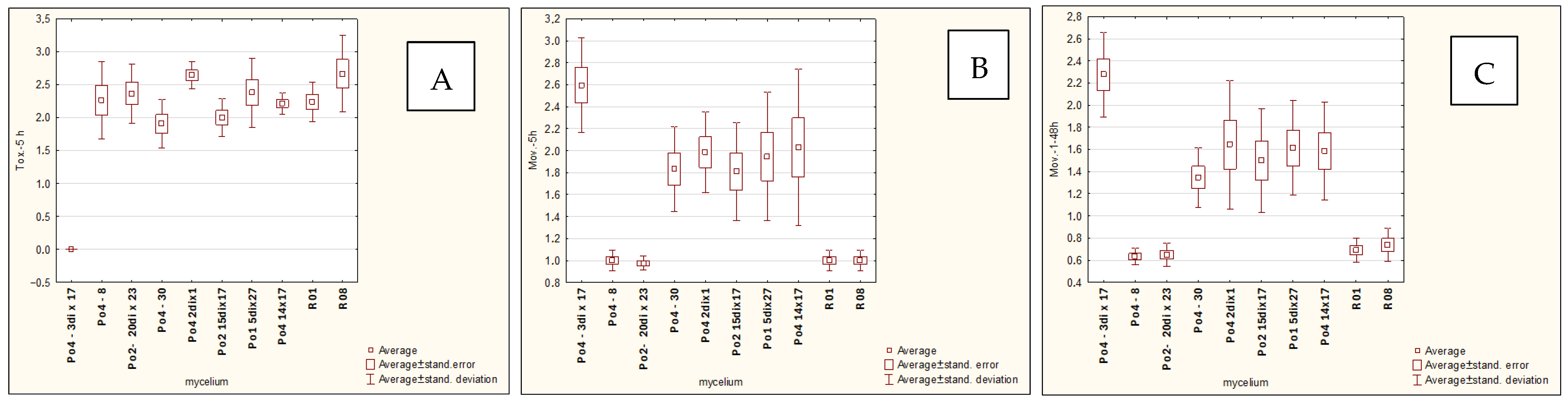
Toxocyst production was negatively correlated with nematode mobility, and significant differences were observed for the tested mycelial strains when these parameters were assessed for the whole experiment. The statistical analyses indicated some statistical significances among activity of P. ostreatus strains against C. elegans movement and in the ability of toxocysts production. Movement of C. elegans and toxocysts production after 5 h or average in 1–48 h of the experiment assessed by Kruskal-Wallis test and bilateral multiple comparisons indicated significant p values [Supplementary Material S2]. These analyses allowed to indicate more efficient mycelia (R01, R08, Po4-8, Po2-20dix23) from all tested strains and also to confirm very minute or lack of activity of Po4-3dix17. The strain Po4-3dix17 was unable to form toxocysts and very weakly reduced movement of C. elegans nematodes (Figure 6A–C).

3.2. Influence of Plants and Heterodera Schachtii Cysts on the Mycelia Activity

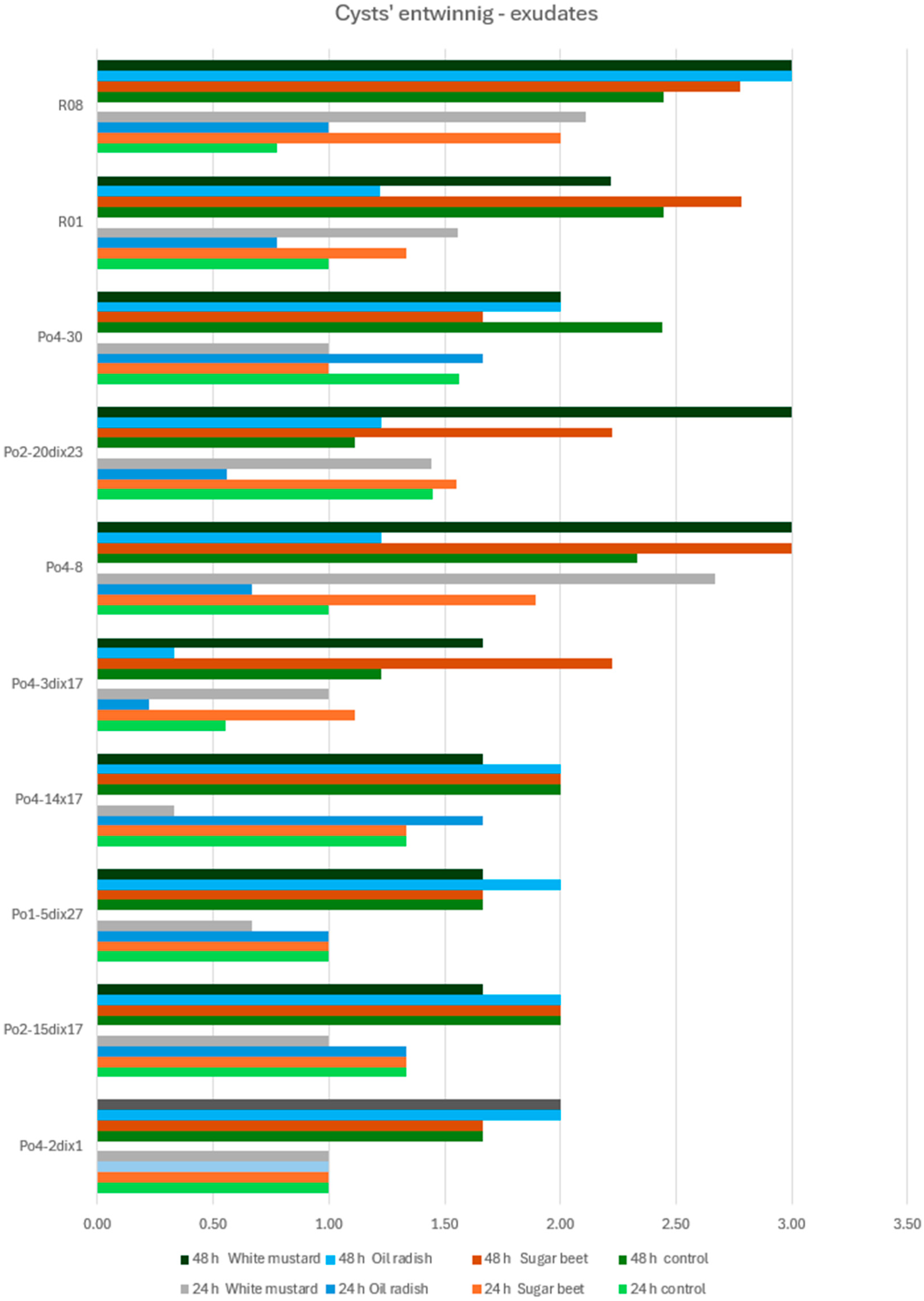
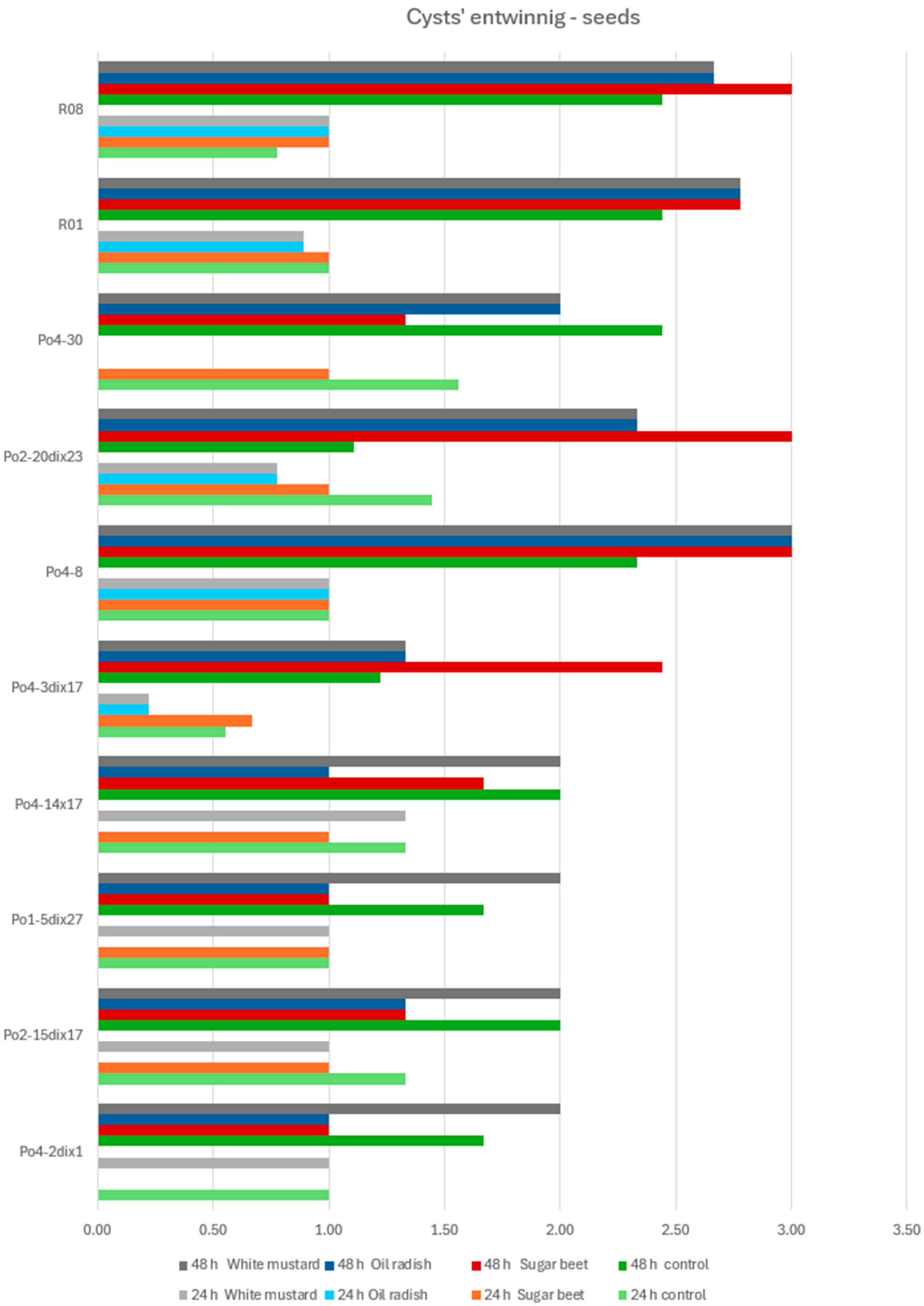
Heterodera schachtii is a nematode that can be parasitized by P. ostreatus mycelium through the overgrowth of its cysts. After five days of co-incubation of cysts with mycelia and plant materials, all mycelial strains overgrew the cysts, receiving the maximum score on the evaluation scale in nearly all cases. The only exception was strain Po4-3dix17, which achieved a score of 2.67 in the presence of oilseed radish or white mustard seeds. No significant differences were observed among the mycelial strains or plant materials (root exudates or seed diffusates) in this regard. In this experiment, strain Po4-3dix17 was the least active, overgrowing cysts more slowly when exposed to oilseed radish exudates (Figure 7) or to oilseed radish seed diffusates or white mustard seed diffusates (Figure 8). The most pronounced effects were observed for strain Po4-8, which showed strong activity after 24 h in the presence of white mustard exudates, and after 48 h when exposed to exudates of sugar beet or white mustard (Figure 8). Strain R08 achieved high scores after 48 h under the influence of exudates of all three tested plants (Figure 8).
The effects of seeds on mycelial activity varied. No visible overgrowth was recorded after 24 h for strains Po4-2dix1, Po2-15dix17, Po1-5dix27, Po4-14x17, and Po4-30 when exposed to oilseed radish seeds, and for strains Po4-30 and Po4-2dix1 when exposed to white mustard and sugar beet seeds, respectively. After 48 h, strain Po4-8 showed consistent overgrowth in the presence of all three seed types, a pattern similarly observed for strains R08, R01 and for Po2-20dix23 (Figure 8).
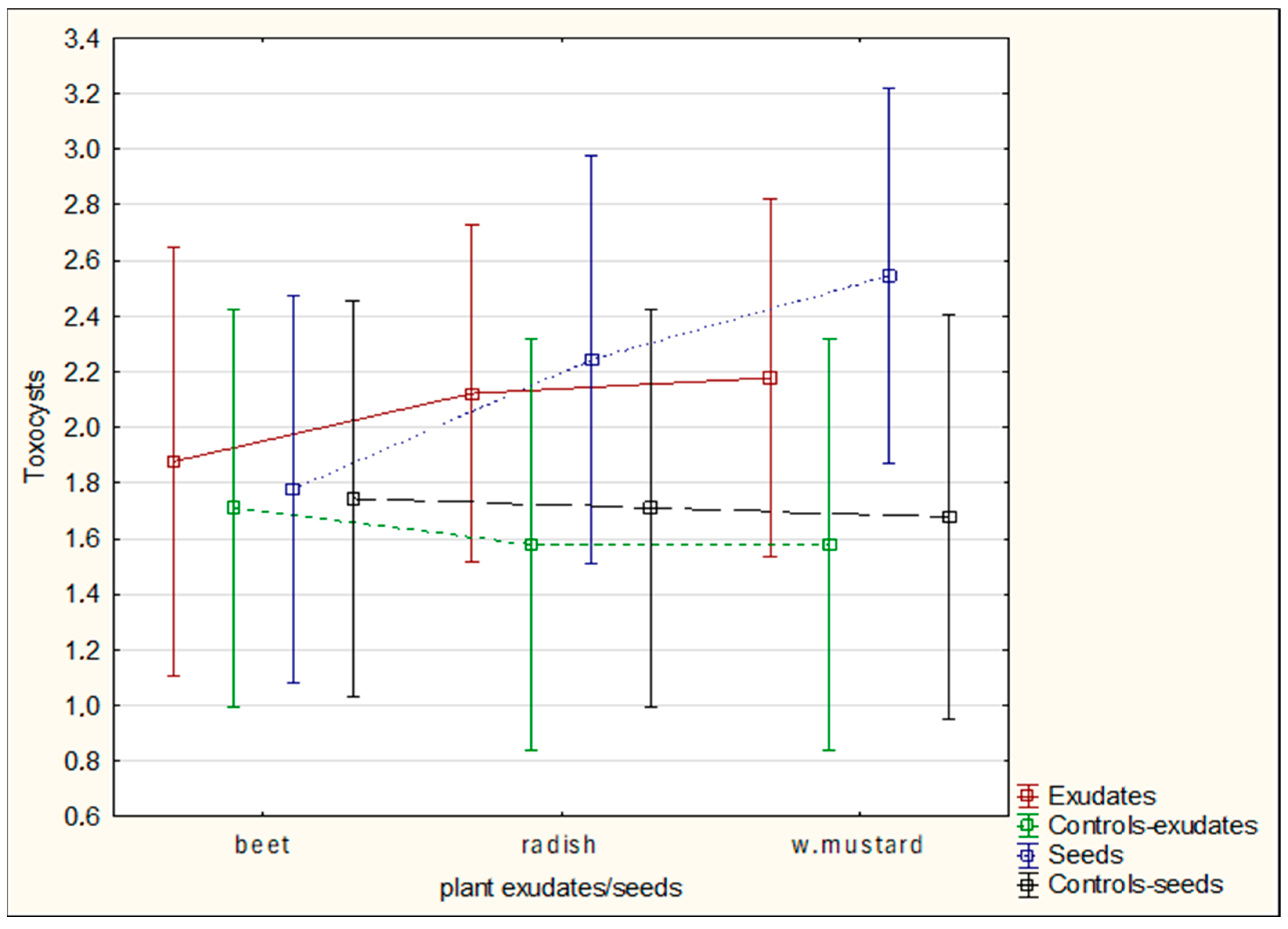
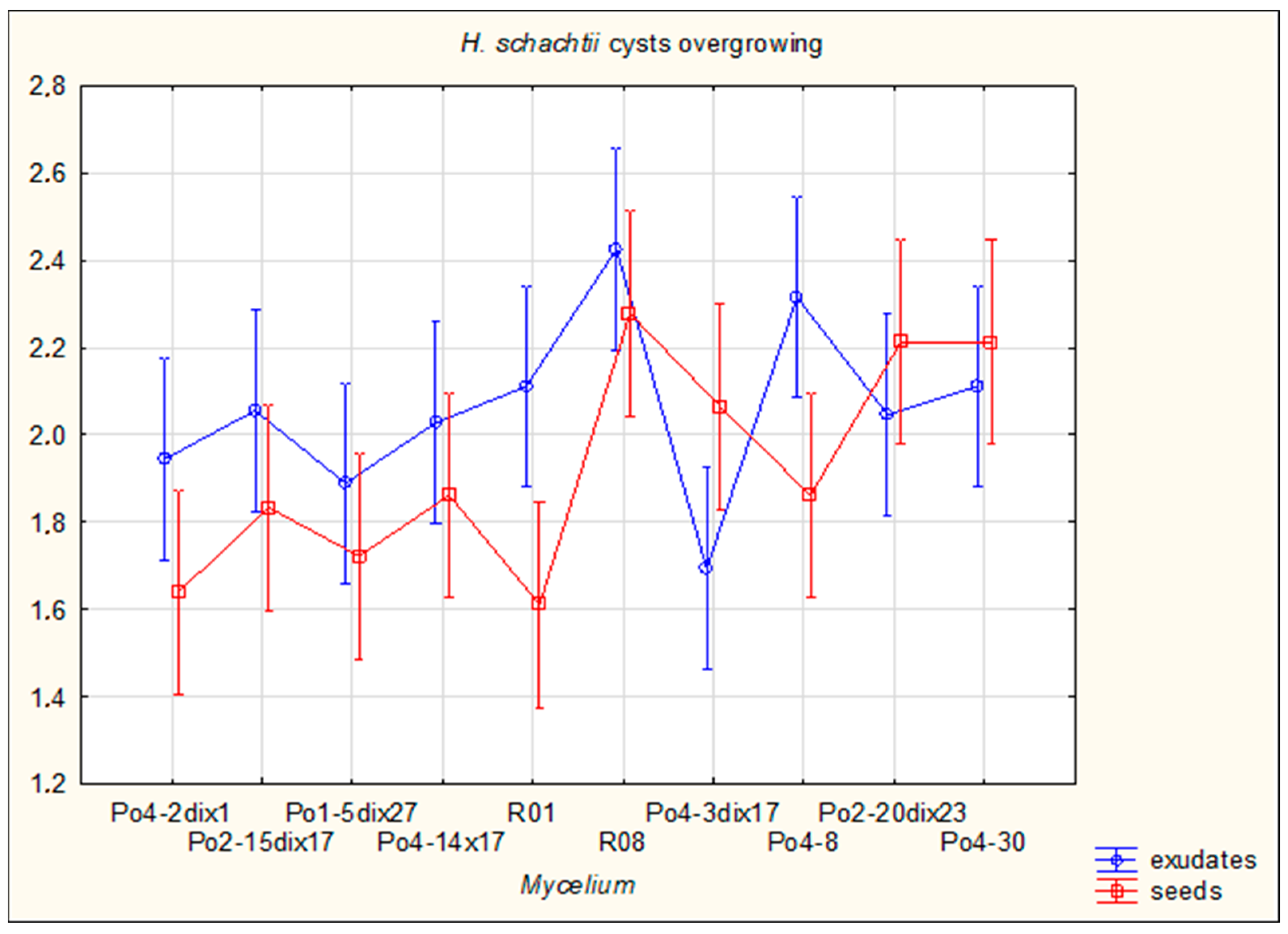
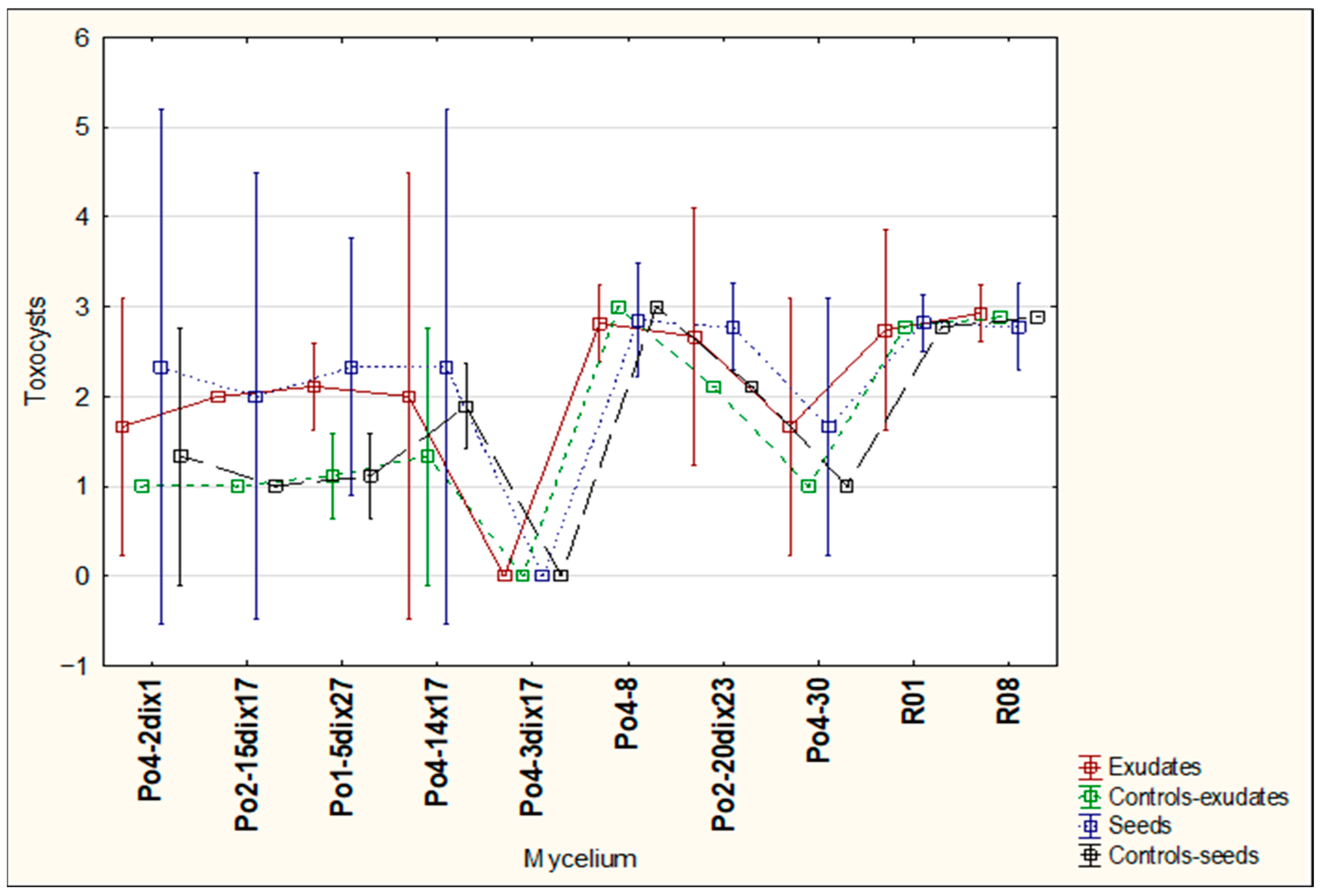
The results obtained for the cysts entwining did not differ significantly with respect to the tested plant materials; however, oilseed radish and white mustard, whether as exudates or seed diffusates, tended to enhance mycelial activity in cysts overgrowing if compared to controls (Figure 9). Overall, cyst entwining was similarly effective across all mycelial strains (Figure 10). These observations are further supported by the data presented in Figure 11, which shows that the highest levels of toxocysts production were achieved by mycelial strains Po4-8, R01, and R08. However, some differences were observed in the case of toxocysts production. The ANOVA analysis with Kruskal-Wallis test and bilateral multiple comparisons for mycelium as the independent variable grouping value proved that at least one of them differed from others in this parameter (p = 0.05). The significant differences the toxocysts development were observed for mycelia tested in controls under the influence of root exudates or seed diffusates (S2), significances were observed between Po4-3dix17 and Po4-8 or R08, showing better ability of the two last strains to produce toxocysts in comparison to the first one (Figure 11 and Figure S2).
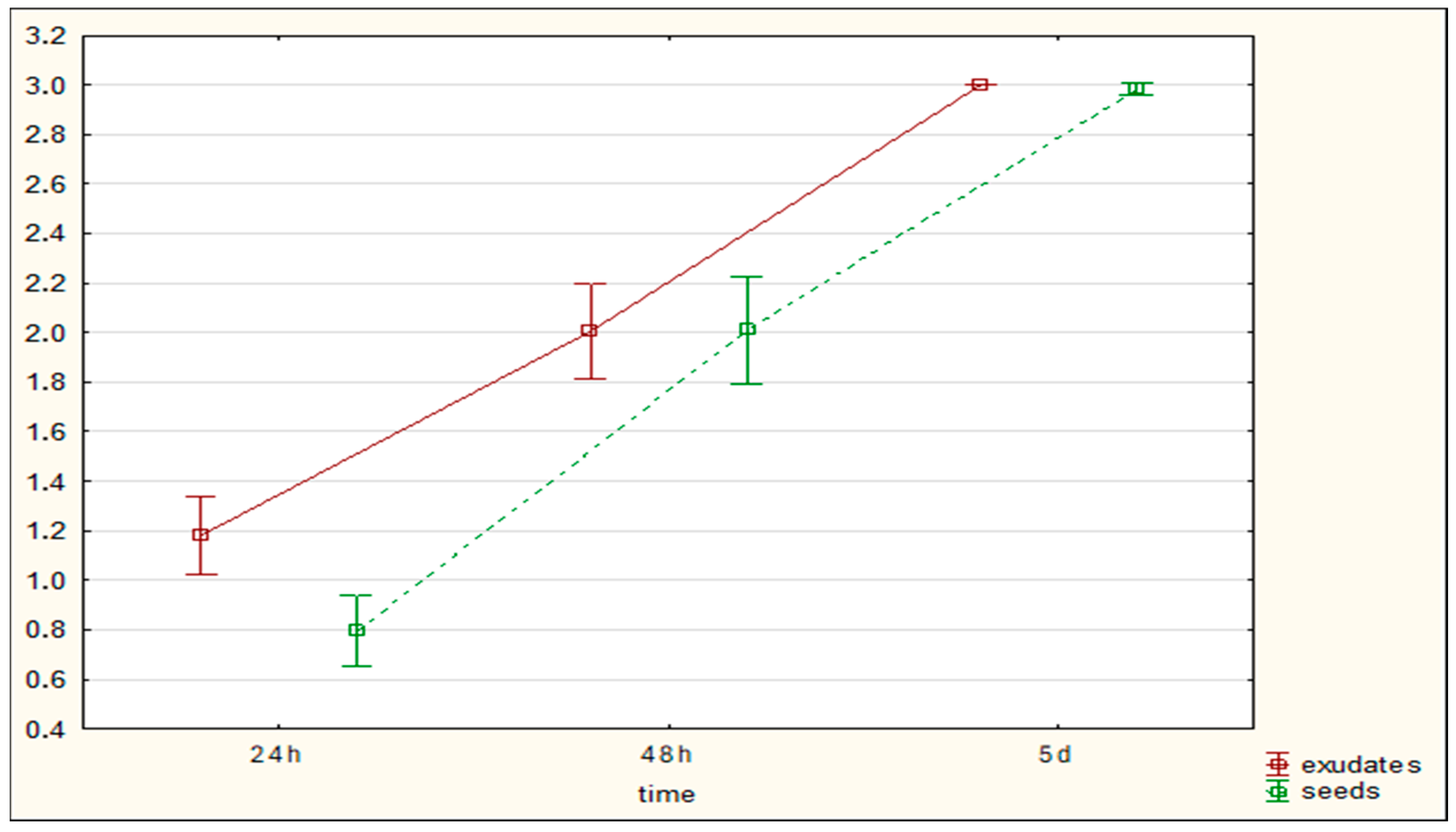
Analysis indicated that the duration of exposure to plant materials (exudates or seeds) significantly (p = 0.05) affected outcomes, with notable differences observed among observation times (Figure 12 and Figure S2).

4. Discussion

Mycelia of Pleurotus ostreatus demonstrated the ability to kill the model nematode Caenorhabditis elegans and to entwine and overgrow the cysts of the sugar beet cyst nematode Heterodera schachtii. However, when the mycelia activity was tested in the presence of seed secretions and root exudates, their efficacy did not change significantly. These findings suggest that root exudates of potential trap plants do not negatively affect P. ostreatus mycelium activity. These observations were consistent across all tests, indicating the potential of this approach as a tool for controlling H. schachtii populations and improving soil organic matter.Nevertheless, the present experiments do not isolate or clarify the direct influence of the plants themselves and mycelia on the hatching of H. schachtii eggs, and to our knowledge, such studies have not yet been performed. Therefore, further field experiments are needed that involve the simultaneous introduction of effective mycelium and trap plants into the soil. Additional trap plant species and varieties should also be tested.
A tendency toward reduced mycelial activity was observed in the presence of oilseed radish, however not proved by ststistical analyses. The research showed that toxicocyst production is not strongly correlated with the ability of the mycelia to inhibit the movement of C. elegans. Although these correlations (Table 1) are weak, they nevertheless reflect general trends in the activity of P. ostreatus mycelia against nematodes. This observation confirms the established mode of toxic action of vegetative mycelium on nematodes, while at the same time suggesting that additional mechanisms contribute to the nematocidal activity of this mushroom [15,16]. The results clearly indicate that the mycelium’s nematocidal activity does not rely solely on toxicocyst production. For example, the mycelial line incapable of producing toxicocysts, Po4-3dix17, still demonstrated the ability to entwine H. schachtii cysts. The most active strains, Po4-8 and R08, reached maximum toxicocyst production and inhibition of C. elegans within only 5 h, which may indicate their overall effectiveness against C. elegans. For these strains, activity was not influenced by the plant species used, whereas slight plant-dependent effects could be observed in other mycelia.
Among the tested plants, oilseed radish most strongly promoted nematocidal activity against C. elegans, suggesting that its use as a forecrop or catch crop may be particularly effective in crop rotations aimed at reducing H. schachtii populations. This finding further indicates that trap plants are unlikely to interfere with mycelial activity in soil environments when both would be applied simultaneously to control the sugar beet cyst nematode. Oilseed radish and leaf radish belong to a group of trap plants known to exhibit strong activity against H. schachtii, although the final level of cyst depletion depends heavily on cultivar-specific traits. Varieties of white mustard exhibit similar properties in field [6,8,17].
Hauer et al. [6] recommend cultivating nematode-resistant trap crops such as oil radish or mustard together with tolerant or resistant sugar beet varieties as part of integrated management strategies targeting H. schachtii in infested fields. However, as demonstrated by Reuther et al. [18], tolerant sugar beet varieties do not reduce nematode populations; instead, population levels may even increase during cultivation, reaching 147% of the initial level in the case of the variety ‘Kleist’. Consequently, the identification of complementary methods that reinforce current integrated strategies is essential for more effective management of H. schachtii. This possibilty may be achieved by using P. ostreatus mycelium as a namatocidal agent in the field soil. This conclusion can be supported by our current previous research [12,19] and the research of others [3,5].
In our experiments, we tested only two species/varieties of H. schachtii–trapping plants. However, up to twelve species may be classified within this group; among them, varieties of radish, white mustard, and rye appear to be the most effective [7]. These species differ in their capacity to stimulate H. schachtii hatching and subsequently inhibit its further development. For some species, the reduction in H. schachtii populations did not differ significantly from the fallow control. Nevertheless, unlike fallow soil, these plants provide the additional benefit of green manure, making them more advantageous overall [7]. Our proposal gives the opportunity to control H. schachtii and enhance soil in green manure.
The mycelium of P. ostreatus, in addition to entwining H. schachtii cysts, produces the volatile compound 3-octanone [20]. This compound may prove useful in nematode management. Since now only one research was developed to test the activity of 3-octanone against C. elegans, and to our knowledge, it was not tested against other nematode species, including H. schachtii [20]. Khoja et al. [21] tested volatiles secreted by Metarhizium brunneum against Meloidogyne hapla. The volatiles were 1-octen-3-ol and 3-octanone. Both when applied at low doses to plants lured nematodes, and repelled them at high doses. When soil was treated with these active substance very few live M. hapla were recovered, but the effect was possible only when high doses were applied [21]. Both substances as volatiles show the potential of to be used as biofumigants.And P. ostreatus may serve as a source of 3-octanone. On the other hand, Quintanilla et al. [7], for example, highlight the biofumigation potential of non-host oilseed radish, which could contribute to integrated pest management strategies targeting H. schachtii.
Resistant varieties of oilseed radish and white mustard are recommended in Central Europe as standard components of H. schachtii management strategies. These crops should be sown as catch crops before sugar beet cultivation [22,23,24]. A similar strategy has been implemented in Japan, where H. schachtii was first detected in Hara Village, Nagano Prefecture, in 2017 [8,9]. Sakai et al. [9] reported effective suppression of nematode populations using two leaf-radish varieties that did not support cyst reproduction, in contrast to the control variety. However, they did not quantify the remaining nematode population.
In Europe, breeding catch crops for resistance to H. schachtii began more than 30 years ago. Field trials have shown that such crops can reduce H. schachtii population densities by 20–60%, depending on sowing date, plant density, and crop rotation practices [22,24]. As forecrops, oilseed radish and white mustard primarily function as green manure species; however, with careful selection of resistant varieties, they can also contribute to reducing H. schachtii populations [22,23]. Enhancing these catch crops with P. ostreatus mycelium may further strengthen integrated plant protection strategies. Particularly, no negative effects were observed in the case of mycelium nematocidal activity, both on model organism C. elegans and the target organism—H. schachtii. However, mycelia for further use should be carefully chosen with respect to their individual nematocidal activity.


5. Conclusions

The activity of Pleurotus ostreatus mycelium against Heterodera schachtii in the presence of sugar beet root exudates is not reduced compared with its activity in the presence of other plant species or under control conditions. Thus, plants—including sugar beet—do not interfere with the efficacy of the mycelium. Moreover, the use of nematocidal plant species does not diminish the performance of highly active mycelial strains. In the case of strains with lower inherent efficacy, the incorporation of white mustard may even prove more beneficial than other plant species. However, tests on C. elegans suggest that oilseed radish may also be effective.
Overall, these findings suggest that the application of nematocidal plants as green manure is compatible with the potential use of P. ostreatus mycelium as a biological control agent against H. schachtii. To our knowledge, this is the first experiment that integrates the activities of trap plants and sugar beet with the nematocidal effects of P. ostreatus mycelium against C. elegans and H. schachtii. The results are promising; however, future studies should evaluate their effectiveness under the field conditions.

Supplementary Materials

The following supporting information can be downloaded at: https://www.mdpi.com/article/10.3390/agriculture16010072/s1, Supplementary Materials S1: Figure S1. Cyst entwining assessment scale. Figure S2. The toxocyst production assessment scale. Supplementary Materials S2—Tables of bilateral multiple comparisons among data in ANOVA Kruskal-Wallis test.

Author Contributions

E.M.—conceptualization, methodology, software, formal analysis, resources, visualization, data curation, writing—original draft preparation, writing—review and editing, supervision, project administration, funding acquisition; M.N. (Małgorzata Nabrdalik)—conceptualization, methodology, validation, investigation, data curation, visualization, writing—original draft preparation, supervision; R.N.—formal analysis, resources, investigation, writing—review and editing; M.N. (Mirosław Nowakowski)—conceptualization, methodology, resources, investigation, supervision; writing—review and editing. All authors have read and agreed to the published version of the manuscript.

Funding

This research was funded by the Polish Ministry of Agriculture and Rural Development grant number under the program “Biological Progress in Plant Production”, the project for the years 2021–2025, task 22 “Influence of environmental parameters and biological variability of Pleurotus ostreatus in terms of nematocidal activity on Heterodera schachtii”.

Data Availability Statement

The raw data supporting the conclusions of this article will be made available by the authors on request.

Acknowledgments

This work was carried out at MCBR UO (International Research and Development Center of the University of Opole), which was established as part of a project co-financed by the European Union under the European Regional Development Fund, RPO WO 2014–2020, Action 1.2 Infra-structure for R&D. Agreement no. RPOP.01.02.00-16-0001/17-00 dated 31 January 2018.

Conflicts of Interest

The authors declare no conflicts of interest. The sponsors had no role in the design, execution, interpretation, or writing of the study.

References

  1. Barron, G.L.; Thorn, R.G. Destruction of nematodes by species of Pleurotus. Can. J. Bot. 1987, 65, 774–778. [Google Scholar] [CrossRef]
  2. Mwangi, N.G.; Stevens, M.; Wright, A.J.D.; Watts, W.D.J.; Edwards, S.G.; Hare, M.C.; Back, M.A. Population dynamics of stubby root nematodes (Trichodorus and Paratrichodorus spp.) associated with ‘Docking disorder’ of sugar beet (Beta vulgaris L.), in field rotations with cover crops in East England. Ann. Appl. Biol. 2025, 187, 177–191. [Google Scholar] [CrossRef]
  3. Palizi, P.; Goltapeh, E.M.; Pourjam, E.; Safaie, N. Potential of oyster mushrooms for the biocontrol of sugar beet nematode (Heterodera schachtii). J. Plant Prot. Res. 2009, 49, 27–33. [Google Scholar] [CrossRef]
  4. Castro, L.R.I.; Delmastro, S.; Curvetto, N.R. Spent oyster mushroom substrate in a mix with organic soil for plant pot cultivation. Micol. Apl. Int. 2008, 20, 17–26. [Google Scholar]
  5. Khan, A.; Iqbal, M.; Hussain, S. Organic control of phytonematodes with Pleurotus species. Pak. J. Nematol. 2014, 32, 155–161. [Google Scholar]
  6. Hauer, M.; Koch, H.-J.; Krüssel, S.; Mittler, S.; Märländer, B. Integrated control of Heterodera schachtii Schmidt in Central Europe by trap crop cultivation, sugar beet variety choice and nematicide application. Appl. Soil Ecol. 2016, 99, 62–69. [Google Scholar] [CrossRef]
  7. Yaghoubi, A.; Yazdani, R.; Quintanilla, M. Host status and management potential of selected cover crops for Heterodera schachtii. Crop Prot. 2026, 199, 107445. [Google Scholar] [CrossRef]
  8. Yosano, S.; Kitabayashi, S.; Sakai, H. Field trial of trap cropping against the sugar beet cyst nematode Heterodera schachtii (Rhabditida: Heteroderidae) in Japan. Appl. Entomol. Zool. 2025, 60, 67–71. [Google Scholar] [CrossRef]
  9. Sakai, H.; Tateishi, Y.; Kitabayashi, S.; Tomita, Y.; Nishimoto, J.; Yosano, S.; Uehara, K.; Okada, H. KGM1804, a leaf radish green manure variety resistant to the sugar beet cyst nematode Heterodera schachtii. Nematol. Res. 2024, 54, 47–50. [Google Scholar] [CrossRef]
  10. Ibrahim, I.K.A.; Awd-Allach, S.F.A.; Handoo, Z.A. Life cycle and control of the cyst nematode Heterodera goldeni on rice in Egypt. Int. J. Nematol. 2014, 24, 11–17. [Google Scholar]
  11. Kudrys, P.; Nabrdalik, M.; Hendel, P.; Kolasa-Więcek, A.; Moliszewska, E. Trait Variation between Two Wild Specimens of Pleurotus ostreatus and Their Progeny in the Context of Usefulness in Nematode Control. Agriculture 2022, 12, 1819. [Google Scholar] [CrossRef]
  12. Nelke, R.; Nabrdalik, M.; Żurek, M.; Kudrys, P.; Hendel, P.; Nowakowski, M.; Moliszewska, E.B. Nematocidal Properties of Wild Strains of Pleurotus ostreatus Progeny Derived from Buller Phenomenon Crosses. Appl. Sci. 2024, 14, 7980. [Google Scholar] [CrossRef]
  13. Kaczorowski, G. The Influence of Weeds on the Population of Heterodera schachtii Schmidt in the Fields of Sugar Beet Farms. Doctoral Thesis, Akademia Techniczno-Rolnicza, Bydgoszcz, Poland, 1992; p. 63. (In Polish). [Google Scholar]
  14. Stiernagle, T. Maintenance of C. elegans. In The C. elegans Research Community, WormBook; WormBook: Pasadena, CA, USA, 2006. [Google Scholar] [CrossRef]
  15. Landi, N.; Ragucci, S.; Russo, R.; Valletta, M.; Pizzo, E.; Ferreras, J.M.; Di Maro, A. The ribotoxin-like protein Ostreatin from Pleurotus ostreatus fruiting bodies: Confirmation of a novel ribonuclease family expressed in basidiomycetes. Int. J. Biol. Macromol. 2020, 161, 1329–1336. [Google Scholar] [CrossRef] [PubMed]
  16. Žužek, M.C.; Maček, P.; Sepčić, K.; Cestnik, V.; Frangež, R. Toxic and lethal effects of ostreolysin, a cytolytic protein from edible oyster mushroom (Pleurotus ostreatus), in rodents. Toxicon 2006, 48, 264–271. [Google Scholar] [CrossRef] [PubMed]
  17. Hemayati, S.S.; Akbar, M.R.J.E.; Ghaemi, A.-R.; Fasahat, P. Efficiency of white mustard and oilseed radish trap plants against sugar beet cyst nematode. Appl. Soil Ecol. 2017, 119, 192–196. [Google Scholar] [CrossRef]
  18. Reuther, M.; Lang, C.; Grundler, F.M.W. Nematode-tolerant sugar beet varieties–resistant or susceptible to the Beet Cyst Nematode Heterodera schachtii? Sugar Ind. 2017, 142, 277–284. [Google Scholar] [CrossRef]
  19. Nelke, R.; Nabrdalik, M.; Nowakowski, M.; Moliszewska, E. Biocontrol Potential of Pleurotus ostreatus Mycelium Against the Beet Cyst Nematode Heterodera schachtii for Breeding Purposes. Appl. Sci. 2025, 15, 12710. [Google Scholar] [CrossRef]
  20. Lee, C.-H.; Lee, Y.Y.; Chang, Y.C.; Pon, W.L.; Lee, S.P.; Wali, N.; Nakazawa, T.; Honda, Y.; Shie, J.-J.; Hsueh, Y.-P. A carnivorous mushroom paralyzes and kills nematodes via a volatile ketone. Sci. Adv. 2023, 9, eade4809. [Google Scholar] [CrossRef] [PubMed]
  21. Khoja, S.; Eltayef, K.M.; Baxter, I.; Myrta, A.; Bull, J.C.; Butt, T. Volatiles of the entomopathogenic fungus, Metarhizium brunneum, attract and kill plant parasitic nematodes. Biol. Control 2021, 152, 104472. [Google Scholar] [CrossRef] [PubMed]
  22. Daub, M. The beet cyst nematode (Heterodera schachtii): An ancient threat to sugar beet crops in Central Europe has become an invisible actor. In Integrated Nematode Management: State-of-the-Art and Visions for the Future; Desaeger, J., Sikora, R.A., Molendijk, L., Eds.; CABI: Wallingford, UK, 2021; pp. 394–399. [Google Scholar] [CrossRef]
  23. Koch, D.W.; Gray, F.A.; Krall, J.M. Trap Crops: A Promising Alternative for Sugar Beet Nematode Control. University of Wyoming Cooperative Extension Service Department of Plant Sciences, B-1029R, 1999. Available online: https://courses.cit.cornell.edu/ipm444/lec-notes/extra/pest-mgmt-sugar-beet-cyst-nematode.pdf (accessed on 15 November 2025).
  24. Dehdari, M.; Charehgani, H.; Fatemi, E. Evaluation of canola (Brassica napus L.) resistance to sugar beet cyst nematode (Heterodera schachtii Schm.) and its association with SSR molecular markers using parametric and non-parametric statistical methods. Indian Phytopathol. 2022, 75, 467–476. [Google Scholar] [CrossRef]
Figure 1. The influence of exudates and the presence of seeds on the P. ostreatus mycelium activity against C. elegans movement after 5 h of co-incubation; bars indicate standard deviation (SD); control—without plants.
Agriculture 16 00072 g001
Figure 2. The influence of exudates and presence of seeds on the P. ostreatus mycelium activity against C. elegans movement—average for the experiment 1–48 h of co-incubation; control—without plants.
Agriculture 16 00072 g002
Figure 3. The P. ostreatus toxocysts development under the influence of C. elegans and plant exudates or seeds diffusates after 5 h of co-incubation; bars indicate standard deviation (SD).
Agriculture 16 00072 g003
Figure 4. The P. ostreatus toxocysts development under the influence of C. elegans and plant exudates or seeds diffusates—average for the experiment 1–48 h of co-incubation.
Agriculture 16 00072 g004
Figure 5. Analyses of the joint action of plants’ type (A) and their exudates or seeds’ diffusates influence on the toxocysts formation by mycelia (in total during the experiment) and (B) C. elegans movement after 5 h (in total during the experiment); data did not present statistical significances.
Agriculture 16 00072 g005
Figure 6. P. ostreatus activity in toxocysts production and the influence on nematode movement assessed in the whole experiment; (A)—toxocysts production after 5 h; (B) movement of C. elegans after 5 h; (C)—average C. elegans movement in 1–48 h.
Agriculture 16 00072 g006
Figure 7. The influence of plant exudates on the P. ostreatus mycelia activity in cyst entwining by growing hyphae after 24 and 48 h; controls—without exudates.
Agriculture 16 00072 g007
Figure 8. The influence of the presence of seeds on the P. ostreatus mycelium activity in cyst entwining by growing hyphae after 24 and 48 h; controls—without seeds.
Agriculture 16 00072 g008
Figure 9. The influence of plant exudates on the results of H. schachtii cysts overgrowing by tested mycelia; data did not differ significantly.
Agriculture 16 00072 g009
Figure 10. The influence of the tested mycelia on the overgrowing of H. schachtii cysts under the influence of plants’ exudates; data did not differ significantly.
Agriculture 16 00072 g010
Figure 11. The activity of the tested mycelia in toxocysts production under the influence of plant exudates/seeds and the presence of the H. schachtii cysts; control variants were estimated without cysts presence; data differed statistically in groups (exudates/seeds).
Agriculture 16 00072 g011
Figure 12. The result of time on the H. schachtii cysts overgrowing by the tested mycelia under the plant exudates influence; data differed significantly in groups (exudates/seeds).
Agriculture 16 00072 g012
Table 1. Correlation coefficients between the ability to form of toxocysts by tested mycelia and C. elegans movement assessments at various times of experiments.
Compared ParameterCorrelation Coefficient
5 h tox. vs. 5 h mov.−0.44
1–48 h tox. vs. 1–48 h mov.−0.49
1–48 h tox. vs. 5 h mov.−0.49
Disclaimer/Publisher’s Note: The statements, opinions and data contained in all publications are solely those of the individual author(s) and contributor(s) and not of MDPI and/or the editor(s). MDPI and/or the editor(s) disclaim responsibility for any injury to people or property resulting from any ideas, methods, instructions or products referred to in the content.