Review

Bioactive Chemicals and Biological Activity of Tropaeolum majus L. and the Importance of Trichoderma spp. in the Cultivation of This Species

by
Sylwia Skazińska
1,
Roman Andrzejak
1,
Katarzyna Waszkowiak
2 and
Beata Janowska
3,*
1
Department of Phytopathology, Seed Science and Technology, Faculty of Agronomy, Horticulture and Biotechnology, Poznań University of Life Sciences, Dąbrowskiego 159, 60-594 Poznań, Poland
2
Department of Gastronomy Science and Functional Foods, Faculty of Food Science and Nutrition, Poznań University of Life Sciences, Wojska Polskiego 31, 60-624 Poznań, Poland
3
Department of Ornamental Plants, Dendrology and Pomology, Faculty of Agronomy, Horticulture Biotechnology, Poznań University of Life Sciences, Dąbrowskiego 159, 60-594 Poznań, Poland
*
Author to whom correspondence should be addressed.
Agriculture 2026, 16(1), 101; https://doi.org/10.3390/agriculture16010101
Submission received: 20 November 2025 / Revised: 28 December 2025 / Accepted: 29 December 2025 / Published: 31 December 2025
(This article belongs to the Special Issue The Application of Trichoderma in Crop Production)

Abstract

Tropaeolum majus L. is a popular ornamental plant. All parts of T. majus plant (flowers, leaves, and seeds) are edible and are appreciated for their pungent taste, although their chemical composition varies. T. majus is known for its many health benefits. It is a source of trace elements and bioactive compounds that are easily absorbed by the human body. The flowers of T. majus contain flavonoids from the flavone and flavonol groups, as well as their glycosides, which exhibit antibacterial, antifungal and antiviral activity. They also inhibit the activity of certain enzymes. Among the flavonoids, the flowers and leaves of T. majus contain derivatives of kaempferol and quercetin. Flavonoids also include anthocyanins, which are responsible for the color of T. majus flowers. In red flowers, delphinidin predominates; in orange flowers, pelargonidin; and in yellow flowers, pelargonidin and delphinidin are present in similar amounts. In the flowers of T. majus, seven carotenoids have been identified: violaxanthin, antheraxanthin, lutein, zeaxanthin, α, β and γ-carotene. In the leaves, however, lutein, violaxanthin, β-carotene and neoxanthin were detected. In T. majus, the presence of two glucosinolates has been reported: glucotropaeolin and sinalbin. The flowers and leaves of T. majus also contain both macroelements (N, P, K, Ca, Mg, Na) and microelements (Fe, Mn, Cu, Zn, Mo), and essential oils which have anti-cancer, antibacterial, and antiviral properties. The quality and flowering of T. majus are enhanced by fungi of the Trichoderma genus, which is important both ecologically and in terms of increasing the yield of raw material extracted from the plant. T. aureoviride, T. hamatum, and T. harzianum stimulated the flowering of the T. majus ‘Spitfire’. The plants treated with T. harzianum after being planted in pots flowered the most abundantly. Trichoderma spp. caused the plants to grow more intensively, producing longer and more leafy shoots with a greater number of offshoots. Trichoderma spp. stimulated the uptake of macronutrients, except for P. In the case of Ca and Na, this phenomenon was only observed in plants treated with T. aureoviride and T. hamatum, and for Mg, only when T. hamatum was applied to sown seeds. As for the developed root systems, as far as the micronutrients are concerned, Trichoderma spp. stimulated the uptake of Zn and Mn. Additionally, there was a higher Fe content in the plants treated with T. harzianum on both dates and T. aureoviride after planting the plants in pots.

1. Introduction

Belonging to the Tropaeolaceae family, Tropaeolum majus L. grows in its natural habitat in South America. It was brought to Europe from Peru in the 16th century by the Spanish [1,2]. It is a perennial, but in many countries with a temperate climate it is cultivated as an annual, as it dies back with the onset of frost [3]. The name of the genus comes from Greek and means trophy, a symbol of victory, referring to the shield-like shape of the leaves and the spurred flowers. The specific epithet comes from Latin and means large [4].
T. majus is cultivated as an ornamental, medicinal and edible plant, with its flowers, leaves and fruits used for their characteristic sharp flavor, reminiscent of cress. As an ornamental plant, T. majus is recommended for use on balconies and terraces, in flowerbeds, and as a screening plant when planted along fences and pergolas [3,5,6]. In folk medicine, T. majus was used as a disinfectant, a wound-healing agent, an antibiotic, a remedy for chest ailments, and an antiscorbutic agent [6]. Aqueous, ethanolic and ethyl acetate extracts, as well as infusion- and macerate-based syrups and tinctures, are prepared from the leaves and flowers of T. majus. These preparations exhibit antibacterial and antifungal properties. Extracts from T. majus leaves are used in cases of tonsillitis, bronchitis and inflammatory conditions of the urinary tract [7,8,9]. Flower extracts are also used as natural colorants in the pharmaceutical and food industries. This is because they contain anthocyanins, which are found particularly in the orange flower petals. In addition to their coloring properties, anthocyanins exhibit antioxidant activity [10].
In some countries, unfortunately, T. majus is classified among invasive genera. In the coastal areas of California and on Malta, where it has spread rapidly, it forms large invasive populations that expand to the detriment of native ecosystems. It is considered an invasive genus, although one that remains under control, in Hawai‘i Volcanoes National Park and on some of the islands of the Hawaiian archipelago [4].
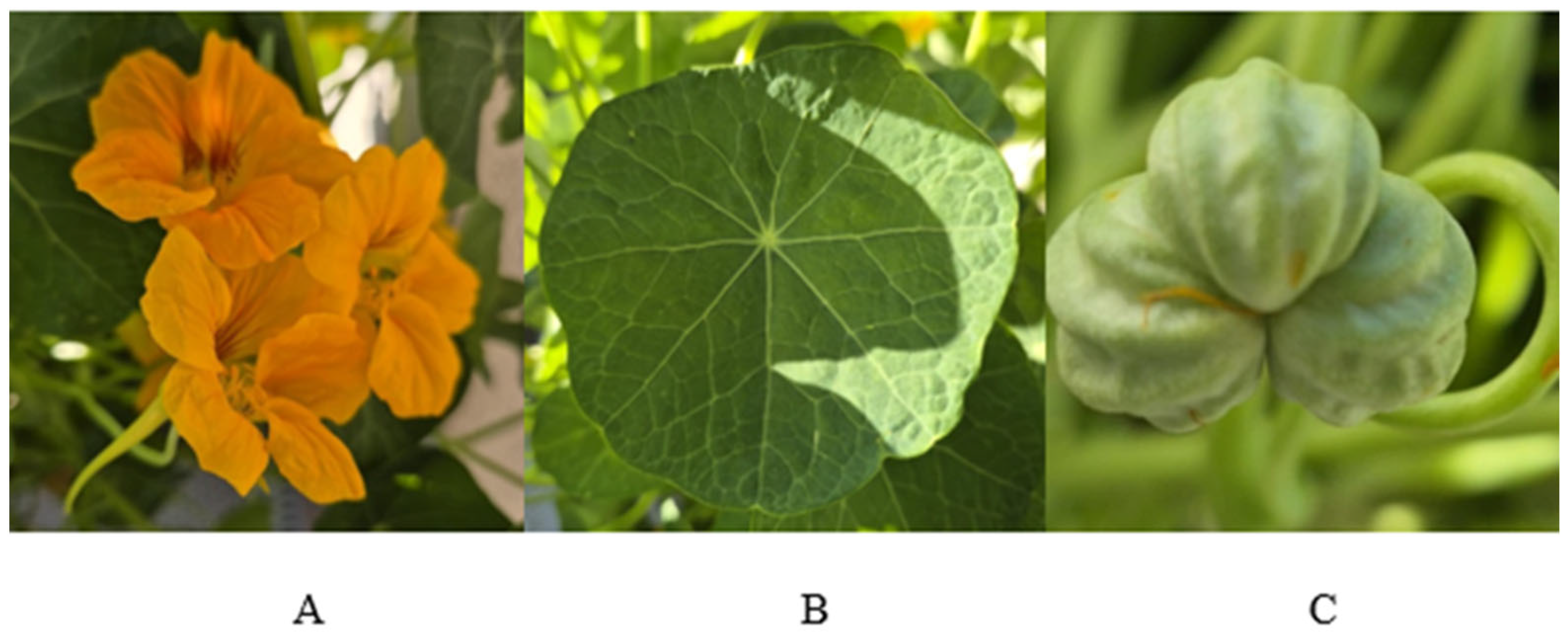
In T. majus, the well-branched shoots reach lengths of up to 3 m. The leaves are peltate and long-petioled. Set singly in the leaf axils on long pedicels, the flowers have a zygomorphic structure. They are yellow, red or orange, have a long spur, and a diameter of approximately 3 cm. Flowering is long and very abundant. The fruit is a ribbed, gray-beige nutlet with a greenish tint [4,11]. Each fruit contains three seeds (Figure 1) [12].
The cultivated cultivars are hybrids of several genera with varying growth vigor. They have large flowers—yellow, orange and red—both single and double. The most important groups of T. majus cultivars include tall—with trailing or climbing stems and single or double flowers—dwarf—up to 30 cm in height, with single flowers—and dwarf—with semi-double flowers [13].
T. majus prefers sunny breeding sites. In the shade, the stems elongate excessively and flowering is reduced. The substrate should be moderately firm and not too rich in nutrients. The nutlets may be sown directly into the ground in mid-May, or seedlings can be prepared earlier under cover; in that case, nutlets are sown three per pot, and the young plants are planted out once the risk of the last spring frost has passed [14,15]. The seeds germinate after 15–20 days, and flowering occurs after 8–10 weeks. Excessive use of nitrogen-rich fertilizers is detrimental to the plants, as it stimulates leaf formation but inhibits flowering [16].
For commercial production of T. majus as an edible flower crop, the timing of harvest is an important consideration. Flowers should be harvested in the morning hours after the dew has evaporated but before the heat of midday, as this helps to preserve their turgor, color intensity, and aromatic properties [17]. The flowers are delicate and have a relatively short shelf life, typically ranging from 2 to 10 days, which necessitates careful post-harvest handling [17,18]. When cultivated for leaf production, regular harvesting encourages the development of new foliage and prolongs the productive period of the plant. The relatively short time from sowing to flowering (approximately 60–70 days), coupled with a long and abundant flowering period from early summer until the first frosts [3,4], makes T. majus suitable for succession planting, allowing for continuous harvest throughout the growing season. As an annual crop in temperate climates [3], T. majus fits well into crop rotation systems and can be intercropped with vegetables, simultaneously serving as a trap crop for aphids and other pests, thereby contributing to integrated pest management strategies [19,20].
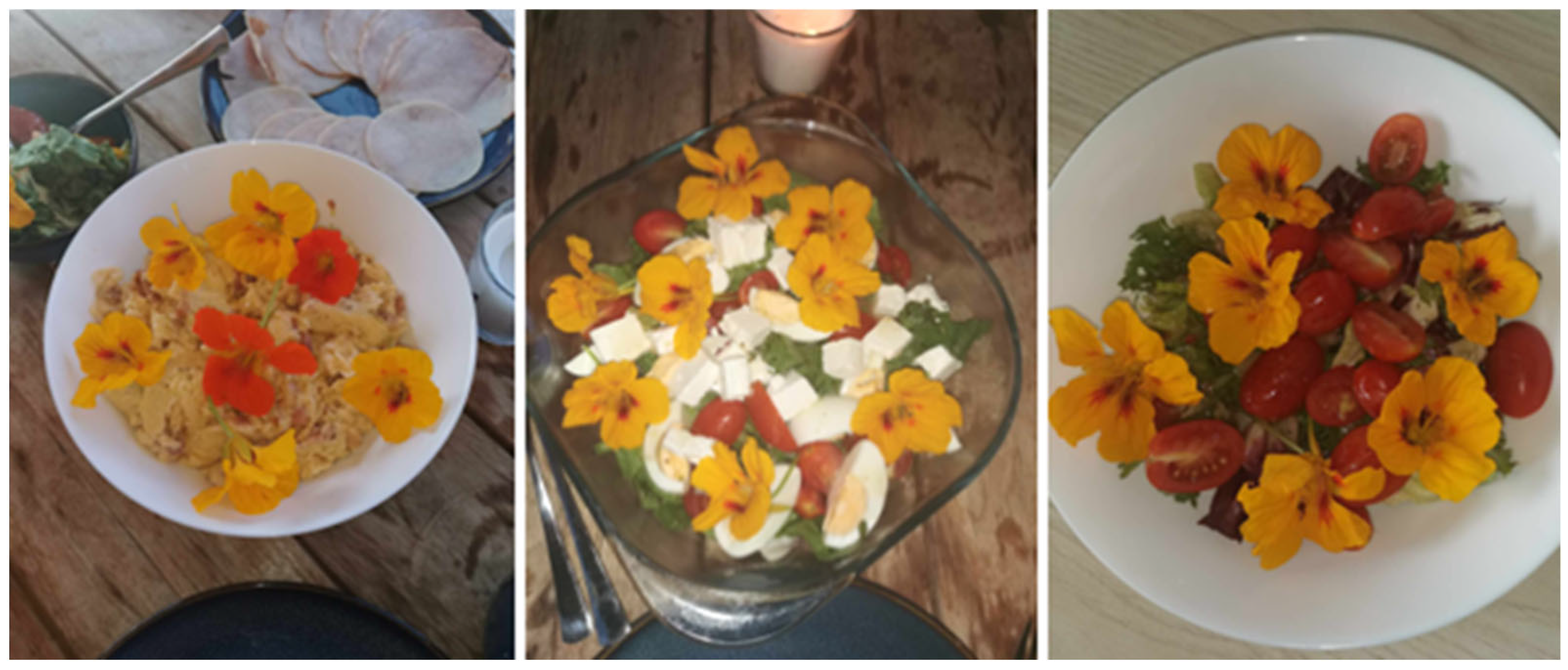
Fresh leaves, flowers and fruits of T. majus make an interesting seasoning for meats, salads, scrambled eggs and soups (Figure 2). The fruits can also be pickled in oil with the addition of vinegar. Their flavor then resembles that of capers. The flowers, fruits and leaves can also be used to decorate various dishes, including steak tartare, scrambled eggs, salads and fish [7,8,9,21]. The average nutrient content in the flowers and seeds of T. majus is presented in Table 1.
Aqueous extracts from the dried herb and a macerate from the fresh herb of T. majus have a strong digestive effect. Vinegar extracts from the fresh flowers and leaves of T. majus effectively combat certain skin parasites. T. majus syrups exhibit expectorant and disinfectant effects on the respiratory tract [6,21]. Glucotropaeolin and benzyl isothiocyanates are effective in the treatment of urinary tract diseases. Hot infusions made from the fresh herb, as well as a macerate with honey, have a warming effect and stimulate blood circulation. Consumption of T. majus also supports weight loss, as it accelerates metabolism [21].
Although T. majus has been cultivated in Europe for a very long time and its health-promoting properties are indisputable, the literature on this genus appears to be incomplete. The authors of numerous studies focus on the activity of biologically active compounds contained in the flowers and leaves. However, there are few studies on the composition of the seeds of this valuable species, hence it would be worthwhile to extend research to this important part of T. majus. The growing interest in edible ornamental plants has led to the aim of this manuscript being to review the existing research analyzing the content of bioactive compounds in T. majus.
This review constitutes a comprehensive compilation of information gathered from various studies, including recent findings indicating the potential application of bioactive substances from T. majus in the medical industry. Additionally, we present results from the only studies to date demonstrating the possibility of obtaining T. majus plants with more abundant flowering through the application of Trichoderma spp. Although these fungi are used in the cultivation of various species, research has focused primarily on vegetables, fruit crops, and cereals. Studies regarding ornamental plants remain scarce. It should be noted, however, that Trichoderma spp. are described as plant growth promoters; while increased root and/or shoot biomass is the most common manifestation of such stimulation, changes in plant morphology and development have also been reported. As biostimulants, they have no negative impact on the environment or human health. Their widespread application could be crucial for improving sustainable horticulture, as they can stimulate increased production with a reduced environmental footprint.

2. Bioactive Compounds in the Flowers, Leaves and Seeds of T. majus and Their Biological Activity

T. majus is cultivated not only as an ornamental plant but also as a source of edible flowers and leaves, as well as a raw material for the production of extracts used in the pharmaceutical and food industries [1,6,10]. In practical applications, whole plant parts or extracts (aqueous, ethanolic, hydroethanolic) are utilized most commonly rather than single isolated compounds [24,25]. This is due to the fact that the observed health-promoting effects are typically the result of the synergistic action of multiple bioactive components present in the plant material. Extracts from T. majus leaves and flowers exhibit a broad spectrum of biological activity, including antibacterial, antifungal, and antioxidant properties [7,8,9,24,25]. The detailed discussion of the biological properties of individual compounds in the following sections offers insight into the potential of whole extracts, highlighting how the combination of these components contributes to the value of T. majus as a functional crop.
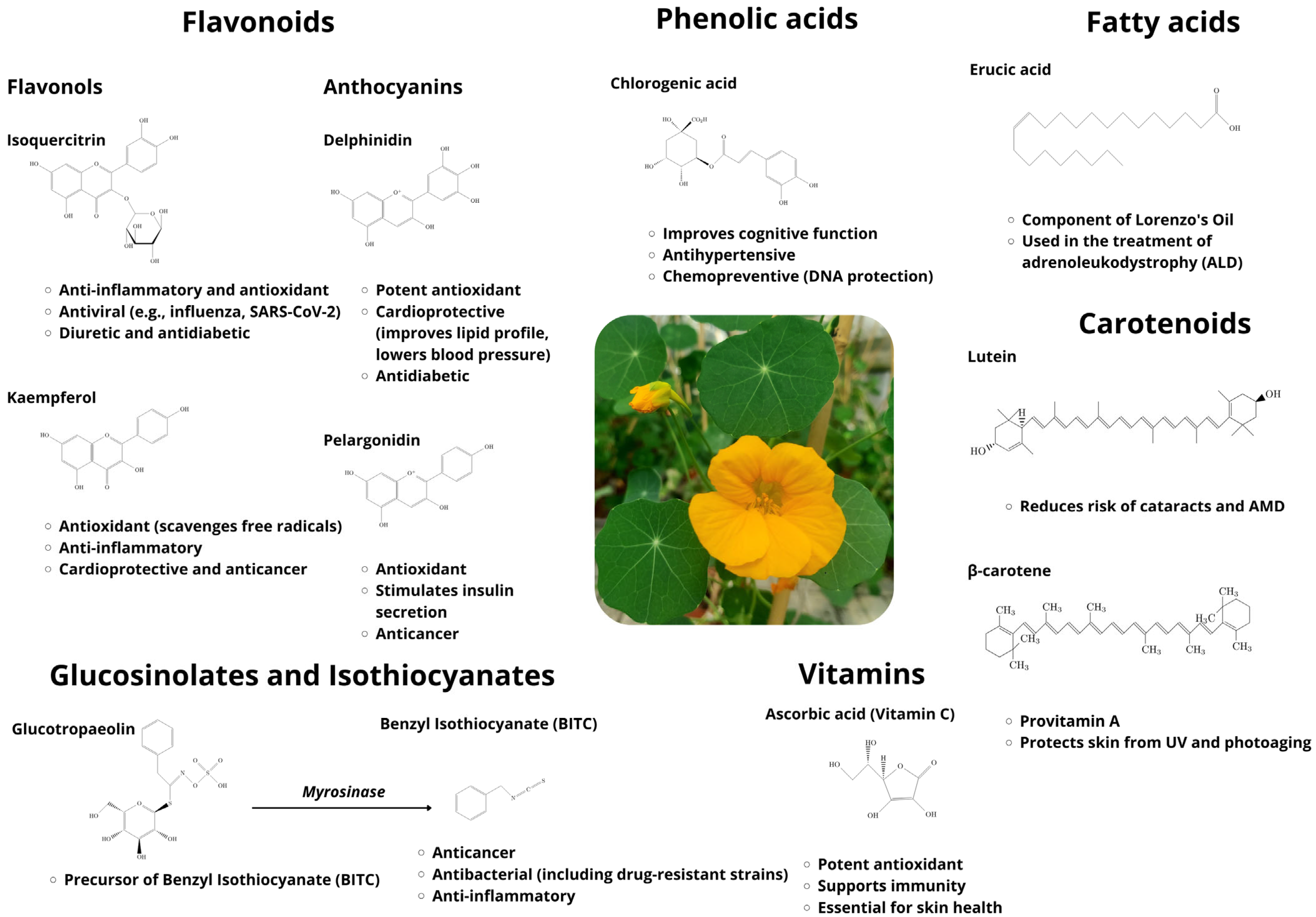
In T. majus, all parts of the plant are edible (flowers, leaves and seeds), although their chemical composition varies. The phytochemical composition of the flowers is analyzed most frequently, whereas fewer studies have focused on the leaves and seeds [1,26,27,28] (Table 2, Figure 3).

2.1. Phenolics Compounds

The phenolic components contained in plants have high antioxidant activity and their consumption as functional foods may have a positive effect on human health [43]. In T. majus total phenolic compounds is 3.31 ± 0.29 (g of gallic acid·kg−1 of FW) [22].

2.1.1. Flavonoids

Belonging to phenolic compounds (Table 2), flavonoids are secondary metabolites commonly found in plants. These compounds also function as colorants. As biochemically active constituents, they impart color to the flowers and fruits. Thanks to the presence of flavonoids, the herb of T. majus, often used fresh or in extract form, has traditionally been applied externally in dermatology and cosmetology, including for the treatment of sunburn [25], because these compounds have anti-inflammatory, antioxidant, and photoprotective properties [44,45,46,47,48,49,50].
Bazylko et al. [25] characterized the aqueous and hydroethanolic (60% ethanol) extracts obtained from lyophilized leaves and flowers of T. majus, as well as the juice pressed from the fresh herb, determining the total content of flavonoids, phenolic compounds and ascorbic acid. They found that the hydroethanolic extract contained the highest amount of flavonoids, whereas the juice contained the lowest. Nevertheless, the juice showed strong inhibitory activity against the production of reactive oxygen species (ROS) and cytoprotective effects. This was determined in an experiment in which human skin fibroblasts were irradiated with UVA and UVB light after being incubated with the tested extracts/juices. The results suggest that its activity may stem from its high content of ascorbic acid and other lipophilic compounds (which were not present in either the aqueous or hydroethanolic extract). It should be noted, however, that these findings were obtained under controlled in vitro conditions using isolated cell cultures, which may not fully reflect the complexity of in vivo responses. Factors such as gastrointestinal metabolism, systemic distribution, and interactions with the food matrix can substantially modify the bioavailability and biological activity of flavonoids. The translatability of these photoprotective effects to realistic dietary consumption of T. majus remains to be established through clinical studies. Furthermore, the concentrations of flavonoids used in cell-based assays often exceed those achievable through dietary intake, necessitating caution when extrapolating these results to practical nutritional recommendations.
Isoquercitrin
Quercetin and isoquercitrin (quercetin-3-O-glucoside) (Table 2, Figure 3) belong to the group of flavonols, characterized by the presence of a hydroxyl group at the C3 position of the C-ring. In the case of isoquercitrin, a single glucose moiety is attached to the C3 carbon, which distinguishes it from the aglycone quercetin [51]. This glycosidic modification significantly affects the physicochemical properties of isoquercitrin, making it more hydrophilic and approximately four times more soluble in water than quercetin [51,52]. The increased solubility translates into more favorable pharmacokinetic parameters, especially after oral administration, resulting in higher bioavailability compared with quercetin [51,53].
In this manuscript, we will be using the term isoquercitrin. This is because isoquercitrin is chemically defined as quercetin-3-O-glucoside, which is a quercetin glycoside. The suffix “-itrin” unequivocally indicates the presence of a sugar group (in this case, glucose attached to quercetin). The term “isoquercetin”, although occasionally encountered in the literature, is not a standard name for a distinct aglycone (i.e., quercetin without a sugar) nor for its isomer. In cases where it is used, it most often refers precisely to isoquercitrin, which is the glycosidic form of quercetin. This practice, while imprecise, appears in some scientific publications where authors, using “isoquercetin”, actually mean “isoquercitrin” (e.g., in the works we cited, where “isoquercetin” is often defined as a “monoglycosylated derivative of quercetin” or a “hydrophilic monoglucoside” that undergoes deglycosylation to quercetin). Regarding the cited works where the term “isoquercetin” appears, we have confirmed that the authors of these publications were indeed referring to isoquercitrin (quercetin-3-O-glucoside), describing it as a quercetin monoglucoside or investigating its properties as a glycosidic form.
The biological properties of isoquercitrin include antioxidant, anti-inflammatory, immunomodulatory and anticoagulant activity, as well as potential antihypertensive, antidiabetic and diuretic effects [26,51,53,54].
In studies conducted by Gasparotto Junior et al. [55], ethanolic extracts obtained from T. majus leaves and purified fractions rich in isoquercitrin (Table 2) showed significant diuretic and saluretic effects in spontaneously hypertensive rats (SHR), both after single-dose and repeated administration. An increase in urine volume and sodium (Na) excretion was observed, while potassium (K) excretion remained stable, which distinguished the action of T. majus from that of the classic diuretic hydrochlorothiazide (HCTZ). This effect is attributed primarily to the presence of isoquercitrin, although the contribution of other polar constituents—such as kaempferol glycosides, saponins or organic acids, cannot be excluded. The authors suggest that these mechanisms may involve increased renal blood flow, initial vasodilation, inhibition of tubular reabsorption of water and anions, and enhanced prostaglandin synthesis in the kidneys. While these results from spontaneously hypertensive rat models provide valuable insights, the direct applicability to human hypertension management requires verification through controlled clinical trials. The dosages administered to experimental animals, when extrapolated to human consumption, may correspond to quantities of T. majus that exceed typical culinary use. Additionally, interspecies differences in pharmacokinetics and metabolism may limit the predictive value of rodent models. A registered clinical trial (NCT05346978) investigating the effects of T. majus consumption in prediabetic individuals has demonstrated increases in total antioxidant capacity and decreases in oxidized LDL levels, representing one of the few human studies available for this species [26,55]. Such clinical evidence, although preliminary, provides a more reliable foundation for assessing the health benefits of T. majus than in vitro data alone.
Kaempferol
Kaempferol (Table 2, Figure 3) is one of the main flavonoids found in T. majus. Its presence has been confirmed in both the leaves and the flowers of the plant. Phytochemical studies have shown that kaempferol occurs in T. majus mainly in the form of glycosides [31,32], which must be hydrolyzed to the aglycone (free form) in the small or large intestine before they can be absorbed [33]. The bioavailability of kaempferol, as with other flavonoids, is crucial for its biological activity. Studies on the bioavailability of kaempferol from various dietary sources are limited, but they suggest that kaempferol glycosides may have higher bioavailability than its aglycone [56,57]. In the case of T. majus, the presence of kaempferol in glycosylated forms indicates that its bioavailability depends on the efficiency of the hydrolysis of these compounds in the gastrointestinal tract. After absorption, kaempferol and its metabolites circulate in the bloodstream, where they can exert their biological effects [32].
In analyses conducted by Koriem et al. [31], a kaempferol glycoside, isoquercitroside and quercetol 3-triglucoside were identified in the methanolic extract from the leaves and flowers of T. majus. It was found that the kaempferol glycoside was present in an amount of 9.40 mg·100 mL−1 of extract, making it the most abundant flavonoid among those identified in the analyzed samples.
Further studies have confirmed the presence of kaempferol and its derivatives. Gasparotto et al. [26], analyzing leaf extracts, also indicated the presence of a kaempferol glycoside as one of the main constituents. Bazylko et al. [24] identified kaempferol-3-O-glucoside (astragalin) as well as other kaempferol derivatives in the aqueous extract of T. majus herb. In another study by the same team, the hydroethanolic extract of T. majus leaves and flowers showed a higher total flavonoid content (26.0 mg·g−1) compared with the aqueous extract (15.2 mg·g−1) and the fresh herb juice (11.2 mg·g−1), suggesting that kaempferol may be more effectively extracted from this feedstock using hydroethanolic solvents [25].
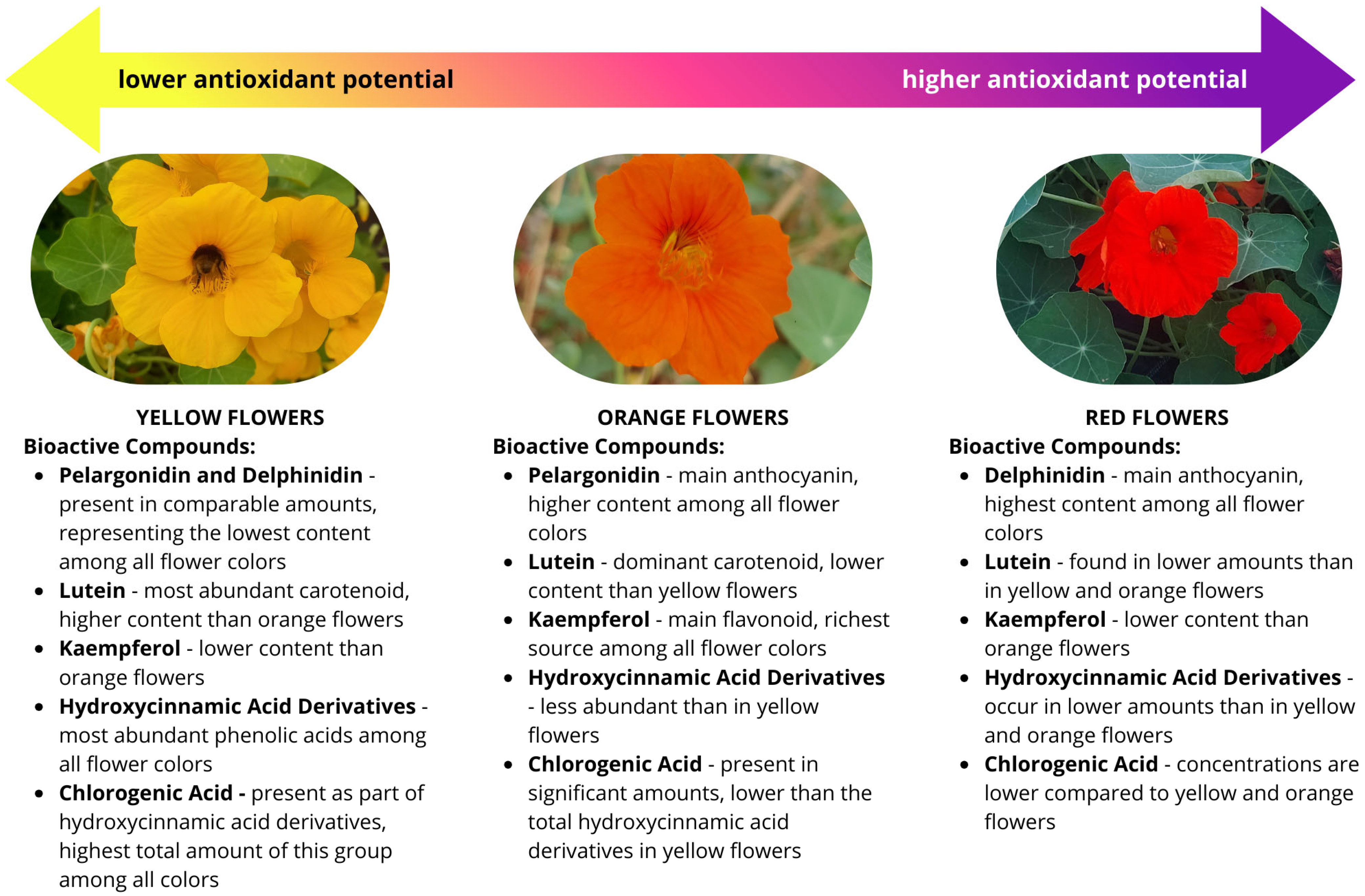
As a result of the studies by Garzón et al. [32] on the phenolic composition of T. majus flower petals of different colors, it was found that kaempferol derivatives were the main flavonoids in orange flowers, reaching a bracing of 167.0 ± 57.6 mg kaempferol equivalents per 100 g fresh weight (FW) or 1392.0 ± 480.3 mg kaempferol equivalents per 100 g dry weight (DW). In red and yellow flowers, the bracing of kaempferol derivatives was lower, amounting to 40.9 ± 10.6 mg kaempferol equivalents per 100 g FW and 29.6 ± 7.6 mg kaempferol equivalents per 100 g FW, respectively. These data indicate that orange T. majus flowers are a particularly rich source of kaempferol (Figure 4).
Kaempferol is an antioxidant capable of scavenging free radicals and chelating metals, thereby protecting cells from oxidative damage [58,59]. Its antioxidant activity arises from its specific chemical structure, including the presence of the C2–C3 double bond conjugated with the oxo group at C4, as well as hydroxyl or acylated groups at C3, C5 and C4′ [33,60]. In the context of T. majus, the presence of kaempferol together with other flavonoids and carotenoids contributes to the overall high antioxidant potential of extracts from this plant [25,32].
In vitro studies have shown that kaempferol, like quercetin, can influence the course of the inflammatory process in cultured human endothelial cells by modulating cytokine (CK) production [61]. In T. majus, the ability of extracts to inhibit cyclooxygenase-1 (COX-1), an enzyme involved in inflammatory processes, was observed by Bazylko et al. [25]. Although this study did not attribute the effect directly to kaempferol, its presence in the extract suggests a potential contribution of this compound to the observed activity. The anti-inflammatory properties of kaempferol are also attributed to its ability to modulate signaling pathways associated with oxidative stress and the inflammatory process [62,63].
Epidemiological studies suggest an association between the consumption of flavonoids, including kaempferol, and a reduced risk of cardiovascular diseases [64,65,66]. Kaempferol may contribute to cardioprotection through its antioxidant and anti-inflammatory effects, as well as its potential influence on endothelial function and blood pressure [33,67]. Although clinical studies on the direct effects of kaempferol on the human cardiovascular system are limited, preliminary epidemiological data indicate an inverse correlation between kaempferol consumption and mortality from coronary heart disease [64,68].
It has also been shown that kaempferol may influence various stages of carcinogenesis, including cancer cell proliferation and the induction of apoptosis [69,70]. These mechanisms may involve the modulation of signaling pathways related to the cell cycle and cell survival. Nevertheless, the evidence for the anticancer activity of kaempferol derived from T. majus specifically, as opposed to kaempferol from other dietary sources, remains limited. Most studies on the anticancer properties of kaempferol have employed purified compounds or extracts from sources other than T. majus, making it difficult to attribute specific effects to nasturtium consumption. In the context of T. majus as an edible flower, it is important to consider that the quantities of kaempferol consumed through typical culinary use (e.g., a few flowers as salad garnish) would be substantially lower than the doses used in cell culture experiments or animal studies. Garzón et al. [32] reported that orange T. majus flowers contain 167.0 ± 57.6 mg kaempferol equivalents per 100 g FW, suggesting that meaningful intake would require consumption of substantial quantities—a practice that may be limited by the peppery taste and potential gastrointestinal tolerance issues; however, alternative forms of consumption such as freeze-dried powders incorporated into smoothies, hydroethanolic extracts (which demonstrate higher flavonoid content of 26.0 mg·g−1 compared to 11.2 mg·g−1 in fresh juice [25], infusions, tinctures, or standardized nutraceutical formulations may enable higher and more consistent intake of kaempferol and other bioactive compounds while circumventing palatability constraints—though the selection of processing methods should consider their differential effects on various compound classes, as freezing drastically reduces glucosinolate content whereas drying preserves it [18].
Kaempferol is also being investigated for other properties, such as antimicrobial [71], neuroprotective, antidiabetic, antiallergic and antiasthmatic effects. In T. majus, although the main antimicrobial compound is benzyl isothiocyanate (derived from glucotropaeolin), the presence of kaempferol may synergistically enhance these effects or act independently [33].
Anthocyanins
Anthocyanins (Table 2) are natural plant pigments belonging to the flavonoids [72]. Their presence in T. majus is substantial, and the bracing of these pigments depends on the color of the flowers [1]. In red flowers, the main anthocyanin is delphinidin (114.5 mg per 100 g FW), in orange flowers—pelargonidin (58.2 mg per 100 g FW), while in yellow flowers the bracing of pelargonidin and delphinidin is similar (31.9 mg per100 g FW) [1,32] (Figure 4).
Anthocyanins, including those present in T. majus, are valuable dietary components that contribute to improved health and have preventive potential against chronic diseases such as cardiovascular diseases, obesity, diabetes and cancer [73,74,75,76]. Their beneficial effects result primarily from strong antioxidant and anti-inflammatory properties [73,74,77,78]. The red flowers of T. majus exhibit the highest antioxidant potential [1], which is mainly attributed to delphinidin 3-glucoside present in T. majus, characterized by high antioxidant capacity [72,79]. Anthocyanins activate endogenous stress-protective mechanisms and inhibit inflammatory mediators, which includes activation of the Nrf2 pathway, suppression of the overproduction of inflammatory cytokines and chemokines, limitation of NF-κB activation, and inhibition of the expression of adhesion molecules [74,77].
Moreover, anthocyanins such as delphinidin and pelargonidin present in T. majus have a beneficial effect on vascular health. They reduce arterial stiffness, improve the lipid profile by lowering Low-Density Lipoproteins (LDL) and triglycerides, increasing High-Density Lipoproteins (HDLs), and activate nitric oxide synthase (NO), which leads to vasodilation [74,78,80]. Clinical studies have shown that they may improve paraoxonase 1 activity associated with HDL and increase cholesterol efflux capacity in individuals with hypercholesterolemia [80]. They may also improve platelet function by inhibiting their aggregation, thereby preventing thrombosis [72,74]. They lower blood pressure by inhibiting the activity of angiotensin-converting enzyme (ACE), an effect observed for delphinidin and cyanidin [74].
Anthocyanins may also prevent weight gain, hyperglycemia and diabetic complications [73,74]. They may inhibit glucose absorption in the intestines by inhibiting α-glucosidase and α-amylase, protect pancreatic beta cells from oxidative stress, and normalize the expression of NADPH oxidase in the heart [74,81].
Pelargonidin, present in T. majus, is a strong stimulator of insulin secretion from pancreatic beta cells [72,82]. Moreover, anthocyanins may potentially contribute to appetite reduction and thereby limit food intake, which translates into a decrease in adipose tissue mass [74]. They may also influence the expression of adipokines such as adiponectin and IL-6, which is relevant in the context of obesity and insulin resistance [73,74].
Anthocyanins exhibit anticancer activity due to their ability to inhibit cancer cell proliferation, induce apoptosis and inhibit angiogenesis [72,73,74,83].
Despite their relatively low bioavailability, anthocyanins are rapidly absorbed, and their metabolites, such as protocatechuic acid, also exhibit biological activity [72,74,84,85].

2.1.2. Phenolic Acid

Phenolic acids (Table 2) are classified as secondary metabolites with strong antioxidant activity, as they eliminate ROS, block free radicals, inhibit oxidase enzymes, support antioxidant enzymes and chelate certain metals [86,87].
Phenolic acids constitute an important component of the phenolic compound profile in T. majus. Studies on extracts from the leaves and flowers of T. majus [1,24,25,32] have confirmed the presence of these compounds. Among the phenolic acids, derivatives of hydroxycinnamic acid predominate [1,32]. Garzón et al. [32] identified hydroxycinnamic acid derivatives such as p-coumaroylquinic acids and chlorogenic acid. Bazylko et al. [25], using HPLC, detected the presence of p-coumaroylquinic acids in all analyzed extracts from leaves and flowers. Jakubczyk et al. [1] and Garzón et al. [32] indicate that in yellow flowers, hydroxycinnamic acid derivatives were the most abundant (235 mg chlorogenic acid equivalents per 100 g FW), representing the highest amount of this group of compounds compared with the other color variants (Figure 3). In orange flowers, chlorogenic acid was present at 81.2 mg chlorogenic acid equivalents per 100 g FW [1,32].
Chlorogenic acid (Table 2, Figure 3), identified in T. majus flowers, particularly in orange and yellow variants [1], has been shown to improve cognitive function in older adults [86,88,89]. It is also attributed with protective effects against cardiovascular diseases and type 2 diabetes [86,89,90], as well as potential protection against Alzheimer’s disease [86,89,91]. Chlorogenic acid also exhibits anti-inflammatory, analgesic and antipyretic activity [86,89,92], as well as antihypertensive effects, particularly in individuals with mild hypertension [86,88,89]. Current research also suggests its role in reducing body weight and adipose tissue in individuals who are overweight, although the results are variable [86]. It also exhibits chemopreventive potential, including the protection of DNA integrity and the induction of phase II detoxification enzymes [86].
Derivatives of p-coumaric acid (Table 2), such as p-coumaroylquinic acids, have been detected in extracts of T. majus [25]. P-coumaric acid is a compound with proven anticancer activity [86,89,93]. Additionally, it exhibits anti-obesity and cardioprotective effects, manifested as reductions in total cholesterol, triglycerides, free fatty acids and phospholipids [86,88,89].
The phenolic acids present in T. majus, such as chlorogenic acid and p-coumaric acid derivatives [1,25], are valued for their broad spectrum of health-promoting effects, extending beyond antioxidant activity alone [86,89]. They contribute to overall health improvement mainly due to their anti-inflammatory properties, ability to prevent cardiovascular diseases and various types of cancer, protection against oxidative damage, as well as antimicrobial, antimutagenic, hypoglycemic and antiaggregatory effects [86,89,94].
However, these multiple health benefits have been primarily established through in vitro assays and observational epidemiological studies, with limited direct evidence from controlled clinical trials involving T. majus specifically. The bioavailability of chlorogenic acid from plant matrices varies considerably depending on the food source and individual factors such as gut microbiota composition. In the case of T. majus, no studies have specifically evaluated the absorption and metabolism of phenolic acids following consumption of T. majus flowers or leaves. Furthermore, the content of phenolic acids in T. majus shows considerable variability depending on the flower color variant, cultivation conditions, and post-harvest handling [1,18,25,32], which may result in inconsistent health effects when T. majus is consumed as part of a regular diet.

2.2. Carotenoids

More than 600 carotenoid compounds are already known. Eight carotenoids have been identified in T. majus flowers [36]: violaxanthin, antheraxanthin, lutein, zeaxanthin, zeinoxanthin, β-cryptoxanthin, α-carotene and β-carotene. In yellow flowers, lutein was present at 450 ± 60 µg·g−1, along with trace amounts of zeaxanthin and β-carotene. In orange flowers, lutein was present at 350 ± 50 µg·g−1, along with trace amounts of violaxanthin and β-carotene (Table 2, Figure 3 and Figure 4). In T. majus leaves, lutein (136 ± 18 µg·g−1), violaxanthin (74 ± 23 µg·g−1), β-carotene (69 ± 7 µg·g−1) and neoxanthin (48 ± 13 µg·g−1) have been identified. Interestingly, neoxanthin was not detected in the flowers (Table 2). Higher bracing of lutein in yellow flowers compared with orange ones suggests that flower color may serve as an indicator of their carotenoid composition and may potentially reflect differences in the expression of genes responsible for carotenoid biosynthesis [36].
Carotenoids, owing to their unique chemical structure characterized by long chains of conjugated double bonds, are effective antioxidants. Their ability to neutralize free radicals and ROS is crucial in protecting cells against oxidative stress, which underlies many chronic diseases, including heart disease, cancer and aging processes [95,96]. T. majus flowers exhibit high antioxidant activity. Their antioxidant potential, measured, for example, by the ORAC method, is comparable to—or even higher than—that of some commonly recognized sources of antioxidants. For example, fresh orange petals of T. majus showed a higher ABTS radical-scavenging capacity than blueberries or Rubus species. Overall, T. majus flowers exhibited DPPH radical-scavenging properties comparable to those of cranberries and strawberries [1]. This high activity results from the synergistic action of carotenoids, vitamin C and phenolic compounds (including anthocyanins), which are abundantly present in T. majus [1,32]. Lutein, which occurs in T. majus flowers in significant amounts, is extremely important for the proper functioning of the visual system. These are the only carotenoids that selectively accumulate in the macula lutea of the retina, forming the so-called macular pigment [36,95]. Their presence in the macula is crucial for visual acuity and color perception. Epidemiological and clinical studies indicate that adequate intake of lutein and zeaxanthin is associated with a reduced risk of developing cataracts and age-related macular degeneration (AMD) [36,95,96]. AMD is the leading cause of irreversible blindness in older adults, which underscores the importance of these carotenoids in prevention. Their mechanism of action involves dual protection: first, they absorb harmful blue light capable of damaging photoreceptors; second, they act as potent antioxidants, neutralizing free radicals generated by light exposure and metabolic processes, thereby protecting the delicate structures of the eye against photo-oxidative damage [95].
T. majus leaves are a valuable source of β-carotene, which is a provitamin A [36]. After consumption, β-carotene can be efficiently converted in the body into vitamin A (retinol), which is essential for numerous biological functions. Vitamin A plays a role in the visual process, especially under low-light conditions. It is crucial for the proper functioning of the immune system, supporting the body’s defense against infections. In addition, vitamin A is essential for proper cell growth and development, the maintenance of healthy skin and mucous membranes, and reproductive processes [95,96].
A growing body of research suggests that carotenoids may play an important role in the prevention of certain types of cancer. Their mechanisms of action are complex and include the modulation of gene transcription, which can influence processes of cell proliferation and differentiation. Carotenoids may also enhance intercellular communication through gap junctions, which is crucial for maintaining proper control of cell growth and inhibiting neoplastic transformation. It has also been shown that carotenoids can induce the activity of phase II detoxification enzymes, which play an important role in eliminating carcinogens from the body, thereby reducing the risk of DNA damage and the initiation of cancer [95,96].
Carotenoids, including those sourced from the flowers and leaves of T. majus, are characterized by their ability to accumulate in skin tissues. Thanks to this, they can provide internal protection against the harmful effects of ultraviolet (UV) radiation and photoaging processes. They act as natural photoprotectors, absorbing part of the UV energy and reducing its negative effects. As potent free-radical scavengers, carotenoids neutralize ROS generated in the skin during sun exposure, preventing cellular damage and collagen degradation. Accordingly, carotenoids contribute to maintaining healthy skin condition, elasticity and a youthful appearance [95,96].

2.3. Glucosinolates

Glucosinolates are plant Sulphur-containing glycosides composed of a β-D-glucose molecule, Sulphur and a side chain of either aliphatic or aromatic structure. The structural diversity of the side chain means that around 90 different compounds are currently known to belong to this group. Glucosinolates are hydrophilic compounds that are chemically and thermally stable. Their health-promoting properties are revealed after enzymatic hydrolysis catalyzed by endogenous myrosinase (β-thioglucosidase), which is present in plants containing glucosinolates [97,98,99]. This enzyme plays a significant role both in the plant defense system and in human health [97].
Two glucosinolates occur in T. majus: glucotropaeolin and sinalbin. Both compounds are present in the flowers and leaves of T. majus (Table 2, Figure 3) [1,28].
Glucotropaeolin, derived from phenylalanine, is metabolized by myrosinase into the active benzyl isothiocyanate (BITC) [1,18,97]. It is BITC that is responsible for the characteristic peppery flavor of T. majus [1,97,100]. The activity of myrosinase is crucial for the bioavailability of the active forms of glucosinolates [98,101]. Sinalbin is metabolized by myrosinase into 4-hydroxybenzyl isothiocyanate, the mustard oil. There is a lack of information in the available literature regarding the use of sinalbin derived from T. majus.
BITC, the breakdown product of glucotropaeolin [1,18,97], is found in the leaves, stems, flowers and seeds of T. majus [1,28,90]. It exhibits anti-inflammatory [100,102] and anticancer activity [97,103,104,105]. In addition, it exhibits antimicrobial activity against bacteria such as Staphylococcus aureus and Escherichia coli [1,102], and the isothiocyanate extracted from T. majus is effective even against bacteria resistant to sulphonamides and antibiotics [1].
Glucotropaeolin occurs in various parts of T. majus, although its bracing varies significantly. The highest bracing of this glucosinolate has been recorded in the leaves, where it may reach as much as 1780 µg·g−1 FW, accounting for nearly 50% of all identified bioactive compounds in this part of the plant. In the stems, seeds and flowers, its bracing is much lower, but comparable among these organs [18]. Other studies also confirm the presence of glucotropaeolin in T. majus, indicating its importance as the main glucosinolate in this plant [1,28]. The stability of glucotropaeolin is important in the context of storing and processing T. majus, and the method of pre-treating the plant before storage has a significant impact on the bracing of this compound. Freezing, especially of the seeds, leads to a drastic drop in the bracing of the glucosinolate, reducing it to almost trace amounts (e.g., 1.5 µg·g−1 in frozen seeds). In contrast to freezing, drying does not significantly affect the bracing of this compound, as it remains comparable to—or only slightly lower than—that in the fresh material. This makes drying a decidedly better method for preserving T. majus in order to retain a high bracing of this glucosinolate [18].
Isothiocyanates (Figure 3), including BITC, can modulate xenobiotic-metabolizing enzymes, induce cell-cycle arrest and apoptosis, thereby contributing to a reduced risk of developing cancer, particularly of the lungs and gastrointestinal tract [97,103,105]. Critical evaluation of the evidence base for BITC reveals that most studies demonstrating anticancer effects have been conducted in cell culture systems or animal models [103,104,105]. While these findings are promising—for instance, Kim et al. [104] reported inhibition of solid tumor growth and lung metastasis in murine models—the translation of such results to human health outcomes remains to be established through controlled clinical trials.

2.4. Fatty Acids

The flowers and leaves of T. majus contain fatty acids (Table 2, Figure 3), among which linoleic, oleic and erucic acids have been identified [31]. According to Franzen et al. [106], more than 96% of the oil produced from T. majus seeds consists of monounsaturated fatty acids, and the bracing of erucic acid may exceed 80%. In addition, oil extracted from T. majus seeds is used in dermatology as it improves the quality of skin and hair [1]. Linoleic and oleic acids prevent heart disease, reduce blood clotting, and inhibit the development of cancers and allergies [107]. Oleic acid is referred to as an omega-9 fatty acid. In the human body, it is involved in hormone synthesis and acts in metabolism as an antioxidant [108]. Linoleic acid, on the other hand, is referred to as an omega-6 fatty acid. It is a precursor of arachidonic acid and plays an important role in the production of numerous lipids [109]. This acid keeps cell membranes intact. It is also essential for the proper functioning of the brain and for the transmission of nerve impulses [110].
Apart from erucic acid, other fatty acids have also been identified in the seeds and flower petals of T. majus, such as oleic, linoleic, linolenic, palmitic, stearic, arachidic, behenic, trierucic and gondoic (eicosenoic) acids [1,37,38].
The presence of high concentrations of erucic acid in the seeds of T. majus is of particular importance in the medical context, especially in the treatment of adrenoleukodystrophy (ALD) [1,13]. ALD is a rare, genetically determined X-linked disorder characterized by impaired beta-oxidation, which leads to the accumulation of long-chain fatty acids in the body. This results in damage to the adrenal cortex, demyelination of the white matter in the central nervous system, and failure of the male gonads [111]. Erucic acid is one of the main components of the so-called Lorenzo’s oil (a mixture of oleic and erucic acids), which is used in the treatment of ALD [1,13]. T. majus is one of the richest sources of this fatty acid, which makes it a valuable feedstock in the production of preparations supporting the treatment of this disease [1].
Extracts from T. majus, containing fatty acids, also show potential activity supporting the treatment of obesity. Studies on 3T3-L1 cells (preadipocytes) have shown that the ethanolic extract of T. majus inhibits lipid accumulation and reduces the expression of transcription factors associated with adipogenesis, such as PPARG, CEBPA and SREBF1. The strongest inhibition of lipid accumulation was observed at a bracing of 300 µg·mL−1 of ethanolic T. majus extracts [112]. Moreover, the dichloromethane fractions of T. majus demonstrated the ability to inhibit pancreatic lipase activity, an enzyme essential for the digestion of dietary fats, which suggests their potential in the treatment of obesity [38].

2.5. Other Constituents

The flowers of T. majus contain both macro- and micro-constituents (Table 2). Among the macroelements present are phosphorus (P), potassium (K), calcium (Ca), magnesium (Mg) and sodium (Na). Among the microelements identified were iron (Fe), manganese (Mn), copper (Cu), zinc (Zn) and molybdenum (Mo) [22,41]. These elements are also present in the leaves of T. majus. Additionally, the leaves contain nitrogen (N) [42] (Table 3). The content of mineral elements is one of the most essential aspects that influence the use of edible flowers in human nutrition [23]. As is well known, the optimal intake of various elements may reduce individual risk factors, including those associated with cardiovascular diseases, in both humans and animals [113].
The leaves and seeds of T. majus also contain tetracyclic triterpenes cucurbitins [36] as well as ascorbic acid (Figure 3) [1,36].
Catabolites known as phylloxanthobilins are responsible for the yellowing of leaves in autumn. Interestingly, pyrophylloxanthobilin has been extracted from the leaves, a compound that until now could be obtained only through chemical synthesis. This compound shows highly effective antioxidant activity in in vitro tests, as well as anti-inflammatory activity, since it inhibits certain enzymes, which has been regarded as valuable in the treatment of urinary tract infections [34].
T. majus also contains volatile oils, which include benzyl isothiocyanate and benzyl cyanide (Figure 3) [39,114]. Both substances are degradation products of glucotropeolin [114]. They are found in the leaves, stems and flowers [39,40], as well as in the seeds [39]. Both substances exhibit anti-inflammatory and anticancer activity, with benzyl isothiocyanate being decidedly more effective and showing higher activity [115,116]. They are also characterized by antimicrobial activity against the bacteria Staphylococcus aureus and Escherichia coli, as well as tobacco mosaic virus [43]. According to Vrca et al. [43], the volatile substances of T. majus are among the most biologically active when compared to those obtained from other plant genera, exhibiting, for instance, cytotoxic, antibacterial, and exceptional antiviral activity. They are environmentally neutral and possess immense potential for widespread future application in medicine, and the pharmaceutical and agricultural industries.

2.6. Toxicity

In light of the research conducted, it is known that the use of T. majus in various forms is safe [55,117,118]. The exception is pregnancy, as the compounds contained in T. majus increase the level of dehydroepiandrosterone (DHEA). It is a natural steroid hormone produced from cholesterol in the adrenal glands, which, in the early stages of pregnancy, prevents the embryo from implanting [119].

3. The Importance of Trichoderma spp. in Plant Cultivation

3.1. Characteristics of Fungi of the Trichoderma Genus

Over the past 20 years, numerous studies have emerged describing the effect of fungi from the genus Trichoderma on plants from various groups in terms of their agricultural and horticultural usefulness [120,121]. The least described group is ornamental plants, although even in this group studies are being carried out indicating improved quality, flowering and plant nutrition following the application of fungi from the genus Trichoderma [122,123,124]. These beneficial microorganisms colonize plant roots, becoming symbionts that stimulate not only flowering but also the growth of shoots and roots, the uptake of nutrients and water [121,125,126], as well as the production of vitamins and plant growth regulators (PGRs) [125,127,128,129]. Plant tolerance to biotic and abiotic stresses also improves [126]. It is likely that the defense mechanisms and growth stimulation induced by Trichoderma spp. in plants can be inherited by subsequent generations [121]. The intensity of nutrient utilization is a fundamental ability of Trichoderma spp. to obtain ATP from the metabolism of various carbohydrates derived from polymers present in the soil environment, such as cellulose, glucan and chitin, as well as from other sources [130]. Trichoderma spp. are the most widespread fungi enhancing substrate value, occurring in all ecosystems [121]. Colonization of plant roots by Trichoderma spp. occurs both in acidic and alkaline soils, even when they contain high levels of cobalt (Co) and nickel (Ni) [131]. In response to environmental signals, Trichoderma spp. activate numerous molecular mechanisms, enabling them to modify their growth, decompose organic matter, dissolve certain elements that were previously unavailable to plants, and compete with numerous microorganisms [121]. Not all Trichoderma strains have the same properties. Some strains colonize plant roots intensively and for extended periods, penetrating the outermost layers of the epidermis [132]. According to Błaszczyk et al. [133] Trichoderma spp. are also capable of colonizing roots internally or occurring as endophytes. Souza et al. [134] report that the colonization of plant roots by fungi from the genus Trichoderma is a consequence of the synthesis of metabolites by the roots, which are recognized by the microorganisms. In addition, Trichoderma spp. also take up sucrose secreted by the roots, which serves as an energy source for them [135,136]. According to Akiyama et al. [137], the interaction between a plant and a microorganism can also occur without physical contact. In this case, the microorganisms exchange signaling molecules or metabolites with the plants. Metabolites produced by the fungi move into the substrate or are released into the soil air, which in turn affects the biochemical and physiological responses of the plants [138], or plant roots secrete metabolites attractive to the fungi, including amino acids, carbohydrates and lipids, thus facilitating plant–microorganism interactions [139]. Colonization of plant roots by Trichoderma spp. is possible because the fungi secrete hydrolytic enzymes that break down certain components of the root cell layers, allowing fungal hyphae to penetrate the tissues [140]. Non-hydrolytic proteins, which facilitate the adhesion of fungal hyphae to the roots, also participate in the colonization process [141]. The symbiosis of Trichoderma spp. with plants alters the bracing of amino acids, carbohydrates and PGRs, which directly affects plant quality [142,143].

3.2. Trichoderma spp. in the Cultivation of T. majus

Among the small group of ornamental plants in which fungi from the genus Trichoderma have been applied is also T. majus. Andrzejak et al. [42] in their study compared the effects of three fungal isolates from the genus Trichoderma (T. aureoviride Rifai—Ta8, T. hamatum Bonord/Bainier—Th15, and T. harzianum Rifai—Thr2) in terms of the intensity of root colonization by Trichoderma spp., plant quality, earliness and abundance of flowering, and the nutritional status of T. majus ‘Spitfire’. Each isolate was applied at two time points: after sowing the seeds and/or after planting the plants into pots. In the control plants, fungi from the genus Trichoderma were not applied. The authors demonstrated that the percentage of root colonization of the ‘Spitfire’ cultivar by the three Trichoderma isolates ranged from 48.5 to 51.4%, which was considered high. Research indicates that root colonization by Trichoderma spp. depends on the plant genus in which these fungi are applied and ranges from 29.5% to 48.2% [122,123,124].
Earliness of flowering in the ‘Spitfire’ cultivar was influenced only by the T. hamatum—Th15 isolate, when it was applied after seed sowing. This fungus delayed flowering by 6 days [42]. For producers of flowering ornamental plants, information on flowering earliness is very important, as most genera and their cultivars are grown for a strictly defined schedule, and any shift in these timings can result in reduced profit [123]. Studies on ornamental plants indicate that following the application of Trichoderma spp., plants generally flower earlier, as demonstrated in Tulipa ‘Golden Parade’ [144], Begonia × tuberhybrida ‘Picotee Sunburst’ [122], Freesia refracta ‘Argentea’ [145], and Gladiolus hybridus ‘Advances Red’ [123].
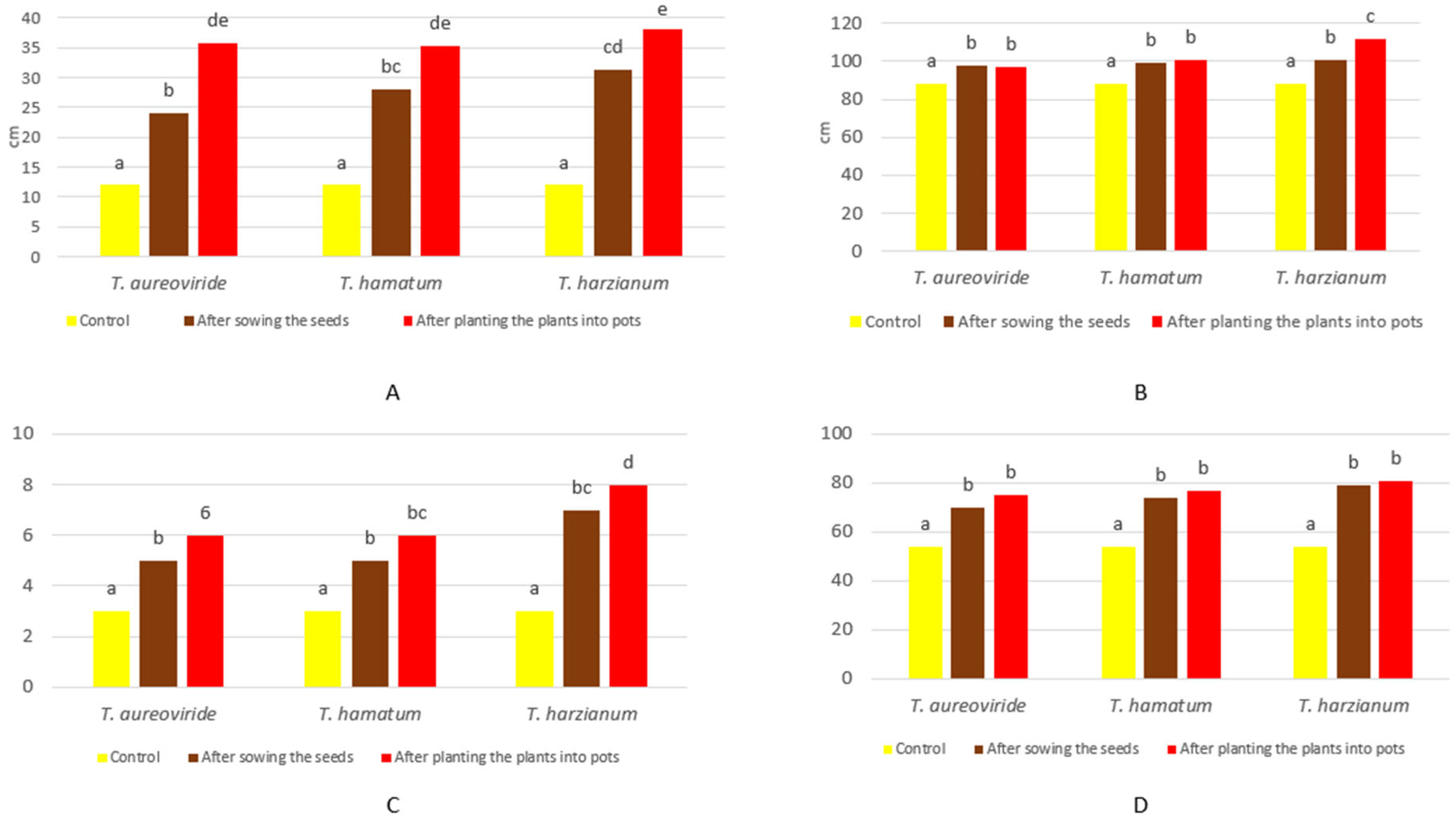
According to Andrzejak et al. [42], in T. majus ‘Spitfire’, all tested fungi stimulated flowering, but had no effect on flower size (Figure 5). The most abundant flowering was observed in plants treated with T. harzianum-Thr2 after transplanting into pots. Compared to the control plants, in those treated with the individual isolates after seed sowing, the number of buds and flowers increased by 95.1% (T. aureoviride—Ta8), 127.6% (T. hamatum—Th15) and 154.5% (T. harzianum—Thr2). In plants treated with the isolates after planting into pots, flowering was more abundant, increasing by 190.2%, 187.0% and 209.0%, respectively. More abundant flowering in plants grown for cut flowers and for pots is a key objective for breeders and producers of this plant group. More abundant flowering following the application of Trichoderma spp. has been observed in Pachypodium and Crassula falcata [146], F. refracta ‘Argentea’ [145], B. × tuberhybrida ‘Picotee Sunburst’ [122], and G. hybridus ‘Advances Red’ [123].
Trichoderma spp. in T. majus ‘Spitfire’ also stimulated plant growth, as the resulting shoots were longer, with a greater number of leaves and lateral shoots (Figure 5) [42]. The authors report that, compared to the control plants, the treatments in which Trichoderma spp. were applied produced 30.0–50.5% more leaves. This is confirmed by research results obtained in B. × tuberhybrida ‘Picotee Sunburst’ [122]. In Tulipa ‘Golden Parade’, on the other hand, Trichoderma spp. either stimulate or inhibit leaf blade elongation and affect its width [144]. According to Lorito et al. [129] it is a fact that under the influence of Trichoderma spp., plants produce longer shoots. The mechanisms of this phenomenon are not yet fully understood, but it is associated with increased nutrient uptake and, consequently, improved plant nutrition. However, not all Trichoderma spp. stimulate shoot elongation, as confirmed by the study of Andrzejak et al. [122] conducted on B. × tuberhybrida ‘Picotee Sunburst’.
Andrzejak et al. [42] also report that Trichoderma spp. in T. majus ‘Spitfire’ stimulated the uptake of macronutrients, with the exception of phosphorus (P). In the case of calcium (Ca) and sodium (Na), this effect was observed only in plants treated with T. aureoviride—Ta8 and T. hamatum-Th15, while for magnesium (Mg) it occurred only when T. hamatum—Th15 was applied to the sown seeds. With regard to microelements, Trichoderma spp. stimulated the uptake of zinc (Zn) and manganese (Mn). Furthermore, the authors observed higher iron (Fe) content in plants treated with T. harzianum—Thr2 at both application times, and with T. aureoviride—Ta8 when this isolate was applied after transplanting the plants into pots (Table 3, Figure 5). The increased intensity of nutrient uptake by plants, stimulated by fungi from the genus Trichoderma, is possible because the better-developed root system occupies a larger volume of the substrate, allowing it to access a greater amount of nutrients. In this way, the plants gain a competitive advantage for minerals over other genera with less extensively developed root systems. Additionally, a better-developed root system allows plants to grow in breeding sites that are poor in mineral compounds [127]. Furthermore, some compounds, e.g., P, are dissolved and retained in the biomass of Trichoderma spp. and then released in an available form near the roots after the decomposition of the fungi [147]. Improved P uptake has been reported by Andrzejak and Janowska [123] in G. hybridus ‘Advances Red’ and by Janowska et al. [145] in F. refracta ‘Argentea’. Microelements are taken up by plants in much smaller quantities than macronutrients. These compounds affect the plant indirectly by activating or regulating many vital processes [148,149]. For example, Fe is a key component of enzymes and participates in photosynthesis and nitrogen (N) fixation. It also plays a role in the synthesis of chlorophyll and certain proteins [147]. Mn, in turn, activates decarboxylases, dehydrogenases and other enzymes in plants. It also participates in the reactions of water (H2O) splitting and oxygen (O2) release during photosynthesis, in chlorophyll synthesis, and in the metabolism of proteins, carbohydrates and lipids. Copper (Cu) present in chlorophyll, in turn, participates in photosynthesis, respiration, cell wall lignification, and the metabolism of N compounds, proteins and carbohydrates. Boron (B) participates in the formation of cell wall structures in the plant, as well as in carbohydrate metabolism [150]. Previous studies indicate that Trichoderma spp. influence the uptake of Zn, Fe and B by G. hybridus ‘Advances Red’ [123] and B. × tuberhybrida ‘Picotee Sunburst’ [122]. Benitez et al. [130] claim that Trichoderma spp. have the ability to rapidly uptake elements present in the rhizosphere in trace amounts. As an example, they cite Fe, which is chelated by Trichoderma spp. producing siderophores. In turn, Altomare et al. [147] report that the T. harzianum T-22 isolate facilitates the uptake of insoluble or poorly soluble elements—Fe, Cu, Zn and Mn—by increasing mineral solubility through acidification of the root microenvironment and reducing oxidized metal ions (Fe, Cu).
The integration of Trichoderma spp. into T. majus cultivation represents a convergence point between agricultural practice and functional food production. The demonstrated stimulation of micronutrient uptake may have direct implications for the biosynthesis of bioactive compounds beyond improved plant nutrition per se. Fe, for instance, is a cofactor for numerous enzymes involved in secondary metabolite production, including those participating in flavonoid biosynthesis [147,148]. Enhanced Zn uptake could similarly influence the activity of metalloenzymes involved in antioxidant defense systems. Although direct studies linking Trichoderma-mediated nutrient enhancement to increased flavonoid, carotenoid, or glucosinolate content in T. majus are currently lacking, this represents a promising avenue for future research that could establish mechanistic connections between beneficial microorganism application and phytochemical quality.
The Trichoderma spp.-induced increase in flowering abundance addresses a key limitation identified in the phytochemical sections of this review: the relatively low concentrations of individual bioactive compounds achievable through typical dietary consumption. Greater quantities of raw material—whether flowers for anthocyanin and carotenoid extraction or leaves, which contain glucotropaeolin at concentrations approximately four-fold higher than flowers [18]—would enable higher intake of health-promoting constituents. The ecological dimension of this approach merits consideration in the context of sustainable functional food production. Unlike synthetic fertilizers or chemical growth regulators, Trichoderma spp. represent a biologically based strategy that may contribute to soil health and reduce environmental impact [121,125], aligning with growing consumer demand for sustainably produced foods and potentially enhancing the market positioning of T. majus products.

4. Conclusions

Although Tropaeolum majus has been cultivated in Europe for a long time and its health-promoting properties are undeniable, the literature on this genus appears to be incomplete. The growing interest in edible ornamental plants has led to the aim of this study being to review existing research on the content of bioactive compounds in T. majus and the most recent studies enabling the production of more abundantly flowering plants through the application of fungi from the genus Trichoderma.
In T. majus, all parts of the plant (flowers, leaves, seeds) are edible and valued for their pungent taste, with their chemical composition varying between them. The phytochemical composition of the flowers is the most frequently analyzed. Fewer studies, however, have focused on the leaves and seeds. The flowers of T. majus contain flavonoids from the flavone and flavonol groups, as well as their glycosides, which exhibit antibacterial, antifungal and antiviral activity. They also inhibit the activity of certain enzymes. Among the flavonoids, the flowers and leaves of T. majus contain derivatives of kaempferol and quercetin. Flavonoids also include anthocyanins, which are responsible for the color of T. majus flowers. In red flowers, delphinidin predominates; in orange flowers, pelargonidin; and in yellow flowers, pelargonidin and delphinidin are present in similar amounts.
The flowers of T. majus are rich in carotenoids, which are responsible for the stability of lipid membranes, participate in light capture during photosynthesis, and provide protection against photooxidation caused by reactive oxygen species generated by chlorophyll excitation during photosynthesis. In the flowers of T. majus, seven carotenoids have been identified: violaxanthin, antheraxanthin, lutein, zeaxanthin, α, β and γ-carotene. In the leaves, however, lutein, violaxanthin, β-carotene and neoxanthin were detected.
In T. majus, the presence of two glucosinolates has been reported: glucotropaeolin and sinalbin. Glucosinolates play a significant role both in the plant’s defense system and in human health. The flowers and leaves of T. majus also contain both macroelements (nitrogen—N, phosphorus—P, potassium—K, calcium—Ca, magnesium—Mg, sodium—Na) and microelements (iron—Fe, manganese—Mn, copper—Cu, zinc—Zn, molybdenum—Mo). In aging leaves of T. majus, yellow chlorophyll catabolites known as phylloxanthobilins are present; these compounds are not only responsible for leaf yellowing in autumn but are also valuable in the treatment of urinary tract infections.
Recent studies show that fungi from the genus Trichoderma can be used in the cultivation of T. majus, positively affecting plant quality and flowering intensity, which is important both for ecological purposes and for increasing the amount of feedstock obtained from the plants.

Author Contributions

Conceptualization, S.S., R.A., K.W. and B.J.; methodology, S.S., R.A., K.W. and B.J.; formal analysis, S.S., R.A., K.W. and B.J.; writing—original draft preparation, S.S., R.A., K.W. and B.J.; writing—review and editing, S.S., R.A., K.W. and B.J.; visualization, S.S., R.A., K.W. and B.J.; supervision, S.S., R.A., K.W. and B.J.; funding acquisition, S.S., R.A., K.W. and B.J. All authors have read and agreed to the published version of the manuscript.

Funding

This research received no external funding.

Data Availability Statement

No new data were created or analyzed in this study. Data sharing is not applicable to this article.

Conflicts of Interest

The authors declare no conflicts of interest.

Abbreviations

The following abbreviations are used in this manuscript:
SGLT-1Sodium/glucose cotransporter 1
ROSReactive oxygen species
RNSReactive nitrogen species
LPSLipopolysaccharide
NONitric oxide
iNOSInducible nitric oxide synthase
ACEAngiotensin-converting enzyme
SHRSpontaneously hypertensive rats
HCTZHydrochlorothiazide
DWDry weight
FWFresh weight
PGRsPlant growth regulators
CKsCytokinins
COX1Cyclooxygenase-1
LDLsLow-Density Lipoproteins
AMDAge-Related Macular Degeneration
UVUltraviolet radiation
BITCBenzyl isothiocyanate
ALDAdrenoleukodystrophy
NNitrogen
PPhosphorus
KPotassium
CaCalcium
MgMagnesium
NaSodium
FeIron
MnManganese
CuCopper
ZnZinc
MoMolybdenum
BBoron
H2OWater
O2Oxygen

References

  1. Jakubczyk, K.; Janda, K.; Watychowicz, K.; Łukasiak, J.; Wolska, J. Garden nasturtium (Tropaeolum majus L.)—A source of mineral elements and bioactive compounds. Rocz. Państw. Zakł. Hig. 2018, 69, 119–126. [Google Scholar]
  2. Plants of the World Online. Tropaeolum majus L. Available online: https://powo.science.kew.org/taxon/urn:lsid:ipni.org:names:310974-2 (accessed on 20 January 2025).
  3. Das, M.; Biswas, S.K.; Zaman, S.; Mitra, A. Nasturtium (Tropaeolum majus) an annual herb has medicinal property to cure throat sore and it has antivirus property. Int. J. Environ. Agric. Sci. 2019, 3, 1–3. [Google Scholar]
  4. Dueñas-López, M.A. Tropaeolum majus (Nasturtium). CABI Compendium. 2022. Available online: https://www.cabidigitallibrary.org/doi/10.1079/cabicompendium.54181 (accessed on 20 January 2025).
  5. Barbosa, L.; da Silva, T.; Gomes Dias, M.; Pereira, E.; Cruz, R.; Silva, J.; Costa, F.; Grossi, J. Application of phytohormones reduces damage caused by salt stress in Tropaeolum majus. S. Afr. J. Bot. 2024, 166, 69–78. [Google Scholar] [CrossRef]
  6. Torros-Jimenez, I.B.; Quintana-Cardenes, I.J. Comparative analysis on the use of medicinal plants in traditional medicine in Cuba and The Canary Islands. Rev. Cuba. Plantas Med. 2004, 9, 31. [Google Scholar]
  7. Wang, X.; Wang, W.; Chen, S.; Lian, Y.; Wang, S. Tropaeolum majus R2R3 MYB transcription factor TmPAP2 functions as a positive regulator of anthocyanin biosynthesis. Int. J. Mol. Sci. 2022, 23, 12395. [Google Scholar] [CrossRef]
  8. Broda, B.; Mowszowicz, J. Przewodnik do Oznaczania Roślin Leczniczych, Trujących i Użytkowych; PZWL: Warszawa, Poland, 2000. [Google Scholar]
  9. Marchyshyn, S.; Budniak, L.; Slobodianiuk, L. Chemical composition of the garden nasturtium essential oil and antibacterial activity of fresh juice of the herb. Pharmacologyonline 2021, 3, 1463–1473. [Google Scholar]
  10. Garzón, G.A.; Wrolstad, R.E. Major anthocyanins and antioxidant activity of Nasturtium flowers (Tropaeolum majus). Food Chem. 2009, 114, 44–49. [Google Scholar] [CrossRef]
  11. Silva, R.M.M.F.; Silva, M.E.P.F.; Scalon, S.P.Q.; Pereira, Z.V. Aspectos da biologia de flores de Tropaeolum majus L. (Tropaeolaceae). In 60° Congresso Nacional de Botânica; Universidade Federal da Grande Dourados: Feira de Santana, BA, Brazil, 2009. [Google Scholar]
  12. Ortiz de Boada, D.; Cogua, J. Reconocimiento de granos de polen de algunas plantas melíferas en la sabana de Bogotá. Agron. Colomb. 1989, 6, 52–63. [Google Scholar]
  13. Grzeszczuk, M.; Kawecka, A.; Jadczak, D. Kwiaty jadalne—Nasturcja większa Tropaeolum majus L. Panacea 2010, 2, 20–21. [Google Scholar]
  14. Bremness, L. The Complete Book of Herbs; Dorling Kindersley: London, UK, 1991. [Google Scholar]
  15. Ożarowski, A.; Rumińska, A. Leksykon Roślin Leczniczych; PWRiL: Warszawa, Poland, 1990. [Google Scholar]
  16. Lykkesfeldt, J.; Møller, B.L. Synthesis of benzylglucosinolate in Tropaeolum majus L. (Isothiocyanates as potent enzyme inhibitors). Plant Physiol. 1993, 102, 609–613. [Google Scholar] [CrossRef]
  17. Fernandes, L.; Casal, S.; Pereira, J.A.; Saraiva, J.A.; Ramalhosa, E. Edible flowers: A review of the nutritional, antioxidant, antimicrobial properties and effects on human health. J. Food Compos. Anal. 2017, 60, 38–50. [Google Scholar] [CrossRef]
  18. Česlová, L.; Klikarová, J.; Šalomounová, T. The content and profile of biologically active compounds present in individual parts of nasturtium (Tropaeolum majus L.): Comprehensive study. Eur. Food Res. Technol. 2022, 248, 3327–3342. [Google Scholar] [CrossRef]
  19. Parker, J.E.; Snyder, W.E.; Hamilton, G.C.; Rodriguez-Saona, C. Companion planting and insect pest control. In Weed and Pest Control–Conventional and New Challenges; Soloneski, S., Larramendy, M., Eds.; InTech: Rijeka, Croatia, 2013; pp. 1–30. [Google Scholar]
  20. Hooks, C.R.R.; Johnson, M.W. Impact of agricultural diversification on the insect community of cruciferous crops. Crop Prot. 2003, 22, 223–238. [Google Scholar] [CrossRef]
  21. Różański, H. Tropaeolum majus–In Medycyna Dawna i Współczesna. Available online: http://rozanski.li/242/tropaeolum-majus-nasturcja-jako-przyprawa-i-lek (accessed on 4 February 2025).
  22. Navarro-González, I.; González-Barrio, R.; García-Valverde, V.; Bautista-Ortín, A.B.; Periago, M.J. Nutritional composition and antioxidant capacity in edible flowers: Characterisation of phenolic compounds by HPLC-DAD-ESI/MSn. Int. J. Mol. Sci. 2015, 16, 805–822. [Google Scholar] [CrossRef]
  23. Carlson, K.D.; Kleiman, R. Chemical survey and erucic acid content of commercial varieties of nasturtium, Tropaeolum majus L. JAOCS 1993, 70, 1145–1148. [Google Scholar] [CrossRef]
  24. Bazylko, A.; Granica, S.; Filipek, A.; Piwowarski, J.; Stefańska, J.; Osińska, E.; Kiss, A. Comparison of antioxidant, anti-inflammatory, antimicrobial activity and chemical composition of aqueous and hydroethanolic extracts of the herb of Tropaeolum majus L. Ind. Crops Prod. 2013, 50, 88–94. [Google Scholar] [CrossRef]
  25. Bazylko, A.; Parzonko, A.; Jez, W.; Osińska, E.; Kiss, A.K. Inhibition of ROS production, photoprotection, and total phenolic, flavonoids and ascorbic acid content of fresh herb juice and extracts from the leaves and flowers of Tropaeolum majus. Ind. Crops Prod. 2014, 55, 19–24. [Google Scholar] [CrossRef]
  26. Gasparotto, A.; Gasparotto, F.M.; Lourenço, E.L.; Crestani, S.; Stefanello, M.E.; Salvador, M.J.; da Silva-Santos, J.E.; Marques MCAKassuya, C.A.L. Antihypertensive effect of isoquercitrin and extracts from Tropaeolum majus L.: Evidence for the inhibition of angiotensin converting enzyme. J. Ethnopharmacol. 2011, 134, 363–374. [Google Scholar] [CrossRef] [PubMed]
  27. Gasparotto Junior, A.; Prando, T.B.; Leme, T.S.; Gasparotto, F.M.; Lourenço, E.L.; Rattmann, Y.D.; da Silva-Santos, J.E.; Kassuya, C.A.; Marques, M.C. Mechanisms underlying the diuretic effects of Tropaeolum majus L. extracts and its main component isoquercitrin. J. Ethnopharmacol. 2012, 141, 501–509. [Google Scholar] [CrossRef]
  28. Kleinwächter, M.; Schnug, E.; Selmar, D. The glucosinolate-myrosinase system in nasturtium (Tropaeolum majus L.): Variability of biochemical parameters and screening for clones feasible for pharmaceutical utilization. J. Agricul. Food Chem. 2008, 56, 11165–11170. [Google Scholar] [CrossRef] [PubMed]
  29. Gasparotto, A.; Gasparotto, F.M.; Boffo, M.A.; Lourenço, E.L.B.; Stefanello, M.E.A.; Salvador, M.J.; Silva-Santos, J.E.; Marques, M.C.; Kassuya, C.A. Diuretic and potassium-sparing effect of isoquercitrin–An active flavonoid of Tropaeolum majus L. J. Ethnopharmacol. 2011, 134, 210–215. [Google Scholar] [CrossRef]
  30. Li, R.; Yuan, C.; Dong, C.; Shuang, S.; Choi, M.M. In vivo antioxidative effect of isoquercitrin on cadmium-induced oxidative damage to mouse liver and kidney. Naunyn-Schmiedeberg’s Arch. Pharmacol. 2011, 383, 437–445. [Google Scholar] [CrossRef]
  31. Koriem, K.M.M.; Arbid, M.S.; el Gendy, N.F.I. The protective role of Tropaeolum majus on blood and liver toxicity induced by diethyl maleate in rats. Toxicol. Mech. Method. 2010, 20, 579–586. [Google Scholar] [CrossRef]
  32. Garzón, G.A.; Manns, D.C.; Riedl, K.; Schwartz, S.J.; Padilla-Zakour, O. Identification of phenolic compounds in petals of nasturtium flowers (Tropaeolum majus) by high-performance liquid chromatography coupled to mass spectrometry and determination of oxygen radical absorbance capacity (ORAC). Crit. Rev. Food Sci. Nutr. 2015, 63, 1803–1811. [Google Scholar] [CrossRef]
  33. Dabeek, W.M.; Marra, M.V. Dietary quercetin and kaempferol: Bioavailability and potential cardiovascular-related bioactivity in humans. Nutrients 2019, 11, 2288. [Google Scholar] [CrossRef] [PubMed]
  34. Frei, P.; Nadegger, C.; Vollmar, A.M.; Müller, T.; Moser, S. Structural characterization, and antioxidative and anti-inflammatory activities of phylloxanthobilins in Tropaeolum majus, a plant with relevance in phytomedicine. Planta Medica 2024, 90, 641–650. [Google Scholar] [CrossRef]
  35. Parus, A.; Grys, A. Roślina przyszłości–nasturcja większa (Tropaeolum majus L.) (Plant of the future–Tropaeolum majus L.). Post. Fitoter. 2012, 3, 184–187. [Google Scholar]
  36. Niizu, P.Y.; Rodriguez-Amaya, D.B. Flowers and leaves of Tropaeolum majus L. as rich sources of lutein. J. Food Sci. 2005, 70, 605–609. [Google Scholar] [CrossRef]
  37. Radwan, S.S. Localization of lipids containing (Z)-11-eicosenoic acid and (Z)-13-docosenoic acid in Tropaeolum majus. Phytochemistry 1976, 15, 1727–1729. [Google Scholar] [CrossRef]
  38. Musolino, V.; Marrelli, M.; Perri, M.R.; Palermo, M.; Gliozzi, M.; Mollace, V.; Conforti, F. Centranthus ruber (L.) DC. and Tropaeolum majus L.: Phytochemical profile, in vitro anti-denaturation effects and lipase inhibitory activity of two ornamental plants traditionally used as herbal remedies. Molecules 2022, 28, 32. [Google Scholar] [CrossRef]
  39. Vrca, I.; Ramić, D.; Fredotović, Ž.; Možina, S.S.; Blažević, I.; Bilušić, T. Chemical composition and biological activity of essential oil and extract from the seeds of Tropaeolum majus L. var. Altum. Food Technol. Biotechnol. 2022, 60, 533–542. [Google Scholar] [CrossRef]
  40. Benyelles, B.; Allali, H.; Belkaid, A.B.; Fekih, N.; Muselli, A. Chemical composition of the volatile components of Tropaeolum majus L. (Garden Nasturtium) from North Western Algeria. PCBS J. 2015, 9, 92–97. [Google Scholar]
  41. Bagul, H.; Patel, N. The nutritional and functional property of unconventional food plant: Nasturtium (Tropaeolum majus L.). Acta Sci. Nutr. Health 2024, 8, 100–102. [Google Scholar] [CrossRef]
  42. Andrzejak, R.; Janowska, B.; Rosińska, A.; Skazińska, S.; Borsai, O. Flowering, quality and nutritional status of Tropaeolum majus L. ‘Spitfire’ after application of Trichoderma spp. Sustainability 2024, 16, 4672. [Google Scholar] [CrossRef]
  43. Vrca, I.; Jug, B.; Fredotović, Ž.; Vuko, E.; Brkan, V.; Šestić, L.; Juretić, L.; Dunkić, V.; Nazlić, M.; Ramić, D.; et al. Significant benefits of environmentally friendly hydrosols from Tropaeolum majus L. seeds with multiple biological activities. Plants 2023, 12, 3897. [Google Scholar] [CrossRef] [PubMed]
  44. Afaq, F. Natural agents: Cellular and molecular mechanisms of photoprotection. Arch. Biochem. Biophys. 2011, 508, 144–151. [Google Scholar] [CrossRef]
  45. Mishra, A.K.; Mishra, A.; Chattopadhyay, P. Herbal cosmeceuticals for photoprotection from ultraviolet B radiation: A review. Trop. J. Pharm. Res. 2011, 10, 351. [Google Scholar] [CrossRef]
  46. Nichols, J.A.; Katiyar, S.K. Skin Photoprotection by Natural Polyphenols: Anti-Inflammatory, Antioxidant and DNA Repair Mechanisms. Arch. Dermatol. Res. 2010, 302, 71–83. [Google Scholar] [CrossRef]
  47. Bruneton, J. Pharmacognosy: Phytochemistry and Medicinal Plants, 4th ed.; Editions Tec & Doc (Lavoisier): Paris, France, 2009; pp. 1–1268. [Google Scholar]
  48. Fournier, P.; Leclerc, H. Le Livre des Plantes Médicinales et Vénéneuses de France; University Michigan: Ann Arbor, MI, USA, 1947. [Google Scholar]
  49. Strzelecka, H.; Kowalski, J. Encyklopedia Zielarstwa i Ziołolecznictwa; Wydawn. Naukowe PWN: Warszawa, Poland, 2000. [Google Scholar]
  50. van Wyk, B.-E.; Wink, M. Medicinal Plants of the World: An Illustrated Scientific Guide to Important Medicinal Plants and Their Uses; Cabi: Wallingford, UK, 2018. [Google Scholar]
  51. Mbikay, M.; Chrétien, M. Isoquercetin as an Anti-COVID-19 medication: A potential to realize. Front. Pharmacol. 2022, 13, 830205. [Google Scholar] [CrossRef]
  52. Makino, T.; Shimizu, R.; Kanemaru, M.; Suzuki, Y.; Moriwaki, M.; Mizukami, H. Enzymatically modified isoquercitrin, alpha-oligoglucosyl quercetin 3-O-glucoside, is absorbed more easily than other quercetin glycosides or aglycone after oral administration in rats. Biol. Pharm. Bull. 2009, 32, 2034–2040. [Google Scholar] [CrossRef]
  53. Zhang, R.; Yao, Y.; Wang, Y.; Ren, G. Antidiabetic activity of isoquercetin in diabetic KK-Ay Mice. Nutr. Metab. 2011, 8, 85. [Google Scholar] [CrossRef]
  54. Yamanouchi, H.; Minami, Y.; Kajiya, K. Evaluation and validation of angiotensin-converting enzyme inhibitory activity of Moringa oleifera, quercetin, and isoquercetin: A comparative study of fluorescence and absorbance measurement methods. Food Res. Int. 2025, 202, 115768. [Google Scholar] [CrossRef]
  55. Gasparotto Junior, A.; Boffo, M.A.; Lourenco, E.L.; Stefanello, M.E.; Kassuya, C.A.; Marques, M.C. Natriuretic and diuretic effects of Tropaeolum majus (Tropaeolaceae) in rats. J. Ethnopharmacol. 2009, 122, 517–522. [Google Scholar] [CrossRef] [PubMed]
  56. Vries JHMde Hollman, P.C.; Meyboom, S.; Buysman, M.N.; Zock, P.L.; van Staveren, W.A.; Katan, M.B. Plasma concentrations and urinary excretion of the antioxidant flavonols quercetin and kaempferol as biomarkers for dietary intake. Am. J. Clin. Nutr. 1998, 68, 60–65. [Google Scholar] [CrossRef] [PubMed]
  57. du Pont, M.S.; Day, A.J.; Bennett, R.N.; Mellon, F.A.; Kroon, P.A. Absorption of kaempferol from endive, a source of kaempferol-3-glucuronide, in humans. Eur. J. Clin. Nutr. 2004, 58, 947–954. [Google Scholar] [CrossRef] [PubMed]
  58. Singh, R.; Singh, B.; Singh, S.; Kumar, N.; Kumar, S.; Arora, S. Anti-free radical activities of kaempferol isolated from Acacia nilotica (L.) Willd. Ex. Del. Toxicol. Vitr. 2008, 22, 1965–1970. [Google Scholar] [CrossRef]
  59. Brondani, J.C.; Cuelho, C.H.F.; Marangoni, L.D.; de Lima, R.; Gaube Guex, C.; de França Bonilha, I.; Palermo Manfron, M. Traditional usages, botany, phytochemistry, biological activity and toxicology of Tropaeolum majus L.—A review. Bol. Latinoam. Caribe Plantas Med. Aromát. 2016, 15, 264–273. [Google Scholar]
  60. Oszmiański, J.; Kolniak-Ostek, J.; Wojdyło, A. Characterization and content of flavonol derivatives of Allium ursinum L. plant. J. Agric. Food Chem. 2013, 61, 176–184. [Google Scholar] [CrossRef]
  61. Crespo, I.; García-Mediavilla, M.V.; Gutiérrez, B.; Sánchez-Campos, S.; Tuñón, M.J.; González-Gallego, J. A comparison of the effects of kaempferol and quercetin on cytokine-induced pro-inflammatory status of cultured human endothelial cells. Br. J. Nutr. 2008, 100, 968–976. [Google Scholar] [CrossRef]
  62. Kampkötter, A.; Nkwonkam, C.G.; Zurawski, R.F.; Timpel, C.; Chovolou, Y.; Wätjen, W.; Kahl, R. Effects of the flavonoids kaempferol and fisetin on thermotolerance, oxidative stress and FoxO transcription factor DAF-16 in the model organism Caenorhabditis elegans. Arch. Toxicol. 2007, 81, 849–858. [Google Scholar] [CrossRef]
  63. Sanz, M.J.; Ferrandiz, M.L.; Cejudo, M.; Terencio, M.C.; Gil, B.; Bustos, G.; Ubeda, A.; Gunasegaran, R.; Alcaraz, M.J. Influence of a series of natural flavonoids on free radical generating systems and oxidative stress. Xenobiotica 1994, 24, 689–699. [Google Scholar] [CrossRef]
  64. Li, J.W.; Fan, L.P.; Ding, S.D.; Ding, X.L. Nutritional composition of five cultivars of Chinese jujube. Food Chem. 2007, 103, 454–460. [Google Scholar] [CrossRef]
  65. Hertog, M.G.L.; Feskens, E.J.M.; Kromhout, D.; Hollman, P.C.H.; Katan, M.B. Dietary antioxidant flavonoids and risk of coronary heart disease: The zutphen elderly study. Lancet 1993, 342, 1007–1011. [Google Scholar] [CrossRef]
  66. Huxley, R.R.; Neil, H.A.W. The relation between dietary flavonol intake and coronary heart disease mortality: A meta-analysis of prospective cohort studies. Eur. J. Clin. Nutr. 2003, 57, 904–908. [Google Scholar] [CrossRef]
  67. Kwon, E.K.; Lee, D.Y.; Lee, H.; Kim, D.O.; Baek, N.I.; Kim, Y.E.; Kim, H.Y. Flavonoids from the buds of Rosa damascena inhibit the activity of 3-hydroxy-3-methylglutaryl-coenzyme A reductase and angiotensin I-converting enzyme. J. Agric. Food Chem. 2010, 58, 882–886. [Google Scholar] [CrossRef]
  68. Marniemi, J.; Alanen, E.; Impivaara, O.; Seppänen, R.; Hakala, P.; Rajala, T.; Rönnemaa, T. Dietary and serum vitamins and minerals as predictors of myocardial infarction and stroke in elderly subjects. Nutr. Metab. Cardiovasc. Dis. 2005, 15, 188–197. [Google Scholar] [CrossRef]
  69. D’Agostini, F.; Izzotti, A.; Balansky, R.M.; Bennicelli, C.; de Flora, S. Modulation of apoptosis by cancer chemopreventive agents. Mutat. Res. 2005, 591, 173–186. [Google Scholar] [CrossRef]
  70. Nirmala, P.; Ramanathan, M. Effect of kaempferol on lipid peroxidation and antioxidant status in 1, 2-dimethyl hydrazine induced colorectal carcinoma in rats. Eur. J. Pharmacol. 2011, 654, 75–79. [Google Scholar] [CrossRef] [PubMed]
  71. Sofrata, A.; Santangelo, E.M.; Azeem, M.; Borg-Karlson, A.; Gustafsson, A.; Pütsep, K. Benzyl isothiocyanate, a major component from the roots of Salvadora persica is highly active against Gram-negative bacteria. PLoS ONE 2011, 6, e23045. [Google Scholar] [CrossRef] [PubMed]
  72. de Pascual-Teresa, S.; Sanchez-Ballesta, M.T. Anthocyanins: From plant to health. Phytochem. Rev. 2007, 7, 281–299. [Google Scholar] [CrossRef]
  73. Cappellini, F.; Marinelli, A.; Toccaceli, M.; Tonelli, C.; Petroni, K. Anthocyanins: From mechanisms of regulation in plants to health benefits in foods. Front. Plant Sci. 2021, 12, 748049. [Google Scholar] [CrossRef]
  74. Mozos, I.; Flangea, C.; Vlad, D.C.; Gug, C.; Mozos, C.; Stoian, D.; Atanasov, A.G. Effects of anthocyanins on vascular health. Biomolecules 2021, 11, 811. [Google Scholar] [CrossRef]
  75. Li, D.; Wang, P.; Luo, Y.; Zhao, M.; Chen, F. Health benefits of anthocyanins and molecular mechanisms: Update from recent decade. Crit. Rev. Food Sci. Nutr. 2017, 57, 1729–1741. [Google Scholar] [CrossRef]
  76. Kozłowska, A.; Dzierżanowski, T. Targeting inflammation by anthocyanins as the novel therapeutic potential for chronic diseases: An update. Molecules 2021, 26, 4380. [Google Scholar] [CrossRef]
  77. Speciale, A.; Anwar, S.; Canali, R.; Chirafisi, J.; Saija, A.; Virgili, F.; Cimino, F. Cyanidin-3-O-glucoside counters the response to TNF-alpha of endothelial cells by activating Nrf2 pathway. Mol. Nutr. Food Res. 2013, 57, 1979–1987. [Google Scholar] [CrossRef]
  78. Blando, F.; Calabriso, N.; Berland, H.; Maiorano, G.; Gerardi, C.; Carluccio, M.A.; Andersen, Ø.M. Radical Scavenging and anti-inflammatory activities of representative anthocyanin groupings from pigment-rich fruits and vegetables. Int. J. Mol. Sci. 2018, 19, 169. [Google Scholar] [CrossRef] [PubMed]
  79. Garcia-Alonso, M.; Rimbach, G.; Sasai, M.; Rivas-Gonzalo, J.C.; de Pascual-Teresa, S. Electron spin resonance spectroscopy studies on wine anthocyanins and pyranoanthocyanins. Mol. Nutr. Food Res. 2005, 49, 1112–1119. [Google Scholar] [CrossRef]
  80. Zhu, Y.; Huang, X.; Zhang, Y.; Wang, Y.; Liu, Y.; Sun, R.; Ling, W. Anthocyanin supplementation improves HDL-associated paraoxonase 1 activity and enhances cholesterol efflux capacity in subjects with hypercholesterolemia. J. Clin. Endocrinol. Metab. 2014, 99, 561–569. [Google Scholar] [CrossRef] [PubMed]
  81. Akkarachiyasit, S.; Charoenlertkul, P.; Yibchok-Anun, S.; Adisakwattana, S. Inhibitory activities of cyanidin and its glycosides and synergistic effect with acarbose against intestinal α-glucosidase and pancreatic α-amylase. Int. J. Mol. Sci. 2010, 11, 3387–3396. [Google Scholar] [CrossRef] [PubMed]
  82. Jayaprakasam, B.; Vareed, S.K.; Olson, L.K.; Nair, M.G. Insulin secretion by bioactive anthocyanins and anthocyanidins present in fruits. J. Agric. Food Chem. 2005, 53, 28–31. [Google Scholar] [CrossRef]
  83. Fukamachi, K.; Imada, T.; Ohshima, Y.; Xu, J.; Tsuda, H. Purple corn color suppresses ras protein level and inhibits 7,12-dimethylbenz(a)anthracene-induced mammary carcinogenesis in the rat. Cancer Sci. 2008, 99, 1841–1846. [Google Scholar] [CrossRef]
  84. Manach, C.; Williamson, G.; Morand, C.; Scalbert, A.; Rémésy, C. Bioavailability and bioefficacy of polyphenols in humans. I. Review of 97 bioavailability studies. Am. J. Clin. Nutr. 2005, 81, 230S–242S. [Google Scholar] [CrossRef]
  85. Vitaglione, P.; Donnarumma, G.; Napolitano, A.; Galvano, F.; Gallo, A.; Scalfi, L.; Fogliano, V. Protocatechuic acid is the major human metabolite of cyanidin-glucosides. J. Nutr. 2007, 137, 204–206. [Google Scholar] [CrossRef]
  86. Bento-Silva, A.; Koistinen, V.M.; Mena, P.; Aura, A.M.; Sahlstrøm, S.; Kitrytė, V.; Moco, S.; Bronze, M.R. Factors affecting intake, metabolism and health benefits of phenolic acids: Do we understand individual variability? Eur. J. Nutr. 2019, 59, 1275–1293. [Google Scholar] [CrossRef]
  87. Saxena, M.; Saxena, J.; Pradhan, A. Flavonoids and phenolic acids as anti-oxidants in plants and human health. Int. J. Pharm. Sci. Res. 2012, 16, 130–134. [Google Scholar]
  88. Kato, M.; Ochiai, R.; Kozuma, K.; Sato, H.; Katsuragi, Y. Effect of chlorogenic acid intake on cognitive function in the elderly: A pilot study. Evid. Based Complement. Alternat. Med. 2018, 7, 8608497. [Google Scholar] [CrossRef] [PubMed]
  89. Rashmi, H.B.; Negi, P.S. Phenolic acids from vegetables: A review on processing stability and health benefits. Food Res. Int. 2020, 136, 109298. [Google Scholar] [CrossRef] [PubMed]
  90. Ranheim, T.; Halvorsen, B. Coffee consumption and human health—Beneficial or detrimental?—Mechanisms for effects of coffee consumption on different risk factors for cardiovascular disease and type 2 diabetes mellitus. Mol. Nutr. Food Res. 2005, 49, 274–284. [Google Scholar] [CrossRef]
  91. Lindsay, J.; Laurin, D.; Verreault, R.; Hébert, R.; Helliwell, B.; Hill, G.B.; McDowell, I. Risk factors for Alzheimer’s disease: A prospective analysis from the Canadian study of health and aging. Am. J. Epidemiol. 2002, 156, 445–453. [Google Scholar] [CrossRef] [PubMed]
  92. Dos Santos, M.D.; Almeida, M.C.; Lopes, N.P.; de Souza, G.E.P. Evaluation of the anti-inflammatory, analgesic and antipyretic activities of the natural polyphenol chlorogenic acid. Biol. Pharm. Bull. 2006, 29, 2236–2240. [Google Scholar] [CrossRef]
  93. Hudson, E.A.; Dinh, P.A.; Kokubun, T.; Simmonds, M.S.; Genscher, A. Characterization of potentially chemopreventive phenols in extracts of brown rice that inhibit the growth of human breast and colon cancer cells. Cancer Epidemiol. Biomark. Prev. 2000, 9, 1163–1170. [Google Scholar]
  94. Goleniowski, M.; Bonfill, M.; Cusido, R.; Palazon, J. Phenolic acids. In Natural Products: Phytochemistry, Botany and Metabolism of Alkaloids, Phenolics and Terpenes; Ramawat, K.G., Mérillon, J.M., Eds.; Springer: Berlin/Heidelberg, Germany, 2013; pp. 1951–1973. [Google Scholar]
  95. Cooperstone, J.L.; Schwartz, S.J. Recent insights into health benefits of carotenoids. In Handbook on Natural Pigments in Food and Beverages; Schweiggert, R., Ed.; Woodhead Publishing, Sawston: Cambridge, UK, 2016; pp. 473–497. [Google Scholar]
  96. Eggersdorfer, M.; Wyss, A. Carotenoids in human nutrition and health. Arch. Biochem. Biophys. 2018, 652, 18–26. [Google Scholar] [CrossRef] [PubMed]
  97. Lund, E. Non-Nutritive Bioactive constituents of plants: Dietary sources and health benefits of glucosinolates. Int. J. Vit. Nutr. Res. 2003, 73, 105–112. [Google Scholar] [CrossRef]
  98. Šamec, D.; Pavlović, I.; Radojčić Redovniković, I.; Salopek-Sondi, B. Comparative analysis of phytochemicals and activity of endogenous enzymes associated with their stability, bioavailability and food quality in five Brassicaceae sprouts. Food Chem. 2018, 269, 96–102. [Google Scholar] [CrossRef]
  99. Martinez-Ballesta, M.C.; Carvajal, M. Myrosinase in Brassicaceae: The most important issue for glucosinolate turnover and food quality. Phytoch. Rev. 2015, 14, 1045–1051. [Google Scholar] [CrossRef]
  100. Schreiner, M.; Krumbein, A.; Mewis, I.; Ulrichs, C.; Huyskens-Keil, S. Short-term and moderate UV-B radiation effects on secondary plant metabolism in different organs of nasturtium (Tropaeolum majus L.). Innov. Food Sci. Emerg. Technol. 2009, 10, 93–96. [Google Scholar] [CrossRef]
  101. Fahey, J.W.; Holtzclaw, W.D.; Wehage, S.L.; Wade, K.L.; Stephenson, K.K.; Talalay, P. Sulforaphane bioavailability from glucoraphanin-rich broccoli: Control by active endogenous myrosinase. PLoS ONE 2015, 10, e0140963. [Google Scholar] [CrossRef]
  102. Butnariu, M.; Bostan, C. Antimicrobial and anti-inflammatory activity of the volatile oil compounds from Tropaeolum majus L. (Nasturtium). Afr. J. Biotechnol. 2011, 10, 5900–5909. [Google Scholar] [CrossRef][Green Version]
  103. Cho, H.J.; Lim, D.Y.; Kwon, G.T.; Kim, J.H.; Huang, Z.; Song, H.; Oh, Y.S.; Kang, Y.H.; Lee, K.W.; Dong, Z.; et al. Benzyl isothiocyanate inhibits prostate cancer development in the transgenic adenocarcinoma mouse prostate (TRAMP) model, which is associated with the induction of cell cycle G1 arrest. Int. J. Mol. Sci. 2016, 17, 264. [Google Scholar] [CrossRef]
  104. Kim, E.J.; Hong, J.E.; Eom, S.J.; Lee, J.Y.; Park, J.H. Oral administration of benzyl-isothiocyanate inhibits solid tumor growth and lung metastasis of 4T1 murine mammary carcinoma cells in BALB/c mice. Breast Cancer Res. Treat. 2011, 130, 61–71. [Google Scholar] [CrossRef]
  105. Stoner, G.D.; Morse, M.A. Isothiocyanates and glucosinolates. J. Cell. Biochem. 1997, 27, 115–120. [Google Scholar]
  106. Franzen, F.L.; Richards, N.S.P.D.S.; Oliveira, M.S.R.; Backes, F.A.A.L.; Menegaes, J.F.; Zago, A.P. Caracterização e qualidade nutricional de pétalas de flores ornamentais. Acta Iguazu 2016, 5, 58–70. [Google Scholar]
  107. Martínez-González, M.A.; Bes-Rastrollo, M. The cardioprotective benefits of monounsaturated fatty acid. Altern. Ther. Health Med. 2006, 12, 24–30. [Google Scholar] [PubMed]
  108. Bressan, J.; Hermsdorff, H.H.M.; Zulet, M.A.; Martinez, J.A. Impacto hormonal e inflamatório de diferentes composições dietéticas: ênfase em padrões alimentares e fatores dietéticos específicos. Arch. Endocrinol. Metab. 2009, 53, 572–581. [Google Scholar] [CrossRef] [PubMed]
  109. James, M.J.; Gibson, R.A.; Cleland, L.G. Dietary polyunsaturated fatty acids and inflammatory mediator production. Am. J. Clin. Nutr. 2000, 71, 343–348. [Google Scholar] [CrossRef]
  110. Youdim, K.A.; Martin, A.; Joseph, J.A. Essential fatty acids and the brain: Possible health implications. Int. J. Dev. Neurosci. 2000, 18, 383–399. [Google Scholar] [CrossRef]
  111. Egebjerg, M.M.; Olesen, P.T.; Eriksen, F.D.; Ravn-Haren, G.; Bredsdorff, L.; Pilegaard, K. Are wild and cultivated flowers served in restaurants or sold by local producers in Denmark safe for the consumer? Food Chem. Toxicol. 2018, 120, 129–142. [Google Scholar] [CrossRef]
  112. Kim, G.C.; Kim, J.S.; Kim, G.M.; Choi, S.Y. Anti-adipogenic effects of Tropaeolum majus (Nasturtium) ethanol extract on 3T3-L1 cells. J. Food Nutr. Res. 2017, 61, 1339555. [Google Scholar] [CrossRef]
  113. Imelouane, B.; Tahri, M.; Elbastrioui, M.; Aouinti, F.; Elbachiri, A.; Mater, J. Mineral contents of some medicinal and aromatic plants growing in Eastern Morocco. J. Mater. Environ. Sci. 2011, 2, 104–111. [Google Scholar]
  114. Bloem, E.; Berk, A.; Haneklaus, S.; Selmar, D.; Schnug, E. Influence of Tropaeolum majus supplements on growth and antimicrobial capacity of glucotropaeolin in piglets. For. Res. 2008, 3, 203–210. [Google Scholar]
  115. Lee, W.; Song, G.; Bae, H. Glucotropaeolin promotes apoptosis by calcium dysregulation and attenuates cell migration with FOXM1 suppression in pancreatic cancer cells. Antioxidants 2023, 12, 257. [Google Scholar] [CrossRef] [PubMed]
  116. Lawson, A.P.; Long, M.J.C.; Coffey, R.T.; Qian, Y.; Weerapana, E.; El Oualid, F.; Hedstrom, L. Naturally occurring isothiocyanates exert anticancer effects by inhibiting deubiquitinating enzymes. Cancer Res. 2015, 75, 5130–5142. [Google Scholar] [CrossRef] [PubMed]
  117. Zanetti, G.D.; Manfron, M.P.; Hoelzel, S.C.S.M.; Pagliarin, V.P.; Morel, A.F. Acute toxicity and activity antibacterial two extracts of Tropaeolum majus L. Acta Fam. Bonaer. 2003, 22, 159–162. [Google Scholar]
  118. Gomes, C.; Lourenço, E.L.B.; Liuti, E.B.; Duque, A.O.; Nihi, F.; Lourenço, A.C.; Mendes, T.C.; Gasparotto, A.; Dalsenter, P.R. Evaluation of subchronic toxicity of the hydroethanolic extract of Tropaeolum majus in Wistar rats. J. Ethnopharmacol. 2012, 142, 481–487. [Google Scholar] [CrossRef]
  119. Lourenço, E.L.B.; Muller, J.C.; Boareto, A.C.; Gomes, C.; Lourenço, A.C.; Palozi, R.A.C.; Prando, T.B.L.; Gasparotto, A.; Dalsenter, P.R. Effects of angiotensin-converting enzyme inhibitor derived from Tropaeolum majus L. rat preimplantation embryos: Evidence for the dehydroepiandrosterone and estradiol role. Evid. Based Complement. Alternat. Med. 2014, 2014, 209207. [Google Scholar] [CrossRef]
  120. Pozo, M.J.; Zabalgogeazcoa, I.; Vazquez de Aldana, B.R.; Martinez-Medina, A. Untapping the potential of plant mycobiomes for applications in agriculture. Curr. Opin. Plant Biol. 2021, 60, 102034. [Google Scholar] [CrossRef]
  121. Contreras-Cornejo, H.A.; Schmoll, M.; Esquivel-Ayala, B.A.; González-Esquivel, C.E.; Rocha-Ramírez, V.; Larsen, J. Mechanisms for plant growth promotion activated by Trichoderma in natural and managed terrestrial ecosystems. Microbiol. Res. 2024, 281, 127621. [Google Scholar] [CrossRef]
  122. Andrzejak, R.; Janowska, B.; Reńska, B.; Kosiada, T. Effect of Trichoderma spp. and fertilization on the flowering of Begonia × tuberhybrida Voss. ‘Picotee Sunburst’. Agronomy 2021, 11, 1278. [Google Scholar] [CrossRef]
  123. Andrzejak, R.; Janowska, B. Flowering, nutritional status, and content of chloroplast pigments in leaves of Gladiolus hybridus L. ‘Advances Red’ after application of Trichoderma spp. Sustainability 2022, 14, 4576. [Google Scholar] [CrossRef]
  124. Andrzejak, R.; Janowska, B. Trichoderma spp. improves flowering, quality, and nutritional status of ornamental plants. Int. J. Mol. Sci. 2022, 23, 15662. [Google Scholar] [CrossRef]
  125. Harman, G.E.; Howell, C.R.; Viterbo, A.; Chet, I.; Lorito, M. Trichoderma species–opportunistic, avirulent plant symbionts. Nat. Rev. Microbiol. 2004, 2, 43–56. [Google Scholar] [CrossRef]
  126. Harman, G.E.; Uphoff, N. Symbiotic root-endophytic soil microbes improve crop productivity and provide environmental benefits. Scientifica 2019, 2, 9106395. [Google Scholar] [CrossRef]
  127. Yedidia, I.; Srivastava, A.K.; Kupalnik, Y.; Chet, I. Effect of Trichoderma harzianum on microelement concentrations and increased growth of cucumber plants. Plant Soil 2001, 235, 235–242. [Google Scholar] [CrossRef]
  128. Simkin, A.J.; Gaffe, J.; Alcaraz, J.P.; Carde, J.P.; Bramley, P.M.; Fraser, P.D.; Kuntz, M. Fibrillin influence on plastid ultrastructure and pigment content in tomato fruit. Phytochemistry 2007, 68, 1545–1556. [Google Scholar] [CrossRef]
  129. Lorito, M.; Woo, S.; Harman, G.; Monte, E. Translational research on Trichoderma: From ‘omics to the field. Ann. Rev. Phytopathol. 2010, 48, 395–417. [Google Scholar] [CrossRef]
  130. Benítez, T.; Rincón, A.M.; Limón, M.C.; Codón, A.C. Biocontrol mechanisms of Trichoderma strains. Int. Microbiol. 2004, 7, 249–260. [Google Scholar] [PubMed]
  131. Rosatto, S.; Roccotiello, E.; di Piazza, S.; Cecchi, G.; Greco, G.; Zotti, M.; Vezzulli, L.; Mariotti, M. Rhizosphere response to nickel in a facultative hyperaccumulator. Chemosphere 2019, 232, 243–253. [Google Scholar] [CrossRef] [PubMed]
  132. Prisa, D.; Sarrocco, S.; Forti, M.; Burchi, G.; Vannacci, G. Endophytic ability of Trichoderma spp. as inoculants for ornamental plants innovative substrates. J. Plant Pathol. 2013, 86, 169–174. [Google Scholar]
  133. Błaszczyk, L.; Witaszak, N.; Basinska-Barczak, A.; Marczak, L.; Sawikowska, A.; Perlikowski, D.; Kosmala, A. Reakcja roślin pszenicy zwyczajnej (Triticum aestivum L.) na kolonizację korzeni przez grzyby Trichoderma. Biul. Inst. Hod. Aklim. Roślin 2019, 285, 129–130. [Google Scholar]
  134. Souza, R.; Ambrosini, A.; Passaglia, L.M. Plant growth-promoting bacteria as inoculants in agricultural soils. Genet. Mol. Biol. 2015, 38, 401–419. [Google Scholar] [CrossRef]
  135. Druzhinina, I.S.; Seidl-Seiboth, V.; Herrera-Estrella, A.; Horwitz, B.A.; Kenerley, C.M.; Monte, E.; Mukherjee, P.; Zeiliger, S.; Grigoriew, I.V.; Kubicek, C.P. Trichoderma: The genomics of opportunistic success. Nat. Rev. Microbiol. 2011, 9, 749–759. [Google Scholar] [CrossRef]
  136. Vargas, W.A.; Crutcher, F.K.; Kenerley, C.M. Functional characterisation of a plant-like sucrose transporter from the beneficial fungus Trichoderma virens. Regulation of the symbiotic association with plants by sucrose metabolism inside the fungal cells. New Phytol. 2011, 189, 777–789. [Google Scholar] [CrossRef] [PubMed]
  137. Akiyama, K.; Matsuzaki, K.; Hayashi, H. Plant sesquiterpenes induce hyphal branching in arbuscular mycorrhizal fungi. Nature 2005, 435, 824–827. [Google Scholar] [CrossRef] [PubMed]
  138. Esparza-Reynoso, S.; Ruíz-Herrera, L.F.; Pelagio-Flores, R.; Macías-Rodríguez, L.I.; Martínez-Trijillo, M.; López-Coria, M.; Sánchez-Nieto, S.; Herrera-Estrella, A.; López-Bucio, J. Trichoderma atroviride-emitted volatiles improve growth of Arabidopsis seedlings through modulation of sucrose transport and metabolism. Plant Cell Environ. 2021, 44, 1961–1976. [Google Scholar] [CrossRef]
  139. Lombardi, N.; Vitale, S.; Turrà, D.; Reverberi, M.; Fanelli, C.; Vinale, F.; Marra, R.; Ruocco, M.; Pascale, A.; d’Errico, G.; et al. Root exudates of stressed plants stimulate and attract Trichoderma soil fungi. Mol. Plant Microbe Inter. 2018, 31, 982–995. [Google Scholar] [CrossRef] [PubMed]
  140. Silva, R.N.; Monteiro, V.N.; Steindorff, A.S.; Gomes, E.V.; Noronha, E.F.; Ulhoa, C.J. Trichoderma/pathogen/plant interaction in pre-harvest food security. Fungal Biol. 2019, 123, 565–583. [Google Scholar] [CrossRef]
  141. Taylor, J.T.; Harting, R.; Shalaby, S.; Kenerley, C.M.; Braus, G.H.; Horwitz, B.A. Adhesion as a focus in Trichoderma-root interactions. J. Fungi 2022, 8, 372. [Google Scholar] [CrossRef]
  142. Brotman, Y.; Lisec, J.; Méret, M.; Chet, I.; Willmitzer, L.; Viterbo, A. Transcript and metabolite analyses of the Trichoderma induced systemic resistance response to Pseudomonas syringae in Arabidopsis thaliana. Microbiology 2012, 158, 139–146. [Google Scholar] [CrossRef]
  143. Singh, D.P.; Singh, V.; Shukla, R.; Sahu, P.; Prabha, R.; Gupta, A.; Sarma, B.K.; Gupta, V.K. Stage-dependent concomitant microbial fortification improves soil nutrient status, plant growth, antioxidative defense system and gene expression in rice. Microbiol. Res. 2020, 239, 126538. [Google Scholar] [CrossRef]
  144. Cig, A.; Aydin, M.H. The effects of Trichoderma species on some parameters of the tulip (Tulipa gesneriana cv. “Golden Parade”). Fresenius Environ. Bull. 2019, 28, 1522–1530. [Google Scholar]
  145. Janowska, B.; Andrzejak, R.; Kosiada, T. The influence of fungi of the Trichoderma genus on the flowering of Freesia refracta Klatt ‘Argentea’ in winter. Hort. Sci. 2020, 47, 203–210. [Google Scholar] [CrossRef]
  146. Prisa, D. Trichoderma harzianum: Biocontrol to Rhizoctonia solani and biostimulation in Pachyphytum oviferum and Crassula falcata. World J. Adv. Res. Rev. 2019, 3, 11–18. [Google Scholar] [CrossRef]
  147. Altomare, C.; Norvell, W.A.; Biorkman, T.; Harman, G.E. Solubilization of phosphates and micronutrients by the plant-growth-promoting and biocontrol fungus Trichoderma harzianum Rifai 1295-22. Appl. Environ. Microbiol. 1999, 65, 2926–2933. [Google Scholar] [CrossRef] [PubMed]
  148. Khosa, S.S.; Younis, A.; Rayit, A.; Yasmeen, S.; Riaz, A. Effect of foliar application of macro and micronutrients on growth and flowering of Gerbera jamesonii L. Am. Eurasian J. Agric. Environ. Sci. 2011, 11, 736–757. [Google Scholar]
  149. Lahijie, M.F. Application of micronutrients FeSO4 and ZnSO4 on the growth and development of Gladiolus variety ‘Oscar’. Intl. J. Agri. Crop Sci. 2012, 4, 718–720. [Google Scholar]
  150. Grusak, M.A. Plant macro- and micronutrient minerals. In Encyclopedia of Life Sciences; Nature Publishing Group: London, UK, 2001. [Google Scholar]
Figure 1. T. majus: flowers (A), leaves (B), fruits (C).
Agriculture 16 00101 g001
Figure 2. T. majus flowers as an addition to salads and scrambled eggs.
Agriculture 16 00101 g002
Figure 3. Bioactive compounds found in T. majus—chemical structures and health-promoting properties (own work).
Agriculture 16 00101 g003
Figure 4. Diversity of bioactive compounds and antioxidant potential in T. majus flowers based on color (own work).
Agriculture 16 00101 g004
Figure 5. Flowering and quality of T. majus ‘Spitfire’ after application of Trichoderma spp.: number of buds and flowers (A), shoot length (cm) (B), number of lateral shoots (C), number of leaves (D) [42]. The means followed by the same letter do not differ significantly at α = 0.05 [42].
Agriculture 16 00101 g005
Table 1. Proximate composition of T. majus seeds and flowers [22,23].
CompositionSeedsFlowers
Moisture [% of FW]9.40–13.9589.32 ± 0.16
Protein [% of FW]21.70–0.801.99 ± 0.06
Dietary Fiber [% of FW]9.40–12.904.51 ± 0.12
Ash [% of FW]5.17–7.250.63 ± 0.01
Fats [% of FW]5.90–10.50.33 ± 0.03
Carbohydrates [% of FW]-7.14 ± 0.87
Calories [kcal per 100 g]-21.44 ± 0.89
Table 2. Biologically active compounds and mineral elements in T. majus.
GroupFlowersLeavesSeeds
Phenolic compounds (flavonols, anthocyanins, and phenolic acids)isoquercitrin (quercetin 3-glucoside)
[29,30]

kaempferol
[31,32,33]
isoquercitrin (quercetin 3-glucoside)
[29,30]

kaempferol
[33]
routine
[34]
isoquercitrin (quercetin 3-glucoside),
kaempferol [35]
delphinidin (red flowers),
pelargonidin (orange flowers),
pelargonidin and delphinidin (yellow flowers) [32]
chlorogenic acid (orange and yellow flowers) [1]

hydroxycinnamic acid derivatives [1,25,32]

p-coumaric acid derivatives [1,25]

quinic acid [18]
hydroxycinnamic acid, quinic acid [18]hydroxycinnamic acid, quinic acid [18]
Carotenoidsviolaxanthin, antheraxanthin,
lutein, zeaxanthin,
α-, β- and γ-carotene
[1,32,36]
lutein, violaxanthin, β- carotene, neoxanthin
[1,31,36]
No data available
Glucosinolatesglucotropaeolin, sinalbin
[1,18,29]
glucotropaeolin, sinalbin
[1,18,29]
glucotropaeolin
[18]
Fatty acidslinoleic acid,
oleic acid,
erucic acid
[31]
palmitic acid, stearic acid, arachidic acid, behenic acid, gondoic acid (eicosenoic acid), trierucin
[1,37,38]
linoleic acid,
oleic acid,
erucic acid
[31]
linoleic acid, oleic acid, erucic acid, linolenic acid, palmitic acid, stearic acid, arachidicacid, behenic acid, gondoic acid (eicosenoic acid), trierucin
[1,37,38]
Volatile oilsbenzyl isothiocyanate, benzyl cyanide
[1,39]
benzyl isothiocyanate, benzyl cyanide
[39,40]
benzyl isothiocyanate, benzyl cyanide
[39]
MacronutrientsP, K, Ca, Mg and Na
[41]
N, P, K, Ca, Mg and Na
[42]
No data available
MicronutrientsFe, Mn, Cu, Zn, Mo
[41]
Fe, Mn, Cu, Zn, Mo
[42]
No data available
Table 3. Macro- and microelement content in the flowers [22] and leaves [42] of T. majus.
Symbol for a Macro- or MicroelementFlowersLeaves
Macroelement
(mg·100 g−1 of FW)(g·100 g−1 of DW)
N-2.87
P0.050.33
K0.231.97
Ca0.061.97
Mg0.041.28
Na0.010.35
Microelement
(mg·100 g−1 of FW) (mg·kg−1 of DW)
Fe0.55103.53
Zn0.6630.97
Mn0.4052.3
Cu0.473.90
Disclaimer/Publisher’s Note: The statements, opinions and data contained in all publications are solely those of the individual author(s) and contributor(s) and not of MDPI and/or the editor(s). MDPI and/or the editor(s) disclaim responsibility for any injury to people or property resulting from any ideas, methods, instructions or products referred to in the content.