Article

Economic and Financial Performance of Smallholder Dairy Farms in the Mexican Highlands: Prospective to 2033


by
Nathaniel Alec Rogers-Montoya
1,2,
Francisco Ernesto Martínez-Castañeda
3,*,
Nicolás Callejas-Juárez
4,
José Guadalupe Herrera-Haro
1,
Gabriela Berenice Vilchis-Granados
3,
Ariana Cruz-Olayo
5,
Daniel Alonso Domínguez-Olvera
2,
Rodrigo González-López
2,
Monica Elizama Ruiz-Torres
6,
Martha Mariela Zarco-González
3 and
Angel Roberto Martínez-Campos
3
1
Posgrado en Recursos Genéticos y Productividad-Ganadería, Colegio de Postgraduados, Campus Montecillo, Texcoco 56230, Mexico
2
Facultad de Medicina Veterinaria y Zootecnia, Universidad Nacional Autónoma de México, Ciudad de México 04510, Mexico
3
Instituto de Ciencias Agropecuarias y Rurales, Universidad Autónoma del Estado de México, Toluca 50295, Mexico
4
Facultad de Zootecnia y Ecología, Universidad Autónoma de Chihuahua, Chihuahua 31453, Mexico
5
Facultad de Ingeniería, Universidad Autónoma del Estado de México, Toluca 50110, Mexico
6
Facultad de Ciencias Sociales y Humanidades, Universidad Autónoma de San Luis Potosí, San Luis Potosí 78300, Mexico
*
Author to whom correspondence should be addressed.
Agriculture 2025, 15(24), 2593; https://doi.org/10.3390/agriculture15242593
Submission received: 25 October 2025 / Revised: 9 December 2025 / Accepted: 11 December 2025 / Published: 15 December 2025
(This article belongs to the Special Issue Economics of Milk Production and Processing)

Abstract

This study assessed the economic and financial viability of representative smallholder dairy farms (RSDFs) by analyzing two farm types: (1) RSDFs that rely exclusively on family labor and milk receipts, and (2) RSDFs that employ hired labor and obtain income from milk in addition to sales of crops and agricultural by-products. A stochastic simulation based on empirical distributions derived from 44 years of historical data was used to project a 10-year horizon. Results indicate a low-to-minimal probability of decapitalization, an overall outlook of economic and financial viability, and a return on assets between 12% and 22%. Net present value (NPV) was positive for all RSDFs except one; however, in every case, NPV was lower than the opening asset value. Under current economic and policy conditions, RSDFs in the highlands of Mexico appear economically and financially viable through 2033. Family labor was associated with stronger economic and financial outcomes among the small-scale dairy farms evaluated.

1. Introduction

Global milk production is projected to expand steadily to 2034, driven primarily by yield gains per cow alongside population and income growth [1]. Although herd expansion is expected to be moderate overall, regional heterogeneity will persist, with faster output increases in parts of Africa [2]. In parallel, consumer markets are evolving. Analysis of a U.S. household panel (2004–2018) shows partial substitution, with each additional gallon of plant-based beverages associated with a 0.43–0.60-gallon decline in fluid milk purchases [3]. Despite this, the dairy sector is expected to persist well beyond the next two generations, but it will be reshaped by the rise of milk analogs and changing societal expectations regarding animal welfare, antimicrobial use, and nutrient management [4].
Dairy production systems are highly heterogeneous, from smallholder family farms to highly specialized large operations, all of which face structural challenges, such as an aging farmer population, specialization risks, and market imbalances [5]. Climate change and tightening environmental regulations are also anticipated to exert substantial pressure on dairy production systems, especially through heat stress, lower animal performance, and compliance costs that require sectoral mitigation and adaptation strategies [6,7]. Price dynamics have been particularly pronounced in recent years. After peaking in 2022, international dairy prices fell by 25%, bottomed out at USD 36 per 100 kg of energy-corrected milk (ECM) in late 2023, and then stabilized above USD 40 per 100 kg, which remains higher than past lows [8]. In Latin America, farm-gate ECM prices often range between USD 25 and USD 30 USD per 100 kg, and typical milk-to-feed ratios lie between 1.5 and 2.5, values comparable to several European regions and India [9]. In 2024, Mexico’s milk price ranged from USD 50 to USD 60 USD per 100 kg of solids-corrected milk (SCM) [10].
Smallholder dairy farms are vital to the economy of Latin America, since approximately two-thirds of regional milk is produced by farms with fewer than 17 cows and yields below 3000 kg per cow, per lactation; the remainder comes from larger units, concentrated in Argentina, Chile, Mexico, and Uruguay [11]. Despite comparatively low technology adoption and lower average productivity, smallholder systems have persisted in part due to household strategies that combine on-farm diversification and intensive reliance on family labor (FL), which together reduce volatility and improve cash-flow resilience [12,13]. However, sustaining profitability remains a challenge under volatile input and output prices, highlighting the need for prospective tools that can quantify financial outcomes and risk under uncertainty [14].
Recent literature spans analytical approaches ranging from deterministic partial budgeting and regression models to stochastic simulation for risk assessment. Beyond Monte Carlo simulation, dairy economics uses farm simulation platforms (for example, IFCN/TIPICAL) to translate simultaneous shocks in milk and feed prices into changes in liquidity, operating margins, and farm income, as shown during COVID-19 for typical small-scale dairy farms [15]. Accounting-based studies complement this by separating explicit and implicit costs (including family and hired labor), benchmarking milk cost per 100 kg, and tracking indicators, such as income over feed costs for small farms under energy and feed price pressure [16]. Dynamic stochastic herd models evaluate management or policy options under uncertainty and generate distributions for production and partial cash flows, as in assessments of dry period length [17]. At the sector level, simulation models decompose profitability into production efficiency and the milk to feed price spread, finding that the spread is the primary driver, while policy support stabilizes but is secondary [18].
Within Mexico, in smallholder dairy systems, imputing the opportunity cost of family labor markedly lowers measured profitability and competitiveness, whereas omitting it inflates accounting results [13,19]. In contrast, systems that rely more on hired labor typically operate with thinner margins because wages must be fully paid in cash, which amplifies exposure to milk price volatility and rising feed and energy costs. These structural conditions, together with prevailing market dynamics, shape the trajectory of dairy farms’ financial health over time [20,21].
Given the complex scenario faced by small-scale milk systems in the future, the aim of this study was to assess the economic and financial viability of representative smallholder dairy farms (RSDFs) in the high plateau of central Mexico, characterized by low technology use and average herds of 12 cows, across the planning horizon from 2023 to 2033. The study distinguishes systems that rely exclusively on family labor from those that employ hired labor and derive additional income from crops and agricultural by-products, and it quantifies how labor organization and diversification affect the probability of favorable outcomes and the risk of decapitalization over time. The hypothesis states that RSDFs that depend on family labor and have diversified sources of income suffer lower levels of economic and financial risk—assessed by expected net cash income, the probability of decapitalization, return on assets, and net present value (NPV)—relative to their counterparts, for whom paid labor is dominant in a less-diverse structure of income.

2. Materials and Methods

2.1. Description of the Representative Smallholder Dairy Farms (RSDFs)

The studied RSDFs are located in the municipality of Texcoco, which lies in a central Mexico valley with a temperate–cold semi-arid climate (Köppen BSk), at 2250 m a.s.l. (coordinates: 19°30′43″ N, 98°52′59″ W; 19.51194, −98.88293). This top milk-producing region of the State of Mexico has more than five decades of activity, with herds composed primarily of Holsteins (95%) fed alfalfa, maize, oats, and agricultural by-products, generally on 4 ± 2 ha of farmland. Milking is performed by hand, and overall technology levels are low. While artificial insemination is universal, formal breeding or genetic improvement programs are absent.
Two RSDFs were developed using a panel approach [22]. The first RSDFs (1, 2, and 3) rely exclusively on family labor (n = 3) and represents 60% of dairy farms in Texcoco. The second incorporates hired labor for barn operations and revenue from agricultural activities (n = 2), representing 40% of dairy farms in the studied region. The panel included five dairy producers, two experts (agricultural economics and animal science), and a representative of the local dairy farmers’ association. Mean herd size was 11.6 ± 3.5 cows; milk yield averaged 4134 ± 339 liters (L) per cow, per annum. The average price paid to producers was MXN 9.00 ± 0.71 per L (USD 0.49 ± 0.01 per L), assuming an exchange rate of MXN 18.3902 per USD. The labor force is predominantly family-based, contributing 4380 ± 230.9 h per year. In all RSDFs, occasional labor is hired for 4 days at 19.55 USD/day. All economic and financial data were obtained directly from accounting records.

2.2. Model Specification

A stochastic simulation approach was used to evaluate the economic and financial viability of RSDFs via an empirical distribution following [23], as implemented by [24] for small-scale dairy systems and [25] for pig farms in Mexico. Historical data for the probability distributions were obtained from [26], which includes 44 years of data (1980–2024). The model incorporated national macroeconomic variables from Mexico’s Ministry of Economy, and international macroeconomic variables from the International Monetary Fund (IMF) and the United States Department of Agriculture (USDA). Each variable was treated stochastically for inclusion in the simulation. Per [23], a multivariate empirical distribution (MVE) was fitted to the set of variables for each RSDF. Using the latest decade of historical data, MVEs were estimated to generate 10-year stochastic projections of the variables with 500 iterations, implemented with a simulation and econometrics procedure to analyze risk [27,28].
The parameters of the MVE probability distribution were estimated through the following procedure: (1) The deterministic and random components were segregated for each variable (X^_it = a^ + b^ × Trend + c^Z_t); (2) the random component of each stochastic variable (e^_it = X_it − X^_it) was calculated; (3) residuals (e^_it) were transformed into relative deviations with respect to their deterministic components; (4) relative deviations (D_it = e^_it/X^_it) were sorted, and pseudo-minimums and pseudo-maximums were created for each random variable; (5) a probability of Pmin = Minimum Sit × 1:000001 to Pmax = Maximum Sit × 1:000001 with Sit = Sorted [Dit from min to max] was assigned to each of the sorted deviations; (6) once these operations were completed, the M × M intratemporal correlation matrix across the M random variables was calculated; and (7) intertemporal correlation coefficients for the random variables were calculated. The seventh step completes parameter estimation for an MVE distribution.
The full MVE distribution was simulated using the @RISK add-in for Microsoft Excel. The procedure comprised the following steps: (1) Independent standard normal deviations (ISNDs) were generated using RiskNormal (0,1); (2) to simulate an MVE distribution, within each year (k = 1, 2, …, K) the ISNDs were correlated by multiplying the factored correlation matrix (Rij) and eight elements in the ISND vector (CSND_i is defined as the product of Rij and ISND_i); (3) intertemporal correlation among the random variables was captured; (4) adjusted correlated standard normal deviations (ACSND) were transformed into correlated uniform deviations (CUDs); CUD_i = normsdist (ACSND_i); (5) using CUDs, random deviations were simulated for the empirical distribution of each variable Xi; and (6) correlated fractional deviations (CFDs) were applied to their respective projected means and adjustments were made to account for heteroscedasticity. Xi = X^i × (1 + CFDi × Ei), with CFD and expansion factor (Ei).
Economic and financial viability were projected, providing insights into trends for macroeconomic variables. To reduce estimation error, trends in regional variables were estimated for 2024–2033. The model runs annually at a strategic level and produces proforma financial reports with results used to compute key outputs, such as cash net income; ending cash balance; change in net real capital; net present value (NPV); and rate of return on assets (RRA), to inform decisions at farm and policy levels. These financial reports are generated from functional equations linking dairy production, sales, input purchases, capital transactions, on-farm input production, consumption, and financing activities.

2.3. Stochastic Variables of the Model

For the base year (2023), farm input prices and crop yields were collected through producer meetings and farm-level monitoring. Crop and milk costs were simulated using an MVE distribution [28]. The probability distribution parameters were estimated using Latin hypercube sampling with pseudorandom numbers. This method ensures that the simulated variables match the historical mean and coefficient of variation [27]. Parameter estimation for an MVE distribution followed [23]. Accounting equations use stochastic values from the distributions to derive production, receipts, costs, cash flows, and balance-sheet variables for the project. Financial-statement variables are made stochastic by sampling from the underlying probability distributions. The model runs 500 iterations with random draws for the risk variables, yielding empirical distributions for key output variables (KOVs) such as the present value of ending net worth, net present value, and annual cash flows. Projected KOVs are generated for use by decision makers [27,28].

2.4. Economic and Financial Viability Indicators

The key output variables (KOVs) assessed were total income (TI, USD), total expenditure (TE, USD), net cash farm income (NCFI, USD), ending cash reserves (ECR, USD), net present value (NPV, USD), internal rate of return (IRR, %), return on assets (ROA, %), and benefit to cost ratio (B/C). Indicators were calculated following [23,28].
No KOVs included input prices, crop and milk prices, etc.

2.5. Model Assumptions

The analysis assumed the following: (1) fixed production scale; (2) specified productivity levels; (3) baseline farm infrastructure capacity and utilization; (4) technical coefficients held constant over 2024–2033; (5) no change in technology during the horizon; (6) discount rate of 7.5% (Mexico’s reference rate); (7) subsidy policies unchanged; (8) constant number of participating RSDFs (no entry or exit of dairy farms); (9) family labor (FL); (10) external hired labor (EHL) included as applicable and valued at USD 14.24 per day; and (11) income from agricultural activities included as applicable. Monetary values were converted to USD using the Bank of Mexico exchange rate of MXN 18.3902 per USD (3 October 2025).
Technology was unchanged throughout 2024–2033. The RSDFs were designed to resemble low-input, hand-milking dairy systems with small herds, rudimentary housing, and minimal use of mechanization. This technological profile was maintained for the last ten years, according to farm interviews and field reports in the Highlands of Texcoco. Under comparable conditions in other parts of central Mexico, small dairy producers have been found to adopt superior grass management, feeding, and animal husbandry practices, only slowly and incompletely. Adoption is also low due to several factors, such as small herd size, narrow profit margins, lack of access to credit and advisory support systems, and a general aversion to risk when it comes to large investments [29]. In addition, a large proportion of micro dual-purpose cattle farms and other livestock systems in Mexico maintain management with basic technical input and low levels of technology adoption [30]. Against this background, the assumption of virtually no net new structural technology changes over a ten-year horizon represents a conservative benchmark. Although changes in managerial behavior are implicitly incorporated as part of economic variables’ stochastic processes, radical changes in housing, milking, or feeding technologies are not a subject of the current model, and their explicit exploration within technology adoption scenarios is suggested for further research.

3. Results

3.1. General Panorama

Smallholder dairy farms that rely exclusively on family labor (RSDF 1–3) showed a favorable outlook, with no risk of decapitalization at either the start or the end of the projection period (2024 to 2033). Among RSDFs that employ hired labor and earn income from crops and agricultural by-products, RSDF 4 maintained a favorable outlook at both baseline and the end of the horizon, whereas RSDF 5 moved from an alert status at baseline to a favorable outlook by the end of the analyzed horizon. Asset values in 2023 were as follows: RSDF 1 = USD 105,413.21; RSDF 2 = USD 207,766.09; RSDF 3 = USD 33,567.88; RSDF 4 = USD 150,460.57; and RSDF 5 = USD 281,806.21.

3.2. Economic Viability Indicators

Table 1 presents projections through 2033. Net cash farm income (NCFI) grew at average annual rates of 3.76% (RSDF 1), 4.94% (RSDF 2), 12.50% (RSDF 4), and 21.71% (RSDF 5), while it declined slightly for RSDF 3 (−0.27% per year).
ECR grew at average annual growth rates (AAGR) of 17% (RSDF 1), 18% (RSDF 2), 16% (RSDF 3), 21% (RSDF 4), and 27% (RSDF 5), while NC grew at 7%, 5%, 11%, 8%, and 3%, respectively. RSDF 4 exhibited the highest relative profitability (ROA, 21.75%); even though RSDF 5 ROA was lower (17.40%), its larger asset base yielded the greatest absolute return projected for 2033. RSDF 3 is notable for pairing the smallest asset base with a comparatively high ROA (17.72%), whereas RSDF 2 recorded the lowest ROA in the group (11.53%). Among smallholder dairy farms focused solely on milk production (RSDF 1–3), the NCFI AAGR was <3%, whereas RSDF 4 and RSDF 5 grew at nearly 5%. A key driver of higher NCFI was the additional revenue from crop and agricultural by-product sales. Notably, RSDF 3 experienced a substantial rise in expenses, with an AAGR of 10% (Table 1).
Figure 1 presents NCFI probability curves. The Figure shows an Empirical Cumulative Distribution (ECD) for all RSDFs. For RSDF 1, NCFI spans USD 8.24–9.86 thousand (minimum to maximum). The median (P50) was approximately USD 9.05 thousand, indicating that half of the scenarios yielded NCFI at or below this value and half at or above. The interquartile range from P25 to P75 was narrow, spanning USD 8.93 to USD 9.23 thousand, with a width of approximately USD 0.30 thousand, which suggests low volatility under the model assumptions. For RSDF 2, which shows comparable probability characteristics, net income ranged from USD 11.03 thousand to USD 12.67 thousand, with a moderately sloped central segment and short tails, indicating limited dispersion. The median was approximately USD 12.05 thousand, indicating that half of the scenarios yielded net income at or below this value and half at or above. The interquartile range (P25 to P75) spanned USD 11.90 to USD 12.22 thousand, a width of approximately USD 0.32 thousand, which suggests low volatility.
In contrast, RSDF 3 exhibited an NCFI from USD 5.93 thousand at the minimum to USD 20.72 thousand at the maximum. The curve is steepest between about USD 14.5 thousand and USD 18.5 thousand, indicating a high concentration of probability mass in that range. The median was approximately USD 15.80 thousand. The interquartile range extended from USD 14.29 thousand to USD 17.23 thousand, with a width of approximately USD 2.94 thousand. This interval is markedly wider than in RSDF 1 and RSDF 2, indicating greater margin volatility. For farms that also engage in crop activities, such as RSDF 4, NCFI ranged from USD 33.7 thousand to USD 36.2 thousand, with a median of approximately USD 35.22 thousand. The interquartile range spanned USD 34.95 to USD 35.55 thousand, a width of USD 0.60 thousand, indicating low-income volatility under the model assumptions. Finally, for RSDF 5, NCFI ranged from USD 5.32 thousand to USD 7.01 thousand, with the highest probability density between approximately USD 6.20 and USD 6.70 thousand. The median was approximately USD 6.30 thousand, and the interquartile range spanned USD 6.18 to USD 6.48 thousand, with a width of USD 0.30 thousand. Among the five RSDFs analyzed, RSDF 5 exhibited the lowest relative margin volatility.
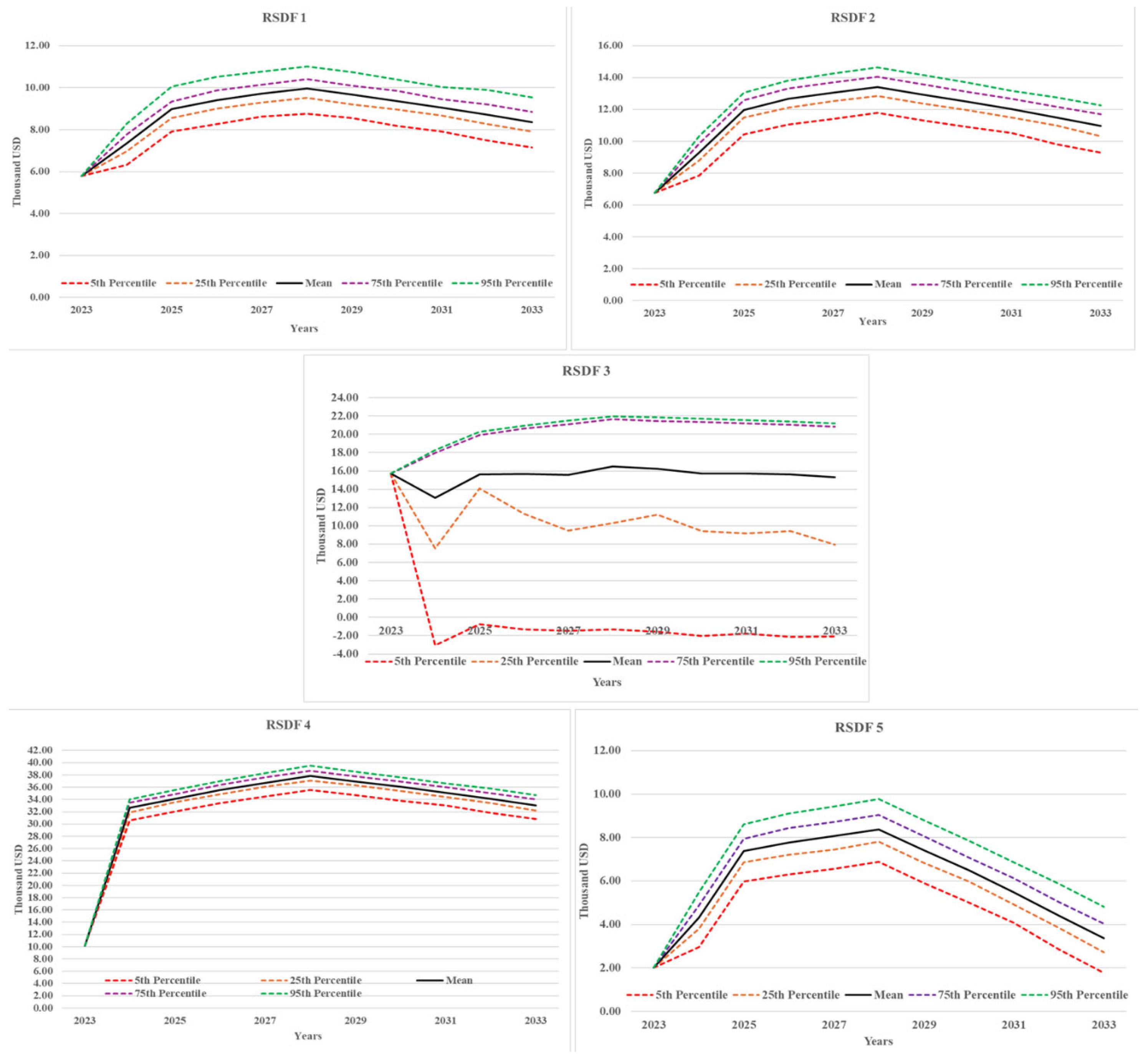
Figure 2 presents NCFI performance for the RSDFs from 2023 to 2033. For RSDF 1, the mean path rises through 2028 before gradually declining toward 2033, indicating an early phase of growth followed by emerging pressures that may constrain profitability. RSDF 2 shows a similar pattern, peaking around 2028 and then trending lower toward 2033.
RSDF 3 displays uniformly elevated values across percentiles in 2023, likely reflecting baseline calibration or transitional effects in the modeling framework. From 2024 onward, the mean net income stabilized near USD 250 thousand with modest variation. Nevertheless, the fifth percentile drops sharply below zero, indicating substantial financial risk for the least efficient or most vulnerable operations. Extrapolating these results to 100 RSDFs suggests that about five smallholder dairy systems would cease operations due to negative net cash farm income. RSDF 4 performed similarly to RSDF 1 and RSDF 2 but was the most consistent among all dairy farms analyzed. Net income increased across all percentiles from 2024 to 2028, followed by a gradual decline through 2033. The mean rose from USD 599.81 in 2024 to a peak of USD 695.53 in 2028, then fell to USD 607.10 by 2033. The 25th, 75th, and 95th percentiles mirrored this pattern, indicating that both average and higher-performing farms benefited during the growth phase before experiencing a downward trend.
Lastly, RSDF 5, although exhibiting pronounced ups and downs that imply higher risk and volatility, appears structurally consolidated. From 2024 onward, net income increases across all percentiles, with the mean rising from USD 295.31 thousand in 2024 to a peak of USD 395.47 thousand in 2028. After 2028, all percentiles decline, and the mean falls to USD 315.67 thousand by 2033. This pattern may reflect emerging pressures such as rising input costs, policy changes, or market saturation. The narrowing distance between percentiles in the final years suggests reduced dispersion, possibly due to convergence in production practices or external constraints affecting all farms similarly.

3.3. Financial Viability Indicators

Table 2 reports the main financial indicators for the RSDFs. For RSDF 1, the net present value (NPV) indicates a moderate economic shortfall: discounted future cash flows do not fully cover the current asset base, falling short by about 6.24%. Nevertheless, on a cost–benefit (C/B) basis, RSDF 1 remains economically viable under the prospective assumptions, yielding a return roughly 64% above the break-even point. The internal rate of return (IRR) is 14%.
RSDF 2 displayed favorable operating efficiency (C/B = 0.67), indicating that benefits exceed costs. However, its discounted performance was weak: the NPV was well below the current asset base, meaning discounted cash flows did not recover the investment at the assumed rate. This contrast suggests that, while operations generate positive margins, the scale and timing of future benefits are insufficient in present value terms. The IRR was 12%. In contrast to RSDF 1 and RSDF 2, RSDF 3 exhibited high operating efficiency and strong value creation in present value terms under the study assumptions. The C/B ratio was 0.36, and the net present value substantially exceeded the current asset base, indicating a high value-generation investment. The IRR was 26%.
For farms engaged in milk production and the sale of crops and agricultural by-products, RSDF 4 reported an NPV of USD 83,147.33, which is USD 67,313.24 below the initial asset value, a C/B ratio of 0.59, and an IRR of 16%. In contrast, the indicators for RSDF 5 consistently suggest that it is not economically viable under the projections: costs exceed benefits, and the present value of invested resources declines. The IRR for RSDF 5% was 6%.

3.4. Role of Family Labor in the Economic and Financial Viability of Smallholder Dairy Farms

Family labor serves both as a productive input and a strategic determinant of competitiveness and long-term sustainability in smallholder dairy farms. For RSDF 1, 2, and 3, net income calculated without inputting the cost of family labor (regardless of the number of family members involved or hours contributed) was USD 8432.77, USD 11,157.86, and USD 20,671.74, respectively. Conversely, when family labor was imputed at a remunerated rate, net income declined markedly; RSDF 1 registered an NCFI of USD −1414.77, RSDF 2 of USD 1310.32, and RSDF 3 of USD 17,115.69.
This highlights the pivotal role of unpaid family labor in the apparent profitability of these dairy systems. The findings indicate that family labor is a pivotal strategy to the viability of smallholder dairy farms; the implicit subsidy from unpaid work raises margins and enhances resilience under competitive market conditions.

4. Discussion

4.1. General Panorama

The potential disassociation between the performance of small-scale farms and broader macroeconomic indicators presents a critical area for economic inquiry, particularly given the prevalence of such agricultural units globally. While some of the literature explores the significant role of smallholders in shaping national economic landscapes [31], a subset of academic discourse suggests a limited or negligible direct causal link between the output or economic health of individual small-scale farming operations and aggregate macroeconomic performance [32]. This perspective often arises from the recognition that official GDP figures may not accurately capture the economic contributions of numerous, often informal, small-scale agricultural activities [33]. Furthermore, some studies indicate that robust macroeconomic growth, exemplified by increases in national GNP, may exert minimal influence on farm income, suggesting a decoupled relationship [34]. This divergence can be attributed to the inherent complexities of agricultural production, which often operates under distinct economic principles compared to other sectors [35]. Indeed, research has indicated that certain macroeconomic disturbances, despite their broad impact, do not significantly influence farm income, particularly for smaller agricultural enterprises [34]. This incongruity can be further understood by examining the localized and often subsistence-oriented nature of many small-scale farming operations, which may buffer them from wider economic fluctuations [36]. This phenomenon is especially pronounced in regions where agricultural activities are heavily diversified or where small-scale farming constitutes a relatively minor component of the overall state economy [34].
The analysis of representative smallholder dairy farms (RSDFs) reveals a clear differentiation in decapitalization risk over 2024–2033, closely associated with the labor-management model and the marketing strategy for crops and agricultural by-products. Farms operated exclusively with family labor (RSDFs 1–3) maintained favorable and sustained economic viability, with no evidence of decapitalization risk across the studied horizon. By contrast, RSDFs that employed hired labor and were monetized on agricultural activities displayed marked heterogeneity. While RSDF 4 remained favorable across the entire horizon, RSDF 5 transitioned from an initial alert status to a late-period improvement, yet ended with decapitalization panorama, a pattern aligned with dependence on input purchases and the cost structure of external labor. After 2015, dairy farms in many regions showed a sustained rise in external nitrogen inputs, with the share from purchased feed increasing up to 90% by 2023. This trend was largely associated with herd expansion and signals a growing dependence on off-farm inputs. The authors suggest that more efficient manure utilization could reduce this reliance [37].
Consolidation and a shrinking agricultural workforce have increased the number of cows per worker and accelerated the adoption of automation. Although these changes have improved operational efficiency, they have not kept pace with workforce declines, so labor availability remains a persistent constraint for dairy operations [38]. Rapid diffusion of advanced technologies, including AI-based decision support and biometric identification, is reshaping the dairy sector. However, many smallholder farms lack the capital and complementary capabilities to adopt these tools [39]. The widening technology gap accelerates decapitalization among small-scale dairy systems, and evidence on economies of scale shows that it gives larger operations a cost advantage, reinforcing consolidation [40,41]. This opens a window for improvement for small-scale dairy systems.
Global projections indicate a continued decline in the number of dairy farms with 10 to 30 cows from 1996 to 2035, a trend expected to persist through 2050 as farm numbers fall and herd size per farm increases. The population of small-scale farms is projected to drop from about 120 million to 40 million by 2050. Worldwide, the dairy herd totals approximately 293 million head [10]. In the Texcoco region, 2363 dairy cows in production were recorded in 2022 [42].
Improving key performance indicators such as milk yield and feed costs requires disciplined financial and nutritional management [43]. Evidence also indicates that hired labor materially affects technical efficiency, with stronger impacts in small- and medium-sized farms and effects that intensify as herd size grows [44]. Given this complexity, labor and management costs remain pivotal determinants of farm economics.

4.2. Economic Viability Indicators

Among smallholder dairies devoted exclusively to milk production, NCFI grew by less than 3% per year, whereas RSDFs 4 and 5 recorded growth close to 5%. Higher net income also reflected revenues from crop sales and agricultural by-products. RSDF 3, however, experienced a marked rise in expenses, averaging about 10% per year. For context, Ref. [45] reported that the AAGR of net cash income for U.S. dairy farm businesses was 15.7% over 2016–2024, although these statistics are not disaggregated by herd size or technology level. Consistent with these patterns, field evidence indicates that integrated crop and livestock systems can raise whole-farm income by combining crop revenues with livestock outputs and improving nutrient cycling [46].
To help small-scale dairy farms avoid low net cash incomes, an effective strategy includes margin insurance and related products, participation in government program payments, and the use of commodity pricing tools, such as forward contracts and futures or options to manage output and input price risk. Evidence showed that insurance and pricing strategies can reduce downside risk, stabilize revenues, and reduce exposure to feed costs, thus supporting more stable net farm income [14,47,48]. However, smallholder dairy farms often face significant constraints, including transaction costs, limited time and know-how, and reduced access to advisory services, which lower adoption of insurance and pricing tools and limit their ability to obtain these benefits [48,49].
Small-scale dairy farms often exhibit low productivity, which undermines both survival and profitability. Contributing factors include weak reproductive performance and risk conditions such as assisted calving and retained fetal membranes, which reduce reproductive efficiency and therefore income [50].
Adoption of dairy technologies is shaped by farming experience, access to credit, extension support, and market assessment, and is associated with higher productivity and income [51]. Smallholder farmers are more likely to participate in dairy cooperatives, which improve purchasing terms and access to credit and, in turn, support farm income. Larger farmers, with greater purchasing power, are often less inclined to join such cooperatives [52].
The sustained increase in cash reserves across all RSDFs over the projection period indicates stronger liquidity, greater financial resilience, and enhanced capacity to meet obligations and finance future growth. Even so, the initially low balances highlight the need for close monitoring and prudent risk management, particularly in the early years. Sustained positive cash flow and adequate ending reserves are imperative to the viability of both expanding and ongoing operations. Negative cash flows, especially during expansion, can disrupt production and threaten business solvency [53].
A farm is financially healthy when it meets its bills and debts on time, generates profit, and increases owner equity. These indicators should be at least evaluated annually to maintain stability [54]. Despite lower milk yields and profits per cow than larger farms, small-scale dairy farms can still earn positive profits per cow at current milk prices. Smallholder dairying provides a steady cash flow that lowers economic risk. Combined with income from crops or other activities, this diversification helps sustain positive net cash flow over time, even when profits are modest [55]. Adopting improved practices and technology strengthens economic viability and competitiveness, allowing small-scale farms to maintain or improve their net cash position in the long-term [56].
Return on assets (ROA) is a key indicator of how effectively a dairy farm converts its asset base into profits. It reflects both profitability and asset utilization efficiency [57,58]. Higher ROA values generally indicate better financial performance and resilience to economic shocks [58,59]. A high ROA indicates efficient use of assets to generate earnings, meaning that the organization is effectively turning investments in assets into profit. On the other hand, a low ROA suggests that assets are underutilized or that operations are not efficient in converting resources into profit.
The average ROA for Australian dairy farmers was reported at 8%, with a model farm achieving 6.4%. Excluding capital appreciation, the model farm’s ROA was 5.4%, while the average was only 0.8% [60]. In US dairy farms, production factors (number of cows, production per cow, and milking system) significantly influence ROA [61]. Higher productivity and advanced technology adoption are linked to improved financial performance and profitability in dairy farms [61]. Larger herd sizes tend to achieve higher profitability, especially in favorable years. However, during poor years, profitability is similar across different herd sizes, indicating that both scale and the broader business cycle play important roles in long-term ROA [58]. Decisions regarding asset structure—how assets are owned, controlled, and financed—impact long-term financial outcomes. Factors such as initial equity, expected returns from assets, cost of borrowed money, risk, tax liabilities, and financial goals all play a role in shaping ROA over time [54].
All RSDFs had ROA values (11.53–21.75%) that are substantially higher than the average ROA reported for Australian dairy farms (0.8–8%). ROA above 10% is considered strong compared to the literature, indicating that these farms are highly effective at generating profits from their assets. Conversely, RSDF 3 displays a notably wider IQR, indicating a heightened sensitivity to external shocks, particularly regarding fluctuations in milk prices and input costs (e.g., feed, energy, and labor). This sensitivity implies that even modest changes in market conditions can lead to significant variations in net income, potentially threatening the economic viability of such systems. Similar patterns have been reported by [62], who emphasize the vulnerability of small-scale dairy farms to input price volatility and the need for targeted risk mitigation strategies. Other findings indicated that raw milk price fluctuations exhibit nonlinear mechanism transformations at two critical thresholds: a price index and a change rate in the price index. A complete price fluctuation cycle of raw milk comprises four distinct phases: the low-price uptrend phase, the high-price uptrend phase, the high-price downtrend phase, and the low-price downtrend phase. Among these, the upward phases tend to last longer than the downward ones. Notably, the high-price uptrend and low-price downtrend phases are more prolonged than their respective counterparts [63]. These dynamics further reinforce the notion that certain dairy systems, particularly those with broader IQRs like RSDF 3, are more exposed to the adverse effects of price volatility. Dairy production is inherently risky due to volatile production levels and market prices. Farms that are more intensively managed (and likely have a wider IQR) are particularly vulnerable to price variability, especially for concentrate feed, which can significantly impact net income [64].
Considering these findings, policy recommendations should focus on four key areas: (i) strengthening source governance, (ii) improving regulatory mechanisms, (iii) developing early warning systems, and (iv) establishing milk purchase and storage systems. These strategies can help mitigate the impact of price shocks and enhance the economic resilience of vulnerable dairy systems. Moreover, as [65] argues, the use of IQR as a comparative metric allows for a nuanced understanding of income risk across heterogeneous production systems, facilitating more effective policy design. The integration of IQR-based analysis into the assessment of dairy farm performance thus provides valuable insights into the economic sustainability of different production systems. Policymakers should consider these findings when designing support mechanisms aimed at enhancing the stability and long-term viability of dairy farming under increasing market and environmental uncertainties. For RSDF 4 and 5, increased agricultural diversity and agri-environment payments are associated with greater income stability in dairy farms. These factors help buffer against income variability, making farms more resilient to market and production shocks [66].
Dairy farmers who participate in government programs or have off-farm income sources also experienced lower income volatility, further stabilizing their annual earnings [67]. Although transfers indeed provide greater stability and, consequently, improved income, their effectiveness also depends on other factors, particularly macroeconomic ones such as inflation and reference interest rates. These factors can influence whether the presence or absence of subsidies poses a risk to the farm’s viability [13]. While some farms can increase profitability and stability through improved management and self-sufficiency, these changes do not always align with environmental benefits, and the impact can vary significantly between farms [68]. However, there is evidence that it is possible to reduce environmental uncertainty by improving productivity and individual cow yield without increasing the use of natural resources [69].
In dairy farming, managing income variability is a central concern, particularly in the face of increasing market and environmental uncertainties. Instead, long-term resilience is more effectively achieved through structural strategies such as improving physical productivity (e.g., liters per cow), enhancing feed and energy efficiency, optimizing input procurement timing, and securing price premiums through quality differentiation and traceability systems. As highlighted by [70], technical efficiency and cost structure optimization are critical for sustaining profitability in dairy systems. Similarly, Ref. [64] found that gross revenue risk in Swiss dairy farms was significantly influenced by productivity and input cost management, underscoring the importance of internal farm-level strategies over external financial instruments.
Moreover, percentile-based budgeting emerges as a practical tool for financial planning under uncertainty. By using the 10th percentile of income distributions as a conservative scenario, farmers can estimate the minimum liquidity required to withstand adverse events such as feed price surges or extreme weather conditions. Conversely, the 90th percentile can serve as a realistic upper-bound target, helping to set performance goals without succumbing to over-optimism. This approach aligns with risk management frameworks in agricultural economics that advocate for scenario-based planning to enhance decision-making under uncertainty [62].
Net farm income is a key indicator of economic success, especially for family-operated farms. For Swiss dairy farms, the annual income per family work unit (FWU) was used to assess long-term survival, with labor remuneration far outweighing capital returns [71]. RSDF 1 to 3 exclusively used family labor.
RSDFs 1, 2, 4, and 5 performances suggested a period of potential profitability, likely driven by improvements in productivity, technological adoption, and favorable market conditions [72]. However, the widening gap between the 5th and 95th percentiles over time suggests increasing income volatility. This concern is echoed by [70], who emphasize that technical efficiency and cost structure optimization are critical for mitigating such risks. Similarly, Ref. [73] cautions that while dairy intensification can enhance productivity, it may also increase exposure to environmental and market shocks, particularly in systems lacking resilience mechanisms. The lower percentiles (P5 and P25) remain negative until 2028, highlighting the financial vulnerability of less-efficient or smaller-scale operations.
The use of percentile-based projections supports robust financial planning. As [74] argues, scenario-based modeling enhances strategic decision-making by identifying liquidity thresholds and investment opportunities. The 10th percentile can serve as a conservative benchmark for minimum liquidity needs, while the 90th percentile offers a realistic upper-bound for strategic goal setting. Moreover, Ref. [62] highlights that small-scale dairy farms can improve sustainability through diversification, targeted financial assistance, and technology adoption.
For long-term projection, dairy farms utilize all available farmland for production, and the long-term opportunity cost of afforestation for dairy farms indicates the economic value of continued dairy production over alternative land uses [75]. The producers that were studied use their own land and also lease additional plots either for livestock feeding or for crop production and sale. The Canadian Climate Centre projects that dairy cow farming systems may experience production losses of 1.2% to 2.7% by 2030, and reductions of 5.1% to 6.8% by 2090, suggesting a downward trend in long-term production due to climate-related factors [76]. Mexico ranks fourth globally in climate risk and second in vulnerability, according to the Global Risk Report 2024. It also documents severe water scarcity in two-thirds of Mexican municipalities, exacerbated by climate variability, aquifer depletion, and inadequate policy responses [77]. Mexico’s geographic and climatic conditions make it one of the countries most affected by climate change, particularly in terms of water availability and extreme weather events such as droughts and floods [78].
Increased milk production per farm and per cow can bring efficiency gains but also involves high investment and risk. Evidence from Swedish dairy farms suggests that while efficiency may decrease with farm size in the short-term, it increases in the long-term, indicating that larger farms may be more sustainable over time [79]. On the other hand, an increasing animal inventory is expected in Latin America up to 2034 [1], increasing environmental risks, which drive producers to implement sustainable management practices to maintain long-term productivity and reduce environmental impact [69]. Another latent risk is infectious diseases, which are a significant economic threat, impacting morbidity, mortality, and productivity, and thus directly and indirectly affecting farm profits [80]. Quantified global economic losses from dairy diseases are estimated at USD 65 billion annually [81].
Technological improvements and increased milk production per cow can lead to efficiency gains but require high investment and carry associated risks. Evidence suggests that efficiency may decrease with farm size in the short-term but increase in the long-term, highlighting the importance of scale and investment in long-term production planning [79]. It is necessary to establish the optimum farm size and productivity level, as well as associated environmental impacts [82]. The model used for simulation and projection in the present study assumed that the livestock inventory would remain unchanged throughout the planning horizon. However, in the case of RSDF 5, the livestock inventory has been decreasing, which may lead to underutilization of productive assets or to greater production diversification. The rest of the RSDFs analyzed have maintained a stable livestock inventory in the past years. Simulation tools exist to help dairy producers project farm production and expansion scenarios, allowing for active risk management and informed decision-making regarding long-term performance metrics [83].

4.3. Financial Viability Indicators

For RSDF1, although the cost–benefit ratio (C/B) was 0.61—indicating good economic and productive efficiency—the net present value (NPV) at the end of the projection period (2033) was lower than the asset value in the base year (2023), suggesting that the discounted cash flow does not fully recover the invested capital. The internal rate of return (IRR) was 14%, while the discount rate used in the projection was 7.5%.
This type of divergence is common in studies of small-scale livestock systems, where liquidity and resilience often outweigh pure profitability [20,84]. Various studies on dairy production have shown that costs—particularly feed, labor, and infrastructure—exert significant pressure on the profitability of small-scale dairy operations. For instance, a study conducted in Turkey found that feed costs accounted for 72.9% of total expenses across dairy farms of different scales [85,86]. Farm size can play a crucial role, as larger dairy farms tend to have lower per-unit production costs due to economies of scale [40].
Small-scale dairy and calf producers in semi-arid regions practicing extensive livestock farming have been observed to consistently fail to cover operational costs, resulting in a negative NPV of −158.71 USD/ha (as of January 2024) [87]. This indicates that these systems are economically unviable in the long-term, with a high likelihood of financial losses [79]. In scenarios where disease prevalence increases, dairy farms can experience significant reductions in net profit, with some farms seeing net profit reductions of up to 64%. While this is not a direct NPV calculation, it suggests that under adverse conditions, long-term NPV could become negative for a substantial proportion of farms [88].
Implementation of some technological improvements can impact NPV. Sexed semen technology in dairy herds is projected to yield increasing returns over a five-year period, with NPV per cow rising as milk production increases and stabilizes. This suggests that, under certain management strategies, dairy farms can achieve positive long-term results [89]. The NPV method is widely used to evaluate the long-term profitability of dairy farm investments, accounting for both upfront costs and delayed benefits [89,90]. Both positive and negative NPV projections are highly sensitive to operational costs, market prices, disease prevalence, and technology adoption. Small changes in these factors can shift a farm from positive to negative NPV or vice versa [88,91]. For their part, Ref. [23] reported that small-scale dairy farms exhibited a negative NPV, primarily due to the high discount rate applied at the time of the analysis (11%), which hindered the possibility of achieving a favorable financial performance. The discount rate applied in the present study, corresponding to the real rate according to the Bank of Mexico, was 7.5%. The internal rates of return calculated for RSDF1 through RSDF5 were 14%, 12%, 26%, 16%, and 6%, respectively.

4.4. Role of Family Labor in the Economic and Financial Viability of Smallholder Dairy Farms

Exclusively family-based systems without risk of decapitalization (RSDFs 1–3) often achieve economic viability by not accounting for the opportunity cost of unpaid family labor, thereby maintaining positive accounting profitability [13,62]. However, this may mask a lack of genuine financial well-being if net income is not sufficient for an adequate family standard of living, even if the accounting decapitalization risk is lower [91].
In dairy systems that use hired labor, like RSDF 5, the inclusion of the real cost of labor significantly reduces profitability. Studies using stochastic models [23] confirmed that external labor cost is a key factor that increases the risk of decapitalization and emphasizes the financial and economic weakening of these units.
Family labor remains the backbone of small dairy farms [92], with hired workers contributing only 13% of total hours [93]. The authors showed a marked rise in the implicit remuneration of family labor over time—moving from below to roughly on-par with, and in some cases above, non-agricultural wages. Improvements in efficiency and scale have been central to enhancing the economic returns to family work on dairy farms.
In some regions where family labor is not a profit-driving factor, small-scale dairying persists as a livelihood for households facing low local or regional opportunity costs [94].
Research identifies sustainability pathways that could explain RSDF-5’s late-period recovery, such as diversification and value addition. Strategies like direct sales, organic production, and targeted niche markets can markedly strengthen profitability and resilience in small-scale farms [62,95].
Profitability and financial position improve as the number of animal units increases, suggesting that there is a minimum viable scale necessary to overcome cost inefficiency and generate a daily income that sustains the farm free from financial risk [96]. The literature found that scale expansion amplifies economic gains, with farms growing to >50 cows having the largest increases [93].
While specialized dairy farming is the dominant future trend, small-scale dairy systems may persist in certain regions where they retain production efficiency advantages or where policy allows for a gradual transition. Cooperative models and differentiated support strategies may offer temporary relief, but the long-term trend points toward decapitalization [97,98].
Family labor is highlighted as both an economic and social cornerstone in small-scale dairy production systems. It represents one of the greatest economic costs, but also enables these farms to remain viable, especially when compared to systems that rely heavily on purchased feed or hired labor. When feed is entirely purchased, economic viability is lost, underscoring the importance of family labor in maintaining sustainability and cost-effectiveness for small-scale operations [20].
Small farms with fewer than 10 cows can remain profitable largely due to unpaid family labor and minimal investments in facilities. As herd size increases, the advantage of family labor persists up to a certain point (around 50 cows), after which economies of scale begin to outweigh the benefits of family labor [4].
There is significant heterogeneity among small-scale farms, but some family-run units achieve economic performance comparable to large production units. Integration into agro-industrial and distribution sectors, either directly or through cooperatives, is associated with better economic results. The full use of land and adaptive problem-solving by family farms contribute to their long-term economic performance. Small-scale dairy farms that are part of agri-business chains or cooperatives tend to have stronger economic outcomes, suggesting that market access and integration are important for sustained profitability [99].
According to [100], a generational transition was noted in 2013 among small-scale dairy farms, with solid short-term viability. Yet later studies reported limited generational renewal and rising exit by young producers [101]. Despite this, the present study documented locally embedded rural financing mechanisms. Across the life cycle of smallholder dairy farms, milk production serves both as the household’s primary livelihood and as a key source of funds for educating children and grandchildren. After roughly 35 years, some descendants reinvest in the dairy enterprise, recapitalize production units, and, in some cases, assume direct management.
From a practical perspective, the findings suggest that smallholder dairy farms in Texcoco can be financially and economically sustainable over the medium-term if family-based labor and feeds are combined with modest reductions in herd size. For RSDFs 1–3, cumulative net cash farm income remains positive, and cash reserves continue to expand, while the return on assets increased and remains in the double digits, with no threat of decapitalization, suggesting further that milk production from dairy cattle would continue to provide a stable daily source for cash flow and asset building by households under current circumstances. This concurs with evidence from central Mexico, where small dairy systems proved to generate enough income to finance the basic food basket when family labor is the main labor used, and feeding strategies are based on home-grown forages [29,92]. Similarly, the potential decapitalization risk associated with RSDFs 5 in relation to paid labor and purchased feed reflects the vulnerability of small-scale farms, which intensify their use of external inputs but without corresponding improvement in productivity or margins [102]. Overall, these results highlight that decisions about labor organization, crop–livestock integration, and feed acquisition are not merely technical issues but key factors determining whether small farms preserve or diminish their capital.
In relative terms, the overall economic performance of the RSDFs is comparable to, and in some cases better than, that reported for similar systems in central Mexico and other smallholder dairy settings. Previous work in the Mexican highlands reports that low-input dairy production systems supply about 33% of total milk but face high feeding costs, with profitability depending on the efficient use of home-grown forages and carefully managed purchases of grain [29].
Margin-over-feed-cost analysis and Monte Carlo simulation results indicate that smallholder dairy farms can obtain acceptable milk yields and positive gross margins when the components of their diets are based on quality on-farm feed, while systems that depend largely on purchased feed or fully hired labor tend to display negative NPV and greater risk of decapitalization [102]. Our estimated ROA values (11.5–21.8%) lie at the upper end of those reported for dairy farming worldwide and approach the upper limit of family labor contributions to profitability documented for small-scale dairy systems in central Mexico [29]. However, despite the widespread presence and socio-economic contributions of small-scale dairy operations, a significant portion of these farms struggle with economic viability, often remaining below or precariously close to poverty thresholds [103]. Globally, approximately 85% of milk-producing families in developing nations operate within small-scale systems, highlighting milk’s crucial role as a consistent income source and a means to enhance food security and nutrition [104]. Nevertheless, within this widespread sector, only a subset of these farms achieves income levels substantially above poverty lines, while a considerable number remain vulnerable due to factors such as low technological adoption, limited productivity, and reliance on external inputs [12,105].
The percentile-based estimates of NCFI, ROA, cash reserves, and NPV produced in this research provide an applied tool for the design of rural development strategies and support programs targeted to smallholder dairy farmers in Mexico. By distinguishing conservative and aspirational scenarios (for example, the 10th versus the 90th percentile) for liquidity and profitability, these results can be used to set minimum cash reserve requirements for credit programs, benchmarking flat fee levels and coverage triggers for margin insurance products, or targeting technical assistance to farms with projected indicators, placing them at greater risk of decapitalization. Consistent with other analyses that position small-scale dairying as a poverty-focused, food secure priority sector [106], the evidence of this study also supports policies that strengthen family dairies through extension services, forage technologies, and collective marketing, rather than through indiscriminate input subsidies [107].
These trends are consistent with evidence from peri-urban livestock producers in the Mexican Highlands, where dairy production is combined with crop production and off-farm activities as part of diversified livelihood strategies that reduce exposure to price volatility and fluctuations in productivity and help sustain farm viability in increasingly urbanized landscapes [108]. Likewise, using data from 1650 small-scale livestock farms in Mexico, Ref. [109] demonstrates that the economic performance of these systems is highly dependent on the adoption of new management, feeding, genetic, reproduction, and animal health practices, although overall innovation remains low and varies substantially. Placed in this context, the RSDF results of this study illustrate how contrasting labor arrangements and crop–livestock integration give rise to distinct innovation patterns and economic trajectories, with family-based, pasture-reliant farms better positioned to maintain positive cash flow and avoid decapitalization than farms that depend heavily on purchased inputs and hired labor [108,109].

4.5. Study Limitations and Future Recommendations

This analysis makes three main contributions to the dairy economics literature. First, it develops a stochastic simulation framework to evaluate the economic and financial performance of representative smallholder dairy farms in the Mexican Highlands, a segment that remains poorly documented compared with medium and large commercial herds. Second, it explicitly compares two distinct labor and marketing configurations, namely family labor with milk-only systems and farms that combine hired labor with sales of crops and by-products, and it quantifies their differing decapitalization risks over a ten-year horizon. Third, it uses percentile trajectories of NCFI, ROA, cash reserves, and output value to describe income variability, liquidity, and capital dynamics, providing a more nuanced representation of risk than conventional point estimates.
The following limitations should be considered when interpreting these findings. First, the analysis is based on only five representative smallholder dairy farms (RSDFs), which were carefully designed to reproduce the size, structure, and management of typical small-scale dairy systems in the Texcoco Highlands, but cannot fully represent the diversity of smallholder dairies across Mexico; accordingly, the results should be seen as indicative for these representative farm types rather than applicable to all producers. Second, the RSDFs were defined under current low-input technology and small herd sizes, assuming no major changes in technological efficiency or herd structure during 2024–2033, whereas actual trajectories may differ if farmers adopt new technologies, adjust herd size, or modify land use. Third, the stochastic simulation relies on empirical distributions estimated from historical data, so extreme future macroeconomic or policy conditions outside this experience could alter the relative risk profiles reported here. Finally, the study focuses on economic and financial outcomes at the farm level and does not explicitly examine environmental impacts, gender relations, or value chain dynamics, which should be addressed in future research to provide a more comprehensive assessment of smallholder dairy sustainability.

5. Conclusions

While short-term mitigation tools have their place, the greatest gains in income stability and environmental resilience are likely to come from structural improvements within the production system. These include technological adoption, efficiency gains, and strategic planning based on probabilistic scenarios.
This study indicates solid economic viability across the five RSDFs: four recorded positive NPV and one negative. However, in all cases, the NPV was smaller than the base year asset value. These results highlight the need for an in-depth review of the cost structure, strengthening technology adoption, promoting collaboration and alliance among farms, and conducting at least an annual evaluation of future financial performance.
Integrating long-term income projections with percentile-based risk analysis provides a powerful tool for strategic planning in dairy farming. Future research should refine these models by incorporating dynamic variables such as climate scenarios, policy changes, and technological innovation.
Operations may yield a beneficial margin over costs, but the magnitude of future benefits or the applied discount rate does not allow for full recovery of the initial investment (or asset value) in present value terms.
Family labor is central to the economic and financial resilience and sustainability of smallholder dairy farmers. Diversified representative smallholder dairy farms (RSDFs) tend to achieve higher net cash farm income.

Author Contributions

Conceptualization, F.E.M.-C.; methodology, F.E.M.-C. and N.C.-J.; investigation, N.A.R.-M., G.B.V.-G. and A.C.-O.; data analysis, N.A.R.-M., F.E.M.-C. and N.C.-J.; data curation, J.G.H.-H., D.A.D.-O. and A.R.M.-C.; writing—original draft, N.A.R.-M., R.G.-L. and M.M.Z.-G.; writing—review and editing, N.A.R.-M. and M.E.R.-T.; supervision, F.E.M.-C.; project administration—funding acquisition, F.E.M.-C. All authors have read and agreed to the published version of the manuscript.

Funding

This research was financed by the project UAEMéx 7209/2025 CIB.

Institutional Review Board Statement

The study was conducted in accordance with the Declaration of Helsinki, and approved by the Ethics Committee of Instituto de Ciencias Agropecuarias y Rurales de la Universidad Autónoma del Estado de México (protocol code 02-SEP-2025 and date of approval 2 September 2025.

Data Availability Statement

The raw data supporting the conclusions of this article will be made available by the authors upon request.

Acknowledgments

The authors thank SECIHTI for awarding a scholarship to Nathaniel Alec Rogers-Montoya and the milk producers of Texcoco for generously providing the information used in this study.

Conflicts of Interest

The authors declare no known financial or personal conflicts of interest that could have influenced the work reported in this paper.

Abbreviations

The following abbreviations are used in this manuscript:
ACSNDAdjusted correlated standard normal deviation
B/CBenefit to cost ratio
CFDCorrelated fractional deviations
CMRCrop market receipts
CSNDCorrelated standard normal deviation
CUDCorrelated uniform deviation
DRDairy receipts
ECDEmpirical Cumulative Distribution
ECMEnergy-corrected milk
ECREnding cash reserves
EHLExternal hired labor
FLFamily labor
IMFInternational Monetary Fund
IRRInternal rate of return
ISNDIndependent standard normal deviation
KOVKey output variable
MVEMultivariate empirical distribution
NCNet cash
NCFINet cash farm income
NPVNet present value
ROAReturn on assets
RRARate of return on assets
RSDFRepresentative smallholder dairy farm
SCMSolids-corrected milk
TETotal expenditure
TITotal income
USDAUnited States Department of Agriculture
USDUnited States dollar

References

  1. IFCN Dairy Research Network. IFCN Dairy Outlook 2030. Available online: https://ifcndairy.org/wp-content/uploads/2018/06/IFCN-Dairy-Outlook-2030-Article-1.pdf (accessed on 12 June 2025).
  2. OECD; FAO. OECD-FAO Agricultural Outlook 2025–2034; OECD Publishing: Paris, France; FAO: Rome, Italy, 2025. [Google Scholar]
  3. Slade, P. Does plant-based milk reduce sales of dairy milk? Evidence from the almond milk craze. Agric. Resour. Econ. Rev. 2023, 52, 112–131. [Google Scholar] [CrossRef]
  4. Britt, J.H.; Cushman, R.A.; Dechow, C.D.; Dobson, H.; Humblot, P.; Hutjens, M.F.; Jones, G.A.; Ruegg, P.S.; Sheldon, I.M.; Stevenson, J.S. Invited review: Learning from the future—A vision for dairy farms and cows in 2067. J. Dairy Sci. 2018, 101, 3722–3741. [Google Scholar] [CrossRef] [PubMed]
  5. Bhat, R.; Infascelli, F. The Path to Sustainable Dairy Industry: Addressing Challenges and Embracing Opportunities. Sustainability 2025, 17, 3766. [Google Scholar] [CrossRef]
  6. Kuhn, T.; Schäfer, D.; Holm-Müller, K.; Britz, W. On-farm compliance costs with the EU-Nitrates Directive: A modelling approach for specialized livestock production in northwest Germany. Agric. Syst. 2019, 173, 233–243. [Google Scholar] [CrossRef]
  7. Rojas-Downing, M.M.; Nejadhashemi, A.P.; Harrigan, T.; Woznicki, S.A. Climate change and livestock: Impacts, adaptation, and mitigation. Clim. Risk Manag. 2017, 16, 145–163. [Google Scholar] [CrossRef]
  8. Farm Management—University of Wisconsin–Madison Division of Extension. The Future of Global Dairy: Economic Trends, Regional Developments, and Market Vulnerabilities Through 2030. Available online: https://farms.extension.wisc.edu/articles/the-future-of-global-dairy-economic-trends-regional-developments-and-market-vulnerabilities-through-2030/ (accessed on 12 September 2025).
  9. Hemme, T.; Otte, J. Status of and Prospects for Smallholder Milk Production—A Global Perspective; FAO: Rome, Italy, 2010. [Google Scholar]
  10. IFCN. IFCN Dairy Report 2024. Available online: https://ifcndairy.org/ifcn-products-services/dairy-report/ (accessed on 17 June 2025).
  11. Fariña, S.R.; Baudracco, J.; Bargo, F. Dairy production in diverse regions: Latin America. In Encyclopedia of Dairy Sciences, 3rd ed.; McSweeney, P.L.H., McNamara, J.P., Eds.; Academic Press: Cambridge, MA, USA, 2022; pp. 244–252. [Google Scholar] [CrossRef]
  12. Chávez-Pérez, L.M.; Soriano-Robles, R.; Espinosa-Ortiz, V.E.; Miguel-Estrada, M.; Rendón-Rendón, M.C.; Jiménez-Jiménez, R.A. Does small-scale livestock production use a high technological level to survive? Evidence from dairy production in Northeastern Michoacán, Mexico. Animals 2021, 11, 2546. [Google Scholar] [CrossRef]
  13. Posadas-Domínguez, R.R.; Arriaga-Jordán, C.M.; Martínez-Castañeda, F.E. Contribution of family labour to the profitability and competitiveness of small-scale dairy production systems in central Mexico. Trop. Anim. Health Prod. 2014, 46, 235–240. [Google Scholar] [CrossRef]
  14. Neyhard, J.; Tauer, L.; Gloy, B. Analysis of price risk management strategies in dairy farming using whole-farm simulations. J. Agric. Appl. Econ. 2013, 45, 313–327. [Google Scholar] [CrossRef][Green Version]
  15. Uddin, M.M.; Akter, A.; Khaleduzzaman, A.B.M.; Sultana, M.N.; Hemme, T. Application of the farm simulation model approach on economic loss estimation due to Coronavirus (COVID-19) in Bangladesh dairy farms—Strategies, options, and way forward. Trop. Anim. Health Prod. 2021, 53, 33. [Google Scholar] [CrossRef]
  16. Staffolani, G.; Bentivoglio, D.; Finco, A. Economic assessment of small-scale mountain dairy farms by using accounting data: Evidence from an Italian case study. AGRIS On-Line Pap. Econ. Inform. 2024, 16, 109–120. [Google Scholar] [CrossRef]
  17. Kok, A.; van Middelaar, C.E.; Mostert, P.F.; van Knegsel, A.T.M.; Kemp, B.; de Boer, I.J.M.; Hogeveen, H. Effects of dry period length on production, cash flows and greenhouse gas emissions of the dairy herd: A dynamic stochastic simulation model. PLoS ONE 2017, 12, e0187101. [Google Scholar] [CrossRef] [PubMed]
  18. Bezat-Jarzebowska, A.; Rembisz, W. Modeling the profitability of milk production—A simulation approach. Agriculture 2025, 15, 1409. [Google Scholar] [CrossRef]
  19. Posadas-Domínguez, R.R.; Del Razo-Rodríguez, O.E.; Almaraz-Buendía, I.; Peláez-Acero, A.; Espinosa-Muñoz, V.; Rebollar-Rebollar, S.; Salinas-Martínez, J.A. Evaluation of comparative advantages in the profitability and competitiveness of the small-scale dairy system of Tulancingo Valley, Mexico. Trop. Anim. Health Prod. 2018, 50, 947–956. [Google Scholar] [CrossRef] [PubMed]
  20. Salinas-Martínez, J.A.; Posadas-Domínguez, R.R.; Morales-Díaz, L.D.; Rebollar-Rebollar, S.; Rojo-Rubio, R. Cost analysis and economic optimization of small-scale dairy production systems in Mexico. Livest. Sci. 2020, 237, 104028. [Google Scholar] [CrossRef]
  21. Wilson, P. Decomposing variation in dairy profitability: The impact of output, inputs, prices, labour and management. J. Agric. Sci. 2011, 149, 507–517. [Google Scholar] [CrossRef]
  22. Miller, D.C.; Salkind, N.J. Handbook of Research Design & Social Measurement, 6th ed.; SAGE Publications, Inc.: Thousand Oaks, CA, USA, 2002. [Google Scholar] [CrossRef]
  23. Richardson, J.W.; Klose, S.L.; Gray, A.W. An applied procedure for estimating and simulating multivariate empirical (MVE) probability distributions in farm level risk assessment and policy analysis. J. Agric. Appl. Econ. 2000, 32, 299–315. [Google Scholar] [CrossRef]
  24. González-Hernández, V.; Callejas-Juárez, N.; Rogers-Montoya, N.A.; Martínez-García, C.G.; Salinas-Martínez, J.A.; Martínez-Castañeda, F.E. Economic and financial performance of representative small-scale dairy production units to 2027. Trop. Subtrop. Agroecosyst. 2024, 27, 057. [Google Scholar] [CrossRef]
  25. Martínez-Castañeda, F.E.; Callejas-Juárez, N.; Cuevas-Reyes, O.; Rogers-Montoya, N.A.; Gómez-Tenorio, G.; Trujillo-Ortega, M.E.; Peñuelas-Rivas, C.G.; Hernández, E. Economic and financial viability of a pig farm in central semi-tropical Mexico: 2022–2026 prospective. PLoS ONE 2024, 19, e0298897. [Google Scholar] [CrossRef]
  26. Secretaría de Agricultura y Desarrollo Rural (SADER). Sistema de Información Agroalimentaria de Consulta (SIACON). Available online: https://www.gob.mx/agricultura/dgsiap/prensa/sistema-de-informacion-agroalimentaria-de-consulta-siacon?idiom=es (accessed on 3 August 2024).
  27. Richardson, J.W. Simulation and Econometrics to Analyze Risk; Department of Agricultural Economics, Texas A&M University: College Station, TX, USA, 2008. [Google Scholar]
  28. Richardson, J.W. Simulation for Applied Risk Management; Agricultural and Food Policy Center, Department of Agricultural Economics, Texas A&M University: College Station, TX, USA, 2006. [Google Scholar]
  29. Martínez-García, C.G.; Rayas-Amor, A.A.; Anaya-Ortega, J.P.; Martínez-Castañeda, F.E.; Espinoza-Ortega, A.; Prospero-Bernal, F.; Arriaga-Jordán, C.M. Performance of small-scale dairy farms in the highlands of central Mexico during the dry season under traditional feeding strategies. Trop. Anim. Health Prod. 2015, 47, 331–337. [Google Scholar] [CrossRef]
  30. Villarroel-Molina, O.; De-Pablos-Heredero, C.; Barba, C.; Rangel, J.; García, A. Does Gender Impact Technology Adoption in Dual-Purpose Cattle in Mexico? Animals 2022, 12, 3194. [Google Scholar] [CrossRef]
  31. Ableeva, A.; Salimova, G.; Gusmanov, R.U.; Lubova, T.N.; Eφимов, O.H.; Farrahetdinova, A. The Role of Agriculture in the Formation of Macroeconomic Indicators of National Economy. Montenegrin J. Econ. 2019, 15, 183. [Google Scholar] [CrossRef]
  32. Meyers, W.H. The Farm Economies of the Plains: Comment. Rev. Reg. Stud. 1987, 17, 58–59. [Google Scholar] [CrossRef]
  33. Brockington, D.; Howland, O.; Loiske, V.-M.; Mnzava, M.; Noe, C. Economic growth, rural assets and prosperity: Exploring the implications of a 20-year record of asset growth in Tanzania. J. Mod. Afr. Stud. 2018, 56, 217. [Google Scholar] [CrossRef]
  34. Belongia, M.T.; Gilbert, R.A. The Farm Economies of the Plains. Rev. Reg. Stud. 1987, 17, 47–57. [Google Scholar] [CrossRef]
  35. Souza, R.C.U.; González-Quiñónez, L.A.; Reyna-Tenorio, L.J.; Salgado-Ortiz, P.J.; Chere-Quiñónez, B.F. Renewable Energy Development and Employment in Ecuador’s Rural Sector: An Economic Impact Analysis. Int. J. Energy Econ. Policy 2024, 14, 464. [Google Scholar] [CrossRef]
  36. Mbatha, M.W.; Masuku, M.M. Small-Scale Agriculture as a Panacea in Enhancing South African Rural Economies. J. Econ. Behav. Stud. 2018, 10, 33. [Google Scholar] [CrossRef]
  37. Qili, M.; Zhao, Z.; Bao, J.; Wu, N.; Gou, B.; Ying, Y.; Bilige, B.; Sun, L.; Xue, Y.; Yang, F. Nitrogen use efficiencies, flows, and losses of typical dairy farming systems in Inner Mongolia. Front. Sustain. Food Syst. 2024, 8, 1433129. [Google Scholar] [CrossRef]
  38. Lucy, M.C.; Pohler, K.G. North American perspectives for cattle production and reproduction for the next 20 years. Theriogenology 2025, 232, 109–116. [Google Scholar] [CrossRef]
  39. Mahato, S.; Neethirajan, S. Integrating artificial intelligence in dairy farm management: Biometric facial recognition for cows. Inf. Process. Agric. 2024, in press. [Google Scholar] [CrossRef]
  40. MacDonald, J.M.; Law, J.; Mosheim, R. Consolidation in U.S. Dairy Farming; U.S. Department of Agriculture, Economic Research Service: Washington, DC, USA, 2020; ERR-274. [Google Scholar]
  41. Amber Waves—USDA ERS. Scale Economies Provide Advantages to Large Dairy Farms. Available online: https://www.ers.usda.gov/amber-waves/2020/august/scale-economies-provide-advantages-to-large-dairy-farms (accessed on 13 July 2025).
  42. Instituto Nacional de Estadística y Geografía (INEGI). Censo Agropecuario 2022: Resultados Definitivos. Nacional; INEGI: Aguascalientes, Mexico, 2023. Available online: https://www.inegi.org.mx/contenidos/programas/ca/2022/doc/ca2022_rdnal.pdf (accessed on 23 July 2025).
  43. Freitas, E.N.A.; Cabrera, V.E. Dairy Victory Platform: A novel benchmarking platform to empower economic decisions on dairy farms. JDS Commun. 2024, 6, 69–73. [Google Scholar] [CrossRef]
  44. Garcia-Covarrubias, L.; Läpple, D.; Dillon, E.; Thorne, F. The role of hired labour on technical efficiency in an expanding dairy sector: The case of Ireland. Aust. J. Agric. Resour. Econ. 2024, 68, 437–459. [Google Scholar] [CrossRef]
  45. U.S. Department of Agriculture, Economic Research Service (USDA ERS). Farm Income and Wealth Statistics: Farm Business Average Net Cash Income; USDA ERS: Washington, DC, USA, 2025. Available online: https://data.ers.usda.gov/reports.aspx?ID=4046 (accessed on 23 July 2025).
  46. Shanmugam, P.M.; Sangeetha, S.P.; Prabu, P.C.; Varshini, S.V.; Renukadevi, A.; Ravisankar, N.; Parasuraman, P.; Parthipan, T.; Satheeshkumar, N.; Natarajan, S.K.; et al. Crop–livestock integrated farming system: A strategy to achieve synergy between agricultural production, nutritional security, and environmental sustainability. Front. Sustain. Food Syst. 2024, 8, 1338299. [Google Scholar] [CrossRef]
  47. Burdine, K.H.; Kusunose, Y.; Maynard, L.J.; Blayney, D.P.; Mosheim, R. Livestock Gross Margin–Dairy: An assessment of its effectiveness as a risk management tool and its potential to induce supply expansion. J. Agric. Appl. Econ. 2014, 46, 245–256. [Google Scholar] [CrossRef][Green Version]
  48. Wolf, C.A.; Widmar, N.J.O. Adoption of milk and feed forward pricing methods by dairy farmers. J. Agric. Appl. Econ. 2014, 46, 527–541. [Google Scholar] [CrossRef]
  49. Giampietri, E.; Yu, X.; Trestini, S. The role of trust and perceived barriers on farmer’s intention to adopt risk management tools. Bio-Based Appl. Econ. 2020, 9, 1–24. [Google Scholar] [CrossRef]
  50. Espinosa-Martínez, M.A.; Vera-Ávila, H.R.; Estrada-Cortés, E.; Ruiz-López, F.J.; Montiel-Olguín, L.J. Effects of assisted calving and retained fetal membranes on milk production in the smallholder farming system. Vet. Anim. Sci. 2025, 27, 100418. [Google Scholar] [CrossRef]
  51. Kirimi, A.K.; Nyarindo, W.N.; Gatimbu, K.K. Is adoption of modern dairy farming technologies interrelated? A case of smallholder dairy farmers in Meru County, Kenya. Heliyon 2024, 10, e38157. [Google Scholar] [CrossRef]
  52. Jitmun, T.; Kuwornu, J.K.M.; Datta, A.; Anal, A.K. Factors influencing membership of dairy cooperatives: Evidence from dairy farmers in Thailand. J. Coop. Organ. Manag. 2020, 8, 100109. [Google Scholar] [CrossRef]
  53. McDonald, R.; Shalloo, L.; Pierce, K.M.; Horan, B. Evaluating expansion strategies for startup European Union dairy farm businesses. J. Dairy Sci. 2013, 96, 4059–4069. [Google Scholar] [CrossRef]
  54. Bewley, J.M.; Benson, G.A. Roles and responsibilities of the manager. In Encyclopedia of Dairy Sciences, 3rd ed.; McSweeney, P.L.H., McNamara, J.P., Eds.; Academic Press: San Diego, CA, USA, 2022; pp. 202–206. [Google Scholar] [CrossRef]
  55. Fuentes Navarro, E.; Faure, G.; Cortijo, E.; De Nys, E.; Bogue, J.; Gómez, C.; Mercado, W.; Gamboa, C.; Le Gal, P.-Y. The impacts of differentiated markets on the relationship between dairy processors and smallholder farmers in the Peruvian Andes. Agric. Syst. 2015, 132, 145–156. [Google Scholar] [CrossRef]
  56. Taramuel-Taramuel, J.P.; Aza-Fuelantala, O.E.; Ader, D.; Mayorga, A.; Barrios, D. Technology adoption in smallholder dairy farms in Indigenous Pastos communities of Colombia. J. Agric. Food Res. 2025, 23, 102191. [Google Scholar] [CrossRef]
  57. Ma, W.; Renwick, A.; Zhou, X. Short communication: The relationship between farm debt and dairy productivity and profitability in New Zealand. J. Dairy Sci. 2020, 103, 8251–8256. [Google Scholar] [CrossRef] [PubMed]
  58. Grzelak, A.; Staniszewski, J. Relative return on assets in farms and its economic and environmental drivers: Perspective of the European Union and the Polish region Wielkopolska. J. Clean. Prod. 2025, 493, 144901. [Google Scholar] [CrossRef]
  59. Barnes, A.; Bevan, K.; Moxey, A.; Grierson, S.; Toma, L. Identifying best practice in Less Favoured Area mixed livestock systems. Agric. Syst. 2023, 208, 103664. [Google Scholar] [CrossRef]
  60. Neal, M.; Neal, J.; Fulkerson, W. Optimal choice of dairy forages in eastern Australia. J. Dairy Sci. 2007, 90, 3044–3059. [Google Scholar] [CrossRef]
  61. Bragg, L.; Dalton, T. Factors affecting the decision to exit dairy farming: A two-stage regression analysis. J. Dairy Sci. 2004, 87, 3092–3098. [Google Scholar] [CrossRef]
  62. Jafri, S.H.; Adnan, K.M.M.; Baimbill Johnson, S.; Talukder, A.A.; Yu, M.; Osei, E. Challenges and solutions for small dairy farms in the U.S.: A review. Agriculture 2024, 14, 2369. [Google Scholar] [CrossRef]
  63. Hua, J.; Ma, C.; Kang, Y.; Jia, Y. Why is dairy production so difficult to stabilize? Research on the micro-mechanism and transformation mechanism of cyclical fluctuations of raw milk prices in China. Front. Sustain. Food Syst. 2025, 9, 1655741. [Google Scholar] [CrossRef]
  64. El Benni, N.; Finger, R. Gross revenue risk in Swiss dairy farming. J. Dairy Sci. 2013, 96, 936–948. [Google Scholar] [CrossRef]
  65. Greco, L.; Luta, G.; Wilcox, R. On testing the equality between interquartile ranges. Comput. Stat. 2024, 39, 2873–2898. [Google Scholar] [CrossRef]
  66. Harkness, C.; Areal, F.J.; Semenov, M.A.; Senapati, N.; Shield, I.F.; Bishop, J. Stability of farm income: The role of agricultural diversity and agri-environment scheme payments. Agric. Syst. 2021, 187, 103009. [Google Scholar] [CrossRef]
  67. D’Antoni, J.M.; Mishra, A.K.; Blayney, D. Assessing participation in the Milk Income Loss Contract program and its impact on milk production. J. Policy Model. 2013, 35, 243–254. [Google Scholar] [CrossRef]
  68. Jouan, J.; Ridier, A.; Carof, M. SYNERGY: A regional bio-economic model analyzing farm-to-farm exchanges and legume production to enhance agricultural sustainability. Ecol. Econ. 2020, 175, 106688. [Google Scholar] [CrossRef]
  69. Villavicencio-Gutiérrez, M.R.; Callejas-Juárez, N.; Rogers-Montoya, N.A.; González-Hernández, V.; González-López, R.; Martínez-García, C.G.; Martínez-Castañeda, F.E. Prospectiva ambiental al 2030 en sistemas de producción de leche de vaca en México. Rev. Mex. Cienc. Pecu. 2023, 14, 760–781. [Google Scholar] [CrossRef]
  70. Bravo-Ureta, B.E.; Wall, A.; Neubauer, F. Dairy farming from a production economics perspective: An overview of the literature. In Handbook of Production Economics; Springer: Cham, Switzerland, 2021. [Google Scholar] [CrossRef]
  71. Schorr, A.; Lips, M. Influence of milk yield on profitability—A quantile regression analysis. J. Dairy Sci. 2018, 101, 8350–8368. [Google Scholar] [CrossRef]
  72. Korir, L.; Manning, L.; Moore, H.L.; Lindahl, J.F.; Gemechu, G.; Mihret, A.; Berg, S.; Wood, J.L.N.; Nyokabi, N.S. Adoption of dairy technologies in smallholder dairy farms in Ethiopia. Front. Sustain. Food Syst. 2023, 7, 1070349. [Google Scholar] [CrossRef]
  73. Clay, N.; Garnett, T.; Lorimer, J. Dairy intensification: Drivers, impacts and alternatives. Ambio 2020, 49, 35–48. [Google Scholar] [CrossRef]
  74. Yeo, K.H.K.; Lim, W.M.; Yii, K.J. Financial planning behaviour: A systematic literature review and new theory development. J. Financ. Serv. Mark. 2024, 29, 979–1001. [Google Scholar] [CrossRef]
  75. Rämö, J.; Tupek, B.; Lehtonen, H.; Mäkipää, R. Towards climate targets with cropland afforestation—Effect of subsidies on profitability. Land Use Policy 2023, 124, 106433. [Google Scholar] [CrossRef]
  76. Nardone, A.; Ronchi, B.; Lacetera, N.; Ranieri, M.S.; Bernabucci, U. Effects of climate changes on animal production and sustainability of livestock systems. Livest. Sci. 2010, 130, 57–69. [Google Scholar] [CrossRef]
  77. González-Zurita, J.; Oswald-Spring, Ú. Modeling water availability under climate change scenarios: A systemic approach in the metropolitan area in Morelos, México. Front. Water 2024, 6, 1466380. [Google Scholar] [CrossRef]
  78. Martínez-Austria, P.F. Climate change and water resources in Mexico. In Water Resources of Mexico; Springer: Cham, Switzerland, 2020; pp. 157–175. [Google Scholar] [CrossRef]
  79. Karlsson, J.O.; Robling, H.; Cederberg, C.; Spörndly, R.; Lindberg, M.; Martiin, C.; Ardfors, E.; Tidåker, P. What can we learn from the past? Tracking sustainability indicators for the Swedish dairy sector over 30 years. Agric. Syst. 2023, 212, 103779. [Google Scholar] [CrossRef]
  80. Lima-Campêlo, V.R.; Paradis, M.-E.; Arango-Sabogal, J.C.; Beauregard, N.; Roy, J.-P.; Racicot, M.; Aenishaenslin, C.; Dufour, S. Biosecurity adoption in Québec dairy farms: Results from a risk assessment questionnaire analyzed using conventional and unsupervised artificial intelligence methods. J. Dairy Sci. 2024, 107, 6000–6014. [Google Scholar] [CrossRef] [PubMed]
  81. Rasmussen, P.; Barkema, H.W.; Osei, P.P.; Taylor, J.; Shaw, A.P.; Conrady, B.; Chaters, G.; Muñoz, V.; Hall, D.C.; Apenteng, O.O.; et al. Global losses due to dairy cattle diseases: A comorbidity-adjusted economic analysis. J. Dairy Sci. 2024, 107, 6945–6970. [Google Scholar] [CrossRef]
  82. Villavicencio-Gutiérrez, M.R.; Martínez-Castañeda, F.E.; Rogers-Montoya, N.A.; Martínez-Campos, A.R.; Gómez-Tenorio, G.; Velazquez, L.; Peñuelas-Rivas, C.G. Environmental impacts of medium-scale pig farming at technical and economic optimum production weight in Mexico. Sci. Total Environ. 2024, 946, 174240. [Google Scholar] [CrossRef]
  83. Cabrera, V.E. Invited review: Helping dairy farmers to improve economic performance utilizing data-driven decision support tools. Animal 2018, 12, 134–144. [Google Scholar] [CrossRef]
  84. AFRACA; FAO. Agricultural Value Chain Finance Innovations and Lessons—Case Studies in Africa, 2nd ed.; FAO: Rome, Italy, 2020. [Google Scholar]
  85. Sarica, D.; Demircan, V.; Naziroglu, A.; Aydin, O.; Koknaroglu, H. The cost and profitability analysis of different dairy farm sizes. Trop. Anim. Health Prod. 2022, 54, 320. [Google Scholar] [CrossRef]
  86. Razzaq, A.; Qin, S.; Anwar, M.; Zhou, Y. Technical Efficiency, Economic Sustainability, and Environmental Implications of Dairy Farms in Pakistan. Pol. J. Environ. Stud. 2024, 34, 2. [Google Scholar] [CrossRef]
  87. de Sousa, M.N.F.A.; Cavalcanti Neto, I.; Pereira, C.V.M.; do Nascimento Ramalho, J.A.; Ferreira, J.C.V.; Cunha, P.E.V.; Costa, C.W. Spatial assessment and prioritization strategies for water erosion-induced soil loss in the Brazilian semiarid. J. S. Am. Earth Sci. 2025, 162, 105585. [Google Scholar] [CrossRef]
  88. Shrestha, S.; Ahmadi Bouda, V.; Barratt, A.S.; Thomson, S.G.; Stott, A.W. Financial vulnerability of dairy farms challenged by Johne’s disease to changes in farm payment support. Front. Vet. Sci. 2018, 5, 316. [Google Scholar] [CrossRef]
  89. McCullock, K.; Hoag, D.L.; Parsons, J.; Lacy, M.; Seidel, G.E., Jr.; Wailes, W. Factors affecting economics of using sexed semen in dairy cattle. J. Dairy Sci. 2013, 96, 6366–6377. [Google Scholar] [CrossRef]
  90. Lauer, M.; Hansen, J.K.; Lamers, P.; Thrän, D. Making money from waste: The economic viability of producing biogas and biomethane in the Idaho dairy industry. Appl. Energy 2018, 222, 621–636. [Google Scholar] [CrossRef]
  91. Becker, K.M.; Parsons, R.L.; Kolodinsky, J.; Matiru, G.N. A cost and returns evaluation of alternative dairy products to determine capital investment and operational feasibility of a small-scale dairy processing facility. J. Dairy Sci. 2007, 90, 2506–2516. [Google Scholar] [CrossRef] [PubMed]
  92. Ruiz-Torres, M.E.; García-Martínez, A.; Arriaga-Jordán, C.M.; Dorward, P.; Rayas-Amor, A.A.; Martínez-García, C.G. Role of small-scale dairy production systems in central Mexico in reducing rural poverty. Exp. Agric. 2022, 58, e40. [Google Scholar] [CrossRef]
  93. Parzonko, A.; Wojewodzic, T.; Czekaj, M.; Płonka, R.; Parzonko, A.J. Remuneration for own labour in family-run dairy farms versus the salaries and wages in non-agricultural sectors of the economy—Evaluation of the situation in Poland in 2005–2022. Agriculture 2025, 15, 1314. [Google Scholar] [CrossRef]
  94. Jiménez Jiménez, R.A.; Espinosa Ortiz, V.; Soler Fonseca, D.M. El costo de oportunidad de la mano de obra familiar en la economía de la producción lechera de Michoacán, México. Rev. Investig. Agrar. Ambient. 2014, 5, 47–56. [Google Scholar] [CrossRef]
  95. Álvarez, A.; García-Cornejo, B.; Pérez-Méndez, J.A.; Roibás, D. Value-creating strategies in dairy farm entrepreneurship: A case study in northern Spain. Animals 2021, 11, 1396. [Google Scholar] [CrossRef]
  96. Chetroiu, R.; Cișmileanu, A.E.; Cofas, E.; Petre, I.L.; Rodino, S.; Dragomir, V.; Marin, A.; Turek-Rahoveanu, P.A. Assessment of the relations for determining the profitability of dairy farms, a premise of their economic sustainability. Sustainability 2022, 14, 7466. [Google Scholar] [CrossRef]
  97. Zhong, S.; Li, J.; Qu, Y. Green total factor productivity of dairy cow in China: Key facts from scale and regional sector. Technol. Forecast. Soc. Change 2022, 183, 121949. [Google Scholar] [CrossRef]
  98. Wang, Q.; Wei, L.; Wang, W. Review: Challenges and prospects for milk production in China after the 2008 milk scandal. Appl. Anim. Sci. 2021, 37, 166–175. [Google Scholar] [CrossRef]
  99. Onyango, V.A.; Owuor, G.; Rao, E.J.; Otieno, D.J. Impact of cooperatives on smallholder dairy farmers’ income in Kenya. Cogent Food Agric. 2023, 9, 2291225. [Google Scholar] [CrossRef]
  100. Salinas-Martínez, J.A.; Arriaga-Jordán, C.M.; Herrera-Tapia, F.; Martínez-Castañeda, F.E. Transición generacional de los establos lecheros en pequeña escala como elemento de sustentabilidad. In La Ganadería en la Seguridad Alimentaria de las Familias Campesinas; Cavallotti, V.B.A., Rojo, M.G.E., Ramírez, V.B., Cesín, V.A., Marcof, A.C.F., Eds.; Universidad Autónoma Chapingo (UACH): Chapingo, Mexico, 2013; pp. 202–210. [Google Scholar]
  101. Contreras Contreras, E.A.; Valtierra-Pacheco, E. Consecuencias de la urbanización en la lechería familiar de Cerrito Colorado en Querétaro, México. Econ. Soc. Territ. 2025, 25, e2062. [Google Scholar] [CrossRef]
  102. Posadas-Domínguez, R.R.; Callejas-Juárez, N.; Arriaga-Jordán, C.M.; Martínez-Castañeda, F.E. Economic and financial viability of small-scale dairy systems in central Mexico: Economic scenario 2010–2018. Trop. Anim. Health Prod. 2016, 48, 1667–1671. [Google Scholar] [CrossRef] [PubMed]
  103. Pachura, P. The Economic Geography of Globalization. In InTech eBooks; IntechOpen: London, UK, 2011. [Google Scholar] [CrossRef]
  104. Pérez, S.C.; Cárdenas, J.R.A.; Ángel, M.; Islas-Moreno, A. Pequeñas empresas productoras de leche: Un estudio desde la perspectiva del modelo de negocio. Innovar 2022, 32, 111–122. [Google Scholar] [CrossRef]
  105. Carrillo-Hernández, S.; López-González, F.; Prospero-Bernal, F.; Martínez-García, C.G.; Flores, G.; Arriaga-Jordán, C.M. Estimación De Emisión De Metano Entérico En Sistemas De Producción De Leche Bovina En Pequeña Escala Bajo Diferentes Estrategias De Alimentación. Trop. Subtrop. Agroecosyst. 2021, 24, 1–13. [Google Scholar] [CrossRef]
  106. Banda, L.J.; Chiumia, D.; Gondwe, T.N.; Gondwe, S.R. Smallholder Dairy Farming Contributes to Household Resilience, Food, and Nutrition Security besides Income in Rural Households. Anim. Front. 2021, 11, 41–46. [Google Scholar] [CrossRef]
  107. Hemming, D.J.; Chirwa, E.W.; Dorward, A.; Ruffhead, H.J.; Hill, R.; Osborn, J.; Langer, L.; Harman, L.; Asaoka, H.; Coffey, C.; et al. Agricultural Input Subsidies for Improving Productivity, Farm Income, Consumer Welfare and Wider Growth in Low- and Lower-Middle-Income Countries: A Systematic Review. Campbell Syst. Rev. 2018, 14, 1–153. [Google Scholar] [CrossRef]
  108. Rangel Quintos, J. Estrategias de Vida del Productor Agropecuario en Zonas Periurbanas Como Forma de Adaptación al Medio: Caso de San Andrés Mixquic y San Nicolás Tetelco. Master’s Thesis, Colegio de Postgraduados, Montecillo, Estado de México, Mexico, 2001; p. 172. [Google Scholar]
  109. García-Martínez, A.; Rivas-Rangel, J.; Rangel-Quintos, J.; Espinosa, J.A.; Barba, C.; De-Pablos-Heredero, C. A Methodological Approach to Evaluate Livestock Innovations on Small-Scale Farms in Developing Countries. Future Internet 2016, 8, 25. [Google Scholar] [CrossRef]
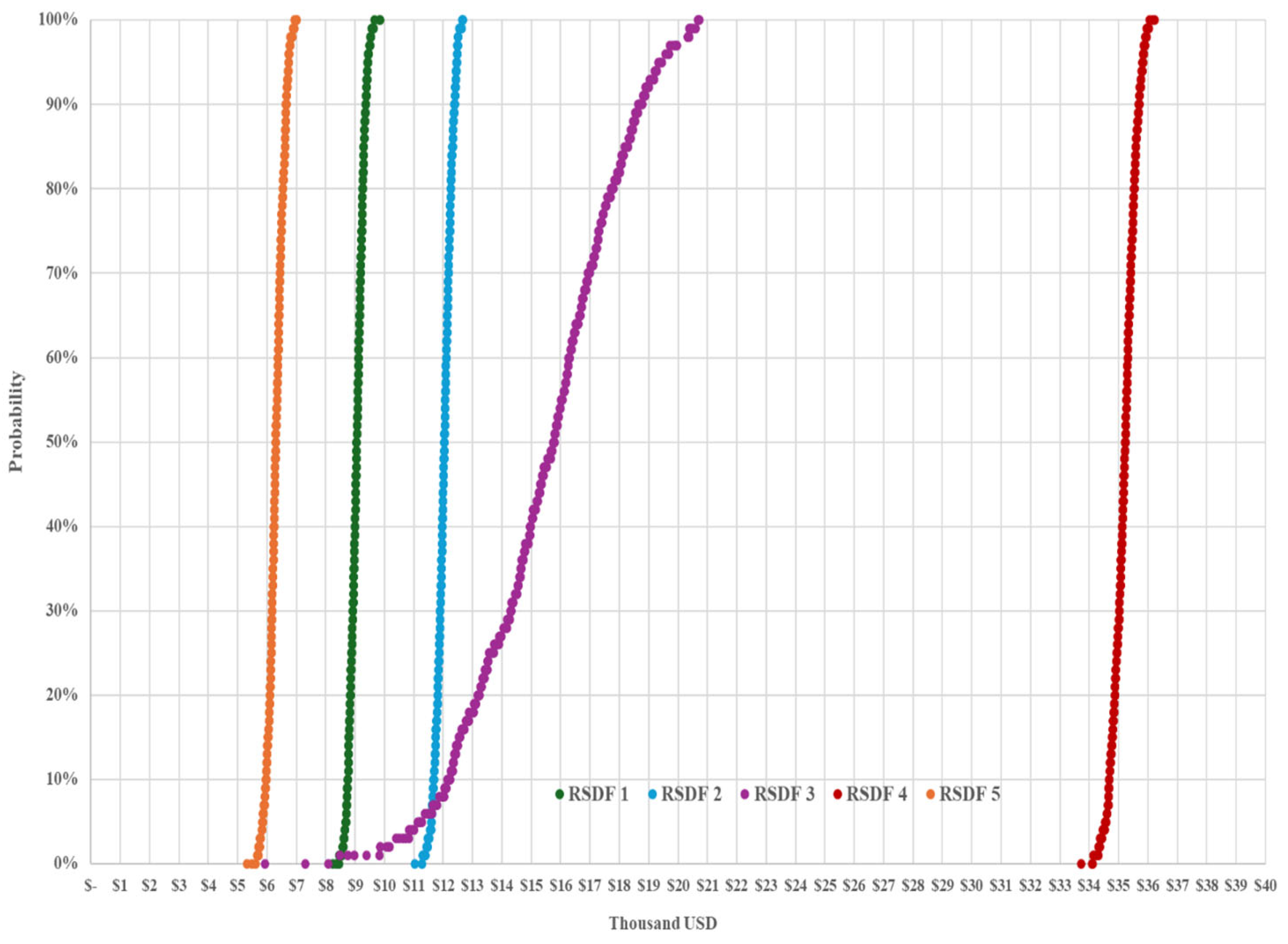
Figure 1. Probability of net cash farm income (NCFI) for representative smallholder dairy farms (RSDFs). Source: author-produced, using field data. All values are reported in thousand USD.
Agriculture 15 02593 g001
Figure 2. Net cash farm income (NCFI) performance for representative smallholder dairy farms (RSDFs). Source: author-produced, using field data. All values are reported in thousand USD.
Agriculture 15 02593 g002
Table 1. Economic indicators for representative smallholder dairy farms (RSDFs) located in the highlands of Mexico: 2023–2033.
Representative Smallholder Dairy Farms
IndicatorYear12345
Crop market receipts (CMR)2023USD 0.00USD 0.00USD 0.00USD 16.75USD 12.48
2033USD 0.00USD0.00USD 0.00USD 29.58USD 20.60
Dairy receipts (DR)2023USD 17.82USD 28.29USD 19.58USD 32.03$USD 26.85
2033USD 23.36USD 37.61USD 25.77USD 51.66USD 42.15
Total income (TI)2023USD 17.82USD 28.29USD 19.58USD 51.44USD 39.33
2033USD 23.36USD 37.61USD 25.77USD 85.37USD 62.75
Total expenditure (TE)2023USD 12.04USD 21.53USD 3.83USD 41.27USD 36.93
2033USD 15.00USD 26.65USD 10.45USD 52.31USD 45.58
Net cash farm income (NCFI)2023USD 5.78USD 6.77USD 15.74USD 10.17USD 2.41
2033USD 8.36USD 10.96USD 15.32USD 33.01USD 17.17
Ending cash reserves (ECR)2023USD 16.22USD 12.57USD 20.84USD 15.38USD 2.41
2033USD 324.18USD 270.89USD 364.29USD 576.37USD 220.40
Net cash (NC)2023USD 121.33USD 209.07USD 53.29USD 165.36USD 284.96
2033USD 453.16USD 517.01USD 364.29USD 734.90USD 535.82
Return on Assets (ROA, %)2023−USD 9.18USD 17.61USD 131.81USD 32.62$USD 4.56
2033USD 15.00USD 11.53USD 17.72USD 21.75USD 17.40
All values are reported in thousand USD. Source: author-produced, using field data.
Table 2. Financial indicators for representative smallholder dairy farms (RSDFs) to 2033.
Representative Smallholder Dairy Farms
12345
Internal Rate of return (%)141226166
Ratio Cost/Benefit (mean)0.610.680.360.591.17
Net Present Value
(Thousand USD)
USD 98,837.90USD 110,124.00USD 344,005.08USD 83,147.33−USD 41,822.93
Source: author-produced, using field data.
Disclaimer/Publisher’s Note: The statements, opinions and data contained in all publications are solely those of the individual author(s) and contributor(s) and not of MDPI and/or the editor(s). MDPI and/or the editor(s) disclaim responsibility for any injury to people or property resulting from any ideas, methods, instructions or products referred to in the content.