Article

Shifts in Bacterial Community Structure and Humus Formation Under the Effect of Applying Compost from the Cooling Stage as a Natural Additive

1
Key Laboratory of Straw Comprehensive Utilization and Black Soil Conservation, Ministry of Education, College of Life Science, Jilin Agricultural University, Changchun 130118, China
2
Innovation Platform of Straw Comprehensive Utilization Technology in Jilin Province, Changchun 130118, China
3
College of Resources and Environment, Jilin Agricultural University, Changchun 130118, China
4
Institute of Tropical Biodiversity and Sustainable Development, Universiti Malaysia Terengganu, Kuala Nerus 21030, Terengganu, Malaysia
5
Center for Global Health Research (CGHR), Saveetha Institute of Medical and Technical Sciences (SIMATS), Saveetha University, Chennai 600077, India
*
Authors to whom correspondence should be addressed.
Agriculture 2025, 15(24), 2591; https://doi.org/10.3390/agriculture15242591
Submission received: 5 October 2025 / Revised: 11 December 2025 / Accepted: 13 December 2025 / Published: 15 December 2025
(This article belongs to the Section Agricultural Soils)

Abstract

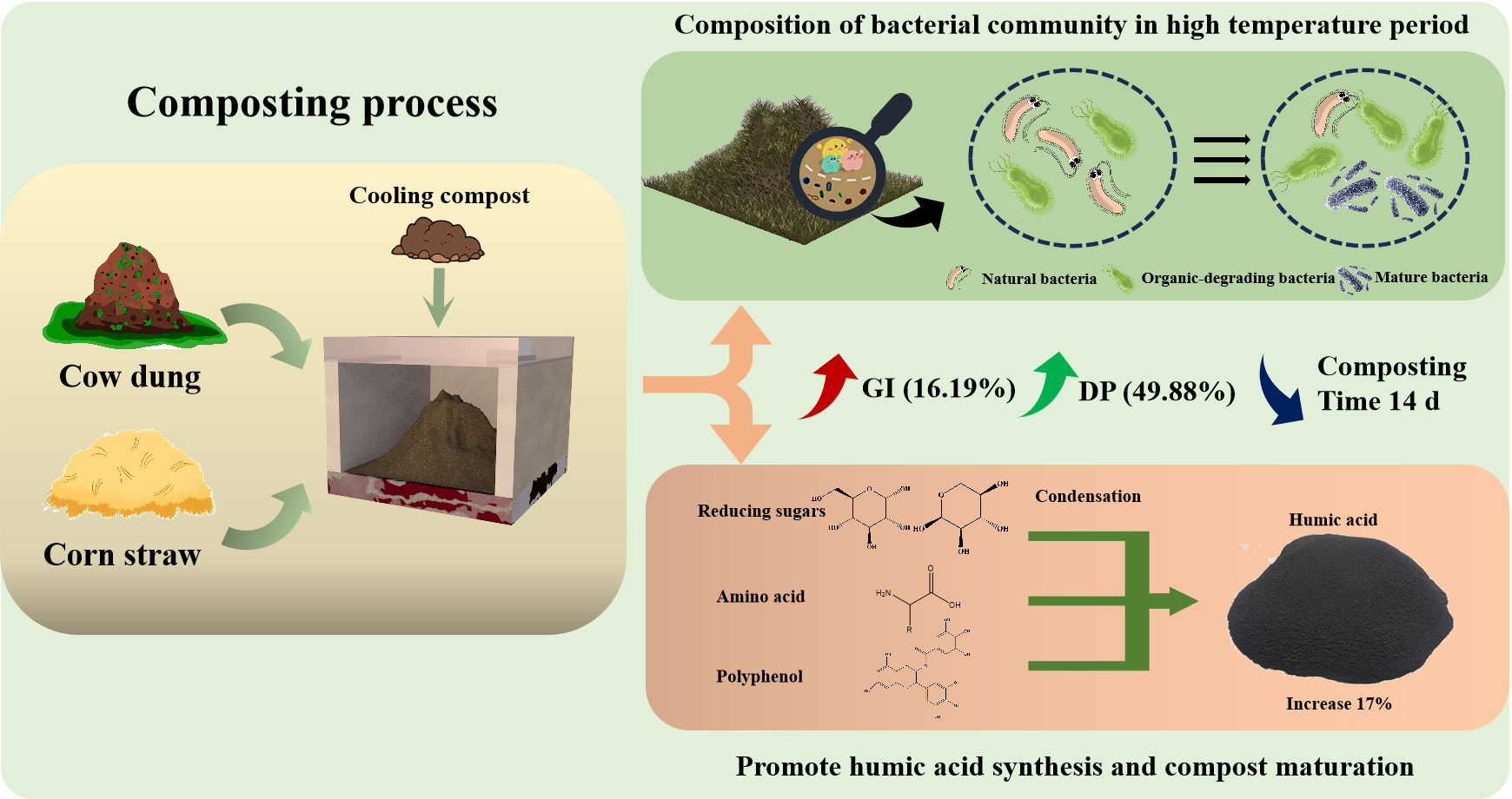
Humus is the core product and key indicator of compost maturity. How to improve the humus content and accelerate its formation in composting is critical for the improvement of compost quality. This study investigated the effects of adding compost derived from different stages including thermophilic, cooling, and maturation phases on compost initiation and efficiency in terms of humus formation and microbial community dynamics. The results reveal that adding compost from the cooling stage markedly outperforms the thermophilic and maturation phases, achieving a germination index of 107.22%, a carbon-to-nitrogen ratio of 15.95, a humus content of 91.12 g/kg, a humic acid concentration of 71.49 g/kg, and a polymerization degree of 3.64. EEMs indicated that the cooling-phase additive increased humic-like fluorescence (Region V) at day 35. The abundance and diversity of humifying bacteria were significantly enriched, and the succession of microbial community was accelerated as confirmed by redundancy analysis. This approach also improved compost quality and reduced the overall composting duration, thus suggesting that using compost from the cooling phase as an additive is an effective way to increase the humus content and accelerate the humification, providing a green solution for organic waste recycling and sustainable agricultural development and production.

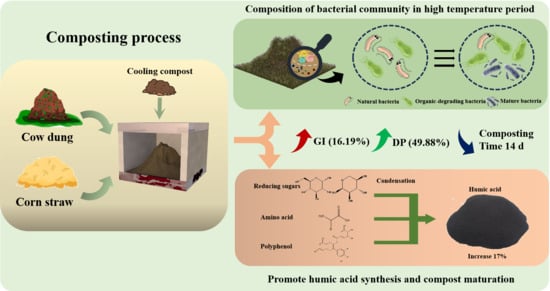
Graphical Abstract

1. Introduction

The rapid development of the livestock industry in China has resulted in a significant increase in animal waste; approximately 4 billion tons of poultry and livestock manure is generated each year in China [1]. Crop straw likewise reached 870 million tons in 2020 [2,3]. The improper management of these agricultural wastes exerts severe adverse impacts on soil, water, and air environments, thus rendering the efficient utilization of agricultural waste a critical research priority [4]. Converting livestock/poultry manure and crop straw into organic fertilizer not only maximizes the utilization efficiency of agricultural waste but also enhances soil carbon sequestration and cycling, promotes the formation of soil aggregates, and mitigates environmental pollution [5,6]. Compost supplies essential nutrients to plants, stimulates beneficial microbial activity, reduces dependence on chemical fertilizers, and helps plants withstand both biotic and abiotic stresses, contributing to more sustainable and resilient farming systems [7,8,9]. Humus, a class of macromolecular organic substances formed during the composting process, serves as both the core product and a key quality indicator of compost [10,11]. However, the prolonged formation process of humus and its relatively low content in compost currently pose significant constraints on the large-scale application of compost.
Humus is generated through the polymerization of nitrogen-containing compounds, reducing sugars, polyphenols, quinones, carboxyl groups, and polysaccharides. Humification is influenced by multiple factors, including raw material characteristics, composting additives, microbial activity, and precursor substances [12,13]. Composting is inherently a process of natural microbial community succession, where dynamic changes in the microenvironment (e.g., temperature and C/N ratio) across composting stages drive the turnover of dominant microbial groups: mesophilic/thermophilic bacteria (e.g., Firmicutes and Proteobacteria) dominate the mesophilic and thermophilic phases, responsible for degrading complex organic matter into humus precursor substances, whereas Actinobacteria, Chloroflexi, and other groups involved in humus polymerization prevail during the cooling and maturation phases, promoting the transformation of precursors into stable humus [14]. This ordered microbial community succession is the core driving force behind compost biochemical transformations, directly determining humification efficiency and compost quality. Studies have demonstrated that the precursor substances required for humus formation are produced during the high-temperature composting stage [13,15,16], while humus polymerization primarily occurs in the cooling and maturation stage of composting [17]. Notably, humification is closely associated with the dynamic progression of composting. Exogenous agents (e.g., microbial inoculants and mature compost) are widely employed to accelerate composting processes and enhance humus content. However, newly introduced microbes may disrupt the indigenous microbial community, and their effectiveness in composting systems remains unclear. Additionally, the optimization and domestication of such strains are both time-consuming and high-risk. Therefore, enhancing and facilitating the inherent microbial succession within the compost matrix has emerged as a crucial strategy [18]. Mature compost has been utilized as an additive to improve compost quality and promote humification. Wang et al. [18] found that incorporating 20-day-aged food waste compost into fresh food waste increased bacterial abundance during the cooling stage. Similarly, Zhang et al. [19] reported that the addition of mature cow manure enhanced microbial metabolism and facilitated lignocellulose degradation during composting. Li et al. [20] also indicated that incorporating chicken manure into compost resulted in reduced greenhouse gas emissions and minimized total nitrogen losses. Although these studies collectively suggest that mature compost addition enhances organic matter degradation and facilitates nutrients retention in compost, three key aspects remain insufficiently elucidated: (1) the optimal composting phase of mature compost as an additive and the regulation for microbial succession have not been determined; (2) the quantitative correlation between microbial succession and humification remains insufficiently elucidated; (3) the correlation between mature compost addition and humus formation when mature compost is used as an additive remains unclear.
In this study, we hypothesize that compost from different composting phases can be used as an additive and exert distinct effects on humus formation during composting. By evaluating the impact of incorporating compost from different stages on composting efficiency, we explore the relationships among bacterial community succession, humification, and the application of phase-specific compost. This study aims to provide valuable insights into accelerating humification and improving composting efficiency and quality. Additionally, it contributes to environmentally sustainable practices by advancing scientific understanding and proposing practical solutions for agricultural waste management.

2. Materials and Methods

2.1. Materials

The experiment was conducted in the greenhouse of Jilin Agricultural University from May to July in 2023. Cow dung was obtained from Guangyuan Pasture Farm, Jiutai City, Jilin Province, China. Corn stover was collected from Jilin Agricultural University’s experimental field, which was dried and crushed into 1–3 cm pieces. Compost samples of different stages were derived from aerobic composting of cow dung and corn stover. The basic properties of the experimental sample are shown in Table 1. The composting was carried out in insulated foam boxes with dimensions of 66 cm × 46 cm × 41 cm (L × W × H) and a wall thickness of 2 cm. Two holes (diameter 2 cm) were punched at the top and the bottom, respectively. The pile was manually turned every two days for the first 10 days and thereafter every five days until 35 days.

2.2. Composting Design

We mixed 7 groups with the same raw materials; each group consisted of 14 kg of cow dung and 6 kg of corn stover. Urea (80 g) was added to supply nitrogen in order to achieve a 25 to 30:1 carbon-to-nitrogen ratio [21]. The compost was kept at 65% humidity with the temperature monitored using a digital thermometer. The first 3 groups were used as compost on day 0, the 14th day, and the 25th day, respectively. After another 3 days, the sample was collected from these 3 groups as mature additive (the 28th day), cool additive (the 14th day), and high-temperature additive (the 3rd day). The other four groups were used as CK, W1, W2, and W3 treatment groups. Additive compost used at difference stages, e.g., the high-temperature, cooling, and maturity stages, was taken and added to a new compost pile at 10% of the total wet weight to enhance the composting process [19]. The treatment groups were set up as follows: the control group without adding compost (CK) (20 kg); W1: compost (20 kg) and high-temperature additive (2 kg) (the 3rd day); W2: compost (20 kg) with cool additive (2 kg) (the 14th day); W3: compost (20 kg) with mature additive (2 kg) (the 28th day). The total volume is 22 kg.
Composting was conducted for 35 consecutive days, and samples were collected (250 g) at multiple points on days 0, 3, 7, 10, 14, 21, 28, and 35 from the top, middle, and bottom of the pile using the five-point method based on temperature variations during composting [17]. The homogenized samples were divided into three parts: One part was stored at 4 °C and analysed for electrical conductivity (EC), germination index (GI), and pH value within 7 days to avoid nutrient leaching and microbial-activity-induced bias. The second part was naturally air-dried, sieved with a 2 mm sieve, and sealed in a desiccator for preservation. Analyses of total nitrogen (TN), total organic carbon (TOC), precursors (amino acids (AAs), reducing sugars (RSs), and polyphenols (PPs)), and humic acids were completed within 15 days to prevent structural degradation of organic components. The third part was immediately frozen at −80 °C and stored in sealed cryovials (avoiding repeated freezing–thawing) for microbial sequencing analysis, which was performed within 3 months.

2.3. Measurement of Physical and Chemical Properties

A digital thermometer (T-90, Tool Well, China) was used to measure the temperature every day. The pH, EC, and GI values were determined with supernatant after mixing fresh samples with deionized water (1:10 w/v) and shaking well, followed by centrifugation at 120 rpm for 30 min. The portable conductivity meter and pH meter were used to measure the EC and pH [22]. Small white rapeseed (Brassica chinensis L.) with intact grains and uniform size was selected and cultured in supernatant for 48 h in 25 °C darkness (20 seeds per Petri plate). The control group was cultured with deionized water, and GI was determined according to the following equation:
GI = (germinated seeds in extract)/(germinated seeds in control) × (root length in extract)/(root length in control) × 100%
The Kjeldahl analysis system (FOSS, Hilloeroed, Denmark) was employed to determine the total nitrogen (TN), and the K2Cr2O7-volumetric method was used to determine the total organic carbon (TOC).

2.4. Determination of Humus Prerequisite Substances and Humic Substances

Amino acid concentrations were determined by the ninhydrin reagent colorimetric method. Reducing sugar concentrations were determined by the dinitroester salicylic acid colorimetric method. Polyphenol concentrations were determined by the forint method [23,24,25].
For the 3D excitation–emission matrix spectra (EEMs) analysis, a fluorescence spectrophotometer F-7100 (HITACHI, Tokyo, Japan) was used to set the excitation (Ex) wavelength between 200 nm and 500 nm with a step size of 5 nm; the emission (Em) wavelength was set between 250 nm and 550 nm with an increment of 2 nm. The EEMs were divided into five fluorescent regions based on the Ex/Em wavelength ranges: Region I (Ex 200–250 nm, Em 250–330 nm) and Region II (Ex 200–250 nm, Em 330–380 nm) representing aromatic proteins; Region III (Ex 200–250 nm, Em 380–550 nm) representing humic-acid-like compounds; Region IV (Ex 250–400 nm, Em 250–380 nm) representing soluble microbial byproducts; and Region V (Ex 250–400 nm, Em 380–550 nm) representing fulvic-acid-like and humic-acid-like organic matter. Analysis was performed using MATLAB R2023a with the DOM Fluor toolbox to subtract blank effects and fluorescence scattering. The photomultiplier tube voltage was adjusted to 700 V, and the scanning speed was set to 2400 nm/min [26].
Humic constituents were extracted using sodium pyrophosphate–sodium hydroxide, potassium dichromate, and sulphuric acid methods [3]. Briefly, 0.5 g of dried sample was mixed with 100 mL of sodium hydroxide–sodium pyrophosphate. The mixture was shaken for 30 min at 25 ± 2 °C. After 24 h of standing, the solution was filtered, and 5 mL of supernatant was taken and adjusted a pH to 7.0, dried at 60 °C with a water bath, and the potassium dichromate sulphate method was used to determine the TOC. Next, 50 mL of extract was taken (pH 1–1.5) and placed in a water bath at 80 °C for 30 min and left to stand for 12 h. FA was in the supernatant, and HA was present as a precipitate after centrifugation (6000 rpm, 15 min). The precipitate was dissolved with 0.05 M NaHCO3 and evaporated with a 60 °C water bath. The potassium dichromate sulphate method was used to determine the carbon content, i.e., the humic acid content (HA). The carbon in fulvic acid (FA) was used as the difference between HS and HA. The E4 (absorption at 465 nm) and E6 (the absorption at 665 nm) were analysed using a UV–vis spectrophotometer. The maturity of compost was also characterized by calculating the humification rate (HR) (Equation (2)), humification index (HI) (Equation (3)), percent humic acid (PHA) (Equation (4)), and polymerization degree (DP) (Equation (5)), which were determined according to the following formulas [27].
HR = HS/TOC × 100%
HI = HA/TOC × 100%
PHA = HA/HS × 100%
DP = HA/FA × 100%

2.5. The Composition of the Microbial Community

The microbial communities at different composting stages were analysed. The samples were collected on day 1 (thermophilic stage), 7 (high-temperature stage), and 35 (mature stage), respectively. Fast DNA spin kits were used to extract the total DNA. The common primer set 515F (5′-GTGCCAGCMGCCGCGGTAA-3′) and 806R (5′-GGACTACHVGGGTWTCTAAT-3′) was used to amplify the V4 hypervariable region of the bacterial 16S rRNA sequence. Sequencing was performed on the Illumina HiSeq platform at Novogene Co., Ltd. (Beijing, China). The QIIME 2 cloud platform https://magic.novogene.com (accessed on 25 September 2023) was used to process the original sequencing data. The operational taxonomic units (OTUs) were clustered at a 100% sequence similarity threshold using the Dada 2 algorithm.

2.6. Statistical Analysis

Sampling at different time points and treatment stages, physicochemical properties and microbial community analyses were each repeated at least three times, with data presented as means. All statistical analyses employed a significance level of p < 0.05. Mean comparisons for all data were conducted using analysis of variance (ANOVA) followed by post hoc multiple comparisons via Fisher’s least significant difference (LSD) test (SPSS 22.0). Origin 2021 was used to plot the variation in physicochemical property parameters and humus-related data pictures. Microbial community analysis was carried out on the BMK Cloud platform (www.biocloud.net). Spearman correlation analysis was performed using vegan package analysis (R 3.5.2, R Development Core Team 2018). Dynamics representing microbial community diversity and structure were analytically represented by Chao1, Shannon’s index, and heat maps. Redundancy analysis (RDA) was used to reveal the correlation between genus-level microbial communities and environmental factors.

3. Results and Discussion

3.1. The Variation in Temperature, pH, EC, C/N Ratio, and Germination Index of Composting

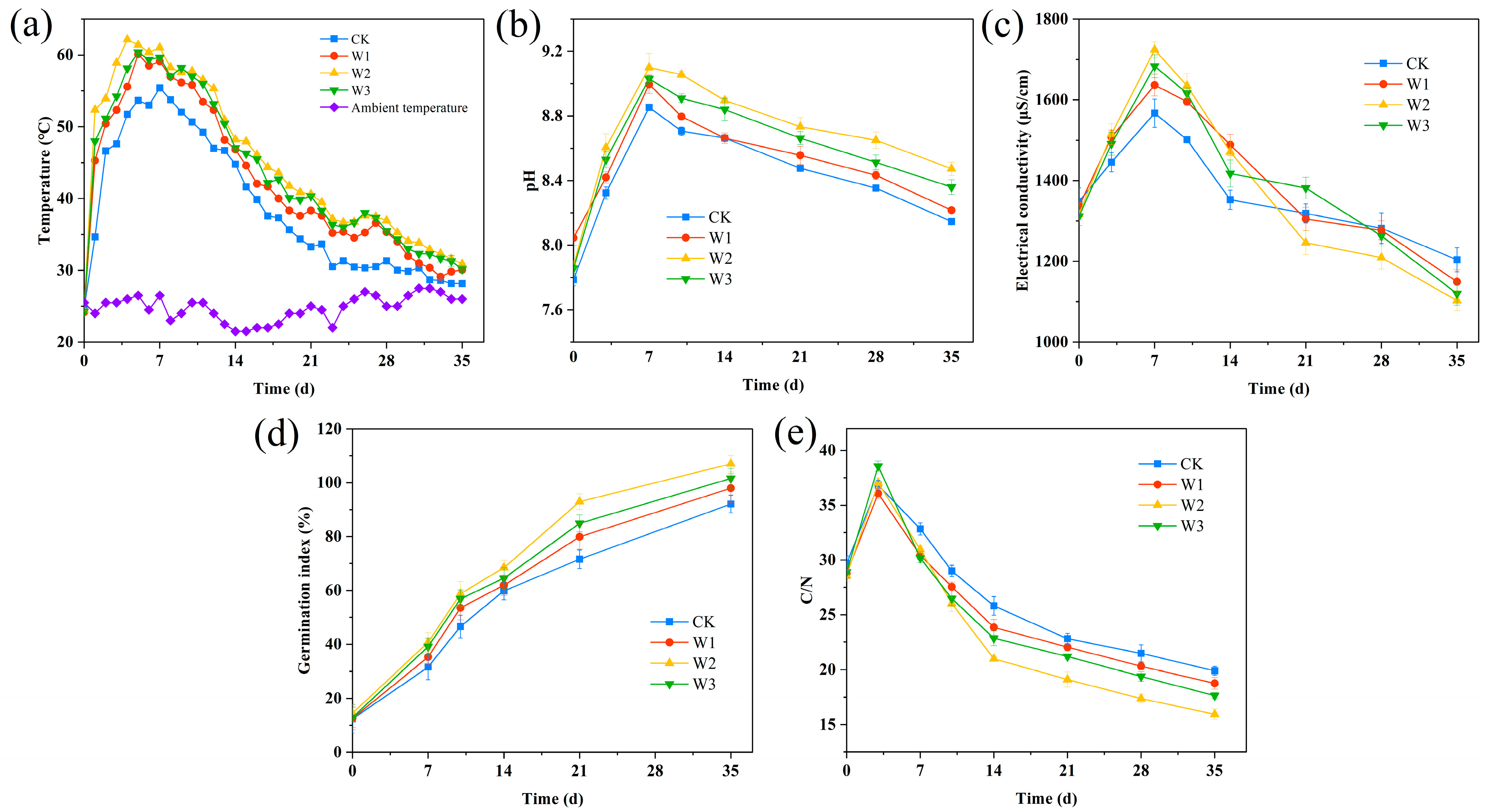
Temperature reflects the degradation efficiency, microbial activity, and humification of composting [3]. Figure 1a showed the changes in temperature during composting. The temperature increased rapidly at the beginning of the composting due to the increase in microbial metabolic activities [22]. The composting pile of W1, W2, and W3 entered into the high-temperature stage (>50 °C) on the second day, which was earlier than that in the CK group. In particular, the highest temperature in W2 is on the fourth day (62.15 °C), whereas it is on the seventh day (55.41 °C) in the CK group. CK, W1, W2, and W3 maintained high-temperature conditions for 7, 11, 13, and 12 days, respectively, and all of them fulfilled the non-hazardous criteria [3]. On the 11th day, W1 (53.47 °C), W2 (56.53 °C), and W3 (56 °C) still maintained the higher temperature, while the CK (49.23 °C) group became cooler. The results indicate that the addition of different-stage compost increased the temperature and prolonged the high-temperature phase of the pile, accelerated the humification process, and reduced the composting cycle. The highest peak temperature and the longest duration were in the W2 treatment group. The results showed that the addition of cooling-stage compost may increase the amount of organic matter that the microorganisms could efficiently utilize.
The pH and EC are important physicochemical indicators of composting. It was noted that the changes in pH and EC could reflect microbial community structural changes, thus affecting the quality of compost [28]. Figure 1b shows the range of pH 7.79–9.10. pH rapidly increases at the beginning due to the breakdown of nitrogen-rich organic matter by microbes and the production of ammonia (NH3) and ammonium (NH4+) [28]. As composting continues, new organic acids are produced and NH3 is volatilized, resulting in a decrease in pH value.
EC can reflect the soluble salt content of the pile during the process of composting. The changes in EC are related to the mineralization of the organic component. As shown in Figure 1c, EC in four compost piles showed the pattern of increasing first and then decreasing. The microbes became active at high temperature and accelerated the decomposition of the organic component, while the humification formed alkaline amino groups (C-NH2) [29], which produced a large number of soluble ions and led to an increase in EC. EC in the W1, W2, and W3 treatment groups increased rapidly compared with CK in the first seven days of composting. EC in the W1, W2, W3, and CK groups finally decreased to 1364.00, 1379.50, 1420.67, and 1402.67 μS/cm after the 35th day. The EC values in the four compost piles were all lower than 4000 µS/cm, and within 1000–2000 µS/cm, which meant that they met the safety standards of compost.
The germination index (GI) reflects the maturity and phytotoxicity of composting [20]. A GI value > 80% indicates that the compost is non-toxic and meets the harmlessness standard for agricultural application. As shown in Figure 1d, the GI was low (13%) in the four treatment groups at the beginning of composting, which was attributed to the high content of toxic substances (e.g., phenolic compounds) in fresh agricultural waste. Compared with CK, the GI in the W1, W2, and W3 treatment groups increased significantly at the thermophilic stage, indicating that the addition of compost from a different stage promoted the degradation of harmful substances and the formation of humus. On the 21st day, the GI in the W2 and W3 treatment groups exceeded 80%, which confirmed that those two treatments met the compost harmlessness criteria and accelerated the composting process. At the end of composting, the GI value in W1, W2, W3, and CK was 97.98%, 107.02%, 101.58%, and 92.11%, respectively. The highest GI in the W2 treatment group not only reflects complete elimination of phytotoxicity but also indicates a stimulatory effect on seed germination. This phenomenon could be attributed to three factors: (1) The longest high-temperature duration (>55 °C for 12 days) in W2 effectively inactivated pathogenic bacteria and enriched beneficial microorganisms (e.g., Actinobacteria and Chloroflexi) whose metabolites (e.g., amino acids and humic acid) act as growth stimulants [30]. (2) The highest humus content (91.12 g/kg) in W2 regulated the osmotic balance during seed germination and promoted nutrient transport [31]. (3) The optimal C/N ratio (15.95) in W2 avoided nutrient limitation and further enhanced the stimulatory effect on seed germination [32].
The C/N ratio is used to assess the degree of decomposition of compost. When the C/N ratio drops below 20, the compost can be considered to meet the standard and accomplish decomposition [33]. The changes in the C/N ratio are shown in Figure 1e. When composting is initiated, the decomposition of the N-containing component led to the release of NH3, which resulted in the loss of N elements, thus increasing the C/N ratio (Figure S1b) [19]. The strong mineralization of unstable organic matter was driven by microbial metabolic activity, leading to a rapid decrease in organic carbon content and a gradual stabilization of the carbon-to-nitrogen (C/N) ratio (Figure S1a). By the end of composting, the C/N ratios in W1, W2, and W3 had decreased to 18.76, 15.95, and 17.65, all of which were less than that of the CK group (19.90). These lower C/N ratios indicate a higher degree of compost maturity. The incorporation of compost at various stages enhanced mineralization and facilitated humification. The intense microbial activity in the W2 treatment group accelerated TOC degradation, resulted in a decrease in the weight of pile which in turn increased the TN content relatively, and finally led to a reduced carbon-to-nitrogen ratio. Table 2 shows the differences of final composting product in four treatment group.

3.2. Humification Precursor Substances and EEM Analysis of the Humification Process

Theories related to the humification of fertilizers have been extensively studied, and two of them are widely accepted: the formation of HA mainly through the condensation of polyphenols with amino acids, and the Maillard reaction of sugar with amino acid polycondensation [34]. In this study, the levels of amino acids (AAs), reducing sugars (RSs), and polyphenols (PPs), which are the prerequisite substances for the formation of HA, were first determined.
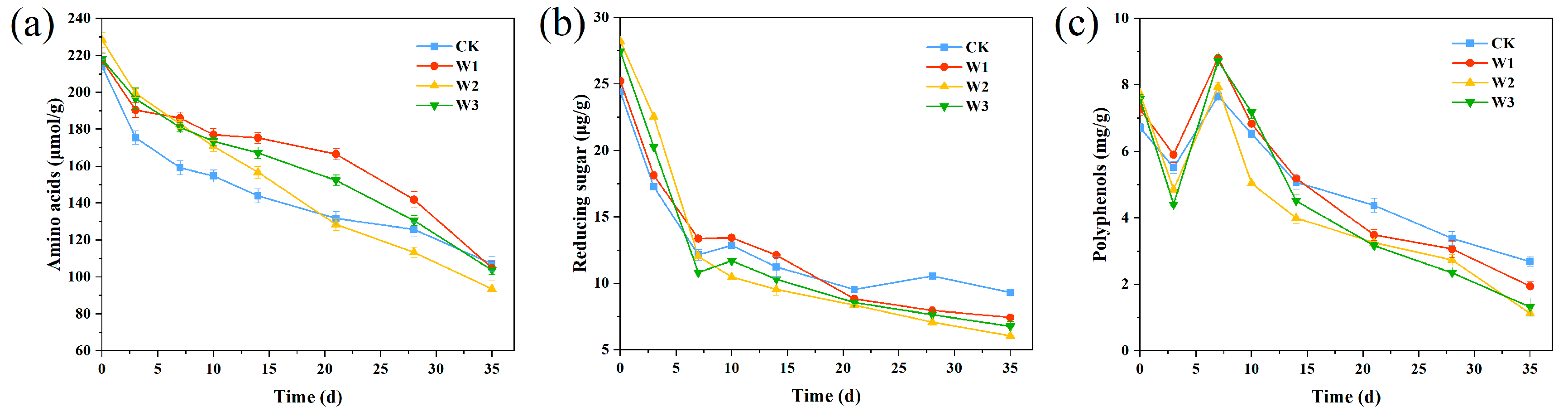
Amino acids (AAs) are the primary by-products generated through protein hydrolysis or by ammonia-assimilating bacteria, and they can serve as a nitrogen source for microbial growth [22]. In this study, the AA concentration decreased rapidly at the beginning of composting, followed a slow decline (10–35 day), stabilizing at 93.47–107.1 μmol/g until the end of composting (Figure 2). Although AAs can be produced via the degradation of macromolecules, a large number of AAs were consumed by microorganisms as a nitrogen source, and some AAs were used to polymerize for HS formation, which resulted in a downward trend in AA content [24]. The AA content in the CK, W1, W2, and W3 treatment groups decreased by 49.99%, 51.79%, 65.21%, and 52.02%, respectively. The AAs in W2 decreased dramatically, which indicates that the pile with addition of cooling-stage compost consumed more amino acids. The amino acid content in the W2 treatment group was the highest compared with the CK, W1, and W2 groups at the beginning of composting (Figure 2a), which may be due to the fact that the cooling-stage compost contained a large number of prerequisite substances such as amino acids and increased the amino acid level in the composting pile.
RSs are important precursors of the Maillard humification pathway and products of lignocellulose hydrolysis [35]. RSs are an easily accessible carbon source for microorganisms. The concentration of RSs decreased rapidly during the first seven days of composting due to the consumption of microorganisms (Figure 2). A small increase in RSs after day 7 may be due to the degradation of polysaccharides in lignocellulose. The RS content in W1, W2, and W3 was lower compared to CK after day 21. At the end of composting, sugar concentration decreased to 9.31 μg/g (CK), 7.42 μg/g (W1), 8.37 μg/g (W2), and 8.57 μg/g (W3), respectively. The results indicated that the addition of different-stage compost promoted the consumption of RSs [22].
The rapid depletion of PPs occurred in the first three days of composting (Figure 2c). The high temperature would facilitate polymerization between PPs and other precursors to form HS [36]. Polyphenol oxidative enzymes produced by Bacillus sp. remain active at temperatures up to 40 °C, allowing for the decomposition of polyphenols, which ultimately leads to a reduction in their levels. Notably, the PP content experiences a rapid increase over the subsequent three to seven days. This phenomenon may be linked to the ability of microorganisms to break down lignocellulose [35]. A gradual decrease in PP production and consumption in the four groups of composts occurred after day 14. Compared with CK, the PP contents in W1 (1.94 mg/g), W2 (1.12 mg/g), and W3 (1.31 mg/g) were lower than that of in the CK (2.68 mg/g) group on the 35th day, which may indicate that the addition of different-stage compost promoted the polymerization of PPs and enhanced polyphenol humification. Altogether, the addition of different-stage compost significantly increased the three humus precursors, oligosaccharides, polyphenols, and amino acid content, which contribute to the PP and Maillard humification pathways by facilitating the condensation of the precursors. This is due to the addition of compost from different periods improving the microbial community within the pile. Specifically, the W2 treatment group increased the abundance of lignocellulose-degrading bacteria, enhancing the production of precursor substances (Figure 2). It also elevated the abundance of humic bacteria, accelerating the conversion of precursor substances.
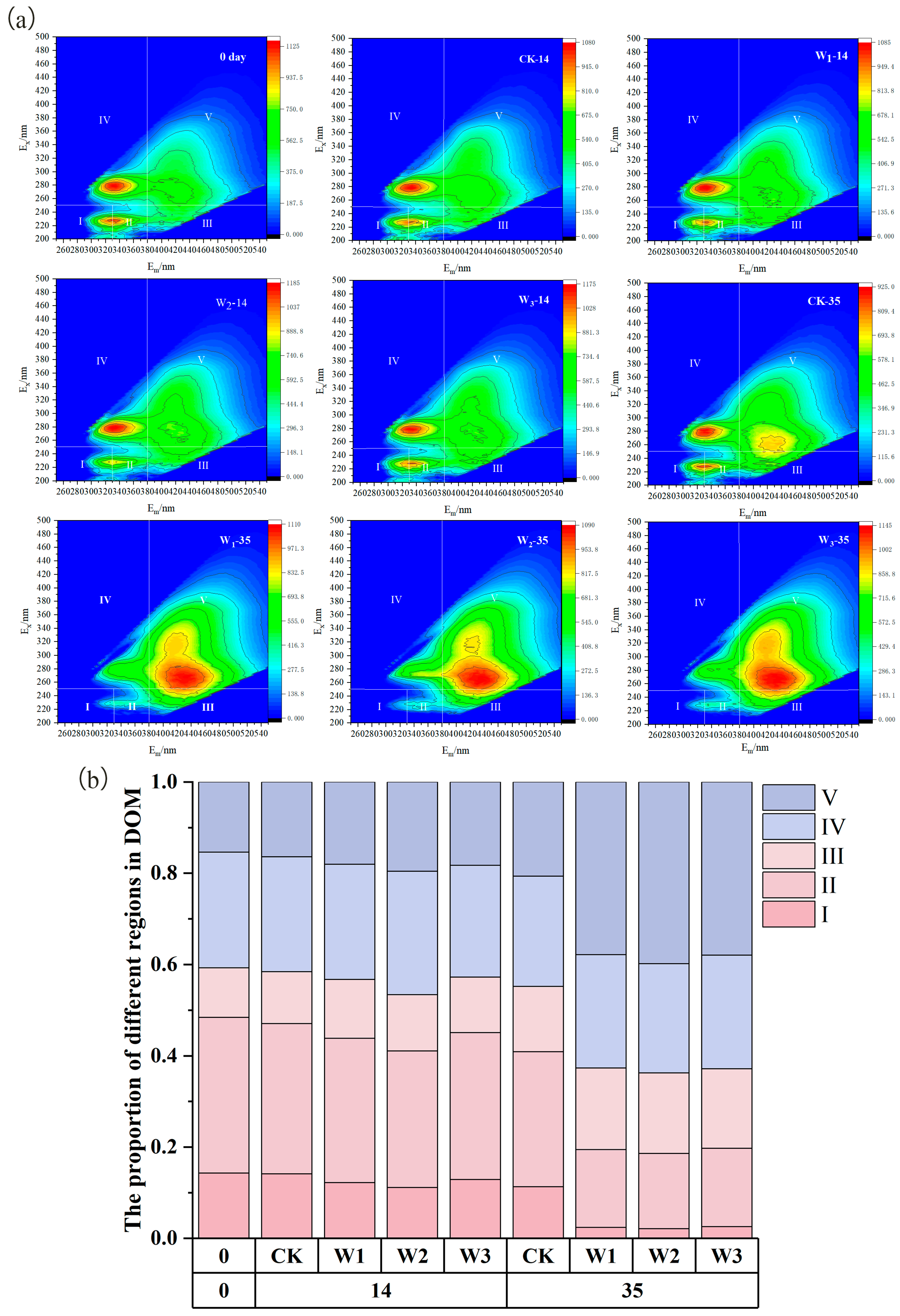
EEM analysis was used to assess humification by analysing dissolved organic matter (Figure 3). EEMs can be divided into five distinct fluorescent regions: Regions I and II representing aromatic proteins, Region III representing humic-acid-like compounds, Region IV representing soluble microbial byproducts, and Region V representing humic-acid-like organic matter [37]. At day 0, Regions I, II, and IV exhibited higher fluorescence intensity, which is the precursor substances for synthetic humus present in the composting raw materials. By day 14, all three treatment groups showed a slight increase in humification compared to CK. The results indicate that the addition of compost at different stages accelerated the humification process. By the end of composting, the three treatment groups showed a significant increase in fluorescence intensity and proportion of Region V compared to CK, indicating that the addition of compost at different stages promoted the conversion of humic acid precursors into humic acid. Among these, the W2 treatment group had the highest proportion of Region V, suggesting that the addition of compost during the cooling period facilitates the decomposition of organic matter and the formation of humic acid.

3.3. Transformation of Humus Composition During Composting

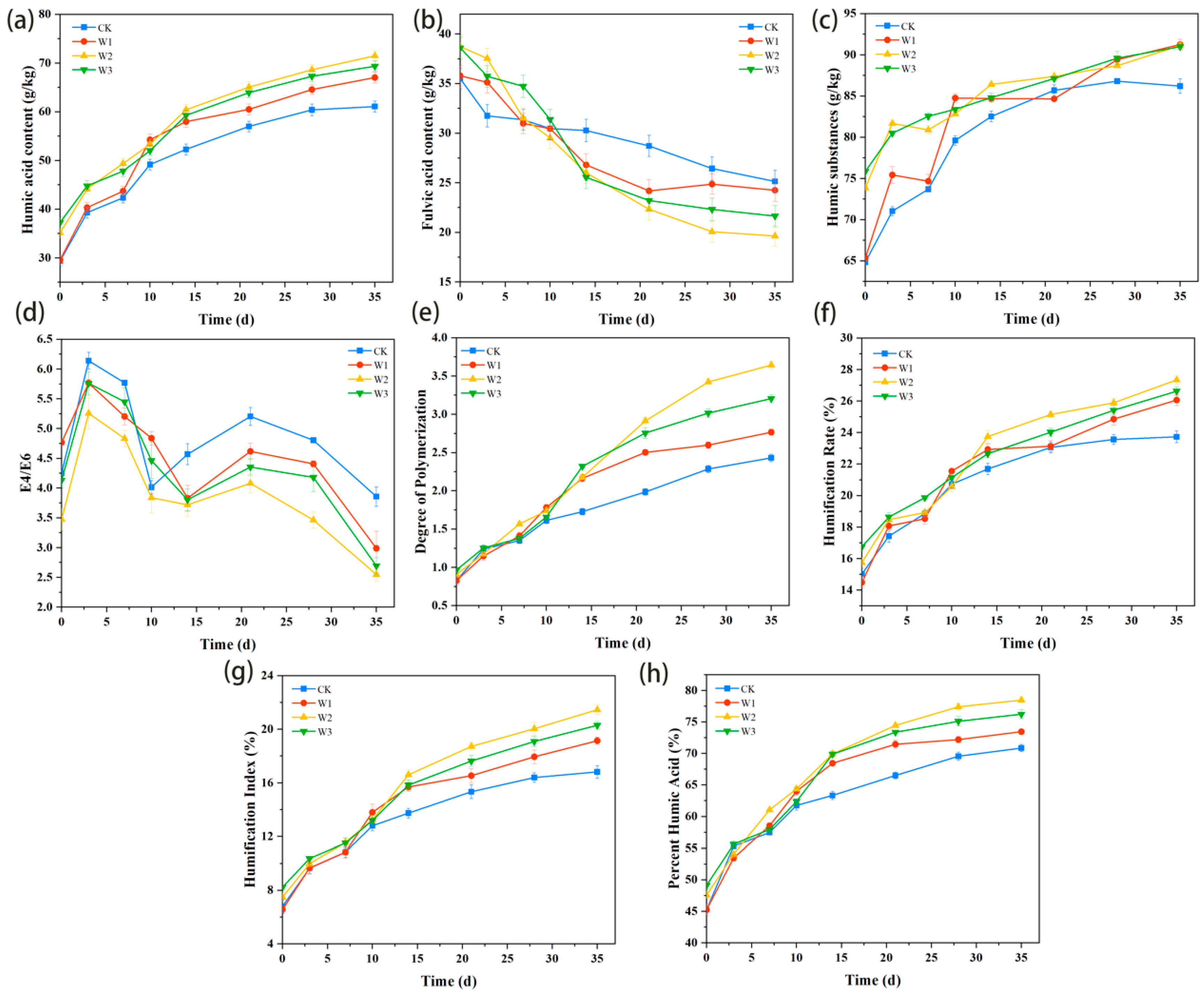
The process by which organic matter is converted into humus is humification. The formation of humus reduces the toxicity of compost, and it is the key to carbon sequestration in compost [3]. HS and its components directly affect the stability of compost materials and the maturity of the pile [22]. HS is mainly composed of HA and FA. FA consists of polysaccharides with low molecular weight, active functional groups, high activity, and high oxidization [38]. HA can stabilize the humus structure of soil. As shown in Figure 4a,b, the HA content increased while the FA content decreased during humification. A higher HA and FA level in the W2 and W3 treatment groups was observed at the early composting stage, which may be due to the fact that the humus synthesis had occurred in cooling and maturity composting stages, resulting in an increase in HA content in the initial feedstock. The HA content in the W2 treatment group increased to 71.49 g/kg on the 35th day, which was significantly higher than the W1 and W3 groups. The results indicated that cooling-stage compost contained a large amount of compost prerequisite substances and promoted the HA content. Figure 4c shows the increment of HS in four treatment groups. The HS content increased by 21.36 g/kg (CK), 25.9 g/kg (W1), 14.27 g/kg (W2), and 15.13 g/kg (W3), respectively. The HS content in the W1 groups was significantly increased, which was because the addition of high-temperature-stage compost promoted the degradation of lignocellulose into humus precursors (Figure 3). At the thermophilic stage, the polymerization among amino acids, polysaccharides, and phenols was accelerated; HA formation was improved, and rapid humification was achieved [39]. The humus in compost is quickly formed at the stage of decomposition [40]. The final HA is significantly increased in the W2 group, which indicated that the W2 treatment group had a higher degree of humification.
Further insight into the dynamics of the HS component can be gained from E4/E6 (Figure 4d), which is inversely proportional to the degree of humus polymerization [41]. The E4/E6 ratio increased continuously at the thermophilic stage, which could be due to the intense microbial activity, thus affecting the acidity and carboxyl content of the compost. The E4/E6 ratios decreased to 3.87 (CK), 2.99 (W1), 2.55 (W2), and 2.69 (W3) at the end of the composting. The E4/E6 in the W2 treatment group was the lowest of four treatment groups, which suggested that the addition of cooling-stage compost favoured compost maturation. In addition, the E4/E6 values on day 35 were slightly lower than those on day 0, suggesting a higher degree of humification of the product on day 35.
Common indicators for evaluating humification during aerobic composting include the degree of polymerization (DP), humification rate (HR), humification index (HI), and the percentage of humic acid (PHA). These parameters directly reflect how compost from different stages influences the humification process [42]. A higher HA/FA ratio indicates greater complexity and a higher proportion of humic acid, signifying a more advanced degree of humification. The final DP values in the four treatment groups were 2.43 (CK), 2.77 (W1), 3.64 (W2), and 3.20 (W3), which were all greater than 1.9, indicating that the four treatment groups had reached maturity [24]. The changes in DP in W2 were significantly higher than those of other treatment groups, which indicated a higher degree of humification, and the addition of cooling-stage compost accelerated the formation of humus and HA.
HR and HI in each group increased throughout the process, as shown in Figure 4f,g, indicating a steady increase in the proportion of humus. Throughout the composting process, particularly after the thermophilic phase, the HI in all treatment groups is significantly higher that of the CK group. Moreover, at the cooling stage, the HR in the W1, W2, and W3 treatments exceeded that of the CK group; W2 (27.34%) was notably higher than that of CK (23.73%). This might link to the depletion of FA and the transition to HA and PHA in all four treatments (Figure 4h). PHA, which reflects the relative content of HA in the compost, increased by 32.75% in W2 at the end of composting on day 35. Altogether, the cooling phase contains a large amount of precursor substances. Adding cooling-phase compost increases humus and humic acid content. Cooling-phase compost promotes the growth of lignocellulose-degrading microorganisms, thereby generating more precursor substances, and enhances humus yield through polymerization reactions during the composting process.

3.4. The Microbial Community Structure Changes

Microorganisms are the driving force behind composting. This study examines how adding compost from different stages affects microbial community succession. The Chao1 index indicates species richness, while the Shannon index reflects overall microbial diversity. Both metrics were used to track changes in the composting process [43]. As shown in Figure S2, the Chao1 index in the W2 treatment group is higher than CK on the first day, which may result from the complex microbial structure of the cooling-stage composting sample. As composting progressed to day 7, some bacteria may be suppressed by the dominant microbial community, e.g., Pseudomonas in W2 and Hydrogenophaga in the other treatment groups. The Shannon index for the W2 treatment group was the highest at the initial stage. However, as composting progressed to the seventh day, the Shannon index values were observed in the order of CK > W1 > W3 > W2. This suggests that the addition of compost of various stages could decrease microbial diversity, creating a more favourable environment for the survival of the dominant microbial communities. In conclusion, the abundance of bacterial communities was shifted by the addition of different-stage compost, especially the addition of cooling-stage compost. It reduced the diversity of bacteria during the high-temperature period, which in turn improved the microbial microenvironment and affected the bacterial community. Generally, a high biodiversity index is helpful for plant growth. Although the reduction in harmful microorganisms leads to a reduction in biodiversity, the abundance of beneficial rhizophore increased, and accordingly improved the disease resistance of cabbages [44]. In our study, Pseudomonas and Hydrogenophaga significantly declined in population, which may explain the subsequent increase in beneficial microorganisms [45,46].
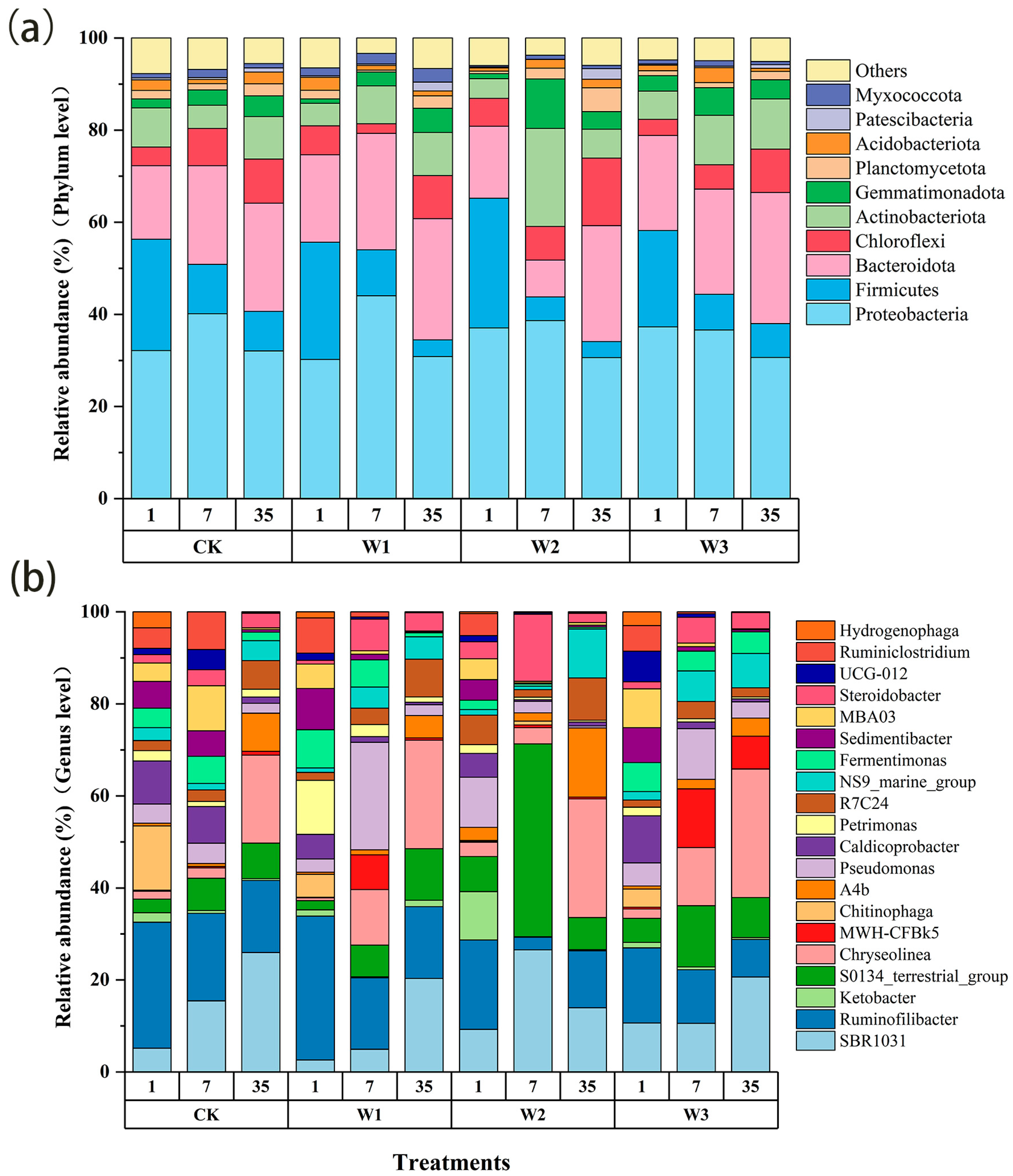
The changes in phylum levels in different treatment groups are shown in Figure 5a, in which Proteobacteria, Actinobacteria, Bacteroidetes, Chloroflexi, and Firmicutes, the five bacterial communities, played predominant roles. The changes observed in the phylum level of the four treatment groups were similar throughout the composting process, which was due to the composting process in terms of bacterial self-succession. Proteobacteria and Firmicutes were the main dominant phyla in the pre-composting stage; the presence of Proteobacteria was related to carbon and nitrogen cycling in the composting process, which promotes nitrogen mineralization. Firmicutes contribute greatly to the decomposition of organic matter and lignocellulose, which leads to their dominance in the early stage [47,48]. The abundance of Proteobacteria further increased with composting in each treatment group on day 7 in CK (34.5%), W1 (35.7%), W2 (38.6%), and W3 (36.6%), which was consistent with the decomposition of organic carbon during the high-temperature stage (the four treatment groups showed organic carbon degradation of 8.27–10.68% over 0–7 days). However, the Firmicutes phylum decreased significantly during the high-temperature period, which may be due to the decrease in cellulose and hemicellulose content [3]. The Bacteroidota phylum increased substantially in the CK, W1, and W3 treatment groups at the thermophilic stage. Bacteroidota is a major contributor to the secretion of carbohydrate-active enzymes [49]. In the W2 treatment group, Actinobacteria abundance increased (21.3%) significantly during the high-temperature stage. Enzymes produced by Actinobacteria promote lignin degradation and humification and can also secrete antibiotics to inhibit and eliminate microbial pathogens [50], which is helpful in reducing phytotoxicity and improving the quality of compost. The abundance of Chloroflexi is significantly higher in W2 compared to the other treatment groups. Chloroflexi could promote humus formation and increase the GI value [51], which was consistent with the high humification and GI value in the W2 treatment group (the DP and GI values were the highest among all treatment groups (DP: 3.64; GI: 107.01%)).
Significant differences were observed in genus levels among the treatment groups, as shown in Figure 5b. The dominant genera in the four treatment groups on the first day of composting were CK: Ruminofilibacter (27.2%), Chitinophaga (14.3%), and Caldicoprobacter (9.2%), both belonging to the Bacteroidetes phylum; W1: Ruminofilibacter (31.4%), Petrimonas (12.2%) (Bacteroidetes phylum), and Sedimentibacter (9.3%) (Firmicutes); W2: Ruminofilibacter (19.2%), Pseudomonas (11.6%), and Ketobacter (11.4%) (Proteobacteria); W3: Ruminofilibacter (16.7%), SBR1031 (11.6%) (Proteobacteria), and Caldicoprobacter (10.3%). Ruminofilibacter belongs to the degrading genus of dietary fibre and complex polysaccharides, which indicated that lignocellulose in the compost was the first to be degraded at the early stage of composting and form the prerequisite material for humification [1].
Pseudomonas, which belongs to the lignocellulose-degrading genus, increased in abundance and diversity in the W2 treatment group at the beginning of composting [3]. The abundance of SBR1031 in the W3 treatment group increased, which belongs to the Chloroflexi; they degrade the aromatic compounds and cellular residues as well as extracellular proteins at the end of composting [52]. Proteobacteria, recognized as potential humus-synthesizing-related bacteria, showed increased abundance in the W3 treatment group. The most significant increase in SBR1031 was observed in the W2 treatment group, which was consistent with the group’s highest GI (107.01%) and HA/FA ratio (3.64), indicating a potential synergistic effect between SBR1031 and compost humification [53]. There were no prominent dominant genera in the CK treatment group at the thermophilic stage, which was different from the other treatment groups. Pseudomonas was the dominant bacterial community in the W1 treatment group, which contributed to the degradation of lignocellulosic in the W1 treatment group. Chryseolinea, being a unique microbial community in W3, functions as a nitrogen-fixing genus, suggesting that the addition of mature-stage compost increased the abundance of nutrient-associated genera [54]. As the composting come to the mature stage, the abundance of bacteria at the genus in each treatment group shows a similar trend, with an increase in humifying bacteria and a decrease in pathogenic bacteria. A4b has been reported as a core group associated with compost humification, with its metabolic products confirmed to promote humus formation. A4b abundance was the highest in the W2 treatment group, which was significantly positively correlated with the group’s superior humification index (HA/FA = 3.64) and humus content (91.12 g/kg), supporting its potential role in humification [55].

3.5. Correlation Analysis Between Physicochemical Properties, Humification Coefficient and Bacterial Community

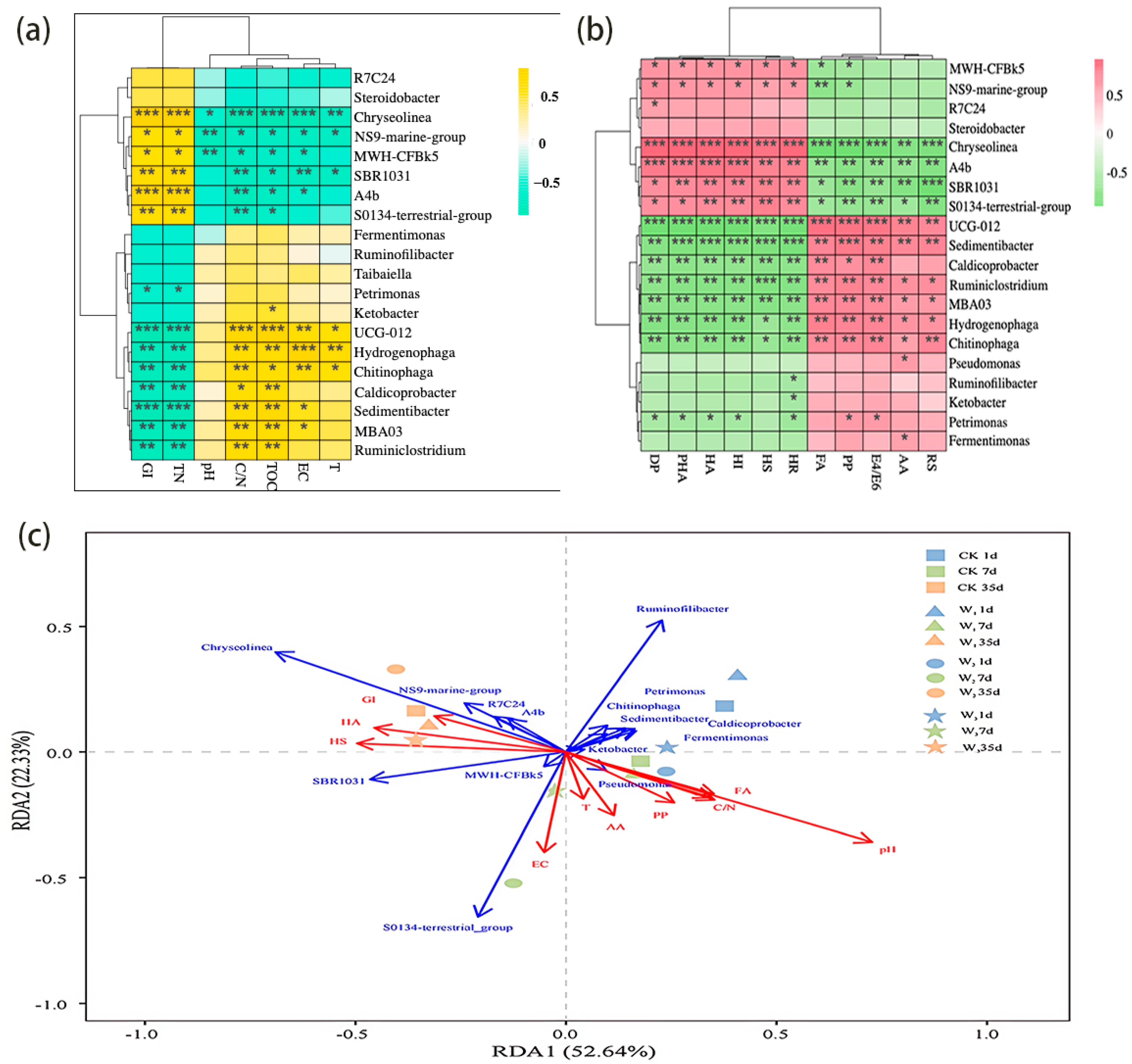
The correlation among physicochemical properties, humification coefficients, and bacterial communities were shown in Figure 6a,b. A4b, SBR1031, and Chryseolinea were positively correlated with GI, TN, HA, and HS. They were the dominant colonies in the W2 and W3 treatment groups. The addition of cooling- and mature-stage compost improved the abundance of humification-related bacterial colonies, and humification and increased the TN and GI.
Changes in environment and substrate properties may affect the bacterial community succession during the composting. The microbial community structure showed dynamic succession at various times in the four different treatment groups (Figure 6c). The bacterial community structure in the W2 and W3 treatment groups on day 7 was similar to that of day 35 (Figure 6b).
The results indicated that the addition of cooling- and mature-stage compost promoted the bacterial community’s succession and accelerated the maturation of compost. The prerequisite substances (AA, RS, and PP) were positively correlated with the bacterial community when the composting was initiated. They synthesized HS as the compost progressed, where the highly promising A4b, SBR1031, and Chryseolinea bacterial communities were correlated positively with HA and HS, and correlated negatively with FA, which suggests that the increase in the abundance of these bacterial communities can accelerate the compost maturation process.

3.6. Potential Mechanism by Which Adding Different Composting Samples Improves Composting Efficiency

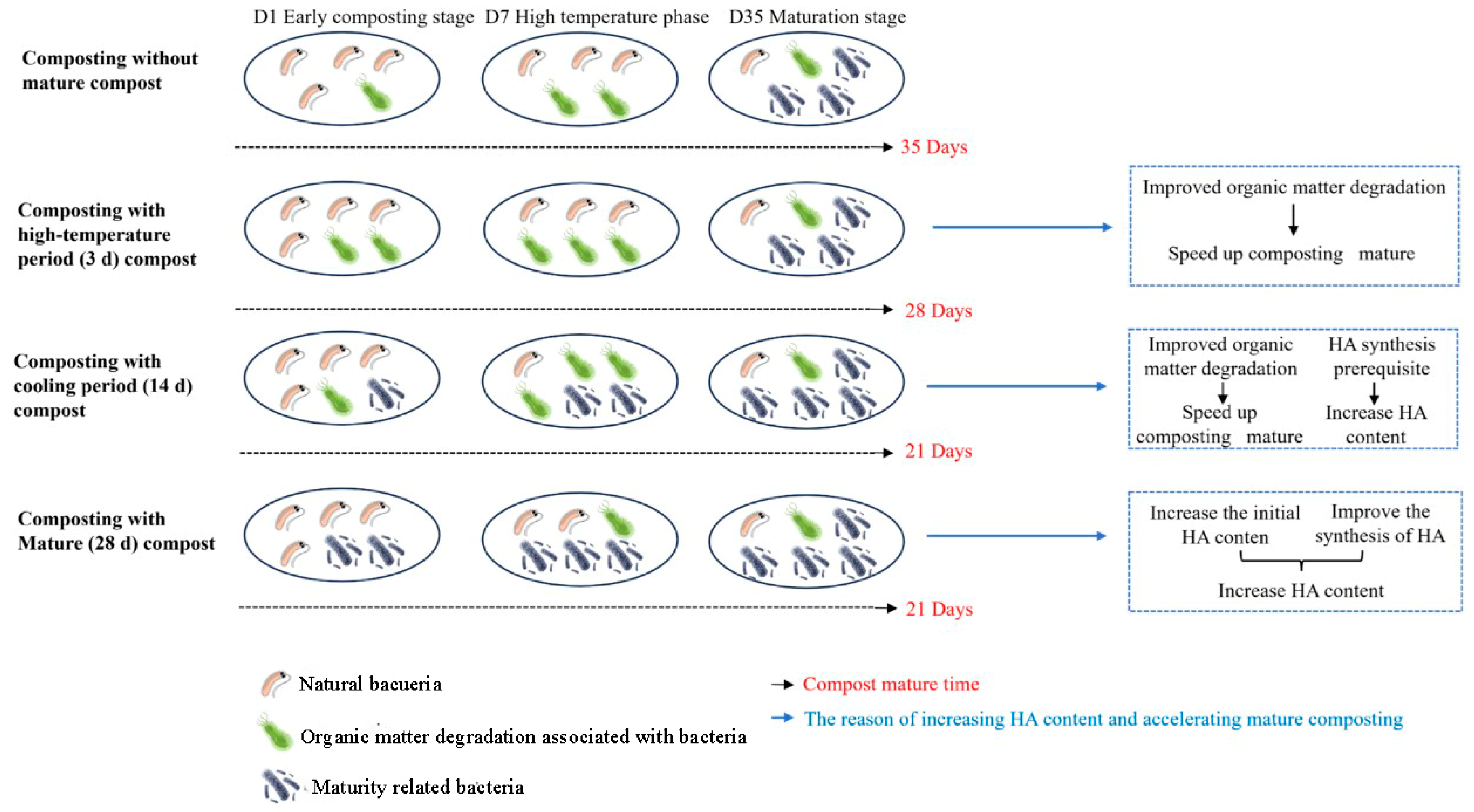
A diagram illustrating the mechanistic enhancement of composting efficiency through the addition of various compost samples is presented in Figure 7. Distinct bacterial communities propel the compost through different stages of decomposition. The incorporation of thermophilic compost enhanced the organic matter decomposition, as it contained a flora conducive to this process. Similarly, adding cooling-stage compost increased the abundance of flora, which was associated with the degradation and maturity of organic component. The integration of compost from different stages facilitated the decomposition process and enhanced humus formation, though the underlying mechanisms varied.
The high-temperature-stage compost notably promoted organic matter degradation and accelerated compost maturation yet resulted in only a slight increase in humic acid content. In contrast, the introduction of cooling-stage compost not only improved the decomposition of organic component but also increased the abundance of bacterial flora related to maturation, thus enhancing humic acid synthesis. This cooling-stage compost is characterized by a higher content of prerequisites necessary for humic acid synthesis, contributing significantly to humus formation. Furthermore, the addition of mature-stage compost led to an increased abundance of SBR1031. The mature-stage compost expedited bacterial succession towards mature compost, accelerated the composting process, and further promoted humic acid formation. As a result, the mature compost sample exhibited a higher overall humic acid content, positively influencing the total humic acid levels. While further enhancing the transformation of humic acids, the addition of cooled compost during the cooling period also improves nutrient conversion within the compost. It combines the functions of humic bacteria and nutrient-transforming bacteria, resulting in compost with high nutrient content and seed germination rates upon completion. This provides higher-quality organic fertilizer for subsequent applications.

4. Conclusions

The incorporation of cooling-stage compost increased the humus content (91.12 g/kg), accelerated humification (polymerization degree 3.64), enriched the abundance and diversity of the core group associated with compost humification bacteria (Actinobacteria and Chloroflexi), improved the humification efficiency, and shortened the overall composting period by 14 days compared with CK. The direct use of compost products as additives without cultivation of microbial inoculants reduces the cost of exogenous inoculants. The increased humus content and improved quality of compost would reduce the application amount of chemical fertilizers in farmland and lower agricultural production costs. The application of compost can not only promote the resource utilization of agricultural wastes, but also improve soil carbon sequestration capacity, and at the same time improve soil structure, enhance soil fertility, and promote the sustainable development of agricultural ecosystems. In summary, using cooling-stage compost as an additive is a “low-cost, high-efficiency, and environmentally friendly” compost quality improvement technology, providing a practical technical solution for agricultural waste recycling and sustainable agricultural development.
This study has certain methodological limitations that should be noted. First, the interpretation of TN and C/N changes in the W2 treatment group relies on the relative changes in TOC and pile mass rather than a complete N mass balance; second, the EEM analysis is qualitative/semi-quantitative and cannot replace PARAFAC-based component analysis; third, the phase-dependent differences in additive composition may introduce additional confounding effects, which need to be considered when extrapolating the technology to other systems.
Based on the core findings and limitations of this study, future research should be focused on exploring the applicability of the technology in different raw material combinations, optimizing key parameters such as additive dosage and addition timing. Furthermore, our understanding of the molecular mechanism would be deepened by using combined metagenomics to analyse the core functional gene (e.g., lignin-degrading enzyme genes) and metabolic pathways driving humification in cooling-stage compost, providing theoretical support for the directional screening of high-efficiency functional microorganisms.

Supplementary Materials

The following supporting information can be downloaded at: https://www.mdpi.com/article/10.3390/agriculture15242591/s1, Figure S1: Changes in organic carbon (a) and total nitrogen (b) during composting; Figure S2: Changes in Chao 1 and Shannon index of bacterial communities.

Author Contributions

J.M.: Writing—original draft. Y.W.: Validation. X.Z.: Writing—review and editing, validation. G.C.: Supervision. J.W.: Supervision. Y.S.: Writing—review and editing. C.S.: Supervision. N.L.M.: Writing—original draft. All authors have read and agreed to the published version of the manuscript.

Funding

This work was supported by an award from the Key Projects of the Jilin Province Science and Technology Development Plan (20240303022NC).

Data Availability Statement

The original contributions presented in this study are included in the article/Supplementary Material. Further inquiries can be directed to the corresponding authors.

Conflicts of Interest

The authors declare that they have no known competing financial interests or personal relationships that could have appeared to influence the work reported in this paper.

References

  1. Yang, X.; Li, R.; Wang, J.; Xu, W.; Wang, Y.; Yi, G.; Zhang, X.; Zhu, J.; Mazarji, M.; Syed, A.; et al. Exploring carbon conversion and balance with magnetite-amended during pig manure composting. Bioresour. Technol. 2023, 388, 129707. [Google Scholar] [CrossRef]
  2. Gong, X.; Zou, L.; Wang, L.; Zhang, B.; Jiang, J. Biochar improves compost humification, maturity and mitigates nitrogen loss during the vermicomposting of cattle manure-maize straw. J. Environ. Manag. 2023, 325, 116432. [Google Scholar] [CrossRef]
  3. Ma, J.; Ma, N.L.; Fei, S.; Liu, G.; Wang, Y.; Su, Y.; Wang, X.; Wang, J.; Xie, Z.; Chen, G.; et al. Enhanced humification via lignocellulosic pretreatment in remediation of agricultural solid waste. Environ. Pollut. 2024, 346, 123646. [Google Scholar] [CrossRef]
  4. Priya, A.K.; Alagumalai, A.; Balaji, D.; Song, H. Bio-based agricultural products: A sustainable alternative to agrochemicals for promoting a circular economy. RSC Sustain. 2023, 1, 746–762. [Google Scholar] [CrossRef]
  5. Zhu, Y.; Zhang, M.; Han, X.; Lu, X.; Chen, X.; Feng, H.; Wu, Z.; Liu, C.; Yan, J.; Zou, W. Evaluation of the soil aggregate stability under long term manure and chemical fertilizer applications: Insights from organic carbon and humic acid structure in aggregates. Agric. Ecosyst. Environ. 2024, 376, 109217. [Google Scholar] [CrossRef]
  6. Cooper, A.; DeMarco, J. Composted biosolids amendments for enhanced soil organic carbon and water storage in perennial pastures in Colorado. Agric. Ecosyst. Environ. 2023, 347, 108401. [Google Scholar] [CrossRef]
  7. Riddech, N.; Theerakulpisut, P.; Ma, Y.N.; Sarin, P. Bioorganic fertilizers from agricultural waste enhance rice growth under saline soil conditions. Sci. Rep. 2025, 15, 8979. [Google Scholar] [CrossRef] [PubMed]
  8. van der Sloot, M.; Limpens, J.; De Deyn, G.B.; Kleijn, D. The multifunctionality of cuttings from semi-natural habitats as organic amendments in arable farming. Agric. Ecosyst. Environ. 2025, 386, 109631. [Google Scholar] [CrossRef]
  9. Pérez-Lorca, M.; Jaime-Rodríguez, C.; González-Coria, J.; Lamuela-Raventós, R.M.; Pérez, M.; Valluerdú-Queralt, A.; Hernández, R.; Chantry, O.; Romanyà, J. Increasing soil organic matter and short-term nitrogen availability by combining ramial chipped wood with a crop rotation starting with sweet potato. Agric. Ecosyst. Environ. 2025, 392, 109740. [Google Scholar] [CrossRef]
  10. Zhang, S.; Gao, W.; Xie, L.; Zhang, G.; Wei, Z.; Li, J.; Song, C.; Chang, M. Malonic acid shapes bacterial community dynamics in compost to promote carbon sequestration and humic substance synthesis. Chemosphere 2024, 350, 141092. [Google Scholar] [CrossRef]
  11. Zhao, Y.; Zhao, Y.; Zhang, Z.; Wei, Y.; Wang, H.; Lu, Q.; Li, Y.; Wei, Z. Effect of thermo-tolerant actinomycetes inoculation on cellulose degradation and the formation of humic substances during composting. Waste Manag. 2017, 68, 64–73. [Google Scholar] [CrossRef]
  12. Chen, L.; Chen, Y.; Li, Y.; Liu, Y.; Jiang, H.; Li, H.; Yuan, Y.; Chen, Y.; Zou, B. Improving the humification by additives during composting: A review. Waste Manag. 2023, 158, 93–106. [Google Scholar] [CrossRef] [PubMed]
  13. Guo, X.-X.; Liu, H.-T.; Wu, S.-B. Humic substances developed during organic waste composting: Formation mechanisms, structural properties, and agronomic functions. Sci. Total Environ. 2019, 662, 501–510. [Google Scholar] [CrossRef] [PubMed]
  14. Wang, G.; Yang, Y.; Kong, Y.; Ma, R.; Yuan, J.; Li, G. Key factors affecting seed germination in phytotoxicity tests during sheep manure composting with carbon additives. J. Hazard. Mater. 2022, 421, 126809. [Google Scholar] [CrossRef] [PubMed]
  15. Cao, Y.; Gu, J.; Zhang, J.; Chen, B.; Xu, Y.; Liu, D.; Hu, H.; Huang, H. Reduced pH is the primary factor promoting humic acid formation during hyperthermophilic pretreatment composting. J. Environ. Manag. 2022, 316, 115215. [Google Scholar] [CrossRef]
  16. Lu, M.; Hao, Y.; Lin, B.; Huang, Z.; Zhang, Y.; Chen, L.; Li, K.; Li, J. The bioaugmentation effect of microbial inoculants on humic acid formation during co-composting of bagasse and cow manure. Environ. Res. 2024, 252, 118604. [Google Scholar] [CrossRef]
  17. Wang, Y.; Han, Z.; Liu, J.; Song, C.; Wei, Z. The biotic effects of lignite on humic acid components conversion during chicken manure composting. Bioresour. Technol. 2024, 398, 130503. [Google Scholar] [CrossRef]
  18. Wang, Y.; Tang, Y.; Yuan, Z. Improving food waste composting efficiency with mature compost addition. Bioresour. Technol. 2022, 349, 126830. [Google Scholar] [CrossRef]
  19. Zhang, Z.; Yang, H.; Wang, B.; Chen, C.; Zou, X.; Cheng, T.; Li, J. Aerobic co-composting of mature compost with cattle manure: Organic matter conversion and microbial community characterization. Bioresour. Technol. 2023, 382, 129187. [Google Scholar] [CrossRef]
  20. Li, H.; He, Y.; Yan, Z.; Yang, Z.; Tian, F.; Liu, X.; Wu, Z. Insight into the microbial mechanisms for the improvement of spent mushroom substrate composting efficiency driven by phosphate-solubilizing Bacillus subtilis. J. Environ. Manag. 2023, 336, 117561. [Google Scholar] [CrossRef]
  21. Song, T.; Zhu, C.; Xue, S.; Li, B.; Ye, J.; Geng, B.; Li, L.; Fahad Sardar, M.; Li, N.; Feng, S.; et al. Comparative effects of different antibiotics on antibiotic resistance during swine manure composting. Bioresour. Technol. 2020, 315, 123820. [Google Scholar] [CrossRef]
  22. Wang, W.; Zhang, L.; Sun, X. Improvement of two-stage composting of green waste by addition of eggshell waste and rice husks. Bioresour. Technol. 2021, 320, 117561. [Google Scholar] [CrossRef]
  23. Jiang, Z.; Li, X.; Li, M.; Zhu, Q.; Li, G.; Ma, C.; Li, Q.; Meng, J.; Liu, Y.; Li, Q. Impacts of red mud on lignin depolymerization and humic substance formation mediated by laccase-producing bacterial community during composting. J. Hazard. Mater. 2021, 410, 124557. [Google Scholar] [CrossRef]
  24. Lakhdar, A.; Falleh, H.; Ouni, Y.; Oueslati, S.; Debez, A.; Ksouri, R.; Abdelly, C. Municipal solid waste compost application improves productivity, polyphenol content, and antioxidant capacity of Mesembryanthemum edule. J. Hazard. Mater. 2011, 191, 373–379. [Google Scholar] [CrossRef] [PubMed]
  25. Wang, X.; Tian, L.; Li, Y.; Zhong, C.; Tian, C. Effects of exogenous cellulose-degrading bacteria on humus formation and bacterial community stability during composting. Bioresour. Technol. 2022, 359, 127458. [Google Scholar] [CrossRef] [PubMed]
  26. Wang, Y.; Yi, G.; Zhang, W.; Hou, J.; Daniel Tang, K.H.; Wang, B.; Li, H.; Wang, Q.; Abdelrahman, H.; Zhang, T.; et al. Ferrous salts accelerate humification and reduced carbon emissions during the co-composting of hoggery slurry and wheat husks: New insights into their biotic and abiotic functions and mechanisms. Chem. Eng. J. 2025, 512, 162570. [Google Scholar] [CrossRef]
  27. Zhu, N.; Zhu, Y.; Liang, D.; Li, B.; Jin, H.; Dong, Y. Enhanced turnover of phenolic precursors by Gloeophyllum trabeum pretreatment promotes humic substance formation during co-composting of pig manure and wheat straw. J. Clean. Prod. 2021, 315, 128211. [Google Scholar] [CrossRef]
  28. Ge, M.; Shen, Y.; Ding, J.; Meng, H.; Zhou, H.; Zhou, J.; Cheng, H.; Zhang, X.; Wang, J.; Wang, H.; et al. New insight into the impact of moisture content and pH on dissolved organic matter and microbial dynamics during cattle manure composting. Bioresour. Technol. 2022, 344, 126236. [Google Scholar] [CrossRef]
  29. Cao, Z.; Deng, F.; Wang, R.; Li, J.; Liu, X.; Li, D. Bioaugmentation on humification during co-composting of corn straw and biogas slurry. Bioresour. Technol. 2023, 374, 128756. [Google Scholar] [CrossRef]
  30. Wang, P.; Ma, J.; Wang, Z.; Jin, D.; Pan, Y.; Su, Y.; Sun, Y.; Cernava, T.; Wang, Q. Di-n-butyl phthalate negatively affects humic acid conversion and microbial enzymatic dynamics during composting. J. Hazard. Mater. 2022, 436, 129306. [Google Scholar] [CrossRef]
  31. Du, S.; Ding, S.; Wen, X.; Yu, M.; Zou, X.; Wu, D. Investigating inhibiting factors affecting seed germination index in kitchen waste compost products: Soluble carbon, nitrogen, and salt insights. Bioresour. Technol. 2024, 406, 130995. [Google Scholar] [CrossRef]
  32. Li, M.X.; He, X.S.; Tang, J.; Li, X.; Zhao, R.; Tao, Y.Q.; Wang, C.; Qiu, Z.P. Influence of moisture content on chicken manure stabilization during microbial agent-enhanced composting. Chemosphere 2021, 264 Pt 2, 128549. [Google Scholar] [CrossRef] [PubMed]
  33. Wei, Y.; Wu, D.; Wei, D.; Zhao, Y.; Wu, J.; Xie, X.; Zhang, R.; Wei, Z. Improved lignocellulose-degrading performance during straw composting from diverse sources with actinomycetes inoculation by regulating the key enzyme activities. Bioresour. Technol. 2019, 271, 66–74. [Google Scholar] [CrossRef]
  34. Ma, L.; Sun, R.; Yang, H.; Li, J.; Wen, X.; Cao, Z.; Zhou, Y.; Fu, M.; Li, Q. Metagenomics analysis revealed the coupling of lignin degradation with humus formation mediated via shell powder during composting. Bioresour. Technol. 2022, 363, 127949. [Google Scholar] [CrossRef]
  35. Zhou, X.; Li, J.; Zhang, J.; Deng, F.; Chen, Y.; Zhou, P.; Li, D. Bioaugmentation mechanism on humic acid formation during composting of food waste. Sci. Total Environ. 2022, 830, 154783. [Google Scholar] [CrossRef]
  36. Queiroz, C.; da Silva, A.J.R.; Lopes, M.L.M.; Fialho, E.; Valente-Mesquita, V.L. Polyphenol oxidase activity, phenolic acid composition and browning in cashew apple (Anacardium occidentale L.) after processing. Food Chem. 2011, 125, 128–132. [Google Scholar] [CrossRef]
  37. Qin, X.; Bao, R.; Huang, W.; Li, Q. Facilitating the enzymatic hydrolysis of polysaccharides by carbohydrate active enzymes and enhanced humification process with microbial consortium revealed by metagenomics analysis during cow manure-straw composting. J. Environ. Chem. Eng. 2025, 13, 115428. [Google Scholar] [CrossRef]
  38. Wang, Z.; Shen, T.; Yang, Y.; Gao, B.; Wan, Y.; Li, Y.C.; Yao, Y.; Liu, L.; Tang, Y.; Xie, J.; et al. Fulvic acid-like substance and its characteristics, an innovative waste recycling material from pulp black liquor. J. Clean. Prod. 2020, 243, 118585. [Google Scholar] [CrossRef]
  39. Zhao, C.; Ma, F.; Wang, Y.; Li, X.; Zhang, Y.; Wang, Z.; Xiong, W.; Gao, X.; Ma, Y.; Yang, F.; et al. Enhancing humification in high-temperature composting: Insights from endogenous and exogenous heating strategies. Bioresour. Technol. 2025, 419, 132099. [Google Scholar] [CrossRef] [PubMed]
  40. Zhu, L.; Ji, Y.; Huang, H.; Liu, L.; Wang, X.; Yao, X.; Hu, B. Self-circulating pulse alternating ventilation composting technology: Biotic and abiotic effects of mature compost on humification during food waste composting. Chem. Eng. J. 2024, 498, 155581. [Google Scholar] [CrossRef]
  41. Wang, L.; Wang, T.; Xing, Z.; Zhang, Q.; Niu, X.; Yu, Y.; Teng, Z.; Chen, J. Enhanced lignocellulose degradation and composts fertility of cattle manure and wheat straw composting by Bacillus inoculation. J. Environ. Chem. Eng. 2023, 11, 109940. [Google Scholar] [CrossRef]
  42. Zhu, N.; Zhu, Y.; Li, B.; Jin, H.; Dong, Y. Increased enzyme activities and fungal degraders by Gloeophyllum trabeum inoculation improve lignocellulose degradation efficiency during manure-straw composting. Bioresour. Technol. 2021, 337, 125427. [Google Scholar] [CrossRef]
  43. Mao, L.; Kang, J.; Sun, R.; Liu, J.; Ge, J.; Ping, W. Ecological succession of abundant and rare subcommunities during aerobic composting in the presence of residual amoxicillin. J. Hazard. Mater. 2024, 465, 133456. [Google Scholar] [CrossRef]
  44. Ping, X.; Khan, R.A.A.; Chen, S.; Jiao, Y.; Zhuang, X.; Jiang, L.; Song, L.; Yang, Y.; Zhao, J.; Li, Y.; et al. Deciphering the role of rhizosphere microbiota in modulating disease resistance in cabbage varieties. Microbiome 2024, 12, 260. [Google Scholar] [CrossRef]
  45. Yue, Z.; Zhang, J.; Zhang, J.; Wang, X.; Li, L.; Yu, H.; Liu, B.; Li, Q.; Zhu, D.; Zou, Y. Combined virome analysis and metagenomic sequencing to reveal the viral communities and risk of virus-associated antibiotic resistance genes during composting. J. Hazard. Mater. 2023, 459, 132088. [Google Scholar] [CrossRef]
  46. Zhou, Z.; Keiblinger, K.M.; Huang, Y.; Bhople, P.; Shi, X.; Yang, S.; Yu, F.; Liu, D. Virome and metagenomic sequencing reveal the impact of microbial inoculants on suppressions of antibiotic resistome and viruses during co-composting. J. Hazard. Mater. 2024, 477, 135355. [Google Scholar] [CrossRef] [PubMed]
  47. Mao, H.; Lv, Z.; Sun, H.; Li, R.; Zhai, B.; Wang, Z.; Awasthi, M.K.; Wang, Q.; Zhou, L. Improvement of biochar and bacterial powder addition on gaseous emission and bacterial community in pig manure compost. Bioresour. Technol. 2018, 258, 195–202. [Google Scholar] [CrossRef]
  48. Pandey, S.; Singh, S.; Yadav, A.N.; Nain, L.; Saxena, A.K. Phylogenetic Diversity and Characterization of Novel and Efficient Cellulase Producing Bacterial Isolates from Various Extreme Environments. Bioscience, Biotechnology, and Biochemistry 2014, 77, 1474–1480. [Google Scholar] [CrossRef] [PubMed]
  49. Lapébie, P.; Lombard, V.; Drula, E.; Terrapon, N.; Henrissat, B. Bacteroidetes use thousands of enzyme combinations to break down glycans. Nat. Commun. 2019, 10, 2043. [Google Scholar] [CrossRef]
  50. Liu, B.; Yu, K.; Ahmed, I.; Gin, K.; Xi, B.; Wei, Z.; He, Y.; Zhang, B. Key factors driving the fate of antibiotic resistance genes and controlling strategies during aerobic composting of animal manure: A review. Sci. Total Environ. 2021, 791, 148372. [Google Scholar] [CrossRef] [PubMed]
  51. Wang, S.P.; Sun, Z.Y.; Wang, S.T.; Yuan, H.W.; An, M.Z.; Xia, Z.Y.; Tang, Y.Q.; Shen, C.H.; Kida, K. Bacterial Community Structure and Metabolic Function Succession During the Composting of Distilled Grain Waste. Appl. Biochem. Biotechnol. 2022, 194, 1479–1495. [Google Scholar] [CrossRef] [PubMed]
  52. Zhou, Y.; Awasthi, M.K.; Syed, A.; Bahkali, A.H. Engineered biochar combined clay for microplastic biodegradation during pig manure composting. Environ. Pollut. 2024, 356, 124372. [Google Scholar] [CrossRef] [PubMed]
  53. Shen, B.; Zhang, X.; Zhao, Y.; Tao, W.; Wei, Z.; Song, C. Investigating the effect of Fenton-like pretreatment-clay mineral addition on humic substance during straw composting. Chem. Eng. J. 2024, 496, 154199. [Google Scholar] [CrossRef]
  54. Li, B.; Sardar, M.F.; Zhang, X.; Ye, J.; Tian, Y.; Song, T.; Wang, X.; Zhu, C.; Li, H. Electrokinetic technology enhanced the control of antibiotic resistance and the quality of swine manure composting. Chem. Eng. J. 2024, 484, 149581. [Google Scholar] [CrossRef]
  55. Yan, R.; Wu, H.; Yang, X.; Yang, C.; Lyu, H.; Zhang, H.; Li, S.; Liu, T.; Li, R.; Yao, Y. Soil decreases N2O emission and increases TN content during combined composting of wheat straw and cow manure by inhibiting denitrification. Chem. Eng. J. 2023, 477, 147306. [Google Scholar] [CrossRef]
Figure 1. Physicochemical indices during the process of composting: (a) changes in temperature, (b) changes in pH value, (c) changes in EC, (d) changes in GI, and (e) changes in C/N.
Agriculture 15 02591 g001
Figure 2. Variation in organic matter during composting. (a) Amino acids, (b) reducing sugar, and (c) polyphenols.
Agriculture 15 02591 g002
Figure 3. (a) Fluctuations in fluorescence intensity of EEMs across different treatment groups on days 0, 14, and 35 throughout the composting process. (b) Variation in the proportion of different EEM regions across treatment groups on days 0, 14, and 35 of the composting process.
Agriculture 15 02591 g003
Figure 4. Humus composition transformations during composting: (a) Humic substance, (b) humic acid, (c) fulvic acid, (d) E4/E6, (e) DP, (f) humification ratio, (g) humification index, and (h) percentage of HA.
Agriculture 15 02591 g004
Figure 5. Bacterial communities in composting: (a) Relative abundances of the microbial community at the phylum level (top 10); (b) relative abundances of the microbial community at the genus level (top 20). Key: CK is the control group; W1 is compost with the addition of thermophilic compost; W2 is compost with the addition of cooling-phase compost; W3 is compost with the addition of maturity-phase compost; 1 represent the first day of treatment; the 7th day is the highest temperature phase; and the 35th day is the rotting phase of the flora.
Agriculture 15 02591 g005
Figure 6. Correlations of bacterial community at the genus level and their environmental factors throughout the composting process: (a) Spearman analysis of chemical and physical parameters, (b) Spearman analysis of HA formation, (c) redundancy analysis of compost parameters affecting bacterial taxonomic distribution. Taxonomic information is displayed at the genus level. Significance levels: * p < 0.05, ** p < 0.01, *** p < 0.001.
Agriculture 15 02591 g006
Figure 7. Possible mechanisms of composting efficiency improved by adding different-stage compost.
Agriculture 15 02591 g007
Table 1. Basic properties of experimental samples. Each measurement was repeated three times. Different letters indicate significant differences among samples at p < 0.05.
TreatmentpHMC
(%)
TOC
(%)
TN
(%)
C/NEC
(mS/cm)
AA
(μmol/g)
RS
(μg/g)
PP
(mg/g)
HA
(g/kg)
FA
(g/kg)
HS
(g/kg)
Cow manure8.51 ± 0.3278.13 ± 2.332.09 ± 0.641.54 ± 0.3221.39 ± 0.480.54 ± 0.03
Corn straw9.31 ± 1.546.9 ± 0.520.58 ± 0.2880.86 ± 0.331.44 ± 0.03
High-temperature additive8.32 ± 0.0463.63 ± 0.3840.77 ± 0.431.11 ± 0.0136.72 ± 0.531.45 ± 0.03175.46 ± 3.7117.27 ± 0.035.51 ± 0.1839.28 ± 1.1331.74 ± 1.1371.02 ± 0.56
Cool additive8.66 ± 0.0351.7 ± 0.6438.05 ± 0.821.47 ± 0.0125.88 ± 0.481.35 ± 0.02143.89 ± 3.8411.23 ± 0.085.07 ± 0.2152.26 ± 1.1330.26 ± 1.1382.52 ± 0.64
Mature additive8.35 ± 0.0247.19 ± 0.6636.84 ± 0.751.72 ± 0.0321.41 ± 0.561.28 ± 0.04125.64 ± 3.9910.55 ± 0.033.38 ± 0.2060.37 ± 1.1926.43 ± 1.1986.80 ± 0.24
CK7.79 ± 0.0465.65 ± 0.6043.18 ± 0.391.45 ± 0.0829.69 ± 0.671.35 ± 0.03214.15 ± 3.5224.41 ± 0.156.71 ± 0.1229.35 ± 1.0435.49 ± 1.1864.84 ± 0.14
W18.05 ± 0.0566.05 ± 0.5845.11 ± 0.541.57 ± 0.0628.78 ± 0.491.34 ± 0.05217.47 ± 3.7025.23 ± 0.117.27 ± 0.1829.57 ± 1.0535.78 ± 1.2665.35 ± 0.04
W27.87 ± 0.0266.01 ± 0.5346.91 ± 0.281.64 ± 0.08628.57 ± 0.521.31 ± 0.03228.43 ± 4.0728.22 ± 0.387.73 ± 0.1435.13 ± 1.1238.72 ± 1.1273.85 ± 0.29
W37.86 ± 0.0565.43 ± 0.6245.30 ± 0.491.57 ± 0.0628.90 ± 0.531.31 ± 0.02218.08 ± 3.2027.45 ± 0.047.58 ± 0.1337.26 ± 1.1038.59 ± 1.1075.85 ± 0.05
Note: MC: moisture content; TOC: total organic carbon; TN: total nitrogen; C/N: carbon-to-nitrogen ratio; EC: electrical conductivity; AA: amino acid; RS: reducing sugar; PP: polyphenols; HA: humic acids; FA: fulvic acids; HS: humus substances.
Table 2. The physicochemical parameter of final composting product. Each measurement was repeated three times. Different letters indicate significant differences among samples at p < 0.05.
TreatmentpHC/NEC
(mS/cm)
AA
(μmol/g)
RS
(μg/g)
PP
(mg/g)
HA
(g/kg)
FA
(g/kg)
HS
(g/kg)
DPE4/E6GI (%)
CK8.15 ± 0.02 c19.90 ± 0.41 d1.20 ± 0.03 b107.10 ± 3.98 b9.31 ± 0.22 d2.68 ± 0.14 c61.07 ± 0.88 c25.13 ± 1.14 b86.20 ± 0.88 b2.43 ± 0.05 d3.86 ± 0.16 c92.11 ± 3.26 c
W18.22 ± 0.02 b18.76 ± 0.53 c1.15 ± 0.03 ab104.83 ± 3.34 b7.43 ± 0.05 c1.94 ± 0.14 b67.02 ± 1.10 b24.24 ± 1.10 b91.25 ± 0.63 a2.77 ± 0.04 c2.99 ± 0.29 b97.98 ± 5.40 bc
W28.47 ± 0.05 a15.95 ± 0.47 a1.11 ± 0.03 a93.47 ± 4.39 a6.05 ± 0.07 a1.12 ± 0.11 a71.49 ± 1.03 a19.63 ± 1.03 a91.12 ± 0.40 a3.64 ± 0.05 a2.55 ± 0.12 a107.01 ± 3.04 a
W38.36 ± 0.06 a17.65 ± 0.28 b1.12 ± 0.03 a103.67 ± 2.39 b6.75 ± 0.36 b1.31 ± 0.27 a69.35 ± 1.06 ab21.64 ± 1.06 a90.98 ± 0.34 a3.20 ± 0.05 b2.69 ± 0.14 ab101.58 ± 3.75 ab
Note: C/N: carbon-to-nitrogen ratio; EC: electrical conductivity; AA: amino acid; RS: reducing sugar; PP: polyphenols; HA: humic acids; FA: fulvic acids; HS: humus substances; DP: degree of polymerization; GI: germination index.
Disclaimer/Publisher’s Note: The statements, opinions and data contained in all publications are solely those of the individual author(s) and contributor(s) and not of MDPI and/or the editor(s). MDPI and/or the editor(s) disclaim responsibility for any injury to people or property resulting from any ideas, methods, instructions or products referred to in the content.