Article

Exploring the Potential of Salvia × accidentalis nothosubsp. albaladejitoi: A Natural Hybrid Sage with Improved Agronomic Performance and Bioactive Extractive Potential


by
Gonzalo Ortiz de Elguea-Culebras
1,*,
Oscar García-Cardo
1,
Jorge Romero-Morte
2,
David Herraiz-Peñalver
1 and
Enrique Melero-Bravo
1
1
Regional Institute of Agri-Food and Forestry Research and Development of Castilla-La Mancha (IRIAF), Agroforestry Research Center of Albaladejito (CIAF), 16194 Cuenca, Spain
2
Department of Pharmacology, Pharmacognosy and Botany, Faculty of Pharmacy, Complutense University of Madrid, Ramón y Cajal Square, 28040 Madrid, Spain
*
Author to whom correspondence should be addressed.
Agriculture 2025, 15(24), 2577; https://doi.org/10.3390/agriculture15242577
Submission received: 10 November 2025 / Revised: 4 December 2025 / Accepted: 10 December 2025 / Published: 12 December 2025
(This article belongs to the Section Crop Production)

Abstract

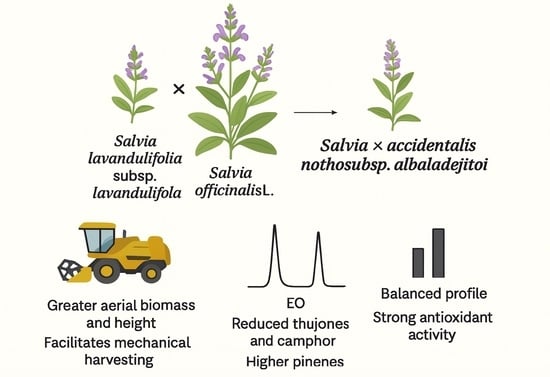
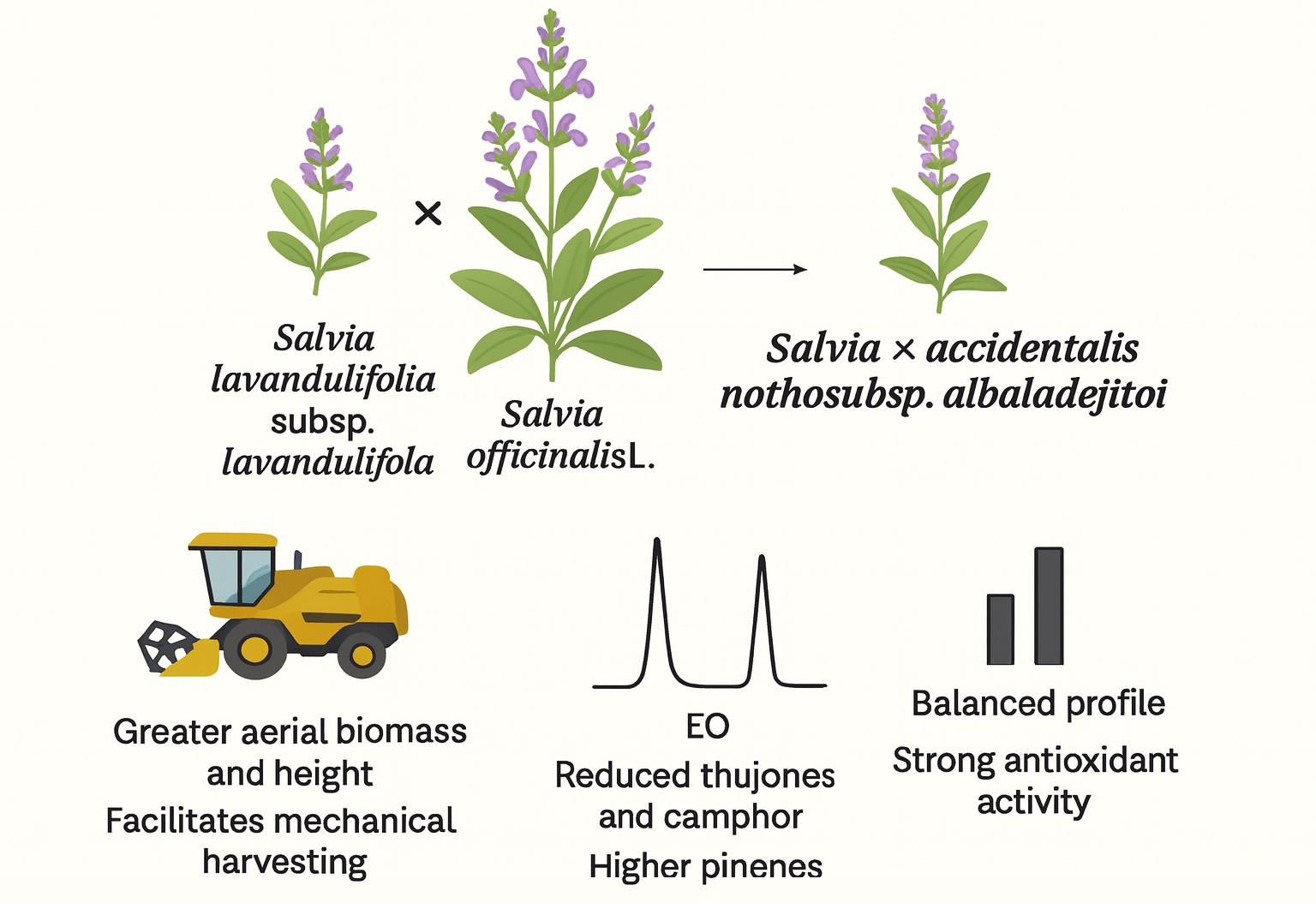
In Europe, Salvia officinalis L. is the most widely cultivated species of the genus Salvia, valued for its medicinal properties and essential oil production. However, in Spain, the predominant wild species is S. lavandulifolia Vahl., which exhibits notable morphological diversity. Cultivating these species presents specific challenges: S. lavandulifolia typically displays a creeping habit that hinders mechanical harvesting, while S. officinalis contains neurotoxic thujones in its essential oil, raising safety concerns. Therefore, developing new sage cultivars that combine improved agronomic performance, easier harvesting, and a safe, high-quality essential oil composition is of great practical interest for the sustainable production of sage. This study investigates the recently described natural hybrid Salvia × accidentalis nothosubsp. albaladejitoi (S. lavandulifolia subsp. lavandulifolia × S. officinalis) through a comprehensive multiparametric evaluation, including morphological, phenological, and biochemical analyses. The hybrid exhibited greater biomass, likely influenced by S. officinalis, which could facilitate mechanical harvesting. The chemical profile (GC and HPLC) revealed intermediate compositions of the essential oil and extract, characterized by lower concentrations of thujone and camphor and higher levels of bioactive pinenes. Its balanced phenolic profile and enhanced antioxidant capacity also suggest potential functional applications. Overall, S. × accidentalis nothosubsp. albaladejitoi demonstrates a promising combination of agronomic and biochemical traits, supporting its potential as a new cultivar for the sustainable cultivation of sage and the production of high-quality, safe and functionally valuable sage-derived products.

Graphical Abstract

1. Introduction

Salvia L. stands as the prominent genus within the Lamiaceae family, encompassing over 1000 species worldwide [1]. Regarding the Mediterranean basin, Salvia officinalis L. stands out as the most widely distributed species [2], largely attributed to its renowned medicinal properties, essential oil production and traditional and cultural significance, all of which are closely linked to the historical cultivation and naturalization of ancient crops throughout the Iberian Peninsula [3,4]. Spain, in particular, hosts a rich diversity of sage species, with 18 taxa identified [4]. Among these, S. lavandulifolia Vahl. emerges as the most prevalent, furthermore spreading its distribution to southeastern France and northwestern Africa [4]. This species also exhibits certain morphological diversity, which has led to its taxonomic classification into five distinct subspecies: (1) lavandulifolia, (2) vellerea (Cuatrec.) Rivas Goday & Rivas Mart., mariolensis (Figuerola) Alcaraz & De la Torre, (3) blancoana (Webb & Heldr.) Rosúa & Blanca and (5) oxyodon (Webb & Heldr.) Rivas Goday & Rivas Mart. Accordingly, due to the wide presence of S. officinalis and S. lavandulifolia species in our country, it is expected that these plants may exhibit certain adaptability to cultivation within our edaphoclimatic conditions, as well. However, S. lavandulifolia is a small shrub, rarely higher than 60 cm [4], making its cultivation and harvesting difficult and limiting the use of mechanical harvesting tools. On the other hand, S. officinalis presents elevated concentrations of neurotoxic terpenes (α- and β-thujone) in its EO, which can exceed 75%, as reviewed by Franz and Novak, 2015 [5].
Since those species are closely related and often overlap in similar habitats and ecological niches, opportunities for sexual reproduction and interspecific hybridization increase [6]. Similarly, many examples of sage hybrids have been described in many regions and climates around the world: (1) S. × accidentalis Sánchez-Gómez & R. Morales, nothosp. nov. (S. lavandulifolia Vahl subsp. vellerea (Cuatr.) Rivas Goday & Rivas Martínez × S. officinalis L. [7]), (2) S. × auriculata Mill. (S. fruticosa Mill. × S. officinalis L. [2,8]), (3) S. × karamanensis Celep & B.T.Drew (S. aucheri Benth. subsp. canescens (Boiss. & Heldr.) Celep, Kahraman & Doğan × S. heldreichiana Boiss. ex Benth. [9,10]), (4) S. × doganii Celep & B.T.Drew (S. cyanescens Boiss. & Bal. × S. vermifolia Hedge & Hub.-Mor. [9]), (5) S. columbariae Benth. × S. greatae Brandegee [11], (6) S. aramiensis Rech. × S. officinalis L. [8], etc.
Therefore, exploring genetic hybridization programs to develop new sage cultivars that achieve a balance between increased biomass production and reduced levels of undesirable chemical metabolites, along with a focus on cultivars with improved drought resistance [12] and chemical stability between individuals and over time [13], could offer valuable opportunities for crop improvement, consistent product quality or even for ornamental value [12,14]. Such efforts offer promising prospects for establishing new crops with greater economic relevance and broad agronomic and industrial applications, potentially yielding phenotypes with improved crop adaptability and harvest efficiency [12,14], biomass production (heterosis or hybrid vigour), or diverse chemotypes of interest with improved biological capacities [8].
In this context, intermediate morphological traits were observed in previous studies for specimens grown in adjacent plots at the Albaladejito Agroforestry Research Centre (IRIAF) containing plants of S. lavandulifolia subsp. lavandulifolia and S. officinalis. This led to the investigation of the natural hybrid derived from spontaneous cross-pollination between the two species, focused on combining the larger plant size [4] and medicinal potential of S. officinalis [3] and the demonstrated absence of thujone in the S. lavandulifolia oil [15,16]. As a result, the vegetative propagation of the hybrid by cloning (ramets) enabled the establishment of a specific plot, where oil yield evaluations and chemical analyses were conducted throughout the phenological cycle of the three species. These insights suggested a mid-range chemotype for the new specimen [17]. These observations also led to the botanical description [18] and registration in the Botanical Garden of Valencia (VAL2475660 TYPUS; University of Valencia).
The objective of this study is to comprehensively evaluate the agronomic potential and commercial value of the newly described sage species S. × accidentalis nothosubsp. albaladejitoi. The research focuses on assessing its agronomic performance, including traits that facilitate: (1) agricultural management, harvesting periods and mechanization; (2) its commercialization potential as a dried plant, especially in terms of appearance and possible production costs; and (3) the industrial applications of its extracts, with special emphasis on the production and composition of essential oils (EOs), as well as the yield, phenolic content and antioxidant capacity of the ethanolic extracts (EEs).

2. Materials and Methods

2.1. Description of the Study Area

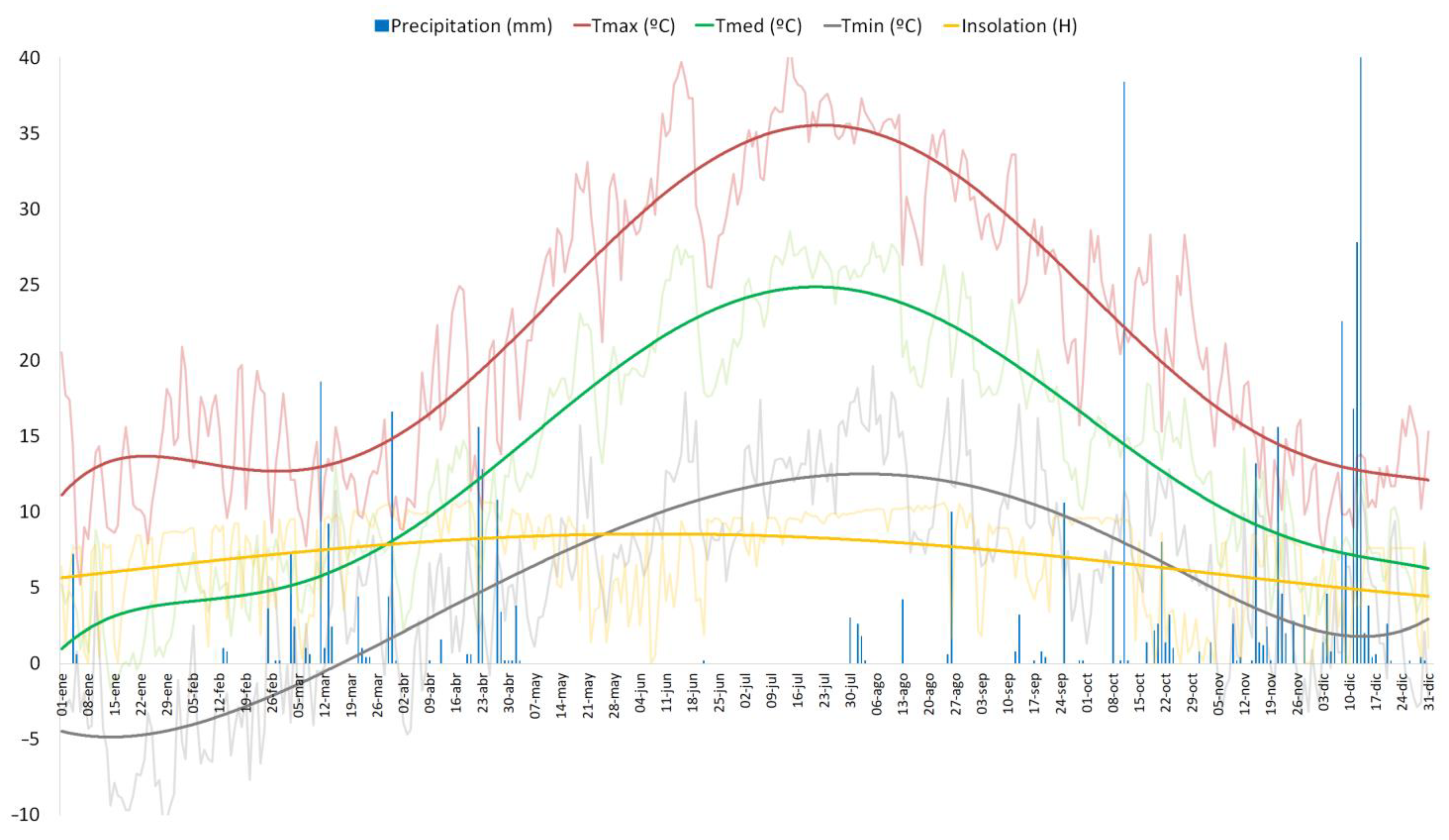
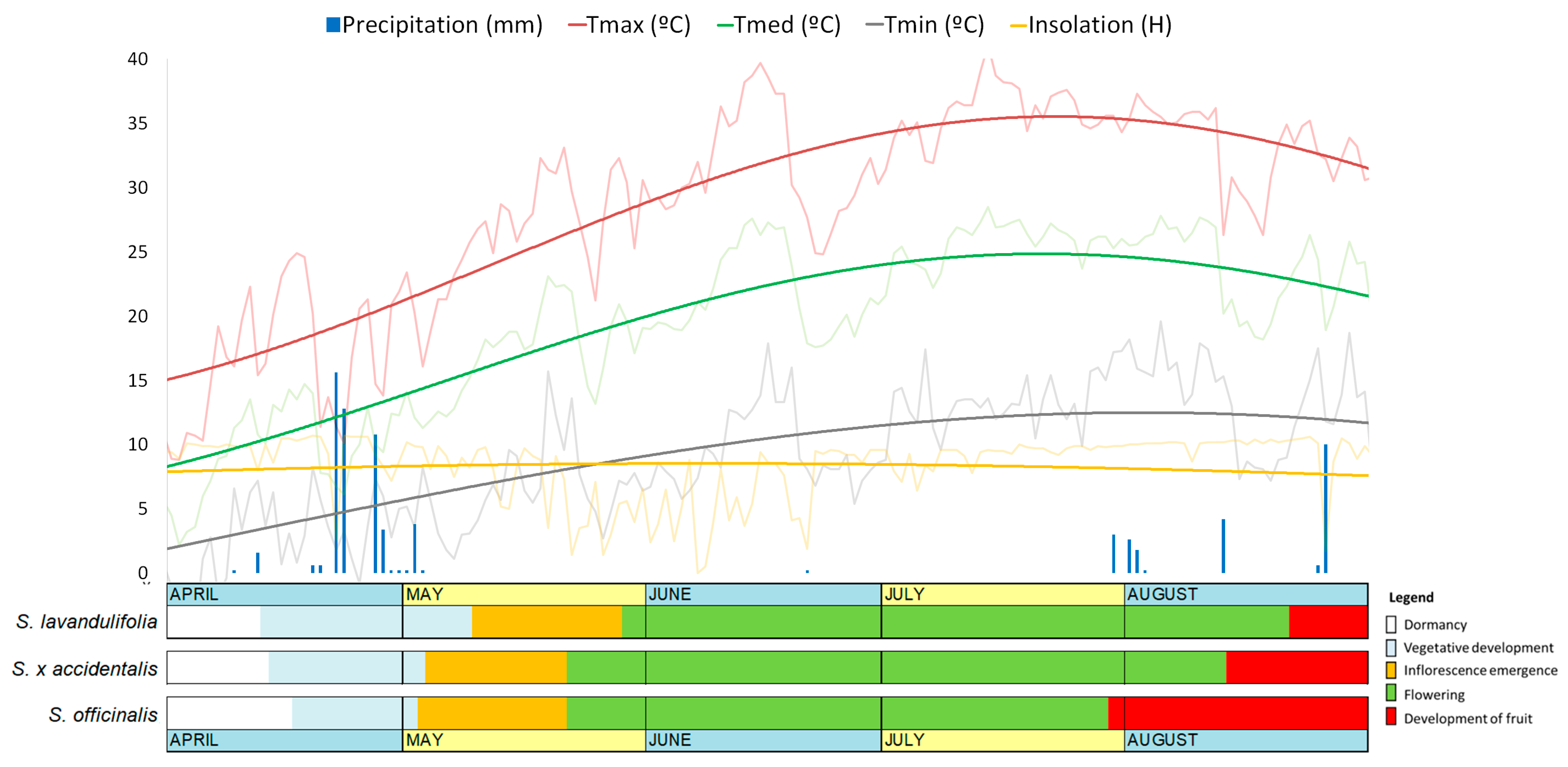
The study was conducted in the experimental plots of the Agroforestry Research Center of Albaladejito (CIAF-IRIAF; 40.0727, −2.2027) located in Cuenca (Spain) at an elevation of 901 m above sea level. The area is situated within the Mediterranean Region (Western Mediterranean Subregion). According to the Spanish Meteorological Agency [19], the area convers average annual temperatures of around 11.7 °C, ranging from 3.1 °C in January to 21.9 °C in July; and annual precipitations of about 500 mm. Specifically, the plots are characterized by sandy loam soil and surrounded by agricultural land. The climatic conditions (Figure 1) were recorded using a Vantage Pro 2 station (Davis Instruments Corp., Hayward, CA, USA), including mean, maximum and minimum temperatures (°C), as well as precipitation (mm). In addition, insolation (sunlight hours) was obtained from the climatic records of the Spanish Meteorological Agency (https://www.aemet.es/).

2.2. Propagation of Plants and Experimental Design

Two species of the Salvia genus (S. lavandulifolia subsp. lavandulifolia & S. officinalis), along with their spontaneous cross-pollination hybrid (S. × accidentalis nothosubsp. albaladejitoi [19]), were cultivated in separate plots (N = 90; 3 species × 3 replicates × 10 individuals). The trial was carried out under rainfed conditions, with agronomic interventions limited to weed control.

2.3. Morphological and Physiological Parameters

Plant height measurements were carried out at the post-flowering stage on 10 random plants per species, measuring from the base to the top layer of the leaf. Similarly, an equal number of flower spikes were measured from their insertion point to the top. Plant biomass was determined by harvesting five individual plants per species and recording their fresh weight. Approximately 50 g of plant material was then obtained from each individual and species, weighed and dried at 35 °C for 5 days, allowing the calculation of moisture and total dry biomass per species. The leaf morphology was defined by examining 25 random leaves per species, measuring length and width using a Mitutoyo 530-122 vernier caliper (Mitutoyo Corp., Kanagawa, Japan). Dry biomass (g) and moisture content (%) of leaves were determined by weighing 25 random leaves gathered in triplicate at different non-consecutive weeks, before and after drying at 105 °C for 24 h. Leaf area (LA, cm2) was estimated as: π/4 × leaf length × leaf width, while leaf mass per area (LMA, mg/cm2) was calculated as the ratio of the average dry biomass per leaf to the average leaf surface area. Finally, colour coordinates in the CIE 1976 L*a*b* (CIELAB) space were measured using a CSM 4 colorimeter (PCE Instruments GmbH, Meschede, Germany). In addition, the colour index (CI) was also calculated as: (a* × 1000)/(L* × b*), following the method reported by Vignoni et al. [20].

2.4. Germination Capacity

Seeds from each species were randomly collected from the experimental plots and stored at 4 °C under refrigeration. Subsequently, the seeds were submerged in water, and floating seeds were discarded due to their expected low germination rates. Selected seeds were then soaked in a 0.05% gibberellic acid solution for 24 h, after which excess water was removed with filter paper. Following this treatment, five random seeds were placed in quadruplicate using 12-well plates. Each well received 700 µL of distilled water, and the plates were placed in ziplock bags and incubated in a growth chamber (22 °C, 16:8 L:D) according to Ortiz de Elguea et al. [13]. Finally, germination progress was monitored daily for up to 15 days.

2.5. Phenology Assessment

Phenological monitoring was carried out weekly from April to August 2023, covering all individuals of each species. Data collection involved recording the percentage of buds and inflorescences in the different phenophases of each individual, according to the BBCH scale proposed by Meier [21]. The phenophases considered were: dormancy (stage 0), vegetative development (stage 3), inflorescence emergence (stage 5), flowering (stage 6), and fruit development (stage 7). Data collection was based on the percentage of buds, inflorescences, or fruiting in each phenophase and individual. The information was processed to calculate phenological development using the weighted phenological development (WPD) method [22]. In this way, a phenological trend value was obtained for each sampling day, and the continuous phenological trend was subsequently calculated throughout the biological development of each species by linear interpolation, as previously reported [23].

2.6. Plant Extraction (EOs & EEs)

The upper parts of 10 random plants per species (N = 30) were collected and air-dried at room temperature for one week, followed by oven-drying at 40 °C for three days. From this vegetal material, 5 plants per species were hydrodistilled using a Clevenger apparatus for 2.5 h after the condensation of the first drop. The essential oils (EOs) were separated from the hydrosol by decantation and treated with anhydrous magnesium sulphate to remove residual water. On the other hand, the other 5 plants were individually extracted with ethanol using a Soxhlet apparatus for 15 h, concentrated using a rotary evaporator at 175 mbar and 50 °C and dried in a ventilated oven at 45 °C for 2 days to finally obtain the ethanolic extracts (EE). Essential oil (EO) yield was calculated as mL of EO per 100 g of dry plant material, while ethanolic extract (EE) yield was expressed as grams of extract per 100 g of dry plant material. Samples were stored at 4 °C prior to chemical and biological characterization.

2.7. Chemical Characterization of Sage Extracts (EOs & EEs)

2.7.1. Chemical Analysis of EOs by Gas Chromatography (GC)

The essential oils (EOs) were subjected to chemical characterization by gas chromatography (GC) using a Varian 400-GC (Varian Inc./Agilent Technologies Inc., Palo Alto, CA, USA) system equipped with a VF-5MS column (60 m × 0.25 mm × 0.25 μm film thickness, cross-linked phenyl-methylsiloxane) from Varian Inc., Palo Alto, CA, USA. The temperature gradient ranged from 90 to 116 °C at a rate of 2 °C/min, followed by an increase to 230 °C at a rate of 4 °C/min and an increase to 250 °C at a rate of 20 °C/min, and then held at 250 °C for 6 min. Injection temperature was maintained at 250 °C, with an injection volume of 0.5 μL and helium (1 mL/min) serving as the carrier gas in split mode (100:1). The flame ionization detector (FID) was set at 300 °C, with hydrogen flow at 35 mL/min, air flow at 300 mL/min, and make-up flow at 29 mL/min. Sampling rate was 50 ms. Identification of main components relied on their relative retention times and Kovats index compared to reference standards as reported in Herraiz-Peñalver et al. [17]. Quantification of components in terms of relative percentage abundance was determined by analyzing chromatographic peak areas with the Galaxie® chromatography software v1.9.3.2 (Varian Inc./Agilent Technologies Inc., Palo Alto, CA, USA).

2.7.2. Total Phenol Content (TPC) of Ethanolic Extracts

In summary, 5 µL of each Ethanolic Extract (EE) at a concentration of 1 mg/mL were added in quadruplicate to 96-well microplates, followed by 155 µL of H2O and 10 µL of the Folin-Ciocalteu reagent. After 5 min, 30 μL of 20% sodium carbonate (Na2CO3) was added to each well, and the microplates were incubated for 30 min at 40 °C. Subsequently, microplate readings were taken using an EPOCH 2 microplate spectrophotometer (BioTek Instruments/Agilent Technologies Inc., Palo Alto, CA, USA) at 765 nm. Gallic acid (GA) standards ranging from 1–7.5 µg/mL served as a reference for the determination of the calibration curve (y = 0.055x − 0.0004; R2 = 0.996). The assay was performed at least in duplicate, and results were expressed as grams of gallic acid equivalents per 100 g of EE.

2.7.3. Phenolic Profile of EEs by HPLC/DAD

The phenolic composition of the ethanolic extracts (EEs) was carried out according to the method outlined in Jordán et al. [24], employing a Shimadzu HPLC (Shimadzu Co., Kioto, Japan) equipped with a Zorbax SB-C18 column (5 μm, 4.6 × 250 mm; Agilent Technologies Inc., Palo Alto, CA, USA) and the diode array detector (UV-Vis) SPD-M20A (Shimadzu Co., Kioto, Japan). EEs were prepared at a concentration of 5 µg/µL in 96% EtOH, filtered through a 0.22 µm membrane, and 10 µL of the filtrate was injected. The chromatographic analysis was conducted at room temperature, utilizing a mobile phase comprising 0.05% formic acid/water (A) and acetonitrile (B) at a flow rate of 1 mL/min, following this gradient program: 0–10 min: 5% B; 10–30 min: 15% B; 30–35 min: 25% B; 35–50 min: 30% B; 50–55 min: 55% B; 55–57 min: 90% B; 57–67 min: 100% B. Chemical compounds were identified by correlating UV spectra (200–400 nm) and retention times with either commercial standards or tentatively with UV spectral data reported for sage species. Quantification of compounds was performed using calibration curves of commercial standards or chemically similar compounds within the range of 0.02 to 5 μg and expressed as mg/g of EE.

2.8. Antioxidant Capacities

  • Free radical scavenging activity (DPPH) was determined following the method described by Ortiz de Elguea-Culebras et al. [13]. Briefly, 50 µL of EE (10–100 µg/mL in EtOH) was mixed with 200 µL of 0.005% DPPH, incubated for 1 h at room temperature, and the absorbance was measured at 517 nm. BHT and EtOH served as positive and negative controls, respectively. Each analysis was performed twice, including two replicates per assay. The inhibition capacity (%) was calculated by the formula [((C–T)/C) × 100], where C represents the absorbance of the negative control (EtOH) and T that of the EE.
  • Ferric reducing antioxidant power (FRAP): was performed according to Ortiz de Elguea-Culebras et al. [13]. In each well, 50 µL of EE (10–100 µg/mL) was mixed with 50 µL of 0.2 M sodium phosphate buffer (pH 6.6) and 50 µL of 1% potassium ferricyanide (III), followed by incubation at 50 °C for 20 min. After cooling to room temperature, 100 µL of 5% trichloroacetic acid and 10 µL of 0.1% ferric (III) chloride were added, and the mixture was incubated again for 10 min at 50 °C, measuring the absorbance at 700 nm. Analyses were performed in duplicate, with two independent replicates per test. BHT and EtOH were used as positive and negative controls, respectively.
The IC50 value, defined as the concentration required to inhibit 50% of DPPH radical and AU0.5, defined as the required concentration to yield 0.5 absorbance units were estimated through linear regression based on the dose-dependent concentration–inhibition relationship.

2.9. Statistical Analysis

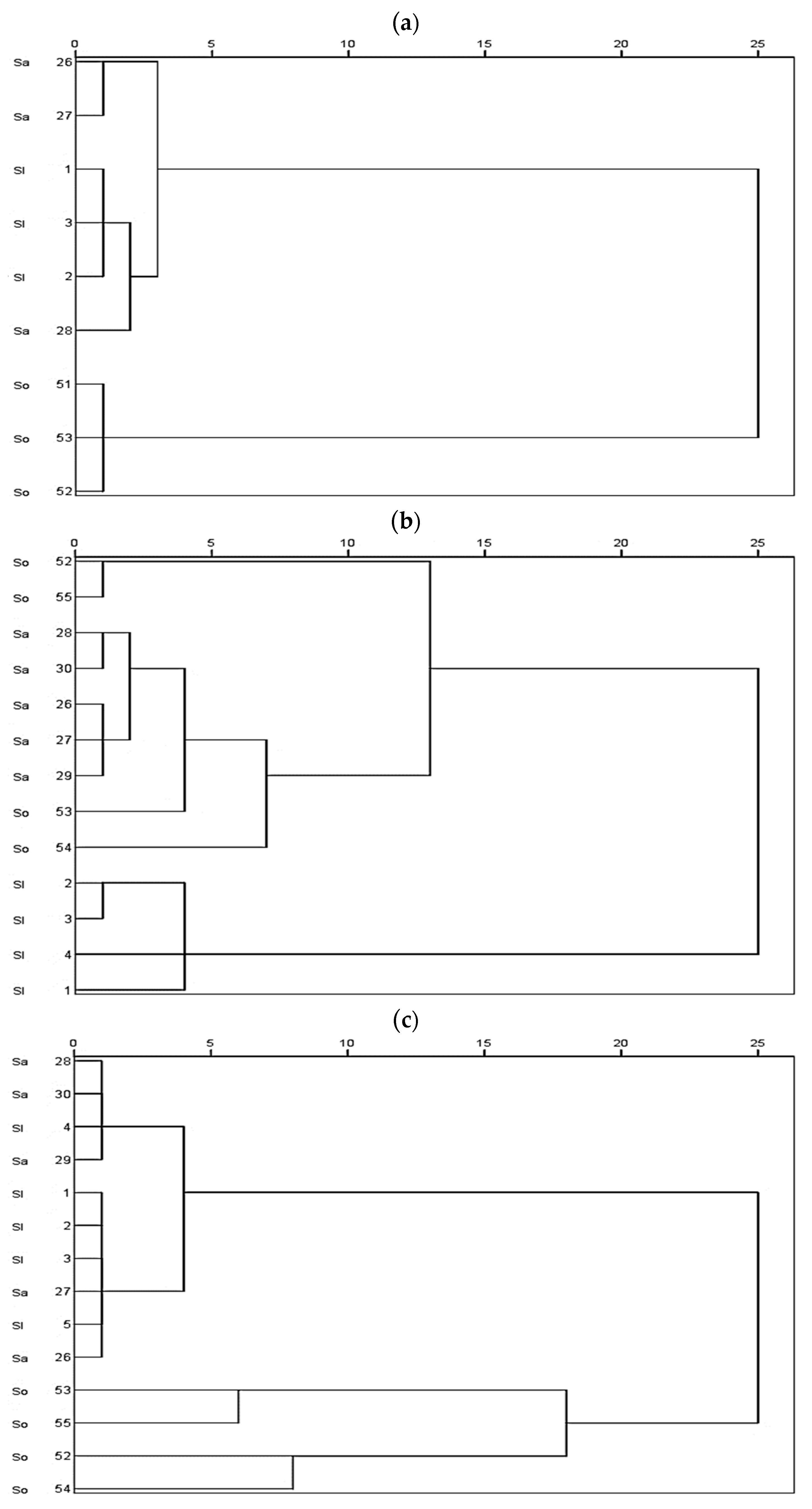
Statistical differences among the three species were assessed using a one-way ANOVA, followed by Tukey’s HSD post hoc test (p < 0.05), performed with SPSS Statistics version 25 (IBM Corp., Armonk, NY, USA). To evaluate the uniformity within clones/ramets of each species, the Homogeneity Grade (HG) was calculated based on the coefficient of variation using the formula: [1 − (SD/ x - ) × 100], where SD and x - ; represent the standard deviation and mean of the individuals sampled per species, and three homogeneity levels were defined: *** > 90%, ** > 80%, and * > 70%. Finally, to establish the similarities among species, a dendrogram was constructed using agglomerative hierarchical clustering with squared Euclidean distance, based on morphological traits, essential oil composition and phenolic profile.

3. Results

3.1. Agronomic Potential of S. × accidentalis

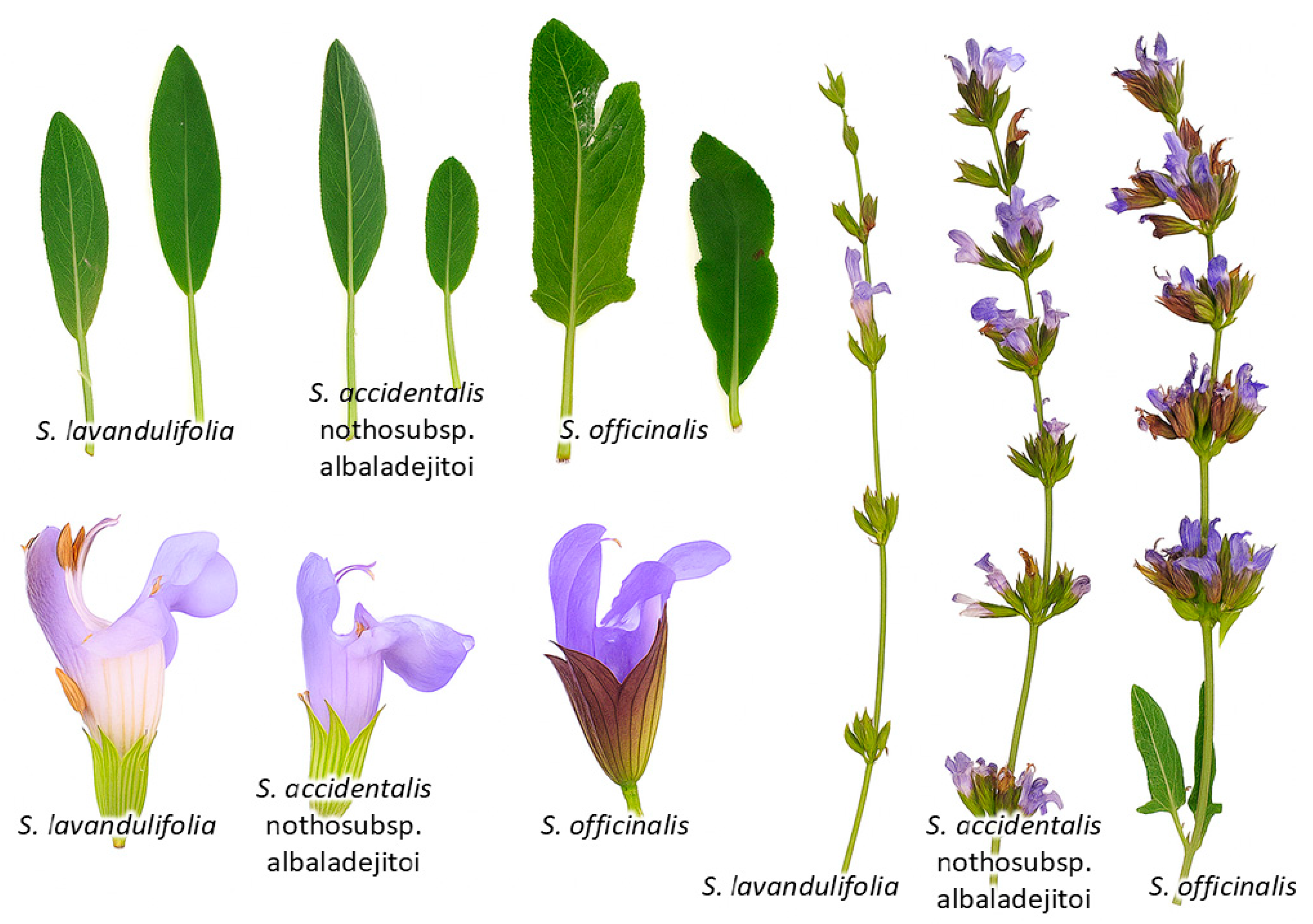
Morphological differences were observed among the three sage species (Figure 2), with S. × accidentalis consistently exhibiting mid-range values between S. officinalis and S. lavandulifolia, supporting its hybrid status and proposing a combination of advantageous traits from both parental species.
Likewise, significant differences (p < 0.05) were detected among the three sage species for the agronomic and commercial traits evaluated (Table 1), where stems ranged from 50 to 26 cm for S. officinalis and S. lavandulifolia, respectively; while S. × accidentalis exhibited an uniform and intermediate size. In contrast, S. lavandulifolia recorded the longest spikes and S. officinalis the shortest, while S. × accidentalis again differed between both species. Despite the absence of significant differences in fresh and dry plant weight, a similar trend was detected where the tallest species (S. officinalis) exhibited the highest biomass and lowest water content, followed by the hybrid, while the creeping sage species (S. lavandulifolia) exhibited the lowest biomass and highest moisture. Likewise, leaf morphology and biomass also demonstrated similar trends: S. × accidentalis developed larger leaves than S. lavandulifolia but smaller than S. officinalis, resulting in an average leaf area and biomass of 3.5 cm2 and 52 mg/leaf, similar to its predecessor species. Hierarchical clustering analysis (Figure 4a) demonstrated a pronounced morphological similarity between S. lavandulifolia and S. × accidentalis, grouping them together and indicating that the S. lavandulifolia genotype strongly influenced the phenotype of the hybrid species. Finally, structural parameters such as LMA (leaf mass per area) and SLA (specific leaf area) also placed the hybrid between S. lavandulifolia and S. officinalis, whereas germination performance also confirmed this trend, as S. × accidentalis (≈40%) achieved higher rates than S. lavandulifolia but did not reach the potential observed for S. officinalis (≈85%).

3.2. Phenological Description

The meteorological variables (Figure 1) depict daily temperature, precipitation, and insolation, and exhibit a clear Mediterranean-type pattern: temperatures and solar radiation peak in summer and decline to their lowest levels in winter, whereas precipitation remains irregularly distributed throughout the year without a well-defined seasonal maximum. Phenological observations for the three species (Figure 3) were interpreted within this climatic context, revealing distinct developmental trajectories that appear to be driven primarily by temperature dynamics and, to a lesser extent, by variations in precipitation and isolation. Temperatures and insolation follow a clear Mediterranean cycle with minima in winter and maxima in summer, while precipitation appears irregularly distributed without a strong seasonal pattern. Among the species, S. lavandulifolia exhibited the earliest onset of vegetative development, starting around mid-April, and the latest onset of inflorescence emergence. This resulted in the longest vegetative phase among the three species. In contrast, S. officinalis displayed a shorter vegetative period, along with earlier inflorescence emergence, while S. × accidentalis exhibited an intermediate duration, reflecting its hybrid nature between the parental taxa. Despite the differences in vegetative development, the three species exhibited a similar duration for the in-florescence emergence phase, which concluded simultaneously for S. officinalis and the hybrid, but extended in S. lavandulifolia until the end of May. The transition to active flowering occurred in May and peaked during June and July for all species. This phase coincides with a period of rising maximum and minimum temperatures and intermittent rainfall, typical of late spring and early summer in Mediterranean climates. The end of flowering and the onset of fruiting were closely aligned with the decline in temperatures and rain in August. In particular, S. officinalis entered the fruiting phase earlier, concluding its flowering period in late July and early August, thus exhibiting the shortest reproductive phase. In contrast, S. lavandulifolia maintained active flowering until the third week of August, while S. × accidentalis again showed a mid-range pattern.

3.3. Commercial Relevance of S. × accidentalis

Visually, colorimetric analysis demonstrated S. × accidentalis’ leaves with a brighter (>L* from S. lavandulifolia) and greener (<a* from S. officinalis) appearance, also confirmed by the intermediate colour index values (Table 1). Relative water content (RWC) of leaves was highest in S. officinalis, with S. × accidentalis exceeding S. lavandulifolia. Regarding plant extracts, the hybrid exhibited a favorable balance of characteristics, offering an in-between essential oil yield, higher than that of S. officinalis, and slightly superior phenolic content than that of S. lavandulifolia. By contrast, no differences were noticed in ethanol extraction yields. In relation to biological potential, statistical analysis indicated that the EEs of S. × accidentalis and S. lavandulifolia exhibited comparable and moderate antioxidant activity, suggesting that the hybrid retains a similar functional chemical profile to these parental species. In contrast, S. officinalis exhibited significantly higher bioactivity, reflected by the lower IC50 values in both antioxidant model tests, and highlighting its superior ability to scavenge free radicals and prevent oxidative compounds. It is also significant to highlight the uniform values obtained from calculating the homogeneity grade (HG) between the different individuals of this plant species.

3.4. Chemical Characterization of Essential Oils

The chemical composition of the essential oils of S. lavandulifolia and S. officinalis (Table 2) demonstrated distinct profiles across the major terpene classes, with S. × accidentalis consistently exhibiting stable composition among individuals and intermediate values between its parental species. Monoterpene hydrocarbons were most abundant in S. × accidentalis, closely followed by S. officinalis, while S. lavandulifolia exhibited significantly lower levels. Within this group, α-pinene was notably higher in the hybrid compared to both parents, suggesting enhanced aromatic potential. Other monoterpenes varied between species, while S. × accidentalis also showed mid-range concentrations for certain major compounds, such as sabinene and β-pinene. Notably, the content in thujones was significantly elevated in S. officinalis (28.3%), with S. × accidentalis showing moderately lower levels (21.4%) and S. lavandulifolia presenting trace amounts. Oxygenated monoterpenes, particularly 1,8-cineole, were the most abundant in S. lavandulifolia, followed by the hybrid and S. officinalis. In contrast, this trend was not consistent for the other oxygenated compound, camphor, where the hybrid exhibited lower values than its parental species. Sesquiterpene hydrocarbons were highest in S. officinalis, with S. × accidentalis occupying statistically an intermediate position and S. lavandulifolia showing the lowest content. An identical pattern was observed for trans-caryophyllene and α-humulene. Oxygenated sesquiterpenes, including caryophyllene oxide and viridiflorol, followed a similar gradient, with hybrid species presenting moderate levels compared to the high concentration in S. officinalis and the lowest presence in S. lavandulifolia. Hierarchical clustering analysis (Figure 4b) demonstrated a phytochemical affinity between the EOs of S. officinalis and S. × accidentalis, grouping them together. This pattern suggests that the chemotype of the hybrid species is primarily influenced by the genetic contribution of S. officinalis, probably evidenced by its higher thujone content and lower levels of limonene and 1,8-cineole compared to S. lavandulifolia.

3.5. Phenolic Profile of Ethanolic Extracts

Comparative analysis of the phenolic profiles of ethanolic extracts from the three species demonstrated significant interspecific differences, with S. × accidentalis consistently exhibiting more uniform results and intermediate concentrations relative to its pa-rental species (Table 3).
Total phenols were highest in S. officinalis and lowest in S. lavandulifolia, indicating the influence of the S. officinalis genotype on the biosynthesis of these compounds in S. × accidentalis. Phenolic acids were more abundant in the hybrid and S. officinalis than in S. lavandulifolia. Notably, danshensu (3-(3,4-Dihydroxyphenyl)lactic acid) and caffeic acid were higher in S. × accidentalis compared to both parents. Rosmarinic acid, the dominant phenolic compound for all three species, followed an increasing gradient from S. lavandulifolia, S. × accidentalis to S. officinalis, defining the mid-range chemotype of the hybrid. Flavonoid content remained relatively constant among species, with luteolin-7-O-glucuronide and apig-enin-7-O-glucoside slightly more concentrated in the hybrid, while cirsimaritin was statistically detected at lower levels. Luteolin had intermediate concentrations, whereas no differences were detected for salvigenin among the three species. In contrast, a very distinctive pattern was observed for phenolic diterpenes, detected exclusively in S. officinalis (>100 mg/g EE), including carnosol, rosmaridiphenol, carnosic acid and methyl carnosate. These compounds were completely absent in both S. lavandulifolia and S. × accidentalis, suggesting that their biosynthesis is genotype-dependent on S. officinalis. This was also supported by the hierarchical clustering analysis (Figure 4c), which demonstrated a strong phytochemical similarity between the phenolic profiles of S. lavandulifolia and S. × accidentalis, mainly evidenced by the complete absence of these phenolic diterpenes.
Figure 4. Multivariate clustering of the sage species (Sl: S. lavandulifolia. Sa: S. × accidentalis. So: S. officinalis) based on: (a) morphological traits. (b) essential oil composition and (c) phenolic profile.
Agriculture 15 02577 g004

4. Discussion

This study presents a comprehensive assessment of significant agronomic traits of Salvia × accidentalis, including detailed evaluations of plant and leaf morphology, yield of essential oils and ethanolic extracts, along with the terpene and phenolic profiles of these respective extracts. Furthermore, the analysis provides valuable information, from an agricultural perspective, on germination performance and phenological development. The results demonstrated the presence of a novel and natural sage hybrid, which consistently presents intermediate values on multiple parameters compared to its parental species, S. lavandulifolia and S. officinalis, as previously demonstrated for other sage hybrids [2,9,10,12,25]. This trend reinforces its promising potential for large-scale cultivation and commercial exploitation for phytochemical applications. Notably, the hybrid also exhibited high inter-individual uniformity, indicating low phenotypic variability among clones/ramets. This aspect is particularly valuable for propagation, as it facilitates the use of standardized agricultural practices and ensures consistency in plant production, extraction yields and phytochemical quality.
The significant increase (>160%) in growth parameters observed for the hybrid species, compared to S. lavandulifolia, highlights its suitability for mechanized harvesting systems commonly used in aromatic plant cultivation. This morphological advantage may streamline harvesting operations and improve overall crop management efficiency. The observed increases in flower spike size and germination rates could also contribute to improved wind dispersal of seeds, potentially reducing planting costs. Since a plant’s peak biological activity typically coincides with its flowering stage, the biosynthesis of secondary metabolites should be markedly intensified during this period, especially EOs, as previously documented by Arraiza et al. [26] for cultivated specimens of S. officinalis. Therefore, it is reasonable to suggest that species with prolonged flowering phases have a greater potential to produce and accumulate higher amounts of essential oil. This hypothesis is supported by the findings of Herraiz-Peñalver et al. [17], who observed that S. lavandulifolia, with a prolonged flowering duration, exhibited the highest essential oil production from July (full bloom) to November (onset of dormancy). In contrast, S. officinalis, with its comparatively shorter flowering period, reached its maximum essential oil production between July (full bloom) and August (fruit development stage). Furthermore, considering the relatively low essential oil content in flowers of sage [27], strategic harvesting practices, such as cutting flower stems at the onset of flowering, may even improve total essential oil production by redirecting these metabolic resources to oil biosynthesis. Otherwise, the extended flowering period observed for the hybrid species could offer ecological and agronomic benefits, such as increased pollination capacity, higher reproductive success or extended flexibility in harvesting schedules, particularly advantageous in crops with variable climatic conditions. In addition, the considerably longer seed maturation phase may influence overall reproductive success, which could have broader implications for breeding and cultivation strategies.
Regarding visual appearance, Vignoni et al. [20] reported that colour index value, ranging from −20 to −2, corresponds to deep green to yellowish green. These variations are mainly related to differences in chlorophyll content and have significant implications, especially in the marketing of dried plant materials, where consumers tend to prefer brighter (>L*) and greener (<a*) aspects. Therefore, a further understanding of how collecting management influences colour retention and visual quality is crucial to accomplish market expectations, consumer satisfaction and strengthen market competitiveness. At the same time, achieving a lower water content is especially relevant for plants intended for the distillation of essential oils (plant wetness) or for sale as dried herbs for infusions or culinary applications (leaf wetness). Species with lower water content offer clear economic advantages, such as lower transportation and drying costs, as well as greater shelf-life stability due to their lower vulnerability to fungal contamination. Strategic selection and breeding of varieties with reduced moisture levels, while maintaining essential physiological and biological functions, can significantly improve the economic viability of aromatic crops by increasing biomass yield per hectare.
Hybrid plants have significantly higher biomass compared to Salvia lavandulifolia, so they are expected to produce higher essential oil yields per hectare, a clear agronomic advantage for large-scale cultivation. Salvia × accidentalis also exhibited intermediate extraction capacities compared to its parental species, suggesting a balanced inheritance of phytochemical traits. These results indicate that hybridization can effectively modulate the biosynthesis of valuable secondary metabolites, thereby optimizing the production of both essential oils and ethanolic extracts. Previous research by Herraiz-Peñalver et al. [17] evaluated the essential oil composition of these species over a complete phenological cycle (2013–2014). Remarkably, the results obtained in this study, conducted ten years earlier, are highly consistent with current findings, demonstrating both the hybrid nature and the uniformity in the composition of the essential oils. This suggestion is further strengthened by the multiparameter analysis performed in this study. This consistency is particularly valuable for breeding programs aimed at producing high-quality and homogenized plant extracts over the years, as previously reported [13]. In addition, hybrid oil also shows promising biological potential, mainly due to its elevated levels of the two pinene isomers (17%), compared to S. lavandulifolia (14%) and S. officinalis (7%), compounds known for their antimicrobial properties [28]. Furthermore, its lower content of neurotoxic thujone (21%) improves its safety profile compared to S. officinalis, making it a better candidate for diverse applications. Similar results were also reported for the hybrid S. officinalis × S. lavandulifolia subsp. vellerea [25]. Likewise, the lower camphor concentration further increases its value for aromatic purposes, as its strong and persistent odour is often less attractive in aromatic uses. Similarly, Pokajewicz et al. [29] reviewed the current ISO standards for Lavandula angustifolia (ISO 3515:2002 [30]), L. latifolia (ISO 4719:2012 [31]), and two commercial cultivars of their hybrid L. × intermedia (cv. ‘Abrial’ and ‘Grosso’; ISO 3054:2025 [32] and ISO 8902:2009 [33]), also reporting mid-range concentrations for the main compounds (linalool, linalyl acetate, camphor and 1,8-cineole).
The phenolic profile of the hybrid also demonstrated intermediate levels between those of its parental species, influenced mainly by the genotype of S. lavandulifolia and increased by that of S. officinalis, as previously observed for other sage hybrids [10]. This is directly reflected in the antioxidant capacity of the extracts, similar to that of S. lavandulifolia, and confirmed by hierarchical clustering analysis. However, the presence and concentration of phenolic acids appear to be more closely related to S. officinalis, being significantly higher than that of S. lavandulifolia. This double similarity reinforces the hybrid nature of S. × accidentalis. In this context, rosmarinic acid emerged as the predominant phenolic acid in S. × accidentalis, as also reported for diverse sage species [34,35,36]. This compound is known for its broad spectrum of biological activities, including antioxidant, antiviral, antibacterial, anti-inflammatory, anticancer, hepatoprotective and neuroprotective effects, as reviewed by Harindranath et al. [37]. On the other hand, the absence of phenolic diterpenes in the hybrid species highlights its closer phytochemical proximity to S. lavandulifolia. These compounds, particularly carnosic acid, have been widely recognized for their potent bioactivity and are considered the main bioactive constituents in rosemary extracts [38,39,40,41]. Accordingly, the biological activities typically associated with these phenolic diterpenes will not be supported by the use of S. × accidentalis.
Since the hybrid was originated through natural processes, these findings underscore the importance of further studies involving reciprocal crosses between male and female gametes of S. lavandulifolia and S. officinalis. This proposal may establish the development of new agricultural cultivars with certain desirable phenotypic traits, such as increased biomass production, higher extract yield, vigorous growth compatible with mechanized harvesting, enhanced essential oil content and elevated levels of rosmarinic acid or other phenolic diterpenes. Furthermore, evaluating easily measurable traits, such as plant height and leaf morphology provides valuable information on genetic diversity, facilitating the identification of promising candidates for various breeding programs aimed at commercial exploitation. The hybrid’s intermediate phenotypic expression and high morphological uniformity highlight its potential for agronomic innovation and large-scale cultivation. Besides, the low variability observed among clones/ramets suggests a stable and consistent phenotype, ideal for crop improvement and yield optimization. Beyond agronomic performance, these results are also relevant for the early detection of hybridization events in other commercially and ecologically significant Lamiaceae species. Finally, further study on the adaptability of S. × accidentalis to diverse soil and climatic conditions could reinforce its potential to improve agricultural productivity and spread diverse commercial applications. These approaches align with the current market demand for high-quality, cost-effective and environmentally sustainable plant-based products.

5. Conclusions

This study thoroughly confirms the hybrid nature of Salvia × accidentalis nothosubsp. albaladejitoi, which consistently exhibited a mid-range agronomic, phenological and phytochemical phenotype between its parental species, S. lavandulifolia Vahl. subsp. lavandulifolia and S. officinalis L. The hybrid’s increased vegetative growth, biomass production and leaf development, along with improved germination rates and morphological uniformity among individuals, present potential advantages in large production and mechanized cultivation and harvesting. Its transitional flowering and fruiting periods prolong the reproductive phase, which may favour the biosynthesis of essential oils, in addition to offering greater flexibility for collecting times. From a commercial perspective, the hybrid’s greener foliage and lower moisture content contribute to improved postharvest quality and reduced processing costs, increasing its appeal to consumers’ preference for culinary or infusion applications. Chemically, S. × accidentalis presents a favourable profile, with higher levels of bioactive pinenes and reduced concentrations of neurotoxic thujones and strong-smelling camphor, improving both safety and aromatic profile. The predominance of rosmarinic acid in its ethanolic extracts reinforces its bioactive potential, but the absence of phenolic diterpenes may limit certain applications frequently associated with S. officinalis. Overall, S. × accidentalis nothosubsp. albaladejitoi emerges as a promising candidate for large-scale propagation, offering improved agronomic performance and bioactive extractive potential. Future research should focus on expanding the hybrid’s industrial applicability in the pharmaceutical, nutraceutical and flavouring sectors. Likewise, these efforts might promote more sustainable and resource-efficient cultivation practices, aligned with the growing market demand for safe and added-value plant-based products.

Author Contributions

Conceptualization: G.O.d.E.-C., D.H.-P. and E.M.-B.; Data curation: G.O.d.E.-C. and J.R.-M.; Investigation: G.O.d.E.-C., J.R.-M. and O.G.-C.; Methodology: G.O.d.E.-C. and J.R.-M.; Project administration: G.O.d.E.-C., D.H.-P. and E.M.-B.; Supervision: G.O.d.E.-C., D.H.-P. and E.M.-B.; Validation: G.O.d.E.-C., J.R.-M. and O.G.-C.; Writing—original draft: G.O.d.E.-C. and E.M.-B.; Writing—review & editing: J.R.-M., D.H.-P. and O.G.-C. All authors have read and agreed to the published version of the manuscript.

Funding

This study has been fully supported by the Regional Institute of Agri-Food and Forestry Research and Development of Castilla-La Mancha (IRIAF).

Institutional Review Board Statement

Not applicable.

Data Availability Statement

The original contributions presented in the study are included in the article; further inquiries can be directed to the corresponding author.

Acknowledgments

We thank Noemi Cerro, Pilar Moyano, Amparo Calvo, David Prieto, Miguel Ángel Escolano, Brígido de Benito and Orencio Sánchez for technical and agricultural support.

Conflicts of Interest

The authors declare no conflicts of interest.

References

  1. Walker, J.B.; Sytsma, K.J.; Treutlein, J.; Wink, M. Salvia (Lamiaceae) Is Not Monophyletic: Implications for the Systematics, Radiation, and Ecological Specializations of Salvia and Tribe Mentheae. Am. J. Bot. 2004, 91, 1115–1125. [Google Scholar] [CrossRef] [PubMed]
  2. Radosavljević, I.; Bogdanović, S.; Celep, F.; Filipović, M.; Satovic, Z.; Surina, B.; Liber, Z. Morphological, Genetic and Epigenetic Aspects of Homoploid Hybridization Between Salvia officinalis L. and Salvia fruticosa Mill. Sci. Rep. 2019, 9, 3276. [Google Scholar] [CrossRef]
  3. Ghorbani, A.; Esmaeilizadeh, M. Pharmacological Properties of Salvia officinalis and Its Components. J. Tradit. Complement. Med. 2017, 7, 433–440. [Google Scholar] [CrossRef] [PubMed]
  4. Sáez, L. Salvia L. In Flora ibérica XII; Castroviejo, S., Aedo, C., Laínz, M., Muñoz Garmendia, F., Nieto Feliner, G., Paiva, J., Benedí, C., Eds.; Real Jardín Botánico, CSIC: Madrid, Spain, 2010; Volume XII, pp. 298–326. ISBN 9788400090418. [Google Scholar]
  5. Franz, C.; Novak, J. Sources of Essential Oils. In Handbook of Essential Oils: Science, Technology, and Applications; Baser, K.H.C., Buchbauer, G., Eds.; CRC Press: Boca Ratón, FL, USA, 2015; pp. 43–86. ISBN 9781466590472. [Google Scholar]
  6. Olarte, A.; Mantri, N.; Nugent, G.; Wohlmuth, H.; Li, C.G.; Xue, C.; Pang, E. A gDNA Microarray for Genotyping Salvia Species. Mol. Biotechnol. 2013, 54, 770–783. [Google Scholar] [CrossRef]
  7. Sánchez-Gómez, P.; Morales, R. Un Nuevo Híbrido de Salvia (Labiatae). An. Jardín Botánico Madr. 1999, 57, 421–422. [Google Scholar] [CrossRef]
  8. Nilofar; Bahadırlı, N.P.; Elhawary, E.A.; Eldahshan, O.; Singab, A.N.; Saka, E.; Cespedes- Acuna, C.L.; Andruch, V.; Kalyniukova, A.; Zengin, G. Exploring the Chemical Composition and Biological Effects of Four Salvia Hybrids: An Innovative Perspective on Functional Yields. eFood 2024, 5, e70012. [Google Scholar] [CrossRef]
  9. Celep, F.; Raders, E.; Drew, B.T. Two New Hybrid Species of Salvia (S. × Karamanensis and S. × Doganii) from Turkey: Evidence from Molecular and Morphological Studies. Turk. J. Bot. 2020, 44, 647–660. [Google Scholar] [CrossRef]
  10. Maral, H.; Çeçen, Ö.; Türk Baydır, A.; Türkmen, M. Determination of Essential Oil Constituents and Antioxidant Activities of Hybrid Species Salvia × karamanensis Celep & B. T. Drew and Its Parents (Salvia aucheri Benth. Subsp. canescens (Boiss. & Heldr.) Celep, Kahraman & Dogan × Salvia heldreichiana Bois. Biochem. Syst. Ecol. 2024, 113, 104795. [Google Scholar] [CrossRef]
  11. Morrison, E.; Drew, B. Potential Hybridization among Two Species of California Salvia. Trans. Neb. Acad. Sci. Affil. Soc. 2023, 43, 25–33. [Google Scholar] [CrossRef]
  12. Papafotiou, M.; Martini, A.N.; Papanikolaou, E.; Stylias, E.G.; Kalantzis, A. Hybrids Development Between Greek Salvia Species and Their Drought Resistance Evaluation along with Salvia Fruticosa, Under Attapulgite-Amended Substrate. Agronomy 2021, 11, 2401. [Google Scholar] [CrossRef]
  13. Ortiz de Elguea-Culebras, G.; Melero-bravo, E.; Jordán, M.J.; Calvo-Martinez, A.; Caceres-Cevallos, G.; Quílez-Simón, M.; Sánchez-Vioque, R. Selection of Populations of Salvia lavandulifolia Vahl. Based on Crop Adaptations, Phenolic Chemotypes and Biological Capacities of the Distillation by-Products. Ind. Crop. Prod. 2024, 213, 118337. [Google Scholar] [CrossRef]
  14. Tychonievich, J.; Warner, R.M. Interspecific Crossability of Selected Salvia Species and Potential Use for Crop Improvement. J. Am. Soc. Hortic. Sci. 2011, 136, 41–47. [Google Scholar] [CrossRef]
  15. Sánchez-Vioque, R.; Herraiz-Peñalver, D.; Melero Bravo, E.; Ortiz de Elguea-Culebras, G.; Herrero, B.; Santiago, Y.; Bueno, M.; Perez Magarino, S.; Carmen Asensio, M. Variability of the Essential Oil Composition of Cultivated Populations of Salvia lavandulifolia Vahl. Crop Sci. 2022, 62, 744–752. [Google Scholar] [CrossRef]
  16. Usano-Alemany, J.; Palá-Paúl, J.; Herráiz-Peñalver, D. Comprehensive Phenological Description of Essential-Oil Chemotypes of Salvia Lavandulifolia VAHL Grown Under the Same Environmental Conditions. Chem. Biodivers. 2014, 11, 1963–1977. [Google Scholar] [CrossRef] [PubMed]
  17. Herraiz-Peñalver, D.; Ortiz de Elguea-Culebras, G.; Sánchez-Vioque, R.; Santana Méridas, O. Identification of a Hybrid Species of Sage (Salvia Officinalis L. X S. Lavandulifolia Subsp. Lavandulifolia) through the Study of the Essential Oil. J. Essent. Oil Res. 2015, 27, 363–372. [Google Scholar] [CrossRef]
  18. Ortiz de Elguea-Culebras, G.; Herraiz-peñalver, D.; García-Cardo, O.; Melero-Bravo, E.; Sánchez-Vioque, R. Descripción Morfológica de Un Nuevo Híbrido Natural de Salvia (Labiatae) En Cuenca: Salvia X Albaladejitoi. In Proceedings of the II Annual Symposium of Spanish Botany; Spanish Botanical Society, Madrid, Spain, 12–13 November 2021. [Google Scholar]
  19. AEMET. Guía Resumida Del Clima En España (1981–2010); Ministerio de Agricultura y Pesca, Alimentación y Medio Ambiente: Madrid, Spain, 2012.
  20. Vignoni, L.A.; Césari, R.M.; Forte, M.; Mirábile, M.L. Determination of Color Index in Minced Garlic. Inf. Tecnológica 2006, 17, 63–67. [Google Scholar] [CrossRef]
  21. Meier, U. Phenological Growth Stages. In Phenology: An Integrative Environmental Science. Tasks for Vegetation Science; Schwartz, M.D., Ed.; Springer: Dordrecht, The Netherlands, 2003. [Google Scholar]
  22. Cornelius, C.; Petermeier, H.; Estrella, N.; Menzel, A. A Comparison of Methods to Estimate Seasonal Phenological Development from BBCH Scale Recording. Int. J. Biometeorol. 2011, 55, 867–877. [Google Scholar] [CrossRef] [PubMed]
  23. Rojo, J.; Pérez-Badia, R. Effects of Topography and Crown-Exposure on Olive Tree Phenology. Trees—Struct. Funct. 2014, 28, 449–459. [Google Scholar] [CrossRef]
  24. Jordán, M.J.; Lax, V.; Rota, M.C.; Lorán, S.; Sotomayor, J.A. Effect of the Phenological Stage on the Chemical Composition and Antimicrobial and Antioxidant Properties of Rosmarinus officinalis L Essential Oil and Its Polyphenolic Extract. Ind. Crops Prod. 2013, 48, 144–152. [Google Scholar] [CrossRef]
  25. Sánchez-Gómez, P.; Soriano-Cano, M.C.; Sotomayor-Sánchez, J.A.; García-Vallejo, M.C. Essential Oils of a New Hybrid: Salvia Officinalis X S. Lavandulifolia Ssp. Vellerea. J. Essent. Oil Res. 1995, 7, 317–318. [Google Scholar] [CrossRef]
  26. Arraiza, M.P.; Arrabal, C.; López, J.V. Seasonal Variation of Essential Oil Yield and Composition of Sage (Salvia officinalis L.) Grown in Castilla-La Mancha (Central Spain). Not. Bot. Horti Agrobot. Cluj-Napoca 2012, 40, 106–108. [Google Scholar] [CrossRef]
  27. Jebri, M.; Maaloul, A.; Bon, J.; Romdhane, M. Essential Oils of Salvia Officinalis Cultivated in Tunisia: Variations Regarding Plant Organs, Harvest Time and Drying Process. Chem. Afr. 2023, 6, 2827–2833. [Google Scholar] [CrossRef]
  28. Rivas da Silva, A.C.; Mnteiro Lopes, P.; Barros de Azevedo, M.M.; Machado Costa, D.C.; Sales Alviano, C.; Sales Alviano, D. Biological Activities of a-Pinene and β-Pinene Enantiomers. Molecules 2012, 17, 6305–6316. [Google Scholar] [CrossRef] [PubMed]
  29. Pokajewicz, K.; Białoń, M.; Svydenko, L.; Hudz, N.; Balwierz, R.; Marciniak, D.; Wieczorek, P.P. Comparative Evaluation of the Essential Oil of the New Ukrainian Lavandula angustifolia and Lavandula × intermedia Cultivars Grown on the Same Plots. Molecules 2022, 27, 2152. [Google Scholar] [CrossRef] [PubMed]
  30. ISO 3515:2002; Oil of Lavender (Lavandula angustifolia Mill.). International Organization for Standardization: Geneva, Switzerland, 2002.
  31. ISO 4719:2012; Essential Oil of Spike Lavender (Lavandula latifolia Medikus), Spanish Type. International Organization for Standardization: Geneva, Switzerland, 2012.
  32. ISO 3054:2025; Essential Oil of Lavandin Abrial (Lavandula × intermedia Emeric Ex Loisel. “Abrial”) (Ex Lavandula angustifolia Mill. × Lavandula latifolia Medik. “Abrial”). International Organization for Standardization: Geneva, Switzerland, 2025.
  33. ISO 8902:2025; Essential Oil of Lavandin Grosso (Lavandula × intermedia Emeric Ex Loisel. “Grosso”) (Ex Lavandula angustifolia Mill. × Lavandula latifolia Medik. “Grosso”). International Organization for Standardization: Geneva, Switzerland, 2025.
  34. Mervić, M.; Štefan, M.B.; Kindl, M.; Blažeković, B.; Marijan, M.; Vladimir-Knežević, S. Comparative Antioxidant, Anti-Acetylcholinesterase and Anti-α-Glucosidase Activities of Mediterranean Salvia Species. Plants 2022, 11, 625. [Google Scholar] [CrossRef]
  35. Porres-Martínez, M.; Carretero Accame, M.E.; Gómez-Serranillos, M.P. Pharmacological Activity of Salvia Lavandulifolia and Chemical Components of Its Essential Oil. A Review. Lazaora 2013, 34, 237–254. [Google Scholar] [CrossRef]
  36. Tohma, H.; Köksal, E.; Kılıç, Ö.; Alan, Y.; Abdullah Yılmaz, M.; Gülçin, İ.; Bursal, E.; Alwasel, S.H. RP-HPLC/MS/MS Analysis of the Phenolic Compounds, Antioxidant and Antimicrobial Activities of Salvia L. Species. Antioxidants 2016, 5, 38. [Google Scholar] [CrossRef]
  37. Harindranath, H.; Susil, A.; Rajeshwari, S.; Sekar, M.; Kumar, B.R.P. Unlocking the Potential of Rosmarinic Acid: A Review on Extraction, Isolation, Quantification, Pharmacokinetics and Pharmacology. Phytomed. Plus 2025, 5, 100726. [Google Scholar] [CrossRef]
  38. Birtić, S.; Dussort, P.; Pierre, F.X.; Bily, A.C.; Roller, M. Carnosic Acid. Phytochemistry 2015, 115, 9–19. [Google Scholar] [CrossRef] [PubMed]
  39. Jordán, M.J.; Lax, V.; Rota, M.C.; Lorán, S.; Sotomayor, J.A. Relevance of Carnosic Acid, Carnosol and Rosmarinic Acid Concentrations in the in Vitro Antioxidant and Antimicrobial Activities of Rosmarinus officinalis (L.) Methanolic Extracts. J. Agric. Food Chem. 2012, 60, 9603–9608. [Google Scholar] [CrossRef] [PubMed]
  40. Mena, P.; Cirlini, M.; Tassotti, M.; Herrlinger, K.A.; Dall’Asta, C.; Del Rio, D. Phytochemical Profiling of Flavonoids, Phenolic Acids, Terpenoids and Volatile Fraction of a Rosemary (Rosmarinus officinalis L.) Extract. Molecules 2016, 21, 1576. [Google Scholar] [CrossRef] [PubMed]
  41. Zhao, Y.; Sedighi, R.; Wang, P.; Chen, H.; Zhu, Y.; Sang, S. Carnosic Acid as a Major Bioactive Component in Rosemary Extract Ameliorates High-Fat-Diet-Induced Obesity and Metabolic Syndrome in Mice. J. Agric. Food Chem. 2015, 63, 4843–4852. [Google Scholar] [CrossRef] [PubMed]
Figure 1. Seasonal patterns of temperature (°C), insolation (sunlight hours) and precipitation in the study area during 2023.
Agriculture 15 02577 g001
Figure 2. Comparative morphology of leaves, calyces and floral spikes of S. lavandulifolia. S. × accidentalis nothosubsp. albaladejitoi and S. officinalis.
Agriculture 15 02577 g002
Figure 3. Meteorological conditions (above) and phenological monitoring during the main developmental stages (below) of S. lavandulifolia, S. × accidentalis and S. officinalis during the study period (April–August 2023).
Agriculture 15 02577 g003
Table 1. Comparative analysis of S. × accidentalis and its parental species focused on agronomic and commercial interest. Different letters indicate significant differences among species (Tukey’s test, p < 0.05).
S. lavandulifoliaS. × accidentalisS. officinalisMean
Agronomic Potential
Plant stem (cm)25.55 ± 5.0 c**41.50 ± 7.9 b**50.00 ± 4.2 a***39.02 ± 11.8
Plant spike (cm)32.45 ± 5.3 a**27.30 ± 3.7 b**23.45 ± 4.2 b**27.73 ± 5.7 *
Plant weight (kg/plant)0.41 ± 0.30.45 ± 0.1 *0.67 ± 0.20.51 ± 0.2
Plant biomass (kg/plant)0.20 ± 0.10.23 ± 0.1 *0.35 ± 0.10.26 ± 0.1
Plant RWC 150.61 ± 2.4 a***49.21 ± 0.7 ab***46.94 ± 2.8 b***48.92 ± 2.5 ***
Leaf length (cm)3.06 ± 0.5 c**3.88 ± 0.4 b**7.10 ± 0.8 a**4.68 ± 1.8
Leaf width (cm)0.92 ± 0.2 c*1.14 ± 0.2 b**2.05 ± 0.3 a**1.37 ± 0.5
Leaf area 2 (cm2)2.26 ± 0.8 c3.53 ± 0.8 b*11.56 ± 2.8 a*5.78 ± 4.5
Leaf biomass (mg/leaf)31.98 ± 0.2 c***51.92 ± 1.4 b***136.48 ± 4.5 a***73.49 ± 48.1
LMA 3 (g/m2)158.96 ± 52.2 a154.57 ± 34.7 a*124.06 ± 26.7 b*145.86 ± 41.8 *
SLA 4 (cm2/g)70.69 ± 26.1 ab67.96 ± 15.7 b*84.70 ± 20.4 a*74.45 ± 22.2 *
Germination Ratio 5 (%)30.00 ± 25.8 b40.00 ± 36.5 ab85.00 ± 10.0 a**51.67 ± 34.6
Commercial Relevance
L* (leaves)60.45 ± 2.6 a***58.56 ± 3.0 b***52.93 ± 2.4 c***57.32 ± 4.2 ***
a* (leaves)−3.26 ± 1.3 a−3.29 ± 0.7 a−6.16 ± 1.7 b−4.24 ± 1.9
b* (leaves)11.90 ± 2.6 a*11.37 ± 2.1 a**19.23 ± 3.3 b**14.17 ± 4.5
Colour Index (leaves)−4.74 ± 1.8 b−5.05 ± 1.1 b−6.10 ± 1.5 a−5.29 ± 1.6
Leaves RWC 1 (%)58.74 ± 1.4 b***61.61 ± 2.0 ab***64.99 ± 1.9 a***61.79 ± 3.1 ***
Essential Oil Yield (%)2.88 ± 1.1 a1.81 ± 0.2 ab***1.40 ± 0.5 b2.00 ± 0.9
Ethanolic Extract Yield (%)16.93 ± 1.4 ***16.53 ± 1.4 ***16.19 ± 3.4 *16.50 ± 2.2 **
TPC 6 (g GAE/100 g EE)9.36 ± 1.3 b**10.64 ± 1.5 b**15.90 ± 1.4 a***11.73 ± 3.1 *
DPPH 7 (µg/mL)45.69 ± 11.4 b*59.00 ± 10.2 b**23.19 ± 9.0 a43.77 ± 17.7
FRAP 7 (µg/mL)67.30 ± 10.9 b**65.32 ± 9.6 b**38.82 ± 9.5 a*58.22 ± 16.0 *
1 Relative Water Content; 2 Calculated as: π/4 × leaf length × leaf width; 3 Leaf Mass per Area calculated as: dry biomass per leaf/leaf area; 4 Specific Leaf Area calculated as: Leaf area/dry biomass per leaf; 5 Germination potential (N = 20 seeds/species) after 15 days; 6 Total Phenolic Content of Ethanolic Extracts; 7 Antioxidant capacities of ethanolic extracts (expressed as IC50 and AU0.5 values); Homogeneity grade (HG): *** > 90%. ** > 80%. * > 70%.
Table 2. Essential oil composition (%) of S. × accidentalis and its parental species. expressed as mean ± SD from five samples per species. Different letters indicate significant differences among species (Tukey’s test, p < 0.05).
Component (%)S. lavandulifoliaS. × accidentalisS. officinalisMean
Monoterpene hydrocarbons31.59 ± 3.7 b**47.42 ± 1.9 a***43.08 ± 5.8 a**41.21 ± 7.5 **
α-pinene6.30 ± 3.1 b11.28 ± 1.9 a**3.97 ± 2.8 b7.50 ± 3.9
Camphene1.82 ± 1.00.86 ± 0.41.63 ± 0.91.39 ± 0.8
Sabiene2.66 ± 1.1 a1.63 ± 0.2 a**0.24 ± 0.0 b**1.52 ± 1.1
β-pinene7.88 ± 1.6 a*6.26 ± 0.6 a***3.40 ± 0.4 b**5.88 ± 2.0
Myrcene6.66 ± 3.52.22 ± 0.1 ***2.87 ± 3.33.78 ± 3.0
ρ-cymene0.62 ± 0.51.05 ± 0.2 **0.44 ± 0.50.73 ± 0.5
Limonene4.30 ± 1.3 a*1.28 ± 0.2 b**1.29 ± 0.4 b2.21 ± 1.5
γ-terpinene1.32 ± 1.51.48 ± 0.4 *0.93 ± 0.71.26 ± 0.9
α-thujone0.02 ± 0.0 b17.74 ± 2.1 a**23.01 ± 10.8 a13.91 ± 11.0
β-thujone0.02 ± 0.0 c3.62 ± 0.3 b***5.31 ± 0.7 a**3.03 ± 2.2
Oxygenated monoterpenes51.01 ± 7.2 a**29.60 ± 4.7 b**26.15 ± 7.3 b*35.12 ± 12.1
1,8-cineole44.07 ± 5.3 a**26.63 ± 4.2 b**17.12 ± 6.6 b29.07 ± 11.9
Camphor5.71 ± 3.3 ab2.24 ± 0.6 b*8.11 ± 3.0 a5.11 ± 3.5
Borneol1.24 ± 0.70.73 ± 0.2 *0.92 ± 1.00.94 ± 0.6
Sesquiterpene hydrocarbons5.70 ± 2.5 b10.14 ± 2.3 ab*15.16 ± 4.3 a*10.32 ± 4.6
trans-caryophyllene4.19 ± 1.7 b4.81 ± 1.2 ab*7.52 ± 1.6 a*5.45 ± 1.9
α-humulene1.51 ± 1.4 b5.33 ± 1.1 ab*7.65 ± 3.6 a4.87 ± 3.2
Oxygenated sesquiterpenes1.60 ± 1.24.65 ± 1.75.13 ± 3.33.86 ± 2.5
Caryophyllene oxide1.56 ± 1.11.34 ± 0.50.31 ± 0.11.09 ± 0.8
Viridiflorol0.03 ± 0.1 b3.31 ± 1.2 ab4.83 ± 3.2 a2.77 ± 2.6
TOTAL89.89 ± 1.491.80 ± 1.889.53 ± 2.590.51 ± 2.0
Homogeneity grade (HG): *** > 90%. ** > 80%. * > 70%.
Table 3. Phenolic content (mg/g EE) of S. × accidentalis and its parental species. expressed as mean ± SD from five samples per species. Different letters indicate significant differences among species (Tukey’s test, p < 0.05).
Component (mg/g EE)S. lavandulifoliaS. × accidentalisS. officinalisMean
Phenolic acids45.40 ± 15.661.24 ± 13.8 *60.74 ± 33.155.44 ± 21.1
Danshensu7.54 ± 2.6 a9.91 ± 2.5 a*1.07 ± 2.1 b6.54 ± 4.3
Chlorogenic acid2.30 ± 0.5 a*2.18 ± 0.5 a*0.59 ± 1.2 b1.77 ± 1.0
Caffeic acid0.25 ± 0.6 b1.96 ± 0.8 a1.64 ± 0.5 a*1.26 ± 1.0
Salvianolic acid3.02 ± 1.20.97 ± 2.20.41 ± 0.81.54 ± 1.9
Rosmarinic acid32.29 ± 14.246.21 ± 13.1 *57.03 ± 31.044.33 ± 21.1
Flavonoids15.22 ± 3.7 *16.24 ± 0.6 ***14.74 ± 3.3 *15.45 ± 2.7 **
Luteolin-7-O-glucuronide6.17 ± 1.6 *7.48 ± 0.8 **7.18 ± 4.06.93 ± 2.3
Apigenin-7-O-glucoside1.21 ± 0.3 *2.04 ± 1.71.54 ± 1.21.60 ± 1.2
Luteolin2.46 ± 0.8 a2.23 ± 1.0 ab0.59 ± 1.2 b1.85 ± 1.2
Cirsimaritin1.91 ± 0.7 ab1.16 ± 0.2 b**2.32 ± 0.6 a*1.76 ± 0.7
Salvigenin3.46 ± 1.53.32 ± 1.0 *3.12 ± 3.33.31 ± 1.9
Phenolic Diterpenes0.00 ± 0.0 b***0.00 ± 0.0 b***104.21 ± 33.3 a29.78 ± 51.4
Carnosol0.00 ± 0.0 b***0.00 ± 0.0 b***5.16 ± 4.0 a1.47 ± 3.1
Rosmaridiphenol0.00 ± 0.0 b***0.00 ± 0.0 b***23.21 ± 9.4 a6.63 ± 11.8
Carnosic acid0.00 ± 0.0 b***0.00 ± 0.0 b***57.87 ± 24.3 a16.53 ± 29.5
Methyl carnosate0.00 ± 0.0 b***0.00 ± 0.0 b***17.98 ± 4.9 a*5.14 ± 8.8
TOTAL60.62 ± 16.0 b*77.48 ± 13.6 b**182.30 ± 14.3 a***101.41 ± 55.3
Homogeneity grade (HG): *** > 90%. ** > 80%. * > 70%.
Disclaimer/Publisher’s Note: The statements, opinions and data contained in all publications are solely those of the individual author(s) and contributor(s) and not of MDPI and/or the editor(s). MDPI and/or the editor(s) disclaim responsibility for any injury to people or property resulting from any ideas, methods, instructions or products referred to in the content.