Article

Organic Chromium Sources as a Strategy to Improve Performance, Carcass Traits, and Economic Return in Lambs Finishing at Heavier Weights

by
Alejandro Rivera-Villegas
1,
Alejandra Ríos
1,
Oliver Yaotzin Sánchez-Barbosa
1,
Octavio Carrillo-Muro
1,*,
Pedro Hernández-Briano
1,
Alejandro Plascencia
2,
Octavio Martínez-Guerrero
1 and
Rosalba Lazalde-Cruz
3
1
Unidad Académica de Medicina Veterinaria y Zootecnia, Universidad Autónoma de Zacatecas, General Enrique Estrada 98500, Mexico
2
Facultad de Medicina Veterinaria y Zootecnia, Universidad Autónoma de Sinaloa, Culiacán 80260, Mexico
3
Instituto de Investigaciones en Ciencias Veterinarias, Universidad Autónoma de Baja California, Mexicali 21100, Mexico
*
Author to whom correspondence should be addressed.
Agriculture 2025, 15(24), 2559; https://doi.org/10.3390/agriculture15242559
Submission received: 13 November 2025 / Revised: 4 December 2025 / Accepted: 9 December 2025 / Published: 11 December 2025

Abstract

Thirty-six Dorper × Katahdin intact male lambs [44.0 ± 0.27 kg initial body weight (BW)] were used in a randomized complete block design to evaluate the effects of supplementing different organic chromium (OrCr) sources on growth performance, dietary energetics, carcass traits, meat quality, and economic return. Treatments (n = 9 lambs/treatment) were (1) Control (no Cr), (2) chromium-enriched yeast (Cr-Yeast), (3) chromium–methionine (Cr-Met), and (4) chromium–propionate (Cr-Pr). All Cr sources were provided at 1.2 mg elemental Cr/lamb/d for 45 d. Lambs received a high-energy finishing diet (78:22 concentrate/forage; steam-rolled corn-based). Dry matter intake was not affected (p = 0.583; 1.27 ± 0.034 kg/d). Compared with Control, Cr-Pr increased final BW (+5%; p = 0.025) and average daily gain (+66%; p = 0.034), and improved feed efficiency (+59%; p = 0.045) and observed-to-expected net energy ratio (+22%; p = 0.042); Cr-Met and Cr-Yeast showed intermediate responses. No differences were observed (p > 0.05) in longissimus lumborum muscle area, cold carcass weight, dressing percentage, cooling loss, or zoometric traits. Rib and rump fat thickness decreased with Cr-Met (−15 and −12%; p = 0.024 and p = 0.048) and with Cr-Pr (−19 and −13%; p = 0.024 and p = 0.048), and all OrCr sources reduced omental (−6 to −25%; p = 0.034), mesenteric (≈−7%; p = 0.042), visceral (−12 to −16%; p = 0.034), and perirenal fat (−25 to −39%; p = 0.028). Empty body weight and hot carcass weight increased with Cr-Pr (p = 0.029 and p = 0.031, respectively). Cr-Yeast and Cr-Pr increased muscle proportion (+5 to +7%; p = 0.003) and reduced carcass fat (−20 to −27%; p = 0.018), improving the muscle/fat ratio (+42 to +50%; p = 0.045). Cr-Pr improved water-holding capacity (+27%; p = 0.014) without affecting pH24h, purge loss, cooking loss, or Warner–Bratzler shear force (p > 0.05). Cr-Pr reduced cost per kg of gain (−31%; p < 0.001) and increased income (+188% live; +105% carcass; p < 0.001), whereas Cr-Met and Cr-Yeast provided moderate benefits. In conclusion, OrCr supplementation improved dietary energy utilization, growth, carcass traits, and meat quality, enhancing profitability in lambs finished at heavier weights, with Cr-Pr producing the greatest responses.

1. Introduction

The feeding program in feedlot lamb systems consists of three stages—reception, transition, and finishing [1]. During the finishing phase, nutrient partitioning shifts toward fat deposition because the process of lipid accretion requires nearly twice as much energy as lean tissue accretion, resulting in reduced efficiency (lower G:F) [2,3]. This reduction in efficiency is particularly evident in lambs entering finishing at heavier weights (≥45 kg), as they are physiologically more mature and consequently allocate a greater proportion of nutrients toward adipose tissue deposition. These lambs commonly exhibit G:F values between 0.10–0.13 in commercial systems, along with increased carcass fatness and decreased economic returns [4,5]. Because of these challenges, metabolic modifiers that enhance nutrient partitioning toward lean tissue accretion are increasingly employed used to improve growth efficiency and carcass characteristics in heavy finishing lambs [6,7,8,9].
Chromium (Cr) is an essential micromineral [2] and metabolic modifier [4,10] that amplifies insulin signaling and modulates carbohydrate, lipid, and protein metabolism [11,12,13,14]. These mechanisms enhance dietary net energy utilization, muscle accretion, and reduce fat deposition [15,16]. Organic chromium (OrCr) sources show markedly higher bioavailability (25–30%) than inorganic Cr (0.4–3%) [17,18], with common commercial forms being chromium–yeast (Cr-Yeast), chromium–methionine (Cr-Met), chromium–propionate (Cr-Pr), chromium–nicotinic acid, and chromium–picolinate (Cr-Pic) [19]. Previous studies show that Cr-Yeast can increase average daily gain (ADG) by up to 29% and G:F by 26% [5,20], Cr-Met may improve energy use by ∼11% and reduce visceral and subcutaneous fat by 10–18% [21,22], and Cr-Pr has improved dry matter intake (DMI), ADG, and G:F in finishing ruminants [9,23]. Despite these findings, evidence remains inconclusive regarding which OrCr source is most effective, given differences in bioavailability and metabolic response [14,24,25].
Previous studies have demonstrated that supplying 1.2 mg OrCr/lamb/d improves growth performance, dietary energy use, and carcass lean deposition [5,20,21,22]. However, no study has directly compared Cr-Yeast, Cr-Met, and Cr-Pr in heavy finishing lambs, a category particularly susceptible to reduced efficiency due to advanced physiological maturity. We hypothesized that daily supplementation with 1.2 mg OrCr/lamb from different sources would improve energy utilization, growth, carcass traits, and meat quality, decreasing fat and increasing lean deposition, thereby improving profitability in lambs finished at heavier weights. Therefore, three OrCr sources (Cr-Yeast, Cr-Met, and Cr-Pr) were evaluated because these represent the most commercially available and scientifically documented OrCr forms for ruminants, and they also differ in ligand type and reported bioavailability, allowing a meaningful biological comparison.

2. Materials and Methods

This study was conducted at the Multinutrimentos, Aditivos y Asesoría Zootécnica (MAAZ) Experimental Center in Calera de Víctor Rosales, Zacatecas, Mexico (22°56′51.23″ N, 102°41′32.33″ W). The site is located at an altitude of 2162 m above sea level and is characterized by a temperate semi-arid climate. The experimental period was carried out from 12 May 2025 to 26 June 2025, during which the average ambient temperature was 23.2 °C. Slaughtering was performed in a federally certified abattoir, and carcass evaluations were consistently carried out at the Meat Science and Technology Laboratory, Unidad Académica de Medicina Veterinaria y Zootecnia, Universidad Autónoma de Zacatecas (UAMVZ-UAZ), in Gral. Enrique Estrada, Zacatecas, Mexico (22°59′05.87″ N, 102°42′56.35″ W). Dietary basal samples for chemical analysis were processed at the Laboratorio de Nutrición Animal of the Instituto de Investigación en Ciencias Veterinarias, Universidad Autónoma de Baja California.
All animal care and handling procedures complied with the protocols approved by the Institutional Committee on Bioethics and Animal Welfare of UAMVZ-UAZ (Protocol #07, March 2025). In addition, the experimental procedures were conducted in accordance with the official Mexican standards for animal welfare [26,27,28,29].

2.1. Animal Processing, Housing, and Feeding

Forty-eight Dorper × Katahdin intact male lambs were purchased from a single local producer and transported approximately 28 km to the MAAZ Experimental Center for inclusion in this study. Upon arrival, lambs (approximately 6 months of age) were: (1) identified with ear tags bearing a unique number; (2) vaccinated with a bacterin–toxoid against Clostridium spp., Pasteurella multocida, and Mannheimia haemolytica (Exgon 10®, Chinoin Veterinaria, Aguascalientes, Mexico); (3) treated against internal parasites (Closantel® 5%, Chinoin Veterinaria, Aguascalientes, Mexico) and external parasites (Doramectin 1%, Dectomax®, Zoetis, Mexico City, Mexico); and (4) individually weighed using an electronic crane scale (Rhino® BAC-300, 300-kg capacity, Rhino Maquinaria SA de CV, Estado de México, Mexico). Afterwards, lambs underwent a 21-d adaptation period to the feedlot facilities and diet, during which oat hay and alfalfa (50:50) were gradually replaced with the basal finishing diet. At the end of this period, 12 lambs were removed due to heterogeneous initial body weight (IBW) or poor productive performance, resulting in a final cohort of 36 lambs (n = 36; 9 lambs per treatment). Lambs were allocated by weight block into 36 individual pens (1.5 × 1.5 m; 1 lamb/pen; 9 pens/treatment). Pens were equipped with shade, individual feeders, and automatic drinkers. All lambs were monitored twice daily to detect signs of depression, diarrhea, or lameness. Throughout the experiment, no cases of morbidity or mortality were recorded, and no animals were removed.

2.2. Treatments and Diets

Based on previous reports showing that a daily dosage of 1.2 mg OrCr/lamb improves growth performance, dietary energy efficiency, and carcass composition [5,21,22], all treatments in the present study were standardized to provide 1.2 mg elemental Cr/lamb/d for 45 d, which corresponded to the full experimental period. Chromium supplementation was administered continuously throughout these 45 d; however, because zilpaterol hydrochloride (ZH) was also included in the feeding program, a mandatory 3 d withdrawal period was required exclusively for ZH, not for Cr. Zilpaterol was administered during the 28 d preceding this withdrawal period. Because Cr concentration differed among the commercial products, the inclusion level of each OrCr source was adjusted to supply the same elemental Cr intake (1.2 mg Cr/lamb/d). The experimental treatments were as follows (g product/lamb/d): (1) Control (no Cr supplementation), (2) Cr-Yeast (0.6 g), (3) Cr-Met (1.2 g), and (4) Cr-Pr (0.3 g) (Figure 1). The products used were Bioways® Cr-Yeast (2000 ppm Cr; Grupo Biotecap, Tepatitlán de Morelos, Jalisco, Mexico), Zinpro Microplex® Cr-Met (1000 ppm Cr; Zinpro Corp., Eden Prairie, MN, USA), and Drescrom P® Cr-Pr (4000 ppm Cr; Dresen Química, SAPI de CV, Mexico City, Mexico). Doses were calculated based on the proportional relationship between the target Cr dose and the Cr concentration of each product (mg Cr/g), ensuring equivalent Cr intake across treatments. Individual doses were weighed daily using an analytical precision balance (Pioneer PX523, Ohaus, NJ, USA) and manually mixed with 4 g of sodium bentonite as a carrier; control lambs received the bentonite carrier without Cr.
To ensure total consumption, the Cr supplements (or carrier) were mixed with 100 g of basal diet and offered at 08:00 and 16:00 h. This Cr-supplemented portion was always offered first and completely consumed before providing the remainder of the feed, preventing any loss of Cr in refusals. Once the treatment ration was consumed, the remainder of the feed was supplied. Fresh feed was provided twice daily (08:00 and 16:00 h). Each morning, 30 min before feeding, refusals were collected, weighed, and recorded; this information was used to adjust the afternoon ration, targeting ~30 g/kg of feed offered as refusals, while the morning allowance remained constant (500 g/lamb, ~40% of daily intake). Because the Cr-containing portion was never mixed with the full ration and was fully consumed before the rest of the diet was offered, no Cr could be lost in refusals.
The basal finishing diet which was prepared in a horizontal paddle mixer was formulated to meet NRC [2] nutrient requirements for feedlot lambs. Ingredients and chemical composition of basal diet are presented in Table 1. Representative samples (~50 g) from each batch were collected, stored at 4 °C in sealed plastic bags, and later used for chemical analysis.

2.3. Chemical Analyses

Basal diet samples were analyzed in triplicate to determine: (1) dry matter (DM) by oven-drying at 105 °C until constant weight (AOAC method 930.15; forced-air drying oven, Thermo Scientific, Waltham, MA, USA); (2) Crude protein using a nitrogen analyzer (FP-528, LECO Corp., St. Joseph, MI, USA; AOAC method 984.13) [30]; (3) neutral detergent fiber (NDF) using an Ankom200 Fiber Analyzer (Ankom Technology, Macedon, NY, USA) following Van Soest et al. [32]; and (4) ether extract (EE) using an Ankom XT15 Extractor (Ankom Technology, Macedon, NY, USA; AOCS official method Am 5-04) [31].

2.4. Calculations

To evaluate the effects of treatments on productive performance, lambs were individually weighed at the beginning of the trial (day 0, before the morning feeding; IBW) and at the end of the experiment (day 45, after 18 h of feed and water withdrawal, FBW). The following response variables were calculated: (1) ADG = [(FBW − IBW)/45 d], expressed in kg/d; (2) DMI = (feed offered − feed refused), calculated individually on DM basis, recorded daily and expressed in kg/d; and (3) G:F = ADG/DMI.
The estimation of expected DMI was performed based on observed ADG and average shrunk body weight (SBW) using the following equation: expected DMI, kg/d = (EM/NEm) + (EG/NEg), where EM is the energy required for maintenance, Mcal/d (0.056 × SBW0.75), EG is the energy gain, Mcal/d (0.276 × ADG × SBW0.75) [33], and net energy for maintenance (NEm) and net energy for gain (NEg) of the diet are 1.97 and 1.33 Mcal/kg, respectively (derived from tabular values based on the ingredient composition of the diet [2]. The coefficient 0.276 was based on a mature weight of 113 kg for Pelibuey × Katahdin intact male lambs [34]. Dietary NE was estimated by means of the quadratic formula: x = (–b – √(b2 − 4ac)/2c, where x = NEm, a = −0.41EM, b = 0.877EM + 0.41DMI + EG, and c = −0.877 DMI in accordance with Zinn et al. [35].

2.5. Body Fat Reserves and Longissimus Muscle Area

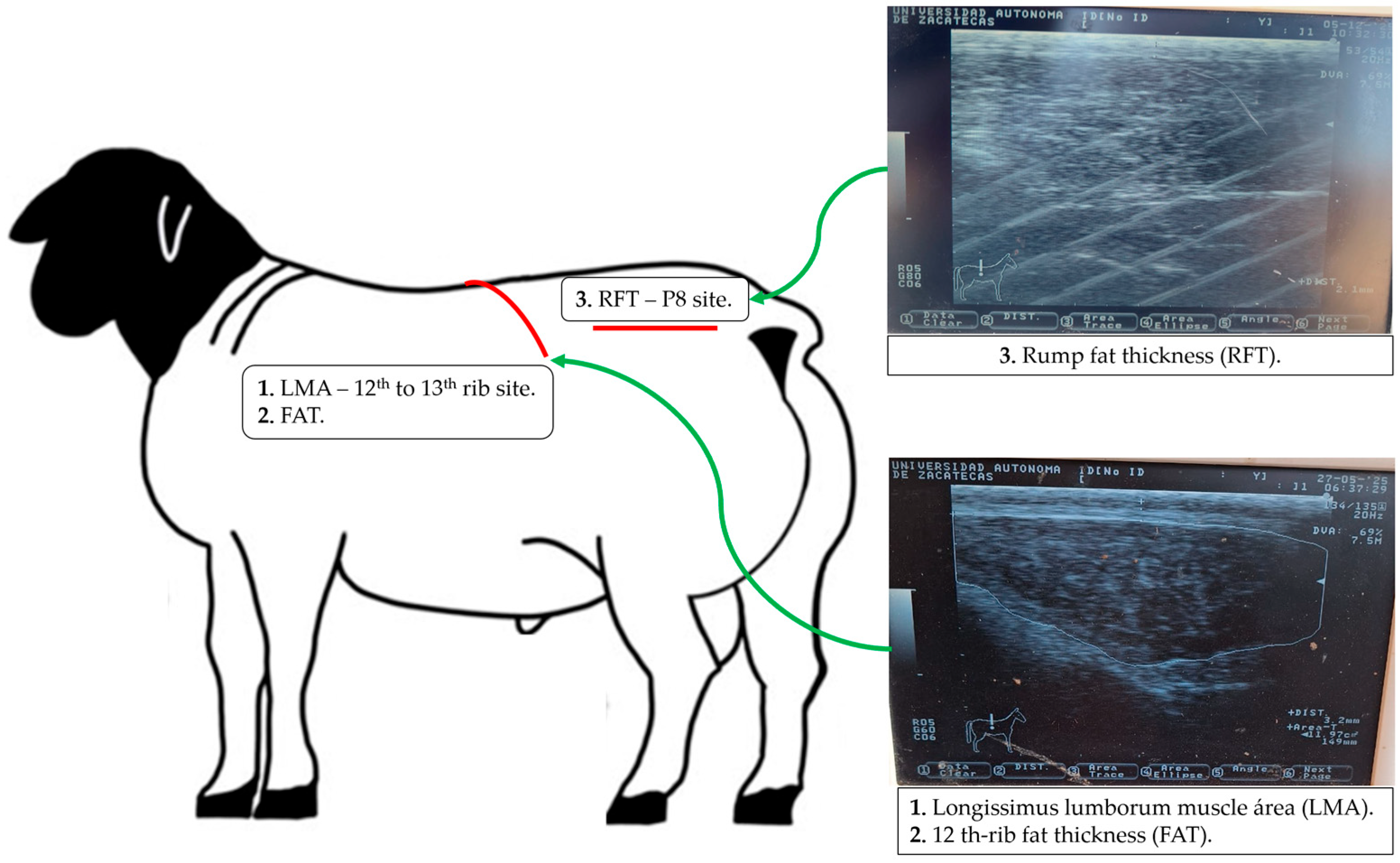
The following ultrasound measurements were recorded: (1) longissimus lumborum muscle area (LMA), expressed in cm2; (2) 12th-rib fat thickness (FAT), representing subcutaneous fat over the longissimus lumborum muscle (LM), expressed in mm; and (3) rump fat thickness (RFT) at the p8 site, expressed in mm. Both LMA and FAT were measured between the 12th and 13th ribs (Figure 2). Before image acquisition, the anatomical site was clipped using electric clippers, cleaned with compressed air, and ultrasound gel was applied as the coupling medium to ensure adequate acoustic contact. Ultrasound measurements were obtained on days 0 and 45 using a real-time scanner (Aloka Prosound 2, Hitachi Aloka Medical, Tokyo, Japan) equipped with a 3.5-MHz linear array transducer. All measurements were consistently performed by the same trained operator to reduce inter-observer variability.

2.6. Slaughter Procedure and Visceral Organ Mass Determination

At the end of the 45 d experimental period, lambs were subjected to an 18-h fasting period with free access to water. Thereafter, pre-slaughter body weights were recorded for subsequent calculations, and animals were transported (7.28 km) to the UAMVZ-UAZ abattoir, where they were slaughtered on the same day. During slaughter, non-carcass components were removed and weighed, including skin, limbs, head, heart, lungs, liver, spleen, kidneys, testicles, omental fat, mesenteric fat, visceral fat, perirenal fat, as well as the full and digesta-free gastrointestinal tract. Empty body weight (EBW) was calculated as: = (Pre-slaughter BW − total non-carcass components weight). Visceral organ mass was expressed relative to EBW (g/kg).

2.7. Carcass Characteristics

Hot carcass weight (HCW) was determined immediately after slaughter, prior to the 24-h chilling period at 4 °C. Carcass dressing was calculated as = ([cold carcass weight (CCW)/EBW] × 100), and the percentage of cooling loss (CL%) = ([HCW − CCW]/HCW) × 100. Following the chilling period, carcass dimensions were measured using a flexible tape, including carcass length, leg length, and chest circumference. In addition, the tissue composition of the shoulder was determined by physical dissection to quantify the proportions of muscle and fat, and to estimate the muscle/fat ratio [36].

2.8. Whole Cuts

Carcass left sides were divided following the Institutional Meat Purchase Specifications (IMPS) and the North American Meat Processors Association guidelines. From each carcass, the forequarter was obtained and partitioned into the neck, shoulder IMPS206, shoulder IMPS207, rack IMPS204, breast IMPS209, and ribs IMPS209A. The hindquarter was then separated, consisting of the loin IMPS231, flank IMPS232, and leg IMPS233 [37].

2.9. Meat Quality

A section of the LM between the 9th and 10th ribs (~500 g) from the left half carcass was collected for meat quality analyses and stored at −20 °C until processing. The pH of the LM was measured at the second lumbar vertebra using a portable digital pH meter (Hanna Instruments, Woonsocket, RI, USA, Model HI–9025) at 24 h postmortem. Water-holding capacity (WHC%) was determined according to the Grau and Hamm method cited by Tsai and Ockerman [38], in which 300 mg of LM were placed between Whatman #1 filter papers, fixed between glass plates (15 × 15 cm), and subjected to 10 kg of pressure for 20 min. LM steaks (2 cm thick for PRL and CKL determinations) were prepared between the 12th rib and the second lumbar vertebra, vacuum-packaged, and stored at −20 °C; after 14 d, they were thawed for 24 h at 4 °C, blotted dry, and weighed. One steak was cut into blocks (15 × 15 × 30 mm) and suspended at 4 °C for 24 h to determine purge loss (PRL%), while another was vacuum-packaged and heated in a water bath at 80 °C until reaching 70 °C of internal temperature to determine cooking loss (CKL%). Immediately after removal from the water bath, the steak was blotted dry and weighed while still warm to obtain post-cooking weight for CKL determination. Weight losses for WHC%, PRL%, and CKL% were expressed as percentages of initial sample weight. Additionally, LM steaks (2.54 cm thick for WBSF analysis) were thawed for 24 h at 4 °C and cooked on an electric grill (Spectrum Brands, Middleton, WI, USA, Model GR2120B) until reaching an internal temperature of 70 °C, monitored with a kitchen thermometer (Model TP700), following AMSA [39] guidelines. After cooking, samples were cooled to 22 °C for 4 h, and six cores (1.27 cm diameter) parallel to the muscle fibers were extracted with a coring device; these cores were subjected to the Warner–Bratzler shear force (WBSF) test using a Texture Analyzer (G-R Manufacturing, New York, NY, USA) fitted with a Warner–Bratzler blade, with the crosshead speed set at 200 cm/min, and the peak shear force values (kg/cm2) were recorded and averaged.

2.10. Analysis of Economic Profitability

Economic return was evaluated during the 45 d experimental period using growth performance data (IBW, FBW, and DMI) and dressing, %. Calculations were performed as follows: (1) Processing practice costs = preventive health + deworming + ear tag; (2) Feed cost = (DMI, kg/d × feed price, USD/kg) × days on feed; (3) Cr supplementation cost = (Cr source, kg/d × Cr price, USD/kg) × days of supplementation; (4) Total cost = processing practice costs + feed cost + Cr supplementation cost; (5) income from live lamb sales = (FBW − IBW), which represents total live weight gain (kg), × the live BW price (USD/kg); (6) net income (live lambs) = income from live lamb sales − total cost; (7) Difference (live lambs) = net income of Cr treatments − control; (8) cost of gain = total cost/(FBW − IBW), meaning that total cost is divided by total live weight gain (kg) to obtain production cost per kg of gain; (9) income from carcass sales = (FBW − IBW, kg), representing total live weight gain (kg), × dressing, % × carcass price (USD/kg); (10) net income (carcass) = income from carcass sales − total cost; and (11) Difference (carcass) = net income of Cr treatments − control.
The prices used in the economic analysis were as follows: feed (USD 0.276/kg), Cr-Yeast (USD 8.5/kg), Cr-Met (USD 5.1/kg) and Cr-Pr (USD 10.0/kg), preventative (USD 0.43/lamb), deworming (USD 0.35/lamb), and ear tag (USD 0.27/lamb) costs were obtained from MAAZ S.A. de C.V. The market price of live lambs (USD 4.78/kg BW) and carcass (USD 9.83/kg) was obtained from the Zacatecas region.
The Excel® program (Office 365, Microsoft, Redmond, WA, USA) was used to perform cost and income calculations. The profit estimated for the control group was used as the baseline to compare supplementation costs, and treatment results were compared between treatments using descriptive statistics.

2.11. Statistical Analyses

Data were analyzed as a randomized complete block design, with IBW used as the blocking criterion and treatment considered as the fixed effect. Normality of continuous variables related to growth performance, dietary energetics, ultrasound traits, carcass and meat characteristics, and visceral mass was tested using PROC UNIVARIATE in SAS® OnDemand for Academics: SAS Studio Version 3.82 [40]. An analysis of variance (ANOVA) was then conducted using the GLM procedure, and treatment means were compared with Tukey’s multiple comparison test. Treatment effects were considered significant at p ≤ 0.05. Descriptive values in tables are presented as means ± standard error of the mean (SEM). In addition, comparisons of differences in economic income and cost between lambs supplemented with chromium and those in the control group were performed using the t-test in PROC TTEST of SAS® OnDemand for Academics: SAS Studio Version 3.82 [40].

3. Results

3.1. Growth Performance and Dietary Energetics

The effects of OrCr supplementation on growth performance and dietary energetics are shown in Table 2. DMI was not affected (p = 0.583), averaging 1.27 ± 0.034 kg/d across treatments. However, lambs supplemented with Cr-Pr exhibited the greatest improvements (p < 0.05), with increases of 5% in FBW (p = 0.025) and 66% in ADG (p = 0.034), followed by intermediate responses with Cr-Met and Cr-Yeast. Consequently, G:F improved significantly (59%, p = 0.045) for Cr-Pr, 34% for Cr-Met, and 22% for Cr-Yeast compared with the control. In addition, Cr-Pr increased dietary net energy by 21% (p = 0.041) and the observed-to-expected dietary net energy ratio by 22% (p = 0.042), indicating greater efficiency in dietary energy utilization and retention.

3.2. Visceral Mass

The effects of OrCr supplementation on visceral mass are presented in Table 3. EBW increased significantly (p = 0.029) with OrCr, reaching 6% with Cr-Pr and 4% with Cr-Yeast and Cr-Met compared with the control. At the same time, fat depots were reduced, with omental fat decreasing by 6–25% (p = 0.34) and mesenteric fat by approximately 7% (p = 0.042), which together resulted in a 12–16% reduction in visceral fat. Consistently, perirenal fat was also reduced (p = 0.028), with values 25–39% lower than those observed in the control group.

3.3. Ultrasound Measurement, Carcass Characteristics, Whole Cuts and Meat Characteristics

The effects of OrCr supplementation on ultrasound traits and carcass characteristics are shown in Table 4. No significant effects (p > 0.05) were observed for LMA, CCW, dressing, CL%, or zoometric traits. However, HCW was significantly higher (p = 0.031) in lambs supplemented with Cr-Pr (5%) compared with the control, whereas Cr-Yeast and Cr-Met showed intermediate values. FAT and RFT were reduced with Cr-Met (15 and 12%, respectively) and Cr-Pr (19 and 13%, respectively), with exact probabilities of p = 0.024 for rib fat thickness and p = 0.048 for rump fat thickness. Regarding tissue composition, Cr-Yeast and Cr-Pr decreased fat content by 20 and 27%, respectively, while increasing muscle proportion by 5 and 7%, which improved the muscle/fat ratio by 42 and 50%, with exact p-values of p = 0.003 for muscle, p = 0.018 for fat, and p = 0.045 for the muscle/fat ratio. In whole cuts, the proportion of the rack (IMPS 204) decreased (p = 0.041) with Cr-Met (14%) and Cr-Pr (12%), whereas no differences (p > 0.05) were detected in the remaining cuts (Table 5). For meat characteristics, no treatment effects (p > 0.05) were observed on ultimate pH, PRL%, CKL%, or WBSF. Nonetheless, Cr-Pr increased WHC% by 27% (p = 0.014), with intermediate responses for Cr-Met and Cr-Yeast.

3.4. Economic Profitability

The effects of OrCr supplementation on cost and income are presented in Table 6. Supplementation increased income from live lamb sales (p < 0.05), with the highest response observed for Cr-Pr (13.3 USD; 188%, p < 0.001), followed by Cr-Met (5.0 USD; 72%, p < 0.01) and Cr-Yeast (4.6 USD; 67%, p < 0.01) compared with the control. Similarly, the cost per kg of gain was reduced with supplementation, with Cr-Pr showing the lowest value (USD 2.0; −31%, p < 0.001), followed by Cr-Met (USD 2.45; −15%, p < 0.01) and Cr-Yeast (USD 2.50; −13%, p < 0.01), in contrast with the control (USD 2.88). Consistently, carcass sales income also increased with OrCr supplementation, being greatest for Cr-Pr (USD 15.2; p < 0.001), compared with Cr-Met (USD 4.8; p < 0.01) and Cr-Yeast (USD 5.2; p < 0.01) relative to the control.

4. Discussion

Chromium is an essential micromineral involved in nutrient metabolism, primarily by enhancing insulin signaling and promoting a more efficient partitioning of energy toward lean tissue accretion [11,12,41]. Under feedlot conditions—where handling, confinement, and dietary transitions may increase physiological stress—Cr demand can rise due to elevated urinary losses [2,42]. Organic sources, particularly Cr-Pr, offer greater bioavailability and have been linked not only to improved insulin-related metabolic functions but also to reductions in stress markers, better immune responses, and modulation of inflammatory pathways, factors that together may enhance dietary energy utilization and carcass composition in intensively finished lambs [15,43,44]. Based on this coordinated physiological framework, we hypothesized that supplementing 1.2 mg of OrCr/lamb per day would improve energy use efficiency, increase muscle deposition, reduce carcass fat accretion, and consequently enhance performance and meat quality in heavier lambs entering the finishing phase. Because previous research has reported benefits of OrCr but has not compared distinct Cr sources within the same experimental context, our study was specifically designed to determine whether these metabolic advantages vary according to the organic source provided.

4.1. Growth Performance and Dietary Energetics

Most studies evaluating the effects of OrCr on productive performance and health have focused on dairy cattle and newly received feedlot calves under different supplementation levels, while very few have been conducted in finishing lambs, resulting in limited and inconsistent information. In our study, supplementation with different Cr sources did not affect DMI, which is consistent with previous reports in feedlot ruminants supplemented with Cr-Yeast with low [45] or high doses [5,20] and Cr-Met [16,22] supplemented at high dosage. In contrast, increases in DMI of up to 5–7% have been documented in dairy cows supplemented with Cr-Yeast or Cr-Met, and 6–8% in calves supplemented with Cr-Pr or Cr-Yeast, as well as in lambs receiving Cr-Pr. The increases on DMI in supplemented cattle and lambs have been attributed to marginal Cr deficiencies or to periods of high physiological stress such as weaning or postpartum, both of which negatively affect DMI [23,46,47]. This variability reinforces that the effect of Cr on DMI is not intrinsic to the source itself, but rather depends on the animal’s physiological condition and its metabolic demand for insulin-mediated glucose uptake, which increases under stress or catabolic pressure.
Among the evaluated sources, Cr-Pr was the most effective, increasing ADG by 66.1%, while improving G:F by 58.7%. Improvements on ADG and GF ratio in lambs supplemented with other sources of OrCr have been reported previously. For example, Estrada-Angulo et al. [5] observed increases of 28% in ADG and 26% in G:F with Cr-Yeast. Whereas Castro-Pérez et al. [22] reported improvements of 13% in ADG and 8% in G:F in lambs supplemented with Cr-Met. Likewise, Valdés-García et al. [20] found that heifers supplemented with Cr-Yeast showed increases of up to 29% in ADG and 20% in G:F. These reports confirming that Cr enhances growth and G:F in finishing ruminants. Mechanistically, these responses may be linked to Cr-enhanced insulin signaling via improved activation of the insulin receptor and downstream PI3K/Akt pathways, which promote greater glucose uptake and direct more nutrients toward muscle accretion rather than lipogenesis [12,13]. This mechanism is particularly relevant for finishing lambs entering the feedlot at heavier weights, where a larger fraction of gain tends to be fat rather than lean tissue.
The basis for improvements in finishing ruminants when Cr is included in the diet has been explained above. However, the main explanation for enhanced performance in animals beginning the finishing phase at heavier weights is the improvement in dietary energy utilization facilitated by changes in gain composition as a result of Cr supplementation. The observed-to-expected ratio of dietary NE can be calculated based on observed growth performance and the calculated diet NE by ingredient composition in the basal diet (Table 1). In this way, dietary energy utilization efficiency can be effectively estimated. As a result, differences in energy consumption for growth performance can be expressed more precisely with the observed-to-expected energy ratio than with conventional measures of “gain efficiency” [48].
A NE ratio of 1.00 indicates consistency between observed and expected ADG. Ratios below 1.00 reflect decreased efficiency of energy utilization, while values above 1.00 indicate improved efficiency. In the current experiment, all groups showed a lower performance and NE ratio than expected. This effect was anticipated because gain composition was predominantly fat rather than muscle, and fat deposition requires approximately 2.5–3.0 times more energy than protein accretion [3]. This negative effect was reduced by Cr supplementation. Controls showed an 18% reduction in dietary energy efficiency (0.82), while reductions in lambs that received supplemental Cr were 13%, 10%, and only 3% (0.87, 0.90, and 0.97 of expected) for Cr-Yeast, Cr-Met, and Cr-Pr, respectively. The superior response of Cr-Pr may reflect its higher systemic bioavailability and more consistent intracellular Cr retention, which have been suggested to enhance the metabolic shift toward lean tissue accretion and reduce the energetic cost of growth [10].
As discussed below, Cr supplementation reduced fat depots in the carcass and tissues. Improvements in dietary energy utilization in ruminants supplemented with Cr have been reported. Estrada-Angulo et al. [5] noted a 14% increase in dietary NE efficiency in lambs starting the finishing phase at 37 kg with daily Cr-Met supplementation at 1.2 mg/lamb. Similarly, Castro-Pérez et al. [22] reported a 6.4% increase in dietary NE efficiency in lambs (34 kg at start) supplemented with 1.2 mg Cr-Met and finished under high-ambient-temperature conditions. Collectively, our results and previous literature support that improved growth performance with Cr supplementation is closely associated with enhanced insulin-mediated nutrient partitioning, reduced energetic cost of fat accretion, and greater efficiency in converting metabolizable energy into gain.

4.2. Visceral Mass

The increase in EBW with OrCr supplementation (6% with Cr-Pr and 4% with Cr-Yeast or Cr-Met) was an expected outcome, since a higher proportion of lean tissue and a lower accumulation of omental (16–25%), mesenteric (7%), visceral (12–16%), and perirenal fat (27–45%) were observed. These reductions in internal fat depots directly reflect a shift in nutrient partitioning toward protein deposition, because non-carcass fat components are accounted for in the EBW equation and their decrease consequently elevates net carcass weight [5,21,22]. Consistently, Castro-Pérez et al. [22] reported reductions of 12–15% in visceral fat and 30–40% in perirenal fat in lambs supplemented with Cr-Met. Likewise, Najafpanah et al. [49] demonstrated in goats that Cr downregulates the expression of lipogenic enzymes in visceral tissue, while in poultry, a reduction of 20–25% in abdominal fat has been attributed to the same mechanism [50]. Together, these findings support that Cr reduces visceral adiposity not simply through lower energy intake, but through biochemical modulation of adipocyte metabolism. Specifically, Cr enhances insulin signaling, increasing glucose transporter type 4 translocation and improving glucose tolerance, which favors glucose utilization in muscle rather than its conversion into lipid within visceral tissues [15]. Simultaneously, Cr suppresses lipogenesis by downregulating key enzymes such as fatty acid synthase and acetyl-CoA carboxylase in adipose depots, as evidenced in small ruminants and poultry [49,50]. This dual mechanism—enhanced insulin sensitivity and suppressed lipogenic activity—provides a mechanistic explanation for the marked reductions in visceral fat observed in the present study.

4.3. Ultrasound Measurement, Carcass Characteristics, Whole Cuts and Meat Characteristics

OrCr supplementation improved carcass characteristics, increasing HCW by 5.2% with Cr-Pr, raising the proportion of muscle by up to 7% with Cr-Yeast and Cr-Pr, and reducing fat by 20–27%, which elevated the muscle/fat ratio to 40–50%. In addition, all sources decreased FAT (15–19%) and RFT (2–13%). These responses align with the mechanistic role of Cr in enhancing insulin signaling and improving glucose uptake in insulin-sensitive tissues, which shifts nutrient use toward muscle accretion and away from lipogenesis [15]. Nevertheless, the literature regarding carcass characteristics in lambs supplemented with Cr is limited and inconsistent. In finishing lambs, Castro-Pérez et al. [22] reported no changes in HCW or LMA with Cr-Met, although they did observe reductions of 15–20% in FAT along with increased muscle deposition. Similarly, Sánchez-Mendoza et al. [21] found decreases of 12–18% in FAT with Cr-Met, together with improvements in the muscle/fat ratio, but without changes in CCW or LMA. Estrada-Angulo et al. [5] reported increases of 5% in HCW and 7% in LMA with Cr-Yeast. In contrast, Jin and Zhou [44] observed reductions of 10–12% in intramuscular fat with Cr-Met, while supplementation with Cr-Pic did not modify muscle or fat deposition in lambs [51]. Consistently, other studies have reported no effects on carcass traits with Cr-Pr or OrCr supplementation [23,52,53], highlighting that Cr effects may depend on physiological maturity, stress level, and baseline adiposity of the animals.
The absence of effects on most whole cuts agrees with earlier findings [22,23]. However, a reduction of 12–14% in the rack (IMPS 204) was observed, mainly with Cr-Met and Cr-Pr. This response may reflect tissue redistribution rather than lower absolute yield, as the rack is a relatively fatty cut and OrCr supplementation consistently reduced fat deposition, which proportionally decreases its weight [12,13]. In contrast, Jin and Zhou [44] reported increases in rack and loin percentages with Cr-Met in lambs. Taken together, these findings suggest that Cr supplementation modifies carcass composition—favoring muscle accretion and reducing fat—rather than altering the absolute yield of wholesale cuts.
Regarding meat characteristics, no effects of OrCr supplementation were observed on pH, PRL, CKL, or WBSF, consistent with prior reports in lambs supplemented with Cr-Yeast, Cr-Pr, or other Cr sources [23,44,52,53]. However, the 27% increase in WHC with Cr-Pr may be linked to enhanced glycogen retention mediated by improved insulin sensitivity, which slows postmortem pH decline and reduces exudative losses [41]. Additionally, because Cr reduces serum cortisol in stressed animals [15,43,54], higher glycogen availability before slaughter may contribute to better WHC and overall meat quality. These effects, combined with the higher muscle/fat ratio observed with Cr-Pr [22], help explain the improved WHC in supplemented lambs.

4.4. Cost/Income

Cr-Pr supplementation was the most profitable, reducing the cost per kilogram of gain by 31% and increasing income from live lamb sales by 188%; these economic responses were directly related to the greater FBW, higher ADG, and improved G:F observed in this group, which reduced the amount of feed required per unit of gain. In addition, carcass sales from these lambs represented an additional increase of USD 15.2 per carcass, attributable to greater muscle deposition and improved CCW. The economic advantage of Cr-Pr was further reinforced by its very low supplementation cost (USD 0.14 per lamb for the 45 d feeding period), meaning that the biological improvements produced a disproportionately high financial return relative to the investment. Although previous studies with Cr-Yeast in lambs [5,45] and heifers [20], as well as Cr-Met in lambs [21,22], did not directly evaluate economic responses, they did report improvements in ADG, G:F, and carcass composition that indirectly suggest higher economic returns. Overall, the available evidence confirms that OrCr, and particularly Cr-Pr, represents an effective strategy to increase net income in finishing lamb systems, especially when animals enter the feedlot at heavier weights and have a greater energetic cost of gain.
Although this study provides novel comparative evidence among OrCr sources, several limitations should be considered when interpreting the results. First, the experiment was conducted under controlled research conditions with a relatively small number of lambs, which may not fully represent the variability and management challenges present in commercial feedlot operations. Second, all animals entered the finishing phase at heavier weights, and responses may differ in lighter lambs or in systems with different nutritional programs. Third, metabolic and hormonal markers (e.g., insulin, cortisol, glucose dynamics) were not measured, limiting the ability to directly link performance and carcass responses with specific physiological mechanisms. Future studies should validate these findings in large-scale commercial feedlots, using greater animal numbers, diverse production scenarios, and sequential physiological measurements to strengthen the biological interpretation and determine the practical applicability of OrCr supplementation under real-world conditions.

5. Conclusions

Organic Cr supplementation improved the efficiency of dietary energy utilization by increasing muscle proportion and reducing fat deposition, including reductions in visceral and perirenal fat depots. These effects were reflected in greater ADG and G:F. Furthermore, lambs that received sources of Cr improved their meat quality, particularly in WHC. Consequently, the cost per kilogram of gain was reduced and income increased, with Cr-Pr showing the greatest productive, carcass, meat quality, and economic benefits, positioning it as an effective alternative in feedlot lambs which start the finishing phase at heavier weights. Based on the integrated productive, carcass, and economic responses observed in this study, Cr-Pr is identified as the most advantageous source, with an effective inclusion level of 0.3 g/lamb per day under the evaluated conditions.
This study represents a pioneering contribution by comparing different OrCr sources and providing guidance for selecting the most suitable option to improve productivity and profitability in finishing lambs. However, further research is needed to evaluate physiological and metabolic variables to better understand the mechanisms by which OrCr exerts its effects, as well as large-scale trials to assess the extrapolation of these results to commercial feedlot systems.

Author Contributions

Conceptualization, all authors; methodology and formal analysis, A.R.-V., A.R., O.Y.S.-B., O.C.-M., P.H.-B., A.P., O.M.-G. and R.L.-C.; investigation, A.R.-V., A.R., O.C.-M., P.H.-B. and R.L.-C.; data curation, A.R., O.C.-M., P.H.-B., A.R.-V. and O.M.-G.; writing—original draft preparation, A.R.-V., O.C.-M., P.H.-B. and A.P.; writing—review and editing, A.R., O.Y.S.-B., O.C.-M., P.H.-B., A.P. and O.M.-G. All authors have read and agreed to the published version of the manuscript.

Funding

This research did not receive any specific grant from funding agencies in the public, commercial, or not-for-profit sectors. The study was conducted with institutional support from UAMVZ-UAZ and MAAZ Experimental Center.

Institutional Review Board Statement

The animal experiment was conducted at the Centro Experimental MAAZ, Calera de Victor Rosales, Zacatecas, Mexico. All procedures involving animals were carried out in accordance with national guidelines for animal care and welfare in Mexico. The study protocol was reviewed and approved by the Institutional Committee on Bioethics and Animal Welfare of the UAMVZ-UAZ under protocol number #07, March 2025. Throughout the study, lambs were monitored daily, handled by trained personnel, and managed under housing and feeding conditions designed to ensure their health and welfare.

Data Availability Statement

The original contributions presented in this study are included in the article. Further inquiries can be directed to the corresponding author.

Acknowledgments

The authors thank the staff of the MAAZ Experimental Center and the Meat Science and Technology Laboratory (UAMVZ-UAZ) for their valuable technical support and assistance in animal care and carcass evaluations. We also acknowledge the contribution of undergraduate and postgraduate students who collaborated in daily feeding and data collection throughout the study. Additionally, Alejandra Ríos acknowledges the support of the Secretariat of Science, Humanities, Technology and Innovation (SECIHTI, Mexico) for the Master’s scholarship awarded under the National Scholarship Program for Graduate Studies 2024.

Conflicts of Interest

The authors declare that they have no known competing financial interests or personal relationships that could have influenced the work reported in this paper. Likewise, there was no financial support that could have affected the outcome of this study, and there are no intellectual property restrictions or impediments to its publication.

References

  1. Bowen, M.K.; Ryan, M.P.; Jordan, D.J.; Beretta, V.; Kirby, R.M.; Stockman, C.; McIntyre, B.L.; Rowe, J.B. Improving sheep feedlot management. Int. J. Sheep Wool Sci. 2006, 54, 27–34. [Google Scholar]
  2. National Research Council (NRC). Nutrient Requirements of Small Ruminants: Sheep, Goats, Cervids, and New World Camelids; The National Academies Press: Washington, DC, USA, 2007; p. 384. [Google Scholar]
  3. Galyean, M.L.; Hales, K.E.; Smith, Z.K. Evaluating differences between formulated dietary net energy values and net energy values determined from growth performance in finishing beef steers. J. Anim. Sci. 2023, 10, skad230. [Google Scholar] [CrossRef]
  4. Dikeman, M.E. Effects of metabolic modifiers on carcass traits and meat quality. Meat Sci. 2007, 77, 121–135. [Google Scholar] [CrossRef]
  5. Estrada-Angulo, A.; Valdés, Y.S.; Carrillo-Muro, O.; Castro-Pérez, B.I.; Barreras, A.; López-Soto, M.A.; Plascencia, A.; Dávila-Ramos, H.; Ríos, F.G.; Zinn, R.A. Effects of feeding different levels of chromium-enriched live yeast in hairy lambs fed a corn-based diet: Effects on growth performance, dietary energetics, carcass traits and visceral organ mass. Anim. Prod. Sci. 2013, 53, 308–315. [Google Scholar] [CrossRef]
  6. Carrillo-Muro, O.; Rivera-Villegas, A.; Hernandez-Briano, P.; Lopez-Carlos, M.A.; Castro-Perez, B.I. Effect of dietary calcium propionate inclusion period on the growth performance, carcass characteristics, and meat quality of feedlot ram lambs. Agriculture 2023, 13, 1577. [Google Scholar] [CrossRef]
  7. Carrillo-Muro, O.; Rivera-Villegas, A.; Hernandez-Briano, P.; Lopez-Carlos, M.A.; Plascencia, A. Effects of duration of calcium propionate supplementation in lambs finished with supplemental zilpaterol hydrochloride: Productive performance, carcass characteristics, and meat quality. Animals 2023, 13, 3113. [Google Scholar] [CrossRef]
  8. Carrillo-Muro, O.; Rivera-Villegas, A.; Hernández-Briano, P.; López-Carlos, M.A.; Aguilera-Soto, J.I.; Estrada-Angulo, A.; Mendez-Llorente, F. Effect of calcium propionate level on the growth performance, carcass characteristics, and meat quality of feedlot ram lambs. Small Rumin. Res. 2022, 207, 106618. [Google Scholar] [CrossRef]
  9. Hernández-García, P.A.; Orzuna-Orzuna, J.F.; Chay-Canul, A.J.; Vázquez-Silva, G.; Díaz-Galván, C.; Razo-Ortíz, P.B. Meta-analysis of organic chromium dietary supplementation on growth performance, carcass traits, and serum metabolites of lambs. Small Rumin. Res. 2024, 233, 107254. [Google Scholar] [CrossRef]
  10. Lashkari, S.; Habibian, M.; Jensen, S.K. A review on the role of chromium supplementation in ruminant nutrition—Effects on productive performance, blood metabolites, antioxidant status, and immunocompetence. Biol. Trace Elem. Res. 2018, 186, 305–321. [Google Scholar] [CrossRef]
  11. Mertz, W. Chromium in human nutrition: A review. J. Nutr. 1993, 123, 626–633. [Google Scholar] [CrossRef] [PubMed]
  12. Vincent, J.B. The biochemistry of chromium. J. Nutr. 2000, 130, 715–718. [Google Scholar] [CrossRef] [PubMed]
  13. Pechová, A.; Pavlata, L. Chromium as an essential nutrient: A review. Vet. Med. 2007, 52, 1–18. [Google Scholar] [CrossRef]
  14. Emami, A.; Ganjkhanlou, M.; Zali, A. Effects of Cr methionine on glucose metabolism, plasma metabolites, meat lipid peroxidation, and tissue chromium in Mahabadi goat kids. Biol. Trace Elem. Res. 2015, 164, 50–57. [Google Scholar] [CrossRef]
  15. Bin-Jumah, M.; El-Hack, M.E.; Abdelnour, S.A.; Hendy, Y.A.; Ghanem, H.A.; Alsafy, S.A.; Khafaga, A.F.; Noreldin, A.E.; Shannen, H.; Samak, D.; et al. Potential use of chromium to combat thermal stress in animals: A review. Sci. Total Environ. 2020, 707, 135996. [Google Scholar] [CrossRef]
  16. Sánchez-Barbosa, O.Y.; Carrillo-Muro, O.; Hernández-Briano, P.; Rodríguez-Cordero, D.; Rivera-Villegas, A.; Estrada-Angulo, A.; Plascencia, A.; Lazalde-Cruz, R. Effect of calcium propionate and chromium-methionine supplementation: Growth performance, body fat reserves, and blood parameters of high-risk beef calves. Ruminants 2025, 5, 3. [Google Scholar] [CrossRef]
  17. Anderson, R.A.; Polansky, M.M.; Bryden, N.A.; Roginski, E.E.; Mertz, W.; Glinsmann, W. Chromium supplementation of human subjects: Effects on glucose, insulin, and lipid variables. Metabolism 1983, 32, 894–899. [Google Scholar] [CrossRef] [PubMed]
  18. Mowat, D.N. Organic Chromium in Animal Nutrition; CABI Digital Library: Guelph, ON, Canada, 1997; ISBN 978-0-9681853-0-8. [Google Scholar]
  19. Lindemann, M.D.; Wood, C.M.; Harper, A.F.; Kornegay, E.T.; Anderson, R.A. Dietary chromium picolinate additions improve gain:feed and carcass characteristics in growing-finishing pigs and increase litter size in reproducing sows. J. Anim. Sci. 1995, 73, 457–465. [Google Scholar] [CrossRef]
  20. Valdés-García, Y.S.; Aguilera-Soto, J.I.; Barreras, A.; Estrada-Angulo, A.; Gómez-Vázquez, A.; Plascencia, A.; Ríos, F.G.; Reyes, J.J.; Stuart, J.; Torrentera, N. Growth performance and carcass characteristics in finishing feedlot heifers fed different levels of chromium-enriched live yeast or fed zilpaterol hydrochloride. Cuban J. Agric. Sci. 2011, 45, 361–368. [Google Scholar]
  21. Sánchez-Mendoza, B.; Aguilar-Hernández, A.; López-Soto, M.A.; Barreras, A.; Estrada-Angulo, A.; Navarro, F.J.M.; Torrentera, N.; Zinn, R.A.; Plascencia, A. Effects of high-level chromium methionine supplementation in lambs fed a corn-based diet on the carcass characteristics and chemical composition of the longissimus muscle. Turk. J. Vet. Anim. Sci. 2015, 39, 376–379. [Google Scholar] [CrossRef]
  22. Castro-Pérez, B.I.; Estrada-Angulo, A.; Urías-Estrada, J.D.; Ponce-Barraza, E.; Valdés-García, Y.; Barreras, A.; Carrillo-Muro, O.; Plascencia, A. Effects of feeding different levels of chromium-methionine in hairy lambs finished with high-energy diets under high ambient heat load. Large Anim. Rev. 2025, 31, 91–98. [Google Scholar]
  23. Maioli, B.M.; Ribeiro, M.G.; de Carvalho, A.; Goncalves, L.A.; de Almeida, D.L.; de Zoppa, A.L.D.V.; Gallo, S.B. Nutrition of lambs with chromium propionate and its effects on metabolism, performance and meat quality. Small Rumin. Res. 2024, 237, 107306. [Google Scholar] [CrossRef]
  24. Sadeghi, M.; Najaf Panah, M.J.; Bakhtiarizadeh, M.R.; Emami, A. Transcription analysis of genes involved in lipid metabolism reveals the role of chromium in reducing body fat in animal models. J. Trace Elem. Med. Biol. 2015, 32, 45–51. [Google Scholar] [CrossRef]
  25. Staniek, H.; Krejpcio, Z. The effects of supplementary Cr3 (chromium(III) propionate complex) on the mineral status in healthy female rats. Biol. Trace Elem. Res. 2017, 180, 90–99. [Google Scholar] [CrossRef]
  26. NOM-024-ZOO-1995; Especificaciones y Características Zoosanitarias Para el Transporte de Animales, Sus Productos y Subproductos, Productos Químicos, Farmacéuticos, Biológicos y Alimenticios Para Uso en Animales o Consumo Por Éstos. Diario Oficial de la Federación: Mexico City, Mexico, 1995. Available online: https://www.gob.mx/cms/uploads/attachment/file/202301/NOM-024-ZOO-1995_161095.pdf (accessed on 13 June 2025).
  27. NOM-051-ZOO-1995; Trato Humanitario en la Movilización de Animales. Diario Oficial de la Federación: Mexico City, Mexico, 1998. Available online: https://www.gob.mx/senasica/documentos/nom-051-zoo-1995 (accessed on 13 June 2025).
  28. NOM-062-ZOO-1999; Especificaciones Técnicas Para la Producción, Cuidado y Uso de Los Animales de Laboratorio. Diario Oficial de la Federación: Mexico City, Mexico, 2001. Available online: https://www.gob.mx/senasica/documentos/nom-062-zoo-1999 (accessed on 13 June 2025).
  29. NOM-033-SAG/ZOO-2014; Métodos Para dar Muerte a Los Animales Domésticos y Silvestres. Diario Oficial de la Federación: Mexico City, Mexico, 2014. Available online: https://dof.gob.mx/nota_detalle.php?codigo=5405210&fecha=26/08/2015#gsc.tab=0 (accessed on 13 June 2025).
  30. AOAC (Official Methods of Analysis). Official Methods of Analysis of AOAC International, 20th ed.; AOAC: Rockville, MD, USA, 2016. [Google Scholar]
  31. Association of Official Analytical Chemist. Methods 925.09 and 926.08. In Official Methods of Analysis of AOAC International, 18th ed.; AOAC International: Gaithersburg, MD, USA, 2005. [Google Scholar]
  32. Van Soest, P.J.; Robertson, J.B.; Lewis, B.A. Methods for dietary fiber, neutral detergent fiber, and nonstarch polysaccharides in relation to animal nutrition. J. Dairy Sci. 1991, 74, 3583–3597. [Google Scholar] [CrossRef]
  33. Committee on Nutrient Requirements of Sheep. Nutrient Requirements of Sheep, 6th ed.; National Academy Press: Washington, DC, USA, 1985. [Google Scholar]
  34. Estrada-Angulo, A.; Barreras-Serrano, A.; Contreras, G.; Obregon, J.F.; Robles-Estrada, J.C.; Plascencia, A.; Zinn, R.A. Influence of level of zilpaterol hydrochloride supplementation on growth performance and carcass characteristics of feedlot lambs. Small Rumin. Res. 2008, 80, 107–110. [Google Scholar] [CrossRef]
  35. Zinn, R.A.; Barreras, A.; Owens, F.N.; Plascencia, A. Performance by feedlot steers and heifers: Daily gain, mature body weight, dry matter intake, and dietary energetics. J. Anim. Sci. 2008, 86, 2680–2689. [Google Scholar] [CrossRef]
  36. Luaces, M.L.; Calvo, C.; Fernández, B.; Fernández, A.; Viana, J.L.; Sánchez, L. Predicting equations for tisular composition in carcass of Gallega breed lambs. Arch. Zootec. 2008, 57, 3–12. [Google Scholar]
  37. NAMP. The Meat Buyers Guide; North American Meat Processor Association: Weimar, TX, USA, 1997. [Google Scholar]
  38. Tsai, T.C.; Ockerman, H.W. Water binding measurement of meat. J. Food Sci. 1981, 46, 697–701. [Google Scholar] [CrossRef]
  39. AMSA. Research Guidelines for Cookery, Sensory Evaluation, and Instrumental Tenderness Measurements of Meat, 2nd ed.; American Meat Science Association: Champaign, IL, USA, 2016. [Google Scholar]
  40. SAS Institute Inc. SAS OnDemand for Academics: SAS Studio, versión 3.8; SAS Institute Inc.: Cary, NC, USA, 2025. Available online: https://www.sas.com (accessed on 13 August 2025).
  41. Spears, J.W.; Whisnant, C.S.; Huntington, G.B.; Lloyd, K.E.; Fry, R.S.; Krafka, K.; Hyda, J. Chromium propionate enhances insulin sensitivity in growing cattle. J. Dairy Sci. 2012, 95, 2037–2045. [Google Scholar] [CrossRef] [PubMed]
  42. Suttle, N.F. Mineral Nutrition of Livestock, 4th ed.; CABI: Wallingford, UK, 2010; p. 579. [Google Scholar] [CrossRef]
  43. Soltan, M.A. Effect of dietary chromium supplementation on productive and reproductive performance of early lactating dairy cows under heat stress. J. Anim. Physiol. Anim. Nutr. 2010, 94, 264–272. [Google Scholar] [CrossRef] [PubMed]
  44. Jin, Y.; Zhou, X. Effects of concentrate level and chromium-methionine supplementation on the perf ormance, nutrient digestibility, rumen fermentation, blood metabolites, and meat quality of Tan lambs. Anim. Biosci. 2022, 35, 677–689. [Google Scholar] [CrossRef] [PubMed]
  45. Domínguez-Vara, I.A.; González-Muñoz, S.S.; Pinos-Rodríguez, J.M.; Bórquez-Kegley Gastelum, J.L.; Bárcena-Gama, R.; Mendoza-Martínez, G.; Zapata, L.E.; Landois-Palencia, L.L. Effects of feeding selenium-yeast and chromium-yeast to finishing lambs on growth, carcass characteristics, and blood hormones and metabolites. Anim. Feed Sci. Technol. 2009, 152, 42–49. [Google Scholar] [CrossRef]
  46. Kargar, S.; Habibi, Z.; Karimi-Dehkordi, S. Grain source and chromium supplementation: Effects on feed intake, meal and rumination patterns, and growth performance in Holstein dairy calves. Animal 2019, 13., 1173–1179. [Google Scholar] [CrossRef]
  47. Malik, M.I.; Raboisson, D.; Zhang, X.; Sun, X. Effects of dietary chromium supplementation on dry matter intake and milk production and composition in lactating dairy cows: A meta-analysis. Front. Vet. Sci. 2023, 10, 1076777. [Google Scholar] [CrossRef]
  48. Estrada-Angulo, A.; Zapata-Ramírez, O.; Castro-Pérez, B.I.; Urías-Estrada, J.D.; Gaxiola-Camacho, S.; Angulo-Montoya, C.; Ríos-Rincón, F.G.; Barreras, A.; Zinn, R.A.; Leyva-Morales, J.B.; et al. The effects of single or combined supplementation of probiotics and prebiotics on growth performance, dietary energetics, carcass traits, and visceral mass in lambs finished under subtropical climate conditions. Biology 2021, 10, 1137. [Google Scholar] [CrossRef]
  49. Najafpanah, M.J.; Zali, M.S.A.; Moradi-Shahrebabak, H.; Mousapour, H. Chromium downregulates the expression of acetyl CoA carboxylase 1 gene in lipogenic tissues of domestic goats: A potential strategy for meat quality improvement. Gene 2014, 543, 253–258. [Google Scholar] [CrossRef] [PubMed]
  50. Chen, G.; Gao, Z.; Chu, W.; Cao, Z.; Li, C.; Zhao, H. Effects of chromium picolinate on fat deposition, activity and genetic expression of lipid metabolism-related enzymes in 21-day-old Ross broilers. Asian Australas J. Anim. Sci. 2018, 31, 569–575. [Google Scholar] [CrossRef]
  51. Hung, A.T.; Leury, B.J.; Sabin, M.A.; Fahri, F.; DiGiacomo, K.; Lien, T.F.; Dunshea, F.R. Dietary nano chromium picolinate can ameliorate some of the impacts of heat stress in cross-bred sheep. Anim. Nutr. 2021, 7, 198–205. [Google Scholar] [CrossRef]
  52. Moreno-Camarena, L.; Domínguez-Vara, I.; Bórquez-Gastelum, J.; Sánchez-Torres, J.; Pinos-Rodríguez, J.; Mariezcurrena-Berasain, A.; Morales-Almaráz, E.; Salem, A.Z.M. Effects of organic chromium supplementation to finishing lambs diet on growth performance, carcass characteristics and meat quality. J. Integr. Agric. 2015, 14, 567–574. [Google Scholar] [CrossRef]
  53. Moreno-Camarena, L.; Domínguez-Vara, I.; Morales-Almaráz, E.; Bórquez-Gastelum, J.; Trujillo-Gutiérrez, D.; Acosta-Dibarrta, J.P.; Sánchez-Torres, J.; Pinos-Rodríguez, J.; Mondragón-Ancelmo, J.; Barajas-Cruz, R.; et al. Effects of dietary chromium-yeast level on growth performance, blood metabolites, meat traits and muscle fatty acids profile, and microminerals content in liver and bone of lambs. Ital. J. Anim. Sci. 2020, 19, 1542–1551. [Google Scholar] [CrossRef]
  54. Weiss, W.P.; Spears, J.W. Vitamin and trace mineral effects on immune function of ruminants. In Ruminant Physiology; Wageningen Academic: Wageningen, The Netherlands, 2023; ISBN 979-90-8686-566-6. [Google Scholar]
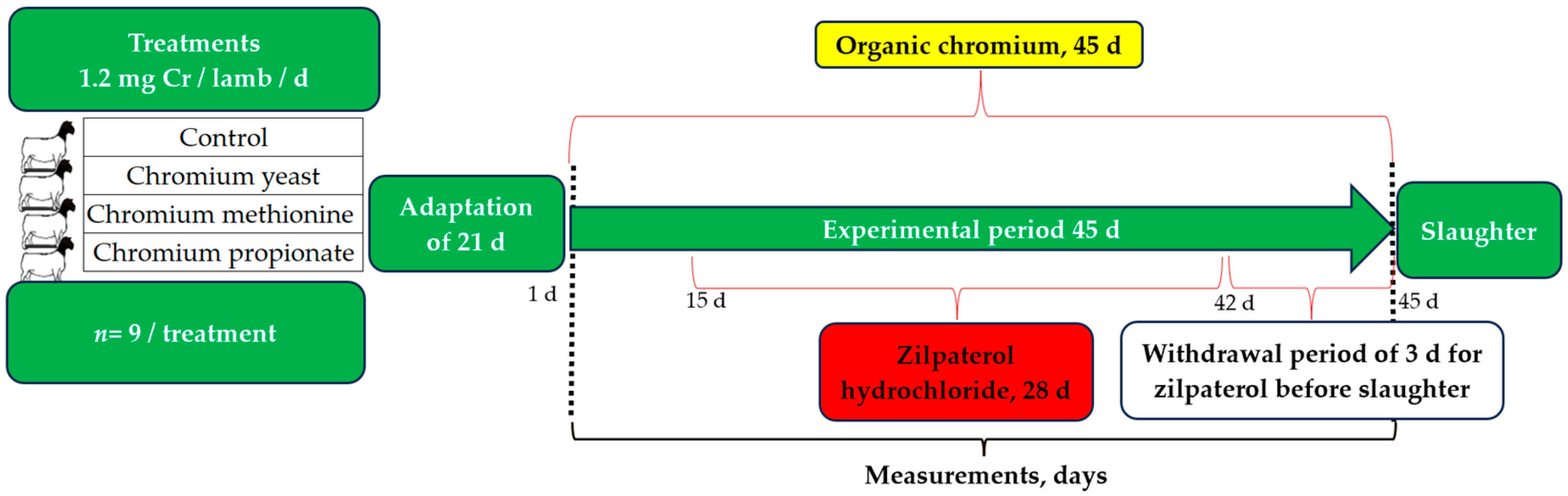
Figure 1. Experimental timeline showing the 21 d adaptation period, the 45 d supplementation period with 1.2 mg elemental Cr/lamb/d from chromium–yeast, chromium–methionine, or chromium–propionate, the 28 d zilpaterol hydrochloride (ZH) feeding phase, and the 3 d ZH withdrawal period before slaughter in 36 lambs (9 per treatment) under a randomized complete block design.
Agriculture 15 02559 g001
Figure 2. Ultrasound measurement sites used in finishing lambs. The longissimus lumborum muscle area (LMA) and 12th-rib fat thickness (FAT) were measured between the 12th and 13th ribs. Rump fat thickness (RFT) was measured at the P8 site over the gluteal region. Representative ultrasound images for each anatomical site are shown.
Agriculture 15 02559 g002
Table 1. Ingredients of the basal diet offered to finishing lambs and nutritional composition.
Ingredients% of Dietary DM
Corn grain, flaked50.0
Corn stover22.0
Distillers Gr., solubles dehy8.0
Soybean, meal—448.0
Molasses, cane7.9
Urea0.5
Sodium sesquicarbonate1.5
Calcium carbonate1.0
Sodium bentonite0.8
Salt0.3
Premix a0.1
Chemical composition, %
Dry matter86.94
Organic matter79.54
Crude protein14.04
Neutral detergent fiber21.83
Ether extract3.48
Ash7.40
Calcium b0.68
Phosphorus b0.35
Ca/P ratio1.94
Calculated net energy, Mcal/kg b
Total digestible nutrients, %80.44
Maintenance1.97
Gain1.33
a Contained per kilogram of premix: 221.6 mg Co, 125,420 mg Fe, 402.5 mg I, 10,064 mg Mn, 17,078.5 mg Zn, 267 mg Se, and 7813 mg Cu; plus 2,595,000 IU vitamin A, 468,750 IU D, and 28,000 IU vitamin E. b Calculated based on tabular values [2] for Ca, P, total digestible nutrients, net energy for maintenance and gain, with the exception of dry matter, crude protein, and ash [30], ether extract [31]; and Neutral detergent fiber (Ankom procedures, Macedon, NY, USA), which were determined experimentally in our laboratory.
Table 2. Growth performance and dietary energetics of finishing lambs (n = 36; 9 lambs/treatment) fed chromium-enriched yeast, chromium methionine or chromium propionate, for 45 d 1.
ItemControlCr-YeastCr-MetCr-PrSEM 2p-Values
Body weight, kg
   Initial 44.1643.6344.0443.700.2980.820
   Final 49.90 b50.44 ab50.87 ab52.42 a0.6310.025
Average daily gain, kg/d0.128 b0.151 ab0.152 ab0.194 a0.0160.034
Dry matter intake, kg/d1.251.271.241.310.0340.583
Gain to feed, kg/kg0.102 b0.119 ab0.122 ab0.148 a0.0110.045
Observed dietary net energy, Mcal/kg
Maintenance1.61 b1.72 ab1.77 ab1.91 a0.0680.041
Gain1.01 b1.10 ab1.14 ab1.26 a0.0600.046
Observed to expected dietary net energy ratio
Maintenance0.82 b0.87 ab0.90 ab0.97 a0.0460.042
Gain0.76 b0.82 ab0.86 ab0.95 a0.0450.046
1 Cr-Yeast = chromium-enriched yeast; Cr-Met = chromium methionine; Cr-Pr = chromium propionate. 2 SEM = standard error of the mean. a,b Within a row, means without a common superscript letter differ (p ≤ 0.05) according to Tukey’s test.
Table 3. Empty body weight and organ mass of finishing lambs (n = 36; 9 lambs/treatment) fed chromium-enriched yeast, chromium methionine or chromium propionate, for 45 d 1.
ItemControlCr-YeastCr-MetCr-PrSEM 2p-Values
Empty body weight, kg 43.06 c44.75 b44.84 b45.67 a0.4750.029
Organ, g/kg empty body weight
Stomach complex27.7128.0027.5829.250.9320.730
Large intestine13.3913.3615.8016.552.0580.858
Small intestine18.7519.5220.2920.410.9170.783
Skin162.88171.04170.03174.077.6600.406
Limbs28.3226.0025.8025.291.0220.513
Head41.8441.7939.2841.871.3670.685
Heart5.064.935.305.240.3550.605
Lungs20.3423.2822.3521.100.9120.284
Liver20.1219.7620.3020.940.7690.893
Spleen1.581.671.952.200.1950.277
Kidney2.742.622.682.540.1590.952
Testicles17.8316.5317.7619.790.9270.292
Omental fat18.05 a13.58 b15.19 b14.97 b1.0070.034
Mesenteric fat16.80 a15.56 b15.64 b15.57 b0.8780.042
Visceral fat34.85 a29.13 b30.83 b30.54 b0.9760.034
Perirenal fat18.93 a10.48 b13.77 b11.53 b0.9870.028
1 Cr-Yeast = chromium-enriched yeast; Cr-Met = chromium methionine; Cr-Pr = chromium propionate. 2 SEM = standard error of the mean. a–c Within a row, means without a common superscript letter differ (p ≤ 0.05) according to Tukey’s test.
Table 4. Ultrasound measurements and carcass characteristics of finishing lambs (n = 36; 9 lambs/treatment) fed chromium-enriched yeast, chromium methionine or chromium propionate, for 45 d 1.
ItemControlCr-YeastCr-MetCr-PrSEM 2p-Values
Ultrasound measurements
Rib fat thickness, mm3.97 a3.55 ab3.36 b3.22 b0.0170.024
Rump fat thickness, mm4.28 a4.04 ab3.78 b3.74 b0.0160.048
Longissimus lumborum muscle area, cm213.6113.4213.7412.450.9150.284
Carcass characteristics
Hot carcass weight, kg24.25 b25.18 ab25.25 ab25.51 a0.2760.031
Cold carcass weight, kg23.4924.3824.5424.730.2760.674
Dressing, %54.8454.7053.5054.90.8910.221
Cooling loss, %2.823.252.923.140.1330.131
Carcass length, cm68.8368.8368.3168.460.7830.445
Leg circumference, cm39.9139.8640.3540.591.2040.798
Chest circumference, cm19.6019.7419.6418.800.5570.145
Shoulder composition, %
Muscle61.45 b64.77 a63.54 ab65.65 a0.7680.003
Fat19.64 a15.68 b16.32 ab14.43 b0.8410.018
Muscle/Fat ratio3.01 b4.27 a3.69 ab4.53 a0.3940.045
1 Cr-Yeast = chromium-enriched yeast; Cr-Met = chromium methionine; Cr-Pr = chromium propionate. 2 SEM = standard error of the mean. a,b Within a row, means without a common superscript letter differ (p ≤ 0.05) according to Tukey’s test.
Table 5. Whole cuts and meat characteristics of finishing lambs (n = 36; 9 lambs/treatment) fed chromium-enriched yeast, chromium methionine or chromium propionate, for 45 d 1.
ItemControlCr-YeastCr-MetCr-PrSEM 2p-Values
Whole cuts, % of cold carcass weight
Forequarter54.2154.1253.3155.170.8610.859
Hindquarter44.8544.4543.6144.310.8370.957
Neck7.727.407.427.950.4040.468
Shoulder IMPS2069.139.469.7610.200.3090.416
Shoulder IMPS20717.1417.2017.0517.370.3580.845
Rack IMPS2046.92 a6.82 ab5.98 b6.08 b0.2940.041
Breast IMPS2093.643.994.083.980.2380.267
Ribs IMPS209A6.005.765.615.620.2110.359
Loin IMPS2316.906.607.006.920.3360.621
Flank IMPS2327.497.487.547.290.3620.938
Leg IMPS23330.4630.3629.5430.080.5570.432
Meat characteristics
pH24h5.575.495.525.460.1000.254
Purge loss24h, %3.123.124.124.120.7900.451
Cook loss, %27.3730.1928.1329.200.9900.841
Water-holding capacity, %26.44 b29.08 b31.31 ab33.50 a1.6500.014
Warner-Bratzler shear force, kg/cm23.653.053.193.280.2800.654
1 Cr-Yeast = chromium-enriched yeast; Cr-Met = chromium methionine; Cr-Pr = chromium propionate. 2 SEM = standard error of the mean. a,b Within a row, means without a common superscript letter differ (p ≤ 0.05) according to Tukey’s test.
Table 6. Economic outcomes of finishing lambs (n = 36; 9 lambs/treatment) fed chromium-enriched yeast, chromium methionine or chromium propionate, for 45 d 1.
ItemControlCr-YeastCr-MetCr-Pr
Processing practice costs, USD/Lamb 2
Preventative health$0.43$0.43$0.43$0.43
Deworming $0.35$0.35$0.35$0.35
Ear tag$0.27$0.27$0.27$0.27
Subtotal$1.05$1.05$1.05$1.05
Feed costs, $/lamb
Fed 3$15.48$15.73$15.44$16.30
Cr-Yeast supplementation 4-$0.23--
Cr-Met supplementation 4--$0.28-
Cr-Pr supplementation 4---$0.14
Subtotal$15.48$15.96$15.71$16.43
Total cost 5$16.53$17.01$16.76$17.48
Income selling lamb, USD/Lamb
Income 6$27.44$32.53$32.65$41.70
Net income 7$10.91$15.52$15.89$24.22
Difference 8-$4.62 **$4.98 **$13.32 ***
Cost of gain, $/kg 9$2.88$2.50 **$2.45 **$2.00 ***
Income selling carcass, USD/carcass
Income 10$30.94$36.60$35.92$47.08
Net income 11$14.41$19.59 **$19.16 **$29.60 ***
Difference 12-$5.17 **$4.75 **$15.19 ***
1 Cr-Yeast = chromium-enriched yeast; Cr-Met = chromium methionine; Cr-Pr = chromium propionate. 2 Processing practice cost = preventative health (USD 0.43/lamb) + deworming (USD 0.35/lamb) + ear tag (USD 0.27/lamb) = USD 1.05/lamb. 3 Feed cost = (DMI, kg/d × feed price, USD 0.276/kg) × 45 d. 4 Cr supplementation cost = (Cr source, kg/d × Cr price, USD/kg) × 45 d, where Cr-Yeast = USD 8.5/kg, Cr-Met = USD 5.1/kg, and Cr-Pr = USD 10.0/kg. 5 Total cost = processing practice + feed + Cr supplementation. 6 Income (live lambs) = (FBW − IBW, kg) × live BW price (USD 4.78/kg). 7 Net income (live lambs) = income (live lambs) − total cost. 8 Difference (live lambs) = net income of Cr treatments − control. 9 Cost of gain = total cost/(FBW − IBW, kg). 10 Income (carcass sales) = (FBW − IBW, kg) × dressing (%) × carcass price (USD 9.83/kg). 11 Net income (carcass) = income (carcass) − total cost. 12 Difference (carcass) = net income of Cr treatments − control. ** p < 0.01, and *** p < 0.001 without Cr versus supplemented with Cr.
Disclaimer/Publisher’s Note: The statements, opinions and data contained in all publications are solely those of the individual author(s) and contributor(s) and not of MDPI and/or the editor(s). MDPI and/or the editor(s) disclaim responsibility for any injury to people or property resulting from any ideas, methods, instructions or products referred to in the content.