Effects of Queen Rearing Technology of Apis cerana by Cutting Comb on Reproductive Capacity and Productive Performance


Simple Summary
Abstract
1. Introduction
2. Materials and Methods
2.1. Experimental Honeybee Colonies
2.2. Experimental Methods
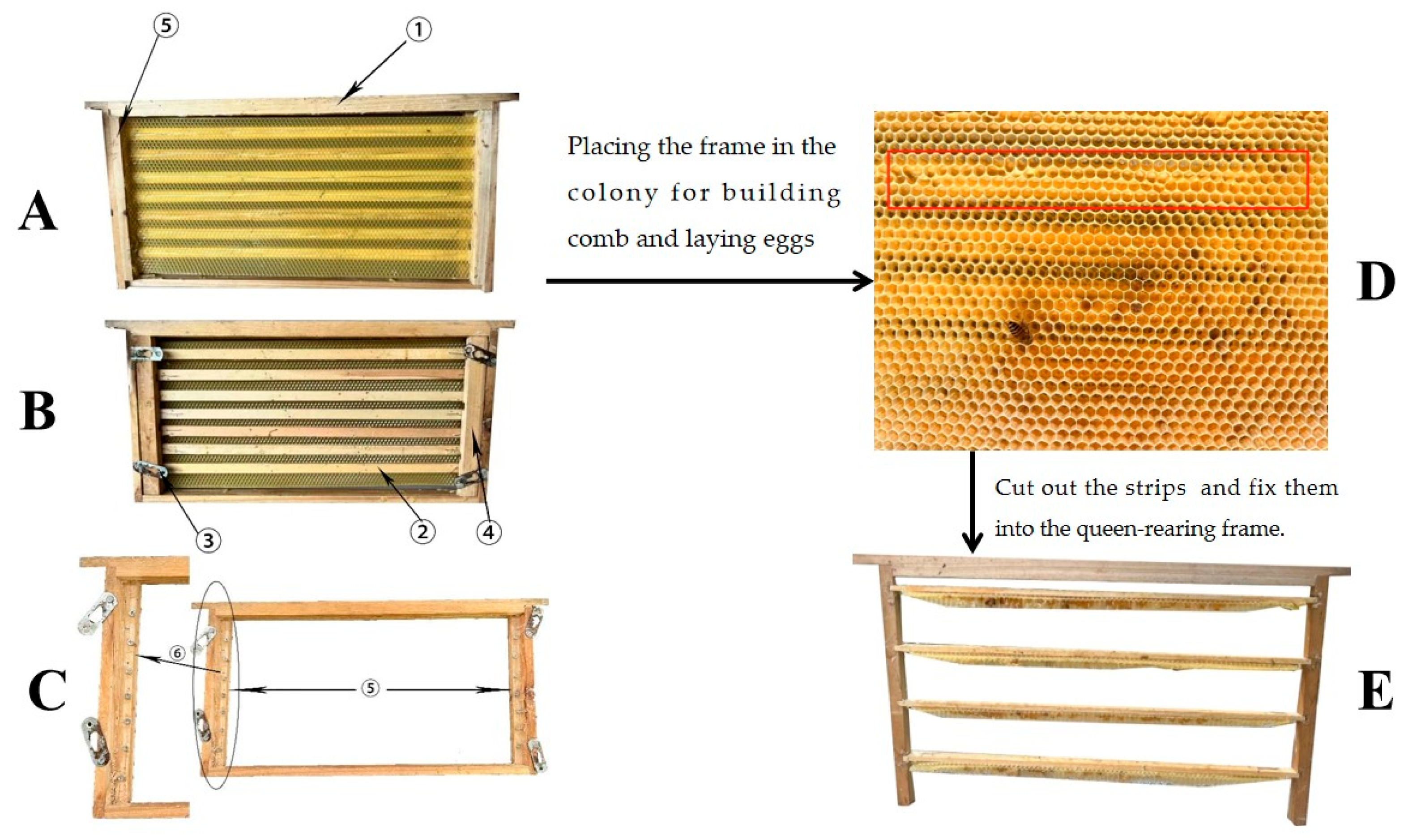
2.2.1. Queen Rearing
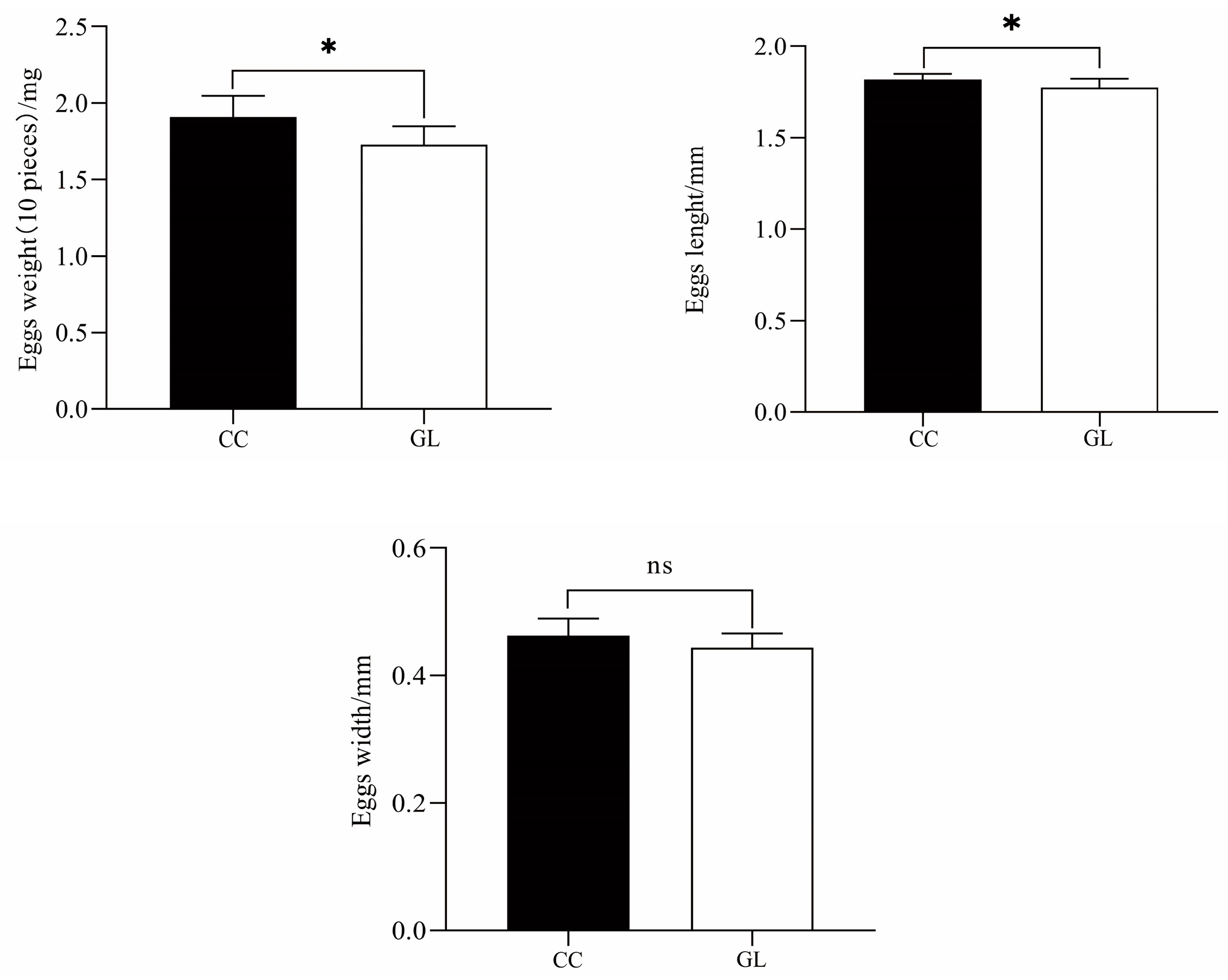
2.2.2. Determination of Length, Width, and Weight of Queen-Laid Eggs
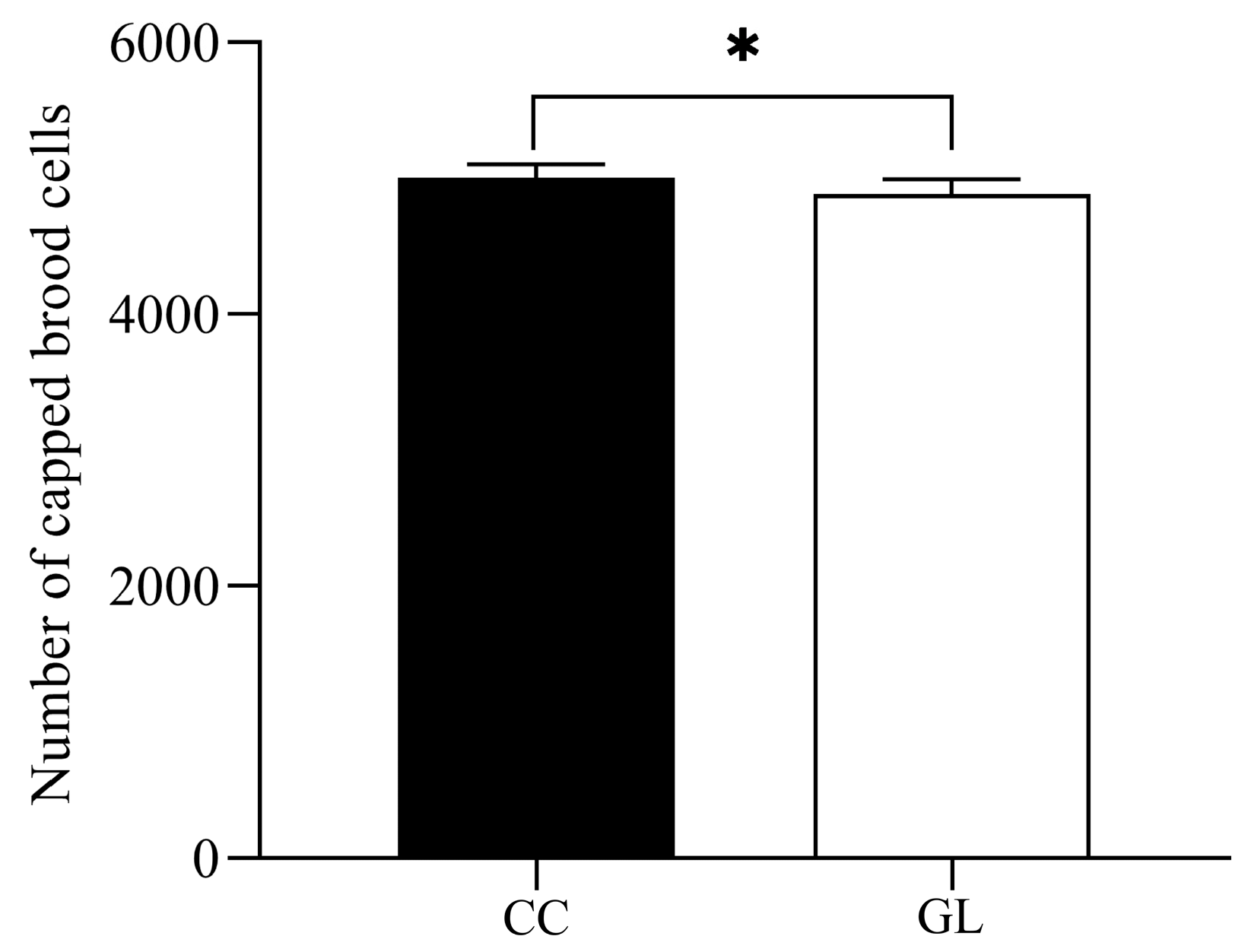
2.2.3. Determination of Capped Brood Quantity
2.2.4. Determination of Worker Offspring Weight at Emerging
2.2.5. Determination of Honey Sac Weight in Forager Bees
2.2.6. Determination of Daily Foraging Amount per Colony
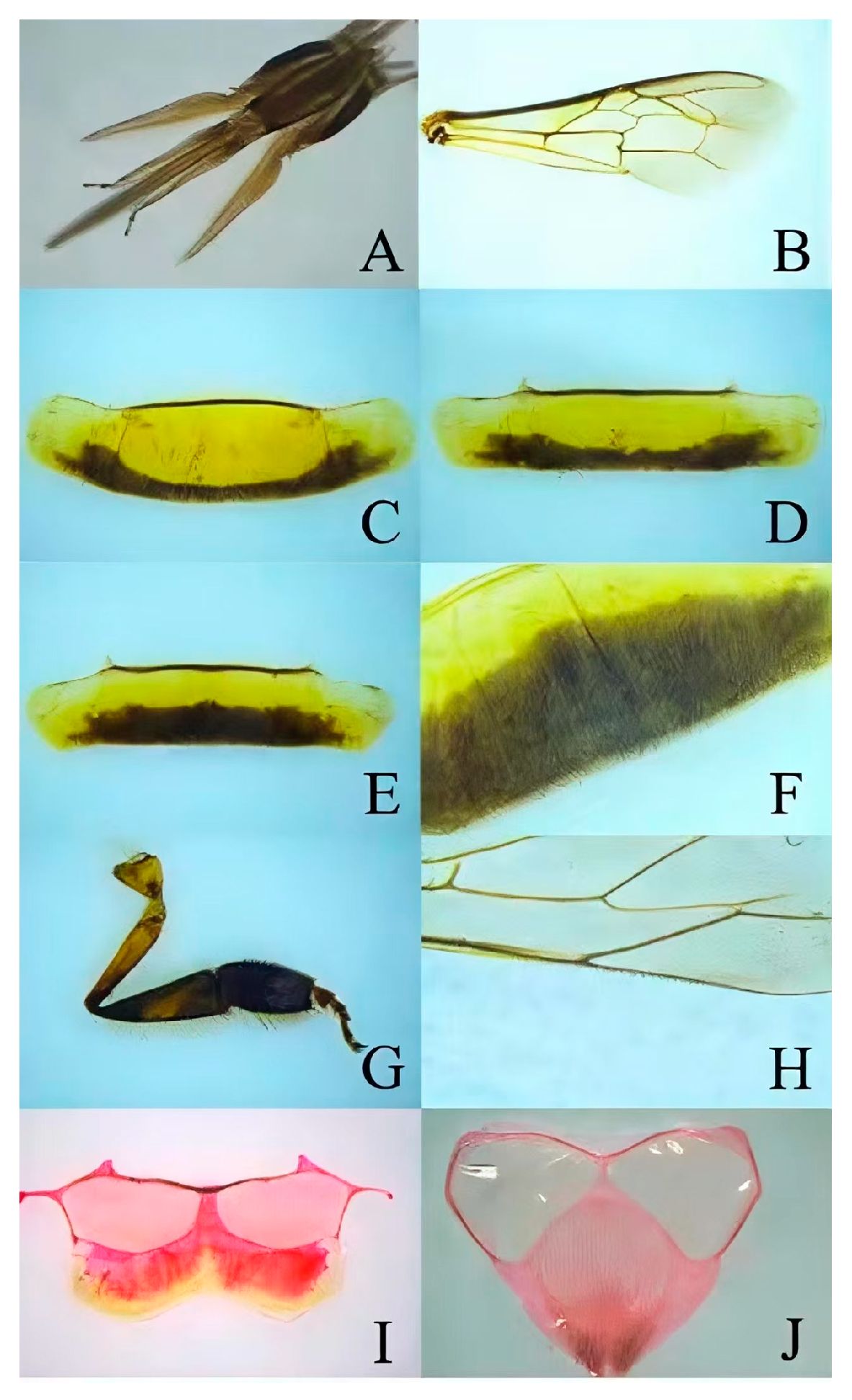
2.2.7. Determination of Worker Bee Morphological Indicators
2.3. Data Statistics and Analysis
3. Results
3.1. Effects of Queen Rearing Methods on Queen-Laid Eggs
3.2. Effects of Queen Rearing Methods on the Number of Capped Brood Cells in Colonies
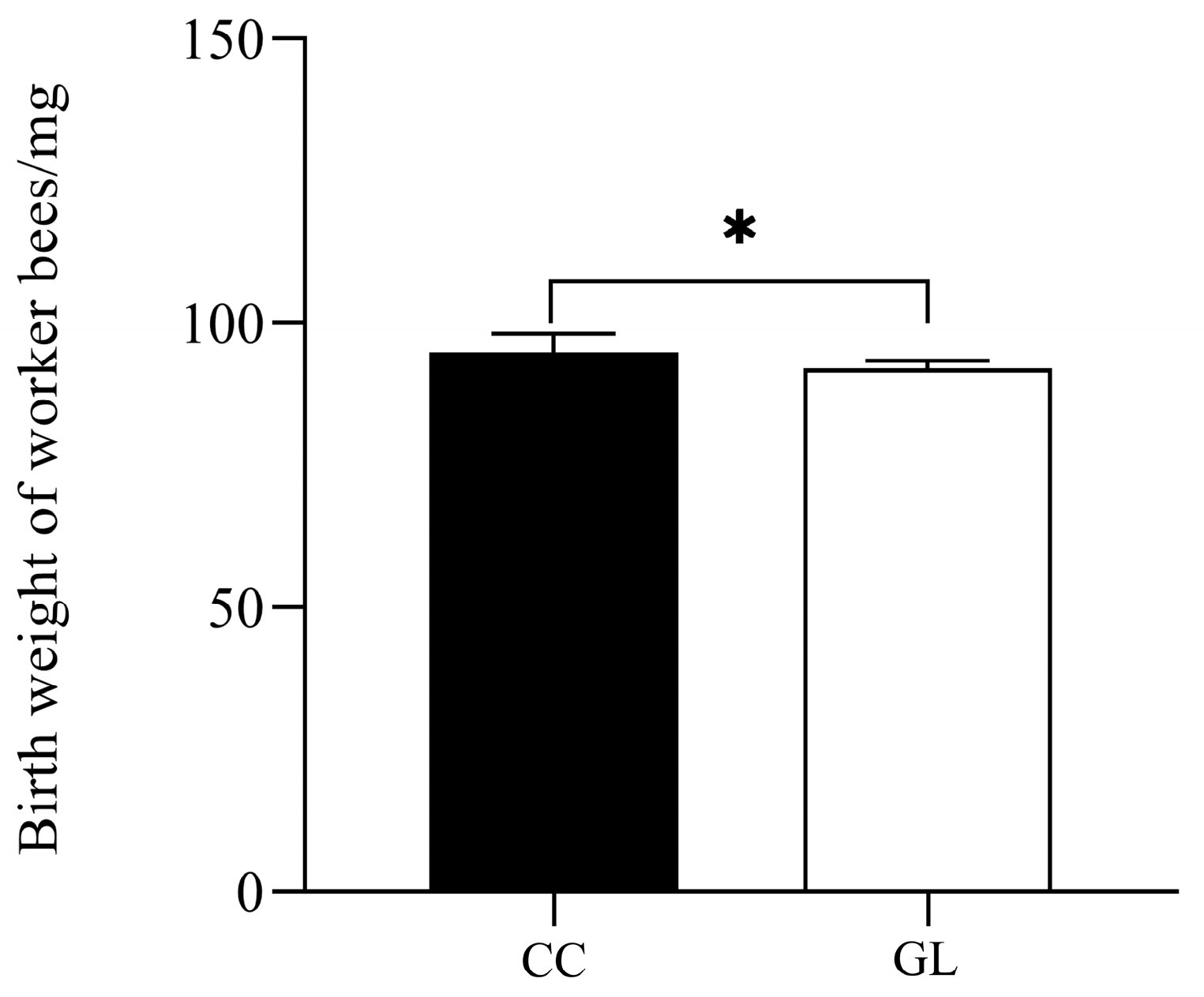
3.3. Effects of Queen Rearing Methods on the Weight at Emergence of Worker Offspring
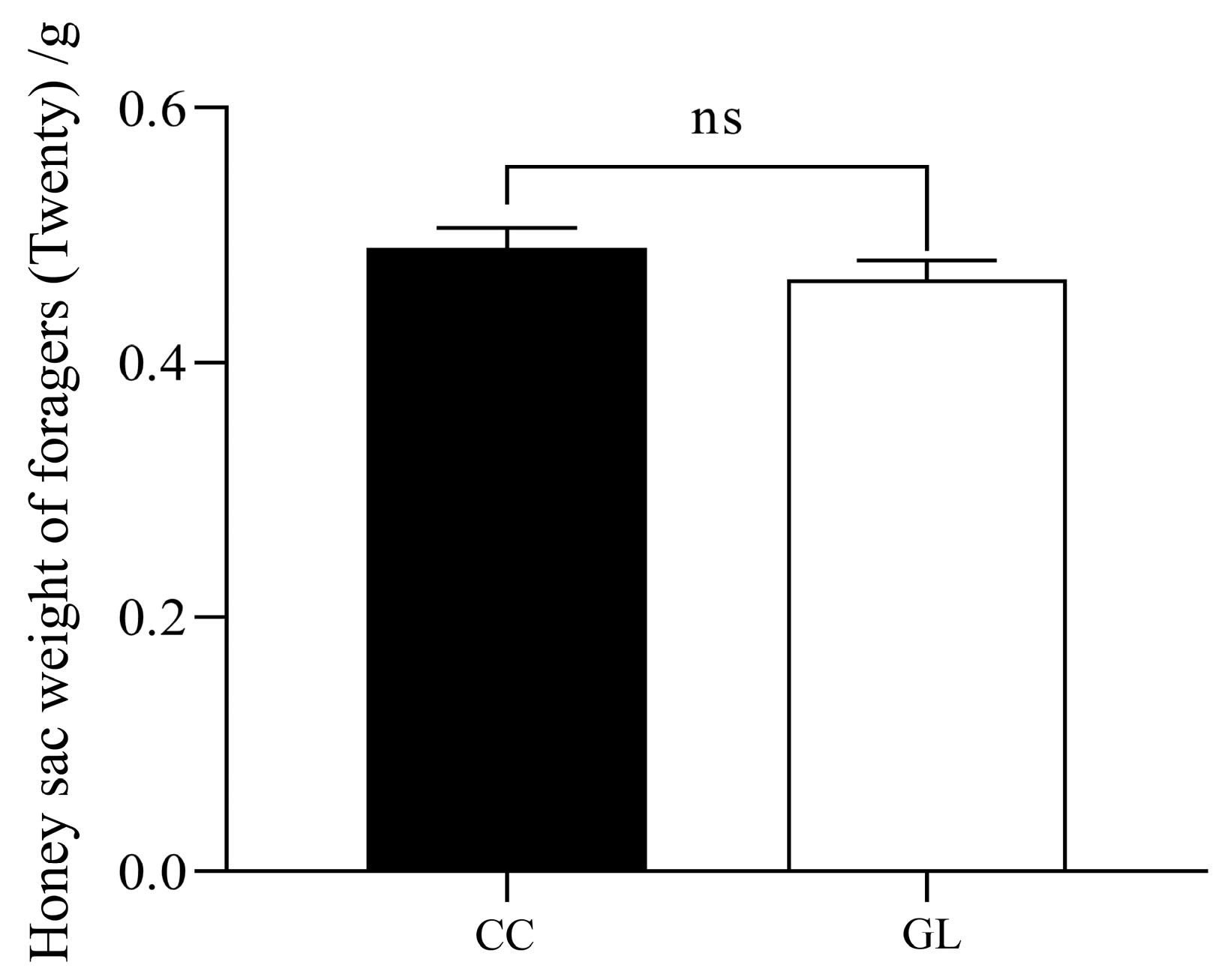
3.4. Effects of Queen Rearing Methods on the Honey Sac Weight of Forager Offspring
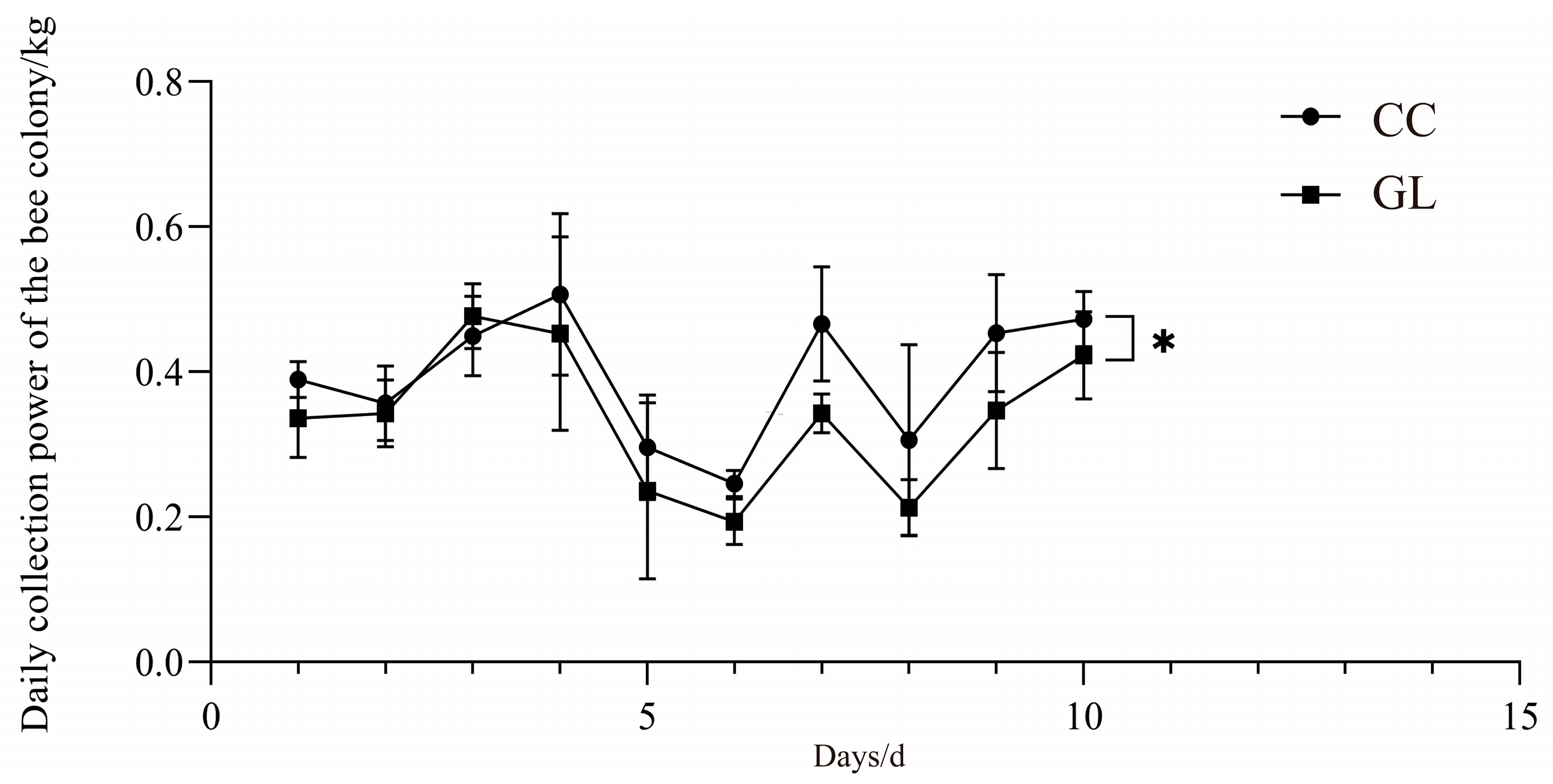
3.5. Effects of Queen Rearing Methods on the Daily Foraging Amount of Colonies
3.6. Effects of Queen Rearing Methods on the Morphological Indicators of Workers
4. Discussion
5. Conclusions
Author Contributions
Funding
Data Availability Statement
Conflicts of Interest
Abbreviations
| CC | Cutting comb |
| GL | Grafting larvae |
References
- Nicholls, C.I.; Altieri, M.A. Plant biodiversity enhances bees and other insect pollinators in agroecosystems. A review. Agron. Sustain. Dev. 2013, 33, 257–274. [Google Scholar] [CrossRef]
- Potts, S.G.; Imperatriz-Fonseca, V.; Ngo, H.T.; Aizen, M.A.; Biesmeijer, J.C.; Breeze, T.D.; Dicks, L.V.; Garibaldi, L.A.; Hill, R.; Settele, J. Safeguarding pollinators and their values to human well-being. Nature 2016, 540, 220–229. [Google Scholar] [CrossRef] [PubMed]
- Goulson, D.; Nicholls, E.; Botías, C.; Rotheray, E.L. Bee declines driven by combined stress from parasites, pesticides, and lack of flowers. Science 2015, 347, 1255957. [Google Scholar] [CrossRef] [PubMed]
- Nath, R.; Singh, H.; Mukherjee, S. Insect pollinators decline: An emerging concern of Anthropocene epoch. J. Apic. Res. 2023, 62, 23–38. [Google Scholar] [CrossRef]
- Amiri, E.; Strand, M.K.; Rueppell, O.; Tarpy, D.R. Queen quality and the impact of honey bee diseases on queen health: Potential for interactions between two major threats to colony health. Insects 2017, 8, 48. [Google Scholar] [CrossRef]
- Li, C.-L.; Liu, Y.-B.; Wang, S.-C.; He, X.-J.; Liu, G.-N.; Yuan, F. Effects of a queen rearing method using queen-cell egg laying device on Apis mellifera queen quality. Acta Agric. Univ. Jiangxiensis 2023, 45, 434–443. [Google Scholar]
- Corona, M.; Hughes, K.A.; Weaver, D.B.; Robinson, G.E. Gene expression patterns associated with queen honey bee longevity. Mech. Ageing Dev. 2005, 126, 1230–1238. [Google Scholar] [CrossRef]
- Yang, C.; Lei, L.; Wang, Y.; Xu, B.; Liu, Z. The Ontogeny and Dietary Differences in Queen and Worker Castes of Honey Bee (Apis cerana cerana). Insects 2024, 15, 855. [Google Scholar] [CrossRef]
- Pan, L.; Wang, Z.; Zhong, S.; Xu, T.; Chen, W.; Cheng, F.; Zeng, Z. Agxt2l-mediated glycerophospholipid metabolism in trophocytes explains Apis mellifera queen’s higher oviposition over A. cerana. Commun. Biol. 2025, 8, 1091. [Google Scholar] [CrossRef]
- Wu, X.-B. Advance in research on method of queen rearing with out grafting larvae. Heilongjiang Anim. Sci. Vet. Med. 2018, 5, 33–38. [Google Scholar]
- Pan, Q.-Z.; Wu, X.-B.; Guan, C.; Zeng, Z.-J. A new method of queen rearing without grafting larvae. Am. Bee J. 2013, 153, 1279–1280. [Google Scholar]
- Zhang, B.; Wu, X.B.; Liao, C.H.; He, X.J.; Yan, W.Y.; Zeng, Z.J. Research and application of honeybee non-grafting larvae technology. Sci. Agric. Sin. 2018, 51, 4387–4394. [Google Scholar]
- Hu, J. Studies on the Cultivation of High-Quality Queen in Apis cerana cerana. Master’s Thesis, Jiangxi Agriculturae University, Nanchang, China, 2018. [Google Scholar]
- Costa, C.P.; Fisher, K.; Guillén, B.M.; Yamanaka, N.; Bloch, G.; Woodard, S.H. Care-giver identity impacts offspring development and performance in an annually social bumble bee. BMC Ecol. Evol. 2021, 21, 20. [Google Scholar] [CrossRef] [PubMed]
- Cengiz, M.; Yazici, K.; Arslan, S. The effect of the supplemental feeding of queen rearing colonies on the reproductive characteristics of queen bees (Apis mellifera L.) Reared from egg and different old of larvae. Kafkas Univ. Vet. Fak. Derg. 2019, 25, 849–855. [Google Scholar]
- Lu, F.-M.; Hu, Y.-Y.; Pan, Q.-Z.; Wu, X.-B. Research on queen rearing technology of Apis cerana cerana by cutting honeycomb. Acta Agric. Univ. Jiangxiensis 2024, 46, 447–455. [Google Scholar]
- Holmes, L.; Ovinge, L.; Kearns, J.; Ibrahim, A.; Wolf Veiga, P.; Guarna, M.; Pernal, S.; Hoover, S. Queen quality, performance, and winter survival of imported and domestic honey bee queen stocks. Sci. Rep. 2023, 13, 17273. [Google Scholar] [CrossRef]
- Given, K. Queen rearing and bee breeding. In Honey Bee Medicine for the Veterinary Practitioner; John Wiley & Sons, Inc.: Hoboken, NJ, USA, 2021; pp. 363–366. [Google Scholar]
- Wang, S.-C. Comparison of Morphology and Production Performance with Different Body Colour of Apis cerana cerana in Anyuan County and Analysis of the Mechanism of Body Color Formation. Master’s Thesis, Jiangxi Agriculturae University, Nanchang, China, 2023. [Google Scholar]
- Peng, C.-T.; Guo, D.-S.; Pei, Y.-L.; Fu, J.-H.; Hu, J.-Y.; Yan, W.-Y. Comparison of worker morphology and productivity in colonies with different colored queens, and results of preliminary selective breeding of Apis cerana cerana. Chin. J. Appl. Entomol. 2023, 60, 772–782. [Google Scholar]
- Ruttner, F. Morphometric analysis and classification. In Biogeography and Taxonomy of Honeybees; Springer: Berlin/Heidelberg, Germany, 1988; pp. 66–78. [Google Scholar]
- Doolittle, G.M. Scientific Queen-Rearing as Practically Applied: Being a Method by Which the Best of Queen-Bees Are Reared in Perfect Accord with Nature’s Ways: For the Amateur and Veteran in Bee-Keeping; Thomas G. Newman & Son: Chicago, IL, USA, 1889. [Google Scholar]
- Yi, Y.; Liu, Y.B.; Barron, A.B.; Zeng, Z.J. Transcriptomic, morphological, and developmental comparison of adult honey bee queens (Apis mellifera) reared from eggs or worker larvae of differing ages. J. Econ. Entomol. 2020, 113, 2581–2587. [Google Scholar] [CrossRef] [PubMed]
- Zou, C.; Zhou, L.; Hu, J.; Xi, F.; Yuan, F.; Yan, W. Effects of queen-rearing without larvae-grafting and two esters of brood pheromone on the queen quality of Apis cerana cerana. Zhongguo Nong Ye Ke Xue 2016, 49, 3662–3670. [Google Scholar]
- Zhang, F.; Gan, H.Y.; Li, S.Y.; Zeng, Z.J.; Wu, X.B. Preliminary study on the bionic technology of rearing queen bees without transferring larvae. Heilongjiang Anim. Sci. Vet. Med. 2013, 10, 144–146. [Google Scholar]
- Facchini, E.; De Iorio, M.G.; Turri, F.; Pizzi, F.; Laurino, D.; Porporato, M.; Rizzi, R.; Pagnacco, G. Investigating genetic and phenotypic variability of queen bees: Morphological and reproductive traits. Animals 2021, 11, 3054. [Google Scholar] [CrossRef] [PubMed]
- Jackson, J.T.; Tarpy, D.R.; Fahrbach, S.E. Histological estimates of ovariole number in honey bee queens, Apis mellifera, reveal lack of correlation with other queen quality measures. J. Insect Sci. 2011, 11, 82. [Google Scholar] [CrossRef] [PubMed]
- Wei, H.; He, X.J.; Liao, C.H.; Wu, X.B.; Jiang, W.J.; Zhang, B.; Zhou, L.B.; Zhang, L.Z.; Barron, A.B.; Zeng, Z.J. A maternal effect on queen production in honeybees. Curr. Biol. 2019, 29, 2208–2213.e2203. [Google Scholar] [CrossRef] [PubMed]
- Wang, Z.; Li, J.-L.; Ding, Y.-B.; Wei, Z.-K.; Wang, H. Effect of Different Nutriment on the Weight of Bees. Jilin Anim. Husb. Vet. Med. 2005, 27, 8–10. [Google Scholar]
- Hu, X.-L.; Shu, S.-J.; Zhou, Y.; Wei, Y.; He, S.-S. Effects of Wax Comb Used Time on Colony Growth and Morphometric Characteristics of Honeybee (Apis cerana cerana) Workers. J. Yunnan Agric. Univ. (Nat. Sci.) 2021, 36, 9. [Google Scholar]
- Sauthier, R.; I’Anson Price, R.; Grüter, C. Worker size in honeybees and its relationship with season and foraging distance. Apidologie 2017, 48, 234–246. [Google Scholar] [CrossRef]
- Seeley, T.D. Social foraging in honey bees: How nectar foragers assess their colony’s nutritional status. Behav. Ecol. Sociobiol. 1989, 24, 181–199. [Google Scholar] [CrossRef]



| Morphological Indicators | Cutting Comb (CC) | Grafting Larvae (GL) |
|---|---|---|
| Proboscis length/mm | 4.770 ± 0.140 a | 4.750 ± 0.170 a |
| Forewing length/mm | 8.640 ± 0.180 a | 8.690 ± 0.200 a |
| Forewing width/mm | 2.990 ± 0.048 a | 2.900 ± 0.110 b |
| Cubital vein a/mm | 0.880 ± 0.130 a | 1.100 ± 0.058 b |
| Cubital vein b/mm | 0.310 ± 0.031 a | 0.270 ± 0.024 b |
| Length of wax mirror on 3rd sternum/mm | 3.720 ± 0.150 a | 3.120 ± 0.470 b |
| Distance between wax mirrors on 3rd sternum/mm | 0.270 ± 0.025 a | 0.250 ± 0.020 b |
| Oblique distance between wax mirrors/mm | 3.320 ± 0.079 a | 3.260 ± 0.060 a |
| 3rd tergite Length/mm | 2.090 ± 0.053 a | 1.990 ± 0.039 b |
| 4th tergite Length/mm | 2.013 ± 0.050 a | 1.940 ± 0.062 b |
| Hind leg femur length/mm | 2.430 ± 0.046 a | 2.390 ± 0.065 a |
| Tibia length/mm | 2.958 ± 0.077 a | 2.800 ± 0.190 b |
| Tarsus length/mm | 2.240 ± 0.061 a | 2.019 ± 0.060 b |
| Tarsus width/mm | 1.110 ± 0.087 a | 1.055 ± 0.096 a |
| Hindwing length/mm | 6.460 ± 0.200 a | 6.070 ± 0.150 b |
| Hindwing width/mm | 1.850 ± 0.064 a | 1.790 ± 0.110 a |
| Length of the 6th sternum/mm | 2.360 ± 0.083 a | 2.314 ± 0.090 a |
| Width of the 6th sternum/mm | 2.890 ± 0.070 a | 2.770 ± 0.160 b |
Disclaimer/Publisher’s Note: The statements, opinions and data contained in all publications are solely those of the individual author(s) and contributor(s) and not of MDPI and/or the editor(s). MDPI and/or the editor(s) disclaim responsibility for any injury to people or property resulting from any ideas, methods, instructions or products referred to in the content. |
© 2025 by the authors. Licensee MDPI, Basel, Switzerland. This article is an open access article distributed under the terms and conditions of the Creative Commons Attribution (CC BY) license (https://creativecommons.org/licenses/by/4.0/).
Share and Cite
Hu, Y.; Lu, F.; Li, S.; Pan, Q.; Jiao, Y.; Jiang, Y.; Wu, X. Effects of Queen Rearing Technology of Apis cerana by Cutting Comb on Reproductive Capacity and Productive Performance. Agriculture 2025, 15, 2508. https://doi.org/10.3390/agriculture15232508
Hu Y, Lu F, Li S, Pan Q, Jiao Y, Jiang Y, Wu X. Effects of Queen Rearing Technology of Apis cerana by Cutting Comb on Reproductive Capacity and Productive Performance. Agriculture. 2025; 15(23):2508. https://doi.org/10.3390/agriculture15232508
Chicago/Turabian StyleHu, Yueyang, Fangming Lu, Shuyun Li, Qizhong Pan, Yuyang Jiao, Yutong Jiang, and Xiaobo Wu. 2025. "Effects of Queen Rearing Technology of Apis cerana by Cutting Comb on Reproductive Capacity and Productive Performance" Agriculture 15, no. 23: 2508. https://doi.org/10.3390/agriculture15232508
APA StyleHu, Y., Lu, F., Li, S., Pan, Q., Jiao, Y., Jiang, Y., & Wu, X. (2025). Effects of Queen Rearing Technology of Apis cerana by Cutting Comb on Reproductive Capacity and Productive Performance. Agriculture, 15(23), 2508. https://doi.org/10.3390/agriculture15232508