1. Introduction
Modern business environments are increasingly shaped by complex, interconnected risks stemming from environmental, social, technological and geopolitical disruptions. In a climate of global uncertainty and heightened stakeholder expectations, organisations are recognising the imperative for more advanced and integrated risk management approaches that are closely aligned with sustainable development goals and environmental, social, and governance (ESG) standards. The implementation of ESG policies in financial institutions becomes crucial for achieving sustainability and long-term competitiveness in the banking sector. The issue of implementing ESG principles in financial institutions of different geographic contexts, urban and rural, is gaining importance due to growing demands for sustainable business. Education, professional development, and job satisfaction play a key role in the successful implementation of environmental and social initiatives [
1]. They can significantly contribute to better implementation of these policies in banks, because employees with greater knowledge and engagement become key actors in the implementation of sustainable business practices [
2]. The importance of innovations in banking processes and the ways employee perceptions of environmental responsibility affect the sustainable performance of banks indicate that greater engagement and education of employees regarding ESG principles are needed to improve the implementation of these practices [
3]. Although previous research has predominantly focused on regulatory, financial, and institutional aspects of ESG implementation [
4,
5,
6], studies examining employee perceptions as drivers of ESG transformation remain limited. In particular, analyses comparing urban and rural banking environments are limited, despite their role in conveying ESG requirements to the agricultural sector and local communities [
7].
The role of financial institutions in the sustainable development of rural areas is becoming increasingly important, particularly in the context of European and global initiatives for green transition and socially responsible business. ESG policies represent a key instrument for directing financial resources towards projects that promote sustainable agriculture, energy efficiency, and balanced local development. These policies are increasingly implemented through innovative forms of green finance and digital technologies [
8]. Although banks in urban areas often have more advanced infrastructure and institutional support, financial institutions in rural areas remain underutilised in ESG transformation processes. As financial intermediaries, rural banks can play a crucial role in linking public policies with local development priorities. These priorities include the promotion of sustainable agriculture, support for green innovation, strengthening community resilience, and encouraging sustainable economic growth. This is particularly relevant in countries with limited institutional capacities, where the quality of institutions decisively influences the development of the financial system and overall local economic progress [
9].
In light of the above, this research explores the current perception of employees in urban and rural banks regarding the environmental, social, and governance dimensions of ESG policies, as well as the role of employees in their implementation. The research explores factors such as education, access to resources, and organisational culture, which shape employee attitudes towards ESG initiatives. It also aims to clarify how differences in geographic context and strategic focus on sustainability affect the willingness and engagement of employees in the implementation of ESG goals, especially in banks operating in rural areas, which have so far been less researched in the literature. The starting hypothesis of the research is that there is a statistically significant difference between employees in urban and rural banks regarding the perception of certain variables of ESG policies, including environmental, social, and governance dimensions, as well as the role of employees in their implementation. Based on the initial hypothesis, the following special hypotheses were formulated:
H1. There is a statistically significant difference between employees in urban and rural banks in their perceptions of the environmental dimension of ESG policies.
H2. There is a statistically significant difference between employees in urban and rural banks regarding the perception of the social dimension of ESG policies.
H3. There is a statistically significant difference between employees in urban and rural banks regarding the perception of the governance dimension of ESG policies.
H4. There is a statistically significant difference between employees in urban and rural banks regarding the perception of the role of employees in the implementation of ESG policies.
In the context of growing demands for integrating sustainability into modern banking strategies, this research aims to contribute to understanding how ESG factors can effectively support the development of flexible financial approaches aligned with sustainable development goals, particularly in the field of agriculture. The role of bank employees is crucial in this process. Their awareness, education, and engagement directly influence the implementation of green financial initiatives, the strengthening of local resilience, and support for agricultural contractors. This is especially relevant in rural areas, where banks can serve as intermediaries between sustainability policies and the specific needs of the agricultural sector.
2. Literature Review
The implementation of ESG policies in banks is becoming crucial for achieving sustainability and maintaining long-term competitiveness in the banking sector. Banks that successfully apply ESG strategies not only meet regulatory requirements but also gain competitive advantages by improving their reputation, reducing risks related to regulatory and market changes, and optimising resource use [
10]. These strategies include three key dimensions: environmental, social, and governance (ESG), which enable banks to integrate sustainable business practices, minimise environmental impact, enhance social outcomes, and promote responsible governance.
The literature indicates that ESG implementation is particularly important in the context of increasing demand for sustainable financial solutions and responsible banking. Nevertheless, limited research has explored how bank employees themselves perceive ESG initiatives and how their engagement may differ between urban and rural banking environments. This is precisely why current research is increasingly focusing attention on the environmental, social, and governance dimensions of the ESG framework in the banking sector, as well as on the active and evolving role of employees in the implementation of these policies. Contemporary authors particularly emphasise the importance of thoroughly analysing the environmental, social, and governance dimensions of the ESG framework, together with the role of employees in implementing sustainable banking practices in rural areas.
2.1. The Environmental Dimension of the ESG Approach in the Banking Sector
The environmental dimensions of ESG policies include activities of banks that reduce their negative impact on the environment, including green innovation, financing of ecological projects, and reduction of carbon dioxide emissions. Banks implementing green practices can reduce operational risk and contribute to environmental protection, which is proving to be a key factor in achieving sustainability. Green financial products, including loans for energy efficiency, subsidized loans for switching to renewable energy sources, and support for circular business models, are becoming more and more present in the banking sector [
8]. Research by Liu et al. [
3] indicates that bank employees who are better educated and engaged in ESG practices can contribute to more effective implementation of environmental initiatives. This is particularly important given the need to understand how employees perceive their role in supporting green transformation, and whether these perceptions differ between urban and rural banking environments. According to Vapa-Tankosić et al. [
11], investing in the education of farmers in rural areas can significantly improve the implementation of environmental ESG policies. Investing in environmental innovations can also contribute to reducing operating costs and improving banking services. Investing in environmental innovations can also contribute to reducing operating costs and improving banking services [
12].
Chen and Yue [
4] developed a framework for ESG evaluation in the function of sustainable entrepreneurship in rural areas of China, indicating that differences in ESG rating can affect the quantity and quality of green innovation. Their research emphasises the importance of transparency, digital transformation, and institutional support of local authorities. Rahman et al. [
13], in their research, showed that strategic initiatives in accordance with SDG 7 and SDG 13 enable banks to actively participate in the green transition through the development of financial products and regulatory control. Sarpong et al. [
14] indicated that digitalisation of ESG practices in rural banks positively affects brand value and customer loyalty, while Thapliyal et al. [
15] confirm that green banking practices directly improve banks’ environmental performance, with the mediating effect of green financing. Yi et al. [
16] point out that green financial flows contribute to the sustainability of rural communities but also warn of possible spatial imbalances. Lee et al. [
17] emphasise the importance of the digital economy in enhancing the effects of green policies on decarbonization, while Zhang et al. [
18] remind that inadequately regulated green financing can cause negative effects. These studies confirm that the environmental dimensions of ESG policies require a synergy of regulatory, digital, and educational mechanisms to ensure a sustainable transition and resilience of the banking sector in urban and rural environments.
2.2. The Social Dimension of the ESG Approach in the Banking Sector
The social dimension of ESG policies refers to responsibility towards employees, the community, and wider society. Employee commitment to social initiatives directly affects the success of ESG policy implementation [
2]. Banks that invest in employee education about social responsibilities and offer adequate job training programs for social practices can achieve better results in achieving their ESG goals. Banks in urban areas are more successful in implementing social ESG practices thanks to a more developed organisational culture, supportive leadership, and engaged [
19,
20].
For banks in rural areas, education and investment in social practices play a key role in overcoming barriers such as lack of technology and infrastructure. Daraz, Bojnec, and Khan [
21] indicate that high levels of poverty and low levels of education are key determinants in the implementation of social practices in various sectors, including banking. The lack of education and resources in rural areas can significantly contribute to the increased risk of irresponsible practices, which negatively affect the implementation of social ESG initiatives. Employees who are engaged and educated in ESG practices can significantly contribute to the implementation of social initiatives, which is especially important in rural areas where education is still insufficient. Social responsibility of banks towards employees, including fair wages, optimal working conditions, and reduction of work risks, is crucial for long-term sustainability and business efficiency [
4]. Banks that integrate these practices into their strategy can improve social conditions and gain competitive advantages [
3].
In rural banks, where digitalisation is not yet fully present, the implementation of ESG practices can be challenging. Sarpong et al. [
14] point to the positive impact of digitalisation of ESG practices on strengthening the trust and loyalty of clients in rural banks. Digital platforms can significantly contribute to better communication with communities and enable easier reporting on ESG performance. Also, CSR initiatives in banks, which include responsibility towards employees and the community, can have a positive impact on society [
22]. Transparency and support for employees and the community are key factors for the successful implementation of social ESG practices and strengthening the bank’s reputation, especially in rural areas where client trust is often lower due to a lack of infrastructure resources. Nevertheless, research is still scarce when it comes to how employees in rural banks perceive the social dimension of ESG practices and their role in strengthening relations with local communities.
When talking about the social responsibility of banks, it is important to invest in social infrastructure, as well as in the development of sustainable agricultural initiatives. Banks that offer green financial products and training for farmers can contribute to environmental sustainability and improve productivity in rural areas. Wang and Tian [
23] investigate how green finance affects agriculture, reducing carbon dioxide emissions and supporting the development of sustainable agricultural practices. They indicate that the development of green financing is crucial to support agriculture. Moćalov et al. [
24] show that the development of green finance significantly reduces carbon dioxide emissions on farms, as well as optimises the agricultural industry through green technologies. Banks that apply high standards of social responsibility towards employees and the community can improve competitiveness. Such practices also strengthen trust between financial institutions and agricultural stakeholders, facilitating long-term sustainable investment.
2.3. The Governance Dimension of the ESG Approach in the Banking Sector
The governance dimension of ESG policies includes responsibility in decision-making, reporting on achieved ESG goals, as well as control and supervision of the implementation of these practices. Transparency in decision-making and governance t accountability enable banks to more effectively implement ESG policies, while the lack of clear control mechanisms can hinder the achievement of sustainable goals [
25]. Banks that implement well-defined internal structures to manage ESG initiatives achieve better financial and operational results [
26]. Clearly defined policies and management responsibility influence the long-term performance of banks in terms of ESG goals [
27].
In addition to institutional frameworks and regulatory requirements, the quality of ESG policy implementation also depends on the ability of management to integrate sustainability into strategic goals and day-to-day operations. Chen and Yue [
4] developed an ESG performance evaluation model in the banking sector, indicating that differences in ESG ratings are not only driven by external factors but also by the effectiveness of internal decision-making processes. Their research highlights the importance of digital transformation and transparency as key elements for successful ESG integration, especially in supporting sustainable development at the local level. However, there is still limited evidence on how employees perceive the functionality of these organisational structures, particularly in rural banks, where technological and informational resources are often insufficient.
Digitalisation of management processes additionally strengthens banks’ capacity to respond to the demands of the ESG framework. Sarpong et al. [
14] point out that the implementation of digital tools for reporting and monitoring ESG goals in rural banks contributes to greater community engagement, brand strengthening, and customer loyalty. These findings confirm that the governance dimension is influenced not only by formal organisational structures, but also by access to relevant information, the adaptability of technological tools, and the capacity of employees to apply ESG principles in their daily work.
A good governance framework also implies the inclusion of all relevant stakeholders in the decision-making process, especially when it comes to socially and environmentally sensitive issues. In this sense, Witt et al. [
7] indicate that new European directives, such as CSRD, increase expectations from banks regarding the quality of ESG reporting, but also require stronger internal coordination and clearly defined responsibilities. This introduces the notion of standardised procedures and clear lines of responsibility in relation to ESG policies, which may be less operationalised in rural environments due to structural constraints and the slower pace of regulatory and market changes.
2.4. The Role of Employees in the Implementation of ESG in the Banking Sector
The role of employees in the implementation of ESG policies is crucial because engaged and educated employees become key actors in the implementation of sustainable business practices. Those employees who are involved in decision-making also become key actors in the implementation of sustainable business practices. Employees involved in decision-making and daily ESG operations directly affect the quality and efficiency of implementation. Banks that invest in the education and training of their employees on ESG practices record better results in maintaining sustainable business practices. The lack of education and engagement of employees in rural banks represents one of the main challenges in the implementation of ESG policies, which indicates the need for greater investment in infrastructure and education [
3]. Continuous education of employees in the finance sector is considered a key factor for the success of sustainable business practices in banks [
20]. The employees, through education and active participation, can significantly contribute to the successful implementation of ESG policies, and this process is especially challenging in rural areas where educational resources and infrastructure are not as developed as in urban areas.
In the context of rural banks, which face specific challenges, such as a lack of technology and insufficient training of employees, it is important to invest in human capital development in order to create the basic infrastructure for the application of ESG practices. Also, Sarpong et al. [
14] point to the positive impact of digitalisation of ESG practices on strengthening the trust and loyalty of clients in rural banks, which indicates the need for better access to digital tools that enable faster and more efficient implementation of ESG policies.
In the agricultural sector, which is crucial for the sustainable development of rural areas, ESG practices have special relevance. Banks that develop ESG practices related to agriculture can significantly contribute to reducing the environmental footprint of agriculture, including educating farmers, as well as providing financial resources for green projects. Wang and Tian [
23] investigate how green finance affects agriculture, reducing carbon dioxide emissions and supporting the development of sustainable agricultural practices. They indicate that the development of green financing is crucial to support agriculture in order to achieve ecologically and economically sustainable development.
2.5. Implementation of ESG Policies in Banks and Their Impact on Sustainability
With this research authors point to the importance of investing in human capital, organisational culture, and strategic commitment to sustainability, which enables banks to realize long-term competitive advantages and contribute to broader social progress. The implementation of ESG policies becomes crucial for the success and sustainability of banks in the modern business environment. The differences between urban and rural banks stem from different infrastructural, educational, and institutional conditions, which affect the ability to implement ESG goals. Banks in urban areas, with more developed infrastructure and greater resources, implement ESG policies more easily, while banks in rural areas must invest more in employee education, transparency in decision-making, and development of internal control mechanisms.
Chen and Yue [
4] emphasise the importance of information transparency, digital transformation, and institutional support for the effective implementation of ESG policies, which directly affect the agricultural industry, especially in the context of green innovation. Rahman et al. [
13] indicate the key role of strategic initiatives in accordance with the goals of sustainable development, which also refer to the agricultural sector, while Sarpong et al. [
14] highlight the positive effects of digitalisation of ESG practices in rural banks on strengthening the trust and loyalty of clients, including farmers as key actors of sustainable development.
For banks in rural areas, education and investment in social practices are key factors in overcoming barriers such as lack of technology and infrastructure. Employees who are educated about ESG practices can contribute to better implementation of social initiatives, which is especially important in rural areas where education and resources are not at the same level as in urban areas. Banks that develop green financial products, especially those that support agriculture, can significantly contribute to reducing carbon dioxide emissions and encouraging sustainable agricultural practices, making banks key actors in the sustainable development of rural areas [
23,
24]. These initiatives provide a long-term competitive advantage to banks because they not only increase their business efficiency but also directly affect the improvement of social and environmental conditions in the community. Transparency, responsibility towards employees and the community, as well as the introduction of high standards of social responsibility, are key factors for achieving success in the implementation of ESG policies, especially in rural areas [
22].
The implementation of ESG policies represents a long-term strategy for improving the competitiveness of banks, which is particularly important in rural areas where banks must overcome infrastructural and educational challenges. Given the importance of employees in this process, investing in their education and involvement in activities is key to achieving sustainability and positive social impact. The use of green financial products and the development of social initiatives not only strengthen the operations of banks but also directly affect the preservation of the environment and the improvement of the standard of living in rural areas.
While previous studies have examined ESG practices in financial institutions, there is a lack of comparative research exploring how employees in rural and urban banks perceive the implementation of ESG-related initiatives. This study addresses this gap by focusing on employees’ perceptions across these distinct geographic contexts, with attention to governance, transparency, and sustainability outcomes.
3. Materials and Methods
The research is focused on the analysis of employees’ perceptions regarding the implementation of ESG policies in the financial sector, whereby banks are singled out as a study framework due to their organisational relevance and standardised ESG obligations. Such an approach enables comparability of employee perceptions in urban and rural contexts, taking into account regulatory requirements and operational specificities of the banking sector. Comparing the perceptions of employees in urban and rural areas enables the identification of key differences in challenges and opportunities for the implementation of ESG policies, as well as the role that the local context (such as infrastructural and educational resources) plays in shaping those perceptions. This allows for a deeper understanding of how geographic differences affect banks’ ability to successfully implement sustainable business practices.
As a research instrument, an anonymous survey has been used. The first part of the survey asked for sociodemographic characteristics of the respondents (gender, age, length of service in the banking sector, position, and location of the bank). The second part referred to the assessment of the overall level of application of ESG policies in the bank. The third part of the questionnaire covers the employees’ perceptions of environmental, social, and governance dimensions the implementation of ESG policy principles. Each of these dimensions was rated using a five-point Likert scale (from 1—I completely disagree, to 5—I completely agree). The questionnaire was structured on the basis of relevant theoretical frameworks and previous research in the field of ESG application in financial institutions [
2,
3,
28,
29], with the research conducted from May 2024 to December 2024. The research period enables the collection of data during various stages of ESG policy implementation, which is crucial for analysing their long-term effects.
The sample covered five banks out of nineteen operating in the Republic of Serbia. These banks were selected because they have branches in both urban and rural areas, enabling a comparative analysis. The participating banks differed in certain operational characteristics such as digitalisation level and branch network scope, which allowed for a more diverse sample, although these differences were not subject to detailed analysis. A total of 700 questionnaires were distributed to employees of these banks, resulting in 563 valid responses. Of these, 379 responses were collected from employees working in branches located in urban areas, and 184 from employees in rural branches, as shown in the Results section.
Data processing included descriptive statistics, correlation analysis to examine the connection of variables, and multiple regression analysis to assess their impact on the overall level of application of ESG policies in the bank. The normality of the distribution was tested with the Jarque–Bera test [
30], while the Mann–Whitney U test was used to compare geographic groups, given that it is a non-parametric method suitable for comparing independent samples when deviations from normality and homogeneity of variances [
31]. Analyses were conducted using the software packages EViews 12 (IHS Markit, London, UK) for descriptive statistics, normality tests, and preliminary analyses and IBM SPSS Statistics 26 (IBM Corp., Armonk, NY, USA) for inferential analyses: correlations, Mann–Whitney U test, and regression analyses. Given the results of the Jarque–Bera test, parametric procedures such as ANOVA were excluded from the analysis. The threshold of statistical significance was set at 0.05. This methodological framework enables an in-depth analysis of different dimensions of ESG policy in the context of urban and rural banks, which enables better generalization of the results and the identification of key factors that influence the success of the implementation of ESG initiatives in different environments.
4. Results
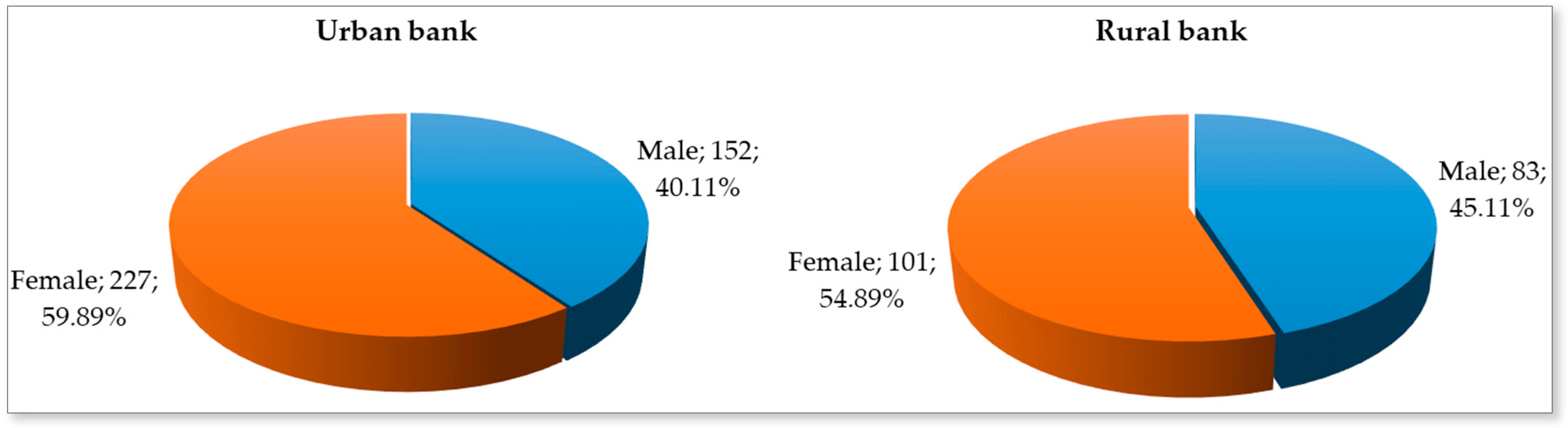
The structure of respondents employed in banks by gender is shown in
Figure 1. In banks whose branches are located in urban areas, 59.89% are women and 40.11% are men. The gender structure of respondents is similar in branches in rural areas, where women make up 54.89% and men 45.11% of the total sample.
Table 1 shows the structure of respondents employed by urban and rural banks in relation to age and length of service in the banking sector.
The average age of employees in banks in urban areas is 41.62 years, and in rural areas the average is slightly higher (43.23 years). The largest number of respondents belongs to the age group of 31 to 45 years (40.63% in urban and 40.76% in rural areas). Regarding seniority in the banking sector, the average value in urban areas is 9.42 years, while in rural areas the average seniority is somewhat shorter and amounts to 8.99 years. In both groups, the largest percentage of respondents has between 6 and 10 years of experience—69.9% in urban and 68.8% in rural banks. According to work experience in the banking sector, the highest percentage of respondents in both groups has between 6 and 10 years of work experience (69.9% in urban and 68.8% in rural areas).
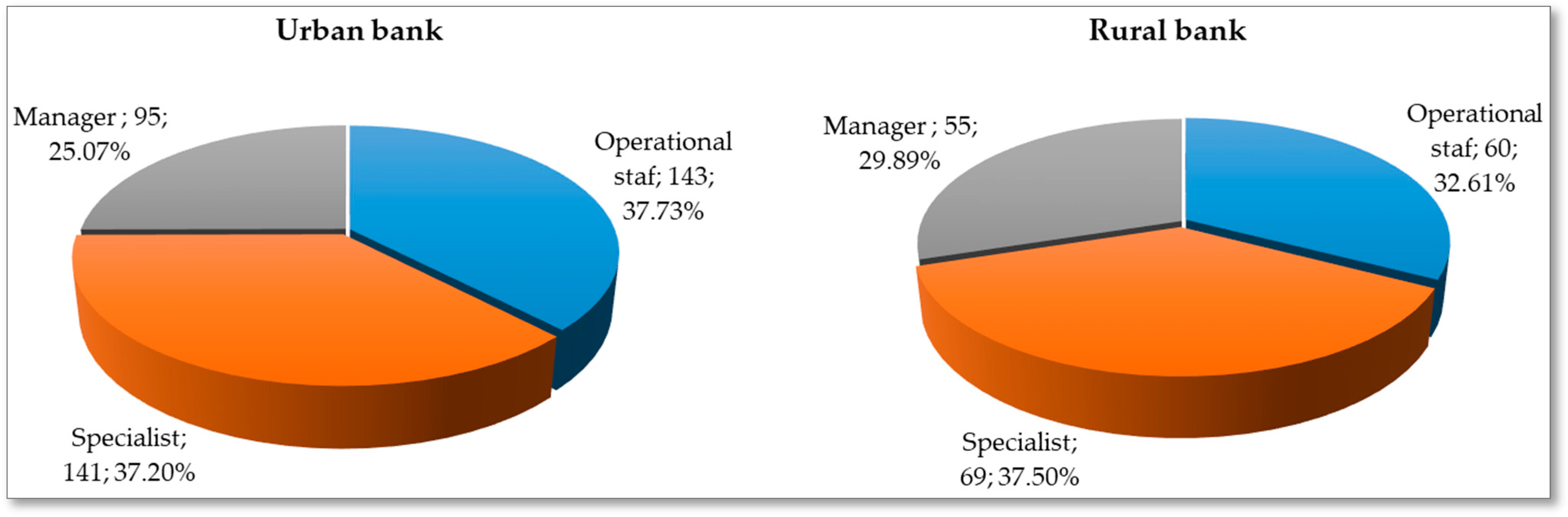
With regard to the job position, in the sample of respondents employed in banks from urban areas, 37.73% of the respondents were in operational, 37.20% were professional associates (specialists), and 25.07% were managers. In rural areas, this structure amounts to 32.61% of operational employees, 37.50% of professional associates, and 29.89% of managers (
Figure 2). Based on the presented descriptive sociodemographic characteristics, it can be concluded that both groups of samples are balanced, and the obtained results can be considered relevant for further empirical analysis.
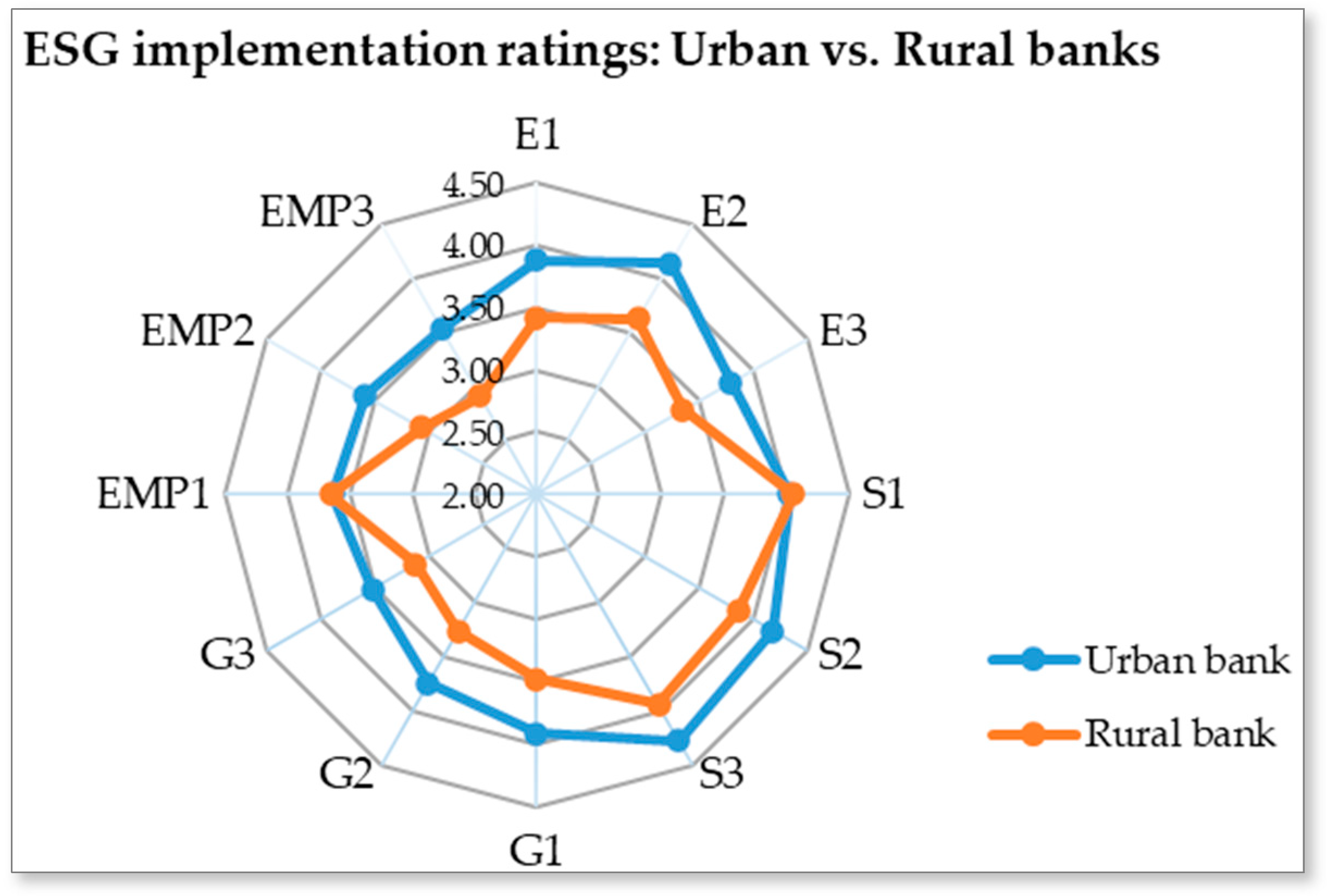
Table 2 indicates a moderately positive level of employees’ perception of the implementation of ESG policies. Higher average scores are evident among respondents employed in banks operating in urban areas, where ESG-U “Total level of ESG implementation” was evaluated with an average score of 3.81 (Std. Dev. = 0.94), while in rural areas the ESG-R variable was evaluated with 3.39 (Std. Dev. = 0.92). The respondents employed in banks in urban areas have rated the implementation of environmental measures more highly, with the biggest difference being recorded between E2-U “Process digitalisation is actively used to improve environmental responsibility” with an average value of 4.13 (Std. Dev. = 0.78) and E2-R with 3.62 (Std. Dev. = 0.98). The social dimension records high scores in both environments, with a slight advantage of banks in urban areas, especially in relation to the “Employees are provided with safe, healthy and dignified working conditions” where the average score for S3-U is 4.27 (Std. Dev. = 0.77), against banks in rural areas with an average score of 3.94 (Std. Dev. = 0.86). The governance dimension has the lowest average values among the observed dimensions. “Decisions in the bank are made in accordance with the principles of transparency and responsibility” was rated with the highest average score, and in urban areas the value of G1-U is 3.91 (Std. Dev. = 0.95), and in rural areas G1-R is 3.91 (Std. Dev. = 0.95), which may indicate certain challenges in terms of transparency and reporting. When it comes to the role of employees, the largest differences are recorded regarding the claims, “The bank organises training for employees on the topics of sustainable development and ESG approach” (E2-U = 3.59, Std. Dev. = 093; EMP2R = 3.07, Std. Dev. = 0.94) and “Employees receive clear instructions on how to apply ESG policies in their daily work” (EMP3-U = 3.53, Std. Dev = 0.89, EMP3-R = 2.91), which may indicate the need for improvement of internal communication flows and additional training of employees in rural areas.
The coefficient of asymmetry (skewness) for most variables shows slightly negative values, which indicates the tendency of employees to give higher ratings compared to the mean value. Kurtosis values indicate an increased concentration of responses around the average, especially in banks in urban areas, which additionally reflects the stability of positive attitudes. The Jarque–Bera test is statistically significant for most variables (
p < 0.05), which confirms deviations from the normal distribution and indicates the need to apply statistical procedures that are not based on the assumption of normality.
Figure 3 shows the distribution of employees’ average scores on the implementation of ESG policies in banks operating in urban and rural areas.
The Pearson correlation coefficient was used to examine the interrelationships between variables related to the implementation of ESG policies in the banking sector.
Table 3 shows the results of the correlation analysis between individual aspects of the application of ESG principles in banks operating in urban areas. The obtained coefficients indicate the absence of pronounced interdependencies among the observed variables, since no correlation exceeds the threshold of moderate association. The highest, although still weak, correlation levels were registered between E2-U “Digitalisation of processes is actively used to improve environmental responsibility” and S3-U “Employees are provided with safe, healthy and dignified working conditions” with a value of
r = 0.1236, as well as between E3-U “The bank supports projects that contribute to environmental sustainability” and S2-U “There is consistent application of policies of equal opportunities and respect for diversity among employees”, where the coefficient is
r = 0.1072. Such low values indicate the perception of employees that different aspects of ESG policy are mostly perceived as autonomous, without clearly perceived interconnections in daily practice.
Table 4 shows the Pearson correlation coefficients between variables related to the implementation of ESG policies in banks operating in rural areas. Similar to the results from urban areas, only weak correlations between the analysed dimensions were recorded here. The highest degree of connection, although still low, was recorded between indicators S3-R “Employees are provided with safe, healthy and dignified working conditions” and G3-R “Top management regularly reports on achieved results within ESG policies” with a coefficient
r = 0.2022. Mild correlations were also observed between E1-R “The bank systematically applies measures to reduce the negative impact on the environment” and EMP1-R “Employees are actively involved in initiatives that support the implementation of ESG policies”, with
r = 0.1434. These results indicate a slightly more pronounced internal connection of certain dimensions of the ESG approach in rural areas compared to urban areas, but still without the presence of strong interdependencies that would indicate a solid integration of these policies into everyday business.
Within the regression analysis, the dependent variable was the overall assessment of the application of ESG policies in the bank, while the model included 12 variables distributed in four dimensions. The analysis was conducted separately for employees of banks with branches in urban and rural areas. The results of the regression analysis (
Table 5) show that none of the observed variables is statistically significant in explaining the overall perception of the application of ESG policies among respondents employed in banks in urban areas (all
p > 0.05). The coefficients of all independent variables are low and without significant individual influence. The value of the coefficient of determination (
R2 = 0.033) indicates that the model explains only 3.3% of the variance of the dependent variable, which indicates a very low predictive power. This result suggests that employees in urban areas do not link the overall application of ESG policies to specific individual aspects of the observed dimensions.
Table 6 shows the results of the regression analysis for bank employees in rural areas. Among all observed variables, only E1-R “The bank systematically applies measures to reduce the negative impact on the environment” had a statistically significant impact on the overall perception of ESG policies (
p < 0.001), where the negative coefficient (
β = –0.2246) indicates that the pronounced application of environmental measures is not always accompanied by a corresponding perception of their effect among employees. Other variables did not show a significant individual association with the dependent variable (all
p > 0.05). The coefficient of determination (
R2 = 0.109) indicates a modest explained portion of the variance, while the F-test (
p = 0.062) is on the verge of statistical significance, implying limited predictive power of the model in the rural context.
In order to assess the influence of individual aspects of the ESG policy on the general assessment of its application, two multiple linear regressions were conducted, especially for employees in urban and rural banks. The dependent variable was the overall assessment of the application of ESG principles, while the predictors included 12 indicators distributed in four dimensions: environmental (E1–E3), social (S1–S3), management (G1–G3), and employee dimension (EMP1–EMP3).
For employees in urban areas, the model did not show statistically significant predictive power (
F (377) = 2.68,
p = 0.102), with a very low value of
R2 (0.01), which indicates that it explains only 1% of the variance. After applying the backward stepwise method, only one predictor remained in the model (G1-U “Decisions in the bank are made in accordance with the principles of transparency and responsibility”), but it did not have a significant contribution. The resulting regression equation reads:
In rural banks, the results indicate a weak but statistically significant joint influence of the predictors on the dependent variable (
F (182) = 13.03,
p < 0.001), with
R2 = 0.07. After the selection of variables, the model was reduced to one significant indicator—E1-R “The bank systematically applies measures to change the negative impact on the environment”, with a negative impact. The regression equation is:
These results suggest that the perception of ESG practices among employees in rural areas depends to a greater extent on the specific aspect (environmental component), while no clear connection with the observed indicators was identified among urban employees. Although the regression models aimed to identify predictors of overall ESG perception among employees, the results point to the limited explanatory power of the selected variables, especially in urban banks. This may suggest that employees’ attitudes are shaped by broader organisational or contextual factors that were not captured in the current model. The low R2 values and lack of significant predictors in most cases indicate that quantitative assessments alone may not sufficiently reflect the complexity of ESG implementation perceptions. Further research should consider qualitative methods or additional constructs, such as leadership support, organisational values, or external stakeholder pressure, which may offer a more nuanced understanding of employee perceptions related to sustainability.
In order to examine the differences in the perception of ESG dimensions among employees in the banking sector in urban and rural areas, the Mann–Whitney U test was applied, as an appropriate non-parametric method in situations where the distribution of data does not meet the criterion of normality. The level of significance was set at
p = 0.05. The results shown in
Table 7 show that in 11 of the 13 examined variables, there are statistically significant differences between the attitudes of employees in banks located in urban and rural areas. The overall perception of ESG policy (
U = 25537.5;
Z = 4.99;
p < 0.00001) indicates a clear difference in the attitudes of employees in urban and rural areas. Differences have been observed in the variables E1, “The bank systematically applies measures to reduce the negative impact on the environment”, E2 “Digitalisation of processes is actively used to improve environmental responsibility,” and E3 “The bank supports projects that contribute to environmental sustainability”, which indicates a different level of environmental engagement among the groups. Within the management dimension, the variables G1 “Decisions in the bank are made in accordance with the principles of transparency and responsibility”, G2 “There is internal supervision over the implementation of ESG policies”, and G3 “Top management regularly reports on the results achieved within ESG policies”, also show significant differences in perception.
In the social dimension, statistically significant differences have been observed for variables S2 “There is a consistent application of policies of equal opportunities and respect for diversity among employees” and S3 “Employees are provided with safe, healthy and dignified working conditions”, while for variable S1 “The bank participates in projects that contribute to the development of local communities” no difference was observed (Z = −0.939; p = 0.35). In relation to the employee dimension, the results show that the attitudes on EMP-2 “The bank organises training for employees on the topics of sustainable development and ESG approach” and EMP-3 “Employees receive clear instructions on how to apply ESG policies in their daily work” vary significantly between employees in urban and rural banks, while the attitudes on EMP-1 “Employees are actively involved in initiatives that support the implementation of ESG policies” are uniform in both groups.
5. Discussion
The findings confirm that the attitudes of ESG policies among employees differ depending on whether the bank operates in an urban or rural environment. Statistically significant differences were identified within several variables, with the most pronounced in the environmental dimension and in connection with the education and engagement of employees. Comparing the attitudes of employees in urban and rural banks enables a better understanding of how different institutional and infrastructural conditions affect the implementation of ESG policies. How the challenges and advantages of different geographical and institutional environments are reflected in the achievement of sustainability goals in the banking sector, with a special emphasis on agriculture and energy initiatives. Yi, Xu, and Lin [
16] emphasise that spatial imbalances in the implementation of green finance can affect the sustainability of rural communities, which supports the findings regarding the importance of the geographic environment for the implementation of ESG policies, as also suggested by stakeholder and institutional theory.
Hypothesis H1 is partially supported by the findings, indicating that there is a statistically significant difference between employees’ perceptions in urban and rural banks regarding the environmental dimension of ESG policies. The biggest difference exists in the variables related to the digitalisation of processes in order to reduce the negative impact on the environment (E2) and to support environmentally sustainable projects (E3), which were evaluated with higher average marks by employees in urban areas. The observed differences show that banks in urban areas, thanks to more developed infrastructure and greater resources, have an easier time implementing environmental initiatives, which directly contribute to reducing carbon dioxide (CO
2) emissions and supporting sustainable agriculture. Although these findings suggest a geographical disparity in ESG implementation, the limited explanatory power of the regression model implies that other organisational or contextual factors may also shape these perceptions. These findings are confirmed by the previous research that indicates a high level of awareness of green financing among bank employees, but also the need for additional education and organisational support in order to implement these initiatives more effectively [
3,
26]. The key to the success of the green transition is public awareness and the development of green financial products, which is important for urban and rural banks in our research [
13]. It is similarly confirmed that a successful transition to green banking is largely conditioned by management characteristics, whereby diversity in management and clear strategic direction play a key role in avoiding formal but inauthentic ESG initiatives, such as greenwashing [
25]. Some environmental measures, such as reducing emissions and waste, have a positive effect on the financial performance of banks, but overall ESG policies have a limited effect if they are not implemented systematically and consistently [
32].
In addition, analysing the differences between employees in urban and rural banks helps to identify the specific needs for education and institutional support that are crucial for the success of ESG initiatives in different contexts. Banks in rural areas, with weaker infrastructure and fewer resources, face challenges in implementing environmental and social practices that are key to achieving sustainability in these communities. The implementation of green financial policies in rural areas can cause negative externalities if not accompanied by appropriate regulatory frameworks [
16]. Hypothesis H2 is supported by the results, suggesting that there is a statistically significant difference in the perception of the social dimension of ESG policies. The largest differences were registered in the items related to the participation of banks in local community development initiatives, the consistent application of the principle of equal opportunities and respect for diversity, as well as the provision of safe and dignified working conditions, whereby respondents from urban areas rated these aspects with higher marks. In rural areas, where the implementation of ESG policies is challenging due to limited resources and education, these factors become crucial for the successful transfer of sustainable initiatives, including sectors such as agriculture and energy efficiency. These findings indicate that banks in urban areas have institutionalised the social aspects of sustainable business to a greater extent, especially in terms of inclusiveness and working environment standards. Digitalisation of ESG practices is significant for improving community engagement and increasing the positive image of banks, which is consistent with our findings on the need for support for rural banks related to digitalisation of ESG initiatives [
14]. This is in line with research that confirms that the presence of strategic and operational initiatives within the social dimension of ESG positively correlates with intangible indicators of corporate performance, such as reputation and employee trust [
33]. It has been found that changes in social indicators, such as educational expenditure and demographic changes, can have a causal effect on key indicators of the banking sector, including efficiency and savings rate [
34]. Additionally, employees’ perception of socially responsible practices is related to the visibility and consistency of internal policies related to equality and labour rights [
2]. Although these differences are statistically confirmed, the limited variance explained by regression models implies that employees’ perceptions may also reflect broader organisational culture or leadership behaviour, as noted in social exchange theory. Differences in the perception of ESG policies do not stem solely from individual beliefs but are shaped by organisational practices.
Differences in perception point to the need to focus resources on education and support for employees in rural areas, in order to reduce the gap in the implementation of social initiatives, especially in agriculture and sustainable development. Hypothesis H3 is supported by the results, confirming a statistically significant difference in bank employees’ perceptions of the governance dimension of ESG policies. Employees in urban banks rated all three variables more positively: the compliance of decisions with the principles of transparency and responsibility, the existence of internal supervision over the implementation of ESG policies, and regular reporting to top management on achieved ESG results. This reflects a higher degree of institutionalisation of governance practices in urban banks, which may be attributed to more developed regulatory mechanisms, better availability of resources, and a clearer strategic orientation towards sustainability. The findings highlight the importance of introducing comparable governance mechanisms in rural banks in order to ensure a more balanced implementation of ESG practices across different geographic environments. Regulation and financial mechanisms for environmental projects play a key role in the successful implementation of green initiatives, which is of particular importance for banks in rural areas that face specific challenges [
15]. Effective governance structures, including independent boards, gender diversity, and sustainability committees, have been shown to enhance ESG implementation and monitoring [
35]. Banks with a greater presence of women in leadership roles tend to integrate sustainability more authentically, relying on organisational culture and internal decision-making processes rather than regulatory compliance alone [
25]. Institutions that promote transparency and employee involvement also report stronger outcomes in terms of environmental innovation and social responsibility [
3]. Observed differences between urban and rural banks can be interpreted as the result of varying levels of institutional support, digital infrastructure, and organisational autonomy, all of which influence how employees perceive the quality of ESG governance. The development of the digital economy further contributes to environmental efficiency and may serve as a key enabler for rural banks seeking to enhance ESG performance through technological solutions [
36].
Hypothesis H4 is supported by the results, indicating that there is a statistically significant difference in the perception of the role of employees in the implementation of ESG policies between employees of urban and rural banks. Employees in urban banks rated all three observed variables more positively: involvement in decision-making related to ESG initiatives, availability of educational programmes on ESG topics, and encouragement of employees’ personal responsibility for implementing ESG principles. These differences reflect a higher level of institutional support, professional development, and strategic engagement in urban areas. The comparison between urban and rural banks provided insight into the specific challenges and benefits experienced by employees in different geographic contexts, enhancing understanding of the dynamics of ESG policy implementation. The results align with studies confirming the positive relationship between green HR practices, such as training, reward systems, and the promotion of environmental awareness, and the overall sustainability of banks, with job satisfaction acting as a mediating factor [
28]. In addition, research shows disparities in access to professional development, teamwork, and trust-based cultures, resulting in higher satisfaction and engagement among urban employees. Such organisational differences highlight the need for tailored HR strategies that enhance employee capacity for ESG-related practices in rural banks as well. Changes in training availability and employee support are directly linked to improved ESG outcomes in the banking sector [
37]. Green HRM models provide additional support; research in the Malaysian food industry demonstrates that a combination of green recruitment, training, and rewards strongly influences employee engagement and retention [
38]. Similarly, implementing green HR practices, particularly through education and development, significantly improves employee involvement, with outcomes varying by leadership style [
39]. Perceived differences in the role of employees in ESG initiatives stem from varying levels of organisational culture maturity, institutionalisation of green HR practices, training accessibility, and degrees of employee autonomy. Together, these factors emphasise the importance of active internal support as a fundamental prerequisite for effective ESG strategy implementation, consistent with the SCG framework. Furthermore, recent findings highlight that employees’ engagement in ESG depends not only on institutional mechanisms but also on perceived organisational fairness and informal workplace dynamics [
40]. A strategic approach to ESG governance that includes risk-oriented planning and cross-departmental coordination has been shown to enhance transparency and organisational resilience [
41]. ESG reporting has emerged as a crucial innovation for demonstrating sustainable corporate practices. Despite persistent challenges, it contributes to improving transparency and provides a foundation for further research into reporting quality [
42]. Consistent with findings by Martiny et al. [
35], effective governance structures, including independent boards, gender diversity, and sustainability committees, support stronger implementation and monitoring of ESG practices. De Novellis et al. [
25] also demonstrate that banks with higher representation of women on boards and in leadership positions are more likely to achieve meaningful ESG integration. These differences are not solely regulatory in nature but are shaped by internal culture and decision-making processes. Finally, Liu et al. [
3] note that organisations that invest in a culture of transparency and employee inclusion achieve better results in sustainable innovation. Green banking products should continue to evolve to support environmental practices for future generations [
43].
Banks whose business strategy includes “green” aspects of business can better meet the needs of environmentally conscious clients, have a positive image, and be more competitive in the market [
44]. Green banking [
43,
45,
46,
47] needs to enable the introduction of environmental business practices for current and future generations. Banks must proactively improve their environmental performance [
48,
49]. Although banks are not treated as primary “polluters” of the environment, this does not mean that they do not have a business relationship with companies, investments, or projects that pollute it [
43,
50,
51]. The success in implementing sustainable business practices can be achieved when a bank effectively reduces its environmental impact, such as lowering carbon emissions, optimising resource use, and minimising waste, while at the same time maintaining strong economic performance through cost savings, long-term profitability, and the attraction of sustainability-focused investments. In addition, it requires building trust and loyalty among stakeholders, particularly customers and employees, by demonstrating transparency, ethical conduct, and active engagement in social and environmental initiatives. Compliance with relevant environmental regulations and alignment with global sustainability frameworks further reinforce this success. Ultimately, sustainability must be fully integrated into the company’s core strategy, supported by clear goals, measurable indicators, and a commitment to continuous improvement. Therefore, the success of implementing sustainable business practices is crucial for achieving sustainability goals and building long-term customer trust, as the findings show that bank customers have a high level of environmental consciousness and closely monitor the bank’s green initiatives [
52,
53].
6. Conclusions
This paper examined the application of ESG policies in the banking sector, with a special focus on the differences between urban and rural areas. A comparison between employees in urban and rural banks was made to explore differences in the implementation of ESG policies resulting from specific challenges and resources available in different geographic and institutional settings. Different levels of infrastructure, resources, as well as institutional and strategic commitment to sustainability, can significantly affect the effectiveness of implementing ESG initiatives, which is the main motivation for this research. The results suggest that employees in urban banks tend to demonstrate higher engagement, easier access to training, and stronger personal responsibility in ESG implementation. These differences may be linked to more developed institutional resources, infrastructure, and strategic commitment to sustainability, which is characteristic of urban environments. On the other hand, the research points to key challenges in rural banks, where resources are limited and employee support mechanisms are not sufficiently developed. In rural areas, there is a need for greater investment in training, improvement of internal-external monitoring mechanisms, and greater transparency regarding ESG goals. Also, greater involvement of employees in decision-making on sustainable practices can potentially improve the implementation of ESG policies in those environments.
This research highlights the importance of implementing ESG policies as a key strategy for achieving sustainable development of financial institutions in all environments. Findings indicate that aligning with the key principles of sustainability, including environmental, social, and governance aspects, may contribute to more effective ESG implementation. Also, the application of green HR practices, as well as the education and involvement of employees in making ESG decisions, play a key role in achieving sustainable business results. The findings indicate that urban banks are more likely to implement ESG policies supported by a more developed organisational culture and more available resources, while banks in rural areas may need to invest more in infrastructure and human capital to improve the implementation of these policies. Based on the research findings, it is recommended that financial institutions, especially those in rural areas, develop strategies that include employee training, increasing transparency regarding ESG goals, and integrating ESG initiatives into daily operations. Additionally, fostering a corporate culture that encourages employee participation may contribute to more consistent and sustainable ESG outcomes.
This research study is based only on the representative sample of bank employees in the Republic of Serbia. Therefore, its findings cannot be generalized to a wider range of developed financial markets. Ongoing development and application of ESG initiatives may help financial institutions build competitive advantages and support broader social and environmental objectives. Particular potential exists in the area of sustainable agriculture, where green financial instruments could reinforce environmentally friendly practices. The future research should focus on specific sector policies that will enable more effective implementation of ESG practices in financial institutions, with special emphasis on infrastructure and human capital challenges. Cross-country comparisons and mixed-method research designs may also provide further insight into contextual differences in ESG implementation.





 ,
,