Article

Biochar Addition to a Mediterranean Agroecosystem: Short-Term Divergent Priming Effects

by
Irene Raya-Moreno
1,*,†,
Rosa Cañizares
1,2,†,
Xavier Domene
1,2,
Vicenç Carabassa
1,2 and
Josep Maria Alcañiz
1,2
1
CREAF, E08193 Bellaterra (Cerdanyola del Vallès), Catalonia, Spain
2
Universitat Autònoma de Barcelona, E08193 Bellaterra (Cerdanyola del Vallès), Catalonia, Spain
*
Author to whom correspondence should be addressed.
This work was part of the doctoral thesis of first author Irene Raya-Moreno; P. CRAF-UAB PhD program in Terrestrial Ecology.
Agriculture 2024, 14(2), 242; https://doi.org/10.3390/agriculture14020242

Submission received: 15 December 2023 / Revised: 23 January 2024 / Accepted: 25 January 2024 / Published: 1 February 2024
(This article belongs to the Special Issue Ecosystem Services and Biological Control in Agroecosystems)

Abstract

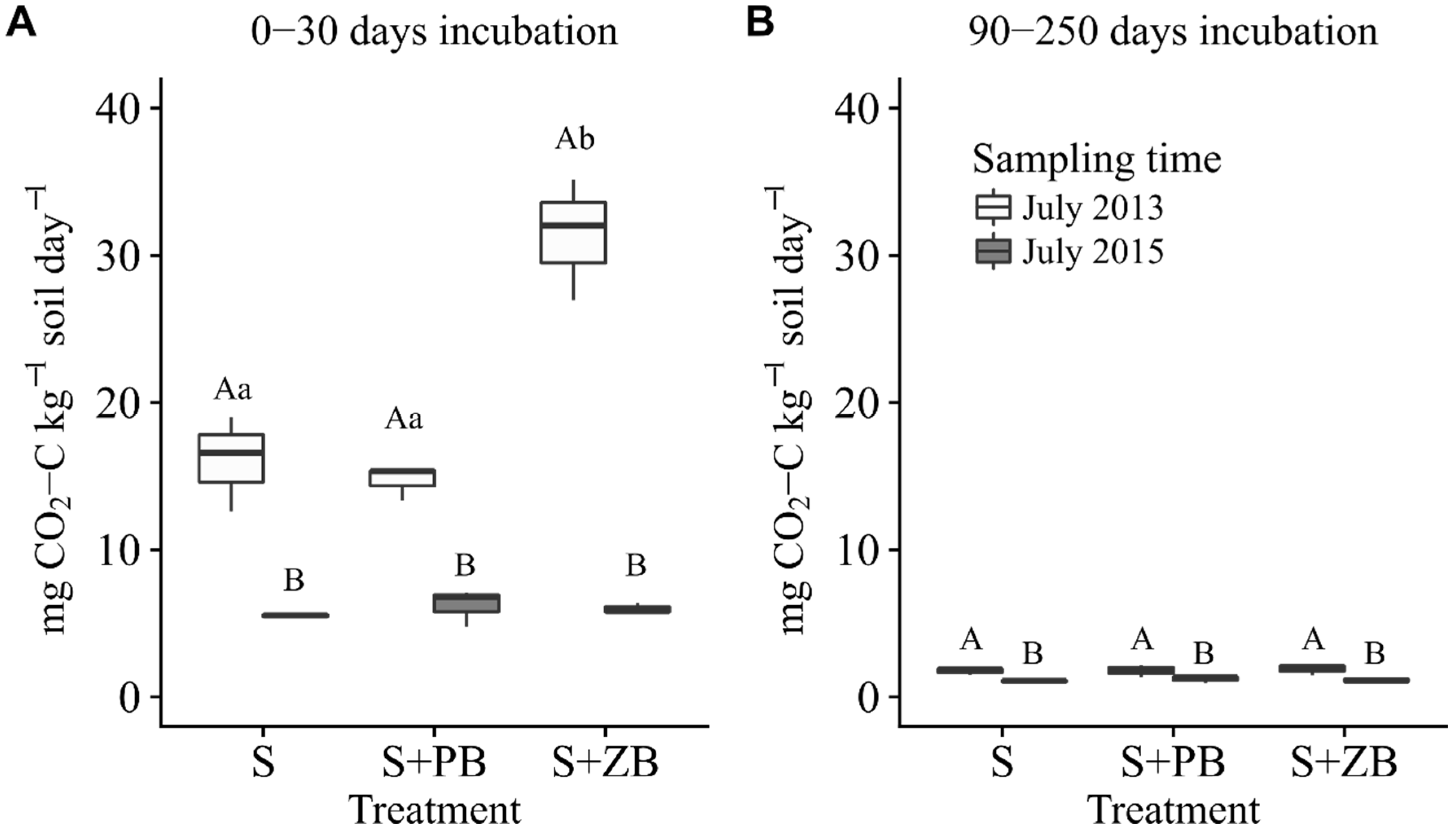
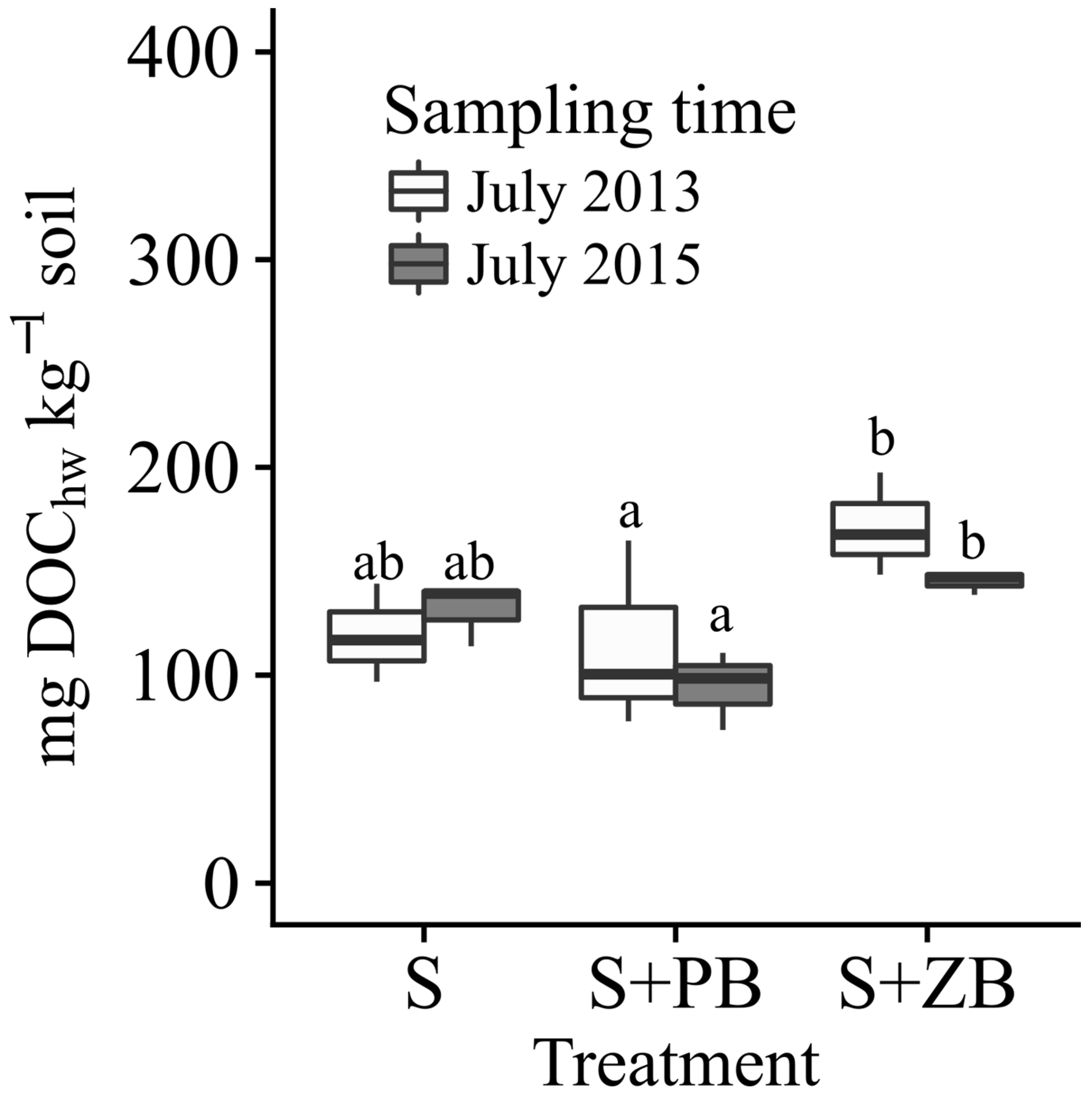
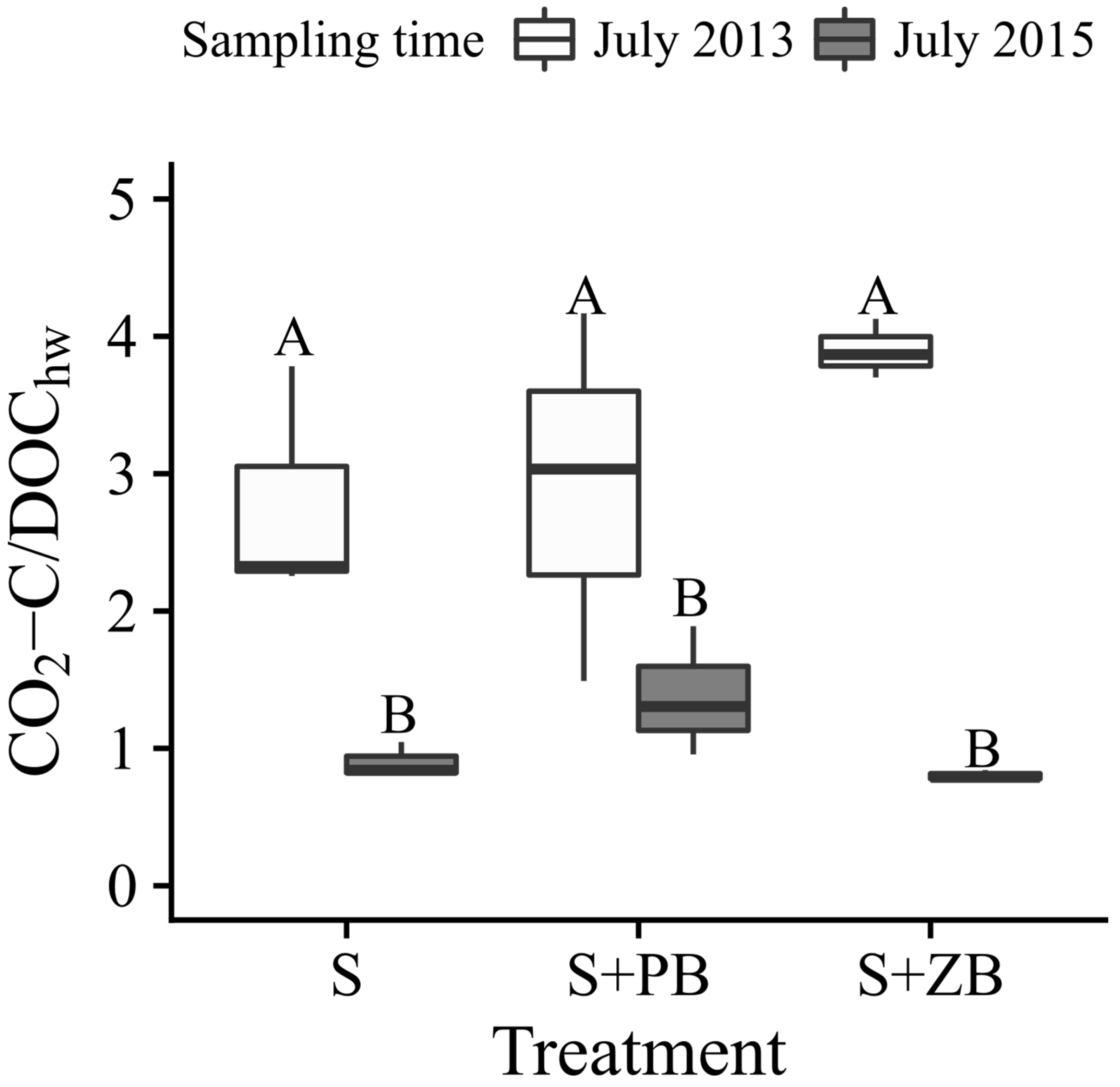
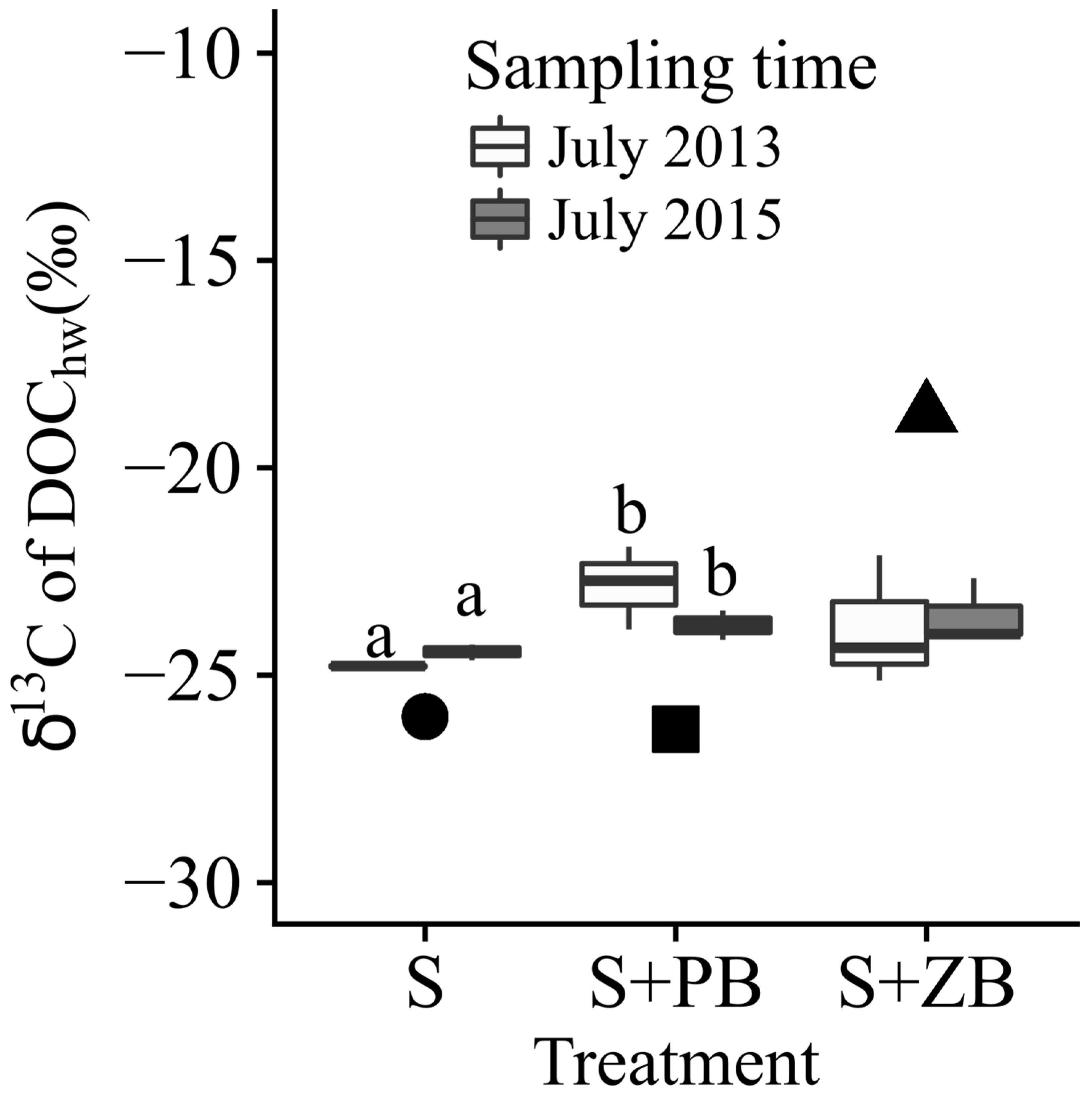
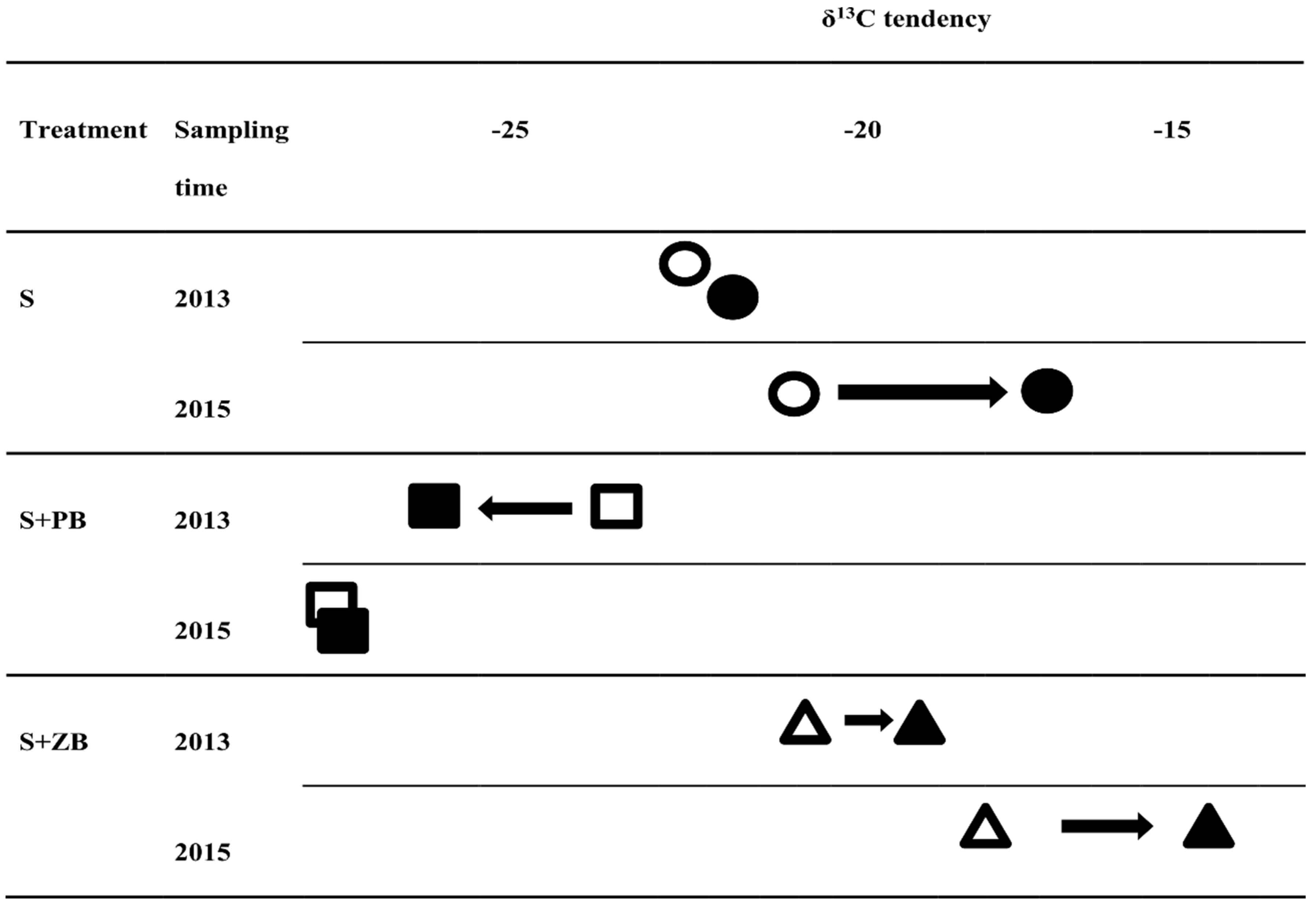
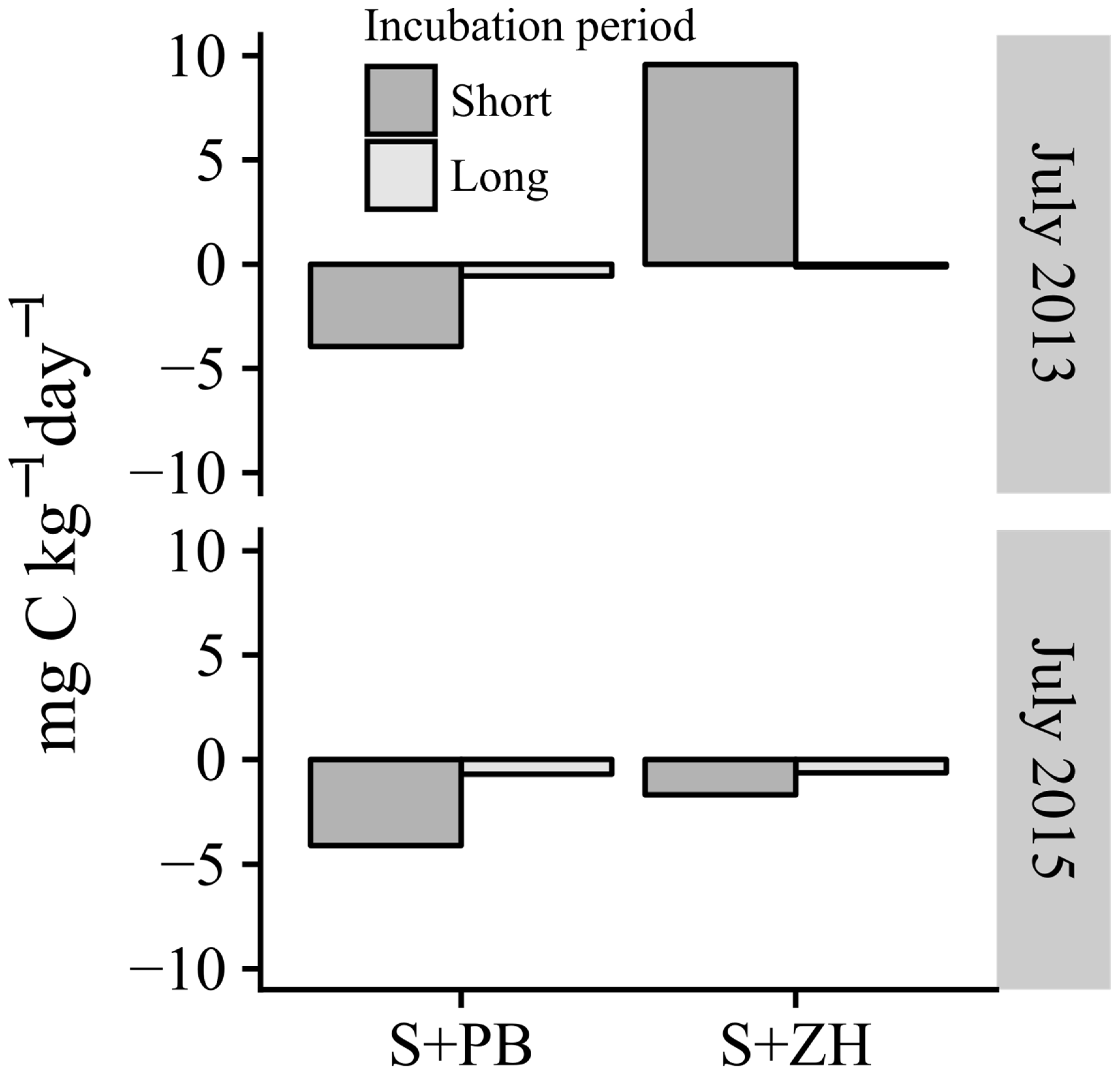
The goal of this study was to evaluate biochar’s resistance to microbial decomposition and its impact on native soil organic matter (SOM) decomposition. Conducted in a vineyard with a sandy loam Mediterranean soil with neutral pH and low organic carbon content, the experiment involved the application of 6.5 g biochar kg−1 derived from pine (PB) and corn cob (ZB). The monitoring period spanned two years, with soil samples collected at short- and medium-term timepoints (2 and 26 months post-application) and incubated in the lab for an additional 250 days. Soil respiration, the CO2-C isotopic signature, and dissolved organic carbon (DOChw) were assessed to identify potential priming effects (PE) and evaluate their persistence over two years. In the short term, biochar-induced priming effects were feedstock and pyrolysis temperature dependent, exhibiting negative priming in high-temperature wood biochar and positive priming in low-temperature grass biochar. The mechanism behind short-term positive priming was attributed to the higher labile organic carbon (OC) content in ZB compared to PB. In the medium term, initial strong priming effects shifted to slightly negative priming effects in both biochars, indicating the depletion of labile carbon fractions and the emergence of physical protection processes that mitigated priming.
Keywords: biochar; field study; SOC mineralization; soil incubation; soil respiration; stable carbon isotopes biochar; field study; SOC mineralization; soil incubation; soil respiration; stable carbon isotopes