Article

Habitat Diversity Increases Chrysoperla carnea s.l. (Stephens, 1836) (Neuroptera, Chrysopidae) Abundance in Olive Landscapes

1
Environmental Research Analysis Group, Department of Plant Biology, Ecology and Earth Sciences, University of Extremadura, Av. de Elvas, 06006 Badajoz, Spain
2
Centre for Functional Ecology, Associated Laboratory TERRA, Department of Life Sciences, University of Coimbra, Calçada Martim de Freitas, 3000-456 Coimbra, Portugal
*
Author to whom correspondence should be addressed.
Agriculture 2024, 14(2), 298; https://doi.org/10.3390/agriculture14020298

Submission received: 17 January 2024 / Revised: 7 February 2024 / Accepted: 9 February 2024 / Published: 12 February 2024
(This article belongs to the Special Issue Ecosystem Services and Biological Control in Agroecosystems)

Abstract

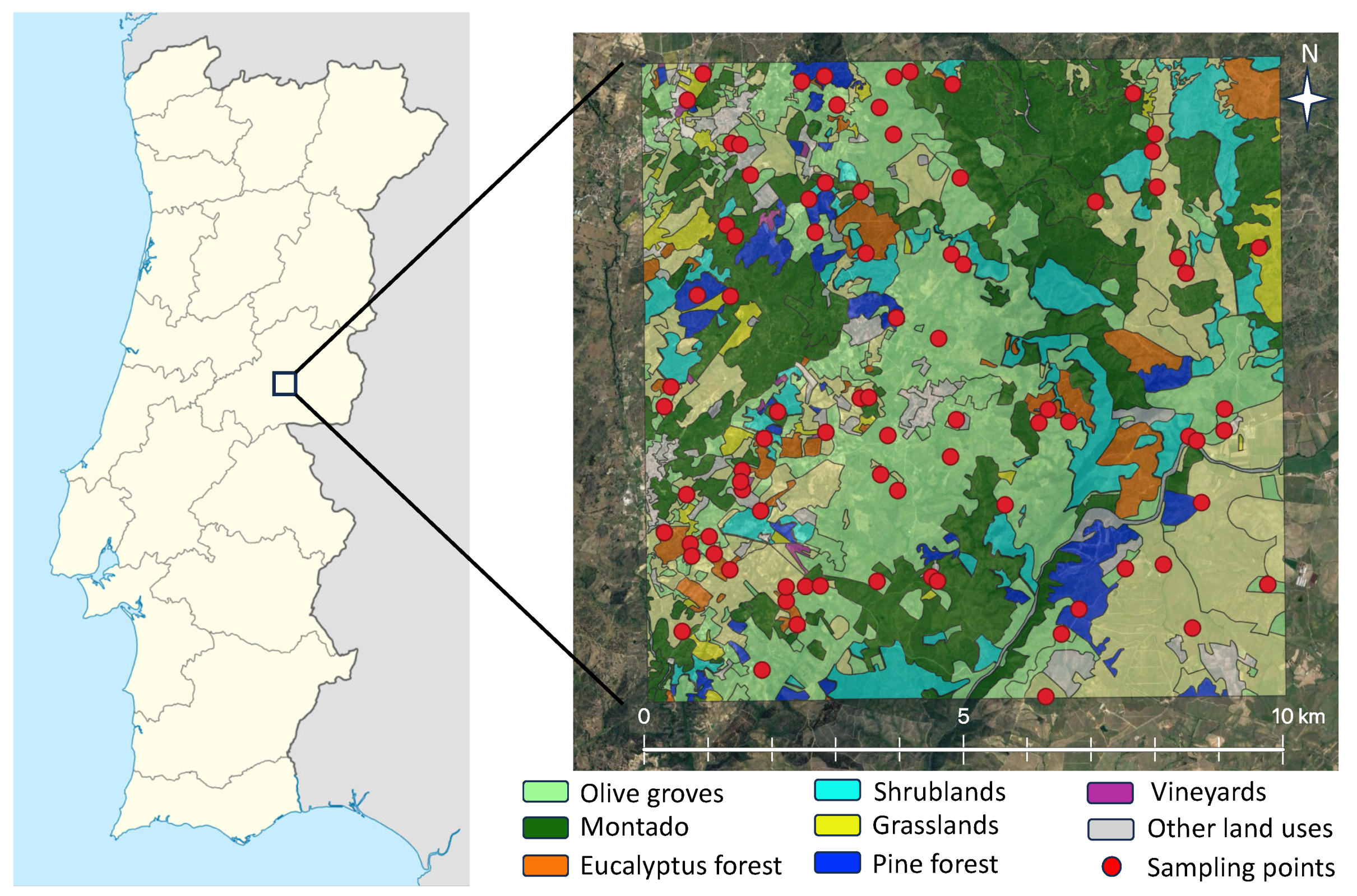
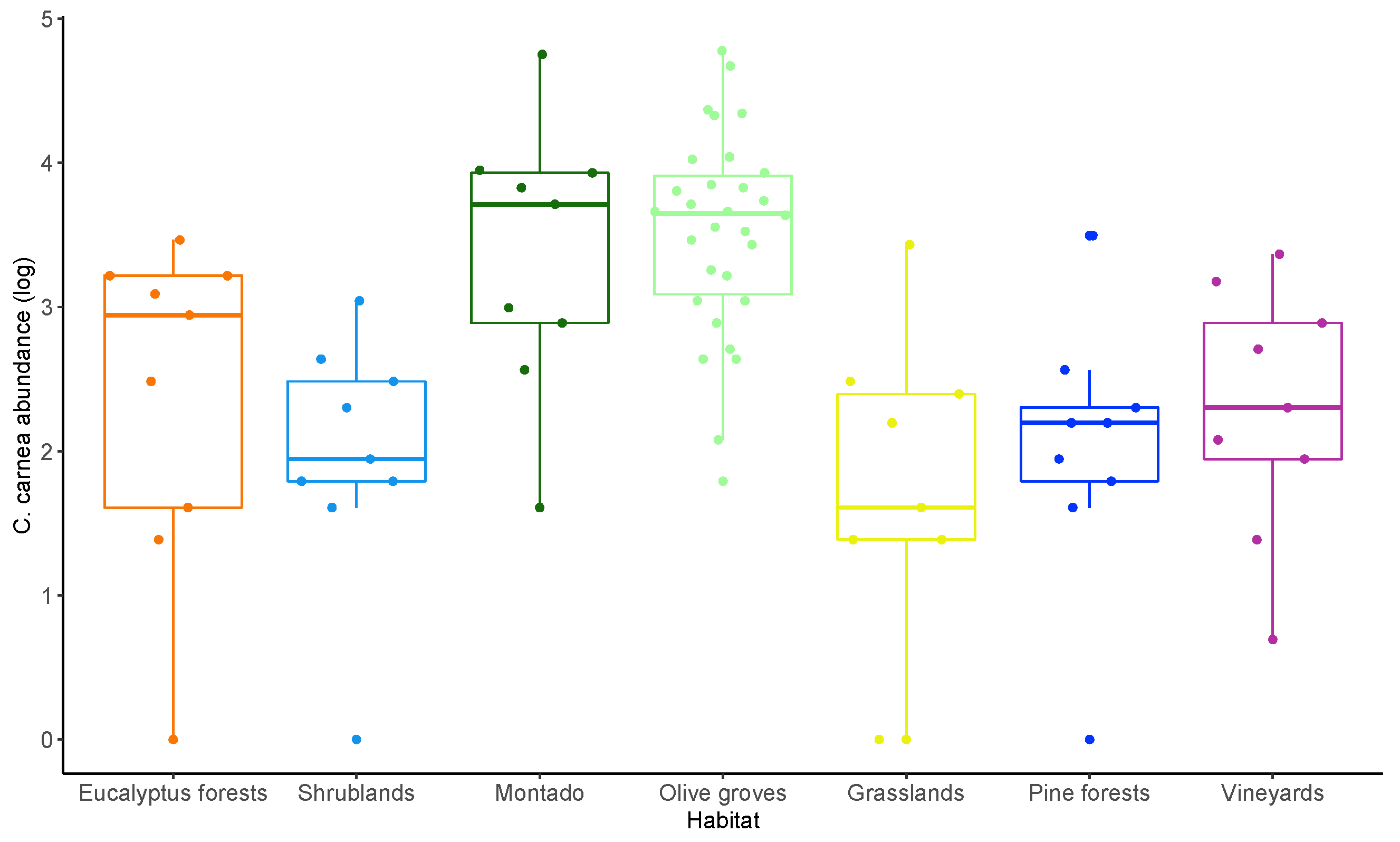
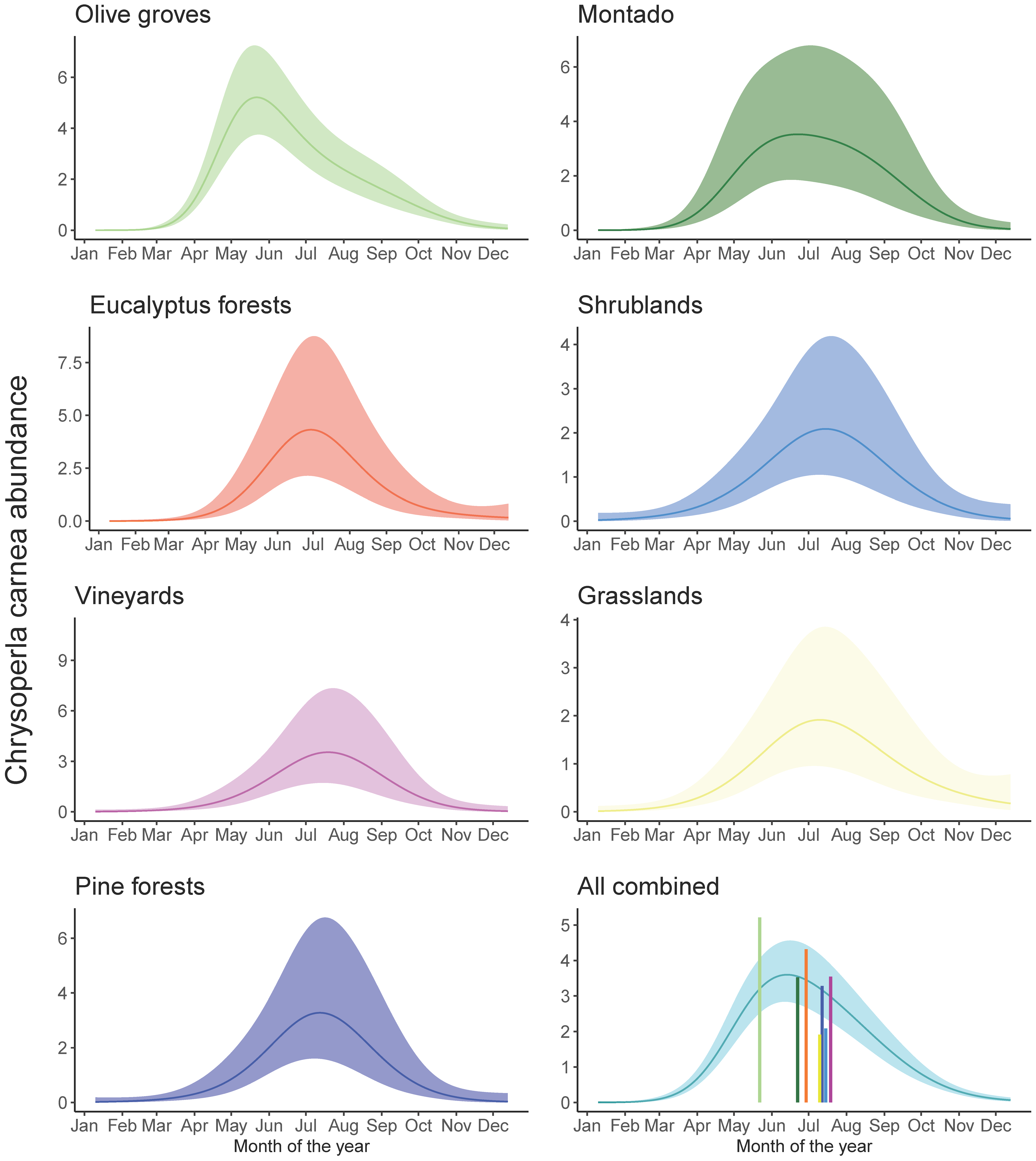
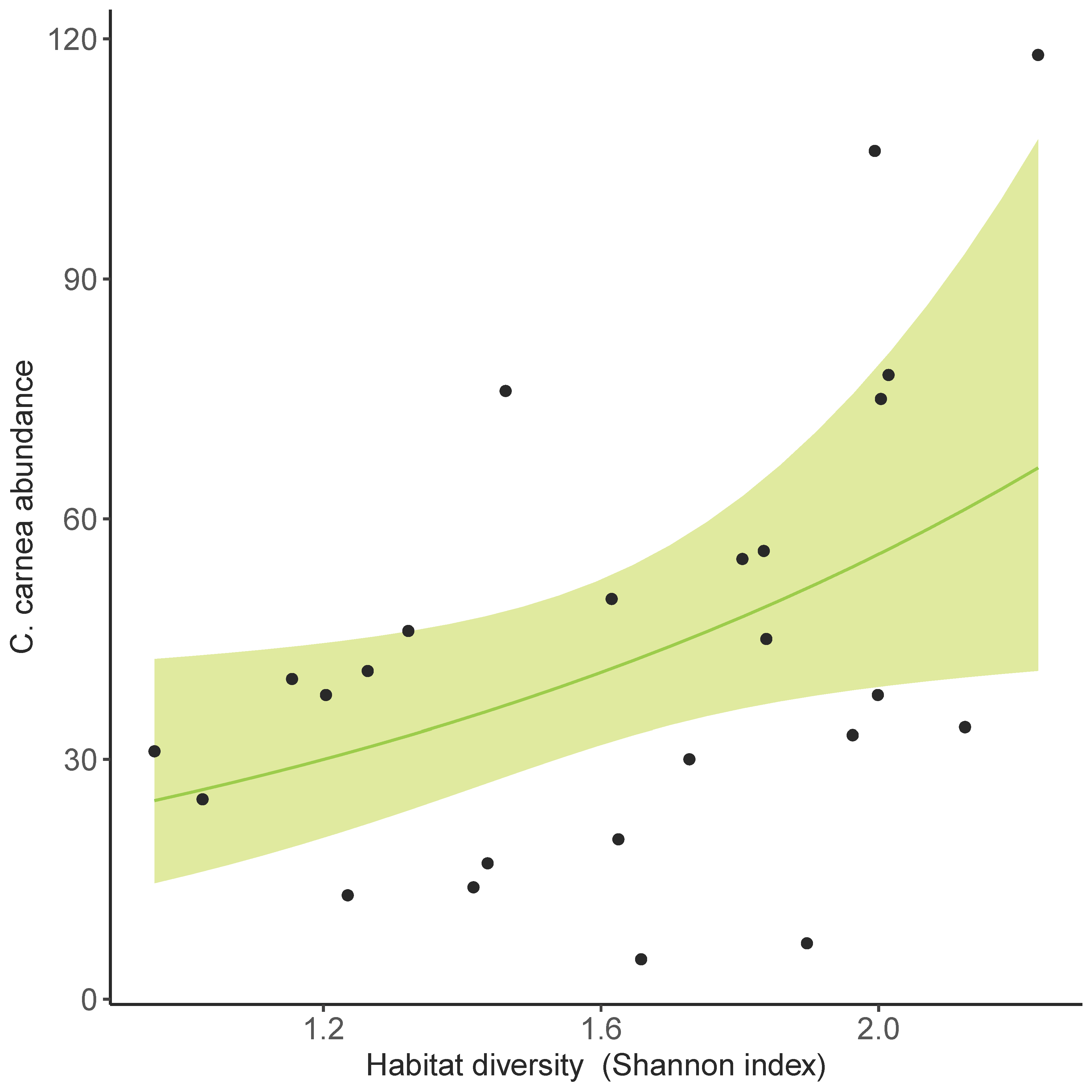
Chrysoperla carnea s.l., a vital predator in olive groves, plays a key role in reducing the reliance on pesticides. Despite its efficacy, habitat diversification at the landscape level can compromise its effectiveness as a generalist natural enemy, diverting its attention from olive pests to other resources. To unravel its habitat preferences and maximize biocontrol services, a comprehensive study was conducted, collecting specimens monthly across diverse habitats in a Portuguese olive grove landscape. These habitats included shrublands, “montado,” grasslands, eucalyptus and pine forests, vineyards, and olive groves. The findings revealed C. carnea s.l. displayed a widespread presence in all habitats, with peak abundance initially observed in olive groves, coinciding with the presence of its preferred prey, Prays oleae. However, the peak abundance of this species varies among habitats, with the highest numbers initially observed in olive groves, gradually decreasing throughout the summer and reaching the lowest levels in vineyards. Significantly, habitat diversification at the landscape level contributes to an increased abundance of C. carnea s.l. in olive groves. This suggests that diversifying available resources aids in sustaining natural enemy populations in proximity to the targeted crop, thereby enhancing their efficacy in pest control. Consequently, we advocate for stakeholders in olive cultivation to promote landscape-scale habitat diversity by preserving, restoring, or fostering alternative habitats surrounding olive groves.
Keywords: agroecology; biocontrol; land use; Prays oleae; sustainable agriculture; generalist predators agroecology; biocontrol; land use; Prays oleae; sustainable agriculture; generalist predators