Review

Emerging Precision Management Methods in Poultry Sector
Department of Environment Hygiene and Animal Welfare, Wrocław University of Environmental and Life Sciences, 51-630 Wrocław, Poland
*
Author to whom correspondence should be addressed.
Agriculture 2022, 12(5), 718; https://doi.org/10.3390/agriculture12050718

Submission received: 24 March 2022 / Revised: 10 May 2022 / Accepted: 11 May 2022 / Published: 18 May 2022
(This article belongs to the Special Issue Animal Hygiene on Farms - Realising Animal Health Prevention)

Abstract

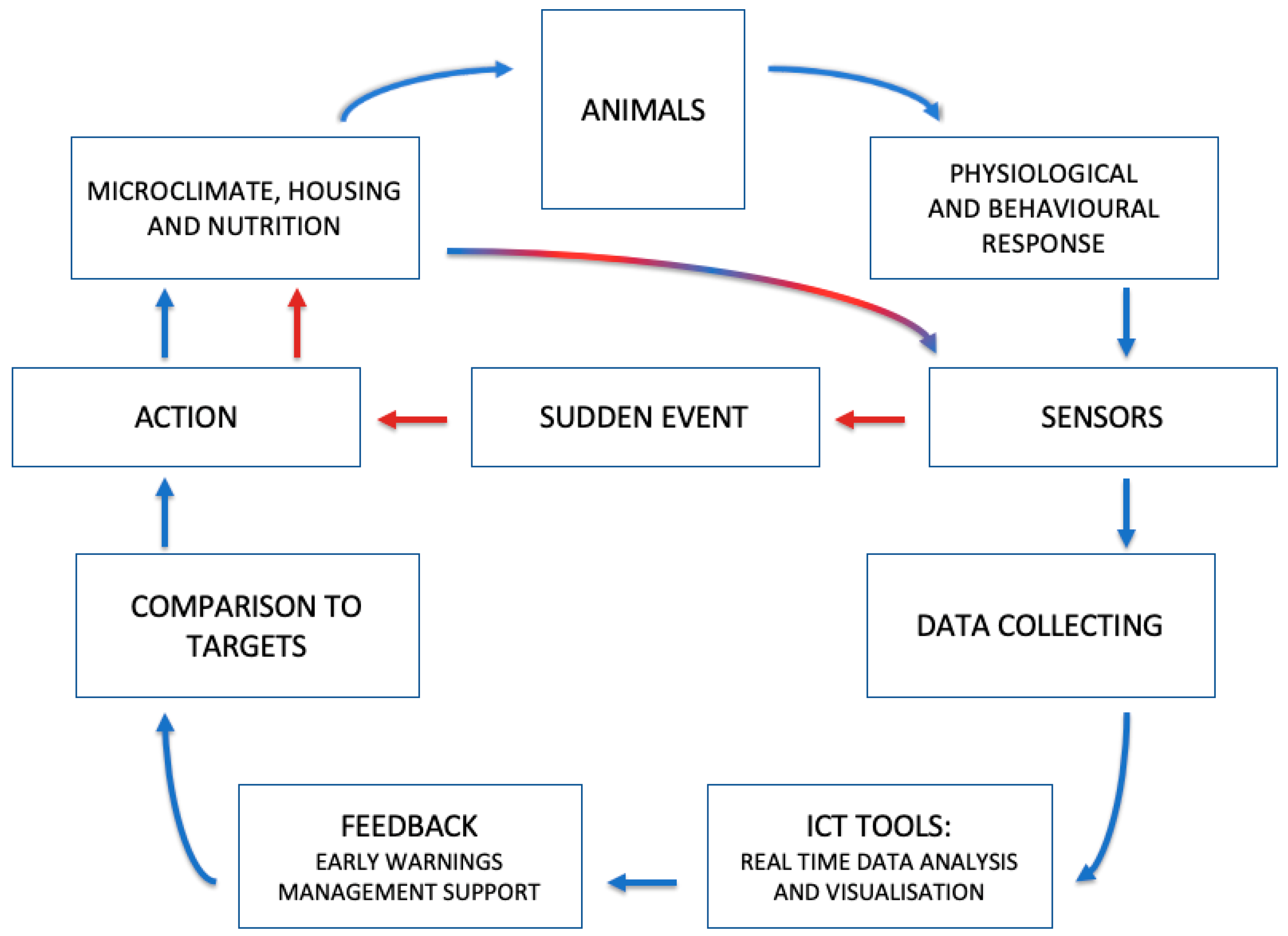
New approach to improve welfare in the poultry sector is targeted at the precise management of animals. In poultry production, we observe that birds’ health and quality of poultry products depend significantly on good welfare conditions, affecting economic efficiency. Using technology solutions in different systems of animal production is an innovation that can help farmers more effectively control the environmental conditions and health of birds. In addition, rising public concern about poultry breeding and welfare leads to developing solutions to increase the efficiency of control and monitoring in this animal production branch. Precision livestock farming (PLF) collects real-time data of birds using different types of technologies for this process. It means that PLF can help prevent lowering animal welfare by detecting early stages of diseases and stressful situations during birds’ management and allows steps to be taken quickly enough to limit the adverse effects. This review shows connections between the possibilities of using the latest technologies to monitor laying hens and broilers in developing precision livestock farming.
Keywords: precision livestock farming; intensive production; animal welfare; modern technology; sensors; laying hens; broiler chickens; microclimate precision livestock farming; intensive production; animal welfare; modern technology; sensors; laying hens; broiler chickens; microclimate