Diagnostic Utility and Pathogenic Role of Circulating MicroRNAs in Vasospastic Angina

 , ,
, ,
Abstract
1. Introduction
2. Materials and Methods
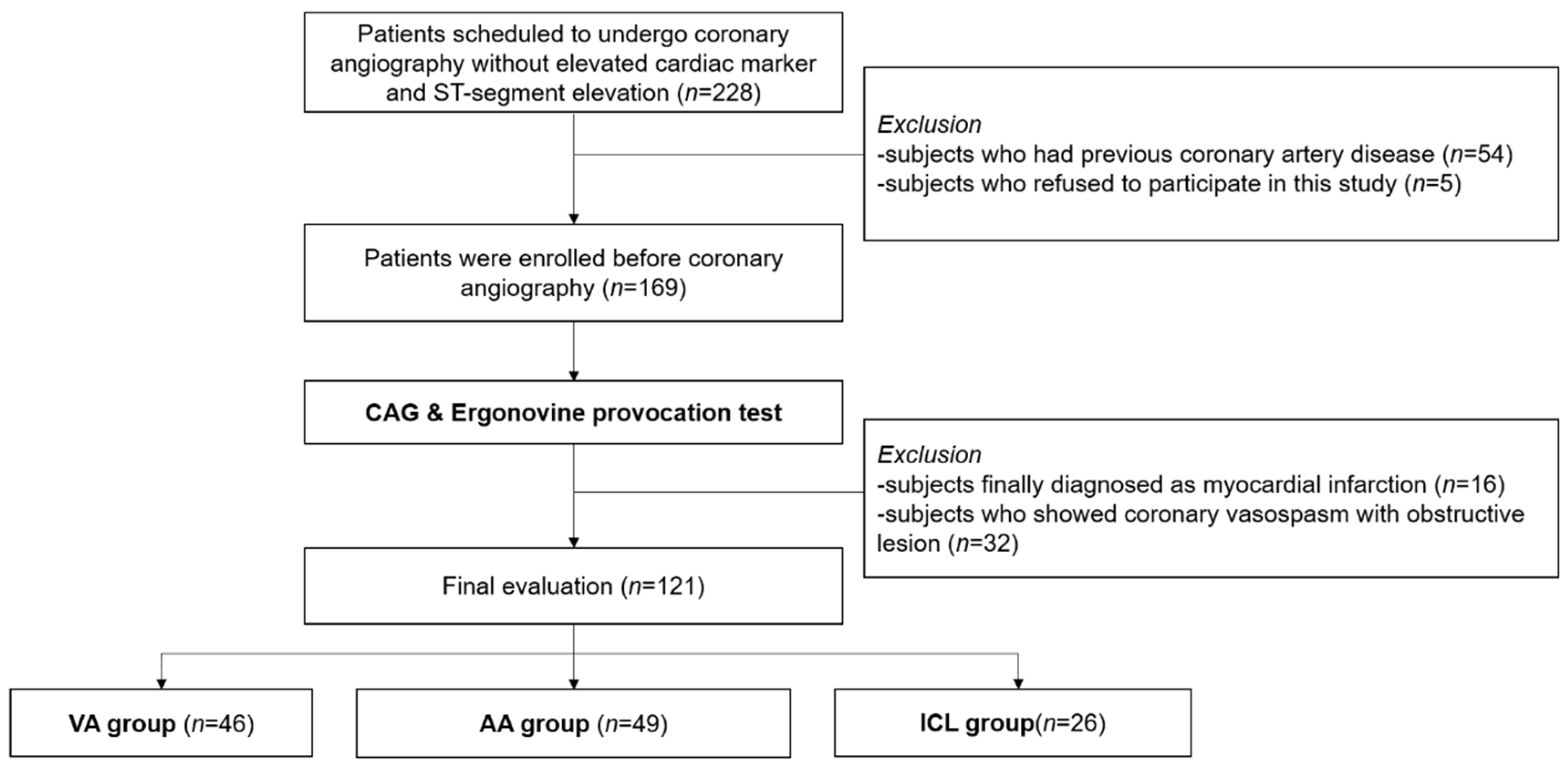
2.1. Patients
2.2. Data Collection from Study Participants
2.3. Ergonovine Provocation Test
2.4. Blood Sample Collection and miR Assay
2.5. Cell Culture and Transfection
2.6. Western Blotting
2.7. Statistical Analysis
3. Results
3.1. Baseline Characteristics of Subjects
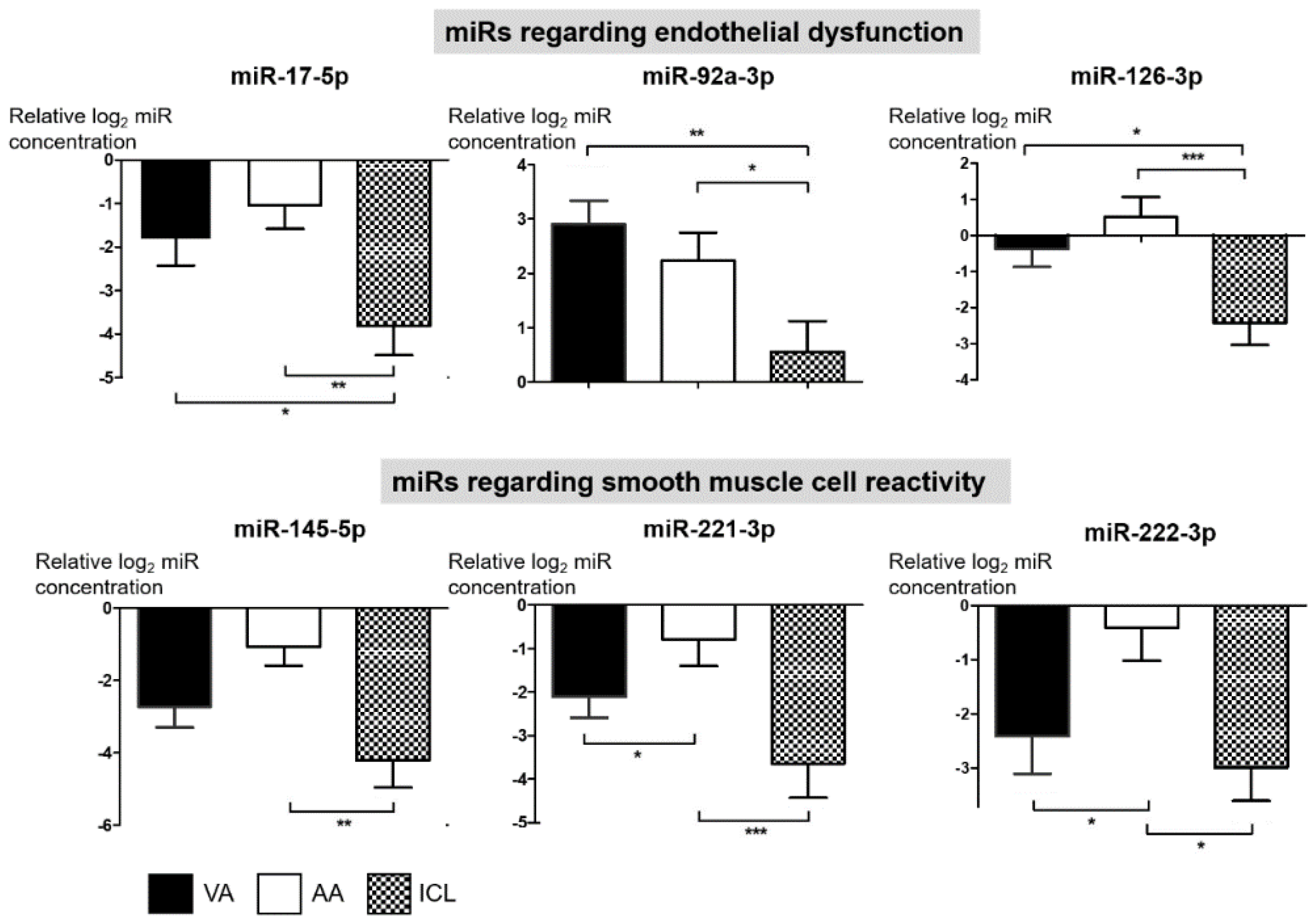
3.2. MiR Expression Profiles
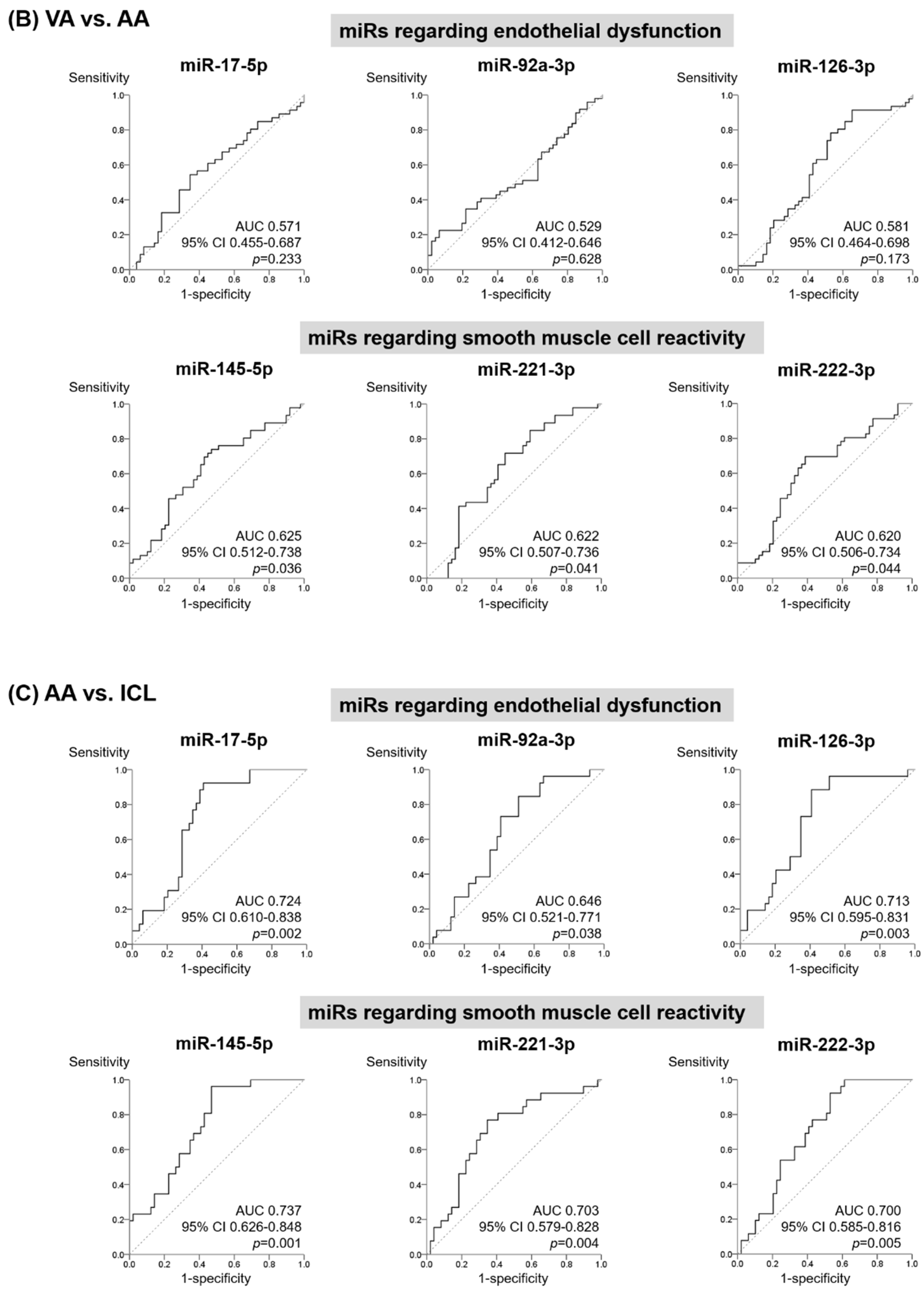
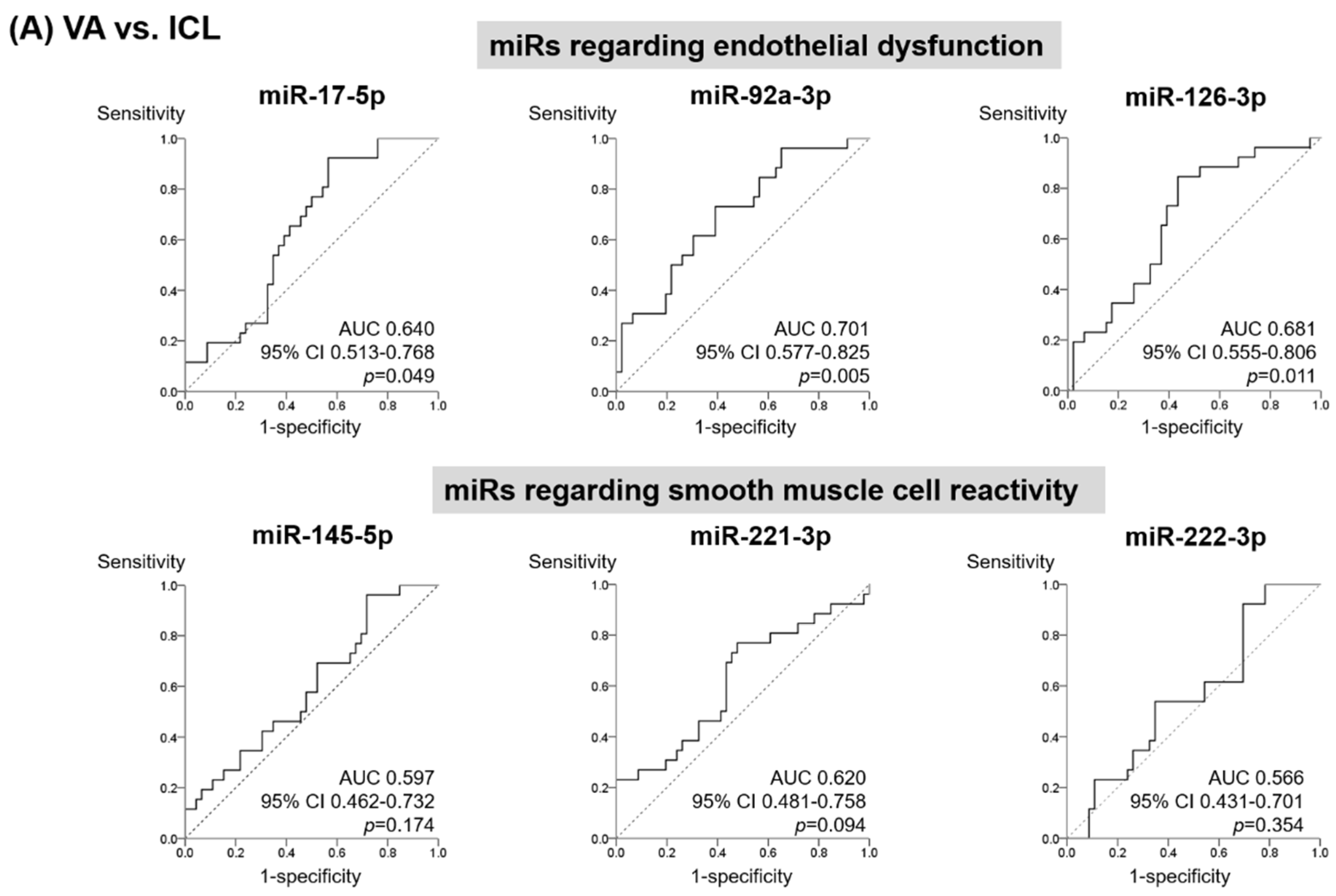
3.3. MiR Score to Discriminate Patients with VA from Those with ICL
3.4. Functional Role of miRs in Regulating Endothelial Function
3.5. Rescue of Endothelial Dysfunction when Treated with AntagomiRs
4. Discussion
4.1. Association Between miRs, Endothelial Dysfunction, and VA
4.2. Implication of miRs in the VA Pathophysiology
4.3. Mechanism of the Relationship Between miRs, eNOS, and VA
4.4. Clinical Implications of this Study
4.5. Limitations
5. Conclusions
Supplementary Materials
Author Contributions
Funding
Acknowledgments
Conflicts of Interest
References
- Stern, S.; Bayes de Luna, A. Coronary artery spasm: A 2009 update. Circulation 2009, 119, 2531–2534. [Google Scholar] [CrossRef] [Scilit] [PubMed]
- Song, J.K. Coronary Artery Vasospasm. Korean Circ. J. 2018, 48, 767–777. [Google Scholar] [CrossRef] [Scilit] [PubMed]
- Beltrame, J.F.; Sasayama, S.; Maseri, A. Racial heterogeneity in coronary artery vasomotor reactivity: Differences between Japanese and Caucasian patients. J. Am. Coll. Cardiol. 1999, 33, 1442–1452. [Google Scholar] [CrossRef] [Scilit]
- Hung, M.J.; Hu, P.; Hung, M.Y. Coronary artery spasm: Review and update. Int. J. Med. Sci. 2014, 11, 1161–1171. [Google Scholar] [CrossRef] [Scilit]
- Kim, H.L.; Kim, J.; Kim, H.J.; Lim, W.H.; Lee, J.Y. Incidence and factors associated with mortality in 2,476 patients with variant angina in Korea. Sci. Rep. 2017, 7, 46031. [Google Scholar] [CrossRef] [Scilit]
- Giugliano, R.P.; Cannon, C.P.; Braunwald, E. Non-ST elevation Acute Coronary Syndrome. In Braunwald’s Heart Disease, 10th ed.; Mann, D.L., Zipes, D.P., Libby, P., Bonow, R.O., Eds.; Elsevier: Phildelphia, PA, USA, 2015; Volume 2, pp. 1155–1177. [Google Scholar]
- Knuuti, J.; Wijns, W.; Saraste, A.; Capodanno, D.; Barbato, E.; Funck-Brentano, C.; Prescott, E.; Storey, R.F.; Deaton, C.; Cuisset, T.; et al. 2019 ESC Guidelines for the diagnosis and management of chronic coronary syndromes. Eur. Heart J. 2020, 41, 407–477. [Google Scholar] [CrossRef] [Scilit]
- Song, J.K.; Lee, S.J.; Kang, D.H.; Cheong, S.S.; Hong, M.K.; Kim, J.J.; Park, S.W.; Park, S.J. Ergonovine echocardiography as a screening test for diagnosis of vasospastic angina before coronary angiography. J. Am. Coll. Cardiol. 1996, 27, 1156–1161. [Google Scholar] [CrossRef] [Scilit]
- van Rooij, E.; Olson, E.N. MicroRNAs: Powerful new regulators of heart disease and provocative therapeutic targets. J. Clin. Invest. 2007, 117, 2369–2376. [Google Scholar] [CrossRef] [Scilit]
- Bartel, D.P. MicroRNAs: Genomics, biogenesis, mechanism, and function. Cell 2004, 116, 281–297. [Google Scholar] [CrossRef] [Scilit]
- Mitchell, P.S.; Parkin, R.K.; Kroh, E.M.; Fritz, B.R.; Wyman, S.K.; Pogosova-Agadjanyan, E.L.; Peterson, A.; Noteboom, J.; O’Briant, K.C.; Allen, A.; et al. Circulating microRNAs as stable blood-based markers for cancer detection. Proc. Natl. Acad. Sci. USA 2008, 105, 10513–10518. [Google Scholar] [CrossRef] [Scilit]
- Sun, S.Q.; Zhang, T.; Ding, D.; Zhang, W.F.; Wang, X.L.; Sun, Z.; Hu, L.H.; Qin, S.Y.; Shen, L.H.; He, B. Circulating MicroRNA-188, -30a, and -30e as Early Biomarkers for Contrast-Induced Acute Kidney Injury. J. Am. Heart Assoc. 2016, 5. [Google Scholar] [CrossRef] [Scilit] [PubMed]
- Calin, G.A.; Dumitru, C.D.; Shimizu, M.; Bichi, R.; Zupo, S.; Noch, E.; Aldler, H.; Rattan, S.; Keating, M.; Rai, K.; et al. Frequent deletions and down-regulation of micro- RNA genes miR15 and miR16 at 13q14 in chronic lymphocytic leukemia. Proc. Natl. Acad. Sci. USA 2002, 99, 15524–15529. [Google Scholar] [CrossRef] [Scilit] [PubMed]
- Widmer, R.J.; Chung, W.Y.; Herrmann, J.; Jordan, K.L.; Lerman, L.O.; Lerman, A. The association between circulating microRNA levels and coronary endothelial function. PLoS ONE 2014, 9, e109650. [Google Scholar] [CrossRef] [Scilit] [PubMed]
- Fichtlscherer, S.; De Rosa, S.; Fox, H.; Schwietz, T.; Fischer, A.; Liebetrau, C.; Weber, M.; Hamm, C.W.; Roxe, T.; Muller-Ardogan, M.; et al. Circulating microRNAs in patients with coronary artery disease. Circ. Res. 2010, 107, 677–684. [Google Scholar] [CrossRef] [Scilit] [PubMed]
- Lanza, G.A.; Careri, G.; Crea, F. Mechanisms of coronary artery spasm. Circulation 2011, 124, 1774–1782. [Google Scholar] [CrossRef] [Scilit] [PubMed]
- JCS Joint Working Group. Guidelines for diagnosis and treatment of patients with vasospastic angina (Coronary Spastic Angina) (JCS 2013). Circ. J. 2014, 78, 2779–2801. [Google Scholar] [CrossRef] [Scilit]
- Ibanez, B.; James, S.; Agewall, S.; Antunes, M.J.; Bucciarelli-Ducci, C.; Bueno, H.; Caforio, A.L.P.; Crea, F.; Goudevenos, J.A.; Halvorsen, S.; et al. 2017 ESC Guidelines for the management of acute myocardial infarction in patients presenting with ST-segment elevation: The Task Force for the management of acute myocardial infarction in patients presenting with ST-segment elevation of the European Society of Cardiology (ESC). Eur. Heart J. 2018, 39, 119–177. [Google Scholar] [CrossRef] [Scilit]
- Roffi, M.; Patrono, C.; Collet, J.P.; Mueller, C.; Valgimigli, M.; Andreotti, F.; Bax, J.J.; Borger, M.A.; Brotons, C.; Chew, D.P.; et al. 2015 ESC Guidelines for the management of acute coronary syndromes in patients presenting without persistent ST-segment elevation: Task Force for the Management of Acute Coronary Syndromes in Patients Presenting without Persistent ST-Segment Elevation of the European Society of Cardiology (ESC). Eur. Heart J. 2016, 37, 267–315. [Google Scholar] [CrossRef] [Scilit]
- Task Force Members; Montalescot, G.; Sechtem, U.; Achenbach, S.; Andreotti, F.; Arden, C.; Budaj, A.; Bugiardini, R.; Crea, F.; Cuisset, T.; et al. 2013 ESC guidelines on the management of stable coronary artery disease: The Task Force on the management of stable coronary artery disease of the European Society of Cardiology. Eur. Heart J. 2013, 34, 2949–3003. [Google Scholar] [CrossRef] [Scilit]
- Agarwal, V.; Bell, G.W.; Nam, J.W.; Bartel, D.P. Predicting effective microRNA target sites in mammalian mRNAs. Elife 2015, 4. [Google Scholar] [CrossRef] [Scilit]
- De Rosa, S.; Fichtlscherer, S.; Lehmann, R.; Assmus, B.; Dimmeler, S.; Zeiher, A.M. Transcoronary concentration gradients of circulating microRNAs. Circulation 2011, 124, 1936–1944. [Google Scholar] [CrossRef] [Scilit] [PubMed]
- Moldovan, L.; Batte, K.E.; Trgovcich, J.; Wisler, J.; Marsh, C.B.; Piper, M. Methodological challenges in utilizing miRNAs as circulating biomarkers. J. Cell Mol. Med. 2014, 18, 371–390. [Google Scholar] [CrossRef] [Scilit] [PubMed]
- Jansen, F.; Yang, X.; Proebsting, S.; Hoelscher, M.; Przybilla, D.; Baumann, K.; Schmitz, T.; Dolf, A.; Endl, E.; Franklin, B.S.; et al. MicroRNA expression in circulating microvesicles predicts cardiovascular events in patients with coronary artery disease. J. Am. Heart Assoc. 2014, 3, e001249. [Google Scholar] [CrossRef] [Scilit] [PubMed]
- Shimomura, A.; Shiino, S.; Kawauchi, J.; Takizawa, S.; Sakamoto, H.; Matsuzaki, J.; Ono, M.; Takeshita, F.; Niida, S.; Shimizu, C.; et al. Novel combination of serum microRNA for detecting breast cancer in the early stage. Cancer Sci. 2016, 107, 326–334. [Google Scholar] [CrossRef] [Scilit] [PubMed]
- Lin, Z.; Kumar, A.; SenBanerjee, S.; Staniszewski, K.; Parmar, K.; Vaughan, D.E.; Gimbrone, M.A., Jr.; Balasubramanian, V.; Garcia-Cardena, G.; Jain, M.K. Kruppel-like factor 2 (KLF2) regulates endothelial thrombotic function. Circ. Res. 2005, 96, e48–e57. [Google Scholar] [CrossRef] [Scilit]
- Kaski, J.C.; Maseri, A.; Vejar, M.; Crea, F.; Hackett, D. Spontaneous coronary artery spasm in variant angina is caused by a local hyperreactivity to a generalized constrictor stimulus. J. Am. Coll. Cardiol. 1989, 14, 1456–1463. [Google Scholar] [CrossRef] [Scilit]
- Ludmer, P.L.; Selwyn, A.P.; Shook, T.L.; Wayne, R.R.; Mudge, G.H.; Alexander, R.W.; Ganz, P. Paradoxical vasoconstriction induced by acetylcholine in atherosclerotic coronary arteries. N. Engl. J. Med. 1986, 315, 1046–1051. [Google Scholar] [CrossRef] [Scilit]
- Yamada, O.; Moldow, C.F.; Sacks, T.; Craddock, P.R.; Boogaerts, M.A.; Jacob, H.S. Deleterious effects of endotoxin on cultured endothelial cells: An in vitro model of vascular injury. Inflammation 1981, 5, 115–126. [Google Scholar] [CrossRef] [Scilit]
- Vanhoutte, P.M.; Shimokawa, H. Endothelium-derived relaxing factor and coronary vasospasm. Circulation 1989, 80, 1–9. [Google Scholar] [CrossRef] [Scilit]
- Kugiyama, K.; Yasue, H.; Okumura, K.; Ogawa, H.; Fujimoto, K.; Nakao, K.; Yoshimura, M.; Motoyama, T.; Inobe, Y.; Kawano, H. Nitric oxide activity is deficient in spasm arteries of patients with coronary spastic angina. Circulation 1996, 94, 266–271. [Google Scholar] [CrossRef] [Scilit]
- Nakayama, M.; Yasue, H.; Yoshimura, M.; Shimasaki, Y.; Kugiyama, K.; Ogawa, H.; Motoyama, T.; Saito, Y.; Ogawa, Y.; Miyamoto, Y.; et al. T-786-->C mutation in the 5’-flanking region of the endothelial nitric oxide synthase gene is associated with coronary spasm. Circulation 1999, 99, 2864–2870. [Google Scholar] [CrossRef] [Scilit] [PubMed]
- Kaneda, H.; Taguchi, J.; Kuwada, Y.; Hangaishi, M.; Aizawa, T.; Yamakado, M.; Ogasawara, K.; Aizawa, T.; Ohno, M. Coronary artery spasm and the polymorphisms of the endothelial nitric oxide synthase gene. Circ. J. 2006, 70, 409–413. [Google Scholar] [CrossRef] [Scilit] [PubMed]
- Moriyama, Y.; Tsunoda, R.; Harada, M.; Miyao, Y.; Yoshimura, M.; Kugiyama, K.; Ogawa, H.; Yasue, H. Nitric oxide-mediated vasodilatation is decreased in forearm resistance vessels in patients with coronary spastic angina. Jpn. Circ. J. 2001, 65, 81–86. [Google Scholar] [CrossRef] [Scilit] [PubMed]
- Okumura, K.; Yasue, H.; Matsuyama, K.; Ogawa, H.; Kugiyama, K.; Ishizaka, H.; Sumida, H.; Fujii, H.; Matsunaga, T.; Tsunoda, R. Diffuse disorder of coronary artery vasomotility in patients with coronary spastic angina. Hyperreactivity to the constrictor effects of acetylcholine and the dilator effects of nitroglycerin. J. Am. Coll. Cardiol. 1996, 27, 45–52. [Google Scholar] [CrossRef] [Scilit]
- Fang, Y.; Davies, P.F. Site-specific microRNA-92a regulation of Kruppel-like factors 4 and 2 in atherosusceptible endothelium. Arterioscler. Thromb. Vasc. Biol. 2012, 32, 979–987. [Google Scholar] [CrossRef] [Scilit]
- Mocharla, P.; Briand, S.; Giannotti, G.; Dorries, C.; Jakob, P.; Paneni, F.; Luscher, T.; Landmesser, U. AngiomiR-126 expression and secretion from circulating CD34(+) and CD14(+) PBMCs: Role for proangiogenic effects and alterations in type 2 diabetics. Blood 2013, 121, 226–236. [Google Scholar] [CrossRef] [Scilit]
- Treguer, K.; Heinrich, E.M.; Ohtani, K.; Bonauer, A.; Dimmeler, S. Role of the microRNA-17-92 cluster in the endothelial differentiation of stem cells. J. Vasc. Res. 2012, 49, 447–460. [Google Scholar] [CrossRef] [Scilit]
- Harris, T.A.; Yamakuchi, M.; Ferlito, M.; Mendell, J.T.; Lowenstein, C.J. MicroRNA-126 regulates endothelial expression of vascular cell adhesion molecule 1. Proc. Natl. Acad. Sci. USA 2008, 105, 1516–1521. [Google Scholar] [CrossRef] [Scilit]
- Forstermann, U.; Munzel, T. Endothelial nitric oxide synthase in vascular disease: From marvel to menace. Circulation 2006, 113, 1708–1714. [Google Scholar] [CrossRef] [Scilit]
- Tsutsui, M.; Shimokawa, H.; Tanimoto, A.; Yanagihara, N.; Tamura, M.; Otsuji, Y. Roles of Nitric oxide synthases in arteriosclerotic vascular disease: Insights from murine genetic models. J. Clin. Exp. Cardiolog 2014, 5, 318. [Google Scholar] [CrossRef]
- Hirano, K. Current topics in the regulatory mechanism underlying the Ca2+ sensitization of the contractile apparatus in vascular smooth muscle. J. Pharmacol. Sci. 2007, 104, 109–115. [Google Scholar] [CrossRef] [Scilit] [PubMed]
- Kandabashi, T.; Shimokawa, H.; Miyata, K.; Kunihiro, I.; Kawano, Y.; Fukata, Y.; Higo, T.; Egashira, K.; Takahashi, S.; Kaibuchi, K.; et al. Inhibition of myosin phosphatase by upregulated rho-kinase plays a key role for coronary artery spasm in a porcine model with interleukin-1beta. Circulation 2000, 101, 1319–1323. [Google Scholar] [CrossRef] [Scilit] [PubMed]
- Shimokawa, H.; Tomoike, H.; Nabeyama, S.; Yamamoto, H.; Ishii, Y.; Tanaka, K.; Nakamura, M. Coronary artery spasm induced in miniature swine: Angiographic evidence and relation to coronary atherosclerosis. Am. Heart J. 1985, 110, 300–310. [Google Scholar] [CrossRef] [Scilit]
- Kandabashi, T.; Shimokawa, H.; Miyata, K.; Kunihiro, I.; Eto, Y.; Morishige, K.; Matsumoto, Y.; Obara, K.; Nakayama, K.; Takahashi, S.; et al. Evidence for protein kinase C-mediated activation of Rho-kinase in a porcine model of coronary artery spasm. Arterioscler. Thromb. Vasc. Biol. 2003, 23, 2209–2214. [Google Scholar] [CrossRef] [Scilit]
- Chutkow, W.A.; Pu, J.; Wheeler, M.T.; Wada, T.; Makielski, J.C.; Burant, C.F.; McNally, E.M. Episodic coronary artery vasospasm and hypertension develop in the absence of Sur2 K(ATP) channels. J. Clin. Invest. 2002, 110, 203–208. [Google Scholar] [CrossRef]
- Kakkar, R.; Ye, B.; Stoller, D.A.; Smelley, M.; Shi, N.Q.; Galles, K.; Hadhazy, M.; Makielski, J.C.; McNally, E.M. Spontaneous coronary vasospasm in KATP mutant mice arises from a smooth muscle-extrinsic process. Circ. Res. 2006, 98, 682–689. [Google Scholar] [CrossRef] [Scilit]
- Lin, Y.; Qin, H.; Chen, R.; Liu, Q.; Liu, H.; Dong, S. A comprehensive clinical diagnostic score system for prediction of coronary artery spasm in patients with acute chest pain. Int. J. Cardiol. Heart Vasc. 2019, 22, 205–209. [Google Scholar] [CrossRef] [Scilit]
- Coleman, C.B.; Lightell, D.J., Jr.; Moss, S.C.; Bates, M.; Parrino, P.E.; Woods, T.C. Elevation of miR-221 and -222 in the internal mammary arteries of diabetic subjects and normalization with metformin. Mol. Cell Endocrinol. 2013, 374, 125–129. [Google Scholar] [CrossRef] [Scilit]
- Cordes, K.R.; Sheehy, N.T.; White, M.P.; Berry, E.C.; Morton, S.U.; Muth, A.N.; Lee, T.H.; Miano, J.M.; Ivey, K.N.; Srivastava, D. miR-145 and miR-143 regulate smooth muscle cell fate and plasticity. Nature 2009, 460, 705–710. [Google Scholar] [CrossRef] [Scilit]
- De Rosa, S.; Eposito, F.; Carella, C.; Strangio, A.; Ammirati, G.; Sabatino, J.; Abbate, F.G.; Iaconetti, C.; Liguori, V.; Pergola, V.; et al. Transcoronary concentration gradients of circulating microRNAs in heart failure. Eur. J. Heart Fail. 2018, 20, 1000–1010. [Google Scholar] [CrossRef] [Scilit]
- Iaconetti, C.; Polimeni, A.; Sorrentino, S.; Sabatino, J.; Pironti, G.; Esposito, G.; Curcio, A.; Indolfi, C. Inhibition of miR-92a increases endothelial proliferation and migration in vitro as well as reduces neointimal proliferation in vivo after vascular injury. Basic Res. Cardiol. 2012, 107, 296. [Google Scholar] [CrossRef] [Scilit] [PubMed]
- Iaconetti, C.; De Rosa, S.; Polimeni, A.; Sorrentino, S.; Gareri, C.; Carino, A.; Sabatino, J.; Colangelo, M.; Curcio, A.; Indolfi, C. Down-regulation of miR-23b induces phenotypic switching of vascular smooth muscle cells in vitro and in vivo. Cardiovasc. Res. 2015, 107, 522–533. [Google Scholar] [CrossRef] [Scilit] [PubMed]
- Sorrentino, S.; Iaconetti, C.; De Rosa, S.; Polimeni, A.; Sabatino, J.; Gareri, C.; Passafaro, F.; Mancuso, T.; Tamme, L.; Mignogna, C.; et al. Hindlimb Ischemia Impairs Endothelial Recovery and Increases Neointimal Proliferation in the Carotid Artery. Sci. Rep. 2018, 8, 761. [Google Scholar] [CrossRef] [Scilit] [PubMed]


| Total (n = 121) | VA (n = 46) | AA (n = 49) | ICL (n = 26) | p Value |
|---|---|---|---|---|
| Demographic Data | ||||
| Age (Year) b | 59.2 ± 9.4 | 66.8 ± 9.0 | 65.1 ± 10.1 | <0.001 |
| Gender (Men, %) c | 31 (67.4) | 39 (79.6) | 13 (50.0) | 0.031 |
| Risk Factors (%) | ||||
| Hypertension | 24 (52.2) | 34 (69.4) | 19 (73.1) | 0.116 |
| Diabetes Mellitus b | 6 (13.0) | 22 (44.9) | 5 (19.2) | 0.001 |
| Hyperlipidemia | 23 (50.0) | 35 (71.4) | 16 (61.5) | 0.101 |
| Chronic Kidney Disease | 1 (2.2) | 1 (2.0) | 2 (7.7) | 0.369 |
| Smoking | 0.432 | |||
| Never Smoker | 33 (71.7) | 15 (57.7) | 15 (57.7) | |
| Current Smoker | 7 (15.2) | 5 (19.2) | 5 (19.2) | |
| Ex-Smoker | 6 (13.0) | 6 (23.1) | 6 (23.1) | |
| Medication at Admission | ||||
| Aspirin a,c | 10 (21.7) | 23 (46.9) | 6 (23.1) | 0.017 |
| Lipid-Lowering Agent | 24 (52.2) | 35 (71.4) | 17 (65.4) | 0.145 |
| Laboratory Findings | ||||
| Hemoglobin (g/dL) | 13.8 ± 2.0 | 13.9 ± 1.4 | 13.0 ± 1.6 | 0.057 |
| Leukocyte (/μL) | 6676.1 ± 1878.4 | 6928.0 ± 1535.1 | 6345.4 ± 1863.7 | 0.386 |
| Platelet (103/μL) | 232.5 ± 62.3 | 231.3 ± 64.5 | 224.9 ± 51.3 | 0.869 |
| Creatinine (mg/dL) | 0.9 ± 0.2 | 0.9 ± 0.2 | 0.8 ± 0.2 | 0.107 |
| Total Cholesterol (mg/dL) | 143.5 ± 26.2 | 149.8 ± 38.4 | 144.2 ± 24.6 | 0.579 |
| HDL Cholesterol (mg/dL) b | 49.8 ± 14.7 | 41.5 ± 14.3 | 48.6 ± 11.6 | 0.010 |
| Triglyceride (mg/dL) | 112.0 ± 57.8 | 128.7 ± 100.9 | 112.7 ± 57.7 | 0.526 |
| LDL Cholesterol (mg/dL) | 76.8 ± 23.4 | 80.8 ± 35.7 | 77.3 ± 23.5 | 0.797 |
| hs-CRP (mg/dL) | 0.06 (0.03–0.11) | 0.11 (0.06–0.24) | 0.10 (0.03–0.20) | 0.507 |
| Risk Factors | miR-17-5p | miR-92a-3p | miR-126-3p | miR-145-5p | miR-221-3p | miR-222-3p |
|---|---|---|---|---|---|---|
| Age (Years) | −0.011 | −0.010 | 0.021 | 0.063 | 0.146 | 0.041 |
| Hemoglobin, (mg/dL) | 0.127 | 0.089 | 0.087 | 0.119 | −0.079 | 0.024 |
| Leukocyte, (/uL) | −0.060 | −0.055 | 0.019 | −0.105 | 0.213 * | 0.006 |
| Creatinine (mg/dL) | 0.034 | 0.031 | 0.090 | −0.110 | 0.052 | −0.051 |
| Total Cholesterol (mg/dL) | 0.058 | 0.065 | 0.155 | −0.037 | 0.070 | 0.023 |
| HDL Cholesterol (mg/dL) | 0.139 | 0.032 | −0.003 | 0.036 | −0.179 | −0.053 |
| Triglyceride (mg/dL) | 0.001 | −0.118 | −0.090 | −0.044 | 0.007 | 0.002 |
| LDL Cholesterol (mg/dL) | −0.220 * | −0.177 | 0.009 | 0.069 | 0.175 | 0.045 |
| hs-CRP (mg/dL) | 0.005 | −0.034 | −0.055 | <0.001 | −0.097 | −0.055 |
© 2020 by the authors. Licensee MDPI, Basel, Switzerland. This article is an open access article distributed under the terms and conditions of the Creative Commons Attribution (CC BY) license (http://creativecommons.org/licenses/by/4.0/).
Share and Cite
Park, C.S.; Kim, I.; Oh, G.C.; Han, J.-K.; Yang, H.-M.; Park, K.W.; Cho, H.-J.; Kang, H.-J.; Koo, B.-K.; Chung, W.-Y.; et al. Diagnostic Utility and Pathogenic Role of Circulating MicroRNAs in Vasospastic Angina. J. Clin. Med. 2020, 9, 1313. https://doi.org/10.3390/jcm9051313
Park CS, Kim I, Oh GC, Han J-K, Yang H-M, Park KW, Cho H-J, Kang H-J, Koo B-K, Chung W-Y, et al. Diagnostic Utility and Pathogenic Role of Circulating MicroRNAs in Vasospastic Angina. Journal of Clinical Medicine. 2020; 9(5):1313. https://doi.org/10.3390/jcm9051313
Chicago/Turabian StylePark, Chan Soon, Inho Kim, Gyu Chul Oh, Jung-Kyu Han, Han-Mo Yang, Kyung Woo Park, Hyun-Jai Cho, Hyun-Jae Kang, Bon-Kwon Koo, Woo-Young Chung, and et al. 2020. "Diagnostic Utility and Pathogenic Role of Circulating MicroRNAs in Vasospastic Angina" Journal of Clinical Medicine 9, no. 5: 1313. https://doi.org/10.3390/jcm9051313
APA StylePark, C. S., Kim, I., Oh, G. C., Han, J.-K., Yang, H.-M., Park, K. W., Cho, H.-J., Kang, H.-J., Koo, B.-K., Chung, W.-Y., Oh, S., & Lee, H.-Y. (2020). Diagnostic Utility and Pathogenic Role of Circulating MicroRNAs in Vasospastic Angina. Journal of Clinical Medicine, 9(5), 1313. https://doi.org/10.3390/jcm9051313