Review

Omega-3 Fatty Acids and Cancer Cell Cytotoxicity: Implications for Multi-Targeted Cancer Therapy

by
Donatella D’Eliseo
1,2 and
Francesca Velotti
2,*
1
Department of Molecular Medicine, Istituto Pasteur-Fondazione Cenci Bolognetti, Sapienza University of Rome, 00161 Rome, Italy
2
Department of Ecological and Biological Sciences (DEB), La Tuscia University, Largo dell’Università, 01100 Viterbo, Italy
*
Author to whom correspondence should be addressed.
J. Clin. Med. 2016, 5(2), 15; https://doi.org/10.3390/jcm5020015
Submission received: 15 December 2015 / Revised: 15 January 2016 / Accepted: 19 January 2016 / Published: 26 January 2016
(This article belongs to the Special Issue Omega-3 Fatty Acids in Health and Disease)

Abstract

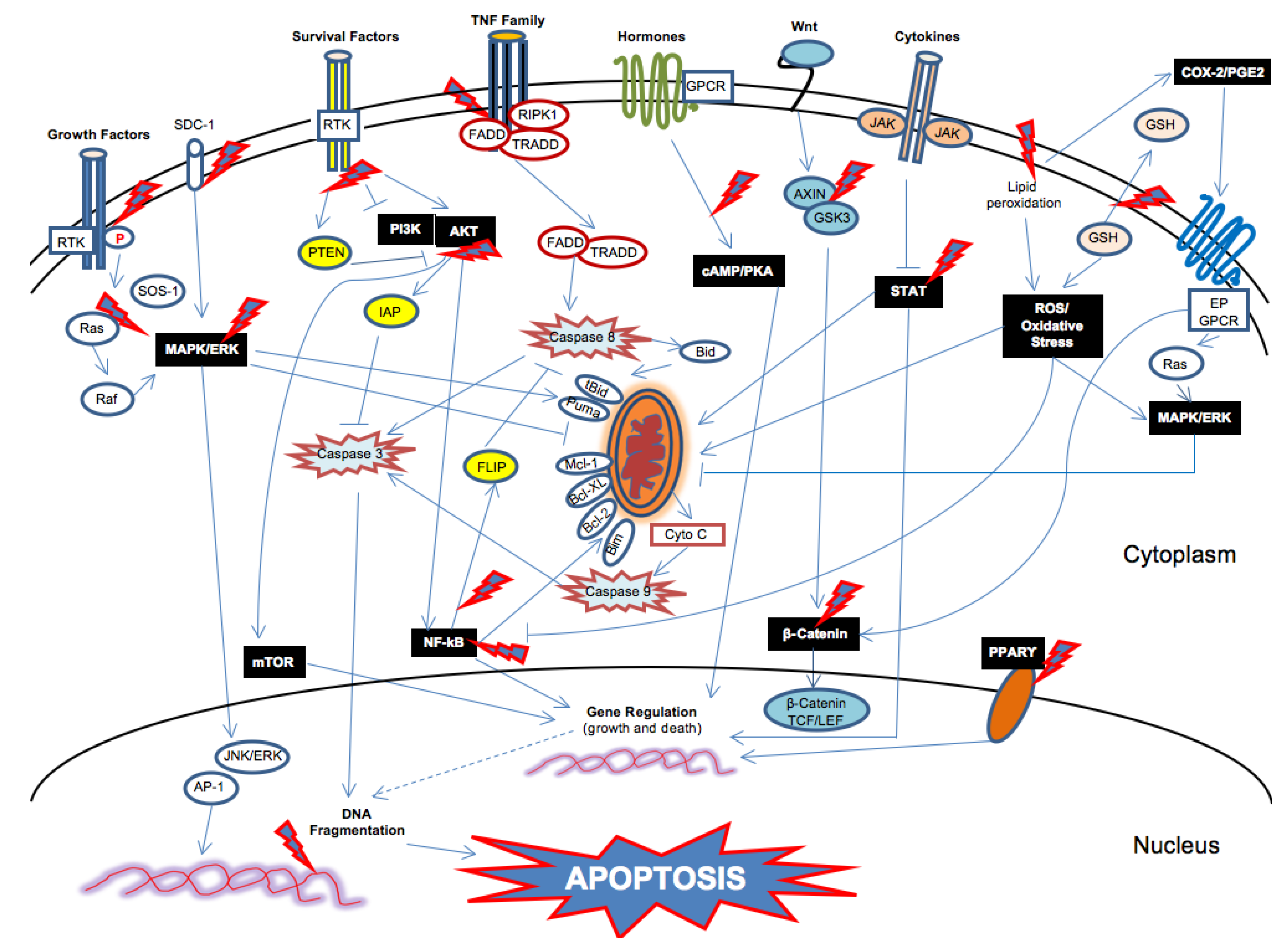
Cancer is a major disease worldwide. Despite progress in cancer therapy, conventional cytotoxic therapies lead to unsatisfactory long-term survival, mainly related to development of drug resistance by tumor cells and toxicity towards normal cells. n-3 polyunsaturated fatty acids (PUFAs), eicosapentaenoic acid (EPA) and docosahexaenoic acid (DHA), can exert anti-neoplastic activity by inducing apoptotic cell death in human cancer cells either alone or in combination with conventional therapies. Indeed, n-3 PUFAs potentially increase the sensitivity of tumor cells to conventional therapies, possibly improving their efficacy especially against cancers resistant to treatment. Moreover, in contrast to traditional therapies, n-3 PUFAs appear to cause selective cytotoxicity towards cancer cells with little or no toxicity on normal cells. This review focuses on studies investigating the cytotoxic activity of n-3 PUFAs against cancer cells via apoptosis, analyzing the molecular mechanisms underlying this effective and selective activity. Here, we highlight the multiple molecules potentially targeted by n-3 PUFAs to trigger cancer cell apoptosis. This analysis can allow a better comprehension of the potential cytotoxic therapeutic role of n-3 PUFAs against cancer, providing specific information and support to design future pre-clinical and clinical studies for a better use of n-3 PUFAs in cancer therapy, mainly combinational therapy.
Keywords: fatty acids (FAs); n-3 polyunsaturated fatty acids (PUFAs); docosahexaenoic acid (DHA); eicosapentaenoic acid (EPA); apoptosis; cytotoxicity; cancer therapy; combinational therapy; drug resistance; cancer stem cells fatty acids (FAs); n-3 polyunsaturated fatty acids (PUFAs); docosahexaenoic acid (DHA); eicosapentaenoic acid (EPA); apoptosis; cytotoxicity; cancer therapy; combinational therapy; drug resistance; cancer stem cells