Infection-Triggered Immune Dysregulation and Immunopathology in Lyme Disease: Mechanisms and Clinical Implications


Abstract
1. Introduction
2. Materials and Methods
3. Immunopathogenic Mechanisms, Clinical Phenotypes, and Therapeutic Implications in LD
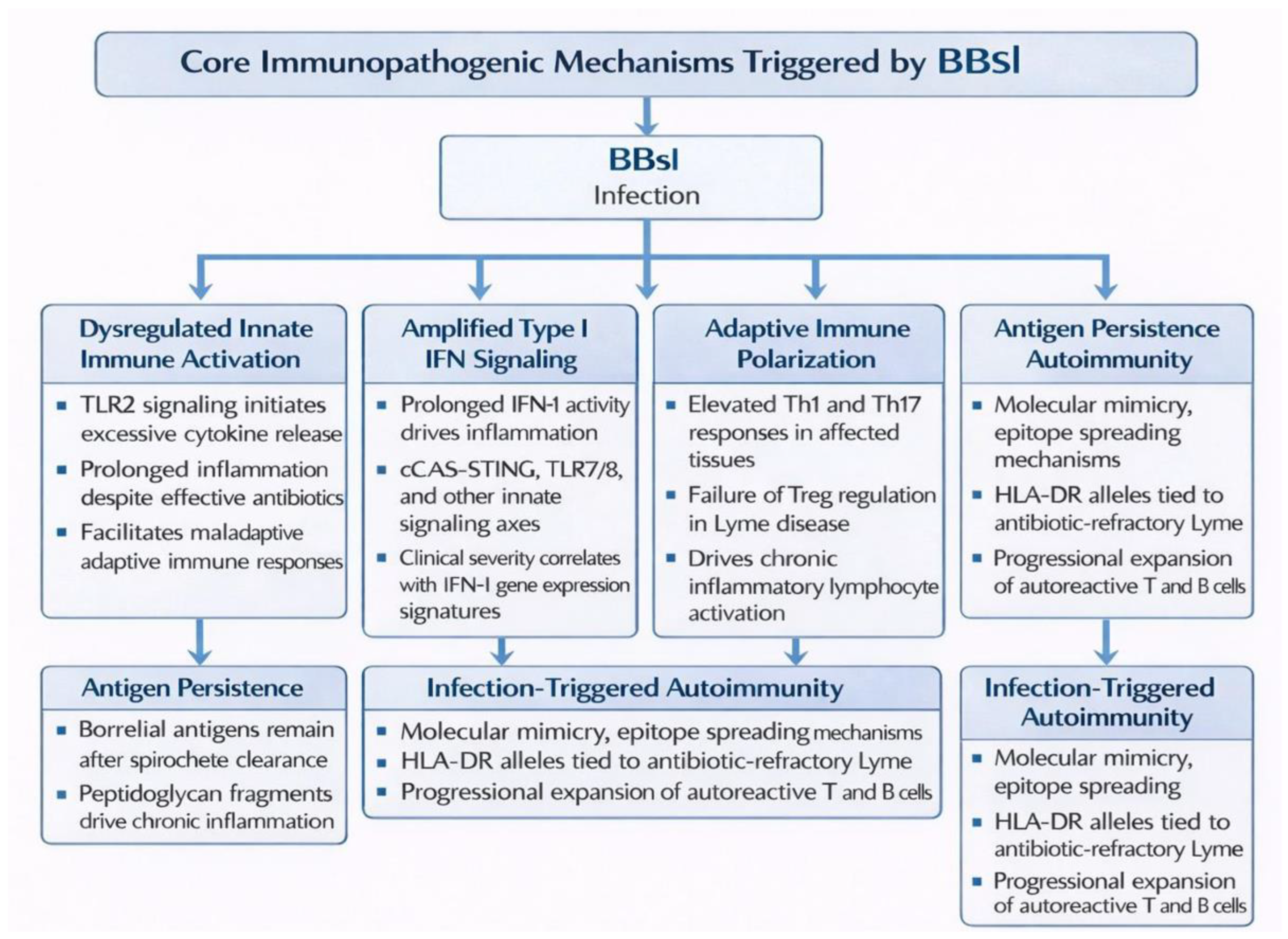
3.1. Core Immunopathogenic Mechanisms Triggered by Bbsl
3.1.1. Dysregulated Innate Immune Activation
3.1.2. The Type I Interferon (IFN) Axis as an Inflammatory Amplifier
3.1.3. Adaptive Immune Polarization: Pathogenic T Helper (Th) Th1/Th17 Responses and Regulatory T-Cell Failure
3.1.4. Antigen Persistence Without Viable Infection
3.1.5. Infection-Triggered Autoimmunity: Mechanistic Framework
3.2. Immune-Mediated Clinical Phenotypes
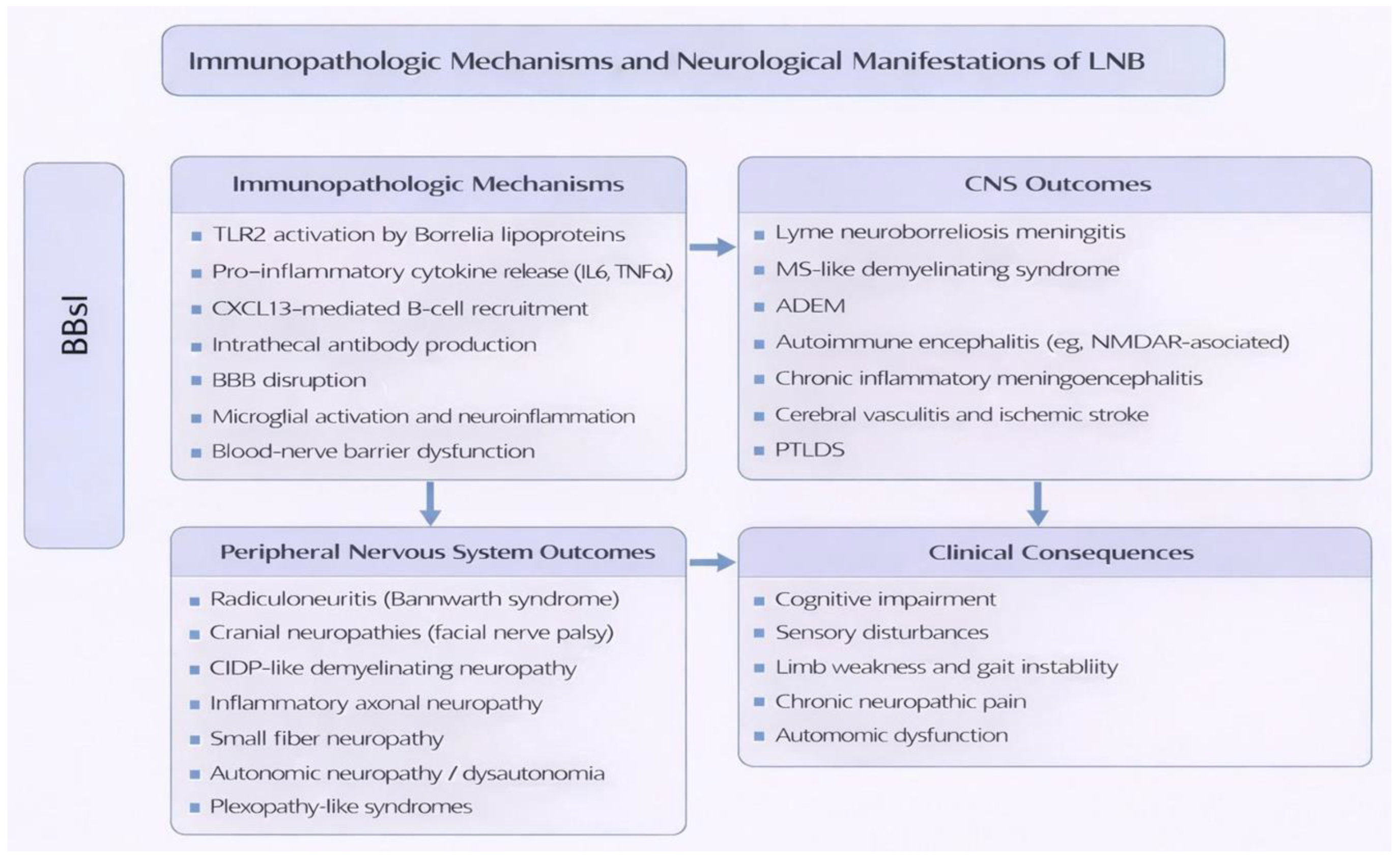
3.2.1. General Immunopathologic Framework of Nervous System Involvement
Central Nervous System (CNS) Involvement
Peripheral Nervous System (PNS) Autoimmune Mediated Manifestations Associated with LD
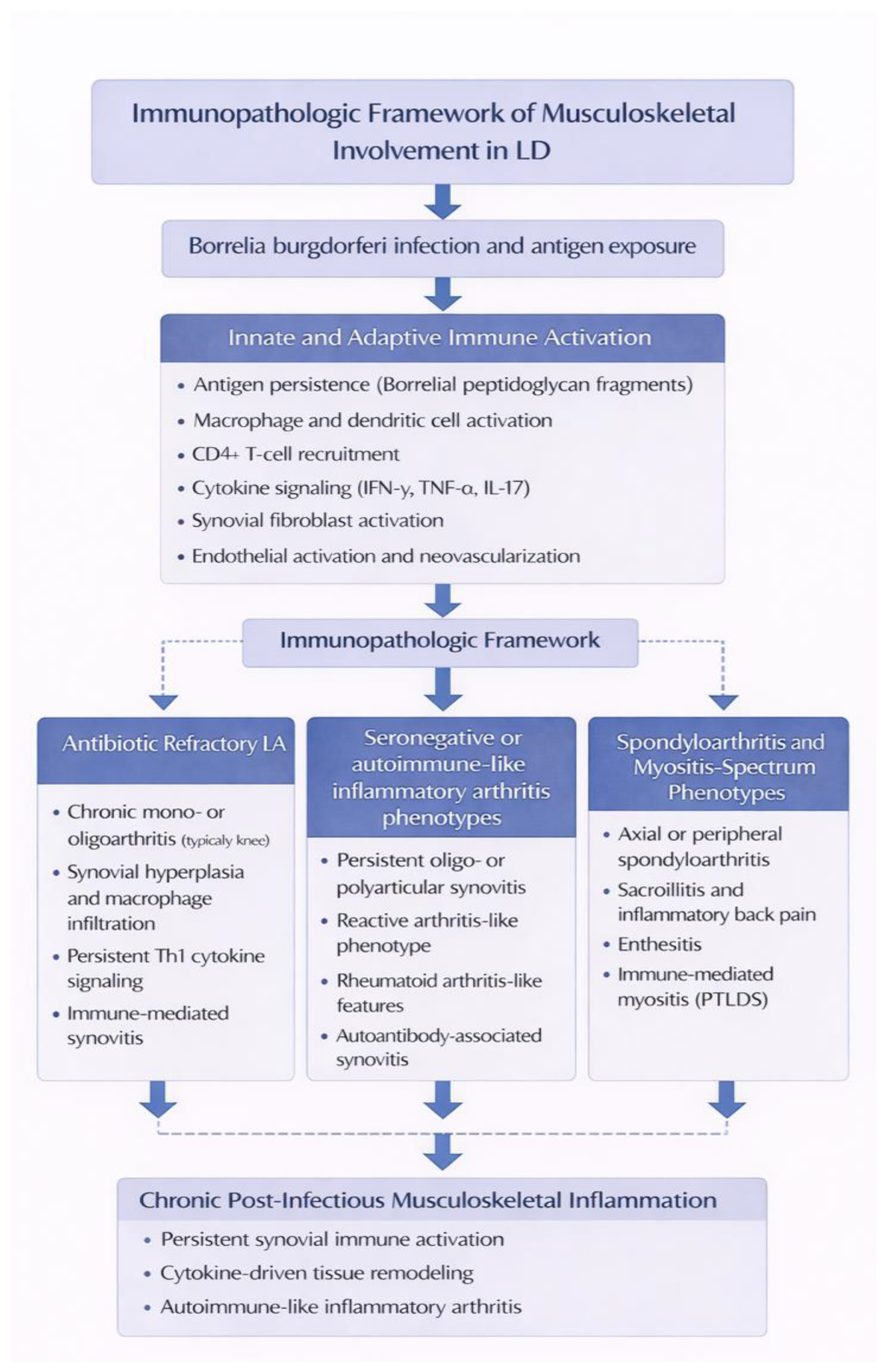
3.2.2. Involvement of the Musculoskeletal System
Antibiotic-Refractory LA
Seronegative and Autoimmune-like Inflammatory Arthritides Following LD
Spondyloarthritis- and Myositis-Spectrum Phenotypes
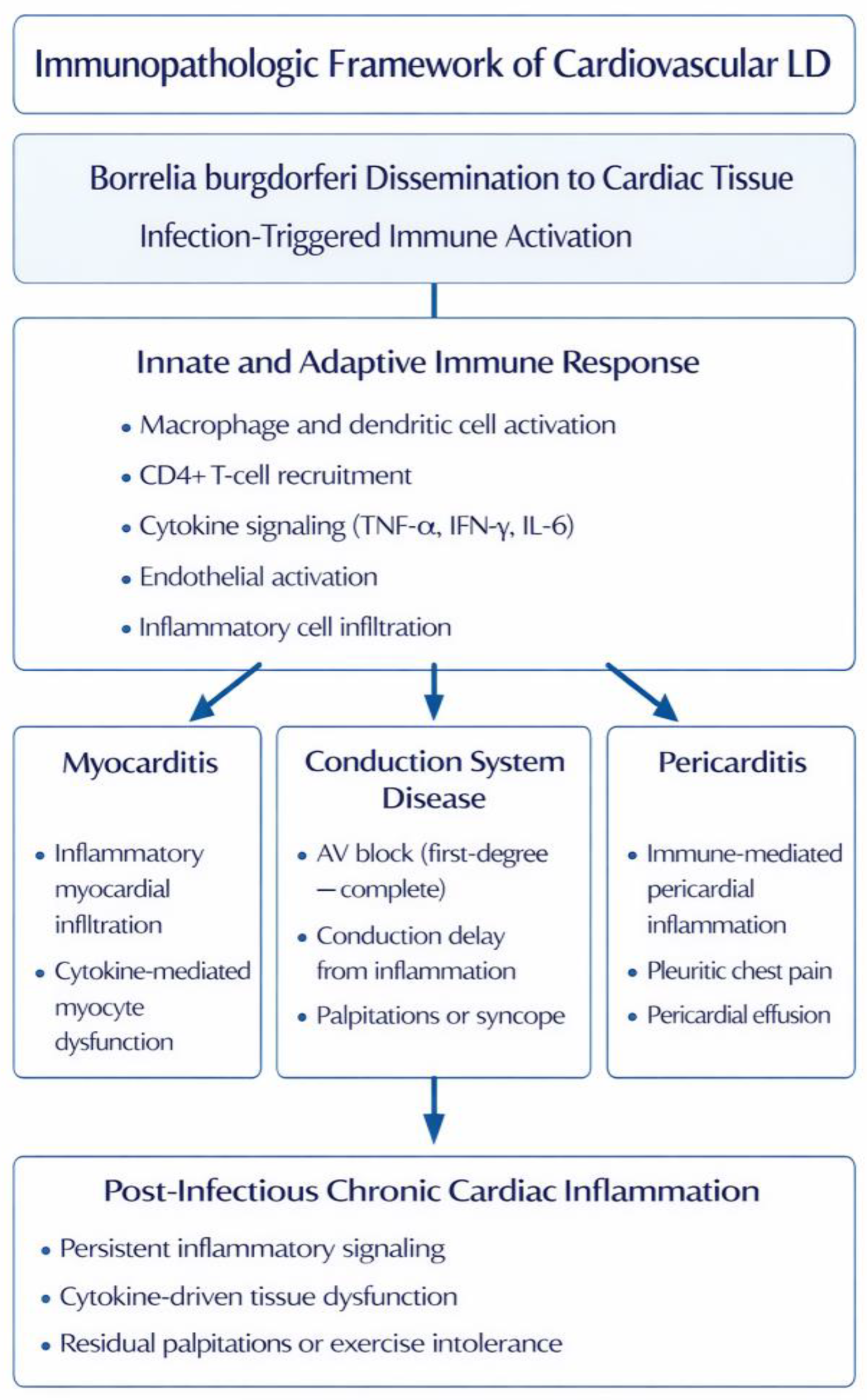
3.2.3. Immunopathologic Framework of Cardiovascular Involvement in LD
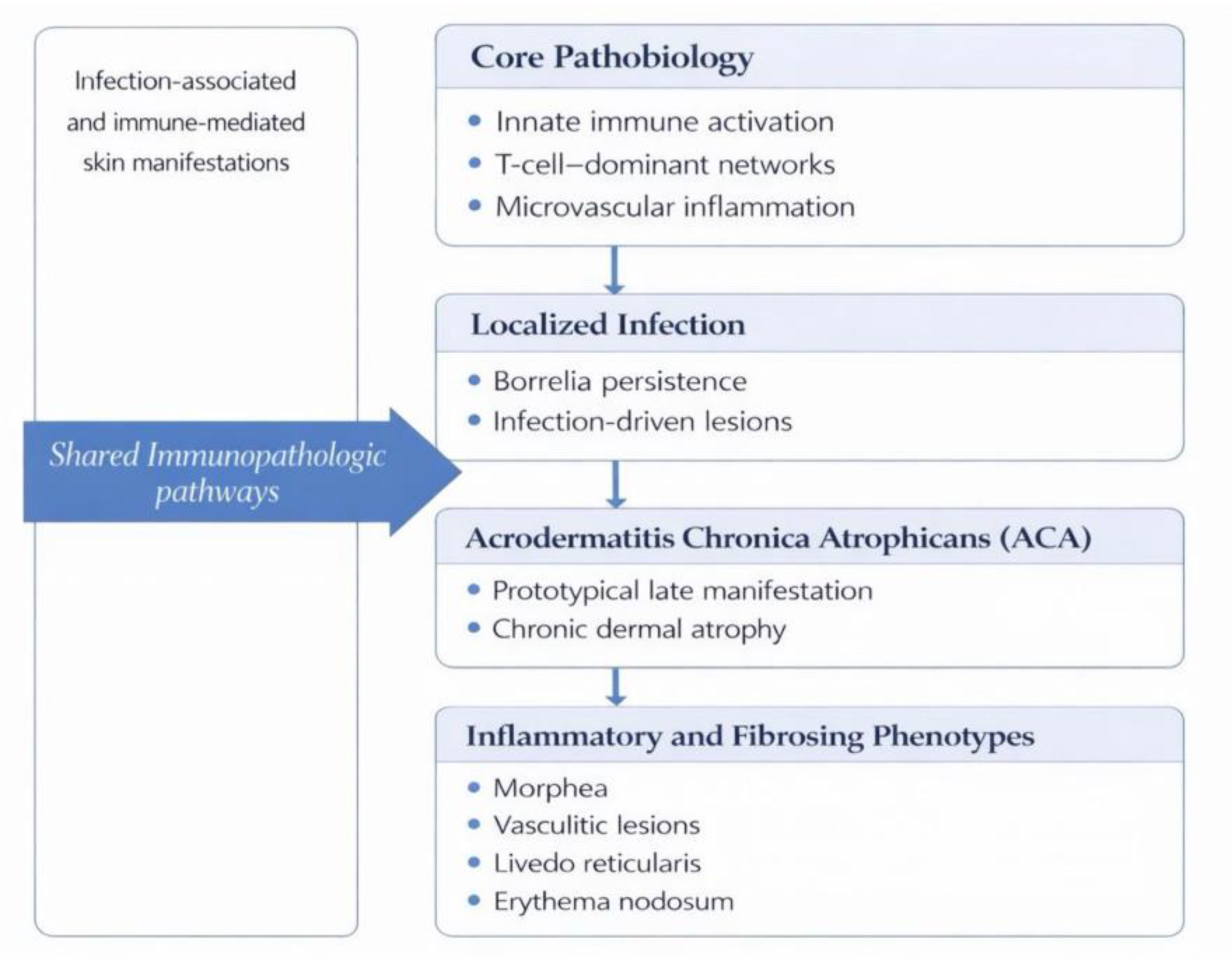
3.2.4. Immunopathologic Framework of Cutaneous Involvement in LD
3.2.5. Immunopathologic Framework of Hematologic Involvement in LD
3.3. Controversies, Limitations, and Areas of Uncertainty
3.4. Adjunctive Immunological Biomarkers in Lyme-Associated Manifestations
4. Conclusions
Author Contributions
Funding
Institutional Review Board Statement
Informed Consent Statement
Data Availability Statement
Conflicts of Interest
References
- Coburn, J.; Garcia, B.; Hu, L.T. Lyme disease pathogenesis. Curr. Issues Mol. Biol. 2020, 42, 473–518. [Google Scholar] [CrossRef]
- Bockenstedt, L.K.; Wooten, R.M.; Baumgarth, N. Immune Response to Borrelia: Lessons from Lyme Disease Spirochetes. Curr. Issues Mol. Biol. 2021, 42, 145–190. [Google Scholar] [CrossRef]
- Snik, M.E.; Stouthamer, N.E.I.M.; Hovius, J.W.; van Gool, M.M.J. Bridging the gap: Insights in the immunopathology of Lyme borreliosis. Eur. J. Immunol. 2024, 54, 2451063. [Google Scholar] [CrossRef]
- Ballard, H.S.; Bottino, G.; Bottino, J. The association of thrombocytopaenia and Lyme disease. Postgrad. Med. J. 1994, 70, 285–287. [Google Scholar] [CrossRef][Green Version]
- Kulu, U.A.; Kalkan, I.A.; Keskin, H. Lyme disease as a rare trigger for autoimmune hemolytic anemia. BMC Infect. Dis. 2026, 26, 231. [Google Scholar] [CrossRef]
- Aucott, J.N.; Crowder, L.A.; Kortte, K.B. Development of a foundation for a case definition of post-treatment Lyme disease syndrome. Int. J. Infect. Dis. 2013, 17, e443–e449. [Google Scholar] [CrossRef]
- Arvikar, S.L.; Steere, A.C. Lyme Arthritis. Infect. Dis. Clin. N. Am. 2022, 36, 563–577. [Google Scholar] [CrossRef] [PubMed]
- Adkison, H.; Embers, M.E. Lyme disease and the pursuit of a clinical cure. Front. Med. 2023, 10, 1183344. [Google Scholar] [CrossRef] [PubMed]
- Lochhead, R.B.; Arvikar, S.L.; Aversa, J.M.; Sadreyev, R.I.; Strle, K.; Steere, A.C. Robust interferon signature and suppressed tissue repair gene expression in synovial tissue from patients with postinfectious, Borrelia burgdorferi-induced Lyme arthritis. Cell. Microbiol. 2019, 21, e12954. [Google Scholar] [CrossRef] [PubMed]
- Bouquet, J.; Soloski, M.J.; Swei, A.; Cheadle, C.; Federman, S.; Billaud, J.-N.; Rebman, A.W.; Kabre, B.; Halpert, R.; Boorgula, M.; et al. Longitudinal transcriptome analysis reveals sustained inflammatory signaling in Lyme disease. mBio 2016, 7, e00100-16. [Google Scholar] [CrossRef]
- Miller, J.C.; Ma, Y.; Bian, J.; Sheehan, K.C.; Zachary, J.F.; Weis, J.H.; Schreiber, R.D.; Weis, J.J. A critical role for type I IFN in arthritis development following Borrelia burgdorferi infection of mice. J. Immunol. 2008, 181, 8492–8503. [Google Scholar] [CrossRef]
- Lochhead, R.B.; Sonderegger, F.L.; Ma, Y.; Brewster, J.E.; Cornwall, D.; Maylor-Hagen, H.; Miller, J.C.; Zachary, J.F.; Weis, J.H.; Weis, J.J. Endothelial cells and fibroblasts amplify the arthritogenic type I IFN response in murine Lyme disease and are major sources of chemokines in Borrelia burgdorferi-infected joint tissue. J. Immunol. 2012, 189, 2488–2501. [Google Scholar] [CrossRef]
- Love, A.C.; Schwartz, I.; Petzke, M.M. Borrelia burgdorferi RNA induces type I and III interferons via Toll-like receptor 7 and contributes to production of NF-κB-dependent cytokines. Infect. Immun. 2014, 82, 2405–2416. [Google Scholar] [CrossRef]
- Farris, L.C.; Torres-Odio, S.; Adams, L.G.; West, A.P.; Hyde, J.A. Borrelia burgdorferi Engages Mammalian Type I IFN Responses via the cGAS-STING Pathway. J. Immunol. 2023, 210, 1761–1770. [Google Scholar] [CrossRef]
- Petzke, M.M.; Schwartz, I.; Borchers, J.; Arevalo, B.; Zohn, R.; Quituisaca, J.; Wormser, G.P.; Dimitrova, N.; Schwartz, I. Global transcriptome analysis identifies type I interferon signaling in early disseminated Lyme disease. mBio 2020, 11, e00338-20. [Google Scholar] [CrossRef]
- Soloski, M.J.; Crowder, L.A.; Lahey, L.J.; Wagner, C.A.; Robinson, W.H.; Aucott, J.N. Serum inflammatory mediators as markers of human Lyme disease activity. PLoS ONE 2014, 9, e93243. [Google Scholar] [CrossRef] [PubMed]
- Strle, K.; Sulka, K.B.; Pianta, A.; Crowley, J.T.; Arvikar, S.L.; Anselmo, A.; Sadreyev, R.; Steere, A.C. T-Helper 17 Cell Cytokine Responses in Lyme Disease Correlate with Borrelia burgdorferi Antibodies During Early Infection and With Autoantibodies Late in the Illness in Patients with Antibiotic-Refractory Lyme Arthritis. Clin. Infect. Dis. 2017, 64, 930–938. [Google Scholar] [CrossRef]
- Siebers, E.M.; Liedhegner, E.S.; Lawlor, M.W.; Schell, R.F.; Nardelli, D.T. Regulatory T Cells Contribute to Resistance against Lyme Arthritis. Infect. Immun. 2020, 88, e00160-20. [Google Scholar] [CrossRef] [PubMed]
- Lochhead, R.B.; Strle, K.; Arvikar, S.L.; Weis, J.J.; Steere, A.C. Lyme arthritis: Linking infection, inflammation and autoimmunity. Nat. Rev. Rheumatol. 2021, 17, 449–461. [Google Scholar] [CrossRef]
- Brouwer, M.A.E.; van de Schoor, F.R.; Vrijmoeth, H.D.; Netea, M.G.; Joosten, L.A.B. A joint effort: The interplay between the innate and the adaptive immune system in Lyme arthritis. Immunol. Rev. 2020, 294, 63–79. [Google Scholar] [CrossRef] [PubMed]
- Jutras, B.L.; Lochhead, R.B.; Kloos, Z.A.; Biboy, J.; Strle, K.; Booth, C.J.; Govers, S.K.; Gray, J.; Schumann, P.; Vollmer, W.; et al. Borrelia burgdorferi peptidoglycan is a persistent antigen in patients with Lyme arthritis. Proc. Natl. Acad. Sci. USA 2019, 116, 13498–13507. [Google Scholar] [CrossRef] [PubMed]
- McClune, M.E.; Ebohon, O.; Dressler, J.M.; Davis, M.M.; Tupik, J.D.; Lochhead, R.B.; Booth, C.J.; Steere, A.C.; Jutras, B.L. The peptidoglycan of Borrelia burgdorferi can persist in discrete tissues and cause systemic responses consistent with chronic illness. Sci. Transl. Med. 2025, 17, eadr2955. [Google Scholar] [CrossRef]
- Davies, J.M. Molecular mimicry: Can epitope mimicry induce autoimmune disease? Immunol. Cell Biol. 1997, 75, 113–126. [Google Scholar] [CrossRef]
- Wucherpfennig, K.W. Mechanisms for the induction of autoimmunity by infectious agents. J. Clin. Investig. 2001, 108, 1097–1104. [Google Scholar] [CrossRef]
- Steere, A.C.; Klitz, W.; Drouin, E.E.; Falk, B.A.; Kwok, W.W.; Nepom, G.T.; Baxter-Lowe, L.A. Antibiotic-refractory Lyme arthritis is associated with HLA-DR molecules that bind a Borrelia burgdorferi peptide. J. Exp. Med. 2006, 203, 961–971. [Google Scholar] [CrossRef]
- Drouin, E.E.; Glickstein, L.; Kwok, W.W.; Nepom, G.T.; Steere, A.C. Human homologues of a Borrelia T cell epitope associated with antibiotic-refractory Lyme arthritis. Mol. Immunol. 2008, 45, 180–189. [Google Scholar] [CrossRef]
- Ball, R.; Shadomy, S.V.; Meyer, A.; Huber, B.T.; Leffell, M.S.; Zachary, A.; Belotto, M.; Hilton, E.; Bryant-Genevier, M.; Schriefer, M.E.; et al. HLA type and immune response to Borrelia burgdorferi outer surface protein a in people in whom arthritis developed after Lyme disease vaccination. Arthritis Rheum. 2009, 60, 1179–1186. [Google Scholar] [CrossRef]
- Drouin, E.E.; Seward, R.J.; Strle, K.; McHugh, G.; Katchar, K.; Londoño, D.; Yao, C.; Costello, C.E.; Steere, A.C. A novel human autoantigen, endothelial cell growth factor, is a target of T and B cell responses in patients with Lyme disease. Arthritis Rheum. 2013, 65, 186–196. [Google Scholar] [CrossRef]
- Danner, R.; Prochniak, L.M.; Pereckas, M.; Rouse, J.R.; Wahhab, A.; Hackner, L.G.; Lochhead, R.B. Identification of Major Histocompatibility Complex Class II Epitopes from Lyme Autoantigen Apolipoprotein B-100 and Borrelia burgdorferi Mcp4 in Murine Lyme Arthritis. J. Infect. Dis. 2024, 230, S27–S39. [Google Scholar] [CrossRef] [PubMed]
- Garcia-Monco, J.C.; Benach, J.L. Lyme Neuroborreliosis: Clinical Outcomes, Controversy, Pathogenesis, and Polymicrobial Infections. Ann. Neurol. 2019, 85, 21–31. [Google Scholar] [CrossRef] [PubMed]
- Hildenbrand, P.; Craven, D.E.; Jones, R.; Nemeskal, P. Lyme neuroborreliosis: Manifestations of a rapidly emerging zoonosis. AJNR. Am. J. Neuroradiol. 2009, 30, 1079–1087. [Google Scholar] [CrossRef]
- Waiß, C.; Ströbele, B.; Graichen, U.; Klee, S.; Gartlehner, J.; Sonntagbauer, E.; Hirschbichler, S.; Tinchon, A.; Kacar, E.; Wuchty, B.; et al. CXCL13 as a biomarker in the diagnostics of European lyme Neuroborreliosis—A prospective multicentre study in Austria. J. Cent. Nerv. Syst. Dis. 2024, 16, 11795735241247026. [Google Scholar] [CrossRef]
- Vizitiu, A.-Ș.; Văcăraș, V. When Lyme Neuroborreliosis Mimics Multiple Sclerosis. Challenges and Advances in Differential Diagnosis. Jr. Res. 2025, 3, 128–134. [Google Scholar] [CrossRef]
- Sigal, L.H.; Williams, S.; Soltys, B.; Gupta, R. H9724, a monoclonal antibody to Borrelia burgdorferi’s flagellin, binds to heat shock protein 60 (HSP60) within live neuroblastoma cells: A potential role for HSP60 in peptide hormone signaling and in an autoimmune pathogenesis of the neuropathy of Lyme disease. Cell. Mol. Neurobiol. 2001, 21, 477–495. [Google Scholar] [CrossRef]
- Verma, V.; Roman, M.; Shah, D.; Zaretskaya, M.; Yassin, M.H. A case of chronic progressive lyme encephalitis as a manifestation of late lyme neuroborreliosis. Infect. Dis. Rep. 2014, 6, 5496. [Google Scholar] [CrossRef] [PubMed]
- Predkele, N.; Mednieks, J. Lyme Disease and Associated NMDAR Encephalitis: A Case Report and Literature Review. Neurol. Int. 2021, 13, 487–496. [Google Scholar] [CrossRef]
- Florescu, A.M.; Bryrup, T.; Nilsson, A.C.; Blaabjerg, M.; Lebech, A.-M.; Mens, H. Anti-NMDAR antibodies are not prevalent in Lyme neuroborreliosis: A retrospective cohort study. BMC Neurol. 2025, 25, 518. [Google Scholar] [CrossRef]
- Rosendahl, S.B.; Ravn, P.; Lebech, A.M.; Midtgaard Stenør, C.P. Lyme neuroborreliosis with encephalitis: A rare case. IDCases 2023, 31, e01704. [Google Scholar] [CrossRef]
- Akkurt, B.H.; Kraehling, H.; Nacul, N.G.; Elsharkawy, M.; Schmidt-Pogoda, A.; Minnerup, J.; Stracke, C.P.; Schwindt, W. Vasculitis and Ischemic Stroke in Lyme Neuroborreliosis-Interventional Management Approach and Literature Review. Brain Sci. 2023, 13, 1388. [Google Scholar] [CrossRef] [PubMed]
- Erhart, D.K.; Bracknies, V.; Lutz-Schuhbauer, S.; Wigand, S.; Tumani, H. The special role of CXCL13 in Lyme neuroborreliosis: A case report. Neurol. Res. Pract. 2022, 4, 3. [Google Scholar] [CrossRef] [PubMed]
- Talbot, N.C.; Spillers, N.J.; Luther, P.; Flanagan, C.; Soileau, L.G.; Ahmadzadeh, S.; Viswanath, O.; Varrassi, G.; Shekoohi, S.; Cornett, E.M.; et al. Lyme Disease and Post-treatment Lyme Disease Syndrome: Current and Developing Treatment Options. Cureus 2023, 15, e43112. [Google Scholar] [CrossRef]
- Rebman, A.W.; Aucott, J.N. Post-treatment Lyme Disease as a Model for Persistent Symptoms in Lyme Disease. Front. Med. 2020, 7, 57. [Google Scholar] [CrossRef]
- Dersch, R.; Torbahn, G.; Rauer, S. Treatment of post-treatment Lyme disease symptoms—A systematic review. Eur. J. Neurol. 2024, 31, e16293. [Google Scholar] [CrossRef] [PubMed]
- Šegždaitė, G.; Aliukonytė, O.; Pociūtė, K. Neuropsychiatric Manifestations of Lyme Disease: A Literature Review of Psychiatric and Cognitive Impacts. Acta Medica Litu. 2025, 32, 6–21. [Google Scholar] [CrossRef]
- Dimachkie, M.M.; Barohn, R.J. Chronic inflammatory demyelinating polyneuropathy. Curr. Treat. Options Neurol. 2013, 15, 350–366. [Google Scholar] [CrossRef] [PubMed]
- Kaminsky, A.L.; Maisonobe, T.; Lenglet, T.; Psimaras, D.; Debs, R.; Viala, K. Confirmed cases of Neuroborreliosis with involvement of peripheral nervous system: Description of a cohort. Medicine 2020, 99, e21986. [Google Scholar] [CrossRef]
- Chen, Y.; Tang, X. Chronic Inflammatory Demyelinating Polyradiculoneuropathy in Association with Concomitant Diseases: Identification and Management. Front. Immunol. 2022, 13, 890142. [Google Scholar] [CrossRef]
- Wormser, G.P.; Strle, F.; Shapiro, E.D.; Dattwyler, R.J.; Auwaerter, P.G. A critical appraisal of the mild axonal peripheral neuropathy of late neurologic Lyme disease. Diagn. Microbiol. Infect. Dis. 2017, 87, 163–167. [Google Scholar] [CrossRef]
- Novak, P.; Felsenstein, D.; Mao, C.; Octavien, N.R.; Zubcevik, N. Association of small fiber neuropathy and post treatment Lyme disease syndrome. PLoS ONE 2019, 14, e0212222. [Google Scholar] [CrossRef] [PubMed]
- Adler, B.L.; Chung, T.; Rowe, P.C.; Aucott, J. Dysautonomia following Lyme disease: A key component of post-treatment Lyme disease syndrome? Front. Neurol. 2024, 15, 1344862. [Google Scholar] [CrossRef]
- Rupprecht, T.A.; Koedel, U.; Fingerle, V.; Pfister, H.W. The pathogenesis of lyme neuroborreliosis: From infection to inflammation. Mol. Med. 2008, 14, 205–212. [Google Scholar] [CrossRef]
- Nardelli, D.T.; Callister, S.M.; Schell, R.F. Lyme arthritis: Current concepts and a change in paradigm. Clin. Vaccine Immunol. CVI 2008, 15, 21–34. [Google Scholar] [CrossRef]
- Iliopoulou, B.P.; Guerau-de-Arellano, M.; Huber, B.T. HLA-DR alleles determine responsiveness to Borrelia burgdorferi antigens in a mouse model of self-perpetuating arthritis. Arthritis Rheum. 2009, 60, 3831–3840. [Google Scholar] [CrossRef] [PubMed]
- Steere, A.C.; Lemieux, J.E. Wider recognition and greater understanding of postinfectious, antibiotic-refractory Lyme arthritis. J. Clin. Investig. 2024, 134, e184109. [Google Scholar] [CrossRef] [PubMed]
- Arvikar, S.L.; Crowley, J.T.; Sulka, K.B.; Steere, A.C. Autoimmune Arthritides, Rheumatoid Arthritis, Psoriatic Arthritis, or Peripheral Spondyloarthritis Following Lyme Disease. Arthritis Rheumatol. 2017, 69, 194–202. [Google Scholar] [CrossRef] [PubMed]
- Yehudina, Y.; Trypilka, S. Lyme Borreliosis as a Trigger for Autoimmune Disease. Cureus 2021, 13, e18648. [Google Scholar] [CrossRef]
- Desai, R.; Miller, J.B. Non-radiographic axial spondyloarthritis developing after Lyme arthritis: A case report and review. BMC Rheumatol. 2025, 9, 110. [Google Scholar] [CrossRef]
- Sauer, A.; Speeg-Schatz, C.; Hansmann, Y. Two cases of orbital myositis as a rare feature of lyme borreliosis. Case Rep. Infect. Dis. 2011, 2011, 372470. [Google Scholar] [CrossRef]
- Schoenen, J.; Sianard-Gainko, J.; Carpentier, M.; Reznik, M. Myositis during Borrelia burgdorferi infection (Lyme disease). J. Neurol. Neurosurg. Psychiatry 1989, 52, 1002–1005. [Google Scholar] [CrossRef]
- Nguyen, H.; Le, C.; Nguyen, H. Acute lyme infection presenting with amyopathic dermatomyositis and rapidly fatal interstitial pulmonary fibrosis: A case report. J. Med. Case Rep. 2010, 4, 187. [Google Scholar] [CrossRef]
- Sloupenska, K.; Koubkova, B.; Horak, P.; Hutyrova, B.; Racansky, M.; Mares, J.; Miklusova, M.; Schovanek, J.; Zapletalova, J.; Raska, M.; et al. Myositis Autoantibodies in Patients with Suspected Post-Treatment Lyme Disease Syndrome. Life 2023, 13, 527. [Google Scholar] [CrossRef]
- Radesich, C.; Del Mestre, E.; Medo, K.; Vitrella, G.; Manca, P.; Chiatto, M.; Castrichini, M.; Sinagra, G. Lyme Carditis: From Pathophysiology to Clinical Management. Pathogens 2022, 11, 582. [Google Scholar] [CrossRef]
- Scheffold, N.; Herkommer, B.; Kandolf, R.; May, A.E. Lyme carditis—Diagnosis, treatment and prognosis. Dtsch. Arztebl. Int. 2015, 112, 202–208. [Google Scholar] [CrossRef]
- Carnazzo, M.C.; Scholin, C.; Shweta, F.; Calvin, A.D. Lyme disease presenting as complete heart block in a young man: Case report and review of pathogenesis. IDCases 2023, 32, e01799. [Google Scholar] [CrossRef] [PubMed]
- Pilon, Y.; Gédéon, T.; Claveau, A.-M.; Mardigyan, V. Lyme carditis presenting as idiopathic myocarditis: Prompt empirical treatment despite negative serology. CJC Open 2025, 7, 291–294. [Google Scholar] [CrossRef] [PubMed]
- Nikolić, A.; Boljević, D.; Bojić, M.; Veljković, S.; Vuković, D.; Paglietti, B.; Micić, J.; Rubino, S. Lyme endocarditis as an emerging infectious disease: A review of the literature. Front. Microbiol. 2020, 11, 278. [Google Scholar] [CrossRef] [PubMed]
- Batikyan, A.; Harutyunyan, H.; Tamazyan, V.; Khachatryan, A.; Abalyan, P.; Borkowski, P. Lyme Carditis with Complete Heart Block. Cureus 2025, 17, e80724. [Google Scholar] [CrossRef]
- Alabdely, M.H.; Bartley, P.; Tan, C.D.; Wang, H.; Shrestha, N.K. Lyme Endocarditis: A Case Report. Open Forum Infect. Dis. 2025, 12, ofaf623. [Google Scholar] [CrossRef]
- Hurrell, H.; Roberts-Thomson, R.; Prendergast, B.D. Non-infective endocarditis. Heart 2020, 106, 1023–1029. [Google Scholar] [CrossRef]
- Vasudevan, B.; Chatterjee, M. Lyme borreliosis and skin. Indian J. Dermatol. 2013, 58, 167–174. [Google Scholar] [CrossRef]
- Steere, A.C.; Strle, F.; Wormser, G.P.; Hu, L.T.; Branda, J.A.; Hovius, J.W.; Li, X.; Mead, P.S. Lyme borreliosis. Nat. Rev. Dis. Primers 2016, 2, 16090. [Google Scholar] [CrossRef]
- Mahajan, V.K. Lyme Disease: An Overview. Indian Dermatol. Online J. 2023, 14, 594–604. [Google Scholar] [CrossRef]
- Doskaliuk, B.; Zimba, O. Borrelia burgdorferi and autoimmune mechanisms: Implications for mimicry, misdiagnosis, and mismanagement in Lyme disease and autoimmune disorders. Rheumatol. Int. 2024, 44, 2265–2271. [Google Scholar] [CrossRef] [PubMed]
- Gade, A.; Matin, T.; Rubenstein, R.; Robinson, C.A. Acrodermatitis Chronica Atrophicans. In StatPearls [Internet]; StatPearls Publishing: Treasure Island, FL, USA, 2025. Available online: https://www.ncbi.nlm.nih.gov/books/NBK563289/ (accessed on 10 January 2026).
- Müllegger, R.R.; Means, T.K.; Shin, J.J.; Lee, M.; Jones, K.L.; Glickstein, L.J.; Luster, A.D.; Steere, A.C. Chemokine signatures in the skin disorders of Lyme borreliosis in Europe: Predominance of CXCL9 and CXCL10 in erythema migrans and acrodermatitis and CXCL13 in lymphocytoma. Infect. Immun. 2007, 75, 4621–4628. [Google Scholar] [CrossRef] [PubMed]
- Papara, C.; De Luca, D.A.; Bieber, K.; Vorobyev, A.; Ludwig, R.J. Morphea: The 2023 update. Front. Med. 2023, 10, 1108623. [Google Scholar] [CrossRef]
- Goodlad, J.R.; Davidson, M.M.; Gordon, P.; Billington, R.; Ho-Yen, D.O. Morphoea and Borrelia burgdorferi: Results from the Scottish Highlands in the context of the world literature. Mol. Pathol. 2002, 55, 374–378. [Google Scholar] [CrossRef]
- Șandru, F.; Popa, A.; Petca, A.; Miulescu, R.G.; Constantin, M.M.; Petca, R.C.; Constantin, T.; Dumitrașcu, M.C. Etiologic role of Borrelia burgdorferi in morphea: A case report. Exp. Ther. Med. 2020, 20, 2373–2376. [Google Scholar] [CrossRef] [PubMed]
- Fraticelli, P.; Benfaremo, D.; Gabrielli, A. Diagnosis and management of leukocytoclastic vasculitis. Intern. Emerg. Med. 2021, 16, 831–841. [Google Scholar] [CrossRef]
- Gambichler, T.; Kulik, M.A.; Skrygan, M.; Rooms, I.; Höxtermann, S. Cutaneous leukocytoclastic vasculitis: The role of lymphocytes and related immune markers. Postep. Dermatol. Alergol. 2017, 34, 299–305. [Google Scholar] [CrossRef]
- Randrianarisoa, R.M.F.; Nachet, F.Z.; Truta, V.; Letrillard, C. A case of Henoch-Schönlein purpura associated with tick exposure. Oxf. Med. Case Rep. 2025, 2025, omaf123. [Google Scholar] [CrossRef]
- Sajjan, V.V.; Lunge, S.; Swamy, M.B.; Pandit, A.M. Livedo reticularis: A review of the literature. Indian Dermatol. Online J. 2015, 6, 315–321. [Google Scholar] [CrossRef]
- Kordeva, S.; Ivanov, L.; Broshtilova, V.; Tchernev, G. Erythema nodosum as first clinical sign of acute Borrelia burgdorferi infection. Braz. J. Infect. Dis. 2024, 28, 103877. [Google Scholar] [CrossRef]
- Sharma, S.; Gupta, M.; Gulati, A. Borrelial Lymphocytoma Cutis with Septo-Lobular Panniculitis Involving Bilateral Ear Lobes in a Child: A Rare Presentation in a Non-Endemic Region. Indian Dermatol. Online J. 2025, 16, 860–862. [Google Scholar] [CrossRef]
- Randle, S.M.; Richter, M.B.; Palmer, R.G.; Price, A.; Ansell, B.M. Panniculitis: A report of four cases and literature review. Arch. Dis. Child. 1991, 66, 1057–1060. [Google Scholar] [CrossRef] [PubMed]
- De Luca, D.A.; Papara, C.; Vorobyev, A.; Staiger, H.; Bieber, K.; Thaçi, D.; Ludwig, R.J. Lichen sclerosus: The 2023 update. Front. Med. 2023, 10, 1106318. [Google Scholar] [CrossRef] [PubMed]
- Vasudevan, B.; Sagar, A.; Bahal, A.; Mohanty, A.P. Extragenital lichen sclerosus with aetiological link to Borrelia. Med. J. Armed Forces India 2011, 67, 370–373. [Google Scholar] [CrossRef]
- Miftode, E.; Teodor, D.; Lungu, R.; Petrovici, C. Recurrent thrombocytopenia and Lyme disease. BMC Infect. Dis. 2013, 13, 81. [Google Scholar] [CrossRef][Green Version]
- Lee, J.; Azzawi, S.; Peluso, M.J.; Richterman, A.; Batlle, H.R.; Yialamas, M.A. Smear Campaign: Misattribution of Pancytopenia to a Tick-Borne Illness. J. Gen. Intern. Med. 2018, 33, 570–572. [Google Scholar] [CrossRef] [PubMed]
- Mehrzad, R.; Bravoco, J. Pancytopenia in Lyme disease. BMJ Case Rep. 2014, 2014, bcr2013201079. [Google Scholar] [CrossRef]
- Branda, J.A.; Steere, A.C. Laboratory Diagnosis of Lyme Borreliosis. Clin. Microbiol. Rev. 2021, 34, e00018-19. [Google Scholar] [CrossRef]
- Stanek, G.; Fingerle, V.; Hunfeld, K.P.; Jaulhac, B.; Kaiser, R.; Krause, A.; Kristoferitsch, W.; O’Connell, S.; Ornstein, K.; Strle, F.; et al. Lyme borreliosis: Clinical case definitions for diagnosis and management in Europe. Clin. Microbiol. Infect. 2011, 17, 69–79. [Google Scholar] [CrossRef]
- Smiyan, S.; Galaychuk, I.; Zhulkevych, I.; Nykolyuk, V.; Komorovsky, R.; Gusak, S.; Bilozetsky, I. Sjögren’s syndrome and lymphadenopathy unraveling the diagnosis of Lyme disease. Reumatologia 2019, 57, 59–62. [Google Scholar] [CrossRef]
- Dhliwayo, N.; Wajahat, R.; Havrylyan, A.; Moid, A.; Khayr, W.; Barsano, C.P. Lyme Disease: An Autoimmunity-Based “Destructive Thyroiditis” or Just Another “Non-Thyroidal Illness”? J. Endocr. Soc. 2021, 5, A940–A941. [Google Scholar] [CrossRef]
- Zarghamravanbakhsh, P.; Saeidifard, F.; Atteya, G.; Murthi, S.; Nash, I.; Skipitaris, N.T.; Poretsky, L. Coexisting Thyroiditis and Carditis in a Patient With Lyme Disease: Looking for a Unifying Diagnosis. AACE Clin. Case Rep. 2022, 8, 150–153. [Google Scholar] [CrossRef]
- Alaedini, A.; Lebwohl, B.; Wormser, G.P.; Green, P.H.; Ludvigsson, J.F. Borrelia infection and risk of celiac disease. BMC Med. 2017, 15, 169. [Google Scholar] [CrossRef]
- Cantrell, M.B.; Kahlon, A.; Thompson, M. S2376 Lyme disease manifesting as inflammatory bowel disease. Am. J. Gastroenterol. 2023, 118, S1678–S1679. [Google Scholar] [CrossRef]
- Komdeur, R.; Zijlstra, J.G.; van der Werf, T.S.; Ligtenberg, J.J.; Tulleken, J.E. Immunosuppressive treatment for vasculitis associated with Lyme borreliosis. Ann. Rheum. Dis. 2001, 60, 721. [Google Scholar] [CrossRef] [PubMed]
- Yates, M.; Watts, R. ANCA-associated vasculitis. Clin. Med. 2017, 17, 60–64. [Google Scholar] [CrossRef] [PubMed]
- Gwynne, P.J.; Clendenen, L.H.; Turk, S.P.; Marques, A.R.; Hu, L.T. Antiphospholipid autoantibodies in Lyme disease arise after scavenging of host phospholipids by Borrelia burgdorferi. J. Clin. Investig. 2022, 132, e152506. [Google Scholar] [CrossRef]
- Kılıç Müftüoğlu, İ.; Aydın Akova, Y.; Gür Güngör, S. A Case of Lyme Disease Accompanied by Uveitis and White Dot Syndrome. Turk. J. Ophthalmol. 2016, 46, 241–243. [Google Scholar] [CrossRef]
- Bellafiore, J.; Mahrous, A.; Gurumurthy, V.; Capitle, E.; Schutzer, S.E. Retrospective Case Series of Ocular Lyme Disease, 1988–2025. Emerg. Infect. Dis. 2026, 32, 15–20. [Google Scholar] [CrossRef] [PubMed]
- Florens, N.; Lemoine, S.; Guebre-Egziabher, F.; Valour, F.; Kanitakis, J.; Rabeyrin, M.; Juillard, L. Chronic Lyme borreliosis associated with minimal change glomerular disease: A case report. BMC Nephrol. 2017, 18, 51. [Google Scholar] [CrossRef] [PubMed]
- Kirmizis, D.; Efstratiadis, G. MPGN secondary to Lyme disease: The role of cryoglobulins. Clin. Kidney J. 2013, 6, 349. [Google Scholar] [CrossRef] [PubMed][Green Version]
- Remy, M.M.; Schöbi, N.; Kottanattu, L.; Pfister, S.; Duppenthaler, A.; Suter-Riniker, F. Cerebrospinal fluid CXCL13 as a diagnostic marker of neuroborreliosis in children: A retrospective case-control study. J. Neuroinflammat. 2017, 14, 173. [Google Scholar] [CrossRef]
- Shapiro, E.D. Clinical practice. Lyme disease. N. Engl. J. Med. 2014, 370, 1724–1731. [Google Scholar] [CrossRef]



| Immunopathogenic Mechanism | Key Immune Components | Principal Biological Effects | Representative Disease Relevance |
|---|---|---|---|
| Dysregulated innate immune activation | TLR2 signaling, macrophages, dendritic cells | Excessive cytokine and chemokine production; amplification of inflammation | Acute and disseminated LD; priming of chronic inflammation |
| Type I IFN signaling | IFN-α/β, IFN-stimulated genes | Sustained inflammatory signaling independent of bacterial burden | Antibiotic-refractory LA; tissue-specific inflammation |
| Th1/Th17 polarization | CD4+ T cells, IFN-γ, IL-17 | Persistent cellular inflammation; tissue injury | Chronic synovitis; neuroinflammatory phenotypes |
| Impaired immune regulation | Reduced regulatory T-cell activity | Failure of immune resolution following infection | Post-infectious inflammatory disease |
| Antigen persistence | Borrelial peptidoglycan | Chronic innate immune stimulation without viable organisms | Post-infectious LA |
| Infection-triggered autoimmunity | Molecular mimicry; epitope spreading | Expansion of autoreactive immune responses in susceptible hosts | Autoimmune-like post-infectious phenotypes |
| Clinical Complication | Biochemical/Immunological Biomarker | Biological Sample | Immunological Relevance | Specificity |
|---|---|---|---|---|
| LNB | CXCL13 | CSF | B-cell chemoattractant reflecting intrathecal B-cell recruitment and antibody production | Moderate (organ-specific) |
| Intrathecal Borrelia-specific antibody index | CSF + serum | Demonstrates intrathecal synthesis of Borrelia-specific antibodies | High | |
| CXCL9 | CSF | IFN-γ-induced chemokine reflecting Th1-mediated immune activation | Moderate | |
| CXCL10 (IP-10) | CSF | Marker of Th1-dominant chemokine signaling and T-cell recruitment | Moderate | |
| Neopterin | CSF or serum | Reflects macrophage activation and cellular immune response | Low–moderate | |
| LA | Borrelial peptidoglycan | Synovial fluid | Persistent bacterial antigen driving innate immune activation and chronic synovial inflammation | Moderate (context-specific) |
| IL-17 | Synovial fluid or serum | Reflects Th17-mediated inflammatory pathways involved in chronic synovitis | Low–moderate | |
| RF | Serum | Autoantibody reflecting B-cell activation and autoimmune inflammatory responses | Low | |
| anti-CCP antibodies | Serum | Autoantibodies associated with citrullinated protein immune responses | High (for rheumatoid arthritis) | |
| Lyme carditis | Cardiac troponin I/T | Serum | Marker of myocardial injury associated with inflammatory cardiac involvement | Low (nonspecific) |
| NT-proBNP | Serum | Reflects myocardial stress and cardiac dysfunction | Low |
Disclaimer/Publisher’s Note: The statements, opinions and data contained in all publications are solely those of the individual author(s) and contributor(s) and not of MDPI and/or the editor(s). MDPI and/or the editor(s) disclaim responsibility for any injury to people or property resulting from any ideas, methods, instructions or products referred to in the content. |
© 2026 by the authors. Licensee MDPI, Basel, Switzerland. This article is an open access article distributed under the terms and conditions of the Creative Commons Attribution (CC BY) license.
Share and Cite
Pine, K.; Pine, V.; Negrut, N.; Ferician, A.; Marian, P. Infection-Triggered Immune Dysregulation and Immunopathology in Lyme Disease: Mechanisms and Clinical Implications. J. Clin. Med. 2026, 15, 2922. https://doi.org/10.3390/jcm15082922
Pine K, Pine V, Negrut N, Ferician A, Marian P. Infection-Triggered Immune Dysregulation and Immunopathology in Lyme Disease: Mechanisms and Clinical Implications. Journal of Clinical Medicine. 2026; 15(8):2922. https://doi.org/10.3390/jcm15082922
Chicago/Turabian StylePine, Klavio, Vivian Pine, Nicoleta Negrut, Anca Ferician, and Paula Marian. 2026. "Infection-Triggered Immune Dysregulation and Immunopathology in Lyme Disease: Mechanisms and Clinical Implications" Journal of Clinical Medicine 15, no. 8: 2922. https://doi.org/10.3390/jcm15082922
APA StylePine, K., Pine, V., Negrut, N., Ferician, A., & Marian, P. (2026). Infection-Triggered Immune Dysregulation and Immunopathology in Lyme Disease: Mechanisms and Clinical Implications. Journal of Clinical Medicine, 15(8), 2922. https://doi.org/10.3390/jcm15082922