1. Introduction
The management of orbital fractures represents a significant and current topic within the field of maxillofacial surgery, with a growing body of literature reflecting the ongoing search for the optimal reconstruction technique. Isolated orbital floor fractures are among the most common midfacial injuries, representing approximately 4–16% of all facial fractures [
1]. The primary goal of surgical management is to restore the anatomical orbital volume and correct the shape of the orbital cavity to treat enophthalmos, diplopia, and ocular motility restriction. However, the surgical methods to achieve this vary widely. To improve precision, surgeons today employ a wide range of technologies, including virtual surgical planning (VSP), patient-specific implants (PSI), intraoperative navigation, and intraoperative CT imaging, either individually or in combination. Despite these technological advancements, the reconstruction of the orbital floor remains surgically challenging, due to the complex anatomy of the orbital floor and the limited surgical exposure provided by standard minimally invasive approaches—transconjunctival or subciliary—which are favoured for their ability to minimize visible scarring but restrict the visual field.
Conventionally, reconstruction is performed using standard titanium meshes that are adapted intraoperatively. While effective, this method relies heavily on the surgeon’s subjective visual assessment and experience. Inadequate adaptation or incorrect placement of the implant can lead to significant complications. Recent studies indicate that the use of a standard titanium mesh is associated with a reoperation rate of up to 31.8% in long-term follow-up, mostly due to implant malposition [
2]. To improve accuracy, advanced technologies such as intraoperative navigation, intraoperative computed tomography (CT), and patient-specific implants (PSIs) have been introduced [
3,
4,
5]. However, despite their widespread availability, factors such as high cost, long production time, and logistical barriers limit their routine use in many centres. A recent survey of maxillofacial units in Switzerland, Germany, and Austria revealed that while 48% of clinics have access to 3D printers, the majority still rely on conventional methods due to these barriers [
6].
A promising, cost-effective alternative is the in-house fabrication of 3D-printed anatomical models. By mirroring the healthy contralateral orbit, a sterilisable template can be created to prebend the standard titanium meshes before surgery. This approach aims to combine the precision of PSIs with the accessibility and low cost of standard implants, as well as the safety and precision of digital planning, making it a viable option for a wider range of hospitals. Three-dimensional technologies are also widely used in other medical fields, such as traumatology and orthopaedic. The structured 3D-assisted workflow showed improved anatomical understanding and surgical precision, remarkable accuracy, and cost-effectiveness that support the advancement and efficiency of clinical practice [
7,
8].
This study aimed to compare the clinical and radiological outcomes of orbital floor reconstruction using conventional intraoperative mesh bending versus preoperative mesh bending with a 3D-printed model technique. Specifically, the study assessed the precision of orbital volume restoration, the incidence of postoperative diplopia, and the rate of revision surgery required for implant correction. The hypothesis was that implementing preoperative bending of the standard titanium mesh for orbital reconstruction on the corresponding 3D-printed patient model would lead to improved orbital volume symmetry after surgery and reduced occurrence of double vision while simultaneously restoring facial aesthetics.
2. Materials and Methods
2.1. Study Design
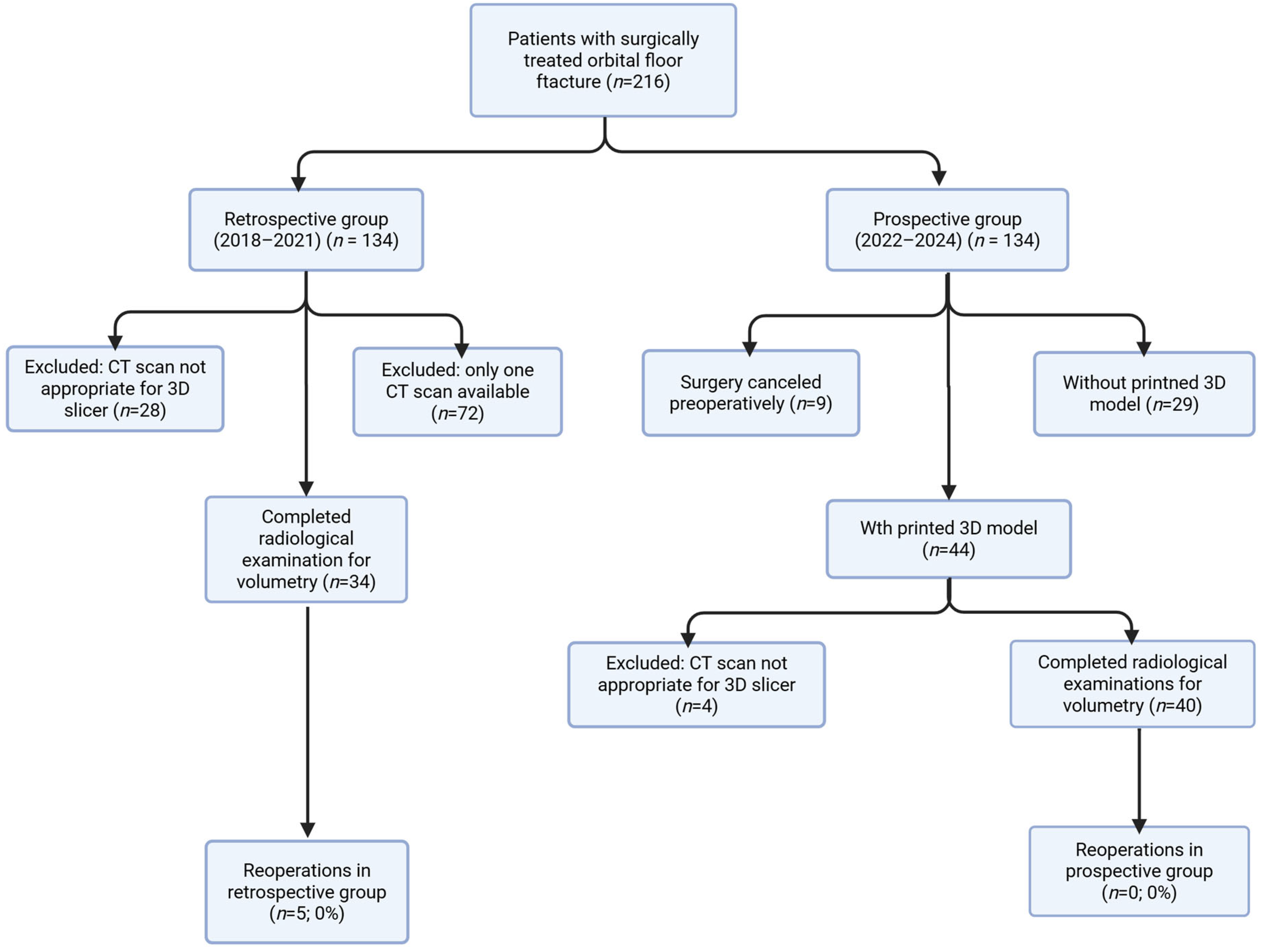
This study performed at the Centre of Oral and Maxillofacial Surgery, Pauls Stradins Clinical University Hospital (P. Stradins CUH) in Riga, Latvia, was designed as a single-centre, non-randomized ambispective comparative cohort study. This study design was selected as it integrates both retrospective and prospective components within a single analytical framework. The control group, comprising patients treated with conventional intraoperative free-hand mesh bending, was evaluated retrospectively using historical clinical and radiological records. The study group, consisting of patients treated using the in-house 3D-printed models, was enrolled and assessed prospectively following the implementation of this technological protocol at our institution. The outcomes of the prospectively treated cohort were compared with those of the historical control group. The study protocol adhered to the Declaration of Helsinki and was approved by the Ethics Committee of Riga Stradins University (No. 2-PĒK-4/132/2022, approved 9 March 2022). The Ethics committee approval served as the foundational approval for the study design, authorising both the retrospective data analysis (2018–2021) and the initiation of the prospective study phase, which started on 9 March 2022, with its patient collection in the hospital. The study is registered in the ISRCTN registry (reference number ISRCTN12793225). Written informed consent was obtained from all patients in the prospective group. Data were anonymized, coded, and stored electronically in accordance with local data protection regulations.
2.2. Patient Selection
The study population consisted of two groups of adult patients treated for isolated orbital floor fractures. The retrospective group (control) included all consecutive patients treated between 1 January 2018 and 31 December 2021. The prospective group (study) included consecutive patients operated between 9 March 2022 and 30 September 2023.
The inclusion criteria were as follows: (1) adult patients (>18 years); (2) diagnosis of an isolated orbital floor fracture; (3) surgical reconstruction performed using a titanium mesh (either standard free-hand or 3D model-assisted); and (4) complete medical records, including pre- and postoperative ophthalmologic examinations and high-quality computed tomography (CT) scans (slice thickness ≤ 0.625 mm). The exclusion criteria were: (1) combined facial bone fractures (e.g., zygomaticomaxillary complex fractures); (2) orbital floor reconstruction using materials other than a single titanium mesh (e.g., absorbable membranes); (3) missing or insufficient quality of pre- or postoperative CT data; and (4) acute ophthalmological emergencies requiring immediate surgical intervention.
2.3. Surgical Protocol
All patients underwent surgical reconstruction under general anaesthesia. Standard surgical access to the orbital floor was achieved primarily through a transconjunctival or subciliar approach according to the surgeons and patients’ preferences.
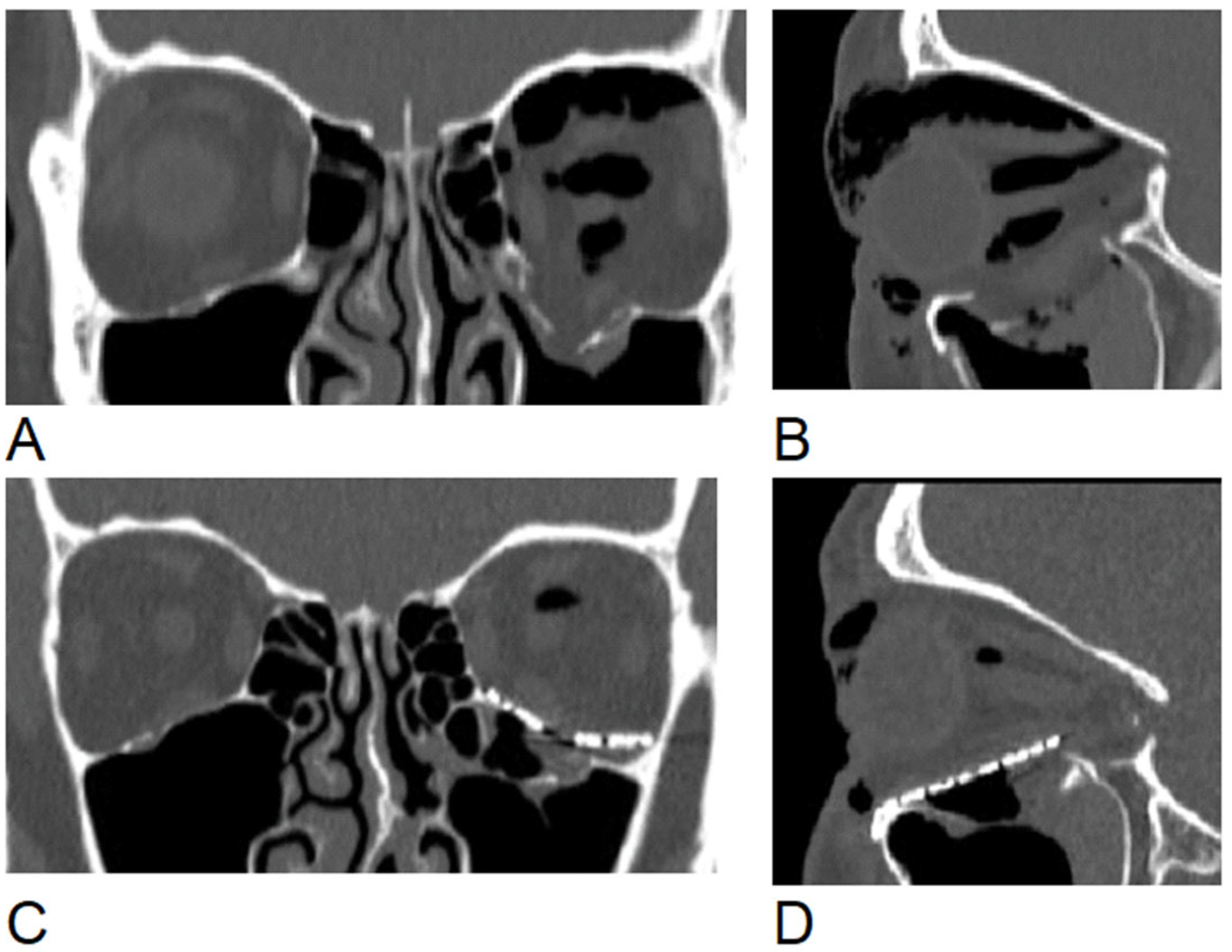
In the retrospective group, reconstruction was performed using a standard intraoperative free-hand bending technique. The titanium mesh (KLS Martin, Jacksonville, FL, USA) was manually bent and adapted intraoperatively to fit the orbital defect. The mesh was inserted and adjusted based purely on the surgeon’s direct visual assessment and tactile feedback of the anatomical landmarks (
Figure 1). To verify the adequacy of the reconstruction and ensure that no extraocular muscles or peri-orbital tissues were entrapped beneath the implant, a forced duction test was routinely performed prior to closure. No intraoperative navigation or 3D imaging was used; instead, radiological verification was achieved via a routine CT scan performed on the first postoperative day.
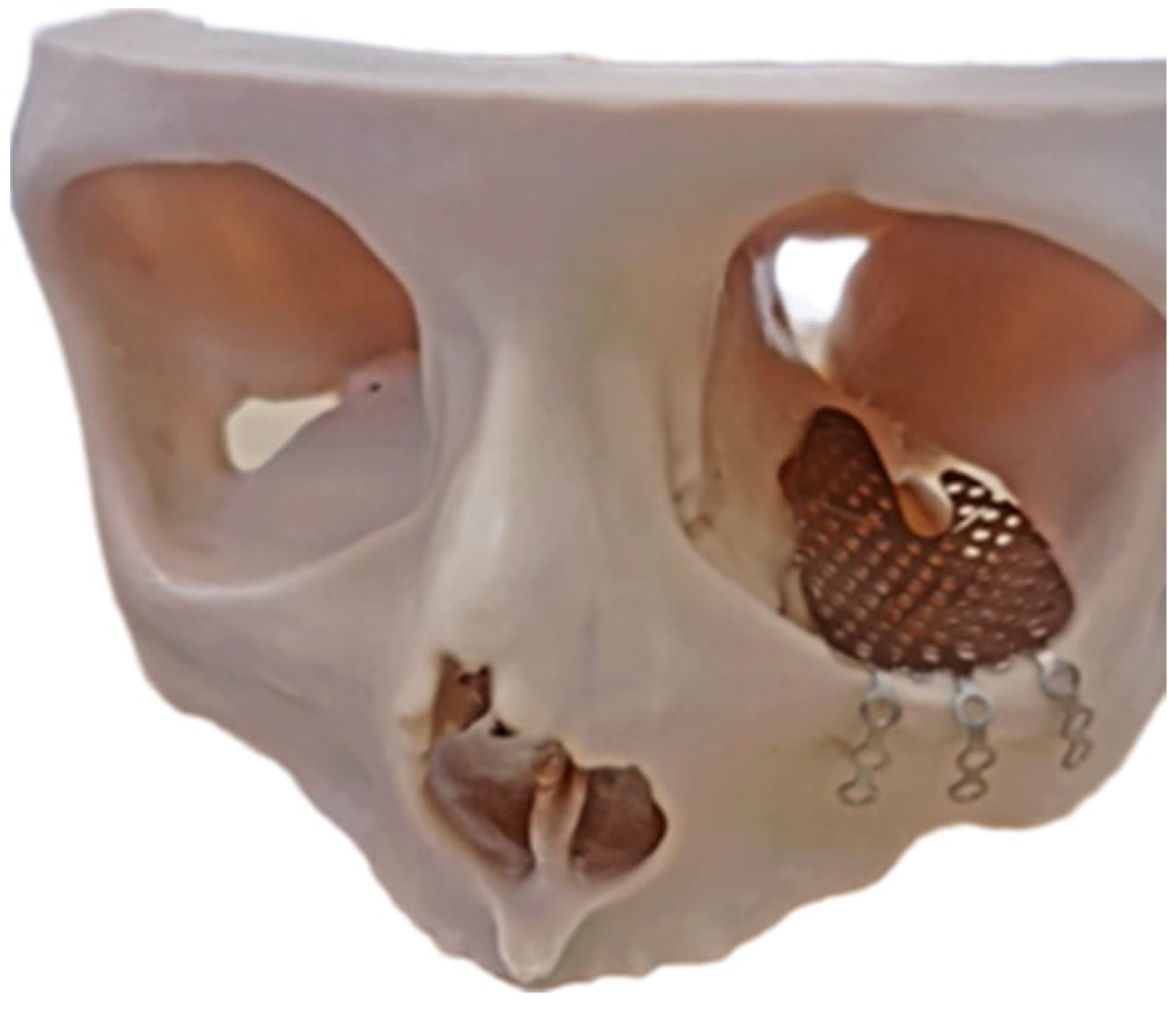
In the prospective group, step-by-step digital workflow was performed. (1) Image acquisition and virtual modelling: Preoperative high-resolution CT data (in DICOM format) were imported into Mimics software (Version 26.0, Materialise, Leuven, Belgium) to generate a virtual 3D model of the affected facial skeleton. (2) Segmentation and mirroring: The ideal reconstruction shape was established by mirroring the healthy contralateral orbit across the midsagittal plane. Since head positioning in preoperative scans often deviates from the ideal, the symmetry plane was adjusted manually. The final virtual models of the reconstructed orbit were then exported as Standard Tessellation Language (STL) files in both native and mirrored models. (3) Rapid prototyping and post-processing: STL files were transferred to an Asiga PRO 4K80 printer (Asiga, Sydney, Australia) and manufactured using a polymer light-cure resin (Asiga DentaMODEL, Sydney, Australia). Post-processing involved washing the models in isopropanol to clean excess unpolymerized resin, followed by the precise removal of support structures using abrasive cutters. The final polymerisation was achieved by curing the models in an Otoflash pulsing unit (600 flashes, or 10 flashes/second for 60 s). (4) Preoperative mesh contouring: A standard titanium mesh (KLS Martin, Jacksonville, FL, USA) was manually pre-bent and adapted onto the 3D-printed physical model to precisely match the mirrored anatomical landmarks of the orbital floor (
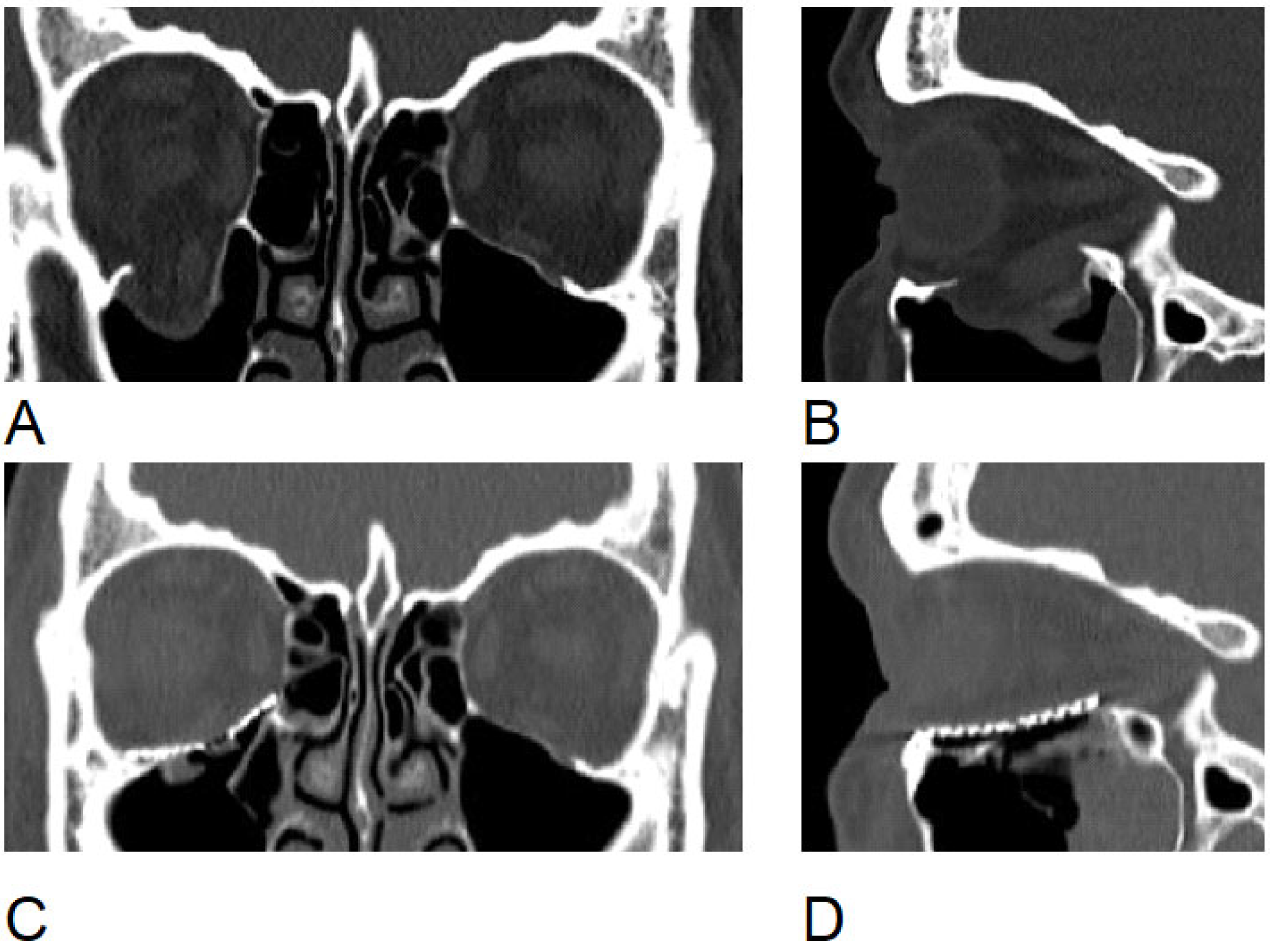
Figure 2). (5) Sterilization: Prior to surgery, the customized titanium mesh underwent standard metal instrument sterilization, while both 3D-printed skull models were sterilized in a gas autoclave at 55 °C. During surgery, before final placement, the pre-bent mesh was re-checked intraoperatively against the sterile 3D-printed skulls to ensure no deformation had occurred during handling. The mesh was then inserted into the orbital floor and rigidly fixed with 5 mm titanium screws. Postoperatively, the physical 3D prototypes were anonymized and stored at the Baltic Biomaterials Centre of Excellence in accordance with the Latvian Cabinet of Ministers Regulation No. 265 regarding the storage of medical documentation. After the surgery, patients had a control CT of the orbits according to the already existing standard protocol (
Figure 3).
2.4. Clinical and Radiological Assessment
The clinical evaluation was performed at 1–2 weeks, 2 months, and 6 months (if necessary) postoperatively. The key outcome parameters included enophthalmos, diplopia, and ocular motility. The presence of diplopia and eye motility was determined with subjective separation of double images in the nine positions of gaze with simple method (the ‘follow my-finger’ test) [
5]. Visual fields were also recorded. The exophthalmos and enophthalmos were evaluated in CT and clinically. A difference of more than 2 mm was considered significant.
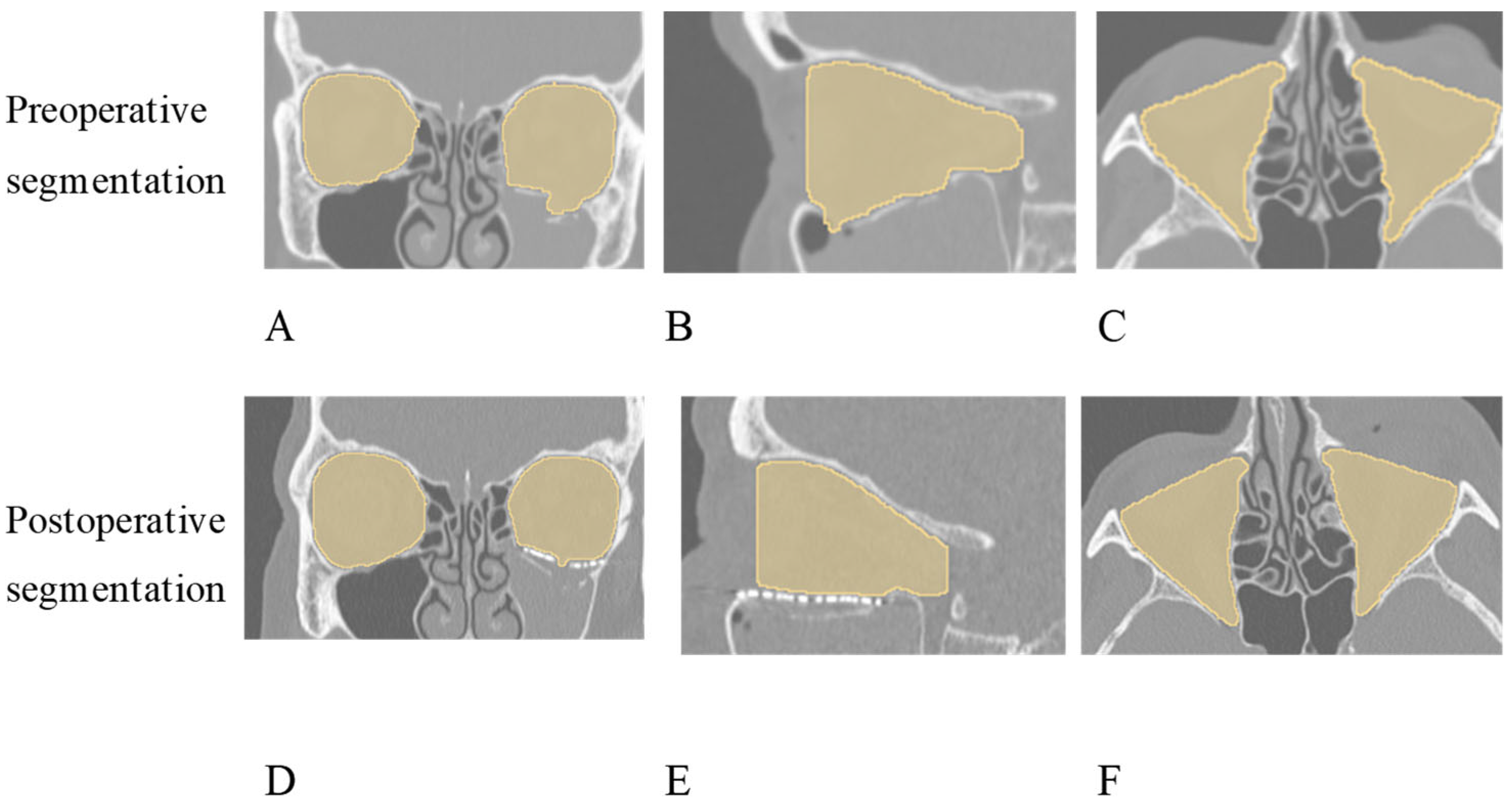
Orbital volume analysis was performed using 3D Slicer software (version 5.0.3, open source) on pre- and post-operative CT datasets exported in DICOM format. Semi-automatic segmentation was utilized to quantify and compare the orbital volumes (mm
3) between the affected and healthy contralateral sides, both preoperatively and postoperatively. To accurately isolate the orbital bony cavity from surrounding structures, a combination of global standard bone-density Hounsfield Unit (HU) thresholding and manual slice-by-slice editing was applied. To ensure inter-patient reproducibility, the anatomical boundaries of the virtual orbital space were standardized for all measurements: (1) anterior boundary: defined by a strait virtual plane in the axial view connecting the anterior lacrimal crest medially to the lateral orbital rim, deliberately excluding the lacrimal groove and canal from the total volume, (2) posterior boundary: set at the orbital apex, specifically defined as the most distal bony edge of the optic canal just before its transition into the cranial fossa, (3) superior, medial, and lateral boundaries: delineated by their intact bony walls, and (4) inferior boundary: in the presence of a fracture, the preoperative volume was measured by tracing the herniated orbital contents downwards into the maxillary sinus. To evaluate the surgically reconstructed volume (and to establish the theoretical “ideal” baseline), the inferior boundary was defined by digitally as a line between the remaining bony structures of the defect across the coronal and sagittal planes. Postoperatively, the reconstructed inferior volumetric boundary was strictly defined by the radio-opaque contour of the implanted titanium mesh (
Figure 4A–F).
2.5. Statistical Analysis
Statistical analysis was performed using Jamovi software (Version 2.7). Descriptive statistics were used to summarize the data. Intra-rater reliability was assessed by calculating the intraclass correlation coefficient (ICC) from five randomly selected cases (10 orbits: 5 fractured, 5 unaffected) for which the volume quantification process was repeated after one month. Differences in orbital volumes between the healthy and affected sides (pre- and postoperative surgery) were analysed using the Wilcoxon signed-rank test. Categorical variables, specifically the rate of postoperative complications and the need for surgical re-operation, were compared between the control and study groups using Fisher’s exact test. A p-value of <0.05 was considered as statistically significant.
4. Discussion
The management of orbital fractures represents a significant topic within the field of maxillofacial surgery. The treatment of orbital floor fractures remains challenging because of their complex anatomy and reduced visualisation during surgery [
1,
10]. If left untreated or treated improperly, they can lead to persistent enophthalmos and diplopia [
11,
12].
In this study it was observed that the use of in-house 3D-printed models for preoperative mesh forming significantly reduced the rate of need for revision surgeries. While the conventional intraoperative free-hand bending technique in our retrospective cohort resulted in a 15% reoperation rate due to implant malposition or persistent diplopia, the 3D-assisted protocol eliminated the need for secondary surgical intervention in the prospective group (
p = 0.017). It provides a critical quality control step, ensuring that the implant fits the defect precisely before insertion. Our results align with recent literature advocating for technological aids in orbital surgery. A recent survey by Burger et al. (2024) among maxillofacial units in Switzerland, Germany, and Austria revealed that while 43% of surveyed clinics now have access to 3D printers in these countries, only a minority use them routinely, indicating a potential underutilization of this beneficial technology [
6].
Consorti et al. (2024) demonstrated that pre-formed meshes can achieve accuracy comparable to patient-specific implants (PSIs) when used with navigation [
13]. Although in our study no intraoperative navigation was used, we observed that 3D models allowed accurate mesh adaptation, offering a reliable alternative to expensive PSIs or intraoperative navigation systems, which may not be available in all institutions [
3,
14,
15]. Similarly to Kallaverja et al. (2024) and a recent case–control study by Troise et al. (2026), who compared in-house 3D printing versus standard reconstruction, we found that the 3D workflow offers superior volumetric recovery and predictability [
16,
17]. While both of these author groups highlighted a reduction in surgical time with pre-bent meshes, our study specifically emphasizes the safety benefit—the elimination of the need for reoperation. This zero-reoperation rate is strongly corroborated by a recent case–control study by Troise et al. (2026), who reported that an in-house 3D preoperative workflow not only significantly reduced operative times but also eliminated implant malposition (0% vs. 25% in the conventional group) [
17].
Abd El Ghafar et al. (2025) recently reported high long-term complication rates with titanium meshes, noting a reoperation rate of 31.8% due to issues like implant malposition and adherence syndrome when compared to porous polyethylene [
2]. In contrast, our study demonstrates that titanium mesh can be used safely with a 0% reoperation rate, provided it is accurately pre-bent on a patient-specific 3D model. This distinction is crucial; it suggests that the material itself is not the sole cause of failure, but rather the intraoperative adaptation and positioning accuracy are the deciding factors. Furthermore, as shown in animal models by Guillaume et al. (2020), a titanium mesh typically undergoes fibrous encapsulation rather than direct osseointegration [
18]. This lack of biological bonding makes precise anatomical friction-fit and screw fixation essential to prevent implant migration and soft tissue entrapment.
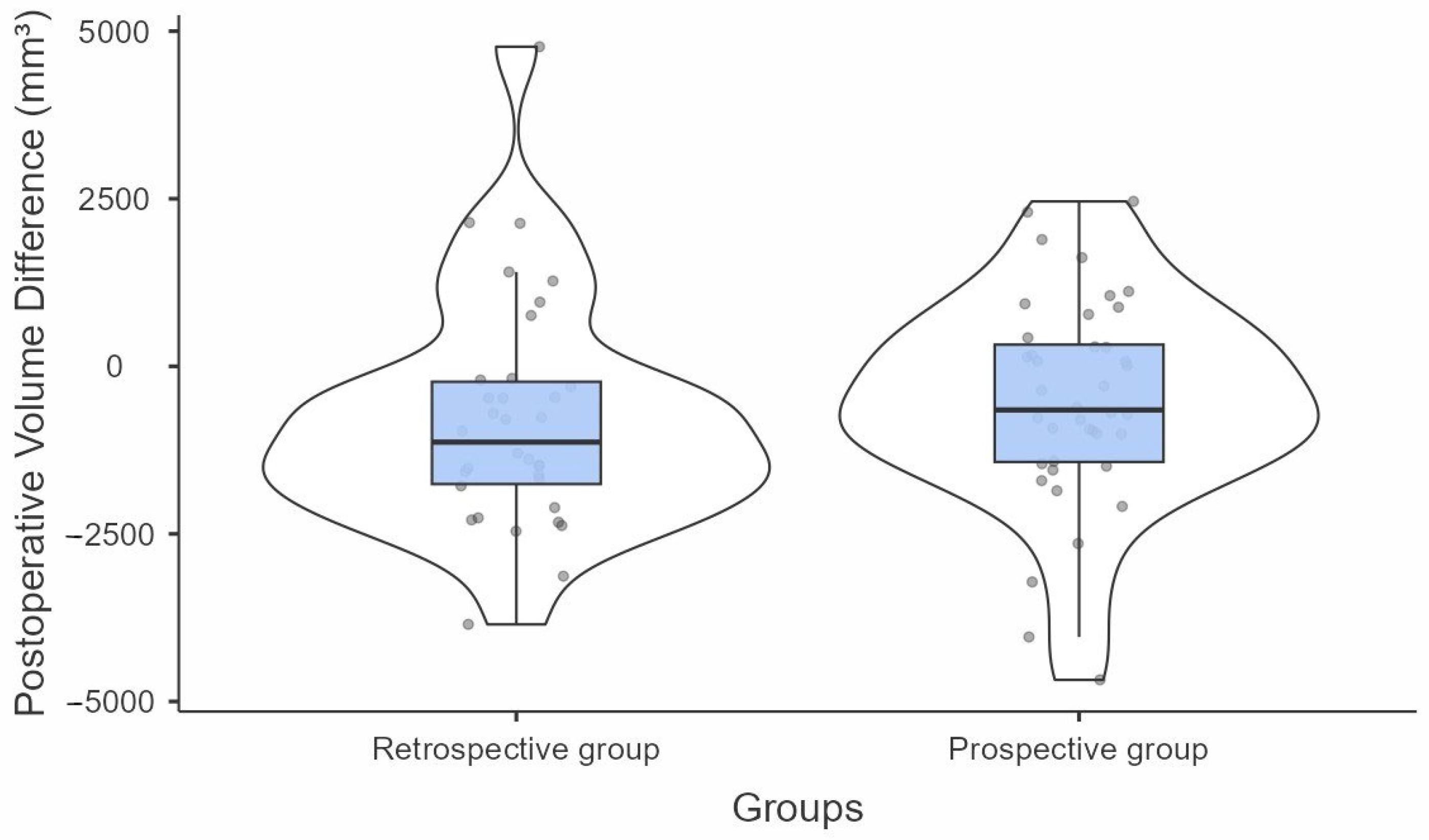
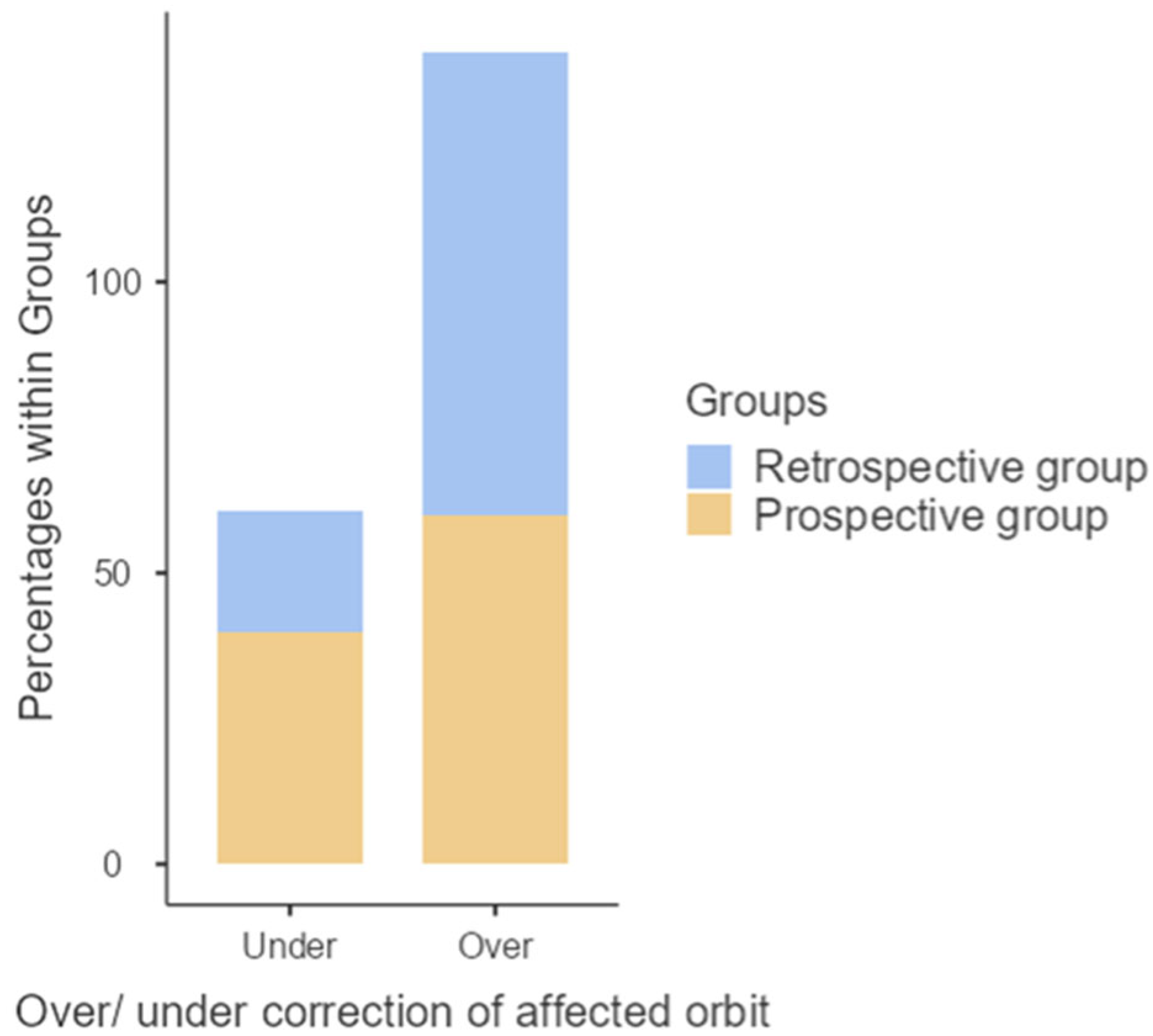
Regarding volumetric analysis, it was demonstrated that both techniques reduced the enlarged posttraumatic orbital volume to values close to the healthy opposite orbit. However, consistent with Fawzy et al. (2022) and Kallaverja et al. (2024), our study showed more favourable volumetric outcomes in the 3D group with less variance compared to the standard group [
14,
16]. We also observed a tendency toward slight overcorrection in both groups. As noted by McGurk et al. (1992), physiological asymmetry between healthy orbits can differ by up to 600 mm
3 [
12,
18,
19], suggesting that absolute mathematical symmetry is not always necessary for a successful clinical outcome.
Our study found no direct correlation between postoperative orbital volume and residual diplopia. In the retrospective group, 12% of patients had persistent diplopia at 6 months, whereas in the prospective 3D group, only one patient (3%) reported diplopia. In this specific 3D-assisted case, the persistent double vision was attributed to initial trauma resulting possibly in direct extraocular muscle injury and soft tissue healing and highlighting that functional recovery is not solely dependent on precise bony reconstruction. The lack of correlation suggests that postoperative double vision is multifactorial—dependent on soft tissue scarring, extraocular muscle entrapment, or nerve paresis—rather than bony volume alone [
20,
21]. This explains why transient diplopia was observed initially in the prospective group (likely due to dissection oedema) but resolved in the majority of cases without further surgery. From a practical standpoint, the in-house 3D printing workflow proved to be cost-effective and accessible. Unlike outsourcing PSIs, which can be costly and time consuming, in-house printing allows for rapid planning [
10,
22,
23].
The study has several methodological limitations. First, the inclusion of a historical retrospective control group introduces an inherent risk of selection and attrition bias. In particular, long-term follow-up data within the retrospective cohort were incomplete, especially for patients without postoperative complications, thereby limiting the reliability of comparisons of subjective outcomes. Furthermore, the retrospective design precluded consistent and comprehensive documentation of detailed clinical histories, including secondary clinical parameters such as sensory deficits and standardized assessments of enophthalmos or exophthalmos. Considering these limitations, the study methodology was deliberately centred on objective, quantifiable radiological parameters to ensure a more robust and reliable comparison between the study groups. Additionally, the absence of clinical and intraoperative photographic documentation represents a further limitation, as it restricts the visual assessment of surgical outcomes. Nevertheless, despite its inherent constraints, the inclusion of a retrospective cohort remains of considerable scientific value. It enables the contextual comparison of historical diagnostic and therapeutic approaches with contemporary practices, thereby contributing to a more comprehensive interpretation of treatment evolution. Thus, even in the presence of incomplete data and methodological limitations, retrospective analyses can provide meaningful complementary insights that enhance the overall interpretability and external validity of the study findings. Second, we used a semi-automated segmentation method for volume calculation. Although manual segmentation is the gold standard, it is time consuming [
4]. We found semi-automated segmentation to be reliable (high ICC) and efficient, as was described by Chepurnyi et al. (2020) and also Sentucq et al. (2021) [
24,
25], although defining the anterior border and fragmented inferior wall remained technically challenging. Finally, while the observed clinical benefits are highly significant, our sample size remains relatively small. To support these findings and establish guidelines for virtual surgical planning in orbital reconstruction, future large-scale, multicenter prospective randomized trials incorporating advanced 3D volumetric measurements are necessary.