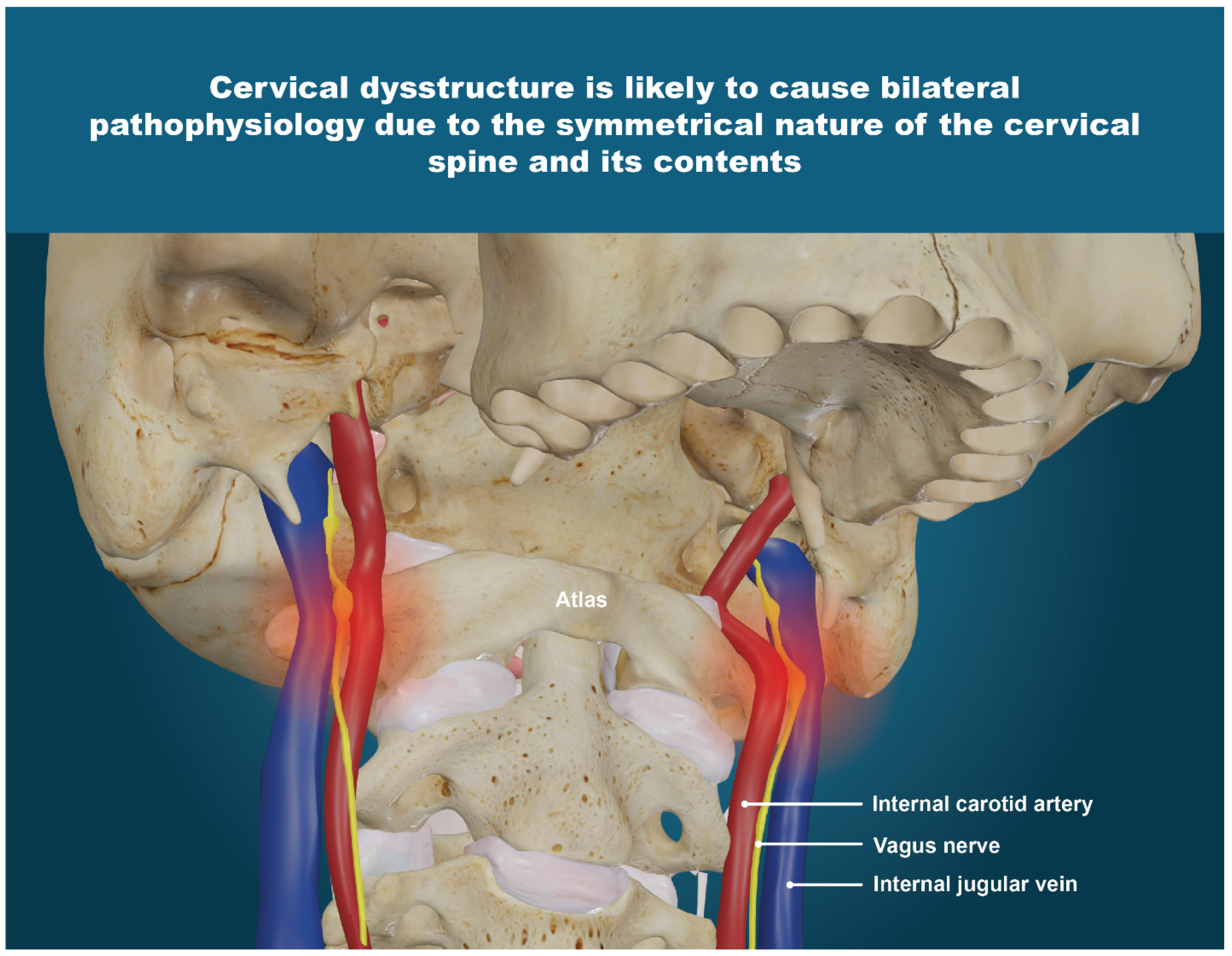
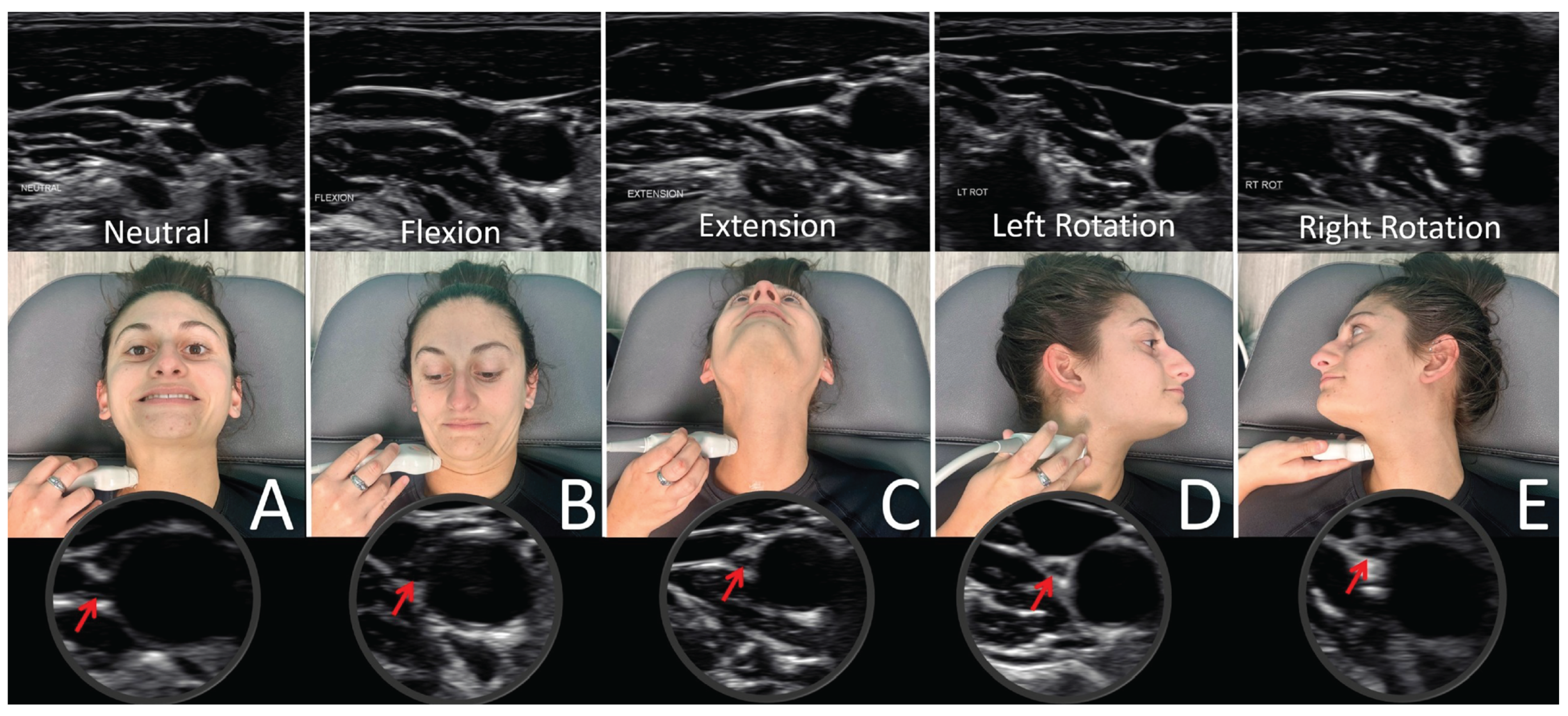
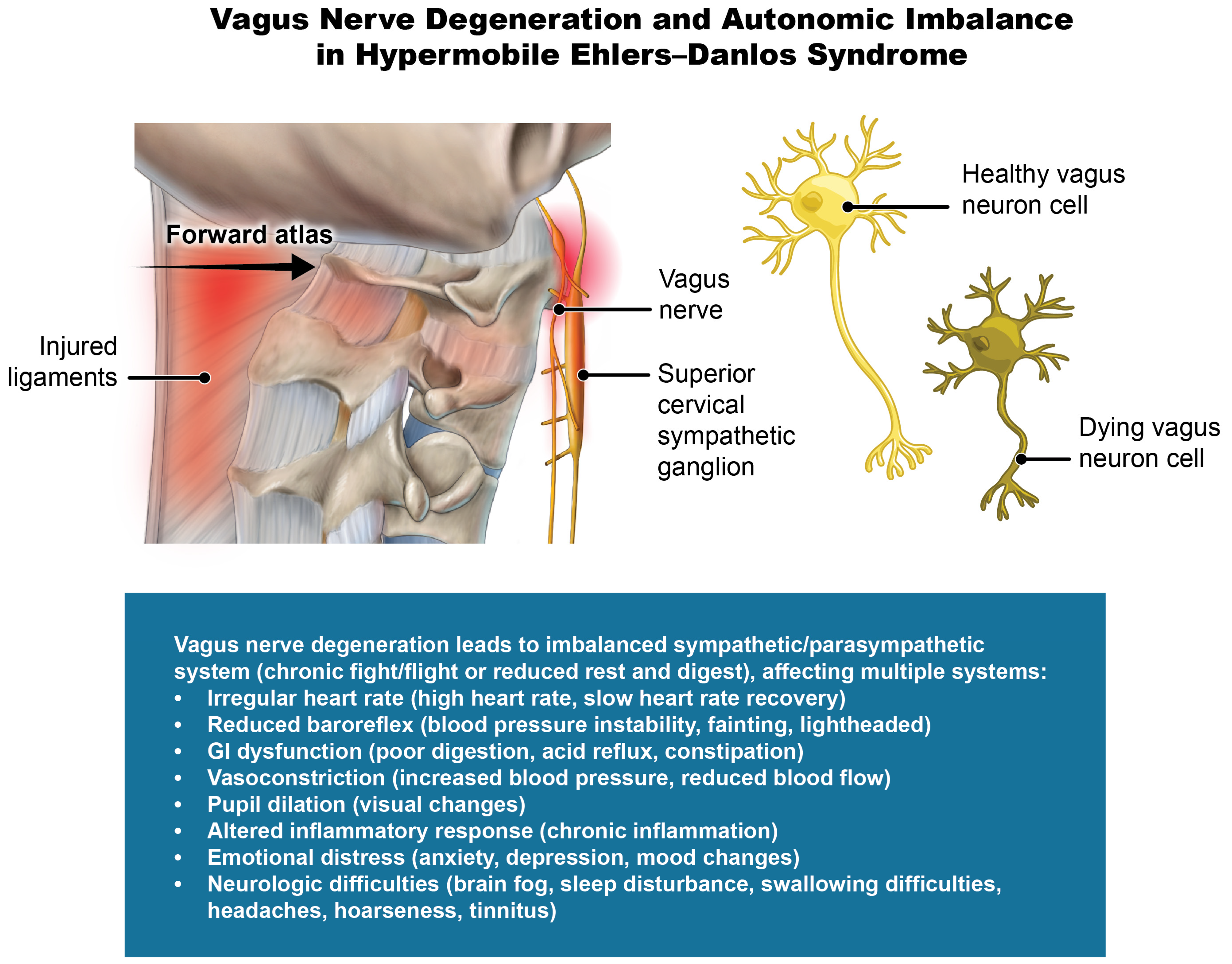
Characterizing Initial Cervical Spine and Neurovascular Findings in 84 Consecutive Patients with Hypermobile Ehlers–Danlos Syndrome: A Retrospective Study


 , ,
, ,
Abstract
1. Introduction
2. Methods
2.1. Study Population
2.2. Statistical Analysis
3. Results
3.1. Comparisons
3.1.1. Vagus Nerve Cross-Sectional Area in hEDS vs. Control
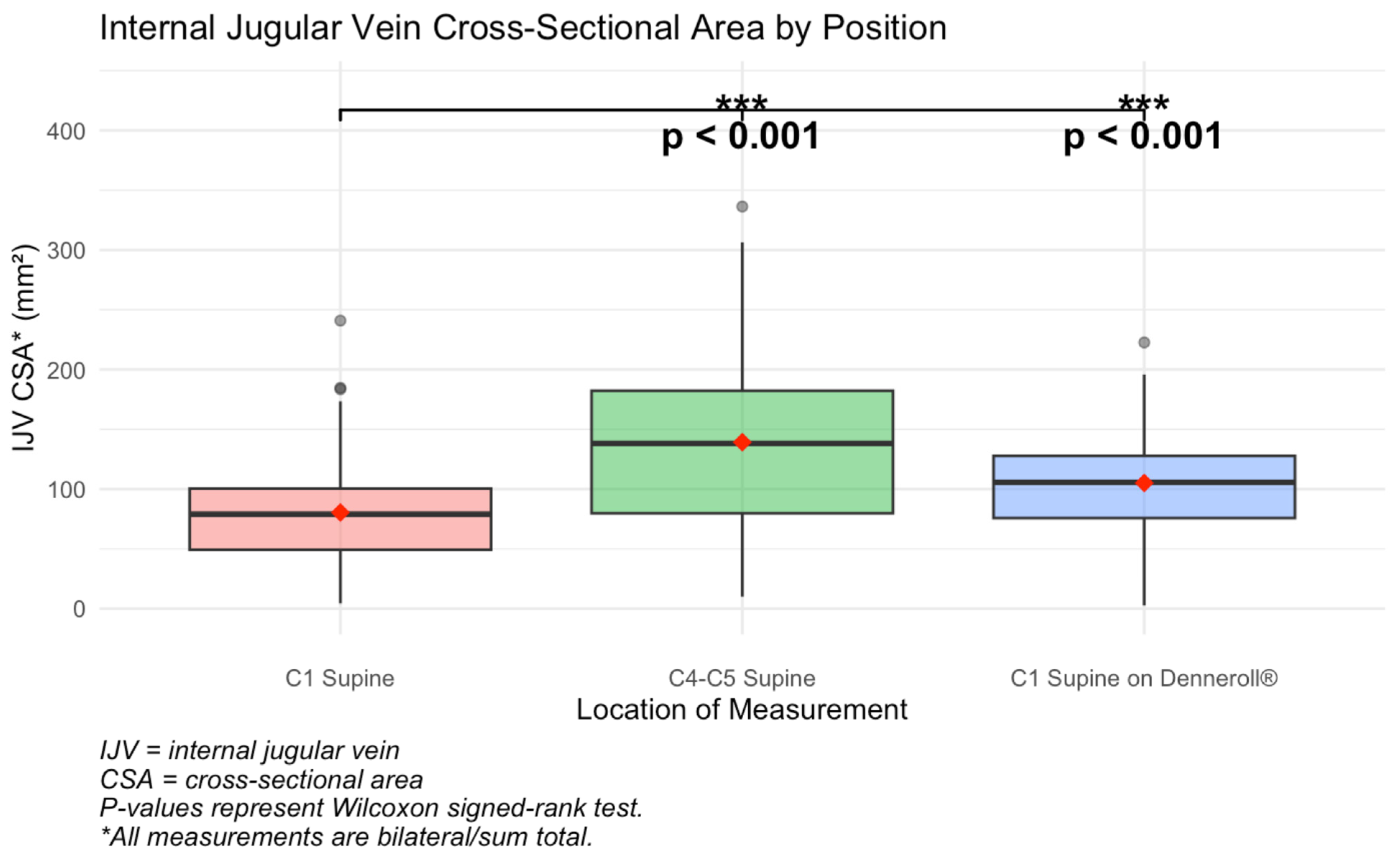
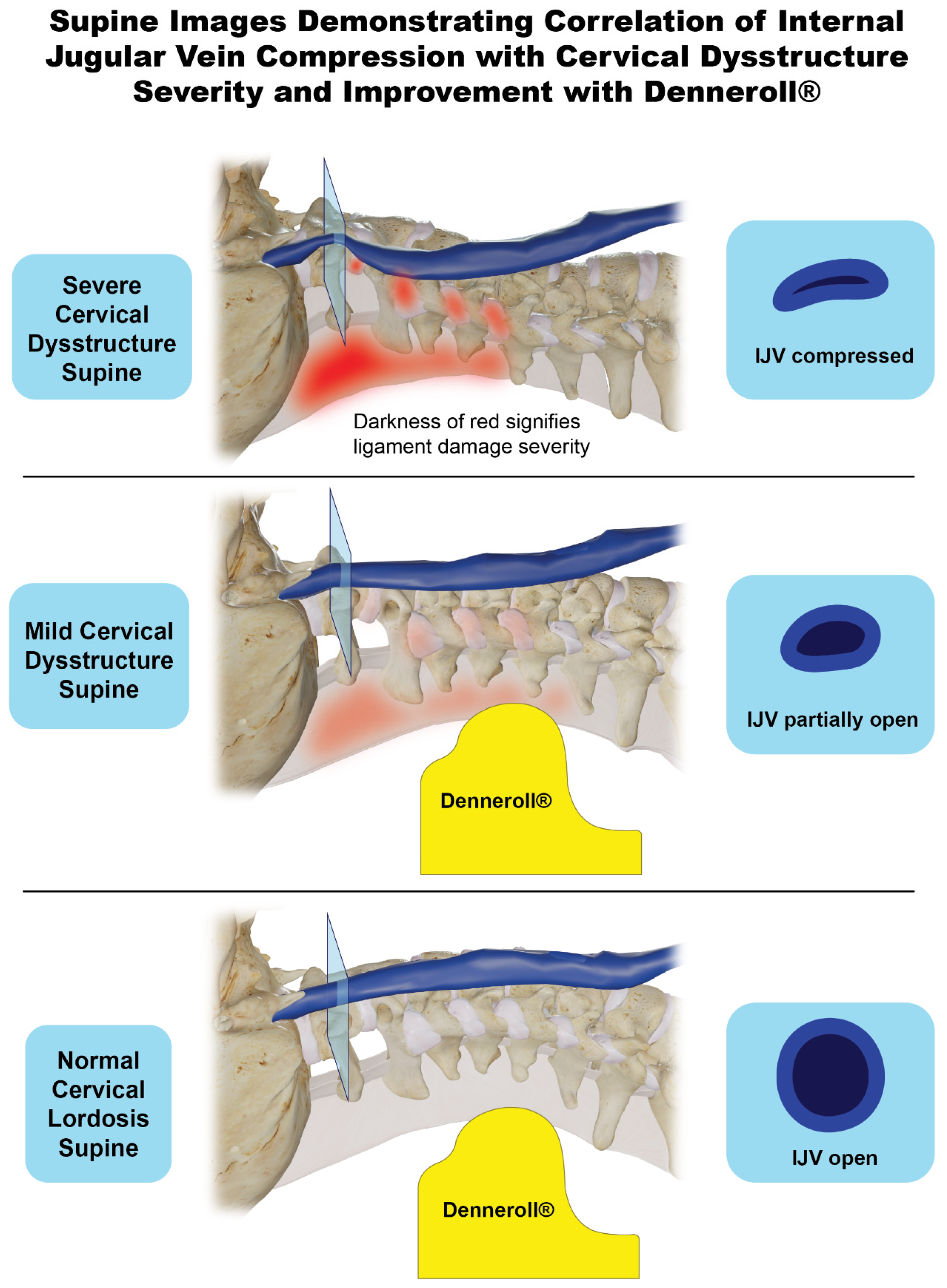
3.1.2. IJV CSA C1 Supine vs. IJV CSA Denneroll®
3.1.3. IJV CSA C1 Supine vs. IJV CSA C4–C5 Supine
4. Discussion
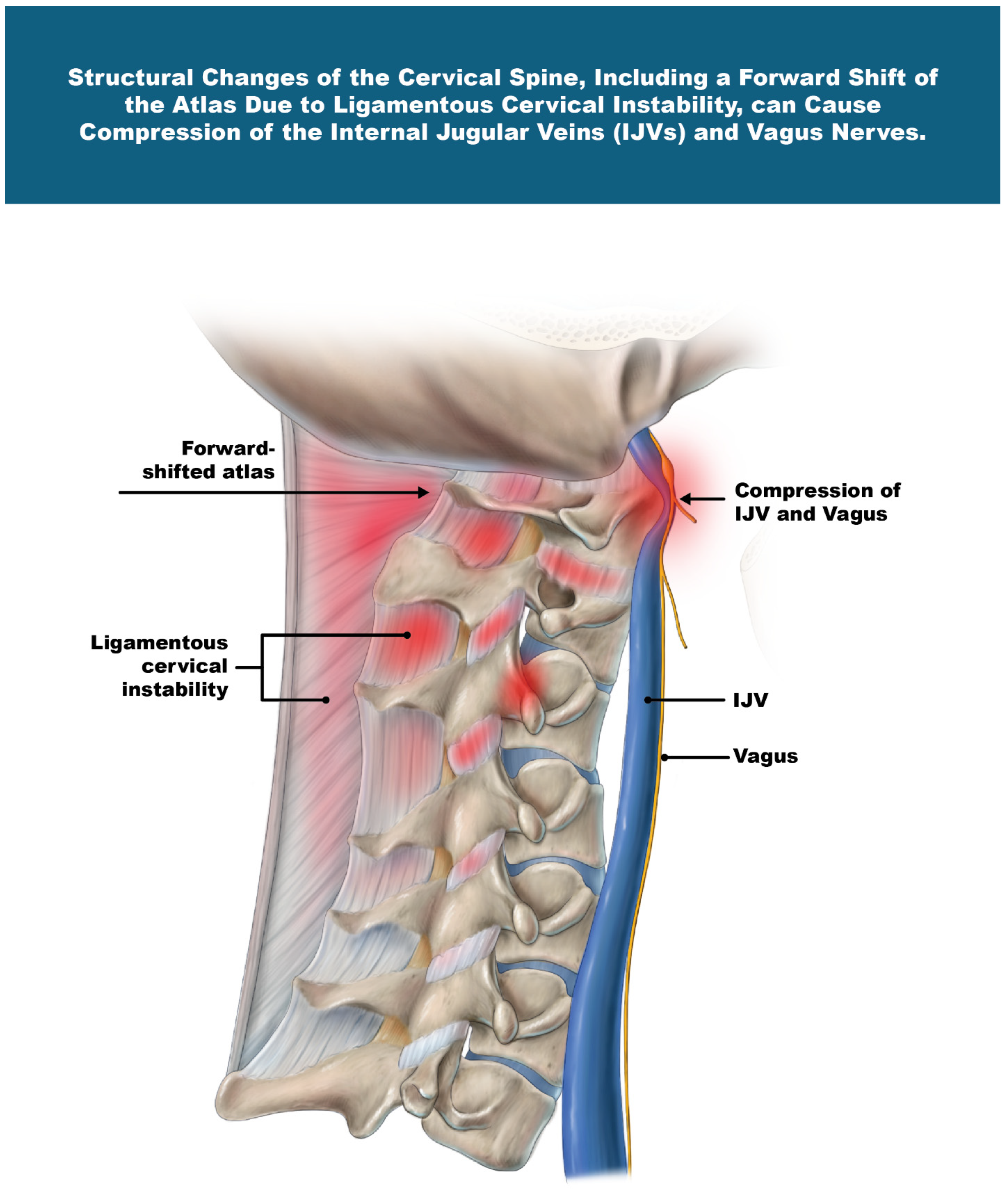
4.1. Ligamentous Cervical Instability
4.2. Internal Jugular Vein Compression at C1 Involvement in hEDS Patients
4.3. Vagus Nerve Involvement in hEDS Patients
4.4. Clinical Relevance and Future Directions
5. Limitations
6. Conclusions
Author Contributions
Funding
Institutional Review Board Statement
Informed Consent Statement
Data Availability Statement
Acknowledgments
Conflicts of Interest
References
- Martín-Martín, M.; Cortés-Martín, J.; Tovar-Gálvez, M.I.; Sánchez-García, J.C.; Díaz-Rodríguez, L.; Rodríguez-Blanque, R. Ehlers–Danlos Syndrome Type Arthrochalasia: A Systematic Review. Int. J. Environ. Res. Public Health 2022, 19, 1870. [Google Scholar] [CrossRef] [PubMed]
- Demmler, J.C.; Atkinson, M.D.; Reinhold, E.J.; Choy, E.; Lyons, R.A.; Brophy, S.T. Diagnosed Prevalence of Ehlers–Danlos Syndrome and Hypermobility Spectrum Disorder in Wales, UK: A National Electronic Cohort Study and Case–Control Comparison. BMJ Open 2019, 9, e031365. [Google Scholar] [CrossRef] [PubMed]
- Daylor, V.; Griggs, M.; Weintraub, A.; Byrd, R.; Petrucci, T.; Huff, M.; Byerly, K.; Fenner, R.; Severance, S.; Griggs, C.; et al. Defining the Chronic Complexities of hEDS and HSD: A Global Survey of Diagnostic Challenges, Life-Long Comorbidities, and Unmet Needs. J. Clin. Med. 2025, 14, 5636. [Google Scholar] [CrossRef] [PubMed]
- Glayzer, J.E.; Bray, B.C.; Kobak, W.H.; Steffen, A.D.; Schlaeger, J.M. Lack of Diversity in Research on Females with Ehlers–Danlos Syndromes: Recruitment Protocol for a Quantitative Online Survey. JMIR Res. Protoc. 2024, 13, e53646. [Google Scholar] [CrossRef]
- Yen, J.-L.; Lin, S.-P.; Chen, M.-R.; Niu, D.-M. Clinical Features of Ehlers–Danlos Syndrome. J. Formos. Med. Assoc. 2006, 105, 475–480. [Google Scholar] [CrossRef]
- Murray, B.; Yashar, B.M.; Uhlmann, W.R.; Clauw, D.J.; Petty, E.M. Ehlers–Danlos Syndrome, Hypermobility Type: A Characterization of the Patients’ Lived Experience. Am. J. Med. Genet. Part A 2013, 161, 2981–2988. [Google Scholar] [CrossRef]
- Ritelli, M.; Chiarelli, N.; Cinquina, V.; Vezzoli, M.; Venturini, M.; Colombi, M. Looking Back and beyond the 2017 Diagnostic Criteria for Hypermobile Ehlers–Danlos Syndrome: A Retrospective Cross-sectional Study from an Italian Reference Center. Am. J. Med. Genet. Part A 2024, 194, 174–194. [Google Scholar] [CrossRef]
- Gensemer, C.; Burks, R.; Kautz, S.; Judge, D.P.; Lavallee, M.; Norris, R.A. Hypermobile Ehlers–Danlos Syndromes: Complex Phenotypes, Challenging Diagnoses, and Poorly Understood Causes. Dev. Dyn. 2021, 250, 318–344. [Google Scholar] [CrossRef]
- Jasemi, A.; Lauridsen, E.F.; Sonnesen, L. Head Posture and Upper Spine Morphological Deviations in Patients with Hypermobile Ehlers–Danlos Syndrome. Orthod. Craniofac. Res. 2025, 28, 555–563. [Google Scholar] [CrossRef]
- Chalela, S.; Russek, L.N. Presentation and Physical Therapy Management Using a Neuroplasticity Approach for Patients with Hypermobility-Related Upper Cervical Instability: A Brief Report. Front. Neurol. 2024, 15, 1459115. [Google Scholar] [CrossRef]
- Kozyra, M.; Kostyun, R.; Strecker, S. The Prevalence of Multisystem Diagnoses among Young Patients with Hypermobile Ehlers–Danlos Syndrome and Hypermobility Spectrum Disorder: A Retrospective Analysis Using a Large Healthcare Claims Database. Medicine 2024, 103, e39212. [Google Scholar] [CrossRef] [PubMed]
- Thwaites, P.A.; Gibson, P.R.; Burgell, R.E. Hypermobile Ehlers–Danlos Syndrome and Disorders of the Gastrointestinal Tract: What the Gastroenterologist Needs to Know. J. Gastroenterol. Hepatol. 2022, 37, 1693–1709. [Google Scholar] [CrossRef] [PubMed]
- Zeitoun, J.-D.; Lefèvre, J.H.; De Parades, V.; Séjourné, C.; Sobhani, I.; Coffin, B.; Hamonet, C. Functional Digestive Symptoms and Quality of Life in Patients with Ehlers–Danlos Syndromes: Results of a National Cohort Study on 134 Patients. PLoS ONE 2013, 8, e80321. [Google Scholar] [CrossRef] [PubMed]
- Eichinger, J.K.; Byrd, R.L.; Bailey, E.P.; Reis, R.J.; Daylor, V.; Schiessl, M.; Gensemer, C.; Friedman, R.J.; Patel, S.J.; Norris, R.A. Orthopaedic Manifestations in Hypermobile Ehlers–Danlos Syndrome. J. Bone Jt. Surg. 2025, 107, 1848–1856. [Google Scholar] [CrossRef]
- Stein, T.; Collins, S.; St Louis, J. The Prevalence of Hypermobile Ehlers–Danlos Syndrome at a Gender-Affirming Primary Care Clinic. Sage Open Med. 2025, 13, 20503121251315021. [Google Scholar] [CrossRef]
- Malfait, F.; Castori, M.; Francomano, C.A.; Giunta, C.; Kosho, T.; Byers, P.H. The Ehlers–Danlos Syndromes. Nat. Rev. Dis. Primer. 2020, 6, 64. [Google Scholar] [CrossRef]
- Song, B.; Yeh, P.; Harrell, J. Systemic Manifestations of Ehlers–Danlos Syndrome. Bayl. Univ. Med. Cent. Proc. 2021, 34, 49–53. [Google Scholar] [CrossRef]
- Anderson, L.K.; Lane, K.R. Clinical Trajectory of Hypermobile Ehlers–Danlos Syndrome/Hypermobility Spectrum Disorders in Older Adults. J. Am. Assoc. Nurse Pract. 2023, 35, 605–612. [Google Scholar] [CrossRef]
- Grahame, R. The Multisystemic Nature and Natural History of Joint Hypermobility Syndrome and Ehlers–Danlos Syndrome in Children. Rheumatology 2017, 56, 2048–2049. [Google Scholar] [CrossRef]
- Tinkle, B.; Castori, M.; Berglund, B.; Cohen, H.; Grahame, R.; Kazkaz, H.; Levy, H. Hypermobile Ehlers–Danlos Syndrome (a.k.a. Ehlers–Danlos Syndrome Type III and Ehlers–Danlos Syndrome Hypermobility Type): Clinical Description and Natural History. Am. J. Med. Genet. Part C Semin. Med. Genet. 2017, 175, 48–69. [Google Scholar] [CrossRef]
- Sinibaldi, L.; Ursini, G.; Castori, M. Psychopathological Manifestations of Joint Hypermobility and Joint Hypermobility Syndrome/Ehlers–Danlos Syndrome, Hypermobility Type: The Link between Connective Tissue and Psychological Distress Revised. Am. J. Med. Genet. Part C Semin. Med. Genet. 2015, 169, 97–106. [Google Scholar] [CrossRef]
- Song, J.Z.; Luong, D.; Feldman, E.C.H.; Tran, S.; Perrier, L.; Eubanks, K.; Bayley, M.; Kastner, M.; Slepian, M.; Munce, S.E.P. Psychological Interventions for Individuals with Ehlers–Danlos Syndrome and Hypermobility Spectrum Disorder: A Scoping Review. Orphanet J. Rare Dis. 2023, 18, 254. [Google Scholar] [CrossRef]
- Pezaro, S.; Brock, I.; Buckley, M.; Callaway, S.; Demirdas, S.; Hakim, A.; Harris, C.; High Gross, C.; Karanfil, M.; Le Ray, I.; et al. Management of Childbearing with Hypermobile Ehlers–Danlos Syndrome and Hypermobility Spectrum Disorders: A Scoping Review and Expert Co-Creation of Evidence-Based Clinical Guidelines. PLoS ONE 2024, 19, e0302401. [Google Scholar] [CrossRef]
- Ruiz Maya, T.; Fettig, V.; Mehta, L.; Gelb, B.D.; Kontorovich, A.R. Dysautonomia in Hypermobile Ehlers–Danlos Syndrome and Hypermobility Spectrum Disorders Is Associated with Exercise Intolerance and Cardiac Atrophy. Am. J. Med. Genet. Part A 2021, 185, 3754–3761. [Google Scholar] [CrossRef]
- Novak, P.; Systrom, D.M.; Marciano, S.P.; Witte, A.; Warren, A.; Felsenstein, D.; Giannetti, M.P.; Hamilton, M.J.; Nicoloro-SantaBarbara, J.; Castells, M.; et al. Hypermobile Ehlers–Danlos Syndrome: Cerebrovascular, Autonomic and Neuropathic Features. Am. J. Med. Open 2025, 14, 100111. [Google Scholar] [CrossRef] [PubMed]
- Higo, A.; Palmer, S.; Liaghat, B.; Tallis, J.; Silvester, L.; Pearce, G. The Effectiveness of Conservative Interventions on Pain, Function, and Quality of Life in Adults with Hypermobile Ehlers–Danlos Syndrome/Hypermobility Spectrum Disorders and Shoulder Symptoms: A Systematic Review. Arch. Rehabil. Res. Clin. Transl. 2024, 6, 100360. [Google Scholar] [CrossRef] [PubMed]
- Corrado, B.; Ciardi, G. Hypermobile Ehlers–Danlos Syndrome and Rehabilitation: Taking Stock of Evidence Based Medicine: A Systematic Review of the Literature. J. Phys. Ther. Sci. 2018, 30, 843–847. [Google Scholar] [CrossRef] [PubMed]
- Xu, K.; Li, G.; Zhang, T.J.; Wu, N. Shaping the Future of Care for Patients with Ehlers–Danlos Syndromes: From Multidisciplinary Management to Precision Medicine. Orphanet J. Rare Dis. 2025, 20, 98. [Google Scholar] [CrossRef]
- Hauser, R.A.; Griffiths, M.; Matias, D.; Rawlings, B.R. Cervical Oculopathy: The Cervical Spine Etiology of Visual Symptoms and Eye Diseases—A Hypothesis Exploring Mechanisms Linking the Neck and the Eye. Diagnostics 2025, 15, 2650. [Google Scholar] [CrossRef]
- Freeman, M.D.; Katz, E.A.; Rosa, S.L.; Gatterman, B.G.; Strömmer, E.M.F.; Leith, W.M. Diagnostic Accuracy of Videofluoroscopy for Symptomatic Cervical Spine Injury Following Whiplash Trauma. Int. J. Env. Res. Public Health 2020, 17, 1693. [Google Scholar] [CrossRef]
- Hinck, V.C.; Hopkins, C.E. Measurement of the Atlanto-Dental Interval in the Adult. Am. J. Roentgenol. Radium Ther. Nucl. Med. 1960, 84, 945–951. [Google Scholar]
- Hauser, R.A.; Matias, D.; Rawlings, B. The Ligamentous Cervical Instability Etiology of Human Disease from the Forward Head-Facedown Lifestyle: Emphasis on Obstruction of Fluid Flow into and out of the Brain. Front. Neurol. 2024, 15, 1430390. [Google Scholar] [CrossRef] [PubMed]
- Daffner, R. Imaging of Vertebral Trauma, 3rd ed.; Cambridge University Press: Cambridge, UK, 2011. [Google Scholar]
- Alvarez, A.P.; Anderson, A.; Farhan, S.-D.; Lu, Y.; Lee, Y.-P.; Oh, M.; Rosen, C.; Kiester, D.; Bhatia, N. The Utility of Flexion-Extension Radiographs in Degenerative Cervical Spondylolisthesis. Clin. Spine Surg. 2022, 35, 319–322. [Google Scholar] [CrossRef] [PubMed]
- Borden, A.G.B.; Rechtman, A.M.; Gershon-Cohen, J. The Normal Cervical Lordosis. Radiology 1960, 74, 806–809. [Google Scholar] [CrossRef] [PubMed]
- Hou, S.B.; Sun, X.Z.; Liu, F.Y. Relationship of Change in Cervical Curvature after Laminectomy with Lateral Mass Screw Fixation to Spinal Cord Shift and Clinical Efficacy. J. Neurol. Surg. Cent. Eur. Neurosurg. 2022, 83, 129–134. [Google Scholar] [CrossRef]
- Abdelnaby, R.; Elsayed, M.; Mohamed, K.A.; Dardeer, K.T.; Sonbol, Y.T.; ELgenidy, A.; Barakat, M.H.; NasrEldin, Y.K.; Maier, A. Sonographic Reference Values of Vagus Nerve: A Systematic Review and Meta-Analysis. J. Clin. Neurophysiol. 2022, 39, 59–71. [Google Scholar] [CrossRef]
- Trollip, L.; Alberto, K.; Makgotloe, A. Optic Nerve Sheath Diameter: A Cross-Sectional Study of Ultrasonographic Measurement in Healthy Black South African Adults. Life 2023, 13, 1979. [Google Scholar] [CrossRef]
- Spector, R. Clinical Methods: The History, Physical, and Laboratory Examinations, 3rd ed.; Butterworth Publishers: Boston, MA, USA, 1990. [Google Scholar]
- Steinhauer, S.R.; Bradley, M.M.; Siegle, G.J.; Roecklein, K.A.; Dix, A. Publication Guidelines and Recommendations for Pupillary Measurement in Psychophysiological Studies. Psychophysiology 2022, 59, e14035. [Google Scholar] [CrossRef]
- Huckemann, S.; Mueller, K.; Averdunk, P.; Kühn, E.; Hilker, L.; Kools, S.; Scholz, L.; Bulut, Y.; Brünger, J.; Fiegert, S.; et al. Vagal Cross-Sectional Area Correlates with Parasympathetic Dysfunction in Parkinson’s Disease. Brain Commun. 2022, 5, fcad006. [Google Scholar] [CrossRef]
- Bedewi, M.A.; Kotb, M.A.; Almalki, D.M.; AlAseeri, A.A.; Sandougah, K.J.; Abdelnaby, R.; Soliman, S.B.; Alhariqi, B.A.; Alfaifi, T.; Aldossary, N.M. Ultrasound of the Normal Vagus Nerve Cross-Sectional Area in the Carotid Sheath. Medicine 2023, 102, e33996. [Google Scholar] [CrossRef]
- Aljure, O.; Castillo-Pedraza, C.M.; Mitzova-Vladinov, G.; Maratea, E.A. Right Internal Jugular Vein Cross-Sectional Area: Is There an Optimal Level for Cannulation? J. Assoc. Vasc. Access 2015, 20, 22–25. [Google Scholar] [CrossRef]
- Yoon, H.-K.; Lee, H.-K.; Jeon, Y.-T.; Hwang, J.-W.; Lim, S.-M.; Park, H.-P. Clinical Significance of the Cross-Sectional Area of the Internal Jugular Vein. J. Cardiothorac. Vasc. Anesth. 2013, 27, 685–689. [Google Scholar] [CrossRef] [PubMed]
- Tartière, D.; Seguin, P.; Juhel, C.; Laviolle, B.; Mallédant, Y. Estimation of the Diameter and Cross-Sectional Area of the Internal Jugular Veins in Adult Patients. Crit. Care 2009, 13, R197. [Google Scholar] [CrossRef]
- Bovenzi, M.; Welsh, A.J.L.; Della Vedova, A.; Griffin, M.J. Acute Effects of Force and Vibration on Finger Blood Flow. Occup. Environ. Med. 2006, 63, 84–91. [Google Scholar] [CrossRef] [PubMed]
- Nelson, J.; Patel, D.; Sant, H.J.; Shea, J.; Gale, B.K.; Agarwal, J. Compression of the Vascular Wall to Create a Friction Fit in a Vascular Anastomotic Coupler. J. Mech. Behav. Biomed. Mater. 2021, 123, 104681. [Google Scholar] [CrossRef]
- Stecker, M.; Baylor, K.; Chan, Y. Acute Nerve Compression and the Compound Muscle Action Potential. J. Brachial Plex. Peripher. Nerve Inj. 2014, 3, e5–e13. [Google Scholar] [CrossRef][Green Version]
- National Research Council; Board on Human-Systems Integration; Steering Committee for the Workshop on Work-Related Musculoskeletal Injuries and The Research Base. Work-Related Musculoskeletal Disorders: Report, Workshop Summary, and Workshop Papers; National Academies Press: Washington, DC, USA, 1999; p. 6431. [Google Scholar]
- Chayapinun, V.; Koratala, A.; Assavapokee, T. Seeing beneath the Surface: Harnessing Point-of-Care Ultrasound for Internal Jugular Vein Evaluation. World J. Cardiol. 2024, 16, 73–79. [Google Scholar] [CrossRef]
- Kim, S.B.; Shaia, J.K.; Kaelber, D.C.; Singh, R.P.; Talcott, K.E. Ocular Manifestations in Ehlers–Danlos Syndrome. Eye 2025, 39, 1990–1997. [Google Scholar] [CrossRef]
- Alim-Marvasti, A.; Ciocca, M.; Kuleindiren, N.; Lin, A.; Selim, H.; Mahmud, M. Subjective Brain Fog: A Four-Dimensional Characterization in 25,796 Participants. Front. Hum. Neurosci. 2024, 18, 1409250. [Google Scholar] [CrossRef]
- Yoon, J.-H.; Park, N.-H.; Kang, Y.-E.; Ahn, Y.-C.; Lee, E.-J.; Son, C.-G. The Demographic Features of Fatigue in the General Population Worldwide: A Systematic Review and Meta-Analysis. Front. Public Health 2023, 11, 1192121. [Google Scholar] [CrossRef]
- Scher, A.I.; Stewart, W.F.; Liberman, J.; Lipton, R.B. Prevalence of Frequent Headache in a Population Sample. Headache J. Head Face Pain 1998, 38, 497–506. [Google Scholar] [CrossRef] [PubMed]
- Centers for Disease Control and Prevention Disability Impacts All of Us Infographic. Available online: https://www.cdc.gov/disability-and-health/articles-documents/disability-impacts-all-of-us-infographic.html (accessed on 17 December 2025).
- Global Burden of Neck Pain in 204 Countries from 1990–2019. Available online: https://www.archivesofmedicalscience.com/Global-burden-of-neck-pain-in-204-countries-from-1990-2019,170962,0,2.html (accessed on 14 August 2025).
- Malhotra, A.; Pace, A.; Ruiz Maya, T.; Colman, R.; Gelb, B.D.; Mehta, L.; Kontorovich, A.R. Headaches in Hypermobility Syndromes: A Pain in the Neck? Am. J. Med. Genet. Part A 2020, 182, 2902–2908. [Google Scholar] [CrossRef] [PubMed]
- Woo, M.S.; Shafiq, M.; Fitzek, A.; Dottermusch, M.; Altmeppen, H.; Mohammadi, B.; Mayer, C.; Bal, L.C.; Raich, L.; Matschke, J.; et al. Vagus Nerve Inflammation Contributes to Dysautonomia in COVID-19. Acta Neuropathol. 2023, 146, 387–394. [Google Scholar] [CrossRef] [PubMed]
- Zou, N.; Zhou, Q.; Zhang, Y.; Xin, C.; Wang, Y.; Claire-Marie, R.; Rong, P.; Gao, G.; Li, S. Transcutaneous Auricular Vagus Nerve Stimulation as a Novel Therapy Connecting the Central and Peripheral Systems: A Review. Int. J. Surg. 2024, 110, 4993–5006. [Google Scholar] [CrossRef]
- Courties, A.; Berenbaum, F.; Sellam, J. Vagus Nerve Stimulation in Musculoskeletal Diseases. Jt. Bone Spine 2021, 88, 105149. [Google Scholar] [CrossRef]
- Alauddin, W.; Alam, S.; Mishra, M.; Radke, P.M.; Shree, R.; Prajesh, B.R.; Chaturvedi, A.; Patil, A.; Singh, T.K.; Ahmad, M.F. A Cross-Sectional Study of Cardiovascular Autonomic Reactivity in Ehlers–Danlos Syndrome. Cureus 2024, 16, e64542. [Google Scholar] [CrossRef]
- Westerman, M.; Kafkas, A.; Parry-Jones, A.; Strong, S.; Retzler, C.; Hallam, G. Neurobiological and Neuropsychological Disturbance in EDS. Front. Neurol. 2025, 16, 1648702. [Google Scholar] [CrossRef]
- Chakraborty, P.; Farhat, K.; Morris, L.; Whyte, S.; Yu, X.; Stavrakis, S. Non-Invasive Vagus Nerve Simulation in Postural Orthostatic Tachycardia Syndrome. Arrhythmia Electrophysiol. Rev. 2023, 12, e31. [Google Scholar] [CrossRef]
- Henderson, F.C.; Austin, C.; Benzel, E.; Bolognese, P.; Ellenbogen, R.; Francomano, C.A.; Ireton, C.; Klinge, P.; Koby, M.; Long, D.; et al. Neurological and Spinal Manifestations of the Ehlers–Danlos Syndromes. Am. J. Med. Genet. C Semin. Med. Genet. 2017, 175, 195–211. [Google Scholar] [CrossRef]
- Severance, S.; Daylor, V.; Petrucci, T.; Gensemer, C.; Patel, S.; Norris, R.A. Hypermobile Ehlers–Danlos Syndrome and Spontaneous CSF Leaks: The Connective Tissue Conundrum. Front. Neurol. 2024, 15, 1452409. [Google Scholar] [CrossRef]
- De Wandele, I.; Rombaut, L.; Leybaert, L.; Van De Borne, P.; De Backer, T.; Malfait, F.; De Paepe, A.; Calders, P. Dysautonomia and Its Underlying Mechanisms in the Hypermobility Type of Ehlers–Danlos Syndrome. Semin. Arthritis Rheum. 2014, 44, 93–100. [Google Scholar] [CrossRef]
- Kucharik, A.H.; Chang, C. The Relationship Between Hypermobile Ehlers–Danlos Syndrome (hEDS), Postural Orthostatic Tachycardia Syndrome (POTS), and Mast Cell Activation Syndrome (MCAS). Clin. Rev. Allergy Immunol. 2020, 58, 273–297. [Google Scholar] [CrossRef] [PubMed]
- Beighton, P.H.; Grahame, R.; Bird, H. Hypermobility of Joints; Springer-Verlag London Limited: London, UK, 2012. [Google Scholar]
- Wang, T.J.; Stecco, A.; Hakim, A.J.; Schleip, R. Fascial Pathophysiology in Hypermobility Spectrum Disorders and Hypermobile Ehlers–Danlos Syndrome: A Review of Emerging Evidence. Int. J. Mol. Sci. 2025, 26, 5587. [Google Scholar] [CrossRef] [PubMed]
- Uehara, M.; Kosho, T.; Yamamoto, N.; Takahashi, H.E.; Shimakura, T.; Nakayama, J.; Kato, H.; Takahashi, J. Spinal Manifestations in 12 Patients with Musculocontractural Ehlers–Danlos Syndrome Caused by CHST14/D4ST1 Deficiency (mcEDS-CHST14). Am. J. Med. Genet. Part A 2018, 176, 2331–2341. [Google Scholar] [CrossRef] [PubMed]
- Henderson, F.C.; Schubart, J.R.; Narayanan, M.V.; Tuchman, K.; Mills, S.E.; Poppe, D.J.; Koby, M.B.; Rowe, P.C.; Francomano, C.A. Craniocervical Instability in Patients with Ehlers–Danlos Syndromes: Outcomes Analysis Following Occipito-Cervical Fusion. Neurosurg. Rev. 2024, 47, 27. [Google Scholar] [CrossRef]
- The Craniocervical Syndrome and MRI; Smith, F.W., Dworkin, J., Eds.; Karger: Basel, Switzerland, 2015. [Google Scholar]
- Michel, C.; Dijanic, C.; Abdelmalek, G.; Sudah, S.; Kerrigan, D.; Yalamanchili, P. Upper Cervical Spine Instability Systematic Review: A Bibliometric Analysis of the 100 Most Influential Publications. J. Spine Surg. 2022, 8, 266–275. [Google Scholar] [CrossRef]
- Steilen, D.; Hauser, R.; Woldin, B.; Sawyer, S. Chronic Neck Pain: Making the Connection between Capsular Ligament Laxity and Cervical Instability. Open Orthop. J. 2014, 8, 326–345. [Google Scholar] [CrossRef]
- Goel, A. A Review of a New Clinical Entity of ‘Central Atlantoaxial Instability’: Expanding Horizons of Craniovertebral Junction Surgery. Neurospine 2019, 16, 186–194. [Google Scholar] [CrossRef]
- Skalski, M.; Bell, D.; Sharma, R. Lateral Atlantodental Instability; Radiopaedia.org: Cotham, Australia, 2021. [Google Scholar]
- Hauser, R.A.; Steilen, D.; Gordin, K. The Biology of Prolotherapy and Its Application in Clinical Cervical Spine Instability and Chronic Neck Pain: A Retrospective Study. Eur. J. Prev. Med. 2015, 3, 85–102. [Google Scholar] [CrossRef][Green Version]
- Yang, S.Y.; Boniello, A.J.; Poorman, C.E.; Chang, A.L.; Wang, S.; Passias, P.G. A Review of the Diagnosis and Treatment of Atlantoaxial Dislocations. Glob. Spine J. 2014, 4, 197–210. [Google Scholar] [CrossRef]
- Mao, G.; Kopparapu, S.; Jin, Y.; Davidar, A.D.; Hersh, A.M.; Weber-Levine, C.; Theodore, N. Craniocervical Instability in Patients with Ehlers–Danlos Syndrome: Controversies in Diagnosis and Management. Spine J. 2022, 22, 1944–1952. [Google Scholar] [CrossRef]
- Sheng, X.; Deng, Y.; Huang, C.; Pan, N.; Zhao, Y.; Gong, Q.; Gong, Q.; Song, Y.; Liu, H.; Meng, Y. Novel MRI Signs in Atlantodental Space Predict Reduction Degree of Atlantoaxial Dislocation. Orthop. Surg. 2025, 17, 163–171. [Google Scholar] [CrossRef] [PubMed]
- Lacy, J.; Bajaj, J.; Christopher, C. Gillis Atlantoaxial Instability. In StatPearls; StatPearls Publishing: Treasure Island, FL, USA, 2023. [Google Scholar]
- Castori, M. Ehlers–Danlos Syndrome, Hypermobility Type: An Underdiagnosed Hereditary Connective Tissue Disorder with Mucocutaneous, Articular, and Systemic Manifestations. ISRN Dermatol. 2012, 2012, 751768. [Google Scholar] [CrossRef] [PubMed]
- Marathe, N.; Lohkamp, L.-N.; Fehlings, M.G. Spinal Manifestations of Ehlers–Danlos Syndrome: A Scoping Review. J. Neurosurg. Spine 2022, 37, 783–793. [Google Scholar] [CrossRef] [PubMed]
- Knopp, R.; Parker, J.; Tashjian, J.; Ganz, W. Defining Radiographic Criteria for Flexion-Extension Studies of the Cervical Spine. Ann. Emerg. Med. 2001, 38, 31–35. [Google Scholar] [CrossRef]
- Russek, L.N.; Block, N.P.; Byrne, E.; Chalela, S.; Chan, C.; Comerford, M.; Frost, N.; Hennessey, S.; McCarthy, A.; Nicholson, L.L.; et al. Presentation and Physical Therapy Management of Upper Cervical Instability in Patients with Symptomatic Generalized Joint Hypermobility: International Expert Consensus Recommendations. Front. Med. 2023, 9, 1072764. [Google Scholar] [CrossRef]
- Bascom, R.; Dhingra, R.; Francomano, C.A. Respiratory Manifestations in the Ehlers–Danlos Syndromes. Am. J. Med. Genet. Part C Semin. Med. Genet. 2021, 187, 533–548. [Google Scholar] [CrossRef]
- Syx, D.; De Wandele, I.; Rombaut, L.; Malfait, F. Hypermobility, the Ehlers–Danlos Syndromes and Chronic Pain. Clin. Exp. Rheumatol. 2017, 35, 116–122. [Google Scholar]
- Hülse, M. Differential diagnosis of vertigo in functional cervical vertebrae joint syndromes and vertebrobasilar insufficiency. HNO 1982, 30, 440–446. [Google Scholar]
- Sung, Y.-H. Upper Cervical Spine Dysfunction and Dizziness. J. Exerc. Rehabil. 2020, 16, 385–391. [Google Scholar] [CrossRef]
- Alsiri, N.; Palmer, S. Biomechanical Changes in the Gastrocnemius Medius–Achilles Tendon Complex in People with Hypermobility Spectrum Disorders: A Cross-Sectional Compression Sonoelastography Study. Front. Med. 2023, 10, 1062808. [Google Scholar] [CrossRef] [PubMed]
- Chu, E.P.; Lo, F.; Bhaumik, A. Plausible Impact of Forward Head Posture on Upper Cervical Spine Stability. J. Fam. Med. Prim. Care 2020, 9, 2517. [Google Scholar] [CrossRef] [PubMed]
- Hansraj, K.K. Assessment of Stresses in the Cervical Spine Caused by Posture and Position of the Head. Surg. Technol. Int. 2014, 25, 277–279. [Google Scholar] [PubMed]
- Lee, S.; Kang, H.; Shin, G. Head Flexion Angle While Using a Smartphone. Ergonomics 2015, 58, 220–226. [Google Scholar] [CrossRef]
- Gensemer, C.; Daylor, V.; Nix, J.; Norris, R.A.; Patel, S. Co-Occurrence of Tethered Cord Syndrome and Cervical Spine Instability in Hypermobile Ehlers–Danlos Syndrome. Front. Neurol. 2024, 15, 1441866. [Google Scholar] [CrossRef]
- Katz, E.A.; Katz, S.B.; Freeman, M.D. Non-Surgical Management of Upper Cervical Instability via Improved Cervical Lordosis: A Case Series of Adult Patients. J. Clin. Med. 2023, 12, 1797. [Google Scholar] [CrossRef]
- Ding, J.; Zhou, D.; Pan, L.; Ya, J.; Liu, C.; Yan, F.; Fan, C.; Ding, Y.; Ji, X.; Meng, R. Cervical Spondylotic Internal Jugular Venous Compression Syndrome. CNS Neurosci. Ther. 2019, 26, 47–54. [Google Scholar] [CrossRef]
- Dincă, V.; Ionescu, P.; Tudose, R.C.; Munteanu, M.; Vrapciu, A.D.; Rusu, M.C. Anatomical Reasons for an Impaired Internal Jugular Flow. Medicina 2025, 61, 1627. [Google Scholar] [CrossRef]
- Petersingham, G.; Shrestha, N.; Elliott, M.; Allan, R.S.; Parker, G.; Camp, L.V.; Rao, P.J. Invasive Surgical Management of Cervical Internal Jugular Venous Compression: A Literature Review. J. Clin. Neurosci. 2025, 137, 111304. [Google Scholar] [CrossRef]
- Lan, D.; Song, S.; Jia, M.; Wang, M.; Jiao, B.; Liu, Y.; Ding, Y.; Ji, X.; Meng, R. Cerebral Venous-Associated Brain Damage May Lead to Anxiety and Depression. J. Clin. Med. 2022, 11, 6927. [Google Scholar] [CrossRef]
- Zhou, D.; Ding, J.Y.; Ya, J.Y. Understanding jugular venous outflow disturbance. CNS Neurosci. Ther. 2018, 24, 473–482. [Google Scholar] [CrossRef] [PubMed]
- Zamboni, P.; Menegatti, E.; Weinstock-Guttman, B.; Dwyer, M.G.; Schirda, C.V.; Malagoni, A.M.; Hojnacki, D.; Kennedy, C.; Carl, E.; Bergsland, N.; et al. Hypoperfusion of Brain Parenchyma Is Associated with the Severity of Chronic Cerebrospinal Venous Insufficiency in Patients with Multiple Sclerosis: A Cross-Sectional Preliminary Report. BMC Med. 2011, 9, 22. [Google Scholar] [CrossRef] [PubMed]
- Beggs, C.B. Venous Hemodynamics in Neurological Disorders: An Analytical Review with Hydrodynamic Analysis. BMC Med. 2013, 11, 142. [Google Scholar] [CrossRef] [PubMed]
- Schaller, B.; Graf, R. Cerebral Venous Infarction: The Pathophysiological Concept. Cerebrovasc. Dis. 2004, 18, 179–188. [Google Scholar] [CrossRef]
- Kawalec-Rutkowska, A.M.; Czaja, J.; Skuła, M.; Simka, M. Blood Flow in the Internal Jugular Veins in the Lateral Decubitus Body Position in the Healthy People. J. Clin. Med. 2025, 14, 1211. [Google Scholar] [CrossRef]
- Khawari, S.; Al-Mohammad, A.; Pandit, A.; Moncur, E.; Bancroft, M.J.; Tariq, K.; Cowley, P.; Watkins, L.; Toma, A. ICP during Head Movement: Significance of the Venous System. Acta Neurochir. 2023, 165, 3243–3247. [Google Scholar] [CrossRef]
- Soldatos, T.; Karakitsos, D.; Chatzimichail, K.; Papathanasiou, M.; Gouliamos, A.; Karabinis, A. Optic Nerve Sonography in the Diagnostic Evaluation of Adult Brain Injury. Crit. Care 2008, 12, R67. [Google Scholar] [CrossRef]
- Kimberly, H.H.; Shah, S.; Marill, K.; Noble, V. Correlation of Optic Nerve Sheath Diameter with Direct Measurement of Intracranial Pressure. Acad. Emerg. Med. 2008, 15, 201–204. [Google Scholar] [CrossRef]
- Berhanu, D.; Ferreira, J.C.; Abegão Pinto, L.; Aguiar de Sousa, D.; Lucas Neto, L.; Tavares Ferreira, J. The Role of Optic Nerve Sheath Ultrasonography in Increased Intracranial Pressure: A Systematic Review and Meta Analysis. J. Neurol. Sci. 2023, 454, 120853. [Google Scholar] [CrossRef]
- Maissan, I.M.; Dirven, P.J.A.C.; Haitsma, I.K.; Hoeks, S.E.; Gommers, D.; Stolker, R.J. Ultrasonographic Measured Optic Nerve Sheath Diameter as an Accurate and Quick Monitor for Changes in Intracranial Pressure. J. Neurosurg. 2015, 123, 743–747. [Google Scholar] [CrossRef]
- Jalayondeja, T.; Urasyanandana, K. Correlations between Optic Nerve Sheath Diameters Measured Using Computed Tomography and Elevated Intracranial Pressure Levels. Interdiscip. Neurosurg. 2021, 26, 101328. [Google Scholar] [CrossRef]
- Ussahgij, W.; Toonpirom, W.; Munkong, W.; Lenghong, K.; Apiratwarakul, K. Optic Nerve Sheath Diameter Cutoff Point for Detection of Increased Intracranial Pressure in the Emergency Department. Open Access Maced. J. Med. Sci. 2020, 8, 62–65. [Google Scholar] [CrossRef]
- Yic, C.D.; Pontet, J.; Mercado, M.; Muñoz, M.; Biestro, A. Ultrasonographic Measurement of the Optic Nerve Sheath Diameter to Detect Intracranial Hypertension: An Observational Study. Ultrasound J. 2023, 15, 4. [Google Scholar] [CrossRef]
- Fargen, K.M.; Midtlien, J.P.; Margraf, C.R.; Hui, F.K. Idiopathic intracranial hypertension pathogenesis: The jugular hypothesis. Interv. Neuroradiol. 2024, 8, 15910199241270660. [Google Scholar] [CrossRef] [PubMed]
- Higgins, J.N.P.; Borchert, R.J.; Rao, S.; Biddle, D.J.; Santarius, T.; Joannides, A.J. Cranial Venous Outflow Insufficiency; Rendered Almost Invisible to Radiological Imaging by Circular Reasoning. Rethinking Normal Craniocervical Venous Anatomy. J. Clin. Neurosci. 2024, 130, 110882. [Google Scholar] [CrossRef] [PubMed]
- Doppler Ultrasonography—An Overview|ScienceDirect Topics. Available online: https://www.sciencedirect.com/topics/nursing-and-health-professions/doppler-ultrasonography (accessed on 24 February 2026).
- Van Zandwijk, J.K.; Kuijer, K.M.; Stassen, C.M.; Ten Haken, B.; Simonis, F.F.J. Internal Jugular Vein Geometry Under Multiple Inclination Angles with 3D Low-Field MRI in Healthy Volunteers. J. Magn. Reson. Imaging 2022, 56, 1302–1308. [Google Scholar] [CrossRef] [PubMed]
- Suwaidi, A.S.A.; Moustafa, I.M.; Kim, M.; Oakley, P.A.; Harrison, D.E. A Comparison of Two Forward Head Posture Corrective Approaches in Elderly with Chronic Non-Specific Neck Pain: A Randomized Controlled Study. J. Clin. Med. 2023, 12, 542. [Google Scholar] [CrossRef]
- Fortner, M.O.; Oakley, P.A.; Harrison, D.E. Alleviation of Chronic Spine Pain and Headaches by Reducing Forward Head Posture and Thoracic Hyperkyphosis: A CBP® Case Report. J. Phys. Ther. Sci. 2018, 30, 1117–1123. [Google Scholar] [CrossRef]
- Moustafa, I.M.; Diab, A.A.; Hegazy, F.; Harrison, D.E. Does Improvement towards a Normal Cervical Sagittal Configuration Aid in the Management of Cervical Myofascial Pain Syndrome: A 1- Year Randomized Controlled Trial. BMC Musculoskelet. Disord. 2018, 19, 396. [Google Scholar] [CrossRef]
- Midtlien, J.P.; Curry, B.P.; Chang, E.; Kiritsis, N.R.; Aldridge, J.B.; Fargen, K.M. Characterizing a New Clinical Phenotype: The Co-Existence of Cerebral Venous Outflow and Connective Tissue Disorders. Front. Neurol. 2024, 14, 1305972. [Google Scholar] [CrossRef]
- Li, M.; Sun, Y.; Chan, C.C.; Fan, C.; Ji, X.; Meng, R. Internal Jugular Vein Stenosis Associated with Elongated Styloid Process: Five Case Reports and Literature Review. BMC Neurol. 2019, 19, 112. [Google Scholar] [CrossRef] [PubMed]
- Jayaraman, M.V.; Boxerman, J.L.; Davis, L.M.; Haas, R.A.; Rogg, J.M. Incidence of Extrinsic Compression of the Internal Jugular Vein in Unselected Patients Undergoing CT Angiography. Am. J. Neuroradiol. 2012, 33, 1247–1250. [Google Scholar] [CrossRef] [PubMed]
- Eide, P.K.; Pripp, A.H.; Ringstad, G.; Valnes, L.M. Impaired Glymphatic Function in Idiopathic Intracranial Hypertension. Brain Commun. 2021, 3, fcab043. [Google Scholar] [CrossRef] [PubMed]
- Tuță, S. Cerebral Venous Outflow Implications in Idiopathic Intracranial Hypertension—From Physiopathology to Treatment. Life 2022, 12, 854. [Google Scholar] [CrossRef]
- Primiani, C.T.; Lawton, M.; Hillis, A.E.; Hui, F.K. Pearls & Oy-Sters: Cerebral Venous Congestion Associated with Cognitive Decline Treated by Jugular Release. Neurology 2022, 99, 577–580. [Google Scholar] [CrossRef]
- Bai, C.; Chen, Z.; Ding, Y.; Ji, X.; Yuan, J.; Meng, R. Long-term Safety and Efficacy of Stenting on Correcting Internal Jugular Vein and Cerebral Venous Sinus Stenosis. Ann. Clin. Transl. Neurol. 2023, 10, 1305–1313. [Google Scholar] [CrossRef]
- Zhou, D.; Meng, R.; Zhang, X. Intracranial Hypertension Induced by Internal Jugular Vein Stenosis Can Be Resolved by Stenting. Eur. J. Neurol. 2018, 25, 365-e13. [Google Scholar] [CrossRef]
- Zhao, X.; Cavallo, C.; Hlubek, R.J.; Mooney, M.A.; Belykh, E.; Gandhi, S.; Moreira, L.B.; Lei, T.; Albuquerque, F.C.; Preul, M.C.; et al. Styloidogenic Jugular Venous Compression Syndrome: Clinical Features and Case Series. Oper. Neurosurg. 2019, 17, 554–561. [Google Scholar] [CrossRef]
- Higgins, J.; Garnett, M.; Pickard, J.; Axon, P. An Evaluation of Styloidectomy as an Adjunct or Alternative to Jugular Stenting in Idiopathic Intracranial Hypertension and Disturbances of Cranial Venous Outflow. J. Neurol. Surg. Part B Skull Base 2016, 78, 158–163. [Google Scholar] [CrossRef]
- Pedersen, S.H.; Andresen, M.; Lilja-Cyron, A.; Petersen, L.G.; Juhler, M. Lumbar Puncture Position Influences Intracranial Pressure. Acta Neurochir. 2021, 163, 1997–2004. [Google Scholar] [CrossRef]
- Teng, C.; Gurses-Ozden, R.; Liebmann, J.M.; Tello, C.; Ritch, R. Effect of a Tight Necktie on Intraocular Pressure. Br. J. Ophthalmol. 2003, 87, 946–948. [Google Scholar] [CrossRef] [PubMed]
- Zhu, Z.; Waxman, S.; Wang, B. Interplay between Intraocular and Intracranial Pressure Effects on the Optic Nerve Head In Vivo. Exp. Eye Res. 2021, 213, 108809. [Google Scholar] [CrossRef] [PubMed]
- Li, Z.; Yang, Y.; Lu, Y.; Liu, D.; Xu, E.; Jia, J.; Yang, D.; Zhang, X.; Yang, H.; Ma, D.; et al. Intraocular Pressure vs. Intracranial Pressure in Disease Conditions: A Prospective Cohort Study (Beijing iCOP Study). BMC Neurol. 2012, 12, 66. [Google Scholar] [CrossRef] [PubMed]
- Giovagnorio, F.; Martinoli, C. Sonography of the Cervical Vagus Nerve: Normal Appearance and Abnormal Findings. AJR Am. J. Roentgenol. 2001, 176, 745–749. [Google Scholar] [CrossRef]
- Chen, H.-H.; Chen, T.-C.; Yang, T.-L.; Wang, C.-P. Transcutaneous Sonography for Detection of the Cervical Vagus Nerve. Ear. Nose. Throat J. 2021, 100, 155–159. [Google Scholar] [CrossRef]
- Breit, S.; Kupferberg, A.; Rogler, G.; Hasler, G. Vagus Nerve as Modulator of the Brain–Gut Axis in Psychiatric and Inflammatory Disorders. Front. Psychiatry 2018, 9, 44. [Google Scholar] [CrossRef]
- Agorastos, A.; Mansueto, A.C.; Hager, T.; Pappi, E.; Gardikioti, A.; Stiedl, O. Heart Rate Variability as a Translational Dynamic Biomarker of Altered Autonomic Function in Health and Psychiatric Disease. Biomedicines 2023, 11, 1591. [Google Scholar] [CrossRef]
- Van Es, V.A.A.; De Lathauwer, I.L.J.; Kemps, H.M.C.; Handjaras, G.; Betta, M. Remote Monitoring of Sympathovagal Imbalance During Sleep and Its Implications in Cardiovascular Risk Assessment: A Systematic Review. Bioengineering 2024, 11, 1045. [Google Scholar] [CrossRef]
- Borovikova, L.V.; Ivanova, S.; Zhang, M.; Yang, H.; Botchkina, G.I.; Watkins, L.R.; Wang, H.; Abumrad, N.; Eaton, J.W.; Tracey, K.J. Vagus Nerve Stimulation Attenuates the Systemic Inflammatory Response to Endotoxin. Nature 2000, 405, 458–462. [Google Scholar] [CrossRef]
- Ma, L.; Wang, H.-B.; Hashimoto, K. The Vagus Nerve: An Old but New Player in Brain–Body Communication. Brain. Behav. Immun. 2025, 124, 28–39. [Google Scholar] [CrossRef]
- Pavlov, V.A.; Tracey, K.J. The Vagus Nerve and the Inflammatory Reflex—Linking Immunity and Metabolism. Nat. Rev. Endocrinol. 2012, 8, 743–754. [Google Scholar] [CrossRef]
- Fernandez, A.; Jaquet, M.; Aubry-Rozier, B.; Suter, M.; Aybek, S.; Berna, C. Functional Neurological Signs in Hypermobile Ehlers–Danlos Syndrome and Hypermobile Spectrum Disorders with Suspected Neuropathic Pain. Brain Behav. 2024, 14, e3441. [Google Scholar] [CrossRef] [PubMed]
- Howland, R.H. Vagus Nerve Stimulation. Curr. Behav. Neurosci. Rep. 2014, 1, 64–73. [Google Scholar] [CrossRef] [PubMed]
- Kupari, J.; Häring, M.; Agirre, E.; Castelo-Branco, G.; Ernfors, P. An Atlas of Vagal Sensory Neurons and Their Molecular Specialization. Cell Rep. 2019, 27, 2508–2523.e4. [Google Scholar] [CrossRef] [PubMed]
- Mavroudis, I.; Kazis, D.; Kamal, F.Z.; Gurzu, I.-L.; Ciobica, A.; Pădurariu, M.; Novac, B.; Iordache, A. Understanding Functional Neurological Disorder: Recent Insights and Diagnostic Challenges. Int. J. Mol. Sci. 2024, 25, 4470. [Google Scholar] [CrossRef]
- Lam, C.Y.; Palsson, O.S.; Whitehead, W.E.; Sperber, A.D.; Tornblom, H.; Simren, M.; Aziz, I. Rome IV Functional Gastrointestinal Disorders and Health Impairment in Subjects with Hypermobility Spectrum Disorders or Hypermobile Ehlers–Danlos Syndrome. Clin. Gastroenterol. Hepatol. 2021, 19, 277–287.e3. [Google Scholar] [CrossRef]
- Fernandez, A.; Aubry-Rozier, B.; Vautey, M.; Berna, C.; Suter, M.R. Small Fiber Neuropathy in Hypermobile Ehlers Danlos Syndrome/Hypermobility Spectrum Disorder. J. Intern. Med. 2022, 292, 957–960. [Google Scholar] [CrossRef]
- Cazzato, D.; Castori, M.; Lombardi, R.; Caravello, F.; Bella, E.D.; Petrucci, A.; Grammatico, P.; Dordoni, C.; Colombi, M.; Lauria, G. Small Fiber Neuropathy Is a Common Feature of Ehlers–Danlos Syndromes. Neurology 2016, 87, 155–159. [Google Scholar] [CrossRef]
- Kersebaum, D.; Baron, R.; Gierthmühlen, J.; Forstenpointner, J. Autonomic and Sensory Dysfunction in Hypermobile Ehlers–Danlos Syndrome: How Do Small Fibers Contribute? Auton. Neurosci. 2025, 260, 103306. [Google Scholar] [CrossRef]
- Voermans, N.C.; Van Alfen, N.; Pillen, S.; Lammens, M.; Schalkwijk, J.; Zwarts, M.J.; Van Rooij, I.A.; Hamel, B.C.J.; Van Engelen, B.G. Neuromuscular Involvement in Various Types of Ehlers–Danlos Syndrome. Ann. Neurol. 2009, 65, 687–697. [Google Scholar] [CrossRef]
- Voermans, N.C.; Drost, G.; Kampen, A.; Gabreëls–Festen, A.A.; Lammens, M.; Hamel, B.C.; Schalkwijk, J.; Engelen, B.G. Recurrent Neuropathy Associated with Ehlers–Danlos Syndrome. J. Neurol. 2006, 253, 670–671. [Google Scholar] [CrossRef] [PubMed]
- Baeza-Velasco, C.; Gely-Nargeot, M.-C.; Vilarrasa, A.B.; Fenetrier, C.; Bravo, J.F. Association between Psychopathological Factors and Joint Hypermobility Syndrome in a Group of Undergraduates from a French University. Int. J. Psychiatry Med. 2011, 41, 187–201. [Google Scholar] [CrossRef] [PubMed]
- Eccles, J.A.; Beacher, F.D.C.; Gray, M.A.; Jones, C.L.; Minati, L.; Harrison, N.A.; Critchley, H.D. Brain Structure and Joint Hypermobility: Relevance to the Expression of Psychiatric Symptoms. Br. J. Psychiatry 2012, 200, 508–509. [Google Scholar] [CrossRef] [PubMed]
- Nagao, S.; Roccaforte, P.; Moody, R.A. Acute Intracranial Hypertension and Auditory Brain-Stem Responses: Part 1: Changes in the Auditory Brain-Stem and Somatosensory Evoked Responses in Intracranial Hypertension in Cats. J. Neurosurg. 1979, 51, 669–676. [Google Scholar] [CrossRef]
- De Wandele, I.; Calders, P.; Peersman, W.; Rimbaut, S.; De Backer, T.; Malfait, F.; De Paepe, A.; Rombaut, L. Autonomic Symptom Burden in the Hypermobility Type of Ehlers–Danlos Syndrome: A Comparative Study with Two Other EDS Types, Fibromyalgia, and Healthy Controls. Semin. Arthritis Rheum. 2014, 44, 353–361. [Google Scholar] [CrossRef]
- Goldberger, J.J.; Arora, R.; Buckley, U.; Shivkumar, K. Autonomic Nervous System Dysfunction. J. Am. Coll. Cardiol. 2019, 73, 1189–1206. [Google Scholar] [CrossRef]
- Rydevik, B.; McLean, W.G.; Sjostrand, J.; Lundborg, G. Blockage of Axonal Transport Induced by Acute, Graded Compression of the Rabbit Vagus Nerve. J. Neurol. Neurosurg. Psychiatry 1980, 43, 690–698. [Google Scholar] [CrossRef]
- Hauser, R.A.; Matias, D.; Rawlings, B.R. Cervicovagopathy: Ligamentous Cervical Instability and Dysstructure as a Potential Etiology for Vagus Nerve Dysfunction in the Cause of Human Symptoms and Diseases. Front. Neurol. 2025, 16, 1572863. [Google Scholar] [CrossRef]
- O’Dell, J.A.; Walker, A.; Latham, A.J.; Parisian, D.J.; Branch, L.E.; Vanderburg, D.D.; Cox, A.A.; Chavis, S.; Smith, S.E. The Diagnostic Journey of Dysautonomia Patients: Insights from a Patient-Reported Outcome Study. J. Patient Exp. 2025, 12, 23743735251314651. [Google Scholar] [CrossRef]
- Blitshteyn, S. Dysautonomia: A Common Comorbidity of Systemic Disease. Immunol. Res. 2025, 73, 105. [Google Scholar] [CrossRef]
- Vargas-Caballero, M.; Warming, H.; Walker, R.; Holmes, C.; Cruickshank, G.; Patel, B. Vagus Nerve Stimulation as a Potential Therapy in Early Alzheimer’s Disease: A Review. Front. Hum. Neurosci. 2022, 16, 866434. [Google Scholar] [CrossRef] [PubMed]
- Walter, U.; Tsiberidou, P.; Kersten, M.; Storch, A.; Löhle, M. Atrophy of the Vagus Nerve in Parkinson’s Disease Revealed by High-Resolution Ultrasonography. Front. Neurol. 2018, 9, 805. [Google Scholar] [CrossRef] [PubMed]
- Henssen, D.J.H.A.; Derks, B.; van Doorn, M.; Verhoogt, N.; Van Cappellen van Walsum, A.-M.; Staats, P.; Vissers, K. Vagus Nerve Stimulation for Primary Headache Disorders: An Anatomical Review to Explain a Clinical Phenomenon. Cephalalgia 2019, 39, 1180–1194. [Google Scholar] [CrossRef]
- George, M.S.; Ward, H.E.; Ninan, P.T.; Pollack, M.; Nahas, Z.; Anderson, B.; Kose, S.; Howland, R.H.; Goodman, W.K.; Ballenger, J.C. A Pilot Study of Vagus Nerve Stimulation (VNS) for Treatment-Resistant Anxiety Disorders. Brain Stimulat. 2008, 1, 112–121. [Google Scholar] [CrossRef] [PubMed]
- Taylor, W.R.; Chen, J.W.; Meltzer, H.; Gennarelli, T.A.; Kelbch, C.; Knowlton, S.; Richardson, J.; Lutch, M.J.; Farin, A.; Hults, K.N.; et al. Quantitative Pupillometry, a New Technology: Normative Data and Preliminary Observations in Patients with Acute Head Injury: Technical Note. J. Neurosurg. 2003, 98, 205–213. [Google Scholar] [CrossRef]
- Rattan, Y.; Girgla, K.K.; Mahajan, G.; Prasher, P. Measurement of Dynamic Pupillometry Parameters in Adult Indian Population. Indian. J. Ophthalmol. 2024, 72, 1611–1617. [Google Scholar] [CrossRef]
- Wang, Y.; Zekveld, A.A.; Naylor, G.; Ohlenforst, B.; Jansma, E.P.; Lorens, A.; Lunner, T.; Kramer, S.E. Parasympathetic Nervous System Dysfunction, as Identified by Pupil Light Reflex, and Its Possible Connection to Hearing Impairment. PLoS ONE 2016, 11, e0153566. [Google Scholar] [CrossRef]
- Szabadi, E. Functional Organization of the Sympathetic Pathways Controlling the Pupil: Light-Inhibited and Light-Stimulated Pathways. Front. Neurol. 2018, 9, 1069. [Google Scholar] [CrossRef]
- Karahan, M.; Demirtaş, A.A.; Hazar, L.; Erdem, S.; Ava, S.; Dursun, M.E.; Keklikçi, U. Autonomic Dysfunction Detection by an Automatic Pupillometer as a Non-Invasive Test in Patients Recovered from COVID-19. Graefe’s Arch. Clin. Exp. Ophthalmol. 2021, 259, 2821–2826. [Google Scholar] [CrossRef]
- Lohkamp, L.-N.; Marathe, N.; Fehlings, M.G. Craniocervical Instability in Ehlers–Danlos Syndrome—A Systematic Review of Diagnostic and Surgical Treatment Criteria. Glob. Spine J. 2022, 12, 1862–1871. [Google Scholar] [CrossRef]
- Russek, L. Cervical Instability in Hypermobile Patients: When Orthopedic Problems Cause Neurological Issues. Available online: https://www.jospt.org/doi/10.2519/jospt.blog.20230917 (accessed on 24 February 2026).
- Hackett, G.S.; Hemwall, G.A.; Montgomery, G.A. Ligament and Tendon Relaxation Treated by Prolotherapy, 5th ed.; Gustav A. Hemwall: Oak Park, IL, USA, 1993. [Google Scholar]
- Hauser, R.A.; Lackner, J.B.; Steilen-Matias, D.; Harris, D.K. A Systematic Review of Dextrose Prolotherapy for Chronic Musculoskeletal Pain. Clin. Med. Insights Arthritis Musculoskelet. Disord. 2016, 9, CMAMD.S39160. [Google Scholar] [CrossRef]
- Hauser, R.A.; Matias, D.; Woznica, D.; Rawlings, B.; Woldin, B.A. Lumbar Instability as an Etiology of Low Back Pain and Its Treatment by Prolotherapy: A Review. J. Back Musculoskelet. Rehabil. 2022, 35, 701–712. [Google Scholar] [CrossRef]
- Centeno, C.J.; Pastoriza, S.M. Past, current and future interventional orthobiologics techniques and how they relate to regenerative rehabilitation: A clinical commentary. Int. J. Sports Phys. Ther. 2020, 15, 301–325. [Google Scholar] [CrossRef]
- Goh, S.-L.; Jaafar, Z.; Gan, Y.-N.; Choong, A.; Kaur, J.; Kundakci, B.; Abdul Karim, S.; Jaffar, M.R.; A Hamid, M.S. Efficacy of Prolotherapy in Comparison to Other Therapies for Chronic Soft Tissue Injuries: A Systematic Review and Network Meta-Analysis. PLoS ONE 2021, 16, e0252204. [Google Scholar] [CrossRef]
- Giordano, L.; Murrell, W.D.; Maffulli, N. Prolotherapy for Chronic Low Back Pain: A Review of Literature. Br. Med. Bull. 2021, 4, 96–111. [Google Scholar] [CrossRef]
- Hauser, R.A.; Hauser, M.A. Dextrose Prolotherapy for Unresolved Neck Pain. Pract. Pain Manag. 2007, 7, 56–60. [Google Scholar]
- Hakim, A. Hypermobile Ehlers–Danlos Syndrome. In GeneReviews®; Adam, M.P., Bick, S., Mirzaa, G.M., Pagon, R.A., Wallace, S.E., Amemiya, A., Eds.; University of Washington: Seattle, WA, USA, 1993. [Google Scholar]








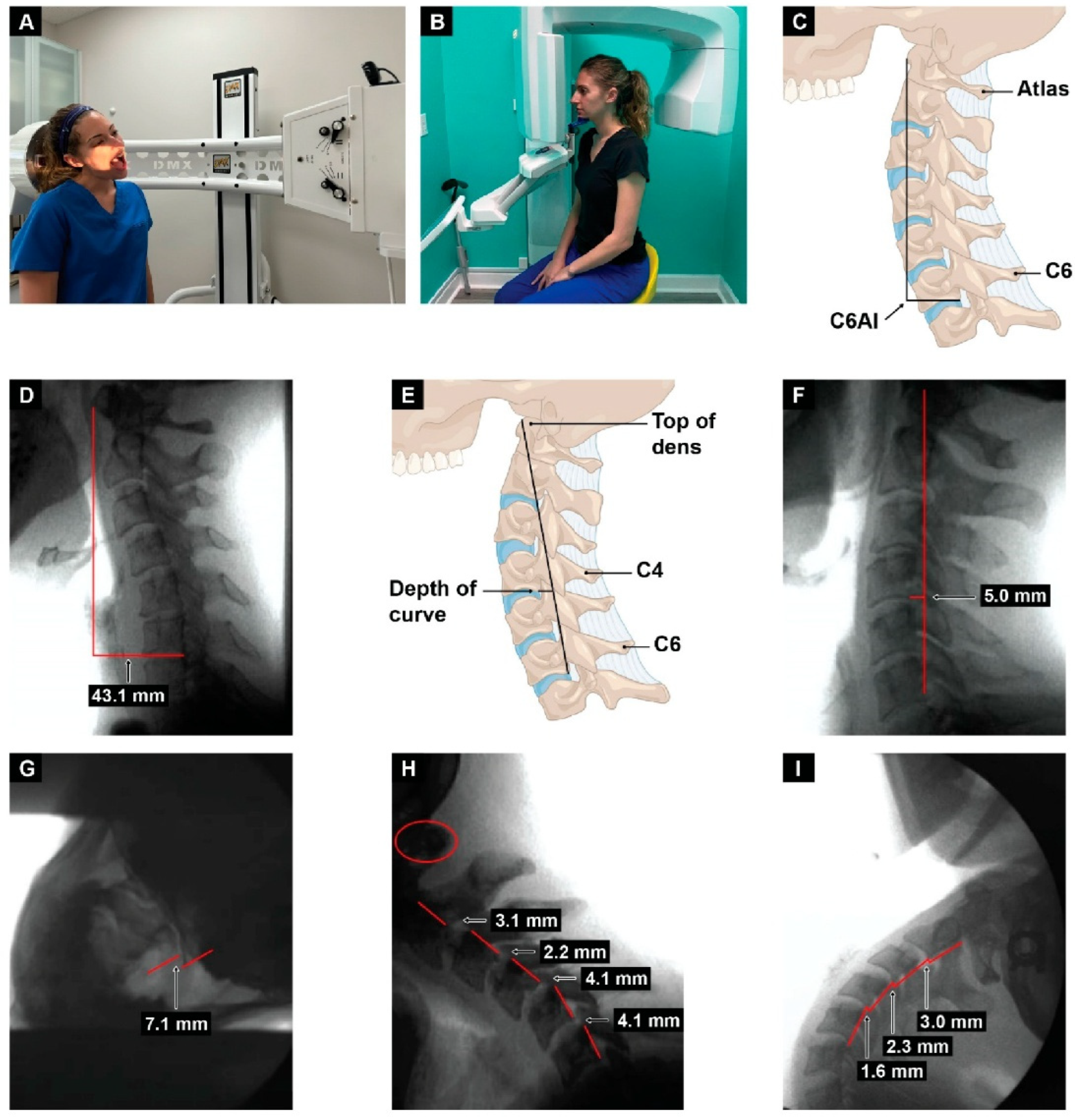
| Measurement | Modality and Output | Criteria for Interpretation | Application |
|---|---|---|---|
| Ligamentous Upper Cervical Instability (C1–C2) Lateral Flexion | Upright digital motion X-ray (DMX, videofluoroscopy) of the cervical spine is used for identifying translation of adjacent vertebra (mm). | Normal is <2 mm in any direction | DMX allows structural deviations to be seen during movements and amongst different positions, which can document vertebral translations that could be putting strain on vital structures in the area. The upright position provides a high degree of accuracy which may otherwise be missed. |
| Ligamentous Cervical Instability (C2–C6) Flexion and Extension | |||
| Depth of Curve | Upright cone beam CT of the cervical spine is used to identify distance from the posteroinferior aspect of the C4 vertebra to a line drawn from the posteroinferior aspect of the C6 vertebral body to the peak of the dens of C2 (mm). | Normal is 7–17 mm | Depth of curve is used to objectively assess the state of cervical lordosis. |
| C6-Atlas Interval (C6AI) | Upright cone beam CT of the cervical spine used to identify horizontal distance between the posterior border of the C6 vertebral body and a line drawn perpendicular from the anterior arch of the atlas in the sagittal view (mm). | Normal is <10 mm | C6AI objectively assesses the structural relationship of the atlas in relation to the lower cervical spine (C6) in the sagittal plane, providing an objective measurement for “forward head posture” as it identifies to the position of the head, which sits upon the atlas, compared to the lower neck. |
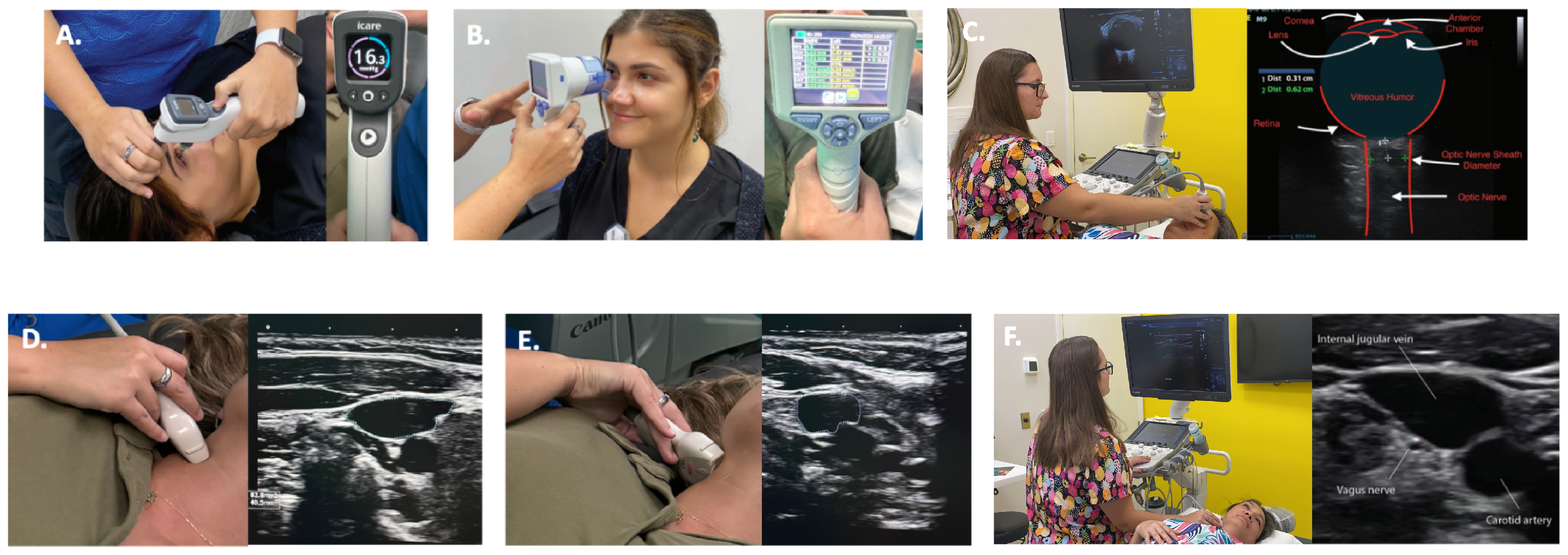
| Measurement | Modality and Output | Criteria for Interpretation | Notes/Application |
|---|---|---|---|
| Pupil Diameters | NeurOptics NPi®-200 pupillometer automatically measures baseline pupil diameter (mm). | Normal is 2–4 mm unilateral in lit environments | Chronically dilated pupils (mydriasis) can indicate sympathetic nervous system dominance/parasympathetic dysfunction (state of stress on the body). |
| Pupillary Light Reflex (Percent Change) | NeurOptics NPi®-200 pupillometer automatically calculates the percent change in the pupil diameter after initiating a flash of light (%). | Normal is 15–30% unilateral | Pupillary light reflex is used in clinical settings to assess for dysautonomia. Excessive percent change can be an indicator of sympathetic nervous system dominance. |
| Internal Jugular Vein Cross-sectional Area (IJV CSA) | Canon Aplio a550 ultrasound with 7 MHz linear probe is used to identify cross-sectional areas in multiple positions including seated, supine, and with use of cervical orthotic (mm2). | Normal is 90–100 mm2 unilateral | Abnormally small IJV CSA is a cause of venous outflow obstruction, and indicative of external compression. |
| Vagus Nerve Cross-sectional Area (Vagus nerve CSA) | Normal is >2.1 mm2 unilateral | Atypical vagus nerve CSA is indicative of degeneration and low vagal tone. | |
| Optic Nerve Sheath Diameter (ONSD) | Canon ultrasound, ocular setting is used to identify the optic nerve sheath diameter (mm). | Normal is <6.1 mm unilateral | Elevated optic nerve sheath diameters can be indicative of increased cerebral spinal fluid and elevated intracranial pressure. |
| Intraocular Pressure (IOP) | iCare ic200 tonometer automatically measures intraocular pressure (mmHg). | Normal is <21 mmHg unilateral | Elevated intraocular pressure can be indicative fluid outflow obstruction and/or elevated venous pressure. |
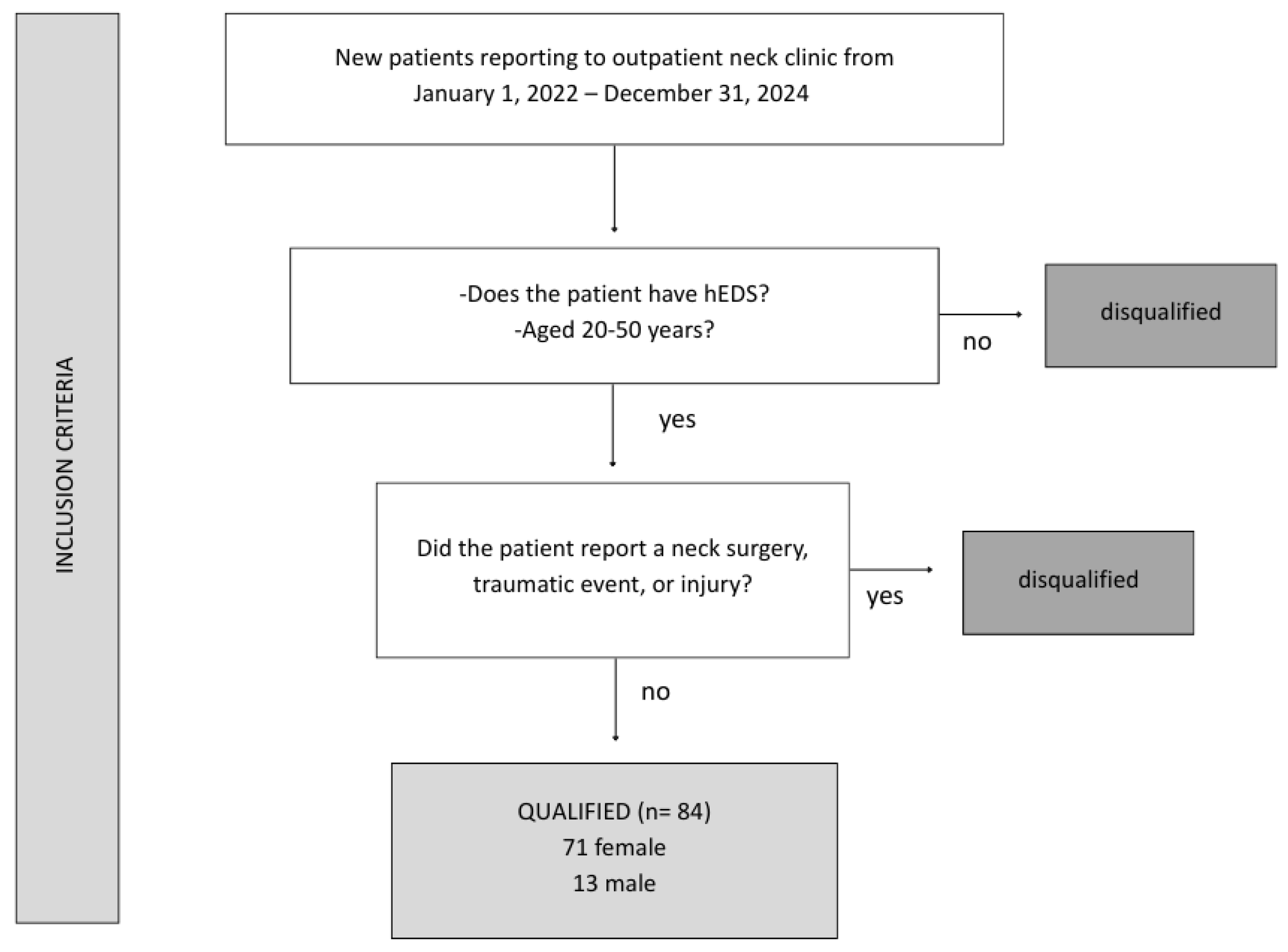
| Demographics | Count | Percentage |
|---|---|---|
| Female | 71 | 85% |
| Male | 13 | 15% |
| Average age | 35 | - |
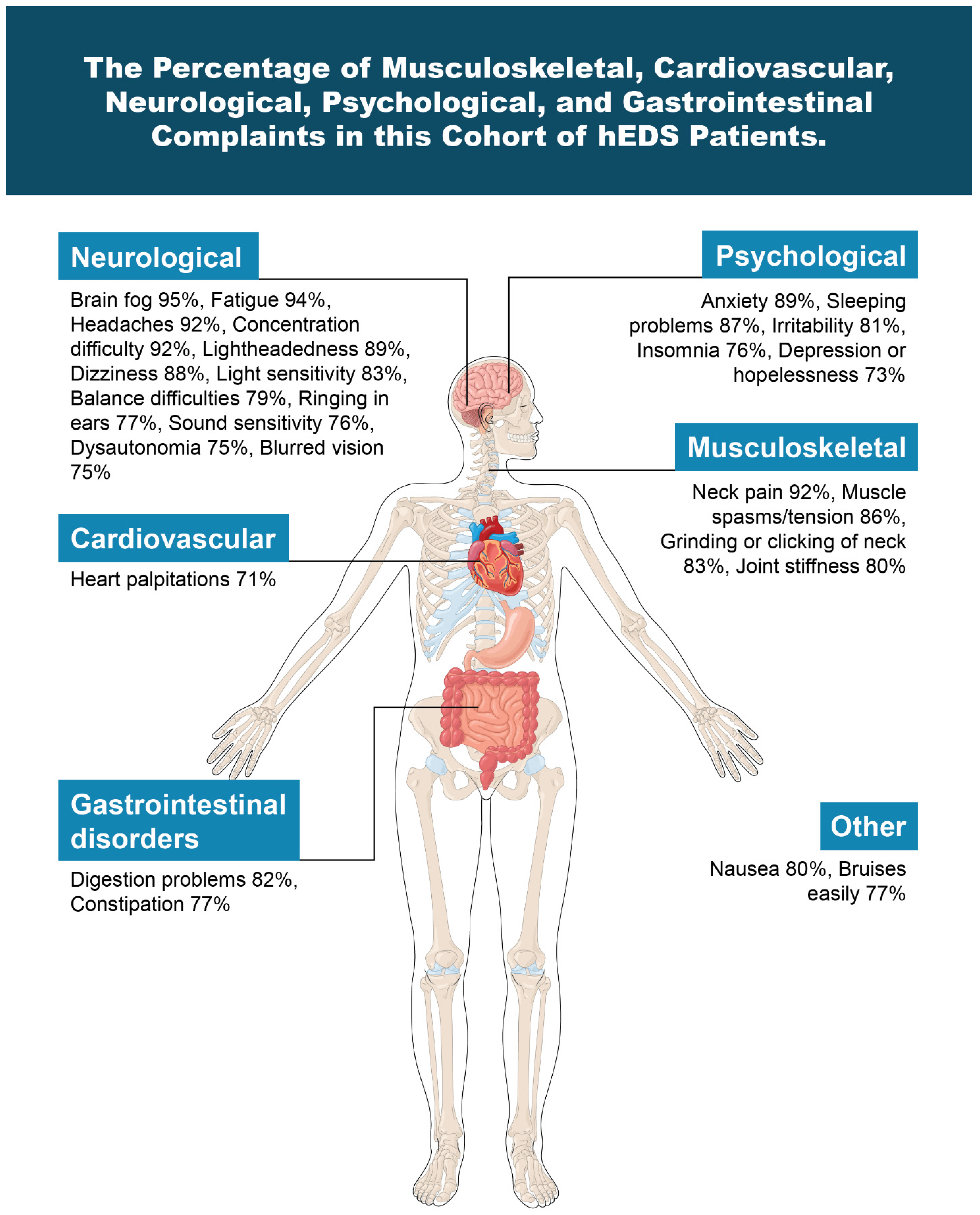
| Number of reported symptoms at initial intake from hEDS patients at an outpatient neck clinic (n = 84). | ||
| Number of Symptoms | Count of Patients | Percentage of Patients |
| 0–9 | 2 | 2.4% |
| 10–19 | 12 | 14.3% |
| 20+ | 70 | 83.3% |
| Symptom | Count of Patients | Percentage of Patients |
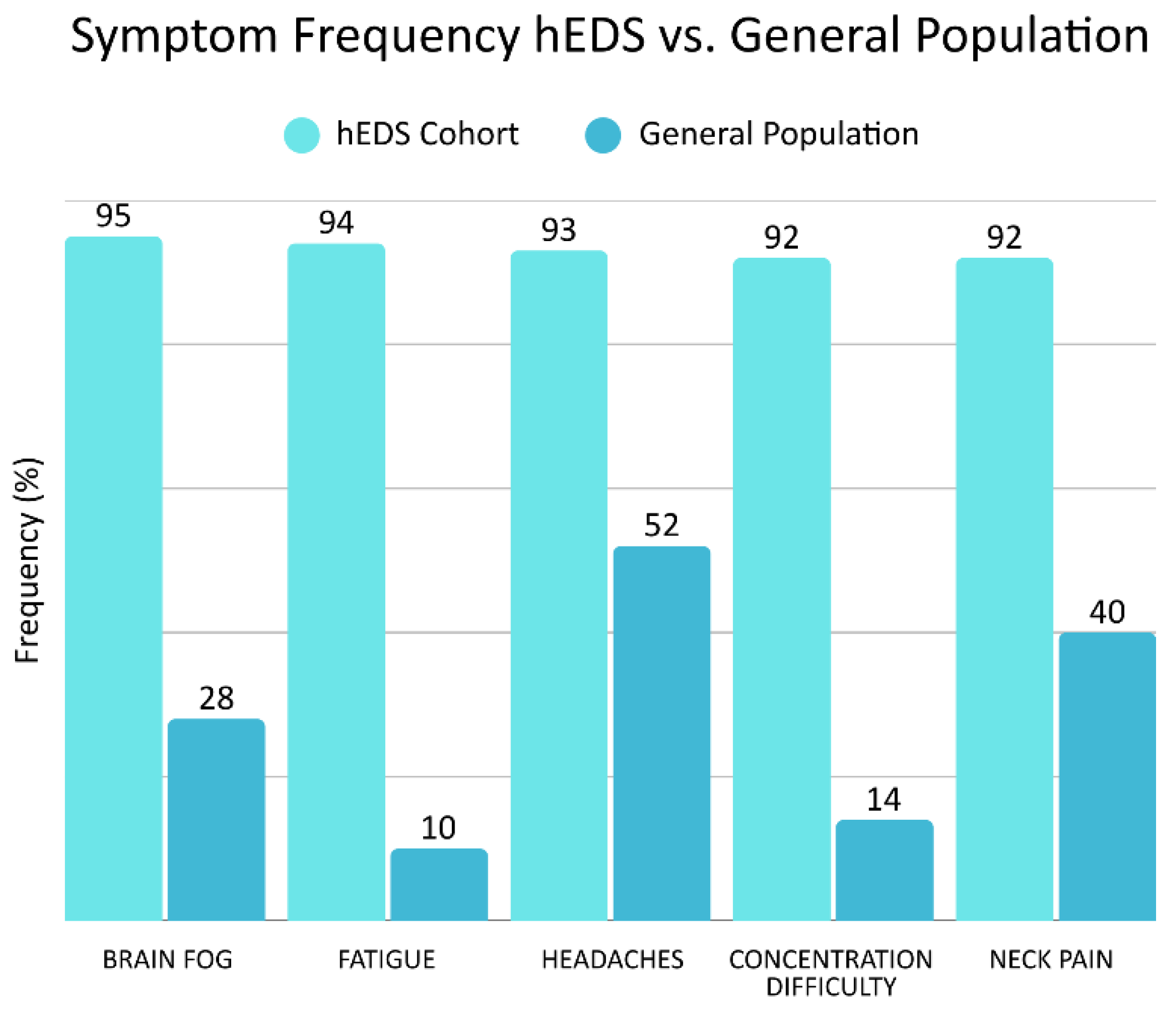
| Brain fog | 80 | 95.2% |
| Fatigue | 79 | 94% |
| Headaches | 78 | 92.9% |
| Concentration difficulty | 77 | 91.7% |
| Neck pain | 77 | 91.7% |
| Anxiety | 75 | 89.3% |
| Lightheadedness | 75 | 89.3% |
| Dizziness | 74 | 88.1% |
| Sleeping problems | 73 | 86.9% |
| Muscles spasms/tension | 72 | 85.7% |
| Neck grinding/cracking | 70 | 83.3% |
| Sensitivity to light | 70 | 83.3% |
| Digestion problems | 69 | 82.1% |
| Irritability | 68 | 81.0% |
| Nausea | 67 | 79.8% |
| Stiffness in joints | 67 | 79.8% |
| Balance difficulties | 66 | 78.6% |
| Bruises easily | 65 | 77.4% |
| Constipation | 65 | 77.4% |
| Ringing in ears | 65 | 77.4% |
| Insomnia | 64 | 76.2% |
| Sensitivity to sound | 64 | 76.2% |
| Blurred vision | 63 | 75.0% |
| Dysautonomia | 63 | 75.0% |
| Ear fullness/pressure | 63 | 75.0% |
| Weakness | 63 | 75.0% |
| Depression/hopelessness | 61 | 72.6% |
| Eye pain/pressure | 61 | 72.6% |
| Heart palpitations | 60 | 71.4% |
| Method | N | Normal Range Cutoff | % Abnormal |
|---|---|---|---|
| C6-atlas interval * | 82 | <10 mm | 98.8% |
| Depth of curve ** | 79 | 7–10 mm | 94.9% |
| Ligamentous cervical instability (LCI) Extension | 82 | <4 mm | 52.4% |
| LCI Flexion | 83 | <4 mm | 55.4% |
| Internal jugular vein (IJV) Denneroll® C1 total | 80 | >180 mm | 90% |
| IJV supine C1 left | 84 | >90 mm | 91.7% |
| IJV supine C1 right | 84 | >90 mm | 95.2% |
| IJV supine C1 total | 84 | >180 mm | 96.4% |
| IJV supine C4–C5 left | 84 | >90 mm | 72.6% |
| IJV supine C4–C5 right | 84 | >90 mm | 69% |
| IJV supine C4–C5 total | 84 | >90 mm | 72.6% |
| Intraocular pressure left | 84 | <21 mmHg | 34.5% |
| Intraocular pressure right | 84 | <21 mmHg | 30.9% |
| Intraocular pressure total | 84 | <42 mmHg | 34.5% |
| LCI C1–C2 lateral flexion left | 84 | <2 mm | 89.3% |
| LCI C1–C2 lateral flexion right | 84 | <2 mm | 88.1% |
| LCI C1–C2 lateral flexion total | 84 | <4 mm | 90.2% |
| Optic nerve sheath diameter left | 83 | <6.1 mm | 87.9% |
| Optic nerve sheath diameter right | 83 | <6.1 mm | 80.7% |
| Optic nerve sheath diameter total | 83 | <12.2 mm | 92.8% |
| Percent change total | 84 | 30–60% | 92.9% |
| Pupil diameter total | 84 | <8 mm | 95.2% |
| Styloid length total | 83 | <60 mm | 19.2% |
| Vagus nerve CSA left | 84 | >1.9 mm | 91.7% |
| Vagus nerve CSA right | 84 | >2.1 mm | 98.8% |
| Vagus nerve CSA total | 84 | >4.2 mm | 100% |
| N | Mean | SD | |
|---|---|---|---|
| C6-atlas interval (mm) | 82 | 39.12 mm | 12.18 |
| Depth of curve (mm) | 79 | 1.58 mm | 3.24 |
| Ligamentous cervical instability (LCI) Extension (mm) | 82 | 4.41 mm | 3.22 |
| LCI Flexion (mm) | 83 | 5.29 mm | 3.38 |
| IJV Denneroll® C1 left (mm2) | 80 | 49.35 mm2 | 27.72 |
| IJV Denneroll® C1 right (mm2) | 80 | 55.73 mm2 | 30.84 |
| IJV Denneroll® C1 total (mm2) | 80 | 105.08 mm2 | 43.51 |
| IJV seated C1 total (mm2) | 84 | 19.55 mm2 | 11.74 |
| IJV seated C4–C5 total (mm2) | 84 | 21.00 mm2 | 14.84 |
| IJV supine C1 left (mm2) | 84 | 40.97 mm2 | 29.43 |
| IJV supine C1 right (mm2) | 84 | 39.94 mm2 | 25.03 |
| IJV supine C1 total (mm2) | 84 | 80.4 mm2 | 42.26 |
| IJV supine C4–C5 left (mm2) | 84 | 67.91 mm2 | 42.53 |
| IJV supine C4–C5 right (mm2) | 84 | 71.48 mm2 | 45.36 |
| IJV supine C4–C5 total (mm2) | 84 | 139.21 mm2 | 72.59 |
| Intraocular pressure total (mmHg) | 84 | 38.34 mmHg | 8.31 |
| Intraocular pressure left (mmHg) | 84 | 19.14 mmHg | 4.15 |
| Intraocular pressure right (mmHg) | 84 | 19.08 mmHg | 4.15 |
| LCI C1–C2 lateral flexion total (mm) | 83 | 7.84 mm | 3.18 |
| Percent change/light constriction total (%) | 84 | 74.92% | 8.93 |
| Percent change/light constriction left (%) | 84 | 37.7% | 6.05 |
| Percent change/light constriction right (%) | 84 | 36.8% | 5.02 |
| Optic nerve sheath diameter total (mm) | 83 | 14.45 mm | 1.64 |
| Optic nerve sheath diameter left (mm) | 83 | 7.28 mm | 0.91 |
| Optic nerve sheath diameter right (mm) | 83 | 7.17 mm | 1.00 |
| Pupil diameter total (mm) | 84 | 10.83 mm | 1.79 |
| Pupil diameter right (mm) | 84 | 5.32 mm | 0.86 |
| Pupil diameter left (mm) | 84 | 5.51 mm | 0.99 |
| Styloid length total (mm) | 83 | 43.14 mm | 28.35 |
| Vagus nerve CSA total (mm2) | 84 | 2.55 mm2 | 0.59 |
| Vagus nerve CSA left (mm2) | 84 | 1.34 mm2 | 0.38 |
| Vagus nerve CSA right (mm2) | 84 | 1.22 mm2 | 0.34 |
Disclaimer/Publisher’s Note: The statements, opinions and data contained in all publications are solely those of the individual author(s) and contributor(s) and not of MDPI and/or the editor(s). MDPI and/or the editor(s) disclaim responsibility for any injury to people or property resulting from any ideas, methods, instructions or products referred to in the content. |
© 2026 by the authors. Licensee MDPI, Basel, Switzerland. This article is an open access article distributed under the terms and conditions of the Creative Commons Attribution (CC BY) license.
Share and Cite
Hauser, R.A.; Griffiths, M.; Watterson, A.; Matias, D.; Rawlings, B.R. Characterizing Initial Cervical Spine and Neurovascular Findings in 84 Consecutive Patients with Hypermobile Ehlers–Danlos Syndrome: A Retrospective Study. J. Clin. Med. 2026, 15, 2212. https://doi.org/10.3390/jcm15062212
Hauser RA, Griffiths M, Watterson A, Matias D, Rawlings BR. Characterizing Initial Cervical Spine and Neurovascular Findings in 84 Consecutive Patients with Hypermobile Ehlers–Danlos Syndrome: A Retrospective Study. Journal of Clinical Medicine. 2026; 15(6):2212. https://doi.org/10.3390/jcm15062212
Chicago/Turabian StyleHauser, Ross A., Morgan Griffiths, Ashley Watterson, Danielle Matias, and Benjamin R. Rawlings. 2026. "Characterizing Initial Cervical Spine and Neurovascular Findings in 84 Consecutive Patients with Hypermobile Ehlers–Danlos Syndrome: A Retrospective Study" Journal of Clinical Medicine 15, no. 6: 2212. https://doi.org/10.3390/jcm15062212
APA StyleHauser, R. A., Griffiths, M., Watterson, A., Matias, D., & Rawlings, B. R. (2026). Characterizing Initial Cervical Spine and Neurovascular Findings in 84 Consecutive Patients with Hypermobile Ehlers–Danlos Syndrome: A Retrospective Study. Journal of Clinical Medicine, 15(6), 2212. https://doi.org/10.3390/jcm15062212