Metabolic Myopathies and HyperCKemia in Adulthood: A Clinical Approach to Diagnosis and Management

Abstract
1. Introduction
Literature Search and Evidence Appraisal
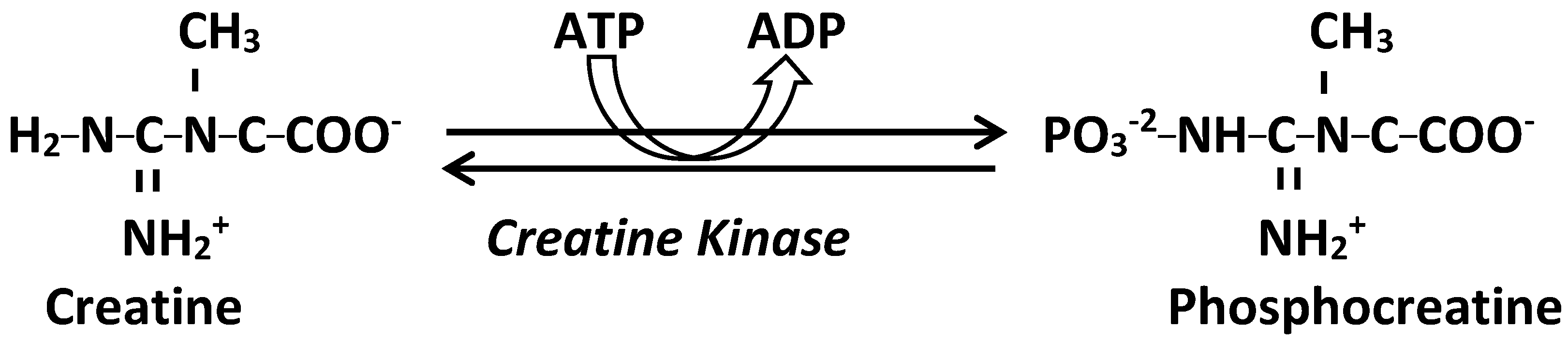
2. Physiology and Clinical Significance
2.1. Metabolic Myopathies
2.2. Glycogen Storage Diseases (GSDs)
2.2.1. Glycogen Storage Disease Type II (GSD II; Pompe Disease)
2.2.2. Glycogen Storage Disease Type III (GSD III; Cori-Forbes Disease)
2.2.3. Glycogen Storage Disease Type V (GSD V; McArdle Disease)
2.2.4. Glycogen Storage Disease Type VII (GSD VII, Tarui Disease)
2.2.5. Glycogen Storage Disease Type IX (GSD IX)
2.3. Fatty Acid Oxidation Disorders (FAOD)
2.3.1. Carnitine Palmitoyltransferase II (CPT2) Deficiency
2.3.2. Long-Chain 3-Hydroxyacyl-CoA Dehydrogenase Deficiency (LCHADD)
2.3.3. LPIN1 Deficiency
2.3.4. Mitochondrial Cytopathies
2.3.5. Disorders of Purine Metabolism—Myoadenylate Deaminase Deficiency
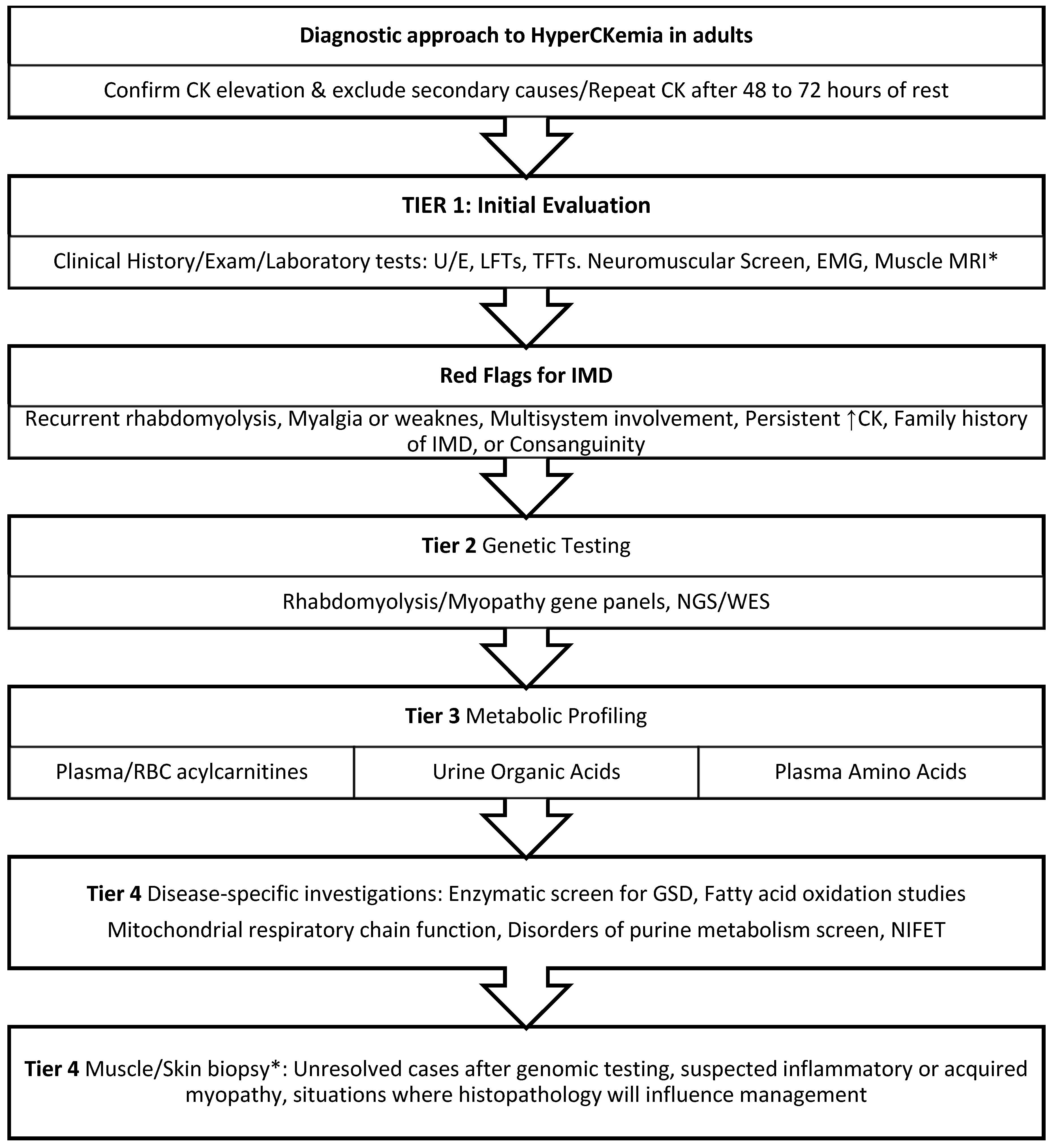
2.4. Diagnostic Approach to HyperCKemia in Adults (Figure 2)

2.5. Management of Acute HyperCKemia and Rhabdomyolysis
2.6. Long-Term Management of Persistent HyperCKemia
3. Discussion
4. Conclusions
Funding
Institutional Review Board Statement
Informed Consent Statement
Data Availability Statement
Acknowledgments
Conflicts of Interest
Abbreviations
References
- Lilleng, H.; Abeler, K.; Johnsen, S.H.; Stensland, E.; Løseth, S.; Jorde, R.; Figenschau, Y.; Lindal, S.; Wilsgaard, T.; Bekkelund, S.I. Variation of serum creatine kinase (ck) levels and prevalence of persistent hyperckemia in a norwegian normal population. The tromsø study. Neuromuscul. Disord. 2011, 21, 494–500. [Google Scholar] [CrossRef]
- Moghadam-Kia, S.; Oddis, C.V.; Aggarwal, R. Approach to asymptomatic creatine kinase elevation. Clevel. Clin. J. Med. 2016, 83, 37–42. [Google Scholar] [CrossRef] [PubMed]
- Miernik, S.; Matusiewicz, A.; Olesińska, M. Drug-induced myopathies: A comprehensive review and update. Biomedicines 2024, 12, 987. [Google Scholar] [CrossRef]
- Fang, D.W.; Chen, Y.M. Immune-mediated necrotizing myopathy associated with anti-signal recognition particle antibody complicated with acute respiratory distress syndrome: A report of two cases. Cureus 2024, 16, e60477. [Google Scholar] [CrossRef] [PubMed]
- Wu, L.; Brady, L.; Shoffner, J.; Tarnopolsky, M.A. Next-generation sequencing to diagnose muscular dystrophy, rhabdomyolysis, and hyperckemia. Can. J. Neurol. Sci. 2018, 45, 262–268. [Google Scholar] [CrossRef]
- Kruijt, N.; van den Bersselaar, L.R.; Kamsteeg, E.J.; Verbeeck, W.; Snoeck, M.M.J.; Everaerd, D.S.; Abdo, W.F.; Jansen, D.R.M.; Erasmus, C.E.; Jungbluth, H.; et al. The etiology of rhabdomyolysis: An interaction between genetic susceptibility and external triggers. Eur. J. Neurol. 2021, 28, 647–659. [Google Scholar] [CrossRef] [PubMed]
- Schlattner, U.; Tokarska-Schlattner, M.; Wallimann, T. Mitochondrial creatine kinase in human health and disease. Biochim. Biophys. Acta 2006, 1762, 164–180. [Google Scholar] [CrossRef]
- Aujla, R.S.; Zubair, M.; Patel, R. Creatine phosphokinase. In StatPearls; Copyright © 2025; StatPearls Publishing LLC.: Treasure Island, FL, USA, 2025. [Google Scholar]
- Liu, C.Y.; Lai, Y.C.; Wu, Y.C.; Tzeng, C.H.; Lee, S.D. Macroenzyme creatine kinase in the era of modern laboratory medicine. J. Chin. Med. Assoc. 2010, 73, 35–39. [Google Scholar] [CrossRef]
- Baird, M.F.; Graham, S.M.; Baker, J.S.; Bickerstaff, G.F. Creatine-kinase- and exercise-related muscle damage implications for muscle performance and recovery. J. Nutr. Metab. 2012, 2012, 960363. [Google Scholar] [CrossRef]
- Volfinger, L.; Lassourd, V.; Michaux, J.M.; Braun, J.P.; Toutain, P.L. Kinetic evaluation of muscle damage during exercise by calculation of amount of creatine kinase released. Am. J. Physiol.-Regul. Integr. Comp. Physiol. 1994, 266, R434–R441. [Google Scholar] [CrossRef]
- Shumway, J.; Irvin, A.; Shia, R.; Goodyear, C.D. Biomarkers, creatine kinase, and kidney function of special operation candidates during intense physiological training. Mil. Med. 2020, 185, e982–e987. [Google Scholar] [CrossRef] [PubMed]
- Rout, P.; Chippa, V.; Adigun, R. Rhabdomyolysis. In StatPearls; Copyright © 2025; StatPearls Publishing LLC.: Treasure Island, FL, USA, 2025. [Google Scholar]
- Młynarska, E.; Krzemińska, J.; Wronka, M.; Franczyk, B.; Rysz, J. Rhabdomyolysis-induced aki (riaki) including the role of COVID-19. Int. J. Mol. Sci. 2022, 23, 8215. [Google Scholar] [CrossRef] [PubMed]
- Lee, T.H.; Kim, W.R.; Poterucha, J.J. Evaluation of elevated liver enzymes. Clin. Liver Dis. 2012, 16, 183–198. [Google Scholar] [CrossRef] [PubMed]
- Lala, V.; Zubair, M.; Minter, D.A. Liver function tests. In StatPearls; Copyright © 2025; StatPearls Publishing LLC.: Treasure Island, FL, USA, 2025. [Google Scholar]
- Lim, A.K. Abnormal liver function tests associated with severe rhabdomyolysis. World J. Gastroenterol. 2020, 26, 1020–1028. [Google Scholar] [CrossRef]
- Pettersson, J.; Hindorf, U.; Persson, P.; Bengtsson, T.; Malmqvist, U.; Werkström, V.; Ekelund, M. Muscular exercise can cause highly pathological liver function tests in healthy men. Br. J. Clin. Pharmacol. 2008, 65, 253–259. [Google Scholar] [CrossRef]
- Tobon, A. Metabolic myopathies. Continuum 2013, 19, 1571–1597. [Google Scholar] [CrossRef]
- Nicolino, M.; Puech, J.P.; Letourneur, F.; Fardeau, M.; Kahn, A.; Poenaru, L. Glycogen-storage disease type ii (acid maltase deficiency): Identification of a novel small deletion (delcc482+483) in french patients. Biochem. Biophys. Res. Commun. 1997, 235, 138–141. [Google Scholar] [CrossRef]
- van der Ploeg, A.T.; Reuser, A.J. Pompe’s disease. Lancet 2008, 372, 1342–1353. [Google Scholar] [CrossRef]
- Manganelli, F.; Ruggiero, L. Clinical features of pompe disease. Acta Myol. 2013, 32, 82–84. [Google Scholar]
- Schreuder, A.B.; Rossi, A.; Grunert, S.C.; Derks, T.G.J. Glycogen Storage Disease Type III. In GeneReviews((R)); Adam, M.P., Ardinger, H.H., Pagon, R.A., Wallace, S.E., Bean, L.J.H., Gripp, K.W., Mirzaa, G.M., Amemiya, A., Eds.; University of Washington: Seattle, WA, USA, 1993. [Google Scholar]
- Sentner, C.P.; Hoogeveen, I.J.; Weinstein, D.A.; Santer, R.; Murphy, E.; McKiernan, P.J.; Steuerwald, U.; Beauchamp, N.J.; Taybert, J.; Laforêt, P.; et al. Glycogen storage disease type iii: Diagnosis, genotype, management, clinical course and outcome. J. Inherit. Metab. Dis. 2016, 39, 697–704. [Google Scholar] [CrossRef]
- Lam, J.R.; Anastasopoulou, C.; Khattak, Z.E.; Ashraf, M. Mcardle disease (glycogen storage disease type 5). In StatPearls; Copyright © 2025; StatPearls Publishing LLC.: Treasure Island, FL, USA, 2025. [Google Scholar]
- Auranen, M.; Palmio, J.; Ylikallio, E.; Huovinen, S.; Paetau, A.; Sandell, S.; Haapasalo, H.; Viitaniemi, K.; Piirilä, P.; Tyynismaa, H.; et al. PFKM gene defect and glycogen storage disease gsdvii with misleading enzyme histochemistry. Neurol. Genet. 2015, 1, e7. [Google Scholar] [CrossRef]
- Chen, Y.; Wang, X.; Ji, N.; Fang, Q.; Chang, X.; Liu, M. Case report: Comprehensive exploration of a novel pfkm mutation in glycogen storage disease type vii. Front. Genet. 2024, 15, 1422908. [Google Scholar] [CrossRef] [PubMed]
- Candela, E.; Montanari, G.; Zanaroli, A.; Baronio, F.; Ortolano, R.; Biasucci, G.; Lanari, M. Understanding glycogen storage disease type ix: A systematic review with clinical focus-why it is not benign and requires vigilance. Genes 2025, 16, 584. [Google Scholar] [CrossRef]
- den Boer, M.E.; Wanders, R.J.; Morris, A.A.; IJlst, L.; Heymans, H.S.; Wijburg, F.A. Long-chain 3-hydroxyacyl-coa dehydrogenase deficiency: Clinical presentation and follow-up of 50 patients. Pediatrics 2002, 109, 99–104. [Google Scholar] [CrossRef]
- Indika, N.L.R.; Vidanapathirana, D.M.; Jasinge, E.; Waduge, R.; Shyamali, N.L.A.; Perera, P.P.R. Lipin-1 deficiency-associated recurrent rhabdomyolysis and exercise-induced myalgia persisting into adulthood: A case report and review of literature. Case Rep. Med. 2020, 2020, 7904190. [Google Scholar] [CrossRef]
- Joshi, P.R.; Deschauer, M.; Zierz, S. Phenotype of carnitine palmitoyltransferase ii (cpt ii) deficiency: A questionnaire-based survey. J. Clin. Neurosci. 2019, 59, 32–36. [Google Scholar] [CrossRef]
- Deschauer, M.; Wieser, T.; Zierz, S. Muscle carnitine palmitoyltransferase ii deficiency: Clinical and molecular genetic features and diagnostic aspects. Arch. Neurol. 2005, 62, 37–41. [Google Scholar] [CrossRef]
- Joshi, P.R.; Zierz, S. Muscle carnitine palmitoyltransferase ii (cpt ii) deficiency: A conceptual approach. Molecules 2020, 25, 1784. [Google Scholar] [CrossRef] [PubMed]
- Spiekerkoetter, U.; Lindner, M.; Santer, R.; Grotzke, M.; Baumgartner, M.R.; Boehles, H.; Das, A.; Haase, C.; Hennermann, J.B.; Karall, D.; et al. Treatment recommendations in long-chain fatty acid oxidation defects: Consensus from a workshop. J. Inherit. Metab. Dis. 2009, 32, 498–505. [Google Scholar] [CrossRef] [PubMed]
- Wallimann, T.; Wyss, M.; Brdiczka, D.; Nicolay, K.; Eppenberger, H.M. Intracellular compartmentation, structure and function of creatine kinase isoenzymes in tissues with high and fluctuating energy demands: The ‘phosphocreatine circuit’ for cellular energy homeostasis. Biochem. J. 1992, 281, 21–40. [Google Scholar] [CrossRef]
- Ventura-Clapier, R.; Kuznetsov, A.; Veksler, V.; Boehm, E.; Anflous, K. Functional coupling of creatine kinases in muscles: Species and tissue specificity. Mol. Cell Biochem. 1998, 184, 231–247. [Google Scholar] [CrossRef]
- Karall, D.; Brunner-Krainz, M.; Kogelnig, K.; Konstantopoulou, V.; Maier, E.M.; Moslinger, D.; Plecko, B.; Sperl, W.; Volkmar, B.; Scholl-Burgi, S. Clinical outcome, biochemical and therapeutic follow-up in 14 austrian patients with long-chain 3-hydroxy acyl coa dehydrogenase deficiency (lchadd). Orphanet J. Rare Dis. 2015, 10, 21. [Google Scholar] [CrossRef]
- Cervellin, G.; Comelli, I.; Lippi, G. Rhabdomyolysis: Historical background, clinical, diagnostic and therapeutic features. Clin. Chem. Lab. Med. 2010, 48, 749–756. [Google Scholar] [CrossRef]
- Kahraman, A.B.; Karakaya, B.; Yıldız, Y.; Kamaci, S.; Kesici, S.; Simsek-Kiper, P.O.; Kurt-Sukur, E.D.; Bayrakcı, B.; Haliloglu, G. Two tales of lpin1 deficiency: From fatal rhabdomyolysis to favorable outcome of acute compartment syndrome. Neuromuscul. Disord. 2022, 32, 931–934. [Google Scholar] [CrossRef]
- Fatehi, F.; Okhovat, A.A.; Nilipour, Y.; Mroczek, M.; Straub, V.; Töpf, A.; Palibrk, A.; Peric, S.; Rakocevic Stojanovic, V.; Najmabadi, H.; et al. Adult-onset very-long-chain acyl-coa dehydrogenase deficiency (vlcadd). Eur. J. Neurol. 2020, 27, 2257–2266. [Google Scholar] [CrossRef]
- El-Hattab, A.W.; Almannai, M. Primary carnitine deficiency. In Genereviews(®); Adam, M.P., Bick, S., Mirzaa, G.M., Pagon, R.A., Wallace, S.E., Amemiya, A., Eds.; Copyright © 1993–2026; University of Washington: Seattle, WA, USA, 1993. [Google Scholar]
- Wang, Y.X.; Le, W.D. Progress in diagnosing mitochondrial myopathy, encephalopathy, lactic acidosis, and stroke-like episodes. Chin. Med. J. 2015, 128, 1820–1825. [Google Scholar] [CrossRef]
- Joshi, P.R.; Baty, K.; Hopton, S.; Cordts, I.; Falkous, G.; Schoser, B.; Blakely, E.L.; Taylor, R.W.; Deschauer, M. Progressive external ophthalmoplegia due to a recurrent de novo m.15990c>t mt-tp (mt-trnapro) gene variant. Neuromuscul. Disord. 2020, 30, 346–350. [Google Scholar] [CrossRef] [PubMed]
- Pan, Y.; Zhang, L.; Liu, Q.; Li, Y.; Guo, H.; Peng, Y.; Peng, H.; Tang, B.; Hu, Z.; Zhao, J.; et al. Insertion of a knockout-first cassette in ampd1 gene leads to neonatal death by disruption of neighboring genes expression. Sci. Rep. 2016, 6, 35970. [Google Scholar] [CrossRef] [PubMed]
- Lim, L.; Palayer, M.; Bruneau, A.; Letournel, F.; Le Maréchal, C.; Simard, G.; Reynier, P.; Homedan, C.; Nadaj-Pakleza, A. Myoadenylate deaminase deficiency: A frequent cause of muscle pain a case detected by exercise testing. Ann. Biol. Clin. 2017, 75, 445–449. [Google Scholar] [CrossRef]
- Kyriakides, T.; Aleksovska, K.; Angelini, C.; Argov, Z.; Claeys, K.G.; de Visser, M.; FIlosto, M.; Jovanovic, I.; Kostera-Pruszczyk, A.; Molnar, M.J.; et al. Ean 2024 guideline on the diagnostic approach to oligo/asymptomatic hyperckemia. Eur. J. Neurol. 2026, 33, e70493. [Google Scholar] [CrossRef] [PubMed]
- Dabby, R.; Sadeh, M.; Herman, O.; Berger, E.; Watemberg, N.; Hayek, S.; Jossiphov, J.; Nevo, Y. Asymptomatic or minimally symptomatic hyperCKemia: Histopathologic correlates. Isr. Med. Assoc. J. 2006, 8, 110–113. [Google Scholar]
- de Marchi, R.; Nalin, T.; Sperb-Ludwig, F.; Pinheiro, F.C.; Schwartz, I.V.D.; Steiner, C.E. Glycogen storage disease: Expert opinion on clinical diagnosis revisited after molecular testing. Genes 2023, 14, 2219. [Google Scholar] [CrossRef] [PubMed]
- McCoin, C.S.; Piccolo, B.D.; Knotts, T.A.; Matern, D.; Vockley, J.; Gillingham, M.B.; Adams, S.H. Unique plasma metabolomic signatures of individuals with inherited disorders of long-chain fatty acid oxidation. J. Inherit. Metab. Dis. 2016, 39, 399–408. [Google Scholar] [CrossRef] [PubMed]
- Ruiz-Sala, P.; Peña-Quintana, L. Biochemical markers for the diagnosis of mitochondrial fatty acid oxidation diseases. J. Clin. Med. 2021, 10, 4855. [Google Scholar] [CrossRef]
- Dambrova, M.; Makrecka-Kuka, M.; Kuka, J.; Vilskersts, R.; Nordberg, D.; Attwood, M.M.; Smesny, S.; Sen, Z.D.; Guo, A.C.; Oler, E.; et al. Acylcarnitines: Nomenclature, biomarkers, therapeutic potential, drug targets, and clinical trials. Pharmacol. Rev. 2022, 74, 506–551. [Google Scholar] [CrossRef]
- McCann, M.R.; George De la Rosa, M.V.; Rosania, G.R.; Stringer, K.A. L-carnitine and acylcarnitines: Mitochondrial biomarkers for precision medicine. Metabolites 2021, 11, 51. [Google Scholar] [CrossRef]
- Barrientos, A.; Fontanesi, F.; Díaz, F. Evaluation of the mitochondrial respiratory chain and oxidative phosphorylation system using polarography and spectrophotometric enzyme assays. Curr. Protoc. Hum. Genet. 2009, 19, 19.3.1–19.3.14. [Google Scholar] [CrossRef]
- Hogrel, J.Y.; Laforêt, P.; Ben Yaou, R.; Chevrot, M.; Eymard, B.; Lombès, A. A non-ischemic forearm exercise test for the screening of patients with exercise intolerance. Neurology 2001, 56, 1733–1738. [Google Scholar] [CrossRef] [PubMed]
- Vockley, J. Long-chain fatty acid oxidation disorders and current management strategies. Am. J. Manag. Care 2020, 26, S147–S154. [Google Scholar] [CrossRef]
- Bhai, S.F.; Vissing, J. Diagnosis and management of metabolic myopathies. Muscle Nerve 2023, 68, 250–256. [Google Scholar] [CrossRef]
- Sidossis, L.S.; Wolfe, R.R. Glucose and insulin-induced inhibition of fatty acid oxidation: The glucose-fatty acid cycle reversed. Am. J. Physiol. 1996, 270, E733–E738. [Google Scholar] [CrossRef]
- Peña-Quintana, L.; Correcher-Medina, P. Nutritional management of patients with fatty acid oxidation disorders. Nutrients 2024, 16, 2707. [Google Scholar] [CrossRef]
- Longo, N.; Amat di San Filippo, C.; Pasquali, M. Disorders of carnitine transport and the carnitine cycle. Am. J. Med. Genet. C Semin. Med. Genet. 2006, 142c, 77–85. [Google Scholar] [CrossRef]
- Kochan, Z.; Karbowska, J. How genes meet diet in lchad deficiency: Nutrigenomics of fatty acid oxidation disorder. Int. J. Mol. Sci. 2025, 26, 10140. [Google Scholar] [CrossRef] [PubMed]
- El-Hattab, A.W.; Scaglia, F. Disorders of carnitine biosynthesis and transport. Mol. Genet. Metab. 2015, 116, 107–112. [Google Scholar] [CrossRef] [PubMed]
- Amaral, A.U.; Wajner, M. Recent advances in the pathophysiology of fatty acid oxidation defects: Secondary alterations of bioenergetics and mitochondrial calcium homeostasis caused by the accumulating fatty acids. Front. Genet. 2020, 11, 598976. [Google Scholar] [CrossRef]
- Parikh, S.; Saneto, R.; Falk, M.J.; Anselm, I.; Cohen, B.H.; Haas, R.; Medicine Society, T.M. A modern approach to the treatment of mitochondrial disease. Curr. Treat. Options Neurol. 2009, 11, 414–430. [Google Scholar] [CrossRef]
- Kohler, L.; Puertollano, R.; Raben, N. Pompe disease: From basic science to therapy. Neurotherapeutics 2018, 15, 928–942. [Google Scholar] [CrossRef]
- Kishnani, P.S.; Steiner, R.D.; Bali, D.; Berger, K.; Byrne, B.J.; Case, L.E.; Crowley, J.F.; Downs, S.; Howell, R.R.; Kravitz, R.M.; et al. Pompe disease diagnosis and management guideline. Genet. Med. 2006, 8, 267–288. [Google Scholar] [CrossRef] [PubMed]
- Massimino, E.; Amoroso, A.P.; Lupoli, R.; Rossi, A.; Capaldo, B. Nutritional management of glycogen storage disease type iii: A case report and a critical appraisal of the literature. Front. Nutr. 2023, 10, 1178348. [Google Scholar] [CrossRef] [PubMed]
- Quinlivan, R.M.; Beynon, R.J. Pharmacological and nutritional treatment trials in McArdle disease. Acta Myol. 2007, 26, 58–60. [Google Scholar]
- Lucia, A.; Martinuzzi, A.; Nogales-Gadea, G.; Quinlivan, R.; Reason, S.; Bali, D.; Godfrey, R.; Haller, R.; Kishnani, P.; Laforêt, P.; et al. Clinical practice guidelines for glycogen storage disease v & vii (mcardle disease and tarui disease) from an international study group. Neuromuscul. Disord. 2021, 31, 1296–1310. [Google Scholar] [CrossRef]
- Haller, R.G.; Lewis, S.F. Glucose-induced exertional fatigue in muscle phosphofructokinase deficiency. N. Engl. J. Med. 1991, 324, 364–369. [Google Scholar] [CrossRef]
- Similä, M.E.; Auranen, M.; Piirilä, P.L. Beneficial effects of ketogenic diet on phosphofructokinase deficiency (glycogen storage disease type vii). Front. Neurol. 2020, 11, 57. [Google Scholar] [CrossRef]
- Ross, K.M.; Ferrecchia, I.A.; Dahlberg, K.R.; Dambska, M.; Ryan, P.T.; Weinstein, D.A. Dietary management of the glycogen storage diseases: Evolution of treatment and ongoing controversies. Adv. Nutr. 2020, 11, 439–446. [Google Scholar] [CrossRef] [PubMed]
- Angelini, C. Exercise, nutrition and enzyme replacement therapy are efficacious in adult pompe patients: Report from epoc consortium. Eur. J. Transl. Myol. 2021, 31, 9798. [Google Scholar] [CrossRef]
- Wieser, T. Carnitine palmitoyltransferase ii deficiency. In GeneReviews(®); Adam, M.P., Mirzaa, G.M., Pagon, R.A., Wallace, S.E., Bean, L.J.H., Gripp, K.W., Amemiya, A., Eds.; University of Washington: Seattle, WA, USA, 1993; Copyright © 1993–2023. [Google Scholar]
- Van Calcar, S.C.; Sowa, M.; Rohr, F.; Beazer, J.; Setlock, T.; Weihe, T.U.; Pendyal, S.; Wallace, L.S.; Hansen, J.G.; Stembridge, A.; et al. Nutrition management guideline for very-long chain acyl-coa dehydrogenase deficiency (vlcad): An evidence- and consensus-based approach. Mol. Genet. Metab. 2020, 131, 23–37. [Google Scholar] [CrossRef]
- Gillingham, M.; Van Calcar, S.; Ney, D.; Wolff, J.; Harding, C. Dietary management of long-chain 3-hydroxyacyl-coa dehydrogenase deficiency (lchadd). A case report and survey. J. Inherit. Metab. Dis. 1999, 22, 123–131. [Google Scholar] [CrossRef]
- Bleeker, J.C.; Kok, I.L.; Ferdinandusse, S.; de Vries, M.; Derks, T.G.J.; Mulder, M.F.; Williams, M.; Gozalbo, E.R.; Bosch, A.M.; van den Hurk, D.T.; et al. Proposal for an individualized dietary strategy in patients with very long-chain acyl-coa dehydrogenase deficiency. J. Inherit. Metab. Dis. 2019, 42, 159–168. [Google Scholar] [CrossRef] [PubMed]
- Argudo, J.M.; Astudillo Moncayo, O.M.; Insuasti, W.; Garofalo, G.; Aguirre, A.S.; Encalada, S.; Villamarin, J.; Oña, S.; Tenemaza, M.G.; Eissa-Garcés, A.; et al. Arginine for the treatment of mitochondrial encephalopathy, lactic acidosis, and stroke-like episodes: A systematic review. Cureus 2022, 14, e32709. [Google Scholar] [CrossRef] [PubMed]
- Yoshida, R.; Mitsuno, R.; Nakayama, T.; Azegami, T.; Hashiguchi, A.; Torimitsu, T.; Yoshimoto, N.; Hisikawa, A.; Hagiwara, A.; Nakamura, T.; et al. Taurine supplementation improves physical activity level in a hemodialysis patient with mitochondrial disease: A case report. CEN Case Rep. 2025, 14, 366–373. [Google Scholar] [CrossRef]
- Barcelos, I.; Shadiack, E.; Ganetzky, R.D.; Falk, M.J. Mitochondrial medicine therapies: Rationale, evidence, and dosing guidelines. Curr. Opin. Pediatr. 2020, 32, 707–718. [Google Scholar] [CrossRef]
- Grad, L.I.; Lemire, B.D. Riboflavin enhances the assembly of mitochondrial cytochrome c oxidase in C. elegans nadh-ubiquinone oxidoreductase mutants. Biochim. Biophys. Acta 2006, 1757, 115–122. [Google Scholar] [CrossRef]
- Campos, Y.; Huertas, R.; Lorenzo, G.; Bautista, J.; Gutiérrez, E.; Aparicio, M.; Alesso, L.; Arenas, J. Plasma carnitine insufficiency and effectiveness of l-carnitine therapy in patients with mitochondrial myopathy. Muscle Nerve 1993, 16, 150–153. [Google Scholar] [CrossRef] [PubMed]
- Marshall, R.P.; Droste, J.N.; Giessing, J.; Kreider, R.B. Role of creatine supplementation in conditions involving mitochondrial dysfunction: A narrative review. Nutrients 2022, 14, 529. [Google Scholar] [CrossRef]
- El-Hattab, A.W.; Zarante, A.M.; Almannai, M.; Scaglia, F. Therapies for mitochondrial diseases and current clinical trials. Mol. Genet. Metab. 2017, 122, 1–9. [Google Scholar] [CrossRef] [PubMed]
- Zöllner, N.; Reiter, S.; Gross, M.; Pongratz, D.; Reimers, C.D.; Gerbitz, K.; Paetzke, I.; Deufel, T.; Hübner, G. Myoadenylate deaminase deficiency: Successful symptomatic therapy by high dose oral administration of ribose. Klin. Wochenschr. 1986, 64, 1281–1290. [Google Scholar] [CrossRef] [PubMed]
- Paoletti, M.; Pichiecchio, A.; Cotti Piccinelli, S.; Tasca, G.; Berardinelli, A.L.; Padovani, A.; Filosto, M. Advances in quantitative imaging of genetic and acquired myopathies: Clinical applications and perspectives. Front. Neurol. 2019, 10, 78. [Google Scholar] [CrossRef] [PubMed]
- Nilipour, Y. The art of muscle biopsy in the new genetic era: A narrative review. Iran. J. Child. Neurol. 2019, 13, 7–17. [Google Scholar]
- Scalco, R.S.; Morrow, J.M.; Booth, S.; Chatfield, S.; Godfrey, R.; Quinlivan, R. Misdiagnosis is an important factor for diagnostic delay in mcardle disease. Neuromuscul. Disord. 2017, 27, 852–855. [Google Scholar] [CrossRef]
- Yue, D.; Jiao, K.; Xia, X.; Zhang, J.; Zhu, B.; Liu, L.; Du, K.; Gao, M.; Cheng, N.; Wang, N.; et al. Diagnostic delay in late-onset Pompe disease among Chinese patients: A retrospective study. JIMD Rep. 2024, 65, 39–46. [Google Scholar] [CrossRef]
- Forny, P.; Footitt, E.; Davison, J.E.; Lam, A.; Woodward, C.E.; Batzios, S.; Bhate, S.; Chakrapani, A.; Cleary, M.; Gissen, P.; et al. Diagnosing mitochondrial disorders remains challenging in the omics era. Neurol. Genet. 2021, 7, e597. [Google Scholar] [CrossRef]
- Vorgerd, M.; Zange, J. Treatment of glycogenosys type V (McArdle disease) with creatine and ketogenic diet with clinical scores and with 31P-MRS on working leg muscle. Acta Myol. 2007, 26, 61–63. [Google Scholar]
- Vorgerd, M.; Grehl, T.; Jager, M.; Muller, K.; Freitag, G.; Patzold, T.; Bruns, N.; Fabian, K.; Tegenthoff, M.; Mortier, W.; et al. Creatine therapy in myophosphorylase deficiency (mcardle disease): A placebo-controlled crossover trial. Arch. Neurol. 2000, 57, 956–963. [Google Scholar] [CrossRef]
- Vorgerd, M.; Zange, J.; Kley, R.; Grehl, T.; Hüsing, A.; Jäger, M.; Müller, K.; Schröder, R.; Mortier, W.; Fabian, K.; et al. Effect of high-dose creatine therapy on symptoms of exercise intolerance in mcardle disease: Double-blind, placebo-controlled crossover study. Arch. Neurol. 2002, 59, 97–101. [Google Scholar] [CrossRef]
- Nascimento, J.; Pinho, R.; Pimenta de Castro, A.; Bernardino Vieira, N. Mcardle’s disease: A differential diagnosis of metabolic myopathies. Cureus 2024, 16, e70000. [Google Scholar] [CrossRef]
- Morita, T.; Murakami, T.; Okamura, E.; Matsushiro, M.; Ito, S.; Yabe, D. Improvement of symptoms in a patient with glycogen storage disease through nutritional guidance and exercise therapy. JCEM Case Rep. 2025, 3, luaf217. [Google Scholar] [CrossRef] [PubMed]
- Martinuzzi, A.; Musumeci, O.; Stefan, C.; Vinante, E.; Ferrati, A.; Perillo, C.; Pesenti, N.; Toscano, A. Low-carbohydrate ketogenic diet in mc ardle’s disease: A single-blinded randomized controlled trial. J. Neurol. 2025, 272, 698. [Google Scholar] [CrossRef]
- Vissing, J.; Haller, R.G. The effect of oral sucrose on exercise tolerance in patients with mcardle’s disease. N. Engl. J. Med. 2003, 349, 2503–2509. [Google Scholar] [CrossRef] [PubMed]
- Sato, S.; Ohi, T.; Nishino, I.; Sugie, H. Confirmation of the efficacy of vitamin b6 supplementation for mcardle disease by follow-up muscle biopsy. Muscle Nerve 2012, 45, 436–440. [Google Scholar] [CrossRef] [PubMed]
- Roe, C.R.; Brunengraber, H. Anaplerotic treatment of long-chain fat oxidation disorders with triheptanoin: Review of 15 years experience. Mol. Genet. Metab. 2015, 116, 260–268. [Google Scholar] [CrossRef]
- Raaschou-Pedersen, D.E.; Madsen, K.L.; Løkken, N.; Storgaard, J.H.; Quinlivan, R.; Laforêt, P.; Lund, A.; Van Hall, G.; Vissing, J.; Ørngreen, M. No effect of triheptanoin in patients with phosphofructokinase deficiency. Neuromuscul. Disord. 2022, 32, 295–304. [Google Scholar] [CrossRef]
- Madsen, K.L.; Laforêt, P.; Buch, A.E.; Stemmerik, M.G.; Ottolenghi, C.; Hatem, S.N.; Raaschou-Pedersen, D.T.; Poulsen, N.S.; Atencio, M.; Luton, M.P.; et al. No effect of triheptanoin on exercise performance in mcardle disease. Ann. Clin. Transl. Neurol. 2019, 6, 1949–1960. [Google Scholar] [CrossRef]
- Spiekerkoetter, U.; Lindner, M.; Santer, R.; Grotzke, M.; Baumgartner, M.R.; Boehles, H.; Das, A.; Haase, C.; Hennermann, J.B.; Karall, D.; et al. Management and outcome in 75 individuals with long-chain fatty acid oxidation defects: Results from a workshop. J. Inherit. Metab. Dis. 2009, 32, 488–497. [Google Scholar] [CrossRef] [PubMed]
- Arnold, G.L.; Van Hove, J.; Freedenberg, D.; Strauss, A.; Longo, N.; Burton, B.; Garganta, C.; Ficicioglu, C.; Cederbaum, S.; Harding, C.; et al. A Delphi clinical practice protocol for the management of very long chain acyl-coa dehydrogenase deficiency. Mol. Genet. Metab. 2009, 96, 85–90. [Google Scholar] [CrossRef] [PubMed]
- Kompare, M.; Rizzo, W.B. Mitochondrial fatty-acid oxidation disorders. Semin. Pediatr. Neurol. 2008, 15, 140–149. [Google Scholar] [CrossRef] [PubMed]
- Bonnefont, J.P.; Demaugre, F.; Prip-Buus, C.; Saudubray, J.M.; Brivet, M.; Abadi, N.; Thuillier, L. Carnitine palmitoyltransferase deficiencies. Mol. Genet. Metab. 1999, 68, 424–440. [Google Scholar] [CrossRef]
- Maines, E.; Gugelmo, G.; Vitturi, N.; Dianin, A.; Rubert, L.; Piccoli, G.; Soffiati, M.; Cauvin, V.; Franceschi, R. A focus on the role of dietary treatment in the prevention of retinal dysfunction in patients with long-chain 3-hydroxyacyl-coa dehydrogenase deficiency: A systematic review. Children 2025, 12, 374. [Google Scholar] [CrossRef]
- Gillingham, M.B.; Connor, W.E.; Matern, D.; Rinaldo, P.; Burlingame, T.; Meeuws, K.; Harding, C.O. Optimal dietary therapy of long-chain 3-hydroxyacyl-coa dehydrogenase deficiency. Mol. Genet. Metab. 2003, 79, 114–123. [Google Scholar] [CrossRef]
- Jackson, S.; Bartlett, K.; Land, J.; Moxon, E.R.; Pollitt, R.J.; Leonard, J.V.; Turnbull, D.M. Long-chain 3-hydroxyacyl-coa dehydrogenase deficiency. Pediatr. Res. 1991, 29, 406–411. [Google Scholar] [CrossRef][Green Version]
- Moore, R.; Glasgow, J.F.; Bingham, M.A.; Dodge, J.A.; Pollitt, R.J.; Olpin, S.E.; Middleton, B.; Carpenter, K. Long-chain 3-hydroxyacyl-coenzyme a dehydrogenase deficiency—Diagnosis, plasma carnitine fractions and management in a further patient. Eur. J. Pediatr. 1993, 152, 433–436. [Google Scholar] [CrossRef] [PubMed]
- Köse, E.; İnci, A.; Yazıcı, H.; Zübarioğlu, T.; Kılavuz, S.; Çıkı, K.; Er, E.; Balcı, M.C.; Kahraman, A.B.; Önenli Mungan, N.; et al. The effect of triheptanoin treatment on clinical and laboratory outcomes in patients with long-chain fatty acid oxidation disorder. Eur. J. Pediatr. 2025, 184, 382. [Google Scholar] [CrossRef]
- Porta, F.; Maiorana, A.; Gragnaniello, V.; Procopio, E.; Gasperini, S.; Taurisano, R.; Spada, M.; Dionisi-Vici, C.; Burlina, A. Triheptanoin in patients with long-chain fatty acid oxidation disorders: Clinical experience in Italy. Ital. J. Pediatr. 2024, 50, 204. [Google Scholar] [CrossRef]
- Barros, C.D.S.; Livramento, J.B.; Mouro, M.G.; Higa, E.M.S.; Moraes, C.T.; Tengan, C.H. L-arginine reduces nitro-oxidative stress in cultured cells with mitochondrial deficiency. Nutrients 2021, 13, 534. [Google Scholar] [CrossRef] [PubMed]
- Stefanetti, R.J.; Ng, Y.S.; Errington, L.; Blain, A.P.; McFarland, R.; Gorman, G.S. L-arginine in mitochondrial encephalopathy, lactic acidosis, and stroke-like episodes. Neurology 2022, 98, e2318–e2328. [Google Scholar] [CrossRef]
- Fakruddin, M.; Wei, F.Y.; Suzuki, T.; Asano, K.; Kaieda, T.; Omori, A.; Izumi, R.; Fujimura, A.; Kaitsuka, T.; Miyata, K.; et al. Defective mitochondrial trna taurine modification activates global proteostress and leads to mitochondrial disease. Cell Rep. 2018, 22, 482–496. [Google Scholar] [CrossRef]
- Ohsawa, Y.; Hagiwara, H.; Nishimatsu, S.I.; Hirakawa, A.; Kamimura, N.; Ohtsubo, H.; Fukai, Y.; Murakami, T.; Koga, Y.; Goto, Y.I.; et al. Taurine supplementation for prevention of stroke-like episodes in melas: A multicentre, open-label, 52-week phase III trial. J. Neurol. Neurosurg. Psychiatry 2019, 90, 529–536. [Google Scholar] [CrossRef]
- Hiraide, T.; Yoshioka, W.; Ito, Y.; Urushibata, R.; Hayashi, T.; Ishigaki, H.; Nishino, I.; Fukuda, T. Familial hyperckemia with exercise-induced myalgia associated with a novel missense variant in ryr1. Brain Dev. Case Rep. 2024, 2, 100025. [Google Scholar] [CrossRef]
- Dlamini, N.; Voermans, N.C.; Lillis, S.; Stewart, K.; Kamsteeg, E.J.; Drost, G.; Quinlivan, R.; Snoeck, M.; Norwood, F.; Radunovic, A.; et al. Mutations in ryr1 are a common cause of exertional myalgia and rhabdomyolysis. Neuromuscul. Disord. 2013, 23, 540–548. [Google Scholar] [CrossRef]
- Capasso, M.; De Angelis, M.V.; Di Muzio, A.; Scarciolla, O.; Pace, M.; Stuppia, L.; Comi, G.P.; Uncini, A. Familial idiopathic hyper-ck-emia: An underrecognized condition. Muscle Nerve 2006, 33, 760–765. [Google Scholar] [CrossRef] [PubMed]
- Rowland, L.; Willner, J.; DiMauro, S.; Miranda, A.; Angelini, C.; Danieli, G.; Fontanari, D. Muscular Dystrophy-Advances and New Trends; Excerpta Medica: Amsterdam, The Netherlands, 1980. [Google Scholar]


| GSD Type | Primary Dietary Strategy | Key Management Recommendations | Important Restrictions | Refs. |
|---|---|---|---|---|
| Type II (Pompe) | High-protein diet | ERT is essential; increased protein intake supports muscle maintenance. | Avoid excessive simple carbohydrates that may promote glycogen accumulation. | [65,72] |
| Type III (Cori) | High protein + cornstarch | Frequent meals with complex carbohydrates; uncooked cornstarch to maintain euglycaemia; protein ~25% of caloric intake. | Avoid prolonged fasting; limit simple sugars causing rapid glycaemic fluctuations. | [71] |
| Type V (McArdle) | Carbohydrate support | Ingest sucrose 5–10 min before exercise to improve tolerance (“second wind”). | Avoid high-intensity or anaerobic exertion. | [25,67] |
| Type VII (Tarui) | High protein/ketogenic | Emphasise protein and fat as energy substrates; ketogenic diet may improve tolerance. | Glucose or sucrose supplementation is ineffective and may worsen symptoms. | [68,70] |
| Type IX | Frequent feeding | Uncooked cornstarch/extended-release cornstarch, and high-protein diet. | Avoid prolonged fasting and intense anaerobic activity. | [28] |
| Disorder | Primary Dietary Strategy | Role of MCT Oil | Key Restrictions/Monitoring | Refs. |
|---|---|---|---|---|
| CPT II deficiency | Low fat, high carbohydrate | Alternative fuel; may be used pre-exercise | Avoid prolonged fasting (>12 h) and cold exposure. | [33,73] |
| VLCAD deficiency | Very low long-chain fat | Provides 10–25% of total energy | Restrict long-chain triglycerides to essential needs. | [74,76] |
| LCHAD deficiency | Low fat, frequent carbohydrates | Essential alternative energy source | Strict fasting avoidance; monitor for retinopathy and hepatic involvement. | [60,75] |
| Supplement | Proposed Role/Mechanism | Typical Dose Range | Refs. |
|---|---|---|---|
| Coenzyme Q10 (ubiquinol) | Electron carrier (Complex I/II/III); antioxidant | 50–600 mg/day (in divided doses) | [63,79] |
| Riboflavin (Vitamin B2) | Precursor of FAD/FMN; cofactor for Complexes I and II | 50–400 mg/day | [63,80] |
| L-Carnitine | Facilitates mitochondrial fatty-acid transport | 50–200 mg/kg/day (in divided doses) | [63,81] |
| Creatine monohydrate | Enhances phosphocreatine stores for ATP regeneration | 3–6 g/day | [79,82] |
| Thiamine (Vitamin B1) | Cofactor for pyruvate dehydrogenase | 100–1000 mg/day | [83] |
| Alpha-lipoic acid | Antioxidant; cofactor for PDH and α-KGDH | 300–600 mg/day | [83] |
| L-Arginine | Nitric oxide precursor; used in MELAS stroke-like episodes | 150–300 mg/kg/day (in divided doses) | [63,83] |
| Vitamins C and E | Antioxidant support | Vitamin C: 50–200 mg/day Vitamin E: 100–200 IU/day | [63,79] |
Disclaimer/Publisher’s Note: The statements, opinions and data contained in all publications are solely those of the individual author(s) and contributor(s) and not of MDPI and/or the editor(s). MDPI and/or the editor(s) disclaim responsibility for any injury to people or property resulting from any ideas, methods, instructions or products referred to in the content. |
© 2026 by the author. Licensee MDPI, Basel, Switzerland. This article is an open access article distributed under the terms and conditions of the Creative Commons Attribution (CC BY) license.
Share and Cite
Shakerdi, L.A. Metabolic Myopathies and HyperCKemia in Adulthood: A Clinical Approach to Diagnosis and Management. J. Clin. Med. 2026, 15, 2070. https://doi.org/10.3390/jcm15052070
Shakerdi LA. Metabolic Myopathies and HyperCKemia in Adulthood: A Clinical Approach to Diagnosis and Management. Journal of Clinical Medicine. 2026; 15(5):2070. https://doi.org/10.3390/jcm15052070
Chicago/Turabian StyleShakerdi, Loai A. 2026. "Metabolic Myopathies and HyperCKemia in Adulthood: A Clinical Approach to Diagnosis and Management" Journal of Clinical Medicine 15, no. 5: 2070. https://doi.org/10.3390/jcm15052070
APA StyleShakerdi, L. A. (2026). Metabolic Myopathies and HyperCKemia in Adulthood: A Clinical Approach to Diagnosis and Management. Journal of Clinical Medicine, 15(5), 2070. https://doi.org/10.3390/jcm15052070