RNA-Based Biomarkers for Diagnostic Discrimination of Ischemic and Hemorrhagic Stroke: A Systematic Review

 ,
, 
 ,
, 

Abstract
1. Introduction
2. Materials and Methods
2.1. Protocol/Inclusion, Exclusion Criteria
2.2. Search Strategy
2.3. Data Extraction
2.4. Methodological Quality Assessment—Risk of Bias
2.5. Synthesis of Results
3. Results
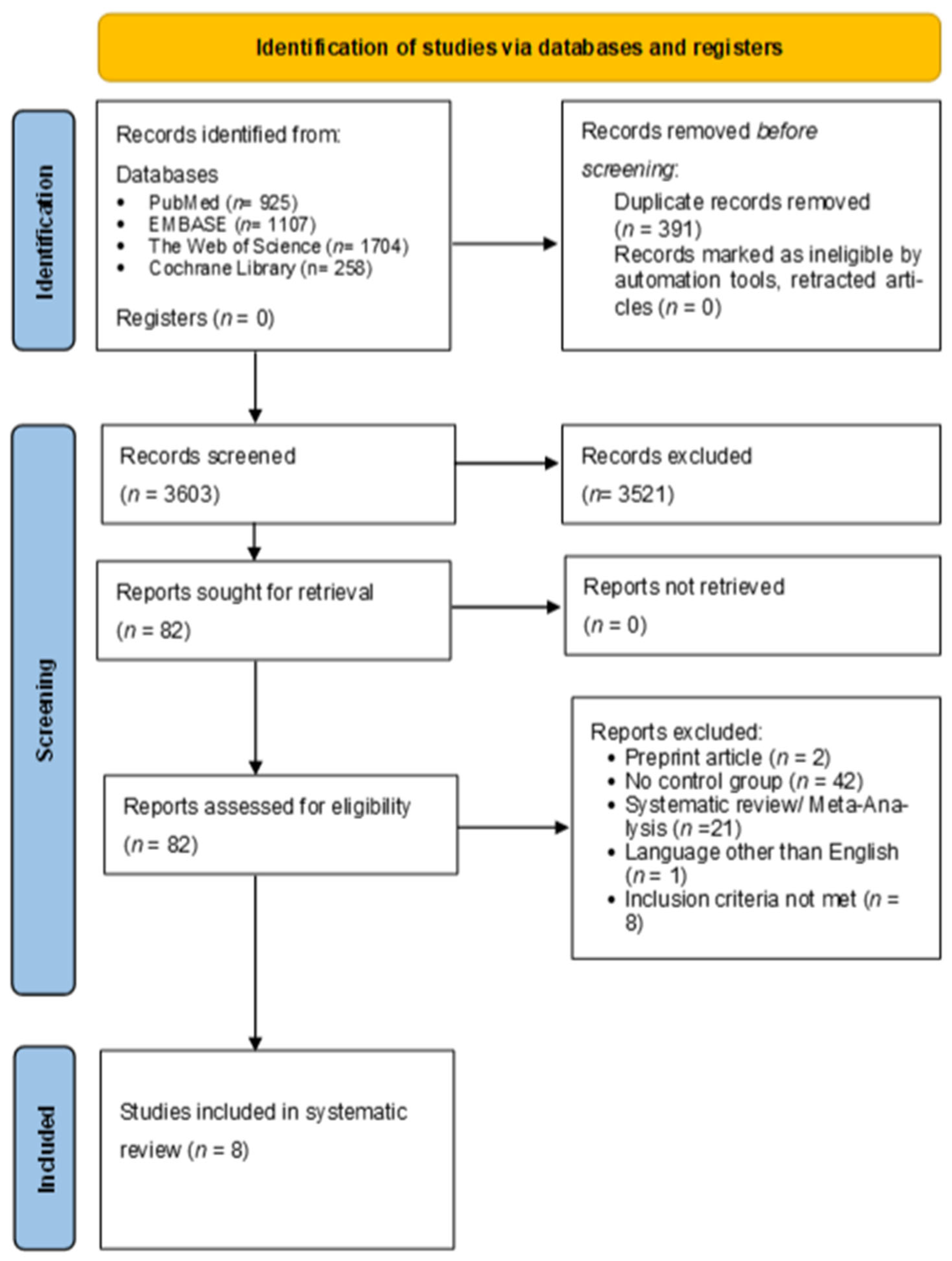
3.1. Literature Search Results
3.2. Study Characteristics
3.3. Quality Assessment
3.4. Transcriptome Studies
3.5. Extracellular Vesicles Containing miRNAs
3.6. Circulating miRNAs/mRNAs/mRNA in Blood and Plasma
3.7. tRNA-Derivates/tRNA-Derived Fragments
3.8. Mast Cell-Expressed Membrane Protein1 Gene Expression (MCEMP1)
4. Discussion
5. Conclusions
Supplementary Materials
Author Contributions
Funding
Institutional Review Board Statement
Informed Consent Statement
Data Availability Statement
Conflicts of Interest
Abbreviations
| AUC | Area Under Curve |
| CE | Cardioembolic stroke |
| CT | Computer Tomography |
| DAS | Differentially Alternatively Spliced genes |
| DET | Differentially Expressed Transcripts |
| ELISA | Enzyme-Linked Immunosorbent Assay |
| EV | Extracellular Vesicle |
| FC | Fold Change |
| FDR | False Discovery Rate |
| IS | Ischemic Stroke |
| HS | Hemorrhagic Stroke |
| HTA | Human Transcriptome Array |
| LAC | Lacunar Stroke |
| lncRNA XIST | Long coding RNA (X-inactive specific transcript) |
| LV | Large Vessel occlusive stroke |
| MCEMP1 | Mast Cell-Expressed Membrane Protein-1 |
| NOS | Newcastle–Ottawa Scale |
| PFKFB3 | 6-phosphofructo-2-kinase/fructose-2,6-biphosphatase |
| PRISMA | Preferred Reporting Items for Systematic Reviews and Meta-Analyses |
| qPCR | Quantitative Polymerase Chain Reaction |
| RNAseq | RNA Sequencing |
| SAH | Subarachnoid Hemorrhage |
| SD | Standard Deviation |
| SE | Standard Error |
| TCR | T-Cell Receptor |
References
- Feigin, V.L.; Brainin, M.; Norrving, B.; Martins, S.; Sacco, R.L.; Hacke, W.; Fisher, M.; Pandian, J.; Lindsay, P. World Stroke Organization (WSO): Global Stroke Fact Sheet 2022. Int. J. Stroke 2022, 17, 18–29. [Google Scholar] [CrossRef]
- Saver, J.L. Time Is Brain—Quantified. Stroke 2006, 37, 263–266. [Google Scholar] [CrossRef]
- Pallesen, L.-P.; Winzer, S.; Hartmann, C.; Kuhn, M.; Gerber, J.C.; Theilen, H.; Hädrich, K.; Siepmann, T.; Barlinn, K.; Rahmig, J.; et al. Team Prenotification Reduces Procedure Times for Patients with Acute Ischemic Stroke Due to Large Vessel Occlusion Who Are Transferred for Endovascular Therapy. Front. Neurol. 2022, 12, 787161. [Google Scholar] [CrossRef] [PubMed]
- Lumley, H.A.; Flynn, D.; Shaw, L.; McClelland, G.; Ford, G.A.; White, P.M.; Price, C.I. A scoping review of pre-hospital technology to assist ambulance personnel with patient diagnosis or stratification during the emergency assessment of suspected stroke. BMC Emerg. Med. 2020, 20, 30. [Google Scholar] [CrossRef]
- John, S.; Stock, S.; Cerejo, R.; Uchino, K.; Winners, S.; Russman, A.; Masaryk, T.; Rasmussen, P.; Hussain, M.S. Brain Imaging Using Mobile CT: Current Status and Future Prospects. J. Neuroimaging 2015, 26, 5–15. [Google Scholar] [CrossRef]
- Piorino, F.; Patterson, A.T.; Styczynski, M.P. Low-cost, point-of-care biomarker quantification. Curr. Opin. Biotechnol. 2022, 76, 102738. [Google Scholar] [CrossRef]
- Misra, S.; Montaner, J.; Ramiro, L.; Arora, R.; Talwar, P.; Nath, M.; Kumar, A.; Kumar, P.; Pandit, A.K.; Mohania, D.; et al. Blood biomarkers for the diagnosis and differentiation of stroke: A systematic review and meta-analysis. Int. J. Stroke Off. J. Int. Stroke Soc. 2020, 15, 704–721. [Google Scholar] [CrossRef] [PubMed]
- Mattila, O.S.; Ashton, N.J.; Blennow, K.; Zetterberg, H.; Harve-Rytsälä, H.; Pihlasviita, S.; Ritvonen, J.; Sibolt, G.; Nukarinen, T.; Curtze, S.; et al. Ultra-Early Differential Diagnosis of Acute Cerebral Ischemia and Hemorrhagic Stroke by Measuring the Prehospital Release Rate of GFAP. Clin. Chem. 2021, 67, 1361–1372. [Google Scholar] [CrossRef]
- Bustamante, A.; Penalba, A.; Orset, C.; Azurmendi, L.; Llombart, V.; Simats, A.; Pecharroman, E.; Ventura, O.; Ribo, M.; Vivien, D.; et al. Blood Biomarkers to Differentiate Ischemic and Hemorrhagic Strokes. Neurology 2021, 96, E1928–E1939. [Google Scholar] [CrossRef] [PubMed]
- Dvorak, F.; Haberer, I.; Sitzer, M.; Foerch, C. Characterisation of the Diagnostic Window of Serum Glial Fibrillary Acidic Protein for the Differentiation of Intracerebral Haemorrhage and Ischaemic Stroke. Cerebrovasc. Dis. 2009, 27, 37–41. [Google Scholar] [CrossRef]
- di Biase, L.; Bonura, A.; Pecoraro, P.M.; Carbone, S.P.; Di Lazzaro, V. Unlocking the Potential of Stroke Blood Biomarkers: Early Diagnosis, Ischemic vs. Haemorrhagic Differentiation and Haemorrhagic Transformation Risk: A Comprehensive Review. Int. J. Mol. Sci. 2023, 24, 11545. [Google Scholar] [CrossRef] [PubMed]
- Green, E.D.; Watson, J.D.; Collins, F.S. Human Genome Project: Twenty-five years of big biology. Nature 2015, 526, 29–31. [Google Scholar] [CrossRef] [PubMed]
- Zheng, K.; Lin, L.; Jiang, W.; Chen, L.; Zhang, X.; Zhang, Q.; Ren, Y.; Hao, J. Single-cell RNA-seq reveals the transcriptional landscape in ischemic stroke. J. Cereb. Blood Flow Metab. 2022, 42, 56–73. [Google Scholar] [CrossRef]
- Strasser, E.F.; Steininger, P.A.; Korn, K.; Achenbach, S.; Tenbusch, M.; Cunningham, S.; Zimmermann, R.; Überla, K.; Hackstein, H. Validation of a SARS-CoV-2 RNA RT-PCR assay for high-throughput testing in blood of COVID-19 convalescent plasma donors and patients. Transfusion 2021, 61, 368–374. [Google Scholar] [CrossRef]
- Liu, Y.; Beyer, A.; Aebersold, R. On the Dependency of Cellular Protein Levels on mRNA Abundance. Cell 2016, 165, 535–550. [Google Scholar] [CrossRef]
- Page, M.J.; McKenzie, J.E.; Bossuyt, P.M.; Boutron, I.; Hoffmann, T.C.; Mulrow, C.D.; Shamseer, L.; Tetzlaff, J.M.; Akl, E.A.; Brennan, S.E.; et al. The PRISMA 2020 statement: An updated guideline for reporting systematic reviews. BMJ 2021, 372, n71. [Google Scholar] [CrossRef]
- Prospero. Available online: https://www.crd.york.ac.uk/prospero/display_record.php?RecordID=411203 (accessed on 24 February 2025).
- Ivey, C.; Crum, J. Choosing the right citation management tool: EndNote, Mendeley, RefWorks, or Zotero. J. Med. Libr. Assoc. 2018, 106, 399–403. [Google Scholar] [CrossRef]
- Automeris.io: Computer Vision Assisted Data Extraction from Charts Using WebPlotDigitizer. Available online: https://automeris.io/WebPlotDigitizer/ (accessed on 24 February 2025).
- Ottawa Hospital Research Institute. Available online: https://www.ohri.ca/programs/clinical_epidemiology/oxford.asp (accessed on 24 February 2025).
- Fekadu Dadi, A.; Miller, E.R.; Mwanri, L. Antenatal depression and its association with adverse birth outcomes in low and middle-income countries: A systematic review and meta-analysis. PLoS ONE 2020, 15, e0227323. [Google Scholar] [CrossRef] [PubMed]
- Dykstra-Aiello, C.; Jickling, G.C.; Ander, B.P.; Zhan, X.; Liu, D.; Hull, H.; Orantia, M.; Ho, C.; Stamova, B. Intracerebral Hemorrhage and Ischemic Stroke of Different Etiologies Have Distinct Alternatively Spliced mRNA Profiles in the Blood: A Pilot RNA-seq Study. Transl. Stroke Res. 2015, 6, 284–289. [Google Scholar] [CrossRef]
- Stamova, B.; Jickling, G.; Ander, B.; Zhan, X.; Liu, D.; Hull, H.; Dykstra-Aiello, C.; Durocher, M.; Shroff, N.; Orantia, M.; et al. Intracerebral hemorrhage and ischemic stroke have different transcriptome architecture in human blood. J. Cereb. Blood Flow Metab. 2017, 37, 436–437. [Google Scholar]
- Kalani, M.Y.S.; Alsop, E.; Meechoovet, B.; Beecroft, T.; Agrawal, K.; Whitsett, T.G.; Huentelman, M.J.; Spetzler, R.F.; Nakaji, P.; Kim, S.; et al. Extracellular microRNAs in blood differentiate between ischaemic and haemorrhagic stroke subtypes. J. Extracell. Vesicles 2020, 9, 1713540. [Google Scholar] [CrossRef]
- Ishida, T.; Inoue, T.; Niizuma, K.; Konno, N.; Suzuki, C.; Inoue, T.; Ezura, M.; Uenohara, H.; Abe, T.; Tominaga, T. Prediction of Functional Outcome in Patients with Acute Stroke by Measuring tRNA Derivatives. Cerebrovasc. Dis. 2020, 49, 639–646. [Google Scholar] [CrossRef]
- Leung, L.Y.; Chan, C.P.Y.; Leung, Y.K.; Jiang, H.L.; Abrigo, J.M.; Wang, D.F.; Chung, J.S.H.; Rainer, T.H.; Graham, C.A. Comparison of miR-124-3p and miR-16 for early diagnosis of hemorrhagic and ischemic stroke. Clin. Chim. Acta 2014, 433, 139–144. [Google Scholar] [CrossRef]
- Raman, K.; O’Donnell, M.J.; Czlonkowska, A.; Duarte, Y.C.; Lopez-Jaramillo, P.; Penaherrera, E.; Sharma, M.; Shoamanesh, A.; Skowronska, M.; Yusuf, S.; et al. Peripheral Blood MCEMP1 Gene Expression as a Biomarker for Stroke Prognosis. Stroke 2016, 47, 652–658. [Google Scholar] [CrossRef]
- Elhorany, M.; El-Horany, H.E.; Abd-Ellatif, R.N.; Dawood, L.M.; Watany, M.M.; Basiouny, M.A.; Hegab, I.I.; Alsheikh, M.Y.; Kabel, A.M.; Atef, M.M. The expression and significance of long noncoding RNA XIST/microRNA-340-5p axis and metabolic reprogramming biomarkers in acute cerebrovascular stroke patients: A cross-sectional study. Medicine 2024, 103, e41092. [Google Scholar] [CrossRef]
- Woudenberg, T.; van der Bent, M.L.; van den Homberg, D.A.L.; Nguyen, T.T.M.; Wermer, M.J.H.; van den Wijngaard, I.R.; Quax, P.H.A.; Nossent, A.Y.; Kruyt, N.D. Validation of tRNA-derived fragments as diagnostic biomarkers in suspected acute stroke; limitations in analysis and quantification methods. Mol. Ther. Nucleic Acids 2025, 36, 102553. [Google Scholar] [CrossRef] [PubMed]
- Zhang, J.; Li, S.; Li, L.; Li, M.; Guo, C.; Yao, J.; Mi, S. Exosome and Exosomal MicroRNA: Trafficking, Sorting, and Function. Genom. Proteom. Bioinform. 2015, 13, 17–24. [Google Scholar] [CrossRef] [PubMed]
- Li, M.; Zhang, J. Circulating MicroRNAs: Potential and Emerging Biomarkers for Diagnosis of Cardiovascular and Cerebrovascular Diseases. BioMed Res. Int. 2015, 2015, 730535. [Google Scholar] [CrossRef] [PubMed]
- Li, J.; Ming, Z.; Yang, L.; Wang, T.; Liu, G.; Ma, Q. Long noncoding RNA XIST: Mechanisms for X chromosome inactivation, roles in sex-biased diseases, and therapeutic opportunities. Genes Dis. 2022, 9, 1478–1492. [Google Scholar] [CrossRef]
- PFKFB3 6-phosphofructo-2-kinase/fructose-2,6-biphosphatase 3 [Homo Sapiens (Human)]—Gene—NCBI. Available online: https://www.ncbi.nlm.nih.gov/gene/5209 (accessed on 20 January 2026).
- Liu, Z.; Mao, X.; Yang, Q.; Zhang, X.; Xu, J.; Ma, Q.; Zhou, Y.; Da, Q.; Cai, Y.; Sopeyin, A.; et al. Suppression of myeloid PFKFB3-driven glycolysis protects mice from choroidal neovascularization. Br. J. Pharmacol. 2022, 179, 5109–5131. [Google Scholar] [CrossRef]
- O’Donnell, M.J.; Xavier, D.; Liu, L.; Zhang, H.; Chin, S.L.; Rao-Melacini, P.; Rangarajan, S.; Islam, S.; Pais, P.; McQueen, M.J.; et al. Risk factors for ischaemic and intracerebral haemorrhagic stroke in 22 countries (the INTERSTROKE study): A case-control study. Lancet 2010, 376, 112–123. [Google Scholar] [CrossRef]
- O’Donnell, M.; Xavier, D.; Diener, C.; Sacco, R.; Lisheng, L.; Zhang, H.; Pias, P.; Truelsen, T.; Chin, S.L.; Rangarajan, S.; et al. Rationale and Design of INTERSTROKE: A Global Case-Control Study of Risk Factors for Stroke. Neuroepidemiology 2010, 35, 36–44. [Google Scholar] [CrossRef] [PubMed]
- Karaaslan, Z.; Kahraman, Ö.T.; Şanlı, E.; Ergen, H.A.; Ulusoy, C.; Bilgiç, B.; Yılmaz, V.; Tüzün, E.; Hanağası, H.A.; Küçükali, C.İ. Inflammation and regulatory T cell genes are differentially expressed in peripheral blood mononuclear cells of Parkinson’s disease patients. Sci. Rep. 2021, 11, 2316. [Google Scholar] [CrossRef] [PubMed]
- Xue, M.; Zhang, S.; Xie, J.; Zhang, X.; Liu, F.; Huang, Y.; Liu, L.; Liu, S.; Guo, F.; Yang, Y.; et al. Differential expression of genes associated with T lymphocytes function in septic patients with hypoxemia challenge. Ann. Transl. Med. 2019, 7, 810. [Google Scholar] [CrossRef]
- Young, J.J.; Park, H.-J.; Kim, M.; Par-Young, J.; Bartlett, H.; Kim, H.S.; Unlu, S.; Osmani, L.; Shin, M.S.; Bucala, R.; et al. Aging gene signature of memory CD8+ T cells is associated with neurocognitive functioning in Alzheimer’s disease. Immun. Ageing 2023, 20, 71. [Google Scholar] [CrossRef] [PubMed]
- Wang, Q.; Tang, X.; Yenari, M. The inflammatory response in stroke. J. Neuroimmunol. 2007, 184, 53–68. [Google Scholar] [CrossRef]
- DeLong, J.H.; Ohashi, S.N.; O’Connor, K.C.; Sansing, L.H. Inflammatory Responses After Ischemic Stroke. Semin. Immunopathol. 2022, 44, 625–648. [Google Scholar] [CrossRef]
- Keep, R.F.; Hua, Y.; Xi, G. Intracerebral haemorrhage: Mechanisms of injury and therapeutic targets. Lancet Neurol. 2012, 11, 720–731. [Google Scholar] [CrossRef]
- Bonsergent, E.; Grisard, E.; Buchrieser, J.; Schwartz, O.; Théry, C.; Lavieu, G. Quantitative characterization of extracellular vesicle uptake and content delivery within mammalian cells. Nat. Commun. 2021, 12, 1864. [Google Scholar] [CrossRef]
- Sheta, M.; Taha, E.A.; Lu, Y.; Eguchi, T. Extracellular Vesicles: New Classification and Tumor Immunosuppression. Biology 2023, 12, 110. [Google Scholar] [CrossRef]
- Pink, R.C.; Beaman, E.-M.; Samuel, P.; Brooks, S.A.; Carter, D.R.F. Utilising extracellular vesicles for early cancer diagnostics: Benefits, challenges and recommendations for the future. Br. J. Cancer 2022, 126, 323–330. [Google Scholar] [CrossRef] [PubMed]
- Xu, P.; Wu, Q.; Yu, J.; Rao, Y.; Kou, Z.; Fang, G.; Shi, X.; Liu, W.; Han, H. A Systematic Way to Infer the Regulation Relations of miRNAs on Target Genes and Critical miRNAs in Cancers. Front. Genet. 2020, 11, 278. [Google Scholar] [CrossRef] [PubMed]
- Ying, S.-Y.; Chang, D.C.; Lin, S.-L. The MicroRNA (miRNA): Overview of the RNA Genes that Modulate Gene Function. Mol. Biotechnol. 2008, 38, 257–268. [Google Scholar] [CrossRef]
- Krichevsky, A.M.; Sonntag, K.-C.; Isacson, O.; Kosik, K.S. Specific MicroRNAs Modulate Embryonic Stem Cell–Derived Neurogenesis. Stem Cells 2006, 24, 857–864. [Google Scholar] [CrossRef]
- Zhao, J.; He, Z.; Wang, J. MicroRNA-124: A Key Player in Microglia-Mediated Inflammation in Neurological Diseases. Front. Cell. Neurosci. 2021, 15, 771898. [Google Scholar] [CrossRef]
- Wei, W.; Wang, Z.-Y.; Ma, L.-N.; Zhang, T.-T.; Cao, Y.; Li, H. MicroRNAs in Alzheimer’s Disease: Function and Potential Applications as Diagnostic Biomarkers. Front. Mol. Neurosci. 2020, 13, 160. [Google Scholar] [CrossRef] [PubMed]
- Liu, J.; Zhang, H.; Di, K.; Hou, L.; Yu, S. Circular noncoding RNA circ_0007865, serves as a competing endogenous RNA, targeting the miR-214-3p/FKBP5 axis to regulate oxygen-glucose deprivation-induced injury in brain microvascular endothelial cells. Neuroreport 2022, 33, 163–172. [Google Scholar] [CrossRef]
- Yan, X.; Liang, H.; Deng, T.; Zhu, K.; Zhang, S.; Wang, N.; Jiang, X.; Wang, X.; Liu, R.; Zen, K.; et al. The identification of novel targets of miR-16 and characterization of their biological functions in cancer cells. Mol. Cancer 2013, 12, 92. [Google Scholar] [CrossRef]
- Yan, L.; Liang, M.; Hou, X.; Zhang, Y.; Zhang, H.; Guo, Z.; Jinyu, J.; Feng, Z.; Mei, Z. The role of microRNA-16 in the pathogenesis of autoimmune diseases: A comprehensive review. Biomed. Pharmacother. 2019, 112, 108583. [Google Scholar] [CrossRef]
- Zheng, Y.; Zhao, P.; Lian, Y.; Li, S.; Chen, Y.; Li, L. MiR-340-5p alleviates oxygen-glucose deprivation/reoxygenation-induced neuronal injury via PI3K/Akt activation by targeting PDCD4. Neurochem. Int. 2020, 134, 104650. [Google Scholar] [CrossRef]
- Wang, J.; Liu, G. Protective effect of microRNA-340-5p against oxygen-glucose deprivation/reperfusion in PC12 cells through targeting neuronal differentiation 4. Mol. Med. Rep. 2020, 22, 964–974. [Google Scholar] [CrossRef]
- Lin, B.; Xu, J.; Wang, F.; Wang, J.; Zhao, H.; Feng, D. LncRNA XIST promotes myocardial infarction by regulating FOS through targeting miR-101a-3p. Aging 2020, 12, 7232–7247. [Google Scholar] [CrossRef]
- Hu, W.-N.; Duan, Z.-Y.; Wang, Q.; Zhou, D.-H. The suppression of ox-LDL-induced inflammatory response and apoptosis of HUVEC by lncRNA XIAT knockdown via regulating miR-30c-5p/PTEN axis. Eur. Rev. Med. Pharmacol. Sci. 2019, 23, 7628–7638. [Google Scholar]
- Fullerton, J.L.; Thomas, J.M.; Gonzalez-Trueba, L.; Trivett, C.; van Kralingen, J.C.; Allan, S.M.; Quinn, T.J.; Work, L.M. Systematic review: Association between circulating microRNA expression & stroke. J. Cereb. Blood Flow Metab. 2022, 42, 935–951. [Google Scholar] [CrossRef]
- Guo, Y.; Gao, Y.; Liu, S. lncRNA XIST is associated with preeclampsia and mediates trophoblast cell invasion via miR-340-5p/KCNJ16 signaling pathway. Transpl. Immunol. 2022, 74, 101666. [Google Scholar] [CrossRef]
- Bai, Q.; Li, Y.; Song, K.; Huang, J.; Qin, L. Knockdown of XIST up-regulates 263294miR-340-5p to relieve myocardial ischaemia–reperfusion injury via inhibiting cyclin D1. ESC Heart Fail. 2022, 9, 1050–1060. [Google Scholar] [CrossRef] [PubMed]
- Zhu, Y.; Yang, X.; Zhou, J.; Chen, L.; Zuo, P.; Chen, L.; Jiang, L.; Li, T.; Wang, D.; Xu, Y.; et al. miR-340-5p Mediates Cardiomyocyte Oxidative Stress in Diabetes-Induced Cardiac Dysfunction by Targeting Mcl-1. Oxidative Med. Cell. Longev. 2022, 2022, 3182931. [Google Scholar] [CrossRef]
- Stirm, L.; Huypens, P.; Sass, S.; Batra, R.; Fritsche, L.; Brucker, S.; Abele, H.; Hennige, A.M.; Theis, F.; Beckers, J.; et al. Maternal whole blood cell miRNA-340 is elevated in gestational diabetes and inversely regulated by glucose and insulin. Sci. Rep. 2018, 8, 1366. [Google Scholar] [CrossRef] [PubMed]
- Guo, S.; Li, A.; Fu, X.; Li, Z.; Cao, K.; Song, M.; Huang, S.; Li, Z.; Yan, J.; Wang, L.; et al. Gene-dosage effect of Pfkfb3 on monocyte/macrophage biology in atherosclerosis. Br. J. Pharmacol. 2022, 179, 4974–4991. [Google Scholar] [CrossRef]
- Yang, Q.; Zong, X.; Zhuang, L.; Pan, R.; Tudi, X.; Fan, Q.; Tao, R. PFKFB3 Inhibitor 3PO Reduces Cardiac Remodeling after Myocardial Infarction by Regulating the TGF-β1/SMAD2/3 Pathway. Biomolecules 2023, 13, 1072. [Google Scholar] [CrossRef] [PubMed]
- Poels, K.; Schnitzler, J.G.; Waissi, F.; Levels, J.H.M.; Stroes, E.S.G.; Daemen, M.J.A.P.; Lutgens, E.; Pennekamp, A.-M.; De Kleijn, D.P.V.; Seijkens, T.T.P.; et al. Inhibition of PFKFB3 Hampers the Progression of Atherosclerosis and Promotes Plaque Stability. Front. Cell Dev. Biol. 2020, 8, 581641. [Google Scholar] [CrossRef]
- Yang, Z.; Fujii, H.; Mohan, S.V.; Goronzy, J.J.; Weyand, C.M. Phosphofructokinase deficiency impairs ATP generation, autophagy, and redox balance in rheumatoid arthritis T cells. J. Exp. Med. 2013, 210, 2119–2134. [Google Scholar] [CrossRef] [PubMed]
- Da, Q.; Huang, L.; Huang, C.; Chen, Z.; Jiang, Z.; Huang, F.; Shen, T.; Sun, L.; Yan, Z.; Ye, X.; et al. Glycolytic regulatory enzyme PFKFB3 as a prognostic and tumor microenvironment biomarker in human cancers. Aging 2023, 15, 4533–4559. [Google Scholar] [CrossRef] [PubMed]
- Wei, C.; Li, J.; Bumgarner, R.E. Sample size for detecting differentially expressed genes in microarray experiments. BMC Genom. 2004, 5, 87. [Google Scholar] [CrossRef] [PubMed]
- Caballero-Solares, A.; Hall, J.R.; Xue, X.; Rise, M.L. Reverse Transcription-Quantitative Real-Time Polymerase Chain Reaction (RT-qPCR) for Gene Expression Analyses. In Cancer Cell Biology; Christian, S.L., Ed.; Springer: New York, NY, USA, 2022; pp. 319–340. [Google Scholar]
- Bustin, S.A.; Benes, V.; Garson, J.A.; Hellemans, J.; Huggett, J.; Kubista, M.; Mueller, R.; Nolan, T.; Pfaffl, M.W.; Shipley, G.L.; et al. The MIQE Guidelines: Minimum Information for Publication of Quantitative Real-Time PCR Experiments. Clin. Chem. 2009, 55, 611–622. [Google Scholar] [CrossRef]
- Derveaux, S.; Vandesompele, J.; Hellemans, J. How to do successful gene expression analysis using real-time PCR. Methods 2010, 50, 227–230. [Google Scholar] [CrossRef]
- Rai, M.F.; Tycksen, E.D.; Sandell, L.J.; Brophy, R.H. Advantages of RNA-seq compared to RNA microarrays for transcriptome profiling of anterior cruciate ligament tears. J. Orthop. Res. 2018, 36, 484–497. [Google Scholar] [CrossRef]
- Liao, P.; Satten, G.A.; Hu, Y.-J. PhredEM: A phred-score-informed genotype-calling approach for next-generation sequencing studies. Genet. Epidemiol. 2017, 41, 375–387. [Google Scholar] [CrossRef]
- Fregni, F.; Illigens, B.M.W. (Eds.) Critical Thinking in Clinical Research: Applied Theory and Practice Using Case Studies; Oxford University Press: New York, NY, USA, 2018. [Google Scholar]
- Anders, S.; Huber, W. Differential expression analysis for sequence count data. Genome Biol. 2010, 11, R106. [Google Scholar] [CrossRef]
- Victor, A.; Elsäßer, A.; Hommel, G.; Blettner, M. Judging a Plethora of p-Values. Dtsch. Ärzteblatt Int. 2010, 107, 50–56. [Google Scholar] [CrossRef]
- Mutch, D.M.; Berger, A.; Mansourian, R.; Rytz, A.; Roberts, M.-A. The limit fold change model: A practical approach for selecting differentially expressed genes from microarray data. BMC Bioinform. 2002, 3, 17. [Google Scholar] [CrossRef]
- Wang, C.; Liu, H. Factors influencing degradation kinetics of mRNAs and half-lives of microRNAs, circRNAs, lncRNAs in blood in vitro using quantitative PCR. Sci. Rep. 2022, 12, 7259. [Google Scholar] [CrossRef]
- Zhang, H.; Yang, H.; Zhang, C.; Jing, Y.; Wang, C.; Liu, C.; Zhang, R.; Wang, J.; Zhang, J.; Zen, K.; et al. Investigation of MicroRNA Expression in Human Serum During the Aging Process. J. Gerontol. Ser. A 2015, 70, 102–109. [Google Scholar] [CrossRef]
- Guo, L.; Zhang, Q.; Ma, X.; Wang, J.; Liang, T. miRNA and mRNA expression analysis reveals potential sex-biased miRNA expression. Sci. Rep. 2017, 7, 39812. [Google Scholar]
- Sharma, S.; Eghbali, M. Influence of sex differences on microRNA gene regulation in disease. Biol. Sex. Dif. 2014, 5, 3. [Google Scholar] [CrossRef] [PubMed]
- Shoeibi, A.; Razmi, N.; Ghabeli Juibary, A.; Hashemy, S.I. The Evaluation and Comparison of Oxidative Stress in Hemorrhagic and Ischemic Stroke. Caspian J. Neurol. Sci. 2017, 3, 206–213. [Google Scholar] [CrossRef]
- Oliveira, A.C.; Bovolenta, L.A.; Alves, L.; Figueiredo, L.; Ribeiro, A.O.; Campos, V.F.; Lemke, N.; Pinhal, D. Understanding the Modus Operandi of MicroRNA Regulatory Clusters. Cells 2019, 8, 1103. [Google Scholar] [CrossRef] [PubMed]
- Kiselev, V.Y.; Andrews, T.S.; Hemberg, M. Challenges in unsupervised clustering of single-cell RNA-seq data. Nat. Rev. Genet. 2019, 20, 273–282. [Google Scholar] [CrossRef]
- Ranjan, B.; Schmidt, F.; Sun, W.; Park, J.; Honardoost, M.A.; Tan, J.; Arul Rayan, N.; Prabhakar, S. scConsensus: Combining supervised and unsupervised clustering for cell type identification in single-cell RNA sequencing data. BMC Bioinform. 2021, 22, 186. [Google Scholar] [CrossRef]
- Tsuyuzaki, K.; Sato, H.; Sato, K.; Nikaido, I. Benchmarking principal component analysis for large-scale single-cell RNA-sequencing. Genome Biol. 2020, 21, 9. [Google Scholar] [CrossRef]


| (a) | |||||||||
| Author | Year | Country | IS (N) | IS, Age [Mean (SD)] | HS (N) | HS, Age [Mean (SD)] | Blood Collecting Time in h, Mean (SD), Median [IQR] | Risk Factors | |
| Ischemic Stroke | Ischemic Stroke | ||||||||
| Leung et al. [26] | 2014 | China | 74 | n.a. | 19 | n.a. | 7.5 [9.6] | n.a. | n.a. |
| Dykstra-Aiello et al. [22] | 2016 | USA | CEI: 4 LV: 4 LAC: 4 | CEI: 62.3 (9.6) LV: 61.0 (8.2) LAC: 58.9 (9.0) | 4 | 60.1 (2.3) | CEI: 33.7 (18.9) LV: 47.4 (47.8) LAC: 34.6 (23.7) ICH: 29.4 (15.5) | HT: CEI: 4/4; LV: 4/4; LAC: 2/4 D.m.: CEI: 2/4; LV: 2/4; LAC: 0/4 HLP: CEI: 3/4; LV: 2/4; LAC: 2/4 | HTN: 3/4 D.m.: 4/4 HLP: 4/4 |
| Raman et al. [27] | 2016 | Canada | Discovery phase (n = 104): ≤24 h, n = 12 24–48 h, n = 31 48–72 h, n = 35 72–96 h, n = 22 96+ h, n = 4 Subset: n = 19 Validation phase: n = 24 | n.a. | Discovery Phase (n = 25): ≤24 h, n = 6 24–48 h, n = 7 48–72h, n = 8 72–96 h, n = 4 96+ h, n = 0 Subset: n = 57 Validation phase: n = 4 | n.a. | Discovery phase: 52.1 (23.7) Subset: n.a. Validation phase: 63.2 (26.5) | n.a. | n.a. |
| Stamova et al. [23] | 2019 | USA | 33 | 64.8 (13.0) | 33 | 62 (14.3) | IS: 48.5 (28) HS: 57.3 (30.6) | HTN: 25/33 D.m.: 6/33 HLP: 12/33 Current Smoker: 9/33 | HTN: 23/33 D.m.: 6/33 HLP: 6/33 Current Smoker: 7/33 |
| Ishida et al. [25] | 2020 | Japan | 75 | 72.1 (SE:1.32) | 66 | 64.3 (SE:1.52) | IS: 6.02 (SE:0.85) HS: 5.08 (SE:1.06) | HTN: 42/75 D.m.: 20/75 Prior Stroke: 9/75 Current Smoker: 26/75 BMI > 25: 21/75 Alcohol use: 24/75 Coronary disease: 13/75 | HTN: 54/66 D.m.: 16/66 Prior Stroke: 6/66 Smoker: 24/66 BMI > 25: 9/66 Alcohol use: 17/66 Coronary disease: 4/66 |
| Kalani et al. [24] | 2020 | USA | 21 | 66 (n.a.) | SAH: n = 17 HS: n = 19 | SAH: 58 (n.a.) HS: 65 (n.a.) | <24 h after last seen normal | Smoker: 3/21 HTN: 13/21 | SAH: Smoker: n.a. HTN: n.a. HS: Smoker: 3/19 HTN: 15/19 |
| Elhorany et al. [28] | 2024 | Egypt | 40 | 53.05 (4.91) | 40 | 53.25 (5.79) | <24 h | HTN: 19/40 D.m.: 7/40 Smoker: 10/40 Heart Disease: 13/40 | HTN: 23/40 D.m.: 16/40 Smoker: 7/40 Heart Disease: 2/40 |
| Woudenberg et al. [29] | 2025 | The Netherlands | 35 | 71 (15) | 25 | 71(11) | <6 h | HTN: 22/34 D.m. 7/34 Hyperlipidemia: 18/34 Myocardial infarction: 5/34 Ischemic Stroke/TIA: 10/34 Intracerebral hem.: 2/34 | HTN: 10/25 D.m. 2/25 Hyperlipidemia: 11/25 Myocardial infarction: 4/25 Ischemic Stroke/TIA: 7/25 Intracerebral hem.: 1/25 |
| (b) | |||||||||
| Author | Target | Method | Results | ||||||
| AUC (95% CI) | Sensitivity | Specificity | Upregulation vs. Downregulation | ||||||
| Leung et al. [26] | miR-124-3p | qPCR | 0.70 (0.59–0.79), cutoff > 3 × 10⁵ copies/mL plasma, | 68.4% | 71.2% | (0–6 h), p = 0.0217 | |||
| miR-16 | 0.66 (0.55–0.76), cutoff of ≤2 × 10⁵ copies/mL plasma | 94.7% | 35.1% | (0–6 h), p > 0.05; (6–24 h): p = 0.0061 | |||||
| Dykstra-Aiello et al. [22] | Transcriptome | RNA-Seq. | n.a. | n.a. | n.a. | Expression rate > 2-fold IS vs. HS: DAS: none; Exons: none Expression rate < 0.5 fold IS vs. HS: DAS: FAM118A; FCER1A; HDC Exons, FC < 0.5: chr1.46467098-46468407 > MAST2 chr2.88336462-8833 570 > KRCC1 | |||
| Raman et al. [27] | MCEMP1 | Discovery phase: Microarray | 0.75 (0.65–0.85) | n.a. | n.a. | Discovery phase (all times) HS vs. IS: p < 0.0005 HS vs. IS: 2.1 fold, p = 3.9 × 10⁻⁴ | |||
| Subset: qPCR | n.a. | n.a. | n.a. | Subset (all times) HS vs. IS: p < 0.05 | |||||
| Validation phase: qPCR | n.a. | n.a. | n.a. | Validation phase (all times) HS vs. IS: p = 0.074 (HS vs. IS: FC > 4.4) | |||||
| Stamova et al. [23] | Transcriptome | HTA | n.a. | n.a. | n.a. | FC > 2, p < 0.05: EVL-017; RAB27A-002; TBC1D8-011 FC < (−2), p < 0.05: ANKH-201; AP2B1-012; APOBEC3G-004; ITGB7-006; LEF1-005; LEF1-009; LMNB1-004; N.A.P1L1-008; PTPN4-004; RHCE-002; RP11-175P13.3-001; RRM1-014; SLC16A10-004; TTC39B-204 T-cell-Receptors: HS: n = 55 DET from TCR genes vs. IS n = 0 DET for TCR | |||
| Ishida et al. [25] | tRNA- derivates | ELISA | n.a. | n.a. | n.a. | IS vs. HS tRNA derivate levels (day 0): p = 0.7277 Infarction volume vs. tRNA derivates: (r = 0.445, p = 0.00018). Hematoma volume vs. tRNA derivates: (r = 0.34, p = 0.0072). | |||
| Kalani et al. [24] | Extracellular miRNA | RNA-Seq. | IS vs. SAH + HS: 0.752 ± 0.003 Accuracy: 0.816 ± 0.003 IS vs. SAH: 0.89 ± 0.028 Accuracy: 0.97 ± 0.065 SAH vs. HS: 0.98 ± 0.044 Accuracy: 0.94 ± 0.086 SAH vs. IS + HS: 0.927 ± 0.009 Accuracy: 0.97 ± 0.002 HS vs. IS: 0.824 ± 0.001 Accuracy: 0.81 ± 0.004 | n.a. | n.a. | n.a. | |||
| Elhorany et al. [28] | miRNA-340-5P | qPCR | 0.979 (n.a.), cutoff = 0.63 | 97.5% | 92.5% | HS vs. IS: 0.423 ± 0.054 and 0.767 ± 0.052, p < 0.05 | |||
| PFKFB3 mRNA | 0.98 (n.a.), cutoff = 2.21 | 95% | 92.5% | HS vs. IS: 3.028 ± 0.372 and 1.554 ± 0.376, p < 0.05 | |||||
| lncRNA XIST | 0.99 (n.a.), cutoff = 2.02 | 95% | 95% | HS vs. IS: 3.632 ± 0.511 and 1.587 ± 0.092, p < 0.05 | |||||
| Woudenberg et al. [29] | t-RNA fragments | qPCR | ROC analysis HS vs. IS + SM ValCAC: 0.412 (0.282–0.542) TyrGTA: 0.485 (0.359–0.611) ThrCGT: 0.484 (0.350–0.619) | n.a. | n.a. | Common-tRF model: IS vs. HS + SM: 0.544 (0.413–0.666) HS vs. IS + SM: 0.371 (0.238–0.504) | |||
| ROC analysis IS vs. HS + SM ValCAC: 0.560 (0.434–0.686) TyrGTA: 0.574 (0.444–0.705) ThrCGT: 0.552 (0.428–0.0675) | |||||||||
| Author | Study Year | Selection 1 | Selection 2 | Selection 3 | Selection 4 | Comparability | Exposure Outcome 1 | Exposure Outcome 2 | Exposure Outcome 3 | Total | Study Quality |
|---|---|---|---|---|---|---|---|---|---|---|---|
| Leung et al. [26] | 2014 | * | * | * | - | - | * | * | - | 5 | 2 |
| Dykstra-Aiello et al. [22] | 2015 | * | * | * | * | ** | * | * | - | 8 | 1 |
| Raman et al. [27] | 2016 | * | * | * | * | - | * | * | - | 6 | 2 |
| Stamova et al. [23] | 2019 | * | * | * | - | ** | * | * | - | 7 | 1 |
| Ishida et al. [25] | 2020 | * | * | * | * | - | * | * | - | 6 | 2 |
| Kalani et al. [24] | 2020 | * | * | * | - | - | * | * | - | 5 | 2 |
| Elhorany et al. [28] | 2024 | * | * | * | * | ** | * | * | * | 9 | 1 |
| Woudenberg et al. [29] | 2025 | * | * | * | * | * | * | * | - | 7 | 1 |
Disclaimer/Publisher’s Note: The statements, opinions and data contained in all publications are solely those of the individual author(s) and contributor(s) and not of MDPI and/or the editor(s). MDPI and/or the editor(s) disclaim responsibility for any injury to people or property resulting from any ideas, methods, instructions or products referred to in the content. |
© 2026 by the authors. Licensee MDPI, Basel, Switzerland. This article is an open access article distributed under the terms and conditions of the Creative Commons Attribution (CC BY) license.
Share and Cite
Emmerich, J.; Chanpura, A.; Barone, F.C.; Baird, A.E.; Lu, T.M.; Barlinn, K.; Illigens, B.W.M.; Tamayo, A.; Huttner, H.B.; Siepmann, T. RNA-Based Biomarkers for Diagnostic Discrimination of Ischemic and Hemorrhagic Stroke: A Systematic Review. J. Clin. Med. 2026, 15, 1392. https://doi.org/10.3390/jcm15041392
Emmerich J, Chanpura A, Barone FC, Baird AE, Lu TM, Barlinn K, Illigens BWM, Tamayo A, Huttner HB, Siepmann T. RNA-Based Biomarkers for Diagnostic Discrimination of Ischemic and Hemorrhagic Stroke: A Systematic Review. Journal of Clinical Medicine. 2026; 15(4):1392. https://doi.org/10.3390/jcm15041392
Chicago/Turabian StyleEmmerich, Jan, Aditya Chanpura, Frank C. Barone, Alison E. Baird, Tyler M. Lu, Kristian Barlinn, Ben W. M. Illigens, Arturo Tamayo, Hagen B. Huttner, and Timo Siepmann. 2026. "RNA-Based Biomarkers for Diagnostic Discrimination of Ischemic and Hemorrhagic Stroke: A Systematic Review" Journal of Clinical Medicine 15, no. 4: 1392. https://doi.org/10.3390/jcm15041392
APA StyleEmmerich, J., Chanpura, A., Barone, F. C., Baird, A. E., Lu, T. M., Barlinn, K., Illigens, B. W. M., Tamayo, A., Huttner, H. B., & Siepmann, T. (2026). RNA-Based Biomarkers for Diagnostic Discrimination of Ischemic and Hemorrhagic Stroke: A Systematic Review. Journal of Clinical Medicine, 15(4), 1392. https://doi.org/10.3390/jcm15041392