Optimal Medical Therapy Targeting Metabolic Status for Secondary Prevention in Patients Undergoing Percutaneous Coronary Intervention
 , , , , , , , ,
  ,
,  , and
, and 
Abstract
1. Introduction
2. Pathophysiology
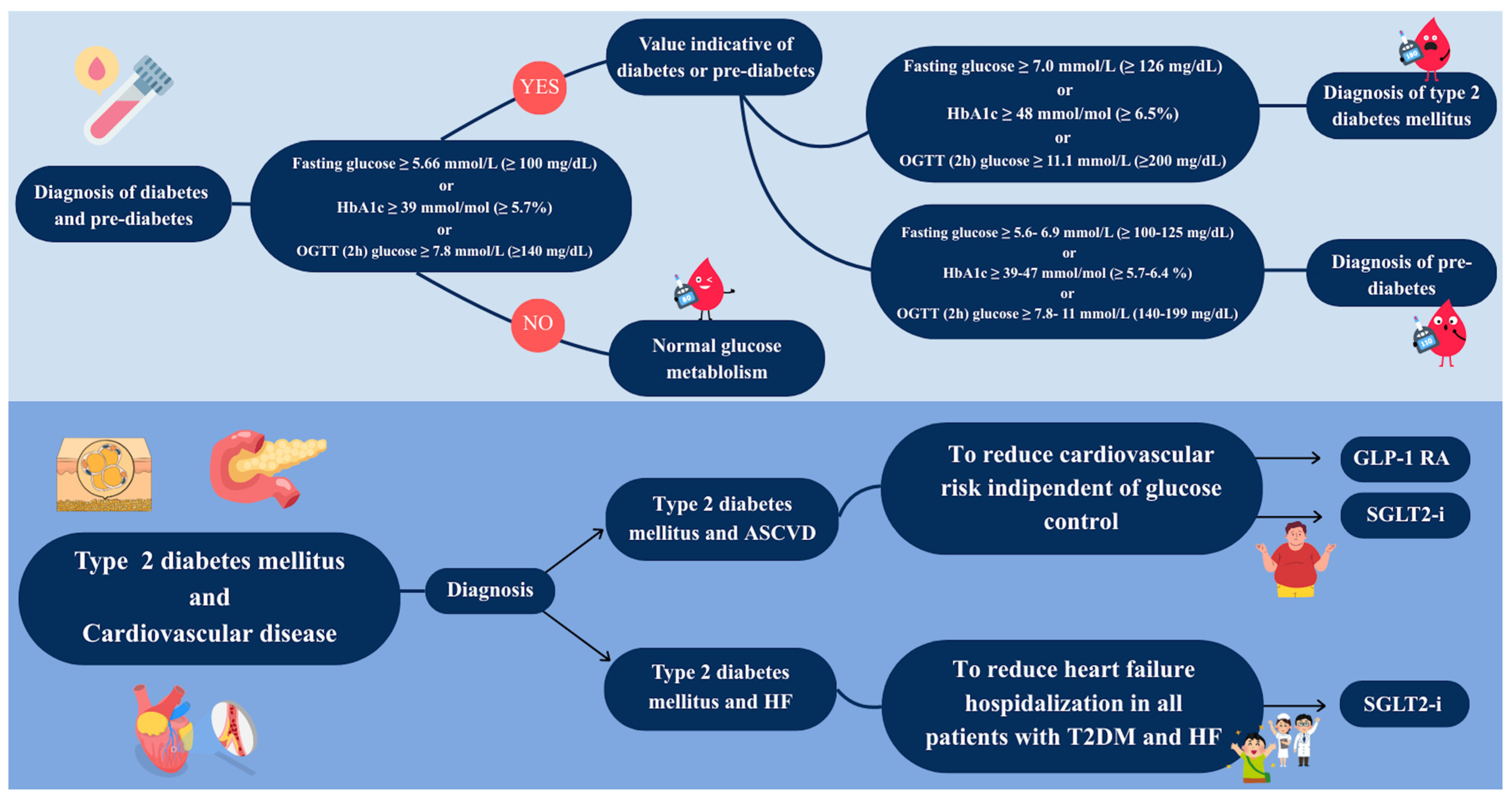
2.1. Pathophysiology of Diabetes Mellitus
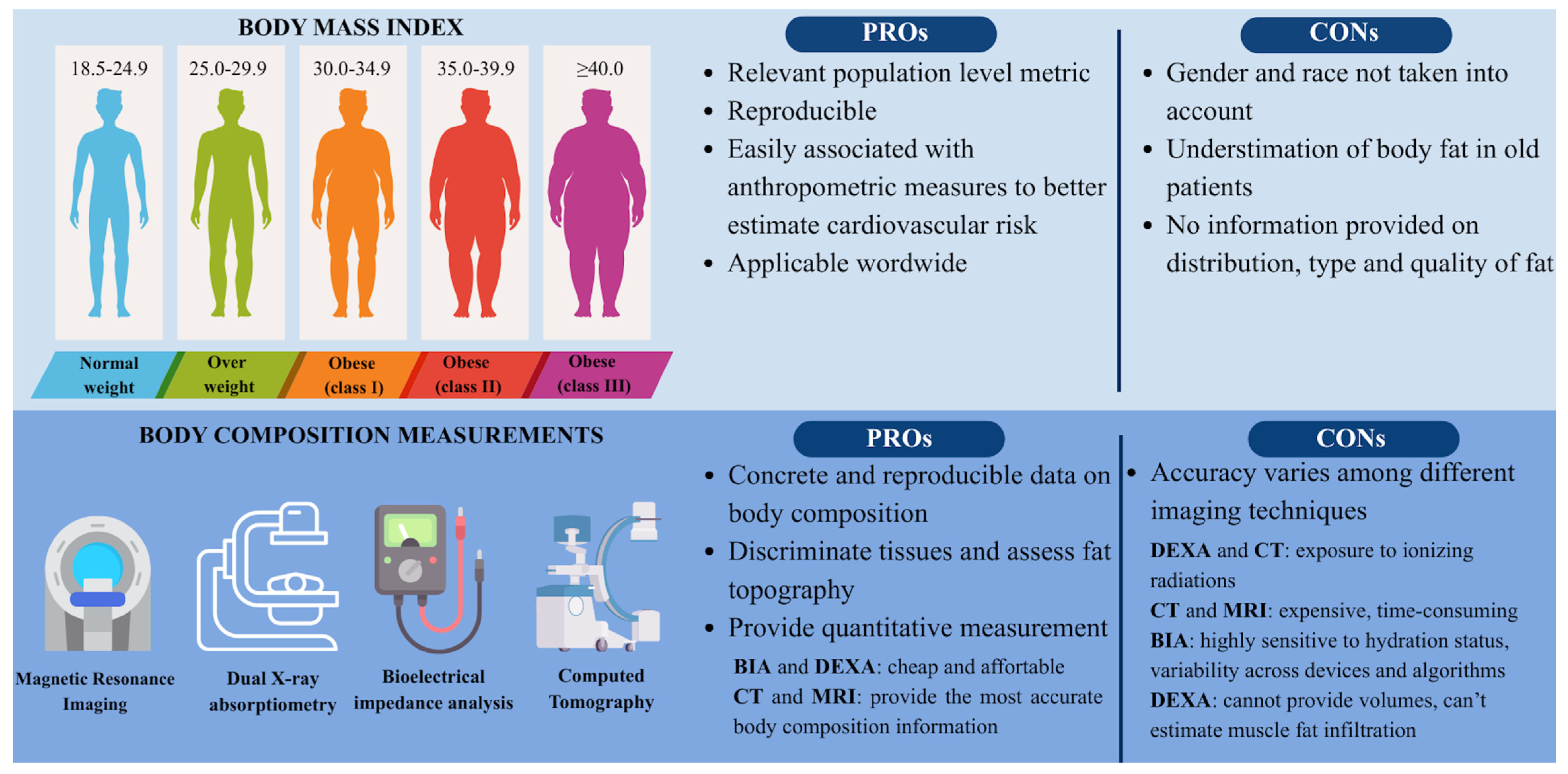
2.2. Pathophysiology of Obesity
3. Secondary Prevention
3.1. Diabetes Mellitus
3.1.1. Glucagon-like Peptide 1 Receptor Agonists for Diabetes Mellitus
3.1.2. Glucagon-like Peptide 1 Receptor Agonists and Glucose-Dependent Insulinotropic Polypeptide for Diabetes Mellitus
3.1.3. Sodium Glucose Cotransporter-2 Inhibitors
3.2. Obesity
3.2.1. Glucagon-like Peptide 1 Receptor Agonists for Obesity
3.2.2. Non-Peptide Glucagon-like Peptide 1 Receptor Agonists for Obesity
3.2.3. Glucagon-like Peptide 1 Receptor Agonists and Glucose-Dependent Insulinotropic Peptide for Obesity

| Patients (n) | Year of Publication | Population Characteristics | Randomized Arms | Primary Endpoint | Main Results | |
|---|---|---|---|---|---|---|
| ELIXA Trial [74] | 6068 | 2015 | Patients with T2DM with a previous MI or who had been hospitalized for unstable angina | To receive lixisenatide plus OMT or placebo plus OMT | A composite of CV death, MI, stroke, or hospitalization for unstable angina | Lixisenatide showed noninferiority but not superiority to placebo (13.4% vs. 13.2%, HR: 1.02; 95% CI, 0.89 to 1.17; p < 0.001 for noninferiority, p = 0.81 for superiority) |
| LEADER Trial [73] | 9340 | 2016 | Patients with T2DM and high CV risk | To receive liraglutide or placebo | A composite of CV death, nonfatal MI or nonfatal stroke | Liraglutide was associated with a significant reduction in primay endpoint compared with placebo (13.0% vs. 14.9%, HR: 0.87; 95% CI, 0.78 to 0.97; <0.001 for noninferiority, p = 0.01 for superiority) |
| EXSCEL Trial [78] | 14,752 | 2017 | Patients with T2DM, with or without previous CV disease | To receive subcutaneous injection of 2 mg exenatide or matching placebo once weekly | A composite of the first occurrence of death from CV causes, nonfatal MI, or nonfatal stroke | Exenatide showed noninferiority with respect to safety, but not superiority to placebo with respect to efficacy (11.4% vs. 12.2%, HR: 0.91; 95% CI, 0.83 to 1.00; p < 0.001 for noninferiority, p = 0.06 for superiority) |
| HARMONY Outcome Trial [75] | 9463 | 2018 | Patients > 40 years of age with T2DM and established ASCVD | To receive subcutaneous injection of albiglutide or matching placebo | A composite of CV death, MI, or stroke | Albiglutide was associated with a significant reduction in primary endpoint compared with placebo (7.0% vs. 9.0%, HR: 0.78; 95% CI, 0.68 to 0.90; p < 0.0001 for non-inferiority; p = 0.0006 for superiority). |
| REWIND Trial [76] | 9901 | 2019 | Patients ≥ 50 years with T2DM who had either a previous CV event or CV risk factors | To receive weekly subcutaneous injection of dulaglutide 1.5 mg or placebo | A composite of the first occurrence of non-fatal MI, non-fatal stroke, or death from CV causes | Dulaglutdie was associated with a significant reduction in primary endpoint compared with placebo (12.0% vs. 13.4%, HR: 0.88; 95% CI, 0.79 to 0.99; p = 0.026) |
| AMPLITUDE-O Trial [79] | 4076 | 2021 | Patients with T2DM and either a history of CV disease or current kidney disease | To receive weekly subcutaneous injections of efpeglenatide at a dose of 4 or 6 mg or placebo | A composite of nonfatal MI, nonfatal stroke, or death from CV or undetermined causes | Efpeglenatide was associated with a significant reduction in primary endpoint compared with placebo (7.0% vs. 9.2%, HR: 0.73; 95% CI, 0.58 to 0.92; p < 0.001 for noninferiority; p = 0.007 for superiority) |
| SUSTAIN-6 Trial [81] | 3297 | 2016 | Patients with T2DM | To receive once-weekly semaglutide (0.5 mg or 1.0 mg) or placebo | A composite of first occurrence of CV death, nonfatal MI or nonfatal stroke | Semaglutide was associated with a significant reduction in primary endpoint compared with placebo (6.6% vs. 8.9%, HR: 0.74; 95% CI, 0.58 to 0.95; p < 0.001 for noninferiority) |
| PIONEER 1 Trial [82] | 703 | 2019 | Patient with T2DM insufficiently controlled with diet and exercise | To receive once-daily oral semaglutide 3 mg, 7 mg, 14 mg or placebo | Change from baseline to week 26 in HbA1c | Semaglutide demonstrated superior and clinically relevant improvements in HbA1c (−0.6%, −0.9%, −1.1%; p < 0.001 for all comparisons) |
| PIONEER 2 Trial [88] | 787 | 2019 | Patient with T2DM uncontrolled on metformin | To receive oral semaglutide 14 mg or empaglifozin 25 mg | Change from baseline to week 26 in HbA1c | Semaglutide was superior to empagliflozin in reducing HbA1c (−1.3% vs. −0.9%, ETD −0.4% [95% CI, −0.6 to 0.3] −5 mmol/mol; p < 0.0001) |
| PIONEER 6 Trial [83] | 3183 | 2019 | Patients at high CV risk (age ≥ 50 years with established CV or chronic kidney disease, or ≥60 years with CV risk factors only) | To receive oral semaglutide or placebo | A composite of CV death, nonfatal MI or nonfatal stroke | Semaglutide was associated with a significant reduction in primary endpoint compared with placebo (3.8% vs. 4.8%, HR: 0.79; 95% CI, 0.57 to 1.11; p < 0.001) |
| FLOW Trial [85] | 3533 | 2024 | Patients with T2DM and chronic kidney disease | To receive 1 mg of subcutaneous semaglutide once weekly or placebo | Major kidney disease events, a composite of the onset of kidney failure, at least a 50% reduction in the eGFR from baseline, or death from kidney-related or CV causes | The risk of a primary-outcome event was 24% lower in the semaglutide group than in the placebo group (331 vs. 410 first events, HR: 0.76; 95% CI, 0.66 to 0.88; p = 0.0003) |
| STRIDE Trial [87] | 792 | 2025 | Patients with T2DM and PAD with intermittent claudication | To receive 1 mg of subcutaneous semaglutide or placebo once week | The ratio to baseline of the maximum walking distance at week 52 | Semaglutide was superior to placebo (estimated median ratio of 1.21 (IQR 0.95 to 1.55) vs. 1.08 (IQR 0.86 to 1.36); estimated treatment ratio 1.13 (95% CI, 1.06 to 1.21, p = 0.0004) |
| SOUL Trial [86] | 9650 | 2025 | Patients ≥ 50 years with T2DM with HbA1c level of 6.5 to 10% and known ASCVD, CKD or both | To receive once-daily oral semaglutide (maximal dose, 14 mg) plus OMT or placebo plus OMT | A composite of death from CV causes, nonfatal MI or nonfatal stroke | Semaglutide was associated with a significantly lower risk of major adverse cardiovascular events than placebo (12.0% vs. 13.8%, HR: 0.86; 95% CI, 0.77 to 0.96, p = 0.006) |
| SURPASS-4 Trial [101] | 2002 | 2021 | Patients had T2DM treated with any combination of metformin, sulfonylurea, or SGLT2-i, a baseline glycated hemoglobin of 7.5–10.5%, BMI ≥ 25, and established cardiovascular disease or a high risk of CV events | To receive tirzepatide at a dose of 5 mg, 10 mg, or 15 mg, or glargine 100 U/mL | The non-inferiority (0.3% non-inferiority boundary) of tirzepatide 10 mg or 15 mg, or both, versus glargine in HbA1c change from baseline to 52 weeks | Tirzepartide was superior to glargine (−2.43 with 10 mg, −2.58% with 15 mg vs. −1.14% with glargine (ETD: −0.99%; 97.5% CI, −1.13 to −0.86 with 10 mg and −1.14% 97.5% CI, −1.28 to −1.00 with 15 mg; non-inferiority of 0.3% met for both doses) |
| SURPASS-4 Trial substudy [102] | 2002 | 2022 | Patients had T2DM treated with any combination of metformin, sulfonylurea, or SGLT2-i, a baseline glycated hemoglobin of 7.5–10.5%, BMI ≥ 25, and established CV disease or a high risk of CV events | To receive tirzepatide at a dose of 5 mg, 10 mg, or 15 mg, or glargine 100 U/mL | Time to first occurrence of eGFR decline of at least 40% from baseline, end-stage kidney disease, death owing to kidney failure, or new-onset macroalbuminuria |
Tirzepatide slowed the rate of eGFR decline and reduced UACR in clinically meaningful ways compared with insulin glargine (mean rate of eGFR decline −1.4 mL/min/1.73 m2 per year vs. −3.6 mL/min/1.73 m2 per year; between group difference of 2.2; CI 95%, 1.6 to 2.8) |
| Patients (n) | Year of Publication | Population Characteristics | Randomized Arms | Primary Endpoint | Main Results | |
|---|---|---|---|---|---|---|
| EMPA-REG OUTCOME Trial [115] | 7020 | 2015 | Patients with T2DM at high CV risk | To receive empagliflozin 10 mg or 25 mg or placebo | A composite of death from CV causes, nonfatal MI or nonfatal stroke | Empagliflozin was superior to placebo (10.5% vs. 12.1%, HR: 0.86; 95% CI, 0.74 to 0.99; p = 0.04) |
| EMPEROR-Reduced Trial [138] | 3730 | 2020 | Patients with class II to IV HF with an EF ≤ 40% | To receive empagliflozin 10 mg or placebo, both in addition to OMT | A composite of CV death or hospitalization for HF | Empagliflozin was superior to placebo (19.4% vs. 24.7%, HR: 0.75; 95% CI, 0.65 to 0.86; p < 0.0001 |
| EMMY trial [131] | 476 | 2022 | Patients with acute MI accompanied by a large creatine kinase elevation (>800 IU/L) | To receive empagliflozin 10 mg or placebo | NT-proBNP change over 26 weeks | Empagliflozin was associated with a significantly greater NT-proBNP reduction (15% lower, 95% CI, −4.4% to −23.6%; p = 0.026) |
| EMPACT-MI trial [132] | 6522 | 2024 | Patients hospitalized for acute MI and at risk for HF | To receive empagliflozin 10 mg plus OMT or placebo plus OMT | A composite of hospitalization for HF or death from any cause | Empagliflozin was not superior to placebo (8.2% vs. 9.1%, HR: 0.90; 95% CI, 0.76 to 1.06; p = 0.21) |
| DECLARE-TIMI 58 trial [117] | 17,160 | 2019 | Patients with T2DM and ASCVD or multiple risk factor | To receive dapagliflozin or placebo | A composite of CV death, MI, ischemic stroke or hospitalization for HF | Dapagliflozin did not change MACE than placebo (8.8% vs. 9.4%, HR: 0.93; 95% CI, 0.84 to 1.03; p = 0.17) but significantly reduced cardiovascular death or hospitalization for heart failure (4.9% vs. 5.8%, HR: 0.83; 95% CI, 0.73 to 0.95; p = 0.005) |
| DAPA-HF trial [140] | 4744 | 2019 | Patients with class II to IV HF with an EF ≤ 40% | To receive dapagliflozin 10 mg plus OMT vs. placebo plus OMT | A composite of worsening HF or CV death | Dapagliflozin significantly reduced the primary endpoint compared with placebo (16.3% vs. 21.2%, HR: 0.74; 95% CI, 0.65 to 0.85; p < 0.001) |
| DAPA-CKD trial [146] | 4304 | 2020 | Patients with eGFR of 25 to 75 and albumin/creatinine ratio of 200 to 5000 | To receive dapagliflozin 10 mg or placebo | A composite of a sustained decline of eGFR, end stage kidney disease, or renal or CV death | Dapagliflozin significantly reduced the primary endpoint compared with placebo (9.2% vs. 14.5%, HR: 0.61; 95% CI, 0.51 to 0.72; p < 0.001) |
| DAPA-MI trial [134] | 4017 | 2024 | Patients with acute MI and impaired LVS function, without prior diabetes or chronic HF | To receive dapagliflozin 10 mg or placebo | A composite of death, hospitalization for HF, nonfatal MI, atrial fibrillation/flutter, T2DM, NYHA at last visit and body weight decrease of ≥5% at last visit | Dapagliflozin led to significant benefits in terms of cardiometabolic outcomes compared with placebo (Win ratio: 1.34; 95% CI, 1.20 to 1.50; p < 0.001) |
| CANVAS and CANVAS-R trial [121] | 10,142 | 2017 | Patients with T2DM and high CV risk | To receive canagliflozin 100 mg or placebo | A composite of death from CV causes, nonfatal MI or nonfatal stroke | Canagliflozin significantly reduced CV events compared with placebo (26.9 vs. 31.5 participants per 1000 patient-years, HR: 0.86; 95% CI; 0.75 to 0.97; p < 0.001 for noninferiority, p = 0.02 for superiority) |
| CANVAS and CANVAS-R trial Substudy [122] | 10,142 | 2018 | Patients with T2DM and high CV risk | To receive canagliflozin 100 mg or placebo | A composite of sustained and adjudicated doubling in serum creatinine, end-stage kidney disease or death for renal causes | Canagliflozin treatment was associated with a reduced risk of sustained loss of kidney function (1.5 vs. 2.8 participants per 1000 patient-years, HR: 0.53; 95% CI, 0.33 to 0.84) |
| CREDENCE trial [125] | 4401 | 2019 | Patients with T2DM and albuminuric CKD | To receive canagliflozin 100 mg or placebo | A composite of end-stage kidney disease, a doubling of the serum creatinine or death for CV or renal causes | Canagliflozin significantly reduced the risk of kidney failure and cardiovascular events compared with placebo (43.2 vs. 61.2 participants per 1000 patient-years, HR: 0.70; 95% CI, 0.59 to 0.82; p = 0.00001) |
| VERTIS CV trial [129] | 8246 | 2020 | Patients with T2DM and ASCVD | To receive 5 mg or 15 mg of ertugliflozin or placebo | A composite of death from CV causes, nonfatal MI or nonfatal stroke | Ertugliflozin was non inferior to placebo in terms of major adverse cardiovascular events (11.9% vs. 11.9%, HR: 0.97; 95.6% CI, 0.85 to 1.11; p < 0.001 for noninferiority) |
| Patients (n) | Year of Publication | Population Characteristics | Randomized Arms | Primary Endpoint | Main Results | |
|---|---|---|---|---|---|---|
| SCALE Diabetes trial [155] | 846 | 2015 | Patients with BMI ≥ 27 kg/m2, taking 0 to 3 oral hypoglycemic agents with stable body weight and HbA1c 7% to 10% | To receive once daily subcutaneous liraglutide 1.8 mg, 3.0 mg or placebo | Relative change in weight at week 56 | Weight loss was 2.0% with placebo, 4.7% with liraglutide 1.8 mg (EMD vs. placebo: −2.71% [95% CI, −4.0% to 1.42%]) and 6.0% with liraglutide 3.0 mg (EMD vs. placebo: −4.0% [95% CI, −5.1% to 2.9%]) p < 0.001 for both |
| STEP 2 Trial [159] | 1210 | 2021 | Patient with BMI ≥ 27 kg/m2 and T2DM with HbA1c 7 to 10% | To receive 2.4 mg subcutaneous semaglutide once a week or placebo | Percentage change in body weight | Semaglutide led to a superior decrease in bodyweight compared with placebo (−9.6% vs. 3.4%, 95% CI, −7.3 to −5.2, p < 0.001) |
| REDEFINE 2 trial [169] | 1206 | 2025 | Patient with BMI ≥ 27 kg/m2 and T2DM with HbA1c 7 to 10% | To receive once-weekly cagrilintide-semaglutide (2.4 mg each) or placebo | Percentage change in body weight | Cagrilintide-semaglutide treatment was associated with a significantly lower body weight than placebo (−13.7% vs. −3.4%, EMD −10.4%, 95% CI 95%, −11.2 to −9.5; p < 0.001) |
| SURPASS-1 trial [93] | 478 | 2021 | Patients with T2DM inadequately controlled by diet and exercise alone and if they were naive to injectable diabetes therapy | To receive 5 mg, 10 mg, or 15 mg of tirzepatide or placebo | The mean change in HbA1c from baseline at 40 weeks | Tirzepatide improved glycemic control compared with placebo (EMD vs. placebo of −1.91% with 5 mg, −1.93% with 10 mg, and −2.11% with 15 mg; p < 0.0001 for all) |
| SURPASS-2 trial [96] | 1879 | 2021 | Patients with T2DM inadequately controlled with metformin, HbA1c of 7.0 to 10.5% and BMI ≥ 25 kg/m2 | To receive tirzepatide at a dose of 5 mg, 10 mg, or 15 mg or semaglutide at a dose of 1 mg | The mean change in HbA1c from baseline at 40 weeks | Tirzepatide was noninferior and superior to semaglutide (EMD between the 5 mg, 10 mg, and 15 mg tirzepatide groups and the semaglutide group were −0.15% [95% CI, −0.28 to −0.03, p = 0.02], −0.39% [95% CI, −0.51 to −0.26, p < 0.001], and −0.45% [95% CI, −0.57 to −0.32; p < 0.001], respectively) |
| SURPASS-3 trial [98] | 1444 | 2021 | Patients with T2DM and HbA1c 7.0 to 10.5% and BMI ≥ 25 were insulin-naive and treated with metformin alone or in combination with an SGLT2-i | To receive tirzepatide at a dose of 5 mg, 10 mg, or titrated insulin degludec | The non-inferiority of tirzepatide 10 mg or 15 mg, or both, versus insulin degludec in mean change in HbA1c from baseline at week 52 | Tirzepatide was superior to titrated insulin degludec (reduction of 1.34% for insulin degludec vs. 1.93% for tirzepatide 5 mg, 2.20% for 10 mg, and 2.37% for 15 mg; noninferiority margin of 0.3% was met; ETD −0.59% to −1.04%; p < 0.0001) |
| SURPASS-3 trial substudy [100] | 296 | 2022 | Patients with T2DM and HbA1c of 7.0 to 10.5% and BMI ≥ 25 kg/m2, insulin-naive and treated with metformin alone or in combination with an SGLT2-i | To receive tirzepatide at a dose of 5 mg, 10 mg, or 15 mg or titrated insulin degludec | The change from baseline in liver fat content at week 52 using pooled data from the tirzepatide 10 mg and 15 mg groups versus insulin degludec | Tirzepatide was superior to titrated insulin degludec (−8.09% vs. −3.38%, EMD of −4.71%; 95% CI, −6.72 to −2.70; p < 0.0001) |
| SURPASS-5 trial [103] | 475 | 2022 | Patients with T2DM with inadequate glycemic control on once-daily insulin glargine with or without metformin | To receive once-weekly subcutaneous injections of 5 mg, 10 mg or 15 mg tirzepatide or placebo | The mean change from baseline in HbA1c at week 40 | Tirzepatide significantly improved glycemic control compared with placebo (−0.86% with placebo, −2.11% with tirzepatide 5 mg [difference −1.24%; 95% CI, −1.48 to −1.01%], −2.40% with 10 mg [difference −1.53%; 97.5% CI, −1.80% to −1.27%], −2.34% with 15 mg [difference −1.47; 97.5% CI, −1.75% to −1.20%] p < 0.001 for all comparisons) |
| SURPASS J-mono trial [105] | 636 | 2022 | Patients 20 years or older with T2DM who had discontinued oral antihyperglycaemic monotherapy or were treatment-naïve | To receive once-weekly subcutaneous injections of 5 mg, 10 mg or 15 mg tirzepatide or dulaglutide 0.75 mg | The mean change in HbA1c from baseline at week 52 | Tirzepatide was superior compared with dulaglutide for glycemic control (difference of −1.3 with dulaglutide vs. −2.4 with tirzepatide 5 mg [EMD vs. dulaglutide −1.1; 95% CI, −1.3 to −0.9], −2.6 with 10 mg [EMD vs. dulaglutide −1.3; 95% CI, −1.5 to −1.1], and −2.8 with 15 mg [EMD vs. dulaglutide −1.5; 95% CI −1.71 to −1.4]; all p < 0.0001) |
| SURPASS J-mono trial substudy [106] | 48 | 2022 | Patients 20 years or older with T2DM who had discontinued oral antihyperglycaemic monotherapy or were treatment-naïve | To receive once-weekly subcutaneous injections of 5 mg, 10 mg or 15 mg tirzepatide or dulaglutide 0.75 mg | Postprandial metabolic variables and appetite after a meal tolerance test | Compared with dulaglutide, tirzepatide showed greater potential for normalizing metabolic factors after a standardized meal |
| SURPASS J-combo Trial [107] | 443 | 2022 | Patients with T2DM who had inadequate glycemic control with stable doses of various oral antihyperglycaemic monotherapies | To receive 5, 10, or 15 mg of tirzepatide plus oral antihyperglycaemic monotherapies | Safety and tolerability during 52 weeks of treatment | Tirzepatide was well tolerated as an add-on to oral antihyperglycaemic monotherapy in Japanese participants with T2DM |
| Patients (n) | Year of Publication | Population Characteristics | Randomized Arms | Primary Endpoint | Main Results | |
|---|---|---|---|---|---|---|
| SCALE Maintenance trial [153] | 422 | 2013 | Patients obese/overweight who lost > 5% of initial weight during a low-calorie diet run-in | To receive 3 mg liraglutide or placebo daily | Percentage weight change from randomization, the proportion of participants that maintained the initial > 5% weight loss, and proportion that lost > 5% of randomization weight | Liraglutide, with diet and exercise, maintained weight loss achieved by caloric restriction and induced further weight loss (−6.2% vs. −0.2%, estimated difference −6.1%; 95% CI, −7.5 to 4.6, p < 0.0001) |
| SCALE obesity and Prediabetes trial [155] | 3731 | 2015 | Patient without T2DM and BMI ≥ 30 kg/m2 or ≥27 kg/m2 if they had dyslipidemia or hypertension | To receive daily subcutaneous liraglutide 3.0 mg or placebo | The change in body weight and the proportions of patients losing at least 5% and more than 10% of their initial body weight | Liraglutide was associated with reduced body weight (body weight loss of 8.4 ± 7.3 kg vs. 2.8 ± 6.5 kg; difference of −5.6 kg, 95% CI −6.0 to 5.1; p < 0.001) with a significant higher proportion of patients losing at least 5% (63.2% vs. 27.1%; p < 0.001) and more than 10% (33.1% vs. 10.6%; p < 0.001) of the initial body weight |
| SCALE obesity and Prediabetes trial (3 year long study) [6] | 2254 | 2017 | Patient with prediabetes and BMI ≥ 30 kg/m2 or ≥27 kg/m2 if they had comorbidities | To receive daily subcutaneous liraglutide 3.0 mg or placebo | Time to diabetes onset by 160 weeks | Liraglutide reduced risk of diabetes in individuals with obesity and prediabetes (2.7 times longer with liraglutide than with placebo, 95% CI, 1.9 to 3.9; p < 0.0001) |
| SCALE IBT Trial [156] | 282 | 2020 | Patients with obesity | To receive liraglutide 3.0 mg plus IBT or placebo plus IBT | Weight loss in individual with obesity | Liraglutide enhanced weight loss of IBT compared with placebo (−7.5% vs. −4.0%; ETD −3.4%, 95% CI, −5.3% to −1.6%, p = 0.0003) |
| S-LITE Trial [157] | 195 | 2021 | Patients with obesity and BMI of 32 to 43 kg/m2 without diabetes | To receive placebo plus a moderate to vigorous intensity exercise program (exercise group); liraglutide 3.0 mg with usual activity (liraglutide group); liraglutide 3.0 mg with exercise program (combined group); placebo plus usual activity (placebo group) | Change in body weight | A strategy combining exercise and liraglutide therapy improved healthy weight loss maintenance more than either treatment alone (−4.1 kg in the exercise group [95% CI, −7.8 to −0.4; p = 0.03], −6.8 kg in the liraglutide group [95% CI, −10.4 to −3.1; p < 0.001], −9.5 kg in the combined group [95% CI, −13.1 to −5.9; p < 0.001]) |
| STEP 1 trial [158] | 1961 | 2021 | Patient with BMI ≥ 30 kg/m2 or ≥27 kg/m2 if they had comorbidities | To receive subcutaneous semaglutide 2.4 mg or placebo | Percentage change in body weight and weight reduction of at least 5% | Semaglutide was associated with significant reduction in body weight compared with placebo (−14.9% vs. −2.4%, 95% CI, −13.4 to −11.5; p < 0.001) with a greater rate of patient with a ≥5% reduction (86.4% vs. 31.5%; p < 0.001) |
| STEP 3 Trial [160] | 611 | 2021 | Patients with BMI ≥ 27 kg/m2 and comorbidities or obesity (BMI ≥ 30 lg/m2) | To receive semaglutide 2.4 mg vs. placebo | Percentage in body weight and the loss of 5% or more of baseline weight by week 68 | Semaglutide was associated with significant reduction in body weight compared with placebo (−16.0% vs. −5.7%, differenc of −10.3% [95% CI, −12.0 to −8.6; p < 0.001] with a greater rate of patient with a ≥5% reduction (86.6% vs. 47.6%; p < 0.001) |
| STEP 4 trial [161] | 803 | 2021 | Patient with BMI ≥ 30 kg/m2 or ≥27 kg/m2 if they had comorbidities | To receive subcutaneous semaglutide 2.4 mg with switch to placebo for weight maintenance | Percentage change in body weight from week 20 to week 68 | Maintaining treatment with semaglutide compared with switching to placebo resulted in continued weight loss (−7.9% vs. + 6.9%; difference of −14.8%, 95% CI, −16.0 to −13.5; p < 0.001) |
| STEP 5 trial [162] | 304 | 2022 | Patients with obesity or overweight with at least one weight-related comorbidity without diabetes | To receive semaglutide 2.4 mg once weekly plus behavioral intervention vs. placebo plus behavioral intervention | Percentage in body weight and achievement of weight loss of ≥5% at week 104 | Semaglutide treatment led to substantial weight loss compared with placebo (−15.2% vs. −2.6%; estimated difference of −12.6%, 95% CI, −15.3 to −9.8; p < 0.0001) with a greater rate of patient with a ≥5% reduction (77.1% vs. 34.4%; p < 0.0001) |
| STEP 8 Trial [164] | 338 | 2022 | Patients with obesity (BMI ≥ 30 kg/m2) or with BMI ≥ 27 kg/m2 with at least one weight-related comorbidity without diabetes | To receive semaglutide 2.4 mg once weekly or matching placebo, liraglutide 3.0 mg once daily or matching placebo | Percentage change in body weight | Semaglutide was associated with significantly greater weight loss compared with liraglutide (−15.8% vs. −6.4%; difference of −9.4%, 95% CI, −12.0 to −6.8; p < 0.001) |
| SELECT trial [165] | 17,604 | 2023 | Patients older than 45 years with CV disease and BMI ≥ 27 kg/m2 but without history of diabetes | To receive semaglutide 2.4 mg once weekly vs. placebo | A composite of death from CV causes, nonfatal MI or nonfatal stroke | Semaglutide was superior to placebo (6.5% vs. 8.0%, HR: 0.80, 95% CI, 0.72 to 0.90; p < 0.001) |
| REDEFINE-1 trial [167] | 3417 | 2025 | Patient with BMI ≥ 30 kg/m2 or ≥27 kg/m2 if they had at least one obesity-related complication | To receive the combination of semaglutide at a dose of 2.4 mg and cagrilintide at a dose of 2.4 mg, semaglutide alone at a dose of 2.4 mg, cagrilintide alone at a dose of 2.4 mg, or placebo | The relative change in body weight | Cagrilintide–semaglutide provided significant and clinically relevant body-weight reductions compared with placebo (−20.4% with cagrilintide-semaglutide vs. −3.0% with placebo; estimated difference of −17.3%, 95% CI, −18.1 to −16.6; p < 0.001) |
4. Gaps in Knowledge
5. Conclusions
Author Contributions
Funding
Institutional Review Board Statement
Informed Consent Statement
Data Availability Statement
Acknowledgments
Conflicts of Interest
Abbreviations
| ACS | Acute Coronary Syndrome |
| AGE | Advanced Glycation End products |
| ASCVD | American Heart Association Cardiovascular Disease |
| AT | Adipose Tissue |
| BIA | Bioelectrical Impedance Analysis |
| BMI | Body Mass Index |
| CAD | Coronary Artery Disease |
| CABG | Coronary Artery Bypass Graft |
| CCS | Chronic Coronary Syndrome |
| CI | Confidence Interval |
| CKD | Chronic Kidney Disease |
| CT | Computed Tomography |
| CV | Cardiovascular |
| CVD | Cardiovascular Disease |
| DEXA | Dual-energy X-ray Absorptiometry |
| DM | Diabetes Mellitus |
| EMA | European Medicines Agency |
| ESC | European Society of Cardiology |
| FDA | Food and Drug Administration |
| FFAs | Free Fatty Acids |
| FPG | Fasting Plasma Glucose |
| GDMT | Guideline Directed Medical Therapy |
| GIP | Glucose-Dependent Insulinotropic Peptide |
| GLP-1RAs | Glucagon Like Protein 1 Receptor Agonist |
| HbA1c | Glycated Hemoglobin |
| HDL | High-Density Lipoprotein |
| HF | Heart Failure |
| HFpEF | Heart Failure with Preserved Ejection Fraction |
| HFrEF | Heart Failure with Reduced Ejection Fraction |
| HR | Hazard Ratio |
| HsCRP | High sensitive C-Reactive Protein |
| IFN | Interferon |
| IL | Interleukin |
| IS | Infarct Size |
| ISR | In Stent Restenosis |
| LDL-C | Low-Density Lipoprotein |
| LLT | Lipid Lowering Therapy |
| LVEF | Left Ventricular Ejection Fraction |
| MACE | Major Adverse Cardiovascular Events |
| MI | Myocardial Infarction |
| MRI | Magnetic Resonance Imaging |
| NO | Nitric Oxide |
| NYHA | New York Heart Association |
| OMT | Optimal medical therapy |
| OR | Odds Ratio |
| PCI | Percutaneous Coronary Intervention |
| PCSK9-i | Proprotein Convertase Subtilisin/Kexin type 9 Inhibitor |
| PVAT | PeriVascular Adipose Tissue |
| RCTs | Randomized Controlled Trials |
| ROS | Reactive Oxygen Species |
| RR | Relative Risk |
| SAT | Subcutaneous Adipose Tissue |
| SBP | Systolic Blood Pressure |
| SIL2r | Soluble IL-2 receptor |
| SMCs | Smooth Muscle Cells |
| STEMI | ST-up Elevation Myocardial Infarction |
| T2DM | Type 2 Diabetes Mellitus |
| TG | Triglycerides |
| ThAT | Thoracic Adipose Tissue |
| TNF | Tumor Necrosis Factor |
| TyG | Triglyceride-Glucose |
| VAT | Visceral Adipose Tissue |
| WHO | World Health Organization |
References
- GBD 2017 Causes of Death Collaborators. Global, Regional, and National Age-Sex-Specific Mortality for 282 Causes of Death in 195 Countries and Territories, 1980–2017: A Systematic Analysis for the Global Burden of Disease Study 2017. Lancet 2018, 392, 1736–1788. [CrossRef] [PubMed]
- Lawler, P.R.; Bhatt, D.L.; Godoy, L.C.; Lüscher, T.F.; Bonow, R.O.; Verma, S.; Ridker, P.M. Targeting Cardiovascular Inflammation: Next Steps in Clinical Translation. Eur. Heart J. 2021, 42, 113–131. [Google Scholar] [CrossRef] [PubMed]
- Vrints, C.; Andreotti, F.; Koskinas, K.C.; Rossello, X.; Adamo, M.; Ainslie, J.; Banning, A.P.; Budaj, A.; Buechel, R.R.; Chiariello, G.A.; et al. 2024 ESC Guidelines for the Management of Chronic Coronary Syndromes. Eur. Heart J. 2024, 45, 3415–3537. [Google Scholar] [CrossRef] [PubMed]
- Byrne, R.A.; Rossello, X.; Coughlan, J.J.; Barbato, E.; Berry, C.; Chieffo, A.; Claeys, M.J.; Dan, G.-A.; Dweck, M.R.; Galbraith, M.; et al. 2023 ESC Guidelines for the Management of Acute Coronary Syndromes. Eur. Heart J. 2023, 44, 3720–3826. [Google Scholar] [CrossRef]
- Rubino, F.; Cummings, D.E.; Eckel, R.H.; Cohen, R.V.; Wilding, J.P.H.; Brown, W.A.; Stanford, F.C.; Batterham, R.L.; Farooqi, I.S.; Farpour-Lambert, N.J.; et al. Definition and Diagnostic Criteria of Clinical Obesity. Lancet Diabetes Endocrinol. 2025, 13, 221–262. [Google Scholar] [CrossRef]
- Koskinas, K.C.; Van Craenenbroeck, E.M.; Antoniades, C.; Blüher, M.; Gorter, T.M.; Hanssen, H.; Marx, N.; McDonagh, T.A.; Mingrone, G.; Rosengren, A.; et al. Obesity and Cardiovascular Disease: An ESC Clinical Consensus Statement. Eur. Heart J. 2024, 45, 4063–4098. [Google Scholar] [CrossRef]
- Roth, G.A.; Mensah, G.A.; Johnson, C.O.; Addolorato, G.; Ammirati, E.; Baddour, L.M.; Barengo, N.C.; Beaton, A.Z.; Benjamin, E.J.; Benziger, C.P.; et al. Global Burden of Cardiovascular Diseases and Risk Factors, 1990–2019: Update From the GBD 2019 Study. J. Am. Coll. Cardiol. 2020, 76, 2982–3021. [Google Scholar] [CrossRef]
- Caleyachetty, R.; Thomas, G.N.; Toulis, K.A.; Mohammed, N.; Gokhale, K.M.; Balachandran, K.; Nirantharakumar, K. Metabolically Healthy Obese and Incident Cardiovascular Disease Events Among 3.5 Million Men and Women. J. Am. Coll. Cardiol. 2017, 70, 1429–1437. [Google Scholar] [CrossRef]
- Battineni, G.; Sagaro, G.G.; Chintalapudi, N.; Amenta, F.; Tomassoni, D.; Tayebati, S.K. Impact of Obesity-Induced Inflammation on Cardiovascular Diseases (CVD). Int. J. Mol. Sci. 2021, 22, 4798. [Google Scholar] [CrossRef]
- Henning, R.J. Type-2 Diabetes Mellitus and Cardiovascular Disease. Future Cardiol. 2018, 14, 491–509. [Google Scholar] [CrossRef]
- Gargiulo, G.; Windecker, S.; da Costa, B.R.; Feres, F.; Hong, M.-K.; Gilard, M.; Kim, H.-S.; Colombo, A.; Bhatt, D.L.; Kim, B.-K.; et al. Short Term versus Long Term Dual Antiplatelet Therapy after Implantation of Drug Eluting Stent in Patients with or without Diabetes: Systematic Review and Meta-Analysis of Individual Participant Data from Randomised Trials. BMJ 2016, 355, i5483. [Google Scholar] [CrossRef] [PubMed]
- Forzano, I.; Florimonte, D.; Narciso, V.; Canonico, M.E.; Castiello, D.S.; Manzi, L.; Cristiano, S.; Spinelli, A.; Vallone, D.M.; D’Alconzo, D.; et al. Optimal Medical Therapy Targeting Lipids and Inflammation for Secondary Prevention in Patients Undergoing Percutaneous Coronary Intervention. J. Clin. Med. 2025, 14, 8334. [Google Scholar] [CrossRef] [PubMed]
- Gargiulo, G.; Piccolo, R.; Park, D.-W.; Nam, G.-B.; Okumura, Y.; Esposito, G.; Valgimigli, M. Single vs. Dual Antithrombotic Therapy in Patients with Oral Anticoagulation and Stabilized Coronary Artery Disease: A Systematic Review and Meta-Analysis of Randomized-Controlled Trials. J. Cardiovasc. Med. 2025, 26, 258–265. [Google Scholar] [CrossRef] [PubMed]
- Castiello, D.S.; Buongiorno, F.; Manzi, L.; Narciso, V.; Forzano, I.; Florimonte, D.; Sperandeo, L.; Canonico, M.E.; Avvedimento, M.; Paolillo, R.; et al. Procedural and Antithrombotic Therapy Optimization in Patients with Atrial Fibrillation Undergoing Percutaneous Coronary Intervention: A Narrative Review. J. Cardiovasc. Dev. Dis. 2025, 12, 142. [Google Scholar] [CrossRef]
- Canonico, M.E.; Avvedimento, M.; Piccolo, R.; Hess, C.N.; Bardi, L.; Ilardi, F.; Giugliano, G.; Franzone, A.; Gargiulo, G.; Berkowitz, S.D.; et al. Long-Term Antithrombotic Therapy in Patients with Chronic Coronary Syndrome: An Updated Review of Current Evidence. Clin. Ther. 2025, 47, 511–518. [Google Scholar] [CrossRef]
- Galli, M.; Gragnano, F.; Berteotti, M.; Marcucci, R.; Gargiulo, G.; Calabrò, P.; Terracciano, F.; Andreotti, F.; Patti, G.; De Caterina, R.; et al. Antithrombotic Therapy in High Bleeding Risk, Part I: Percutaneous Cardiac Interventions. JACC Cardiovasc. Interv. 2024, 17, 2197–2215. [Google Scholar] [CrossRef]
- Manzi, L.; Florimonte, D.; Forzano, I.; Buongiorno, F.; Sperandeo, L.; Castiello, D.S.; Paolillo, R.; Giugliano, G.; Giacoppo, D.; Sciahbasi, A.; et al. Antiplatelet Therapy in Patients Requiring Oral Anticoagulation and Undergoing Percutaneous Coronary Intervention. Interv. Cardiol. Clin. 2024, 13, 527–541. [Google Scholar] [CrossRef]
- Gargiulo, G.; Valgimigli, M.; Capodanno, D.; Bittl, J.A. State of the Art: Duration of Dual Antiplatelet Therapy after Percutaneous Coronary Intervention and Coronary Stent Implantation—Past, Present and Future Perspectives. EuroIntervention 2017, 13, 717–733. [Google Scholar] [CrossRef]
- Giacoppo, D.; Matsuda, Y.; Fovino, L.N.; D’Amico, G.; Gargiulo, G.; Byrne, R.A.; Capodanno, D.; Valgimigli, M.; Mehran, R.; Tarantini, G. Short Dual Antiplatelet Therapy Followed by P2Y12 Inhibitor Monotherapy vs. Prolonged Dual Antiplatelet Therapy after Percutaneous Coronary Intervention with Second-Generation Drug-Eluting Stents: A Systematic Review and Meta-Analysis of Randomized Clinical Trials. Eur. Heart J. 2021, 42, 308–319. [Google Scholar] [CrossRef]
- Gargiulo, G.; Windecker, S.; Vranckx, P.; Gibson, C.M.; Mehran, R.; Valgimigli, M. A Critical Appraisal of Aspirin in Secondary Prevention: Is Less More? Circulation 2016, 134, 1881–1906. [Google Scholar] [CrossRef]
- Capodanno, D.; Gargiulo, G.; Buccheri, S.; Giacoppo, D.; Capranzano, P.; Tamburino, C. Meta-Analyses of Dual Antiplatelet Therapy Following Drug-Eluting Stent Implantation: Do Bleeding and Stent Thrombosis Weigh Similar on Mortality? J. Am. Coll. Cardiol. 2015, 66, 1639–1640. [Google Scholar] [CrossRef]
- Giacoppo, D.; Gragnano, F.; Watanabe, H.; Kimura, T.; Kang, J.; Park, K.-W.; Kim, H.-S.; Pettersen, A.-Å.; Bhatt, D.L.; Pocock, S.; et al. P2Y12 Inhibitor or Aspirin after Percutaneous Coronary Intervention: Individual Patient Data Meta-Analysis of Randomised Clinical Trials. BMJ 2025, 389, e082561. [Google Scholar] [CrossRef]
- Faggioni, M.; Baber, U.; Sartori, S.; Giustino, G.; Cohen, D.J.; Henry, T.D.; Farhan, S.; Ariti, C.; Dangas, G.; Gibson, M.; et al. Incidence, Patterns, and Associations Between Dual-Antiplatelet Therapy Cessation and Risk for Adverse Events Among Patients with and Without Diabetes Mellitus Receiving Drug-Eluting Stents: Results From the PARIS Registry. JACC Cardiovasc. Interv. 2017, 10, 645–654. [Google Scholar] [CrossRef] [PubMed]
- Gargiulo, G.; Castiello, D.S.; Esposito, G. Short DAPT After PCI for ACS: Which Monotherapy Is Better Between Aspirin or a P2Y12 Inhibitor? JACC Cardiovasc. Interv. 2025, 18, 1860–1863. [Google Scholar] [CrossRef] [PubMed]
- Castiello, D.S.; Oliva, A.; Andò, G.; Niccoli, G.; Pelliccia, F.; Moscarella, E.; Montone, R.A.; Gragnano, F.; Porto, I.; Calabrò, P.; et al. Antithrombotic Therapy in Complex Percutaneous Coronary Intervention. EuroIntervention 2025, 21, e1051–e1068. [Google Scholar] [CrossRef] [PubMed]
- Valgimigli, M.; Choi, K.H.; Giacoppo, D.; Gragnano, F.; Kimura, T.; Watanabe, H.; Kim, H.-S.; Kang, J.; Park, K.W.; Pettersen, A.-Å.; et al. Clopidogrel versus Aspirin for Secondary Prevention of Coronary Artery Disease: A Systematic Review and Individual Patient Data Meta-Analysis. Lancet 2025, 406, 1091–1102. [Google Scholar] [CrossRef]
- De Luca, L.; Piscione, F.; Colivicchi, F.; Lucci, D.; Mascia, F.; Marinoni, B.; Cirillo, P.; Grosseto, D.; Mauro, C.; Calabrò, P.; et al. Contemporary Management of Patients Referring to Cardiologists One to Three Years from a Myocardial Infarction: The EYESHOT Post-MI Study. Int. J. Cardiol. 2018, 273, 8–14. [Google Scholar] [CrossRef]
- Yusuf, S.; Islam, S.; Chow, C.K.; Rangarajan, S.; Dagenais, G.; Diaz, R.; Gupta, R.; Kelishadi, R.; Iqbal, R.; Avezum, A.; et al. Use of Secondary Prevention Drugs for Cardiovascular Disease in the Community in High-Income, Middle-Income, and Low-Income Countries (the PURE Study): A Prospective Epidemiological Survey. Lancet 2011, 378, 1231–1243. [Google Scholar] [CrossRef]
- Komajda, M.; Cosentino, F.; Ferrari, R.; Kerneis, M.; Kosmachova, E.; Laroche, C.; Maggioni, A.P.; Rittger, H.; Steg, P.G.; Szwed, H.; et al. Profile and Treatment of Chronic Coronary Syndromes in European Society of Cardiology Member Countries: The ESC EORP CICD-LT Registry. Eur. J. Prev. Cardiol. 2021, 28, 432–445. [Google Scholar] [CrossRef]
- Sacks, D.B.; Arnold, M.; Bakris, G.L.; Bruns, D.E.; Horvath, A.R.; Lernmark, Å.; Metzger, B.E.; Nathan, D.M.; Kirkman, M.S. Guidelines and Recommendations for Laboratory Analysis in the Diagnosis and Management of Diabetes Mellitus. Diabetes Care 2023, 46, e151–e199. [Google Scholar] [CrossRef]
- Singh, A.; Shadangi, S.; Gupta, P.K.; Rana, S. Type 2 Diabetes Mellitus: A Comprehensive Review of Pathophysiology, Comorbidities, and Emerging Therapies. Compr. Physiol. 2025, 15, e70003. [Google Scholar] [CrossRef]
- American Diabetes Association Professional Practice Committee 2. Diagnosis and Classification of Diabetes: Standards of Care in Diabetes-2025. Diabetes Care 2025, 48, S27–S49. [Google Scholar] [CrossRef] [PubMed]
- Tabit, C.E.; Shenouda, S.M.; Holbrook, M.; Fetterman, J.L.; Kiani, S.; Frame, A.A.; Kluge, M.A.; Held, A.; Dohadwala, M.; Gokce, N.; et al. Protein Kinase-C Beta Contributes to Impaired Endothelial Insulin Signaling in Humans with Diabetes Mellitus. Circulation 2013, 127, 86–95. [Google Scholar] [CrossRef] [PubMed]
- Poznyak, A.; Grechko, A.V.; Poggio, P.; Myasoedova, V.A.; Alfieri, V.; Orekhov, A.N. The Diabetes Mellitus–Atherosclerosis Connection: The Role of Lipid and Glucose Metabolism and Chronic Inflammation. Int. J. Mol. Sci. 2020, 21, 1835. [Google Scholar] [CrossRef] [PubMed]
- Muzurović, E.; Kraljević, I.; Solak, M.; Dragnić, S.; Mikhailidis, D.P. Homocysteine and Diabetes: Role in Macrovascular and Microvascular Complications. J. Diabetes Complicat. 2021, 35, 107834. [Google Scholar] [CrossRef]
- Arnold, S.V.; Khunti, K.; Tang, F.; Chen, H.; Cid-Ruzafa, J.; Cooper, A.; Fenici, P.; Gomes, M.B.; Hammar, N.; Ji, L.; et al. Incidence Rates and Predictors of Microvascular and Macrovascular Complications in Patients with Type 2 Diabetes: Results from the Longitudinal Global Discover Study. Am. Heart J. 2022, 243, 232–239. [Google Scholar] [CrossRef]
- Dahl-Jørgensen, K.; Larsen, J.R.; Hanssen, K.F. Atherosclerosis in Childhood and Adolescent Type 1 Diabetes: Early Disease, Early Treatment? Diabetologia 2005, 48, 1445–1453. [Google Scholar] [CrossRef]
- Orchard, T.J.; Costacou, T.; Kretowski, A.; Nesto, R.W. Type 1 Diabetes and Coronary Artery Disease. Diabetes Care 2006, 29, 2528–2538. [Google Scholar] [CrossRef]
- Wadwa, R.P.; Kinney, G.L.; Ogden, L.; Snell-Bergeon, J.K.; Maahs, D.M.; Cornell, E.; Tracy, R.P.; Rewers, M. Soluble Interleukin-2 Receptor as a Marker for Progression of Coronary Artery Calcification in Type 1 Diabetes. Int. J. Biochem. Cell Biol. 2006, 38, 996–1003. [Google Scholar] [CrossRef]
- Tentolouris, A.; Eleftheriadou, I.; Tzeravini, E.; Tsilingiris, D.; Paschou, S.A.; Siasos, G.; Tentolouris, N. Endothelium as a Therapeutic Target in Diabetes Mellitus: From Basic Mechanisms to Clinical Practice. Curr. Med. Chem. 2020, 27, 1089–1131. [Google Scholar] [CrossRef]
- Ambrosini, S.; Mohammed, S.A.; Lüscher, T.F.; Costantino, S.; Paneni, F. New Mechanisms of Vascular Dysfunction in Cardiometabolic Patients: Focus on Epigenetics. High Blood Press. Cardiovasc. Prev. 2020, 27, 363–371. [Google Scholar] [CrossRef] [PubMed]
- Siasos, G.; Skotsimara, G.; Oikonomou, E.; Sagris, M.; Vasiliki-Chara, M.; Bletsa, E.; Stampouloglou, P.; Theofilis, P.; Charalampous, G.; Tousoulis, D. Antithrombotic Treatment in Diabetes Mellitus: A Review of the Literature about Antiplatelet and Anticoagulation Strategies Used for Diabetic Patients in Primary and Secondary Prevention. Curr. Pharm. Des. 2020, 26, 2780–2788. [Google Scholar] [CrossRef] [PubMed]
- Weng, W.; Tian, Y.; Kong, S.X.; Ganguly, R.; Hersloev, M.; Brett, J.; Hobbs, T. The Prevalence of Cardiovascular Disease and Antidiabetes Treatment Characteristics among a Large Type 2 Diabetes Population in the United States. Endocrinol. Diabetes Metab. 2019, 2, e00076. [Google Scholar] [CrossRef] [PubMed]
- Fras, Z.; Sahebkar, A.; Banach, M. The Use of Aspirin in Contemporary Primary Prevention of Atherosclerotic Cardiovascular Diseases Revisited: The Increasing Need and Call for a Personalized Therapeutic Approach. Am. J. Cardiovasc. Drugs 2021, 21, 139–151. [Google Scholar] [CrossRef]
- Siasos, G.; Paschou, S.A.; Tousoulis, D. Mitochondria and Diabetes. Ann. Transl. Med. 2020, 8, 262. [Google Scholar] [CrossRef]
- American Diabetes Association Professional Practice Committee 10. Cardiovascular Disease and Risk Management: Standards of Care in Diabetes-2025. Diabetes Care 2025, 48, S207–S238. [Google Scholar] [CrossRef]
- Capes, S.E.; Hunt, D.; Malmberg, K.; Gerstein, H.C. Stress Hyperglycaemia and Increased Risk of Death after Myocardial Infarction in Patients with and without Diabetes: A Systematic Overview. Lancet 2000, 355, 773–778. [Google Scholar] [CrossRef]
- Wilson, S.; Mone, P.; Kansakar, U.; Jankauskas, S.S.; Donkor, K.; Adebayo, A.; Varzideh, F.; Eacobacci, M.; Gambardella, J.; Lombardi, A.; et al. Diabetes and Restenosis. Cardiovasc. Diabetol. 2022, 21, 23. [Google Scholar] [CrossRef]
- Rawshani, A.; Rawshani, A.; Franzén, S.; Sattar, N.; Eliasson, B.; Svensson, A.-M.; Zethelius, B.; Miftaraj, M.; McGuire, D.K.; Rosengren, A.; et al. Risk Factors, Mortality, and Cardiovascular Outcomes in Patients with Type 2 Diabetes. N. Engl. J. Med. 2018, 379, 633–644. [Google Scholar] [CrossRef]
- Santos-Pardo, I.; Andersson Franko, M.; Lagerqvist, B.; Ritsinger, V.; Eliasson, B.; Witt, N.; Norhammar, A.; Nyström, T. Glycemic Control and Coronary Stent Failure in Patients with Type 2 Diabetes Mellitus. J. Am. Coll. Cardiol. 2024, 84, 260–272. [Google Scholar] [CrossRef]
- Cesaro, A.; De Michele, G.; Fimiani, F.; Acerbo, V.; Scherillo, G.; Signore, G.; Rotolo, F.P.; Scialla, F.; Raucci, G.; Panico, D.; et al. Visceral Adipose Tissue and Residual Cardiovascular Risk: A Pathological Link and New Therapeutic Options. Front. Cardiovasc. Med. 2023, 10, 1187735. [Google Scholar] [CrossRef] [PubMed]
- Timmis, A.; Vardas, P.; Townsend, N.; Torbica, A.; Katus, H.; De Smedt, D.; Gale, C.P.; Maggioni, A.P.; Petersen, S.E.; Huculeci, R.; et al. European Society of Cardiology: Cardiovascular Disease Statistics 2021. Eur. Heart J. 2022, 43, 716–799. [Google Scholar] [CrossRef] [PubMed]
- Global BMI Mortality Collaboration; Di Angelantonio, E.; Bhupathiraju, S.; Wormser, D.; Gao, P.; Kaptoge, S.; Berrington de Gonzalez, A.; Cairns, B.; Huxley, R.; Jackson, C.; et al. Body-Mass Index and All-Cause Mortality: Individual-Participant-Data Meta-Analysis of 239 Prospective Studies in Four Continents. Lancet 2016, 388, 776–786. [Google Scholar] [CrossRef] [PubMed]
- GBD 2015 Obesity Collaborators; Afshin, A.; Forouzanfar, M.H.; Reitsma, M.B.; Sur, P.; Estep, K.; Lee, A.; Marczak, L.; Mokdad, A.H.; Moradi-Lakeh, M.; et al. Health Effects of Overweight and Obesity in 195 Countries over 25 Years. N. Engl. J. Med. 2017, 377, 13–27. [Google Scholar] [CrossRef]
- Aguilar, M.; Rose, R.A.; Takawale, A.; Nattel, S.; Reilly, S. New Aspects of Endocrine Control of Atrial Fibrillation and Possibilities for Clinical Translation. Cardiovasc. Res. 2021, 117, 1645–1661. [Google Scholar] [CrossRef]
- Badimon, L.; Bugiardini, R.; Cenko, E.; Cubedo, J.; Dorobantu, M.; Duncker, D.J.; Estruch, R.; Milicic, D.; Tousoulis, D.; Vasiljevic, Z.; et al. Position Paper of the European Society of Cardiology-Working Group of Coronary Pathophysiology and Microcirculation: Obesity and Heart Disease. Eur. Heart J. 2017, 38, 1951–1958. [Google Scholar] [CrossRef]
- Aune, D.; Sen, A.; Prasad, M.; Norat, T.; Janszky, I.; Tonstad, S.; Romundstad, P.; Vatten, L.J. BMI and All Cause Mortality: Systematic Review and Non-Linear Dose-Response Meta-Analysis of 230 Cohort Studies with 3.74 Million Deaths among 30.3 Million Participants. BMJ 2016, 353, i2156. [Google Scholar] [CrossRef]
- Payvar, S.; Kim, S.; Rao, S.V.; Krone, R.; Neely, M.; Paladugu, N.; Daggubati, R. In-Hospital Outcomes of Percutaneous Coronary Interventions in Extremely Obese and Normal-Weight Patients: Findings from the NCDR (National Cardiovascular Data Registry). J. Am. Coll. Cardiol. 2013, 62, 692–696. [Google Scholar] [CrossRef]
- Buschur, M.E.; Smith, D.; Share, D.; Campbell, W.; Mattichak, S.; Sharma, M.; Gurm, H.S. The Burgeoning Epidemic of Morbid Obesity in Patients Undergoing Percutaneous Coronary Intervention: Insight from the Blue Cross Blue Shield of Michigan Cardiovascular Consortium. J. Am. Coll. Cardiol. 2013, 62, 685–691. [Google Scholar] [CrossRef]
- Antonopoulos, A.S.; Tousoulis, D. The Molecular Mechanisms of Obesity Paradox. Cardiovasc. Res. 2017, 113, 1074–1086. [Google Scholar] [CrossRef]
- Pugliese, N.R.; Paneni, F.; Tricò, D.; Bacca, A.V.; De Biase, N.; Dalpiaz, H.; Mengozzi, A.; Virdis, A.; Ghiadoni, L.; Taddei, S.; et al. Refining the Link between Obesity and Heart Failure: Insights from GLP-1 Receptor Agonist Trials and Studies Adopting Direct Adiposity Measures. Cardiovasc. Diabetol. 2025, 24, 224. [Google Scholar] [CrossRef] [PubMed]
- Butler, J.; Fioretti, F.; Davies, M.J. Redefining Obesity: Beyond Body Mass Index. Eur. Heart J. 2025, 46, 3758–3761. [Google Scholar] [CrossRef] [PubMed]
- Antoniades, C.; Tousoulis, D.; Vavlukis, M.; Fleming, I.; Duncker, D.J.; Eringa, E.; Manfrini, O.; Antonopoulos, A.S.; Oikonomou, E.; Padró, T.; et al. Perivascular Adipose Tissue as a Source of Therapeutic Targets and Clinical Biomarkers. Eur. Heart J. 2023, 44, 3827–3844. [Google Scholar] [CrossRef] [PubMed]
- Kumar, R.K.; Jin, Y.; Watts, S.W.; Rockwell, C.E. Naïve, Regulatory, Activated, and Memory Immune Cells Co-Exist in PVATs That Are Comparable in Density to Non-PVAT Fats in Health. Front. Physiol. 2020, 11, 58. [Google Scholar] [CrossRef]
- Szasz, T.; Bomfim, G.F.; Webb, R.C. The Influence of Perivascular Adipose Tissue on Vascular Homeostasis. Vasc. Health Risk Manag. 2013, 9, 105–116. [Google Scholar] [CrossRef]
- Beavers, C.J.; Heron, P.; Smyth, S.S.; Bain, J.A.; Macaulay, T.E. Obesity and Antiplatelets-Does One Size Fit All? Thromb. Res. 2015, 136, 712–716. [Google Scholar] [CrossRef]
- Scudiero, F.; Canonico, M.E.; Sanna, G.D.; Dossi, F.; Silverio, A.; Galasso, G.; Esposito, G.; Porto, I.; Parodi, G. Dual Antiplatelet Therapy with 3rd Generation P2Y12 Inhibitors in STEMI Patients: Impact of Body Mass Index on Loading Dose-Response. Cardiovasc. Drugs Ther. 2023, 37, 695–703. [Google Scholar] [CrossRef]
- Guh, D.P.; Zhang, W.; Bansback, N.; Amarsi, Z.; Birmingham, C.L.; Anis, A.H. The Incidence of Co-Morbidities Related to Obesity and Overweight: A Systematic Review and Meta-Analysis. BMC Public Health 2009, 9, 88. [Google Scholar] [CrossRef]
- Rossello, X.; Fuster, V.; Oliva, B.; Sanz, J.; Fernández Friera, L.A.; López-Melgar, B.; Mendiguren, J.M.; Lara-Pezzi, E.; Bueno, H.; Fernández-Ortiz, A.; et al. Association Between Body Size Phenotypes and Subclinical Atherosclerosis. J. Clin. Endocrinol. Metab. 2020, 105, 3734–3744. [Google Scholar] [CrossRef]
- Ferhatbegović, L.; Mršić, D.; Macić-Džanković, A. The Benefits of GLP1 Receptors in Cardiovascular Diseases. Front. Clin. Diabetes Healthc. 2023, 4, 1293926. [Google Scholar] [CrossRef]
- Jepsen, M.M.; Christensen, M.B. Emerging Glucagon-like Peptide 1 Receptor Agonists for the Treatment of Obesity. Expert Opin. Emerg. Drugs 2021, 26, 231–243. [Google Scholar] [CrossRef] [PubMed]
- Avogaro, A.; Fadini, G.P. Incretins and the Cardiovascular System: Bridging Digestion with Metabolism. Lancet Diabetes Endocrinol. 2025, 13, 790–802. [Google Scholar] [CrossRef] [PubMed]
- Basile, C.; Merolla, A.; Mancusi, C.; De Luca, C.; Fucile, I.; Canonico, M.E.; Giugliano, G.; Orso, F.; Morisco, C.; Esposito, G. Effect of Incretin-Based Therapies on Blood Pressure: A Systematic Review and Meta-Analysis. Eur. J. Prev. Cardiol. 2025; Online ahead of print. [Google Scholar] [CrossRef] [PubMed]
- Marso, S.P.; Daniels, G.H.; Brown-Frandsen, K.; Kristensen, P.; Mann, J.F.E.; Nauck, M.A.; Nissen, S.E.; Pocock, S.; Poulter, N.R.; Ravn, L.S.; et al. Liraglutide and Cardiovascular Outcomes in Type 2 Diabetes. N. Engl. J. Med. 2016, 375, 311–322. [Google Scholar] [CrossRef]
- Bentley-Lewis, R.; Aguilar, D.; Riddle, M.C.; Claggett, B.; Diaz, R.; Dickstein, K.; Gerstein, H.C.; Johnston, P.; Køber, L.V.; Lawson, F.; et al. Rationale, Design, and Baseline Characteristics in Evaluation of LIXisenatide in Acute Coronary Syndrome, a Long-Term Cardiovascular End Point Trial of Lixisenatide versus Placebo. Am. Heart J. 2015, 169, 631–638.e7. [Google Scholar] [CrossRef]
- Pfeffer, M.A.; Claggett, B.; Diaz, R.; Dickstein, K.; Gerstein, H.C.; Køber, L.V.; Lawson, F.C.; Ping, L.; Wei, X.; Lewis, E.F.; et al. Lixisenatide in Patients with Type 2 Diabetes and Acute Coronary Syndrome. N. Engl. J. Med. 2015, 373, 2247–2257. [Google Scholar] [CrossRef]
- Gerstein, H.C.; Colhoun, H.M.; Dagenais, G.R.; Diaz, R.; Lakshmanan, M.; Pais, P.; Probstfield, J.; Riesmeyer, J.S.; Riddle, M.C.; Rydén, L.; et al. Dulaglutide and Cardiovascular Outcomes in Type 2 Diabetes (REWIND): A Double-Blind, Randomised Placebo-Controlled Trial. Lancet 2019, 394, 121–130. [Google Scholar] [CrossRef]
- Hernandez, A.F.; Green, J.B.; Janmohamed, S.; D’Agostino, R.B.; Granger, C.B.; Jones, N.P.; Leiter, L.A.; Rosenberg, A.E.; Sigmon, K.N.; Somerville, M.C.; et al. Albiglutide and Cardiovascular Outcomes in Patients with Type 2 Diabetes and Cardiovascular Disease (Harmony Outcomes): A Double-Blind, Randomised Placebo-Controlled Trial. Lancet 2018, 392, 1519–1529. [Google Scholar] [CrossRef]
- Holman, R.R.; Bethel, M.A.; Mentz, R.J.; Thompson, V.P.; Lokhnygina, Y.; Buse, J.B.; Chan, J.C.; Choi, J.; Gustavson, S.M.; Iqbal, N.; et al. Effects of Once-Weekly Exenatide on Cardiovascular Outcomes in Type 2 Diabetes. N. Engl. J. Med. 2017, 377, 1228–1239. [Google Scholar] [CrossRef]
- Gerstein, H.C.; Sattar, N.; Rosenstock, J.; Ramasundarahettige, C.; Pratley, R.; Lopes, R.D.; Lam, C.S.P.; Khurmi, N.S.; Heenan, L.; Del Prato, S.; et al. Cardiovascular and Renal Outcomes with Efpeglenatide in Type 2 Diabetes. N. Engl. J. Med. 2021, 385, 896–907. [Google Scholar] [CrossRef]
- Lau, J.; Bloch, P.; Schäffer, L.; Pettersson, I.; Spetzler, J.; Kofoed, J.; Madsen, K.; Knudsen, L.B.; McGuire, J.; Steensgaard, D.B.; et al. Discovery of the Once-Weekly Glucagon-Like Peptide-1 (GLP-1) Analogue Semaglutide. J. Med. Chem. 2015, 58, 7370–7380. [Google Scholar] [CrossRef] [PubMed]
- Marso, S.P.; Bain, S.C.; Consoli, A.; Eliaschewitz, F.G.; Jódar, E.; Leiter, L.A.; Lingvay, I.; Rosenstock, J.; Seufert, J.; Warren, M.L.; et al. Semaglutide and Cardiovascular Outcomes in Patients with Type 2 Diabetes. N. Engl. J. Med. 2016, 375, 1834–1844. [Google Scholar] [CrossRef] [PubMed]
- Aroda, V.R.; Rosenstock, J.; Terauchi, Y.; Altuntas, Y.; Lalic, N.M.; Morales Villegas, E.C.; Jeppesen, O.K.; Christiansen, E.; Hertz, C.L.; Haluzík, M.; et al. PIONEER 1: Randomized Clinical Trial of the Efficacy and Safety of Oral Semaglutide Monotherapy in Comparison with Placebo in Patients with Type 2 Diabetes. Diabetes Care 2019, 42, 1724–1732. [Google Scholar] [CrossRef] [PubMed]
- Husain, M.; Birkenfeld, A.L.; Donsmark, M.; Dungan, K.; Eliaschewitz, F.G.; Franco, D.R.; Jeppesen, O.K.; Lingvay, I.; Mosenzon, O.; Pedersen, S.D.; et al. Oral Semaglutide and Cardiovascular Outcomes in Patients with Type 2 Diabetes. N. Engl. J. Med. 2019, 381, 841–851. [Google Scholar] [CrossRef]
- Perkovic, V.; Tuttle, K.R.; Rossing, P.; Mahaffey, K.W.; Mann, J.F.E.; Bakris, G.; Baeres, F.M.M.; Idorn, T.; Bosch-Traberg, H.; Lausvig, N.L.; et al. Effects of Semaglutide on Chronic Kidney Disease in Patients with Type 2 Diabetes. N. Engl. J. Med. 2024, 391, 109–121. [Google Scholar] [CrossRef]
- Gragnano, F.; De Sio, V.; Calabrò, P. FLOW Trial Stopped Early Due to Evidence of Renal Protection with Semaglutide. Eur. Heart J. Cardiovasc. Pharmacother. 2024, 10, 7–9. [Google Scholar] [CrossRef]
- McGuire, D.K.; Marx, N.; Mulvagh, S.L.; Deanfield, J.E.; Inzucchi, S.E.; Pop-Busui, R.; Mann, J.F.E.; Emerson, S.S.; Poulter, N.R.; Engelmann, M.D.M.; et al. Oral Semaglutide and Cardiovascular Outcomes in High-Risk Type 2 Diabetes. N. Engl. J. Med. 2025, 392, 2001–2012. [Google Scholar] [CrossRef]
- Bonaca, M.P.; Catarig, A.-M.; Houlind, K.; Ludvik, B.; Nordanstig, J.; Ramesh, C.K.; Rasouli, N.; Sourij, H.; Videmark, A.; Verma, S.; et al. Semaglutide and Walking Capacity in People with Symptomatic Peripheral Artery Disease and Type 2 Diabetes (STRIDE): A Phase 3b, Double-Blind, Randomised, Placebo-Controlled Trial. Lancet 2025, 405, 1580–1593. [Google Scholar] [CrossRef]
- Rodbard, H.W.; Rosenstock, J.; Canani, L.H.; Deerochanawong, C.; Gumprecht, J.; Lindberg, S.Ø.; Lingvay, I.; Søndergaard, A.L.; Treppendahl, M.B.; Montanya, E.; et al. Oral Semaglutide Versus Empagliflozin in Patients with Type 2 Diabetes Uncontrolled on Metformin: The PIONEER 2 Trial. Diabetes Care 2019, 42, 2272–2281. [Google Scholar] [CrossRef]
- Cesaro, A.; Pastori, D.; Acerbo, V.; Biccirè, F.G.; Golino, M.; Panico, D.; Prati, F.; Abbate, A.; Lip, G.Y.H.; Calabrò, P. Reduction of New Onset of Atrial Fibrillation in Patients Treated with Semaglutide: An Updated Systematic Review and Meta Regression Analysis of Randomized Controlled Trials. Eur. J. Prev. Cardiol. 2025; Online ahead of print. [Google Scholar] [CrossRef]
- Ogbu, I.R.; Ngwudike, C.; Lal, K.; Danielian, A.; Daoud, S.N. Role of Glucagon-like Peptide-1 Agonist in Patients Undergoing Percutaneous Coronary Intervention or Coronary Artery Bypass Grafting: A Meta-Analysis. Am. Heart J. Plus 2021, 11, 100063. [Google Scholar] [CrossRef]
- Marx, N.; Federici, M.; Schütt, K.; Müller-Wieland, D.; Ajjan, R.A.; Antunes, M.J.; Christodorescu, R.M.; Crawford, C.; Di Angelantonio, E.; Eliasson, B.; et al. 2023 ESC Guidelines for the Management of Cardiovascular Disease in Patients with Diabetes. Eur. Heart J. 2023, 44, 4043–4140. [Google Scholar] [CrossRef] [PubMed]
- Forzano, I.; Varzideh, F.; Avvisato, R.; Jankauskas, S.S.; Mone, P.; Santulli, G. Tirzepatide: A Systematic Update. Int. J. Mol. Sci. 2022, 23, 14631. [Google Scholar] [CrossRef] [PubMed]
- Rosenstock, J.; Wysham, C.; Frías, J.P.; Kaneko, S.; Lee, C.J.; Fernández Landó, L.; Mao, H.; Cui, X.; Karanikas, C.A.; Thieu, V.T. Efficacy and Safety of a Novel Dual GIP and GLP-1 Receptor Agonist Tirzepatide in Patients with Type 2 Diabetes (SURPASS-1): A Double-Blind, Randomised, Phase 3 Trial. Lancet 2021, 398, 143–155. [Google Scholar] [CrossRef] [PubMed]
- Paneni, F.; Patrono, C. Is Tirzepatide in the Surpass Lane over GLP-1 Receptor Agonists for the Treatment of Diabetes? Eur. Heart J. 2021, 42, 4211–4212. [Google Scholar] [CrossRef]
- Tan, T.M.-M.; Khoo, B. Tirzepatide and the New Era of Twincretins for Diabetes. Lancet 2021, 398, 95–97. [Google Scholar] [CrossRef]
- Frías, J.P.; Davies, M.J.; Rosenstock, J.; Pérez Manghi, F.C.; Fernández Landó, L.; Bergman, B.K.; Liu, B.; Cui, X.; Brown, K. SURPASS-2 Investigators Tirzepatide versus Semaglutide Once Weekly in Patients with Type 2 Diabetes. N. Engl. J. Med. 2021, 385, 503–515. [Google Scholar] [CrossRef]
- Chiu, N.; Aggarwal, R.; Bhatt, D.L. Generalizability of the SURPASS-2 Trial and Effect of Tirzepatide on US Diabetes and Obesity Control. J. Am. Heart Assoc. 2022, 11, e026297. [Google Scholar] [CrossRef]
- Ludvik, B.; Giorgino, F.; Jódar, E.; Frias, J.P.; Fernández Landó, L.; Brown, K.; Bray, R.; Rodríguez, Á. Once-Weekly Tirzepatide versus Once-Daily Insulin Degludec as Add-on to Metformin with or without SGLT2 Inhibitors in Patients with Type 2 Diabetes (SURPASS-3): A Randomised, Open-Label, Parallel-Group, Phase 3 Trial. Lancet 2021, 398, 583–598. [Google Scholar] [CrossRef]
- Targher, G. Tirzepatide Adds Hepatoprotection to Its Armoury. Lancet Diabetes Endocrinol. 2022, 10, 374–375. [Google Scholar] [CrossRef]
- Gastaldelli, A.; Cusi, K.; Fernández Landó, L.; Bray, R.; Brouwers, B.; Rodríguez, Á. Effect of Tirzepatide versus Insulin Degludec on Liver Fat Content and Abdominal Adipose Tissue in People with Type 2 Diabetes (SURPASS-3 MRI): A Substudy of the Randomised, Open-Label, Parallel-Group, Phase 3 SURPASS-3 Trial. Lancet Diabetes Endocrinol. 2022, 10, 393–406. [Google Scholar] [CrossRef]
- Del Prato, S.; Kahn, S.E.; Pavo, I.; Weerakkody, G.J.; Yang, Z.; Doupis, J.; Aizenberg, D.; Wynne, A.G.; Riesmeyer, J.S.; Heine, R.J.; et al. Tirzepatide versus Insulin Glargine in Type 2 Diabetes and Increased Cardiovascular Risk (SURPASS-4): A Randomised, Open-Label, Parallel-Group, Multicentre, Phase 3 Trial. Lancet 2021, 398, 1811–1824. [Google Scholar] [CrossRef] [PubMed]
- Heerspink, H.J.L.; Sattar, N.; Pavo, I.; Haupt, A.; Duffin, K.L.; Yang, Z.; Wiese, R.J.; Tuttle, K.R.; Cherney, D.Z.I. Effects of Tirzepatide versus Insulin Glargine on Kidney Outcomes in Type 2 Diabetes in the SURPASS-4 Trial: Post-Hoc Analysis of an Open-Label, Randomised, Phase 3 Trial. Lancet Diabetes Endocrinol. 2022, 10, 774–785. [Google Scholar] [CrossRef] [PubMed]
- Dahl, D.; Onishi, Y.; Norwood, P.; Huh, R.; Bray, R.; Patel, H.; Rodríguez, Á. Effect of Subcutaneous Tirzepatide vs Placebo Added to Titrated Insulin Glargine on Glycemic Control in Patients with Type 2 Diabetes: The SURPASS-5 Randomized Clinical Trial. JAMA 2022, 327, 534–545. [Google Scholar] [CrossRef] [PubMed]
- Chipkin, S.R. Tirzepatide for Patients with Type 2 Diabetes. JAMA 2022, 327, 529–530. [Google Scholar] [CrossRef]
- Inagaki, N.; Takeuchi, M.; Oura, T.; Imaoka, T.; Seino, Y. Efficacy and Safety of Tirzepatide Monotherapy Compared with Dulaglutide in Japanese Patients with Type 2 Diabetes (SURPASS J-Mono): A Double-Blind, Multicentre, Randomised, Phase 3 Trial. Lancet Diabetes Endocrinol. 2022, 10, 623–633. [Google Scholar] [CrossRef]
- Yabe, D.; Kawamori, D.; Seino, Y.; Oura, T.; Takeuchi, M. Change in Pharmacodynamic Variables Following Once-Weekly Tirzepatide Treatment versus Dulaglutide in Japanese Patients with Type 2 Diabetes (SURPASS J-Mono Substudy). Diabetes Obes. Metab. 2023, 25, 398–406. [Google Scholar] [CrossRef]
- Kadowaki, T.; Chin, R.; Ozeki, A.; Imaoka, T.; Ogawa, Y. Safety and Efficacy of Tirzepatide as an Add-on to Single Oral Antihyperglycaemic Medication in Patients with Type 2 Diabetes in Japan (SURPASS J-Combo): A Multicentre, Randomised, Open-Label, Parallel-Group, Phase 3 Trial. Lancet Diabetes Endocrinol. 2022, 10, 634–644. [Google Scholar] [CrossRef]
- Nicholls, S.J.; Bhatt, D.L.; Buse, J.B.; Prato, S.D.; Kahn, S.E.; Lincoff, A.M.; McGuire, D.K.; Nauck, M.A.; Nissen, S.E.; Sattar, N.; et al. Comparison of Tirzepatide and Dulaglutide on Major Adverse Cardiovascular Events in Participants with Type 2 Diabetes and Atherosclerotic Cardiovascular Disease: SURPASS-CVOT Design and Baseline Characteristics. Am. Heart J. 2024, 267, 1–11. [Google Scholar] [CrossRef]
- Nicholls, S.J.; Pavo, I.; Bhatt, D.L.; Buse, J.B.; Del Prato, S.; Kahn, S.E.; Lincoff, A.M.; McGuire, D.K.; Miller, D.; Nauck, M.A.; et al. Cardiovascular Outcomes with Tirzepatide versus Dulaglutide in Type 2 Diabetes. N. Engl. J. Med. 2025, 393, 2409–2420. [Google Scholar] [CrossRef]
- Hasan, I.; Rashid, T.; Jaikaransingh, V.; Heilig, C.; Abdel-Rahman, E.M.; Awad, A.S. SGLT2 Inhibitors: Beyond Glycemic Control. J. Clin. Transl. Endocrinol. 2024, 35, 100335. [Google Scholar] [CrossRef] [PubMed]
- Wright, E.M.; Loo, D.D.F.; Hirayama, B.A. Biology of Human Sodium Glucose Transporters. Physiol. Rev. 2011, 91, 733–794. [Google Scholar] [CrossRef] [PubMed]
- Kalyani, R.R. Glucose-Lowering Drugs to Reduce Cardiovascular Risk in Type 2 Diabetes. N. Engl. J. Med. 2021, 384, 1248–1260. [Google Scholar] [CrossRef] [PubMed]
- Toyama, T.; Neuen, B.L.; Jun, M.; Ohkuma, T.; Neal, B.; Jardine, M.J.; Heerspink, H.L.; Wong, M.G.; Ninomiya, T.; Wada, T.; et al. Effect of SGLT2 Inhibitors on Cardiovascular, Renal and Safety Outcomes in Patients with Type 2 Diabetes Mellitus and Chronic Kidney Disease: A Systematic Review and Meta-Analysis. Diabetes Obes. Metab. 2019, 21, 1237–1250. [Google Scholar] [CrossRef]
- Varzideh, F.; Kansakar, U.; Santulli, G. SGLT2 Inhibitors in Cardiovascular Medicine. Eur. Heart J. Cardiovasc. Pharmacother. 2021, 7, e67–e68. [Google Scholar] [CrossRef]
- Ceasovschih, A.; Balta, A.; Aldeen, E.S.; Bianconi, V.; Barkas, F.; Şener, Y.Z.; Jakubová, M.; Yilmaz, M.B.; Banach, M.; Șorodoc, L.; et al. Sodium-Glucose Cotransporter 2 Inhibitors and Atherosclerosis. Am. J. Prev. Cardiol. 2025, 23, 101061. [Google Scholar] [CrossRef]
- Zinman, B.; Wanner, C.; Lachin, J.M.; Fitchett, D.; Bluhmki, E.; Hantel, S.; Mattheus, M.; Devins, T.; Johansen, O.E.; Woerle, H.J.; et al. Empagliflozin, Cardiovascular Outcomes, and Mortality in Type 2 Diabetes. N. Engl. J. Med. 2015, 373, 2117–2128. [Google Scholar] [CrossRef]
- Wiviott, S.D.; Raz, I.; Bonaca, M.P.; Mosenzon, O.; Kato, E.T.; Cahn, A.; Silverman, M.G.; Bansilal, S.; Bhatt, D.L.; Leiter, L.A.; et al. The Design and Rationale for the Dapagliflozin Effect on Cardiovascular Events (DECLARE)-TIMI 58 Trial. Am. Heart J. 2018, 200, 83–89. [Google Scholar] [CrossRef]
- Raz, I.; Mosenzon, O.; Bonaca, M.P.; Cahn, A.; Kato, E.T.; Silverman, M.G.; Bhatt, D.L.; Leiter, L.A.; McGuire, D.K.; Wilding, J.P.H.; et al. DECLARE-TIMI 58: Participants’ Baseline Characteristics. Diabetes Obes. Metab. 2018, 20, 1102–1110. [Google Scholar] [CrossRef]
- Wiviott, S.D.; Raz, I.; Bonaca, M.P.; Mosenzon, O.; Kato, E.T.; Cahn, A.; Silverman, M.G.; Zelniker, T.A.; Kuder, J.F.; Murphy, S.A.; et al. Dapagliflozin and Cardiovascular Outcomes in Type 2 Diabetes. N. Engl. J. Med. 2019, 380, 347–357. [Google Scholar] [CrossRef]
- Mahaffey, K.W.; Neal, B.; Perkovic, V.; de Zeeuw, D.; Fulcher, G.; Erondu, N.; Shaw, W.; Fabbrini, E.; Sun, T.; Li, Q.; et al. Canagliflozin for Primary and Secondary Prevention of Cardiovascular Events: Results From the CANVAS Program (Canagliflozin Cardiovascular Assessment Study). Circulation 2018, 137, 323–334. [Google Scholar] [CrossRef] [PubMed]
- Neal, B.; Perkovic, V.; de Zeeuw, D.; Mahaffey, K.W.; Fulcher, G.; Stein, P.; Desai, M.; Shaw, W.; Jiang, J.; Vercruysse, F.; et al. Rationale, Design, and Baseline Characteristics of the Canagliflozin Cardiovascular Assessment Study (CANVAS)--a Randomized Placebo-Controlled Trial. Am. Heart J. 2013, 166, 217–223.e11. [Google Scholar] [CrossRef] [PubMed]
- Neal, B.; Perkovic, V.; Matthews, D.R.; Mahaffey, K.W.; Fulcher, G.; Meininger, G.; Erondu, N.; Desai, M.; Shaw, W.; Vercruysse, F.; et al. Rationale, Design and Baseline Characteristics of the CANagliflozin cardioVascular Assessment Study-Renal (CANVAS-R): A Randomized, Placebo-Controlled Trial. Diabetes Obes. Metab. 2017, 19, 387–393. [Google Scholar] [CrossRef] [PubMed]
- Neal, B.; Perkovic, V.; Mahaffey, K.W.; Fulcher, G.; Erondu, N.; Desai, M.; Shaw, W.; Law, G.; Walton, M.K.; Rosenthal, N.; et al. Optimizing the Analysis Strategy for the CANVAS Program: A Prespecified Plan for the Integrated Analyses of the CANVAS and CANVAS-R Trials. Diabetes Obes. Metab. 2017, 19, 926–935. [Google Scholar] [CrossRef]
- Neal, B.; Perkovic, V.; Mahaffey, K.W.; de Zeeuw, D.; Fulcher, G.; Erondu, N.; Shaw, W.; Law, G.; Desai, M.; Matthews, D.R.; et al. Canagliflozin and Cardiovascular and Renal Events in Type 2 Diabetes. N. Engl. J. Med. 2017, 377, 644–657. [Google Scholar] [CrossRef]
- Perkovic, V.; de Zeeuw, D.; Mahaffey, K.W.; Fulcher, G.; Erondu, N.; Shaw, W.; Barrett, T.D.; Weidner-Wells, M.; Deng, H.; Matthews, D.R.; et al. Canagliflozin and Renal Outcomes in Type 2 Diabetes: Results from the CANVAS Program Randomised Clinical Trials. Lancet Diabetes Endocrinol. 2018, 6, 691–704. [Google Scholar] [CrossRef]
- Sarraju, A.; Li, J.; Cannon, C.P.; Chang, T.I.; Agarwal, R.; Bakris, G.; Charytan, D.M.; de Zeeuw, D.; Greene, T.; Heerspink, H.J.L.; et al. Effects of Canagliflozin on Cardiovascular, Renal, and Safety Outcomes in Participants with Type 2 Diabetes and Chronic Kidney Disease According to History of Heart Failure: Results from the CREDENCE Trial. Am. Heart J. 2021, 233, 141–148. [Google Scholar] [CrossRef]
- Perkovic, V.; Jardine, M.J.; Neal, B.; Bompoint, S.; Heerspink, H.J.L.; Charytan, D.M.; Edwards, R.; Agarwal, R.; Bakris, G.; Bull, S.; et al. Canagliflozin and Renal Outcomes in Type 2 Diabetes and Nephropathy. N. Engl. J. Med. 2019, 380, 2295–2306. [Google Scholar] [CrossRef]
- Cannon, C.P.; McGuire, D.K.; Pratley, R.; Dagogo-Jack, S.; Mancuso, J.; Huyck, S.; Charbonnel, B.; Shih, W.J.; Gallo, S.; Masiukiewicz, U.; et al. Design and Baseline Characteristics of the eValuation of ERTugliflozin effIcacy and Safety CardioVascular Outcomes Trial (VERTIS-CV). Am. Heart J. 2018, 206, 11–23. [Google Scholar] [CrossRef]
- Cannon, C.P.; Pratley, R.; Dagogo-Jack, S.; Mancuso, J.; Huyck, S.; Masiukiewicz, U.; Charbonnel, B.; Frederich, R.; Gallo, S.; Cosentino, F.; et al. Cardiovascular Outcomes with Ertugliflozin in Type 2 Diabetes. N. Engl. J. Med. 2020, 383, 1425–1435. [Google Scholar] [CrossRef]
- Cosentino, F.; Cannon, C.P.; Cherney, D.Z.I.; Masiukiewicz, U.; Pratley, R.; Dagogo-Jack, S.; Frederich, R.; Charbonnel, B.; Mancuso, J.; Shih, W.J.; et al. Efficacy of Ertugliflozin on Heart Failure-Related Events in Patients with Type 2 Diabetes Mellitus and Established Atherosclerotic Cardiovascular Disease: Results of the VERTIS CV Trial. Circulation 2020, 142, 2205–2215. [Google Scholar] [CrossRef] [PubMed]
- Aggarwal, R.; Bhatt, D.L.; Szarek, M.; Cannon, C.P.; Leiter, L.A.; Inzucchi, S.E.; Lopes, R.D.; McGuire, D.K.; Lewis, J.B.; Riddle, M.C.; et al. Effect of Sotagliflozin on Major Adverse Cardiovascular Events: A Prespecified Secondary Analysis of the SCORED Randomised Trial. Lancet Diabetes Endocrinol. 2025, 13, 321–332. [Google Scholar] [CrossRef] [PubMed]
- Zelniker, T.A.; Wiviott, S.D.; Raz, I.; Im, K.; Goodrich, E.L.; Bonaca, M.P.; Mosenzon, O.; Kato, E.T.; Cahn, A.; Furtado, R.H.M.; et al. SGLT2 Inhibitors for Primary and Secondary Prevention of Cardiovascular and Renal Outcomes in Type 2 Diabetes: A Systematic Review and Meta-Analysis of Cardiovascular Outcome Trials. Lancet 2019, 393, 31–39. [Google Scholar] [CrossRef] [PubMed]
- von Lewinski, D.; Kolesnik, E.; Tripolt, N.J.; Pferschy, P.N.; Benedikt, M.; Wallner, M.; Alber, H.; Berger, R.; Lichtenauer, M.; Saely, C.H.; et al. Empagliflozin in Acute Myocardial Infarction: The EMMY Trial. Eur. Heart J. 2022, 43, 4421–4432. [Google Scholar] [CrossRef]
- Hernandez, A.F.; Udell, J.A.; Jones, W.S.; Anker, S.D.; Petrie, M.C.; Harrington, J.; Mattheus, M.; Seide, S.; Zwiener, I.; Amir, O.; et al. Effect of Empagliflozin on Heart Failure Outcomes After Acute Myocardial Infarction: Insights From the EMPACT-MI Trial. Circulation 2024, 149, 1627–1638. [Google Scholar] [CrossRef]
- Butler, J.; Jones, W.S.; Udell, J.A.; Anker, S.D.; Petrie, M.C.; Harrington, J.; Mattheus, M.; Zwiener, I.; Amir, O.; Bahit, M.C.; et al. Empagliflozin after Acute Myocardial Infarction. N. Engl. J. Med. 2024, 390, 1455–1466. [Google Scholar] [CrossRef]
- James, S.; Erlinge, D.; Storey, R.F.; McGuire, D.K.; de Belder, M.; Eriksson, N.; Andersen, K.; Austin, D.; Arefalk, G.; Carrick, D.; et al. Dapagliflozin in Myocardial Infarction without Diabetes or Heart Failure. NEJM Evid. 2024, 3, EVIDoa2300286. [Google Scholar] [CrossRef]
- Täger, T.; Atar, D.; Agewall, S.; Katus, H.A.; Grundtvig, M.; Cleland, J.G.F.; Clark, A.L.; Fröhlich, H.; Frankenstein, L. Comparative Efficacy of Sodium-Glucose Cotransporter-2 Inhibitors (SGLT2i) for Cardiovascular Outcomes in Type 2 Diabetes: A Systematic Review and Network Meta-Analysis of Randomised Controlled Trials. Heart Fail. Rev. 2021, 26, 1421–1435. [Google Scholar] [CrossRef]
- Tromp, J.; Ouwerkerk, W.; van Veldhuisen, D.J.; Hillege, H.L.; Richards, A.M.; van der Meer, P.; Anand, I.S.; Lam, C.S.P.; Voors, A.A. A Systematic Review and Network Meta-Analysis of Pharmacological Treatment of Heart Failure with Reduced Ejection Fraction. JACC Heart Fail. 2022, 10, 73–84. [Google Scholar] [CrossRef]
- Requena-Ibáñez, J.A.; Santos-Gallego, C.G.; Rodriguez-Cordero, A.; Vargas-Delgado, A.P.; Mancini, D.; Sartori, S.; Atallah-Lajam, F.; Giannarelli, C.; Macaluso, F.; Lala, A.; et al. Mechanistic Insights of Empagliflozin in Nondiabetic Patients with HFrEF: From the EMPA-TROPISM Study. JACC Heart Fail. 2021, 9, 578–589. [Google Scholar] [CrossRef]
- Anker, S.D.; Butler, J.; Filippatos, G.; Khan, M.S.; Marx, N.; Lam, C.S.P.; Schnaidt, S.; Ofstad, A.P.; Brueckmann, M.; Jamal, W.; et al. Effect of Empagliflozin on Cardiovascular and Renal Outcomes in Patients with Heart Failure by Baseline Diabetes Status: Results From the EMPEROR-Reduced Trial. Circulation 2021, 143, 337–349. [Google Scholar] [CrossRef] [PubMed]
- Rao, S.V.; O’Donoghue, M.L.; Ruel, M.; Rab, T.; Tamis-Holland, J.E.; Alexander, J.H.; Baber, U.; Baker, H.; Cohen, M.G.; Cruz-Ruiz, M.; et al. 2025 ACC/AHA/ACEP/NAEMSP/SCAI Guideline for the Management of Patients with Acute Coronary Syndromes: A Report of the American College of Cardiology/American Heart Association Joint Committee on Clinical Practice Guidelines. Circulation 2025, 151, e771–e862. [Google Scholar] [CrossRef] [PubMed]
- McMurray, J.J.V.; DeMets, D.L.; Inzucchi, S.E.; Køber, L.; Kosiborod, M.N.; Langkilde, A.M.; Martinez, F.A.; Bengtsson, O.; Ponikowski, P.; Sabatine, M.S.; et al. A Trial to Evaluate the Effect of the Sodium-Glucose Co-Transporter 2 Inhibitor Dapagliflozin on Morbidity and Mortality in Patients with Heart Failure and Reduced Left Ventricular Ejection Fraction (DAPA-HF). Eur. J. Heart Fail. 2019, 21, 665–675. [Google Scholar] [CrossRef] [PubMed]
- McMurray, J.J.V.; DeMets, D.L.; Inzucchi, S.E.; Køber, L.; Kosiborod, M.N.; Langkilde, A.M.; Martinez, F.A.; Bengtsson, O.; Ponikowski, P.; Sabatine, M.S.; et al. The Dapagliflozin And Prevention of Adverse-Outcomes in Heart Failure (DAPA-HF) Trial: Baseline Characteristics. Eur. J. Heart Fail. 2019, 21, 1402–1411. [Google Scholar] [CrossRef]
- McMurray, J.J.V.; Solomon, S.D.; Inzucchi, S.E.; Køber, L.; Kosiborod, M.N.; Martinez, F.A.; Ponikowski, P.; Sabatine, M.S.; Anand, I.S.; Bělohlávek, J.; et al. Dapagliflozin in Patients with Heart Failure and Reduced Ejection Fraction. N. Engl. J. Med. 2019, 381, 1995–2008. [Google Scholar] [CrossRef]
- Solomon, S.D.; Jhund, P.S.; Claggett, B.L.; Dewan, P.; Køber, L.; Kosiborod, M.N.; Martinez, F.A.; Ponikowski, P.; Sabatine, M.S.; Inzucchi, S.E.; et al. Effect of Dapagliflozin in Patients with HFrEF Treated with Sacubitril/Valsartan: The DAPA-HF Trial. JACC Heart Fail. 2020, 8, 811–818. [Google Scholar] [CrossRef]
- Packer, M.; Anker, S.D.; Butler, J.; Filippatos, G.; Ferreira, J.P.; Pocock, S.J.; Carson, P.; Anand, I.; Doehner, W.; Haass, M.; et al. Effect of Empagliflozin on the Clinical Stability of Patients with Heart Failure and a Reduced Ejection Fraction: The EMPEROR-Reduced Trial. Circulation 2021, 143, 326–336. [Google Scholar] [CrossRef]
- Packer, M.; Anker, S.D.; Butler, J.; Filippatos, G.; Pocock, S.J.; Carson, P.; Januzzi, J.; Verma, S.; Tsutsui, H.; Brueckmann, M.; et al. Cardiovascular and Renal Outcomes with Empagliflozin in Heart Failure. N. Engl. J. Med. 2020, 383, 1413–1424. [Google Scholar] [CrossRef]
- Heerspink, H.J.L.; Stefánsson, B.V.; Correa-Rotter, R.; Chertow, G.M.; Greene, T.; Hou, F.-F.; Mann, J.F.E.; McMurray, J.J.V.; Lindberg, M.; Rossing, P.; et al. Dapagliflozin in Patients with Chronic Kidney Disease. N. Engl. J. Med. 2020, 383, 1436–1446. [Google Scholar] [CrossRef]
- Semlitsch, T.; Stigler, F.L.; Jeitler, K.; Horvath, K.; Siebenhofer, A. Management of Overweight and Obesity in Primary Care-A Systematic Overview of International Evidence-Based Guidelines. Obes. Rev. 2019, 20, 1218–1230. [Google Scholar] [CrossRef]
- Wang, Z.; Nakayama, T. Inflammation, a Link between Obesity and Cardiovascular Disease. Mediat. Inflamm. 2010, 2010, 535918. [Google Scholar] [CrossRef]
- Sattar, N.; Lee, M.M.Y.; Kristensen, S.L.; Branch, K.R.H.; Del Prato, S.; Khurmi, N.S.; Lam, C.S.P.; Lopes, R.D.; McMurray, J.J.V.; Pratley, R.E.; et al. Cardiovascular, Mortality, and Kidney Outcomes with GLP-1 Receptor Agonists in Patients with Type 2 Diabetes: A Systematic Review and Meta-Analysis of Randomised Trials. Lancet Diabetes Endocrinol. 2021, 9, 653–662. [Google Scholar] [CrossRef]
- D’Ascanio, A.M.; Mullally, J.A.; Frishman, W.H. Cagrilintide: A Long-Acting Amylin Analog for the Treatment of Obesity. Cardiol. Rev. 2024, 32, 83–90. [Google Scholar] [CrossRef]
- Yanovski, S.Z.; Yanovski, J.A. Long-Term Drug Treatment for Obesity: A Systematic and Clinical Review. JAMA 2014, 311, 74–86. [Google Scholar] [CrossRef] [PubMed]
- Billes, S.K.; Sinnayah, P.; Cowley, M.A. Naltrexone/Bupropion for Obesity: An Investigational Combination Pharmacotherapy for Weight Loss. Pharmacol. Res. 2014, 84, 1–11. [Google Scholar] [CrossRef] [PubMed]
- Wadden, T.A.; Hollander, P.; Klein, S.; Niswender, K.; Woo, V.; Hale, P.M.; Aronne, L. NN8022-1923 Investigators Weight Maintenance and Additional Weight Loss with Liraglutide after Low-Calorie-Diet-Induced Weight Loss: The SCALE Maintenance Randomized Study. Int. J. Obes. 2013, 37, 1443–1451. [Google Scholar] [CrossRef] [PubMed]
- Pi-Sunyer, X.; Astrup, A.; Fujioka, K.; Greenway, F.; Halpern, A.; Krempf, M.; Lau, D.C.W.; le Roux, C.W.; Violante Ortiz, R.; Jensen, C.B.; et al. A Randomized, Controlled Trial of 3.0 Mg of Liraglutide in Weight Management. N. Engl. J. Med. 2015, 373, 11–22. [Google Scholar] [CrossRef]
- Davies, M.J.; Bergenstal, R.; Bode, B.; Kushner, R.F.; Lewin, A.; Skjøth, T.V.; Andreasen, A.H.; Jensen, C.B.; DeFronzo, R.A. NN8022-1922 Study Group Efficacy of Liraglutide for Weight Loss Among Patients with Type 2 Diabetes: The SCALE Diabetes Randomized Clinical Trial. JAMA 2015, 314, 687–699. [Google Scholar] [CrossRef]
- le Roux, C.W.; Astrup, A.; Fujioka, K.; Greenway, F.; Lau, D.C.W.; Van Gaal, L.; Ortiz, R.V.; Wilding, J.P.H.; Skjøth, T.V.; Manning, L.S.; et al. 3 Years of Liraglutide versus Placebo for Type 2 Diabetes Risk Reduction and Weight Management in Individuals with Prediabetes: A Randomised, Double-Blind Trial. Lancet 2017, 389, 1399–1409. [Google Scholar] [CrossRef]
- Wadden, T.A.; Tronieri, J.S.; Sugimoto, D.; Lund, M.T.; Auerbach, P.; Jensen, C.; Rubino, D. Liraglutide 3.0 Mg and Intensive Behavioral Therapy (IBT) for Obesity in Primary Care: The SCALE IBT Randomized Controlled Trial. Obesity 2020, 28, 529–536. [Google Scholar] [CrossRef]
- Lundgren, J.R.; Janus, C.; Jensen, S.B.K.; Juhl, C.R.; Olsen, L.M.; Christensen, R.M.; Svane, M.S.; Bandholm, T.; Bojsen-Møller, K.N.; Blond, M.B.; et al. Healthy Weight Loss Maintenance with Exercise, Liraglutide, or Both Combined. N. Engl. J. Med. 2021, 384, 1719–1730. [Google Scholar] [CrossRef] [PubMed]
- Wilding, J.P.H.; Batterham, R.L.; Calanna, S.; Davies, M.; Van Gaal, L.F.; Lingvay, I.; McGowan, B.M.; Rosenstock, J.; Tran, M.T.D.; Wadden, T.A.; et al. Once-Weekly Semaglutide in Adults with Overweight or Obesity. N. Engl. J. Med. 2021, 384, 989–1002. [Google Scholar] [CrossRef] [PubMed]
- Davies, M.; Færch, L.; Jeppesen, O.K.; Pakseresht, A.; Pedersen, S.D.; Perreault, L.; Rosenstock, J.; Shimomura, I.; Viljoen, A.; Wadden, T.A.; et al. Semaglutide 2·4 Mg Once a Week in Adults with Overweight or Obesity, and Type 2 Diabetes (STEP 2): A Randomised, Double-Blind, Double-Dummy, Placebo-Controlled, Phase 3 Trial. Lancet 2021, 397, 971–984. [Google Scholar] [CrossRef] [PubMed]
- Wadden, T.A.; Bailey, T.S.; Billings, L.K.; Davies, M.; Frias, J.P.; Koroleva, A.; Lingvay, I.; O’Neil, P.M.; Rubino, D.M.; Skovgaard, D.; et al. Effect of Subcutaneous Semaglutide vs Placebo as an Adjunct to Intensive Behavioral Therapy on Body Weight in Adults with Overweight or Obesity: The STEP 3 Randomized Clinical Trial. JAMA 2021, 325, 1403–1413. [Google Scholar] [CrossRef]
- Rubino, D.; Abrahamsson, N.; Davies, M.; Hesse, D.; Greenway, F.L.; Jensen, C.; Lingvay, I.; Mosenzon, O.; Rosenstock, J.; Rubio, M.A.; et al. Effect of Continued Weekly Subcutaneous Semaglutide vs Placebo on Weight Loss Maintenance in Adults with Overweight or Obesity: The STEP 4 Randomized Clinical Trial. JAMA 2021, 325, 1414–1425. [Google Scholar] [CrossRef]
- Garvey, W.T.; Batterham, R.L.; Bhatta, M.; Buscemi, S.; Christensen, L.N.; Frias, J.P.; Jódar, E.; Kandler, K.; Rigas, G.; Wadden, T.A.; et al. Two-Year Effects of Semaglutide in Adults with Overweight or Obesity: The STEP 5 Trial. Nat. Med. 2022, 28, 2083–2091. [Google Scholar] [CrossRef]
- Qin, W.; Yang, J.; Deng, C.; Ruan, Q.; Duan, K. Efficacy and Safety of Semaglutide 2.4 Mg for Weight Loss in Overweight or Obese Adults without Diabetes: An Updated Systematic Review and Meta-Analysis Including the 2-Year STEP 5 Trial. Diabetes Obes. Metab. 2024, 26, 911–923. [Google Scholar] [CrossRef]
- Rubino, D.M.; Greenway, F.L.; Khalid, U.; O’Neil, P.M.; Rosenstock, J.; Sørrig, R.; Wadden, T.A.; Wizert, A.; Garvey, W.T. STEP 8 Investigators Effect of Weekly Subcutaneous Semaglutide vs Daily Liraglutide on Body Weight in Adults with Overweight or Obesity Without Diabetes: The STEP 8 Randomized Clinical Trial. JAMA 2022, 327, 138–150. [Google Scholar] [CrossRef]
- Lincoff, A.M.; Brown-Frandsen, K.; Colhoun, H.M.; Deanfield, J.; Emerson, S.S.; Esbjerg, S.; Hardt-Lindberg, S.; Hovingh, G.K.; Kahn, S.E.; Kushner, R.F.; et al. Semaglutide and Cardiovascular Outcomes in Obesity without Diabetes. N. Engl. J. Med. 2023, 389, 2221–2232. [Google Scholar] [CrossRef]
- Wharton, S.; Lingvay, I.; Bogdanski, P.; Duque do Vale, R.; Jacob, S.; Karlsson, T.; Shaji, C.; Rubino, D.; Garvey, W.T. OASIS 4 Study Group Oral Semaglutide at a Dose of 25 Mg in Adults with Overweight or Obesity. N. Engl. J. Med. 2025, 393, 1077–1087. [Google Scholar] [CrossRef]
- Garvey, W.T.; Blüher, M.; Osorto Contreras, C.K.; Davies, M.J.; Winning Lehmann, E.; Pietiläinen, K.H.; Rubino, D.; Sbraccia, P.; Wadden, T.; Zeuthen, N.; et al. Coadministered Cagrilintide and Semaglutide in Adults with Overweight or Obesity. N. Engl. J. Med. 2025, 393, 635–647. [Google Scholar] [CrossRef] [PubMed]
- Giblin, K.; Kaplan, L.M.; Somers, V.K.; Le Roux, C.W.; Hunter, D.J.; Wu, Q.; Lalonde, A.; Ahmad, N.; Bethel, M.A. Retatrutide for the Treatment of Obesity, Obstructive Sleep Apnea and Knee Osteoarthritis: Rationale and Design of the TRIUMPH Registrational Clinical Trials. Diabetes Obes. Metab. 2026, 28, 83–93. [Google Scholar] [CrossRef] [PubMed]
- Davies, M.J.; Bajaj, H.S.; Broholm, C.; Eliasen, A.; Garvey, W.T.; le Roux, C.W.; Lingvay, I.; Lyndgaard, C.B.; Rosenstock, J.; Pedersen, S.D.; et al. Cagrilintide-Semaglutide in Adults with Overweight or Obesity and Type 2 Diabetes. N. Engl. J. Med. 2025, 393, 648–659. [Google Scholar] [CrossRef] [PubMed]
- Pratt, E.; Ma, X.; Liu, R.; Robins, D.; Haupt, A.; Coskun, T.; Sloop, K.W.; Benson, C. Orforglipron (LY3502970), a Novel, Oral Non-Peptide Glucagon-like Peptide-1 Receptor Agonist: A Phase 1a, Blinded, Placebo-Controlled, Randomized, Single- and Multiple-Ascending-Dose Study in Healthy Participants. Diabetes Obes. Metab. 2023, 25, 2634–2641. [Google Scholar] [CrossRef]
- Wharton, S.; Aronne, L.J.; Stefanski, A.; Alfaris, N.F.; Ciudin, A.; Yokote, K.; Halpern, B.; Shukla, A.P.; Zhou, C.; Macpherson, L.; et al. Orforglipron, an Oral Small-Molecule GLP-1 Receptor Agonist for Obesity Treatment. N. Engl. J. Med. 2025, 393, 1796–1806. [Google Scholar] [CrossRef]
- Jastreboff, A.M.; Aronne, L.J.; Ahmad, N.N.; Wharton, S.; Connery, L.; Alves, B.; Kiyosue, A.; Zhang, S.; Liu, B.; Bunck, M.C.; et al. Tirzepatide Once Weekly for the Treatment of Obesity. N. Engl. J. Med. 2022, 387, 205–216. [Google Scholar] [CrossRef]
- Jastreboff, A.M.; le Roux, C.W.; Stefanski, A.; Aronne, L.J.; Halpern, B.; Wharton, S.; Wilding, J.P.H.; Perreault, L.; Zhang, S.; Battula, R.; et al. Tirzepatide for Obesity Treatment and Diabetes Prevention. N. Engl. J. Med. 2025, 392, 958–971. [Google Scholar] [CrossRef]
- Aronne, L.J.; Horn, D.B.; le Roux, C.W.; Ho, W.; Falcon, B.L.; Gomez Valderas, E.; Das, S.; Lee, C.J.; Glass, L.C.; Senyucel, C.; et al. Tirzepatide as Compared with Semaglutide for the Treatment of Obesity. N. Engl. J. Med. 2025, 393, 26–36. [Google Scholar] [CrossRef]
- Dani, S.S.; Makwana, B.; Khadke, S.; Kumar, A.; Jhund, P.; Nasir, K.; Sattar, N.; Al-Kindi, S.; Fonarow, G.; Butler, J.; et al. An Observational Study of Cardiovascular Outcomes of Tirzepatide vs Glucagon-Like Peptide-1 Receptor Agonists. JACC Adv. 2025, 4, 101740. [Google Scholar] [CrossRef]
- Zile, M.R.; Borlaug, B.A.; Kramer, C.M.; Baum, S.J.; Litwin, S.E.; Menon, V.; Ou, Y.; Weerakkody, G.J.; Hurt, K.C.; Kanu, C.; et al. Effects of Tirzepatide on the Clinical Trajectory of Patients with Heart Failure, Preserved Ejection Fraction, and Obesity. Circulation 2025, 151, 656–668. [Google Scholar] [CrossRef]
- Rafei, A.E.; Harrington, J.A.; Tavares, C.A.M.; Guimarães, P.O.; Ambrosy, A.P.; Bonaca, M.P.; Sauer, A.J.; Vardeny, O.; Canonico, M.E. Heart Failure with Preserved Ejection Fraction Therapeutics: In Search of the Pillars. Heart Fail. Rev. 2025, 30, 1005–1014. [Google Scholar] [CrossRef]
- Kittleson, M.M.; Benjamin, E.J.; Blumer, V.; Harrington, J.; Januzzi, J.L.; McMurray, J.J.V.; Vest, A.R. 2025 ACC Scientific Statement on the Management of Obesity in Adults with Heart Failure: A Report of the American College of Cardiology. J. Am. Coll. Cardiol. 2025, 86, 1953–1975. [Google Scholar] [CrossRef]


Disclaimer/Publisher’s Note: The statements, opinions and data contained in all publications are solely those of the individual author(s) and contributor(s) and not of MDPI and/or the editor(s). MDPI and/or the editor(s) disclaim responsibility for any injury to people or property resulting from any ideas, methods, instructions or products referred to in the content. |
© 2026 by the authors. Licensee MDPI, Basel, Switzerland. This article is an open access article distributed under the terms and conditions of the Creative Commons Attribution (CC BY) license.
Share and Cite
Forzano, I.; Narciso, V.; Canonico, M.E.; Castiello, D.S.; Florimonte, D.; Manzi, L.; Semplice, F.; Vallone, D.M.; Cristiano, S.; Spinelli, A.; et al. Optimal Medical Therapy Targeting Metabolic Status for Secondary Prevention in Patients Undergoing Percutaneous Coronary Intervention. J. Clin. Med. 2026, 15, 1108. https://doi.org/10.3390/jcm15031108
Forzano I, Narciso V, Canonico ME, Castiello DS, Florimonte D, Manzi L, Semplice F, Vallone DM, Cristiano S, Spinelli A, et al. Optimal Medical Therapy Targeting Metabolic Status for Secondary Prevention in Patients Undergoing Percutaneous Coronary Intervention. Journal of Clinical Medicine. 2026; 15(3):1108. https://doi.org/10.3390/jcm15031108
Chicago/Turabian StyleForzano, Imma, Viviana Narciso, Mario Enrico Canonico, Domenico Simone Castiello, Domenico Florimonte, Lina Manzi, Federica Semplice, Donato Maria Vallone, Stefano Cristiano, Alessandra Spinelli, and et al. 2026. "Optimal Medical Therapy Targeting Metabolic Status for Secondary Prevention in Patients Undergoing Percutaneous Coronary Intervention" Journal of Clinical Medicine 15, no. 3: 1108. https://doi.org/10.3390/jcm15031108
APA StyleForzano, I., Narciso, V., Canonico, M. E., Castiello, D. S., Florimonte, D., Manzi, L., Semplice, F., Vallone, D. M., Cristiano, S., Spinelli, A., D’Alconzo, D., Paolillo, R., Giugliano, G., Cesaro, A., Gragnano, F., Calabrò, P., Esposito, G., & Gargiulo, G. (2026). Optimal Medical Therapy Targeting Metabolic Status for Secondary Prevention in Patients Undergoing Percutaneous Coronary Intervention. Journal of Clinical Medicine, 15(3), 1108. https://doi.org/10.3390/jcm15031108