Percutaneous Coronary Intervention for Chronic Total Occlusions Modulates Cardiac Hypoxic and Inflammatory Stress

 , , , ,
Abstract
1. Introduction
2. Materials and Methods
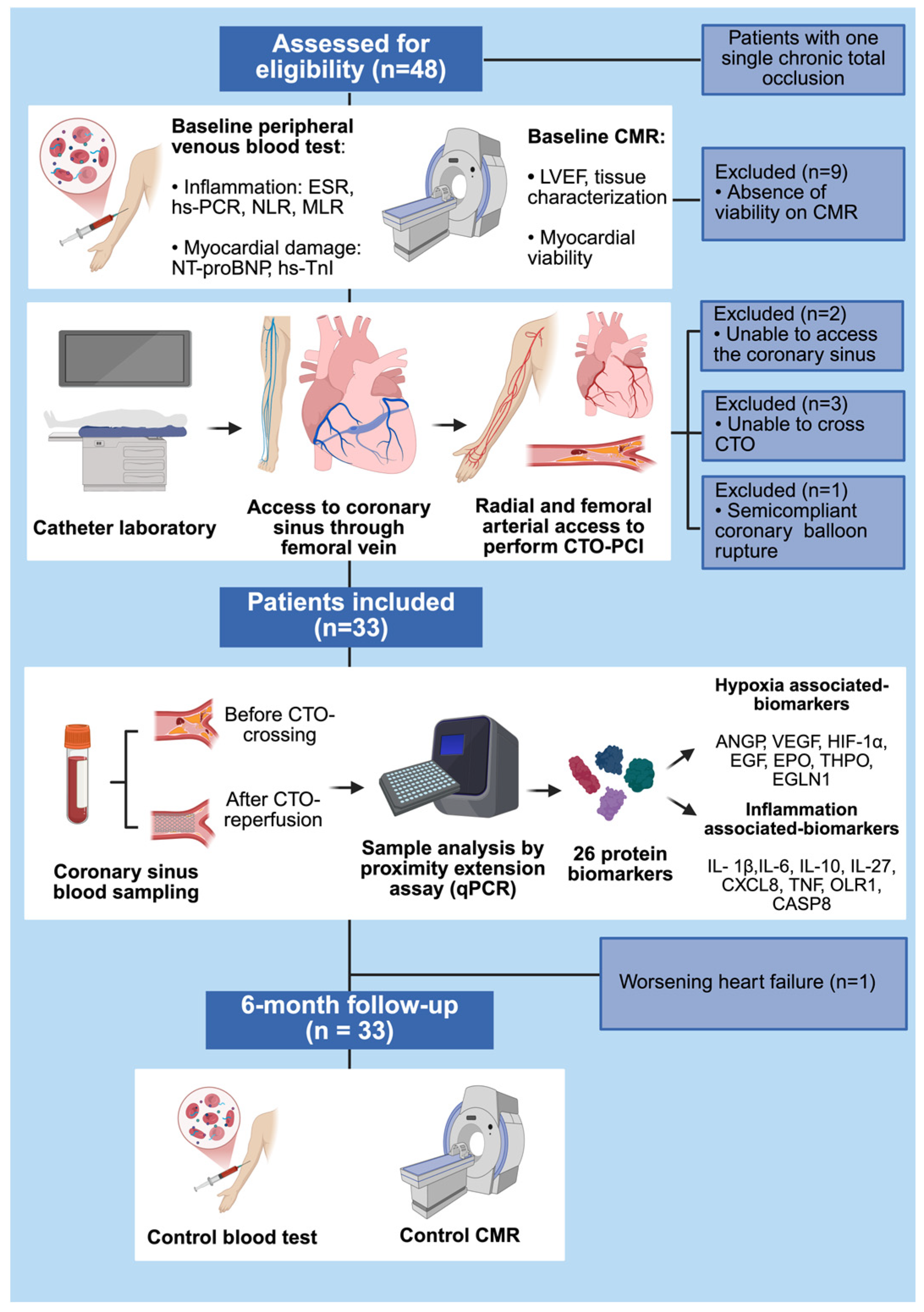
2.1. Study Design and Population
2.2. Definitions
2.3. Measurements and Procedures
2.3.1. Peripheral Blood Sample Collection and Analysis
2.3.2. Cardiac Magnetic Resonance
2.3.3. Percutaneous Coronary Intervention
2.3.4. Coronary Sinus Sample Collection
2.3.5. Proximity Extension Assay
2.4. Statistical Analysis
3. Results
3.1. The Characteristics of the Participants
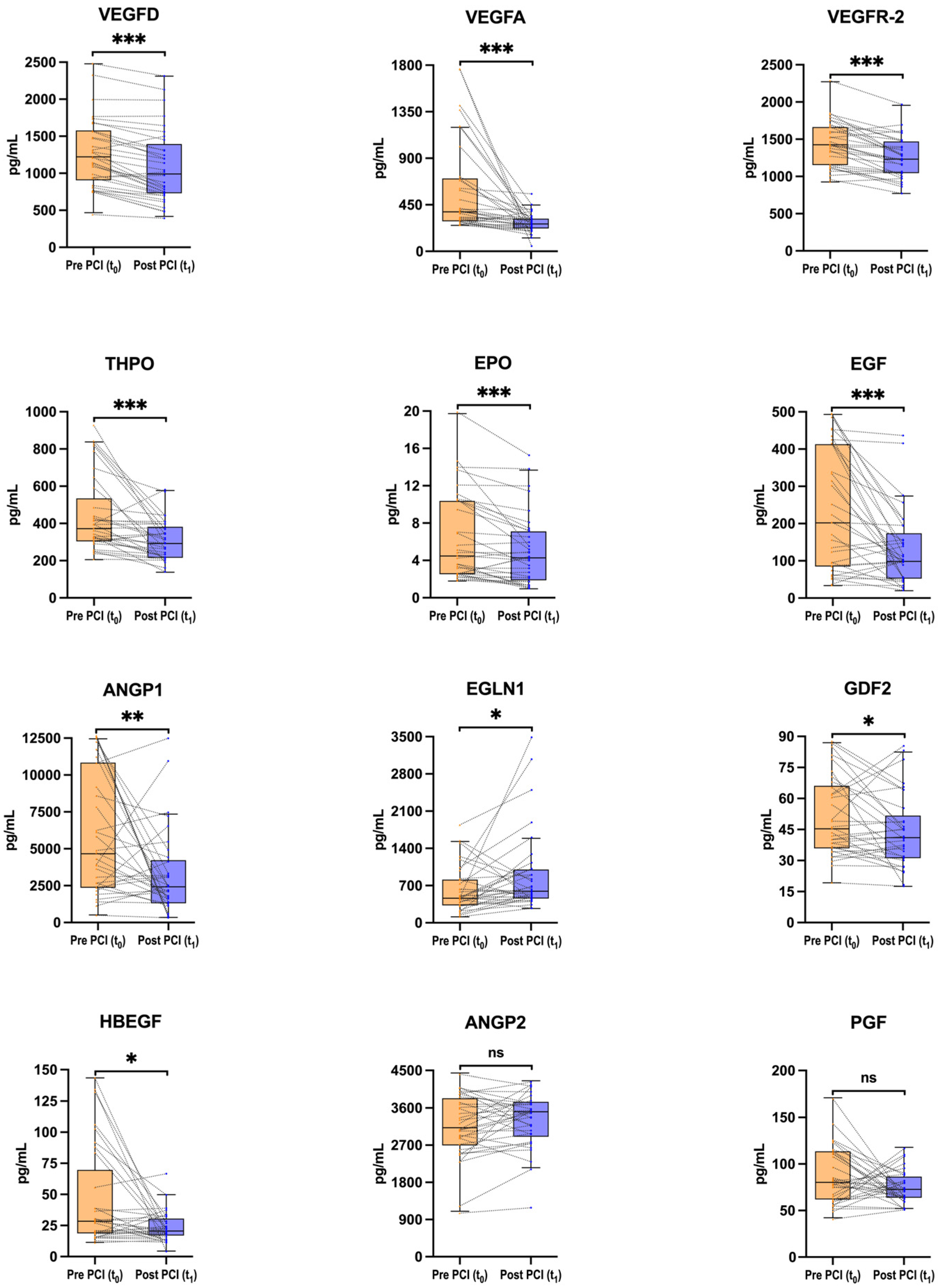
3.2. Acute Changes in Hypoxia-Associated Biomarkers After CTO-PCI
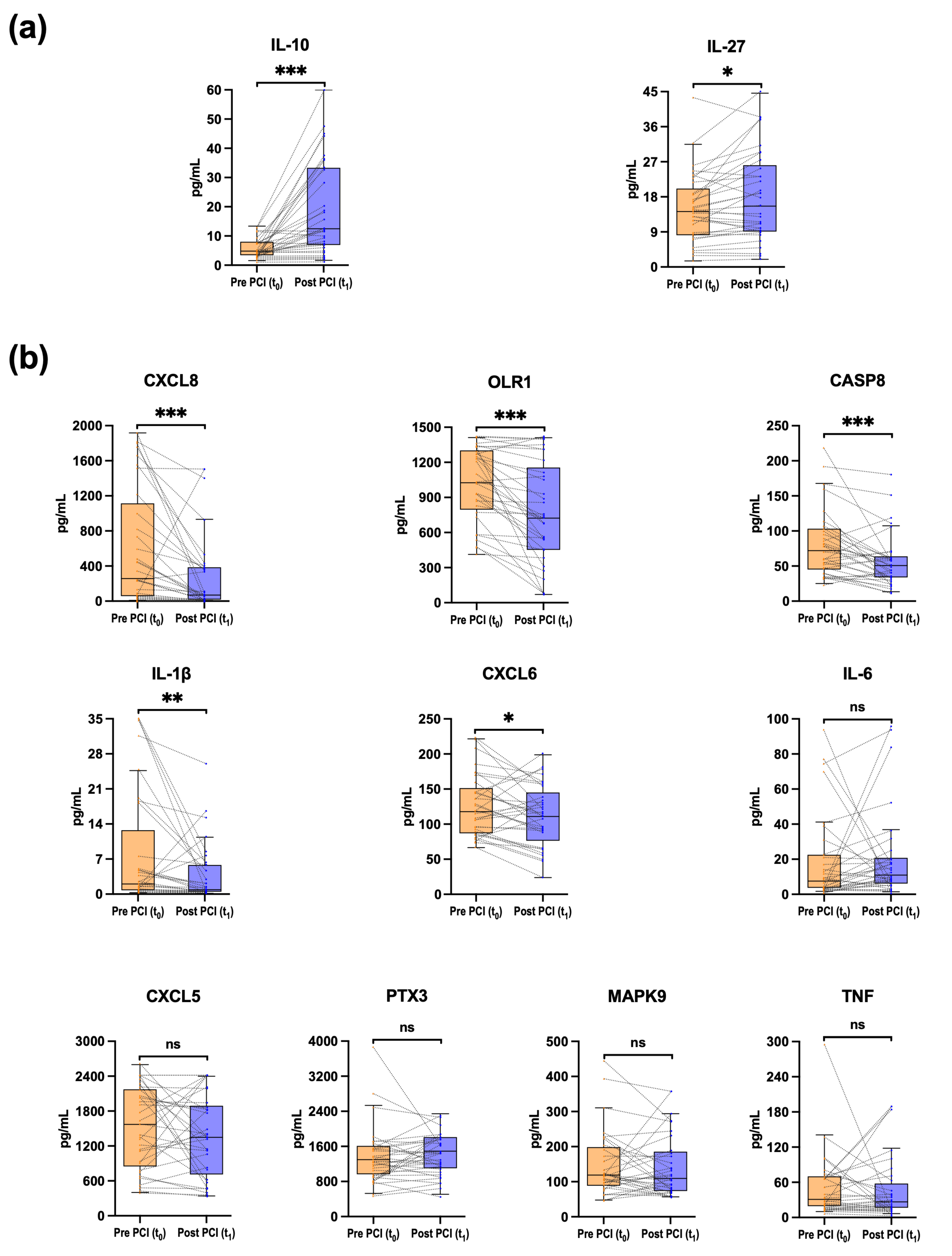
3.3. Acute Changes in Inflammation-Associated Biomarkers After CTO-PCI
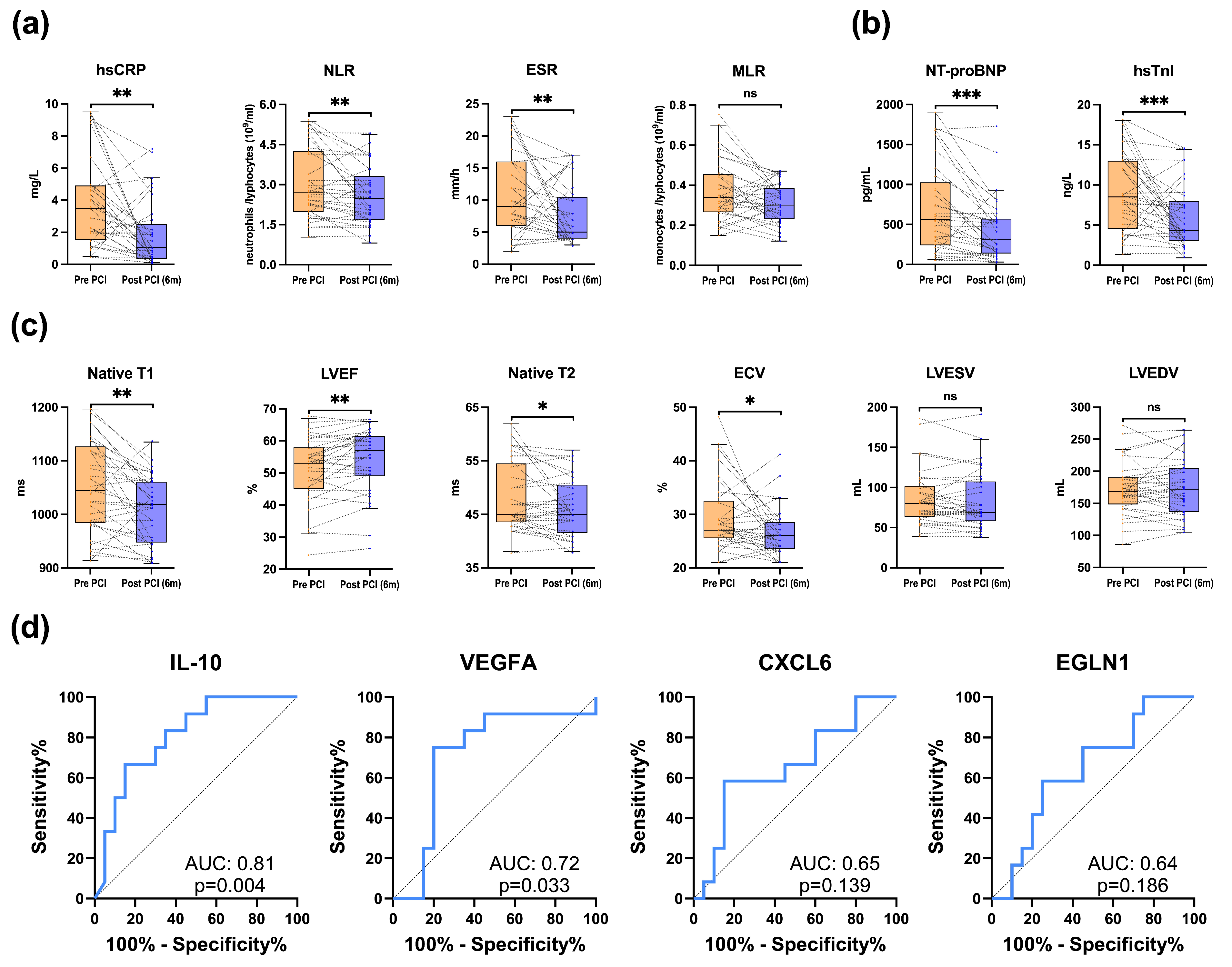
3.4. Mid-Term Changes in Systemic Inflammation and Myocardial Damage-Associated Markers After CTO-PCI
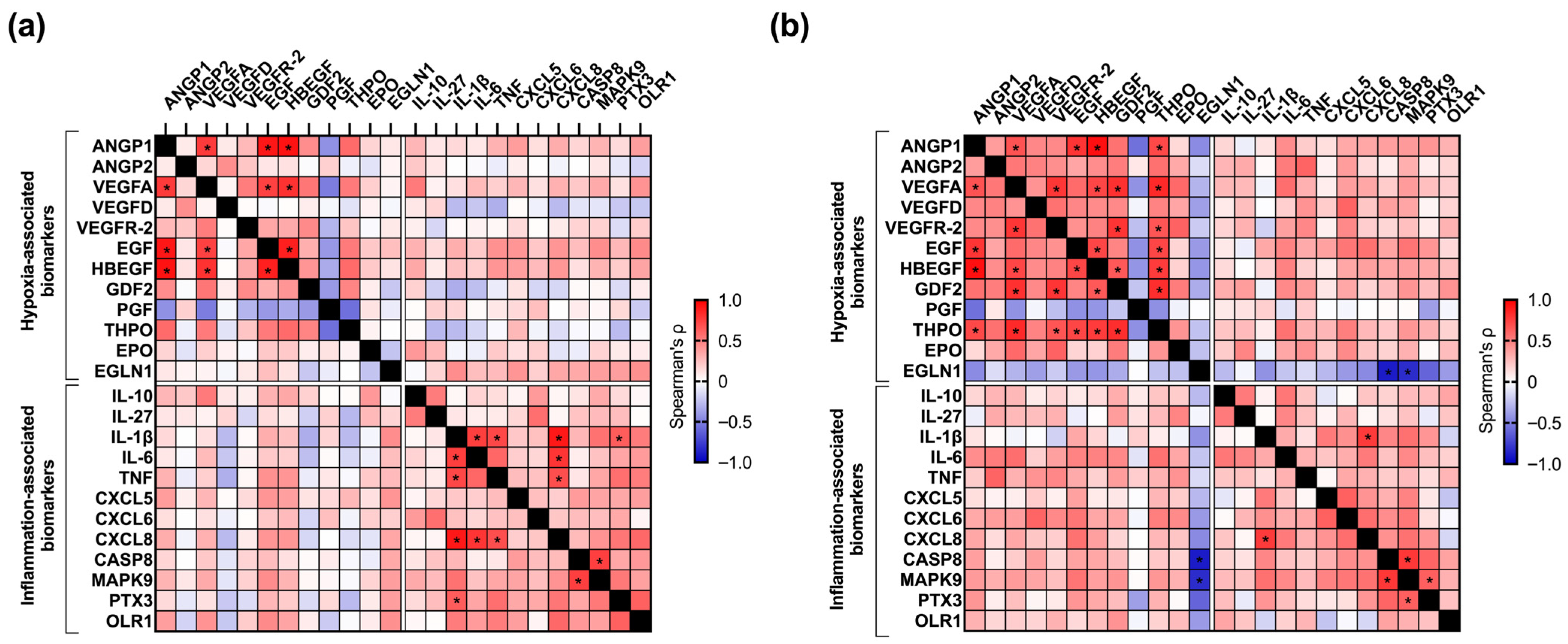
3.5. Coronary Sinus Biomarkers and Mid-Term Changes in Cardiac Magnetic Resonance Imaging After CTO-PCI
4. Discussion
4.1. CTO-PCI Modulates the Hypoxic and Inflammatory Stress in CmE: Mechanistic Insights
4.2. Previous Studies Evaluating the Hypoxic and Inflammatory Stress in CmE
4.3. Clinical Implications and Translational Perspective
4.4. Study Limitations
5. Conclusions
Supplementary Materials
Author Contributions
Funding
Institutional Review Board Statement
Informed Consent Statement
Data Availability Statement
Conflicts of Interest
Abbreviations
| ACEI | Angiotensin-converting enzyme inhibitor |
| ANGP | Angiopoietin (ANGP1, ANGP2) |
| ARB | Angiotensin receptor blocker |
| ARNI | Angiotensin receptor-neprilysin inhibitor |
| ASA | Acetylsalicylic acid |
| AUC | Area under curve |
| BMI | Body mass index |
| CAD | Coronary artery disease |
| CASP8 | Caspase-8 |
| CCB | Calcium channel blocker |
| CI | Confidence interval |
| CmE | Cardiac microenvironment |
| CMR | Cardiac magnetic resonance imaging |
| CS | Coronary sinus |
| CTO | Chronic total occlusion |
| CXCL | Chemokine (C-X-C motif) ligand (CXCL5, CXCL6, CXCL8) |
| ECV | Extracellular volume fraction |
| EGF | Endothelial growth factor |
| eGFR | Estimated glomerular filtration rate |
| EGLN1 | Egg-laying defective nine 1 |
| EPO | Erythropoietin |
| ESR | Erythrocyte sedimentation rate |
| FDRs | False discovery rates |
| GDF2 | Growth differentiation factor 2 |
| HbA1c | Glycosylated hemoglobin |
| HBEGF | Heparin-binding EGF-like growth factor |
| HDL-c | High-density lipoprotein cholesterol |
| HF | Heart failure |
| HIF-1α | Hypoxia-inducible factor 1-alpha |
| hs-CRP | High-sensitivity C-reactive protein |
| hs-TnI | High-sensitivity troponin I |
| IL | Interleukin (IL-1β, IL-6, IL-10, IL-27) |
| IQR | Interquartile range |
| J-CTO | Japanese chronic total occlusion |
| LAD | Left anterior descending coronary artery |
| LCX | Left circumflex coronary artery |
| LDL-c | Low-density lipoprotein cholesterol |
| LGE | Late gadolinium enhancement |
| LVEDV | Left ventricular end diastolic volume |
| LVEF | Left ventricular ejection fraction |
| LVESV | Left ventricular end systolic volume |
| MACEs | Major adverse cardiovascular events |
| MAPK9 | Mitogen-activated protein kinase 9 |
| MI | Myocardial infarction |
| MLR | Monocyte-to-lymphocyte ratio |
| MRA | Mineralocorticoid receptor antagonist |
| NLR | Neutrophil-to-lymphocyte ratio |
| NSTEMI | Non-ST-segment elevation myocardial infarction |
| NT-proBNP | N-terminal pro-B-type natriuretic peptide |
| OLR1 | Oxidized low-density lipoprotein receptor 1 |
| PCI | Percutaneous coronary intervention |
| PCSK9i | Proprotein convertase subtilisin/kexin type 9 inhibitor |
| PGF | Placenta growth factor |
| PTX3 | Pentraxin 3 |
| P2Y12i | P2Y12 receptor inhibitors |
| RCA | Right coronary artery |
| RIPK1 | Receptor-interacting protein kinase 1 |
| ROC | Receiver operating characteristic |
| SD | Standard deviation |
| SGLT2i | Sodium-glucose cotransporter-2 inhibitor |
| STEMI | ST-segment elevation myocardial infarction |
| SYNTAX | Synergy between percutaneous coronary intervention with Taxus and cardiac surgery |
| THPO | Thrombopoietin |
| TIMI | Thrombolysis In Myocardial Infarction |
| TNF | Tumor necrosis factor |
| UFH | Unfractionated heparin |
| VEGF | Vascular endothelial growth factor (VEGFA, VEGFD) |
| VEGFR-2 | Vascular endothelial growth factor receptor-2 |
References
- Råmunddal, T.; Hoebers, L.P.; Henriques, J.P.S.; Dworeck, C.; Angerås, O.; Odenstedt, J.; Ioanes, D.; Olivecrona, G.; Harnek, J.; Jensen, U.; et al. Prognostic Impact of Chronic Total Occlusions. JACC Cardiovasc. Interv. 2016, 9, 1535–1544. [Google Scholar] [CrossRef] [PubMed]
- Maestre-Luque, L.C.; Gonzalez-Manzanares, R.; Suárez de Lezo, J.; Hidalgo, F.; Barreiro-Mesa, L.; de Juan, J.; Gallo, I.; Perea, J.; Alvarado, M.; Romero, M.; et al. Complete vs. incomplete percutaneous revascularization in patients with chronic total coronary artery occlusion. Front. Cardiovasc. Med. 2024, 11, 1443258. [Google Scholar] [CrossRef]
- Lee, S.W.; Lee, P.H.; Ahn, J.M.; Park, D.W.; Yun, S.C.; Han, S.; Kang, H.; Kang, S.-J.; Kim, Y.-H.; Lee, C.W.; et al. Randomized Trial Evaluating Percutaneous Coronary Intervention for the Treatment of Chronic Total Occlusion. Circulation 2019, 139, 1674–1683. [Google Scholar] [CrossRef]
- Yao, J.; Zhang, Y.; Wang, Z.; Chen, Y.; Shi, X. Maintenance of Cardiac Microenvironmental Homeostasis: A Joint Battle of Multiple Cells. J. Cell. Physiol. 2025, 240, e31496. [Google Scholar] [CrossRef]
- Jeansson, M.; Gawlik, A.; Anderson, G.; Li, C.; Kerjaschki, D.; Henkelman, M.; Quaggin, S.E. Angiopoietin-1 is essential in mouse vasculature during development and in response to injury. J. Clin. Investig. 2011, 121, 2278–2289. [Google Scholar] [CrossRef]
- Burke, R.M.; Burgos Villar, K.N.; Small, E.M. Fibroblast contributions to ischemic cardiac remodeling. Cell Signal. 2021, 77, 109824. [Google Scholar] [CrossRef]
- Jaumdally, R.; Varma, C.; Macfadyen, R.J.; Lip, G.Y.H. Coronary sinus blood sampling: An insight into local cardiac pathophysiology and treatment? Eur. Heart J. 2007, 28, 929–940. [Google Scholar] [CrossRef]
- Lin, T.H.; Yen, H.W.; Voon, W.C.; Su, H.M.; Lu, Y.H.; Lai, W.T.; Sheu, S.-H. Vascular endothelial growth factor in coronary sinus: Evidence for its association with coronary collaterals. Scand. Cardiovasc. J. 2005, 39, 353–357. [Google Scholar] [CrossRef] [PubMed]
- Salgado Filho, W.; Martinez Filho, E.E.; Horta, P.; Lemos, P.A.; Migueletto, B.C.; Serrano, C.V., Jr.; Ramires, J.A.F.; da Rocha Martinez, T.L. Marcadores inflamatórios intracoronarianos após intervenções coronarianas percutâneas. Arq. Bras. Cardiol. 2005, 85, 180–185. [Google Scholar] [CrossRef] [PubMed][Green Version]
- Stone, G.W.; Kandzari, D.E.; Mehran, R.; Colombo, A.; Schwartz, R.S.; Bailey, S.; Moussa, I.; Teirstein, P.S.; Dangas, G.; Baim, D.S.; et al. Percutaneous Recanalization of Chronically Occluded Coronary Arteries. Circulation 2005, 112, 2364–2372. [Google Scholar] [CrossRef]
- Thygesen, K.; Alpert, J.S.; Jaffe, A.S.; Chaitman, B.R.; Bax, J.J.; Morrow, D.A.; White, H.D.; Executive Group on behalf of the Joint European Society of Cardiology (ESC)/American College of Cardiology (ACC)/American Heart Association (AHA)/World Heart Federation (WHF) Task Force for the Universal Definition of Myocardial Infarction. Fourth Universal Definition of Myocardial Infarction (2018). J. Am. Coll. Cardiol. 2018, 72, 2231–2264. [Google Scholar] [CrossRef] [PubMed]
- Perea Palazón, R.J.; Ortiz Pérez, J.T.; Prat González, S.; de Caralt Robira, T.M.; Cibeira López, M.T.; Solé Arqués, M. Técnicas paramétricas de caracterización tisular del miocardio mediante resonancia magnética (parte 1): Mapas de T1. Radiologia 2016, 58, 164–177. [Google Scholar] [CrossRef]
- Brilakis, E.S.; Mashayekhi, K.; Tsuchikane, E.; Abi Rafeh, N.; Alaswad, K.; Araya, M.; Avran, A.; Azzalini, L.; Babunashvili, A.M.; Bayani, B.; et al. Guiding Principles for Chronic Total Occlusion Percutaneous Coronary Intervention. Circulation 2019, 140, 420–433. [Google Scholar] [CrossRef]
- Cuesta-López, L.; Escudero-Contreras, A.; Hanaee, Y.; Pérez-Sánchez, C.; Ruiz-Ponce, M.; Martínez-Moreno, J.M.; Pérez-Pampin, E.; González, A.; Plasencia-Rodriguez, C.; Martínez-Feito, A.; et al. Exploring candidate biomarkers for rheumatoid arthritis through cardiovascular and cardiometabolic serum proteome profiling. Front. Immunol. 2024, 15, 1333995. [Google Scholar] [CrossRef]
- Zambom-Ferraresi, F.; Zambom-Ferraresi, F.; Izco, M.; Martínez-Velilla, N.; Extramiana, L.; Fernández-Irigoyen, J.; Santamaría, E.; Llamas-Urbano, A.; Hanaee, Y.; Martinez-Moreno, J.M.; et al. Monitoring Cerebrospinal Fluid Inflammatory Mediators by Olink Target 48 Cytokine Panel. Methods Mol. Biol. 2025, 2914, 51–64. [Google Scholar] [PubMed]
- Apte, R.S.; Chen, D.S.; Ferrara, N. VEGF in Signaling and Disease: Beyond Discovery and Development. Cell 2019, 176, 1248–1264. [Google Scholar] [CrossRef]
- Zhao, Y.; Yu, B.; Wang, Y.; Tan, S.; Xu, Q.; Wang, Z.; Zhou, K.; Liu, H.; Ren, Z.; Jiang, Z. Ang-1 and VEGF: Central regulators of angiogenesis. Mol. Cell. Biochem. 2025, 480, 621–637. [Google Scholar] [CrossRef]
- Akwii, R.G.; Sajib, M.S.; Zahra, F.T.; Mikelis, C.M. Role of Angiopoietin-2 in Vascular Physiology and Pathophysiology. Cells 2019, 8, 471. [Google Scholar] [CrossRef]
- Amano, H.; Hackett, N.R.; Rafii, S.; Crystal, R.G. Thrombopoietin Gene Transfer–Mediated Enhancement of Angiogenic Responses to Acute Ischemia. Circ. Res. 2005, 97, 337–345. [Google Scholar] [CrossRef] [PubMed]
- Mehta, V.B.; Besner, G.E. HB-EGF promotes angiogenesis in endothelial cells via PI3-kinase and MAPK signaling pathways. Growth Factors 2007, 25, 253–263. [Google Scholar] [CrossRef]
- Annese, T.; Tamma, R.; Ruggieri, S.; Ribatti, D. Erythropoietin in tumor angiogenesis. Exp. Cell Res. 2019, 374, 266–273. [Google Scholar] [CrossRef]
- Lee, F.S.; Percy, M.J. The HIF Pathway and Erythrocytosis. Annu. Rev. Pathol. Mech. Dis. 2011, 6, 165–192. [Google Scholar] [CrossRef]
- Pang, J.; Vince, J.E. The role of caspase-8 in inflammatory signalling and pyroptotic cell death. Semin. Immunol. 2023, 70, 101832. [Google Scholar] [CrossRef]
- Zhang, T.; Xu, D.; Liu, J.; Wang, M.; Duan, L.J.; Liu, M.; Meng, H.; Zhuang, Y.; Wang, H.; Wang, Y.; et al. Prolonged hypoxia alleviates prolyl hydroxylation-mediated suppression of RIPK1 to promote necroptosis and inflammation. Nat. Cell Biol. 2023, 25, 950–962. [Google Scholar] [CrossRef]
- Grebe, A.; Hoss, F.; Latz, E. NLRP3 Inflammasome and the IL-1 Pathway in Atherosclerosis. Circ. Res. 2018, 122, 1722–1740. [Google Scholar] [CrossRef]
- Pirillo, A.; Norata, G.D.; Catapano, A.L. LOX-1, OxLDL, and Atherosclerosis. Mediat. Inflamm. 2013, 2013, 152786. [Google Scholar] [CrossRef]
- Zhang, J.; Yang, F.; Liao, Y.; Xia, X.; Yu, M.; Hu, D.; Wang, W.; Zhang, L.; Wang, C.; Liu, H.; et al. Enhanced Trained Immunity in Peripheral Monocytes in Unstable Angina with Elevated High-Sensitivity C-Reactive Protein. JACC Basic Transl. Sci. 2025, 10, 101300. [Google Scholar]
- Jung, M.; Ma, Y.; Iyer, R.P.; DeLeon-Pennell, K.Y.; Yabluchanskiy, A.; Garrett, M.R.; Lindsey, M.L. IL-10 improves cardiac remodeling after myocardial infarction by stimulating M2 macrophage polarization and fibroblast activation. Basic Res. Cardiol. 2017, 112, 33. [Google Scholar] [CrossRef]
- Awasthi, A.; Carrier, Y.; Peron, J.P.S.; Bettelli, E.; Kamanaka, M.; Flavell, R.A.; Kuchroo, V.K.; Oukka, M.; Weiner, H.L. A dominant function for interleukin 27 in generating interleukin 10–producing anti-inflammatory T cells. Nat. Immunol. 2007, 8, 1380–1389. [Google Scholar] [CrossRef]
- Jaumdally, R.J.; Varma, C.; Blann, A.D.; MacFadyen, R.J.; Lip, G.Y.H. Systemic and intracardiac vascular endothelial growth factor and angiopoietin-1 and -2 levels in coronary artery disease: Effects of angioplasty. Ann. Med. 2007, 39, 298–305. [Google Scholar]
- Kim, B.H.; Ko, Y.G.; Her, A.Y.; Kim, J.S.; Hwang, K.C.; Shin, D.H.; Kim, B.-K.; Choi, D.; Ha, J.-W.; Hong, M.-K.; et al. Serial plasma levels of angiogenic factors in patients with ST-segment elevation myocardial infarction undergoing primary percutaneous coronary intervention. Korean Circ. J. 2012, 42, 464–470. [Google Scholar] [CrossRef]
- Chen, S.; Guo, L.; Cui, M.; Sun, L.; Mi, L. Dynamic changes in serum angiopoietin-1, angiopoietin-2, and angiopoietin-2/angiopoietin-1 ratio in acute myocardial infarction patients treated with primary percutaneous coronary intervention. Biomarkers 2012, 17, 441–446. [Google Scholar] [CrossRef]
- Zeng, Z.Y.; Gui, C.; Li, L.; Wei, X.M. Effects of Percutaneous Coronary Intervention on Serum Angiopoietin-2 in Patients with Coronary Heart Disease. Chin. Med. J. 2016, 129, 631–635. [Google Scholar] [CrossRef]
- Sardella, G.; Mariani, P.; D’Alessandro, M.; De Luca, L.; Pierro, M.; Mancone, M.; Porretta, A.; Accapezzato, D.; Fedele, F.; Paroli, M. Early elevation of interleukin-1β and interleukin-6 levels after bare or drug-eluting stent implantation in patients with stable angina. Thromb. Res. 2006, 117, 659–664. [Google Scholar]
- ElMokhtari, N.; Zschernitz, S.; Sebens, S.; Simon-Herrmann, G.; Krüger, D. Cardiac release and kinetics of cytokines after elective bare metal coronary stenting. J. Thromb. Thrombolysis 2010, 30, 391–397. [Google Scholar] [CrossRef]
- Aggarwal, A.; Schneider, D.J.; Terrien, E.F.; Gilbert, K.E.; Dauerman, H.L. Increase in Interleukin-6 in the First Hour after Coronary Stenting: An Early Marker of the Inflammatory Response. J. Thromb. Thrombolysis 2003, 15, 25–31. [Google Scholar] [CrossRef]
- Algoet, M.; Janssens, S.; Himmelreich, U.; Gsell, W.; Pusovnik, M.; Eynde, J.V.D.; Oosterlinck, W. Myocardial ischemia-reperfusion injury and the influence of inflammation. Trends Cardiovasc. Med. 2023, 33, 357–366. [Google Scholar] [CrossRef]
- Welt, F.G.P.; Batchelor, W.; Spears, J.R.; Penna, C.; Pagliaro, P.; Ibanez, B.; Drakos, S.G.; Dangas, G.; Kapur, N.K. Reperfusion Injury in Patients with Acute Myocardial Infarction. J. Am. Coll. Cardiol. 2024, 83, 2196–2213. [Google Scholar] [CrossRef]
- Andreadou, I.; Ghigo, A.; Nikolaou, P.-E.; Swirski, F.K.; Thackeray, J.T.; Heusch, G.; Vilahur, G. Immunometabolism in heart failure. Nat. Rev. Cardiol. 2025, 22, 751–772. [Google Scholar] [CrossRef]
- Napoli, G.; Pergola, V.; Basile, P.; De Feo, D.; Bertrandino, F.; Baggiano, A.; Mushtaq, S.; Fusini, L.; Fazzari, F.; Carrabba, N.; et al. Epicardial and Pericoronary Adipose Tissue, Coronary Inflammation, and Acute Coronary Syndromes. J. Clin. Med. 2023, 12, 7212. [Google Scholar] [CrossRef]
- Ridker, P.M.; Everett, B.M.; Thuren, T.; MacFadyen, J.G.; Chang, W.H.; Ballantyne, C.; Fonseca, F.; Nicolau, J.; Koenig, W.; Anker, S.D.; et al. Antiinflammatory Therapy with Canakinumab for Atherosclerotic Disease. N. Engl. J. Med. 2017, 377, 1119–1131. [Google Scholar] [CrossRef]
- Denegri, A.; Boriani, G. High Sensitivity C-reactive Protein (hsCRP) and its Implications in Cardiovascular Outcomes. Curr. Pharm. Des. 2021, 27, 263–275. [Google Scholar]
- García-Escobar, A.; Vera-Vera, S.; Tébar-Márquez, D.; Rivero-Santana, B.; Jurado-Román, A.; Jiménez-Valero, S.; Galeote, G.; Cabrera, J.; Moreno, R. Neutrophil-to-lymphocyte ratio an inflammatory biomarker, and prognostic marker in heart failure, cardiovascular disease and chronic inflammatory diseases: New insights for a potential predictor of anti-cytokine therapy responsiveness. Microvasc. Res. 2023, 150, 104598. [Google Scholar] [CrossRef]
- Omland, T.; Pfeffer, M.A.; Solomon, S.D.; de Lemos, J.A.; Røsjø, H.; Šaltytė Benth, J.; Maggioni, A.; Domanski, M.J.; Rouleau, J.L.; Sabatine, M.S.; et al. Prognostic Value of Cardiac Troponin I Measured with a Highly Sensitive Assay in Patients with Stable Coronary Artery Disease. J. Am. Coll. Cardiol. 2013, 61, 1240–1249. [Google Scholar] [CrossRef]
- Mátyás, B.; Benedek, I.; Rat, N.; Blîndu, E.; Rodean, I.; Haja, I.; Păcurar, D.; Mihăilă, T.; Benedek, T. Assessment of the Association Between Coronary Artery Calcification, Plaque Vulnerability, and Perivascular Inflammation via Coronary CT Angiography. Life 2025, 15, 1288. [Google Scholar] [CrossRef] [PubMed]



| Characteristic | Patients (n = 33) |
|---|---|
| Age (years) | 65.4 ± 5.9 |
| Male sex | 28 (84.8) |
| BMI (kg/m2) | 26.9 ± 3.3 |
| Obesity | 12 (36.4) |
| Hypertension | 22 (66.7) |
| Diabetes mellitus | 12 (36.3) |
| Hyperlipidemia | 23 (69.7) |
| Smoking habit | 19 (57.6) |
| Atrial fibrillation | 2 (6) |
| Cerebrovascular disease | 3 (9.1) |
| Valvular heart disease | 1 (3) |
| Heart failure | 3 (9.1) |
| LVEF by CMR (%) | 51.1 ± 10 |
| LVEF ≥ 50 | 23 (69.7) |
| LVEF < 50 | 10 (30.3) |
| History of CAD | 18 (54.5) |
| Stable angina | 5 (15.1) |
| STEMI | 6 (18.2) |
| NSTEMI | 7 (21.2) |
| Laboratory data | |
| eGFR (mL/min/1.73 m2) (90–120) * | 85 ± 11.4 |
| HbA1c (%) (4–6) | 6.0 (5.7–6.7) |
| Total cholesterol (mmol/L) (3.6–5.7) | 2.4 ± 0.38 |
| LDL-c (mmol/L) (1.3–3.4) | 1.35 ± 0.23 |
| HDL-c (mmol/L) (1.1–2.1) | 1.15 ± 0.19 |
| Triglycerides (mmol/L) (0.5–6.5) | 1.21 ± 0.32 |
| hsCRP (mg/L) (0–10) | 3.5 (1.5–4.9) |
| ESR (mm/h) (0–15) | 9 (6–16) |
| hsTnI (ng/L) (0–46) | 9.1 ± 4.9 |
| NT-proBNP (pg/mL) (0–125) | 560 (241–1027) |
| Angiographic data | |
| SYNTAX † | 16.5 ± 6 |
| J-CTO ‡ | 2 (2–3) |
| Rentrop ¥ | 2 (2–3) |
| Location of CTO | |
| LAD | 10 (30.3) |
| LCX | 3 (9.1) |
| RCA | 20 (60.6) |
| Indication for CTO-PCI– | |
| Persistent angina | 24 (72.7) |
| Inducible ischemia | 4 (12.2) |
| Ventricular dysfunction (LVEF < 40) | 5 (15.1) |
| Approach for CTO-crossing | |
| Antegrade only | 20 (60.6) |
| Antegrade–retrograde | 13 (39.4) |
| Procedure time (min) | 130 ± 55 |
| Pre–post CS sampling time | 98 (56–120.5) |
| Fluoroscopy time (min) | 32 ± 10 |
| Contrast volume (mL) | 198 ± 41 |
| Medical treatment | |
| ACEI/ARBs | 24 (72.7) |
| ARNI | 5 (15.1) |
| Beta blocker | 23 (69.7) |
| MRA | 6 (18.1) |
| SGLT2i | 8 (24.2) |
| CCB | 8 (24.2) |
| Nitrates (oral/transdermic) | 13 (39.4) |
| Statins | 32 (97.0) |
| Ezetimibe | 23 (69.7) |
| PCSK9i | 2 (6.0) |
| Antiplatelet drugs | |
| ASA | 33 (100) |
| P2Y12i | 12 (36.3) |
Disclaimer/Publisher’s Note: The statements, opinions and data contained in all publications are solely those of the individual author(s) and contributor(s) and not of MDPI and/or the editor(s). MDPI and/or the editor(s) disclaim responsibility for any injury to people or property resulting from any ideas, methods, instructions or products referred to in the content. |
© 2026 by the authors. Licensee MDPI, Basel, Switzerland. This article is an open access article distributed under the terms and conditions of the Creative Commons Attribution (CC BY) license.
Share and Cite
Maestre-Luque, L.C.; Gonzalez-Manzanares, R.; Gallo, I.; Hidalgo, F.; Suárez de Lezo, J.; Romero, M.; Espejo-Perez, S.; Perez-Sanchez, C.; Martínez-Moreno, J.M.; González-Fernandez, R.; et al. Percutaneous Coronary Intervention for Chronic Total Occlusions Modulates Cardiac Hypoxic and Inflammatory Stress. J. Clin. Med. 2026, 15, 517. https://doi.org/10.3390/jcm15020517
Maestre-Luque LC, Gonzalez-Manzanares R, Gallo I, Hidalgo F, Suárez de Lezo J, Romero M, Espejo-Perez S, Perez-Sanchez C, Martínez-Moreno JM, González-Fernandez R, et al. Percutaneous Coronary Intervention for Chronic Total Occlusions Modulates Cardiac Hypoxic and Inflammatory Stress. Journal of Clinical Medicine. 2026; 15(2):517. https://doi.org/10.3390/jcm15020517
Chicago/Turabian StyleMaestre-Luque, Luis Carlos, Rafael Gonzalez-Manzanares, Ignacio Gallo, Francisco Hidalgo, Javier Suárez de Lezo, Miguel Romero, Simona Espejo-Perez, Carlos Perez-Sanchez, Julio Manuel Martínez-Moreno, Rafael González-Fernandez, and et al. 2026. "Percutaneous Coronary Intervention for Chronic Total Occlusions Modulates Cardiac Hypoxic and Inflammatory Stress" Journal of Clinical Medicine 15, no. 2: 517. https://doi.org/10.3390/jcm15020517
APA StyleMaestre-Luque, L. C., Gonzalez-Manzanares, R., Gallo, I., Hidalgo, F., Suárez de Lezo, J., Romero, M., Espejo-Perez, S., Perez-Sanchez, C., Martínez-Moreno, J. M., González-Fernandez, R., Pan, M., & Ojeda, S. (2026). Percutaneous Coronary Intervention for Chronic Total Occlusions Modulates Cardiac Hypoxic and Inflammatory Stress. Journal of Clinical Medicine, 15(2), 517. https://doi.org/10.3390/jcm15020517