Evidence-Based Consensus on the Diagnosis and Treatment of Advanced HER2-Positive and HER2-Low Breast Cancer in Colombia

 , , , , , , and
Abstract
1. Introduction
2. Materials and Methods
2.1. Methodological Design
2.2. Evidence Search and Selection
2.3. Eligibility Criteria
2.4. Quality and Certainty Assessment of the Evidence
2.5. Consensus Process
- Include recommendation: if at least 80% of experts voted between 7 and 9, or if the median fell within that range.
- Exclude recommendation: if at least 80% voted between 1 and 3, or if the median was within that range.
- Further review: if no clear consensus was reached, additional group discussion and a second vote were conducted.
2.6. Strength of Recommendations
- Strong: if ≥95% of experts voted “yes” or “probably yes” in key domains (net benefit, high certainty, feasibility).
- Conditional: if that threshold was not reached or relevant uncertainty existed (low certainty, uncertain balance, or feasibility limitations).
3. Results
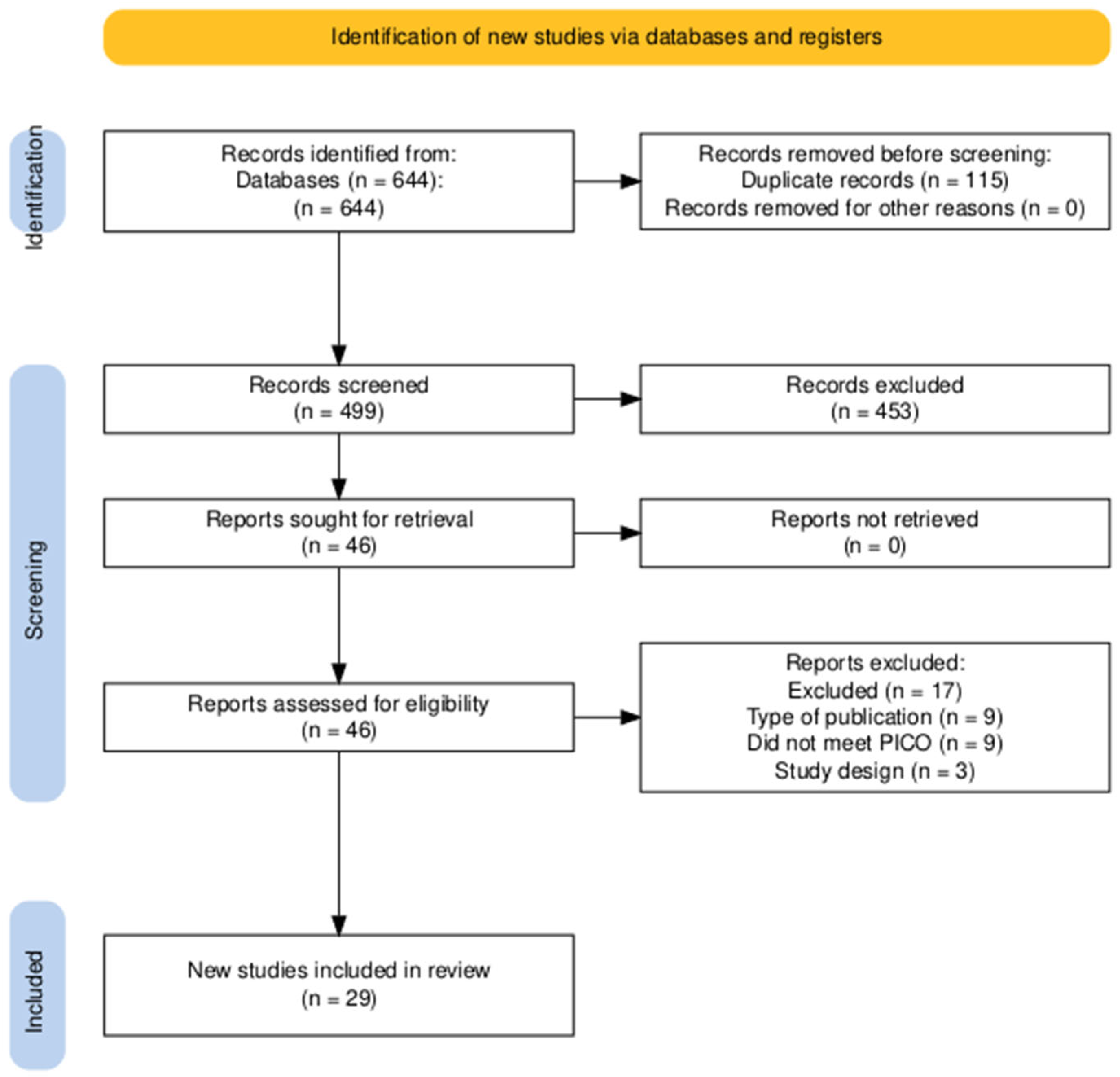
3.1. Evidence Search and Selection
3.2. Assessment of Methodological Quality
3.3. Certainty of the Evidence (GRADE)
3.4. Consensus Results and Strength of Recommendations
- 17 recommendations (77%) were classified as conditional, due to low-to-moderate certainty or local feasibility constraints.
- 5 recommendations (23%) were classified as strong, with high certainty and immediate applicability.
3.5. Clinical Recommendations
3.5.1. Question 1: Criteria for Quantifying and Reporting HER2 Expression
Recommendations
- At the time of initial diagnosis of advanced breast cancer—whether newly diagnosed or recurrent—it is recommended to perform a biopsy of the primary tumor or metastatic lesion to assess estrogen receptor, progesterone receptor, and human epidermal growth factor receptor 2 (HER2) status (expert recommendation).Certainty of the evidence: high; strong recommendation.
- In patients with recurrent metastatic disease, HER2 status should be evaluated using tissue from the metastatic site, provided that such a sample is available (expert recommendation).Certainty of the evidence: high; strong recommendation.
- When reporting HER2 test results, pathologists should use nomenclature aligned with the ASCO/CAP 2018 and ESMO 2023 guidelines. Reports must include the HER2 immunohistochemistry (IHC) score (0, 1+, 2+, or 3+) to support the identification of patients with HER2-low or ultra-low expression (expert recommendation).Certainty of the evidence: high; strong recommendation.
- A validated HER2 test, consistent with current international guidelines, should be used to identify HER2 0, 1+, or HER2 2+/ISH non-amplified breast cancer. Appropriate assays for detecting HER2 protein include the Pathway 4B5 assay (used in the DB-04 study) or any other validated test deemed suitable by pathologists, based on the available evidence and practical considerations (expert recommendation).Certainty of the evidence: moderate; conditional recommendation.
3.5.2. Question 2: First-Line Treatment for Metastatic HER2-Positive Breast Cancer
Recommendations
- The combination of trastuzumab, pertuzumab, and a taxane is recommended as first-line treatment for patients with HER2-positive breast cancer, for up to six cycles of taxane therapy, unless contraindicated (expert recommendation).Certainty of the evidence: High. Recommendation: Conditional
- First-line treatment for metastatic HER2-positive breast cancer should include pertuzumab, trastuzumab, and docetaxel for up to six cycles, provided it is well tolerated. Maintenance therapy with pertuzumab and trastuzumab should then continue until disease progression, regardless of hormone receptor (HoR) status (expert recommendation).Certainty of the evidence: High. Recommendation: Conditional
- T-DXd is recommended as first-line treatment for patients who experience recurrence within six months of completing adjuvant or neoadjuvant therapy, or for those with contraindications to T-DM1 (Expert recommendation).Certainty of the evidence: High. Recommendation: Conditional
- The combination of eribulin, trastuzumab, and pertuzumab, followed by maintenance with trastuzumab and pertuzumab until disease progression or unacceptable toxicity, may be considered a valid alternative to the standard regimen of taxane, trastuzumab, and pertuzumab in patients with metastatic HER2-positive breast cancer (expert recommendation).Certainty of the evidence: Moderate. Recommendation: Conditional
- In patients with HER2-positive and HoR-negative breast cancer for whom chemotherapy is contraindicated, a HER2-targeted therapy strategy using trastuzumab plus pertuzumab is suggested. If taxanes are specifically contraindicated, another chemotherapy agent may be considered (expert recommendation).Certainty of the evidence: Moderate. Recommendation: Conditional
- In patients with HER2-positive and HoR-positive breast cancer in whom comorbidities, personal preferences, or functional status limit the use of chemotherapy, endocrine therapy—such as an aromatase inhibitor—combined with HER2-targeted therapy (trastuzumab plus pertuzumab) is suggested (expert recommendation).Certainty of the evidence: Moderate. Recommendation: Conditional
3.5.3. Question 3: Treatment After Disease Progression in Metastatic HER2-Positive Breast Cancer
Recommendations
- T-DXd is recommended as the preferred second-line treatment option for patients with HER2-positive breast cancer who experience disease progression after receiving a trastuzumab-based regimen (expert recommendation).Certainty of the evidence: High. Recommendation: Strong
- T-DXd is recommended as second-line therapy in patients with metastatic HER2-positive breast cancer who have progressed during or after treatment with trastuzumab, pertuzumab, and chemotherapy (expert recommendation).Certainty of the evidence: High. Recommendation: Strong
- T-DXd is recommended for patients with advanced HER2-positive breast cancer who have previously received trastuzumab, pertuzumab, and T-DM1 (expert recommendation).Certainty of the evidence: High. Recommendation: Conditional
- Continued anti-HER2 therapy beyond the second line is suggested in patients with metastatic breast cancer, as clinical benefit persists in third-line and later-line settings (expert recommendation).Certainty of the evidence: Moderate. Recommendation: Conditional
- For patients previously treated with T-DXd, the choice of subsequent treatment regimens, routes of administration, and toxicity management should be individualized through a shared decision-making process between the patient and medical team, as no direct comparative studies support a specific regimen (expert recommendation).Certainty of the evidence: Low. Recommendation: Conditional
- Options include the following:
- ○
- If the patient has not previously received trastuzumab emtansine (T-DM1) in the second line, a regimen including T-DM1 should be considered.Certainty of the evidence: High. Recommendation: Conditional
- ○
- Tucatinib in combination with trastuzumab and capecitabine may be offered as another treatment option for advanced disease.Certainty of the evidence: High. Recommendation: Conditional
- ○
- Neratinib combined with capecitabine may be offered.Certainty of the evidence: Low. Recommendation: Conditional
- ○
- Lapatinib plus trastuzumab may be offered.Certainty of the evidence: Low. Recommendation: Conditional
- ○
- Lapatinib plus capecitabine may be offered.Certainty of the evidence: High. Recommendation: Conditional
- ○
- Other chemotherapy and trastuzumab combinations may be considered—alternative regimens include the following:Certainty of the evidence: Moderate. Recommendation: Conditional
- ◾
- Vinorelbine + trastuzumab
- ◾
- Capecitabine + trastuzumab
- ◾
- Gemcitabine + trastuzumab
- ◾
- Eribulin + trastuzumab
- ◾
- Carboplatin + trastuzumab
- ◾
- Ixabepilone + trastuzumab
- ◾
- Liposomal doxorubicin + trastuzumab
- ○
- Margetuximab plus chemotherapy may be offered.Certainty of the evidence: Moderate. Recommendation: Conditional
- ○
- Hormonal therapy plus trastuzumab may be considered (for patients with estrogen receptor-positive [ER+] and/or progesterone receptor-positive [PgR+] disease).Certainty of the evidence: Moderate. Recommendation: Conditional
- ○
- Abemaciclib combined with trastuzumab and fulvestrant may be offered.Certainty of the evidence: Moderate. Recommendation: Conditional
- Trastuzumab emtansine (T-DM1) should be considered as a second-line treatment option for patients with HER2-positive breast cancer who have progressed after prior treatment with a taxane and trastuzumab, in settings where T-DXd is contraindicated (expert recommendation).Certainty of the evidence: High. Recommendation: Conditional
- The combination of tucatinib, capecitabine, and trastuzumab, as well as T-DXd, should be considered as second-line treatment options for selected patients with HER2-positive breast cancer and brain metastases (expert recommendation).Certainty of the evidence: Moderate. Recommendation: Conditional
3.5.4. Question 4: Treatment of Metastatic HER2-Low Breast Cancer
Recommendations
- Patients with metastatic HER2-low breast cancer (defined as IHC 1+ or IHC 2+/ISH-negative) who are hormone receptor-positive, have previously received cyclin-dependent kinase 4/6 (CDK4/6) inhibitors and at least one line of chemotherapy (or who experienced disease progression within six months after [neo] adjuvant chemotherapy), and are considered refractory to endocrine therapy, should be considered candidates for treatment with T-DXd (expert-adapted recommendation).Certainty of the evidence: Moderate. Recommendation: Conditional
- In patients with metastatic HER2-low breast cancer where both T-DXd and sacituzumab govitecan are available, T-DXd is preferred (expert-adapted recommendation).Certainty of the evidence: High. Recommendation: Strong
- Sacituzumab govitecan is suggested over T-DXd in patients with metastatic HER2-low breast cancer who are hormone receptor-negative (expert-adapted recommendation).
3.5.5. Question 5: Treatment of CNS Progression in HER2-Positive and HER2-Low Breast Cancer
Recommendations:
- In patients with metastatic HER2-positive breast cancer who have achieved local control of the disease and have no evidence of systemic progression, it is suggested to consider continuing the previously established systemic treatment (expert consensus-based recommendation).Certainty of the evidence: Low. Recommendation: Conditional
- In patients for whom a change in systemic treatment is being considered:Certainty of the evidence: Moderate. Recommendation: Conditional
- ○
- For HER2-positive disease:
- ◾
- The combination of tucatinib, capecitabine, and trastuzumab is the preferred regimen, particularly in oligosymptomatic patients with limited disease.
- ◾
- T-DXd may also be considered.
- ○
- For HER2-low disease:
- ◾
- T-DXd may also be considered
4. Discussion
5. Conclusions
Supplementary Materials
Author Contributions
Funding
Data Availability Statement
Acknowledgments
Conflicts of Interest
Appendix A. Sources and Search Strategies

| Feature | Search Terms | Results |
|---|---|---|
| Database | Medline | 313 |
| Platform | PubMed | |
| Search date | October 2024 | |
| Date range | Last 5 years | |
| Language restrictions | None | |
| Other limits | Clinical practice guidelines | |
| Search strategy 1 | “breast neoplasms” [MeSH Terms] OR (“Breast” [All Fields] AND “Neoplasms” [All Fields]) OR “breast neoplasms” [All Fields] OR “breast neoplasms” [Title/Abstract] OR “neoplasm breast” [Title/Abstract] OR “breast cancer” [Title/Abstract] OR “cancer breast” [Title/Abstract] OR “cancer of breast” [Title/Abstract] OR “malignant neoplasm of breast” [Title/Abstract] OR “breast malignant neoplasm” [Title/Abstract] OR “breast malignant neoplasms” [Title/Abstract] OR “mammary cancer” [Title/Abstract] OR “breast carcinoma” [Title/Abstract] | 510,398 |
| Search strategy 2 | “neoplasm metastasis” [MeSH Terms] OR (“Neoplasm” [All Fields] AND “metastasis” [All Fields]) OR “neoplasm metastasis” [All Fields] OR “metastase” [Title/Abstract] OR “metastases” [Title/Abstract] OR “metastasis” [Title/Abstract] OR (“metastasation” [All Fields] OR “metastasic” [All Fields] OR “metastasing” [All Fields] OR “metastasise” [All Fields] OR “metastasised” [All Fields] OR “metastasises” [All Fields] OR “metastasising” [All Fields] OR “metastasization” [All Fields] OR “metastasizes” [All Fields] OR “metastasizing” [All Fields] OR “neoplasm metastasis” [MeSH Terms] OR (“Neoplasm” [All Fields] AND “metastasis” [All Fields]) OR “neoplasm metastasis” [All Fields] OR “metastase” [All Fields] OR “metastases” [All Fields] OR “metastasize” [All Fields] OR “metastasized” [All Fields]) AND “Neoplasm” [Title/Abstract]) OR “metastasis neoplasm” [Title/Abstract] OR “neoplasm metastases” [Title/Abstract] | 581,179 |
| Search strategy 3 | “recurrance” [All Fields] OR “recurrence” [MeSH Terms] OR “recurrence” [All Fields] OR “recurrences” [All Fields] OR “recurrencies” [All Fields] OR “recurrency” [All Fields] OR “recurrent” [All Fields] OR “recurrently” [All Fields] OR “recurrents” [All Fields] OR “recurrences” [Title/Abstract] OR “relapse” [Title/Abstract] OR “relapses” [Title/Abstract] | 983,500 |
| Search strategy 4 | “advanced breast cancer” [Title/Abstract] OR “advanced stage” [Title/Abstract] | 46,337 |
| Search strategy 5 | “HER2” [All Fields] OR “her2 neu” [All Fields] OR (“receptor, erbb 2” [MeSH Terms] OR (“receptor” [All Fields] AND “erbb 2” [All Fields]) OR “erbb-2 receptor” [All Fields] OR “erbb2” [All Fields] OR “genes, erbb 2” [MeSH Terms] OR (“genes” [All Fields] AND “erbb 2” [All Fields]) OR “erbb-2 genes” [All Fields]) OR “HER2-positive” [All Fields] OR “HER2-low” [All Fields] | 60,875 |
| Search strategy 6 | “HER2” [Title/Abstract] OR “HER2-positive” [Title/Abstract] OR “HER2-low” [Title/Abstract] | 44,232 |
| Search strategy 7 | #2 OR #3 OR #4 | 1,477,736 |
| Search strategy 8 | #5 OR #6 | 60,875 |
| Search strategy 9 | #1 AND #7 AND #8 | 17,159 |
| Search strategy 10 | #9 AND (consensusdevelopmentconference [Filter] OR consensusdevelopmentconferencenih [Filter] OR guideline [Filter] OR practiceguideline [Filter]) | 44 |
| Search strategy 11 | #10 AND (y_5 [Filter]) | 6 |
| Search strategy 12 | “clinical practice” [Title/Abstract] OR “guideline” [Title/Abstract] OR “clinical guidelines” [Title/Abstract] OR “best practice” [Title/Abstract] OR “best practices” [Title/Abstract] OR “standards” [Title/Abstract] OR “consensus” [Title/Abstract] OR “recommendations” [Title/Abstract] | 1,048,827 |
| Search strategy 13 | #9 AND #12 | 1052 |
| Search strategy 14 | #13 AND (y_5 [Filter]) | 467 |
| Search strategy 15 | #14 NOT (“systematic review” [Publication Type] OR “systematic reviews as topic” [MeSH Terms] OR “systematic review” [All Fields] OR (“review” [Publication Type] OR “review literature as topic” [MeSH Terms] OR “review” [All Fields])) | 325 |
| Search strategy 16 | #15 AND ((excludepreprints [Filter]) AND (fft [Filter]) AND (English [Filter] OR Spanish [Filter])) | 313 |
| Feature | Search Terms | Results |
| Database | ClinicalKey | 37 |
| Platform | Elsevier | |
| Search date | October 2024 | |
| Date range | Last 5 years | |
| Language restrictions | None | |
| Other limits | Clinical practice guidelines | |
| Search strategy 1 | advanced breast cancer filter guidelines AND Last 5 years | 14 |
| Search strategy 2 | metastatic breast cancer filter guidelines AND Last 5 years | 23 |
| Feature | Search Terms | Results |
| Database | Scopus | 61 |
| Platform | Elsevier | |
| Search date | October 2024 | |
| Date range | Last 5 years | |
| Language restrictions | None | |
| Other limits | Clinical practice guidelines | |
| Search strategy 1 | TITLE (metastatic AND breast AND cancer) OR TITLE (advanced AND breast AND cancer) OR TITLE (recurrence AND breast AND cancer) | 26,626 |
| Search strategy 2 | TITLE (her2) OR KEY (her2) OR TITLE-ABS-KEY (her2 AND positive AND breast AND cancer) OR TITLE-ABS-KEY (her2 AND neu) OR TITLE (her2 AND negative AND breast AND cancer) | 34,393 |
| Search strategy 3 | (TITLE (metastatic AND breast AND cancer) OR TITLE (advanced AND breast AND cancer) OR TITLE (recurrence AND breast AND cancer)) AND (TITLE (her2) OR KEY (her2) OR TITLE-ABS-KEY (her2 AND positive AND breast AND cancer) OR TITLE-ABS-KEY (her2 AND neu) OR TITLE (her2 AND negative AND breast AND cancer)) | 4798 |
| Search strategy 4 | #3 AND (KEY (guideline) OR KEY (practice AND guidelines AND as AND topic) OR TITLE (clinical AND practice AND guidelines) OR TITLE (guideline *) OR TITLE (consensus) OR TITLE (recommendations) OR ALL (standardization) OR TITLE (guideline *)) | 206 |
| Search strategy 5 | #4 AND PUBYEAR > 2020 AND PUBYEAR < 2025 | 97 |
| Search strategy 6 | #5 AND (LIMIT-TO (LANGUAGE, “English”)) | 87 |
| Search strategy 7 | #6 AND (EXCLUDE (DOCTYPE, “re”) OR EXCLUDE (DOCTYPE, “no”) OR EXCLUDE (DOCTYPE, “cp”) OR EXCLUDE (DOCTYPE, “le”)) | 61 |
| Feature | Search Terms | Results |
| Database | LILACS | 0 |
| Platform | BVS (Virtual Health Library) | |
| Search date | October 2024 | |
| Date range | Last 5 years | |
| Language restrictions | None | |
| Other limits | Clinical practice guidelines | |
| Search strategy 1 | ti:((cáncer de seno) OR (neoplasia de la mama) OR (carcinoma de mama) OR (tumor de seno)) | 1161 |
| Search strategy 2 | ab:((cáncer de seno) OR (neoplasia de la mama) OR (carcinoma de mama) OR (tumor de seno)) | 3124 |
| Search strategy 3 | ti:(metástasis de la neoplasia) OR ti:(metástasis) OR ti:(recurrencia) OR ti:(recaída) OR ti:(cáncer de mama avanzado) | 92,297 |
| Search strategy 4 | (her2) OR (her2/neu) OR (erbb2) | 141,591 |
| Search strategy 5 | #1 AND #2 AND #3 AND #4 | 5 |
| Search strategy 6 | #5 AND (year_cluster:[2019 TO 2024]) | 3 |
| Search strategy 7 | #6 AND clinical practice guidelines | 0 |
| Feature | Search Terms | Results |
| Database | LILACS | 124 |
| Platform | BVS (Virtual Health Library) | |
| Search date | October 2024 | |
| Date range | Last 5 years | |
| Language restrictions | None | |
| Other limits | Clinical practice guidelines | |
| Search strategy 1 | ti:((advanced breast cancer) OR (metastatic breast cancer) OR (breast cancer recurrence)) | 23,539 |
| Search strategy 2 | ti:(her2) OR ti:(her2/neu) OR ti:(erbb2) | 23,256 |
| Search strategy 3 | #1 AND #2 | 2990 |
| Search strategy 4 | #3 AND type_of_study:(“guideline”) | 243 |
| Search strategy 5 | #4 AND year_cluster: [2019 TO 2024] | 125 |
| Search strategy 6 | #5 AND language:(“en” OR “es”) | 124 |
| Date | Source | Search Algorithm | Results | Duplicates | Pre- Selection |
|---|---|---|---|---|---|
| Oct-24 | GIN | metastatic breast cancer filter 2020 AND 2021 AND 2022 AND 2023 AND 2024 | 3 | 0 | 3 |
| Oct-24 | GIN | advanced breast cancer | 6 | 0 | 0 |
| Oct-24 | SIGN | metastatic breast cancer | 1 | 0 | 0 |
| Oct-24 | NICE | metastatic breast cancer AND Last updated date between: 1 January 2020 and 10 September 2024 | 1 | 0 | 1 |
| Oct-24 | NICE | advanced breast cancer AND Last updated date between: 1 January 2020 and 10 September 2024 | 0 | 0 | 0 |
| Oct-24 | NCCN | Guidelines Breast Cancer Metastatic | 33 | 2 | 8 |
Appendix B
| First Author, Year | Study Type | Geographic Scope | Target Population | Clinical Setting/Line of Therapy | Main Intervention(s) | Comparator(s) | Primary Outcome(s) |
|---|---|---|---|---|---|---|---|
| Garcia-Saenz JA et al., 2023 | Clinical Practice Guideline | Spain | Advanced breast cancer | Diagnosis and treatment of advanced disease | Systemic therapies (endocrine, anti-HER2, chemotherapy, etc.) | Not applicable | Consensus recommendations |
| Shimoi T et al., 2020 | Clinical Practice Guideline | Japan | Breast cancer patients (systemic treatment) | Systemic treatment (adjuvant, neoadjuvant, metastatic) | Systemic therapies (endocrine, chemotherapy, anti-HER2) | Not applicable | Recommendations, strength of recommendation, strength of evidence |
| Terada M et al., 2023 | Clinical Practice Guideline | Japan | Breast cancer patients (systemic treatment) | Early and metastatic breast cancer | Systemic therapies (updates on S-1, abemaciclib, trastuzumab deruxtecan) | Not applicable | Recommendations, strength of recommendation, strength of evidence |
| Yamamoto Y et al., 2024 | Clinical Practice Guideline (General Statements) | Japan | Breast cancer patients | Diagnosis, surgery, radiotherapy, systemic therapy | General treatment concepts and algorithms | Not applicable | Clinical recommendations |
| Arpino G et al., 2023 | Randomized, open-label, multicenter phase II trial (PERTAIN) | 8 countries (71 sites) | HER2-positive, hormone receptor–positive metastatic or locally advanced breast cancer | First-line (previously untreated in metastatic setting) | Pertuzumab + trastuzumab + aromatase inhibitor | Trastuzumab + aromatase inhibitor | Progression-free survival |
| Hua X et al., 2022 | Randomized, open-label, non-inferiority phase III trial (SYSUCC-002) | China (9 hospitals) | Hormone receptor–positive, HER2-positive metastatic breast cancer | First-line | Trastuzumab + endocrine therapy | Trastuzumab + chemotherapy | Progression-free survival |
| Saura C et al., 2020 | Randomized, active-controlled phase III trial (NALA) | 28 countries | Patients with centrally confirmed HER2-positive metastatic breast cancer (MBC) with ≥2 previous HER2-directed MBC regimens | Metastatic setting: previously treated (≥2 previous HER2-directed regimens) | Neratinib + capecitabine | Lapatinib + capecitabine | Centrally confirmed progression-free survival and overall survival |
| Murthy RK et al., 2020 | Randomized, double-blind trial (HER2CLIMB) | International (155 sites, 15 countries) | HER2-positive metastatic breast cancer (with or without brain metastases) | Previously treated with trastuzumab, pertuzumab, and trastuzumab emtansine | Tucatinib + trastuzumab + capecitabine | Placebo + trastuzumab + capecitabine | Progression-free survival (first 480 patients) |
| Cortés J et al., 2022 | Multicenter, open-label, randomized phase 3 trial (DESTINY-Breast03) | 15 countries (169 centers) | HER2-positive metastatic breast cancer | Previously treated with trastuzumab and a taxane | Trastuzumab deruxtecan | Trastuzumab emtansine | Progression-free survival (blind independent central review) |
| Bardia A et al., 2024 | Multicenter, open-label, randomized phase 3 trial (DESTINY-Breast06) | Multicenter (324 sites) | Hormone receptor–positive, HER2-low or HER2-ultralow metastatic breast cancer | Metastatic setting; after one or more lines of endocrine-based therapy; no prior chemotherapy for metastatic disease | Trastuzumab deruxtecan | Physician’s choice of chemotherapy | Progression-free survival in the HER2-low population (blind independent central review) |
| Gennari A et al., 2021 | Clinical Practice Guideline (ESMO) | Europe | Metastatic breast cancer | Diagnosis, staging, and treatment of metastatic disease | Systemic and locoregional interventions | Not applicable | Evidence-based recommendations |
| Tarantino P et al., 2023 | Expert Consensus Statements (ESMO) | International panel (9 countries) | HER2-low breast cancer | Definition, diagnosis, and clinical management | Definitions and therapeutic strategies (e.g., ADCs) | Not applicable | Consensus statements |
| Seligmann JF et al., 2020 | Randomized, open-label phase II screening trial (LANTERN) | UK (17 centers) | HER2-positive metastatic breast cancer with CNS metastases | Current or previously treated with trastuzumab; new or recently progressed CNS metastases | Lapatinib + capecitabine | Trastuzumab + capecitabine | Time to progression of CNS metastases |
| Al Sukhun S et al., 2024 | Resource-Stratified Guideline (ASCO) | Global (focus on resource-constrained settings) | Metastatic breast cancer in resource-constrained settings | Basic, Limited, and Enhanced settings; first, second, and third lines | Systemic treatments adapted to resource availability | Not applicable | Resource-stratified treatment recommendations |
| Rugo HS et al., 2021 | Randomized, open-label phase 3 trial (SOPHIA) | 17 countries (166 sites) | ERBB2 (HER2)-positive advanced breast cancer | Progression on $\ge$ 2 prior anti-ERBB2 therapies | Margetuximab + chemotherapy | Trastuzumab + chemotherapy | Progression-free survival (central blinded analysis) and overall survival |
| Modi S et al., 2022 | Multicenter, open-label, randomized phase 3 trial (DESTINY-Breast04) | Multicenter | HER2-low metastatic breast cancer | Previously treated with one or two lines of chemotherapy | Trastuzumab deruxtecan | Physician’s choice of chemotherapy | Progression-free survival in the hormone receptor–positive cohort |
| Ramakrishna N et al., 2022 | Guideline Update (ASCO) | Not specified (US society guideline) | HER2-positive advanced breast cancer with brain metastases | Management of brain metastases (local and systemic therapy) | Local therapies (surgery, RT) and systemic therapies | Not applicable | Recommendations on local and systemic therapy |
| Emens LA et al., 2020 | Randomized, double-blind, placebo-controlled phase 2 trial (KATE2) | 9 countries (Asia, Australia, North America, Western Europe) | HER2-positive advanced breast cancer | Previously treated with trastuzumab and a taxane | Trastuzumab emtansine + atezolizumab | Trastuzumab emtansine + placebo | Investigator-assessed progression-free survival |
| Tolaney SM et al., 2020 | Randomized, open-label phase 2 trial (monarcHER) | 14 countries | Hormone receptor-positive, HER2-positive advanced breast cancer | Advanced setting; previously treated (at least two prior HER2-targeted therapies) | Abemaciclib + trastuzumab + fulvestrant (Group A) and Abemaciclib + trastuzumab (Group B) | Standard-of-care chemotherapy + trastuzumab (Group C) | Investigator-assessed progression-free survival |
| Xu B et al., 2021 | Multicenter, open-label, randomized, controlled phase 3 trial (PHOEBE) | China (29 hospitals) | HER2-positive metastatic breast cancer | Previously treated with trastuzumab and taxanes | Pyrotinib + capecitabine | Lapatinib + capecitabine | Progression-free survival (masked independent central review) |
| Giordano SH et al., 2022 | Guideline Update (ASCO) | Not specified (US society guideline) | HER2-positive advanced breast cancer | Systemic therapy (first, second, third line+) | HER2-targeted therapies (with/without chemotherapy/endocrine therapy) | Not applicable | Recommendations based on evidence |
| Breast Cancer Expert Committee et al., 2024 | Clinical Guideline | China | Advanced breast cancer | Diagnosis and treatment | New therapeutic drugs and treatment models | Not applicable | Recommendations for diagnosis and treatment |
| Wolff AC et al., 2023 | Guideline Update (ASCO-CAP) | Not specified (US society guideline) | Patients with breast cancer (for testing) | HER2 testing | HER2 testing algorithms and reporting | Not applicable | Recommendations for HER2 testing and reporting |
| Ma F et al., 2023 | Randomized, double-blind, placebo-controlled, multicenter phase 3 trial (PHILA) | China (40 centers) | Untreated HER2-positive metastatic breast cancer | First-line | Pyrotinib + trastuzumab + docetaxel | Placebo + trastuzumab + docetaxel | Progression-free survival assessed by investigator |
| Montemurro et al., 2020 | Phase IIIb, international, open-label, single-arm study (KAMILLA), | International | Patients with HER2-positive locally advanced or metastatic breast cancer, specifically analyzing those with baseline brain metastases (BM) | Advanced/metastatic setting; previously treated (prior HER2-targeted therapy and chemotherapy) | Trastuzumab emtansine (T-DM1) | Not applicable (single-arm study) | Best overall response rate and clinical benefit rate (for this exploratory analysis of patients with BM); Safety and efficacy (overall study), |
| Miles et al., 2021 | Phase IIIb, global, open-label, single-arm study (PERUSE), | Global (Europe, Asia, North and South America, Africa, and Australia) | Patients with inoperable HER2-positive locally recurrent or metastatic breast cancer (LR/mBC) | First-line therapy for locally recurrent or metastatic breast cancer, | Pertuzumab in combination with trastuzumab and an investigator-selected taxane (docetaxel, paclitaxel, or nab-paclitaxel) | Not applicable (single-arm study) | Safety and tolerability, |
| Saura et al., 2023 | Phase II, multicenter, open-label, single-arm trial (DESTINY-Breast01) | Multicenter (Asia, North America, Europe) | Patients with HER2-positive metastatic breast cancer (mBC) resistant or refractory to T-DM1 | Metastatic setting; previously treated (resistant or refractory to T-DM1) | Trastuzumab deruxtecan (T-DXd) 5.4 mg/kg | Not applicable (single-arm study) | Confirmed objective response rate (ORR) by independent central review |
| Petit et al., 2024 | Multicenter real-world early access program (observational study), | France | Patients with unresectable or metastatic HER2-positive breast cancer | Metastatic setting; previously treated (at least two prior lines of anti-HER2-based regimens), | Trastuzumab deruxtecan (T-DXd) | Not applicable (observational study) | Descriptive analysis of tumor response and safety (no formal primary endpoint reported for this real-world program), |
| Mosele et al., 2023 | Phase 2, prospective, open-label clinical trial (DAISY), | France (15 study centers) | Patients with metastatic breast cancer presenting variable HER2 expression (HER2-overexpressing, HER2-low, and HER2 non-expressing) | Metastatic setting; previously treated (at least one line of chemotherapy in the metastatic setting) | Trastuzumab deruxtecan (T-DXd) | Not applicable (multi-cohort single-arm study) | Confirmed objective response rate (ORR), |
Appendix C. Participants in the HER2-Low Consensus
- Abraham Hernández—Oncology
- Álvaro Guerrero—Oncology
- Berlly Díaz—Pathology
- Carlos Calderón—Oncology
- Carlos Vargas—Oncology
- Carolina López Ordoñez—Oncology
- Daniel González—Oncology
- Danilo Aguirre—Oncology
- David Gómez—Radiation Oncology
- Diego Ballén—Oncology
- Diego Gómez—Oncology
- Diego Morán—Oncology
- Fernando Contreras—Oncology
- Fernando Herazo—Mastology
- Henry Idrobo—Oncology
- Hernán Carranza—Oncology
- Juan Carlos Velásquez—Oncology
- Laura Bolaño—Oncology
- Lizbeth Ramírez—Oncology
- Luz F. Sua—Pathology
- Marc Edy Pierre—Oncology
- Marcela Vallejo—Oncology
- María Alejandra Bravo—Oncology
- Mauricio Lema—Oncology
- Maycos Zapata—Oncology
- Milton Lombana—Oncology
- Néstor Llinás—Oncology
- Olga Marcela Urrego—Oncology
- Patricia López—Pathology
- Ricardo Plazas—Oncology
- Sabrina Herrera—Pathology
- Sandra Ximena Franco—Oncology
- Sergio Cervera—Mastology
- William Mantilla—Oncology
- Aura Victoria Gutiérrez—Epidemiology
- Julio Zuluaga—Epidemiology
- Juan Pablo Peña—MBA.
Appendix D. Consensus Development and Modified Delphi Process
Appendix E
| # | Name | Specialty | City | Role |
|---|---|---|---|---|
| 1 | Abraham Hernandez | Oncology | Cartagena | Developer |
| 2 | Álvaro Guerrero | Oncology | Cali | Clinical Expert |
| 3 | Berlly Diaz | Pathology | Bogotá | Clinical Expert |
| 4 | Carlos Calderón | Oncology | Bucaramanga | Clinical Expert |
| 5 | Carlos Vargas | Oncology | Bogotá | Clinical Expert |
| 6 | Carolina López Ordoñez | Oncology | Cali | Clinical Expert |
| 7 | Daniel González | Oncology | Medellín | Clinical Expert |
| 8 | Danilo Aguirre | Oncology | Valledupar | Clinical Expert |
| 9 | David Gómez | Radiotherapy | Medellín | Clinical Expert |
| 10 | Diego Ballen | Oncology | Bogotá | Clinical Expert |
| 11 | Diego Gómez | Oncology | Bucaramanga | Clinical Expert |
| 12 | Diego Moran | Oncology | Medellín | Clinical Expert |
| 13 | Fernando Contreras | Oncology | Bogotá | Clinical Expert |
| 14 | Fernando Herazo | Mastology | Medellín | Clinical Expert |
| 15 | Henry Idrobo | — | — | Clinical Expert |
| 16 | Hernán Carranza | Oncology | Bogotá | Developer |
| 17 | Juan Carlos Velásquez | Oncology | Bogotá | Clinical Expert |
| 18 | Laura Bolaño | Oncology | Barranquilla | Clinical Expert |
| 19 | Lizbeth Ramírez | Oncology | Cali | Clinical Expert |
| 20 | Luz Sua | Pathology | Cali | Developer |
| 21 | Marc Pierre | Oncology | Bogotá | Developer |
| 22 | Marcela Vallejo | Oncology | Cali | Clinical Expert |
| 23 | Maria Alejandra Bravo | Oncology | Bogotá | Clinical Expert |
| 24 | Mauricio Lema | Oncology | Medellín | Developer |
| 25 | Maycos Zapata | Oncology | Medellín | Clinical Expert |
| 26 | Milton Lombana | Oncology | Cali | Clinical Expert |
| 27 | Nestor Llinas | Oncology | Medellín | Clinical Expert |
| 28 | Olga Marcela Urrego | Oncology | Cali | Clinical Expert |
| 29 | Patricia López | Pathology | Bogotá | Clinical Expert |
| 30 | Ricardo Plazas | Oncology | Cúcuta | Clinical Expert |
| 31 | Sabrina Herrera | Pathology | Medellín | Clinical Expert |
| 32 | Sandra Franco | Oncology | Bogotá | Developer |
| 33 | Sergio Cervera | Mastology | Bogotá | Clinical Expert |
| 34 | William Mantilla | Oncology | Bogotá | Developer |
| Metric | Question 1 | Question 2 | Question 3 | Question 4 | Question 5 |
|---|---|---|---|---|---|
| Total votes | 32 | 33 | 33 | 29 | 31 |
| Mean | 8.46 | 7.75 | 8.6 | 8.10 | 8.55 |
| Standard deviation | 1.55 | 1.71 | 0.56 | 1.50 | 0.89 |
| Median | 9.0 | 8.0 | 9.0 | 9.0 | 9.0 |
| 95% CI (lower bound) | 9.0 | 7.0 | 9.0 | 9.0 | 9.0 |
| 95% CI (upper bound) | 9.0 | 8.0 | 10.0 | 10.0 | 9.0 |
| Consensus (%) | 96.43 | 92.86 | 100 | 86.21 | 96.80 |
| Outcome | Consensus achieved | Consensus achieved | Consensus achieved | Consensus achieved | Consensus achieved |
Appendix F

Appendix G
| Consensus Question | Type of Included Studies | Risk of Bias | Inconsistency | Indirectness | Imprecision | Publication Bias | Overall Certainty |
|---|---|---|---|---|---|---|---|
| Q1. HER2 quantification and reporting | CPGs + consensus statements | Not applicable | Not applicable | Not applicable | Not applicable | Not applicable | Not applicable (based on CPGs/consensus) |
| Q2. First-line treatment for HER2+ metastatic | Phase III RCTs + 1 non-comparative study | Low (RCTs); moderate (non-comparative) | None | Direct | Adequate precision | Not identified | High ⊕⊕⊕⊕ |
| Q3. Treatment after progression in HER2+ metastatic | Phase III RCTs | Low | Low (2L); present (≥3L) | Direct | Adequate precision (2L); lower (≥3L) | Not identified | Moderate ⊕⊕⊕⃝ to High ⊕⊕⊕⊕ |
| Q4. Treatment for HER2-low metastatic | Phase III RCTs | Low | None | Direct | Adequate precision | Not identified | High ⊕⊕⊕⊕ |
| Q5. Treatment after progression in CNS | Phase III RCTs + Phase II + non-comparative studies | Low (RCTs); high (non-randomized) | None (RCTs); present (others) | Direct | Adequate precision (RCTs); lower (others) | Not identified | Low ⊕⊕⃝⃝ to Moderate ⊕⊕⊕⃝ |
References
- International Agency for Research on Cancer (IARC). Global Cancer Observatory: Cancer Today; World Health Organization: Geneva, Switzerland, 2022. Available online: https://gco.iarc.fr/today (accessed on 31 October 2024).
- Bielo, L.B.; Trapani, D.; Nicolò, E.; Valenza, C.; Guidi, L.; Belli, C.; Kotteas, E.; Marra, A.; Prat, A.; Fusco, N.; et al. The evolving landscape of metastatic HER2-positive, hormone receptor-positive Breast Cancer. Cancer Treat. Rev. 2024, 128, 102761. [Google Scholar] [CrossRef]
- Fusco, N.; Viale, G. The “lows”: Update on ER-low and HER2-low breast cancer. Breast 2024, 78, 103831. [Google Scholar] [CrossRef]
- Modi, S.; Jacot, W.; Yamashita, T.; Sohn, J.; Vidal, M.; Tokunaga, E. Trastuzumab Deruxtecan in Previously Treated HER2-Low Advanced Breast Cancer. Breast 2024, 78, 103831. [Google Scholar] [CrossRef] [PubMed]
- Wolff, A.C.; Somerfield, M.R.; Dowsett, M.; Hammond, M.E.H.; Hayes, D.F.; McShane, L.M. Human Epidermal Growth Factor Receptor 2 Testing in Breast Cancer. Arch. Pathol. Lab. Med. 2023, 147, 993–1000. [Google Scholar] [CrossRef]
- Tarantino, P.; Viale, G.; Press, M.F.; Hu, X.; Penault-Llorca, F.; Bardia, A. ESMO expert consensus statements (ECS) on the definition, diagnosis, and management of HER2-low breast cancer. Ann. Oncol. 2023, 34, 645–659. [Google Scholar] [CrossRef]
- Veugelers, R.; Gaakeer, M.I.; Patka, P.; Huijsman, R. Improving design choices in Delphi studies in medicine: The case of an exemplary physician multi-round panel study with 100% response. BMC Med. Res. Methodol. 2020, 20, 156. [Google Scholar] [CrossRef]
- Schifano, J.; Niederberger, M. How Delphi studies in the health sciences find consensus: A scoping review. Syst. Rev. 2025, 14, 14. [Google Scholar] [CrossRef]
- Barrios, M.; Guilera, G.; Nuño, L.; Gómez-Benito, J. Consensus in the delphi method: What makes a decision change? Technol. Forecast. Soc. Change 2021, 163, 120484. [Google Scholar] [CrossRef]
- Garcia-Saenz, J.A.; Blancas, I.; Echavarria, I.; Hinojo, C.; Margeli, M.; Moreno, F. SEOM-GEICAM-SOLTI clinical guidelines in advanced breast cancer. Clin. Transl. Oncol. 2023, 25, 2665–2678. [Google Scholar] [CrossRef]
- Al Sukhun, S.; Temin, S.; Barrios, C.H.; Antone, N.Z.; Guerra, Y.C.; Chavez-MacGregor, M.; Chopra, R.; Danso, M.A.; Gomez, H.L.; Homian, N.M.; et al. Systemic Treatment of Patients With Metastatic Breast Cancer: ASCO Resource-Stratified Guideline. JCO Glob. Oncol. 2024, 10, e2300285. [Google Scholar] [CrossRef]
- Breast Cancer Expert Committee of National Quality Control Center for Cancer; Breast Cancer Expert Committee of China Anti-Cancer Association; Cancer Drug Clinical Research Committee of China Anti-Cancer Association. Guidelines for diagnosis and treatment of advanced breast cancer in China (2022 edition). J. Natl. Cancer Cent. 2023, 4, 107–127. [Google Scholar] [CrossRef]
- Gennari, A.; André, F.; Barrios, C.H.; Cortés, J.; Azambuja, E.; DeMichele, A. ESMO Clinical Practice Guideline for the diagnosis, staging and treatment of patients with metastatic breast cancer. Ann. Oncol. 2021, 32, 1475–1495. [Google Scholar] [CrossRef] [PubMed]
- Giordano, S.H.; Franzoi, M.A.B.; Temin, S.; Anders, C.K.; Chandarlapaty, S.; Crews, J.R. Systemic Therapy for Advanced Human Epidermal Growth Factor Receptor 2-Positive Breast Cancer: ASCO Guideline Update. J. Clin. Oncol. 2022, 40, 2612–2635. [Google Scholar] [CrossRef]
- Ramakrishna, N.; Anders, C.K.; Lin, N.U.; Morikawa, A.; Temin, S.; Chandarlapaty, S. Management of Advanced Human Epidermal Growth Factor Receptor 2-Positive Breast Cancer and Brain Metastases: ASCO Guideline Update. J. Clin. Oncol. 2022, 40, 2636–2655. [Google Scholar] [CrossRef] [PubMed]
- Carrasquilla, G.; Pulido-Alvarez, A.; Hoz, M.; Alviar, K.; Muñoz, O.; Carvajal, R. Guía Metodológica para la Elaboración de Guías de Práctica Clínica con Evaluación Económica en el Sistema General de Seguridad Social en Salud Colombiano (Versión Completa Final); Ministerio de Salud y Protección Social de Colombia: Bogotá, Colombia, 2014; p. 155.
- Ministerio de Salud y Protección Social de Colombia. Guía Metodológica, Adopción Adaptación de Guías de Práctica Clínica Basadas en Evidencia; Ministerio de Salud y Protección Social de Colombia: Bogotá, Colombia, 2017; pp. 1–63.
- Sterne, J.A.C.; Savović, J.; Page, M.J.; Elbers, R.G.; Blencowe, N.S.; Boutron, I.; Cates, C.J.; Cheng, H.Y.; Corbett, M.S.; Eldridge, S.M.; et al. RoB 2: A revised tool for assessing risk of bias in randomised trials. BMJ 2019, 366, l4898. [Google Scholar] [CrossRef] [PubMed]
- Morche, J.; Freitag, S.; Hoffmann, F.; Rissling, O.; Langer, G.; Nußbaumer-Streit, B.; Toews, I.; Gartlehner, G.; Meerpohl, J.J. GRADE guidelines: 18. How ROBINS-I and other tools to assess risk of bias in nonrandomized studies should be used to rate the certainty of a body of evidence. Z. Evid. Fortbild. Qual. Gesundhwes 2020, 150–152, 124–133. [Google Scholar] [CrossRef]
- JBI. JBI’s Critical Appraisal Tools Assist in Assessing The Trustworthiness, Relevance and Results of Published Papers; The University of Adelaide: Adelaide, Australia, 2017. [Google Scholar]
- Aguayo-Albasini, J.L.; Flores-Pastor, B.; Soria-Aledo, V. Sistema GRADE: Clasificación de la calidad de la evidencia y graduación de la fuerza de la recomendación. Cirugía Española 2014, 92, 82–88. [Google Scholar] [CrossRef]
- Schünemann, H.; Brożek, J.; Guyatt, G.; Oxman, A. (Eds.) GRADE Handbook for Grading Quality of Evidence and Strength of Recommendations; Updated October 2013; The GRADE Working Group: Hamilton, ON, Canada, 2013; Available online: https://gdt.gradepro.org/app/handbook/handbook.html (accessed on 24 October 2024).
- Shimoi, T.; Nagai, S.E.; Yoshinami, T.; Takahashi, M.; Arioka, H.; Ishihara, M. The Japanese Breast Cancer Society Clinical Practice Guidelines for systemic treatment of breast cancer, 2018 edition. Breast Cancer 2020, 27, 322–331. [Google Scholar] [CrossRef]
- Terada, M.; Ito, A.; Kikawa, Y.; Koizumi, K.; Naito, Y.; Shimoi, T. The Japanese Breast Cancer Society Clinical Practice Guidelines for systemic treatment of breast cancer, 2022 edition. Breast Cancer 2023, 30, 872–884. [Google Scholar] [CrossRef]
- Yamamoto, Y.; Yamauchi, C.; Toyama, T.; Nagai, S.; Sakai, T.; Kutomi, G. The Japanese Breast Cancer Society Clinical Practice Guidelines for Breast Cancer, 2022 Edition: Changes from the 2018 edition and general statements on breast cancer treatment. Breast Cancer 2024, 31, 340–346. [Google Scholar] [CrossRef]
- Cortés, J.; Kim, S.-B.; Chung, W.-P.; Im, S.-A.; Park, Y.H.; Hegg, R. Trastuzumab Deruxtecan versus Trastuzumab Emtansine for Breast Cancer. Trastuzumab Deruxtecan versus Trastuzumab Emtansine for Breast Cancer. N. Engl. J. Med. 2022, 386, 1143–1154. [Google Scholar] [CrossRef] [PubMed]
- Murthy, R.K.; Loi, S.; Okines, A.; Paplomata, E.; Hamilton, E.; Hurvitz, S.A. Tucatinib, Trastuzumab, and Capecitabine for HER2-Positive Metastatic Breast Cancer. N. Engl. J. Med. 2020, 382, 597–609. [Google Scholar] [CrossRef]
- Arpino, G.; Haba Rodríguez, J.; Ferrero, J.M.; Placido, S.; Osborne, C.K.; Klingbiel, D. Pertuzumab, Trastuzumab, and an Aromatase Inhibitor for HER2-Positive and Hormone Receptor-Positive Metastatic or Locally Advanced Breast Cancer: PERTAIN Final Analysis. Clin. Cancer Res. 2023, 29, 1468–1476. [Google Scholar] [CrossRef]
- Bardia, A.; Hu, X.; Dent, R.; Yonemori, K.; Barrios, C.H.; O’Shaughnessy, J.A. Trastuzumab Deruxtecan after Endocrine Therapy in Metastatic Breast Cancer. N. Engl. J. Med. 2024, 391, 2110–2122. [Google Scholar] [CrossRef]
- Emens, L.A.; Esteva, F.J.; Beresford, M.; Saura, C.; Laurentiis, M.; Kim, S.-B. Trastuzumab emtansine plus atezolizumab versus trastuzumab emtansine plus placebo in previously treated, HER2-positive advanced breast cancer (KATE2): A phase 2, multicentre, randomised, double-blind trial. Lancet Oncol. 2020, 21, 1283–1295. [Google Scholar] [CrossRef]
- Hua, X.; Bi, X.W.; Zhao, J.L.; Shi, Y.X.; Lin, Y.; Wu, Z.Y. Trastuzumab Plus Endocrine Therapy or Chemotherapy as First-line Treatment for Patients with Hormone Receptor-Positive and HER2-Positive Metastatic Breast Cancer (SYSUCC-002). Clin. Cancer Res. 2021, 28, 637–645. [Google Scholar] [CrossRef]
- Ma, F.; Yan, M.; Li, W.; Ouyang, Q.; Tong, Z.; Teng, Y. Pyrotinib versus placebo in combination with trastuzumab and docetaxel as first line treatment in patients with HER2 positive metastatic breast cancer (PHILA): Randomised, double blind. BMJ 2023, 383, e076065. [Google Scholar] [CrossRef]
- Rugo, H.S.; Im, S.A.; Cardoso, F.; Cortés, J.; Curigliano, G.; Musolino, A. Efficacy of Margetuximab vs Trastuzumab in Patients With Pretreated ERBB2-Positive Advanced Breast Cancer: A Phase 3 Randomized Clinical Trial. JAMA Oncol. 2021, 7, 573–584. [Google Scholar] [CrossRef] [PubMed]
- Saura, C.; Oliveira, M.; Feng, Y.H.; Dai, M.S.; Chen, S.W.; Hurvitz, S.A. Neratinib Plus Capecitabine Versus Lapatinib Plus Capecitabine in HER2-Positive Metastatic Breast Cancer Previously Treated with ≥ 2 HER2-Directed Regimens: Phase III NALA Trial. J. Clin. Oncol. 2020, 38, 3138–3149. [Google Scholar] [CrossRef]
- Seligmann, J.F.; Wright-Hughes, A.; Pottinger, A.; Velikova, G.; Oughton, J.B.; Murden, G. Lapatinib plus Capecitabine versus Trastuzumab plus Capecitabine in the Treatment of Human Epidermal Growth Factor Receptor 2-positive Metastatic Breast Cancer with Central Nervous System Metastases for Patients Currently or Previously Treated with Trastuzumab (LANTERN): A Phase II Randomised Trial. Clin. Oncol. 2020, 32, 656–664. [Google Scholar] [CrossRef] [PubMed]
- Tolaney, S.M.; Wardley, A.M.; Zambelli, S.; Hilton, J.F.; Troso-Sandoval, T.A.; Ricci, F. Abemaciclib plus trastuzumab with or without fulvestrant versus trastuzumab plus standard-of-care chemotherapy in women with hormone receptor-positive, HER2-positive advanced breast cancer (monarcHER): A randomised, open-label, phase 2 trial. Lancet Oncol. 2020, 21, 763–775. [Google Scholar] [CrossRef]
- Xu, B.; Yan, M.; Ma, F.; Hu, X.; Feng, J.; Ouyang, Q. Pyrotinib plus capecitabine versus lapatinib plus capecitabine for the treatment of HER2-positive metastatic breast cancer (PHOEBE): A multicentre, open-label, randomised, controlled, phase 3 trial. Lancet Oncol. 2021, 22, 351–360. [Google Scholar] [CrossRef]
- Miles, D.; Ciruelos, E.; Schneeweiss, A.; Puglisi, F.; Peretz-Yablonski, T.; Campone, M. Final results from the PERUSE study of first-line pertuzumab plus trastuzumab plus a taxane for HER2-positive locally recurrent or metastatic breast cancer, with a multivariable approach to guide prognostication. Ann. Oncol. 2021, 32, 1245–1255. [Google Scholar] [CrossRef]
- Montemurro, F.; Delaloge, S.; Barrios, C.H.; Wuerstlein, R.; Anton, A.; Brain, E. Trastuzumab emtansine (T-DM1) in patients with HER2-positive metastatic breast cancer and brain metastases: Exploratory final analysis of cohort 1 from KAMILLA, a single-arm phase IIIb clinical trial. Ann. Oncol. 2020, 31, 1350–1358. [Google Scholar] [CrossRef]
- Mosele, F.; Deluche, E.; Lusque, A.; Le Bescond, L.; Filleron, T.; Pradat, Y. Trastuzumab deruxtecan in metastatic breast cancer with variable HER2 expression: The phase 2 DAISY trial. Nat. Med. 2023, 29, 2110–2120. [Google Scholar] [CrossRef] [PubMed]
- Saura, C.; Modi, S.; Krop, I.; Park, Y.H.; Kim, S.B.; Tamura, K. Trastuzumab deruxtecan in previously treated patients with HER2-positive metastatic breast cancer: Updated survival results from a phase II trial (DESTINY-Breast01). Ann. Oncol. 2023, 35, 302–307. [Google Scholar] [CrossRef] [PubMed]
- Petit, T.; Hajjaji, N.; Antoine, E.C.; Benderra, M.A.; Gozy, M.; Foa, C. Trastuzumab deruxtecan in previously treated HER2-positive metastatic or unresectable breast cancer: Real-life data from the temporary use authorization program in France. Cancer Med. 2024, 13, e7168. [Google Scholar] [CrossRef] [PubMed]
- Swain, S.M.; Baselga, J.; Kim, S.-B.; Ro, J.; Semiglazov, V.; Campone, M. Pertuzumab, Trastuzumab, and Docetaxel in HER2-Positive Metastatic Breast Cancer. N. Engl. J. Med. 2015, 372, 724–734. [Google Scholar] [CrossRef]
- Wolff, A.C.; Hammond, M.E.H.; Allison, K.H.; Harvey, B.E.; Mangu, P.B.; Bartlett, J.M.S. Human Epidermal Growth Factor Receptor 2 Testing in Breast Cancer: American Society of Clinical Oncology/College of American Pathologists Clinical Practice Guideline Focused Update. Arch. Pathol. Lab. Med. 2018, 142, 1364–1382. [Google Scholar] [CrossRef]
- Kaufman, B.; Mackey, J.R.; Clemens, M.R.; Bapsy, P.P.; Vaid, A.; Wardley, A.; Tjulandin, S.; Jahn, M.; Lehle, M.; Feyereislova, A.; et al. Trastuzumab plus anastrozole versus anastrozole alone for the treatment of postmenopausal women with human epidermal growth factor receptor 2-positive, hormone receptor-positive metastatic breast cancer: Results from the randomized phase III TAnDEM study. J. Clin. Oncol. 2009, 27, 5529–5537. [Google Scholar] [CrossRef]
- Group GRADEW. Grading quality of evidence and strength of recommendations. BMJ Clin. Res. Ed. 2004, 328, 1490. [Google Scholar] [CrossRef]
- Page, M.J.; McKenzie, J.E.; Bossuyt, P.M.; Boutron, I.; Hoffmann, T.C.; Mulrow, C.D.; Shamseer, L.; Tetzlaff, J.M.; Akl, E.A.; Brennan, S.E.; et al. The PRISMA 2020 statement: An updated guideline for reporting systematic reviews. BMJ 2021, 372, n71. [Google Scholar] [CrossRef] [PubMed]
Disclaimer/Publisher’s Note: The statements, opinions and data contained in all publications are solely those of the individual author(s) and contributor(s) and not of MDPI and/or the editor(s). MDPI and/or the editor(s) disclaim responsibility for any injury to people or property resulting from any ideas, methods, instructions or products referred to in the content. |
© 2026 by the authors. Licensee MDPI, Basel, Switzerland. This article is an open access article distributed under the terms and conditions of the Creative Commons Attribution (CC BY) license.
Share and Cite
Lema, M.; Sua, L.F.; Hernández Blanquisett, A.J.; Mantilla, W.; Pierre, M.E.; Carranza, H.; Zuluaga Peña, J.R.; Gutiérrez Raba, A.V.; Franco, S.X. Evidence-Based Consensus on the Diagnosis and Treatment of Advanced HER2-Positive and HER2-Low Breast Cancer in Colombia. J. Clin. Med. 2026, 15, 514. https://doi.org/10.3390/jcm15020514
Lema M, Sua LF, Hernández Blanquisett AJ, Mantilla W, Pierre ME, Carranza H, Zuluaga Peña JR, Gutiérrez Raba AV, Franco SX. Evidence-Based Consensus on the Diagnosis and Treatment of Advanced HER2-Positive and HER2-Low Breast Cancer in Colombia. Journal of Clinical Medicine. 2026; 15(2):514. https://doi.org/10.3390/jcm15020514
Chicago/Turabian StyleLema, Mauricio, Luz F. Sua, Abrahám José Hernández Blanquisett, William Mantilla, Marc Edy Pierre, Hernán Carranza, Julio Ricardo Zuluaga Peña, Aura Victoria Gutiérrez Raba, and Sandra Ximena Franco. 2026. "Evidence-Based Consensus on the Diagnosis and Treatment of Advanced HER2-Positive and HER2-Low Breast Cancer in Colombia" Journal of Clinical Medicine 15, no. 2: 514. https://doi.org/10.3390/jcm15020514
APA StyleLema, M., Sua, L. F., Hernández Blanquisett, A. J., Mantilla, W., Pierre, M. E., Carranza, H., Zuluaga Peña, J. R., Gutiérrez Raba, A. V., & Franco, S. X. (2026). Evidence-Based Consensus on the Diagnosis and Treatment of Advanced HER2-Positive and HER2-Low Breast Cancer in Colombia. Journal of Clinical Medicine, 15(2), 514. https://doi.org/10.3390/jcm15020514