1. Introduction
Despite major therapeutic progress, heart failure (HF) continues to be associated with high morbidity, recurrent hospitalizations, impaired quality of life, and premature mortality. Contemporary management of heart failure with reduced ejection fraction (HFrEF) is built on quadruple therapy including renin–angiotensin system inhibition, preferably with angiotensin receptor–neprilysin inhibitors (ARNI), β-blockers, mineralocorticoid receptor antagonists (MRA), and sodium–glucose cotransporter 2 (SGLT2) inhibitors. Yet even with optimal implementation of these therapies, a substantial proportion of patients remain symptomatic or experience recurrent worsening events, underscoring the persistence of residual pathophysiological risk despite modern guideline-directed medical therapy (GDMT) [
1,
2,
3,
4,
5].
Vericiguat is an oral stimulator of soluble guanylate cyclase (sGC) that enhances cyclic guanosine monophosphate (cGMP) production by directly stimulating the enzyme and sensitizing it to endogenous nitric oxide. This mechanism addresses impaired nitric oxide signaling, a central feature of HF biology that is not directly corrected by standard foundational therapies [
1,
2,
3]. Following the biological signal observed in SOCRATES-REDUCED and the clinical outcome benefit demonstrated in VICTORIA, vericiguat emerged as a candidate therapy for patients with recent worsening HFrEF [
1,
3]. More recently, the VICTOR program has expanded the evidence base and renewed interest in the role of sGC stimulation across a broader chronic HFrEF risk continuum [
6,
7,
8,
9,
10,
11]. Although several recent reviews have summarized the clinical evidence supporting vericiguat, the publication of the VICTOR program and its subsequent analyses has substantially expanded the available evidence base. Moreover, the increasing emphasis on residual risk, individualized treatment strategies, and integration of emerging therapies into contemporary guideline-directed medical therapy warrants a reappraisal of the clinical positioning of vericiguat. Therefore, this review aims not only to summarize current evidence but also to provide a practical, risk-oriented framework for identifying patients most likely to benefit from vericiguat in routine clinical practice.
The aim of this narrative review is to summarize the mechanistic basis, efficacy, safety, and contemporary positioning of vericiguat, with particular emphasis on worsening HF and its place within increasingly personalized, layered treatment strategies.
2. Methods
This narrative review was conducted to provide a comprehensive overview of the mechanistic rationale, clinical efficacy, safety, and current clinical positioning of vericiguat in patients with heart failure, with particular emphasis on worsening heart failure with reduced ejection fraction (HFrEF).
A focused literature search was performed in the PubMed/MEDLINE database to identify relevant publications available from database inception through 1 May 2026. The search strategy combined Medical Subject Headings (MeSH) and free-text terms including “vericiguat”, “soluble guanylate cyclase”, “sGC”, “cyclic guanosine monophosphate”, “cGMP”, “heart failure”, “heart failure with reduced ejection fraction”, “HFrEF”, “heart failure with preserved ejection fraction”, “HFpEF”, “worsening heart failure”, “VICTORIA”, “VICTOR”, and “SOCRATES”.
Only articles published in English were considered. Eligible publications included randomized controlled trials, pooled and subgroup analyses, systematic reviews, meta-analyses, pharmacokinetic and pharmacodynamic studies, and relevant mechanistic investigations. Conference abstracts, editorials without original scientific content, duplicate publications, and studies not directly related to vericiguat in heart failure were excluded.
The electronic search identified approximately 493 records. After removal of duplicates and screening of titles and abstracts, approximately 169 articles underwent full-text assessment. Ultimately, 49 publications judged to be the most methodologically robust and clinically relevant were included in the review. Additional publications were identified through manual screening of reference lists of key clinical trials, recent reviews, and contemporary guideline-related publications.
As this manuscript was designed as a narrative review, no formal systematic review methodology, PRISMA reporting framework, or quantitative assessment of study quality was applied. Instead, studies were selected on the basis of methodological quality, clinical relevance, scientific impact, and their contribution to the contemporary understanding of the role of vericiguat in heart failure management.
The AI-assisted tool (ChatGPT 5, Open AI, San Francisco, CA, USA) was used for graphical rendering of the figures, but the conceptual design and scientific content were created by the authors.
3. Mechanism of Action and Rationale
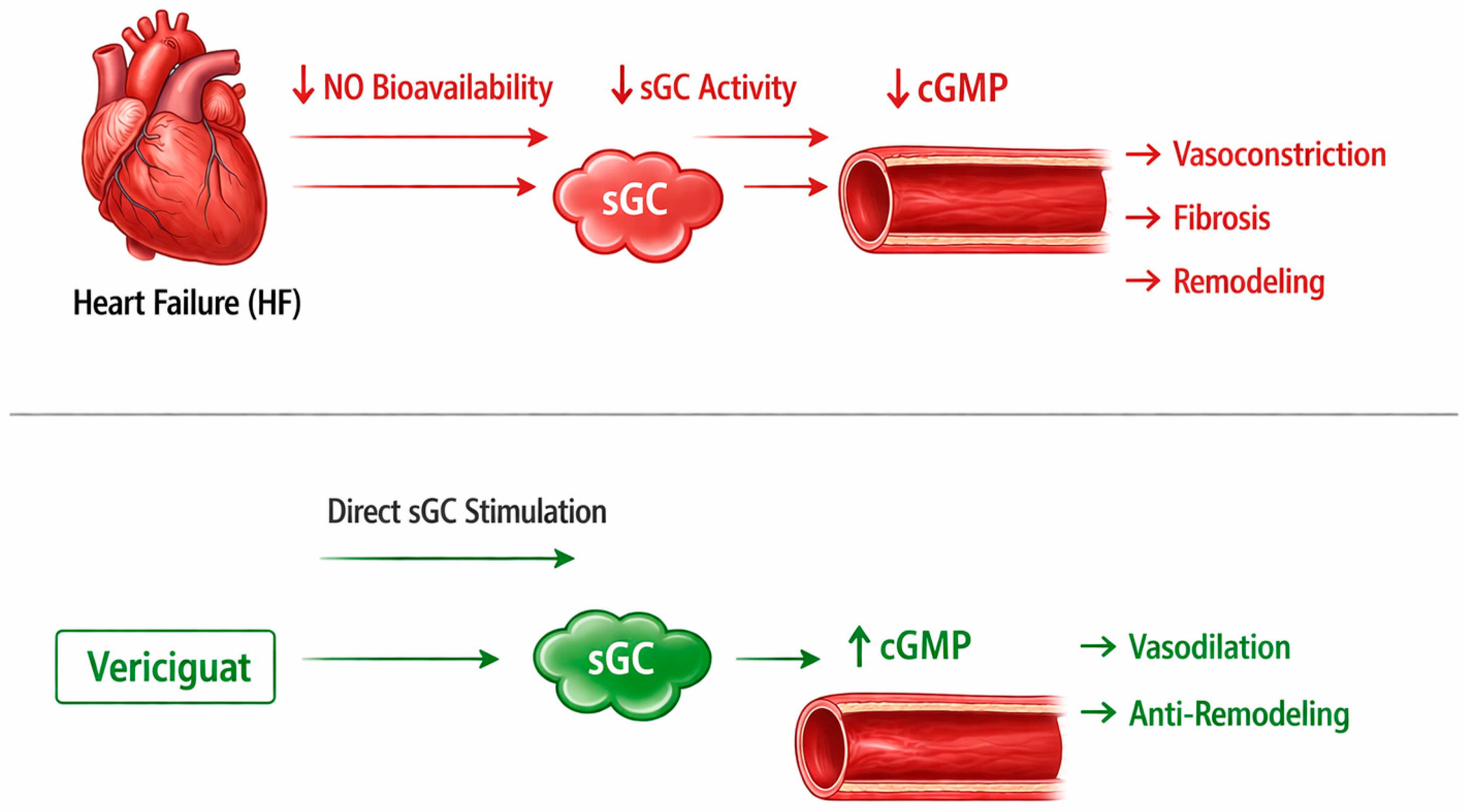
The nitric oxide–soluble guanylate cyclase–cGMP (NO–sGC–cGMP) pathway is a central regulator of cardiovascular homeostasis. Under physiological conditions, endothelial-derived nitric oxide activates sGC in vascular smooth muscle cells and cardiomyocytes, increasing intracellular cGMP. This second messenger promotes vasorelaxation, improves myocardial relaxation, and exerts anti-hypertrophic, anti-inflammatory, and anti-fibrotic effects through downstream signaling pathways, including activation of protein kinase G [
1,
2,
3]. In this way, intact cGMP signaling supports vascular compliance, limits myocardial stiffness, and attenuates maladaptive ventricular remodeling.
In HF, this protective axis becomes profoundly disturbed. Endothelial dysfunction, oxidative stress, neurohormonal activation, systemic inflammation, and recurrent congestion reduce nitric oxide bioavailability and impair sGC responsiveness [
1,
3,
12]. Reactive oxygen species may further alter the redox state of sGC, rendering the enzyme less responsive to endogenous nitric oxide. The consequence is reduced cGMP generation and a loss of vasodilatory, antifibrotic, and anti-remodeling signaling. This pathobiological shift contributes to vasoconstriction, impaired ventricular relaxation, myocardial fibrosis, elevated filling pressures, and progressive structural deterioration of the failing heart [
1,
2,
3,
12].
The rationale for vericiguat is therefore biologically compelling. Unlike therapies that primarily modulate neurohormonal pathways or sodium–glucose handling, vericiguat directly targets impaired sGC–cGMP signaling (
Figure 1).
4. Clinical Evidence
In SOCRATES-REDUCED, vericiguat was associated with favorable reductions in natriuretic peptide levels in patients with worsening chronic HFrEF [
1]. Subsequent pharmacokinetic and pharmacodynamic studies demonstrated a predictable interaction profile and supported co-administration with commonly used cardiovascular therapies [
2]. These early findings provided a coherent mechanistic rationale for sGC stimulation, which was subsequently evaluated in large-scale clinical trials. Importantly, this rationale is biologically most compelling in the setting of worsening HF, where endothelial dysfunction, repeated hemodynamic stress, and neurohormonal overactivation are particularly pronounced. In this setting, conventional GDMT, although highly effective, may not fully restore impaired NO-sGC–cGMP signaling. Vericiguat may therefore address a biologically plausible therapeutic gap, particularly in patients whose clinical instability reflects persistent residual risk despite otherwise appropriate treatment [
3,
12,
13].
4.1. Efficacy in Heart Failure with Reduced Ejection Fraction
The efficacy of vericiguat in HFrEF is best established in the setting of worsening HF. In the VICTORIA trial, vericiguat reduced the composite endpoint of cardiovascular death or first HF hospitalization in patients with chronic HFrEF and recent worsening HF, thereby defining a clinically meaningful role for sGC stimulation in this particularly vulnerable population [
3]. The primary composite endpoint occurred in 35.5% of patients receiving vericiguat compared with 38.5% receiving placebo (HR 0.90, 95% CI 0.82–0.98), corresponding to an absolute risk reduction of approximately 3.0% over the median follow-up and a number needed to treat of approximately 33. Importantly, the observed benefit was driven predominantly by a reduction in HF hospitalizations, whereas cardiovascular mortality alone was not significantly reduced [
3]. This finding is particularly relevant given that VICTORIA enrolled a distinctly higher-risk cohort than many landmark HFrEF trials, with markedly elevated natriuretic peptide concentrations and recent decompensation.
Subsequent analyses refined the interpretation of this treatment effect. Baseline N-terminal prohormone of brain natriuretic peptide (NT-proBNP) appeared important for contextualizing efficacy, with the most advanced biological risk associated with attenuation of relative benefit [
12,
13]. Clinical response also varied according to the index worsening event, suggesting that both the trajectory and recency of decompensation influence the expected yield of therapy [
14]. Analyses of recurrent hospitalizations further indicated that vericiguat may reduce the burden of repeated HF admissions, an increasingly relevant endpoint in contemporary HF trials [
15]. Additional subgroup analyses suggested that the benefit of vericiguat is broadly preserved across clinically relevant patient subsets, including those with diabetes, atrial fibrillation, and impaired renal function [
16,
17,
18].
Meta-analytic evidence has generally confirmed that vericiguat provides a modest but genuine benefit in HFrEF. Conventional pairwise meta-analyses showed improvement in composite HF outcomes with a favorable safety profile [
19,
20]. A broader updated meta-analysis across the HF spectrum reached similar conclusions while emphasizing that the strength of evidence is greatest in HFrEF rather than heart failure with preserved ejection fraction (HFpEF) [
21]. In addition, a network meta-analysis focused on worsening HF identified vericiguat as one of the novel therapies capable of reducing rehospitalization risk in this high-risk setting [
22]. However, the magnitude and clinical relevance of this benefit require careful contextualization.
Comparative analyses consistently indicate that the magnitude of benefit associated with vericiguat is smaller than that achieved with foundational therapies. An updated network meta-analysis of pharmacological treatment for HFrEF ranked ARNI and SGLT2 inhibitors among the most effective strategies, whereas vericiguat appeared to provide incremental benefit rather than a transformative effect [
23]. Similar conclusions were reached in analyses evaluating optimal combinations of HFrEF therapies and in direct comparative network meta-analyses against sacubitril/valsartan [
24,
25]. Subgroup-oriented syntheses further support the view that vericiguat performs best in patients with greater baseline risk or recent clinical instability [
26,
27].
The VICTOR trial expanded the evidence base by evaluating vericiguat in ambulatory patients with chronic HFrEF without recent worsening under contemporary GDMT [
6]. The primary composite endpoint of cardiovascular death or HF hospitalization occurred in 18.0% of patients receiving vericiguat and 19.1% receiving placebo (HR 0.93, 95% CI 0.83–1.04;
p = 0.22), and therefore the overall trial should be regarded as neutral with respect to its primary efficacy objective [
7]. Although cardiovascular mortality (9.6% vs. 11.3%; HR 0.83, 95% CI 0.71–0.97) and all-cause mortality (12.3% vs. 14.4%; HR 0.84, 95% CI 0.74–0.97) were numerically lower in the vericiguat group, these analyses were based on prespecified secondary endpoints and should therefore be considered hypothesis-generating rather than confirmatory [
7,
11]. Consequently, the VICTOR findings should be interpreted as refining the understanding of potential treatment effects across the chronic HFrEF risk spectrum rather than expanding the established clinical indication for vericiguat.
Additional analyses suggested acceptable blood pressure tolerance and consistent treatment effects across a range of baseline hemodynamic profiles, without clear safety concerns [
8]. An individual participant data analysis combining VICTORIA and VICTOR suggested that the potential benefit of vericiguat may extend across a broader risk continuum, although the magnitude of clinical benefit remains closely related to baseline risk [
9]. Complementary analyses from the VICTOR trial suggested possible reductions in total HF events and provided supportive, hypothesis-generating signals regarding mortality [
10,
11].
Taken together, these findings broaden the understanding of vericiguat across different clinical risk profiles; however, the strongest evidence supporting its use remains confined to patients with recent worsening HFrEF, consistent with the VICTORIA trial and current guideline recommendations (
Table 1).
4.2. Efficacy Across the Spectrum of Ejection Fraction
Evidence for vericiguat beyond classic HFrEF is less compelling. In SOCRATES-PRESERVED, vericiguat generated biologically interesting signals in patients with worsening HF and preserved ejection fraction, but the results were insufficient to establish a clear clinical role [
28]. The subsequent VITALITY-HFpEF trial did not demonstrate a significant improvement in quality of life compared with placebo, thereby limiting enthusiasm for routine use in HFpEF [
29].
More recently, a patient-level pooled meta-analysis of VITALITY-HFpEF and VICTORIA suggested that vericiguat may exert effects across a range of ejection fractions, although the magnitude of benefit appears to diminish as ejection fraction rises [
30]. Updated meta-analytic evidence similarly supports a more favorable profile in reduced than in preserved ejection fraction [
21]. At present, therefore, the clinical role of vericiguat remains centered on HFrEF, whereas its place in heart failure with mildly reduced ejection fraction (HFmrEF) and HFpEF remains uncertain and investigational. This evidence gap largely reflects the absence of dedicated randomized clinical trials specifically enrolling patients with HFmrEF. Future studies should determine whether specific HFmrEF phenotypes, particularly those sharing biological characteristics with HFrEF, may benefit from soluble guanylate cyclase stimulation.
4.3. Comparative Effectiveness in Contemporary HF Therapy
The key question is not whether vericiguat works but where it fits within the modern HF treatment hierarchy. Comparative evidence strongly suggests that vericiguat should not be viewed as an alternative to foundational therapies. ARNI and SGLT2 inhibitors consistently produce larger reductions in mortality and HF hospitalization and therefore remain central to first-line treatment strategies [
23,
24,
25,
26,
27]. Vericiguat is more appropriately understood as a second-line or add-on therapy, particularly in patients with persistent symptoms, recurrent HF events, or other markers of residual instability despite optimized GDMT.
Several observations reinforce this positioning. First, analyses of background therapy in VICTORIA showed that vericiguat was tested on top of increasingly contemporary HF treatment, underscoring its role as an adjunct rather than a substitute [
31]. Second, efficacy appeared generally preserved in patients receiving sacubitril/valsartan, suggesting that the effect of vericiguat is not merely redundant with neprilysin inhibition [
32]. Third, modeling exercises projecting VICTORIA data onto PARADIGM-HF and DAPA-HF-type populations indicate that the anticipated benefit of vericiguat depends heavily on baseline event risk, with the greatest benefit expected in patients with the highest residual risk after standard therapy [
33]. This risk-based therapeutic positioning is consistent with recent comparative evidence demonstrating that the greatest absolute benefit of adjunctive therapies is achieved in patients with the highest baseline clinical risk, whereas foundational therapies continue to represent the cornerstone of HFrEF management [
26].
4.4. Safety and Tolerability
Across randomized trials and meta-analyses, vericiguat has demonstrated a favorable and generally manageable safety profile. The principal adverse events of interest are hypotension and anemia, but treatment discontinuation due to intolerance has generally been infrequent [
19,
20]. The blood pressure analysis from VICTOR is particularly informative, as it supports the feasibility of vericiguat even in patients in whom further hemodynamic compromise could be a concern, provided that therapy is introduced thoughtfully and monitored appropriately [
8].
Several dedicated studies further refine this safety profile. Phase I and Phase Ib interaction studies showed acceptable pharmacokinetic and hemodynamic compatibility with nitrates and other cardiovascular drugs, while also clarifying practical precautions [
2,
34,
35]. A dedicated QTc study did not identify a clinically meaningful proarrhythmic signal [
36]. Trial-level analyses in patients with chronic coronary syndromes similarly support cardiovascular tolerability [
36]. Renal subgroup analyses from VICTORIA suggest that the treatment effect is preserved across categories of kidney function without a major renal safety penalty [
18]. Likewise, efficacy and safety appear similar in patients with atrial fibrillation and in those with diabetes [
16,
17].
These observations are clinically relevant because the patients most likely to receive vericiguat are often older, multimorbid, and already exposed to complex multidrug regimens. In such populations, the utility of an incremental therapy depends not only on efficacy but also on practical tolerability and compatibility with existing treatment.
4.5. Clinical Positioning of Vericiguat
Taken together, the available evidence supports a niche but clinically meaningful role for vericiguat. It is best positioned in patients with chronic symptomatic HFrEF who remain at elevated risk despite appropriate use of foundational GDMT, especially those with recent worsening HF, recurrent hospitalization, persistent congestion, elevated natriuretic peptides, or other markers of instability [
3,
9,
10,
11,
22]. Vericiguat therefore aligns with a risk-based treatment philosophy: the greater the residual risk, the stronger the rationale for incremental pathway-specific intervention.
This concept is increasingly relevant in an era in which the challenge is no longer simply initiating HF therapy but determining what should be added, in whom, and when. Vericiguat may be particularly attractive in patients who remain vulnerable despite ARNI, β-blocker, MRA, and SGLT2 inhibitor therapy and in whom the biological signature suggests persistent hemodynamic and endothelial stress. Conversely, current evidence does not support routine early use in stable, lower-risk patients already doing well on foundational therapy.
Health-economic analyses indicate that vericiguat is associated with favorable cost-effectiveness when used in patients with worsening HFrEF following optimized GDMT. The economic benefit is driven predominantly by reductions in heart failure hospitalizations, resulting in additional quality-adjusted life-years (QALYs) at incremental cost-effectiveness ratios considered acceptable in contemporary health-economic evaluations. Comparable findings have been reported in analyses based on the US Medicare perspective [
37,
38].
4.6. Practical Considerations for Vericiguat Initiation and Monitoring
The clinical use of vericiguat requires careful patient selection, appropriate background optimization of GDMT, and structured clinical monitoring to maximize benefit while minimizing the risk of hypotension, anemia, and treatment intolerance. A practical approach to vericiguat initiation and monitoring is summarized in
Table 2.
In routine practice, vericiguat is most appropriately considered in patients with chronic symptomatic HFrEF who remain at high risk despite optimized GDMT. This includes patients recently hospitalized for HF, those requiring intravenous diuretics, and those with recurrent decompensation, persistent congestion, elevated natriuretic peptides, or other markers of residual instability.
Before initiation, patients should be clinically stabilized and assessed for blood pressure, volume status, renal function, hemoglobin concentration, and overall tolerability of background therapy. Vericiguat is usually started at 2.5 mg once daily and gradually increased to 5 mg and then 10 mg once daily as tolerated. Early follow-up should focus primarily on blood pressure, symptoms of hypotension, congestion status, and treatment tolerance, with additional attention to hemoglobin in patients at risk of anemia.
Within contemporary HFrEF therapy, vericiguat should be viewed as a mechanistically complementary, risk-targeted adjunct rather than an alternative to foundational treatment. Its greatest clinical value appears to lie in patients who continue to experience worsening HF or remain clinically vulnerable despite appropriate use of ARNI/angiotensin-converting-enzyme inhibitors (ACEi)/angiotensin II receptor blockers (ARB), beta-blockers, MRA, and SGLT2 inhibitors.
4.7. Positioning Vericiguat in Contemporary Heart Failure Management: From Guidelines to a Risk-Targeted Framework
Current international heart failure guidelines position vericiguat as an adjunctive therapy for selected patients with symptomatic HFrEF who remain at high risk despite optimized guideline-directed medical therapy (GDMT), particularly following a recent worsening heart failure event [
3,
21,
22,
23,
24,
25,
26,
27,
39,
40,
41]. Similarly, current regulatory approvals restrict its use to patients with symptomatic chronic HFrEF after a recent episode of decompensation requiring hospitalization or intravenous diuretic therapy [
3].
These recommendations are primarily based on the VICTORIA trial, which established the clinical benefit of vericiguat in patients with worsening HFrEF [
3]. More recently, the VICTOR program and subsequent patient-level pooled analyses have expanded the evidence base by exploring the role of vericiguat across a broader spectrum of ambulatory patients with chronic HFrEF [
7,
8,
9,
10,
11]. Importantly, these findings should not be interpreted as extending the current regulatory indication but rather as refining the identification of patients who may derive the greatest incremental benefit from soluble guanylate cyclase stimulation [
7,
8,
9,
10,
11].
The present review integrates mechanistic insights, pivotal randomized clinical trials, contemporary guideline recommendations, regulatory positioning, recent meta-analyses, and the latest evidence from the VICTOR program into a unified clinical framework [
3,
7,
8,
9,
10,
11,
21,
22,
23,
24,
25,
26,
27]. We propose that vericiguat should be viewed as a risk-targeted adjunctive therapy for patients who continue to exhibit evidence of persistent biological and clinical vulnerability despite optimized foundational GDMT (
Table 3). This framework emphasizes treatment escalation according to residual risk rather than chronological sequencing alone and may facilitate more individualized therapeutic decision-making in contemporary HFrEF management. As such, it complements existing guideline recommendations by providing a practical clinical perspective on identifying patients most likely to benefit from adjunctive vericiguat therapy.
5. Discussion
The present review integrates four complementary perspectives into a single practical clinical framework: (1) contemporary guideline recommendations and regulatory positioning, (2) mechanistic understanding of NO–sGC–cGMP pathway modulation, (3) recently published evidence from the VICTOR program and pooled analyses, and (4) a practical risk-targeted strategy for identifying patients most likely to benefit from adjunctive vericiguat therapy despite optimized GDMT.
Vericiguat occupies a distinctive place in the contemporary HF landscape because it does not seek to compete with the foundational therapies that transformed HFrEF care; rather, it addresses what those therapies may leave behind. The central clinical value of vericiguat lies in the management of residual risk—the persistent vulnerability to worsening HF, recurrent hospitalization, and progression that remains despite increasingly effective multidrug therapy.
This distinction is essential. The four pillars of HFrEF treatment have appropriately reshaped expectations regarding prognosis, but they have not eliminated the substantial burden carried by patients who continue to deteriorate despite guideline-based care. In this setting, the question is no longer whether standard therapy should be used but how best to intervene once standard therapy has already been deployed and the patient remains unstable. Vericiguat is particularly relevant in this context because it targets a biological axis—impaired NO–sGC–cGMP signaling—that is highly plausible, mechanistically coherent, and incompletely addressed by neurohormonal or sodium–glucose-directed therapies [
1,
2,
3,
12,
13].
The totality of evidence suggests that vericiguat should not be interpreted through a binary framework of success or failure based on comparison with ARANI or SGLT2 inhibitors. Such a comparison, although inevitable, is conceptually incomplete. Vericiguat was never designed to replace first-line therapies that deliver the largest broad-population benefits. Its role is narrower, but that role is clinically meaningful. In high-risk patients with worsening HFrEF, even modest relative risk reduction may translate into substantial absolute benefit because event rates are high and recurrent decompensation carries profound prognostic consequences [
3,
10,
15,
22].
The VICTORIA trial established the original proof of concept in this regard. Yet the more recent VICTOR trial provides an important refinement by suggesting that the therapeutic relevance of vericiguat may extend beyond the immediate post-worsening window into a broader population of compensated but still high-risk outpatients with chronic HFrEF [
6,
7,
8,
9,
10,
11]. It suggests that vericiguat may be framed as a therapy for patients whose disease remains biologically and clinically unstable despite apparent outpatient compensation. The pooled participant-level analysis of VICTORIA and VICTOR is especially informative because it supports a graded, risk-based interpretation of benefit across the HFrEF continuum rather than a rigid event-defined indication [
9].
A further strength of the vericiguat evidence base is the emphasis on recurrent and total HF events. This is not a trivial methodological point, as HF leads to cumulative deterioration, in which repeated admissions are not simply repeated endpoints but biological insults that accelerate myocardial, renal, and functional decline. In that light, evidence suggesting that vericiguat reduces recurrent hospitalizations and total HF events is particularly relevant [
10,
15]. Such an effect may be clinically more meaningful than a narrow focus on first-event time-to-event analysis would imply. Put differently, therapies that flatten the cycle of recurrent decompensation may alter the lived course of HF even when their average treatment effect appears modest on conventional summary metrics.
This drug has not demonstrated the magnitude of benefit seen with foundational therapies, nor has it emerged as a broadly effective treatment across the full spectrum of ejection fraction. The neutral experience in HFpEF, particularly in VITALITY-HFpEF, argues against extrapolation beyond the populations in which efficacy has been shown [
29]. Likewise, the available data do not support describing vericiguat as a dominant symptom-relieving therapy. Its greatest strength lies in event reduction in carefully selected high-risk patients [
29,
42].
The safety profile, however, supports its practical integration into advanced HF care. This is highly relevant because the very patients in whom vericiguat may be most useful are also those most vulnerable to treatment-related intolerance, polypharmacy, blood pressure instability, and renal dysfunction. Reassuring data from blood pressure analyses, renal subgroup studies, nitrate interaction studies, and QTc evaluation support the view that vericiguat can be added to complex therapeutic regimens with acceptable tolerability when appropriately monitored [
8,
18,
34,
35,
36].
5.1. Unresolved Questions and Future Directions
Despite encouraging findings from randomized clinical trials, contemporary real-world evidence for vericiguat remains relatively limited. In contrast to therapies such as SGLT2 inhibitors, whose efficacy and safety have been extensively confirmed in large observational registries and routine clinical practice, the clinical experience with vericiguat outside randomized clinical trials remains limited. Consequently, additional prospective registries and real-world studies are needed to better define treatment patterns, patient selection, long-term safety, adherence, and effectiveness across broader and more heterogeneous heart failure populations.
Several important questions remain open regarding the optimal positioning of vericiguat within contemporary heart failure management. Better phenotyping is needed to identify those patients most likely to derive disproportionate benefit from sGC stimulation. NT-proBNP is useful but unlikely to be sufficient as a standalone tool [
12,
13]. The role of vericiguat in HFmrEF also remains uncertain, and additional dedicated studies will be required before its use can be considered beyond HFrEF. Likewise, the optimal sequencing of vericiguat relative to other adjunctive therapies, including finerenone, has yet to be established [
37,
38,
43,
44].
Beyond these considerations, important evidence gaps remain. First, no randomized head-to-head trials have directly compared vericiguat with other adjunctive therapies used after optimization of guideline-directed medical therapy, making its relative efficacy dependent primarily on indirect comparisons and network meta-analyses. Second, although recent analyses suggest that patients with recent worsening heart failure, elevated natriuretic peptides, and persistent residual risk derive the greatest benefit, the optimal phenotypic profile for vericiguat treatment has not yet been fully established. Third, contemporary real-world registry data evaluating the effectiveness, safety, adherence, and implementation of vericiguat in routine clinical practice remain limited. Finally, long-term outcomes beyond the duration of currently available randomized clinical trials are still unknown, highlighting the need for extended follow-up studies and prospective observational registries.
Future research should extend beyond pharmacological advances to investigate how biomarker-guided strategies, phenotype-based patient selection, and AI-supported digital care models can be integrated to optimize the timing and selection of adjunctive therapies [
9,
22,
26,
27,
45,
46,
47,
48]. Integration of these approaches could facilitate earlier recognition of patients entering a worsening heart failure trajectory, improve identification of individuals most likely to benefit from vericiguat, and support more personalized, risk-targeted heart failure management [
9,
45,
46,
47,
48].
5.2. Limitations
This review has several limitations. First, as a narrative review, it does not follow a formal systematic review methodology or PRISMA reporting framework, and no formal assessment of study quality or risk of bias was performed. Second, although every effort was made to include the most clinically relevant and up-to-date evidence, study selection was based on expert judgment and may therefore be subject to selection bias. Third, most of the currently available high-quality evidence regarding vericiguat originates from large industry-sponsored randomized clinical trials, particularly VICTORIA and VICTOR. Although these trials were rigorously designed and independently peer-reviewed, this should be considered when interpreting the overall evidence base [
7,
8,
9,
10,
11]. Fourth, some of the conclusions regarding the role of vericiguat beyond worsening HFrEF rely on recently published analyses from the VICTOR program and pooled analyses, which should be interpreted cautiously because the primary endpoint of VICTOR was neutral, and several findings remain hypothesis-generating [
7,
8,
9,
10,
11]. In addition, the current evidence base is limited by the absence of direct head-to-head comparisons with other adjunctive heart failure therapies, the lack of extensive real-world registry data, incomplete characterization of the optimal responder phenotype, and the absence of long-term outcome data beyond the follow-up periods of the available randomized clinical trials. Finally, the proposed risk-targeted clinical framework represents the authors’ interpretation of the currently available evidence [
3,
9,
21,
22,
23,
24,
25,
26,
27] and should be considered a conceptual model intended to facilitate individualized clinical decision-making rather than a modification of existing guideline recommendations.
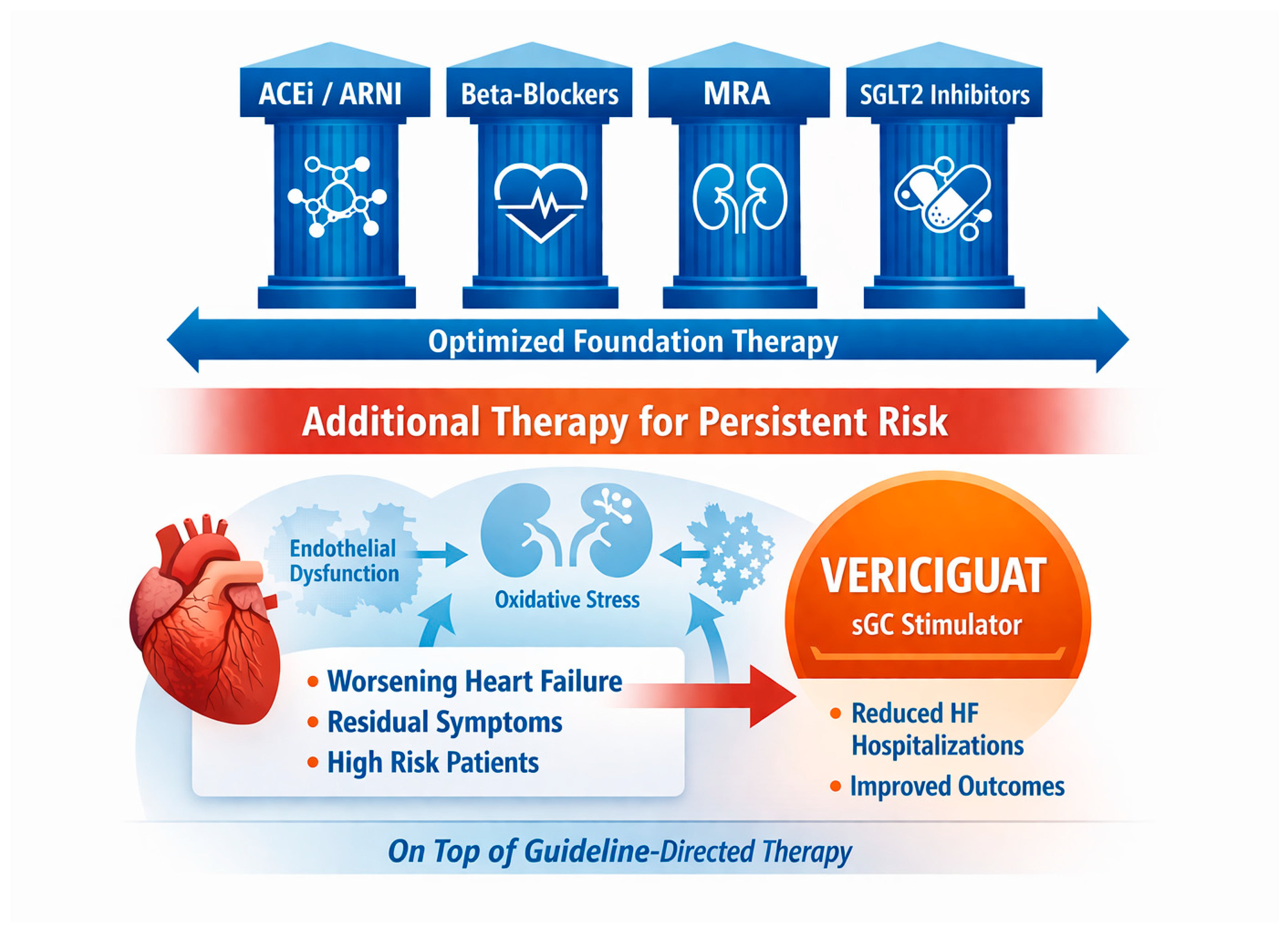
In sum, the contemporary interpretation of vericiguat should be neither dismissive nor inflated. It is not a fifth pillar in the sense of a universally indicated therapy with broad first-line benefit across the general HFrEF population. Yet neither is it a marginal footnote. Rather, it is a mechanistically coherent, clinically useful, and increasingly evidence-based adjunct for patients in whom worsening HF signals persistent vulnerability despite otherwise appropriate care. In that narrower but clinically important space, vericiguat may indeed represent a missing link—not in the foundation of HF treatment but in the reduction in the risk that persists after the foundation has already been laid (
Figure 2).
6. Conclusions
Vericiguat does not challenge the primacy of the four pillars of HFrEF therapy, but it addresses what they do not fully eliminate: residual risk. In selected patients with worsening or persistently high-risk chronic HFrEF, vericiguat offers a mechanistically distinct and clinically relevant adjunctive strategy. Its role is not foundational but strategic—refining contemporary HF care where vulnerability remains greatest.
Key Messages
Vericiguat targets impaired NO-sGC–cGMP signaling, a biologically relevant pathway not directly addressed by foundational HFrEF therapies.
The greatest clinical value of vericiguat appears to lie in patients with worsening or persistently high-risk chronic HFrEF despite GDMT.
Compared with ARNI and SGLT2 inhibitors, vericiguat provides incremental rather than foundational benefits.
The VICTOR trial expanded the available evidence regarding vericiguat in ambulatory patients with chronic HFrEF but did not demonstrate superiority for its primary endpoint.
Vericiguat may become increasingly relevant within phenotype-driven and digitally supported HF care models for identifying patients with persistent residual risk and optimizing adjunctive therapy.
Author Contributions
J.K. conceived the manuscript’s concept. J.K., A.K. and E.P.N. contributed to the literature interpretation and drafting. Data interpretation: J.K., A.K., R.G., E.L., J.M.U., J.R., P.N., N.M., Ł.S. and E.P.N. Writing—Original Draft: J.K.; Writing—Review and Editing: A.K., R.G., E.L., J.M.U., J.R., P.N., N.M., Ł.S. and E.P.N.; Visualization: J.K. All authors have read and agreed to the published version of the manuscript.
Funding
This research received no external funding.
Institutional Review Board Statement
Not applicable.
Informed Consent Statement
Not applicable.
Data Availability Statement
No new data were created or analyzed in this study.
Conflicts of Interest
The authors declare no conflicts of interest.
Abbreviations
The following abbreviations are used in this manuscript:
| ACEi | angiotensin-converting-enzyme inhibitors |
| ARB | angiotensin II receptor blockers |
| ARNI | angiotensin receptor/neprilysin inhibitor |
| cGMP | cyclic guanosine monophosphate |
| GDMT | guideline-directed medical therapy |
| HF | heart failure |
| HFmrEF | heart failure with mildly reduced ejection fraction |
| HFpEF | heart failure with preserved ejection fraction |
| HFrEF | heart failure with reduced ejection fraction |
| LA | left atrium |
| KCCQ | Kansas City Cardiomyopathy Questionnaire |
| MRA | mineralocorticoid receptor antagonist |
| NO–sGC–cGMP | nitric oxide–soluble guanylate cyclase–cyclic guanosine monophosphate |
| NT-proBNP | N-terminal prohormone of brain natriuretic peptide |
| sGC | soluble guanylate cyclase |
| SGLT2 | sodium–glucose cotransporter 2 |
References
- Gheorghiade, M.; Greene, S.J.; Butler, J.; Filippatos, G.; Lam, C.S.P.; Maggioni, A.P.; Ponikowski, P.; Shah, S.J.; Solomon, S.D.; Kraigher-Krainer, E.; et al. Effect of Vericiguat, a Soluble Guanylate Cyclase Stimulator, on Natriuretic Peptide Levels in Patients With Worsening Chronic Heart Failure and Reduced Ejection Fraction: The SOCRATES-REDUCED Randomized Trial. JAMA 2015, 314, 2251–2262. [Google Scholar] [CrossRef] [Scilit]
- Boettcher, M.; Loewen, S.; Gerrits, M.; Becker, C. Pharmacodynamic and Pharmacokinetic Interaction Profile of Vericiguat: Results from Three Randomized Phase I Studies in Healthy Volunteers. Clin. Pharmacokinet. 2021, 60, 337–351. [Google Scholar] [CrossRef] [Scilit] [PubMed]
- Armstrong, P.W.; Pieske, B.; Anstrom, K.J.; Ezekowitz, J.; Hernandez, A.F.; Butler, J.; Lam, C.S.P.; Ponikowski, P.; Voors, A.A.; Jia, G.; et al. Vericiguat in Patients with Heart Failure and Reduced Ejection Fraction. N. Engl. J. Med. 2020, 382, 1883–1893. [Google Scholar] [CrossRef] [Scilit] [PubMed]
- Kubica, J.; Kubica, A.; Grzelakowska, K.; Stolarek, W.; Grąbczewska, Z.; Michalski, P.; Niezgoda, P.; Bartuś, S.; Budaj, A.; Dąbrowski, M.; et al. Inhibitors of Sodium-Glucose Transport Protein 2: A New Multidirectional Therapeutic Option for Heart Failure Patients. Cardiol. J. 2023, 30, 143–149. [Google Scholar] [CrossRef] [Scilit] [PubMed]
- Kubica, J. Dapagliflozin—A Key Pawn on the New Guidelines Chessboard. Med. Res. J. 2021, 6, 342–350. [Google Scholar] [CrossRef] [Scilit]
- Reddy, Y.N.V.; Butler, J.; Anstrom, K.J.; Blaustein, R.O.; Bonaca, M.P.; Corda, S.; Ezekowitz, J.A.; Lam, C.S.P.; Lewis, E.F.; Lindenfeld, J.; et al. Vericiguat Global Study in Participants with Chronic Heart Failure: Design of the VICTOR Trial. Eur. J. Heart Fail. 2025, 27, 209–218. [Google Scholar] [CrossRef] [Scilit] [PubMed]
- Butler, J.; McMullan, C.J.; Anstrom, K.J.; Barash, I.; Bonaca, M.P.; Borentain, M.; Corda, S.; Ezekowitz, J.A.; Felker, G.M.; Gates, D.; et al. Vericiguat in Patients with Chronic Heart Failure and Reduced Ejection Fraction (VICTOR): A Double-Blind, Placebo-Controlled, Randomised, Phase 3 Trial. Lancet 2025, 406, 1341–1350. [Google Scholar] [CrossRef] [Scilit] [PubMed]
- Mentz, R.J.; Butler, J.; McMullan, C.J.; Wojdyla, D.M.; Anstrom, K.J.; Barash, I.; Bonaca, M.P.; Borentain, M.; Corda, S.; Ezekowitz, J.A.; et al. Blood Pressure, Safety and Clinical Efficacy of Vericiguat in Chronic Heart Failure with Reduced Ejection Fraction: Insights from the VICTOR Trial. Eur. J. Heart Fail. 2025, 27, 2825–2836. [Google Scholar] [CrossRef] [Scilit] [PubMed]
- Zannad, F.; O’Connor, C.M.; Butler, J.; McMullan, C.J.; Anstrom, K.J.; Barash, I.; Bonaca, M.P.; Borentain, M.; Corda, S.; Gates, D.; et al. Vericiguat for Patients with Heart Failure and Reduced Ejection Fraction across the Risk Spectrum: An Individual Participant Data Analysis of the VICTORIA and VICTOR Trials. Lancet 2025, 406, 1351–1362. [Google Scholar] [CrossRef] [Scilit] [PubMed]
- Zannad, F.; Reddy, Y.N.V.; Barash, I.; Anstrom, K.J.; Bonaca, M.P.; Borentain, M.; Corda, S.; Teixeira, P.P.; Ezekowitz, J.A.; Gates, D.; et al. Effect of Vericiguat on Total Heart Failure Events in Compensated Outpatients with HFrEF: Insights from VICTOR. J. Am. Coll. Cardiol. 2025, 86, 2471–2491. [Google Scholar] [CrossRef] [Scilit] [PubMed]
- Butler, J.; Fioretti, F.; McMullan, C.J.; Anstrom, K.J.; Barash, I.; Bonaca, M.P.; Borentain, M.; Corda, S.; Teixeira, P.P.; Ezekowitz, J.A.; et al. Vericiguat and Mortality in Heart Failure and Reduced Ejection Fraction: The VICTOR Trial. Eur. Heart J. 2026, 47, 683–697. [Google Scholar] [CrossRef] [Scilit] [PubMed]
- Armstrong, P.W.; Zheng, Y.; Troughton, R.W.; Lund, L.H.; Zhang, J.; Lam, C.S.P.; Westerhout, C.M.; Blaustein, R.O.; Butler, J.; Hernandez, A.F.; et al. Sequential Evaluation of NT-proBNP in Heart Failure: Insights Into Clinical Outcomes and Efficacy of Vericiguat. JACC Heart Fail. 2022, 10, 677–688. [Google Scholar] [CrossRef] [Scilit] [PubMed]
- Ezekowitz, J.A.; O’Connor, C.M.; Troughton, R.W.; Alemayehu, W.G.; Westerhout, C.M.; Voors, A.A.; Butler, J.; Lam, C.S.P.; Ponikowski, P.; Emdin, M.; et al. N-Terminal Pro-B-Type Natriuretic Peptide and Clinical Outcomes: Vericiguat Heart Failure With Reduced Ejection Fraction Study. JACC Heart Fail. 2020, 8, 931–939. [Google Scholar] [CrossRef] [Scilit] [PubMed]
- Lam, C.S.P.; Giczewska, A.; Sliwa, K.; Edelmann, F.; Refsgaard, J.; Bocchi, E.; Ezekowitz, J.A.; Hernandez, A.F.; O’Connor, C.M.; Roessig, L.; et al. Clinical Outcomes and Response to Vericiguat According to Index Heart Failure Event: Insights From the VICTORIA Trial. JAMA Cardiol. 2021, 6, 706–712. [Google Scholar] [CrossRef] [Scilit] [PubMed]
- Mentz, R.J.; Stebbins, A.; Butler, J.; Chiang, C.-E.; Ezekowitz, J.A.; Hernandez, A.F.; Hilkert, R.; Lam, C.S.P.; McDonald, K.; O’Connor, C.M.; et al. Recurrent Hospitalizations and Response to Vericiguat in Heart Failure and Reduced Ejection Fraction. JACC Heart Fail. 2024, 12, 839–846. [Google Scholar] [CrossRef] [Scilit] [PubMed]
- Khan, M.S.; Butler, J.; Young, R.; Lewis, B.S.; Escobedo, J.; Refsgaard, J.; Reyes, E.; Roessig, L.; Blaustein, R.O.; Lam, C.S.P.; et al. Vericiguat and Cardiovascular Outcomes in Heart Failure by Baseline Diabetes Status: Insights From the VICTORIA Trial. JACC Heart Fail. 2024, 12, 1750–1759. [Google Scholar] [CrossRef] [Scilit] [PubMed]
- Ponikowski, P.; Alemayehu, W.; Oto, A.; Bahit, M.C.; Noori, E.; Patel, M.J.; Butler, J.; Ezekowitz, J.A.; Hernandez, A.F.; Lam, C.S.P.; et al. Vericiguat in Patients with Atrial Fibrillation and Heart Failure with Reduced Ejection Fraction: Insights from the VICTORIA Trial. Eur. J. Heart Fail. 2021, 23, 1300–1312. [Google Scholar] [CrossRef] [Scilit] [PubMed]
- Voors, A.A.; Mulder, H.; Reyes, E.; Cowie, M.R.; Lassus, J.; Hernandez, A.F.; Ezekowitz, J.A.; Butler, J.; O’Connor, C.M.; Koglin, J.; et al. Renal Function and the Effects of Vericiguat in Patients with Worsening Heart Failure with Reduced Ejection Fraction: Insights from the VICTORIA (Vericiguat Global Study in Subjects with HFrEF) Trial. Eur. J. Heart Fail. 2021, 23, 1313–1321. [Google Scholar] [CrossRef] [Scilit] [PubMed]
- Ma, G.; Pan, Y.; Qu, C.; Li, F. The Efficacy of Vericiguat for Heart Failure: A Meta-Analysis of Randomized Controlled Trials. Medicine 2023, 102, e33807. [Google Scholar] [CrossRef] [Scilit] [PubMed]
- Ma, J.; Guo, S.; Jiang, H.; Li, B. Efficacy and Safety of Vericiguat in Heart Failure: A Meta-Analysis. J. Int. Med. Res. 2023, 51, 3000605231159333. [Google Scholar] [CrossRef] [Scilit] [PubMed]
- Batista, P.G.; Dos Santos Silva, R.R.A.; Montenegro, M.V.; Huntermann, R.; Molinari, M.E.; Samaniego, M.A.; Dandamudi, M.; Fischer Bacca, C.O.; Giorgi, J. Efficacy and Safety of Vericiguat across the Spectrum of Heart Failure: A Systematic Review and Updated Meta-analysis of Randomized Controlled Trials. Eur. J. Clin. Pharmacol. 2026, 82, 95. [Google Scholar] [CrossRef] [Scilit] [PubMed]
- Lima, I.G.C.V.; Nunes, J.T.; Godoy, L.C.; McDonald, M.; Bocchi, E.A. Novel Therapies to Reduce Rehospitalization Risk in Worsening Heart Failure: Systematic Review and Network Meta-Analysis. JACC Adv. 2025, 4, 101451. [Google Scholar] [CrossRef] [Scilit] [PubMed]
- Van Essen, B.J.; Ceelen, D.C.H.; Ouwerkerk, W.; Teng, T.-H.K.; Tharshana, G.N.; Hew, F.M.; Butler, J.; Zannad, F.; Lam, C.S.; Ezekowitz, J.; et al. Pharmacologic Treatment of Heart Failure With Reduced Ejection Fraction: An Updated Systematic Review and Network Meta-Analysis. J. Am. Coll. Cardiol. 2025, 86, 2513–2526. [Google Scholar] [CrossRef] [Scilit] [PubMed]
- Tang, H.; Germinal, K.; Milfort, A.; Chen, W.-H.; Chang, S.-H.; Huang, W.; Li, Y.; Lu, Y.; Ahmed, M.M.; Kimmel, S.E.; et al. The Most Effective Combination of Pharmacological Therapy for Heart Failure with Reduced Ejection Fraction: A Network Meta-Analysis of Randomized Controlled Trials. BMC Cardiovasc. Disord. 2024, 24, 666. [Google Scholar] [CrossRef] [Scilit] [PubMed]
- Kang, D.-W.; Kang, S.-H.; Lee, K.; Nam, K.; Kim, E.-S.; Yoon, J.-C.; Park, S.-K. Comparative Efficacy of Vericiguat to Sacubitril/Valsartan for Patients with Heart Failure Reduced Ejection Fraction: Systematic Review and Network Meta-Analysis. Int. J. Cardiol. 2024, 400, 131786. [Google Scholar] [CrossRef] [Scilit] [PubMed]
- Lavalle, C.; Mariani, M.V.; Severino, P.; Palombi, M.; Trivigno, S.; D’Amato, A.; Silvetti, G.; Pierucci, N.; Di Lullo, L.; Chimenti, C.; et al. Efficacy of Modern Therapies for Heart Failure with Reduced Ejection Fraction in Specific Population Subgroups: A Systematic Review and Network Meta-Analysis. Cardiorenal Med. 2024, 14, 570–580. [Google Scholar] [CrossRef] [Scilit] [PubMed]
- Wang, M.; Zuo, Z.; Wu, T.; Zhou, Z. Differential Cardiovascular Benefits of SGLT2 Inhibitors, Sacubitril/Valsartan, Omecamtiv Mecarbil, and Vericiguat across Heart Failure Phenotypes: A Systematic Review and Meta-Analysis. Front. Pharmacol. 2026, 17, 1644757. [Google Scholar] [CrossRef] [Scilit] [PubMed]
- Pieske, B.; Maggioni, A.P.; Lam, C.S.P.; Pieske-Kraigher, E.; Filippatos, G.; Butler, J.; Ponikowski, P.; Shah, S.J.; Solomon, S.D.; Scalise, A.-V.; et al. Vericiguat in Patients with Worsening Chronic Heart Failure and Preserved Ejection Fraction: Results of the SOluble Guanylate Cyclase stimulatoR in heArT failurE patientS with PRESERVED EF (SOCRATES-PRESERVED) Study. Eur. Heart J. 2017, 38, 1119–1127. [Google Scholar] [CrossRef] [Scilit] [PubMed]
- Armstrong, P.W.; Lam, C.S.P.; Anstrom, K.J.; Ezekowitz, J.; Hernandez, A.F.; O’Connor, C.M.; Pieske, B.; Ponikowski, P.; Shah, S.J.; Solomon, S.D.; et al. Effect of Vericiguat vs Placebo on Quality of Life in Patients With Heart Failure and Preserved Ejection Fraction: The VITALITY-HFpEF Randomized Clinical Trial. JAMA 2020, 324, 1512–1521. [Google Scholar] [CrossRef] [Scilit] [PubMed]
- Chen, C.; Lv, J.; Liu, C. Vericiguat in Patients with Heart Failure across the Spectrum of Left Ventricular Ejection Fraction: A Patient-Level, Pooled Meta-Analysis of VITALITY-HFpEF and VICTORIA. Front. Endocrinol. 2024, 15, 1335531. [Google Scholar] [CrossRef] [Scilit] [PubMed]
- Ezekowitz, J.A.; McMullan, C.J.; Westerhout, C.M.; Piña, I.L.; Lopez-Sendon, J.; Anstrom, K.J.; Hernandez, A.F.; Lam, C.S.P.; O’Connor, C.M.; Pieske, B.; et al. Background Medical Therapy and Clinical Outcomes From the VICTORIA Trial. Circ. Heart Fail. 2023, 16, e010599. [Google Scholar] [CrossRef] [Scilit] [PubMed]
- Senni, M.; Alemayehu, W.G.; Sim, D.; Edelmann, F.; Butler, J.; Ezekowitz, J.; Hernandez, A.F.; Lam, C.S.P.; O’Connor, C.M.; Pieske, B.; et al. Efficacy and Safety of Vericiguat in Patients with Heart Failure with Reduced Ejection Fraction Treated with Sacubitril/Valsartan: Insights from the VICTORIA Trial. Eur. J. Heart Fail. 2022, 24, 1614–1622. [Google Scholar] [CrossRef] [Scilit] [PubMed]
- Kittipibul, V.; Mentz, R.J.; Young, R.; Butler, J.; Ezekowitz, J.A.; Lam, C.S.P.; Ponikowski, P.; Voors, A.; Corda, S.; McMullan, C.; et al. Projecting the Benefit of Vericiguat in PARADIGM-HF and DAPA-HF Populations: Insights from the VICTORIA Trial. ESC. Heart Fail. 2025, 12, 1479–1484. [Google Scholar] [CrossRef] [Scilit] [PubMed]
- Boettcher, M.; Mikus, G.; Trenk, D.; Düngen, H.-D.; Donath, F.; Werner, N.; Karakas, M.; Besche, N.; Schulz-Burck, D.; Gerrits, M.; et al. Vericiguat in Combination with Isosorbide Mononitrate in Patients with Chronic Coronary Syndromes: The Randomized, Phase Ib, VISOR Study. Clin. Transl. Sci. 2022, 15, 1204–1214. [Google Scholar] [CrossRef] [Scilit] [PubMed]
- Boettcher, M.; Düngen, H.-D.; Donath, F.; Mikus, G.; Werner, N.; Thuermann, P.A.; Karakas, M.; Besche, N.; Koch, T.; Gurniak, M.; et al. Vericiguat in Combination with Short-Acting Nitroglycerin in Patients With Chronic Coronary Syndromes: The Randomized, Phase Ib, VENICE Study. Clin. Pharmacol. Ther. 2022, 111, 1239–1247. [Google Scholar] [CrossRef] [Scilit] [PubMed]
- Böttcher, M.; Düngen, H.-D.; Corcea, V.; Donath, F.; Fuhr, R.; Gal, P.; Mikus, G.; Trenk, D.; Coenen, M.; Pires, P.V.; et al. Vericiguat: A Randomized, Phase Ib, Placebo-Controlled, Double-Blind, QTc Interval Study in Patients with Chronic Coronary Syndromes. Am. J. Cardiovasc. Drugs 2023, 23, 145–155. [Google Scholar] [CrossRef] [Scilit] [PubMed]
- Chew, D.S.; Li, Y.; Bigelow, R.; Cowper, P.A.; Anstrom, K.J.; Daniels, M.R.; Davidson-Ray, L.; Hernandez, A.F.; O’Connor, C.M.; Armstrong, P.W.; et al. Cost-Effectiveness of Vericiguat in Patients With Heart Failure With Reduced Ejection Fraction: The VICTORIA Randomized Clinical Trial. Circulation 2023, 148, 1087–1098. [Google Scholar] [CrossRef] [Scilit] [PubMed]
- Alsumali, A.; Djatche, L.M.; Briggs, A.; Liu, R.; Diakite, I.; Patel, D.; Wang, Y.; Lautsch, D. Cost Effectiveness of Vericiguat for the Treatment of Chronic Heart Failure with Reduced Ejection Fraction Following a Worsening Heart Failure Event from a US Medicare Perspective. Pharmacoeconomics 2021, 39, 1343–1354. [Google Scholar] [CrossRef] [Scilit] [PubMed]
- McDonagh, T.A.; Metra, M.; Adamo, M.; Gardner, R.S.; Baumbach, A.; Böhm, M.; Burri, H.; Butler, J.; Čelutkienė, J.; Chioncel, O.; et al. 2023 Focused Update of the 2021 ESC Guidelines for the Diagnosis and Treatment of Acute and Chronic Heart Failure. Eur. Heart J. 2023, 44, 3627–3639. [Google Scholar] [CrossRef] [Scilit] [PubMed]
- Heidenreich, P.A.; Bozkurt, B.; Aguilar, D.; Allen, L.A.; Byun, J.J.; Colvin, M.M.; Deswal, A.; Drazner, M.H.; Dunlay, S.M.; Evers, L.R.; et al. 2022 AHA/ACC/HFSA Guideline for the Management of Heart Failure: A Report of the American College of Cardiology/American Heart Association Joint Committee on Clinical Practice Guidelines. Circulation 2022, 145, e895–e1032. [Google Scholar] [CrossRef] [Scilit] [PubMed]
- Olivella, A.; Almenar-Bonet, L.; Moliner, P.; Coloma, E.; Martínez-Rubio, A.; Paz Bermejo, M.; Boixeda, R.; Cediel, G.; Méndez Fernández, A.B.; Facila Rubio, L. Role of Vericiguat in Management of Patients with Heart Failure with Reduced Ejection Fraction after Worsening Episode. ESC. Heart Fail. 2024, 11, 628–636. [Google Scholar] [CrossRef] [Scilit] [PubMed]
- Butler, J.; Stebbins, A.; Melenovský, V.; Sweitzer, N.K.; Cowie, M.R.; Stehlik, J.; Khan, M.S.; Blaustein, R.O.; Ezekowitz, J.A.; Hernandez, A.F.; et al. Vericiguat and Health-Related Quality of Life in Patients With Heart Failure With Reduced Ejection Fraction: Insights From the VICTORIA Trial. Circ. Heart Fail. 2022, 15, e009337. [Google Scholar] [CrossRef] [Scilit] [PubMed]
- Yogasundaram, H.; Zheng, Y.; Ly, E.; Ezekowitz, J.; Ponikowski, P.; Lam, C.S.P.; O’Connor, C.; Blaustein, R.O.; Roessig, L.; Temple, T.; et al. Relationship between Baseline Electrocardiographic Measurements and Outcomes in Patients with High-Risk Heart Failure: Insights from the VerICiguaT Global Study in Subjects with Heart Failure with Reduced Ejection Fraction (VICTORIA) Trial. Eur. J. Heart Fail. 2023, 25, 1822–1830. [Google Scholar] [CrossRef] [Scilit] [PubMed]
- Kubica, J.; Kubica, A.; Ratajczak, J.; Gajda, R.; Szarpak, Ł.; Navarese, E.P. Finerenone Across the Cardiovascular–Kidney–Metabolic Continuum: From Mechanistic Rationale to Clinical Positioning—A Narrative Review. J. Clin. Med. 2026, 15, 3486. [Google Scholar] [CrossRef] [Scilit] [PubMed]
- Kubica, J.; Topoliński, T.; Gajda, R.; Musz, P.; Kubica, A.; Szarpak, Ł.; Nowicki, K.; Ziółkowski, M.; Meszyński, S.; Grzelak, S.; et al. Artificial Intelligence as the Missing Integrator in Heart Failure Care—from Remote Monitoring to Personalized Therapy. Cardiol. J. 2026, 33, e00226032. [Google Scholar] [CrossRef] [Scilit] [PubMed]
- Kubica, J.; Navarese, E.P.; Piotrowicz, R. Health Systems at a Crossroads: The Strategic Necessity of AI-Supported Heart Failure Care. Kardiol. Pol. 2026, 84, 833–834. [Google Scholar] [CrossRef] [Scilit] [PubMed]
- Navarese, E.P.; Leader, J.H.; Markides, R.I.L.; Koolaji, S.; Kereiakes, D.J.; Kubica, J.; Isgender, M.; Lüscher, T.F.; Gorog, D.A. Design and Architecture of a Generative-AI-Supported, Nonphysician-Delivered Model for GDMT Optimization in HFrEF: The ASSIST-HF Trial. JACC Adv. 2026, 5, 102588. [Google Scholar] [CrossRef] [Scilit] [PubMed]
- Navarese, E.P.; Leader, J.H.; Markides, R.I.L.; Koolaji, S.; Kereiakes, D.J.; Kubica, J.; Isgender, M.; Lüscher, T.F.; Gorog, D.A. AI-Guided GDMT Optimization After HFrEF Hospitalization: The ASSIST-HF SIRIO Randomized Pilot Trial. J. Am. Coll. Cardiol. 2026. [Google Scholar] [CrossRef] [Scilit] [PubMed]
| Disclaimer/Publisher’s Note: The statements, opinions and data contained in all publications are solely those of the individual author(s) and contributor(s) and not of MDPI and/or the editor(s). MDPI and/or the editor(s) disclaim responsibility for any injury to people or property resulting from any ideas, methods, instructions or products referred to in the content. |




 ,
,