Article

Clinical and Prognostic Differences Between Mechanical Versus Biological Prosthetic Infective Endocarditis—A Nationwide Database Study


by
Juan Esteban de Villarreal-Soto
1,*,
Jorge Calderón Parra
2,
Patricia Muñoz García
3,
Gregorio Cuerpo Caballero
4,
Marina Machado Vílchez
3,
Maria Ángeles Rodríguez-Esteban
5,
Raquel Rodriguez-Garcia
5,
Valentín Tascon-Quevedo
6,
Ane Josune Goikoetxea-Agirre
7,
Eduard Quintana Obrador
8,
Miguel Angel Goenaga-Sanchez
9,
Elisa Garcia-Vazquez
10,
Rafael Hernandez-Estefania
11,
Antonio Ramos Martínez
2 and
Carlos Esteban Martin-López
1
1
Cardiac Surgery Department, Hospital Universitario Puerta de Hierro Majadahonda, 28222 Majadahonda, Spain
2
Infectious Diseases Department, Hospital Universitario Puerta de Hierro Majadahonda, 28222 Majadahonda, Spain
3
Clinical Microbiology and Infectious Diseases Department, Hospital General Universitario Gregorio Marañón, 28010 Madrid, Spain
4
Cardiac Surgery Department, Gregorio Marañon University Hospital, 28010 Madrid, Spain
5
Intensive Care Unit, Hospital Central de Asturias, 33011 Oviedo, Spain
6
Cardiac Surgery Department, Hospital Universitario Marques de Valdeclla—IDIVAL, 39008 Santander, Spain
7
Infectious Diseases Department, Hospital Universitario de Cruces, 48903 Bilbao, Spain
8
Cardiovascular Surgery Department, Hospital Clínic of Barcelona, 08036 Barcelona, Spain
9
Infectious Diseases Department, Hospital Universitario Donosti, 20014 San Sebastián, Spain
10
Internal Medicine Department, Hospital Clínico Universitario Virgen de la Arrixaca, 30120 Murcia, Spain
11
Cardiac and Thoracic Surgery Department, Hospital Universitario Fundación Jiménez Díaz, 28040 Madrid, Spain
*
Author to whom correspondence should be addressed.
J. Clin. Med. 2025, 14(24), 8826; https://doi.org/10.3390/jcm14248826
Submission received: 13 November 2025 / Revised: 2 December 2025 / Accepted: 11 December 2025 / Published: 13 December 2025
(This article belongs to the Section Cardiology)

Abstract

Objectives: Infective endocarditis (IE) is a feared and life-threatening complication, requiring a multidisciplinary approach. Prosthetic valve endocarditis (PVE) accounts for 20–30% of IE, is one of the most severe forms of IE, and is associated with high morbidity and mortality. We aim to compare and analyze baseline characteristics, microbiology, clinical presentation, complications, and prognosis between biological and mechanical PVE; we also carried out a subgroup analysis of patients aged 45–65 at the time of onset of prosthetic surgery. Methods: The present study is a post hoc analysis of a prospective multicenter cohort of patients with PVE between January 2008 and December 2023. Patients were divided into two groups regarding the type of prosthesis, mechanical vs. biological. Results: A total of 1544 patients were included. 733 (47.47%) patients with mechanical PVE (mPVE) and 811 (52.52) with biological PVE (bPVE). We found that bPVE appeared earlier than mPVE, had more healthcare-related infections and paravalvular complications. Both groups had similar clinical presentations; moreover, there was no difference in surgical indication and if surgery was performed. On the other hand, mPVE has a higher incidence of Staphylococcus aureus (SA) and Gram-negative bacteria, while bPVE has more coagulase-negative staphylococci. Multivariable logistic regression identified the following independent risk factors of mortality: EuroSCORE I, age, mPVE, SA, IE comprising two valves, and severe sepsis. mPVE had a higher mortality on admission, probably due to a higher incidence of septic shock and CNS embolism. The subgroup analysis of patients between 45 and 65 years at the time of prosthesis implantation showed similar results. Conclusions: The present analysis shows that bPVE appears earlier than mPVE, even in the subgroup of patients aged 45–65. bPVE has more healthcare-related infections and more paravalvular complications. After adjusting for baseline differences, mPVE had higher in-hospital mortality.

1. Introduction

Infective endocarditis (IE) represents a feared and life-threatening complication of increasing prevalence, necessitating a rapid, multidisciplinary approach to achieve favorable outcomes. Prosthetic valve endocarditis (PVE) constitutes one of the most severe forms of IE, currently accounting for 20–30% of all IE cases [1,2]. PVE is consistently associated with alarmingly high morbidity, often requiring complex surgical re-interventions, and maintains high in-hospital mortality rates that range from 22 to 40% [3]. Moreover, retrospective data from the Spanish National Health System [4] highlight a substantial increase in the incidence of PVE, increasing from 10% in the year 2000 to 20% in 2019. This trend is paralleled by an undeniable increase in the clinical complexity of patients requiring operative management for IE [5], where advanced age, extensive comorbidities, and profound structural cardiac destruction are established determinants of poor prognosis and high mortality [5,6].
The evolution of cardiovascular medicine has resulted in significant advancements in diagnostic and therapeutic strategies. The consolidation of multidisciplinary endocarditis teams, refined surgical techniques, the introduction of advanced laboratory assays, and nuclear medicine tools all aim for a more effective and rapid diagnosis, allowing for an individualized and tailored approach for each patient [7]. However, this progress is complicated by concurrent demographic shifts: the aging of the population, the growing preference for biological prostheses in younger patients, and the increased use of transcatheter valves have fundamentally changed the paradigm of IE management. While numerous previous studies have emphasized the critical differences between native valve IE and PVE [8,9,10,11], and more recently between transcatheter and surgical valve IE [12,13,14], there remains a significant knowledge gap detailing the differences in patient characteristics, microbiology, clinical presentation, and prognosis, specifically between biological PVE (bPVE) and mechanical PVE (mPVE). To the best of our knowledge, there is no current study specifically addressing the differences between bPVE and mPVE. This distinction may be crucial due to the differences in surface material, potential for structural failure, and varying infection mechanisms, particularly within working-age adults.
Addressing this critical data scarcity, our study aims to compare bPVE and mPVE, placing emphasis on patient baseline characteristics, microbiology, clinical presentation, complications, and overall prognosis. Recognizing the growing trend of biological valve implantation in middle-aged individuals, a dedicated subgroup analysis of patients aged 45–65 years at the time of prosthetic surgery has been carried out to further elucidate any specific differences in PVE within this important and less-studied age group.

2. Materials and Methods

2.1. Ethical Statement

The GAMES registry was approved by the regional ethics committee of Madrid (CEIC-R, for its Spanish abbreviation) with code identification ENEI on 11 January 2008. Informed consent was obtained from patients upon inclusion in the registry. Additional ethics committee approval was obtained for this retrospective analysis at the Puerta de Hierro University Hospital ethics committee (code PI 191/24, date of approval 9 December 2024), and an additional individual informed consent was waived.

2.2. Study Design

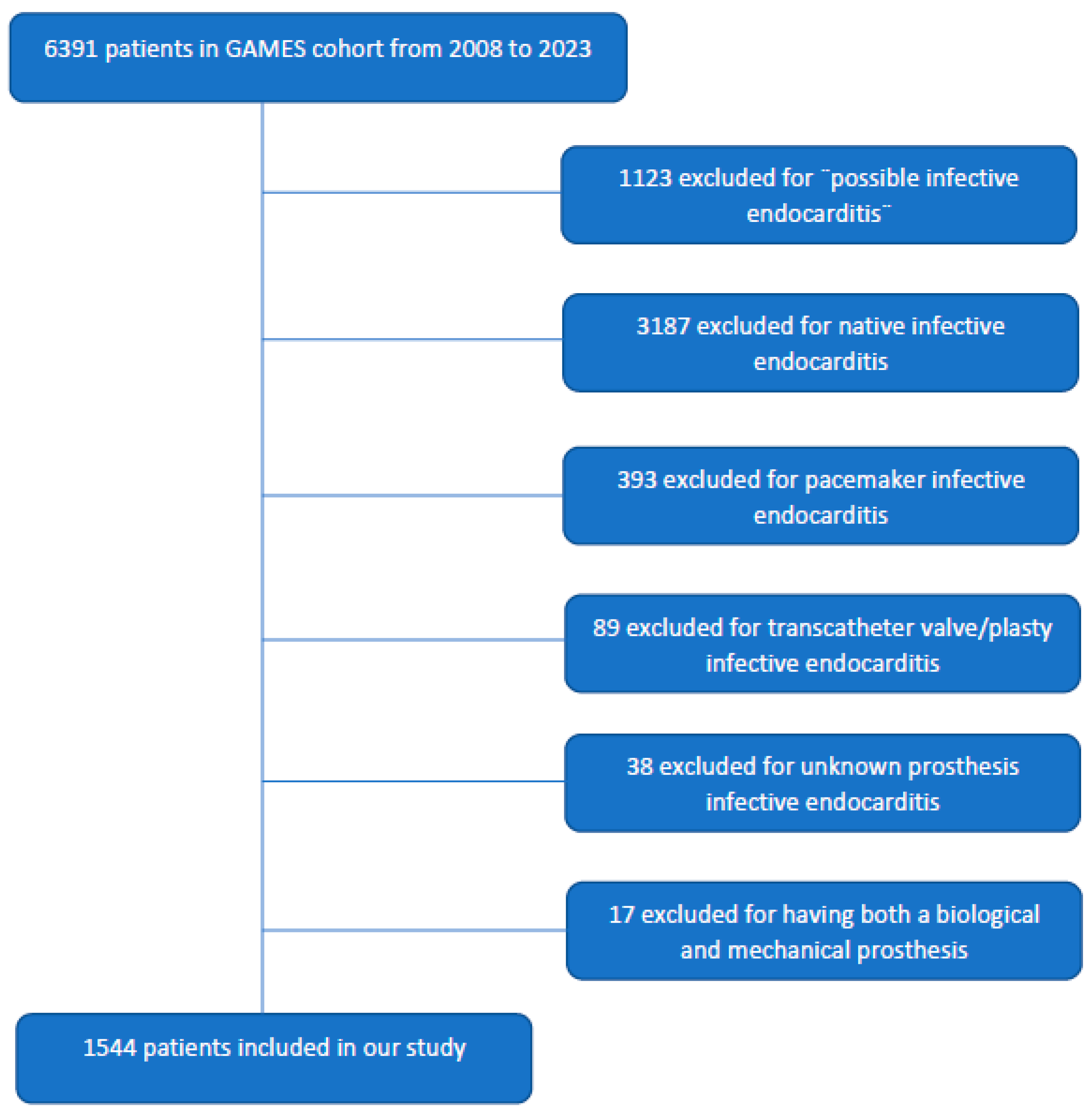
We performed a post hoc analysis of the prospective, multicenter GAMES registry, which encompasses data collected from over 40 centers in Spain between 15 January 2008 and December 2022. The study cohort included patients aged ≥18 years who were diagnosed with prosthetic valve infective endocarditis (PVE). We excluded patients with native valve infective endocarditis, those who had undergone transcatheter valve implantation or repair, and those possessing both biological and mechanical prostheses in different valve positions.
Within the GAMES registry, a multidisciplinary team at each participating center completed a standardized, anonymized form for every IE episode, along with a one-year follow-up form. Collected data included baseline characteristics, microbiology, clinical presentation, management, and outcomes. The registry form also included an evaluation of the theoretical surgical risk using the EuroSCORE I, which was the established metric at the time the registry was created.

2.3. Definitions and Patient Groups

Infective endocarditis (IE) was defined according to the modified Duke criteria in effect at the time of each episode [13], and microbiological diagnosis relied on positive blood or valve cultures. Definitions for hospital-acquired, non-healthcare-related, and community-acquired IE followed those established in previous studies [15]. Chronic renal failure was defined as a previous serum creatinine level > 1.4 mg/dL, while worsening or new-onset renal impairment was defined as a deterioration of at least 25% in creatinine clearance, as measured by the Cockcroft–Gault equation. Persistent bacteremia was defined as positive blood cultures persisting for more than seven days after initiating effective antibiotic therapy, and relapses were defined as a new IE episode caused by the same microorganism within the first year of follow-up. Variables were collected to calculate the Charlson Comorbidity Index, and surgical indications were based on the latest European guidelines [13]. Patients who met surgical indications but did not undergo an operation were specifically identified.
Finally, patients were divided into two mutually exclusive groups based on the type of infected prosthesis: mechanical prosthetic valve endocarditis (mPVE) and biological prosthetic valve endocarditis (bPVE).

2.4. Statistical Analysis

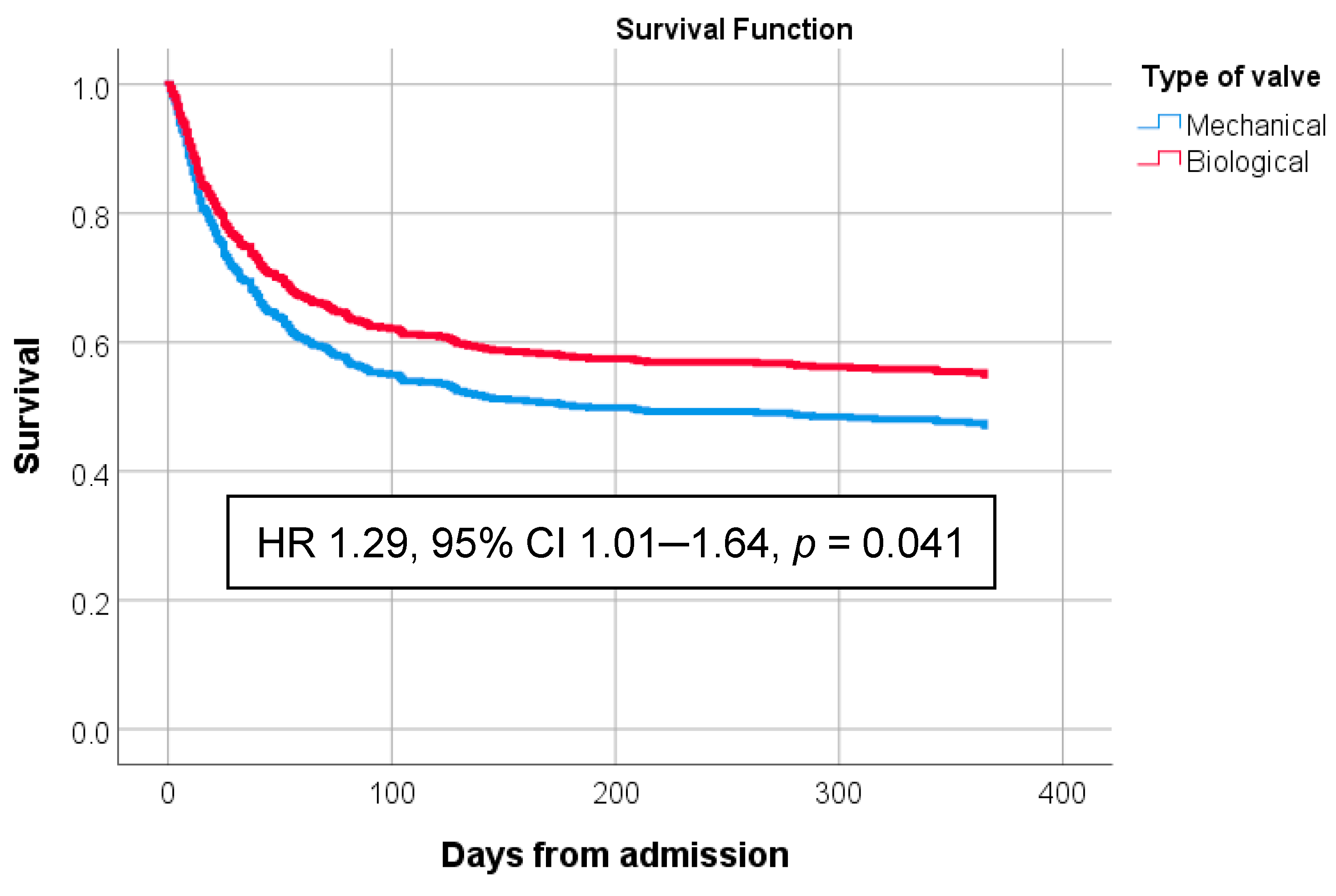
Categorical variables are expressed as frequencies and percentages as appropriate. Continuous variables are expressed as mean and standard deviation for normally distributed variables and as median and interquartile range for nonnormally distributed variables. Differences between both groups were analyzed using the chi-square test (or exact Fisher test when necessary) for categorical variables and the Mann–Whitney U test for continuous variables. Multivariable logistic regression was used to identify independent risk factors associated with mortality. Odds ratios (ORs) and 95% confidence intervals (95% CI) are provided. A one-year survival time-to-event analysis was performed with Cox multivariable regression. Hazard ratio (HR) and 95% CI are provided. A comparative analysis was carried out for the entire cohort. Additionally, a subgroup analysis was performed on patients between 45 and 65 years old at the time of prosthesis implantation.
Bilateral p-values inferior to 0.05 were considered statistically significant. All statistical analyses were performed by means of the SPSS statistical software package (version 25, IBM, Armonk, NY, USA).

3. Results

3.1. Preoperative and Baseline Characteristics

A total of 1544 patients were included in this analysis. 733 (47.47%) patients with mPVE and 811 (52.52) with bPVE (Figure 1). Patient characteristics are described in Table 1.
Although the two groups were generally similar, they exhibited statistically significant differences in several baseline characteristics. Patients in the biological PVE (bPVE) group were significantly older and had a higher incidence of hypertension, chronic obstructive pulmonary disease (COPD), and coronary artery disease (CAD). Consistent with these findings, the bPVE group also had higher scores for the age-adjusted Charlson Comorbidity Index and the EuroSCORE I surgical risk assessment. Conversely, patients in the mechanical PVE (mPVE) group showed a higher incidence of preoperative atrial fibrillation, existing preoperative pacemaker (PM) or implantable cardioverter-defibrillator (ICD), and a history of previous infective endocarditis. No significant differences were observed between the groups for the remaining analyzed variables. Furthermore, the onset of IE was significantly earlier in the bPVE group, occurring at a median of 19 months (interquartile range, p25–p75: 4–51 months) after the index surgery, compared to a median of 56 months (interquartile range: 12–151 months) in the mPVE group.

3.2. Microbiological Data

The two prosthetic groups demonstrated statistically significant differences in microbiological profiles and infection acquisition patterns. mPVE was associated with a higher incidence of Staphylococcus aureus (SA) (19.9% vs. 11.7%, p < 0.001) and Gram-negative bacteria (5.7% vs. 3.5%, p = 0.032). Conversely, bPVE showed a higher proportion of coagulase-negative staphylococci (32.8% vs. 26.2%, p = 0.005) and Enterococcus spp. (17.8% vs. 13.4%, p = 0.018). There were no differences found regarding infection by Streptococci spp., Candida spp., or polymicrobial endocarditis, and the primary focus of infection was similar between the groups. Regarding acquisition, mPVE presented as community-acquired in a higher percentage of cases (61.4% vs. 55.2%, p = 0.014), while healthcare-associated infections were significantly more common in the bPVE group (38.2% vs. 32.3%, p = 0.016). Microbiological data are summarized in Table 1.

3.3. Clinical Presentation

Regarding clinical presentation, there were no significant differences between the two groups concerning fever, persistent bacteremia, central nervous system (CNS) embolism, peripheral embolism, or acute heart failure. However, mPVE patients presented with a statistically higher incidence of severe sepsis at hospital admission (19.9% vs. 14.0%, p = 0.002), IE involving two valves (18.7% vs. 13.3%, p = 0.004), and prosthetic valve dehiscence (27.6% vs. 18.1%, p < 0.001). Conversely, bPVE patients demonstrated a higher incidence of abscess formation (37.3% vs. 31.2%, p = 0.012). Notably, there was no difference between the groups in the rate of surgical indication or the actual performance of surgery. Clinical presentation findings are summarized in Table 1.

3.4. Outcomes and Postoperative Complications

There were no statistically significant differences in the postoperative complications between the two groups. Postoperative complications are summarized in Table 2.
Unadjusted in-hospital and 1-year mortality were not different between mPVE and bPVE patients (32.5% vs. 30.0%, p = 0.288; and 36.8% vs. 35.5%, p = 0.589, respectively). Table 3.
After adjusting for baseline differences in multivariable regression models, mechanical prosthesis was associated with higher in-hospital mortality (OR 1.48, confidence interval 95% 1.04–2.11, p = 0.028). Additionally, mechanical prosthesis was associated with higher 1-year mortality (HR 1.29, 95% confidence interval 1.01–1.64, p = 0.041) (Figure 2). Multivariable logistic regression identified independent risk factors associated with mortality: mPVE, age, Charlson index, SA, IE comprising two valves, and septic shock (Table 4).

3.5. Differences in Mechanical Versus Biological Endocarditis According to Location of the Prosthesis

Further analysis comparing IE regarding the location of the prosthesis was carried out. Data is summarized in Supplementary Materials. Similar data was obtained between the raw analysis of mPVE vs. bPVE compared to IE, according to the location of the prosthesis.

3.6. Middle-Aged Patients (45–65 at the Time of Onset of Prosthetic Surgery)

This sub-analysis included 540 middle-aged patients (45–65 years) at the time of prosthetic surgery, comprising 410 patients with mPVE (75.9%) and 130 patients with bPVE (24.0%). Although the groups were generally similar, the bPVE cohort showed a significantly higher incidence of CAD, HIV, and liver disease, while the mPVE cohort had a higher incidence of preoperative atrial fibrillation. No other baseline differences were noted.
Consistent with the main cohort findings, the onset of bPVE was significantly earlier than mPVE (median 21 months [IQR 5–67] vs. 66 months [IQR 13–139], p < 0.001). Unlike the main cohort, there were no statistically significant differences in microbiological data between the mPVE and bPVE groups in this age bracket. Regarding clinical presentation, mPVE patients had a higher incidence of CNS embolism, acute heart failure, and sepsis at presentation. Critically, there were no differences found between the groups concerning surgical indication, the proportion of patients who underwent surgery, hospital mortality, or mortality rate at one year. These data are summarized in Table 5.

4. Discussion

PVE affects 20–30% of patients with IE [1,2]. There is a scarce amount of literature that provides a direct comparison between bPVE and mPVE, and even less that analyzes the subgroup of patients aged 45–65 at the time of onset of prosthetic surgery. The present study describes the results of PVE in more than 40 hospitals across Spain gathered in the GAMES-REGISTRY. The main results stemming from the present analysis of the GAMES-REGISTRY data in patients with PVE are the following: 1. bPVE appears earlier than mPVE, including the subgroup of patients aged 45–65 at the time of onset of prosthetic surgery. 2. bPVE and mPVE have some important differences in clinical presentation and paravalvular complications, although there was no difference in surgical indication, and if surgery was performed between both groups. 3. Crude mortality rates were similar between mPVE and bPVE patients, but after adjusting for baseline differences, patients with mPVE were associated with worse outcomes.
One of the most relevant results of our study is the earlier appearance of IA in patients with bPVE, with a median of 13 months after index surgery in the bPVE (p25; p75, 3.5; 45) vs. 50 months in mPVE (p25; p75, 12; 142.5). The latter raised us the following question: What would happen in the subgroup of patients aged 45–65 at the time of onset of prosthetic surgery? These patients could potentially have been selected for both biological and mechanical prostheses. In this age group, patients’ decisions and preferences usually are the main reason to go for one or the other. In this subgroup, bPVE also appeared earlier than mPVE. We hypothesize that biological prostheses, when degenerated, are a substrate for endocarditis. This substate can arise from either prosthetic stenosis, turbulence, platelet aggregation, or other inherent causes of structural valve degeneration. This valve degeneration and the hemodynamic disturbance might be responsible for the early occurrence of IE in this type of prosthetic valve. According to the recent ESC guidelines for the management of IE [13], prosthetic valve selection in IE is influenced by the presence of a woman of childbearing age, advanced age, poor medical compliance, recent ischemic stroke, and evidence of intracranial bleeding. However, with the advent of transcatheter prostheses (TAVI) in recent years, middle-aged patients have tended to prefer biological over mechanical prostheses due to concerns related to the use of anticoagulants and the upsurge of valve-in-valve procedures [14]. Our data may give some insight into the earlier occurrence of IE as an additional factor that could influence the selection of a prosthetic valve. Furthermore, in the literature, there are additional publications analyzing IE on TAVI [12,16] and comparing TAVI-IE with surgical aortic valve replacement (SAVR) IE [11,17,18,19], which highlights the clinical relevance of the information brought by this study.
Regarding IE characteristics, we found a higher frequency of coagulase-negative staphylococci and enterococci among patients with biological prostheses. This is probably due to the older age and comorbidity of these patients, factors classically associated with these microorganisms. Notably, when restricting the analysis to those patients aged 45 to 65 years old, these microbiological differences disappeared. Clinical presentation did not vary between the two groups in certain aspects, including fever, persistent bacteremia, or acute heart failure. However, mPVE had a higher incidence of severe sepsis at hospital admission, IE comprising two valves and prosthetic valve dehiscence. Of the latter, septic shock and IE comprising two valves were two independent risk factors associated with mortality. Understanding these differences in clinical presentation could be important in order to optimize the management of patients with either type of prosthesis.
Generally, bPVE patients should be older and have more comorbidities than those with mPVE; both factors could affect surgical decision-making on whether to operate or not based on the patient’s surgical risk. Remarkably, there was no difference in surgical indication, and surgery was performed in both groups, which highlights the proficiency of the multidisciplinary approach. Regarding postoperative complications, the incidence of de novo postoperative dialysis was similar to that reported in previous publications [20]. On the other hand, the incidence of stroke, pacemaker implantation, postoperative bleeding, and low cardiac output syndrome was noticeably inferior in our study to those reported previously [20].
Importantly, in our analysis, we found that, after adjusting for baseline differences, mPVE was associated with a higher risk of in-hospital and 1-year mortality than bPVE. Additional independent risk factors for mortality were age, Charlson index, SA, IE comprising two valves, central nervous system embolization, and septic shock. These data correlate with previous publications in which advanced age, septic shock, SA, and other comorbidities were found to be independent factors associated with mortality in IE patients [21,22]. In our study, the observed in-hospital mortality rates were similar to those reported in the literature [23,24]. After adjusting for baseline differences, patients with mPVE had higher in-hospital mortality. These findings correlate with a previous meta-analysis on native IE, in which the authors carried out a subgroup analysis on PVE. Their findings were that bPVE showed a lower all-cause mortality in comparison to mPVE, although without statistical significance [25]. On the latter, authors state as a confounding factor that these data do not adjust for age, heart function, and other basic factors [25]. The potentially worse outcomes associated with mPVE could be related to a relatively more aggressive disease in this type of valve, as evidenced in our series in the clinical differences between groups. As stated above, mPVE, although later in occurrence, had significantly higher rates of septic shock, central nervous system embolization, and prosthetic dehiscence. They were also more frequently caused by SA or BGN, two microorganisms associated with acute EI and with higher mortality. This emphasizes the necessity of distinguishing both types of endocarditis, as we demonstrate that mPVE and bPVE have important clinical and prognostic evidence. Only by knowing specific characteristics of both groups can we optimize medical and surgical management of patients and, ultimately, improve their prognosis.

5. Limitations

This study is subject to the inherent biases associated with a post hoc analysis of an observational, nationwide database, including potential selection bias related to surgical indications and clinical practice variations across centers. Furthermore, because the database was established in 2008, it lacks contemporary variables such as the EuroSCORE II for surgical risk assessment, and information from advanced imaging modalities like Cardiac Positron Emission Tomography–Computed Tomography (PET-CT) and Cardiac Computed Tomography (CT) was not systematically recorded in the forms. The registry also limited patient follow-up to 12 months, meaning important long-term outcomes, including later reinfections or reoperations, could not be assessed. Lastly, the initial decision regarding the type of prosthesis (biological versus mechanical) was determined by the local surgical team based on existing guidelines and local practice. Although we conducted a specific sub-analysis on middle-aged patients (45 to 65 years) who might have been candidates for either prosthesis type, the influence of additional unmeasured confounding factors cannot be entirely excluded. Despite these methodological limitations, we maintain that our work provides new and meaningful insights into the distinct clinical and microbiological profiles of prosthetic valve endocarditis based on the affected prosthesis type.

6. Conclusions

This analysis reveals key distinctions between mechanical and biological PVE. bPVE consistently appears earlier than mPVE, a finding that persisted even in the subgroup analysis of patients aged 45 to 65 years at the time of index surgery. bPVE was characterized by a higher prevalence of healthcare-associated infections and more frequent paravalvular abscess complications. Conversely, mPVE was more frequently caused by Staphylococcus aureus and presented with a higher incidence of septic shock and prosthesis dehiscence. Importantly, after adjusting for baseline differences, mPVE was associated with worse clinical outcomes. Recognizing these differential patterns in presentation, microbiology, and prognosis is crucial for optimizing the medical and surgical management strategies for patients with PVE.

Supplementary Materials

The following supporting information can be downloaded at: https://www.mdpi.com/article/10.3390/jcm14248826/s1, Differences in mechanical versus biological endocarditis according to location of the prosthesis.

Author Contributions

Conceptualization: J.E.d.V.-S., J.C.P., E.Q.O., A.R.M. and C.E.M.-L.; Methodology: J.E.d.V.-S., J.C.P., P.M.G., G.C.C., M.M.V., M.Á.R.-E., R.R.-G., V.T.-Q., A.J.G.-A., E.Q.O., M.A.G.-S., E.G.-V., R.H.-E., A.R.M. and C.E.M.-L.; Software: J.E.d.V.-S. and J.C.P.; Validation: J.E.d.V.-S., J.C.P., P.M.G., G.C.C., M.M.V., M.Á.R.-E., R.R.-G., V.T.-Q., A.J.G.-A., E.Q.O., M.A.G.-S., E.G.-V., R.H.-E., A.R.M. and C.E.M.-L.; Formal analysis: J.E.d.V.-S. and J.C.P.; Investigation: J.E.d.V.-S., J.C.P., P.M.G., G.C.C., M.M.V., M.Á.R.-E., R.R.-G., V.T.-Q., A.J.G.-A., E.Q.O., M.A.G.-S., E.G.-V., R.H.-E., A.R.M. and C.E.M.-L.; Resources: J.E.d.V.-S., J.C.P., P.M.G., G.C.C., M.M.V., M.Á.R.-E., R.R.-G., V.T.-Q., A.J.G.-A., E.Q.O., M.A.G.-S., E.G.-V., R.H.-E., A.R.M. and C.E.M.-L.; Data: J.E.d.V.-S., J.C.P., P.M.G., G.C.C., M.M.V., M.Á.R.-E., R.R.-G., V.T.-Q., A.J.G.-A., E.Q.O., M.A.G.-S., E.G.-V., R.H.-E., A.R.M. and C.E.M.-L.; Curation: J.E.d.V.-S. and J.C.P.; Writing—original draft preparation: J.E.d.V.-S. and J.C.P.; Writing—review and editing: J.E.d.V.-S., J.C.P., E.Q.O., A.R.M. and C.E.M.-L.; Visualization: J.E.d.V.-S., J.C.P., P.M.G., G.C.C., M.M.V., M.Á.R.-E., R.R.-G., V.T.-Q., A.J.G.-A., E.Q.O., M.A.G.-S., E.G.-V., R.H.-E., A.R.M. and C.E.M.-L.; Supervision: P.M.G., G.C.C., M.M.V., M.Á.R.-E., R.R.-G., V.T.-Q., A.J.G.-A., E.Q.O., M.A.G.-S., E.G.-V., R.H.-E., A.R.M. and C.E.M.-L. All authors have read and agreed to the published version of the manuscript.

Funding

This research received no external funding.

Institutional Review Board Statement

The study was conducted according to the guidelines of the Declaration of Helsinki and approved by the Madrid Community Regional Ethics Committee (CEIC-R, protocol code ENEI and date of approval 11 January 2008). The specific approval of the post-hoc analysis was obtained by the Puerta de Hierro University Hospital ethics committee (code PI 191/24, date of approval 9 December 2024).

Informed Consent Statement

Patient consent was waived due to retrospective analysis of the study.

Data Availability Statement

The data that support the findings of this study are available on request from the corresponding author (de Villarreal-Soto, J.E.). The data are not openly available to preserve the privacy of the participants included in this study.

Acknowledgments

GAMES Registry Investigators have participated in data collection for this nationwide database.

Conflicts of Interest

The authors have no conflicts of interest to declare.

Abbreviations

bPVEBiological prosthetic valve endocarditis
CADCoronary artery disease
COPDChronic obstructive pulmonary disease
ICDImplantable cardiac defibrillator
IEinfective endocarditis
LVEFLeft Ventricle Ejection Fraction
mPVEMechanical prosthetic valve endocarditis
NYHANew York Heart Association
PMPacemaker
PVEProsthetic valve endocarditis
SAStaphylococcus aureus
SAVRSurgical aortic valve replacement
TAVITranscatheter Aortic Valve Implantation

References

  1. Wang, A.; Athan, E.; Pappas, P.A.; Fowler, V.G., Jr.; Olaison, L.; Paré, C.; Almirante, B.; Muñoz, P.; Rizzi, M.; Naber, C.; et al. Contemporary Clinical Profile and Outcome of Prosthetic Valve Endocarditis. JAMA 2007, 297, 1354–1361. [Google Scholar] [CrossRef]
  2. Hadji-Turdeghal, K.; Jensen, A.D.; Bruun, N.E.; Iversen, K.K.; Bundgaard, H.; Smerup, M.; Kober, L.; Østergaard, L.; Fosbøl, E.L. Temporal trends in the incidence of infective endocarditis in patients with a prosthetic heart valve. Open Heart 2023, 10, e002269. [Google Scholar] [CrossRef]
  3. Ramos-Martínez, A.; Domínguez, F.; Muñoz, P.; Marín, M.; Pedraz, Á.; Fariñas, M.C.; Tascón, V.; de Alarcón, A.; Rodríguez-García, R.; Miró, J.M.; et al. Clinical presentation, microbiology, and prognostic factors of prosthetic valve endocarditis. Lessons learned from a large prospective registry. PLoS ONE 2023, 18, e0290998. [Google Scholar] [CrossRef] [PubMed]
  4. Calderón-Parra, J.; Gutiérrez-Villanueva, A.; Yagüe-Diego, I.; Cobo, M.; Domínguez, F.; Forteza, A.; Ana, F.-C.; Muñez-Rubio, E.; Moreno-Torres, V.; Ramos-Martínez, A. Trends in epidemiology, surgical management, and prognosis of infective endocarditis during the XXI century in Spain: A population-based nationwide study. J. Infect. Public Health 2024, 17, 881–888. [Google Scholar] [CrossRef] [PubMed]
  5. Forteza-Gil, A.; Sandoval, E.; Martínez-López, D.; Pereda, D.; De Villarreal-Soto, J.E.; Castellá, M.; Centeno-Rodríguez, J.; Alcocer, J.; Martin-López, C.E.; Rubio, B.; et al. Mid-term outcomes of intervalvular fibrosa body reconstruction with Commando variants for active infective endocarditis. Eur. J. Cardiothorac. Surg. 2025, 67, ezaf047. [Google Scholar] [CrossRef]
  6. Durante-Mangoni, E.; Bradley, S.; Selton-Suty, C.; Tripodi, M.F.; Barsic, B.; Bouza, E.; Cabell, C.H.; de Oliveira Ramos, A.I.; Fowler, V., Jr.; International Collaboration on Endocarditis Prospective Cohort Study Group; et al. Current features of infective endocarditis in elderly patients: Results of the International Collaboration on Endocarditis Prospective Cohort Study. Arch. Intern. Med. 2008, 168, 2095–2103. [Google Scholar] [CrossRef]
  7. Cuervo, G.; Quintana, E.; Regueiro, A.; Perissinotti, A.; Vidal, B.; Miro, J.M.; Baddour, L.M. The Clinical Challenge of Prosthetic Valve Endocarditis: JACC Focus Seminar 3/4. J. Am. Coll. Cardiol. 2024, 83, 1418–1430. [Google Scholar] [CrossRef]
  8. Weber, C.; Petrov, G.; Luehr, M.; Aubin, H.; Tugtekin, S.M.; Borger, M.A.; Akhyari, P.; Wahlers, T.; Hagl, C.; Matschke, K.; et al. Surgical results for prosthetic versus native valve endocarditis: A multicenter analysis. J. Thorac. Cardiovasc. Surg. 2021, 161, 609–619.e10. [Google Scholar] [CrossRef] [PubMed]
  9. Salem, M.; Friedrich, C.; Saad, M.; Frank, D.; Salem, M.; Puehler, T.; Schoettler, J.; Schoeneich, F.; Cremer, J.; Haneya, A. Active Infective Native and Prosthetic Valve Endocarditis: Short- and Long-Term Outcomes of Patients after Surgical Treatment. J. Clin. Med. 2021, 10, 1868. [Google Scholar] [CrossRef]
  10. Manne, M.B.; Shrestha, N.K.; Lytle, B.W.; Nowicki, E.R.; Blackstone, E.; Gordon, S.M.; Pettersson, G.; Fraser, T.G. Outcomes after surgical treatment of native and prosthetic valve infective endocarditis. Ann. Thorac. Surg. 2012, 93, 489–493. [Google Scholar] [CrossRef]
  11. Calderón-Parra, J.; de Villarreal-Soto, J.E.; Oteo-Domínguez, J.F.; Mateos-Seirul, M.; Ríos-Rosado, E.; Dorado, L.; Vera-Puente, B.; Arellano-Serrano, C.; Ramos-Martínez, A.; Forteza-Gil, A. Risk of Infective Endocarditis Associated with Transcatheter Aortic Valve Implantation versus Surgical Aortic Valve Replacement: A Propensity Score-Based Analysis. J. Clin. Med. 2023, 12, 586. [Google Scholar] [CrossRef]
  12. Del Val, D.; Panagides, V.; Mestres, C.A.; Miró, J.M.; Rodés-Cabau, J. Infective Endocarditis After Transcatheter Aortic Valve Replacement: JACC State-of-the-Art Review. J. Am. Coll. Cardiol. 2023, 81, 394–412. [Google Scholar] [CrossRef]
  13. Delgado, V.; Ajmone Marsan, N.; de Waha, S.; Bonaros, N.; Brida, M.; Burri, H.; Caselli, S.; Doenst, T.; Ederhy, S.; Erba, P.A.; et al. 2023 ESC Guidelines for the management of endocarditis. Eur. Heart J. 2023, 44, 3948–4042, Erratum in Eur. Heart J. 2023, 44, 4780. https://doi.org/10.1093/eurheartj/ehad625. Erratum in Eur. Heart J. 2024, 45, 56. https://doi.org/10.1093/eurheartj/ehad776. [Google Scholar] [CrossRef] [PubMed]
  14. Jerónimo, A.; Olmos, C.; Zulet, P.; Gómez-Ramírez, D.; Anguita, M.; Castillo, J.C.; Escrihuela-Vidal, F.; Cuervo, G.; Calderón-Parra, J.; Ramos, A.; et al. Clinical characteristics and outcomes of aortic prosthetic valve endocarditis: Comparison between transcatheter and surgical bioprostheses. Infection 2024, 52, 2425–2434. [Google Scholar] [CrossRef] [PubMed]
  15. Benito, N.; Miró, J.M.; de Lazzari, E.; Cabell, C.H.; del Río, A.; Altclas, J.; Commerford, P.; Delahaye, F.; Dragulescu, S.; Giamarellou, H.; et al. Health care-associated native valve endocarditis: Importance of non-nosocomial acquisition. Ann. Intern. Med. 2009, 150, 586–594. [Google Scholar] [CrossRef] [PubMed]
  16. Caus, T.; Chabry, Y.; Nader, J.; Fusellier, J.F.; De Brux, J.L.; for the EpiCard investigators. Trends in SAVR with biological vs. mechanical valves in middle-aged patients: Results from a French large multi-centric survey. Front. Cardiovasc. Med. 2023, 10, 1205770. [Google Scholar] [CrossRef]
  17. Amat-Santos, I.J.; Messika-Zeitoun, D.; Eltchaninoff, H.; Kapadia, S.; Lerakis, S.; Cheema, A.N.; Gutierrez-Ibanes, E.; Munoz-Garcia, A.J.; Pan, M.; Webb, J.G.; et al. Infective endocarditis after transcatheter aortic valve implantation: Results from a large multicenter registry. Circulation 2015, 131, 1566–1574. [Google Scholar] [CrossRef]
  18. Yeo, I.; Kim, L.K.; Park, S.O.; Wong, S.C. In-hospital infective endocarditis following transcatheter aortic valve replacement: A cross-sectional study of the National Inpatient Sample database in the USA. J. Hosp. Infect. 2018, 100, 444–450. [Google Scholar] [CrossRef]
  19. Kolte, D.; Goldsweig, A.; Kennedy, K.F.; Abbott, J.D.; Gordon, P.C.; Sellke, F.W.; Ehsan, A.; Sodha, N.; Sharaf, B.L.; Aronow, H.D. Comparison of incidence, predictors, and outcomes of early infective endocarditis after transcatheter aortic valve implantation versus surgical aortic valve replacement in the United States. Am. J. Cardiol. 2018, 122, 2112–2119. [Google Scholar] [CrossRef]
  20. Perrotta, S.; Jeppsson, A.; Fröjd, V.; Svensson, G. Surgical Treatment of Aortic Prosthetic Valve Endocarditis: A 20-Year Single-Center Experience. Ann. Thorac. Surg. 2016, 101, 1426–1432. [Google Scholar] [CrossRef]
  21. Nguyen, D.T.; Delahaye, F.; Obadia, J.F.; Duval, X.; Selton-Suty, C.; Carteaux, J.P.; Hoen, B.; Alla, F.; for the AEPEI Study Group. Aortic valve replacement for active infective endocarditis: 5-year survival comparison of bioprostheses, homografts and mechanical prostheses. Eur. J. Cardiothorac. Surg. 2010, 37, 1025–1032. [Google Scholar] [CrossRef]
  22. García-Granja, P.E.; López, J.; Vilacosta, I.; Sarriá, C.; Domínguez, F.; Ladrón, R.; Olmos, C.; Sáez, C.; Vilches, S.; García-Arribas, D.; et al. Predictive model of in-hospital mortality in left-sided infective endocarditis. Rev. Esp. Cardiol. Engl. Ed. 2020, 73, 902–909. (In Spanish) [Google Scholar] [CrossRef] [PubMed]
  23. Marques, A.; Cruz, I.; Caldeira, D.; Alegria, S.; Gomes, A.C.; Broa, A.L.; João, I.; Pereira, H. Risk Factors for In-Hospital Mortality in Infective Endocarditis. Arq. Bras. Cardiol. 2020, 114, 1–8. [Google Scholar] [CrossRef] [PubMed]
  24. Luehr, M.; Bauernschmitt, N.; Peterss, S.; Li, Y.; Heyn, O.; Dashkevich, A.; Oberbach, A.; Bagaev, E.; Pichlmaier, M.A.; Juchem, G.; et al. Incidence and Surgical Outcomes of Patients With Native and Prosthetic Aortic Valve Endocarditis. Ann. Thorac. Surg. 2020, 110, 93–101. [Google Scholar] [CrossRef] [PubMed]
  25. Tao, E.; Wan, L.; Wang, W.; Luo, Y.; Zeng, J.; Wu, X. The prognosis of infective endocarditis treated with biological valves versus mechanical valves: A meta-analysis. PLoS ONE 2017, 12, e0174519. [Google Scholar] [CrossRef]
Figure 1. Patient inclusion.
Jcm 14 08826 g001
Figure 2. Kaplan–Meier survival curve representing 1-year survival of patients with bPVE and mPVE. The hazard ratio was calculated by means of a one-step multivariate Cox regression model. Variables included in the model were mechanical prosthesis (versus biological), gender, age, Charlson index, Staphylococcus aureus, coagulase-negative staphylococci, Enterococcus spp., Gram-negative bacilli, aortic valve implication, two or more valve implications, dehiscence, peripheral embolization, central nervous system embolization, septic shock, and EuroSCORE I. spp.: Species.
Jcm 14 08826 g002
Table 1. Complete univariate comparison between patients with mechanical vs. biological prosthetic infective endocarditis. AV: Auriculo-ventricular, BMI: Body mass index, bPVE: Biological prosthesis endocarditis, COPD: Chronic obstructive pulmonary disease, ICD: Implantable cardiac defibrillator, IE: Infective endocarditis, mPVE: Mechanical prosthesis endocarditis.
Characteristics and Outcomes: mPVE vs. bPVE
Mechanical (733)Biological (811)p-Value
Baseline data
Age66 (59; 73)75 (69; 79)<0.001
Sex
Male474 (64.6%)558 (68.8%)0.085
BMI25.48 (22.42; 27.76)25.71 (22.49; 28.72)0.235
Hypertension367 (60.9%)444 (72.4%)<0.001
Active smoker49 (8.8%)27 (4.9%)0.065
Diabetes210 (28.6%)245 (30.2%)0.502
Hypercholesterolemia291 (48.2%)315 (51.4%)0.474
COPD133 (18.1%)151 (18.6%)0.810
Congestive heart failure331 (45.1%)340 (41.9%)0.201
Coronary artery disease188 (25.6%)307 (37.8%)<0.01
Chronic kidney disease204 (27.8%)211 (26.0%)0.422
Hemodialysis15 (9.4%)8 (4.7%)0.41
Liver disease49 (6.6%)56 (6.9%)0.864
Atrial fibrillation361 (49.2%)305 (37.6%)<0.01
Pacemaker/ICD113 (18.7%)83 (13.5%)0.016
Peripheral artery disease59 (8.0%)81 (9.9%)0.185
Previous stroke129 (17.5%)145 (17.8%)0.886
Immunocompromised (HIV)3 (0.4%)7 (0.8%)0.267
Neoplastic disease112 (15.2%)144 (17.7%)0.191
Intravenous drug addiction7 (0.9%)4 (0.4%)0.281
Previous IE108 (17.9%)75 (12.2%)0.006
Effective antibiotic treatment (days)42 (25; 49)42 (25; 50)0.988
Months after index surgery56 (12; 151)19 (4; 55)<0.01
Charlson index2 (1; 3)2 (1; 4)0.175
Charlson adjusted by age4 (3; 6)5 (4; 7)<0.001
EuroSCORE I log29.8 (14.8; 52.0)35.7 (20.7; 60.8)<0.01
Microbiological data
Staphylococcus aureus146 (19.9%)95 (11.7%)<0.01
Coagulase-negative staph.192 (26.2%)266 (32.8)0.005
Enterococcus spp.98 (13.4%)144 (17.8%)0.018
Streptococcus spp.133 (18.1%)177 (21.8%)0.071
Candida spp.16 (2.2%)22 (2.7%)0.502
Polymicrobial14 (1.9%)9 (1.1%)0.195
Gram-negative bacteria42 (5.7%)28 (3.5%)0.032
Other bacteria28 (3.8%)19 (2.3%)0.092
Community-acquired infection450 (61.4%)448 (55.2%)0.014
Healthcare-related infection237 (32.3%)310 (38.2%)0.016
Dental foci42 (5.7%)45 (5.5%)0.877
Respiratory foci6 (0.8%)6 (0.7%)0.860
Genitourinary foci22 (3.0%)40 (4.9%)0.054
Gastrointestinal foci52 (7.0%)70 (8.6%)0.264
Vascular foci131 (17.8%)122 (15.0%)0.134
Skin foci38 (5.1%)40 (4.9%)0.821
Localization of IE
Aortic415 (56.6)695 (85.7)<0.01
Mitral412 (56.2)188 (23.2)<0.01
Tricuspid9 (1.2)8 (1.0)0.808
Pulmonary10 (1.4)13 (1.6)0.834
Polivalvular137 (18.7)108 (13.3)0.004
Clinical presentation
Persistent fever211 (35%)207 (33.9%)0.656
Persistent bacteremia76 (10.3%)75 (9.2%)0.459
Central nervous system embolism185 (25.2%)175 (21.5%)0.089
Peripheral embolism134 (18.2%)186 (22.9%)0.024
New AV conduction disorders86 (14.3%)111 (18.3%)0.131
Acute renal failure306 (41.7%)325 (40.0%)0.504
Acute heart failure299 (40.7%)306 (37.7%)0.219
Severe sepsis146 (19.9%)114 (14.0%)0.002
IE comprising two valves92 (18.7%)68 (13.3%)0.034
Prosthetic valve dehiscence203 (27.6%)147 (18.1%)<0.01
Pseudoaneurysm74 (10.0%)84 (10.3%)0.865
Abscess229 (31.2%)303 (37.3%)0.012
Fistula32 (4.3%)41 (5.0%)0.524
Surgical indication379 (51.7%)405 (49.9%)0.488
Surgery performed378 (51.6%)399 (49.3%)0.377
Frequency (Percent%): p-value from chi-square test or Fisher’s exact test when necessary. Median (p25; p75): p-value from Mann–Whitney U test.
Table 2. Outcomes and postoperative complications.
Postoperative Complications
Mechanical (379)Biological (399)p-Value
Any complication215 (56.8%)230 (57.6%)0.885
Low cardiac output syndrome66 (17.4%)66 (28.7%)0.644
Stroke6 (1.9%)9 (3.9%)0.512
Postoperative bleeding22 (5.8%)22 (9.6%)0.814
Wound infection46 (21.4%)39 (17.0%)0.234
Pneumonia32 (8.4%)23 (7.9%)0.257
Catheter-associated sepsis8 (2.1%)9 (3.1%)0.811
De novo postoperative dialysis16 (4.2%)20 (8.7%)0.628
Pacemaker implantation16 (4.2%)18 (7.8%)0.879
Frequency (Percent%): p-value from chi-square test or Fisher’s exact test when necessary.
Table 3. Outcomes after mPVE vs. bPVE. bPVE: biological prosthetic endocarditis; IE: infective endocarditis; mPVE: mechanical prosthetic endocarditis.
Outcomes: mPVE vs. bPVE
Mechanical (733)Biological (811)p-Value
In-hospital mortality238 (32.5%)243 (30.0%)0.288
One-year mortality270 (36.8%)288 (35.5%)0.589
Recurrent IE24 (3.3%)37 (4.6%)0.194
Surgery after discharge23 (3.1%)21 (2.5%)0.518
Frequency (Percent%): p-value from chi-square test or Fisher’s exact test when necessary.
Table 4. Multivariable logistic regression analysis.
VariableOdds Ratio95% Confident Intervalp Value
Mechanical prosthesis (versus biological)1.481.04–2.110.028
Gender (male)0.760.55–1.060.109
Age (per year)1.041.02–1.05<0.001
Charlson Index (per point)1.101.02–1.890.015
Staphylococcus aureus1.801.13–2.860.013
Coagulase-negative staph.1.400.94–2.080.096
Enterococcus spp.1.150.71–1.860.564
Gram-negative bacilli0.730.32–1,640.441
Aortic valve implication1.180.80–1.760.401
Two or more valve implications1.470.98–2.220.072
Dehiscence1.711.23–2.370.001
Peripheral embolization0.920.63–1.320.644
central nervous system emboli1.651.18–2.320.004
Septic shock5.953.91–9.06<0.001
EuroSCORE I (log, per point)1.000.99–1.000.743
Kaplan–Meier survival estimates. Survival at 1 year from diagnosis of PVE. Variables included in the multivariate regression model were age, sex, aortic location, multivalve involvement, Charlson, dehiscence, embolism, septic shock, EuroSCORE I, S. aureus, coagulase-negative, enterococcus, Gram-negative bacteria, nosocomial, abscess, and early endocarditis.
Table 5. Differences between patients aged 45–65 years during the onset of cardiac surgery.
Mechanical (410)Biological (130)p
Baseline data
Age at onset of IE65 (59; 70)63 (59; 66)0.040
Age at onset of cardiac surgery57 (51; 62)59 (56; 63)0.002
Sex (Male)273 (66.5%)102 (78.4%)0.010
Months after index surgery69 (17; 150)31 (8; 83)<0.01
COPD74 (18.0%)25 (19.2%)0.762
Coronary artery disease97 (23.7%)54 (41.5%)<0.01
Congestive heart failure191 (46.5%)57 (43.8%)0.582
Diabetes127 (30.9%)39 (30.0%)0.834
Immunocompromised (HIV)1 (0.2%)3 (2.3%)0.017
Intravenous drug addiction3 (0.7%)2 (1.5%)0.515
Atrial fibrillation195 (47.5%)35 (26.9%)<0.01
Peripheral artery disease31 (7.5%)13 (10.0%)0.376
Previous stroke74 (18.0%)22 (16.9%)0.770
Neoplasia65 (15.8%)23 (17.6%)0.621
Chronic kidney disease106 (25.9%)28 (21.5%)0.321
Liver disease29 (7.0%)19 (14.6%)0.008
Charlson index2 (1; 3)2 (1; 4%)0.180
Microbiological data
Staphylococcus aureus85 (20.7%)25 (19.2%)0.711
Coagulase-negative Staph.108 (26.3%)31 (23.8%)0.571
Enterococcus sp.56 (13.7%)17 (13.1%)0.866
Streptococcus sp.75 (18.3%)28 (21.5%)0.412
Candida sp.8 (2.0%)4 (3.1%)0.495
Polymicrobial5 (1.2%)0-
Gram-negative bacteria25 (6.1%)6 (4.6%)0.527
Other bacteria12 (2.9%)8 (6.2%)0.090
Community-acquired infection251 (61.2%)78 (60.0%)0.804
Healthcare-related infection135 (32.9%)40 (30.8%)0.647
Dental foci21 (5.1%)9 (6.9%)0.435
Respiratory foci5 (1.2%)2 (1.5%)0.779
Genitourinary foci11 (2.6%)5 (3.8%)0.496
Gastrointestinal foci38 (9.2%)12 (9.2%)0.990
Vascular foci82 (20.0%)20 (15.3%)0.241
Skin foci20 (4.8%)6 (4.6%)0.903
Localization of IE
Aortic415 (56.6) 695 (85.7) <0.01
Mitral412 (56.2)188 (23.2)<0.01
Tricuspid9 (1.2)8 (1.0)0.808
Pulmonary10 (1.4)13 (1.6)0.834
Polivalvular137 (18.7)108 (13.3)0.004
Clinical presentation
Pseudoaneurysm40 (9.7%)11 (8.4%)0.660
Abscess130 (31.7%)52 (40.0%)0.192
Fistula21 (5.1%)10 (7.6%)0.272
Acute heart failure172 (41.9%)41 (31.5%)0.034
Persistent bacteremia47 (11.4%)8 (6.1%)0.081
Central nervous system embolism117 (28.5%)23 (17.6%)0.014
Peripheral embolism90 (21.9%)31 (23.8%)0.652
Acute renal failure187 (45.6%)47 (36.1%)0.058
Septic shock77 (18.7%)15 (11.5%)0.056
Sepsis95 (23.1%)16 (12.3%)0.008
Surgical indication221 (53.9%)73 (56.2%)0.653
Surgery performed216 (52.7%)77 (59.2%)0.192
Log EuroSCORE I30.3 (15.9; 51.8)23.2 (13.4; 42)0.036
In-hospital mortality135 (32.9%)31 (23.8%)0.051
1-year follow-up mortality150 (36.6%)37 (28.5%)0.09
Frequency (Percent%): p-value from chi-square test or Fisher’s exact test when necessary.
Median (p25; p75): p-value from Mann–Whitney U test.
BMI: Body mass index, COPD: chronic obstructive pulmonary disease, ICD: implantable cardiac defibrillator, IE: infective endocarditis.
Disclaimer/Publisher’s Note: The statements, opinions and data contained in all publications are solely those of the individual author(s) and contributor(s) and not of MDPI and/or the editor(s). MDPI and/or the editor(s) disclaim responsibility for any injury to people or property resulting from any ideas, methods, instructions or products referred to in the content.