Article

Cerebrovascular Reactivity to Acetazolamide in Stable COPD Patients
1
Department of Anesthesiology and Intensive Care, Faculty of Medicine, University of Debrecen, 4032 Debrecen, Hungary
2
Department of Pulmonology, Faculty of Medicine, University of Debrecen, 4032 Debrecen, Hungary
*
Author to whom correspondence should be addressed.
These authors contributed equally to this work.
J. Clin. Med. 2025, 14(23), 8535; https://doi.org/10.3390/jcm14238535 (registering DOI)
Submission received: 16 October 2025 / Revised: 18 November 2025 / Accepted: 27 November 2025 / Published: 1 December 2025

Abstract

Background: COPD patients may be prone to cerebral small vessel disease resulting in perivascular white matter lesions and consequent cognitive decline. The pathophysiological background of these observations is not completely understood. It is hypothesized that COPD may involve systemic vascular dysfunction extending to the brain. The present study aimed to assess whether acetazolamide-induced cerebral vasoreactivity and cerebrovascular reserve capacity are impaired in patients with COPD. Methods: A total of 17 patients with COPD and 20 healthy control subjects underwent transcranial Doppler monitoring before and after IV administration of 15 mg/kgBW acetazolamide for 20 min. Cerebrovascular reactivity (CVR) was defined as a percent increase in blood flow velocity in the middle cerebral artery (MBFV) after acetazolamide. Cerebrovascular reserve capacity (CVRC) was defined as the maximal percent change in MBFV during the entire registration. Results: Administration of acetazolamide resulted in a slight decrease in pH and a mild increase in PaCO2 (both p < 0.001) in COPD patients. Absolute MBFV values were consequently higher, and pulsatility indices were lower in control subjects compared to those measured in patients with COPD. The CVR at different time points after acetazolamide and CVRC did not show any difference between COPD patients and control subjects. Conclusions: In the present study, in normocapnic mild and normocapnic moderate COPD patients, cerebrovascular reactivity is not impaired, indicating that in mild stages, cerebral arteriolar function is preserved. Further studies, using patient selection based on different severity stages of the disease, may show whether alteration of the cerebral arteriolar function is responsible for the white matter lesions and cognitive decline observed in severe COPD patients.

1. Introduction

Chronic obstructive pulmonary disease (COPD) represents one of the leading causes of death worldwide [1]. It is believed that COPD is the expression of a generalized inflammatory syndrome caused by significant exposure to external factors [2]. COPD and stroke share common risk factors, such as advancing age, smoking, socioeconomic status and air pollution. As a consequence, the incidence of stroke is increased in COPD patients by approximately 20% [3,4]. The affection of the brain in COPD is further supported by observations reporting on an association between impaired lung function, cerebral atrophy and white matter lesions of the brain parenchyma [5]. More recent studies using functional MRI reported on reduced white matter integrity and a widespread disturbance in functional activation of the gray matter, along with reduced cognitive performance in patients suffering from COPD [6,7]. The pathophysiological background of these observations is not completely understood; however, chronic low-grade systemic inflammation, hypoxia, hypercapnia and oxidative stress are the proposed factors for explaining it. It is also known that white matter lesions are believed to be caused by small vessel disease of the brain [8]. These small resistance arterioles are responsible for meeting the metabolic demands of the brain parenchyma. It was shown that the function of the cerebral microvessels is impaired in patients with white matter lesions. Their functions have been extensively studied using cerebral vasoreactivity and autoregulation tests in hypertension, diabetes mellitus and dementia [9,10,11]. There are several previous reports indicating that the function of these resistance arterioles may be affected in patients suffering from COPD, linking COPD to cognitive impairment and cerebrovascular disease. While the pulmonary consequences of COPD are well characterized, its cerebral vascular effects remain poorly understood.
Data on cerebral vasoreactivity tests as a surrogate marker of cerebral arteriolar function in patients suffering from chronic obstructive pulmonary disease are scarce and inconclusive. In line with this, the present study aimed to assess whether acetazolamide-induced cerebral vasoreactivity and cerebrovascular reserve capacity are impaired in patients with normocapnic, mild–moderate COPD.

2. Methods

This is a prospective case series of patients with previously verified chronic obstructive pulmonary disease treated at the Department of Pulmonology, University of Debrecen, as inpatients. The protocol of the study was approved by the local (Medical Ethics Committee of the University of Debrecen, DE RKEB 6268-2022, approval date: 22 December 2002) and national (Medical Research Council Ethics Committee for Clinical Pharmacology, registration number: BM/6408-1/2023, approval date:18 April 2023) ethical authorities. The study was registered prior to patient inclusion at the Clinical Trials registry (EUDRACT number: 2022-004076-41; registration date: 28 November 2022).
The criteria for COPD were defined using the Global Initiative for Chronic Obstructive Lung Disease (GOLD) criteria [12] in all patients.
Eligibility criteria: age between 50 and 75 years; ex-smokers (at least one year of interruption); and patients without exacerbation of the disease in the last two months. Exclusion criteria were as follows: use of home oxygen therapy, recent or ongoing theophylline therapy, cerebrovascular diseases or diseases affecting the cerebral vasculature (diabetes mellitus, severe hypertension, autoimmune vasculitides) in the previous history. All included patients were hospitalized COPD patients after stabilization of their recent exacerbations. Those patients having a temporal bone window not allow the insonation of the middle cerebral artery were also excluded.
Acetazolamide test results of non-COPD patients were used from a historical institutional database that aimed to determine the normal cerebrovascular reactivity values in healthy individuals in different age groups [13]. The test results of age and sex-matched controls were used for comparison.
Transcranial Color-Coded Duplex Sonography: The middle cerebral artery (MCA) was insonated using the 2 MHz sector probe of the Mindray M6 ultrasound device (Mindray, Shenzen, China) through the temporal bone. The vessel was localized using the color mode of the device, and blood flow velocities in the MCA were measured after angle correction at 45–50 mm depth. We have chosen acetazolamide as a vasodilatory stimulus because its administration and dosing are simple; furthermore, it is free of unpleasant side effects (such as fear of death) that may be observed during CO2 inhalation. It is also known that after administration of acetazolamide, it does not have any influence on systemic blood pressure; therefore, it allows testing the metabolic regulation of the cerebral arteriolar tone without affecting cerebral autoregulation. This vasodilatory stimulus has been widely used for testing cerebrovascular reactivity in different conditions that may affect the function of the cerebral small vessels [14]. It has been proven that a dose of 15 mg/kg BW corresponds to a supramaximal stimulus in cerebral vasoreactivity testing [14]. This explains why we used this dose. Systolic, diastolic and mean blood flow velocities and pulsatility indices were registered in the middle cerebral artery in the supine position of the patients. After registering the resting blood flow velocities, 15 mg/kg BW acetazolamide (XGEN Pharmaceuticals DJB, Inc., Horseheads, NY, USA) was injected slowly intravenously.
Cerebral blood flow velocity measurements were then repeated at 5, 10, 15 and 20 min after administration of acetazolamide (ACZ). In parallel with the transcranial Doppler measurements, arterial blood was sampled for blood gas analysis to determine the following parameters: pH, arterial pressure of oxygen (PaO2), carbon dioxide (PaCO2) and bicarbonate concentration (HCO3). These patients all had arterial lines allowing repeated sampling of arterial blood. In healthy control patients, serial arterial blood gas measurements were considered unethical, and, therefore, they were omitted.

Calculation of Cerebrovascular Reactivity and Reserve Capacity

In line with previous vasoreactivity studies with acetazolamide, cerebrovascular reactivity (CVR) was defined as the percent increase in the cerebral blood flow in the middle cerebral artery at 5, 10, 15 and 20 min after administration of the drug [14]. CVR was calculated using the following equation:
CVR = (MBFVacz − MBFVrest)/MBFVrest × 100
where MBFVacz is the mean blood flow velocity after ACZ at 5, 10, 15 and 20 min, and MBFVrest is the mean blood flow velocity before administration of ACZ.
Cerebrovascular reserve capacity (CRC) was defined as the maximal percent change after administration of ACZ within the 20 min registration time and was calculated based on the following equation:
CRC = (MBFVaczMAX − MBFVrest)/MBFVrest × 100
where MBFVaczMAX is the highest mean blood flow velocity after ACZ within the 20 min registration time, and MBFVrest is the mean blood flow velocity before administration of ACZ.
Statistical Analysis: Before starting the study, we performed a power analysis to estimate the necessary number of included patients. We took the results of a previous acetazolamide test by Clivati [15] into account. Based on their data, cerebrovascular reserve capacity was 42 ± 9% in healthy subjects. We anticipated a decrease in cerebrovascular reserve capacity of 25% (which is half of the CRC decrease that was found in their study). Using an alpha of 0.05 and a power of 90%, 15 controls and 15 COPD patients had to be included in the present study. The parameters are reported as means ± standard deviations or medians and 25–75% interquartile ranges, depending on the results of the normality test. Parameters with normal distributions were compared between the two groups using the appropriate t-tests, while those with non-normal distributions were compared with Mann–Whitney tests. A p < 0.05 value was accepted as a statistically significant difference.

3. Results

A total of 17 patients with COPD and 20 healthy individuals were included. The most important clinical characteristics of the COPD patients are summarized in Table 1.

3.1. Results of Blood Gas Analysis Measurements

For better interpretation of the cerebral blood flow measurement results, we analyzed the changes in arterial blood gas parameters before and after administration of acetazolamide. The results are summarized in Table 2. Administration of acetazolamide resulted in a slight decrease in pH, a mild increase in PaCO2, and an improvement of PaO2, while bicarbonate levels were relatively stable throughout the 20 min registration period.

3.2. Results of Cerebral Blood Flow Velocity Measurements

Absolute cerebral blood flow velocity values were consequently higher, and pulsatility indices were lower in control subjects compared to those measured in patients with COPD. This difference could be observed both in the resting state and at all time points after administration of acetazolamide. The results are summarized in Table 3.

3.3. Cerebrovascular Reactivity (CVR) Measurements

The percent increase in cerebral blood flow velocities at different time points after acetazolamide (cerebrovascular reactivity) did not show any difference between COPD patients and control subjects, suggesting a similar vasodilatory reaction of the cerebral arterioles. These values are detected in a middle-sized vessel of the circle of Willis, and the change in the cerebral blood flow velocity reflects the vasodilatory ability of the arterioles in the corresponding territory. It has to be noted that at 5 min, the median value of cerebrovascular reactivity was lower, indicating a slower reaction of the cerebral arterioles to the vasodilatory stimulus. In later phases of the acetazolamide test, the percent increase in the cerebral blood flow velocity was comparable between the control and COPD groups, suggesting that vasodilation of a similar magnitude occurred at the cerebral arteriolar level. The results are depicted in Figure 1.
We assessed the relationship between the actual blood gas analysis results after administration of acetazolamide and their relation to the measured cerebral vasoreactivity (the actual percent increase in cerebral blood flow velocity at different time points after the vasodilatory stimulus). The percent increase in cerebral blood flow velocity after acetazolamide was independent of the actual PaCO2 (Spearman: 0.07; p = 0.54) and the PaO2/PaCO2 ratio (Spearman: 0.22; p = 0.07). In contrast to this, a significant positive relationship could be found between PaO2 and the actual percent increase in cerebral blood flow velocity (Spearman: 0.32; p = 0.007).

3.4. Cerebrovascular Reserve Capacity

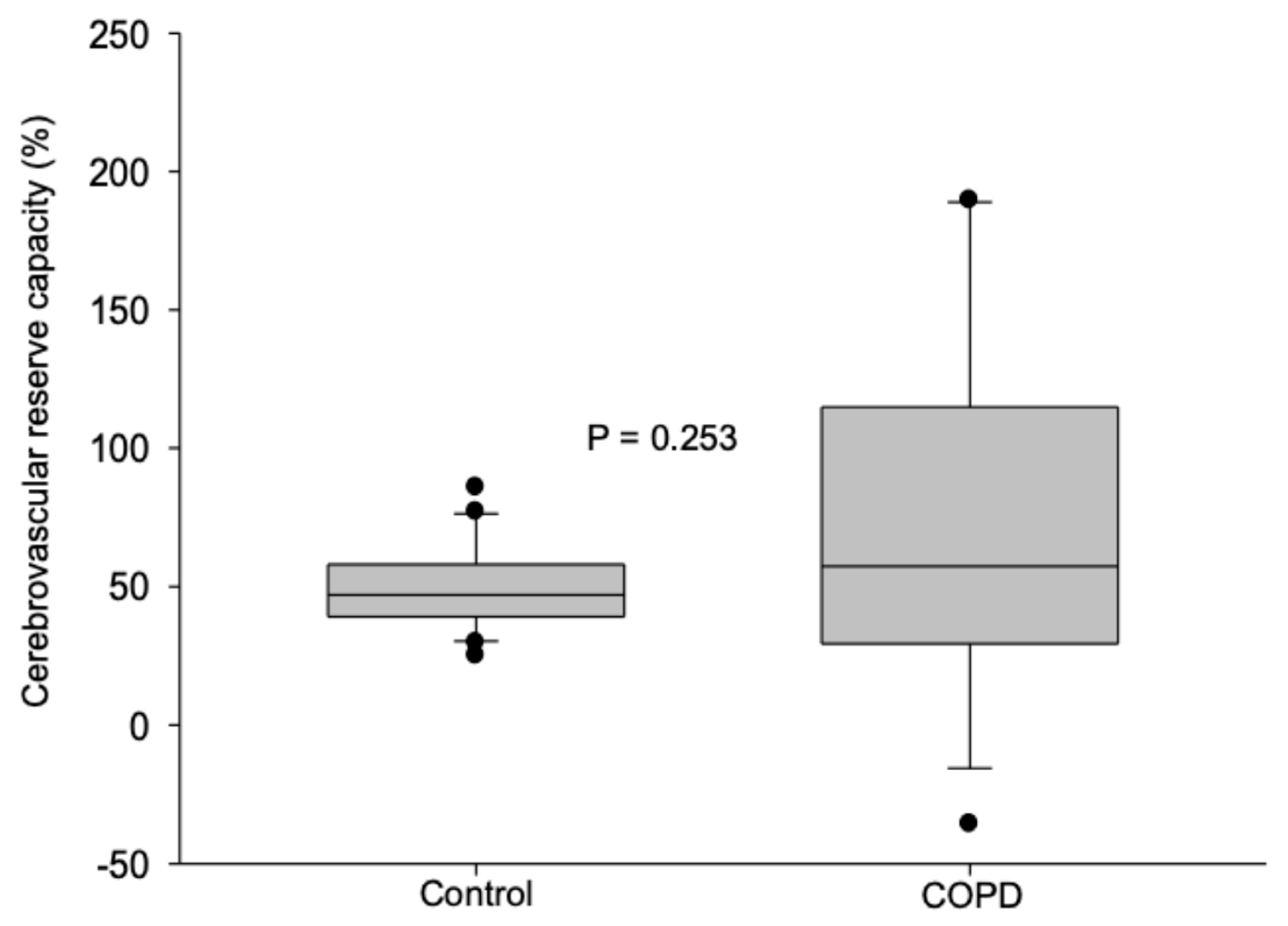
The maximal percent change in the middle cerebral artery mean blood flow velocity (= cerebrovascular reserve capacity) did not show any statistically significant differences between COPD patients and healthy subjects, suggesting that the maximal vasodilatory capacity of the cerebral arterioles is similar in the two groups. The results are shown in Figure 2.

Relationship Between Cerebrovascular Reserve Capacity and Confounding Factors

The maximal response of the cerebral vasculature to the vasodilatory stimulus (cerebrovascular reserve capacity) did not show any relationship with the severity of COPD. Correlation analysis of FEV1 and cerebrovascular reserve capacity revealed a Spearman correlation coefficient of 0.09 and a p-value of 0.71. Similar to this, cerebrovascular reserve capacity showed no relationship with the Mini-Mental Score of COPD patients in this cohort (Spearman: −0.01, p = 0.95).

4. Discussion

In the present study, acetazolamide was used as a vasodilatory stimulus for assessing cerebral vasoreactivity and cerebrovascular reserve capacity in patients suffering from COPD. No difference was found between the time course of the cerebral vasodilatory effect (cerebral vasoreactivity) and the maximal vasodilatory effect of acetazolamide (cerebrovascular reserve capacity) in stable, normocapnic COPD patients. This may indicate that in this phase of the disease, the function of the cerebral resistance arterioles is not affected.
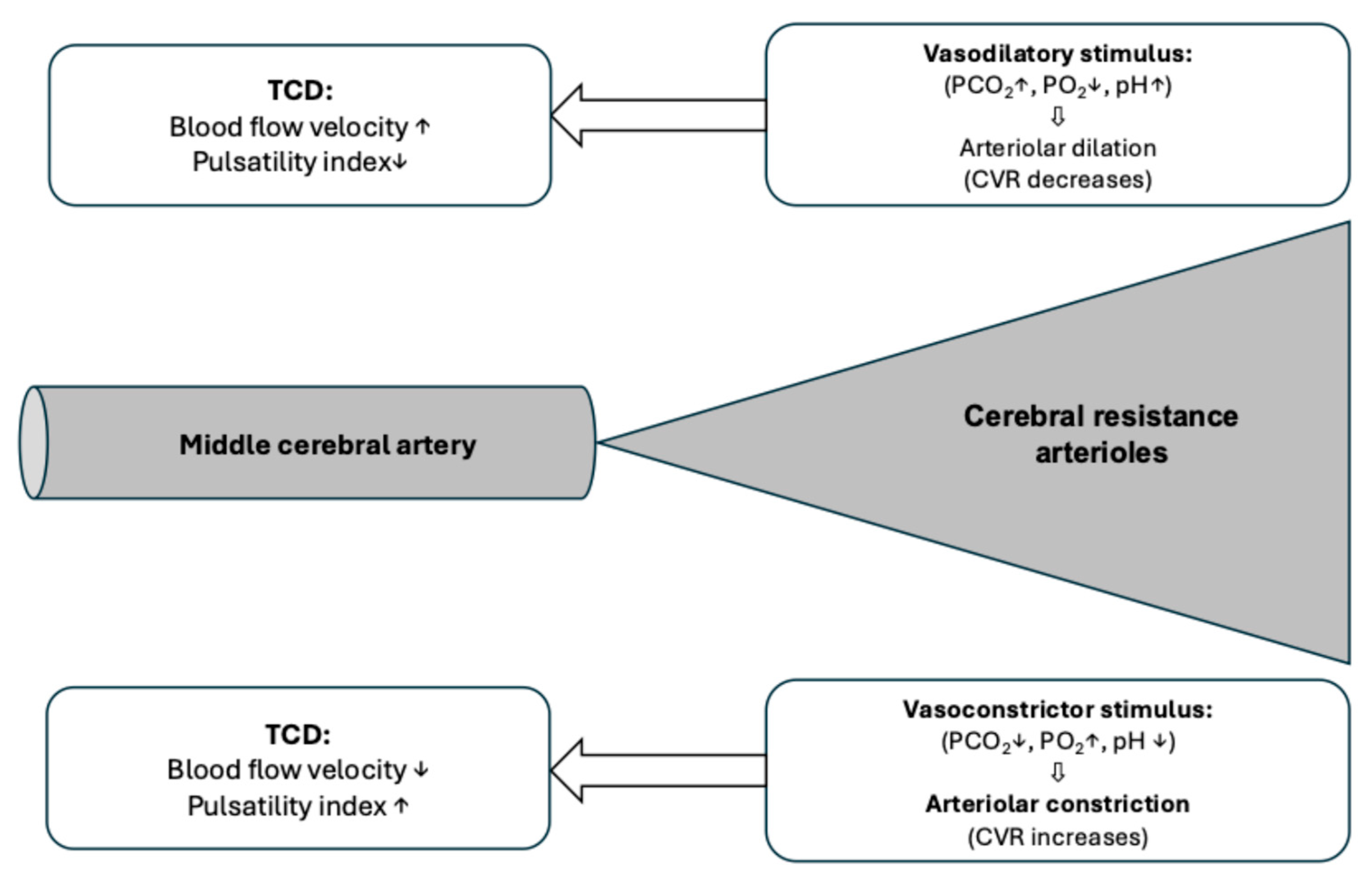
The concept of cerebral vasoreactivity tests performed using transcranial Doppler sonography is demonstrated in Figure 3. The registration of Doppler parameters occurs in a mid-sized artery of the brain (usually the middle cerebral artery), but the vasodilatory or vasoconstrictor stimulus exerts its action by altering the diameter of the cerebral arterioles that are the resistance vessels of the brain. If a vasoconstrictor stimulus (acetazolamide, CO2-inhalation or breath holding) is applied during the vasoreactivity test, this decreases cerebrovascular resistance and, consequently, cerebral blood flow in the middle cerebral artery increases.
Acetazolamide has been widely used in the past decades for testing cerebral vasoreactivity in different conditions affecting the cerebral vasculature, such as hypertension, diabetes mellitus and sepsis [9,10,16]. It is the reversible inhibitor of carbonic anhydrase that catalyzes the following reaction: CO2+ H2O = HCO3 + H+. This ubiquitous enzyme is expressed in different tissues, but the main vasodilatory effect is attributed to the carbonic anhydrase located at the surface of the erythrocytes [14,17]. As also demonstrated in the present study (Table 2), administration of acetazolamide slightly decreased the pH of the blood and increased the partial pressure of CO2. Repeated measures of ANOVA indicated a significant treatment mean effect of acetazolamide on the decrease in pH (p < 0.001), indicating that, in general, pH decreases after administration of acetazolamide. Note that after pairwise comparisons, pH decreased significantly only 10 min after acetazolamide compared to the resting value, and this difference continued to exist until the end of the measurements. Similar to this, acetazolamide administration exerted a significant time main effect on the partial pressure of CO2 during the measurements (p < 0.001). These effects using an intravenous administration are temporary and have a certain dynamics: during the first 5, 10 and 15 min after the administration, PaCO2 and, consequently, cerebral blood flow in the middle cerebral artery increased, reaching a plateau, and they started to become normalized 20 min after injecting the drug. These observations are in line with the results of previous acetazolamide tests performed in healthy volunteers [13]. This explains why cerebral vasoreactivity tests using transcranial Doppler sonography are performed for 20 min, and a combination of the maximal vasodilatory effect (cerebrovascular reserve capacity) and the dynamics of the vasodilatory response (cerebral vasoreactivity) is assessed. The cerebral vasodilatory effect of acetazolamide is dose-dependent. It has been shown that an intravenously administered dose of 1000 mg acetazolamide used in some previous studies may not have a maximal vasodilatory effect, and the suggested dose for cerebral vasoreactivity tests is 13–15 mg/kgBW [18]. This explains why we used a dose of 15 mg/kg body weight in the present study.
In contrast to our results, in a previous study by Clivati and co-workers [15], using a 10 mg/kg BW acetazolamide, a slightly decreased middle cerebral artery mean blood flow velocity change was observed in eight COPD patients compared to normal subjects. It has to be noted that resting cerebral blood flow velocities in that study were comparable in normal subjects and in COPD patients, whereas in our study, resting cerebral blood flow in COPD patients was lower. Another difference between this study and ours is the dose of the vasodilatory stimulus. Similar to our results, in the study of Hlavati and co-workers, COPD patients had lower baseline mean blood flow velocities in the middle cerebral artery than controls [19]. These authors also documented a decreased cerebral vasoreactivity in COPD patients using the breath-holding test. Note that abnormal reactivity was observed only in the groups of severe and very severe COPD patients, but not in mild and moderate cases. In a more recent study using CO2 inhalation, Corrêa and co-workers also documented reduced cerebrovascular reactivity in severe COPD patients [20]. This underscores the role of patient selection when assessing cerebrovascular responses in COPD patients and is supported by the observation of Yildiz and co-workers and Van den Ven and co-workers, who documented paradoxical responses of cerebral blood flow in stable COPD patients with chronic hypercapnia and hypoxia, and they found altered cerebrovascular responses in exacerbations of COPD [21,22]. As our patients represent the stable normocapnic COPD group, this may explain why we could not demonstrate differences in cerebral vasoreactivity compared to healthy subjects.
The limitation of the present study is the relatively small number of patients with mild or moderate COPD. Therefore, the lack of impaired vasoreactivity response cannot be generalized for more severe and exacerbation cases, and especially not for patients living with chronic hypercapnia. The methodological limitation is that transcranial Doppler sonography does not directly measure cerebral blood flow; only the cerebral blood flow velocities are proportional to changes in cerebral blood flow. We used acetazolamide as a vasodilatory stimulus, which is not a natural stimulation of the cerebral arterioles. However, other methods, such as CO2 inhalation or breath-holding test, may have side effects or may not be well standardized, as they require the cooperation of the patients.
In conclusion, in the present study, in mild and moderate normocapnic COPD patients, cerebrovascular reactivity and reserve capacity were not impaired compared to healthy control subjects, indicating that in the early stage of the disease, the function of the cerebral small vessels is not affected. It is conceivable that chronic inflammation, oxidative stress and cytokines associated with the pathomechanism of COPD in the early phase of the disease do not have a major effect on cerebral arteriolar function and hence cerebrovascular reactivity. Further studies, using patient selection based on different severities of the disease, will show whether alteration of the cerebral arteriolar function is responsible for the white matter lesions and the consequent cognitive disturbances observed in severe COPD patients.

Author Contributions

P.S., R.S.-S., V.D. and B.F.: investigation; B.F., I.H. and A.V.: conceptualization and drafting of the manuscript. All authors have read and agreed to the published version of the manuscript.

Funding

This research received no external funding.

Institutional Review Board Statement

This study was approved by the Institutional Review Board of the University of Debrecen (DE RKEB 6268-2022, approval date: 22 December 2002).

Informed Consent Statement

Informed consent was obtained from all the subjects involved in this study.

Data Availability Statement

The data are available from the corresponding author upon reasonable request.

Conflicts of Interest

The authors declare no conflicts of interest.

References

  1. GBD 2021 Causes of Death Collaborators. Global burden of 288 causes of death and life expectancy decomposition in 204 countries and territories and 811 subnational locations, 1990–2021: A systematic analysis for the Global Burden of Disease Study 2021. Lancet 2024, 403, 2100–2132. [Google Scholar] [CrossRef]
  2. Corlateanu, A.; Covantev, S.; Mathioudakis, A.G.; Botnaru, V.; Siafakas, N. Prevalence and burden of comorbidities in Chronic Obstructive Pulmonary Disease. Respir. Investig. 2016, 54, 387–396. [Google Scholar] [CrossRef]
  3. Portegies, M.L.; Lahousse, L.; Joos, G.F.; Hofman, A.; Koudstaal, P.J.; Stricker, B.H.; Brusselle, G.G.; Ikram, M.A. Chronic Obstructive Pulmonary Disease and the Risk of Stroke. The Rotterdam Study. Am. J. Respir. Crit. Care Med. 2016, 193, 251–258. [Google Scholar] [CrossRef]
  4. Feary, J.R.; Rodrigues, L.C.; Smith, C.J.; Hubbard, R.B.; Gibson, J.E. Prevalence of major comorbidities in subjects with COPD and incidence of myocardial infarction and stroke: A comprehensive analysis using data from primary care. Thorax 2010, 65, 956–962. [Google Scholar] [CrossRef]
  5. Sachdev, P.S.; Anstey, K.J.; Parslow, R.A.; Wen, W.; Maller, J.; Kumar, R.; Christensen, H.; Jorm, A.F. Pulmonary function, cognitive impairment and brain atrophy in a middle-aged community sample. Dement. Geriatr. Cogn. Disord. 2006, 21, 300–308. [Google Scholar] [CrossRef] [PubMed]
  6. Spilling, C.A.; Jones, P.W.; Dodd, J.W.; Barrick, T.R. White matter lesions characterise brain involvement in moderate to severe chronic obstructive pulmonary disease, but cerebral atrophy does not. BMC Pulm. Med. 2017, 17, 92. [Google Scholar] [CrossRef] [PubMed]
  7. Dodd, J.W.; Chung, A.W.; van den Broek, M.D.; Barrick, T.R.; Charlton, R.A.; Jones, P.W. Brain structure and function in chronic obstructive pulmonary disease: A multimodal cranial magnetic resonance imaging study. Am. J. Respir. Crit. Care Med. 2012, 186, 240–245. [Google Scholar] [CrossRef] [PubMed]
  8. Markus, H.S.; Joutel, A. The pathogenesis of cerebral small vessel disease and vascular cognitive impairment. Physiol. Rev. 2025, 105, 1075–1171. [Google Scholar] [CrossRef]
  9. Regenhardt, R.W.; Nolan, N.M.; Das, A.S.; Mahajan, R.; Monk, A.D.; LaRose, S.L.; Migdady, I.; Chen, Y.; Sheriff, F.; Bai, X.; et al. Transcranial Doppler cerebrovascular reactivity: Thresholds for clinical significance in cerebrovascular disease. J. Neuroimaging 2024, 34, 348–355. [Google Scholar] [CrossRef]
  10. Fülesdi, B.; Limburg, M.; Bereczki, D.; Michels, R.P.; Neuwirth, G.; Legemate, D.; Valikovics, A.; Csiba, L. Impairment of cerebrovascular reactivity in long-term type 1 diabetes. Diabetes 1997, 46, 1840–1845. [Google Scholar] [CrossRef]
  11. Farid, K.; Petras, S.; Ducasse, V.; Chokron, S.; Helft, G.; Blacher, J.; Caillat-Vigneron, N. Brain perfusion SPECT imaging and acetazolamide challenge in vascular cognitive impairment. Nucl. Med. Commun. 2012, 33, 571–580. [Google Scholar] [CrossRef]
  12. Singh, D.; Agusti, A.; Anzueto, A.; Barnes, P.J.; Bourbeau, J.; Celli, B.R.; Criner, G.J.; Frith, P.; Halpin, D.M.G.; Han, M.; et al. Global Strategy for the Diagnosis, Management, and Prevention of Chronic Obstructive Lung Disease: The GOLD science committee report 2019. Eur. Respir. J. 2019, 53, 1900164. [Google Scholar] [CrossRef] [PubMed]
  13. Oláh, L.; Valikovics, A.; Bereczki, D.; Fülesdi, B.; Munkácsy, C.; Csiba, L. Gender-related differences in acetazolamide-induced cerebral vasodilatory response: A transcranial Doppler study. J. Neuroimaging 2000, 10, 151–156. [Google Scholar] [CrossRef]
  14. Settakis, G.; Molnár, C.; Kerényi, L.; Kollár, J.; Legemate, D.; Csiba, L.; Fülesdi, B. Acetazolamide as a vasodilatory stimulus in cerebrovascular diseases and in conditions affecting the cerebral vasculature. Eur. J. Neurol. 2003, 10, 609–620. [Google Scholar] [CrossRef]
  15. Clivati, A.; Ciofetti, M.; Cavestri, R.; Longhini, E. Cerebral vascular responsiveness in chronic hypercapnia. Chest 1992, 102, 135–138. [Google Scholar] [CrossRef]
  16. Szatmári, S.; Végh, T.; Csomós, A.; Hallay, J.; Takács, I.; Molnár, C.; Fülesdi, B. Impaired cerebrovascular reactivity in sepsis-associated encephalopathy studied by acetazolamide test. Crit. Care. 2010, 14, R50. [Google Scholar] [CrossRef]
  17. Shukralla, A.A.; Dolan, E.; Delanty, N. Acetazolamide: Old drug, new evidence? Epilepsia Open 2022, 7, 378–392. [Google Scholar] [CrossRef]
  18. Grossmann, W.M.; Koeberle, B. The dose-response relationship of acetazolamide on the cerebral blood flow in normal subjects. Cerebrovasc. Dis. 2000, 10, 65–69. [Google Scholar] [CrossRef]
  19. Hlavati, M.; Buljan, K.; Tomić, S.; Horvat, M.; Butković-Soldo, S. Impaired cerebrovascular reactivity in chronic obstructive pulmonary disease. Acta Neurol. Belg. 2019, 119, 567–575. [Google Scholar] [CrossRef] [PubMed]
  20. Corrêa, D.I.; de-Lima-Oliveira, M.; Nogueira, R.C.; Carvalho-Pinto, R.M.; Bor-Seng-Shu, E.; Panerai, R.B.; Carvalho, C.R.F.; Salinet, A.S. Integrative assessment of cerebral blood regulation in COPD patients. Respir. Physiol. Neurobiol. 2024, 319, 104166. [Google Scholar] [CrossRef] [PubMed]
  21. Yildiz, S.; Kaya, I.; Cece, H.; Gencer, M.; Ziylan, Z.; Yalcin, F.; Turksoy, O. Impact of COPD exacerbation on cerebral blood flow. Clin. Imaging 2012, 36, 185–190. [Google Scholar] [CrossRef] [PubMed]
  22. Van de Ven, M.J.; Colier, W.N.; Van der Sluijs, M.C.; Kersten, B.T.; Oeseburg, B.; Folgering, H. Ventilatory and cerebrovascular responses in normocapnic and hypercapnic COPD patients. Eur. Respir. J. 2001, 18, 61–68. [Google Scholar] [CrossRef] [PubMed]
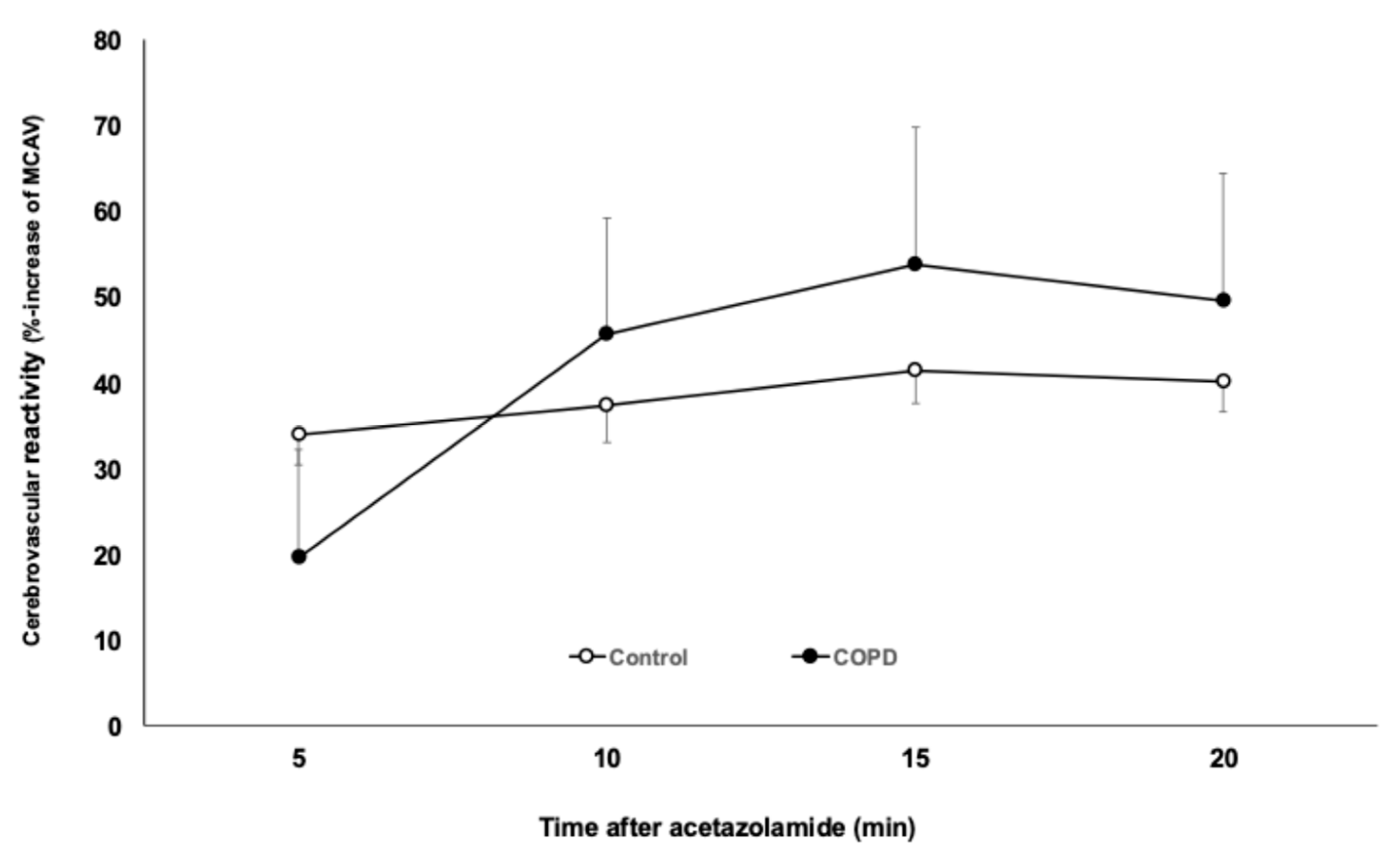
Figure 1. The percent increase in middle cerebral artery mean blood flow velocity (MCAV) in healthy control subjects and in COPD patients after administration of acetazolamide. Means ± standard errors are shown.
Jcm 14 08535 g001
Figure 2. Cerebrovascular reserve capacity (= maximal percent change in the middle cerebral artery mean blood flow velocity) values in COPD patients and in healthy control subjects. Medians and 25–75% interquartile ranges are presented.
Jcm 14 08535 g002
Figure 3. The concept of cerebrovascular reactivity testing using transcranial Doppler sonography. TCD = transcranial Doppler; PCO2 = partial pressure of CO2; PO2 = partial pressure of O2; CVR = cerebrovascular resistance. The site of the TCCD measurements is the middle cerebral artery, but the vasodilatory/vasconstrictor stimulus exerts its action on the arterioles of the corresponding vascular bed. The figure summarizes the action of different vasoactive stimuli and the consequent changes in the transcranial Doppler parameters.
Jcm 14 08535 g003
Table 1. Clinical characteristics and lung function test results of COPD patients. Means ± standard deviations are presented.
ParameterValue
Female/Male8/9
Age (years)60.8 ± 4.9
BMI (kg/m2)21.9 ± 5.6
Mini Mental Score26.8 ± 3.1
FVC (L)2.45 ± 0.97
FVC%72.8 ± 19.1
FEV1 (L)1.35 ± 0.74
FEV1%48.2 ± 16.0
FEV1/FVC52.6 ± 10.1
FEF25-75 (L/s)0.85 ± 6.63
FEF 25-75%27.2 ± 16.8
Table 2. Blood gas analysis results of COPD patients at rest and after IV administration of 15 mg/kg BW acetazolamide (ACZ). Means and standard deviations are presented.
Rest5 min After ACZ10 min After ACZ15 min After ACZ20 min After ACZ
pH7.43 ± 0.047.41 ± 0.047.41 ± 0.047.41 ± 0.047.41 ± 0.05
PaCO2 (mmHg)42.5 ± 6.845.5 ± 7.645.2 ± 7.645.6 ± 7.645.0 ± 8.1
PaO2 (mmHg)74.7 ± 16.981.5 ± 18.787.5 ± 22.487.6 ± 20.687.3 ± 20.0
HCO3 (mmol/L)27.6 ± 2.627.6 ± 2.427.5 ± 2.427.6 ± 2.527.4 ± 2.4
Table 3. Cerebral blood flow velocities and pulsatility indices at rest and after administration of acetazolamide. Means and standard deviations and medians, and interquartile ranges are shown, as appropriate.
Control
(n = 20)
COPD
(n = 17)
p-Value
Rest
Systolic 85.9 ± 13.872.0 ± 24.8p = 0.04
Diastolic45.6 ± 8.828.5 ± 9.7p ≤ 0.001
Mean58.2 ± 12.044.2 ± 16.0p < 0.01
PI0.86
(0.64–1.0)
0.99
(0.9–1.0)
p < 0.05
5 min after acetazolamide
Systolic 116.0
(98–126)
84.8
(64–109)
p < 0.01
Diastolic61.9 ± 12.737.2 ± 15p ≤ 0.001
Mean77.8 ± 17.155.3 ± 22.8p < 0.01
PI0.8 ± 0.160.89 ± 0.13p = 0.07
10 min after acetazolamide
Systolic 119
(108–135)
89
(63–115)
p < 0.05
Diastolic65
(52–77)
41
(29–52)
p < 0.01
Mean79
(67–93)
57.3
(41.6–75.8)
p < 0.05
PI0.71 ± 0.160.83 ± 0.17p < 0.05
15 min after acetazolamide
Systolic 126
(113–137)
91.1
(66.1–126.9)
p < 0.01
Diastolic66
(57–70)
38.5
(28.1–53.5)
p < 0.01
Mean82
(71–91)
56.0
(42.5–81.8)
p = 0.01
PI0.76 ± 0.150.86 ± 0.12p = 0.03
20 min afer acetazolamide
Systolic 124
(116–132)
86.6
(68.1–118.2)
p < 0.01
Diastolic64.7 ± 14.664.7 ± 14.6p < 0.01
Mean82
(69–93)
55
(40.4–75.8)
p = 0.01
PI0.742 ± 0.1410.85 ± 0.14p < 0.05
Resting cerebral blood flow velocities in COPD patients did not show any statistically significant relationship with PaCO2 (Spearman coefficient: 0.26; p = 0.3) PaO2 (Spearman coefficient: 0.35; p = 0.16) and with PaO2/CO2 ratio (Spearman: 0.17; p = 0.51), indicating that actual blood gas parameters do not have a determining influence of cerebral blood flow velocities.
Disclaimer/Publisher’s Note: The statements, opinions and data contained in all publications are solely those of the individual author(s) and contributor(s) and not of MDPI and/or the editor(s). MDPI and/or the editor(s) disclaim responsibility for any injury to people or property resulting from any ideas, methods, instructions or products referred to in the content.