1. Introduction
Chronic pain (CP) is defined as any pain that persists for more than three months [
1,
2]. It has a prevalence of 20% across the globe and an estimated direct and indirect cost of USD 560–650 billion per year only in the US [
3]. Generally, the cost per person per year ranges between USD 6400 to USD 9231 [
4,
5,
6]. Such elevated costs not only emanate from its palliative treatment but also from its frequent comorbidities: anxiety, depression, sleeping disorders, etc. [
7].
CP is a condition that goes beyond the endogenous physiological restoration of the body, and is the result of the interaction of three independent anatomical pathways: the lateral or painful pathway, the medial or suffering pathway and the inhibitory or pain suppression pathway [
1,
8]. Suffering is a common feature among the frequent cognitive CP comorbidities and, if sustained over time, it might lead to increased stress and allostatic load [
9,
10].
Stress is a physiological state in response to an internal or external threat that is both a cause and consequence of a variety of psychiatric conditions [
11,
12]. Its main hub is the Locus Coeruleus (LC), a small cluster of neurons and glial cells located in the posterior aspect of the pons that is the sole source of norepinephrine for the cerebral cortex [
13,
14] The LC is a neuro-modulatory system in which a small group of neurons regulate arousal, attention, pain modulation, sensorimotor plasticity, breath control and many other functions [
14,
15,
16,
17,
18,
19].
The mere existence of a hub with such a wide scope of action opens the possibility of designing novel treatments for managing CP and its different comorbidities. Previous research has proved that LC is sensitive to CO
2 changes and that it has strong neuroanatomical connections with breathing pattern generators [
15,
20,
21]. Hence, breath control might be proposed as a potential CP modulator via LC activity.
Breathing techniques have been used for millennia in social and religious contexts, and they have proven benefits for anxiety, depression, memory consolidation and blood pressure, among others [
22,
23]. To date, the most studied breathing techniques have been diaphragmatic or abdominal breathing and resonance breathing. However, little is known about breathing techniques and their potential implications across different body systems (musculoskeletal, neurological, respiratory, etc.). In that direction, long exhalations (LEx) have been proven to stimulate parasympathetic activation and are a simple and reproducible method of lengthening the diaphragm and creating a reflex activation of the abdominal muscles [
24,
25,
26]. Hence, LEx are positioned as a promising clinical tool for modulating stress-related changes in CP.
In this pilot study, we explore the feasibility of a breathing protocol based on LEx as a complementary treatment for patients with CP. If the feasibility outcomes are achieved, future research should investigate the long-term effects of this breathing programme in larger populations with a control group.
2. Methods
2.1. Participants
Eighteen CP subjects took part in this pilot study (mean age 46.44 ± 12.14 years; nine males, nine females) between September and December 2022. The inclusion criteria included (i) having suffered pain in that area for at least 3 months, (ii) not having previous experience with breathing techniques and (iii) not having an existing assessment at the clinic for their current condition. The 18 CP subjects were classified as chronic secondary musculoskeletal pain (n = 12), and chronic post-traumatic pain (n = 6) based on the International Association for the Study of Pain diagnostic guidelines [
2].
Table 1 also includes details of the suspected pain mechanisms based on clinical assessment. The Ethics Committee of Trinity College Dublin approved to retrospectively analyse the data (TCD20-11). All patients signed an informed consent as part of their consent to receive treatment at the clinic.
2.2. Protocol Before Each Session
Participants were retrospectively selected from the caseload of a private physiotherapy clinic, where they were presented with an initial form to be completed prior to entering the treating room. The form included a Numeric Pain Rating Scale (NPRS), a 13-item Pain Catastrophizing Scale (PCS) and a timed maximum exhalation (in seconds) after an inspiration of 4 s [
27]. This protocol was applied during the month of January 2024 as part of an improvement of clinical practices in the service.
The NPRS contained 11 scale ranges from 0 to 10 (0—no pain and 10—worst pain possible). Participants were instructed to mark the number that better represented their pain on the day of the assessment. This scale has been validated for assessing pain experience and intensity [
28]. It has a high intraclass correlation (r = 0.95) and shows consistency with other subjective pain scales such as the Visual Analogic Scale [
29]. NPRS has shown higher reliability for rheumatic and CP patients than other subjective scales [
30].
The 13-item PCS measures the context of the painful experience and contains three subcomponents: Helplessness, Rumination and Magnification [
27]. It has shown an excellent internal consistency for the total score (α = 0.87–0.93) and adequate to excellent for its subcomponents: Rumination (α = 0.85–0.91), Magnification (α = 0.66–0.75) and Helplessness (α = 0.78–0.87) [
27,
31].
The selected participants completed the second form on their follow-up appointment. That second consultation was always booked with the same therapist and within a fortnight of the first one.
2.3. Session
The clinical assessment and treatment were prescribed by a physiotherapist with 10 years of experience following the recommended protocols for each specific case. These treatments always included pain education, specific exercise prescriptions and hands-on techniques if required. Complementarily, each patient was asked to perform a long exhalation and received feedback and education about breath control, anxiety and its role in facilitating pain and suffering. They were also trained to control their exhalations and instructed to aim to improve the duration of their exhalation beyond 15 s. The participants received a complete exercise plan through Physiapp® (accessed in 2022) with a specific exercise named “Long exhalations” that reminded them to perform LEx daily. There was no specific prescription for the frequency or how long to practice their breath training.
On the second appointment, the therapist measured a second exhalation and, in case of lack of progress, the participants were encouraged to share impressions about the breathing techniques and ask questions about them. Subjects that were improving were motivated to continue with the same frequency and dynamic of breath training.
2.4. Objectives
2.4.1. The Scientific Objective of This Study Is
Assess the feasibility and potential effectiveness of breathing exercises focused on LEx in reducing suffering and pain perception among the CP population.
We hypothesise that suffering (PCS) and subjective pain perception (NPRS) can be reduced through breath training focused on LEx.
2.4.2. The Feasibility Objectives of This Study Are
Determine whether the selected outcome measures (PCS, NPRS and exhalation times) are appropriate for detecting breathing-related changes over the course of the study.
Evaluate the viability of using the selected outcome measures to track objective measurements of pain perception and breathing over time.
2.5. Outcomes
The primary outcome of the study is to observe improvements beyond the Minimal Clinically Important Difference (MCID) on the NPRS before and after intervention.
The Secondary Outcomes of the Study Are
Evaluate the impact of LEx on patients’ cognitive and emotional responses to pain, as measured by changes in PCS scores.
Track the improvement in patients’ ability to perform LEx, indicating adherence to and effectiveness of the breathing technique training.
2.6. Feasibility Criteria
The feasibility criteria are based on the MCID, that are a 2-point reduction for the NPRS and an overall score reduction of 33% for PCS. In the case of the duration of the exhalations, the feasibility criteria are an increase in the duration of the exhalation in seconds.
2.7. Data Analysis
Once the data were collected, it was processed with SPSS Statistics (v29.0). A repeated measures ANOVA was conducted with pre- and post-session assessment for the NPRS, the subscale of the PCS and the total score as a within-subjects variable. Furthermore, a Pearson Correlation was applied to examine the correlation between the breath (difference between session 1 and session 2) and the pain (difference between session 1 and session 2) scores.
3. Results
This pilot study analysed the effects of breath training on exhalation rates and self-reported pain scores (NPRS and PCS) in a CP sample.
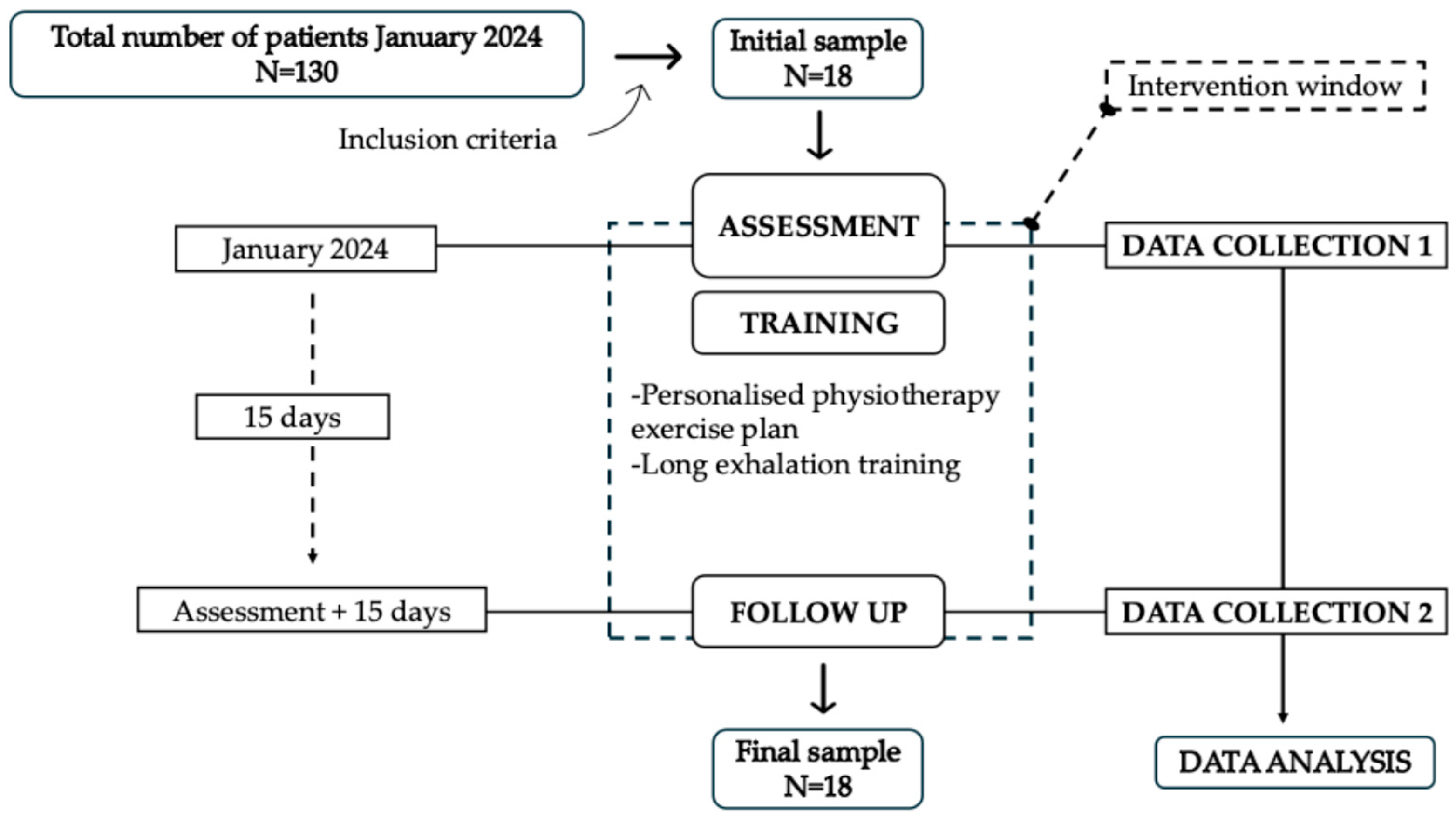
Figure 1 depicts the participants’ flow through the time window utilised in this study. Each of the eighteen participants completed two clinical assessments and 15 days of long exhalation training in addition to an individualised exercise plan. A total of 18 participants completed the breath training and the pre- and post-intervention assessments. All participants indicated that the breathing control exercise was feasible.
Pre- and Post-Intervention Values
Post-intervention, there was a significant increase in the mean value of exhalation times by 4.78 s (SD = 3.19), equivalent to a 64% increase (see
Table 2). In addition, pain scores were significantly reduced by 2.55 units (SD = 2.2) for the NPRS, and 11.34 units (SD = 16.05) for the PCS—equivalent to 47% and 33%, respectively. Furthermore, the three different subcomponents of the PCS showed a significant decrease after intervention (Rumination 4.44 units (SD = 3.39), Magnification 2.83 units (SD = 3.34) and Helplessness 3.22 (SD = 4.68)). See
Table 2.
To further investigate the association between the breathing intervention and subjective pain scores, Pearson Correlations were calculated. The results showed a significant correlation between breath and NPRS, indicating that an increase in the length of exhalation times is associated with lower NPRS scores. No significant correlation was obtained between breath and the subscales or the total score of the PCS, or between the PRNS and PCS. However, a significant correlation was obtained between the subscales of the PCS and the total score of the PCS. See
Table 3.
4. Discussion
This pilot study has evaluated the feasibility and efficacy of daily slow breath training focused on LEx on the perception of pain among eighteen CP patients. In contrast with previous research, this pilot has not attempted to assess an immediate reaction to a specific breathing technique. Instead, it has analysed the consequences of steady and progressive adaptations to LEx. We observed a significant decrease in both NPRS and PCS, accompanied by an increase in exhalation times. These results point towards a potential effect of this type of breath training in modulating CP perception. In this section, we will explain the reasons behind the selection of this breathing technique. Subsequently, we will explore the possible explanations for the observed changes alongside potential downstream biomechanical, cardiorespiratory, and neurological changes that could arise in CP patients from this intervention. This section will then conclude with limitations and changes to consider for future implementations of the suggested protocol.
4.1. Interpretation of Findings
The eighteen participants of this study showed a short-term decrease in their NPRS and PCS scores while increasing exhalation times. The average reduction for the NPRS is greater than 1.65 MCID for general pain and 2.00 points or 33% for CP [
28,
32]. However, it is important to note that the NPRS are often self-reported as non-clinically meaningful for CP patients [
33,
34,
35] (
Table 2).
There were significant differences in the subsections of the PCS (Rumination, Magnification, Helplessness), and the overall score reduction of 33% is under the MCID (38–44%) [
36]. However, if we look at the total score of the scale, the number of patients with a total score higher than 30 (MCID for catastrophizing) decreases from 10 to 4 (60% reduction). This might suggest a powerful effect of this protocol among the pain-catastrophising population. The catastrophising reduction effect is quantitatively similar to previous research but much quicker and more efficient than other interventions [
27,
37,
38]. No statistical correlation was found between breath exhalation rates and PCS.
Additionally, we observed a significant positive correlation between the increase in breathing times and the reduction in NPRS scores, but not with PCS or its subcomponents. This, together with the overall PCS reduction of 33%, points towards a direct effect of breathing on subjective pain perception and a more intricate effect on suffering. Interestingly, similar modest effects in the reduction in PCS have been observed with physical, psychological and pharmacological therapies [
39]. A bigger sample size, the addition of subsequent follow-ups and the refinement of the breathing time measurement tool might offer answers to the different effects observed in this pilot.
4.2. CP Is Not Acute Pain
Previous research has explored the effects of breathing techniques on immediate changes in acute pain perception. Different conclusions have arisen, but there is a general lack of consensus about the interpretation of the obtained results and their explanation [
40]. The definition of CP as pain that persists for more than 3 months is explained by the time it takes for the complex variety of neuroplastic changes to spread through the peripheral and central nervous systems. These adaptations affect both nociceptive and perceptive pathways and are frequently interlinked with previous experiences and traumas [
41].
Neurophysiologically, exposure to acute pain is likely to generate stress-like autonomic responses (blood pressure, heartbeat, breath frequency, catabolic metabolism, etc.) to cope with the triggers of the nociceptive input [
42,
43]. However, if perpetuated in time, the constant exposure to nociceptive inputs will expose the autonomic nervous system to an increased necessity to adapt, which can also be termed as allostatic load [
9,
44]. In brief, CP is distinct from acute pain in that CP patients bear an increased allostatic load that represents an unsuccessful attempt of the system to adapt to a persistent nociceptive threat.
4.3. Clinical Implications
This pilot study presents an innovative and holistic approach for the management of pain perception in CP populations. The short-term improvements observed in NPRS and PCS scores, in addition to the increase in exhalation times, suggest a potential effect of this type of breath training on CP perception.
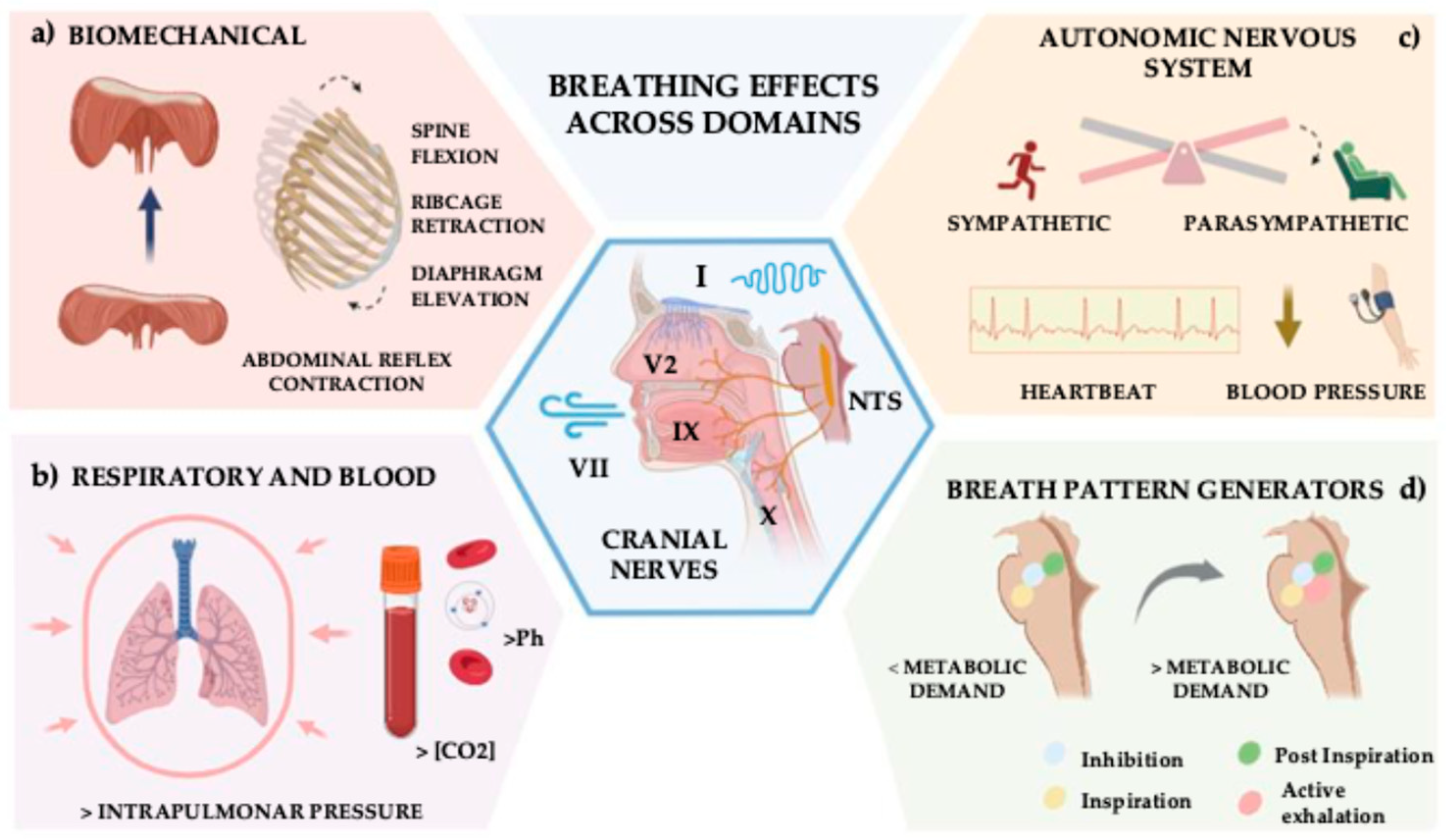
The ability to perform longer exhalations implies a volitional modification of the breathing pattern that combines (i) the controlled lengthening of the inspiratory musculature (mainly external intercostals, diaphragm and scalenus muscles), (ii) the volitional activation of the exhalation muscles (mainly abdominals and internal intercostals), (iii) the control of the flux of air through the upper respiratory tract (larynx, pharynx, mouth and nasal cavity), and (iv) the maximum relaxation of pleural and pulmonary stretch receptors [
45,
46]. All these different biomechanical and physiological changes are equivalent to the direct neurological activation of five different cranial nerves (I, V, VII, IX and X) and the somatosensory cortical areas where the trunk, mouth and pharynx are represented [
47],
Figure 2.
Interestingly, when all these neurological inputs reach the brain, they can modulate specific brain networks such as the salience network, whose main hub is the anterior insula and the anterior cingulate cortex [
48,
49]. The insula is a well-known centre for the integration of interoceptive signals (nociceptive and non-nociceptive) with inputs from the environment [
50,
51,
52].
Additionally, the pattern of respiration implemented in this pilot has a frequency within the range of infra-slow neural oscillations (ISO) (0.01–0.1 Hz or less than 6 breaths per minute). These very slow oscillations are more prominent during sleeping and resting states and have been correlated with arousal states [
53,
54]. The powerful effects of these ISO might be related to their ability to influence different cognitive functions by modulating the higher-frequency neural oscillations (alpha, beta, gamma, theta, delta) that are nested in them [
55].
On this basis, a potential explanation for the observed pain modulatory effects could be the interaction of multidomain inputs within the central nervous system. However, this is an area that requires more attention and coordination between multiple disciplines, including neuroscience, psychology, physiotherapy and even sports science.
5. Limitations and Insights for Future Research
For interpreting these findings, readers and future researchers should consider certain limitations. Firstly, the reduced sample size, the 2-week follow-up, the lack of a control group and the non-blinded design of this pilot reduce the applicability of the findings and greatly increase the risk of bias. Secondly, when measuring the LEx, we identified the necessity of (i) using a spirometer to measure the exhalation times with an appropriate level of accuracy and (ii) standardising a protocol for each participant that includes a specific number of respirations, position and education according to the existing health literacy. Thirdly, another source of confounding factors might be the type of physiotherapeutic treatment applied alongside the breath training, and the fact that the data were collected from a private physiotherapy company where patients pay a fee per session. Finally, given the small sample size and the nature of the clinical environment where the data were collected, there are specific subtypes of CP that were not covered in this pilot (cancer, visceral, neuropathic, etc.).
6. Conclusions
In this retrospective observational pilot, we observed that a 2-week breath training protocol focused on Lex, in addition to the usual physiotherapy care, has produced an increase in exhalation times and a decrease in both NPRS and PCS. Breath training focused on Lex seems to have a direct effect on NPRS reduction and an indirect effect on PCS scores. This suggests that incorporating breathing techniques focused on LEx into usual physiotherapy care for CP patients may favourably modulate pain experience and overall suffering. Future research should delve into this cost-effective multidomain type of breathing as a potential tool to further improve pain management strategies for CP populations.
Author Contributions
Conceptualisation, J.C.-E. and S.V.; methodology, J.C.-E. and S.V.; software, S.V.; validation, S.V., formal analysis, S.V.; investigation, J.C.-E.; resources, J.C.-E. and S.V.; data curation, J.C.-E. and S.V.; writing—original draft preparation, J.C.-E.; writing—review and editing, J.C.-E. and S.V.; visualisation, J.C.-E.; supervision, S.V.; project administration, S.V.; funding acquisition, J.C.-E. and S.V. All authors have read and agreed to the published version of the manuscript.
Funding
This research did not receive any public or institutional funding and was supported solely through private resources.
Institutional Review Board Statement
The study was conducted in accordance with the Declaration of Helsinki and approved by the Ethics Committee of Trinity College Dublin (TCD20-11) with approval Date: (21 February 2023).
Informed Consent Statement
Informed consent was obtained from all patients as part of the routine treatment process in the clinic, which included consent for the use of anonymised data for research purposes.
Data Availability Statement
Due to privacy and ethical restrictions, the data are not publicly available but may be obtained from the corresponding author upon reasonable request and with permission of the Ethics Committee of Trinity College Dublin.
Acknowledgments
The authors would like to thank Elva Aurlchelvan for her assistance with English language editing and further review of the manuscript.
Conflicts of Interest
The authors of this study declare no conflicts of interest in the development of this investigation. All the subjects of this study paid the same “Physiotherapy session fee” upon completion of the session. There were no relevant social or familial connections between the main researcher and the participants of the study.
References
- Treede, R.-D.; Rief, W.; Barke, A.; Aziz, Q.; Bennett, M.I.; Benoliel, R.; Cohen, M.; Evers, S.; Finnerup, N.B.; First, M.B.; et al. Chronic pain as a symptom or a disease: The IASP Classification of Chronic Pain for the International Classification of Diseases (ICD-11). Pain 2019, 160, 19–27. [Google Scholar] [CrossRef]
- Treede, R.-D.; Rief, W.; Barke, A.; Aziz, Q.; Bennett, M.I.; Benoliel, R.; Cohen, M.; Evers, S.; Finnerup, N.B.; First, M.B.; et al. A classification of chronic pain for ICD-11. Pain 2015, 156, 1003–1007. [Google Scholar] [CrossRef]
- Institute of Medicine (US) Committee on Advancing Pain Research, Care, and Education. Relieving Pain in America: A Blueprint for Transforming Prevention, Care, Education, and Research; The National Academies Press: Washington, DC, USA, 2011. [Google Scholar] [CrossRef]
- Fatoye, F.; Gebrye, T.; Ryan, C.G.; Useh, U.; Mbada, C. Global and regional estimates of clinical and economic burden of low back pain in high-income countries: A systematic review and meta-analysis. Front. Public Health 2023, 11, 1098100. [Google Scholar] [CrossRef]
- Nielsen, C.S. Assessing the societal cost of chronic pain. Scand. J. Pain 2022, 22, 684–685. [Google Scholar] [CrossRef] [PubMed]
- Raftery, M.N.; Ryan, P.; Normand, C.; Murphy, A.W.; de la Harpe, D.; McGuire, B.E. The Economic Cost of Chronic Noncancer Pain in Ireland: Results From the PRIME Study, Part 2. J. Pain. 2012, 13, 139–145. [Google Scholar] [CrossRef] [PubMed]
- Dahan, A.; van Velzen, M.; Niesters, M. Comorbidities and the Complexities of Chronic Pain. Anesthesiology 2014, 121, 675–677. [Google Scholar] [CrossRef] [PubMed]
- De Ridder, D.; Adhia, D.; Vanneste, S. The anatomy of pain and suffering in the brain and its clinical implications. Neurosci. Biobehav. Rev. 2021, 130, 125–146. [Google Scholar] [CrossRef]
- Guidi, J.; Lucente, M.; Sonino, N.; Fava, G.A. Allostatic Load and Its Impact on Health: A Systematic Review. Psychother. Psychosom. 2020, 90, 11–27. [Google Scholar] [CrossRef]
- McEwen, B.S. Stress, Adaptation, and Disease: Allostasis and Allostatic Load. Ann. N. Y. Acad. Sci. 1998, 840, 33–44. [Google Scholar] [CrossRef]
- Abdallah, C.G.; Geha, P. Chronic Pain and Chronic Stress: Two Sides of the Same Coin? Chronic Stress. 2017, 1, 2470547017704763. [Google Scholar] [CrossRef]
- Davis, M.T.; Holmes, S.E.; Pietrzak, R.H.; Esterlis, I. Neurobiology of Chronic Stress-Related Psychiatric Disorders: Evidence from Molecular Imaging Studies. Chronic Stress. 2017, 1, 2470547017710916. [Google Scholar] [CrossRef] [PubMed]
- Borodovitsyna, O.; Flamini, M.D.; Chandler, D.J. Acute Stress Persistently Alters Locus Coeruleus Function and Anxiety-like Behavior in Adolescent Rats. Neuroscience 2018, 373, 7–19. [Google Scholar] [CrossRef] [PubMed]
- Suárez-Pereira, I.; Llorca-Torralba, M.; Bravo, L.; Camarena-Delgado, C.; Soriano-Mas, C.; Berrocoso, E. The Role of the Locus Coeruleus in Pain and Associated Stress-Related Disorders. Biol. Psychiatry 2022, 91, 786–797. [Google Scholar] [CrossRef]
- De Carvalho, D.; Patrone, L.G.A.; Taxini, C.L.; Biancardi, V.; Vicente, M.C.; Gargaglioni, L.H. Neurochemical and electrical modulation of the locus coeruleus: Contribution to CO2 drive to breathe. Front. Physiol. 2014, 5, 288. [Google Scholar] [CrossRef]
- España, J.C.; Yasoda-Mohan, A.; Vanneste, S. The Locus Coeruleus in Chronic Pain. Int. J. Mol. Sci. 2024, 25, 8636. [Google Scholar] [CrossRef] [PubMed]
- Jordan, R.; Keller, G.B. The locus coeruleus broadcasts prediction errors across the cortex to promote sensorimotor plasticity. eLife 2023, 12, RP85111. [Google Scholar] [CrossRef]
- Melnychuk, M.C.; Robertson, I.H.; Plini, E.R.G.; Dockree, P.M. A Bridge between the Breath and the Brain: Synchronization of Respiration, a Pupillometric Marker of the Locus Coeruleus, and an EEG Marker of Attentional Control State. Brain Sci. 2021, 11, 1324. [Google Scholar] [CrossRef]
- Yackle, K.; Schwarz, L.A.; Kam, K.; Sorokin, J.M.; Huguenard, J.R.; Feldman, J.L.; Luo, L.; Krasnow, M.A. Breathing control centre neurons that promote arousal in mice. Science 2017, 355, 1411–1415. [Google Scholar] [CrossRef]
- Brændholt, M.; Kluger, D.S.; Varga, S.; Heck, D.H.; Gross, J.; Allen, M.G. Breathing in waves: Understanding respiratory-brain coupling as a gradient of predictive oscillations. Neurosci. Biobehav. Rev. 2023, 152, 105262. [Google Scholar] [CrossRef]
- Pineda, J.; Aghajanian, G.K. Carbon dioxide regulates the tonic activity of locus coeruleus neurons by modulating a proton- and polyamine-sensitive inward rectifier potassium current. Neuroscience 1997, 77, 723–743. [Google Scholar] [CrossRef]
- Anderson, D.E.; McNeely, J.D.; Windham, B.G. Regular Slow-Breathing Exercise Effects on Blood Pressure and Breathing Patterns at Rest. J. Hum. Hypertens. 2010, 24, 807–813. [Google Scholar] [CrossRef] [PubMed]
- Hamasaki, H. Effects of Diaphragmatic Breathing on Health: A Narrative Review. Medicines 2020, 7, 65. [Google Scholar] [CrossRef]
- Birdee, G.S.; Ayala, S.; Kashem, M.A.; Gardiner, P. Breathing Practices for Health: A Scoping Review of Controlled Trials. Complement. Ther. Med. 2023, 76, 102970. [Google Scholar] [CrossRef]
- Kang, D.-H.; Jo, H.J.; Jung, W.H.; Kim, S.H.; Jung, Y.-H.; Choi, C.-H.; Lee, U.S.; An, S.C.; Jang, J.H.; Kwon, J.S. The Effect of Meditation on Brain Structure: Cortical Thickness Mapping and Diffusion Tensor Imaging. Soc. Cogn. Affect. Neurosci. 2016, 11, 331–338. [Google Scholar] [CrossRef]
- Komori, T. The Relaxation Effect of Prolonged Exhalation Breathing: Potential Neural Mechanisms and Clinical Applications. Front. Psychol. 2018, 9, 1146. [Google Scholar] [CrossRef]
- Sullivan, M.J.L.; Bishop, S.R.; Pivik, J. The Pain Catastrophizing Scale: Development and Validation. Psychol. Assess. 1995, 7, 524–532. [Google Scholar] [CrossRef]
- Salaffi, F.; Stancati, A.; Silvestri, C.A.; Ciapetti, A.; Grassi, W. Minimal Clinically Important Changes in Chronic Musculoskeletal Pain Intensity Measured on a Numerical Rating Scale. Eur. J. Pain. 2004, 8, 283–291. [Google Scholar] [CrossRef]
- Alghadir, A.; Anwer, S.; Iqbal, A.; Iqbal, Z. Test–Retest Reliability, Validity, and Minimum Detectable Change of Visual Analog, Numerical Rating, and Verbal Rating Scales for Osteoarthritic Knee Pain. J. Pain. Res. 2018, 11, 851–856. [Google Scholar] [CrossRef] [PubMed]
- Ferraz, M.; Quaresma, M.; Aquino, L.; Atra, E.; Tugwell, P.; Goldsmith, C. Reliability of Pain Scales in the Assessment of Literate and Illiterate Patients with Rheumatoid Arthritis. J. Rheumatol. 1990, 17, 1022–1024. [Google Scholar]
- Osman, A.; Barrios, F.X.; Kopper, B.A.; Hauptmann, W.; Jones, J.; O’Neill, E. Factor Structure, Reliability, and Validity of the Pain Catastrophizing Scale. J. Behav. Med. 1997, 20, 589–605. [Google Scholar] [CrossRef] [PubMed]
- Sloman, R.; Wruble, A.W.; Rosen, G.; Rom, M. Determination of Clinically Meaningful Levels of Pain Reduction in Patients Experiencing Acute Postoperative Pain. Pain. Manag. Nurs. 2006, 7, 153–158. [Google Scholar] [CrossRef]
- Olsen, M.F.; Bjerre, E.; Hansen, M.D.; Hilden, J.; Landler, N.E.; Tendal, B.; Hróbjartsson, A. Pain Relief That Matters to Patients: Systematic Review of Empirical Studies Assessing the Minimum Clinically Important Difference in Acute Pain. BMC Med. 2017, 15, 35. [Google Scholar] [CrossRef]
- Reed, M.D.; Van Nostran, W. Assessing Pain Intensity with the Visual Analog Scale: A Plea for Uniformity. J. Clin. Pharmacol. 2014, 54, 241–244. [Google Scholar] [CrossRef]
- Robinson-Papp, J.; George, M.C.; Dorfman, D.; Simpson, D.M. Barriers to Chronic Pain Measurement: A Qualitative Study of Patient Perspectives. Pain. Med. 2015, 16, 1256–1264. [Google Scholar] [CrossRef]
- Scott, W.; Wideman, T.H.; Sullivan, M.J.L. Clinically Meaningful Scores on Pain Catastrophizing Before and After Multidisciplinary Rehabilitation: A Prospective Study of Individuals with Subacute Pain after Whiplash Injury. Clin. J. Pain. 2014, 30, 183–190. [Google Scholar] [CrossRef]
- Adams, H.; Ellis, T.; Stanish, W.D.; Sullivan, M.J.L. Psychosocial Factors Related to Return to Work Following Rehabilitation of Whiplash Injuries. J. Occup. Rehabil. 2007, 17, 305–315. [Google Scholar] [CrossRef] [PubMed]
- Leung, L. Pain Catastrophizing: An Updated Review. Indian J. Psychol. Med. 2012, 34, 204–217. [Google Scholar] [CrossRef]
- Schütze, R.; Rees, C.; Smith, A.; Slater, H.; Campbell, J.M.; O’Sullivan, P. How Can We Best Reduce Pain Catastrophizing in Adults with Chronic Noncancer Pain? A Systematic Review and Meta-Analysis. J. Pain. 2018, 19, 233–256. [Google Scholar] [CrossRef] [PubMed]
- Joseph, A.E.; Moman, R.N.; Barman, R.A.; Kleppel, D.J.; Eberhart, N.D.; Gerberi, D.J.; Murad, M.H.; Hooten, W.M. Effects of Slow Deep Breathing on Acute Clinical Pain in Adults: A Systematic Review and Meta-Analysis of Randomized Controlled Trials. J. Evid.-Based Integr. Med. 2022, 27, 2515690X221078006. [Google Scholar] [CrossRef] [PubMed]
- Tidmarsh, L.V.; Harrison, R.; Ravindran, D.; Matthews, S.L.; Finlay, K.A. The Influence of Adverse Childhood Experiences in Pain Management: Mechanisms, Processes, and Trauma-Informed Care. Front. Pain. Res. 2022, 3, 923866. [Google Scholar] [CrossRef]
- Korving, H.; Sterkenburg, P.S.; Barakova, E.I.; Feijs, L.M.G. Physiological Measures of Acute and Chronic Pain within Different Subject Groups: A Systematic Review. Pain. Res. Manag. 2020, 9249465. [Google Scholar] [CrossRef]
- Larkin, K.T.; Brown, L.A.; Tiani, A.G. Autonomic and Neuroendocrine Response to Stress. In Cardiovascular Implications of Stress and Depression; Chantler, P.D., Larkin, K.T., Eds.; Academic Press: London, UK, 2020; pp. 87–110. [Google Scholar] [CrossRef]
- Wallden, M.; Nijs, J. Before & Beyond the Pain—Allostatic Load, Central Sensitivity and Their Role in Health and Function. J. Bodyw. Mov. Ther. 2021, 27, 388–392. [Google Scholar] [CrossRef]
- Butler, J.E.; Hudson, A.L.; Gandevia, S.C. The Neural Control of Human Inspiratory Muscles. In The Central Nervous System Control of Respiration; Holstege, G., Beers, C.M., Subramanian, H.H., Eds.; Progress in Brain Research; Elsevier: Amsterdam, The Netherlands, 2014; Volume 209, pp. 295–308. [Google Scholar] [CrossRef]
- Gransee, H.M.; Mantilla, C.B.; Sieck, G.C. Respiratory Muscle Plasticity. Compr. Physiol. 2015, 5, 1441–1462. [Google Scholar] [CrossRef]
- Teismann, I.K.; Steinstraeter, O.; Warnecke, T.; Ringelstein, E.B.; Pantev, C.; Dziewas, R. Measurement of Pharyngeal Sensory Cortical Processing: Technique and Physiologic Implications. BMC Neurosci. 2009, 10, 76. [Google Scholar] [CrossRef] [PubMed]
- De Ridder, D.; Vanneste, S.; Smith, M.; Adhia, D. Pain and the Triple Network Model. Front. Neurol. 2022, 13, 757241. [Google Scholar] [CrossRef]
- Vazey, E.M.; Moorman, D.E.; Aston-Jones, G. Phasic Locus Coeruleus Activity Regulates Cortical Encoding of Salience Information. Proc. Natl. Acad. Sci. USA 2018, 115, E9439–E9448. [Google Scholar] [CrossRef]
- Geuter, S.; Boll, S.; Eippert, F.; Büchel, C. Functional Dissociation of Stimulus Intensity Encoding and Predictive Coding of Pain in the Insula. eLife 2017, 6, e24770. [Google Scholar] [CrossRef]
- Labrakakis, C. The Role of the Insular Cortex in Pain. Int. J. Mol. Sci. 2023, 24, 5736. [Google Scholar] [CrossRef]
- Menon, V.; Uddin, L.Q. Saliency, Switching, Attention and Control: A Network Model of Insula Function. Brain Struct. Funct. 2010, 214, 655–667. [Google Scholar] [CrossRef] [PubMed]
- Sihn, D.; Kim, S.P. Brain infraslow activity correlates with arousal levels. Front. Neurosci. 2022, 16, 765585. [Google Scholar] [CrossRef]
- Watson, B.O. Cognitive and physiologic impacts of the infraslow oscillation. Front. Syst. Neurosci. 2018, 12, 44. [Google Scholar] [CrossRef] [PubMed]
- Canolty, R.T.; Knight, R.T. The Functional Role of Cross-Frequency Coupling. Trends Cogn. Sci. 2010, 14, 506–515. [Google Scholar] [CrossRef] [PubMed]
| Disclaimer/Publisher’s Note: The statements, opinions and data contained in all publications are solely those of the individual author(s) and contributor(s) and not of MDPI and/or the editor(s). MDPI and/or the editor(s) disclaim responsibility for any injury to people or property resulting from any ideas, methods, instructions or products referred to in the content. |
© 2025 by the authors. Licensee MDPI, Basel, Switzerland. This article is an open access article distributed under the terms and conditions of the Creative Commons Attribution (CC BY) license (https://creativecommons.org/licenses/by/4.0/).