Review

Motor Function in the Setting of Nerve Allografts: Is This the Future of Facial Nerve Reconstruction?

Department of Plastic and Hand Surgery, Inselspital, University Hospital, University of Bern, 3012 Bern, Switzerland
*
Author to whom correspondence should be addressed.
J. Clin. Med. 2025, 14(15), 5510; https://doi.org/10.3390/jcm14155510
Submission received: 30 June 2025 / Revised: 22 July 2025 / Accepted: 31 July 2025 / Published: 5 August 2025

Abstract

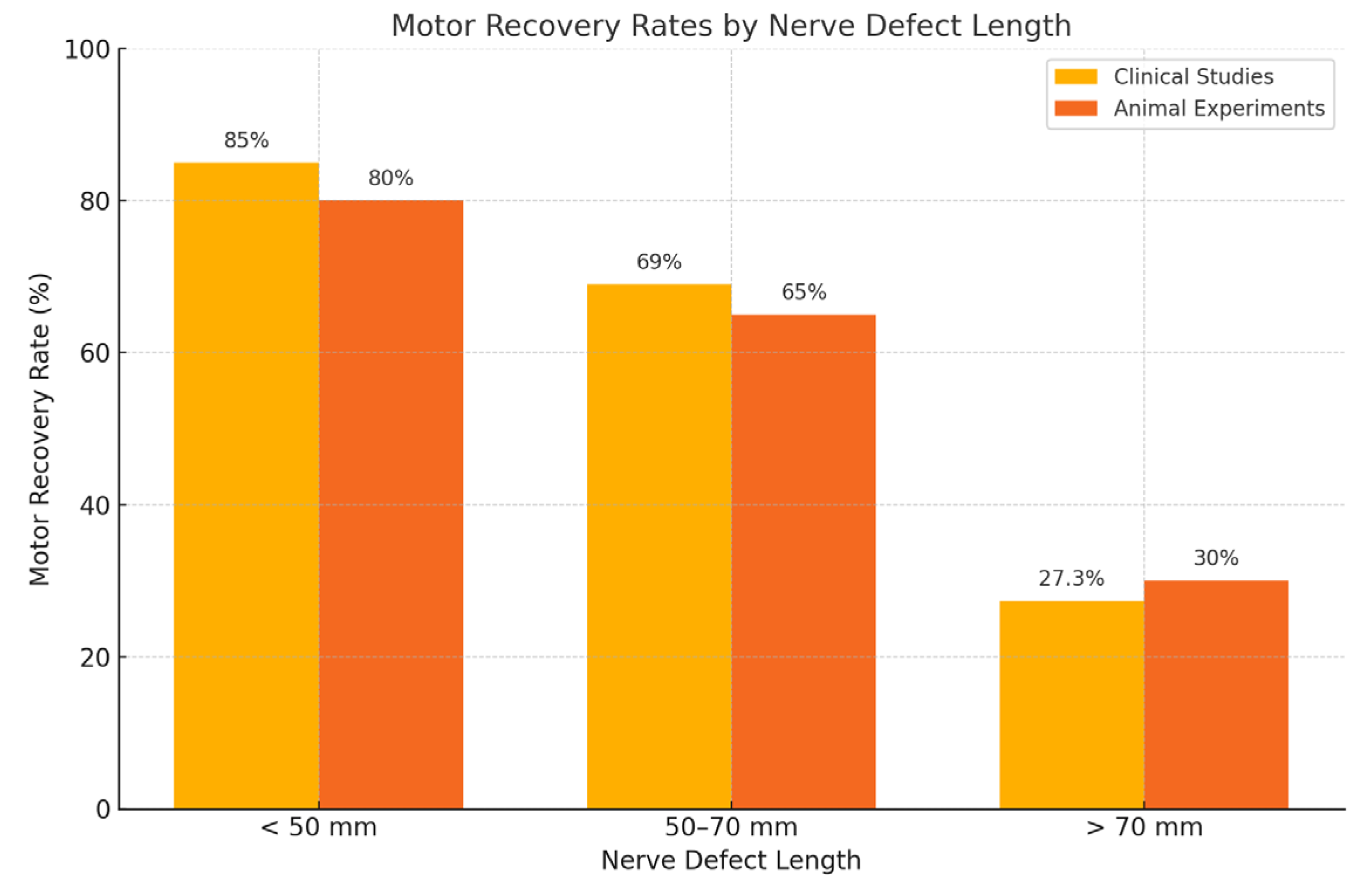
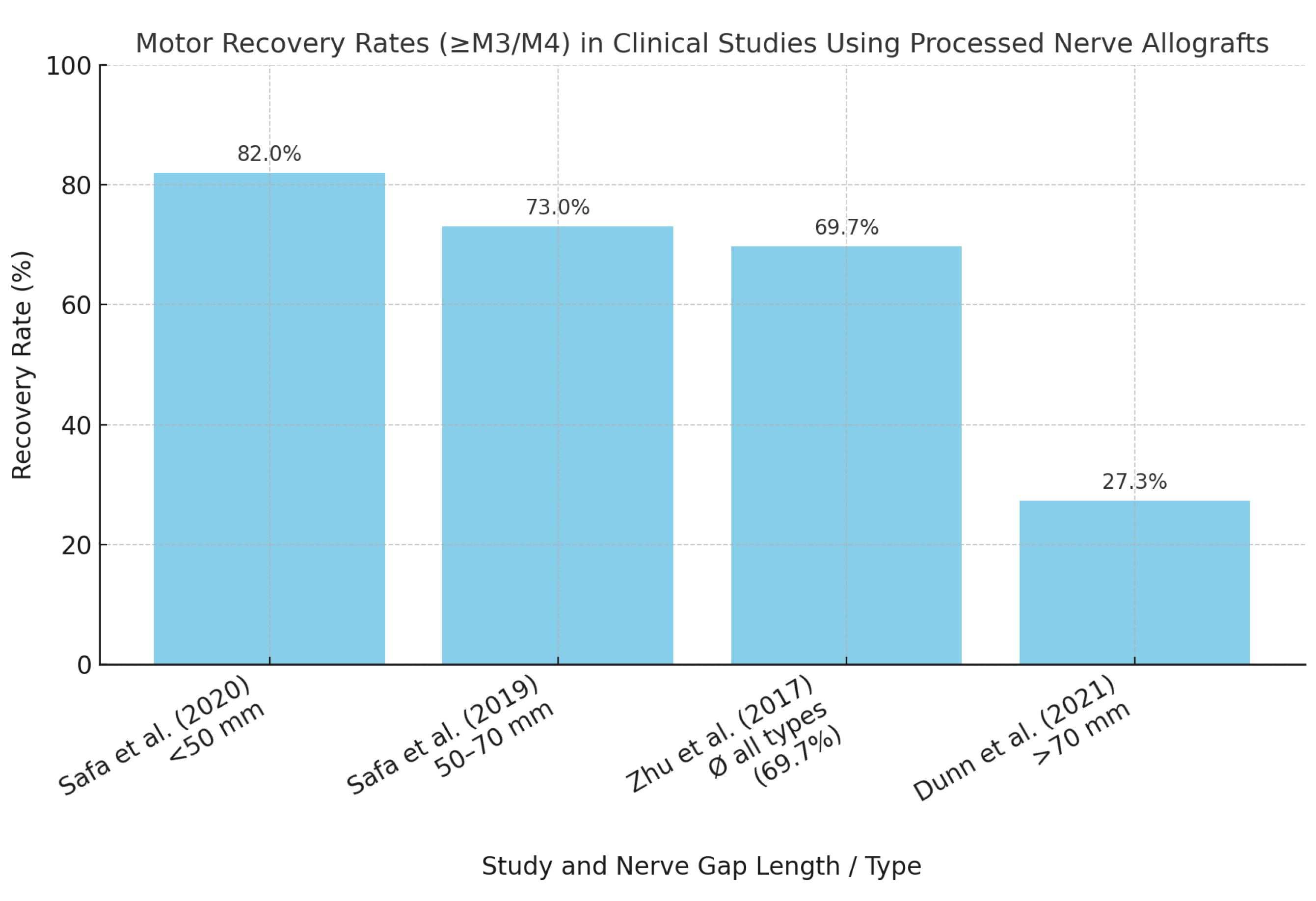
Background: Peripheral nerve injuries, especially involving the facial nerve, present unique reconstructive challenges due to their complex functional demands and limited regenerative potential. While autografts remain the gold standard, their drawbacks—such as donor-site morbidity and limited availability—have driven interest in processed nerve allografts. Acellular grafts, in particular, offer promising off-the-shelf alternatives without the need for immunosuppression. Methods: We conducted a narrative review of the literature (1990–2023), identifying 55 peer-reviewed studies via PubMed, Embase, and Cochrane Library. The studies included clinical and preclinical work on motor nerve regeneration using processed nerve allografts, with particular attention to outcomes in facial nerve repair. Two independent reviewers conducted abstract screening, full-text review, and data extraction. Results: Processed nerve allografts show encouraging motor recovery in gaps under 50 mm, with recovery rates of up to 85% reported. Outcomes decrease significantly in longer gaps (>50–60 mm) and in complex cases, including facial nerve repairs, where evidence remains sparse and largely extrapolated from broader motor nerve data. Registry data (e.g., RANGER) support their use but are limited by heterogeneity and lack of randomization. Conclusions: Processed nerve allografts represent a viable alternative to autografts in selected cases—especially short to mid-length motor nerve defects. However, their role in facial nerve reconstruction remains insufficiently studied. Further trials are needed to address specific anatomical and functional challenges in this subgroup and to clarify long-gap efficacy.
Keywords: facial nerve reconstruction; peripheral nerve reconstruction; autograft; processed nerve allograft; surgical outcomes; motor recovery facial nerve reconstruction; peripheral nerve reconstruction; autograft; processed nerve allograft; surgical outcomes; motor recovery