Article

Emergency Department Vital Sign Variability Is Associated with Hematoma Progression in Spontaneous Intracerebral Hemorrhage

1
School of Medicine, University of Maryland, Baltimore, MD 21201, USA
2
Research Associate Program in Emergency Medicine and Critical Care, Department of Emergency Medicine, University of Maryland School of Medicine, Baltimore, MD 21201, USA
3
Department of Radiology, University of Maryland School of Medicine, Baltimore, MD 21201, USA
4
Department of Neurosurgery, University of Maryland School of Medicine, Baltimore, MD 21201, USA
5
Department of Emergency Medicine, University of Maryland School of Medicine, Baltimore, MD 21201, USA
6
Department of Critical Care Medicine, Baptist Health System, Miami, FL 33176, USA
7
Program in Trauma, The R Adam Cowley Shock Trauma Center, University of Maryland School of Medicine, Baltimore, MD 21201, USA
8
Department of Emergency Medicine, Baylor Scott & White All Saints Medical Center, Fort Worth, TX 76104, USA
9
Department of Emergency Medicine, Burnett School of Medicine, Texas Christian University, Fort Worth, TX 76109, USA
*
Author to whom correspondence should be addressed.
J. Clin. Med. 2025, 14(13), 4404; https://doi.org/10.3390/jcm14134404

Submission received: 14 May 2025 / Revised: 9 June 2025 / Accepted: 16 June 2025 / Published: 20 June 2025
(This article belongs to the Special Issue Clinical Advances in Critical Care Medicine)

Abstract

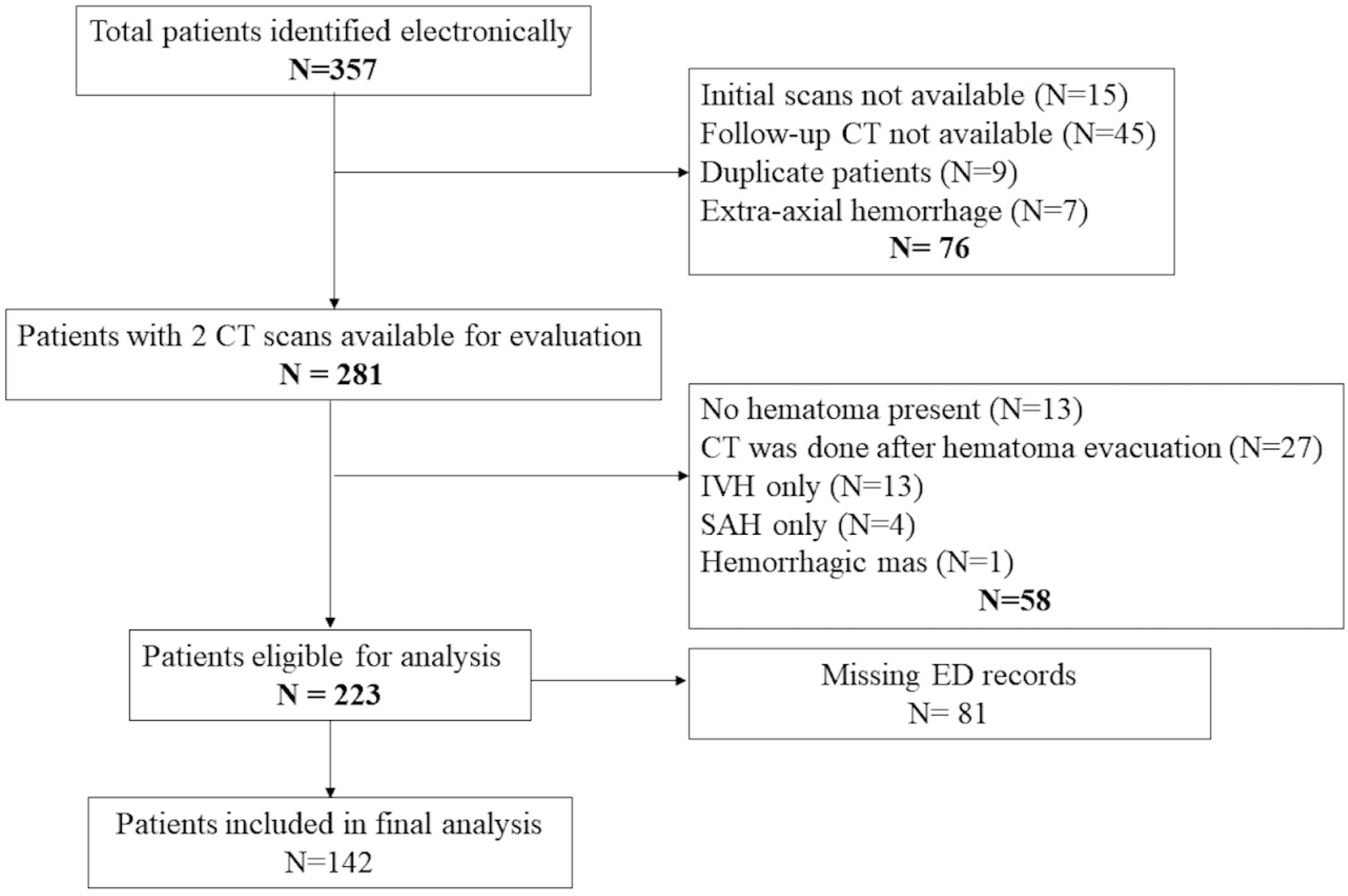
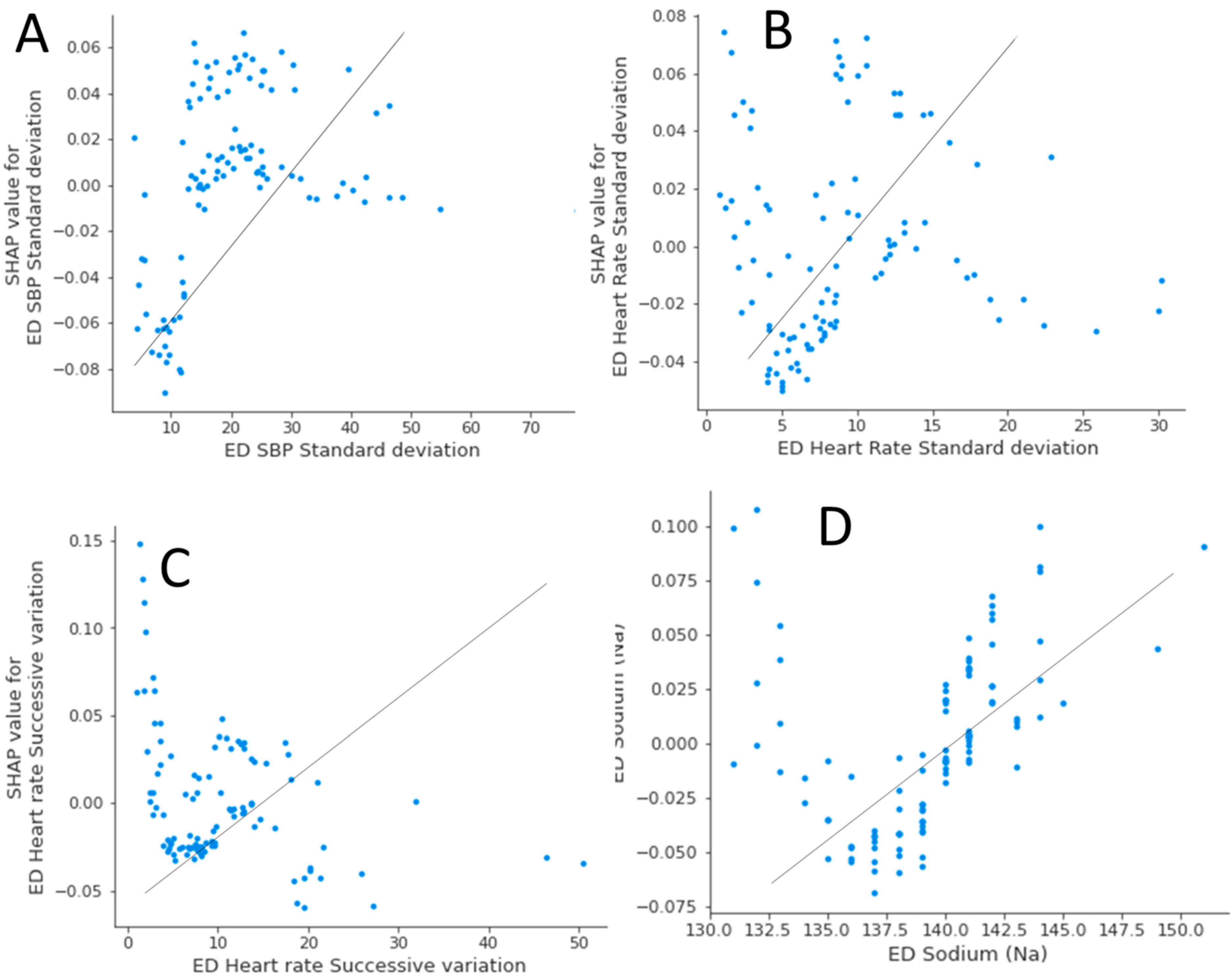
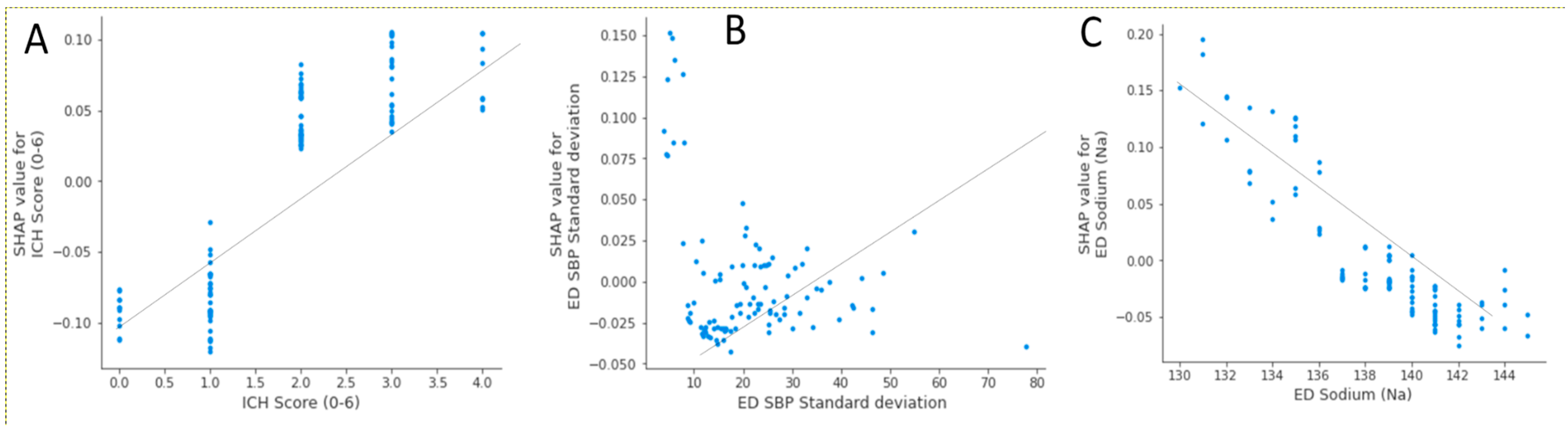
Background/Objectives: Spontaneous intraparenchymal hemorrhage (sIPH) accounts for a significant proportion of strokes and is associated with an estimated 30-day mortality between 35 and 52%. Subsequent hematoma progression (HP) occurs in up to 30% of patients and is associated with blood pressure variability, increasing poor outcomes. This study evaluates systolic blood pressure and heart rate variability in the emergency department (ED) and HP in the first 24 h of admission. Methods: This retrospective study analyzed patients with sIPH presenting to the ED and transferred to a resuscitation unit between 2017 and 2020. Outcomes included the occurrence of HP. Variables included blood pressure variability as measured by the standard deviation in systolic blood pressure (SBP-SD), successive variation of systolic blood pressure (SBP-SV), standard deviation of heart rate (HR-SD), and successive variation of heart rate (HR-SV). Bivariate analysis and machine learning algorithms were used to identify ED predictors for HP. Results: Of the 142 records analyzed, 41 (29%) patients experienced HP. The medians [interquartile (IQR)] for baseline characteristics were similar between groups. In the group with no HP (control), the median [IQR] for SBP-SD was 17.6 [11–26] compared with 20.5 [13.9–26.1, p = 0.25]. The median [IQR] for standard deviation in SBP-SV was 18 [11.4–25.4] for the control group and 19.8 [15.2–27.3, p = 0.19] for the HP group. While bivariate analysis did not show statistical difference for SBP-SD, SBP-SV, HR-SD, or HR-SV, machine learning algorithms identified SBP-SD, HR-SD, and HR-SV as clinically impactful on HP with good accuracy (92.59% and 79.31%). Conclusions: This study suggests that there are factors in hyperacute hemodynamic management in the ED associated with HP among patients with sIPH.
Keywords: emergency department; critical care; intracranial hematoma; hemorrhagic stroke; hematoma progression; blood pressure variability; heart rate variability emergency department; critical care; intracranial hematoma; hemorrhagic stroke; hematoma progression; blood pressure variability; heart rate variability