Systematic Review

The Role of Thalidomide and Its Analogs in the Treatment of Hereditary Hemorrhagic Telangiectasia: A Systematic Review

1
Division of Hematology, Department of Internal Medicine, Çiğli Training and Research Hospital, İzmir Bakırçay University, 35665 İzmir, Turkey
2
Division of Hematology, Ali Osman Sönmez Oncology Hospital, 16040 Bursa, Turkey
3
Division of Hematology, Department of Internal Medicine, Faculty of Medicine, Trakya University, 22030 Edirne, Turkey
*
Author to whom correspondence should be addressed.
J. Clin. Med. 2024, 13(18), 5404; https://doi.org/10.3390/jcm13185404
Submission received: 11 August 2024 / Revised: 8 September 2024 / Accepted: 11 September 2024 / Published: 12 September 2024

Abstract

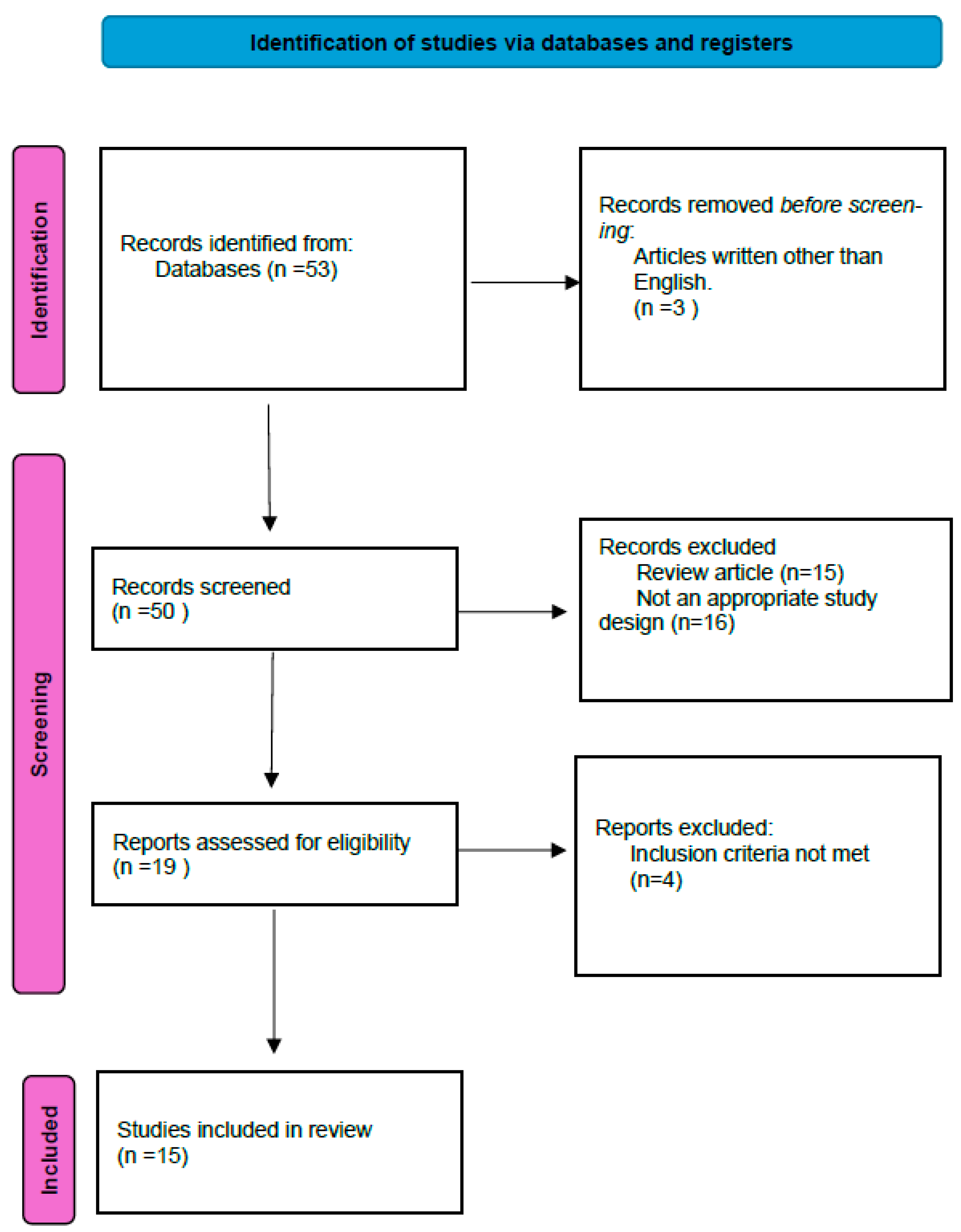
Background: Hereditary hemorrhagic telangiectasia (HHT) is a disease characterized by arteriovenous malformations and telangiectases, in which the endothelium and immune system play a role in the pathophysiology. Therefore, treatments with antiangiogenic properties which are also regarded as immunomodulators were demonstrated to play an important role in treatment. This systematic review aimed to gather the accumulated information of the use of thalidomide and its analogs in the treatment of HHT. Methods: In this systematic review, publications that were published up to March 2024 and met the inclusion criteria were compiled using the keywords ‘thalidomide’, ‘lenalidomide’, ‘pomalidomide’, ‘immunomodulatory drugs’ and ‘HHT’ in Medline and Scholars databases. Results: A total of 53 articles were evaluated and 15 were included in the study. Thalidomide was the predominant used agent and was observed to be used in patients with ages ranging from 37 to 77 years, with doses ranging from 50 to 200 mg daily, and the mean follow-up period was observed to be 6–60 months. Assessments regarding efficacy were based on the epistaxis severity score (ESS), hemoglobin level, and transfusion independence. While thalidomide showed significant efficacy, it also had an adverse event rate of any severity of up to 85% of patients. Use of lenalidomide to control bleeding in HHT was reported in a single case report, while the use of pomalidomide was observed to be investigated in Phase 1 and Phase 2 studies in patients aged 48 to 70 years, with doses ranging from 1 to 5 mg daily for 6–24 months. This treatment was reported to provide significant improvement in hemoglobin levels and ESS. Adverse events of any severity were observed at a frequency of 60–66%. Conclusions: Antiangiogenic agents such as thalidomide, lenalidomide, and pomalidomide may be effective in managing HHT. However, further studies are needed to optimize the timing, dose, and sequence.
Keywords: hereditary hemorrhagic telangiectasia (HHT); thalidomide; pomalidomide; lenalidomide; Osler–Weber–Rendu hereditary hemorrhagic telangiectasia (HHT); thalidomide; pomalidomide; lenalidomide; Osler–Weber–Rendu