Technical Tips and Tricks after 10 Years of HyFoSy for Tubal Patency Testing
 , , , ,
Abstract
1. Introduction
2. Materials and Methods
3. Results
4. Discussion
4.1. Tips and Tricks
4.2. Strengths and Limitations
5. Conclusions
Author Contributions
Funding
Institutional Review Board Statement
Informed Consent Statement
Data Availability Statement
Conflicts of Interest
References
- Steinkeler, J.A.; Woodfeld, C.A.; Lazarus, E.; Hillstrom, M.M. Female infertility: A systematic approach to radiologic imaging and diagnosis. RadioGraphics 2009, 29, 1353–1370. [Google Scholar] [CrossRef] [PubMed]
- Saunders, R.D.; Shwayder, J.M.; Nakajima, S.T. Current methods of tubal patency assessment. Fertil. Steril. 2011, 95, 2171–2179. [Google Scholar] [CrossRef] [PubMed]
- Farquhar, C.M.; Bhattacharya, S.; Repping, S.; Mastenbroek, S.; Kamath, M.S.; Marjoribanks, J.; Boivin, J. Female subfertility. Nat. Rev. Dis. Prim. 2019, 5, 7. [Google Scholar] [CrossRef] [PubMed]
- Roma Dalfó, A.; Ubeda, B.; Ubeda, A.; Monzón, M.; Rotger, R.; Ramos, R.; Palacio, A. Diagnostic value of hysterosalpingography in the detection of intrauterine abnormalities: A comparison with hysteroscopy. AJR. Am. J. Roentgenol. 2004, 183, 1405–1409. [Google Scholar] [CrossRef]
- Luciano, D.E.; Exacoustos, C.; Luciano, A.A. Contrast ultrasonography for tubal patency. J. Minim. Invasive Gynecol. 2014, 21, 994–998. [Google Scholar] [CrossRef]
- Thurston, L.; Abbara, A.; Dhillo, W.S. Investigation and management of subfertility. J. Clin. Pathol. 2019, 72, 579–587. [Google Scholar] [CrossRef]
- Chan, C.C.; Ng, E.H.; Tang, O.S.; Chan, K.K.; Ho, P.C. Comparison of three-dimensional hysterosalpingo-contrast-sonography and diagnostic laparoscopy with chromopertubation in the assessment of tubal patency for the investigation of subfertility. Acta Obstet. Gynecol. Scand. 2005, 84, 909–913. [Google Scholar] [CrossRef]
- Richman, T.S.; Viscomi, G.N.; de Cherney, A.; Polan, M.L.; Alcebo, L.O. Fallopian tubal patency assessed by ultrasound following fluid injection. Work in progress. Radiology 1984, 152, 507–510. [Google Scholar] [CrossRef]
- Randolph, J.F.; Ying, Y.K.; Maier, D.B.; Schmidt, C.L.; Riddick, D.H. Comparison of real-time ultrasonography, hysterosalpingography, and laparoscopy/hysteroscopy in the evaluation of uterine abnormalities and tubal patency. Fertil. Steril. 1986, 46, 828–832. [Google Scholar] [CrossRef]
- Preutthipan, S.; Linasmita, V. A prospective comparative study between hysterosalpingography and hysteroscopy in the detection of intrauterine pathology in patients with infertility. J. Obstet. Gynaecol. Res. 2003, 29, 33–37. [Google Scholar] [CrossRef]
- Exalto, N.; Stappers, C.; van Raamsdonk, L.A.; Emanuel, M.H. Gel instillation sonohysterography: First experience with a new technique. Fertil. Steril. 2007, 87, 152–155. [Google Scholar] [CrossRef]
- Emanuel, M.H.; Exalto, N. Hysterosalpingo-foam sonography (HyFoSy): A new technique to visualize tubal patency. Ultrasound Obstet. Gynecol. 2011, 37, 498–499. [Google Scholar] [CrossRef]
- Emanuel, M.H.; van Vliet, M.; Weber, M.; Exalto, N. First experiences with hysterosalpingo-foam sonography (HyFoSy) for office tubal patency testing. Hum. Reprod. 2012, 27, 114–117. [Google Scholar] [CrossRef]
- Van Schoubroeck, D.; Van den Bosch, T.; Meuleman, C.; Tomassetti, C.; D’Hooghe, T.; Timmerman, D. The use of a new gel foam for the evaluation of tubal patency. Gynecol. Obstet. Investig. 2013, 75, 152–156. [Google Scholar] [CrossRef]
- Wei, K.; Mulvagh, S.L.; Carson, L.; Davidoff, R.; Gabriel, R.; Grimm, R.A.; Wilson, S.; Fane, L.; Herzog, C.A.; Zoghbi, W.A.; et al. The safety of deFinity and Optison for ultrasound image enhancement: A retrospective analysis of 78,383 administered contrast doses. J. Am. Soc. Echocardiogr. 2008, 21, 1202–1206. [Google Scholar] [CrossRef]
- Török, P.; Major, T. Accuracy of assessment of tubal patency with selective pertubation at office hysteroscopy compared with laparoscopy in infertile women. J. Minim. Invasive Gynecol. 2012, 19, 627–630. [Google Scholar] [CrossRef]
- Gordts, S.; Campo, R.; Rombauts, L.; Brosens, I. Transvaginal salpingoscopy: An office procedure for infertility investigation. Fertil. Steril. 1998, 70, 523–526. [Google Scholar] [CrossRef]
- Vitale, S.G.; Carugno, J.; Riemma, G.; Török, P.; Cianci, S.; De Franciscis, P.; Parry, J.P. Hysteroscopy for Assessing Fallopian Tubal Obstruction: A Systematic Review and Diagnostic Test Accuracy Meta-analysis. J. Minim. Invasive Gynecol. 2021, 28, 769–778. [Google Scholar] [CrossRef]
- Vitale, S.G.; Carugno, J.; D’Alterio, M.N.; Mikuš, M.; Patrizio, P.; Angioni, S. A New Methodology to Assess Fallopian Tubes Microbiota and Its Impact on Female Fertility. Diagnostics 2022, 12, 1375. [Google Scholar] [CrossRef]
- De Franciscis, P.; Riemma, G.; Schiattarella, A.; Cobellis, L.; Colacurci, N.; Vitale, S.G.; Cianci, A.; Lohmeyer, F.M.; La Verde, M. Impact of Hysteroscopic Metroplasty on Reproductive Outcomes of Women with a Dysmorphic Uterus and Recurrent Miscarriages: A Systematic Review and Meta-Analysis. J. Gynecol. Obstet. Hum. Reprod. 2020, 49, 101763. [Google Scholar] [CrossRef]
- Practice Committee of tAmerican Society for Reproductive Medicine. Definitions of infertility and recurrent pregnancy loss. Fertil. Steril. 2008, 90 (Suppl. 5), S60. [CrossRef] [PubMed]
- Karcioglu, O.; Topacoglu, H.; Dikme, O.; Dikme, O. A systematic review of the pain scales in adults: Which to use? Am. J. Emerg. Med. 2018, 36, 707–714. [Google Scholar] [CrossRef] [PubMed]
- Grimbizis, G.F.; Gordts, S.; Di Spiezio Sardo, A.; Brucker, S.; De Angelis, C.; Gergolet, M.; Li, T.C.; Tanos, V.; Brölmann, H.; Gianaroli, L.; et al. The ESHRE/ESGE consensus on the classification of female genital tract congenital anomalies. Hum. Reprod. 2013, 28, 2032–2044. [Google Scholar] [CrossRef] [PubMed]
- Bohîlțea, R.E.; Turcan, G.; Cîrstoiu, M.M.; Ionescu, C.; Nemescu, D.; Turcan, N.; Vladareanu, R. Clinical Implementation of Ultrasound Gynecological Examination Report (software REGU) Based on International Consensuses of Tumor Study Groups. In Proceedings of the 5th Romanian Congress Of The Romanian Society of Ultrasound in Obstetrics and Gynecology, Targu Mures, Romania, 20–22 April 2017; pp. 99–104. [Google Scholar]
- Engels, V.; Medina, M.; Antolín, E.; Ros, C.; Amaro, A.; De-Guirior, C.; Manzour, N.; Sotillo, L.; De la Cuesta, R.; Rodríguez, R.; et al. Feasibility, tolerability, and safety of hysterosalpingo-foam sonography (hyfosy). multicenter, prospective Spanish study. J. Gynecol. Obstet. Hum. Reprod. 2021, 50, 102004. [Google Scholar] [CrossRef]
- Chigbuh, A.E. La possibilita di indurre l’infertilita psicosomatica mediante ipnosi ai fini della contraccezione [Possibility of inducing psychosomatic sterility by hypnosis for contraceptive purposes]. Riv. Int. Psicol. Ipn. 1975, 16, 153–162. [Google Scholar]
- Maconi, G.; Bolzacchini, E.; Radice, E.; Marzocchi, M.; Badini, M. Alpha-galactosidase versus active charcoal for improving sonographic visualization of abdominal organs in patients with excessive intestinal gas. J. Ultrasound 2012, 15, 232–238. [Google Scholar] [CrossRef][Green Version]
- Taymor, M.L.; Bresnick, E. Emotional stress and infertility. Infertility 1979, 2, 39–47. [Google Scholar]
- Exalto, N.; Emanuel, M.H. Clinical Aspects of HyFoSy as Tubal Patency Test in Subfertility Workup. BioMed Res. Int. 2019, 2019, 4827376. [Google Scholar] [CrossRef]
- Rajesh, H.; Lim, S.L.; Yu, S.L. Hysterosalpingo-foam sonography: Patient selection and perspectives. Int. J. Women’s Health 2016, 9, 23–32. [Google Scholar] [CrossRef]
- Grigovich, M.; Kacharia, V.S.; Bharwani, N.; Hemingway, A.; Mijatovic, V.; Rodgers, S.K. Evaluating Fallopian Tube Patency: What the Radiologist Needs to Know. Radiographics 2021, 41, 1876–18961. [Google Scholar] [CrossRef]
- Dreyer, K.; Out, R.; Hompes, P.G.; Mijatovic, V. Hysterosalpingo-foam sonography, a less painful procedure for tubal patency testing during fertility workup compared with (serial) hysterosalpingography: A randomized controlled trial. Fertil. Steril. 2014, 102, 821–825. [Google Scholar] [CrossRef]
- Török, P.; Molnár, S.; Herman, T.; Jashanjeet, S.; Lampé, R.; Riemma, G.; Vitale, S.G. Fallopian tubal obstruction is associated with increased pain experienced during office hysteroscopy: A retrospective study. Updates Surg. 2020, 72, 213–218. [Google Scholar] [CrossRef]
- Tanaka, K.; Chua, J.; Cincotta, R.; Ballard, E.L.; Duncombe, G. Hysterosalpingo-foam sonography (HyFoSy): Tolerability, safety and the occurrence of pregnancy post-procedure. Aust. N. Z. J. Obstet. Gynaecol. 2018, 58, 114–118. [Google Scholar] [CrossRef]
- Piccioni, M.G.; Tabacco, S.; Merlino, L.; Del Negro, V.; Mazzeo, A.; Logoteta, A.; Del Prete, F.; Riganelli, L.; Giannini, A.; Monti, M. Does hysterosalpingo-foam sonography have any therapeutic effect? A systematic review. Minerva Ginecol. 2020, 72, 55–58. [Google Scholar] [CrossRef]
- van Rijswijk, J.; van Welie, N.; Dreyer, K.; van Hooff, M.H.; de Bruin, J.P.; Verhoeve, H.R.; Mol, F.; Kleiman-Broeze, K.A.; Traas, M.A.; Muijsers, G.J.; et al. The FOAM study: Is Hysterosalpingo foam sonography (HyFoSy) a cost-effective alternative for hysterosalpingography (HSG) in assessing tubal patency in subfertile women? Study protocol for a randomized controlled trial. BMC Women’s Health 2018, 18, 64. [Google Scholar] [CrossRef]
- Exacoustos, C.; Pizzo, A.; Lazzeri, L.; Pietropolli, A.; Piccione, E.; Zupi, E. Three-Dimensional Hysterosalpingo Contrast Sonography with Gel Foam: Methodology and Feasibility to Obtain 3-Dimensional Volumes of Tubal Shape. J. Minim. Invasive Gynecol. 2017, 24, 827–832. [Google Scholar] [CrossRef]
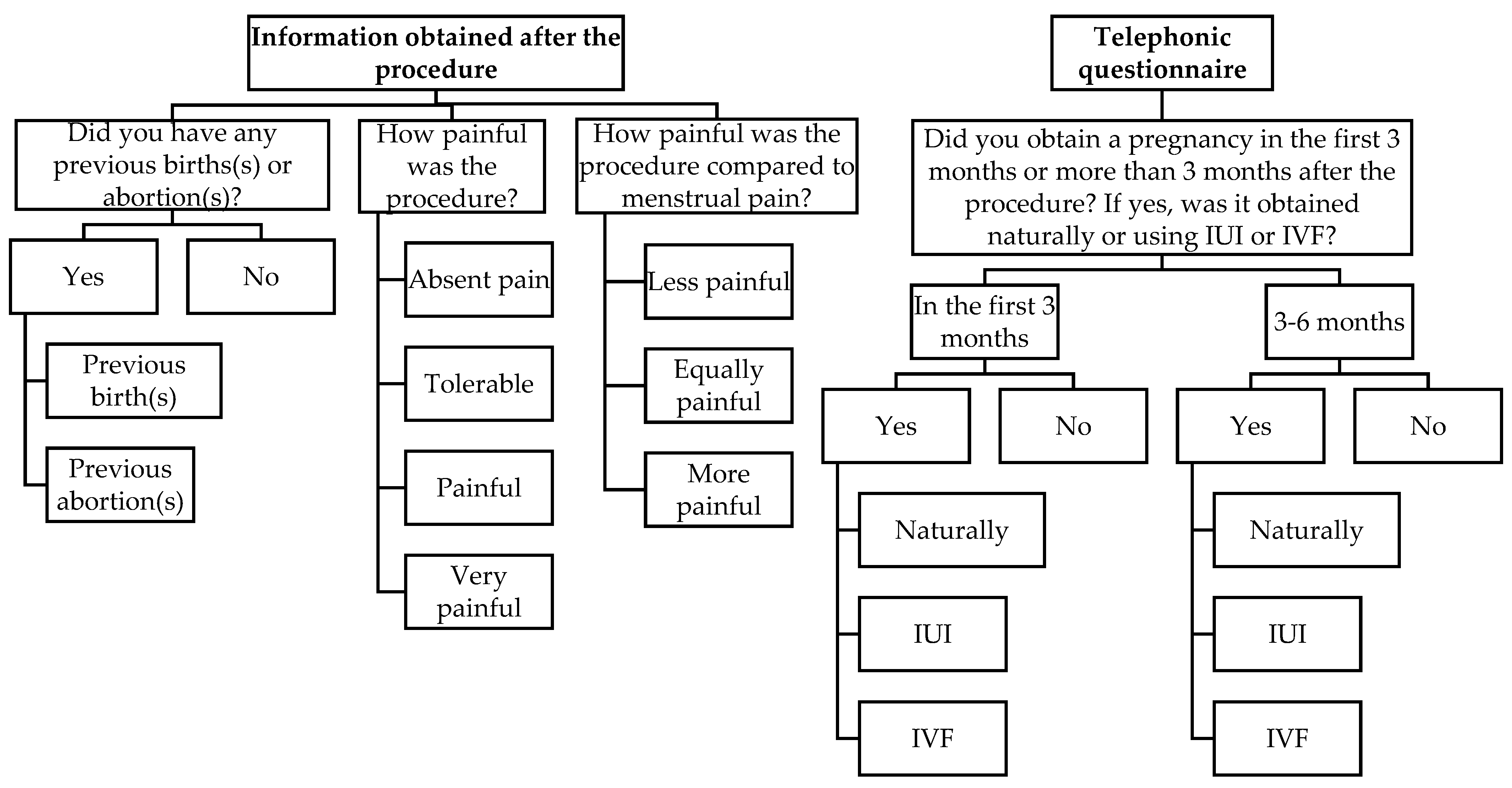



| Number of Cases | Percentage (%) | |
|---|---|---|
| Previous birth(s) | 114 | 17 |
| Previous abortion(s) | 201 | 30 |
| Absence of pregnancy after HyFoSy | 426 | 63 |
| Presence of pregnancy after HyFoSy | 246 | 37 |
| Naturally obtained pregnancy after HyFoSy * | 73 | 57 |
| IUI pregnancy after HyFoSy * | 14 | 11 |
| IVF pregnancy after HyFoSy * | 41 | 32 |
| Pain Level on Pain Scale | Percentage (%) | Pain Level Compared to Menstrual Pain | Percentage (%) |
|---|---|---|---|
| Absent pain (0) | 31 | Less painful | 54 |
| Tolerable (1–3) | 44 | Equally painful | 15 |
| Painful (4–6) | 17 | More painful | 31 |
| Very painful (7–10) | 8 |
| Tips and Tricks We Recommend | Explanation | Literature Data |
|---|---|---|
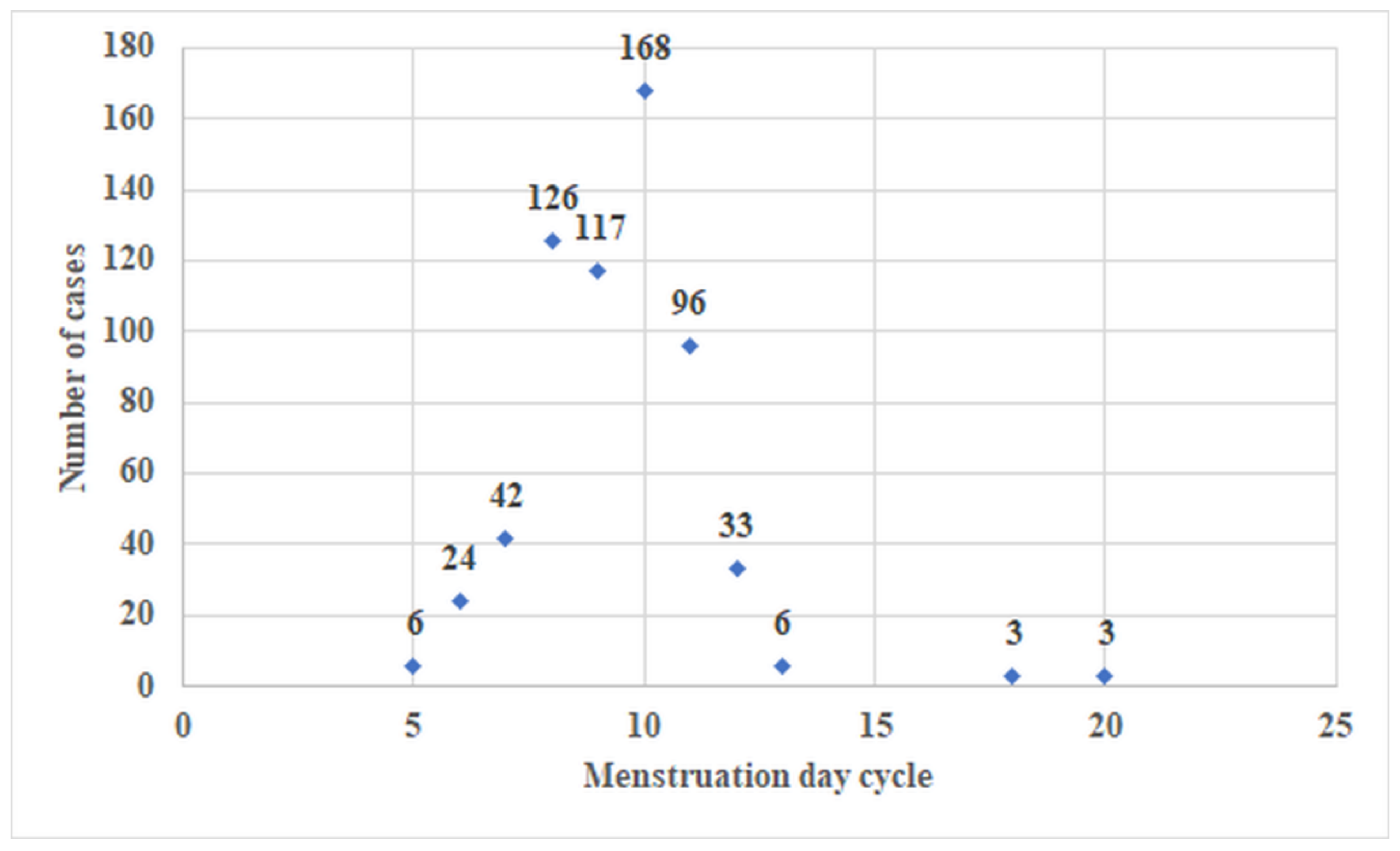
| Scheduling the procedure in the first or second day after the menstrual bleeding cessation | Significantly easier cannulation of the cervix | No data reported |
| The use of a wedge-shaped pad or of a gynecological table with an easy approach to the sonographic exploration | To ensure a gynecological position associated to the Trendelenburg position as close as possible to 45 degrees; The position favors the gut displacement towards cranial and also the fallopian tubes repositioning as anatomically as possible, so they may be easily spotted | No data reported |
| The psychological factor—assuring the patient that the procedure is less painful than menstrual pain | Fear causes spasm of the external cervical orifice, which could complicate the cannulation | Fertility can be directly affected by tubal spasm or altered hypothalamic–pituitary pathway due to emotional tensions [28] |
| The preprocedural preparation with medicinal charcoal and drotaverine hydrochloride | Minimizes gut distention for an optimal visualization of the tubes | Medicinal charcoal is used in reducing bloating [27] |
| Always test the vaginal flora A single doxycycline dose administration | To prevent infection; There were no consecutive pelvic inflammatory disease or tubo-ovarian abscesses in our study | Prior to certain procedures (HyCoSy, HyFoSy, hysterosalpingography, hysteroscopy, etc.), patients at high risk for pelvic inflammatory disease should be screened and receive treatment [29] |
| The use of a large size autostatic speculum | To permit maneuvers; The sonographer can use both hands for the cervix cannulation | No data reported |
| Slowly release of the contrast substance | The substance would be quantitative enough for the visualization of both fallopian tubes | No data reported |
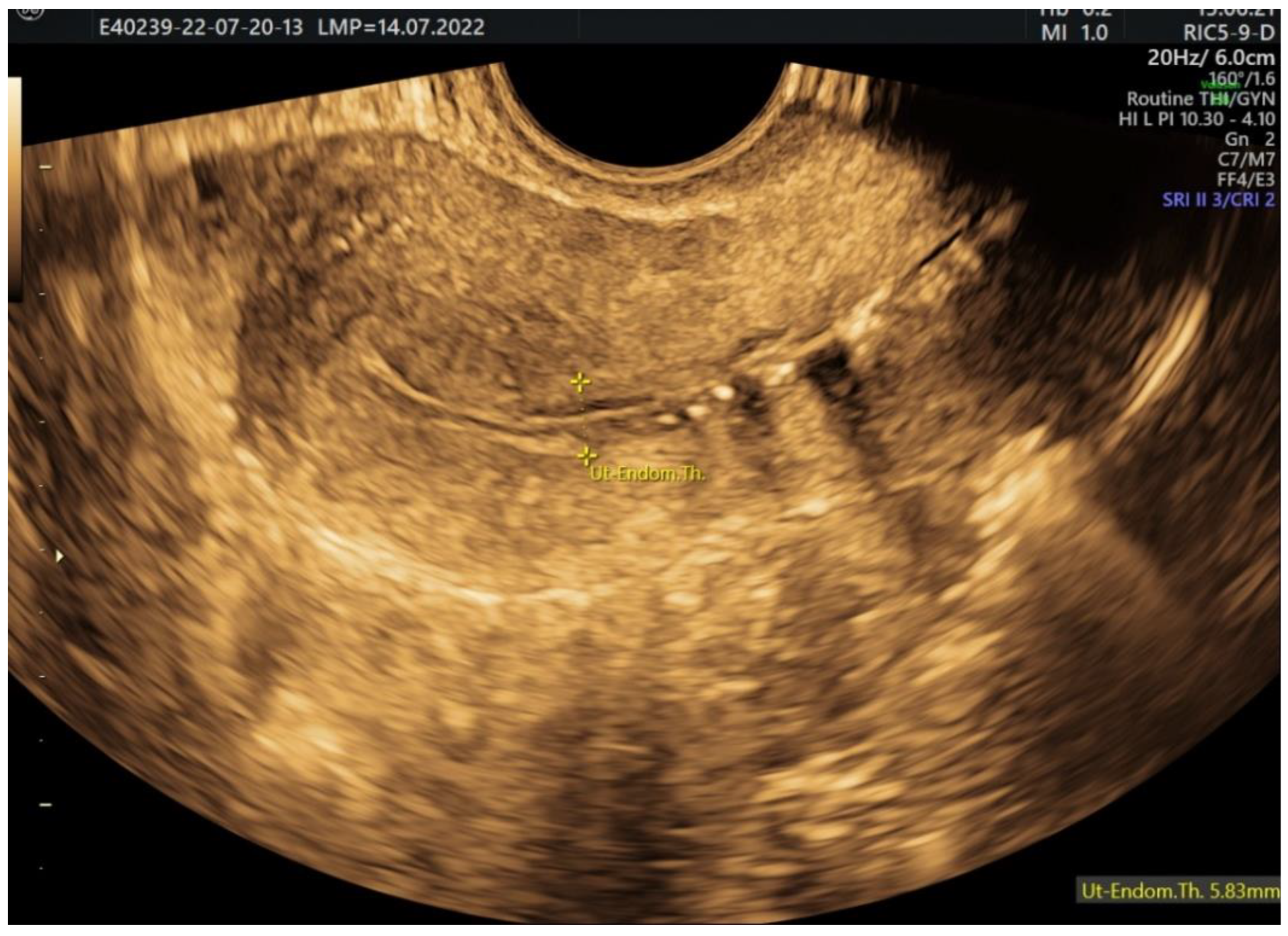
| Evaluating the uterine cavity at the end of the procedure | The uterine cavity is not distended by the substance; The focal lesions are highlighted by a fine layer of substance | The uterine cavity is evaluated by instilling sterile saline. The uterine cavity evaluation is best performed before instillation of ExEm gel. [30] |
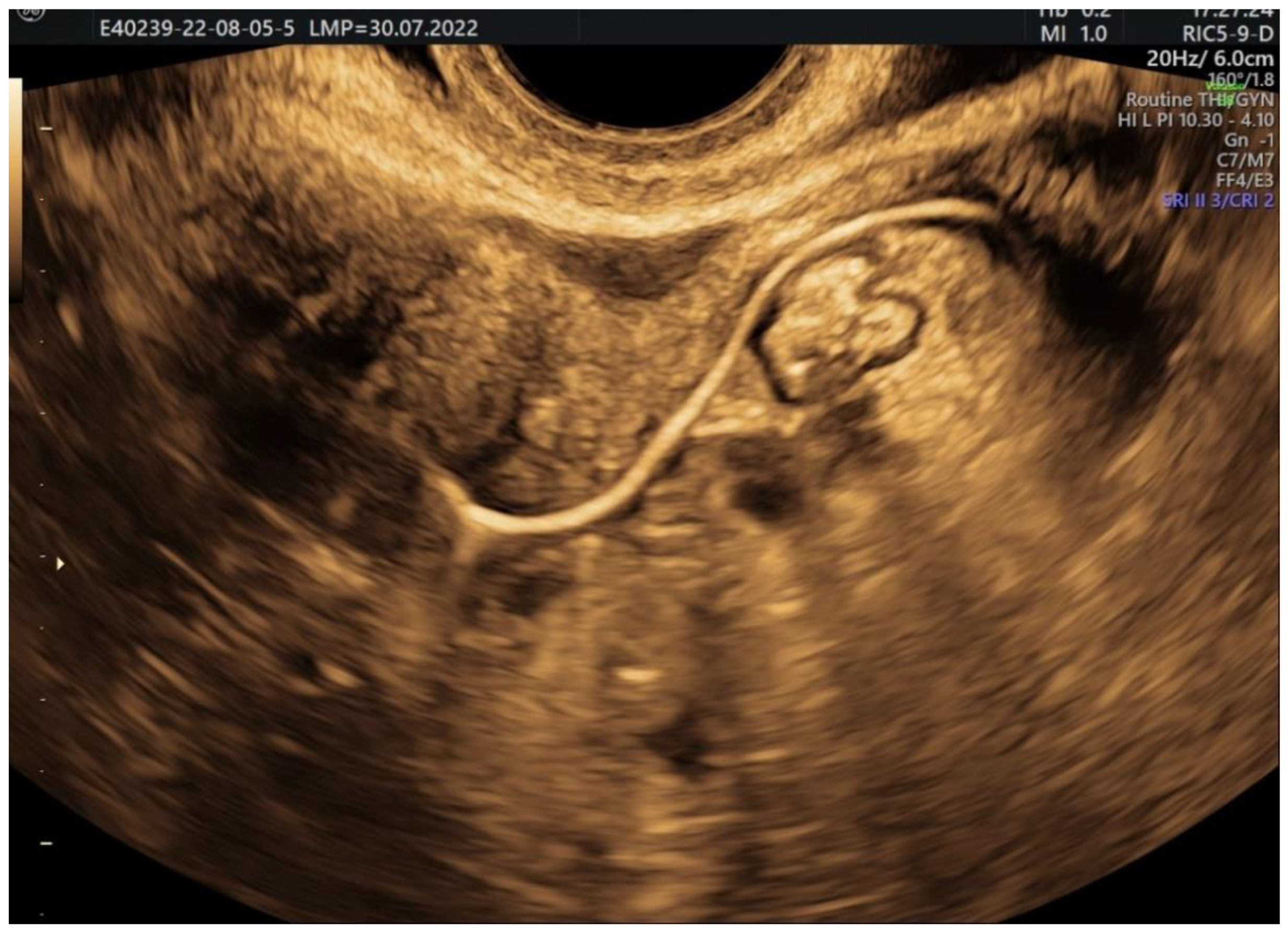
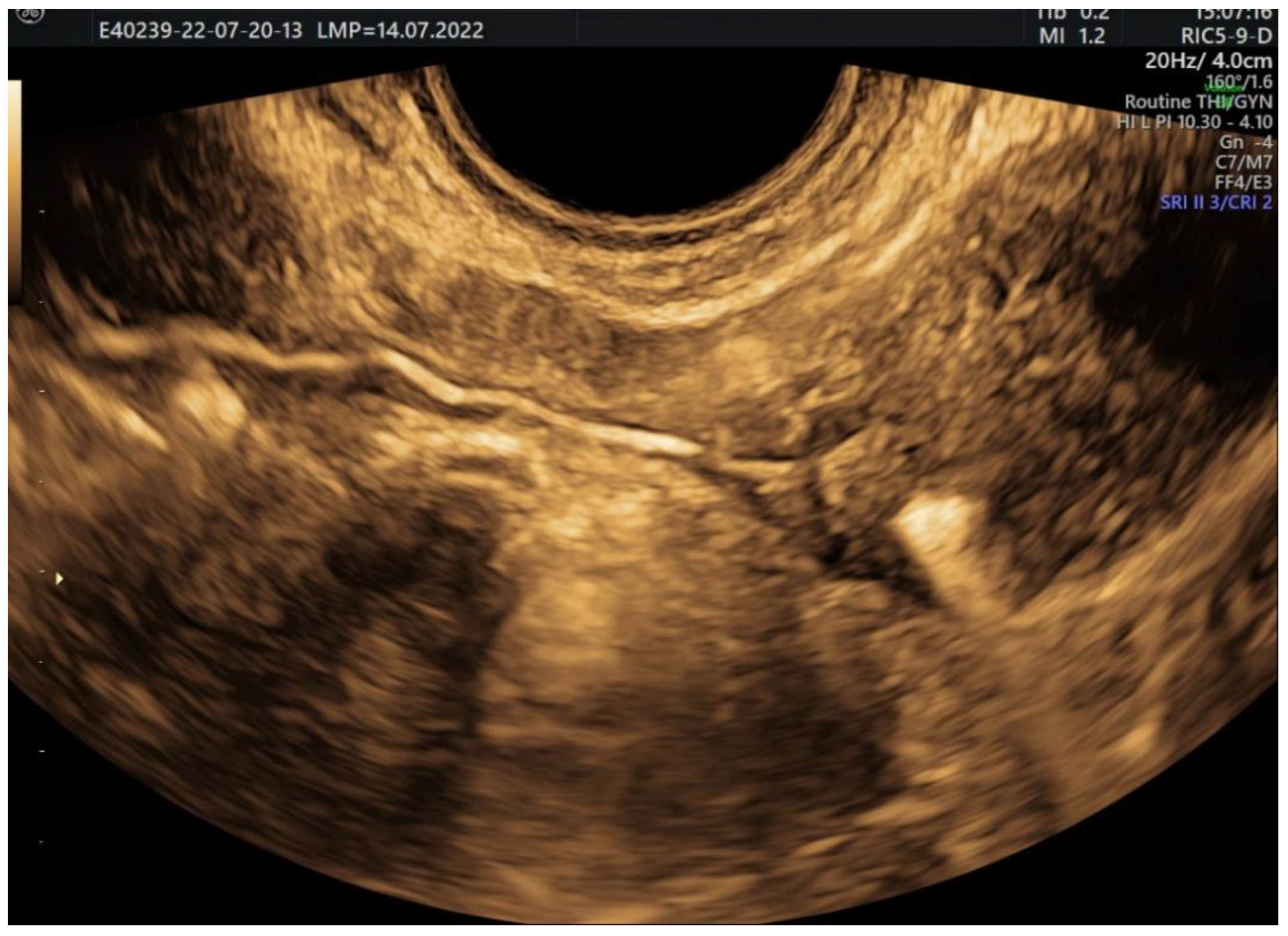
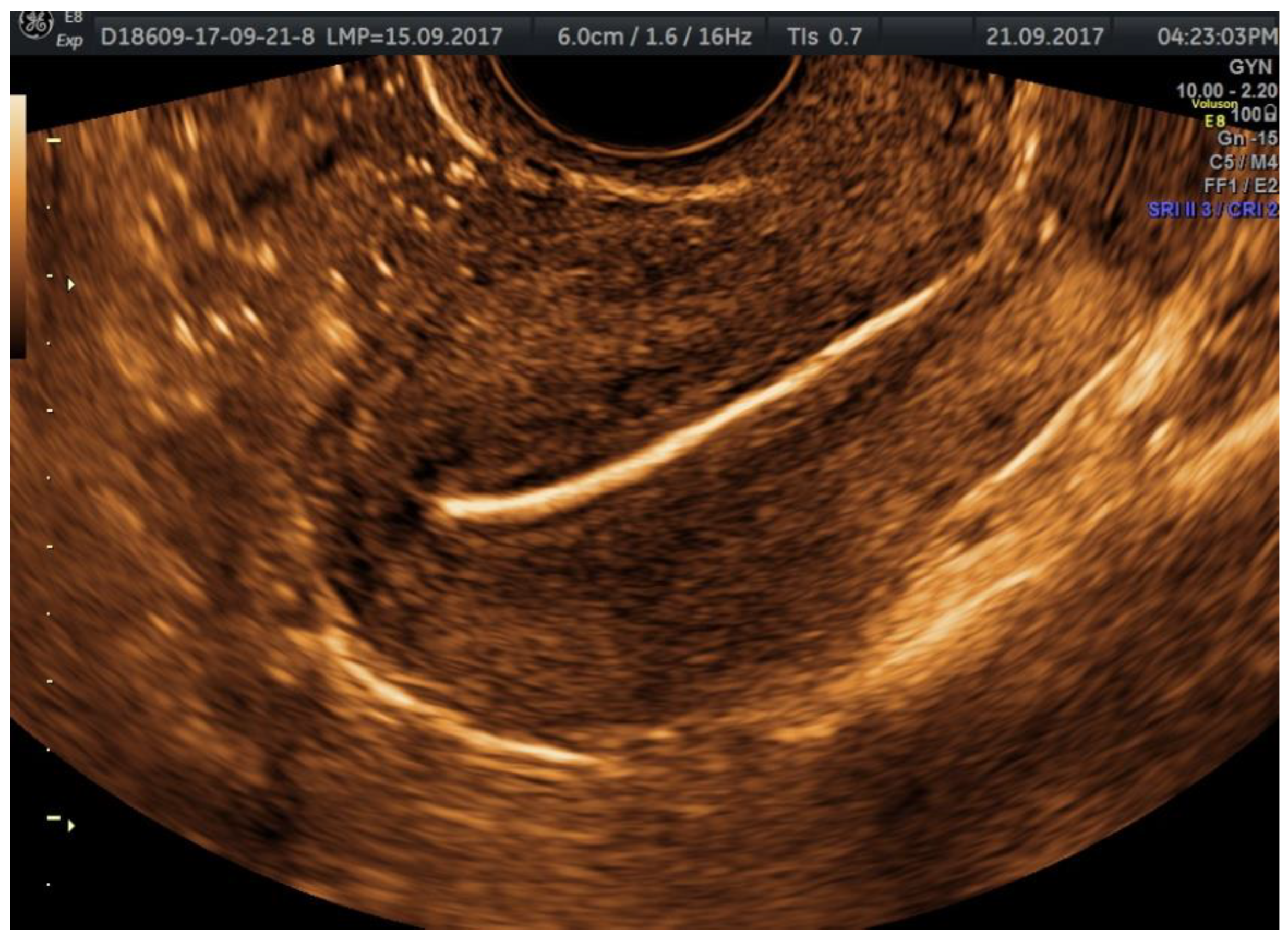
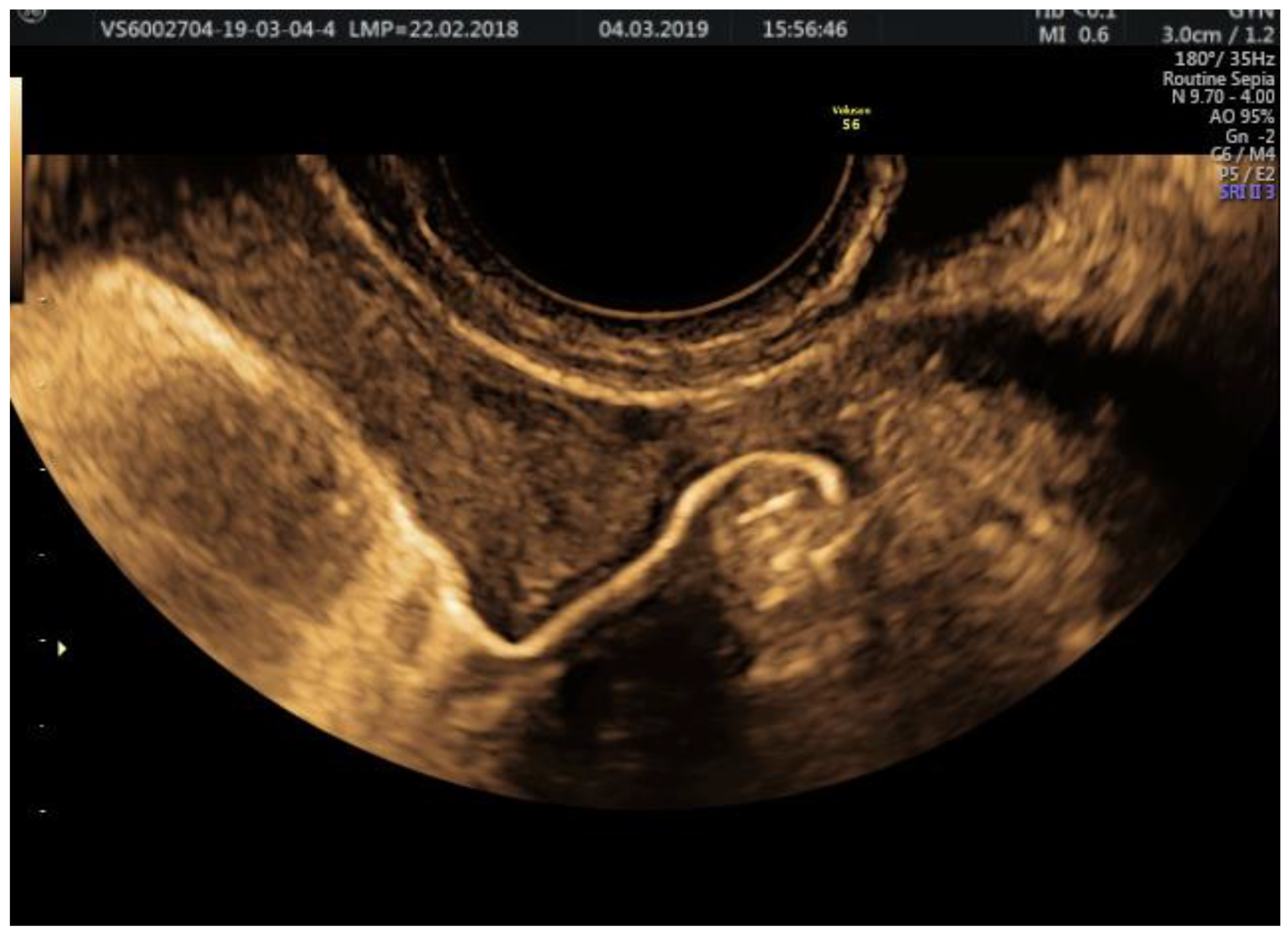
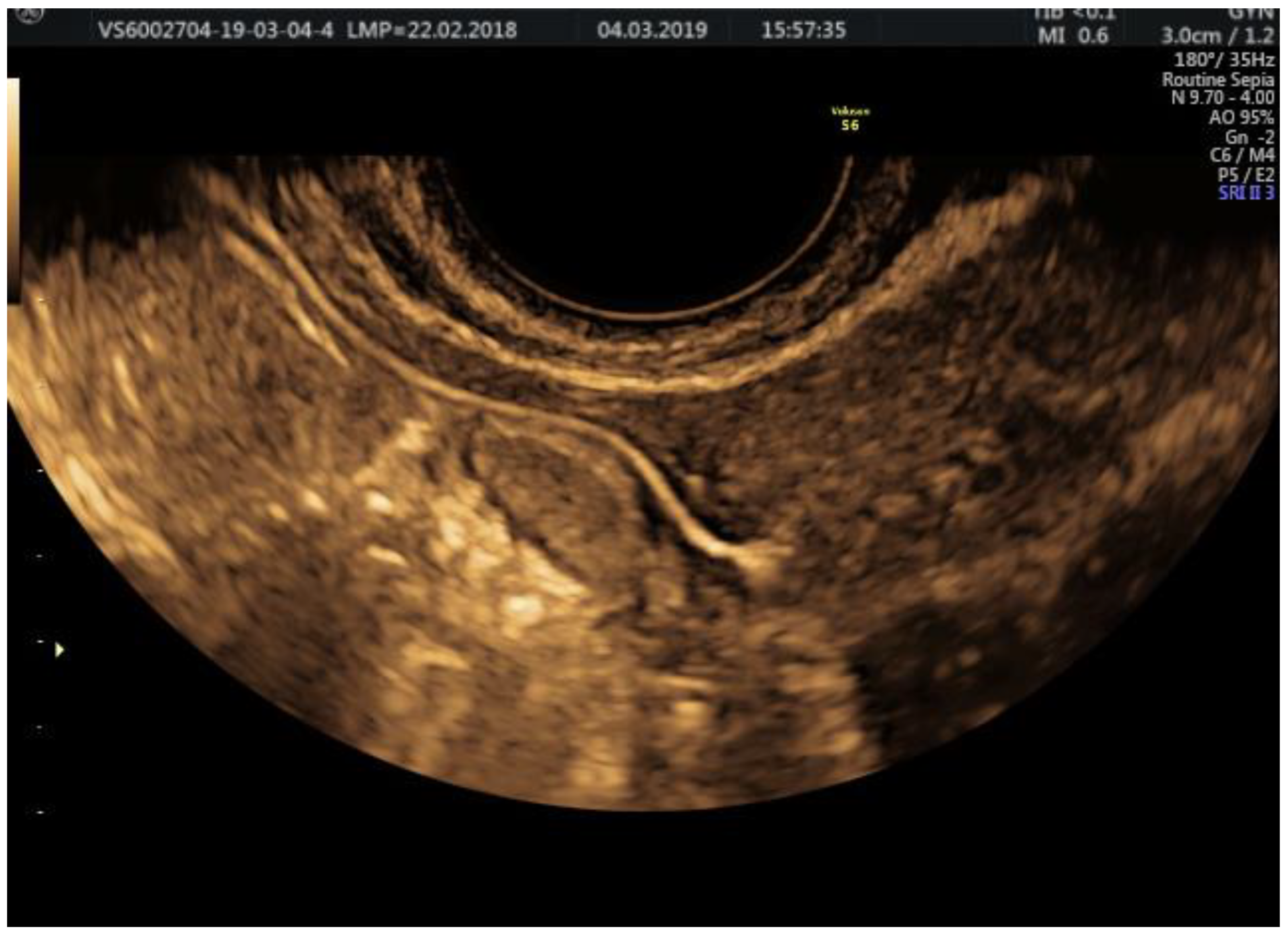
| Tubal patency evaluation requires evaluating the entire substance passage through the tubes | Visualizing the contrast substance progression through the entire tubal pathway, its evacuation near the ovary, and finding the contrast substance at the end of the procedure in the pouch of Douglas or as a fine hyperechoic line near the uterus | Thin line of contrast substance visualized from the interstitial to the infundibular part of the fallopian tube and contrast substance present in the cul-de-sac are signs of tubal patency [31] |
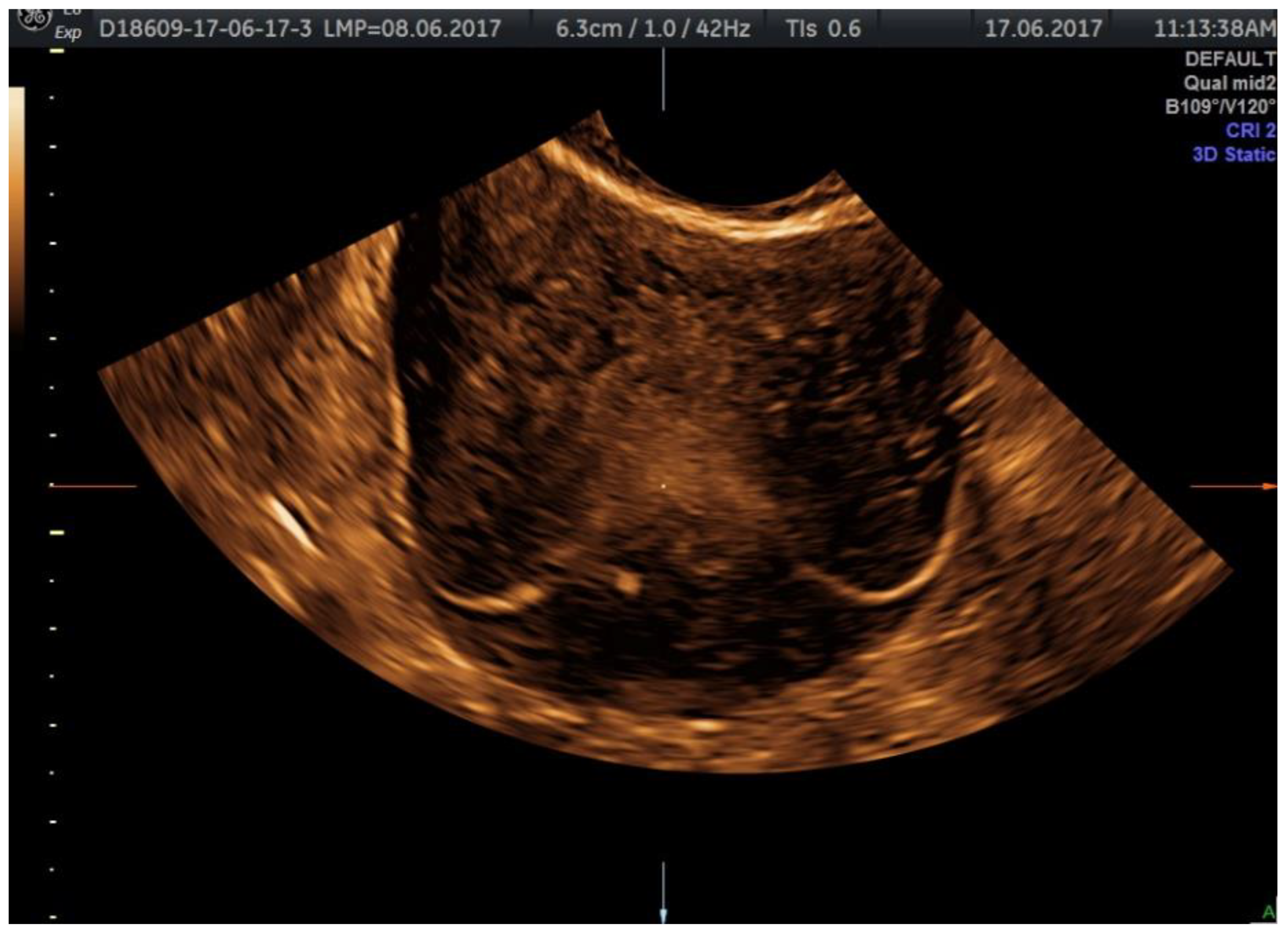
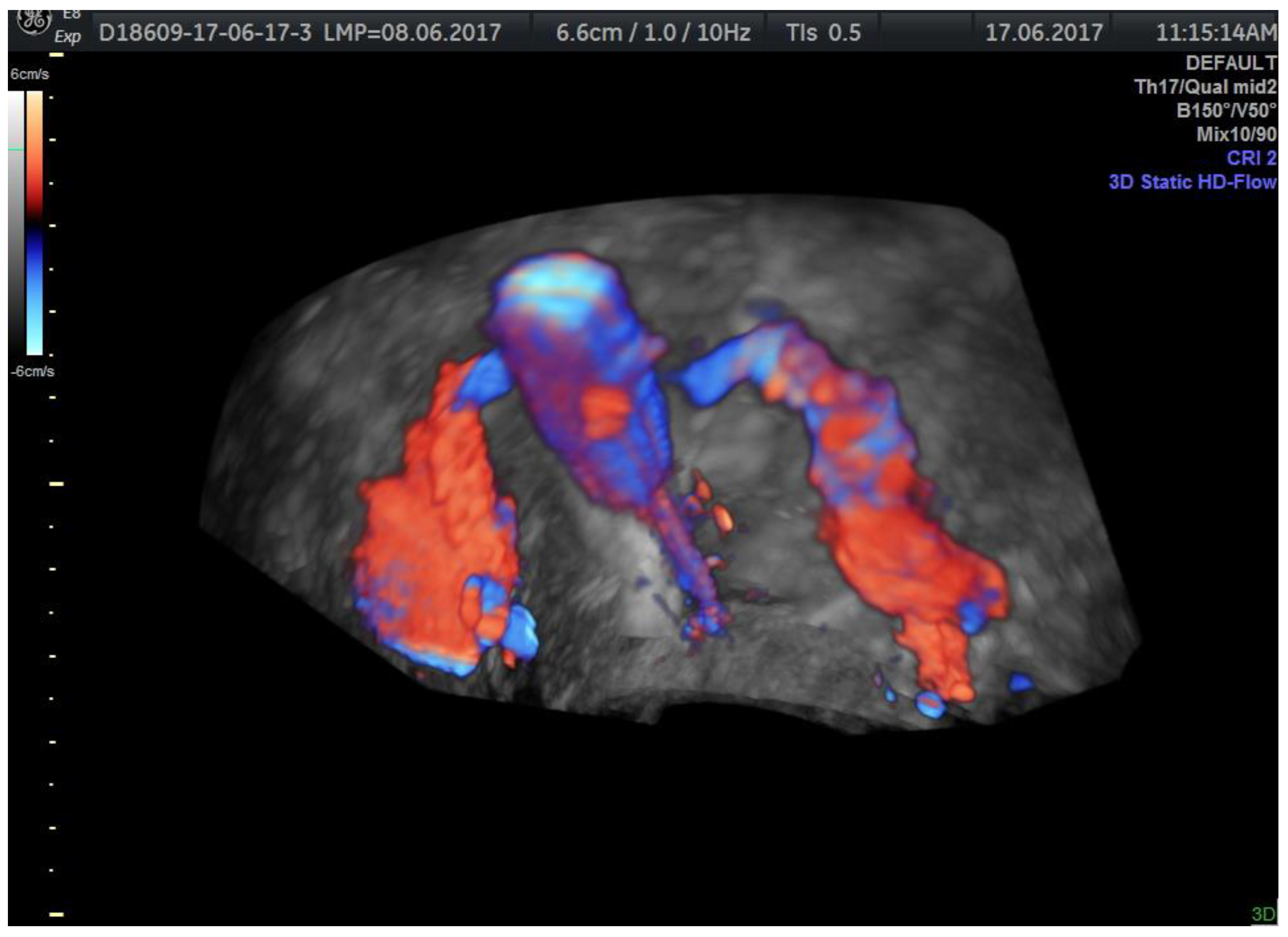
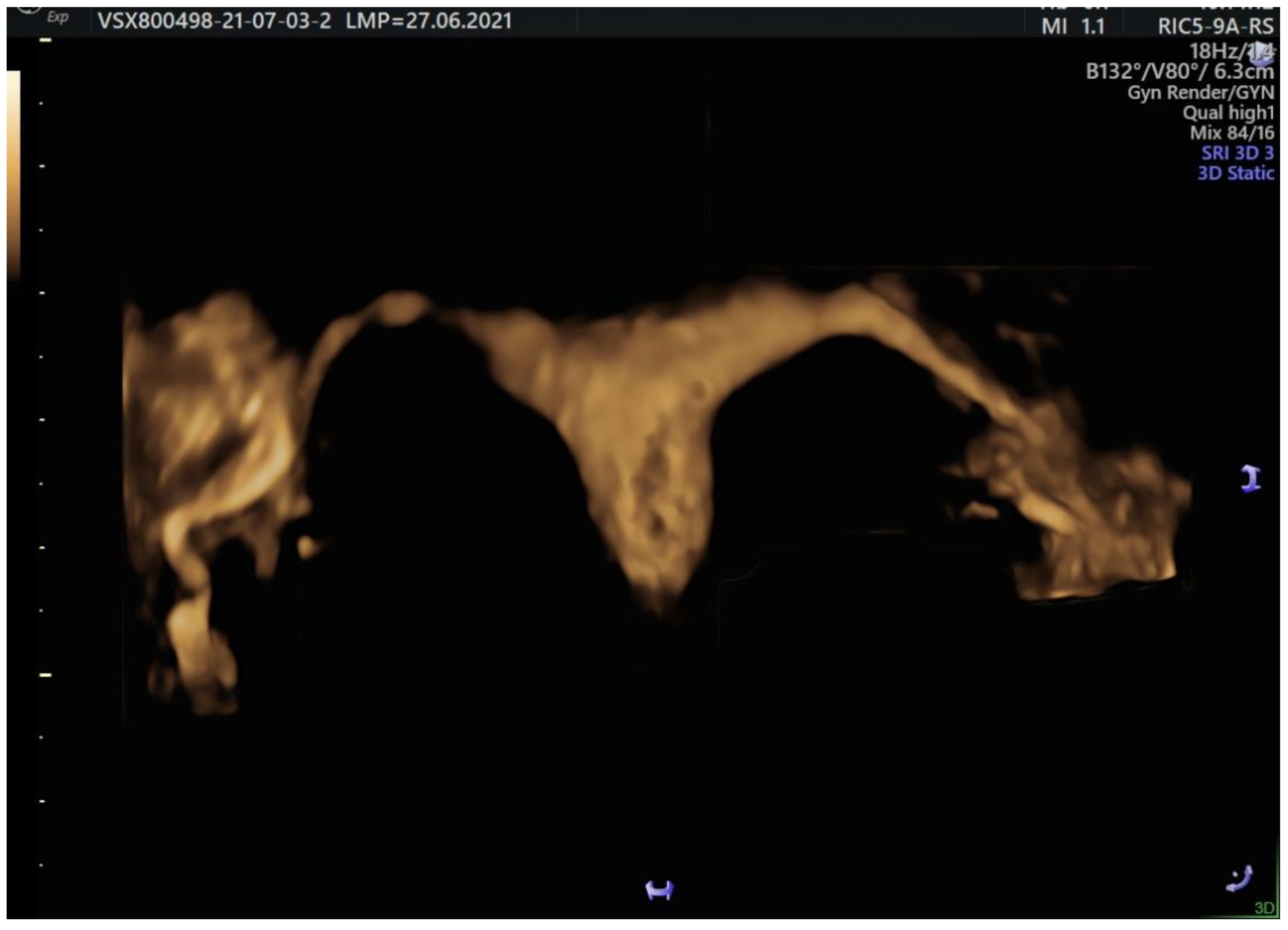
| The use of 2D sepia mode | The functional dynamics of the tubes are optimally evaluated; Using 3D mode on HG-Flow offers spectacular images without acquiring a real informational benefit | 3D-HyFoSy, with or without Doppler techniques, does not bring additional information compared to 2D-HyFoSy when used by a ultrasonographer who has knowledge of the pelvic anatomy [29] |
Publisher’s Note: MDPI stays neutral with regard to jurisdictional claims in published maps and institutional affiliations. |
© 2022 by the authors. Licensee MDPI, Basel, Switzerland. This article is an open access article distributed under the terms and conditions of the Creative Commons Attribution (CC BY) license (https://creativecommons.org/licenses/by/4.0/).
Share and Cite
Bohîlțea, R.-E.; Mihai, B.-M.; Stănică, C.-D.; Gheorghe, C.-M.; Berceanu, C.; Dima, V.; Bohîlțea, A.-T.; Neagu, S.; Vlădăreanu, R. Technical Tips and Tricks after 10 Years of HyFoSy for Tubal Patency Testing. J. Clin. Med. 2022, 11, 5946. https://doi.org/10.3390/jcm11195946
Bohîlțea R-E, Mihai B-M, Stănică C-D, Gheorghe C-M, Berceanu C, Dima V, Bohîlțea A-T, Neagu S, Vlădăreanu R. Technical Tips and Tricks after 10 Years of HyFoSy for Tubal Patency Testing. Journal of Clinical Medicine. 2022; 11(19):5946. https://doi.org/10.3390/jcm11195946
Chicago/Turabian StyleBohîlțea, Roxana-Elena, Bianca-Margareta Mihai, Cătălina-Diana Stănică, Consuela-Mădălina Gheorghe, Costin Berceanu, Vlad Dima, Alexia-Teodora Bohîlțea, Smaranda Neagu, and Radu Vlădăreanu. 2022. "Technical Tips and Tricks after 10 Years of HyFoSy for Tubal Patency Testing" Journal of Clinical Medicine 11, no. 19: 5946. https://doi.org/10.3390/jcm11195946
APA StyleBohîlțea, R.-E., Mihai, B.-M., Stănică, C.-D., Gheorghe, C.-M., Berceanu, C., Dima, V., Bohîlțea, A.-T., Neagu, S., & Vlădăreanu, R. (2022). Technical Tips and Tricks after 10 Years of HyFoSy for Tubal Patency Testing. Journal of Clinical Medicine, 11(19), 5946. https://doi.org/10.3390/jcm11195946