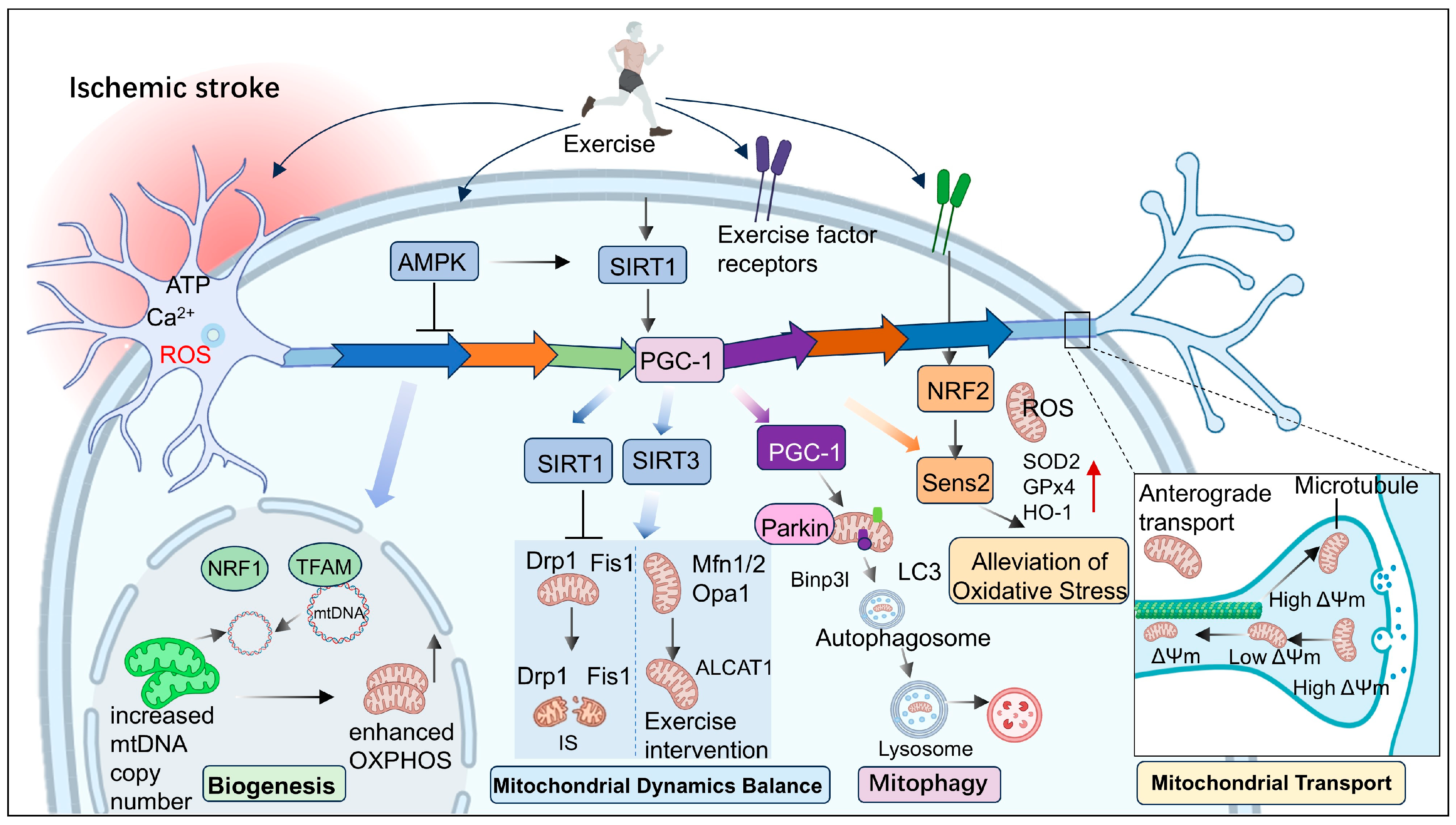
Exercise Improves Mitochondrial Homeostasis: A Potential Neuroprotective Strategy for Ischemic Stroke

Abstract
1. Introduction
2. Mitochondrial Homeostasis Imbalance After IS
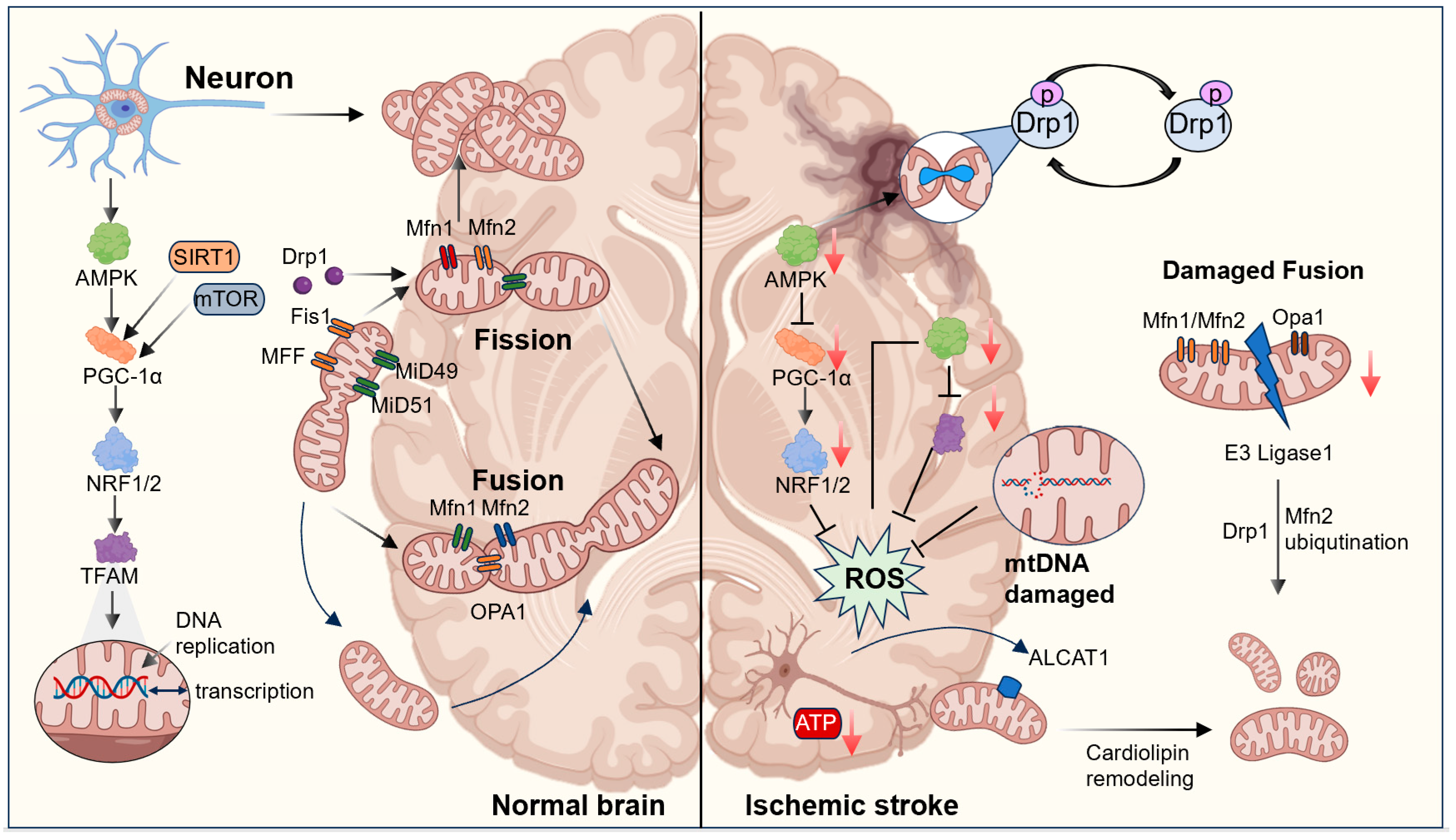
2.1. Mitochondrial Biogenesis and Dynamics
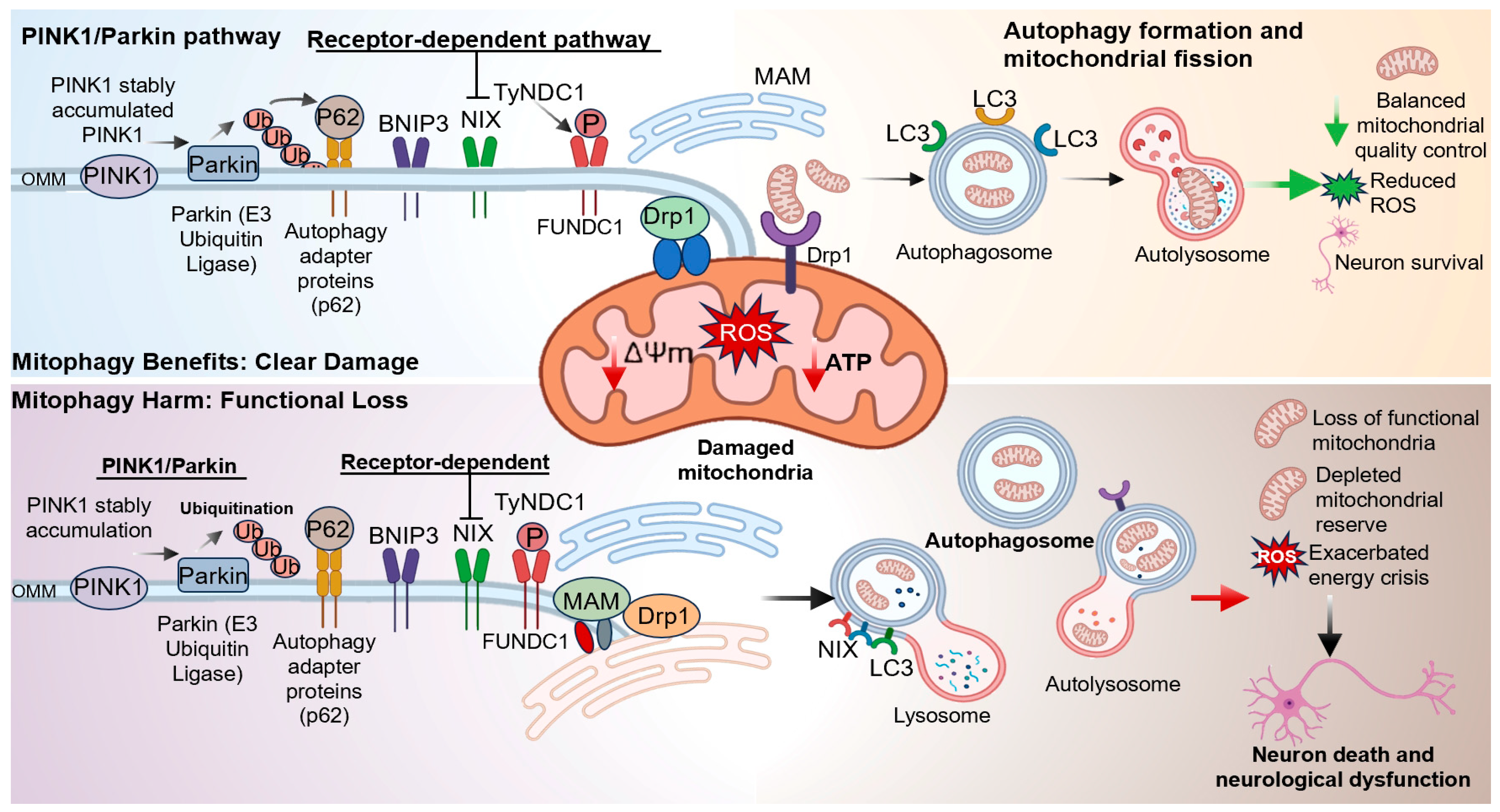
2.2. Mitochondrial Quality Control
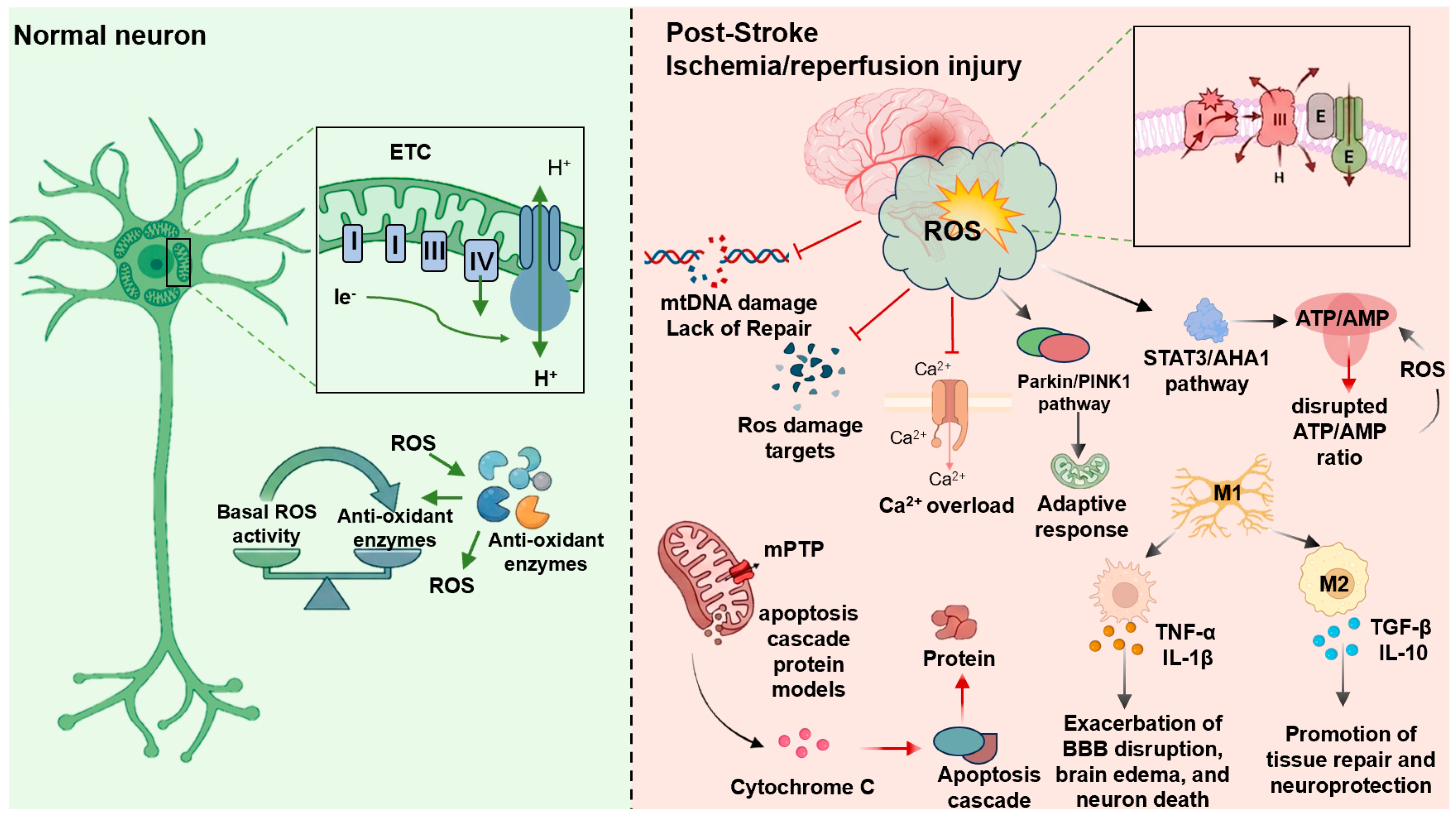
2.3. Mitochondrial Oxidative Stress Imbalance
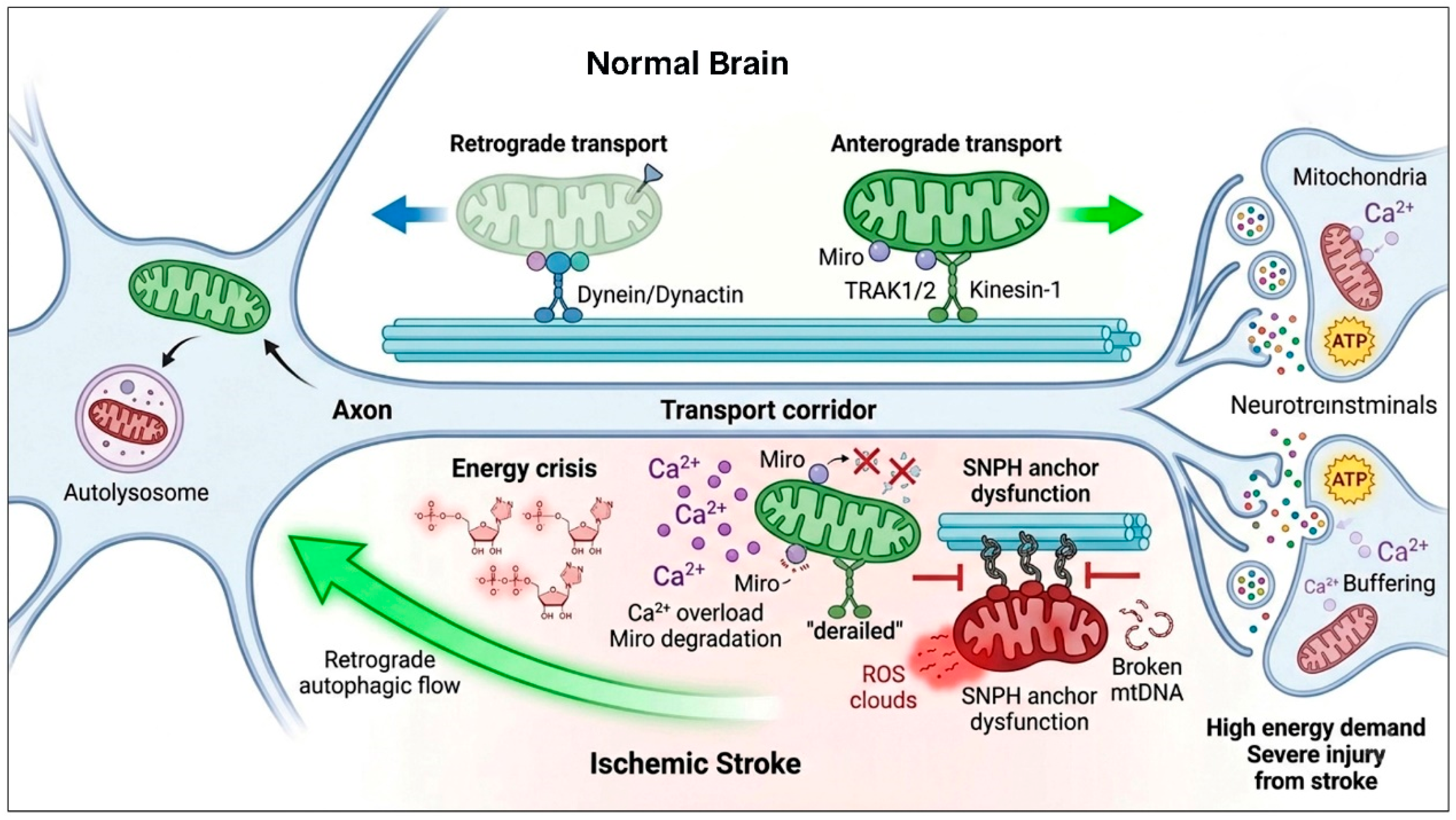
2.4. Mitochondrial Transport Dysfunction
3. Molecular Mechanisms by Which Exercise Promotes Recovery from IS Through Regulation of Mitochondrial Homeostasis
3.1. Exercise Promotes Mitochondrial Biogenesis
3.2. Exercise Improves Mitochondrial Dynamics
3.3. Exercise Modulates Mitophagy in IS
3.4. Exercise Alleviates Mitochondrial Oxidative Stress in IS
3.5. Exercise Participates in Mitochondrial Transport
3.6. Exercise Regulates Mitochondrial Homeostasis in Non-Neuronal Cells After IS
4. Conclusions and Prospects
Author Contributions
Funding
Institutional Review Board Statement
Informed Consent Statement
Data Availability Statement
Acknowledgments
Conflicts of Interest
References
- Martin, S.S.; Aday, A.W.; Almarzooq, Z.I.; Anderson, C.A.M.; Arora, P.; Avery, C.L.; Baker-Smith, C.M.; Barone Gibbs, B.; Beaton, A.Z.; Boehme, A.K.; et al. Correction to: 2024 Heart Disease and Stroke Statistics: A Report of US and Global Data From the American Heart Association. Circulation 2025, 151, e1095. [Google Scholar] [CrossRef]
- Gao, L.; Peng, L.; Wang, J.; Zhang, J.H.; Xia, Y. Mitochondrial stress: A key role of neuroinflammation in stroke. J. Neuroinflamm. 2024, 21, 44. [Google Scholar] [CrossRef]
- Qin, N.; Liu, R.; Deng, R.; Shi, L.; Wang, L.; Zhu, T. Modulation of mitochondrial dysfunction: Mechanisms and strategies for the use of natural products to treat stroke. Neural Regen. Res. 2025, 21, 2215–2226. [Google Scholar] [CrossRef] [PubMed]
- Xing, Y.; Bai, Y. A Review of Exercise-Induced Neuroplasticity in Ischemic Stroke: Pathology and Mechanisms. Mol. Neurobiol. 2020, 57, 4218–4231. [Google Scholar] [CrossRef]
- He, X.F.; Yang, X.F.; Li, G.; Zhao, Y.; Luo, J.; Xu, J.H.; Zheng, H.Q.; Zhang, L.Y.; Hu, X.Q. Physical Exercise Improves the Neuronal Function in Ischemic Stroke Via Microglial CB(2)R/P2Y12 Signaling. Mol. Neurobiol. 2025, 62, 2039–2057. [Google Scholar] [CrossRef]
- Li, B.; Zhou, Y.; Yang, G.; Li, B.; Zhu, M.; Lu, D.; Dai, S.; Pan, G. Voluntary exercise alleviates ischemic brain injury in mice by modulating mitochondrial dysfunction. Iran. J. Basic Med. Sci. 2025, 28, 846–851. [Google Scholar] [CrossRef]
- Li, P.A.; Hou, X.; Hao, S. Mitochondrial biogenesis in neurodegeneration. J. Neurosci. Res. 2017, 95, 2025–2029. [Google Scholar] [CrossRef] [PubMed]
- Watters, O.; Connolly, N.M.C.; Konig, H.G.; Dussmann, H.; Prehn, J.H.M. AMPK Preferentially Depresses Retrograde Transport of Axonal Mitochondria during Localized Nutrient Deprivation. J. Neurosci. 2020, 40, 4798–4812. [Google Scholar] [CrossRef]
- Jia, D.; Tian, Z.; Wang, R. Exercise mitigates age-related metabolic diseases by improving mitochondrial dysfunction. Ageing Res. Rev. 2023, 91, 102087. [Google Scholar] [CrossRef]
- Ibrahim, A.A.; Abdel Mageed, S.S.; Safar, M.M.; El-Yamany, M.F.; Oraby, M.A. MitoQ alleviates hippocampal damage after cerebral ischemia: The potential role of SIRT6 in regulating mitochondrial dysfunction and neuroinflammation. Life Sci. 2023, 328, 121895. [Google Scholar] [CrossRef] [PubMed]
- Song, N.; Mei, S.; Wang, X.; Hu, G.; Lu, M. Focusing on mitochondria in the brain: From biology to therapeutics. Transl. Neurodegener. 2024, 13, 23. [Google Scholar] [CrossRef]
- Gurd, B.J. Deacetylation of PGC-1alpha by SIRT1: Importance for skeletal muscle function and exercise-induced mitochondrial biogenesis. Appl. Physiol. Nutr. Metab. 2011, 36, 589–597. [Google Scholar] [CrossRef] [PubMed]
- Siddiqui, M.A.; Pathak, A.; Ramakrishna, K.; Krishnamurthy, S. Ranolazine neuroprotection against middle cerebral artery occlusion/reperfusion ischemic injury via modulation of brain-derived neurotrophic factor and brain mitochondrial tu translation elongation factor (TUFM). Metab. Brain Dis. 2025, 40, 285. [Google Scholar] [CrossRef]
- Wang, W.; Shi, Y.; Qiu, S.; Song, Y.; Chen, X.; Zhang, X.; Wang, B.; Li, Q.; Shi, Q. TFAM signaling molecule alleviates mitochondrial damage of cerebral ischemia-reperfusion. Cell Death Discov. 2026, 12, 83. [Google Scholar] [CrossRef]
- Yang, J.; Shi, X.; Ma, M.; Li, Z.; Liu, H.; Cui, Y.; Xu, Z.; Wang, J. PGC-1alpha role in rescuing ferroptosis in cerebral ischemia/reperfusion injury through promoting mitochondrial biogenesis and UCP2 expression. Biochim. Biophys. Acta Mol. Basis Dis. 2025, 1871, 167874. [Google Scholar] [CrossRef]
- Li, J.; Zhu, X. 3-n-butylphthalide improves cerebral ischemia/reperfusion injury by regulating neuronal mitochondrial biogenesis via AMPK/PGC-1alpha signaling pathway. Int. Immunopharmacol. 2025, 164, 115343. [Google Scholar] [CrossRef]
- Li, J.; Liu, X.; Wang, H.; Zhang, W.; Chan, D.C.; Shi, Y. Lysocardiolipin acyltransferase 1 (ALCAT1) controls mitochondrial DNA fidelity and biogenesis through modulation of MFN2 expression. Proc. Natl. Acad. Sci. USA 2012, 109, 6975–6980. [Google Scholar] [CrossRef]
- Peinado, M.A.; Blanco, S.; Naranjo, A.; Munoz, M.D.M.; Siles, E.; Hernandez, R.; Grohn, S.; Sierra, A.; Martinez-Lara, E. Does Neuroglobin Protect Against Stroke? Insights Into the Role of Neurovascular Unit Cells. Cell. Mol. Neurobiol. 2026, 46, 23. [Google Scholar] [CrossRef]
- Zhang, H.; Zhang, N.; Yang, X.; Zhang, J.; Ge, X.; Wang, L.; Wang, S.; Wen, Y. DL-3-n-Butylphthalide Protects Mitochondria Against Ischemia/Hypoxia Damage via Suppressing GCN5L1-Mediated Drp1 Acetylation in Neurons and Mouse Brains. CNS Neurosci. Ther. 2025, 31, e70682. [Google Scholar] [CrossRef] [PubMed]
- Li, Z.; Ji, X.; Wang, X.; Wang, J.; Lin, R.; Ma, X.; Zhang, Q.; Liang, S. Electroacupuncture improves motor function after ischemic stroke via regulating mitochondrial dynamics. Brain Res. Bull. 2025, 232, 111599. [Google Scholar] [CrossRef] [PubMed]
- Zhao, Y.X.; Cui, M.; Chen, S.F.; Dong, Q.; Liu, X.Y. Amelioration of ischemic mitochondrial injury and Bax-dependent outer membrane permeabilization by Mdivi-1. CNS Neurosci. Ther. 2014, 20, 528–538. [Google Scholar] [CrossRef]
- Lee, H.; Yoon, Y. Mitochondrial fission: Regulation and ER connection. Mol. Cells 2014, 37, 89–94. [Google Scholar] [CrossRef]
- Flippo, K.H.; Lin, Z.; Dickey, A.S.; Zhou, X.; Dhanesha, N.A.; Walters, G.C.; Liu, Y.; Merrill, R.A.; Meller, R.; Simon, R.P.; et al. Deletion of a Neuronal Drp1 Activator Protects against Cerebral Ischemia. J. Neurosci. 2020, 40, 3119–3129. [Google Scholar] [CrossRef] [PubMed]
- Flippo, K.H.; Gnanasekaran, A.; Perkins, G.A.; Ajmal, A.; Merrill, R.A.; Dickey, A.S.; Taylor, S.S.; McKnight, G.S.; Chauhan, A.K.; Usachev, Y.M.; et al. AKAP1 Protects from Cerebral Ischemic Stroke by Inhibiting Drp1-Dependent Mitochondrial Fission. J. Neurosci. 2018, 38, 8233–8242. [Google Scholar] [CrossRef]
- Ye, Z.; Jin, Y.; Xu, H.; Wang, X.; Lin, A.; Miao, Q.; Luo, W.; Jin, Y. From Tim4 to ischemic stroke: A mitochondrial pathway driving microglial M1 polarization. Brain Res. 2026, 1874, 150140. [Google Scholar] [CrossRef] [PubMed]
- Escobar-Henriques, M.; Anton, F. Mechanistic perspective of mitochondrial fusion: Tubulation vs. fragmentation. Biochim. Biophys. Acta 2013, 1833, 162–175. [Google Scholar] [CrossRef]
- Sloat, S.R.; Whitley, B.N.; Engelhart, E.A.; Hoppins, S. Identification of a mitofusin specificity region that confers unique activities to Mfn1 and Mfn2. Mol. Biol. Cell 2019, 30, 2309–2319. [Google Scholar] [CrossRef]
- Cipolat, S.; Martins de Brito, O.; Dal Zilio, B.; Scorrano, L. OPA1 requires mitofusin 1 to promote mitochondrial fusion. Proc. Natl. Acad. Sci. USA 2004, 101, 15927–15932. [Google Scholar] [CrossRef]
- Li, H.; Li, X.; Xu, Z.; Li, L.; Sun, E.; Cao, C.; Lu, J.; Bai, L.; Chen, G.; Sun, Q.; et al. Decreased OPA1 expression increases neuronal vulnerability to ischaemic stroke during ageing: Role of Timm8b as a therapeutic target. Free Radic. Biol. Med. 2025, 244, 529–545. [Google Scholar] [CrossRef]
- Ren, K.D.; Liu, W.N.; Tian, J.; Zhang, Y.Y.; Peng, J.J.; Zhang, D.; Li, N.S.; Yang, J.; Peng, J.; Luo, X.J. Mitochondrial E3 ubiquitin ligase 1 promotes brain injury by disturbing mitochondrial dynamics in a rat model of ischemic stroke. Eur. J. Pharmacol. 2019, 861, 172617. [Google Scholar] [CrossRef] [PubMed]
- Peng, C.; Rao, W.; Zhang, L.; Wang, K.; Hui, H.; Wang, L.; Su, N.; Luo, P.; Hao, Y.L.; Tu, Y.; et al. Mitofusin 2 ameliorates hypoxia-induced apoptosis via mitochondrial function and signaling pathways. Int. J. Biochem. Cell Biol. 2015, 69, 29–40. [Google Scholar] [CrossRef]
- She, R.; Tian, H.; Sun, F.; Ge, J.; Mei, Z. Corrigendum to “Naotaifang formula regulates Drp1-induced remodeling of mitochondrial dynamics following cerebral ischemia-reperfusion injury” [Free Radic. Biol. Med. 229 (2025) 139-153]. Free Radic. Biol. Med. 2025, 237, 684–685. [Google Scholar] [CrossRef] [PubMed]
- Yang, Z.; Luo, Y.; Yang, Z.; Liu, Z.; Li, M.; Wu, X.; Chen, L.; Xin, W. Mitochondrial dynamics dysfunction and neurodevelopmental disorders: From pathological mechanisms to clinical translation. Neural Regen. Res. 2026, 21, 1926–1946. [Google Scholar] [CrossRef]
- Shao, Z.; Dou, S.; Zhu, J.; Wang, H.; Xu, D.; Wang, C.; Cheng, B.; Bai, B. The Role of Mitophagy in Ischemic Stroke. Front. Neurol. 2020, 11, 608610. [Google Scholar] [CrossRef]
- Pickles, S.; Vigie, P.; Youle, R.J. Mitophagy and Quality Control Mechanisms in Mitochondrial Maintenance. Curr. Biol. 2018, 28, R170–R185. [Google Scholar] [CrossRef]
- Li, A.; Gao, M.; Liu, B.; Qin, Y.; Chen, L.; Liu, H.; Wu, H.; Gong, G. Mitochondrial autophagy: Molecular mechanisms and implications for cardiovascular disease. Cell Death Dis. 2022, 13, 444. [Google Scholar] [CrossRef] [PubMed]
- Stanzione, R.; Pietrangelo, D.; Cotugno, M.; Forte, M.; Rubattu, S. Role of autophagy in ischemic stroke: Insights from animal models and preliminary evidence in the human disease. Front. Cell Dev. Biol. 2024, 12, 1360014. [Google Scholar] [CrossRef] [PubMed]
- Antico, O.; Thompson, P.W.; Hertz, N.T.; Muqit, M.M.K.; Parton, L.E. Targeting mitophagy in neurodegenerative diseases. Nat. Rev. Drug Discov. 2025, 24, 276–299. [Google Scholar] [CrossRef]
- Wu, Y.; Li, Z.; Ding, T.; Yang, Y.; Wei, C.; Zhang, S.; Fan, X. Bidirectional regulation of neuronal autophagy in ischemic stroke: Mechanisms and therapeutic potential. Ageing Res. Rev. 2025, 111, 102842. [Google Scholar] [CrossRef]
- Patoli, D.; Mignotte, F.; Deckert, V.; Dusuel, A.; Dumont, A.; Rieu, A.; Jalil, A.; Van Dongen, K.; Bourgeois, T.; Gautier, T.; et al. Inhibition of mitophagy drives macrophage activation and antibacterial defense during sepsis. J. Clin. Investig. 2020, 130, 5858–5874. [Google Scholar] [CrossRef]
- Lu, J.; Di Florio, D.N.; Boya, P.; Maday, S.; Springer, W.; Chu, C.T. Autophagy and mitophagy at the synapse and beyond: Implications for learning, memory and neurological disorders. Autophagy 2026, 22, 10–52. [Google Scholar] [CrossRef] [PubMed]
- Thayer, J.A.; Petersen, J.D.; Huang, X.; Gruel Budet, L.M.; Hawrot, J.; Ramos, D.M.; Sekine, S.; Li, Y.; Ward, M.E.; Narendra, D.P. A unified mechanism for mitochondrial damage sensing in PINK1-Parkin-mediated mitophagy. EMBO J. 2026, 45, 64–105. [Google Scholar] [CrossRef]
- He, Q.; Li, Z.; Meng, C.; Wu, J.; Zhao, Y.; Zhao, J. Parkin-Dependent Mitophagy is Required for the Inhibition of ATF4 on NLRP3 Inflammasome Activation in Cerebral Ischemia-Reperfusion Injury in Rats. Cells 2019, 8, 897. [Google Scholar] [CrossRef]
- Palmer, J.E.; Wilson, N.; Son, S.M.; Obrocki, P.; Wrobel, L.; Rob, M.; Takla, M.; Korolchuk, V.I.; Rubinsztein, D.C. Autophagy, aging, and age-related neurodegeneration. Neuron 2025, 113, 29–48. [Google Scholar] [CrossRef]
- Gelmetti, V.; De Rosa, P.; Torosantucci, L.; Marini, E.S.; Romagnoli, A.; Di Rienzo, M.; Arena, G.; Vignone, D.; Fimia, G.M.; Valente, E.M. PINK1 and BECN1 relocalize at mitochondria-associated membranes during mitophagy and promote ER-mitochondria tethering and autophagosome formation. Autophagy 2017, 13, 654–669. [Google Scholar] [CrossRef]
- Niemi, N.M.; Friedman, J.R. Coordinating BNIP3/NIX-mediated mitophagy in space and time. Biochem. Soc. Trans. 2024, 52, 1969–1979. [Google Scholar] [CrossRef] [PubMed]
- Yuan, Y.; Zheng, Y.; Zhang, X.; Chen, Y.; Wu, X.; Wu, J.; Shen, Z.; Jiang, L.; Wang, L.; Yang, W.; et al. BNIP3L/NIX-mediated mitophagy protects against ischemic brain injury independent of PARK2. Autophagy 2017, 13, 1754–1766. [Google Scholar] [CrossRef]
- Takahashi, K.; Kawazoe, Y.; Tada, M.; Tada, M.; Ito, N.; Okada, M. Carcinogenicity of 4-nitrosoquinoline 1-oxide and its possible role in carcinogenesis by 4-nitroquinoline 1-oxide. Gan 1978, 69, 499–505. [Google Scholar]
- He, H.; Zhang, X.; Xiong, L.; Qin, X. A Review of FUN14 Domain-Containing 1 Involvement in Mitochondrial Biological Processes and Mechanisms Across Various Systems. Cell Biochem. Funct. 2025, 43, e70125. [Google Scholar] [CrossRef]
- Ning, J.; Li, Z.; Mu, Y.; Li, X.; Li, K.; Xing, W.; Zhang, H. FUNDC1 deficiency aggravates endothelial senescence and retinal dysfunction. Biochim. Biophys. Acta Mol. Basis Dis. 2026, 1872, 168093. [Google Scholar] [CrossRef] [PubMed]
- Ma, J.; Yuan, M.; Guo, S.; Gao, T.; Li, C.; Liu, L. FUNDC1-dependent mitochondrial-ER membranes mediate mitochondrial dysfunction and melanocyte damage under oxidative stress. Free Radic. Biol. Med. 2025, 240, 108–123. [Google Scholar] [CrossRef]
- Tang, T.; Hu, L.B.; Ding, C.; Zhang, Z.; Wang, N.; Wang, T.; Zhou, H.; Xia, S.; Fan, L.; Fu, X.J.; et al. Src inhibition rescues FUNDC1-mediated neuronal mitophagy in ischaemic stroke. Stroke Vasc. Neurol. 2024, 9, 367–379. [Google Scholar] [CrossRef]
- Chen, Z.; Liu, L.; Cheng, Q.; Li, Y.; Wu, H.; Zhang, W.; Wang, Y.; Sehgal, S.A.; Siraj, S.; Wang, X.; et al. Mitochondrial E3 ligase MARCH5 regulates FUNDC1 to fine-tune hypoxic mitophagy. EMBO Rep. 2017, 18, 495–509. [Google Scholar] [CrossRef] [PubMed]
- Zhang, W.; Siraj, S.; Zhang, R.; Chen, Q. Mitophagy receptor FUNDC1 regulates mitochondrial homeostasis and protects the heart from I/R injury. Autophagy 2017, 13, 1080–1081. [Google Scholar] [CrossRef]
- Jiang, X.L.; Zhang, Z.B.; Feng, C.X.; Lin, C.J.; Yang, H.; Tan, L.L.; Ding, X.; Xu, L.X.; Li, G.; Pan, T.; et al. PHLDA1 contributes to hypoxic ischemic brain injury in neonatal rats via inhibiting FUNDC1-mediated mitophagy. Acta Pharmacol. Sin. 2024, 45, 1809–1820. [Google Scholar] [CrossRef] [PubMed]
- Cai, Y.; Yang, E.; Yao, X.; Zhang, X.; Wang, Q.; Wang, Y.; Liu, J.; Fan, W.; Yi, K.; Kang, C.; et al. FUNDC1-dependent mitophagy induced by tPA protects neurons against cerebral ischemia-reperfusion injury. Redox Biol. 2021, 38, 101792. [Google Scholar] [CrossRef] [PubMed]
- Hakiminia, B.; Alikiaii, B.; Khorvash, F.; Mousavi, S. Oxidative stress and mitochondrial dysfunction following traumatic brain injury: From mechanistic view to targeted therapeutic opportunities. Fundam. Clin. Pharmacol. 2022, 36, 612–662. [Google Scholar] [CrossRef]
- Muller, F.L.; Liu, Y.; Van Remmen, H. Complex III releases superoxide to both sides of the inner mitochondrial membrane. J. Biol. Chem. 2004, 279, 49064–49073. [Google Scholar] [CrossRef]
- Coalson, J.J.; Benjamin, B.A.; Archer, L.T.; Beller, B.K.; Spaet, R.H.; Hinshaw, L.B. A pathologic study of Escherichia coli shock in the baboon and the response to adrenocorticosteroid treatment. Surg. Gynecol. Obstet. 1978, 147, 726–736. [Google Scholar]
- Qi, T.; Xiao, Z.; Peng, Y.; Zhou, Y.; Wang, W.; Li, C.; Kang, J.; Zhao, T.; Mao, G.; Weng, Y.; et al. Pyroptosis in Ischemic Stroke: Roles, Mechanisms, and Therapeutic Strategies. Restor. Neurol. Neurosci. 2026, 9226028251410011, online ahead of print. [Google Scholar] [CrossRef]
- Chen, H.; He, Y.; Chen, S.; Qi, S.; Shen, J. Therapeutic targets of oxidative/nitrosative stress and neuroinflammation in ischemic stroke: Applications for natural product efficacy with omics and systemic biology. Pharmacol. Res. 2020, 158, 104877. [Google Scholar] [CrossRef]
- Chen, T.; Zhu, J.; Wang, Y.H.; Hang, C.H. ROS-Mediated Mitochondrial Dysfunction and ER Stress Contribute to Compression-Induced Neuronal Injury. Neuroscience 2019, 416, 268–280. [Google Scholar] [CrossRef] [PubMed]
- Wei, X.; Qi, Y.; Zhang, X.; Gu, X.; Cai, H.; Yang, J.; Zhang, Y. ROS act as an upstream signal to mediate cadmium-induced mitophagy in mouse brain. Neurotoxicology 2015, 46, 19–24. [Google Scholar] [CrossRef] [PubMed]
- Hong, T.; Zhou, Y.; Peng, L.; Wu, X.; Li, Y.; Li, Y.; Zhao, Y. Knocking Down Peroxiredoxin 6 Aggravates Cerebral Ischemia-Reperfusion Injury by Enhancing Mitophagy. Neuroscience 2022, 482, 30–42. [Google Scholar] [CrossRef]
- Hwang, J.A.; Shin, N.; Shin, H.J.; Yin, Y.; Kwon, H.H.; Park, H.; Shin, J.; Kim, S.I.; Kim, D.W.; Song, H.J. Protective Effects of ShcA Protein Silencing for Photothrombotic Cerebral Infarction. Transl. Stroke Res. 2021, 12, 866–878. [Google Scholar] [CrossRef]
- Ma, C.; Gao, Q.; Zhang, L.; Li, C.; Wu, G.; Yang, L. The Effect of PGAM5 on Regulating Mitochondrial Dysfunction in Ischemic Stroke. Discov. Med. 2023, 35, 1123–1133. [Google Scholar] [CrossRef]
- Jin, D.; Ge, X.; Liu, L.; Jia, Y.; Liu, C.; Meng, K.; Zhang, X. Beyond molecular chaperoning: AHA1 reprograms autophagy flux through direct ATP5A1 interaction in ischemic neuronal injury. Redox Biol. 2025, 88, 103920. [Google Scholar] [CrossRef]
- Hou, K.; Li, G.; Yu, J.; Xu, K.; Wu, W. Receptors, Channel Proteins, and Enzymes Involved in Microglia-mediated Neuroinflammation and Treatments by Targeting Microglia in Ischemic Stroke. Neuroscience 2021, 460, 167–180. [Google Scholar] [CrossRef]
- Zhang, Y.; Zhao, Y.; Wang, Y.; Li, J.; Huang, Y.; Lyu, F.; Wang, Y.; Wei, P.; Yuan, Y.; Fu, Y.; et al. Microglial histone deacetylase 2 is dispensable for functional and histological outcomes in a mouse model of traumatic brain injury. J. Cereb. Blood Flow Metab. 2024, 44, 817–835. [Google Scholar] [CrossRef]
- Li, L.; Jiang, W.; Yu, B.; Liang, H.; Mao, S.; Hu, X.; Feng, Y.; Xu, J.; Chu, L. Quercetin improves cerebral ischemia/reperfusion injury by promoting microglia/macrophages M2 polarization via regulating PI3K/Akt/NF-kappaB signaling pathway. Biomed. Pharmacother. 2023, 168, 115653. [Google Scholar] [CrossRef] [PubMed]
- Zeng, J.; Bao, T.; Yang, K.; Zhu, X.; Wang, S.; Xiang, W.; Ge, A.; Zeng, L.; Ge, J. The mechanism of microglia-mediated immune inflammation in ischemic stroke and the role of natural botanical components in regulating microglia: A review. Front. Immunol. 2022, 13, 1047550. [Google Scholar] [CrossRef]
- Li, Y.; Jiang, J.; Zhuo, Y.; Li, J.; Li, Y.; Xia, Y.; Yu, Z. IGF2BP1 exacerbates neuroinflammation and cerebral ischemia/reperfusion injury by regulating neuronal ferroptosis and microglial polarization. Biochim. Biophys. Acta Mol. Basis Dis. 2025, 1871, 167877. [Google Scholar] [CrossRef] [PubMed]
- Wang, Y.; Wang, Q.; Sui, X.; Guo, M.; Li, L.; Jia, W.; Tian, Y.; Lu, Q.; Wang, B. Catalpalactone protects rats nerve function from hypoxic lesion by polarizing microglial cells toward M2 phenotype. Eur. J. Med. Res. 2025, 30, 96. [Google Scholar] [CrossRef] [PubMed]
- Kerr, N.; Dietrich, D.W.; Bramlett, H.M.; Raval, A.P. Sexually dimorphic microglia and ischemic stroke. CNS Neurosci. Ther. 2019, 25, 1308–1317. [Google Scholar] [CrossRef]
- Hu, X.; Li, P.; Guo, Y.; Wang, H.; Leak, R.K.; Chen, S.; Gao, Y.; Chen, J. Microglia/macrophage polarization dynamics reveal novel mechanism of injury expansion after focal cerebral ischemia. Stroke 2012, 43, 3063–3070. [Google Scholar] [CrossRef]
- Candelario-Jalil, E.; Dijkhuizen, R.M.; Magnus, T. Neuroinflammation, Stroke, Blood-Brain Barrier Dysfunction, and Imaging Modalities. Stroke 2022, 53, 1473–1486. [Google Scholar] [CrossRef]
- Hao, P.; Liu, S.; Wang, Y.; Xu, J.; Ma, R.; Mai, D.; Chen, R.; Tang, S.; Huo, S.; Li, R.; et al. Nrf2 overexpression reprograms neural stem cell fate: Promoting neuronal differentiation and functional recovery post-ischemic stroke via suppression of the ROS/NF-kappaB axis. J. Transl. Med. 2026, 24, 169. [Google Scholar] [CrossRef]
- Wu, S.; Hao, W.; Suo, Q.; Lu, Q.; Liu, Z.; Yao, Y.Q.; Shi, R.; Haroon, K.; Chen, Y.; Shao, X.; et al. Piezo1 induces Wnt7b(+) astrocytes transformation to modulate glial scar stiffness and neuro-regeneration after stroke. Theranostics 2026, 16, 668–688. [Google Scholar] [CrossRef]
- Jiang, M.; Zhang, Y.X.; Bu, W.J.; Li, P.; Chen, J.H.; Cao, M.; Dong, Y.C.; Sun, Z.J.; Dong, D.L. Piezo1 channel activation stimulates ATP production through enhancing mitochondrial respiration and glycolysis in vascular endothelial cells. Br. J. Pharmacol. 2023, 180, 1862–1877. [Google Scholar] [CrossRef]
- Collier, J.J.; Olahova, M.; McWilliams, T.G.; Taylor, R.W. Mitochondrial signalling and homeostasis: From cell biology to neurological disease. Trends Neurosci. 2023, 46, 137–152. [Google Scholar] [CrossRef] [PubMed]
- Grasmick, K.A.; Hu, H.; Hone, E.A.; Farooqi, I.; Rellick, S.L.; Simpkins, J.W.; Ren, X. Uncoupling of the Electron Transport Chain Compromises Mitochondrial Oxidative Phosphorylation and Exacerbates Stroke Outcomes. J. Neuroinfect. Dis. 2018, 9, 283. [Google Scholar] [CrossRef] [PubMed]
- Cadenas, E.; Davies, K.J. Mitochondrial free radical generation, oxidative stress, and aging. Free Radic. Biol. Med. 2000, 29, 222–230. [Google Scholar] [CrossRef]
- Webster, K.A. Mitochondrial membrane permeabilization and cell death during myocardial infarction: Roles of calcium and reactive oxygen species. Future Cardiol. 2012, 8, 863–884. [Google Scholar] [CrossRef]
- He, Z.; Ning, N.; Zhou, Q.; Khoshnam, S.E.; Farzaneh, M. Mitochondria as a therapeutic target for ischemic stroke. Free Radic. Biol. Med. 2020, 146, 45–58. [Google Scholar] [CrossRef] [PubMed]
- Sadeghian, N.; Panahpour, H.; Alipour, M.R.; Farajdokht, F.; Shadman, J. Investigating the therapeutic potential of nasal administration of mitochondria on blood-brain barrier integrity and vasogenic brain Edema in a rat ischemic stroke model. Exp. Neurol. 2025, 398, 115609. [Google Scholar] [CrossRef]
- Larrea, A.; Martin-Odriozola, A.; Astigarraga, E.; Rodriguez-de-Pablo, C.; Barreda-Gomez, G.; Torrecilla, M. Effect of Functional Electrical Stimulation Combined With Physical Exercise on Electron Transport Chain Activity in Peripheral Blood Cells of Stroke Patients. Artif. Organs 2025, 49, 1821–1834. [Google Scholar] [CrossRef]
- Tiwari, V.; Ambadipudi, S.; Patel, A.B. Glutamatergic and GABAergic TCA cycle and neurotransmitter cycling fluxes in different regions of mouse brain. J. Cereb. Blood Flow Metab. 2013, 33, 1523–1531. [Google Scholar] [CrossRef]
- van Spronsen, M.; Mikhaylova, M.; Lipka, J.; Schlager, M.A.; van den Heuvel, D.J.; Kuijpers, M.; Wulf, P.S.; Keijzer, N.; Demmers, J.; Kapitein, L.C.; et al. TRAK/Milton motor-adaptor proteins steer mitochondrial trafficking to axons and dendrites. Neuron 2013, 77, 485–502. [Google Scholar] [CrossRef]
- Vevea, J.D.; Chapman, E.R. Mitofusin 2 Sustains the Axonal Mitochondrial Network to Support Presynaptic Ca(2+) Homeostasis and the Synaptic Vesicle Cycle in Rat Hippocampal Axons. J. Neurosci. 2023, 43, 3421–3438. [Google Scholar] [CrossRef] [PubMed]
- Bakthavachalam, P.; Shanmugam, P.S.T. Mitochondrial dysfunction—Silent killer in cerebral ischemia. J. Neurol. Sci. 2017, 375, 417–423. [Google Scholar] [CrossRef]
- Niescier, R.F.; Chang, K.T.; Min, K.T. Miro, MCU, and calcium: Bridging our understanding of mitochondrial movement in axons. Front. Cell. Neurosci. 2013, 7, 148. [Google Scholar] [CrossRef] [PubMed]
- Li, Y.; Zhang, J.; Zhang, Y.; Xu, H.; Zhao, Y.; Tian, J.; Yang, H.; Zhang, F. Zhishe Tongluo capsule ameliorates experimental ischemic brain injury through regulating the CALB2/Ca(2+)/PKC pathway and glycerophospholipid metabolism. J. Ethnopharmacol. 2026, 357, 120871. [Google Scholar] [CrossRef]
- Zheng, Y.; Zhang, X.; Wu, X.; Jiang, L.; Ahsan, A.; Ma, S.; Xiao, Z.; Han, F.; Qin, Z.H.; Hu, W.; et al. Somatic autophagy of axonal mitochondria in ischemic neurons. J. Cell Biol. 2019, 218, 1891–1907. [Google Scholar] [CrossRef]
- Zheng, Y.; Wu, X.; Chen, Z.; Zhang, X. Come and eat: Mitochondrial transport guides mitophagy in ischemic neuronal axons. Autophagy 2019, 15, 1483–1484. [Google Scholar] [CrossRef] [PubMed]
- Chowdhury, M.A.; Sholl, H.K.; Sharrett, M.S.; Haller, S.T.; Cooper, C.C.; Gupta, R.; Liu, L.C. Exercise and Cardioprotection: A Natural Defense Against Lethal Myocardial Ischemia-Reperfusion Injury and Potential Guide to Cardiovascular Prophylaxis. J. Cardiovasc. Pharmacol. Ther. 2019, 24, 18–30. [Google Scholar] [CrossRef]
- Song, W.; Teng, L.; Wang, H.; Pang, R.; Liang, R.; Zhu, L. Exercise preconditioning increases circulating exosome miR-124 expression and alleviates apoptosis in rats with cerebral ischemia-reperfusion injury. Brain Res. 2025, 1851, 149457. [Google Scholar] [CrossRef]
- Lee, H.; Yun, H.J.; Ding, Y. Timing is everything: Exercise therapy and remote ischemic conditioning for acute ischemic stroke patients. Brain Circ. 2021, 7, 178–186. [Google Scholar] [CrossRef] [PubMed]
- Gillum, R.F.; Mussolino, M.E.; Ingram, D.D. Physical activity and stroke incidence in women and men. The NHANES I Epidemiologic Follow-up Study. Am. J. Epidemiol. 1996, 143, 860–869. [Google Scholar] [CrossRef]
- Armstrong, M.E.; Green, J.; Reeves, G.K.; Beral, V.; Cairns, B.J.; Million Women Study, C. Frequent physical activity may not reduce vascular disease risk as much as moderate activity: Large prospective study of women in the United Kingdom. Circulation 2015, 131, 721–729. [Google Scholar] [CrossRef]
- Willey, J.Z.; Moon, Y.P.; Paik, M.C.; Boden-Albala, B.; Sacco, R.L.; Elkind, M.S. Physical activity and risk of ischemic stroke in the Northern Manhattan Study. Neurology 2009, 73, 1774–1779. [Google Scholar] [CrossRef]
- Madsen, T.E.; Samaei, M.; Pikula, A.; Yu, A.Y.X.; Carcel, C.; Millsaps, E.; Yalamanchili, R.S.; Bencie, N.; Dula, A.N.; Leppert, M.; et al. Sex Differences in Physical Activity and Incident Stroke: A Systematic Review. Clin. Ther. 2022, 44, 586–611. [Google Scholar] [CrossRef] [PubMed]
- Zhu, R.; Chen, C.; Kuang, M.; Tai, Y.; Qin, Y.; Wu, C. Weekend Warrior Physical Activity Pattern and Mortality in Patients With Hypertension: A Prospective Cohort Study From UK Biobank. Hypertension 2026, 83, 3. [Google Scholar] [CrossRef]
- Hafez, S.; Eid, Z.; Alabasi, S.; Darwiche, Y.; Channaoui, S.; Hess, D.C. Mechanisms of Preconditioning Exercise-Induced Neurovascular Protection in Stroke. J. Stroke 2021, 23, 312–326. [Google Scholar] [CrossRef]
- Wang, W.; Liang, Z.; Xiong, J.; Wang, C. Optimizing exercise interventions for depression in stroke patients: A network and dose-response meta-analysis. J. Psychosom. Res. 2026, 202, 112519. [Google Scholar] [CrossRef]
- Zhao, Y.; Hong, Z.; Lin, Y.; Shen, W.; Yang, Y.; Zuo, Z.; Hu, X. Exercise pretreatment alleviates neuroinflammation and oxidative stress by TFEB-mediated autophagic flux in mice with ischemic stroke. Exp. Neurol. 2023, 364, 114380. [Google Scholar] [CrossRef]
- Zhao, Y.; Ying, X.; Pang, X.; Lin, Y.; Shen, J.; Zhao, Y.; Shen, W.; Yang, Y.; Hong, Z.; Wu, W.; et al. Exercise-induced Sesn2 mediates autophagic flux to alleviate neural damage after ischemic stroke in mice. Exp. Neurol. 2025, 386, 115174. [Google Scholar] [CrossRef] [PubMed]
- Shan, Y.; Wang, L.; Sun, J.; Chang, S.; Di, W.; Lv, H. Exercise preconditioning attenuates cerebral ischemia-induced neuronal apoptosis, Th17/Treg imbalance, and inflammation in rats by inhibiting the JAK2/STAT3 pathway. Brain Behav. 2023, 13, e3030. [Google Scholar] [CrossRef]
- Zou, M.; Wang, J.; Yu, L.; Bi, Y.; Yan, G.; Ding, H.; Zhang, Y. Forced and voluntary exercise exert differential neuroprotective effects in cerebral ischemia-reperfusion injury by inhibiting neutrophil infiltration and blood-brain barrier disruption. Brain Res. Bull. 2026, 234, 111668. [Google Scholar] [CrossRef]
- Middleham, W.; Binder, N.F.; Deseo, J.; Weber, R.; Zolotko, K.; Droux, J.; Yoshihara, H.; Wyss, M.T.; Luft, A.R.; Weber, B.; et al. Cardiovascular exercise mitigates reperfusion failure and persistent hypoperfusion in the thrombin model of stroke and thrombolysis. J. Cereb. Blood Flow Metab. 2026, 46, 1253–1267. [Google Scholar] [CrossRef]
- Zhang, L.; Niu, W.; He, Z.; Zhang, Q.; Wu, Y.; Jiang, C.; Tang, C.; Hu, Y.; Jia, J. Autophagy suppression by exercise pretreatment and p38 inhibition is neuroprotective in cerebral ischemia. Brain Res. 2014, 1587, 127–132. [Google Scholar] [CrossRef] [PubMed]
- Wu, X.; Li, C.; Ke, C.; Huang, C.; Pan, B.; Wan, C. The activation of AMPK/PGC-1alpha/GLUT4 signaling pathway through early exercise improves mitochondrial function and mitigates ischemic brain damage. Neuroreport 2024, 35, 648–656. [Google Scholar] [CrossRef]
- Zhang, Q.; Wu, Y.; Sha, H.; Zhang, P.; Jia, J.; Hu, Y.; Zhu, J. Early exercise affects mitochondrial transcription factors expression after cerebral ischemia in rats. Int. J. Mol. Sci. 2012, 13, 1670–1679. [Google Scholar] [CrossRef] [PubMed]
- Zhang, Q.; Wu, Y.; Zhang, P.; Sha, H.; Jia, J.; Hu, Y.; Zhu, J. Exercise induces mitochondrial biogenesis after brain ischemia in rats. Neuroscience 2012, 205, 10–17. [Google Scholar] [CrossRef] [PubMed]
- Zhang, L.; He, Z.; Zhang, Q.; Wu, Y.; Yang, X.; Niu, W.; Hu, Y.; Jia, J. Exercise pretreatment promotes mitochondrial dynamic protein OPA1 expression after cerebral ischemia in rats. Int. J. Mol. Sci. 2014, 15, 4453–4463. [Google Scholar] [CrossRef]
- Li, C.; Zhang, B.; Tian, S.; Hu, J.; Gao, B.; Liu, P.; Hua, Y.; Bao, W.; Guan, Y.; Bai, Y. Early wheel-running promotes functional recovery by improving mitochondria metabolism in olfactory ensheathing cells after ischemic stroke in rats. Behav. Brain Res. 2019, 361, 32–38. [Google Scholar] [CrossRef]
- Pan, G.; Zhang, H.; Zhu, A.; Lin, Y.; Zhang, L.; Ye, B.; Cheng, J.; Shen, W.; Jin, L.; Liu, C.; et al. Treadmill exercise attenuates cerebral ischaemic injury in rats by protecting mitochondrial function via enhancement of caveolin-1. Life Sci. 2021, 264, 118634. [Google Scholar] [CrossRef] [PubMed]
- Qin, Y.Y.; Pan, S.Y.; Dai, J.R.; Wang, Q.M.; Luo, X.; Qin, Z.H.; Luo, L. Alleviation of ischemic brain injury by exercise preconditioning is associated with modulation of autophagy and mitochondrial dynamics in cerebral cortex of female aged mice. Exp. Gerontol. 2023, 178, 112226. [Google Scholar] [CrossRef]
- Liang, R.; Hou, X.; Zhou, D.; Zhu, L.; Teng, L.; Song, W.; Tang, Q. Exercise preconditioning mitigates Ischemia-Reperfusion injury in rats by enhancing mitochondrial respiration. Neuroscience 2024, 562, 64–74. [Google Scholar] [CrossRef]
- Hwang, J.H.; Kim, K.M.; Oh, H.T.; Yoo, G.D.; Jeong, M.G.; Lee, H.; Park, J.; Jeong, K.; Kim, Y.K.; Ko, Y.G.; et al. TAZ links exercise to mitochondrial biogenesis via mitochondrial transcription factor A. Nat. Commun. 2022, 13, 653. [Google Scholar] [CrossRef]
- Taylor, D.F.; Bishop, D.J. Transcription Factor Movement and Exercise-Induced Mitochondrial Biogenesis in Human Skeletal Muscle: Current Knowledge and Future Perspectives. Int. J. Mol. Sci. 2022, 23, 1517. [Google Scholar] [CrossRef]
- Wu, Z.; Puigserver, P.; Andersson, U.; Zhang, C.; Adelmant, G.; Mootha, V.; Troy, A.; Cinti, S.; Lowell, B.; Scarpulla, R.C.; et al. Mechanisms controlling mitochondrial biogenesis and respiration through the thermogenic coactivator PGC-1. Cell 1999, 98, 115–124. [Google Scholar] [CrossRef]
- Hanada, S.; Ishikawa, K.; Shirai, T.; Takemasa, T.; Nakada, K. Endurance swimming exacerbates mitochondrial myopathy in mice with high mtDNA deletions. Mitochondrion 2025, 81, 102010. [Google Scholar] [CrossRef]
- Iwabu, M.; Yamauchi, T.; Okada-Iwabu, M.; Sato, K.; Nakagawa, T.; Funata, M.; Yamaguchi, M.; Namiki, S.; Nakayama, R.; Tabata, M.; et al. Adiponectin and AdipoR1 regulate PGC-1alpha and mitochondria by Ca(2+) and AMPK/SIRT1. Nature 2010, 464, 1313–1319. [Google Scholar] [CrossRef]
- Chen, J.; Liu, B.; Yao, X.; Yang, X.; Sun, J.; Yi, J.; Xue, F.; Zhang, J.; Shen, Y.; Chen, B.; et al. AMPK/SIRT1/PGC-1alpha Signaling Pathway: Molecular Mechanisms and Targeted Strategies From Energy Homeostasis Regulation to Disease Therapy. CNS Neurosci. Ther. 2025, 31, e70657. [Google Scholar] [CrossRef] [PubMed]
- De Sousa, R. Molecular crosstalk for longevity: Exercise and the AMPK/SIRT1/PGC-1alpha/Irisin/BDNF axis. Mol. Biol. Rep. 2025, 53, 142. [Google Scholar] [CrossRef]
- Smith, T.K.T.; Townsend, L.K.; Smiles, W.J.; Oakhill, J.S.; Fullerton, M.D.; Steinberg, G.R. AMPK at the interface of nutrient sensing, metabolic flux and energy homeostasis. Nat. Metab. 2026, 8, 27–51. [Google Scholar] [CrossRef]
- Jager, S.; Handschin, C.; St-Pierre, J.; Spiegelman, B.M. AMP-activated protein kinase (AMPK) action in skeletal muscle via direct phosphorylation of PGC-1alpha. Proc. Natl. Acad. Sci. USA 2007, 104, 12017–12022. [Google Scholar] [CrossRef]
- Xu, X.; Gao, W.; Li, L.; Hao, J.; Yang, B.; Wang, T.; Li, L.; Bai, X.; Li, F.; Ren, H.; et al. Annexin A1 protects against cerebral ischemia-reperfusion injury by modulating microglia/macrophage polarization via FPR2/ALX-dependent AMPK-mTOR pathway. J. Neuroinflamm. 2021, 18, 119. [Google Scholar] [CrossRef]
- Huang, Y.; Yang, B.; Liu, X.; Yang, X.; Gao, J.; Cui, R.; Zhang, R.; Zhang, S. Mechanisms and therapeutic potential of hyperbaric oxygen inducing autophagy in cerebral ischemia-reperfusion injury. Am. J. Transl. Res. 2025, 17, 9084–9091. [Google Scholar] [CrossRef] [PubMed]
- Al Massadi, O.; Quinones, M.; Lear, P.; Dieguez, C.; Nogueiras, R. The brain: A new organ for the metabolic actions of SIRT1. Horm. Metab. Res. 2013, 45, 960–966. [Google Scholar] [CrossRef] [PubMed]
- Salman, M.; Stayton, A.S.; Parveen, K.; Parveen, A.; Puchowicz, M.A.; Parvez, S.; Bajwa, A.; Ishrat, T. Intranasal Delivery of Mitochondria Attenuates Brain Injury by AMPK and SIRT1/PGC-1alpha Pathways in a Murine Model of Photothrombotic Stroke. Mol. Neurobiol. 2024, 61, 2822–2838. [Google Scholar] [CrossRef]
- Tang, J.; Lu, L.; Yuan, J.; Feng, L. Exercise-induced Activation of SIRT1/BDNF/mTORC1 Signaling Pathway: A Novel Mechanism to Reduce Neuroinflammation and Improve Post-stroke Depression. Actas Esp. Psiquiatr. 2025, 53, 366–378. [Google Scholar] [CrossRef]
- Iyer, M.; Kinoshita, M.; Reddy, D.H.; Babu, H.W.S.; Lakhanpal, V.; Yadav, M.K.; Krishnan, J.; Palanivel, V.; Faris, S.; Chauhan, K.; et al. Deciphering the PGC-1alpha-TFAM Axis in Parkinson’s Disease (PD)—A Mechanism Approach Targeting Therapeutics for PD. Mol. Neurobiol. 2025, 63, 329. [Google Scholar] [CrossRef]
- Tang, Y.; Zhang, J.; Fang, Y.; Zhu, K.; Zhu, J.; Huang, C.; Xie, Z.; Zhang, S.; Ma, W.; Yan, G.; et al. Correcting mitochondrial loss mitigates NOTCH1-related aortopathy in mice. Nat. Cardiovasc. Res. 2025, 4, 235–247. [Google Scholar] [CrossRef]
- Yu, K.; Kuang, S.; Wang, C.; Wang, Y.; Liu, G.; Xie, H.; Jiang, C.; Wu, J.; Wang, N.; Wu, Y. Changes in Mitochondria-Associated Protein Expression and Mitochondrial Function in Response to 2 Weeks of Enriched Environment Training After Cerebral Ischaemia-Reperfusion Injury. J. Mol. Neurosci. 2020, 70, 413–421. [Google Scholar] [CrossRef]
- Zhang, C.; Zheng, X.; Xiang, L.; Su, Z. Exercise-mediated regulation of mitochondrial dynamics in aging muscle: Implications for mitochondrial diseases. Mol. Cell. Biochem. 2025, 481, 1103–1116. [Google Scholar] [CrossRef]
- Marques-Aleixo, I.; Santos-Alves, E.; Balca, M.M.; Rizo-Roca, D.; Moreira, P.I.; Oliveira, P.J.; Magalhaes, J.; Ascensao, A. Physical exercise improves brain cortex and cerebellum mitochondrial bioenergetics and alters apoptotic, dynamic and auto(mito)phagy markers. Neuroscience 2015, 301, 480–495. [Google Scholar] [CrossRef]
- Koo, J.H.; Kang, E.B. Effects of treadmill exercise on the regulatory mechanisms of mitochondrial dynamics and oxidative stress in the brains of high-fat diet fed rats. J. Exerc. Nutr. Biochem. 2019, 23, 28–35. [Google Scholar] [CrossRef] [PubMed]
- Gusdon, A.M.; Callio, J.; Distefano, G.; O’Doherty, R.M.; Goodpaster, B.H.; Coen, P.M.; Chu, C.T. Exercise increases mitochondrial complex I activity and DRP1 expression in the brains of aged mice. Exp. Gerontol. 2017, 90, 1–13. [Google Scholar] [CrossRef] [PubMed]
- Kitaoka, Y.; Ogasawara, R.; Tamura, Y.; Fujita, S.; Hatta, H. Effect of electrical stimulation-induced resistance exercise on mitochondrial fission and fusion proteins in rat skeletal muscle. Appl. Physiol. Nutr. Metab. 2015, 40, 1137–1142. [Google Scholar] [CrossRef] [PubMed]
- Mesquita, P.H.C.; Lamb, D.A.; Parry, H.A.; Moore, J.H.; Smith, M.A.; Vann, C.G.; Osburn, S.C.; Fox, C.D.; Ruple, B.A.; Huggins, K.W.; et al. Acute and chronic effects of resistance training on skeletal muscle markers of mitochondrial remodeling in older adults. Physiol. Rep. 2020, 8, e14526. [Google Scholar] [CrossRef]
- Vainshtein, A.; Tryon, L.D.; Pauly, M.; Hood, D.A. Role of PGC-1alpha during acute exercise-induced autophagy and mitophagy in skeletal muscle. Am. J. Physiol. Cell Physiol. 2015, 308, C710–C719. [Google Scholar] [CrossRef]
- Liu, Y.; Chu, J.M.T.; Ran, Y.; Zhang, Y.; Chang, R.C.C.; Wong, G.T.C. Prehabilitative resistance exercise reduces neuroinflammation and improves mitochondrial health in aged mice with perioperative neurocognitive disorders. J. Neuroinflamm. 2022, 19, 150. [Google Scholar] [CrossRef]
- Sun, L.; Wu, L.; Xu, Z.; Zeng, W.; Wang, Y. Running exercise alleviates depressive-like behaviors through the activation of PINK1-Parkin mediated mitophagy in mice exposed to chronic social defeat stress. Psychiatry Res. 2025, 352, 116714. [Google Scholar] [CrossRef]
- Otsuka, S.; Setoyama, K.; Takada, S.; Nakanishi, K.; Terashi, T.; Norimatsu, K.; Tani, A.; Sakakima, H.; Maruyama, I.; Tancharoen, S.; et al. Preconditioning Exercise in Rats Attenuates Early Brain Injury Resulting from Subarachnoid Hemorrhage by Reducing Oxidative Stress, Inflammation, and Neuronal Apoptosis. Mol. Neurobiol. 2021, 58, 5602–5617. [Google Scholar] [CrossRef] [PubMed]
- Feng, R.; Zhang, M.; Wang, X.; Li, W.B.; Ren, S.Q.; Zhang, F. Pre-ischemic exercise alleviates oxidative damage following ischemic stroke in rats. Exp. Ther. Med. 2014, 8, 1325–1329. [Google Scholar] [CrossRef] [PubMed]
- Meng, X.; Yang, H.; Chen, F.; Li, B.; Wu, Y.; Wang, R. Exercise preconditioning mitigates brain injury after cerebral ischemia-reperfusion injury in rats by restraining TIMP1. Immun. Inflamm. Dis. 2024, 12, e70008. [Google Scholar] [CrossRef] [PubMed]
- Hsu, C.C.; Tsai, H.H.; Fu, T.C.; Wang, J.S. Exercise Training Enhances Platelet Mitochondrial Bioenergetics in Stroke Patients: A Randomized Controlled Trial. J. Clin. Med. 2019, 8, 2186. [Google Scholar] [CrossRef]
- Li, F.; Geng, X.; Lee, H.; Wills, M.; Ding, Y. Neuroprotective Effects of Exercise Postconditioning After Stroke via SIRT1-Mediated Suppression of Endoplasmic Reticulum (ER) Stress. Front. Cell. Neurosci. 2021, 15, 598230. [Google Scholar] [CrossRef]
- Guo, P.; Jin, Z.; Wang, J.; Sang, A.; Wu, H. Irisin Rescues Blood-Brain Barrier Permeability following Traumatic Brain Injury and Contributes to the Neuroprotection of Exercise in Traumatic Brain Injury. Oxid. Med. Cell. Longev. 2021, 2021, 1118981. [Google Scholar] [CrossRef]
- Jia, D.; Zhang, J.; Nie, J.; Andersen, J.P.; Rendon, S.; Zheng, Y.; Liu, X.; Tian, Z.; Shi, Y. Cardiolipin remodeling by ALCAT1 links hypoxia to coronary artery disease by promoting mitochondrial dysfunction. Mol. Ther. 2021, 29, 3498–3511. [Google Scholar] [CrossRef]
- Bastian, T.W.; von Hohenberg, W.C.; Georgieff, M.K.; Lanier, L.M. Chronic Energy Depletion due to Iron Deficiency Impairs Dendritic Mitochondrial Motility during Hippocampal Neuron Development. J. Neurosci. 2019, 39, 802–813. [Google Scholar] [CrossRef]
- Chen, W.; Zhao, H.; Li, Y. Mitochondrial dynamics in health and disease: Mechanisms and potential targets. Signal Transduct. Target. Ther. 2023, 8, 333. [Google Scholar] [CrossRef] [PubMed]
- Pegadraju, H.; Abby Thomas, J.; Kumar, R. Mechanistic and therapeutic role of Drp1 in the pathogenesis of stroke. Gene 2023, 855, 147130. [Google Scholar] [CrossRef]
- Wu, Q.; Liu, J.; Mao, Z.; Tian, L.; Wang, N.; Wang, G.; Wang, Y.; Seto, S. Ligustilide attenuates ischemic stroke injury by promoting Drp1-mediated mitochondrial fission via activation of AMPK. Phytomedicine 2022, 95, 153884. [Google Scholar] [CrossRef] [PubMed]
- Jia, H.; Zhang, B.; Han, X.; Yu, P.; Xiong, B.; Liu, T.; Shan, L.; Yang, X.; Hou, Q. Inhibition of Cathepsin B Ameliorates Murine Cognitive Dysfunction and Neuronal Damage in Ischemic Stroke by Inhibiting Mitochondrial Apoptosis and Drp1-Mediated Mitochondrial Fission. Mol. Neurobiol. 2025, 62, 12688–12704. [Google Scholar] [CrossRef] [PubMed]
- Cai, Q.; Zakaria, H.M.; Simone, A.; Sheng, Z.H. Spatial parkin translocation and degradation of damaged mitochondria via mitophagy in live cortical neurons. Curr. Biol. 2012, 22, 545–552. [Google Scholar] [CrossRef]
- Anantha, J.; Goulding, S.R.; Tuboly, E.; O’Mahony, A.G.; Moloney, G.M.; Lomansey, G.; McCarthy, C.M.; Collins, L.M.; Sullivan, A.M.; O’Keeffe, G.W. NME1 Protects Against Neurotoxin-, alpha-Synuclein- and LRRK2-Induced Neurite Degeneration in Cell Models of Parkinson’s Disease. Mol. Neurobiol. 2022, 59, 61–76. [Google Scholar] [CrossRef]
- Goulding, S.R.; Anantha, J.; Collins, L.M.; Sullivan, A.M.; O’Keeffe, G.W. Growth differentiation factor 5: A neurotrophic factor with neuroprotective potential in Parkinson’s disease. Neural Regen. Res. 2022, 17, 38–44. [Google Scholar] [CrossRef]
- Zaidi, S.H.; Huang, Q.; Momen, A.; Riazi, A.; Husain, M. Growth differentiation factor 5 regulates cardiac repair after myocardial infarction. J. Am. Coll. Cardiol. 2010, 55, 135–143. [Google Scholar] [CrossRef]
- Bernier, L.P.; Hefendehl, J.K.; Scott, R.W.; Tung, L.W.; Lewis, C.A.; Soliman, H.; Simm, S.; Dissing-Olesen, L.; Hofmann, J.; Guo, D.; et al. Brain pericytes and perivascular fibroblasts are stromal progenitors with dual functions in cerebrovascular regeneration after stroke. Nat. Neurosci. 2025, 28, 517–535. [Google Scholar] [CrossRef] [PubMed]
- Zhou, J.; Zhang, L.; Peng, J.; Zhang, X.; Zhang, F.; Wu, Y.; Huang, A.; Du, F.; Liao, Y.; He, Y.; et al. Astrocytic LRP1 enables mitochondria transfer to neurons and mitigates brain ischemic stroke by suppressing ARF1 lactylation. Cell Metab. 2024, 36, 2054–2068.e14. [Google Scholar] [CrossRef]
- Zhao, Y.; He, X.; Yang, X.; Hong, Z.; Xu, Y.; Xu, J.; Zheng, H.; Zhang, L.; Zuo, Z.; Hu, X. CircFndc3b Mediates Exercise-Induced Neuroprotection by Mitigating Microglial/Macrophage Pyroptosis via the ENO1/KLF2 Axis in Stroke Mice. Adv. Sci. 2025, 12, e2403818. [Google Scholar] [CrossRef]
- He, Z.; Mao, Y.; Chi, L.; Sun, J. Astrocyte-mediated angiogenesis in CNS diseases: Mechanisms and therapeutic implications. Brain Res. Bull. 2026, 240, 111914. [Google Scholar] [CrossRef]
- Cai, J.; Chen, Y.; She, Y.; He, X.; Feng, H.; Sun, H.; Yin, M.; Gao, J.; Sheng, C.; Li, Q.; et al. Aerobic exercise improves astrocyte mitochondrial quality and transfer to neurons in a mouse model of Alzheimer’s disease. Brain Pathol. 2025, 35, e13316. [Google Scholar] [CrossRef]
- Kanazawa, M.; Ninomiya, I.; Hatakeyama, M.; Takahashi, T.; Shimohata, T. Microglia and Monocytes/Macrophages Polarization Reveal Novel Therapeutic Mechanism against Stroke. Int. J. Mol. Sci. 2017, 18, 2135. [Google Scholar] [CrossRef]
- Orihuela, R.; McPherson, C.A.; Harry, G.J. Microglial M1/M2 polarization and metabolic states. Br. J. Pharmacol. 2016, 173, 649–665. [Google Scholar] [CrossRef] [PubMed]
- Lu, J.; Wang, J.; Yu, L.; Cui, R.; Zhang, Y.; Ding, H.; Yan, G. Treadmill Exercise Attenuates Cerebral Ischemia-Reperfusion Injury by Promoting Activation of M2 Microglia via Upregulation of Interleukin-4. Front. Cardiovasc. Med. 2021, 8, 735485. [Google Scholar] [CrossRef] [PubMed]
- Peruzzotti-Jametti, L.; Willis, C.M.; Krzak, G.; Hamel, R.; Pirvan, L.; Ionescu, R.B.; Reisz, J.A.; Prag, H.A.; Garcia-Segura, M.E.; Wu, V.; et al. Mitochondrial complex I activity in microglia sustains neuroinflammation. Nature 2024, 628, 195–203. [Google Scholar] [CrossRef]
- Wang, J.; Gao, Y.; Chen, Q.; Xiong, X.; Miao, S.; Chen, X.; Tang, Y.; Gu, L. Microglia Mitochondrial Metabolism in Neurological Diseases. Mol. Neurobiol. 2026, 63, 337. [Google Scholar] [CrossRef]
- Li, X.; Simo, L.; Zhao, Q.; Kim, E.G.; Ding, Y.; Geng, X. Endothelial Cells and the Blood-Brain Barrier: Critical Determinants of Ineffective Reperfusion in Stroke. Eur. J. Neurosci. 2025, 61, e16663. [Google Scholar] [CrossRef]
- Tachibana, M.; Ago, T.; Wakisaka, Y.; Kuroda, J.; Shijo, M.; Yoshikawa, Y.; Komori, M.; Nishimura, A.; Makihara, N.; Nakamura, K.; et al. Early Reperfusion After Brain Ischemia Has Beneficial Effects Beyond Rescuing Neurons. Stroke 2017, 48, 2222–2230. [Google Scholar] [CrossRef]
- Oldendorf, W.H.; Cornford, M.E.; Brown, W.J. The large apparent work capability of the blood-brain barrier: A study of the mitochondrial content of capillary endothelial cells in brain and other tissues of the rat. Ann. Neurol. 1977, 1, 409–417. [Google Scholar] [CrossRef]
- Nian, K.; Harding, I.C.; Herman, I.M.; Ebong, E.E. Blood-Brain Barrier Damage in Ischemic Stroke and Its Regulation by Endothelial Mechanotransduction. Front. Physiol. 2020, 11, 605398. [Google Scholar] [CrossRef] [PubMed]
- Tang, Z.; Li, R.; Guo, X.; Wang, Z.; Wu, J. Regulation of blood-brain barrier integrity by brain microvascular endothelial cells in ischemic stroke: A therapeutic opportunity. Eur. J. Pharmacol. 2025, 996, 177553. [Google Scholar] [CrossRef] [PubMed]
- Li, G.; Xu, K.; Xing, W.; Yang, H.; Li, Y.; Wang, X.; Zhou, J.; An, J.; Dong, L.; Zhang, X.; et al. Swimming Exercise Alleviates Endothelial Mitochondrial Fragmentation via Inhibiting Dynamin-Related Protein-1 to Improve Vascular Function in Hypertension. Hypertension 2022, 79, e116–e128. [Google Scholar] [CrossRef]
- Nakagomi, T. Unlocking the potential of regionally activated injury/ischemia-induced stem cells for neural regeneration. Stem Cells 2025, 43, sxaf015. [Google Scholar] [CrossRef]
- Nishiyama, R.; Nakagomi, T.; Nakano-Doi, A.; Kuramoto, Y.; Tsuji, M.; Yoshimura, S. Neonatal Brains Exhibit Higher Neural Reparative Activities than Adult Brains in a Mouse Model of Ischemic Stroke. Cells 2024, 13, 519. [Google Scholar] [CrossRef] [PubMed]
- Miyauchi, Y.; Miyamoto, N.; Inaba, T.; Xu, H.B.; Kijima, C.; Hira, K.; Hattori, N.; Ueno, Y. Exercise-induced extracellular vesicles derived from platelet-rich plasma improved recovery after ischemic stroke. J. Cereb. Blood Flow Metab. 2026, 46, 359–376. [Google Scholar] [CrossRef]
- Hamanaka, G.; Back, D.B.; Park, J.H.; Ishikane, S.; Hayakawa, K. Unlocking extracellular mitochondria from bench to clinical application in stroke. Stem Cells Transl. Med. 2025, 14, szaf060. [Google Scholar] [CrossRef]



| Research | Stroke Model | Exercise Method | Mechanistic Pathways and Outcome |
|---|---|---|---|
| Zhang et al. (2012) [112] | Rats, tMCAO for 60 min. | Post-MCAO, treadmill running, 12 m/min, 30 min/day, 5 days | ↑PGC-1 and NRF-1 mRNA ↑Mitochondrial biogenesis |
| Zhang et al. (2012) [113] | Rats, tMCAO for 90 min. | Post-MCAO, treadmill running, 12 m/min, 30 min/day, 7 days | ↑PGC-1, mtDNA ↑Mitochondrial biogenesis |
| Zhang et al. (2014) [114] | Rats, tMCAO for 90 min. | Post-MCAO, treadmill running, 20 m/min, lasting 30 min/day for 2 weeks | ↑OPA1, Mitochondrial dynamics ↓Brain edema |
| Li et al. (2019) [115] | Rats, tMCAO for 60 min. | Post-MCAO, voluntary exercise, 31 days | ↑Mitochondrial function ↑Neurological function |
| Pan et al. (2021) [116] | Rats, tMCAO for 120 min | Post-MCAO, treadmill running, 0° slope, 10 m/min, 30 min/day, 7 days, | ↓Neurobehavioral score ↓Cerebral infarction volume ↓Mitochondrial release of Cyt-C ↑Caveolin-1 |
| Qin et al. (2023) [117] | Mouse, tMCAO for 60 min | Pre-MCAO, voluntary exercise, running speed was 12/15 rpm, 30 min/ day, 5 day/week, 9 weeks | ↑Bnip3L, Parkin, LC3-II/LC3-I, LC3-II, p62, Atg7, Mfn2, Drp1 ↑Mitochondrial dynamics |
| Liang et al. (2024) [118] | Rat, MCAO/R for 60 min | Pre-MCAO, treadmill running, 15 m/min, 30 min/day, 5 day/week, 3 weeks | ↑COX4, NAMPT, AMPK ↑OXPHOS,PPP ↑Mitochondrial respiration |
| Wu et al. (2024) [111] | Rat, MCAO/R for 60 min | Pre-MCAO, treadmill running, 20 m/min, 30 min/day, 5 day/week, 3 weeks | ↑AMPK/PGC1α/GLUT4 ↑Mitochondrial morphology and function ↓Neuronal apoptosis |
| Li et al. (2025) [6] | Mouse, tMCAO for 60 min | Post-MCAO, voluntary exercise, 7 days | ↑OPA1, Drp1, FIS1 ↑Mitochondrial dynamics ↓Mitochondrial apoptotic pathway ↑Neurological function |
Disclaimer/Publisher’s Note: The statements, opinions and data contained in all publications are solely those of the individual author(s) and contributor(s) and not of MDPI and/or the editor(s). MDPI and/or the editor(s) disclaim responsibility for any injury to people or property resulting from any ideas, methods, instructions or products referred to in the content. |
© 2026 by the authors. Licensee MDPI, Basel, Switzerland. This article is an open access article distributed under the terms and conditions of the Creative Commons Attribution (CC BY) license.
Share and Cite
Bo, W.; Guo, Q.; Zhu, W.; Ma, Y. Exercise Improves Mitochondrial Homeostasis: A Potential Neuroprotective Strategy for Ischemic Stroke. Antioxidants 2026, 15, 622. https://doi.org/10.3390/antiox15050622
Bo W, Guo Q, Zhu W, Ma Y. Exercise Improves Mitochondrial Homeostasis: A Potential Neuroprotective Strategy for Ischemic Stroke. Antioxidants. 2026; 15(5):622. https://doi.org/10.3390/antiox15050622
Chicago/Turabian StyleBo, Wenyan, Qingxiang Guo, Wanyu Zhu, and Yixuan Ma. 2026. "Exercise Improves Mitochondrial Homeostasis: A Potential Neuroprotective Strategy for Ischemic Stroke" Antioxidants 15, no. 5: 622. https://doi.org/10.3390/antiox15050622
APA StyleBo, W., Guo, Q., Zhu, W., & Ma, Y. (2026). Exercise Improves Mitochondrial Homeostasis: A Potential Neuroprotective Strategy for Ischemic Stroke. Antioxidants, 15(5), 622. https://doi.org/10.3390/antiox15050622