Effect of Dietary Capsaicinoids Supplementation on Growth Performance, Intestinal Morphology, and Colon Microbiota in Weaned Piglets



Abstract
1. Introduction
2. Materials and Methods
2.1. Animals and Diets
2.2. Growth Performance
2.3. Blood Analysis
2.4. Organ Indices
2.5. Morphology Structure Analysis
2.6. Western Blot Analysis
2.7. 16SrDNA Sequencing
2.8. Statistical Analysis
3. Results
3.1. Growth Performance and Nutrient Digestibility
3.2. Serum Biochemistry and Antioxidant Capacity
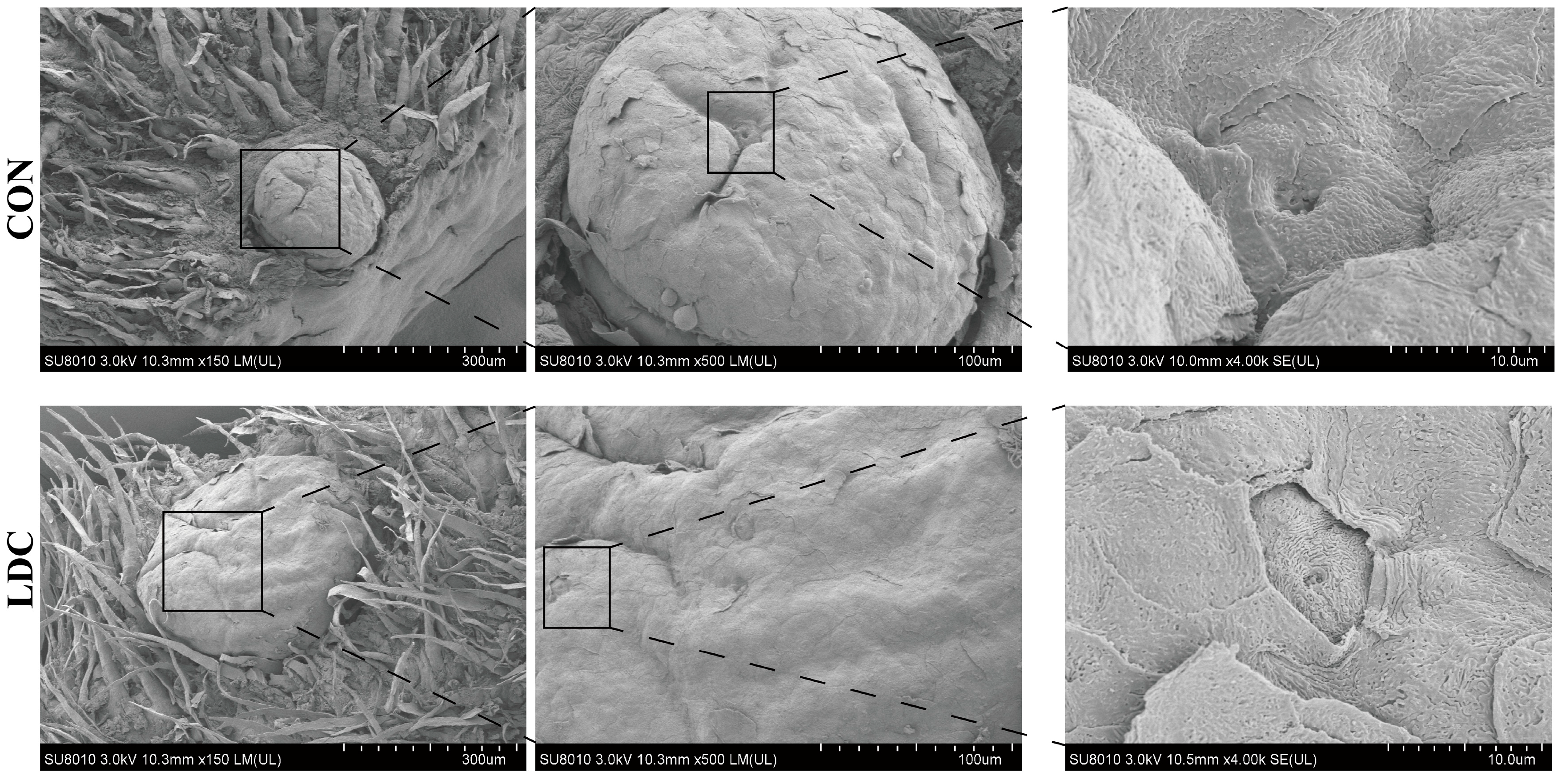
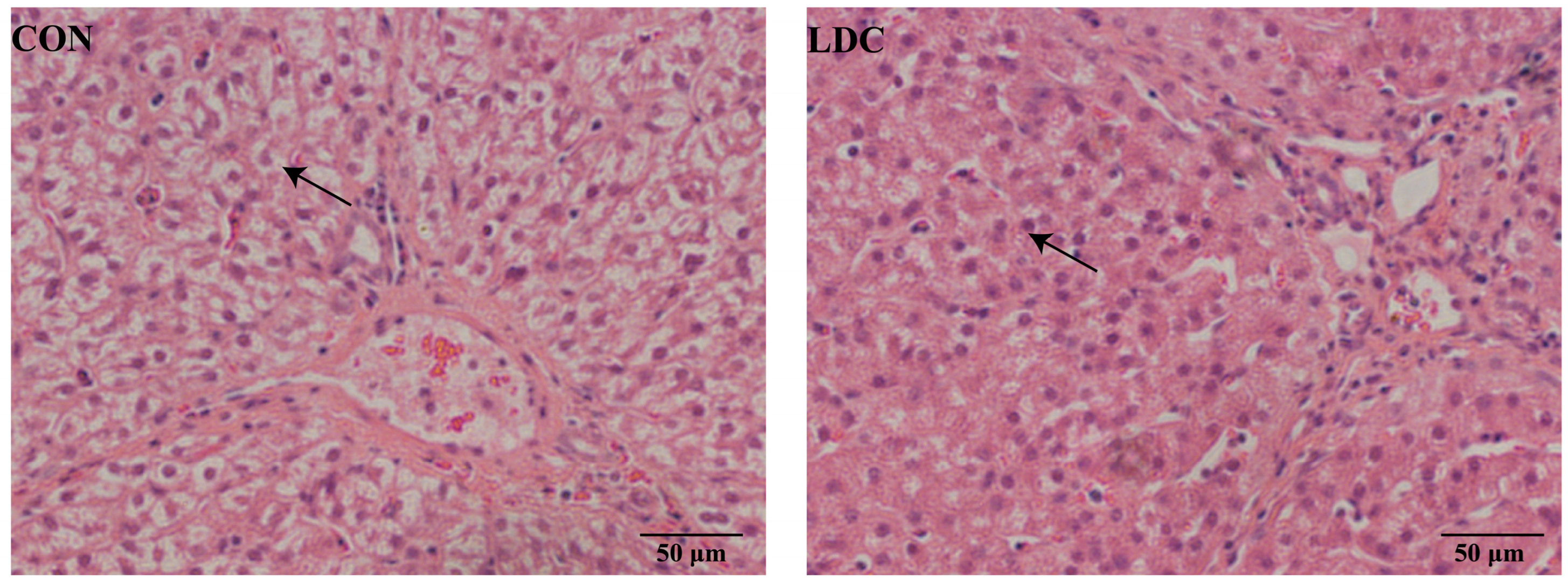
3.3. Organ Indices and Tissue Morphology
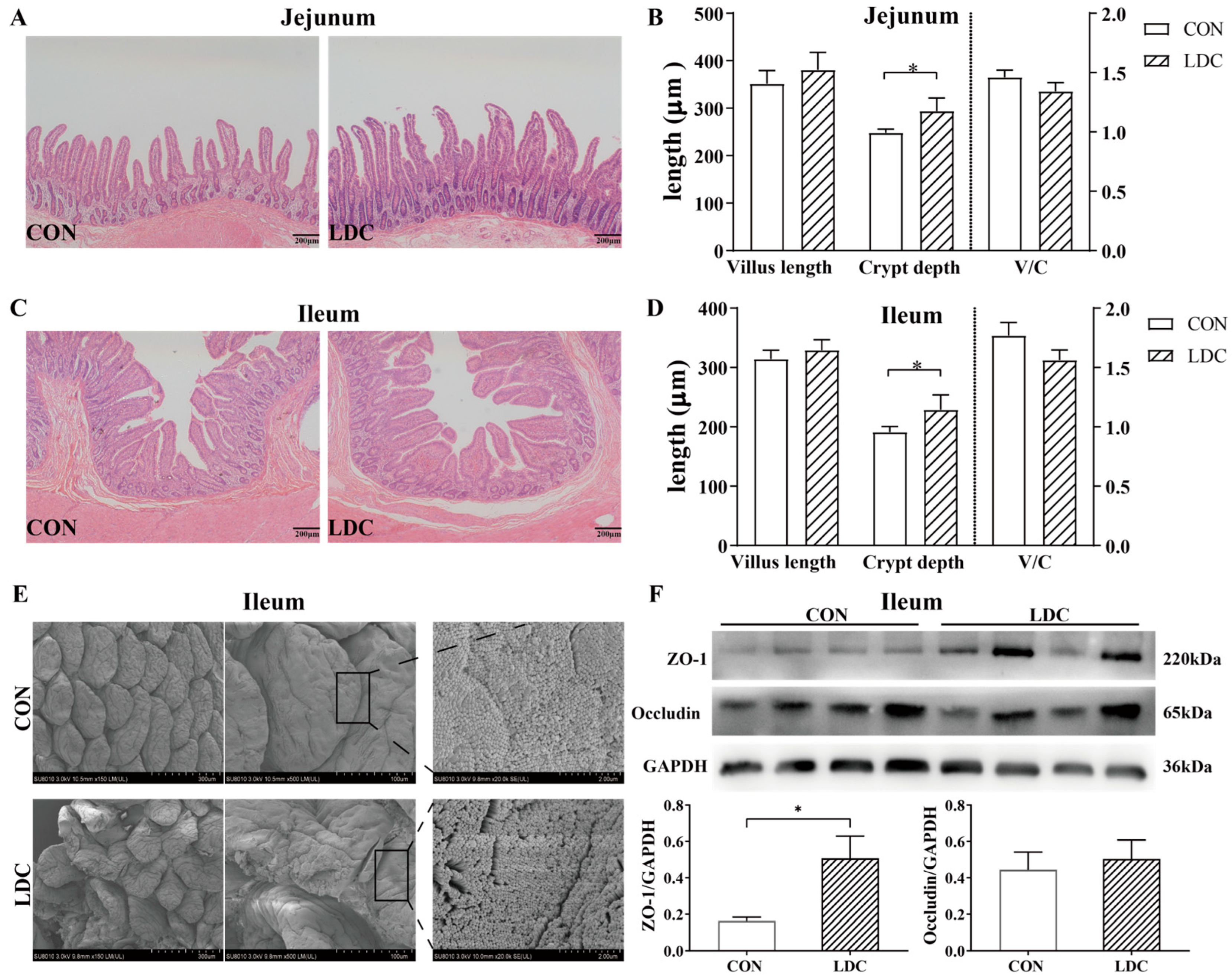
3.4. Intestinal Morphology and Tight Junction Protein Expression
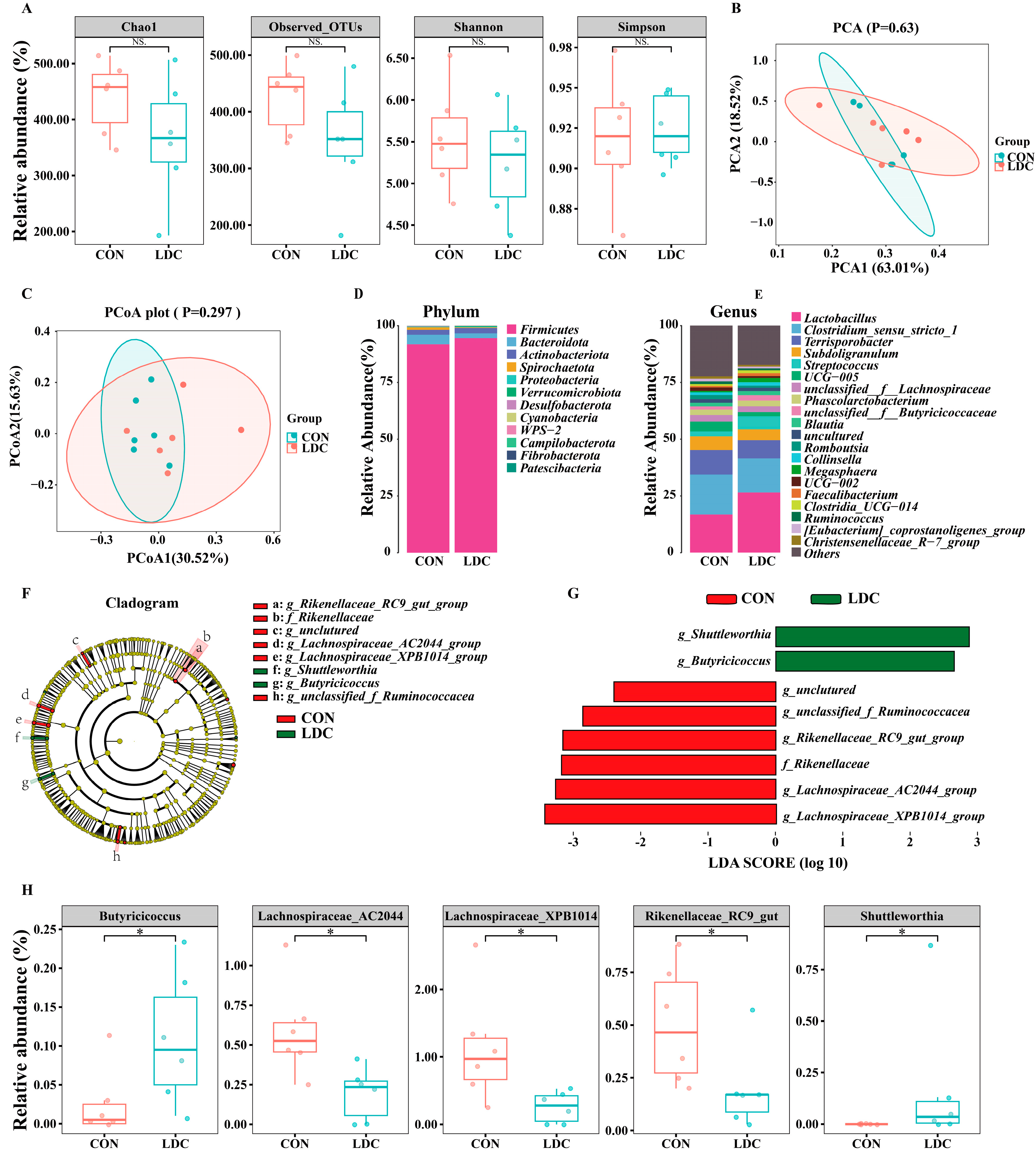
3.5. Colonic Microbiota Composition
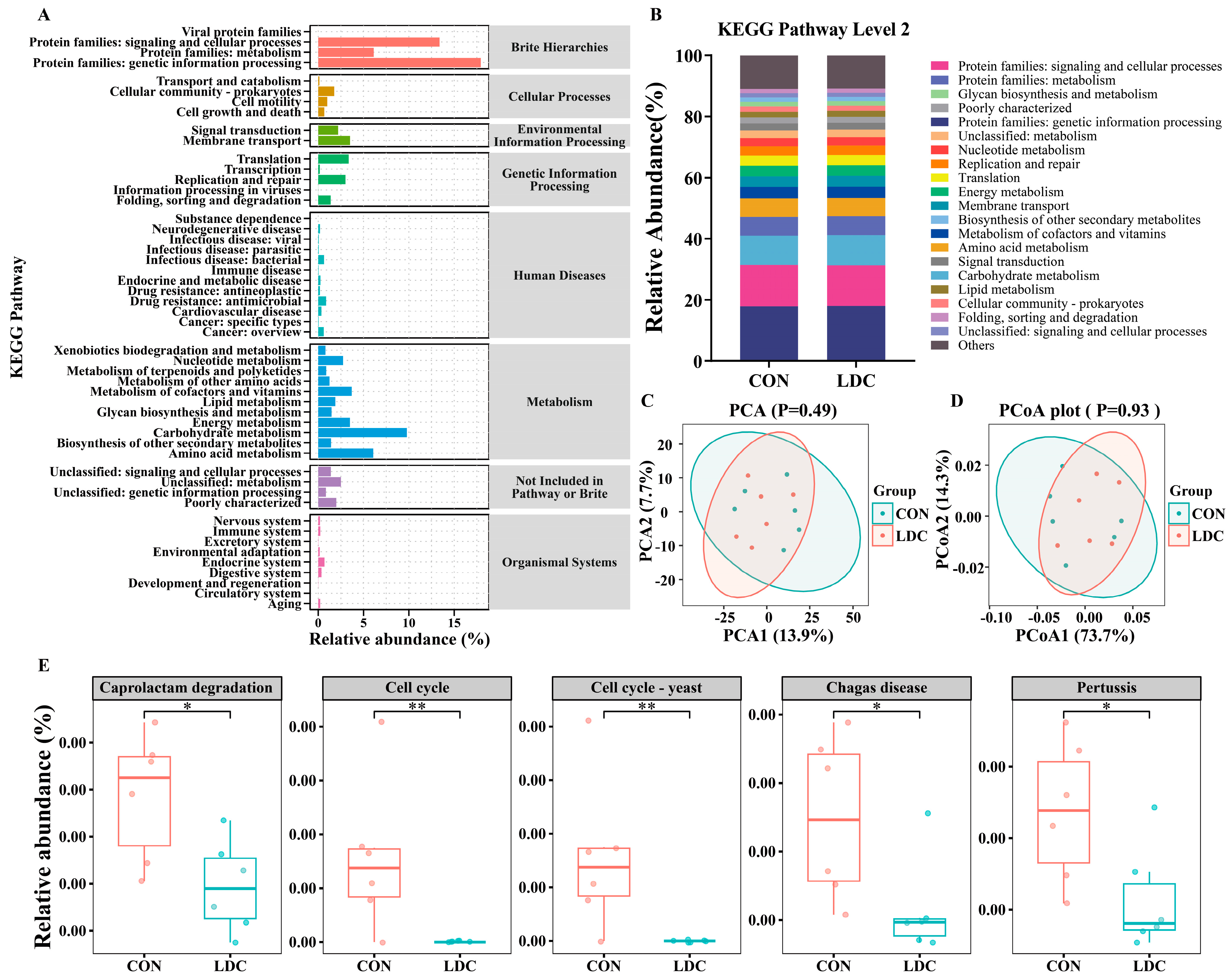
3.6. Predicted Microbial Functions
4. Discussion
5. Conclusions
Author Contributions
Funding
Institutional Review Board Statement
Data Availability Statement
Acknowledgments
Conflicts of Interest
Abbreviations
| CAPs | Capsaicinoids |
| TRPV1 | Transient receptor potential vanilloid 1 |
| CAP | Capsaicin |
| DHC | Dihydrocapsaicin |
| ADFI | Average daily feed intake |
| ADG | Average daily gain |
| F/G | Feed-to-gain ratio |
| IBW | Initial body weight |
| FBW | Final body weight |
| DM | Dry matter |
| CP | Crude protein |
| CF | Crude fat |
| AIA | Acid-insoluble ash |
| ATTD | Apparent total tract digestibility |
| TGs | Triglycerides |
| T-Chol | Total cholesterol |
| LDL-C | Low-density lipoprotein cholesterol |
| HDL-C | High-density lipoprotein cholesterol |
| T-AOC | Total antioxidant capacity |
| SOD | Superoxide dismutase |
| GSH-Px | Glutathione peroxidase |
| MDA | Malondialdehyde |
| ZO-1 | Zonula occludens-1 |
| PCoA | Principal coordinates analysis |
| PCA | Principal component analysis |
| KEGG | Kyoto Encyclopedia of Genes and Genomes |
References
- Pluske, J.R.; Turpin, D.L.; Kim, J.C. Gastrointestinal tract (gut) health in the young pig. Anim. Nutr. 2018, 4, 187–196. [Google Scholar] [CrossRef]
- Upadhaya, S.D.; Kim, I.H. The Impact of Weaning Stress on Gut Health and the Mechanistic Aspects of Several Feed Additives Contributing to Improved Gut Health Function in Weanling Piglets-A Review. Animals 2021, 11, 2418. [Google Scholar] [CrossRef]
- Low, C.X.; Tan, L.T.; Ab Mutalib, N.S.; Pusparajah, P.; Goh, B.H.; Chan, K.G.; Letchumanan, V.; Lee, L.H. Unveiling the Impact of Antibiotics and Alternative Methods for Animal Husbandry: A Review. Antibiotics 2021, 10, 578. [Google Scholar] [CrossRef]
- Brüssow, H. Adjuncts and alternatives in the time of antibiotic resistance and in-feed antibiotic bans. Microb. Biotechnol. 2017, 10, 674–677. [Google Scholar] [CrossRef]
- Allen, H.K.; Trachsel, J.; Looft, T.; Casey, T.A. Finding alternatives to antibiotics. Ann. N. Y. Acad. Sci. 2014, 1323, 91–100. [Google Scholar] [CrossRef]
- Manuelian, C.L.; Pitino, R.; Simoni, M.; Mavrommatis, A.; De Marchi, M.; Righi, F.; Tsiplakou, E. Plant Feed Additives as Natural Alternatives to the Use of Synthetic Antioxidant Vitamins on Livestock Mammals’ Performances, Health, and Oxidative Status: A Review of the Literature in the Last 20 Years. Antioxidants 2021, 10, 1461. [Google Scholar] [CrossRef]
- Righi, F.; Pitino, R.; Manuelian, C.L.; Simoni, M.; Quarantelli, A.; De Marchi, M.; Tsiplakou, E. Plant Feed Additives as Natural Alternatives to the Use of Synthetic Antioxidant Vitamins on Poultry Performances, Health, and Oxidative Status: A Review of the Literature in the Last 20 Years. Antioxidants 2021, 10, 659. [Google Scholar] [CrossRef]
- Patel, K.; Patel, D.K. Biological Importance, Pharmacological Activities, and Nutraceutical Potential of Capsanthin: A Review of Capsicum Plant Capsaicinoids. Curr. Drug Res. Rev. 2023, 16, 18–31. [Google Scholar] [CrossRef]
- Kim, S.; Park, M.; Yeom, S.I.; Kim, Y.M.; Lee, J.M.; Lee, H.A.; Seo, E.; Choi, J.; Cheong, K.; Kim, K.T.; et al. Genome sequence of the hot pepper provides insights into the evolution of pungency in Capsicum species. Nat. Genet. 2014, 46, 270–278. [Google Scholar] [CrossRef]
- Barbero, G.; Liazid, A.; Azaroual, L.; Palma, M.; Barroso, C. Capsaicinoid Contents in Peppers and Pepper-Related Spicy Foods. Int. J. Food Prop. 2015, 19, 150128121033008. [Google Scholar] [CrossRef]
- Smith, J.D.; Stillerová, V.T.; Dračinský, M.; Popr, M.; Angermeier Gaustad, H.L.; Lorenzi, Q.; Smrčková, H.; Reinhardt, J.K.; Liénard, M.A.; Bednárová, L.; et al. Discovery and isolation of novel capsaicinoids and their TRPV1-related activity. Eur. J. Pharmacol. 2025, 999, 177700. [Google Scholar] [CrossRef]
- Gutiérrez-Chávez, V.; Gutiérrez-Chávez, C.; Feregrino-Pérez, A.A.; Gutiérrez-Antonio, C.; Lomas-Soria, C.; Guevara-González, R.G. Capsaicinoids and capsinoids of chilli pepper as feed additives in livestock production: Current and future trends. Anim. Nutr. 2025, 22, 483–501. [Google Scholar] [CrossRef]
- Chen, Z.; Liu, J.; Ding, H.; Yan, C.; Zhu, H.; Huang, S.; Chen, Z.Y. Dietary supplementation with capsaicinoids alleviates obesity in mice fed a high-fat-high-fructose diet. Food Funct. 2024, 15, 8572–8585. [Google Scholar] [CrossRef]
- Kumar, V.; Kumar, V.; Mahajan, N.; Kaur, J.; Devi, K.; Dharavath, R.N.; Singh, R.P.; Kondepudi, K.K.; Bishnoi, M. Mucin secretory action of capsaicin prevents high fat diet-induced gut barrier dysfunction in C57BL/6 mice colon. Biomed. Pharmacother. 2022, 145, 112452. [Google Scholar] [CrossRef]
- Hernández-Pérez, T.; Gómez-García, M.D.R.; Valverde, M.E.; Paredes-López, O. Capsicum annuum (hot pepper): An ancient Latin-American crop with outstanding bioactive compounds and nutraceutical potential. A review. Compr. Rev. Food Sci. Food Saf. 2020, 19, 2972–2993. [Google Scholar] [CrossRef]
- Su, Y.-Y.; Zhang, Y.; Li, Q.; Wang, J.; Shao, Y.-L.; Yu, H.-L.; Xu, C.-S.; Wang, C.; Zhang, J.; Liao, Z.-X. Capsaicinoids and cytotoxic activity in Capsicum annuum var. conoides. J. Mol. Struct. 2025, 1322, 140326. [Google Scholar] [CrossRef]
- Xiang, Q.; Guo, W.; Tang, X.; Cui, S.; Zhang, F.; Liu, X.; Zhao, J.; Zhang, H.; Mao, B.; Chen, W. Capsaicin—The spicy ingredient of chili peppers: A review of the gastrointestinal effects and mechanisms. Trends Food Sci. Technol. 2021, 116, 755–765. [Google Scholar] [CrossRef]
- Chen, K.; Zeng, L.; He, Z.; Yin, K.; Huang, Z.; Wang, Y. The degradation and antioxidant activities of capsaicinoid pungent dietary components from peppers and gingers: The mechanistic insights. LWT 2025, 219, 117557. [Google Scholar] [CrossRef]
- Lu, M.; Chen, C.; Lan, Y.; Xiao, J.; Li, R.; Huang, J.; Huang, Q.; Cao, Y.; Ho, C.T. Capsaicin-the major bioactive ingredient of chili peppers: Bio-efficacy and delivery systems. Food Funct. 2020, 11, 2848–2860. [Google Scholar] [CrossRef]
- Rollyson, W.D.; Stover, C.A.; Brown, K.C.; Perry, H.E.; Stevenson, C.D.; McNees, C.A.; Ball, J.G.; Valentovic, M.A.; Dasgupta, P. Bioavailability of capsaicin and its implications for drug delivery. J. Control Release 2014, 196, 96–105. [Google Scholar] [CrossRef]
- Long, S.; Liu, S.; Wang, J.; Mahfuz, S.; Piao, X. Natural capsicum extract replacing chlortetracycline enhances performance via improving digestive enzyme activities, antioxidant capacity, anti-inflammatory function, and gut health in weaned pigs. Anim. Nutr. 2021, 7, 305–314. [Google Scholar] [CrossRef]
- Zuo, J.; Ling, B.; Long, L.; Li, T.; Lahaye, L.; Yang, C.; Feng, D. Effect of dietary supplementation with protease on growth performance, nutrient digestibility, intestinal morphology, digestive enzymes and gene expression of weaned piglets. Anim. Nutr. 2015, 1, 276–282. [Google Scholar] [CrossRef]
- AOAC. Official Methods of Analyses, 18th ed.; AOAC: Gaithersburg, MD, USA, 2007; Available online: https://www.aoac.org/official-methods-of-analysis/ (accessed on 15 January 2026).
- Liu, J.B.; Yan, H.L.; Cao, S.C.; Liu, J.; Zhang, H.F. Effect of feed intake level on the determination of apparent and standardized total tract digestibility of phosphorus for growing pigs. Anim. Feed Sci. Technol. 2018, 246, 137–143. [Google Scholar] [CrossRef]
- Zhang, Y.; Deng, Z.X.; He, M.L.; Pastor, J.J.; Tedo, G.; Liu, J.X.; Wang, H.F. Olive oil cake extract stabilizes the physiological condition of lipopolysaccharide-challenged piglets by reducing oxidative stress and inflammatory responses and modulating the ileal microbiome. Food Funct. 2021, 12, 10171–10183. [Google Scholar] [CrossRef]
- Douglas, G.M.; Maffei, V.J.; Zaneveld, J.R.; Yurgel, S.N.; Brown, J.R.; Taylor, C.M.; Huttenhower, C.; Langille, M.G.I. PICRUSt2 for prediction of metagenome functions. Nat. Biotechnol. 2020, 38, 685–688. [Google Scholar] [CrossRef]
- Wu, Y.; Yang, J.; Liu, X.; Zhang, Y.; Lei, A.; Yi, R.; Tan, F.; Zhao, X. Preventive effect of small-leaved Kuding tea (Ligustrum robustum) on high-diet-induced obesity in C57BL/6J mice. Food Sci. Nutr. 2020, 8, 4512–4522. [Google Scholar] [CrossRef]
- Zhang, L.; Zhou, M.; Fang, G.; Tang, Y.; Chen, Z.; Liu, X. Hypocholesterolemic effect of capsaicinoids by increased bile acids excretion in ovariectomized rats. Mol. Nutr. Food Res. 2013, 57, 1080–1088. [Google Scholar] [CrossRef]
- Luo, Z.; Ma, L.; Zhao, Z.; He, H.; Yang, D.; Feng, X.; Ma, S.; Chen, X.; Zhu, T.; Cao, T.; et al. TRPV1 activation improves exercise endurance and energy metabolism through PGC-1α upregulation in mice. Cell Res. 2012, 22, 551–564. [Google Scholar] [CrossRef]
- Wang, Y.; Tang, C.; Tang, Y.; Yin, H.; Liu, X. Capsaicin has an anti-obesity effect through alterations in gut microbiota populations and short-chain fatty acid concentrations. Food Nutr. Res. 2020, 64, 3525. [Google Scholar] [CrossRef]
- Kong, L.; Wang, Z.; Xiao, C.; Zhu, Q.; Song, Z. Glycerol Monolaurate Ameliorated Intestinal Barrier and Immunity in Broilers by Regulating Intestinal Inflammation, Antioxidant Balance, and Intestinal Microbiota. Front. Immunol. 2021, 12, 713485. [Google Scholar] [CrossRef]
- Abdel-Salam, O.M.; Abdel-Rahman, R.F.; Sleem, A.A.; Farrag, A.R. Modulation of lipopolysaccharide-induced oxidative stress by capsaicin. Inflammopharmacology 2012, 20, 207–217. [Google Scholar] [CrossRef]
- Yang, S.; Liu, L.; Meng, L.; Hu, X. Capsaicin is beneficial to hyperlipidemia, oxidative stress, endothelial dysfunction, and atherosclerosis in Guinea pigs fed on a high-fat diet. Chem. Biol. Interact. 2019, 297, 1–7. [Google Scholar] [CrossRef]
- Liu, J.G.; Xia, W.G.; Chen, W.; Abouelezz, K.F.M.; Ruan, D.; Wang, S.; Zhang, Y.N.; Huang, X.B.; Li, K.C.; Zheng, C.T.; et al. Effects of capsaicin on laying performance, follicle development, and ovarian antioxidant capacity in aged laying ducks. Poult. Sci. 2021, 100, 101155. [Google Scholar] [CrossRef]
- Wang, Y.W. Research on Modification and Pharmaceutical Properties of Glutathione Peroxidase Mutants. Ph.D. Thesis, Jilin University, Changchun, China, 2022. (In Chinese) [Google Scholar] [CrossRef]
- Liu, W.H. Effects of Three Silage on Growth Performance, Intestinal Structure and Nutrient Availability of Meat Geese. Ph.D. Thesis, Shihezi University, Shihezi, China, 2022. (In Chinese) [Google Scholar] [CrossRef]
- Zhao, X.; Dong, B.; Friesen, M.; Liu, S.; Zhu, C.; Yang, C. Capsaicin Attenuates Lipopolysaccharide-Induced Inflammation and Barrier Dysfunction in Intestinal Porcine Epithelial Cell Line-J2. Front. Physiol. 2021, 12, 715469. [Google Scholar] [CrossRef]
- Kuo, W.T.; Odenwald, M.A.; Turner, J.R.; Zuo, L. Tight junction proteins occludin and ZO-1 as regulators of epithelial proliferation and survival. Ann. N. Y. Acad. Sci. 2022, 1514, 21–33. [Google Scholar] [CrossRef]
- Ou, J.; Courtney, C.M.; Steinberger, A.E.; Tecos, M.E.; Warner, B.W. Nutrition in Necrotizing Enterocolitis and Following Intestinal Resection. Nutrients 2020, 12, 520. [Google Scholar] [CrossRef]
- Li, H.T. Postnatal Early Development of Circumvallate Taste Buds in the Mouse and Effect of Sweet (Acesulfame-k) Stimulation. Master’s Thesis, Zhejiang Gongshang University, Hangzhou, China, 2006. (In Chinese) [Google Scholar] [CrossRef]
- Roper, S.D. TRPs in taste and chemesthesis. Handb. Exp. Pharmacol. 2014, 223, 827–871. [Google Scholar] [CrossRef]
- Rhyu, M.R.; Kim, Y.; Lyall, V. Interactions between Chemesthesis and Taste: Role of TRPA1 and TRPV1. Int. J. Mol. Sci. 2021, 22, 3360. [Google Scholar] [CrossRef]
- Füchtbauer, S.; Mousavi, S.; Bereswill, S.; Heimesaat, M.M. Antibacterial properties of capsaicin and its derivatives and their potential to fight antibiotic resistance—A literature survey. Eur. J. Microbiol. Immunol. 2021, 11, 10–17. [Google Scholar] [CrossRef]
- Ayariga, J.A.; Abugri, D.A.; Amrutha, B.; Villafane, R. Capsaicin Potently Blocks Salmonella typhimurium Invasion of Vero Cells. Antibiotics 2022, 11, 666. [Google Scholar] [CrossRef]
- Kang, C.; Wang, B.; Kaliannan, K.; Wang, X.; Lang, H.; Hui, S.; Huang, L.; Zhang, Y.; Zhou, M.; Chen, M.; et al. Gut Microbiota Mediates the Protective Effects of Dietary Capsaicin against Chronic Low-Grade Inflammation and Associated Obesity Induced by High-Fat Diet. mBio 2017, 8, e00470–00417. [Google Scholar] [CrossRef]
- Isaacson, R.; Kim, H.B. The intestinal microbiome of the pig. Anim. Health Res. Rev. 2012, 13, 100–109. [Google Scholar] [CrossRef]
- Hao, Y.; Gong, Y.; Huang, S.; Ji, S.; Wang, W.; Wang, Y.; Yang, H.; Cao, Z.; Li, S. Effects of Age, Diet CP, NDF, EE, and Starch on the Rumen Bacteria Community and Function in Dairy Cattle. Microorganisms 2021, 9, 1788. [Google Scholar] [CrossRef]
- Liao, R.; Xie, X.; Lv, Y.; Dai, J.; Lin, Y.; Zhu, L. Ages of weaning influence the gut microbiota diversity and function in Chongming white goats. Appl. Microbiol. Biotechnol. 2021, 105, 3649–3658. [Google Scholar] [CrossRef]
- Su, X.L.; Tian, Q.; Zhang, J.; Yuan, X.Z.; Shi, X.S.; Guo, R.B.; Qiu, Y.L. Acetobacteroides hydrogenigenes gen. nov., sp. nov., an anaerobic hydrogen-producing bacterium in the family Rikenellaceae isolated from a reed swamp. Int. J. Syst. Evol. Microbiol. 2014, 64, 2986–2991. [Google Scholar] [CrossRef]
- Trachsel, J.; Humphrey, S.; Allen, H.K. Butyricicoccus porcorum sp. nov., a butyrate-producing bacterium from swine intestinal tract. Int. J. Syst. Evol. Microbiol. 2018, 68, 1737–1742. [Google Scholar] [CrossRef]
- Langille, M.G.; Zaneveld, J.; Caporaso, J.G.; McDonald, D.; Knights, D.; Reyes, J.A.; Clemente, J.C.; Burkepile, D.E.; Vega Thurber, R.L.; Knight, R.; et al. Predictive functional profiling of microbial communities using 16S rRNA marker gene sequences. Nat. Biotechnol. 2013, 31, 814–821. [Google Scholar] [CrossRef]
- Fransen, F.; van Beek, A.A.; Borghuis, T.; Meijer, B.; Hugenholtz, F.; van der Gaast-de Jongh, C.; Savelkoul, H.F.; de Jonge, M.I.; Faas, M.M.; Boekschoten, M.V.; et al. The Impact of Gut Microbiota on Gender-Specific Differences in Immunity. Front. Immunol. 2017, 8, 754. [Google Scholar] [CrossRef]



| Ingredients, % | Nutritional Level a | ||
|---|---|---|---|
| Corn | 43.40 | Digestible energy kcal/kg | 3444 |
| Puffed corn | 16.00 | Metabolisable energy, kcal/kg | 3173 |
| Soybean meal | 10.00 | Net energy, kcal/kg | 2510 |
| Expanded soybean | 10.00 | Crude protein (%) | 19.04 |
| Fermented soybean meal | 5.60 | Crude fat (%) | 5.40 |
| Fish meal | 3.00 | Crude fiber (%) | 2.03 |
| Whey powder | 3.00 | Calcium (%) | 1.02 |
| Glucose | 2.00 | Phosphorus (%) | 0.59 |
| Egg yolk powder | 1.00 | Sodium (%) | 0.26 |
| Soybean oil | 1.00 | Chlorine (%) | 0.33 |
| Stone powder | 1.00 | Salinity (%) | 0.57 |
| Calcium bicarbonate | 0.90 | SID c lysine (%) | 1.18 |
| Wheat flour | 0.59 | SID methionine (%) | 0.36 |
| NaCl | 0.35 | SID threonine (%) | 0.77 |
| L-Lysine hydrochloride (98.5%) | 0.30 | ||
| Acidifier | 0.30 | ||
| Mineral agent | 0.20 | ||
| L-Threonine (98.5%) | 0.15 | ||
| Choline chloride (50%) | 0.10 | ||
| DL-Methionine (98.5%) | 0.06 | ||
| Fungal adsorbent | 0.05 | ||
| Premix b | 1.00 | ||
| Total | 100 |
| Items | CON | LDC | MDC | HDC | SEM | p-Value |
|---|---|---|---|---|---|---|
| IBW, kg | 7.56 | 7.56 | 7.60 | 7.61 | 0.057 | 0.980 |
| FBW, kg | 20.70 | 21.01 | 20.71 | 20.78 | 0.296 | 0.981 |
| ADG, g/d | 375.7 | 384.3 | 374.3 | 374.3 | 9.72 | 0.983 |
| ADFI, g/d | 667.1 | 678.6 | 662.9 | 655.7 | 15.65 | 0.968 |
| F/G | 1.78 | 1.77 | 1.77 | 1.75 | 0.013 | 0.863 |
| Items | CON | LDC | MDC | HDC | SEM | p-Value |
|---|---|---|---|---|---|---|
| Dry matter, % | 85.88 | 86.19 | 86.70 | 85.97 | 0.361 | 0.879 |
| Crude fat, % | 71.80 b | 80.63 a | 81.75 a | 77.18 a,b | 1.170 | 0.009 |
| Crude protein, % | 79.22 | 79.97 | 80.24 | 82.32 | 0.701 | 0.521 |
| Items | CON | LDC | MDC | HDC | SEM | p-Value |
|---|---|---|---|---|---|---|
| TGs, mmol/L | 0.79 | 0.63 | 0.55 | 0.67 | 0.042 | 0.213 |
| T-Chol, mmol/L | 3.28 | 3.25 | 3.06 | 2.92 | 0.106 | 0.606 |
| LDC-C, mmol/L | 1.57 a | 1.25 b | 1.23 b | 0.99 b | 0.059 | 0.004 |
| HDL-C, mmol/L | 1.27 | 1.32 | 1.20 | 1.25 | 0.044 | 0.782 |
| T-AOC, µmol/L | 195.9 | 199.2 | 181.7 | 211.0 | 9.831 | 0.785 |
| SOD, U/mL | 32.60 | 36.72 | 37.12 | 34.09 | 1.572 | 0.716 |
| GSH-Px, U/mL | 590.5 b | 637.9 b | 774.4 a | 793.4 a | 20.26 | <0.001 |
| MDA, nmol/mL | 2.65 | 3.11 | 2.53 | 2.64 | 0.100 | 0.189 |
| Items | CON | LDC | SEM | p-Value |
|---|---|---|---|---|
| Absolute weight of organs, g | ||||
| Spleen | 54.42 | 55.73 | 1.978 | 0.756 |
| Heart | 94.68 | 95.57 | 1.283 | 0.748 |
| Kidney | 110.2 | 102.7 | 3.442 | 0.303 |
| Liver | 628.1 | 644.7 | 22.507 | 0.731 |
| Relative weight of organs, g/kg | ||||
| Spleen | 2.63 | 2.69 | 0.085 | 0.739 |
| Heart | 4.61 | 4.60 | 0.087 | 0.937 |
| Kidney | 5.37 | 4.96 | 0.216 | 0.362 |
| Liver | 30.38 | 30.99 | 0.853 | 0.738 |
Disclaimer/Publisher’s Note: The statements, opinions and data contained in all publications are solely those of the individual author(s) and contributor(s) and not of MDPI and/or the editor(s). MDPI and/or the editor(s) disclaim responsibility for any injury to people or property resulting from any ideas, methods, instructions or products referred to in the content. |
© 2026 by the authors. Licensee MDPI, Basel, Switzerland. This article is an open access article distributed under the terms and conditions of the Creative Commons Attribution (CC BY) license.
Share and Cite
Hou, K.; Ni, Z.; Mao, J.; Wang, H. Effect of Dietary Capsaicinoids Supplementation on Growth Performance, Intestinal Morphology, and Colon Microbiota in Weaned Piglets. Antioxidants 2026, 15, 129. https://doi.org/10.3390/antiox15010129
Hou K, Ni Z, Mao J, Wang H. Effect of Dietary Capsaicinoids Supplementation on Growth Performance, Intestinal Morphology, and Colon Microbiota in Weaned Piglets. Antioxidants. 2026; 15(1):129. https://doi.org/10.3390/antiox15010129
Chicago/Turabian StyleHou, Kangwei, Zhixiang Ni, Jiangdi Mao, and Haifeng Wang. 2026. "Effect of Dietary Capsaicinoids Supplementation on Growth Performance, Intestinal Morphology, and Colon Microbiota in Weaned Piglets" Antioxidants 15, no. 1: 129. https://doi.org/10.3390/antiox15010129
APA StyleHou, K., Ni, Z., Mao, J., & Wang, H. (2026). Effect of Dietary Capsaicinoids Supplementation on Growth Performance, Intestinal Morphology, and Colon Microbiota in Weaned Piglets. Antioxidants, 15(1), 129. https://doi.org/10.3390/antiox15010129