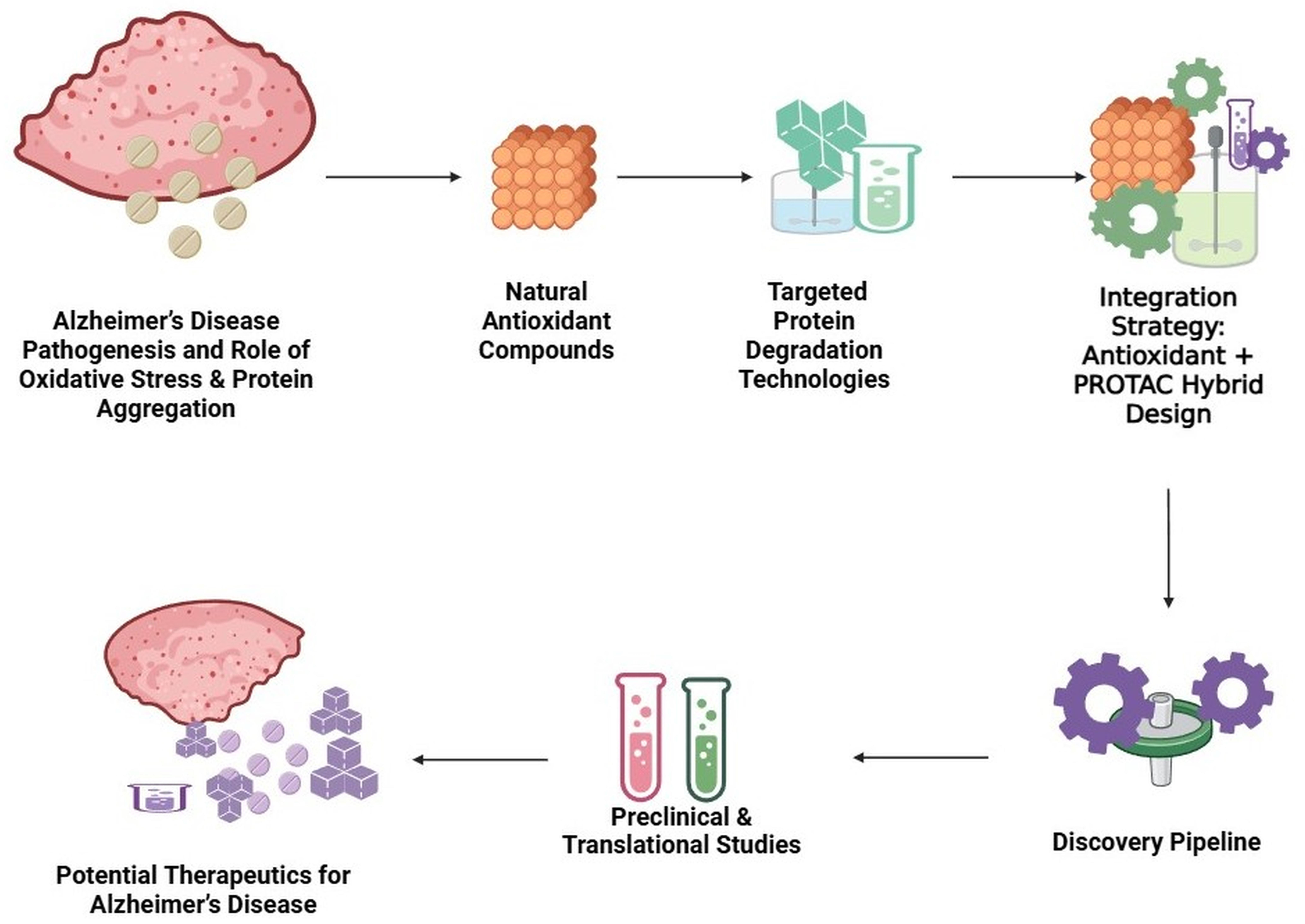
Antioxidant Natural Compounds Integrated with Targeted Protein Degradation: A Multi-Modal Strategy for Alzheimer’s Disease Therapy


Abstract
1. Introduction
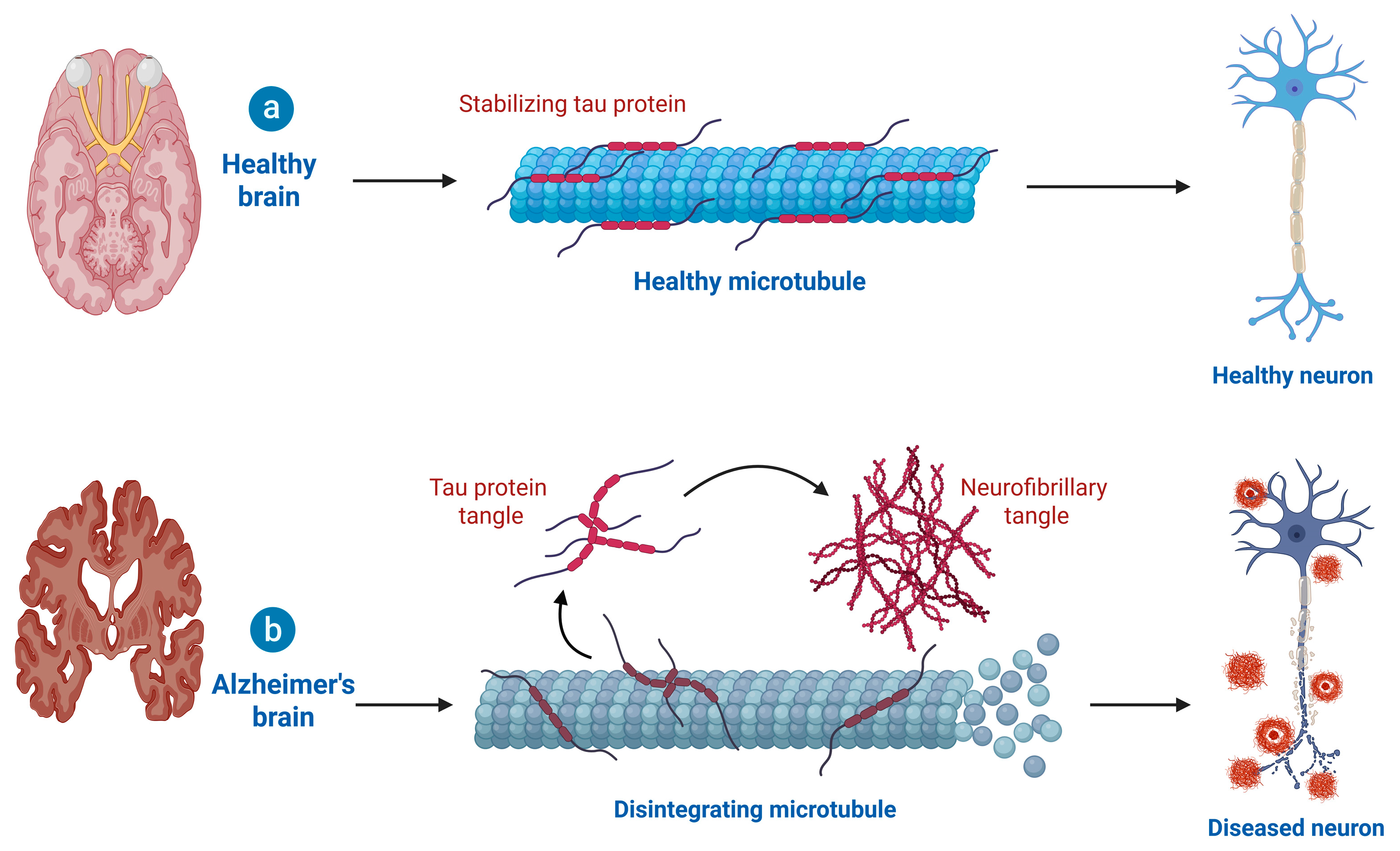
2. Pathology of Alzheimer’s Disease
3. Antioxidant Natural Compounds in Neuroprotection
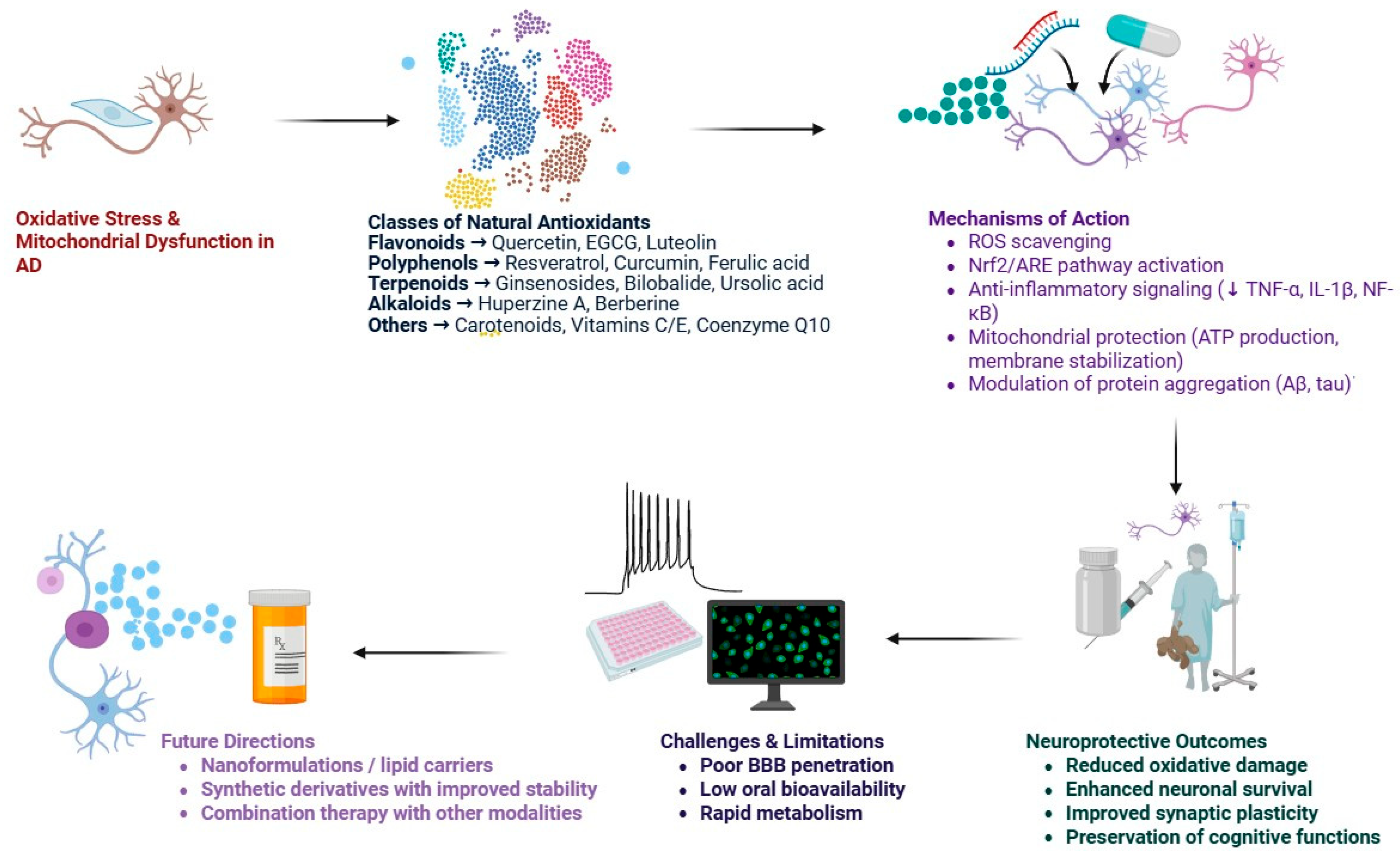
3.1. Oxidative Stress and Mitochondrial Dysfunction in AD
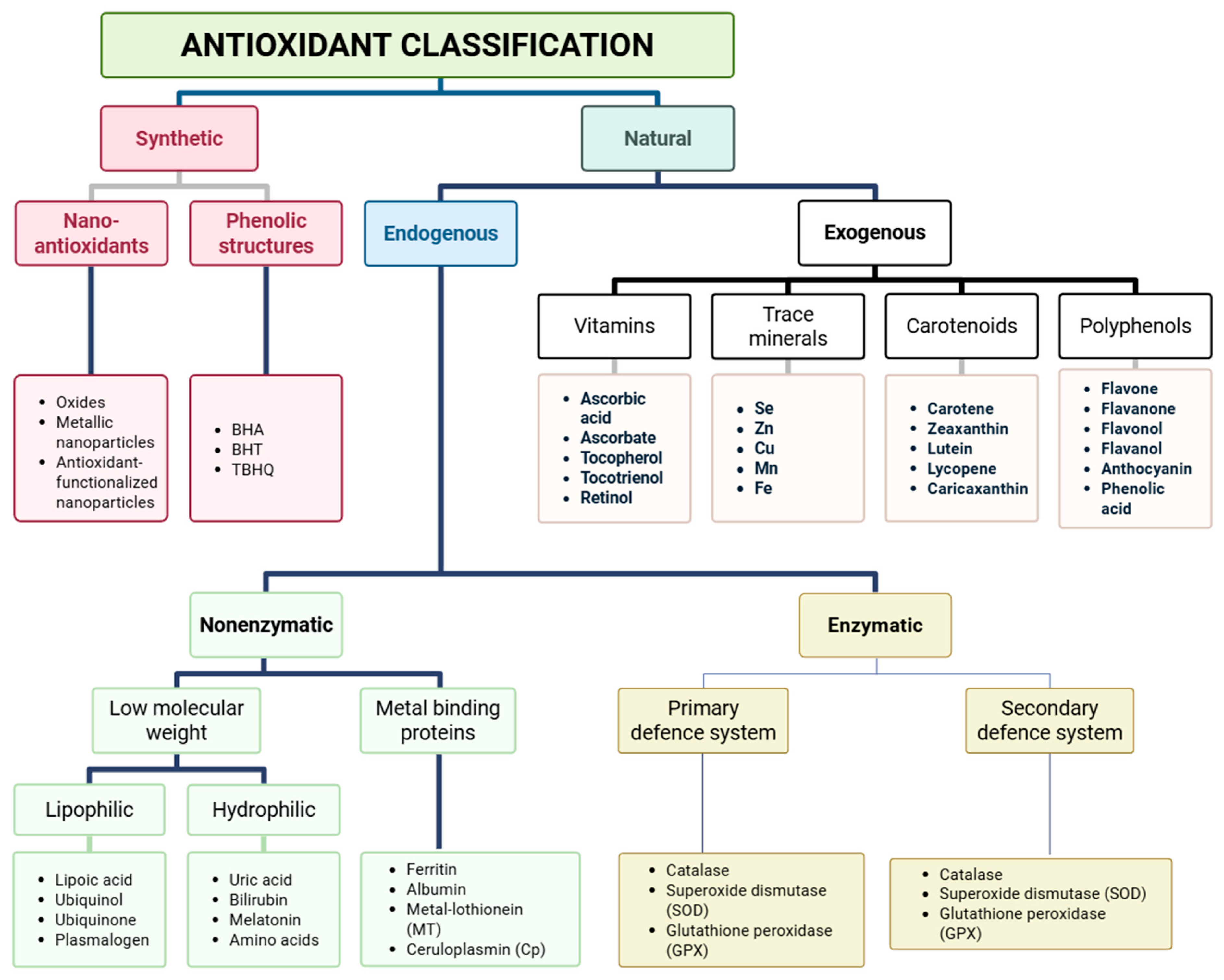
3.2. Classes of Natural Antioxidants
3.3. Mechanisms of Action and ROS Scavenging, Nrf2 Pathway, Anti-Inflammatory Effects
3.4. Challenges of Blood–Brain Barrier (BBB) Permeability and Bioavailability
4. Targeted Protein Degradation Technologies
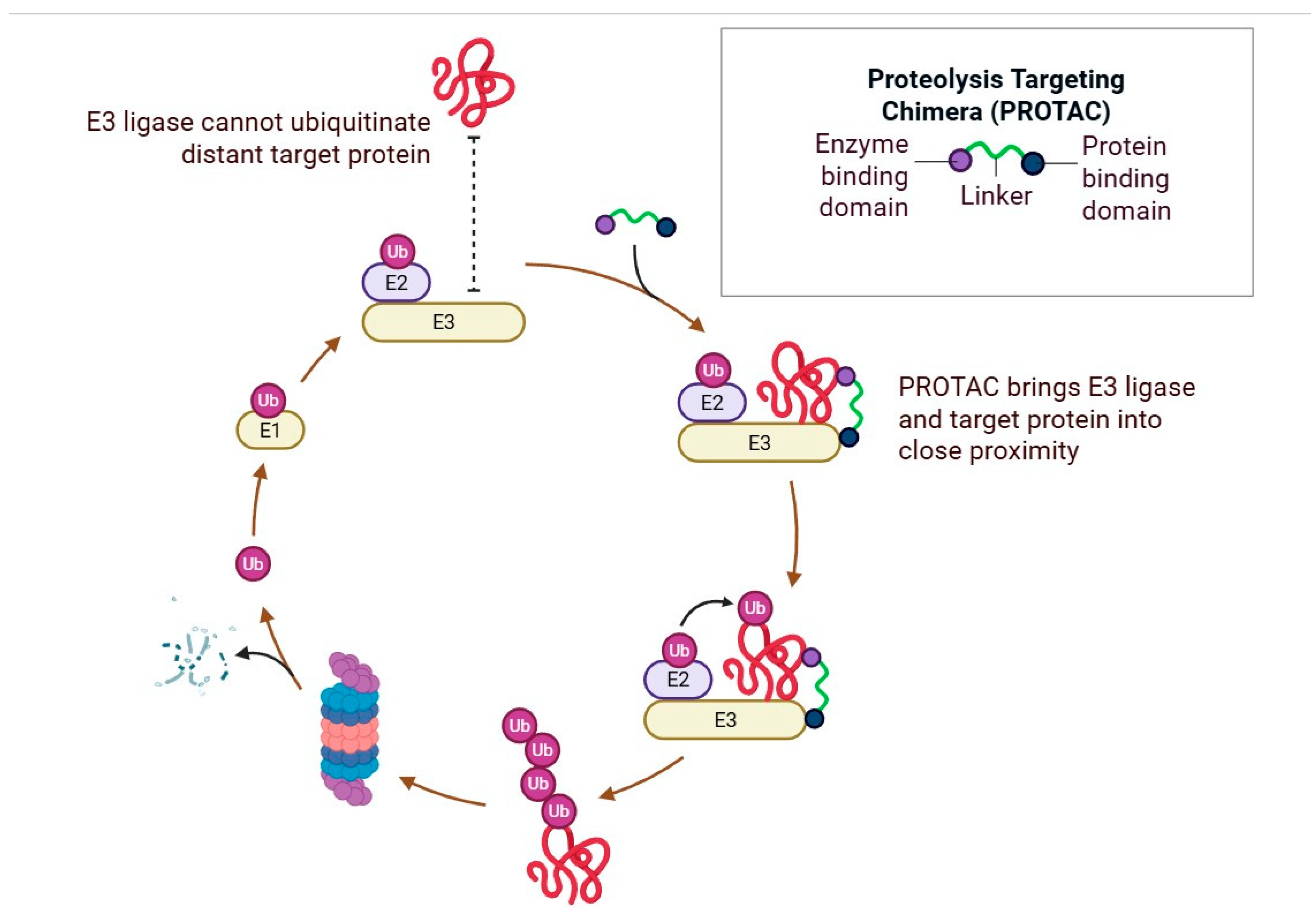
4.1. Overview of PROTACs, Molecular Glues, and Other TPD Modalities
4.2. Main E3 Ligases and the Implications in CNS Disorders
4.3. Neurodegenerative Applications of PROTACs
4.4. Challenges of TPD in the Brain
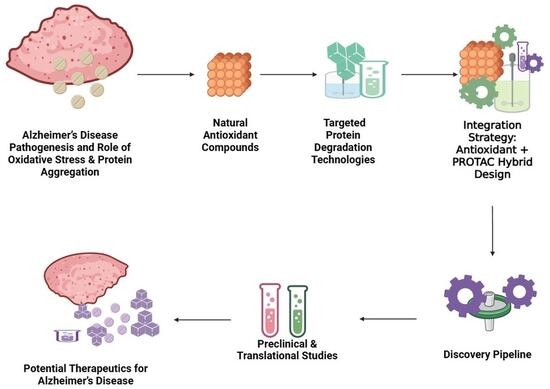
5. Rationale for Integrating Antioxidants with PROTACs
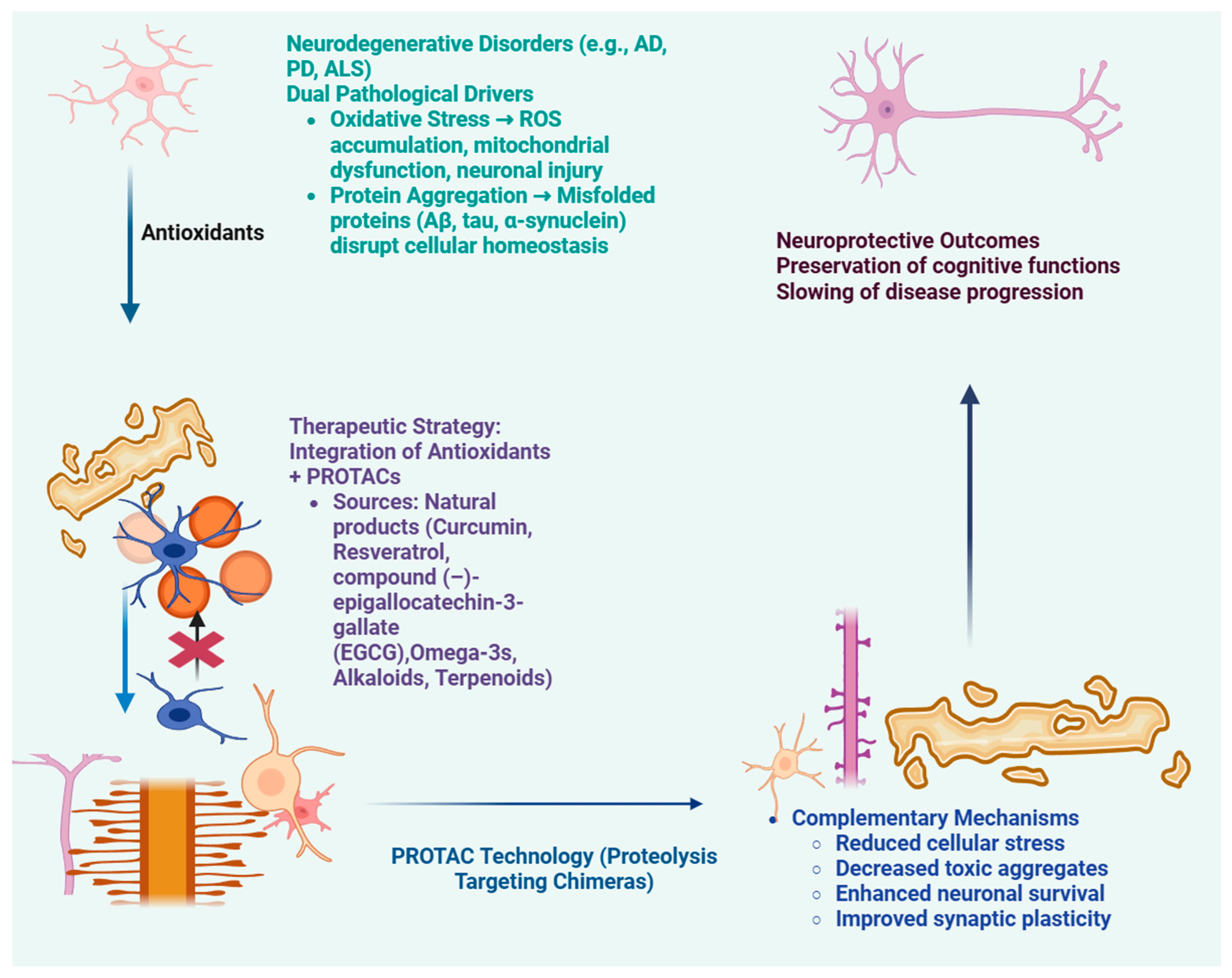
5.1. Complementary Mechanisms: Oxidative Stress Reduction and Protein Clearance


| S.N. | Integration Aspect | Antioxidant Function | PROTAC Function | Complementary Effects/Rationale | Potential Targets in AD | Notes/References | References |
|---|---|---|---|---|---|---|---|
| 1 | Oxidative Stress Mitigation | Scavenge ROS, upregulate Nrf2/ARE pathway, reduce lipid peroxidation, restore mitochondrial function | Facilitates the removal of ROS-generating misfolded proteins indirectly by clearing their source | Reduces neuronal damage caused by oxidative stress while PROTACs remove proteins that exacerbate ROS production | Aβ aggregates, hyperphosphorylated tau, and APP C-terminal fragments | Antioxidants like quercetin, curcumin, and resveratrol can be incorporated into hybrid PROTAC designs | [92] |
| 2 | Protein Clearance | Some antioxidants inhibit aggregation (e.g., curcumin, EGCG), but do not remove proteins | Catalytically degrade pathogenic proteins via E3 ligase recruitment and ubiquitin–proteasome pathway | Combination ensures both inhibition of new aggregate formation and removal of existing aggregates | Tau, Aβ, APP C-terminal fragments, α-synuclein | Dual-action approach addresses upstream (oxidative stress) and downstream (proteinopathy) mechanisms | [93] |
| 3 | Anti-Inflammatory Effects | Suppresses microglial activation and pro-inflammatory cytokines (TNF-α, IL-1β) | Can target proteins driving inflammatory signaling (e.g., NF-κB, NLRP3 inflammasome components) | Synergistic reduction of chronic neuroinflammation in AD, protecting neuronal networks | NF-κB, NLRP3, pro-inflammatory mediators | Provides multi-level protection against AD progression | [94] |
| 4 | Mitochondrial Protection | Maintains membrane potential, ATP production, and biogenesis | Removes proteins that impair mitochondrial function (e.g., tau aggregates) | Preserves energy metabolism and reduces apoptosis; enhances neuronal survival | Tau, misfolded mitochondrial proteins | Integration enhances overall neuronal resilience | [95] |
| 5 | Multi-Targeted Neuroprotection | Broad pleiotropic effects: ROS scavenging, anti-inflammatory, mitochondrial support | Selective protein degradation with catalytic efficiency | Combines pleiotropic neuroprotection with targeted clearance, potentially reducing required dosages and off-target effects | Multiple AD-related proteins and pathways | Forms the conceptual basis for “Antiox-PROTACs” | [96] |
5.2. Putting Potential Targets into the Equation: Tau, Aβ, APP CTFs, and Neuroinflammatory Mediators
5.3. Natural Compounds Like Scaffolds or Warheads for PROTAC Design
6. Combination Delivery and Synergistic Approaches
7. Discovery and Development Pipeline
7.1. High-Throughput Screening of Antioxidant Libraries
7.2. In Vitro Assays: ROS Reduction, Aggregation Inhibition, and Neuronal Protection
7.3. Identifying Targets Using Proteomic and Metabolomic Profiling
7.4. Designing Antioxidant-FIRST Protacs: Scaffold Design and Linker Chemistry
8. Preclinical Evidence and Case Studies
8.1. Natural Antioxidant Leads with Cognitive and Neuroprotective Effects
8.2. Proof-of-Concept PROTACs in Neurodegenerative Models
8.3. Initial Integrative Efforts: Antioxidant Derivatives in TPD Research
9. Translational and Clinical Perspectives
9.1. BBB Delivery and Brain Bioavailability Challenges
9.2. Safety, Off-Target Effects, and Metabolic Stability
9.3. Regulatory and Manufacturing Considerations
10. Future Directions and Opportunities
10.1. Hybrid Molecules: Antioxidant-PROTAC Chimeras
10.2. Delivery Mechanism: Nanoparticle- and Lipid-Based Systems
10.3. Individualized Medicine Approach: Factors in Patient-Specific Pathology
10.4. Collaboration with Emerging Therapeutics: Gene Therapy and Immunotherapy
11. Conclusions
Author Contributions
Funding
Institutional Review Board Statement
Informed Consent Statement
Data Availability Statement
Acknowledgments
Conflicts of Interest
References
- Gaugler, J.; James, B.; Johnson, T.; Reimer, J.; Scales, K.; Tom, S.; Weuve, J.; Yeh, J. 2025 Alzheimer’s Disease Facts and Figures. Alzheimer’s Dement. 2025, 21, e70235. [Google Scholar] [CrossRef] [Scilit]
- Liu, N.; Liang, X.; Chen, Y.; Xie, L. Recent Trends in Treatment Strategies for Alzheimer’s Disease and the Challenges: A Topical Advancement. Ageing Res. Rev. 2024, 94, 102199. [Google Scholar] [CrossRef] [Scilit] [PubMed]
- Golde, T.E. Disease-Modifying Therapies for Alzheimer’s Disease: More Questions than Answers. Neurotherapeutics 2022, 19, 209–227. [Google Scholar] [CrossRef] [Scilit]
- Wang, K.; Yang, R.; Li, J.; Wang, H.; Wan, L.; He, J. Nanocarrier-Based Targeted Drug Delivery for Alzheimer’s Disease: Addressing Neuroinflammation and Enhancing Clinical Translation. Front. Pharmacol. 2025, 16, 1591438. [Google Scholar] [CrossRef] [Scilit]
- Briyal, S.; Ranjan, A.K.; Gulati, A. Oxidative Stress: A Target to Treat Alzheimer’s Disease and Stroke. Neurochem. Int. 2023, 165, 105509. [Google Scholar] [CrossRef] [Scilit]
- Kamaljeet; Singh, S.; Gupta, G.D.; Aran, K.R. Emerging Role of Antioxidants in Alzheimer’s Disease: Insight into Physiological, Pathological Mechanisms and Management. Pharm. Sci. Adv. 2024, 2, 100021. [Google Scholar] [CrossRef] [Scilit]
- Theodosis-Nobelos, P.; Varra, F.-N.; Varras, M.; Papagiouvannis, G.; Rekka, E.A. Antioxidant Naturally Occurring Pleiotropically Acting Bioactive Compounds, as Polymeric Nanotherapeutics Against Autoimmune Diseases Progression. Curr. Issues Mol. Biol. 2025, 47, 411. [Google Scholar] [CrossRef] [Scilit]
- Balakrishnan, R.; Jannat, K.; Choi, D.-K. Development of Dietary Small Molecules as Multi-Targeting Treatment Strategies for Alzheimer’s Disease. Redox Biol. 2024, 71, 103105. [Google Scholar] [CrossRef] [Scilit] [PubMed]
- Bondeson, D.P.; Crews, C.M. Targeted Protein Degradation by Small Molecules. Annu. Rev. Pharmacol. Toxicol. 2017, 57, 107–123. [Google Scholar] [CrossRef] [Scilit] [PubMed]
- Pravin, N.; Jóźwiak, K. PROTAC Unleashed: Unveiling the Synthetic Approaches and Potential Therapeutic Applications. Eur. J. Med. Chem. 2024, 279, 116837. [Google Scholar] [CrossRef] [Scilit]
- Graham, H. The Mechanism of Action and Clinical Value of PROTACs: A Graphical Review. Cell. Signal. 2022, 99, 110446. [Google Scholar] [CrossRef] [Scilit]
- Hyun, S.; Shin, D. Chemical-Mediated Targeted Protein Degradation in Neurodegenerative Diseases. Life 2021, 11, 607. [Google Scholar] [CrossRef] [Scilit]
- He, Q.; Liu, J.; Liang, J.; Liu, X.; Li, W.; Liu, Z.; Ding, Z.; Tuo, D. Towards Improvements for Penetrating the Blood–Brain Barrier—Recent Progress from a Material and Pharmaceutical Perspective. Cells 2018, 7, 24. [Google Scholar] [CrossRef] [Scilit] [PubMed]
- Pritam, P.; Deka, R.; Bhardwaj, A.; Srivastava, R.; Kumar, D.; Jha, A.K.; Jha, N.K.; Villa, C.; Jha, S.K. Antioxidants in Alzheimer’s Disease: Current Therapeutic Significance and Future Prospects. Biology 2022, 11, 212. [Google Scholar] [CrossRef] [Scilit] [PubMed]
- Scarian, E.; Viola, C.; Dragoni, F.; Di Gerlando, R.; Rizzo, B.; Diamanti, L.; Gagliardi, S.; Bordoni, M.; Pansarasa, O. New Insights into Oxidative Stress and Inflammatory Response in Neurodegenerative Diseases. Int. J. Mol. Sci. 2024, 25, 2698. [Google Scholar] [CrossRef] [Scilit]
- Gong, Y.; Wang, S.; Chen, X.-B.; Yu, B. Utilizing Natural Products as New E3 Ligase Ligands for Targeted Protein Degradation. Chin. J. Nat. Med. 2023, 21, 881–883. [Google Scholar] [CrossRef] [Scilit]
- Newman, D.J.; Cragg, G.M. Natural Products as Sources of New Drugs over the Nearly Four Decades from 01/1981 to 09/2019. J. Nat. Prod. 2020, 83, 770–803. [Google Scholar] [CrossRef] [Scilit]
- Persson, T.; Popescu, B.O.; Cedazo-Minguez, A. Oxidative Stress in Alzheimer’s Disease: Why Did Antioxidant Therapy Fail? Oxidative Med. Cell. Longev. 2014, 2014, 427318. [Google Scholar] [CrossRef] [Scilit] [PubMed]
- Wang, S.; He, F.; Tian, C.; Sun, A. From PROTAC to TPD: Advances and Opportunities in Targeted Protein Degradation. Pharmaceuticals 2024, 17, 100. [Google Scholar] [CrossRef] [Scilit]
- Hatami, M.; Mortazavi, M.; Baseri, Z.; Khani, B.; Rahimi, M.; Babaei, S. Antioxidant Compounds in the Treatment of Alzheimer’s Disease: Natural, Hybrid, and Synthetic Products. Evid.-Based Complement. Altern. Med. 2023, 2023, 8056462. [Google Scholar] [CrossRef] [Scilit]
- Sun, X.; Gao, H.; Yang, Y.; He, M.; Wu, Y.; Song, Y.; Tong, Y.; Rao, Y. PROTACs: Great Opportunities for Academia and Industry. Signal Transduct. Target. Ther. 2019, 4, 64. [Google Scholar] [CrossRef] [Scilit]
- Iliyasu, M.O.; Musa, S.A.; Oladele, S.B.; Iliya, A.I. Amyloid-Beta Aggregation Implicates Multiple Pathways in Alzheimer’s Disease: Understanding the Mechanisms. Front. Neurosci. 2023, 17, 1081938. [Google Scholar] [CrossRef] [Scilit]
- Wu, M.; Zhang, M.; Yin, X.; Chen, K.; Hu, Z.; Zhou, Q.; Cao, X.; Chen, Z.; Liu, D. The Role of Pathological Tau in Synaptic Dysfunction in Alzheimer’s Diseases. Transl. Neurodegener. 2021, 10, 45. [Google Scholar] [CrossRef] [Scilit]
- Adamu, A.; Li, S.; Gao, F.; Xue, G. The Role of Neuroinflammation in Neurodegenerative Diseases: Current Understanding and Future Therapeutic Targets. Front. Aging Neurosci. 2024, 16, 1347987. [Google Scholar] [CrossRef] [Scilit]
- Gireud-Goss, M.; Mack, A.F.; McCullough, L.D.; Urayama, A. Cerebral Amyloid Angiopathy and Blood-Brain Barrier Dysfunction. Neuroscientist 2021, 27, 668–684. [Google Scholar] [CrossRef] [Scilit]
- Kamatham, P.T.; Shukla, R.; Khatri, D.K.; Vora, L.K. Pathogenesis, Diagnostics, and Therapeutics for Alzheimer’s Disease: Breaking the Memory Barrier. Ageing Res. Rev. 2024, 101, 102481. [Google Scholar] [CrossRef] [Scilit]
- Farbota, K.D.; Sodhi, A.; Bendlin, B.B.; McLaren, D.G.; Xu, G.; Rowley, H.A.; Johnson, S.C. Longitudinal Volumetric Changes Following Traumatic Brain Injury: A Tensor-Based Morphometry Study. J. Int. Neuropsychol. Soc. 2012, 18, 1006–1018. [Google Scholar] [CrossRef] [Scilit]
- Brennan, D.J.; Duda, J.; Ware, J.B.; Whyte, J.; Choi, J.Y.; Gugger, J.; Focht, K.; Walter, A.E.; Bushnik, T.; Gee, J.C.; et al. Spatiotemporal Profile of Atrophy in the First Year Following Moderate-severe Traumatic Brain Injury. Hum. Brain Mapp. 2023, 44, 4692–4709. [Google Scholar] [CrossRef] [Scilit] [PubMed]
- Zhang, J.; Zhang, Y.; Wang, J.; Xia, Y.; Zhang, J.; Chen, L. Recent Advances in Alzheimer’s Disease: Mechanisms, Clinical Trials and New Drug Development Strategies. Signal Transduct. Target. Ther. 2024, 9, 211. [Google Scholar] [CrossRef] [Scilit] [PubMed]
- Maggiore, A.; Latina, V.; D’Erme, M.; Amadoro, G.; Coccurello, R. Non-Canonical Pathways Associated to Amyloid Beta and Tau Protein Dyshomeostasis in Alzheimer’s Disease: A Narrative Review. Ageing Res. Rev. 2024, 102, 102578. [Google Scholar] [CrossRef] [Scilit] [PubMed]
- Kim, G.H.; Kim, J.E.; Rhie, S.J.; Yoon, S. The Role of Oxidative Stress in Neurodegenerative Diseases. Exp. Neurobiol. 2015, 24, 325–340. [Google Scholar] [CrossRef] [Scilit]
- Reddy, P.H.; Oliver, D.M. Mitochondrial Dysfunction and Oxidative Stress in Alzheimer’s Disease: Pathogenesis and Therapeutic Interventions. Antioxidants 2019, 8, 609. [Google Scholar] [CrossRef] [Scilit]
- Minocha, T.; Birla, H.; Obaid, A.A.; Rai, V.; Sushma, P.; Shivamallu, C.; Moustafa, M.; Al-Shehri, M.; Al-Emam, A.; Tikhonova, M.A.; et al. Flavonoids as Promising Neuroprotectants and Their Therapeutic Potential against Alzheimer’s Disease. Oxidative Med. Cell. Longev. 2022, 2022, 6038996. [Google Scholar] [CrossRef] [Scilit]
- Yan, L.; Guo, M.-S.; Zhang, Y.; Yu, L.; Wu, J.-M.; Tang, Y.; Ai, W.; Zhu, F.-D.; Law, B.Y.-K.; Chen, Q.; et al. Dietary Plant Polyphenols as the Potential Drugs in Neurodegenerative Diseases: Current Evidence, Advances, and Opportunities. Oxidative Med. Cell. Longev. 2022, 2022, 5288698. [Google Scholar] [CrossRef] [Scilit]
- Gong, L.; Yin, J.; Zhang, Y.; Huang, R.; Lou, Y.; Jiang, H.; Sun, L.; Jia, J.; Zeng, X. Neuroprotective Mechanisms of Ginsenoside Rb1 in Central Nervous System Diseases. Front. Pharmacol. 2022, 13, 914352. [Google Scholar] [CrossRef] [Scilit]
- Friedli, M.J.; Inestrosa, N.C. Huperzine A and Its Neuroprotective Molecular Signaling in Alzheimer’s Disease. Molecules 2021, 26, 6531. [Google Scholar] [CrossRef] [Scilit] [PubMed]
- Paul, R.; Mazumder, M.K.; Nath, J.; Deb, S.; Paul, S.; Bhattacharya, P.; Borah, A. Lycopene—A Pleiotropic Neuroprotective Nutraceutical: Deciphering Its Therapeutic Potentials in Broad Spectrum Neurological Disorders. Neurochem. Int. 2020, 140, 104823. [Google Scholar] [CrossRef] [Scilit] [PubMed]
- Hou, D.; Liao, H.; Hao, S.; Liu, R.; Huang, H.; Duan, C. Curcumin Simultaneously Improves Mitochondrial Dynamics and Myocardial Cell Bioenergy after Sepsis via the SIRT1-DRP1/PGC-1α Pathway. Heliyon 2024, 10, e28501. [Google Scholar] [CrossRef] [Scilit]
- Jeong, H.; Park, J.; Kim, S.; Lee, J.W.; Lee, Y. Natural Compounds and Their Neuroprotective Roles in Alzheimer’s Disease. Int. J. Mol. Sci. 2021, 22, 12542. [Google Scholar] [CrossRef] [Scilit]
- Baptista, F.I.; Henriques, A.G.; Silva, A.M.S.; Wiltfang, J.; Da Cruz E Silva, O.A.B. Flavonoids as Therapeutic Compounds Targeting Key Proteins Involved in Alzheimer’s Disease. ACS Chem. Neurosci. 2014, 5, 83–92. [Google Scholar] [CrossRef] [Scilit]
- Ayala, A.; Muñoz, M.F.; Argüelles, S. Lipid Peroxidation: Production, Metabolism, and Signaling Mechanisms of Malondialdehyde and 4-Hydroxy-2-Nonenal. Oxidative Med. Cell. Longev. 2014, 2014, 360438. [Google Scholar] [CrossRef] [Scilit]
- Islam, M.R.; Rauf, A.; Akash, S.; Trisha, S.I.; Nasim, A.H.; Akter, M.; Dhar, P.S.; Ogaly, H.A.; Hemeg, H.A.; Wilairatana, P.; et al. Targeted Therapies of Curcumin Focus on Its Therapeutic Benefits in Cancers and Human Health: Molecular Signaling Pathway-Based Approaches and Future Perspectives. Biomed. Pharmacother. 2024, 170, 116034. [Google Scholar] [CrossRef] [Scilit]
- Yoo, K.-Y.; Park, S.-Y. Terpenoids as Potential Anti-Alzheimer’s Disease Therapeutics. Molecules 2012, 17, 3524–3538. [Google Scholar] [CrossRef] [Scilit]
- Chaturvedi, R.K.; Beal, M.F. Mitochondrial Approaches for Neuroprotection. Ann. N. Y. Acad. Sci. 2008, 1147, 395–412. [Google Scholar] [CrossRef] [Scilit]
- Suvaiv; Singh, K.; Hasan, S.M.; Kumar, A.; Khan, A.; Shahanawaz, M.; Zaidi, S.M.H.; Verma, K. Huperzine A: A Natural Acetylcholinesterase Inhibitor with Multifunctional Neuroprotective Effects. Beni-Suef Univ. J. Basic Appl. Sci. 2025, 14, 82. [Google Scholar] [CrossRef] [Scilit]
- Wang, R.; Yan, H.; Tang, X.C. Progress in Studies of Huperzine A, a Natural Cholinesterase Inhibitor from Huperzia serrata. J. Ethnopharmacol. 2006, 104, 1–14. [Google Scholar] [CrossRef] [Scilit]
- Da Rosa, M.M.; De Amorim, L.C.; Alves, J.V.D.O.; Aguiar, I.F.D.S.; Oliveira, F.G.D.S.; Da Silva, M.V.; Dos Santos, M.T.C. The Promising Role of Natural Products in Alzheimer’s Disease. Brain Disord. 2022, 7, 100049. [Google Scholar] [CrossRef] [Scilit]
- Rehman, M.U.; Wali, A.F.; Ahmad, A.; Shakeel, S.; Rasool, S.; Ali, R.; Rashid, S.M.; Madkhali, H.; Ganaie, M.A.; Khan, R. Neuroprotective Strategies for Neurological Disorders by Natural Products: An Update. Curr. Neuropharmacol. 2019, 17, 247–267. [Google Scholar] [CrossRef] [Scilit] [PubMed]
- Sikder, M.M.; Li, X.; Akumwami, S.; Labony, S.A. Reactive Oxygen Species: Role in Pathophysiology, and Mechanism of Endogenous and Dietary Antioxidants during Oxidative Stress. Chonnam Med. J. 2025, 61, 32–45. [Google Scholar] [CrossRef] [Scilit] [PubMed]
- Li, X.; Wu, Z.; Si, X.; Li, J.; Wu, G.; Wang, M. The Role of Mitochondrial Dysfunction in the Pathogenesis of Alzheimer’s Disease and Future Strategies for Targeted Therapy. Eur. J. Med. Res. 2025, 30, 434. [Google Scholar] [CrossRef] [Scilit] [PubMed]
- Alonso-Piñeiro, J.A.; Gonzalez-Rovira, A.; Sánchez-Gomar, I.; Moreno, J.A.; Durán-Ruiz, M.C. Nrf2 and Heme Oxygenase-1 Involvement in Atherosclerosis Related Oxidative Stress. Antioxidants 2021, 10, 1463. [Google Scholar] [CrossRef] [Scilit]
- Zahedipour, F.; Hosseini, S.; Henney, N.; Barreto, G.; Sahebkar, A. Phytochemicals as Inhibitors of Tumor Necrosis Factor Alpha and Neuroinflammatory Responses in Neurodegenerative Diseases. Neural Regen. Res. 2022, 17, 1675–1684. [Google Scholar] [CrossRef] [Scilit] [PubMed]
- Diaz-Vegas, A.; Sanchez-Aguilera, P.; Krycer, J.R.; Morales, P.E.; Monsalves-Alvarez, M.; Cifuentes, M.; Rothermel, B.A.; Lavandero, S. Is Mitochondrial Dysfunction a Common Root of Noncommunicable Chronic Diseases? Endocr. Rev. 2020, 41, bnaa005. [Google Scholar] [CrossRef] [Scilit]
- Bieschke, J. Natural Compounds May Open New Routes to Treatment of Amyloid Diseases. Neurotherapeutics 2013, 10, 429–439. [Google Scholar] [CrossRef] [Scilit] [PubMed]
- Chen, M.; Du, Z.-Y.; Zheng, X.; Li, D.-L.; Zhou, R.-P.; Zhang, K. Use of Curcumin in Diagnosis, Prevention, and Treatment of Alzheimer’s Disease. Neural Regen. Res. 2018, 13, 742–752. [Google Scholar] [CrossRef] [Scilit]
- Zimmermann, G.R.; Lehár, J.; Keith, C.T. Multi-Target Therapeutics: When the Whole Is Greater than the Sum of the Parts. Drug Discov. Today 2007, 12, 34–42. [Google Scholar] [CrossRef] [Scilit]
- Geldenhuys, W.J.; Mohammad, A.S.; Adkins, C.E.; Lockman, P.R. Molecular Determinants of Blood–Brain Barrier Permeation. Ther. Deliv. 2015, 6, 961–971. [Google Scholar] [CrossRef] [Scilit] [PubMed]
- Liu, Z.; Smart, J.D.; Pannala, A.S. Recent Developments in Formulation Design for Improving Oral Bioavailability of Curcumin: A Review. J. Drug Deliv. Sci. Technol. 2020, 60, 102082. [Google Scholar] [CrossRef] [Scilit]
- Benameur, T.; Giacomucci, G.; Panaro, M.A.; Ruggiero, M.; Trotta, T.; Monda, V.; Pizzolorusso, I.; Lofrumento, D.D.; Porro, C.; Messina, G. New Promising Therapeutic Avenues of Curcumin in Brain Diseases. Molecules 2021, 27, 236. [Google Scholar] [CrossRef] [Scilit]
- Liu, Z.; Hu, M. Natural Polyphenol Disposition via Coupled Metabolic Pathways. Expert Opin. Drug Metab. Toxicol. 2007, 3, 389–406. [Google Scholar] [CrossRef] [Scilit]
- Crawford, L.; Rosch, J.; Putnam, D. Concepts, Technologies, and Practices for Drug Delivery Past the Blood–Brain Barrier to the Central Nervous System. J. Control. Release 2016, 240, 251–266. [Google Scholar] [CrossRef] [Scilit]
- Liu, S.; Jin, X.; Ge, Y.; Dong, J.; Liu, X.; Pei, X.; Wang, P.; Wang, B.; Chang, Y.; Yu, X. Advances in Brain-Targeted Delivery Strategies and Natural Product-Mediated Enhancement of Blood–Brain Barrier Permeability. J. Nanobiotechnol. 2025, 23, 382. [Google Scholar] [CrossRef] [Scilit] [PubMed]
- Goyal, R.; Mittal, P.; Gautam, R.K.; Kamal, M.A.; Perveen, A.; Garg, V.; Alexiou, A.; Saboor, M.; Haque, S.; Farhana, A.; et al. Natural Products in the Management of Neurodegenerative Diseases. Nutr. Metab. 2024, 21, 26. [Google Scholar] [CrossRef] [Scilit] [PubMed]
- Eladl, O. Molecular Glues and PROTACs in Targeted Protein Degradation: Mechanisms, Advances, and Therapeutic Potential. Biochem. Pharmacol. 2025, 242, 117297. [Google Scholar] [CrossRef] [Scilit]
- Pan, Y.; Wang, Y.; Gou, S. Proteolysis Targeting Chimera, Molecular Glue Degrader and Hydrophobic Tag Tethering Degrader for Targeted Protein Degradation: Mechanisms, Strategies and Application. Bioorg. Chem. 2025, 161, 108491. [Google Scholar] [CrossRef] [Scilit] [PubMed]
- Alabi, S.B.; Crews, C.M. Major Advances in Targeted Protein Degradation: PROTACs, LYTACs, and MADTACs. J. Biol. Chem. 2021, 296, 100647. [Google Scholar] [CrossRef] [Scilit]
- Amirian, R.; Badrbani, M.A.; Izadi, Z.; Samadian, H.; Bahrami, G.; Sarvari, S.; Abdolmaleki, S.; Nabavi, S.M.; Derakhshankhah, H.; Jaymand, M. Targeted Protein Modification as a Paradigm Shift in Drug Discovery. Eur. J. Med. Chem. 2023, 260, 115765. [Google Scholar] [CrossRef] [Scilit]
- Zhong, G.; Chang, X.; Xie, W.; Zhou, X. Targeted Protein Degradation: Advances in Drug Discovery and Clinical Practice. Signal Transduct. Target. Ther. 2024, 9, 308. [Google Scholar] [CrossRef] [Scilit]
- Heim, C.; Pliatsika, D.; Mousavizadeh, F.; Bär, K.; Hernandez Alvarez, B.; Giannis, A.; Hartmann, M.D. De-Novo Design of Cereblon (CRBN) Effectors Guided by Natural Hydrolysis Products of Thalidomide Derivatives. J. Med. Chem. 2019, 62, 6615–6629. [Google Scholar] [CrossRef] [Scilit]
- Madhukar, G.; Haque, M.A.; Khan, S.; Kim, J.-J. Danishuddin E3 Ubiquitin Ligases and Their Therapeutic Potential in Disease Management. Biochem. Pharmacol. 2025, 236, 116875. [Google Scholar] [CrossRef] [Scilit]
- Schapira, M.; Calabrese, M.F.; Bullock, A.N.; Crews, C.M. Targeted Protein Degradation: Expanding the Toolbox. Nat. Rev. Drug Discov. 2019, 18, 949–963. [Google Scholar] [CrossRef] [Scilit]
- Nalawansha, D.A.; Crews, C.M. PROTACs: An Emerging Therapeutic Modality in Precision Medicine. Cell Chem. Biol. 2020, 27, 998–1014. [Google Scholar] [CrossRef] [Scilit]
- Farrell, K.; Jarome, T.J. Is PROTAC Technology Really a Game Changer for Central Nervous System Drug Discovery? Expert Opin. Drug Discov. 2021, 16, 833–840. [Google Scholar] [CrossRef] [Scilit]
- Agarwal, P.; Reid, D.L.; Amiji, M. CNS Delivery of Targeted Protein Degraders. J. Control. Release 2024, 372, 661–673. [Google Scholar] [CrossRef] [Scilit]
- Hersh, D.S.; Wadajkar, A.S.; Roberts, N.B.; Perez, J.G.; Connolly, N.P.; Frenkel, V.; Winkles, J.A.; Woodworth, G.F.; Kim, A.J. Evolving Drug Delivery Strategies to Overcome the Blood Brain Barrier. Curr. Pharm. Des. 2016, 22, 1177–1193. [Google Scholar] [CrossRef] [Scilit]
- Abdul Razzak, R.; Florence, G.J.; Gunn-Moore, F.J. Approaches to CNS Drug Delivery with a Focus on Transporter-Mediated Transcytosis. Int. J. Mol. Sci. 2019, 20, 3108. [Google Scholar] [CrossRef] [Scilit] [PubMed]
- Wang, C.; Zhang, Y.; Yu, W.; Xu, J.; Xing, D. PROTAC-Biomacromolecule Conjugates for Precise Protein Degradation in Cancer Therapy: A Review. Int. J. Biol. Macromol. 2024, 261, 129864. [Google Scholar] [CrossRef] [Scilit] [PubMed]
- Jevtić, P.; Haakonsen, D.L.; Rapé, M. An E3 Ligase Guide to the Galaxy of Small-Molecule-Induced Protein Degradation. Cell Chem. Biol. 2021, 28, 1000–1013. [Google Scholar] [CrossRef] [Scilit]
- Kuemper, S.; Cairns, A.G.; Birchall, K.; Yao, Z.; Large, J.M. Targeted Protein Degradation in CNS Disorders: A Promising Route to Novel Therapeutics? Front. Mol. Neurosci. 2024, 17, 1370509. [Google Scholar] [CrossRef] [Scilit]
- Dale, B.; Cheng, M.; Park, K.S.; Kaniskan, H.; Xiong, Y.; Jin, J. Advancing Targeted Protein Degradation for Cancer Therapy. Nat. Rev. Cancer 2021, 21, 638–654. [Google Scholar] [CrossRef] [Scilit] [PubMed]
- Ozceylan, O.; Sezgin-Bayindir, Z. Current Overview on the Use of Nanosized Drug Delivery Systems in the Treatment of Neurodegenerative Diseases. ACS Omega 2024, 9, 35223–35242. [Google Scholar] [CrossRef] [Scilit] [PubMed]
- Bond, M.J.; Crews, C.M. Proteolysis Targeting Chimeras (PROTACs) Come of Age: Entering the Third Decade of Targeted Protein Degradation. RSC Chem. Biol. 2021, 2, 725–742. [Google Scholar] [CrossRef] [Scilit]
- Wu, H.; Yao, H.; He, C.; Jia, Y.; Zhu, Z.; Xu, S.; Li, D.; Xu, J. Molecular Glues Modulate Protein Functions by Inducing Protein Aggregation: A Promising Therapeutic Strategy of Small Molecules for Disease Treatment. Acta Pharm. Sin. B 2022, 12, 3548–3566. [Google Scholar] [CrossRef] [Scilit]
- Ahn, G.; Banik, S.M.; Bertozzi, C.R. Degradation from the Outside in: Targeting Extracellular and Membrane Proteins for Degradation through the Endolysosomal Pathway. Cell Chem. Biol. 2021, 28, 1072–1080. [Google Scholar] [CrossRef] [Scilit]
- Shao, J.; Xie, S.; Hong, S.; Qian, L. Autophagy-Mediated Targeted Protein Degradation. ChemMedChem 2025, 20, e202400866. [Google Scholar] [CrossRef] [Scilit]
- Ding, Y.; Xing, D.; Fei, Y.; Luo, S.; Lu, B. Perspectives of Autophagy-Tethering Compounds (ATTECs) in Drug Discovery. Med. Plus 2024, 1, 100004. [Google Scholar] [CrossRef] [Scilit]
- Roda, A.; Serra-Mir, G.; Montoliu-Gaya, L.; Tiessler, L.; Villegas, S. Amyloid-Beta Peptide and Tau Protein Crosstalk in Alzheimer’s Disease. Neural Regen. Res. 2022, 17, 1666–1674. [Google Scholar] [CrossRef] [Scilit]
- Singh, S.; Nagalakshmi, D.; Sharma, K.K.; Ravichandiran, V. Natural Antioxidants for Neuroinflammatory Disorders and Possible Involvement of Nrf2 Pathway: A Review. Heliyon 2021, 7, e06216. [Google Scholar] [CrossRef] [Scilit]
- Neklesa, T.K.; Winkler, J.D.; Crews, C.M. Targeted Protein Degradation by PROTACs. Pharmacol. Ther. 2017, 174, 138–144. [Google Scholar] [CrossRef] [Scilit] [PubMed]
- Thiruvengadam, R.; Kondapavuluri, B.K.; Thangavelu, L.; Thiruvengadam, M.; Hatami, M.; Kim, J.H. Nanoparticle-Based Strategies with Bioactive Compounds for Targeting Oxidative Stress in Therapeutic Interventions: A Comprehensive Review. Ind. Crops Prod. 2025, 227, 120804. [Google Scholar] [CrossRef] [Scilit]
- Gadhave, D.G.; Sugandhi, V.V.; Jha, S.K.; Nangare, S.N.; Gupta, G.; Singh, S.K.; Dua, K.; Cho, H.; Hansbro, P.M.; Paudel, K.R. Neurodegenerative Disorders: Mechanisms of Degeneration and Therapeutic Approaches with Their Clinical Relevance. Ageing Res. Rev. 2024, 99, 102357. [Google Scholar] [CrossRef] [Scilit]
- Jomova, K.; Raptova, R.; Alomar, S.Y.; Alwasel, S.H.; Nepovimova, E.; Kuca, K.; Valko, M. Reactive Oxygen Species, Toxicity, Oxidative Stress, and Antioxidants: Chronic Diseases and Aging. Arch. Toxicol. 2023, 97, 2499–2574. [Google Scholar] [CrossRef] [Scilit]
- Hommen, F.; Bilican, S.; Vilchez, D. Protein Clearance Strategies for Disease Intervention. J. Neural Transm. 2022, 129, 141–172. [Google Scholar] [CrossRef] [Scilit]
- Kamila, P.; Kar, K.; Chowdhury, S.; Chakraborty, P.; Dutta, R.; Sowmiya, S.; Singh, S.A.; Prajapati, B.G. Effect of Neuroinflammation on the Progression of Alzheimer’s Disease and Its Significant Ramifications for Novel Anti-Inflammatory Treatments. IBRO Neurosci. Rep. 2025, 18, 771–782. [Google Scholar] [CrossRef] [Scilit] [PubMed]
- D’Alessandro, M.C.B.; Kanaan, S.; Geller, M.; Praticò, D.; Daher, J.P.L. Mitochondrial Dysfunction in Alzheimer’s Disease. Ageing Res. Rev. 2025, 107, 102713. [Google Scholar] [CrossRef] [Scilit]
- Halliwell, B. Reactive Oxygen Species (ROS), Oxygen Radicals and Antioxidants: Where Are We Now, Where Is the Field Going and Where Should We Go? Biochem. Biophys. Res. Commun. 2022, 633, 17–19. [Google Scholar] [CrossRef] [Scilit]
- Zhang, P.; Zhang, Z.; Li, J.; Xu, M.; Lu, W.; Chen, M.; Shi, J.; Wang, Q.; Zhang, H.; Huang, S.; et al. Advanced PROTAC and Quantitative Proteomics Strategy Reveals Bax Inhibitor-1 as a Critical Target of Icaritin in Burkitt Lymphoma. Int. J. Mol. Sci. 2024, 25, 12944. [Google Scholar] [CrossRef] [Scilit] [PubMed]
- Du, X.; West, M.B.; Cheng, W.; Ewert, D.L.; Li, W.; Saunders, D.; Towner, R.A.; Floyd, R.A.; Kopke, R.D. Ameliorative Effects of Antioxidants on the Hippocampal Accumulation of Pathologic Tau in a Rat Model of Blast-Induced Traumatic Brain Injury. Oxidative Med. Cell. Longev. 2016, 2016, 4159357. [Google Scholar] [CrossRef] [Scilit]
- Chen, G.; Xu, T.; Yan, Y.; Zhou, Y.; Jiang, Y.; Melcher, K.; Xu, H.E. Amyloid Beta: Structure, Biology and Structure-Based Therapeutic Development. Acta Pharmacol. Sin. 2017, 38, 1205–1235. [Google Scholar] [CrossRef] [Scilit] [PubMed]
- Pellegrini, C.; Fornai, M.; Antonioli, L.; Blandizzi, C.; Calderone, V. Phytochemicals as Novel Therapeutic Strategies for NLRP3 Inflammasome-Related Neurological, Metabolic, and Inflammatory Diseases. Int. J. Mol. Sci. 2019, 20, 2876. [Google Scholar] [CrossRef] [Scilit]
- Ghosh, S.; Debnath, I.; Bhunia, S.; Nandi, S.; Ashique, S.; Nayak, A.; Mallick, S.; Basak, S. Decoding Natural Products for Neuroprotection: Pathway Networks and Structural Insights for Drug Development. Chin. Herb. Med. 2025, 17, S1674638425000942. [Google Scholar] [CrossRef] [Scilit]
- Mukherjee, S.; Chopra, H.; Goyal, R.; Jin, S.; Dong, Z.; Das, T.; Bhattacharya, T. Therapeutic Effect of Targeted Antioxidant Natural Products. Discov. Nano 2024, 19, 144. [Google Scholar] [CrossRef] [Scilit]
- Liu, Z.; Hu, M.; Yang, Y.; Du, C.; Zhou, H.; Liu, C.; Chen, Y.; Fan, L.; Ma, H.; Gong, Y.; et al. An Overview of PROTACs: A Promising Drug Discovery Paradigm. Mol. Biomed. 2022, 3, 46. [Google Scholar] [CrossRef] [Scilit]
- Gulcin, İ. Antioxidants: A Comprehensive Review. Arch. Toxicol. 2025, 99, 1893–1997. [Google Scholar] [CrossRef] [Scilit]
- Boualam, K.; Scialla, S.; Fasolino, I.; Russo, T.; Scarpa, E.; De Cesare, N.; Guarino, V.; De Santis, R.; Sobeh, M.; Taarji, N.; et al. Role of Natural Plant Extracts and Hyaluronic Acid Derivatives in Intranasal Strategies for Brain Delivery. A Review. Int. J. Biol. Macromol. 2025, 315, 144636. [Google Scholar] [CrossRef] [Scilit] [PubMed]
- Dzobo, K. The Role of Natural Products as Sources of Therapeutic Agents for Innovative Drug Discovery. In Comprehensive Pharmacology; Elsevier: Amsterdam, The Netherlands, 2022; pp. 408–422. ISBN 978-0-12-820876-2. [Google Scholar]
- Cai, Z.; Yang, Z.; Li, H.; Fang, Y. Research Progress of PROTACs for Neurodegenerative Diseases Therapy. Bioorg. Chem. 2024, 147, 107386. [Google Scholar] [CrossRef] [Scilit]
- Syahputra, E.W.; Lee, H.; Cho, H.; Park, H.J.; Park, K.-S.; Hwang, D. PROTAC Delivery Strategies for Overcoming Physicochemical Properties and Physiological Barriers in Targeted Protein Degradation. Pharmaceutics 2025, 17, 501. [Google Scholar] [CrossRef] [Scilit]
- Parodi, A.; Rudzińska, M.; Deviatkin, A.A.; Soond, S.M.; Baldin, A.V.; Zamyatnin, A.A. Established and Emerging Strategies for Drug Delivery Across the Blood-Brain Barrier in Brain Cancer. Pharmaceutics 2019, 11, 245. [Google Scholar] [CrossRef] [Scilit] [PubMed]
- Lu, C.-T.; Zhao, Y.-Z.; Wong, H.L.; Cai, J.; Peng, L.; Tian, X.-Q. Current Approaches to Enhance CNS Delivery of Drugs across the Brain Barriers. Int. J. Nanomed. 2014, 9, 2241–2257. [Google Scholar] [CrossRef] [Scilit] [PubMed]
- Scarano, N.; Musumeci, F.; Casini, B.; Brullo, C.; D’Ursi, P.; Fossa, P.; Schenone, S.; Cichero, E. Alzheimer’s Disease Etiology Hypotheses and Therapeutic Strategies: A Perspective. Int. J. Mol. Sci. 2025, 26, 6980. [Google Scholar] [CrossRef] [Scilit]
- Dias, V.; Junn, E.; Mouradian, M.M. The Role of Oxidative Stress in Parkinson’s Disease. J. Parkinson’s Dis. 2013, 3, 461–491. [Google Scholar] [CrossRef] [Scilit]
- Dong, Y.; Ma, T.; Xu, T.; Feng, Z.; Li, Y.; Song, L.; Yao, X.; Ashby, C.R.; Hao, G.-F. Characteristic Roadmap of Linker Governs the Rational Design of PROTACs. Acta Pharm. Sin. B 2024, 14, 4266–4295. [Google Scholar] [CrossRef] [Scilit]
- Zhou, Q.-Q.; Xiao, H.-T.; Yang, F.; Wang, Y.-D.; Li, P.; Zheng, Z.-G. Advancing Targeted Protein Degradation for Metabolic Diseases Therapy. Pharmacol. Res. 2023, 188, 106627. [Google Scholar] [CrossRef] [Scilit]
- Hossain, M.S.; Hussain, M.H. Multi-Target Drug Design in Alzheimer’s Disease Treatment: Emerging Technologies, Advantages, Challenges, and Limitations. Pharmacol. Res. Perspect. 2025, 13, e70131. [Google Scholar] [CrossRef] [Scilit]
- Ashok, A.; Andrabi, S.S.; Mansoor, S.; Kuang, Y.; Kwon, B.K.; Labhasetwar, V. Antioxidant Therapy in Oxidative Stress-Induced Neurodegenerative Diseases: Role of Nanoparticle-Based Drug Delivery Systems in Clinical Translation. Antioxidants 2022, 11, 408. [Google Scholar] [CrossRef] [Scilit]
- Zhou, Q.; Wang, W.; Deng, C. Advancements in Proteolysis Targeting Chimeras for Targeted Therapeutic Strategies in Alzheimer’s Disease. Mol. Neurobiol. 2025, 62, 9686–9709. [Google Scholar] [CrossRef] [Scilit]
- Jin, Q.; Liu, T.; Qiao, Y.; Liu, D.; Yang, L.; Mao, H.; Ma, F.; Wang, Y.; Peng, L.; Zhan, Y. Oxidative Stress and Inflammation in Diabetic Nephropathy: Role of Polyphenols. Front. Immunol. 2023, 14, 1185317. [Google Scholar] [CrossRef] [Scilit] [PubMed]
- Chen, X.; Drew, J.; Berney, W.; Lei, W. Neuroprotective Natural Products for Alzheimer’s Disease. Cells 2021, 10, 1309. [Google Scholar] [CrossRef] [Scilit] [PubMed]
- He, C.; Tang, Z.; Tian, H.; Chen, X. Co-Delivery of Chemotherapeutics and Proteins for Synergistic Therapy. Adv. Drug Deliv. Rev. 2016, 98, 64–76. [Google Scholar] [CrossRef] [Scilit]
- Gregory, J.A.; Hickey, C.M.; Chavez, J.; Cacace, A.M. New Therapies on the Horizon: Targeted Protein Degradation in Neuroscience. Cell Chem. Biol. 2024, 31, 1688–1698. [Google Scholar] [CrossRef] [Scilit] [PubMed]
- De Lima, E.P.; Laurindo, L.F.; Catharin, V.C.S.; Direito, R.; Tanaka, M.; Jasmin Santos German, I.; Lamas, C.B.; Guiguer, E.L.; Araújo, A.C.; Fiorini, A.M.R.; et al. Polyphenols, Alkaloids, and Terpenoids Against Neurodegeneration: Evaluating the Neuroprotective Effects of Phytocompounds Through a Comprehensive Review of the Current Evidence. Metabolites 2025, 15, 124. [Google Scholar] [CrossRef] [Scilit] [PubMed]
- Auten, R.; Davis, J. Oxygen Toxicity and Reactive Oxygen Species: The Devil Is in the Details. Pediatr. Res. 2009, 66, 121–127. [Google Scholar] [CrossRef] [Scilit]
- Nabi, A.E.; Pouladvand, P.; Liu, L.; Hua, Y.; Ayubcha, C. Machine Learning in Drug Development for Neurological Diseases: A Review of Blood Brain Barrier Permeability Prediction Models. Mol. Inform. 2025, 44, e202400325. [Google Scholar] [CrossRef] [Scilit]
- Narayanankutty, A.; Famurewa, A.C.; Oprea, E. Natural Bioactive Compounds and Human Health. Molecules 2024, 29, 3372. [Google Scholar] [CrossRef] [Scilit] [PubMed]
- Szymański, P.; Markowicz, M.; Mikiciuk-Olasik, E. Adaptation of High-Throughput Screening in Drug Discovery—Toxicological Screening Tests. Int. J. Mol. Sci. 2011, 13, 427–452. [Google Scholar] [CrossRef] [Scilit] [PubMed]
- Shah, C.; Nemaysh, V.; Althagafi, I.; Rai, R.; Yadav, D.K.; Pratap, R. Design, Synthesis and Computational Insight of Isolated and Thiophene fused 2H-Pyran-2-ones as PPAR-γ Agonist. ChemistrySelect 2024, 9, e202401900. [Google Scholar] [CrossRef] [Scilit]
- Saeed, M.; Alkhathami, A.G.; Al-Keridis, L.; Alshammari, N.; Al-Amrah, H.; Farooqui, A.; Yadav, D.K. Integrative machine learning and molecular simulation strategies for BCR-ABL inhibition in chronic myeloid leukemia. J. King Saud Univ.-Sci. 2025, 37, 7792025. [Google Scholar] [CrossRef] [Scilit]
- Thorne, N.; Auld, D.S.; Inglese, J. Apparent Activity in High-Throughput Screening: Origins of Compound-Dependent Assay Interference. Curr. Opin. Chem. Biol. 2010, 14, 315–324. [Google Scholar] [CrossRef] [Scilit]
- Velagapudi, R.; El-Bakoush, A.; Olajide, O.A. Activation of Nrf2 Pathway Contributes to Neuroprotection by the Dietary Flavonoid Tiliroside. Mol. Neurobiol. 2018, 55, 8103–8123. [Google Scholar] [CrossRef] [Scilit]
- Rehman, A.U.; Li, M.; Wu, B.; Ali, Y.; Rasheed, S.; Shaheen, S.; Liu, X.; Luo, R.; Zhang, J. Role of Artificial Intelligence in Revolutionizing Drug Discovery. Fundam. Res. 2025, 5, 1273–1287. [Google Scholar] [CrossRef] [Scilit]
- Srivastava, S.; Sinha, D.; Saha, P.P.; Marthala, H.; D’Silva, P. Magmas Functions as a ROS Regulator and Provides Cytoprotection against Oxidative Stress-Mediated Damages. Cell Death Dis. 2014, 5, e1394. [Google Scholar] [CrossRef] [Scilit]
- Nedaei, H.; Saboury, A.A.; Haghighi, Z.Z.; Ghasemi, A. Nile Red Compensates for Thioflavin T Assay Biased in the Presence of Curcumin. J. Lumin. 2018, 195, 1–7. [Google Scholar] [CrossRef] [Scilit]
- Banerjee, T.D.; Reihl, K.; Swain, M.; Torres, M.; Dagda, R.K. Mitochondrial PKA Is Neuroprotective in a Cell Culture Model of Alzheimer’s Disease. Mol. Neurobiol. 2021, 58, 3071–3083. [Google Scholar] [CrossRef] [Scilit] [PubMed]
- Astarita, G.; Kelly, R.S.; Lasky-Su, J. Metabolomics and Lipidomics Strategies in Modern Drug Discovery and Development. Drug Discov. Today 2023, 28, 103751. [Google Scholar] [CrossRef] [Scilit]
- Ha, J.; Park, H.; Park, J.; Park, S.B. Recent Advances in Identifying Protein Targets in Drug Discovery. Cell Chem. Biol. 2021, 28, 394–423. [Google Scholar] [CrossRef] [Scilit]
- Yadav, D.K.; Rai, R.; Kumar, N.; Singh, S.; Misra, S.; Sharma, P.; Shaw, P.; Pérez-Sánchez, H.; Mancera, R.L.; Choi, E.H.; et al. New arylated benzo[h]quinolines induce anti-cancer activity by oxidative stress-mediated DNA damage. Sci Rep. 2016, 6, 38128. [Google Scholar] [CrossRef] [Scilit]
- Huang, X.; Wu, F.; Ye, J.; Wang, L.; Wang, X.; Li, X.; He, G. Expanding the Horizons of Targeted Protein Degradation: A Non-Small Molecule Perspective. Acta Pharm. Sin. B 2024, 14, 2402–2427. [Google Scholar] [CrossRef] [Scilit]
- Huang, L.; Huang, X.-H.; Yang, X.; Hu, J.-Q.; Zhu, Y.-Z.; Yan, P.-Y.; Xie, Y. Novel Nano-Drug Delivery System for Natural Products and Their Application. Pharmacol. Res. 2024, 201, 107100. [Google Scholar] [CrossRef] [Scilit] [PubMed]
- Zagidullin, A.; Milyukov, V.; Rizvanov, A.; Bulatov, E. Novel Approaches for the Rational Design of PROTAC Linkers. Explor. Target. Anti-Tumor Ther. 2020, 1, 381–390. [Google Scholar] [CrossRef] [Scilit]
- Poongavanam, V.; Atilaw, Y.; Siegel, S.; Giese, A.; Lehmann, L.; Meibom, D.; Erdelyi, M.; Kihlberg, J. Linker-Dependent Folding Rationalizes PROTAC Cell Permeability. J. Med. Chem. 2022, 65, 13029–13040. [Google Scholar] [CrossRef] [Scilit]
- Mathur, V.; Jha, M.; Zai, I.; Mahajan, M.; Nazar, S.; Ali, S.; Ilyas, A.; Tanweer, S.; Ali, J.; Alam, O. Design and Development of PROTACs: A New Paradigm in Anticancer Drug Discovery. Med. Drug Discov. 2025, 27, 100221. [Google Scholar] [CrossRef] [Scilit]
- Kirubakaran, D. Herbal Remedies for Alzheimer’s Disease: Neuroprotective Mechanisms and Cognitive Enhancement Potential. Digit. Chin. Med. 2025, 8, 183–195. [Google Scholar] [CrossRef] [Scilit]
- Abdul-Rahman, T.; Awuah, W.A.; Mikhailova, T.; Kalmanovich, J.; Mehta, A.; Ng, J.C.; Coghlan, M.A.; Zivcevska, M.; Tedeschi, A.J.; De Oliveira, E.C.; et al. Antioxidant, Anti-inflammatory and Epigenetic Potential of Curcumin in Alzheimer’s Disease. BioFactors 2024, 50, 693–708. [Google Scholar] [CrossRef] [Scilit] [PubMed]
- Shaito, A.; Al-Mansoob, M.; Ahmad, S.M.S.; Haider, M.Z.; Eid, A.H.; Posadino, A.M.; Pintus, G.; Giordo, R. Resveratrol-Mediated Regulation of Mitochondria Biogenesis-associated Pathways in Neurodegenerative Diseases: Molecular Insights and Potential Therapeutic Applications. Curr. Neuropharmacol. 2023, 21, 1184–1201. [Google Scholar] [CrossRef] [Scilit]
- Alam, M.; Gulzar, M.; Akhtar, M.S.; Rashid, S.; Zulfareen; Tanuja; Shamsi, A.; Hassan, M.I. Epigallocatechin-3-Gallate Therapeutic Potential in Human Diseases: Molecular Mechanisms and Clinical Studies. Mol. Biomed. 2024, 5, 73. [Google Scholar] [CrossRef] [Scilit]
- Bak, D.-H.; Kim, H.D.; Kim, Y.O.; Park, C.G.; Han, S.-Y.; Kim, J.-J. Neuroprotective Effects of 20(S)-Protopanaxadiol against Glutamate-Induced Mitochondrial Dysfunction in PC12 Cells. Int. J. Mol. Med. 2016, 37, 378–386. [Google Scholar] [CrossRef] [Scilit]
- Venigalla, M.; Gyengesi, E.; Münch, G. Curcumin and Apigenin—Novel and Promising Therapeutics against Chronic Neuroinflammation in Alzheimer’s Disease. Neural Regen. Res. 2015, 10, 1181–1185. [Google Scholar] [CrossRef] [Scilit]
- Liu, T.; Shi, W.; Ding, Y.; Wu, Q.; Zhang, B.; Zhang, N.; Wang, M.; Du, D.; Zhang, H.; Han, B.; et al. (-)-Epigallocatechin Gallate Is a Noncompetitive Inhibitor of NAD Kinase. ACS Med. Chem. Lett. 2022, 13, 1699–1706. [Google Scholar] [CrossRef] [Scilit]
- Singh, S.K.; Srivastav, S.; Castellani, R.J.; Plascencia-Villa, G.; Perry, G. Neuroprotective and Antioxidant Effect of Ginkgo Biloba Extract Against AD and Other Neurological Disorders. Neurotherapeutics 2019, 16, 666–674. [Google Scholar] [CrossRef] [Scilit]
- Sandhof, C.A.; Murray, H.F.B.; Silva, M.C.; Haggarty, S.J. Targeted Protein Degradation with Bifunctional Molecules as a Novel Therapeutic Modality for Alzheimer’s Disease & Beyond. Neurotherapeutics 2025, 22, e00499. [Google Scholar] [CrossRef] [Scilit]
- Stefanis, L. α-Synuclein in Parkinson’s Disease. Cold Spring Harb. Perspect. Med. 2012, 2, a009399. [Google Scholar] [CrossRef] [Scilit]
- Thomas, B.a.I.; Lewis, H.L.; Jones, D.H.; Ward, S.E. Central Nervous System Targeted Protein Degraders. Biomolecules 2023, 13, 1164. [Google Scholar] [CrossRef] [Scilit]
- Zhong, J.; Zhao, R.; Wang, Y.; Su, Y.-X.; Lan, X. Nano-PROTACs: State of the Art and Perspectives. Nanoscale 2024, 16, 4378–4391. [Google Scholar] [CrossRef] [Scilit]
- Kurek-Górecka, A.; Rzepecka-Stojko, A.; Górecki, M.; Stojko, J.; Sosada, M.; Świerczek-Zięba, G. Structure and Antioxidant Activity of Polyphenols Derived from Propolis. Molecules 2013, 19, 78–101. [Google Scholar] [CrossRef] [Scilit]
- Sharma, A.; Srivastava, S.; Gupta, P.; Sridhar, S.B.; Tariq, M.; Rao, G.S.N.K.; Kumar, S.; Malik, T. Targeting Protein Misfolding in Alzheimer’s Disease: The Emerging Role of Molecular Chaperones. Biomed. Pharmacother. 2025, 191, 118531. [Google Scholar] [CrossRef] [Scilit] [PubMed]
- Ege, D. Action Mechanisms of Curcumin in Alzheimer’s Disease and Its Brain Targeted Delivery. Materials 2021, 14, 3332. [Google Scholar] [CrossRef] [Scilit] [PubMed]
- Khan, S.; Alhumaydhi, F.A.; Khan, M.S.; Abdulmonem, W.A.; Hassang, I.H.; Shami, A.; Yadav, D.K. Exploring binding mechanism of naringenin to human transferrin using combined spectroscopic and computational methods: Towards therapeutic targeting of neurodegenerative diseases. J. Mol. Liq. 2022, 356, 119001. [Google Scholar] [CrossRef] [Scilit]
- Shamsi, A.; Furkan, M.; Khan, R.H.; Khan, M.S.; Shahwan, M.; Yadav, D.K. Comprehensive insight into the molecular interaction of rutin with human transferrin: Implication of natural compounds in neurodegenerative diseases. Int. J. Biol. Macromol. 2023, 253 Pt 1, 126643. [Google Scholar] [CrossRef] [Scilit]
- Singh, D.D.; Haque, S.; Singh, A.K.; Yadav, D.K. Advancing vaccine-based immunotherapy in glioblastoma treatment. Neurooncol. Adv. 2025, 7, vdaf135. [Google Scholar] [CrossRef] [Scilit]
- Khan, M.S.; Yadav, D.K.; Shahwan, M.; Shamsi, A. Structure-Guided Identification and Evaluation of Epalrestat and Ranirestat-Like Compounds Against Aldose Reductase: Therapeutic Management of Diabetic Neuropathy. ChemistryOpen 2025, 22, e202500110. [Google Scholar] [CrossRef] [Scilit]
- Cheng, D.H.; Ren, H.; Tang, X.C. Huperzine A, a Novel Promising Acetylcholinesterase Inhibitor. NeuroReport 1996, 8, 97–101. [Google Scholar] [CrossRef] [Scilit] [PubMed]
- Niki, E. Role of Vitamin E as a Lipid-Soluble Peroxyl Radical Scavenger: In Vitro and in Vivo Evidence. Free Radic. Biol. Med. 2014, 66, 3–12. [Google Scholar] [CrossRef] [Scilit]
- Shamsi, A.; Alrouji, M.; Yadav, D.K. Targeting Oxidative Stress in Neurodegeneration: Insights into Hordenine–Lactoferrin Interaction through In Silico and Spectroscopic Approaches. Free. Radic. Biol. Med. 2025, 240, S87. [Google Scholar] [CrossRef] [Scilit]
- Tashima, T. Proteolysis-Targeting Chimera (PROTAC) Delivery into the Brain across the Blood-Brain Barrier. Antibodies 2023, 12, 43. [Google Scholar] [CrossRef] [Scilit]
- Tyuryaeva, I.; Lyublinskaya, O. Expected and Unexpected Effects of Pharmacological Antioxidants. Int. J. Mol. Sci. 2023, 24, 9303. [Google Scholar] [CrossRef] [Scilit] [PubMed]
- Sánchez, A.; Mejía, S.P.; Orozco, J. Recent Advances in Polymeric Nanoparticle-Encapsulated Drugs against Intracellular Infections. Molecules 2020, 25, 3760. [Google Scholar] [CrossRef] [Scilit] [PubMed]
- Pancholi, B.; Choudhary, M.K.; Kumar, M.; Babu, R.; Vora, L.K.; Khatri, D.K.; Garabadu, D. Cell-Penetrating Proteins and Peptides as a Promising Theragnostic Agent for Neurodegenerative Disorder. J. Drug Deliv. Sci. Technol. 2025, 107, 106816. [Google Scholar] [CrossRef] [Scilit]
- Fang, Y.; Wang, J.; Zhao, M.; Zheng, Q.; Ren, C.; Wang, Y.; Zhang, J. Progress and Challenges in Targeted Protein Degradation for Neurodegenerative Disease Therapy. J. Med. Chem. 2022, 65, 11454–11477. [Google Scholar] [CrossRef] [Scilit]
- Békés, M.; Langley, D.R.; Crews, C.M. PROTAC Targeted Protein Degraders: The Past Is Prologue. Nat. Rev. Drug Discov. 2022, 21, 181–200. [Google Scholar] [CrossRef] [Scilit]
- Wang, Y.; Jiang, X.; Feng, F.; Liu, W.; Sun, H. Degradation of Proteins by PROTACs and Other Strategies. Acta Pharm. Sin. B 2020, 10, 207–238. [Google Scholar] [CrossRef] [Scilit]
- Sathe, G.; Sapkota, G.P. Proteomic Approaches Advancing Targeted Protein Degradation. Trends Pharmacol. Sci. 2023, 44, 786–801. [Google Scholar] [CrossRef] [Scilit]
- Liu, Y.; Zhang, Y.; Li, H.; Hu, T.Y. Recent Advances in the Bench-to-Bedside Translation of Cancer Nanomedicines. Acta Pharm. Sin. B 2025, 15, 97–122. [Google Scholar] [CrossRef] [Scilit]
- EBioMedicine. Targeted Protein Degradation: Unlocking the Therapeutic Proteome. eBioMedicine 2018, 30, 1–2. [Google Scholar] [CrossRef] [Scilit]
- Nozohouri, S.; Sifat, A.E.; Vaidya, B.; Abbruscato, T.J. Novel Approaches for the Delivery of Therapeutics in Ischemic Stroke. Drug Discov. Today 2020, 25, 535–551. [Google Scholar] [CrossRef] [Scilit]
- Algorri, M.; Abernathy, M.J.; Cauchon, N.S.; Christian, T.R.; Lamm, C.F.; Moore, C.M.V. Re-Envisioning Pharmaceutical Manufacturing: Increasing Agility for Global Patient Access. J. Pharm. Sci. 2022, 111, 593–607. [Google Scholar] [CrossRef] [Scilit] [PubMed]
- Wang, X.; Dong, B.; Gan, Q.; Zhang, Y.; Li, H.; Chen, L.; Zhou, M.; Xu, J. Unraveling the Vicious Cycle: Oxidative Stress and Neurotoxicity in Neurodegenerative Diseases. FASEB Bioadv. 2025, 7, e70041. [Google Scholar] [CrossRef] [Scilit]
- Kim, Y.; Kim, E.-K.; Chey, Y.; Song, M.-J.; Jang, H.H. Targeted Protein Degradation: Principles and Applications of the Proteasome. Cells 2023, 12, 1846. [Google Scholar] [CrossRef] [Scilit]
- Zhang, L.; Cao, K.; Xie, J.; Liang, X.; Gong, H.; Luo, Q.; Luo, H. Aβ42 and ROS Dual-Targeted Multifunctional Nanocomposite for Combination Therapy of Alzheimer’s Disease. J. Nanobiotechnol. 2024, 22, 278. [Google Scholar] [CrossRef] [Scilit] [PubMed]
- Wilkinson, H.N.; Hardman, M.J. Wound Healing: Cellular Mechanisms and Pathological Outcomes. Open Biol. 2020, 10, 200223. [Google Scholar] [CrossRef] [Scilit] [PubMed]
- Han, L. Modulation of the Blood–Brain Barrier for Drug Delivery to the Brain. Pharmaceutics 2021, 13, 2024. [Google Scholar] [CrossRef] [Scilit]
- Grgić, J.; Šelo, G.; Planinić, M.; Tišma, M.; Bucić-Kojić, A. Role of the Encapsulation in Bioavailability of Phenolic Compounds. Antioxidants 2020, 9, 923. [Google Scholar] [CrossRef] [Scilit] [PubMed]
- Lajoie, J.M.; Shusta, E.V. Targeting Receptor-Mediated Transport for Delivery of Biologics Across the Blood-Brain Barrier. Annu. Rev. Pharmacol. Toxicol. 2015, 55, 613–631. [Google Scholar] [CrossRef] [Scilit]
- Al Bostami, R.D.; Abuwatfa, W.H.; Husseini, G.A. Recent Advances in Nanoparticle-Based Co-Delivery Systems for Cancer Therapy. Nanomaterials 2022, 12, 2672. [Google Scholar] [CrossRef] [Scilit]
- Svob Strac, D.; Konjevod, M.; Sagud, M.; Nikolac Perkovic, M.; Nedic Erjavec, G.; Vuic, B.; Simic, G.; Vukic, V.; Mimica, N.; Pivac, N. Personalizing the Care and Treatment of Alzheimer’s Disease: An Overview. Pharmacogenom. Pers. Med. 2021, 14, 631–653. [Google Scholar] [CrossRef] [Scilit]
- Dogiparthi, L.K.; Bukke, S.P.N.; Thalluri, C.; Thalamanchi, B.; Vidya, K.P.; Sree, G.N.; Tatiparthi, H.; Uppicherla, D.; Thummaginjala, K.P. The Role of Genomics and Proteomics in Drug Discovery and Its Application in Pharmacy. Discov. Appl. Sci. 2025, 7, 552. [Google Scholar] [CrossRef] [Scilit]
- Singh, B.; Day, C.M.; Abdella, S.; Garg, S. Alzheimer’s Disease Current Therapies, Novel Drug Delivery Systems and Future Directions for Better Disease Management. J. Control. Release 2024, 367, 402–424. [Google Scholar] [CrossRef] [Scilit] [PubMed]
- Angioni, D.; Middleton, L.; Bateman, R.; Aisen, P.; Boxer, A.; Sha, S.; Zhou, J.; Gerlach, I.; Raman, R.; Fillit, H.; et al. Challenges and Opportunities for Novel Combination Therapies in Alzheimer’s Disease: A Report from the EU/US CTAD Task Force. J. Prev. Alzheimer’s Dis. 2025, 12, 100163. [Google Scholar] [CrossRef] [Scilit]
- Singh, D.D.; Han, I.; Choi, E.H.; Yadav, D.K. CRISPR/Cas9 based genome editing for targeted transcriptional control in triple-negative breast cancer. Comput. Struct. Biotechnol. J. 2021, 19, 2384–2397. [Google Scholar] [CrossRef] [Scilit]
- Feng, X.; Hou, Y.; Liu, J.; Yan, F.; Dai, M.; Chen, M.; Wang, J.; Li, J.; Liu, Z.; Sun, D.; et al. A Multi-Targeting Immunotherapy Ameliorates Multiple Facets of Alzheimer’s Disease in 3xTg Mice. npj Vaccines 2024, 9, 153. [Google Scholar] [CrossRef] [Scilit] [PubMed]
- Dash, U.C.; Bhol, N.K.; Swain, S.K.; Samal, R.R.; Nayak, P.K.; Raina, V.; Panda, S.K.; Kerry, R.G.; Duttaroy, A.K.; Jena, A.B. Oxidative Stress and Inflammation in the Pathogenesis of Neurological Disorders: Mechanisms and Implications. Acta Pharm. Sin. B 2025, 15, 15–34. [Google Scholar] [CrossRef] [Scilit]
- Peng, Y.; Jin, H.; Xue, Y.; Chen, Q.; Yao, S.; Du, M.; Liu, S. Current and Future Therapeutic Strategies for Alzheimer’s Disease: An Overview of Drug Development Bottlenecks. Front. Aging Neurosci. 2023, 15, 1206572. [Google Scholar] [CrossRef] [Scilit] [PubMed]
- Yiannopoulou, K.G.; Papageorgiou, S.G. Current and Future Treatments in Alzheimer Disease: An Update. J. Cent. Nerv. Syst. Dis. 2020, 12, 117957352090739. [Google Scholar] [CrossRef] [Scilit] [PubMed]


| S.N. | Class | Representative Compounds | Mechanisms of Action | Neuroprotective Effects | BBB Penetration/Bioavailability | Notes | References |
|---|---|---|---|---|---|---|---|
| 1 | Flavonoids | Quercetin, Epigallocatechin gallate (EGCG), Luteolin, Kaempferol Apigenin | ROS scavenging, Nrf2 activation, Anti-inflammatory, Mitochondrial protection | Reduce Aβ aggregation, prevent tau hyperphosphorylation, and improve synaptic plasticity | Moderate; often limited by metabolism; enhanced via nano formulations | Widely studied in AD models; multiple in vitro and in vivo studies | [33] |
| 2 | Polyphenols | Curcumin, Resveratrol, Ferulic acid, Catechins | ROS scavenging, Nrf2/ARE pathway, Anti-inflammatory, Protein aggregation inhibition | Reduce oxidative stress, inhibit Aβ fibrillization, improve cognition | Poor oral bioavailability; BBB penetration low; improved by liposomes/nanoparticles | Curcumin and resveratrol are extensively studied; clinical translation limited by bioavailability | [34] |
| 3 | Terpenoids | Ginsenosides, Bilobalide, Ursolic acid | Mitochondrial membrane stabilization, Anti-inflammatory, ROS reduction | Enhance neuronal survival, restore mitochondrial function, improve memory | Variable; generally moderate BBB permeability | Ginsenosides improves mitochondrial potential; bilobalide supports synaptic function | [35] |
| 4 | Alkaloids | Huperzine A, Berberine, Galantamine | ROS scavenging, Anti-inflammatory, Cholinesterase inhibition | Protect against oxidative damage, enhance cholinergic signaling, and improve cognitive function | Huperzine A: good CNS penetration; Berberine: limited | Huperzine A is clinically approved in some regions; dual antioxidant and enzyme inhibition effects | [36] |
| 5 | Carotenoids and Vitamins | Lycopene, Lutein, Vitamin C, Vitamin E, Coenzyme Q10 | Lipid peroxidation prevention, ROS scavenging, and Mitochondrial support | Stabilize membranes, reduce oxidative damage, support energy metabolism | Moderate to low BBB permeability; vitamin C and E cross with variable efficiency | Often used as dietary supplements, neuroprotective efficacy has been shown in animal models | [37] |
| 6 | Other Natural Products | Sulforaphane, and Curcuminoids | Nrf2 activation, ROS scavenging, Anti-inflammatory | Reduce oxidative stress, improve mitochondrial function, and modulate microglial activation | Variable; sulforaphane shows good CNS availability | Emerging compounds; require further preclinical validation | [38] |
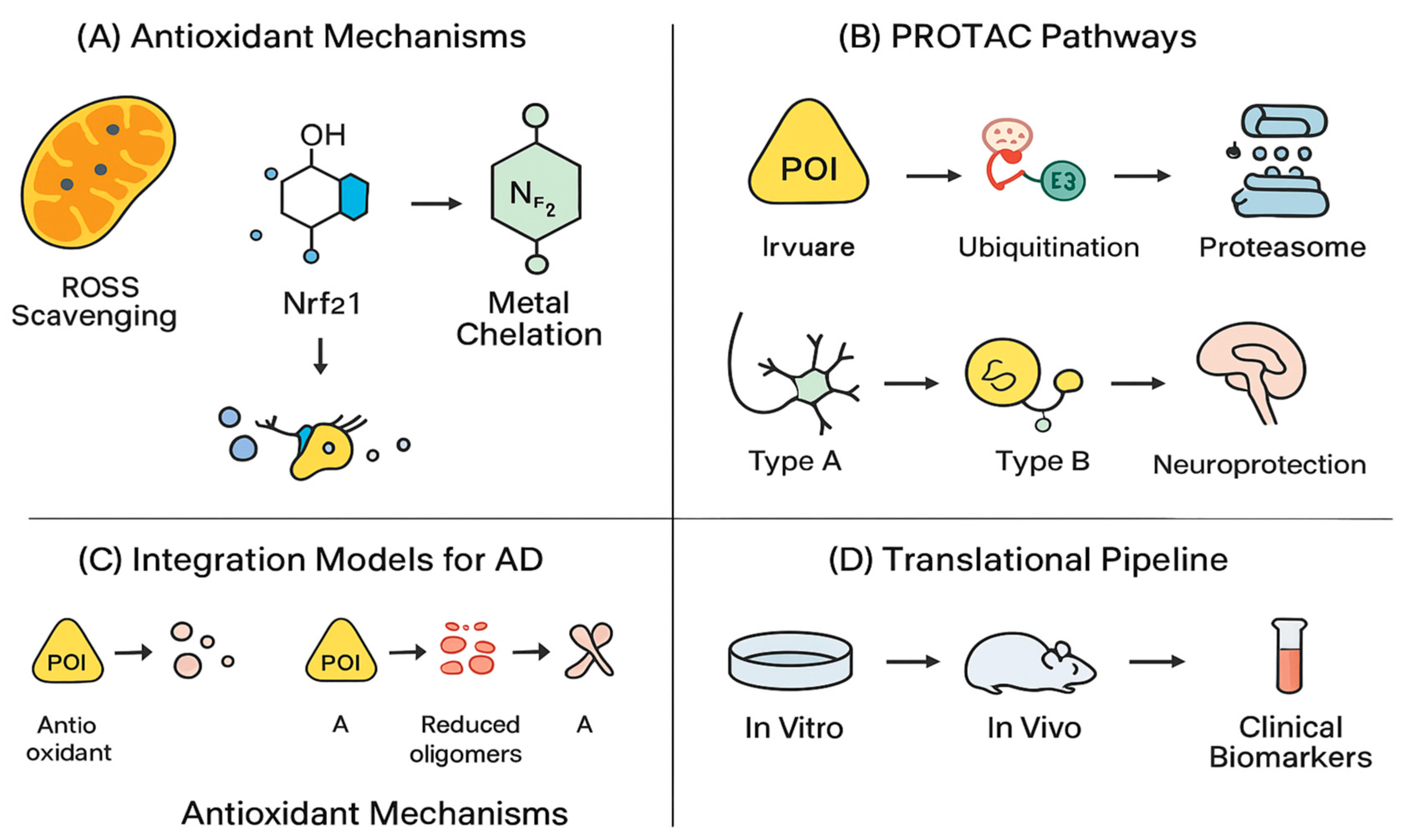
| Category | Mechanism/Target | Molecular Effect | Therapeutic Outcome | Integration Potential (Antiox–PROTAC Model) |
|---|---|---|---|---|
| Antioxidant Mechanisms | ROS scavenging (e.g., SOD, catalase, glutathione) | Reduces oxidative stress and lipid peroxidation | Protects neuronal integrity | Antioxidant PROTACs could stabilize redox balance and prevent protein misfolding |
| Mitochondrial Protection | Activation of Nrf2/ARE pathway | Enhances antioxidant enzyme transcription | Improves mitochondrial function | Nrf2-activating PROTACs may promote clearance of damaged mitochondria |
| PROTAC Pathways | E3 ligase–mediated ubiquitination | Induces targeted protein degradation | Removes toxic proteins (Aβ, tau) | Enables selective degradation of pathogenic aggregates |
| Integration Models | Dual-acting Antiox–PROTAC conjugates | Combines antioxidant and degradation functions | Reduces Aβ load and oxidative damage | Provides synergistic neuroprotection and disease modification |
| Translational Outlook | In vitro to in vivo validation | Assesses efficacy, PK/PD, BBB permeability | Supports therapeutic feasibility | Paves way for hybrid Antiox–PROTAC therapeutics in AD |
| S.N. | TPD Modality | Mechanism | Key Features | Representative Targets/Examples | Advantages | Limitations/Challenges | References/Notes | References |
|---|---|---|---|---|---|---|---|---|
| 1 | PROTACs (Proteolysis-Targeting Chimeras) | Bifunctional molecules recruit a target protein to an E3 ubiquitin ligase, leading to ubiquitination and proteasomal degradation | Consist of a target-binding ligand, E3 ligase ligand, and a linker; catalytic mechanism; can degrade “undruggable” proteins | Tau, Amyloid-β, α-synuclein, BRD4, BCL-2 | Sub-stoichiometric dosing, high selectivity, target protein clearance rather than inhibition | Large molecular weight; poor BBB permeability; linker optimization critical; potential off-target degradation | Widely used in oncology; CNS applications emerging; hybrid designs with natural products are under exploration | [82] |
| 2 | Molecular Glues | Small molecules stabilize the interaction between an E3 ligase and target protein, leading to degradation | Single, small-molecule drug; does not require linker; often discovered serendipitously | IKZF1/3 (thalidomide, lenalidomide), CDK12, GSPT1 | Simplified chemistry compared to PROTACs; can engage proteins lacking high-affinity ligands | Target discovery challenging; requires compatible E3 ligase interface; off-target effects possible | FDA-approved examples exist (thalidomide derivatives); CNS applications limited | [83] |
| 3 | LYTACs (Lysosome-Targeting Chimeras) | Direct extracellular or membrane proteins to lysosomes via receptor-mediated endocytosis | Uses glycan-based ligands to engage lysosomal trafficking receptors | EGFR, PD-L1 | Enables degradation of extracellular or membrane proteins not accessible to proteasome | Limited CNS penetration; relatively large molecules; receptor expression dependency | Emerging modality; potential for targeting AD-related extracellular aggregates | [84] |
| 4 | AUTACs (Autophagy-Targeting Chimeras) | Tags target proteins for autophagic degradation via K63-linked ubiquitination | Can degrade cytosolic aggregates and damaged organelles | Misfolded tau, damaged mitochondria | Access to larger or aggregated proteins; organelle-targeted degradation | Mechanism still under investigation; slower degradation kinetics than PROTACs | Preclinical stage; potential synergy with antioxidant pathways | [85] |
| 5 | ATTECs (Autophagosome-Tethering Compounds) | Tethers target proteins directly to autophagosomes for selective autophagy | Does not rely on ubiquitination; small molecule tether | mHTT (Huntingtin), aggregated tau | Can target aggregated or insoluble proteins | Early development: CNS delivery remains a challenge | Demonstrated in Huntington’s and AD models; proof-of-concept studies | [86] |
| S.N. | Pipeline Stage | Description/Methodology | Readouts/Assays | Purpose/Outcome | Examples/Notes | References |
|---|---|---|---|---|---|---|
| 1 | Library Selection | Compilation of natural product libraries rich in antioxidants, including flavonoids, polyphenols, terpenoids, alkaloids, and carotenoids | Chemical diversity assessment, structural classification | Identify a broad pool of candidate compounds with potential neuroprotective activity | Commercial natural product libraries; curated botanical extracts; in-house isolated compounds | [125] |
| 2 | High-Throughput Screening (HTS) | Automated screening platforms using multi-well plates, robotics, and fluorescence/luminescence readouts | ROS scavenging (DCFDA, MitoSOX), Aβ/tau aggregation inhibition (ThT binding), cytotoxicity (MTT, LDH release) | Rapid identification of compounds with antioxidant and anti-aggregation potential | 384- or 1536-well plate formats; fluorescence-based kinetic assays | [126] |
| 3 | Computational Pre-Screening | In silico docking and predictive modeling to assess target engagement, BBB permeability, and ADMET properties | Molecular docking scores, predictive BBB permeability, Lipinski’s rule-of-five, toxicity predictions | Prioritize compounds with favorable pharmacokinetics and CNS bioavailability before experimental screening | Software: AutoDock (4.2.6), Schrödinger (2025-4), ADMET predictor 11.0; reduces experimental load | [127] |
| 4 | Hit Identification | Selection of compounds meeting threshold activity in primary HTS | ROS inhibition > 50%, aggregation inhibition > 50%, low cytotoxicity | Leads are advanced for mechanistic validation | Hits often include curcumin, EGCG, quercetin, resveratrol, ginsenosides | [128] |
| 5 | Secondary Validation | Dose–response studies, orthogonal assays, and target specificity confirmation | Concentration-dependent ROS reduction, aggregation kinetics, neuronal viability, mitochondrial assays | Confirm reproducibility and specificity of hits; eliminate false positives | Multiple cell lines, including primary neurons, SH-SY5Y cells, and iPSC-derived neurons | [129] |
| 5 | Mechanistic Profiling | Investigation of pathways engaged by lead compounds | Nrf2/ARE activation, anti-inflammatory signaling, mitochondrial function assays | Determine pleiotropic neuroprotective mechanisms to guide further development | Western blot, qPCR, ROS imaging, Seahorse mitochondrial analysis | [130] |
| 6 | Lead Selection for PROTAC Development | Integration of chemical and biological data to select compounds suitable as PROTAC warheads or scaffolds | Consider BBB penetration, potency, target engagement, and antioxidant activity | Identify candidates for hybrid antioxidant-PROTAC design | Structural features (hydroxyls, phenolic groups) may facilitate linker attachment | [130] |
| SN. | Natural Compound | Class | Model Systems | Mechanisms of Action | Neuroprotective/Cognitive Effects | BBB Penetration/Bioavailability | Notes | References |
|---|---|---|---|---|---|---|---|---|
| 1 | Curcumin | Polyphenol | Transgenic AD mice (APP/PS1), primary neurons | ROS scavenging, Nrf2 activation, inhibition of Aβ aggregation, tau hyperphosphorylation suppression | Reduces amyloid plaques, decreases tau phosphorylation, and improves spatial learning and memory | Poor oral bioavailability; enhanced by nano formulations or liposomes | Widely studied; dual antioxidant and anti-aggregation activity | [157] |
| 2 | Resveratrol | Polyphenol | Tg2576 mice, SH-SY5Y cells | Activates SIRT1, Nrf2 pathway, mitochondrial biogenesis, and anti-inflammatory | Reduces oxidative stress, improves synaptic plasticity, and enhances learning and memory | Low bioavailability; CNS penetration moderate; nanoencapsulation improves delivery | Neuroprotective and anti-inflammatory; synergistic with other polyphenols | [158] |
| 3 | Quercetin | Flavonoid | 3xTg-AD mice, primary cortical neurons | ROS scavenging, Nrf2 activation, anti-inflammatory, inhibition of Aβ aggregation | Improves memory performance, reduces neuroinflammation, and prevents neuronal apoptosis | Moderate BBB permeability; metabolized rapidly | Used in combination with other flavonoids for enhanced efficacy | [159] |
| 4 | Epigallocatechin Gallate (EGCG) | Flavonoid | APP/PS1 mice, SH-SY5Y cells | Antioxidative, inhibits Aβ fibrillization, anti-inflammatory, and mitochondrial protection | Reduces amyloid plaques, preserves synaptic function, enhances cognition | Moderate; low oral bioavailability; improved via nanoparticles | Green tea polyphenol: well-documented neuroprotective effects | [160] |
| 5 | Ginsenosides (Rb1, Rg1) | Terpenoid | AD rat and mouse models | Mitochondrial membrane stabilization, ROS reduction, neurotrophic signaling | Enhances neuronal survival, improves learning/memory, restores mitochondrial function | Moderate; variable depending on compound; can cross BBB | Show multi-targeted neuroprotection; often used in combination with other compounds | [161] |
| 6 | Huperzine A | Alkaloid | APP/PS1 mice, scopolamine-induced memory impairment | ROS scavenging, acetylcholinesterase inhibition, and anti-inflammatory | Enhances cholinergic signaling, protects neurons, and improves spatial memory | Good CNS penetration; clinically approved in some regions | Dual action: antioxidant and enzyme inhibition | [162] |
| 7 | Vitamin E (α-tocopherol) | Vitamin/Carotenoid | APP/PS1 mice, aged rats | Lipid peroxidation prevention, ROS scavenging | Reduces oxidative stress, slows cognitive decline | Moderate; crosses BBB | Widely used in supplementation studies; often combined with other antioxidants | [163] |
| 8 | Coenzyme Q10 | Quinone | Transgenic AD mice, primary neurons | Mitochondrial support, ROS scavenging | Preserves mitochondrial function, reduces neuronal apoptosis, and improves cognition | Moderate; CNS penetration limited; improved by formulations | Supports energy metabolism; synergistic with other antioxidants | [164] |
Disclaimer/Publisher’s Note: The statements, opinions and data contained in all publications are solely those of the individual author(s) and contributor(s) and not of MDPI and/or the editor(s). MDPI and/or the editor(s) disclaim responsibility for any injury to people or property resulting from any ideas, methods, instructions or products referred to in the content. |
© 2025 by the authors. Licensee MDPI, Basel, Switzerland. This article is an open access article distributed under the terms and conditions of the Creative Commons Attribution (CC BY) license (https://creativecommons.org/licenses/by/4.0/).
Share and Cite
Singh, D.D.; Yadav, D.K.; Shin, D. Antioxidant Natural Compounds Integrated with Targeted Protein Degradation: A Multi-Modal Strategy for Alzheimer’s Disease Therapy. Antioxidants 2025, 14, 1426. https://doi.org/10.3390/antiox14121426
Singh DD, Yadav DK, Shin D. Antioxidant Natural Compounds Integrated with Targeted Protein Degradation: A Multi-Modal Strategy for Alzheimer’s Disease Therapy. Antioxidants. 2025; 14(12):1426. https://doi.org/10.3390/antiox14121426
Chicago/Turabian StyleSingh, Desh Deepak, Dharmendra Kumar Yadav, and Dongyun Shin. 2025. "Antioxidant Natural Compounds Integrated with Targeted Protein Degradation: A Multi-Modal Strategy for Alzheimer’s Disease Therapy" Antioxidants 14, no. 12: 1426. https://doi.org/10.3390/antiox14121426
APA StyleSingh, D. D., Yadav, D. K., & Shin, D. (2025). Antioxidant Natural Compounds Integrated with Targeted Protein Degradation: A Multi-Modal Strategy for Alzheimer’s Disease Therapy. Antioxidants, 14(12), 1426. https://doi.org/10.3390/antiox14121426