Expression and Roles of Free Radicals and Reactive Oxygen Species in Hearing Loss

 , ,
, ,  , , and
Abstract
1. Introduction
1.1. Hearing Loss
1.2. Free Radical
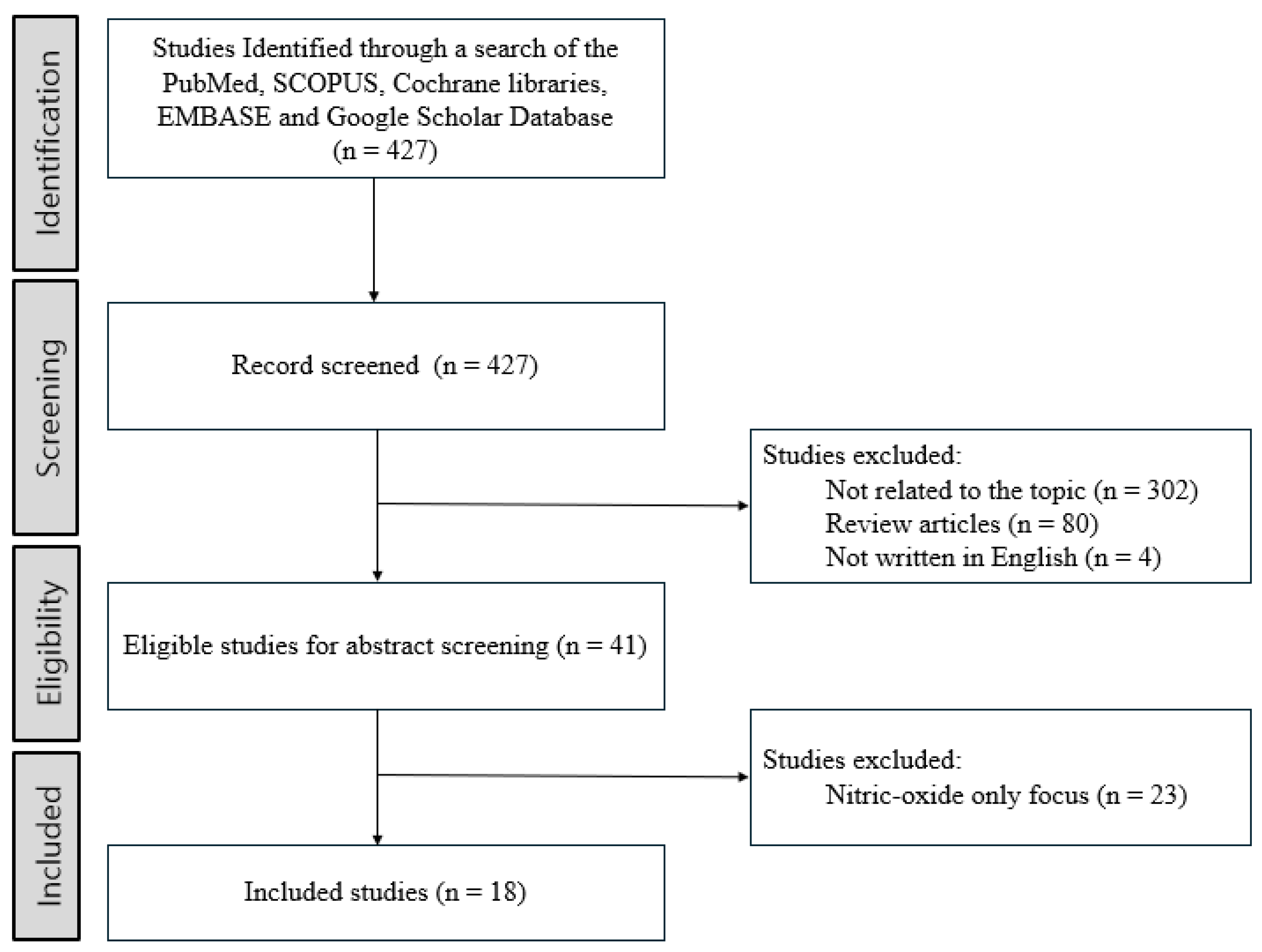
2. Research Method
3. Results
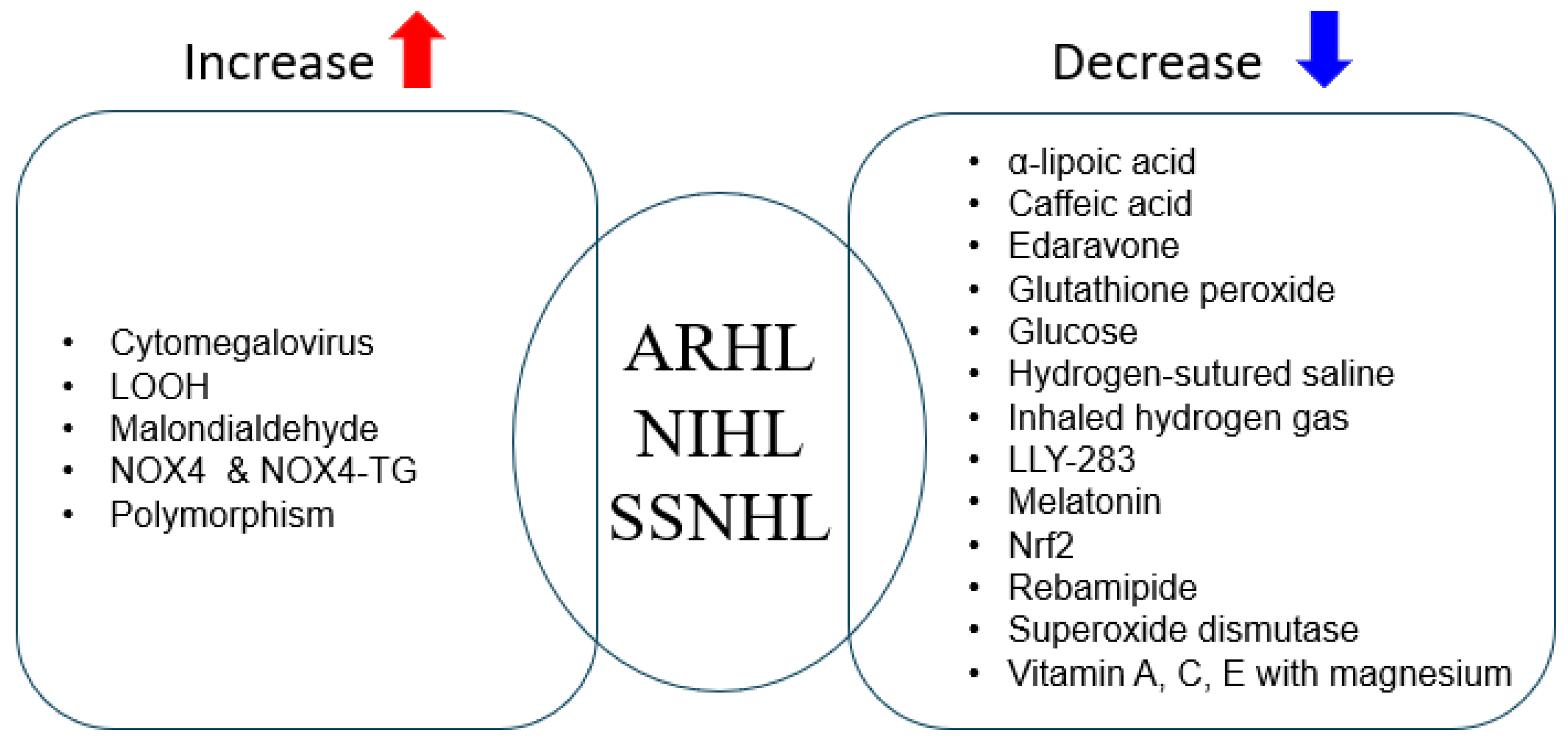
3.1. Studies Identifying Free Radicals and Reactive Oxygen Species as Contributors to Hearing Loss (Table 1)

| Chemical Property/Class | Representative Compounds | Mechanism or Benefit |
|---|---|---|
| Hydrophilic antioxidants | Vitamin C | Scavenges radicals in aqueous phase; complements membrane antioxidants |
| Lipophilic antioxidants | Vitamin E; Vitamin A/β-carotene | Chain-breaking antioxidant; interrupts lipid peroxidation in membranes; quenches singlet oxygen |
| Amphipathic antioxidants | α-Lipoic acid | Redox-active cofactor; supports antioxidant network (reported benefit in ARHL regimen with vitamin C) |
| Polyphenols | Caffeic acid | Attenuates superoxide and 4-HNE; preserves ABR/SGN after noise exposure |
| Gaseous/small-molecule reductants | H2 | Reduces oxidative injury; improves thresholds and OHC survival after noise |
| Free-radical scavengers (small molecules) | Edaravone | Hydroxyl-radical scavenger; protects cochlea in ischemia models; mixed ISSNHL clinical benefit |
| Antioxidant enzyme systems/inducers | SOD, GPx; Melatonin | Endogenous ROS detox; melatonin prevents MDA rise and preserves thresholds under noise |
| Redox-response pathway activators | Nrf2 activators | Upregulate cytoprotective/antioxidant genes; reduce NIHL vulnerability |
3.1.1. NOX4-Tg Versus Piccolo 1 and CtBP2
3.1.2. NOS3 Polymorphism
3.1.3. ROS Versus Antioxidants
3.1.4. 4-HNE Versus LLY-283
3.1.5. Malondialdehyde Versus Glutathione Peroxidase
3.1.6. LOOH and Thiols
3.1.7. Cytomegalovirus and Vitamins
3.1.8. Vitamins Plus Magnesium
3.1.9. Rebamipide, α-Lipoic Acid, and Vitamin C
3.1.10. Edaravone
3.1.11. Melatonin and Methylprednisolone
3.1.12. Glucose
3.1.13. Hydrogen
3.1.14. Nrf2 (Nuclear Factor Erythroid 2-Related Factor 2)
3.1.15. Caffeic Acid
3.1.16. Inhaled Hydrogen (H2)
3.2. Studies Reporting an Uncertain or No Etiologic Role of Free Radicals/ROS in Hearing Loss (Table 3)
Edarovone
| Author [Reference] | Study Design | Species and/or Sample | Detection Method | Target Gene(s) | Results/Conclusions |
|---|---|---|---|---|---|
| Sano H, et al., 2010 [48] | Clinical study | 28 patients | Pure-tone audiometry | N/A | No statistically significant difference in final hearing levels between edaravone and control (hyperbaric oxygenation therapy; HBO) group. Edaravone showed wide variation in outcomes, with some patients recovering well and others showing little improvement. Edaravone did not show a significant advantage over hyperbaric oxygen therapy in the treatment of ISSHL with profound hearing loss. However, due to its safety and ease of use, edaravone may be considered as a potential alternative to HBO, especially for patients with poor prognosis. |
3.3. Mechanistic Links Among ROS, Cochlear Injury, and Antioxidant Protection
3.4. Conflicting Findings and Variability in Therapeutic Response
3.5. Information Gaps and Priorities for Future Studies
3.6. Shared and Distinct Pathophysiology Across NIHL, ARHL, and ISSNHL
3.7. A Redox-Centered Conceptual Framework and Classification of Hearing Loss
3.8. Limitations
4. Summary
5. Conclusions
Author Contributions
Funding
Institutional Review Board Statement
Informed Consent Statement
Data Availability Statement
Conflicts of Interest
References
- Hong, J.K. A Study on Skin Aging Caused by Free-Radical and On Efficacy of Antioxidant Vitamins. Asian J. Beauty Cosmetol. 2009, 7, 51–62. [Google Scholar]
- Lee, J.; Hong, S.M.; Choi, Y.S.; Lee, J.; Yeo, J.H.; Kim, S.S.; Lee, J.M.; Yon, D.K.; Yeo, S.G. Narrative Review of Free Radicals and Reactive Oxygen Species in Otitis Media. Antioxidants 2024, 14, 3. [Google Scholar] [CrossRef]
- Ahammed, G.J.; Li, Z.; Chen, J.; Dong, Y.; Qu, K.; Guo, T.; Wang, F.; Liu, A.; Chen, S.; Li, X. Reactive Oxygen Species Signaling in Melatonin-Mediated Plant Stress Response. Plant Physiol. Biochem. 2024, 207, 108398. [Google Scholar] [CrossRef]
- Manful, C.F.; Fordjour, E.; Subramaniam, D.; Sey, A.A.; Abbey, L.; Thomas, R. Antioxidants and Reactive Oxygen Species: Shaping Human Health and Disease Outcomes. Int. J. Mol. Sci. 2025, 26, 7520. [Google Scholar] [CrossRef]
- Chien, W.W.; Lee, D.J. Physiology of the Auditory System. In Cummings Otolaryngology–Head and Neck Surgery, 7th ed.; Elsevier: Philadelphia, PA, USA, 2021. [Google Scholar]
- Baek, M.J. Sensorineural Hearing Loss: Causes and Hearing Rehabilitation. Hanyang Med. Rev. 2015, 35, 57–65. [Google Scholar] [CrossRef]
- Byun, S.W. Hearing Test—General Hearing Test. In Otorhinolaryngology—Head and Neck Surgery, 3rd ed.; KoonJa: Andong-si, Republic of Korea, 2018. [Google Scholar]
- Woo, Y.H. Symptoms of Ear Disease. In Otorhinolaryngology—Head and Neck Surgery, 3rd ed.; KoonJa: Andong-si, Republic of Korea, 2018. [Google Scholar]
- Vos, T.; Barber, R.M.; Bell, B.; Bertozzi-Villa, A.; Biryukov, S.; Bolliger, I.; Charlson, F.; Davis, A.; Degenhardt, L.; Dicker, D.; et al. Global, Regional, and National Incidence, Prevalence, and Years Lived with Disability for 301 Acute and Chronic Diseases and Injuries in 188 Countries, 1990–2013: A Systematic Analysis for the Global Burden of Disease Study 2013. Lancet 2015, 386, 743–800. [Google Scholar] [CrossRef] [PubMed]
- Kim, K.S. Systemic Diseases and Hearing Loss. Audiol. Speech Res. 2011, 7, 1–9. [Google Scholar] [CrossRef]
- Cunningham, L.L.; Tucci, D.L. Hearing Loss in Adults. N. Engl. J. Med. 2017, 377, 2465–2473. [Google Scholar] [CrossRef]
- Leto, T.L.; Morand, S.; Hurt, D.; Ueyama, T. Targeting and Regulation of Reactive Oxygen Species Generation by Nox Family NADPH Oxidases. Antioxid. Redox Signal. 2009, 11, 2607–2619. [Google Scholar] [CrossRef]
- Ma, M.W.; Wang, J.; Zhang, Q.; Wang, R.; Dhandapani, K.M.; Vadlamudi, R.K.; Brann, D.W. NADPH Oxidase in Brain Injury and Neurodegenerative Disorders. Mol. Neurodegener. 2017, 12, 7. [Google Scholar] [CrossRef]
- Altenhöfer, S.; Kleikers, P.W.M.; Radermacher, K.A.; Scheurer, P.; Rob Hermans, J.J.; Schiffers, P.; Ho, H.; Wingler, K.; Schmidt, H.H.H.W. The NOX Toolbox: Validating the Role of NADPH Oxidases in Physiology and Disease. Cell. Mol. Life Sci. 2012, 69, 2327–2343. [Google Scholar] [CrossRef]
- Wong, A.C.Y.; Ryan, A.F. Mechanisms of Sensorineural Cell Damage, Death and Survival in the Cochlea. Front. Aging Neurosci. 2015, 7, 58. [Google Scholar] [CrossRef] [PubMed]
- Morioka, S.; Sakaguchi, H.; Yamaguchi, T.; Ninoyu, Y.; Mohri, H.; Nakamura, T.; Hisa, Y.; Ogita, K.; Saito, N.; Ueyama, T. Hearing Vulnerability after Noise Exposure in a Mouse Model of Reactive Oxygen Species Overproduction. J. Neurochem. 2018, 146, 459–473. [Google Scholar] [CrossRef] [PubMed]
- Kurasawa, S.; Mohri, H.; Tabuchi, K.; Ueyama, T. Loss of Synaptic Ribbons Is an Early Cause in ROS-Induced Acquired Sensorineural Hearing Loss. Neurobiol. Dis. 2023, 186, 106280. [Google Scholar] [CrossRef] [PubMed]
- Calabrese, V.; Cornelius, C.; Maiolino, L.; Luca, M.; Chiaramonte, R.; Toscano, M.A.; Serra, A. Oxidative Stress, Redox Homeostasis and Cellular Stress Response in Ménière’s Disease: Role of Vitagenes. Neurochem. Res. 2010, 35, 2208–2217. [Google Scholar] [CrossRef]
- Labbé, D.; Teranishi, M.; Hess, A.; Bloch, W.; Michel, O. Activation of Caspase-3 Is Associated with Oxidative Stress in the Hydropic Guinea Pig Cochlea. Hear. Res. 2005, 202, 21–27. [Google Scholar] [CrossRef]
- Hiramatsu, M.; Teranishi, M.; Uchida, Y.; Nishio, N.; Suzuki, H.; Kato, K.; Otake, H.; Yoshida, T.; Tagaya, M.; Suzuki, H.; et al. Polymorphisms in Genes Involved in Inflammatory Pathways in Patients with Sudden Sensorineural Hearing Loss. J. Neurogenet. 2012, 26, 387–396. [Google Scholar] [CrossRef]
- Teranishi, M.; Uchida, Y.; Nishio, N.; Kato, K.; Otake, H.; Yoshida, T.; Suzuki, H.; Sone, M.; Sugiura, S.; Ando, F.; et al. Polymorphisms in Genes Involved in the Free-Radical Process in Patients with Sudden Sensorineural Hearing Loss and Ménière’s Disease. Free Radic. Res. 2013, 47, 498–506. [Google Scholar] [CrossRef]
- Capaccio, P.; Pignataro, L.; Gaini, L.M.; Sigismund, P.E.; Novembrino, C.; De Giuseppe, R.; Uva, V.; Tripodi, A.; Bamonti, F. Unbalanced Oxidative Status in Idiopathic Sudden Sensorineural Hearing Loss. Eur. Arch. Oto-Rhino-Laryngol. 2012, 269, 449–453. [Google Scholar] [CrossRef]
- Tabuchi, K.; Nishimura, B.; Nakamagoe, M.; Hayashi, K.; Nakayama, M.; Hara, A. Ototoxicity: Mechanisms of Cochlear Impairment and Its Prevention. Curr. Med. Chem. 2011, 18, 4866–4871. [Google Scholar] [CrossRef]
- Liu, C.; Tang, D.; Zheng, Z.; Lu, X.; Li, W.; Zhao, L.; He, Y.; Li, H. A PRMT5 Inhibitor Protects against Noise-Induced Hearing Loss by Alleviating ROS Accumulation. Ecotoxicol. Environ. Saf. 2022, 243, 113992. [Google Scholar] [CrossRef] [PubMed]
- Kaygusuz, İ.; Öztürk, A.; Üstündağ, B.; Yalçin, Ş. Role of Free Oxygen Radicals in Noise-Related Hearing Impairment. Hear. Res. 2001, 162, 43–47. [Google Scholar] [CrossRef] [PubMed]
- Celik, M.; Koyuncu, İ. Oxidative Stress in Prelingual Sensorineural Hearing Loss and the Effects of Cochlear Implant Application on Serum Oxidative Stress Levels. Int. J. Pediatr. Otorhinolaryngol. 2019, 119, 177–182. [Google Scholar] [CrossRef]
- Almishaal, A.A.; Mathur, P.D.; Hillas, E.; Chen, L.; Zhang, A.; Yang, J.; Wang, Y.; Yokoyama, W.M.; Firpo, M.A.; Park, A.H. Natural Killer Cells Attenuate Cytomegalovirus-Induced Hearing Loss in Mice. PLoS Pathog. 2017, 13, e1006599. [Google Scholar] [CrossRef] [PubMed]
- Pecha, P.P.; Almishaal, A.A.; Mathur, P.D.; Hillas, E.; Johnson, T.; Price, M.S.; Haller, T.; Yang, J.; Rajasekaran, N.S.; Firpo, M.A.; et al. Role of Free Radical Formation in Murine Cytomegalovirus-Induced Hearing Loss. Otolaryngol. Head Neck Surg. 2020, 162, 709–717. [Google Scholar] [CrossRef]
- Schafer, F.Q.; Wang, H.P.; Kelley, E.E.; Cueno, K.L.; Martin, S.M.; Buettner, G.R. Comparing β-Carotene, Vitamin E and Nitric Oxide as Membrane Antioxidants. Biol. Chem. 2002, 383, 671–681. [Google Scholar] [CrossRef]
- Le Prell, C.G.; Hughes, L.F.; Miller, J.M. Free Radical Scavengers Vitamins A, C, and E plus Magnesium Reduce Noise Trauma. Free Radic. Biol. Med. 2007, 42, 1454–1463. [Google Scholar] [CrossRef]
- Takumida, M.; Anniko, M. Radical Scavengers for Elderly Patients with Age-Related Hearing Loss. Acta Otolaryngol. 2009, 129, 36–44. [Google Scholar] [CrossRef]
- Yamamoto, T.; Yuki, S.; Watanabe, T.; Mitsuka, M.; Saito, K.-I.; Kogure, K. Delayed Neuronal Death Prevented by Inhibition of Increased Hydroxyl Radical Formation in a Transient Cerebral Ischemia. Brain Res. 1997, 762, 240–242. [Google Scholar] [CrossRef]
- Maetani, T.; Hakuba, N.; Taniguchi, M.; Hyodo, J.; Shimizu, Y.; Gyo, K. Free Radical Scavenger Protects against Inner Hair Cell Loss after Cochlear Ischemia. NeuroReport 2003, 14, 1881–1884. [Google Scholar] [CrossRef]
- Reiter, R.J. Functional Aspects of the Pineal Hormone Melatonin in Combating Cell and Tissue Damage Induced by Free Radicals. Eur. J. Endocrinol. 1996, 134, 412–420. [Google Scholar] [CrossRef]
- Uhler, T.A.; Frim, D.M.; Pakzaban, P.; Isacson, O. The Effects of Megadose Methylprednisolone and U-78517F on Toxicity Mediated by Glutamate Receptors in the Rat Neostriatum. Neurosurgery 1994, 34, 122–127; discussion 127–128. [Google Scholar] [PubMed]
- Karlidağ, T.; Yalçin, Ş.; Öztürk, A.; Üstündağ, B.; Gök, Ü.; Kaygusuz, İ.; Susaman, N. The Role of Free Oxygen Radicals in Noise Induced Hearing Loss: Effects of Melatonin and Methylprednisolone. Auris Nasus Larynx 2002, 29, 147–152. [Google Scholar] [CrossRef] [PubMed]
- Xiong, H.; Lai, L.; Ye, Y.; Zheng, Y. Glucose Protects Cochlear Hair Cells Against Oxidative Stress and Attenuates Noise-Induced Hearing Loss in Mice. Neurosci. Bull. 2021, 37, 657–668. [Google Scholar] [CrossRef] [PubMed]
- Chen, L.; Yu, N.; Lu, Y.; Wu, L.; Chen, D.; Guo, W.; Zhao, L.; Liu, M.; Yang, S.; Sun, X.; et al. Hydrogen-Saturated Saline Protects Intensive Narrow Band Noise-Induced Hearing Loss in Guinea Pigs through an Antioxidant Effect. PLoS ONE 2014, 9, e100774. [Google Scholar] [CrossRef]
- Le Prell, C.G.; Yamashita, D.; Minami, S.B.; Yamasoba, T.; Miller, J.M. Mechanisms of Noise-Induced Hearing Loss Indicate Multiple Methods of Prevention. Hear. Res. 2007, 226, 22–43. [Google Scholar] [CrossRef]
- Honkura, Y.; Matsuo, H.; Murakami, S.; Sakiyama, M.; Mizutari, K.; Shiotani, A.; Yamamoto, M.; Morita, I.; Shinomiya, N.; Kawase, T.; et al. NRF2 Is a Key Target for Prevention of Noise-Induced Hearing Loss by Reducing Oxidative Damage of Cochlea. Sci. Rep. 2016, 6, 19329. [Google Scholar] [CrossRef]
- Touaibia, M.; Jean-Francois, J.; Doiron, J. Caffeic Acid, A Versatile Pharmacophore: An Overview. Mini-Rev. Med. Chem. 2011, 11, 695–713. [Google Scholar] [CrossRef]
- Chang, W.; Huang, D.; Lo, Y.M.; Tee, Q.; Kuo, P.; Wu, J.S.; Huang, W.; Shen, S. Protective Effect of Caffeic Acid against Alzheimer’s Disease Pathogenesis via Modulating Cerebral Insulin Signaling, β-Amyloid Accumulation, and Synaptic Plasticity in Hyperinsulinemic Rats. J. Agric. Food Chem. 2019, 67, 7684–7693. [Google Scholar] [CrossRef]
- Paciello, F.; Di Pino, A.; Rolesi, R.; Troiani, D.; Paludetti, G.; Grassi, C.; Fetoni, A.R. Anti-Oxidant and Anti-Inflammatory Effects of Caffeic Acid: In Vivo Evidences in a Model of Noise-Induced Hearing Loss. Food Chem. Toxicol. 2020, 143, 111555. [Google Scholar] [CrossRef]
- Ohsawa, I.; Ishikawa, M.; Takahashi, K.; Watanabe, M.; Nishimaki, K.; Yamagata, K.; Katsura, K.; Katayama, Y.; Asoh, S.; Ohta, S. Hydrogen Acts as a Therapeutic Antioxidant by Selectively Reducing Cytotoxic Oxygen Radicals. Nat. Med. 2007, 13, 688–694. [Google Scholar] [CrossRef]
- Kurioka, T.; Matsunobu, T.; Satoh, Y.; Niwa, K.; Shiotani, A. Inhaled Hydrogen Gas Therapy for Prevention of Noise-Induced Hearing Loss through Reducing Reactive Oxygen Species. Neurosci. Res. 2014, 89, 69–74. [Google Scholar] [CrossRef]
- Abe, S.; Kirima, K.; Tsuchiya, K.; Okamoto, M.; Hasegawa, T.; Houchi, H.; Yoshizumi, M.; Tamaki, T. The Reaction Rate of Edaravone (3-Methyl-1-Phenyl-2-Pyrazolin-5-One (MCI-186)) with Hydroxyl Radical. Chem. Pharm. Bull. 2004, 52, 186–191. [Google Scholar] [CrossRef]
- Edaravone Acute Infarction Study Group Effect of a Novel Free Radical Scavenger, Edaravone (MCI-186), on Acute Brain Infarction. Cerebrovasc. Dis. 2003, 15, 222–229. [CrossRef]
- Sano, H.; Kamijo, T.; Ino, T.; Okamoto, M. Edaravone, a Free Radical Scavenger, in the Treatment of Idiopathic Sudden Sensorineural Hearing Loss with Profound Hearing Loss. Auris Nasus Larynx 2010, 37, 42–46. [Google Scholar] [CrossRef]


| Author [Reference] | Study Design | Species and/or Sample | Detection Method | Target Gene(s) | Results/Conclusions |
|---|---|---|---|---|---|
| Morioka S, et al., 2018 [16] | Animal study | 108 mice | ABR, immunohistochemistry | NOX4 | NOX4-Tg mice normally maintained normal hearing, hearing loss at high frequency (12, 20 kHz) is greater after noise exposure. Hsp47 protein increases expression in cochlear and heart of NOX4-Tg mice. NOX4 mice are suitable for ROS hypergenic animal models with auditory sensitivity to noise. Antioxidant therapy can be an effective approach to noise-induced hearing loss. Hsp47 is noted as a potential endogenous defense mechanism against ROS-induced damage. |
| Kurasawa S, et al., 2023 [17] | Animal study | 128 mice | ABR, immunohistochemistry | NOX4 | ROS production in NOX4-Tg mice led to a significant decrease in synaptic ribbon components ROS are at least one of the causes of cochlear synaptopathy induced by aging. Thus, protection of synaptic ribbons and reduction in ROS levels are promising approaches to developing novel therapeutic strategies for acquired SNHL. |
| Teranishi M, et al., 2013 [21] | Case-control genetic association study | 2131 patients | DNA, PCR-based genotyping, pure-tone audiometry | NOS3 | NOS3 is Significantly associated with increased risk of SSNHL NOS3 and Cav1 gene polymorphisms are genetic risk factors for SSNHL and Ménière’s disease, respectively, suggesting that oxidative stress and vascular dysfunction may play a key role in the pathogenesis of these inner ear disorders. |
| Capaccio P, et al., 2011 [22] | Human case-control study | 109 humans | ROS measurement | ROS | ROS levels were significantly higher in patients with ISSNHL. There was no correlation between ROS and smoking, or between oxidative markers and recovery outcome. The study provides evidence that oxidative stress is significantly associated with ISSNHL. Even with normal antioxidant capacity, an imbalance due to high ROS may contribute to cochlear microvascular damage, suggesting a vascular-origin hypothesis of sudden hearing loss. |
| Liu C, et al., 2022 [24] | Animal study | 100 mice | ABR, immunohistochemistry | PRMT5 | Noise exposure could induce hair cell death, cochlear synaptic ribbon loss, and NIHL. Mechanism might involve alleviation of ROS accumulation and activation of the PI3K/AKT pathway, implying that LLY-283 might be a potential candidate for a therapeutic intervention against NIHL. |
| Kaygusuz I, et al., 2001 [25] | Human study | 80 males | Audiological testing | MDA (GSH-Px) | Workders in high noise exposure showed significant hearing loss and significantly elevated MDA and GSH-Px levels. These findings suggest a strong role of free oxygen radicals in noise-induced hearing loss, and that natural antioxidants like GSH-Px are upregulated but insufficient to prevent cochlear damage. |
| Celik M, et al., 2019 [26] | Prospective controlled human study | 50 humans | Audiological assessments | LOOH | No significant correlation was found between oxidative stress markers and IT-MAIS, MUSS, or FFA results. Patients with prelingual profound SNHL are under oxidative stress, and cochlear implantation does not significantly reduce oxidative stress levels within 6 months post-surgery. The authors suggest further long-term studies to clarify the biological mechanisms. |
| Pecha PP, et al., 2020 [28] | Animal study | 40–50 murine | ABR, DPOAE hearing test, dihydroethidium flurorescene staining, immunostaining for cleaved caspase-3, scanning electron microscopy, GFP-tagged CMV | Nrf2 | CMV infection significantly increased ROS production in the cochlea and caused hearing loss and outer hair cell damage. Nrf2 knockout mice showed greater hearing loss after CMV infection, indicating the importance of the antioxidant response. in mice, and antioxidant treatment provides partial otoprotection. Antioxidant therapy may be a promising strategy for preventing hearing loss in congenital CMV infection. |
| Le Prell CG, et al., 2007 [30] | Animal study | 29 guinea pigs | ABR | N/A | The combination of vitamins A, C, and E with magnesium (ACEMg) significantly reduced ABR threshold shifts and outer hair cell loss in the cochlea compared to control or single-agent groups. Single treatments (ACE or Mg alone) showed minimal or no statistically significant effect. Suggests synergistic protection from antioxidants and magnesium against noise-induced hearing loss. The findings provide strong rationale for human clinical trials to test similar interventions. |
| Takumida M, et al., 2009 [31] | Clinical pilot study | 46 patients | Pure-tone audiometry | N/A | Hearing thresholds significantly improved at all tested frequencies after 8 weeks of treatment. Better improvements were seen in ears with more severe baseline hearing loss. Treatment with free radical scavengers (rebamipide, α-lipoic acid, vitamin C) significantly improved hearing in elderly patients with ARHL. This therapy shows promising potential as a new clinical approach to treat or possibly prevent age-related sensorineural hearing loss. However, results are preliminary, and longer-term, controlled studies are needed. |
| Maetani T, et al., 2003 [33] | Animal study | 18 gerbils | ABR | N/A | Loss of OHC was not significantly different between each group, and edarabone significantly reduces IHC loss and prevents hearing impairment. Edaravone protects the cochlea against damage caused by transient ischemia, indicating that free radicals play an important role in ischemia-related cochlear injury. Free-radical scavengers may therefore be useful in the treatment of SNHL. |
| Karlidag T, et al., 2002 [36] | Animal study | 50 guinea pigs | Electrophysiological assessment, biochemical analysis | N/A | Melatonin dosing group has less MDA increase, GSH-Px activity is maintained. Melatonin is effective in suppressing noise-induced oxidative damage and preventing hearing loss, and can be a promising therapeutic alternative for the prevention of noise-induced hearing loss. |
| Xiong H, et al., 2021 [37] | Animal study | 100 mice | ABR | N/A | In cochlear explants glucose mitigated H2O2-induced cytotoxicity, oxidative stress, ATP and NADPH depletion. This study suggests that short-term glucose administration is a simple and effective strategy to prevent oxidative stress-related hearing loss, especially in noise-induced contexts. |
| Chen L, et al., 2014 [38] | Animal study | 55 guinea pigs | ABR, DPOAE | MDA, LP, hydroxyl | The hydrogen-saturated saline group showed significantly less ABR threshold shifts, better-preserved DPOAE amplitudes, and minimal hair cell damage compared to the normal saline group. These findings suggest that hydrogen-saturated saline protects the cochlea from noise-induced hearing loss by reducing oxidative stress. |
| Honkura V, et al., 2016 [40] | Animal study, human study | 50 mice, 602 males | ABR | Nrf2 | Mice with loss of Nrf2 showed significantly more hearing and hair cell damage. Nrf2 is a crucial protective factor against NIHL. Pre-activation of Nrf2 can prevent oxidative damage and hearing loss. The human genetic link further supports its potential as a therapeutic target. |
| Paciello F, et al., 2020 [43] | Animal study | 113 rats | ABR | ROS, Nrf2 | Rats administered with caffeic acid significantly reduced hearing loss due to noise. Caffeic acid provides otoprotective effects against noise-induced hearing loss. Thus, caffeic acid is a promising natural therapeutic compound for preventing cochlear damage from noise. |
| Kurioka T, et al., 2014 [45] | Animal study | 40 guinea pigs | ABR | ROS | OHC loss in basal and middle cochlear turns was significantly reduced in 1.0% and 1.5% H2-treated groups. 1.0% and 1.5% H2 groups showed significantly smaller ABR threshold shifts. Inhaled hydrogen gas at concentrations ≥1.0% is effective in reducing ROS production, protecting cochlear hair cells, and preventing NIHL, especially in middle-to-high frequency ranges. The study suggests hydrogen gas as a potential non-toxic therapeutic strategy for acute sensorineural hearing loss. |
Disclaimer/Publisher’s Note: The statements, opinions and data contained in all publications are solely those of the individual author(s) and contributor(s) and not of MDPI and/or the editor(s). MDPI and/or the editor(s) disclaim responsibility for any injury to people or property resulting from any ideas, methods, instructions or products referred to in the content. |
© 2025 by the authors. Licensee MDPI, Basel, Switzerland. This article is an open access article distributed under the terms and conditions of the Creative Commons Attribution (CC BY) license (https://creativecommons.org/licenses/by/4.0/).
Share and Cite
Lee, J.M.; Cha, Y.J.; Oh, Y.J.; Kim, H.O.; Kim, S.S.; Kim, Y.-J.; Yon, D.K.; Yeo, S.G. Expression and Roles of Free Radicals and Reactive Oxygen Species in Hearing Loss. Antioxidants 2025, 14, 1397. https://doi.org/10.3390/antiox14121397
Lee JM, Cha YJ, Oh YJ, Kim HO, Kim SS, Kim Y-J, Yon DK, Yeo SG. Expression and Roles of Free Radicals and Reactive Oxygen Species in Hearing Loss. Antioxidants. 2025; 14(12):1397. https://doi.org/10.3390/antiox14121397
Chicago/Turabian StyleLee, Jae Min, Yoo Jin Cha, Yeon Ju Oh, Hye Ok Kim, Sung Soo Kim, Youn-Jung Kim, Dong Keon Yon, and Seung Geun Yeo. 2025. "Expression and Roles of Free Radicals and Reactive Oxygen Species in Hearing Loss" Antioxidants 14, no. 12: 1397. https://doi.org/10.3390/antiox14121397
APA StyleLee, J. M., Cha, Y. J., Oh, Y. J., Kim, H. O., Kim, S. S., Kim, Y.-J., Yon, D. K., & Yeo, S. G. (2025). Expression and Roles of Free Radicals and Reactive Oxygen Species in Hearing Loss. Antioxidants, 14(12), 1397. https://doi.org/10.3390/antiox14121397