

Pretreatment with Group II Metabotropic Glutamate Receptor Agonist LY379268 Protects Neonatal Rat Brains from Oxidative Stress in an Experimental Model of Birth Asphyxia



Abstract
1. Introduction
2. Materials and Methods
2.1. Induction of Cerebral Hypoxia–Ischemia
2.2. Drug Application
2.3. Evaluation of Brain Damage
2.4. Determination of ROS Level
2.5. Determination of Glutathione Concentration
2.6. Determination of Antioxidant Enzyme Activity
3. Results
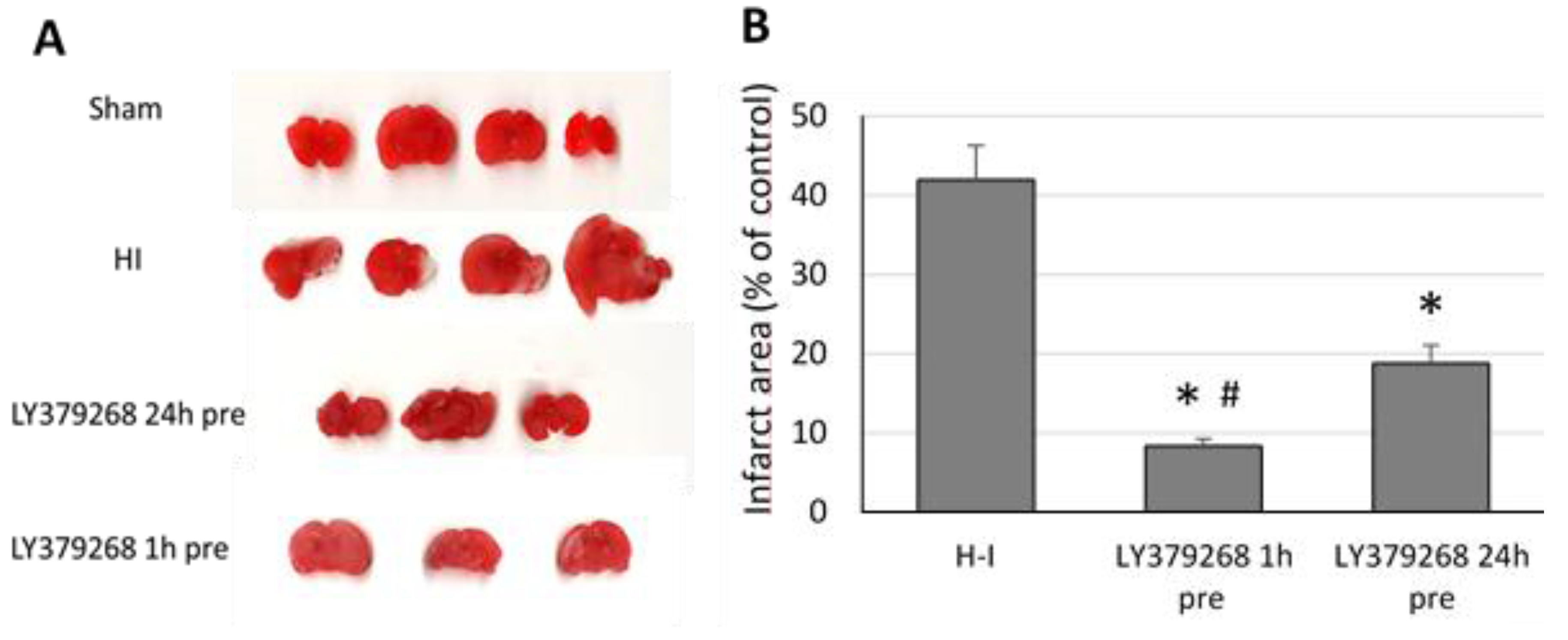
3.1. LY379268 Reduces H-I Evoked Brain Damage
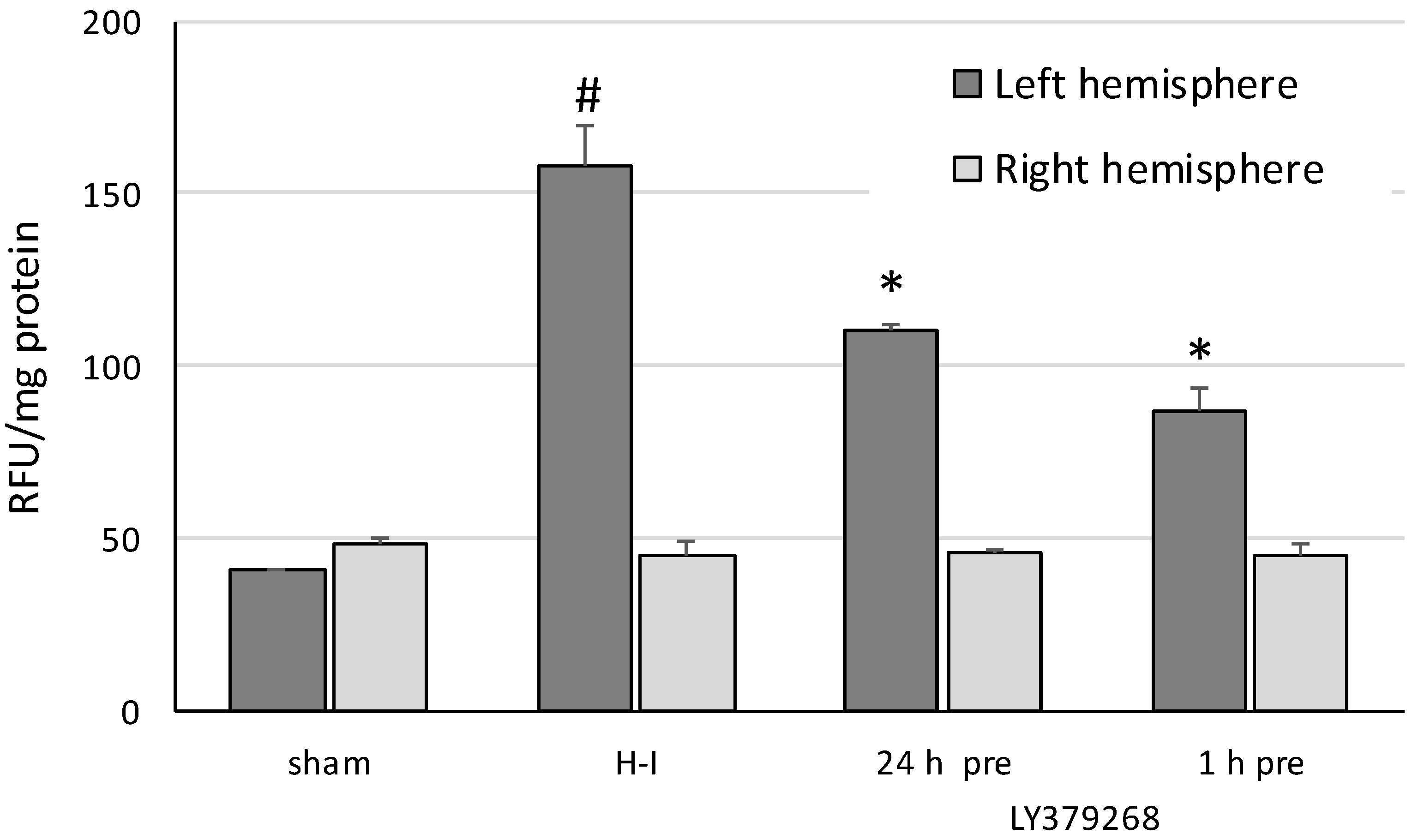
3.2. LY379268 Reduces the H-I Evoked Increase in ROS Level
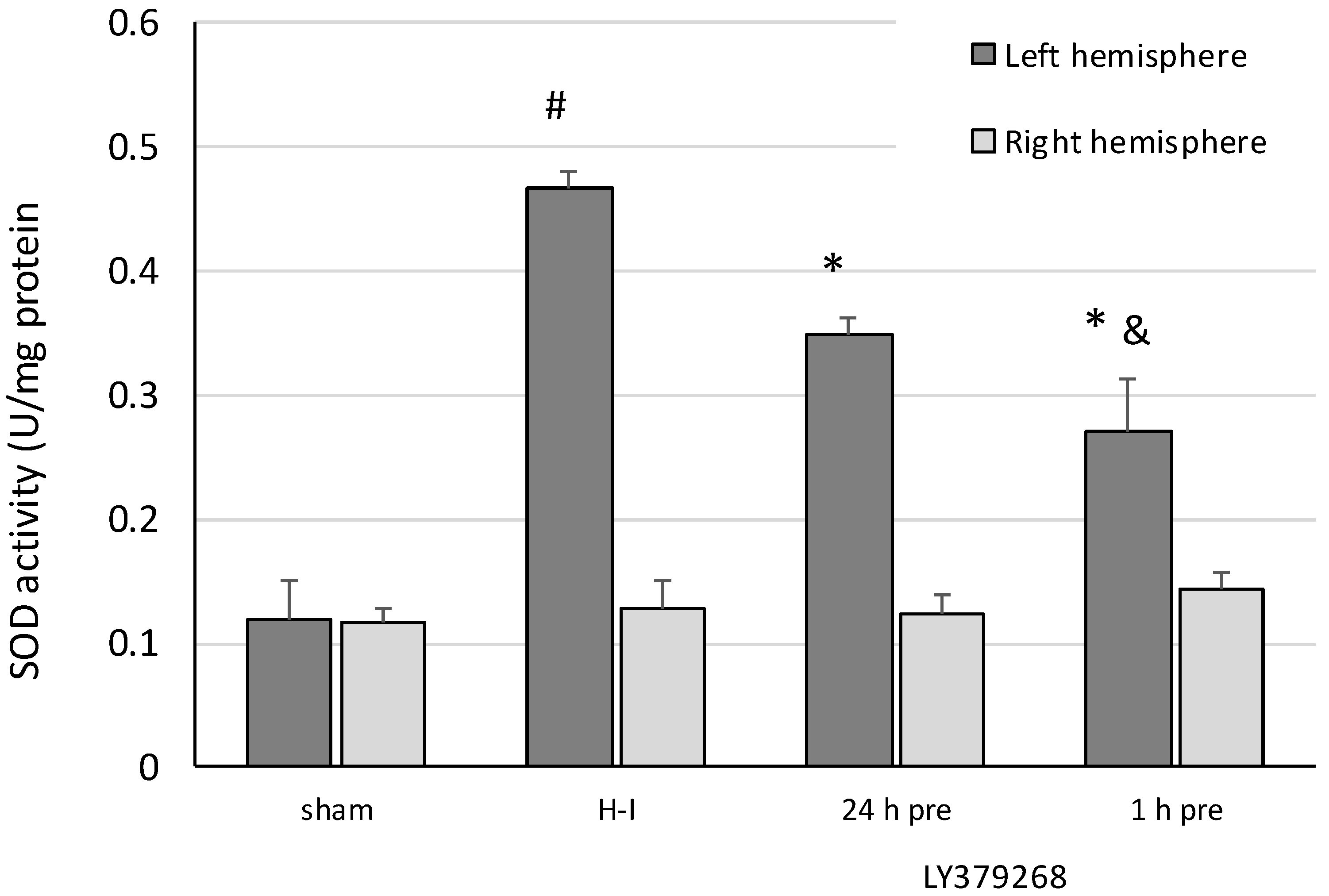
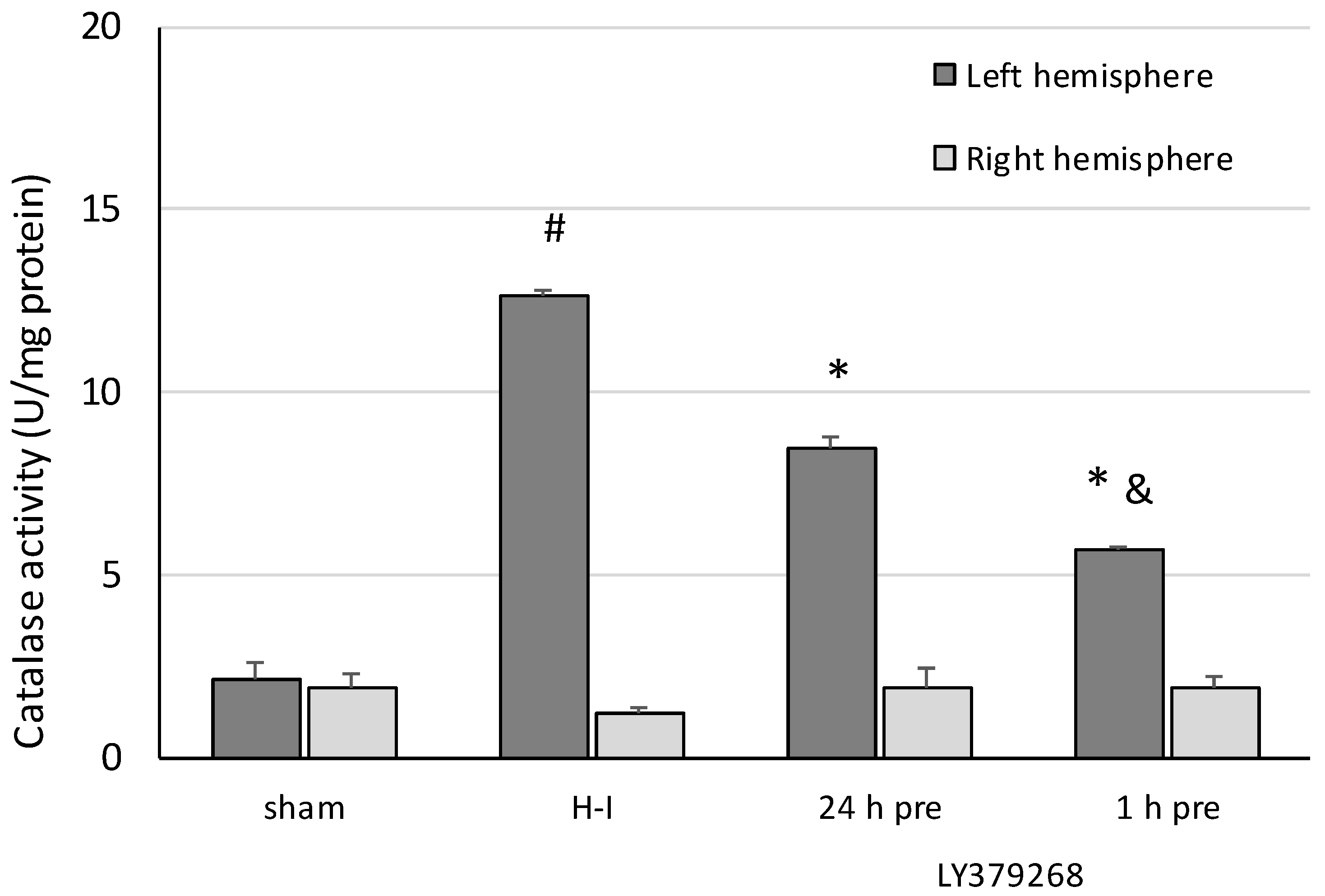
3.3. LY379268 Pretreatment Reduces the H-I Increased Activity of SOD and Catalase
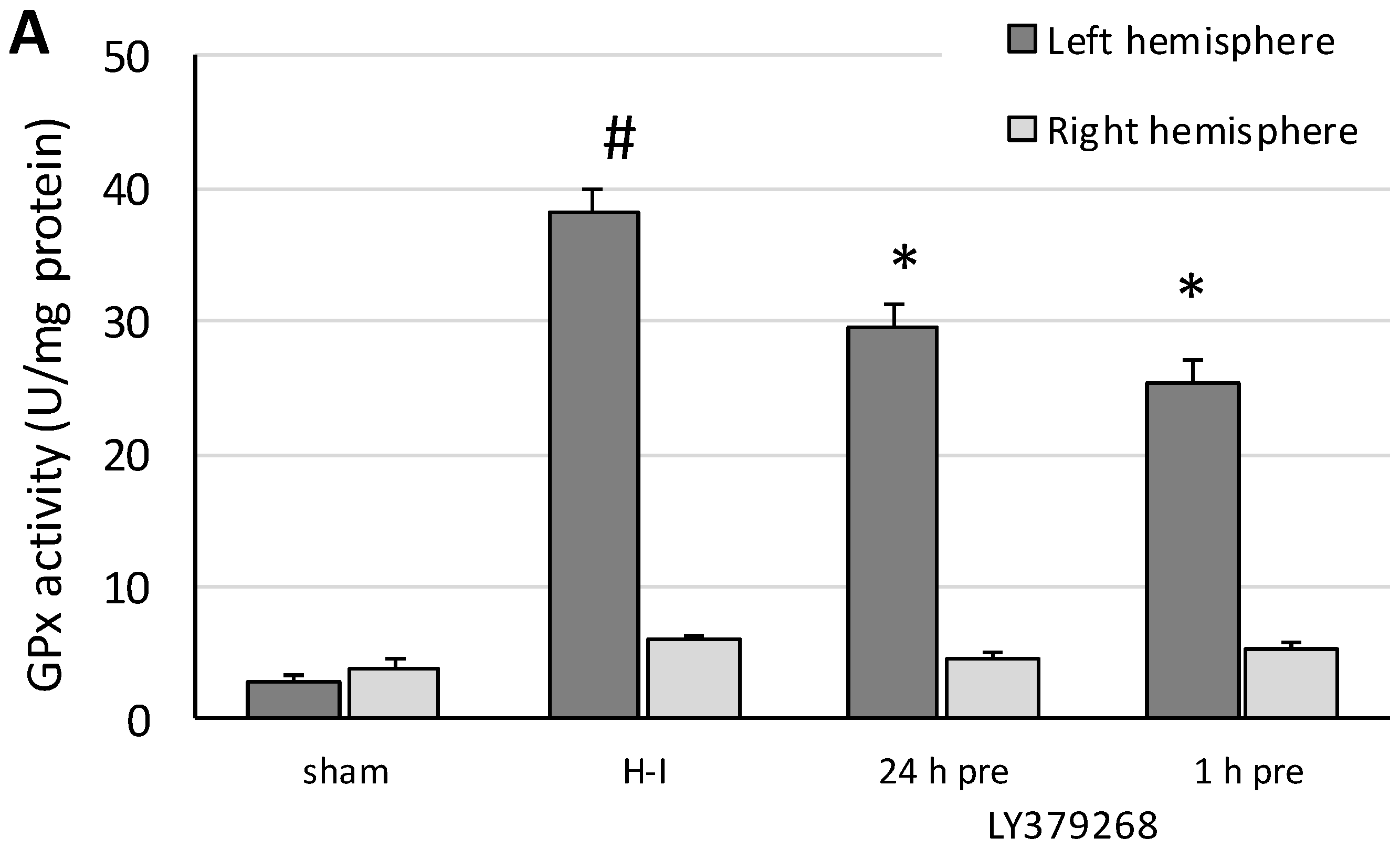
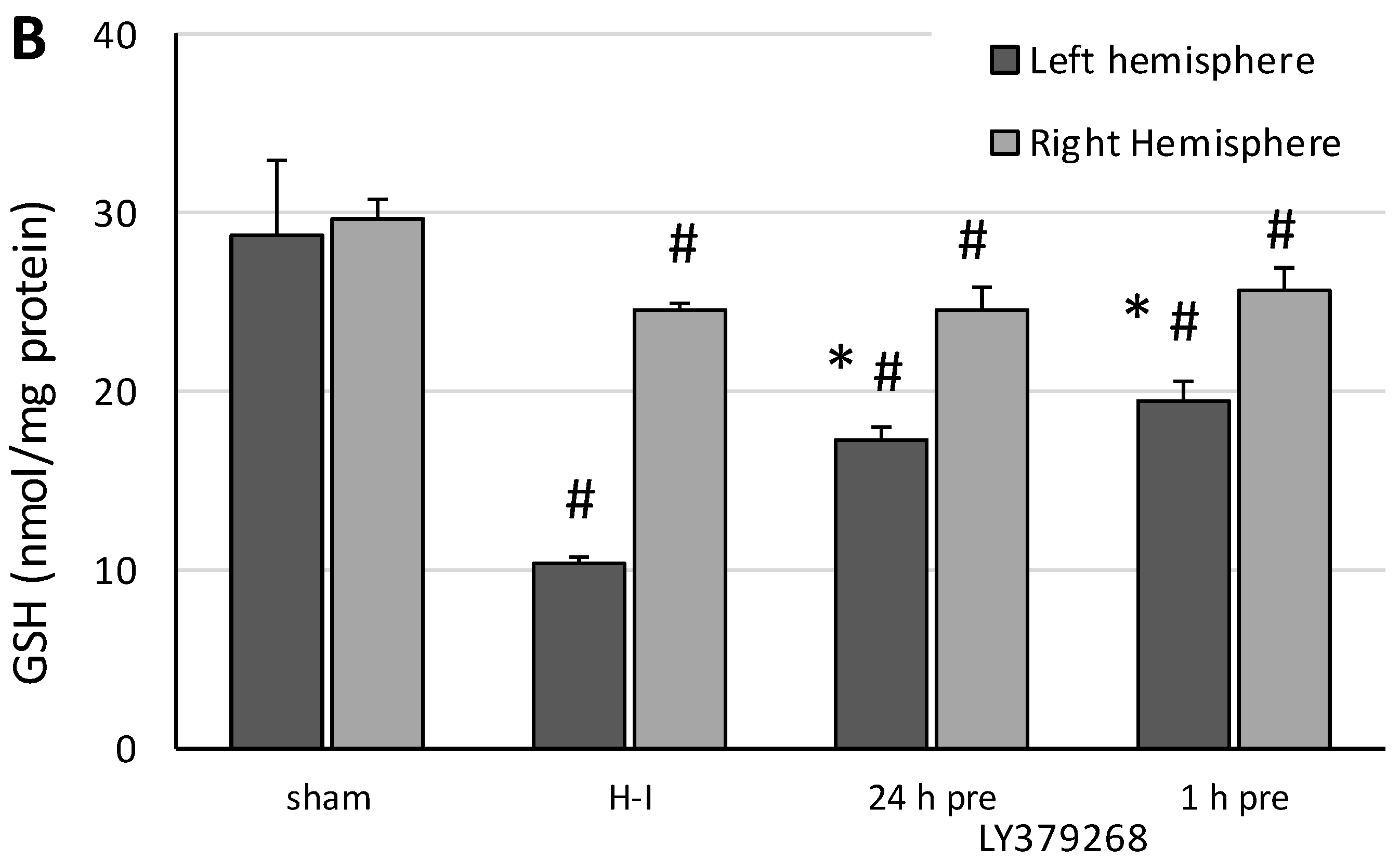
3.4. LY379268 Reduces the H-I Evoked Changes in GPx Activity and the GSH Level
4. Discussion
5. Conclusions
Acknowledgments
Author Contributions
Conflicts of Interest
References
- McLean, C.; Ferriero, D. Mechanisms of hypoxic-ischemic injury in the term infant. Semin. Perinatol. 2004, 28, 425–432. [Google Scholar] [CrossRef] [Scilit] [PubMed]
- Zhao, M.; Zhu, P.; Fujino, M.; Zhuang, J.; Guo, H.; Sheikh, I.; Zhao, L.; Li, X.K. Oxidative Stress in Hypoxic-Ischemic Encephalopathy: Molecular Mechanisms and Therapeutic Strategies. Int. J. Mol. Sci. 2016, 17, 2078. [Google Scholar] [CrossRef] [Scilit] [PubMed]
- Chen, H.; Yoshioka, H.; Kim, G.S.; Jung, J.E.; Okami, N.; Sakata, H.; Maier, C.M.; Narasimhan, P.; Goeders, C.E.; Chan, P.H. Oxidative stress in ischemic brain damage: Mechanisms of cell death and potential molecular targets for neuroprotection. Antioxid Redox Signal. 2011, 14, 1505–1517. [Google Scholar] [CrossRef] [Scilit] [PubMed]
- Kelen, D.; Robertson, N.J. Experimental treatments for hypoxic ischaemic encephalopathy. Early Hum. Dev. 2010, 86, 369–377. [Google Scholar] [CrossRef] [Scilit] [PubMed]
- Cox-Limpens, K.E.; Strackx, E.; Van den Hove, D.L.; Van Ekkendonk, J.R.; Jong, M.D.; Zimmermann, L.J.; Steinbusch, H.W.; Vles, J.S.; Gavilanes, A.W. Fetal asphyctic preconditioning protects against perinatal asphyxia- induced apoptosis and astrogliosis in neonatal brain. CNS Neurol. Disord. Drug Targets 2015, 14, 33–40. [Google Scholar] [CrossRef] [Scilit] [PubMed]
- Chen, F.; Qi, Z.; Luo, Y.; Hinchliffe, T.; Ding, G.; Xia, Y.; Ji, X. Non-pharmaceutical therapies for stroke: Mechanisms and clinical implications. Prog. Neurobiol. 2014, 115, 246–269. [Google Scholar] [CrossRef] [Scilit] [PubMed]
- Stetler, R.A.; Leak, R.K.; Gan, Y.; Li, P.; Zhang, F.; Hu, X.; Jing, Z.; Chen, J.; Zigmond, M.J.; Gao, Y. Preconditioning provides neuroprotection in models of CNS disease: Paradigms and clinical significance. Prog. Neurobiol. 2014, 114, 58–83. [Google Scholar] [CrossRef] [Scilit] [PubMed]
- Imre, G. The preclinical properties of a novel group II metabotropic glutamate receptor agonist LY379268. CNS Drug Rev. 2007, 13, 444–464. [Google Scholar] [CrossRef] [Scilit] [PubMed]
- Pinheiro, P.S.; Mulle, C. Presynaptic glutamate receptors: Physiological functions and mechanisms of action. Nat. Rev. Neurosci. 2008, 9, 423–436. [Google Scholar] [CrossRef] [Scilit] [PubMed]
- Cai, Z.; Xiao, F.; Fratkin, J.D.; Rhodes, P.G. Protection of neonatal rat brain from hypoxic-ischemic injury by LY379268, a Group II metabotropic glutamate receptor agonist. Neuroreport 1999, 10, 3927–3931. [Google Scholar] [CrossRef] [Scilit] [PubMed]
- Bond, A.; Jones, N.M.; Hicks, C.A.; Whiffin, G.M.; Ward, M.A.; O’Neill, M.F.; Kingston, A.E.; Monn, J.A.; Ornstein, P.L.; Schoepp, D.D.; et al. Neuroprotective effects of LY379268, a selective mGlu2/3 receptor agonist: Investigations into possible mechanism of action in vivo. J. Pharmacol. Exp. Ther. 2000, 294, 800–809. [Google Scholar] [PubMed]
- Feng, R.F.; Li, W.B.; Liu, H.Q.; Li, Q.J.; Chen, X.L.; Zhou, A.M.; Zhao, H.G.; Ai, J. Effects of alpha-methyl-(4-tetrazolyl-phenyl) glycine on the induction of hippocampal ischemictolerance in the rat. Sheng Li Xue Bao 2003, 55, 303–310. [Google Scholar] [PubMed]
- Feng, R.F.; Hu, Y.Y.; Li, W.B.; Liu, H.Q.; Li, Q.J.; Zhang, M. The role of NO resulted from neuronal nitric oxide synthase in the metabotropic glutamate receptor2/3 mediated-brain ischemic tolerance. Zhongguo Ying Yong Sheng Li Xue Za Zhi 2009, 25, 182–185. [Google Scholar] [PubMed]
- Berent-Spillson, A.; Russell, J.W. Metabotropic glutamate receptor 3 protects neurons from glucose-induced oxidative injury by increasing intracellular glutathione concentration. J. Neurochem. 2007, 101, 342–354. [Google Scholar] [CrossRef] [Scilit] [PubMed]
- Hachem, L.D.; Mothe, A.J.; Tator, C.H. Glutamate Increases In Vitro Survival and Proliferation and Attenuates Oxidative Stress-Induced Cell Death in Adult Spinal Cord-Derived Neural Stem/Progenitor Cells via Non-NMDA Ionotropic Glutamate Receptors. Stem Cells Dev. 2016, 25, 1223–1233. [Google Scholar] [CrossRef] [Scilit] [PubMed]
- Folbergrová, J.; Otáhal, J.; Druga, R. Brain superoxide anion formation in immature rats during seizures: Protection by selected compounds. Exp. Neurol. 2012, 233, 421–429. [Google Scholar] [CrossRef] [Scilit] [PubMed]
- Lin, S.H.; Maiese, K. The metabotropic glutamate receptor system protects against ischemic free radical programmed cell death in rat brain endothelial cells. J. Cereb. Blood Flow Metab. 2001, 21, 262–275. [Google Scholar] [CrossRef] [Scilit] [PubMed]
- Rice, M.E.; Russo-Menna, I. Differential compartmentalization of brain ascorbate and glutathione between neurons and glia. Neuroscience 1998, 82, 1213–1223. [Google Scholar] [CrossRef] [Scilit]
- Vannucci, R.C.; Towfighi, J.; Vannucci, S.J. Hypoxic preconditioning and hypoxic-ischemic brain damage in the immature rat: Pathologic and metabolic correlates. J. Neurochem. 1998, 71, 1215–1220. [Google Scholar] [CrossRef] [Scilit] [PubMed]
- Nicoletti, F.; Bruno, V.; Ngomba, R.T.; Gradini, R.; Battaglia, G. Metabotropic glutamate receptors as drug targets: What’s new? Curr. Opin. Pharmacol. 2015, 20, 89–94. [Google Scholar] [CrossRef] [Scilit] [PubMed]
- Bruno, V.; Battaglia, G.; Casabona, G.; Copani, A.; Caciagli, F.; Nicoletti, F. Neuroprotection by glial metabotropic glutamate receptors is mediated by transforming growth factor-beta. J. Neurosci. 1998, 18, 9594–9600. [Google Scholar] [PubMed]
- Calcerrada, P.; Peluffo, G.; Radi, R. Nitric oxide-derived oxidants with a focus on peroxynitrite: Molecular targets, cellular responses and therapeutic implications. Curr. Pharm. Des. 2011, 17, 3905–3932. [Google Scholar] [CrossRef] [Scilit] [PubMed]
- Manucha, W. Mitochondrial dysfunction associated with nitric oxide pathways in glutamate neurotoxicity. Clin. Investig. Arterioscler 2017, 29, 92–97. [Google Scholar] [CrossRef] [Scilit] [PubMed]
- Sheldon, R.A.; Christen, S.; Ferriero, D.M. Genetic and pharmacologic manipulation of oxidative stress after neonatal hypoxia-ischemia. Int. J. Dev. Neurosci. 2008, 26, 87–92. [Google Scholar] [CrossRef] [Scilit] [PubMed]
- Gamdzyk, M.; Makarewicz, D.; Słomka, M.; Ziembowicz, A.; Salinska, E. Hypobaric hypoxia postconditioning reduces brain damage and improves antioxidative defense in the model of birth asphyxia in 7-day-old rats. Neurochem. Res. 2014, 39, 68–75. [Google Scholar] [CrossRef] [Scilit] [PubMed]
- Papadia, S.; Soriano, F.X.; Léveillé, F.; Martel, M.A.; Dakin, K.A.; Hansen, H.H.; Kaindl, A.; Sifringer, M.; Fowler, J.; Stefovska, V.; et al. Synaptic NMDA receptor activity boosts intrinsic antioxidant defenses. Nat. Neurosci. 2008, 11, 476–487. [Google Scholar] [CrossRef] [Scilit] [PubMed]
- Cobley, J.N.; Fiorello, M.L.; Bailey, D.M. 13 reasons why the brain is susceptible to oxidative stress. Redox Biol. 2018, 15, 490–503. [Google Scholar] [CrossRef] [Scilit] [PubMed]
- Hattori, I.; Takagi, Y.; Nozaki, K.; Kondo, N.; Bai, J.; Nakamura, H.; Hashimoto, N.; Yodoi, J. Hypoxia-ischemia induces thioredoxin expression and nitrotyrosine formation in new-born rat brain. Redox Rep. 2002, 7, 256–259. [Google Scholar] [CrossRef] [Scilit] [PubMed]
- Li, S.; Hafeez, A.; Noorulla, F.; Geng, X.; Shao, G.; Ren, C.; Lu, G.; Zhao, H.; Ding, Y.; Ji, X. Preconditioning in neuroprotection: From hypoxia to ischemia. Prog. Neurobiol. 2017, 157, 79–91. [Google Scholar] [CrossRef] [Scilit] [PubMed]
© 2018 by the authors. Licensee MDPI, Basel, Switzerland. This article is an open access article distributed under the terms and conditions of the Creative Commons Attribution (CC BY) license (http://creativecommons.org/licenses/by/4.0/).
Share and Cite
Bratek, E.; Ziembowicz, A.; Salinska, E. Pretreatment with Group II Metabotropic Glutamate Receptor Agonist LY379268 Protects Neonatal Rat Brains from Oxidative Stress in an Experimental Model of Birth Asphyxia. Brain Sci. 2018, 8, 48. https://doi.org/10.3390/brainsci8030048
Bratek E, Ziembowicz A, Salinska E. Pretreatment with Group II Metabotropic Glutamate Receptor Agonist LY379268 Protects Neonatal Rat Brains from Oxidative Stress in an Experimental Model of Birth Asphyxia. Brain Sciences. 2018; 8(3):48. https://doi.org/10.3390/brainsci8030048
Chicago/Turabian StyleBratek, Ewelina, Apolonia Ziembowicz, and Elzbieta Salinska. 2018. "Pretreatment with Group II Metabotropic Glutamate Receptor Agonist LY379268 Protects Neonatal Rat Brains from Oxidative Stress in an Experimental Model of Birth Asphyxia" Brain Sciences 8, no. 3: 48. https://doi.org/10.3390/brainsci8030048
APA StyleBratek, E., Ziembowicz, A., & Salinska, E. (2018). Pretreatment with Group II Metabotropic Glutamate Receptor Agonist LY379268 Protects Neonatal Rat Brains from Oxidative Stress in an Experimental Model of Birth Asphyxia. Brain Sciences, 8(3), 48. https://doi.org/10.3390/brainsci8030048

