
Exploring the Interplay of Working Memory, Apathy, and Mood/Emotional Factors
 ,
,  ,
,
Abstract
1. Introduction
2. Materials and Methods
2.1. Subjects and Data Collection
2.2. Experimental Procedure
2.2.1. Questionnaires
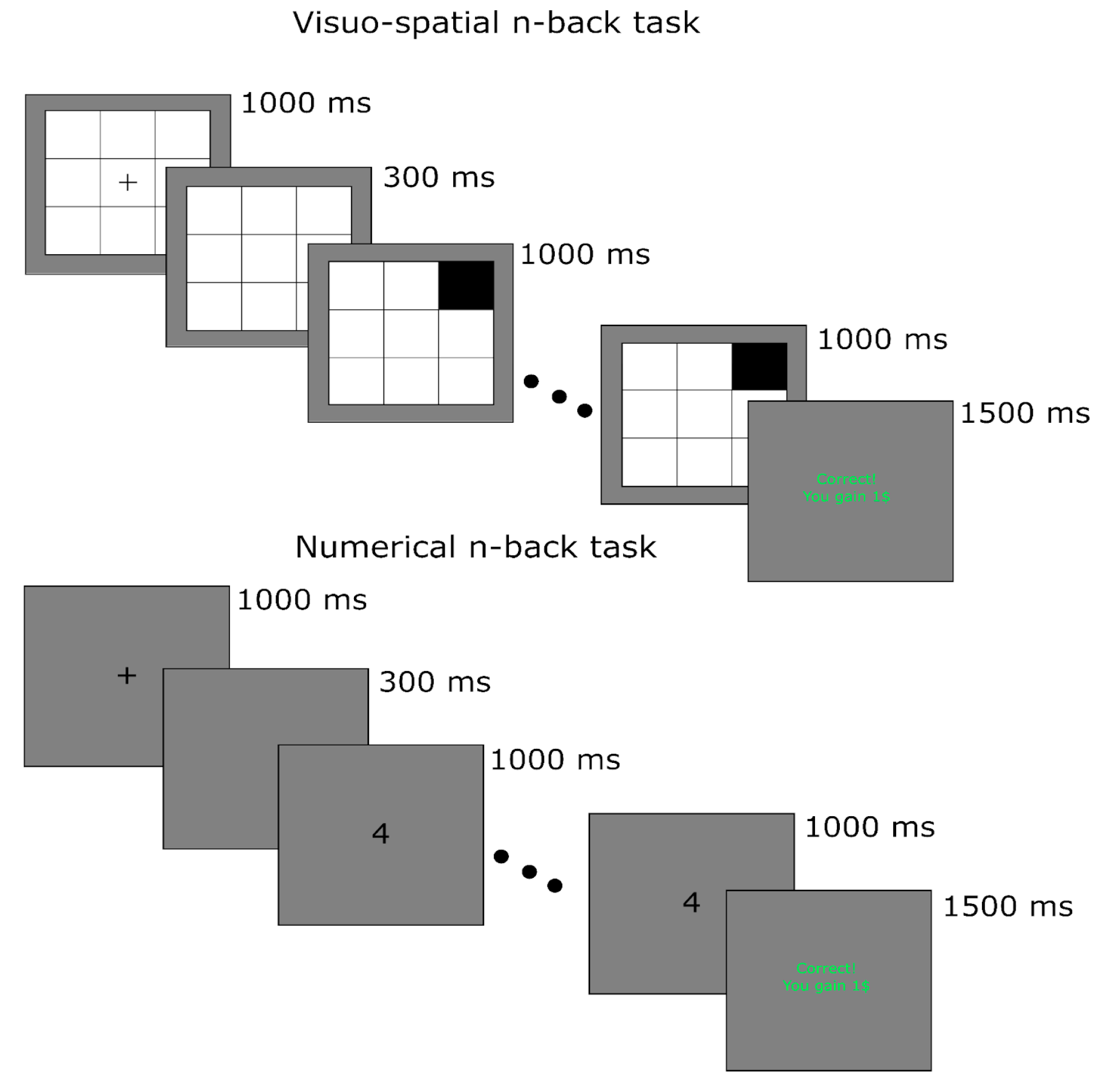
2.2.2. Behavioral Task
3. Statistical Analysis
3.1. Behavioral Task Performance
3.2. Questionnaires Descriptive Statistics
3.3. Relationship between Questionnaires and Behavioral Task Performance
4. Results
4.1. Behavioral Task Performance
4.2. Questionnaires Descriptive Statistics
4.3. Relationship between Questionnaires and Behavioral Task Performance
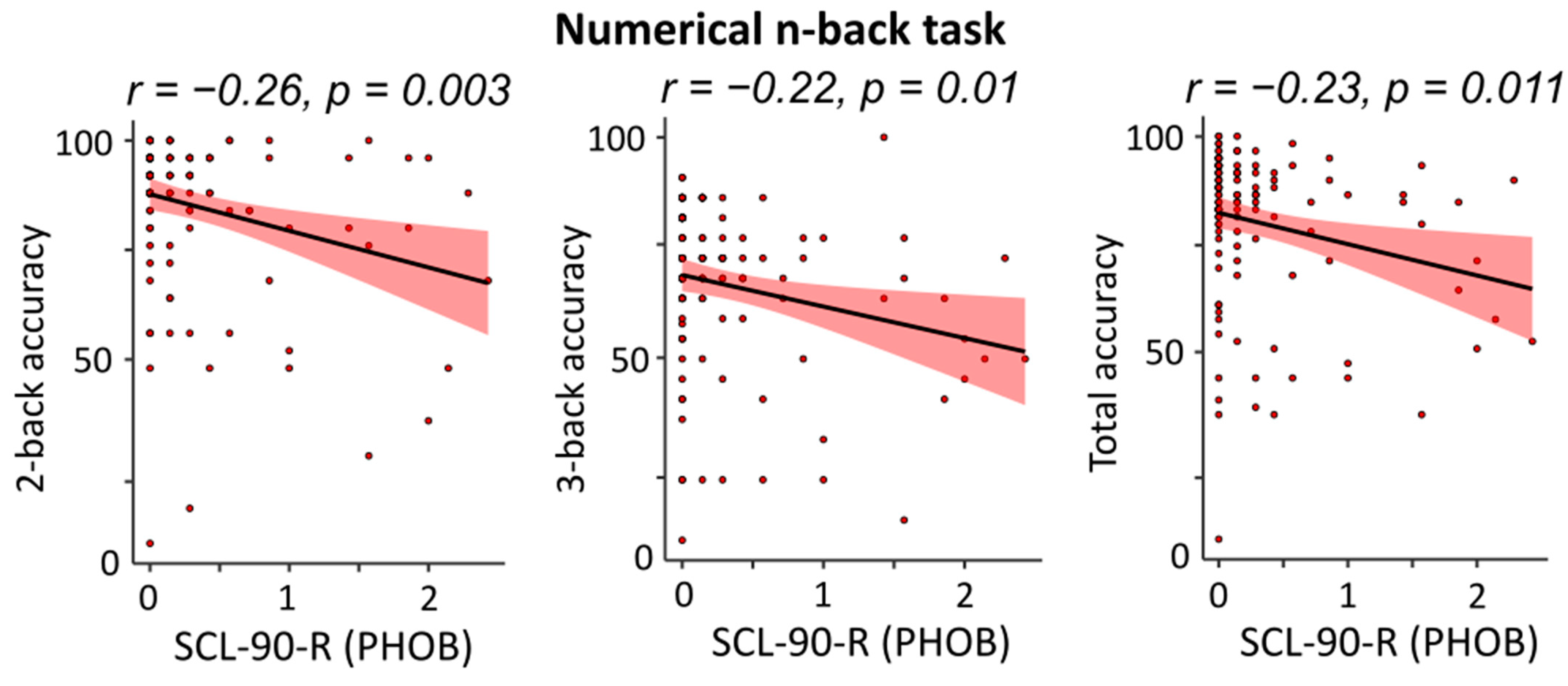
4.3.1. Effects on WM Performance
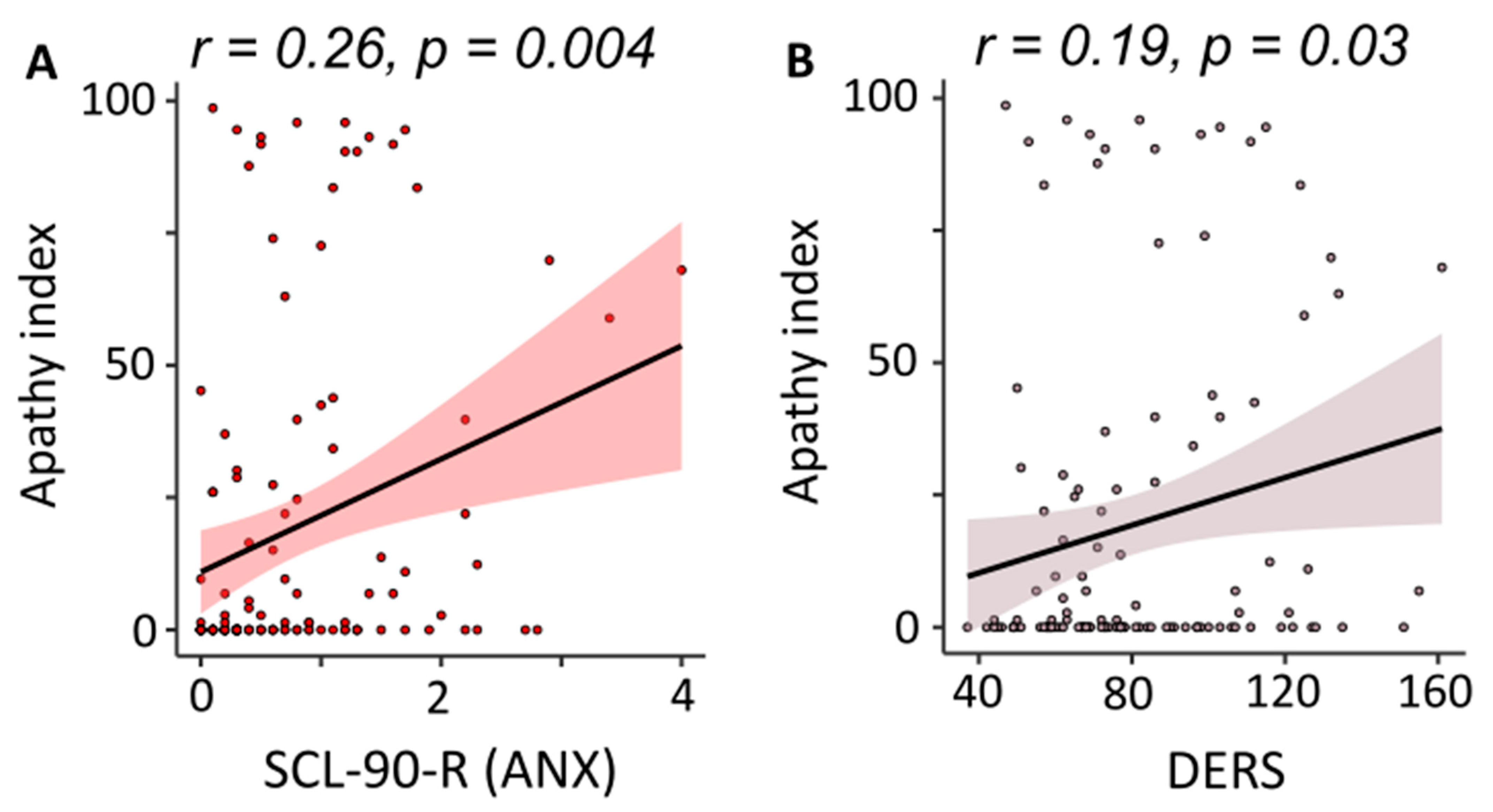
4.3.2. Effects on Apathy Levels
5. Discussion
6. Conclusions
7. Limitations and Future Prospects
Author Contributions
Funding
Institutional Review Board Statement
Informed Consent Statement
Data Availability Statement
Conflicts of Interest
References
- Miyake, A.; Friedman, N.P.; Emerson, M.J.; Witzki, A.H.; Howerter, A.; Wager, T.D. The Unity and Diversity of Executive Functions and Their Contributions to Complex “Frontal Lobe” Tasks: A Latent Variable Analysis. Cogn. Psychol. 2000, 41, 49–100. [Google Scholar] [CrossRef] [Scilit] [PubMed]
- Nettle, D.; Bateson, M. The Evolutionary Origins of Mood Review and Its Disorders. Curr. Biol. 2012, 22, R712–R721. [Google Scholar] [CrossRef] [Scilit] [PubMed]
- Borbély-Ipkovich, E.; Janacsek, K.; Németh, D.; Gonda, X. The effect of negative mood and major depressive episode on working memory and implicit learning. Neuropsychopharmacol. Hung 2014, 16, 29–42. [Google Scholar] [PubMed]
- Long, F.; Ye, C.; Li, Z.; Tian, Y.; Liu, Q. Negative emotional state modulates visual working memory in the late consolidation phase. Cogn. Emot. 2020, 34, 1646–1663. [Google Scholar] [CrossRef] [Scilit] [PubMed]
- Spachtholz, P.; Kuhbandner, C.; Pekrun, R. Negative affect improves the quality of memories: Trading capacity for precision in sensory and working memory. J. Exp. Psychol. Gen. 2014, 143, 1450–1456. [Google Scholar] [CrossRef] [Scilit] [PubMed]
- Xie, W.; Zhang, W. Negative emotion boosts quality of visual working memory representation. Emotion 2016, 16, 760–774. [Google Scholar] [CrossRef] [Scilit]
- Figueira, J.S.B.; Oliveira, L.; Pereira, M.G.; Pacheco, L.B.; Lobo, I.; Motta-Ribeiro, G.C.; David, I.A. An unpleasant emotional state reduces working memory capacity: Electrophysiological evidence. Soc. Cogn. Affect. Neurosci. 2017, 12, 984–992. [Google Scholar] [CrossRef] [Scilit]
- Martin, E.A.; Kerns, J.G. The influence of positive mood on different aspects of cognitive control. Cogn. Emot. 2011, 25, 265–279. [Google Scholar] [CrossRef] [Scilit]
- Gray, J.R. Emotional modulation of cognitive control: Approach-withdrawal states double-dissociate spatial from verbal two-back task performance. J. Exp. Psychol. Gen. 2001, 130, 436–452. [Google Scholar] [CrossRef]
- Yang, H.; Li, J.; Zheng, X. Different Influences of Negative and Neutral Emotional Interference on Working Memory in Trait Anxiety. Front. Psychol. 2021, 12, 570552. [Google Scholar] [CrossRef] [Scilit]
- Phillips, L.H.; Smith, L.; Gilhooly, K.J. The effects of adult aging and induced positive and negative mood on planning. Emotion 2002, 2, 263–272. [Google Scholar] [CrossRef] [PubMed]
- Storbeck, J. Performance costs when emotion tunes inappropriate cognitive abilities: Implications for mental resources and behavior. J. Exp. Psychol. Gen. 2012, 141, 411–416. [Google Scholar] [CrossRef] [Scilit] [PubMed]
- Valenti, L.; Garcia, R.B.; Galera, C. Neutral and negative mood induction in executive tasks of working memory. Psicol. Reflexão Crítica 2021, 34, 1–12. [Google Scholar] [CrossRef] [Scilit] [PubMed]
- Chepenik, L.G.; Cornew, L.A.; Farah, M.J. The influence of sad mood on cognition. Emotion 2007, 7, 802–811. [Google Scholar] [CrossRef] [Scilit] [PubMed]
- Schweizer, S.; Satpute, A.B.; Atzil, S.; Field, A.P.; Hitchcock, C.; Black, M.; Barrett, L.F.; Dalgleish, T. The impact of affective information on working memory: A pair of meta-analytic reviews of behavioral and neuroimaging evidence. Psychol. Bull. 2019, 145, 566–609. [Google Scholar] [CrossRef] [Scilit]
- Schoofs, D.; Preuß, D.; Wolf, O.T. Psychosocial stress induces working memory impairments in an n-back paradigm. Psychoneuroendocrinology 2008, 33, 643–653. [Google Scholar] [CrossRef] [Scilit]
- Porcelli, A.J.; Cruz, D.; Wenberg, K.; Patterson, M.D.; Biswal, B.B.; Rypma, B. The effects of acute stress on human prefrontal working memory systems. Physiol. Behav. 2008, 95, 282–289. [Google Scholar] [CrossRef] [Scilit] [PubMed]
- Pardini, M.; Cordano, C.; Guida, S.; Grafman, J.; Krueger, F.; Sassos, D.; Massucco, D.; Abate, L.; Yaldizli, Ö.; Serrati, C.; et al. Prevalence and cognitive underpinnings of isolated apathy in young healthy subjects. J. Affect. Disord. 2016, 189, 272–275. [Google Scholar] [CrossRef] [Scilit]
- Faul, F.; Erdfelder, E.; Lang, A.-G.; Buchner, A. G*Power 3: A flexible statistical power analysis program for the social, behavioral, and biomedical sciences. Behav. Res. Methods 2007, 39, 175–191. [Google Scholar] [CrossRef] [Scilit]
- Vallat-Azouvi, C.; Pradat-Diehl, P.; Azouvi, P. The Working Memory Questionnaire: A scale to assess everyday life problems related to deficits of working memory in brain injured patients. Neuropsychol. Rehabil. Int. J. 2012, 22, 634–649. [Google Scholar] [CrossRef] [Scilit]
- Guariglia, P.; Giaimo, F.; Palmiero, M.; Piccardi, L. Normative data and validation of the Italian translation of the Working Memory Questionnaire (WMQ). Appl. Neuropsychol. Adult 2019, 27, 376–389. [Google Scholar] [CrossRef] [Scilit] [PubMed]
- Marin, R.S.; Biedrzycki, R.C.; Firinciogullari, S. Reliability and validity of the apathy evaluation scale. Psychiatry Res. 1991, 38, 143–162. [Google Scholar] [CrossRef] [Scilit] [PubMed]
- Borgi, M.; Caccamo, F.; Giuliani, A.; Piergentili, A.; Sessa, S.; Reda, E.; Alleva, E.; Cirulli, F.; Miraglia, F. Validation of the Italian version of the Apathy Evaluation Scale (AES-I) in institutionalized geriatric patients. Ann. Dell’istituto Super. Sanità 2016, 52, 249–255. [Google Scholar] [CrossRef] [Scilit]
- Forte, G.; Favieri, F.; Tambelli, R.; Casagrande, M. COVID-19 Pandemic in the Italian Population: Validation of a Post-Traumatic Stress Disorder Questionnaire and Prevalence of PTSD Symptomatology. Int. J. Environ. Res. Public Health 2020, 17, 4151. [Google Scholar] [CrossRef] [Scilit]
- Cohen, S.; Kamarck, T.; Mermelstein, R. A global measure of perceived stress. J. Health Soc. Behav. 1983, 24, 385–396. [Google Scholar] [CrossRef] [Scilit]
- Fossati, A. The PSS Scale is Reproduced with Permission from the American Sociological Association; Cohen, S.; Kamarck, T.; Mermelstein, R., Translators; Springer International Publishing: Cham, Switzerland, 2010. [Google Scholar]
- McNair, D.M.; Lorr, M.; Droppleman, L.F. Profile of Mood States; Educational and Industrial Testing Service: San Diego, CA, USA, 1971. [Google Scholar]
- Farnè, M.; Sabellico, A.; Gnugnoli, D.; Corallo, A. Italian Version of Profile of Mood States; Special Organizations: Florence, Italy, 1971. [Google Scholar]
- Spitzer, R.L.; Kroenke, K.; Williams, J.B. Validation and utility of a self-report version of PRIME-MD: The PHQ primary care study. Patient Health Questionnaire. JAMA J. Am. Med. Assoc. 1999, 282, 1737–1744. [Google Scholar] [CrossRef] [Scilit]
- Mazzotti, E.; Fassone, G.; Sagoni, E.; Picardi, A.; Ramieri, L.; Lega, I.; Camaioni, D.; Abeni, D.; Pasquini, P. The Patient Health Questionnaire (PHQ) for the screening of psychiatric disorders: A validation study versus the Structured Clinical Interview for DSM-IV axis I (SCID-I). Ital. J. Psychopathol. 2003, 9, 235–242. [Google Scholar]
- Gratz, K.L.; Roemer, L. Multidimensional Assessment of Emotion Regulation and Dysregulation: Development, Factor Structure, and Initial Validation of the Difficulties in Emotion Regulation Scale. J. Psychopathol. Behav. Assess. 2004, 26, 41–54. [Google Scholar] [CrossRef] [Scilit]
- Sighinolfi, C.; Norcini Pala, A.; Chiri, L.R.; Marchetti, I.; Sica, C. Difficulties in Emotion Regulation Scale (DERS): Italian translation and adaptation. Cogn. Behav. Psychother. 2010, 16, 141–170. [Google Scholar]
- Derogatis, L.R. SCL-90-R: Administration, Scoring and Procedures: Manual II; Clinical Psychometric Research: Baltimore, MD, USA, 1983. [Google Scholar]
- Sarno, I.; Preti, E.; Prunas, A.; Madeddu, F., Translators; SCL-90-R, 2nd ed.; Giunti Organizzazioni Speciali: Florence, Italy, 2011. [Google Scholar]
- Rezlescu, C.; Danaila, I.; Miron, A.; Amariei, C. More time for science: Using Testable to create and share behavioral experiments faster, recruit better participants, and engage students in hands-on research. Prog. Brain Res. 2020, 253, 243–262. [Google Scholar] [CrossRef]
- Kirchner, W.K. Age differences in short-term retention of rapidly changing information. J. Exp. Psychol. 1958, 55, 352–358. [Google Scholar] [CrossRef] [Scilit]
- Tabachnick, B.G.; Fidell, L.S. Experimental Designs Using ANOVA; Thomson/Brooks/Cole: Belmont, CA, USA, 2007. [Google Scholar]
- Mardia, K.V. Measures of multivariate skewness and kurtosis with applications. Biometrika 1970, 57, 519–530. [Google Scholar] [CrossRef]
- Mardia, K.V. Applications of Some Measures of Multivariate Skewness and Kurtosis in Testing Normality and Robustness Studies. Sankhyā Indian J. Stat. Ser. B 1974, 36, 115–128. [Google Scholar]
- Jaeggi, S.M.; Buschkuehl, M.; Jonides, J.; Perrig, W.J. Improving fluid intelligence with training on working memory. Proc. Natl. Acad. Sci. USA 2008, 105, 6829–6833. [Google Scholar] [CrossRef] [Scilit] [PubMed]
- Cowan, N. Working Memory Capacity; Psychology Press: London, UK, 2005. [Google Scholar]
- Owen, A.M.; McMillan, K.M.; Laird, A.R.; Bullmore, E. N-back working memory paradigm: A meta-analysis of normative functional neuroimaging studies. Hum. Brain Mapp. 2005, 25, 46–59. [Google Scholar] [CrossRef] [Scilit] [PubMed]
- Dehaene, S.; Piazza, M.; Pinel, P.; Cohen, L. Three parietal circuits for number processing. Cogn. Neuropsychol. 2003, 20, 487–506. [Google Scholar] [CrossRef] [Scilit]
- Smith, E.E.; Jonides, J. Storage and Executive Processes in the Frontal Lobes. Science 1999, 283, 1657–1661. [Google Scholar] [CrossRef] [Scilit]
- Rämäa, P.; Martinkauppib, S.; Linnankoskia, I.; Koivistob, J.; Aronen, H.J.; Carlson, S. Working Memory of Identification of Emotional Vocal Expressions: An fMRI Study. NeuroImage 2001, 13, 1090–1101. [Google Scholar] [CrossRef] [Scilit]
- Baddeley, A. Working memory: Looking back and looking forward. Nat. Rev. Neurosci. 2003, 4, 829–839. [Google Scholar] [CrossRef] [Scilit]
- Cowan, N. The magical number 4 in short-term memory: A reconsideration of mental storage capacity. Behav. Brain Sci. 2001, 24, 87–114. [Google Scholar] [CrossRef] [Scilit]
- Luck, S.J.; Vogel, E.K. The capacity of visual working memory for features and conjunctions. Nature 1997, 390, 279–281. [Google Scholar] [CrossRef] [Scilit]
- Jonides, J.; Smith, E.E. The architecture of working memory. In Cognitive Neuroscience; Rugg, M.D., Ed.; Psychology Press: London, UK, 1997; pp. 243–276. [Google Scholar]
- Carlson, S.; Martinkauppi, S.; Rämä, P.; Salli, E.; Korvenoja, A.; Aronen, H.J. Distribution of cortical activation during visuospatial n-back tasks as revealed by functional magnetic resonance imaging. Cereb. Cortex 1991, 8, 743–752. [Google Scholar] [CrossRef] [Scilit] [PubMed]
- Martinkauppi, S.; Rämä, P.; Aronen, H.; Korvenoja, A.; Carlson, S. Working Memory of Auditory Localization. Cereb. Cortex 2000, 10, 889–898. [Google Scholar] [CrossRef] [Scilit] [PubMed]
- Ragland, J.D.; Turetsky, B.I.; Gur, R.C.; Gunning-Dixon, F.; Turner, T.; Schroeder, L.; Chan, R.; Gur, R.E. Working memory for complex figures: An fMRI comparison of letter and fractal n-back tasks. Neuropsychology 2002, 16, 370–379. [Google Scholar] [CrossRef] [PubMed]
- Leon, M.I.; Shadlen, M.N. Effect of Expected Reward Magnitude on the Response of Neurons in the Dorsolateral Prefrontal Cortex of the Macaque. Neuron 1999, 24, 415–425. [Google Scholar] [CrossRef] [Scilit] [PubMed]
- Krawczyk, D.C.; Gazzaley, A.; D’Esposito, M. Reward modulation of prefrontal and visual association cortex during an incentive working memory task. Brain Res. 2007, 1141, 168–177. [Google Scholar] [CrossRef] [Scilit] [PubMed]
- Kennerley, S.W.; Dahmubed, A.F.; Lara, A.H.; Wallis, J.D. Neurons in the Frontal Lobe Encode the Value of Multiple Decision Variables. J. Cogn. Neurosci. 2009, 21, 1162–1178. [Google Scholar] [CrossRef] [Scilit]
- Gong, M.; Li, S. Learned reward association improves visual working memory. J. Exp. Psychol. Hum. Percept. Perform. 2014, 40, 841–856. [Google Scholar] [CrossRef] [Scilit]
- Montoya-Murillo, G.; Ibarretxe-Bilbao, N.; Peña, J.; Ojeda, N. The impact of apathy on cognitive performance in the elderly. Int. J. Geriatr. Psychiatry 2019, 34, 657–665. [Google Scholar] [CrossRef] [Scilit]
- Onyike, C.U.; Sheppard, J.-M.E.; Tschanz, J.T.; Norton, M.C.; Green, R.C.; Steinberg, M.; Welsh-Bohmer, K.A.; Breitner, J.C.; Lyketsos, C.G. Epidemiology of Apathy in Older Adults: The Cache County Study. Am. J. Geriatr. Psychiatry 2007, 15, 365–375. [Google Scholar] [CrossRef] [Scilit]
- Harvey, P.-O.; Fossati, P.; Pochon, J.-B.; Levy, R.; LeBastard, G.; Lehéricy, S.; Allilaire, J.-F.; Dubois, B. Cognitive control and brain resources in major depression: An fMRI study using the n-back task. NeuroImage 2005, 26, 860–869. [Google Scholar] [CrossRef] [Scilit] [PubMed]
- Rose, E.; Ebmeier, K. Pattern of impaired working memory during major depression. J. Affect. Disord. 2006, 90, 149–161. [Google Scholar] [CrossRef] [Scilit] [PubMed]
- Dumas, J.A.; Newhouse, P.A. Impaired Working Memory in Geriatric Depression: An fMRI Study. Am. J. Geriatr. Psychiatry 2015, 23, 433–436. [Google Scholar] [CrossRef] [Scilit] [PubMed]
- Smith, E.N.; Romero, C.; Donovan, B.; Herter, R.; Paunesku, D.; Cohen, G.L.; Dweck, C.S.; Gross, J.J. Emotion theories and adolescent well-being: Results of an online intervention. Emotion 2017, 18, 781–788. [Google Scholar] [CrossRef] [Scilit]
- Nikolin, S.; Tan, Y.Y.; Martin, D.; Moffa, A.; Loo, C.K.; Boonstra, T.W. Behavioural and neurophysiological differences in working memory function of depressed patients and healthy controls. J. Affect. Disord. 2021, 295, 559–568. [Google Scholar] [CrossRef] [Scilit]
- Edwards, A.L. The Social Desirability Variable in Personality Assessment and Research; Dryden Press: New York, NY, USA, 1957. [Google Scholar]
- Marshuetz, C.; Smith, E. Working memory for order information: Multiple cognitive and neural mechanisms. Neuroscience 2006, 139, 195–200. [Google Scholar] [CrossRef] [Scilit]

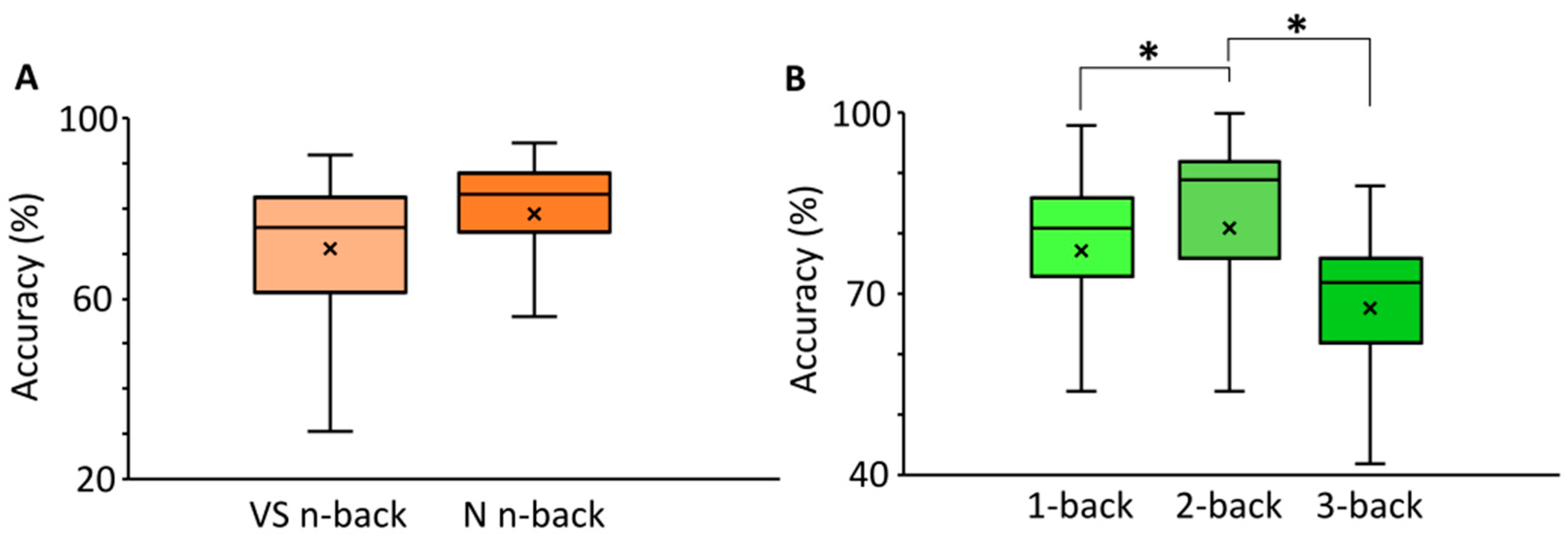
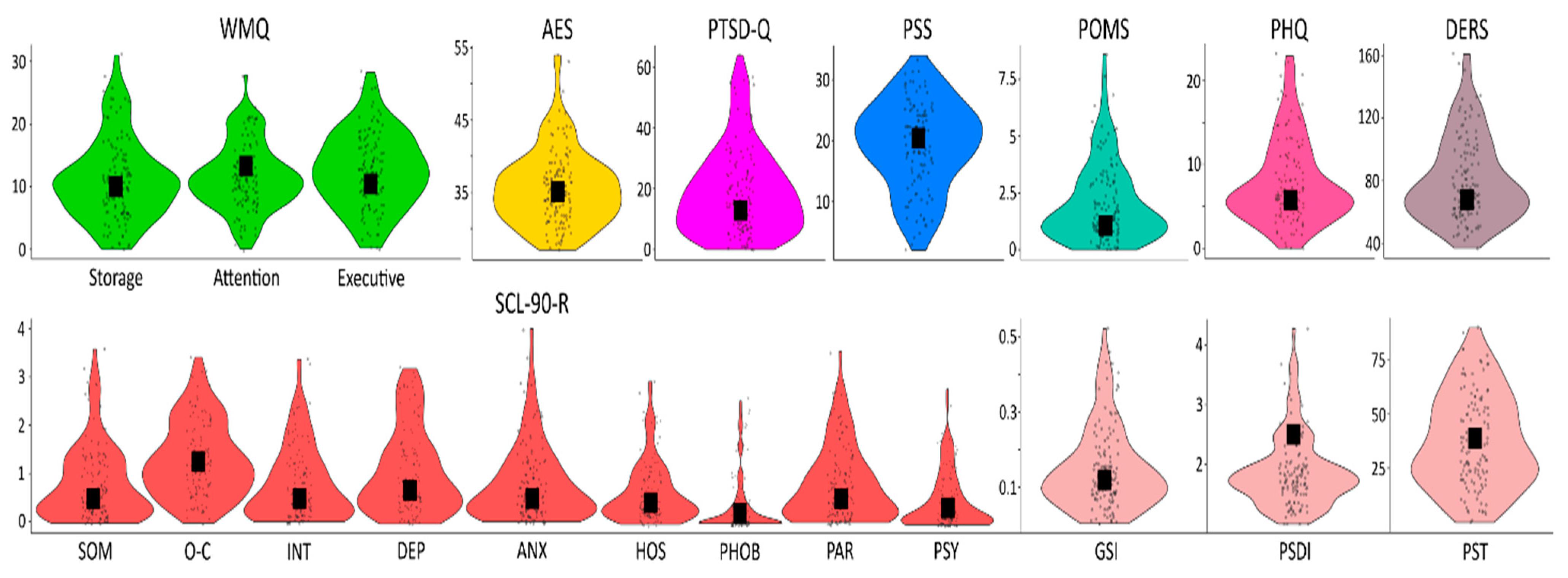
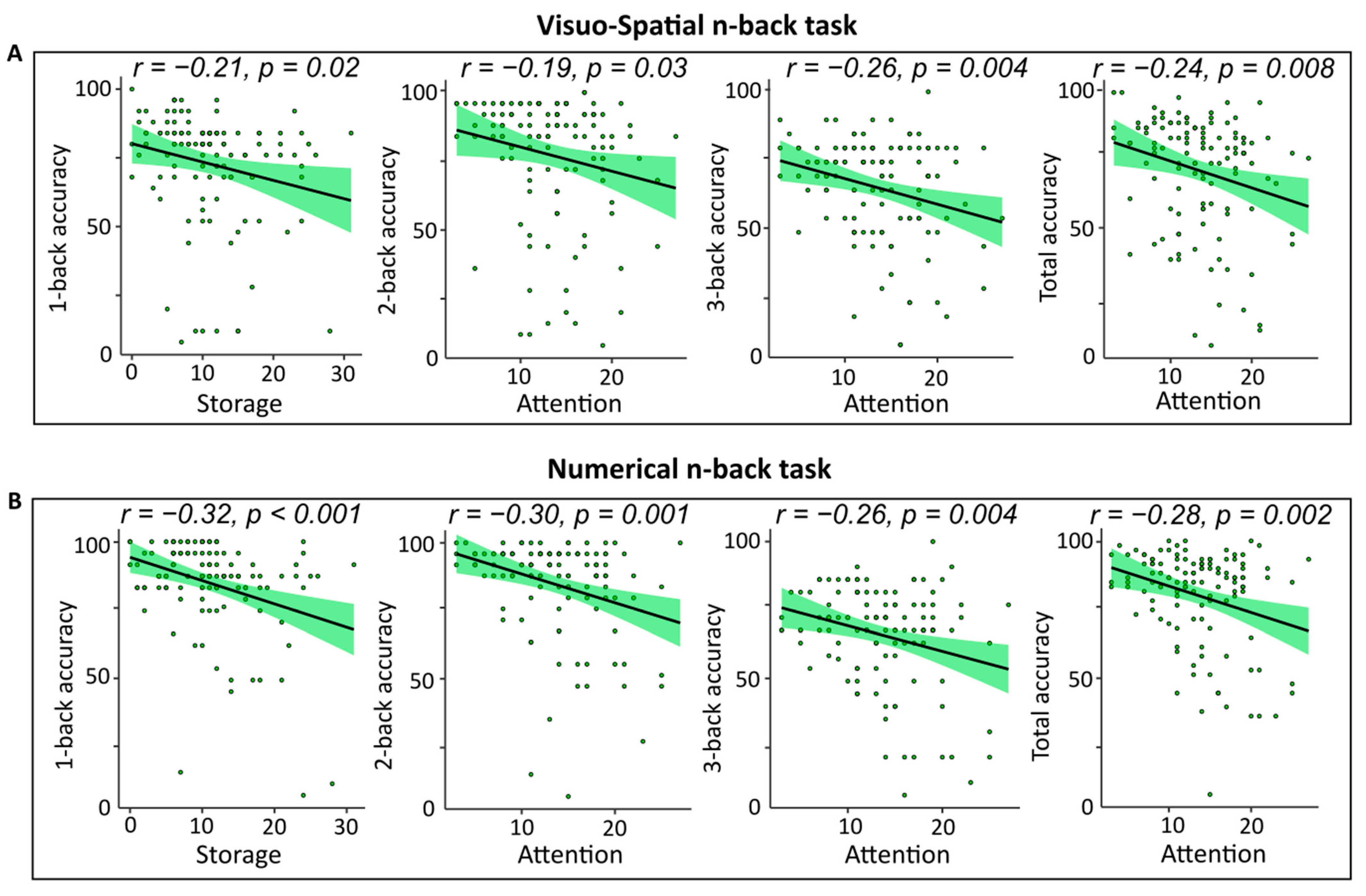



| Descriptive Statistics | WMQ | SCL-90 | ||||||||||||||||||||
|---|---|---|---|---|---|---|---|---|---|---|---|---|---|---|---|---|---|---|---|---|---|---|
| Age | Storage | Attention | Executive | AES | PTSD-Q | PSS | SOM | O-C | INT | DEP | ANX | HOS | PHOB | PAR | PSY | GSI | PSDI | PST | POMS | PHQ | DERS | |
| Mean | 27.8 | 11.1 | 13.6 | 11.5 | 35.6 | 19.1 | 19.3 | 0.806 | 1.30 | 0.782 | 1.06 | 0.789 | 0.619 | 0.335 | 0.779 | 0.464 | 0.150 | 1.88 | 37.2 | 2.06 | 7.80 | 80.3 |
| Median | 24.0 | 10.0 | 14.0 | 11.0 | 35.0 | 16.0 | 20.5 | 0.583 | 1.20 | 0.556 | 0.846 | 0.550 | 0.333 | 0.143 | 0.583 | 0.200 | 0.124 | 1.76 | 34.0 | 1.47 | 6.00 | 73.0 |
| S.D. | 10.5 | 6.49 | 5.16 | 5.33 | 5.22 | 14.4 | 7.26 | 0.757 | 0.772 | 0.756 | 0.855 | 0.783 | 0.593 | 0.570 | 0.758 | 0.563 | 0.110 | 0.612 | 21.8 | 1.75 | 4.99 | 26.7 |
| 95% C.I. SUP | 25.9 | 9.88 | 12.7 | 10.6 | 34.6 | 16.5 | 18.0 | 0.669 | 1.16 | 0.646 | 0.905 | 0.648 | 0.512 | 0.231 | 0.642 | 0.362 | 0.130 | 1.77 | 33.3 | 1.74 | 6.90 | 75.5 |
| 95% C.I. INF | 29.7 | 12.2 | 14.5 | 12.5 | 36.5 | 21.7 | 20.6 | 0.943 | 1.44 | 0.919 | 1.21 | 0.931 | 0.727 | 0.438 | 0.916 | 0.566 | 0.170 | 1.99 | 41.1 | 2.37 | 8.70 | 85.2 |
| Min | 18.0 | 0.0 | 3.0 | 0.0 | 27.0 | 0.0 | 2.0 | 0.00 | 0.00 | 0.00 | 0.00 | 0.00 | 0.00 | 0.00 | 0.00 | 0.00 | 0.00333 | 1.00 | 0.0 | 0.00 | 0.0 | 37.0 |
| Max | 60.0 | 31.0 | 27.0 | 28.0 | 54.0 | 64.0 | 34.0 | 3.50 | 3.40 | 3.33 | 3.15 | 4.00 | 2.83 | 2.43 | 3.50 | 2.70 | 0.523 | 4.27 | 90.0 | 8.60 | 23.0 | 161.0 |
| Cronbach’s α | - | 0.92 | 0.70 | 0.93 | 0.89 | 0.97 | 0.94 | 0.85 | 0.95 | |||||||||||||
Disclaimer/Publisher’s Note: The statements, opinions and data contained in all publications are solely those of the individual author(s) and contributor(s) and not of MDPI and/or the editor(s). MDPI and/or the editor(s) disclaim responsibility for any injury to people or property resulting from any ideas, methods, instructions or products referred to in the content. |
© 2024 by the authors. Licensee MDPI, Basel, Switzerland. This article is an open access article distributed under the terms and conditions of the Creative Commons Attribution (CC BY) license (https://creativecommons.org/licenses/by/4.0/).
Share and Cite
Thellung di Courtelary, E.; Scozia, G.; Lasaponara, S.; Aguzzetti, G.; Doricchi, F.; Conversi, D. Exploring the Interplay of Working Memory, Apathy, and Mood/Emotional Factors. Brain Sci. 2024, 14, 78. https://doi.org/10.3390/brainsci14010078
Thellung di Courtelary E, Scozia G, Lasaponara S, Aguzzetti G, Doricchi F, Conversi D. Exploring the Interplay of Working Memory, Apathy, and Mood/Emotional Factors. Brain Sciences. 2024; 14(1):78. https://doi.org/10.3390/brainsci14010078
Chicago/Turabian StyleThellung di Courtelary, Elisa, Gabriele Scozia, Stefano Lasaponara, Giorgia Aguzzetti, Fabrizio Doricchi, and David Conversi. 2024. "Exploring the Interplay of Working Memory, Apathy, and Mood/Emotional Factors" Brain Sciences 14, no. 1: 78. https://doi.org/10.3390/brainsci14010078
APA StyleThellung di Courtelary, E., Scozia, G., Lasaponara, S., Aguzzetti, G., Doricchi, F., & Conversi, D. (2024). Exploring the Interplay of Working Memory, Apathy, and Mood/Emotional Factors. Brain Sciences, 14(1), 78. https://doi.org/10.3390/brainsci14010078