3.1. Descriptive Statistics
Statistical analysis was based on 195 elements divided into four types of virtual elements, E1, E2, E3, and E4, used within the system representing avatar head, body, legs, and shoes. The data contain the anonymized behavioral patterns of 8139 unique users. The analyzed products were introduced to system users within 21 content updates (CUs).
In order to perform statistical analysis, we used two groups of separate variables related to user activities. Variable abbreviations and their explanation can be found in
Table 1.
The first group includes five variables treated as Activity Factors with the symbols CA–AA. These are, respectively: CA, communication activity represented by an average number of messages received by users adopting the product divided by the number of logins; SD, social dynamics, represented by an average of a number of friends of the product adopter divided by the number of logins; CP, communication popularity, represented by an average number of outgoing messages divided by incoming messages; SP, social position, represented by the average number of received messages divided by the number of incoming messages; and AA, adoption activity, represented by averaging the number of new avatar-element usages divided by the number of logins.
The second group of variables represents Experience Factors related to user activity since account creation, such as MSG_in, the average number of all messages received by the user until the avatar changes; MSG_out, the average number of all messages sent by the user until the change; MSG_total, the average number of total messages sent and received by the user; FR_in—the number of unique friends contacting the user until the avatar change; FR_out—the number of friends contacted before the avatar usage, and FR_total, the average total number of friends.
For each product, users were assigned to Adoption Groups in five classes: innovators, early adopters, early majority, late majority, and laggards, according to time of adoption.
For the purpose of determining the role of used variables, user-related factors were used for the statistical models of survival analysis. We took into account the User Activity and User Experience factors. Initial analysis showed that, for most products, survival time was shorter than one month, and only few of them reached nearly three months. To cover usage periods with more detail, five time periods were taken into account during analysis: one week, two weeks, one month, two months, and three months. One week as the shortest period makes it possible to analyze behavior each day of the week after product launch. Analyzing the statistical significance of predictors that influenced the lifetime dependent variable, we can see that mean CA and AA showed statistical significance of
for all periods. The CP variable, on the other hand, is one that has no effect and is not relevant in any given period. Separately analyzing each period, we can see that the periods of one month, two months, and three months showed the significance of the CA, SD, SP and AA variables. Wald’s statistics with results presented in
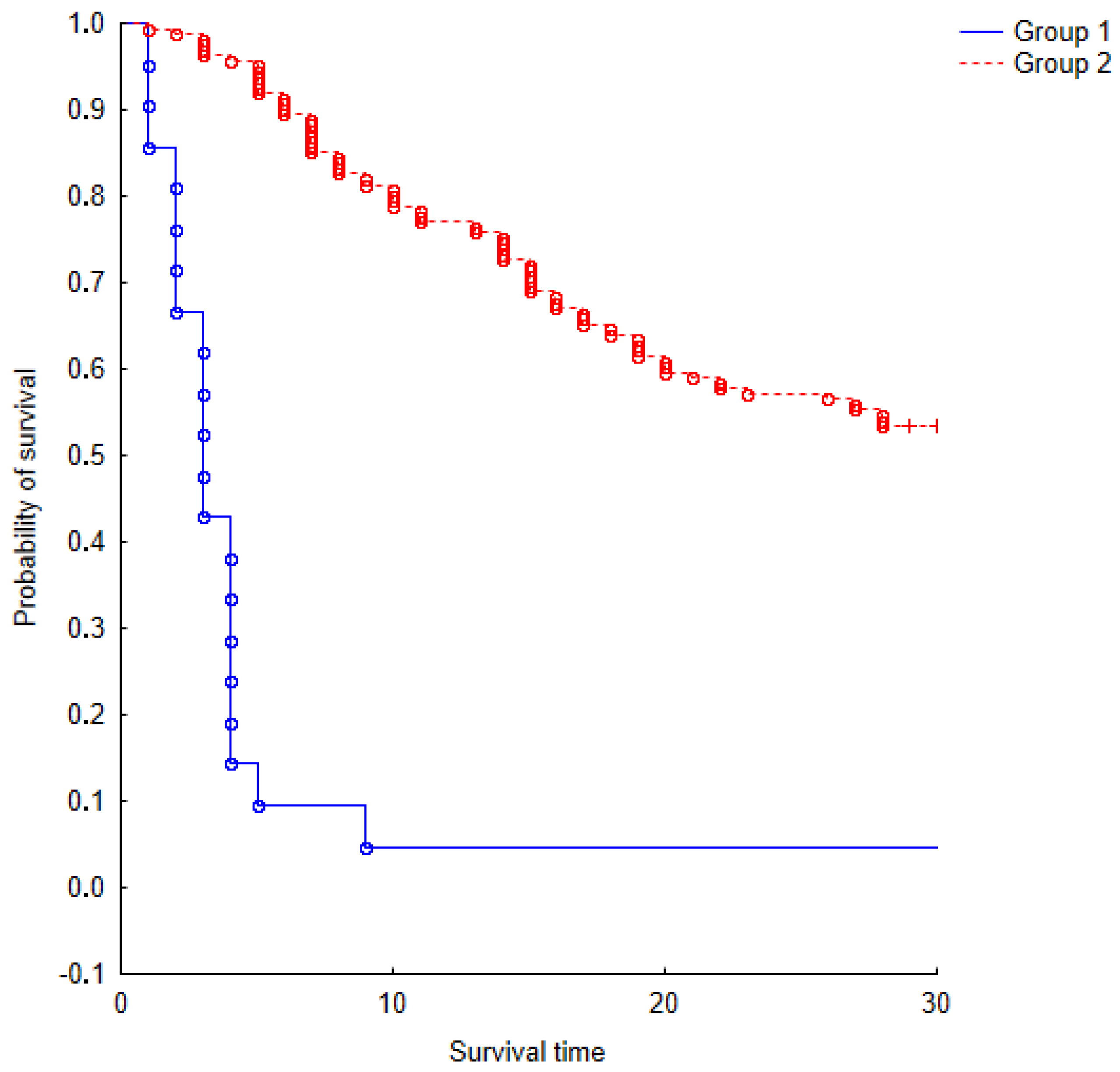
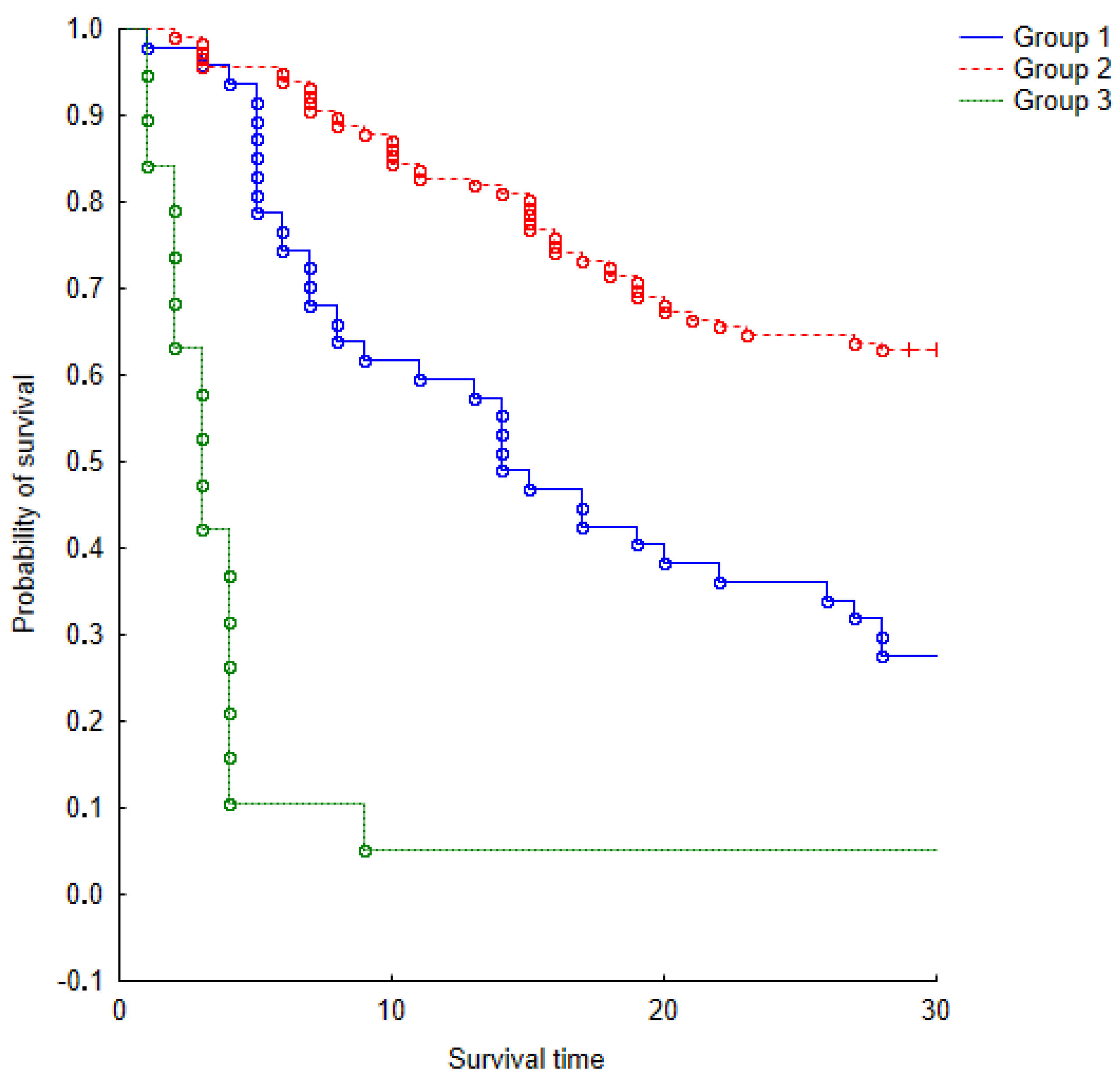
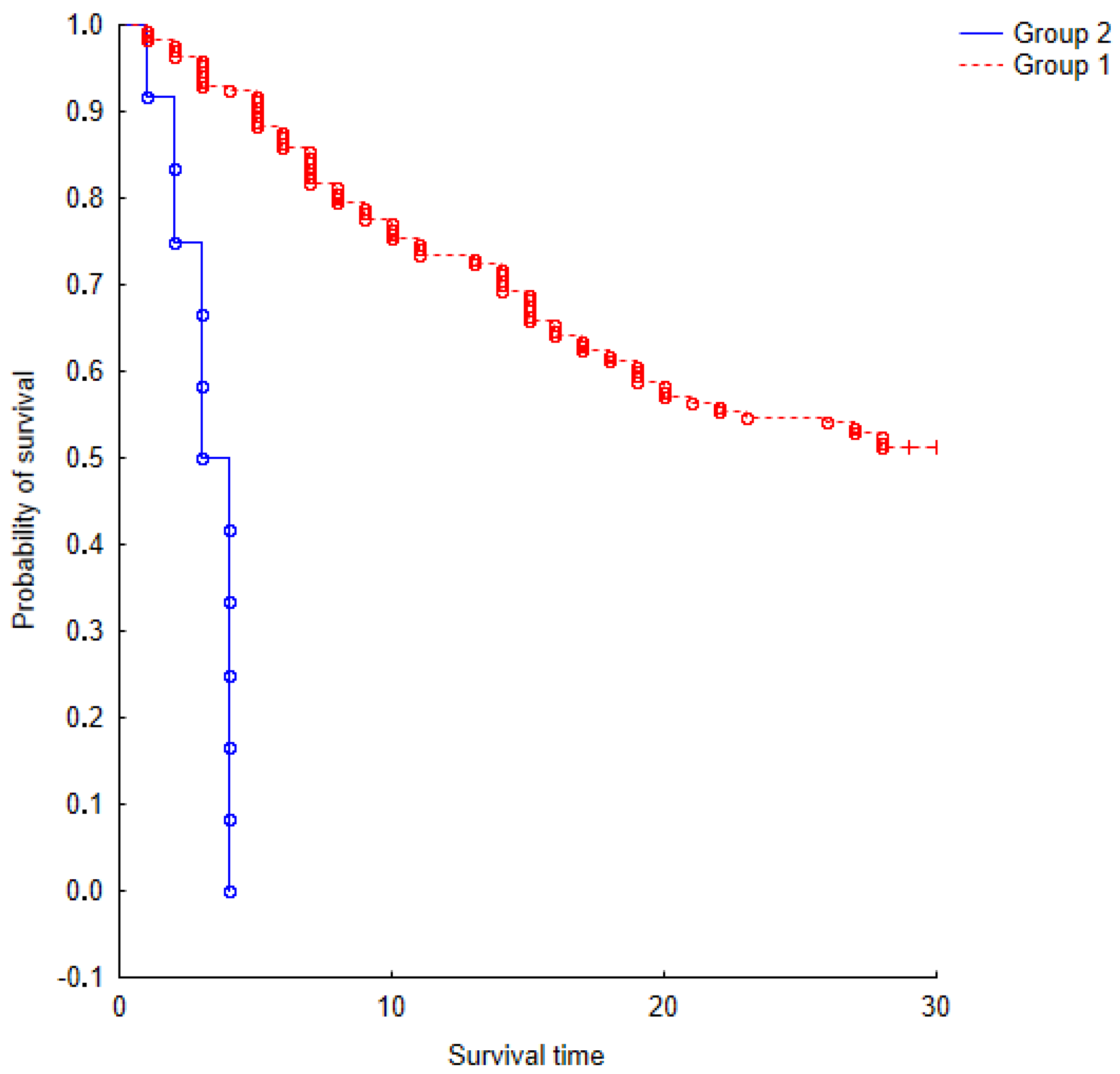
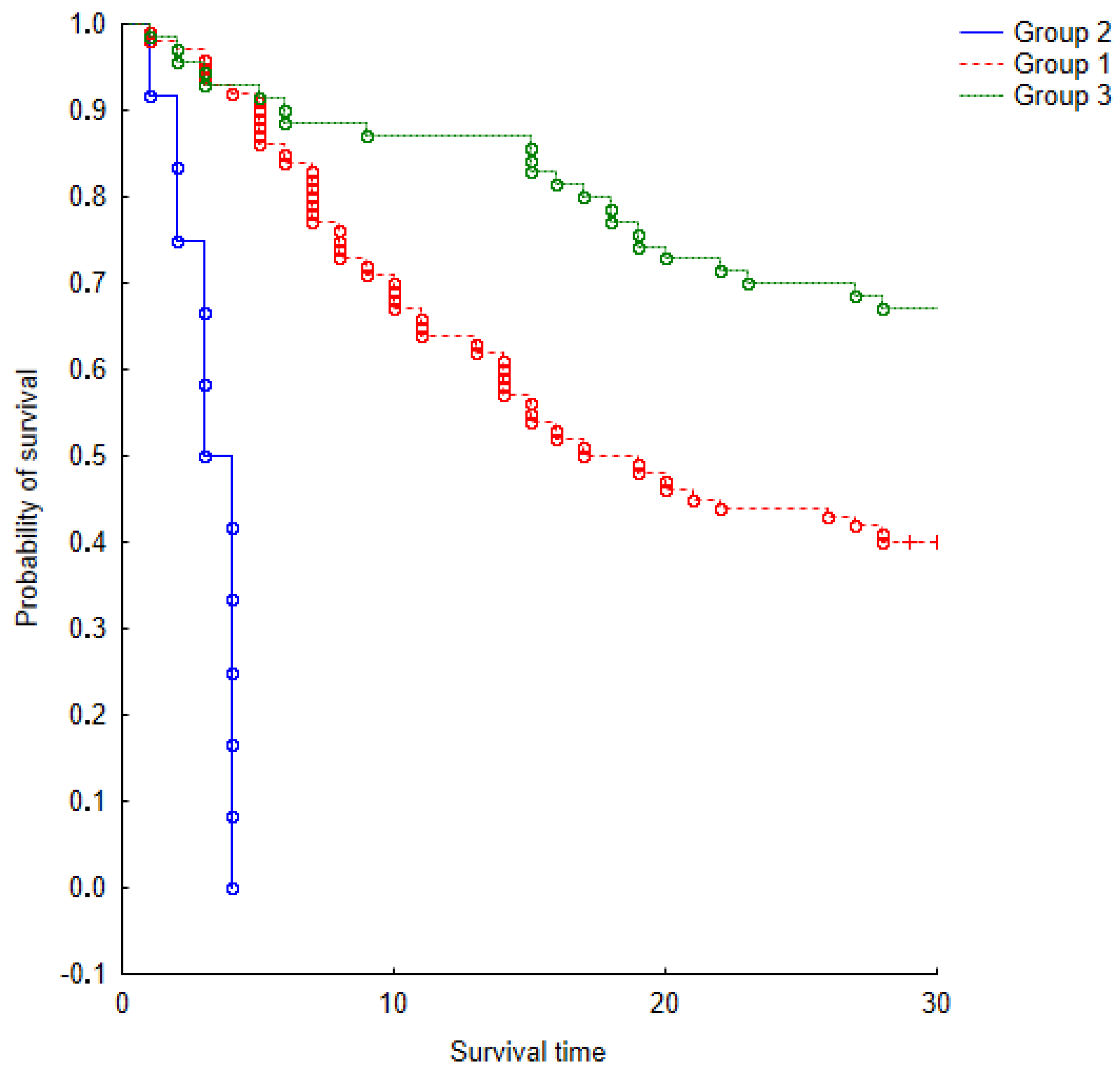
Table 2 showed the highest value with CA in the periods of two weeks month and two months. In the three-month period, Wald pointed to the significance of AA. The influence of predictors on the dependent variable over seven days showed significance in CA, SD, and AA. However, in the 14 day period, only two predictors, CA and AA, showed statistical significance, which affected the product’s life expectancy. In the next step, Kaplan–Meier (
Figure 2,
Figure 3,
Figure 4,
Figure 5 and
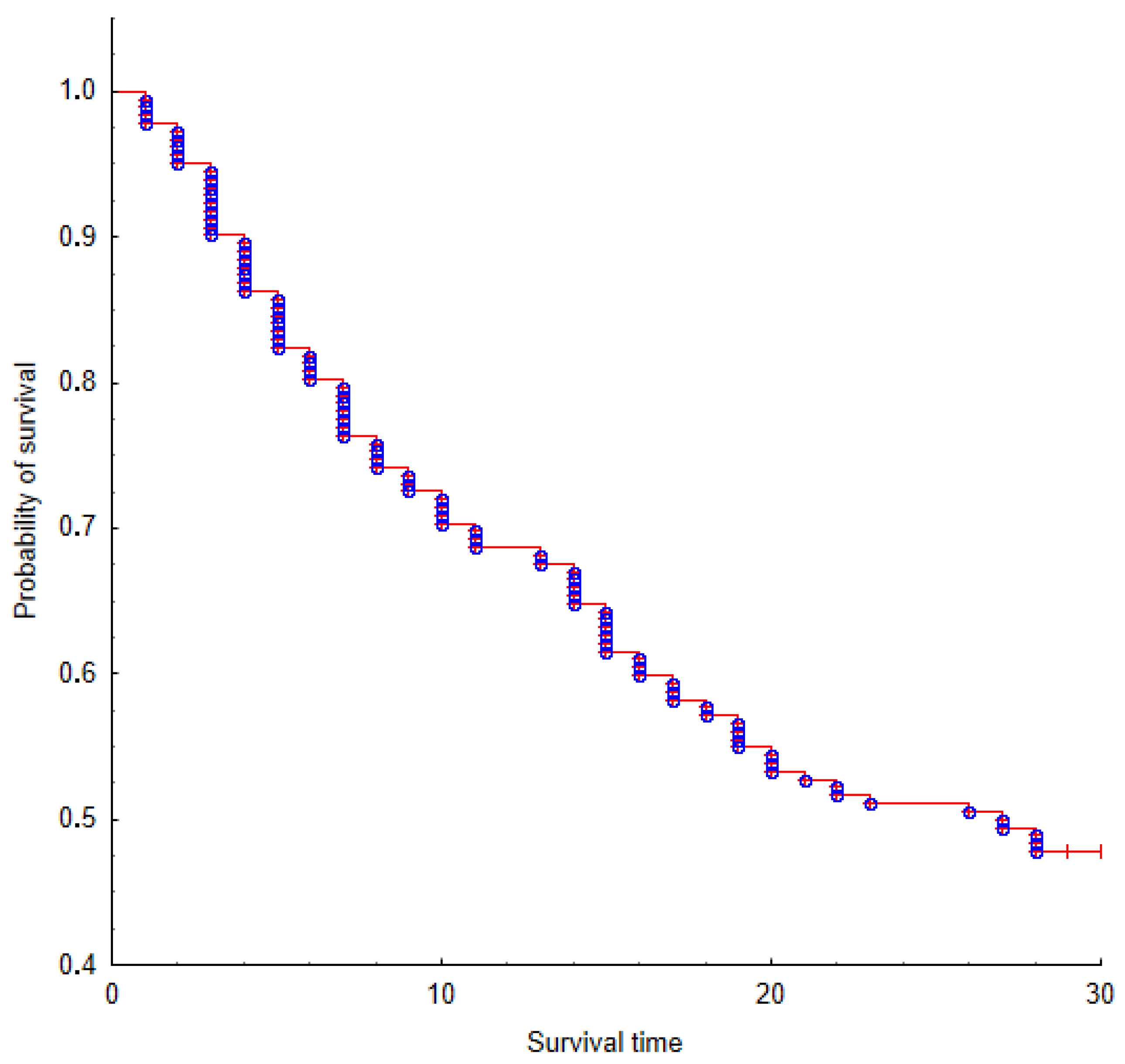
Figure 6) survival probability charts for one month with division for user parameters, and the three user groups were analyzed. The diagrams show the emergence of a growing number of increasingly shorter episodes that, at the border, seek the real function of survival.
Figure 6 shows a survival model without division into classes as a general model for divisional and nondivisional variables.
The next stages show statistical regression models with division into aggregated groups of adopters, i.e., AG1–AG5. Regarding the explanation of these classes, we can refer to
Table 3. Regression analysis was divided into two groups of variables, and product life is a dependent variable. The first group of variables (predictors) include average variable values from CA to AA. The second group include experience-related variables, i.e., MSG_in, MSG_out, FR_in, and FR_out. In
Table 3, we can see the statistical-significance parameter (p) and the strength-of-significance factor (f).
The first group of predictors for AG1 showed significance for CA and AA. Average predictor AA was characterized by the strongest impact. For AG2, the case was definitely different. Four of the five predictors, i.e., CA and CP to AA, were significant. The only predictor that did not have statistical significance was average predictor SD. The impact forces of the predictors, especially in SP, were characterized by a strong accent. For AG3 and AG4, regression analysis showed similar significance to AG2 also for four predictors, but in these cases, lack of predictor significance in relation to dependent variables was shown by the mean of AA variables. In both cases, the CA variable strongly affected G5 results, where things were quite different. Statistical significance was only demonstrated in three cases: CA, CP, and SP.
The second group of predictors that affect the dependent variable also showed variability. In AG1, one of the four predictors was statistically significant, namely, FR_out (0.03). The situation looked completely different for AG2. Here, we can clearly see the strength of joining two classes. Significance statistics showed a positive result for up to three predictors, i.e., MSG_out, FR_in, and FR_out. In the case of AG3, AG4, and AG5, statistical significance was shown by 100% of predictors from FR_out, being the one that acts the strongest on the dependent variable.
The next part of analysis was based on an intergroup comparison of user characteristics between products with different survival time. In order to compare individual lifecycles with the Activity and Experience factors, we used the Mann–Whitney U Test. Analysis was presented in four perspectives: analysis of individual user classes, analysis of aggregated user classes based on activity-factor analysis of individual user classes, and analysis of aggregated user classes based on Experience Factors. Periods that we compared with each other are visible in
Table A1. By starting division-variable predictor analysis for innovators, we can see the lack of significance of parameters at the first comparison period. In the next two, we can see that predictor CA was significant, which indicates that the periods significantly differed from predictor CA. In the last pair of compared periods, predictors CA, SD, and SP showed the largest differences.
Statistics for innovators show us a tendency for the comparative period to be smaller, in this case, two to three months, so more predictors influenced the differences. Analyzing the four other user classes, we see the opposite relationship. Starting with early adopters, where the differences could be seen in the four predictors in the first two pairs, in the next two the number of differences decreased. In the cases of early-majority, late-majority, and laggard users, significance statistics that point to differences are slowly blurred, as in the case of laggards, where in the last group of period comparisons we see the lack of significance of the given predictor data, which indicates low differences. Based on the aggregated user classes, we can see that the first combination of innovators and early adopters positively affects predictor significance, and this indicates large differences for most of the analyzed pairs (from three to four strongly affecting differences). We can see that the shorter the comparison period is, the smaller the differences are, such as two months versus three months. By analyzing the statistics of nondivisional variables that also include four period pairs, we see that statistics for the innovators themselves did not show any significance. We can see statistical significance at subsequent classes. Analyzing the remaining classes together, we see that differences in individual periods clearly increase. So, for early adopters, when analyzing the last two pairs of periods, statistical significance was less than 0.05, which indicates an increase in differences. By analyzing the last group, laggards, we could see that, in each group of periods, differences are clear and quite significant in each of the period pairs being compared. The same applies to aggregated users. Here, we compare the first period and, only in the case of AG2, in 14 days versus three months, we see the lack of slight differences between predictors. Other groups indicate strong differences, as we can see in
Table A2 and
Table A3.
3.2. Survival-Time Prediction with Early-Adopter Characteristics
For survival-time, a prediction dataset containing the usage statistics of 195 newly introduced products was used. Usage statistics for each product are defined by product and user identifiers, and a timestamp representing time when the product (in this case, the avatar) was used by a specific user. For each product, only the first usage per user was taken into account. For each product, data were collected from a newly added product starting from product launch until last product usage. For each analysis, two sets of variables were used based on the User Activity and User Experience factors presented earlier in
Table 1.
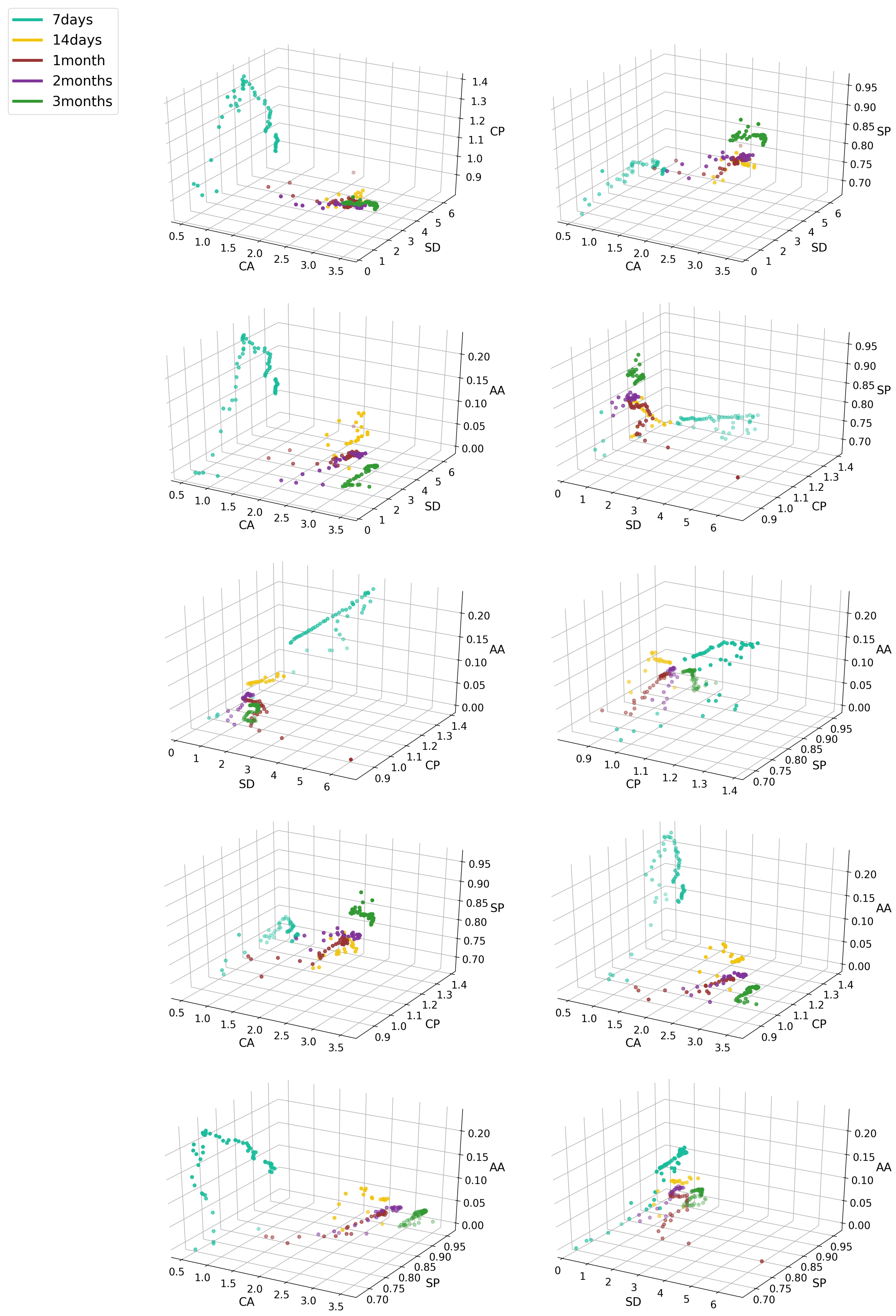
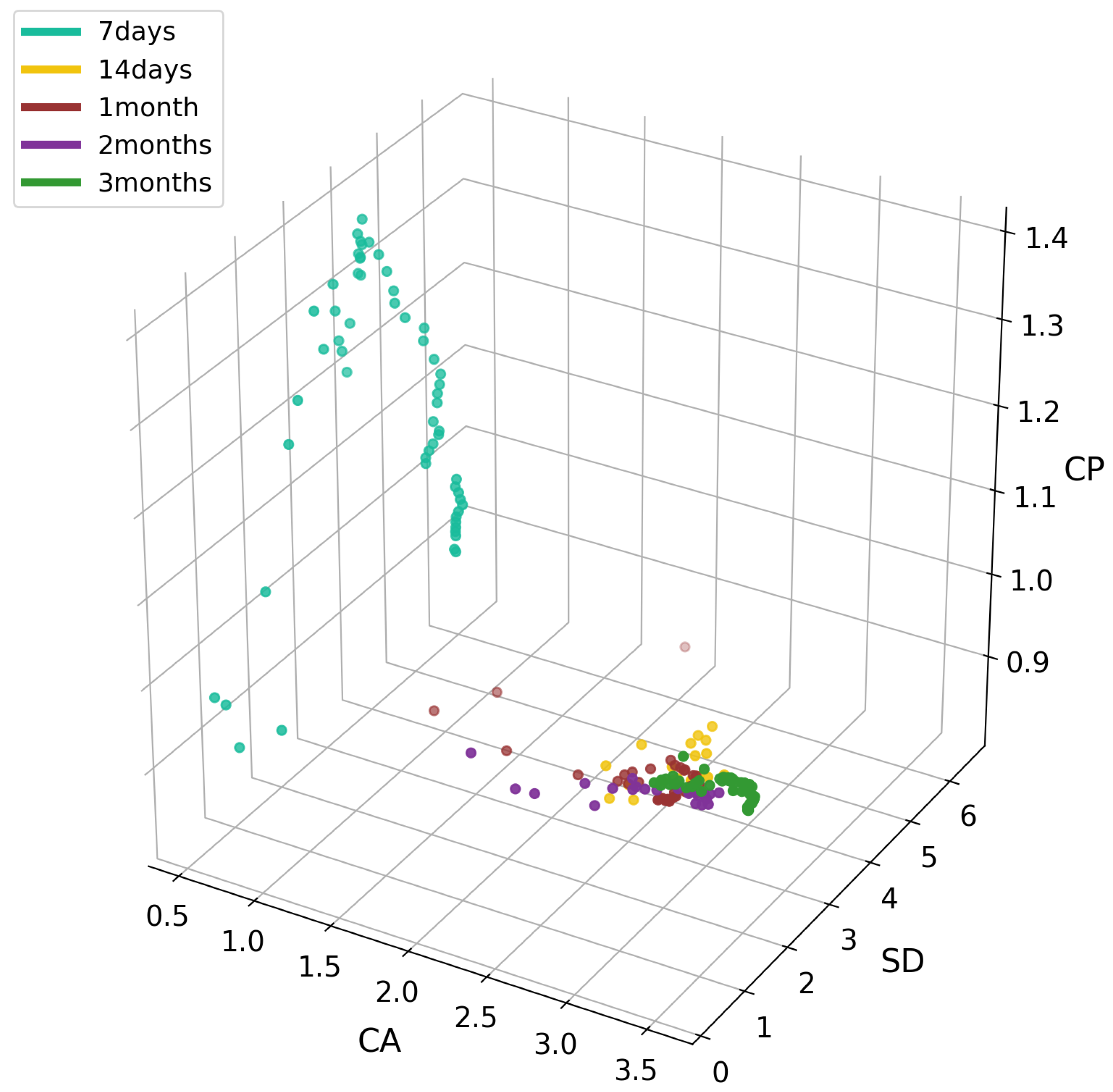
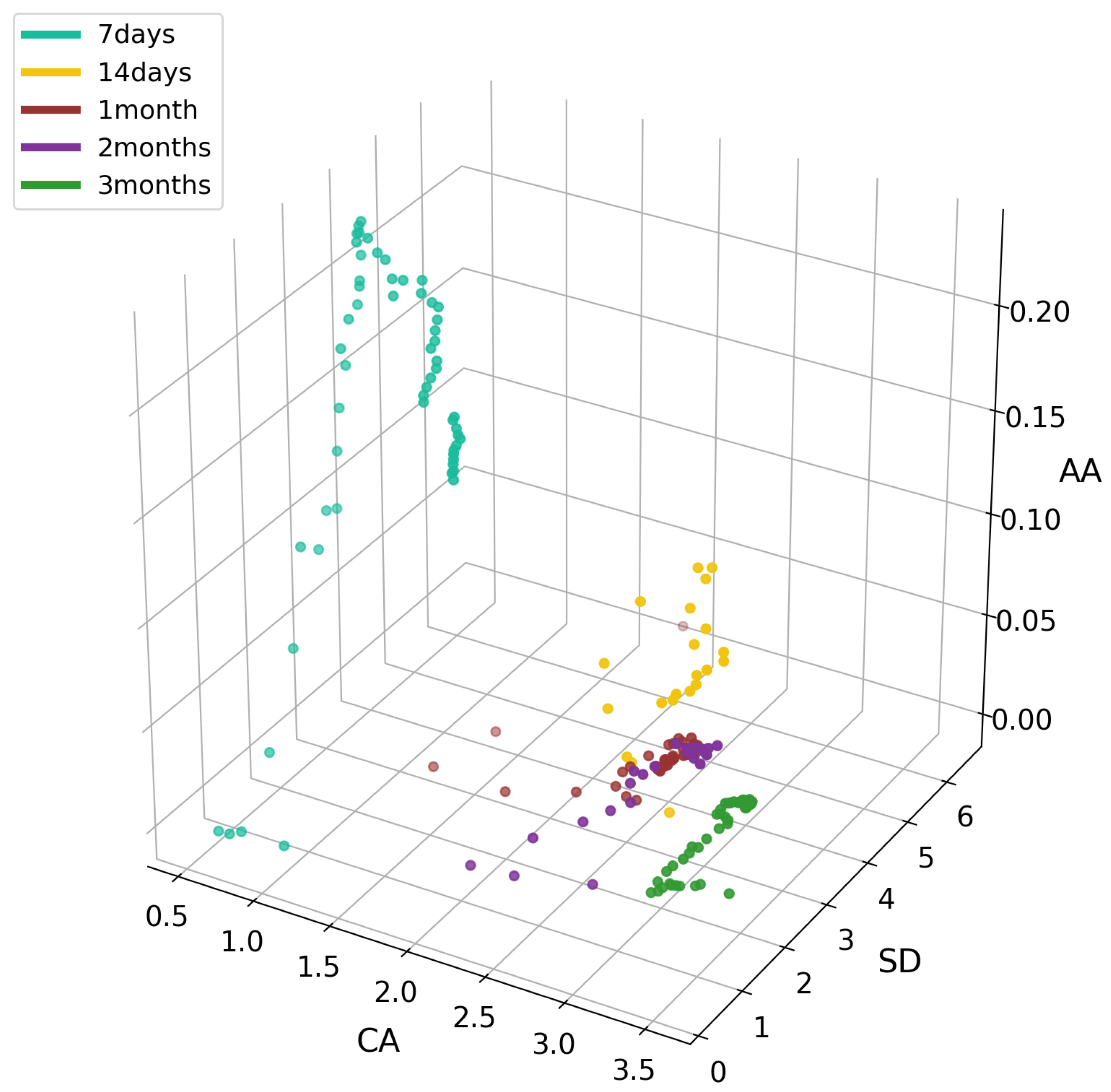
In
Figure 7, we see a high increase in the CP variable for products with seven-day survival with simultaneous small CA values. In other periods, we see density with slight deviations, as in the case of the three-month period, where we see growth in the CA variable; in a 14-day survival period, an increase in the SD variable was observed. As in the previous chart,
Figure 8 shows a clear division into survival-period groups. Within seven days, an increase in the AA ratio with a simultaneous drop in SD was visible, which may indicate a drop in interest from users with low SD. In the remaining periods, we can see in
Figure 9 a clear decrease in the SD index with a simultaneous increase in CA; this showed that the more users communicate with others, the less likely it is for the product to be accepted.
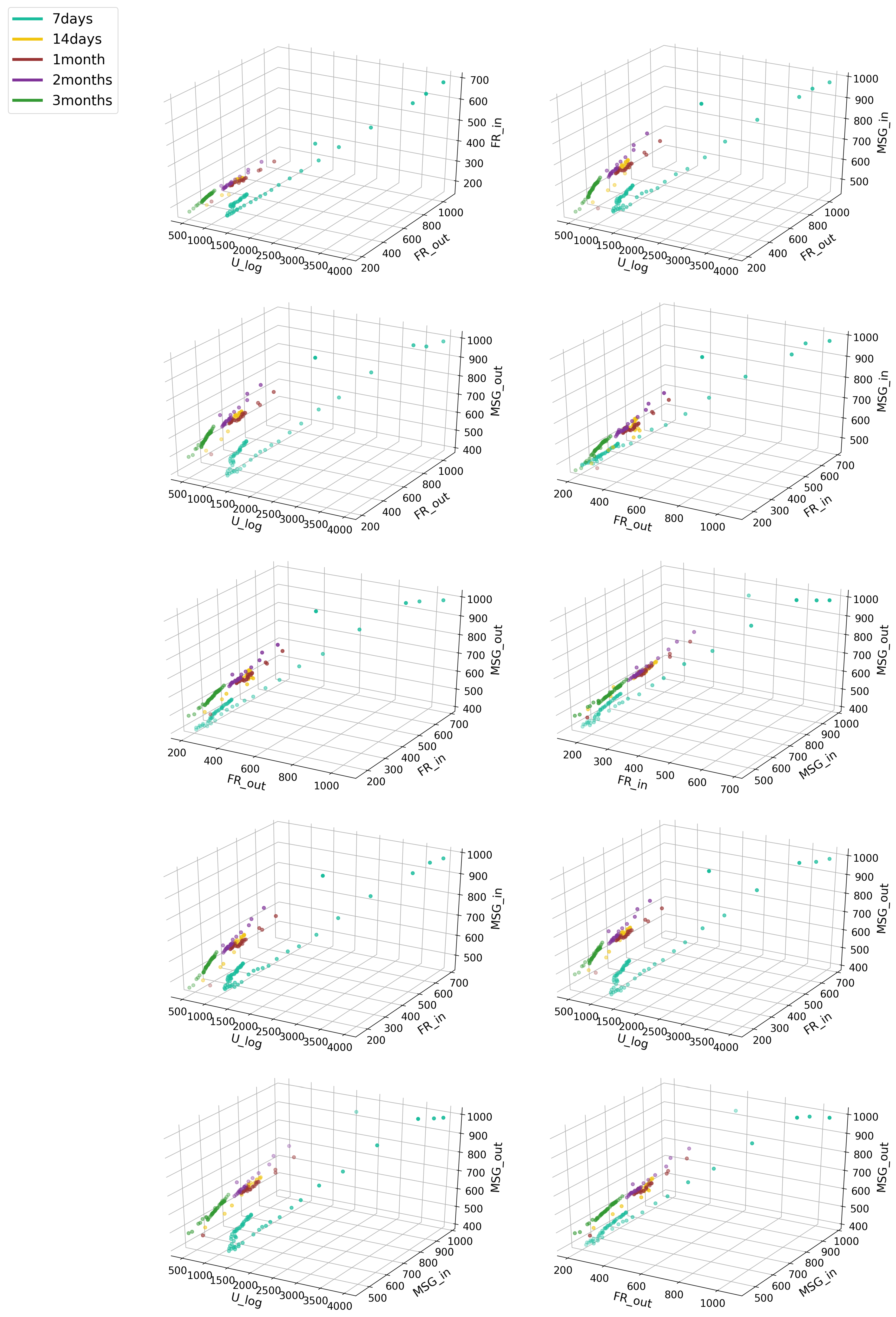
In the case of this chart, we can clearly see that the fewer users log in, fewer messages are sent to others, and fewer sent to the circle of potential friends. There is a clear decline from that period to the next. In the case of the last graph,
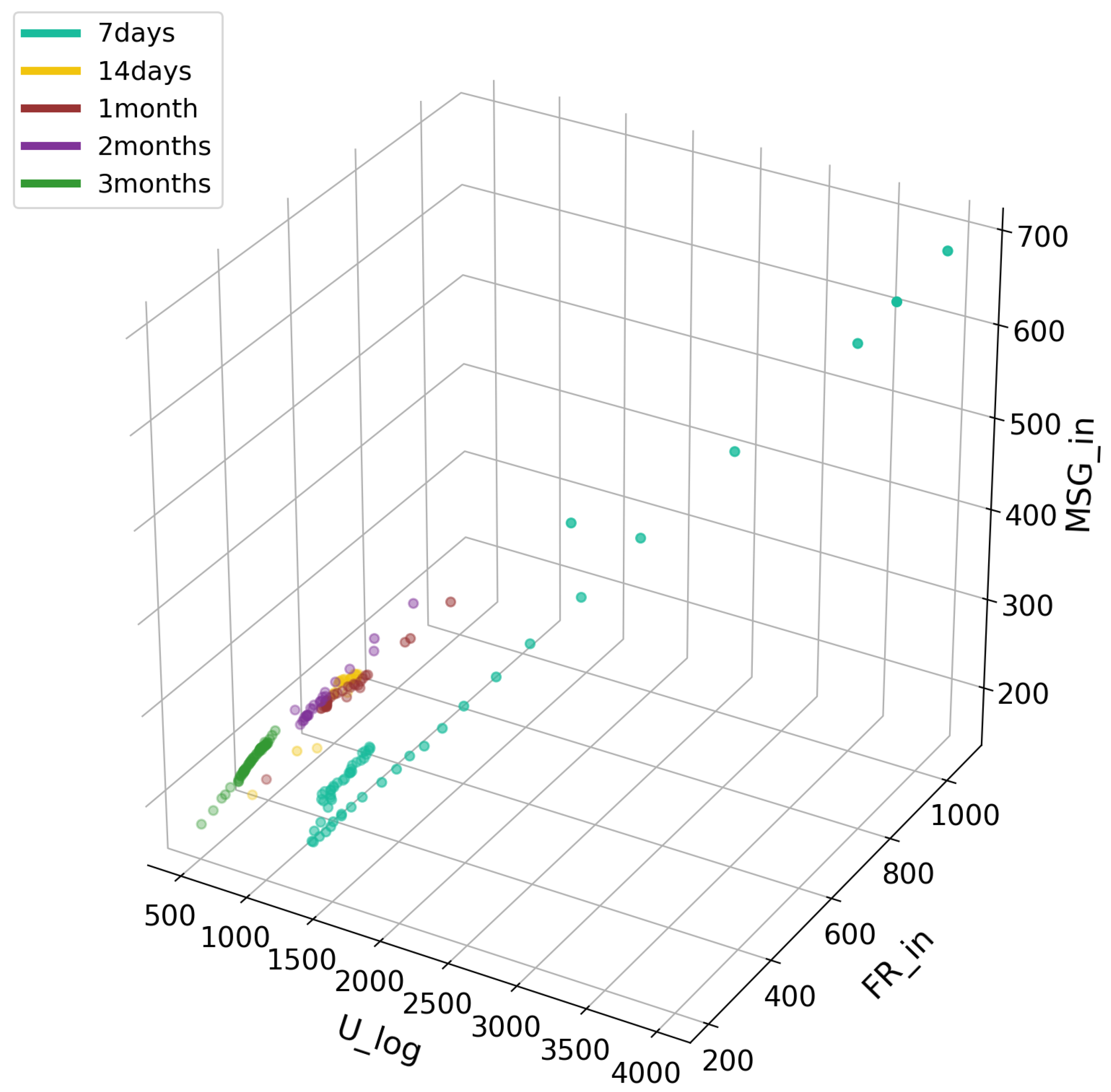
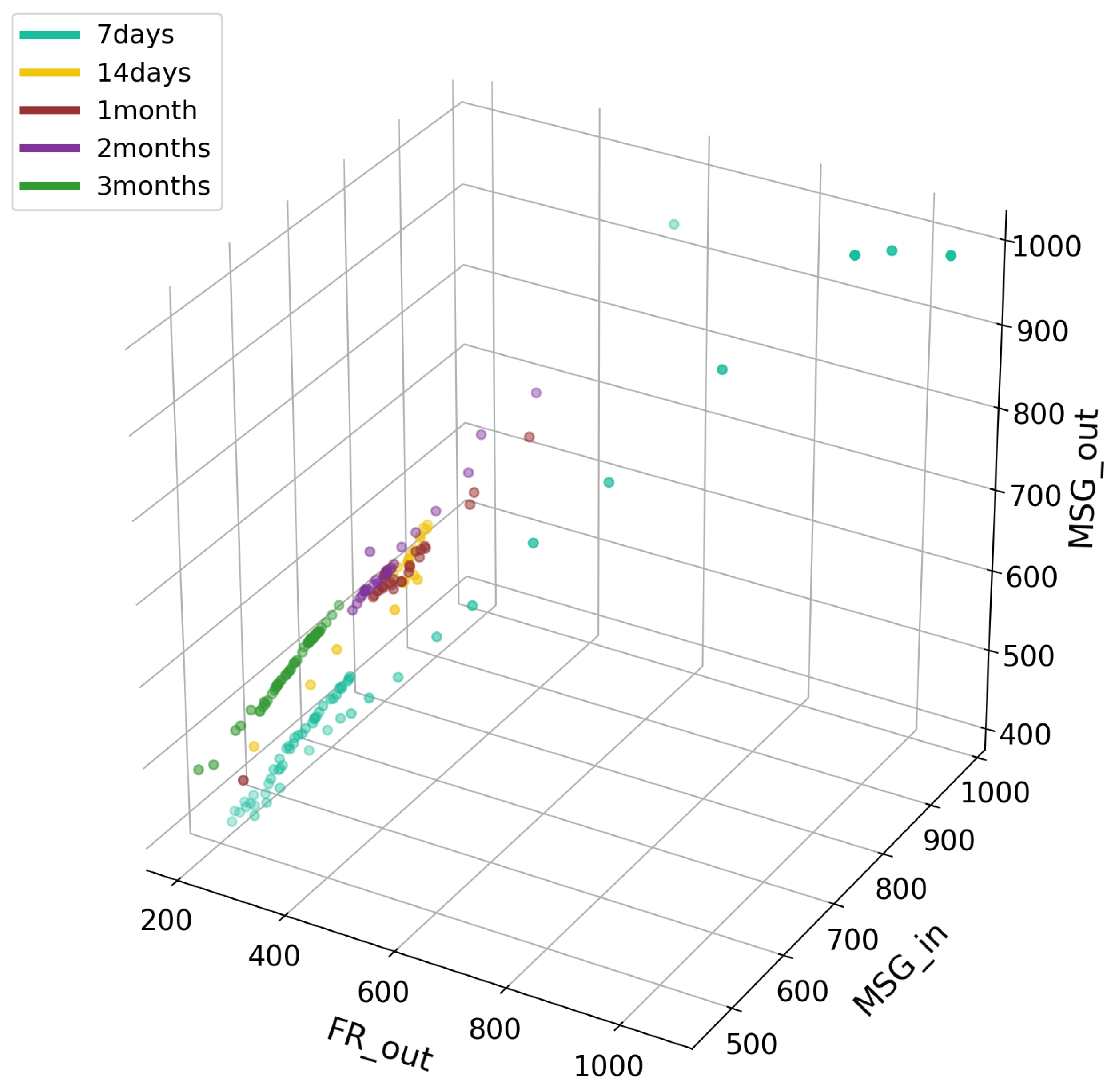
Figure 10, we can see density against the FR_out indicator at initial values oscillating at 150–250. Here, however, we also see a decline from period to period. In the initial period, the MSG_in indicator is small, but increases with survival time. However, the last period (three months) oscillates near the first period, which indicates a lower number of messages sent by the users adopting products in that group. Results from all Experience Factors and Activity Factors are presented in
Figure A1 and
Figure A2 within
Appendix A.
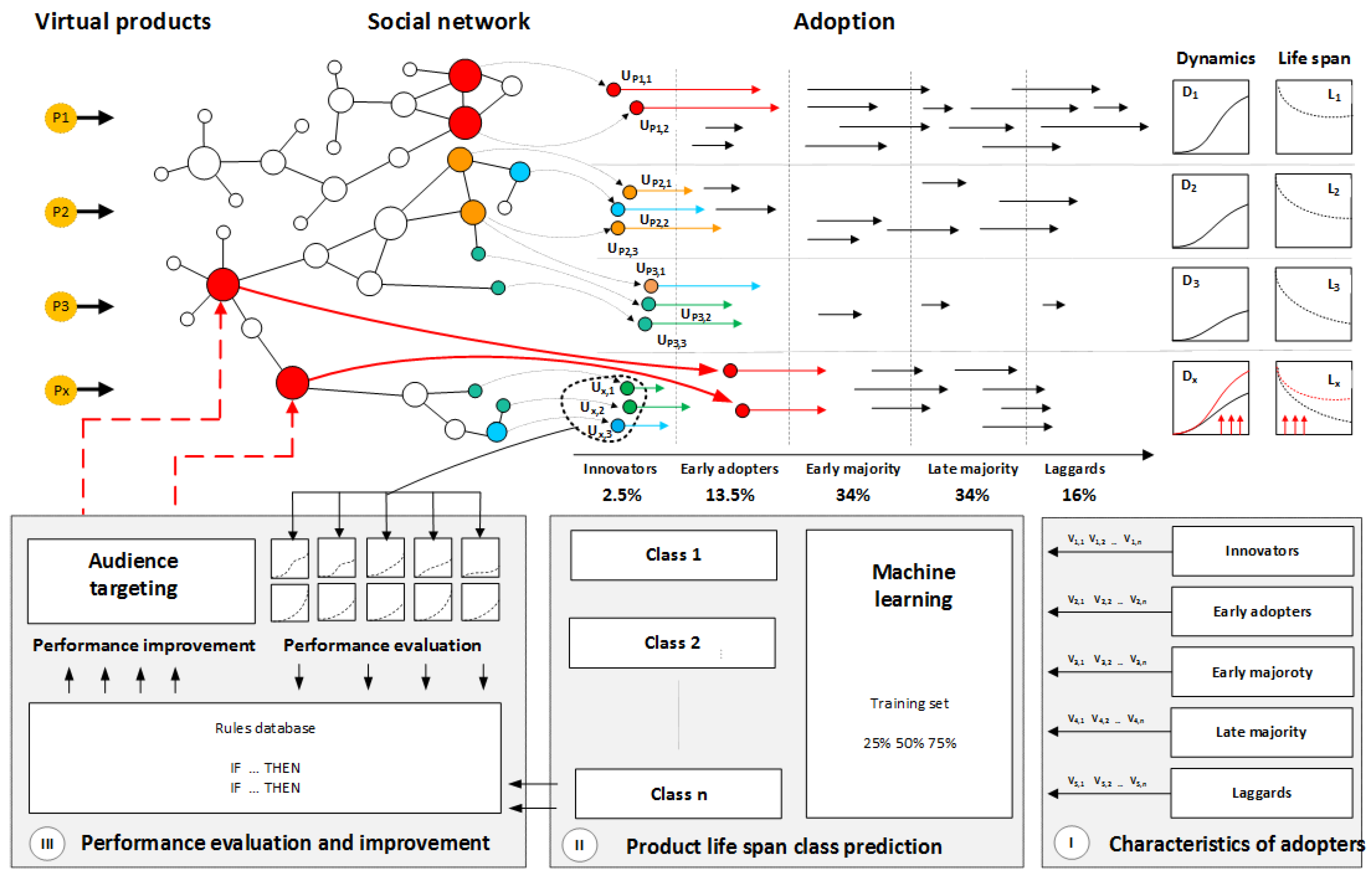
Another stage investigates how the number of analyzed adopted users from 1% to 100% and their characteristics affect classification accuracy for the prediction of product lifetime and survival-class assignment (one week, two weeks, one month, two months, three months). The selection of observations to the training dataset was randomly performed; therefore, to stabilize the results, we repeated and averaged classification one hundred times for each dataset measure to obtain accurate information.
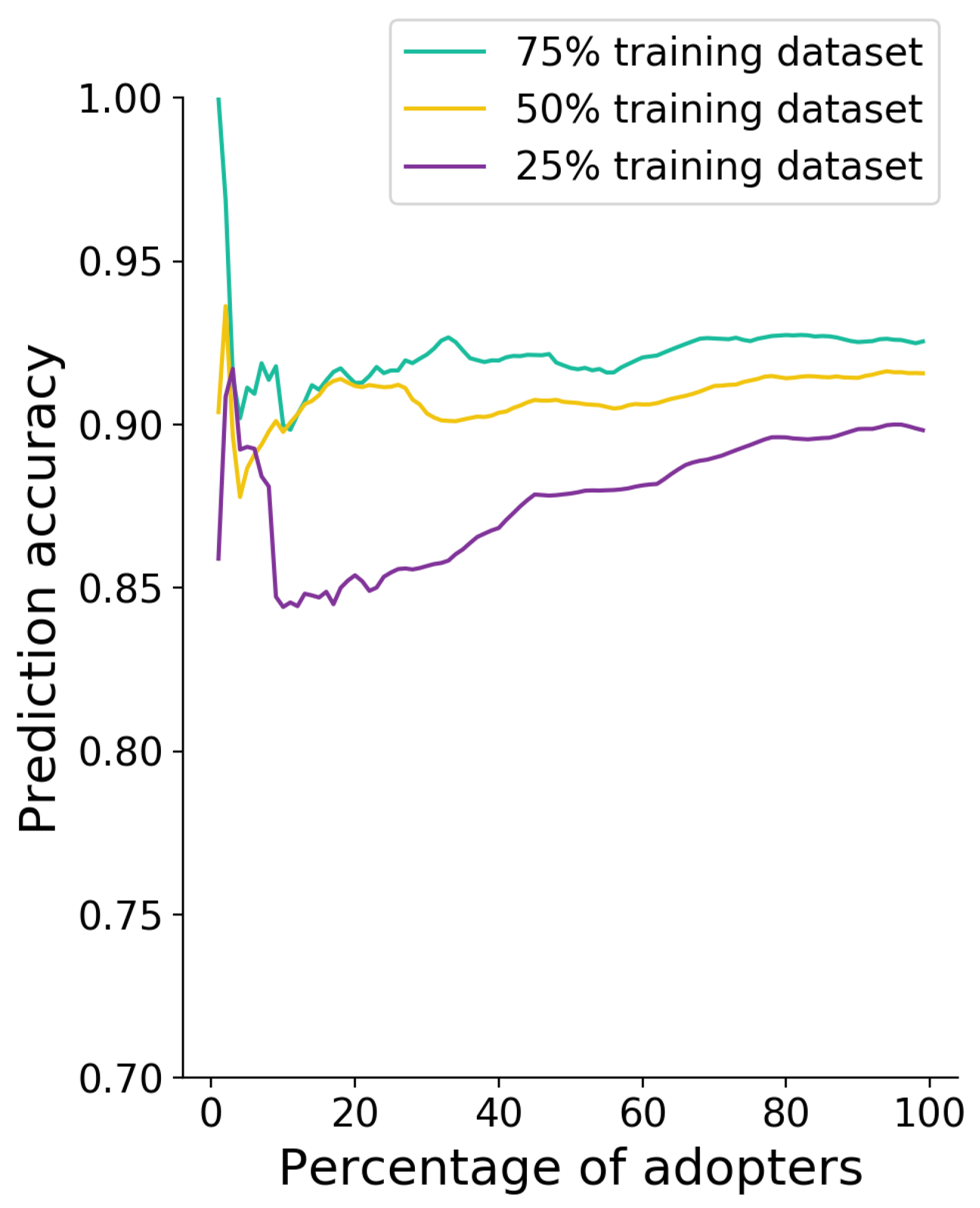
The experiment was carried out in three training-dataset sizes: 25%, 50%, and 75%. Classification and the decision-tree model were implemented with the help of the scikit-learn machine-learning library for the programming language Python. Classification was performed and, in the first stage, user-activity factors were used. Results are presented in
Figure 11. They show high classification accuracy achieved for the training set based on 50% and 75% of the analyzed products. Accuracy at a level higher than 90% is achieved with less than 20% of product-usage statistics with activity factors taken into account. The training set based on 25% of the products delivered low accuracy, with a percentage of adopters lower than 60%, but it reached 90% when 70% of data were used for each product. Higher fluctuation of results was observed with a low number of analyzed adopted users.
Detailed numerical results are presented in
Table 4. It shows that analysis of characteristics of even only 10% of product adopters makes it possible to predict product assignment to a class with low or longer survival time.
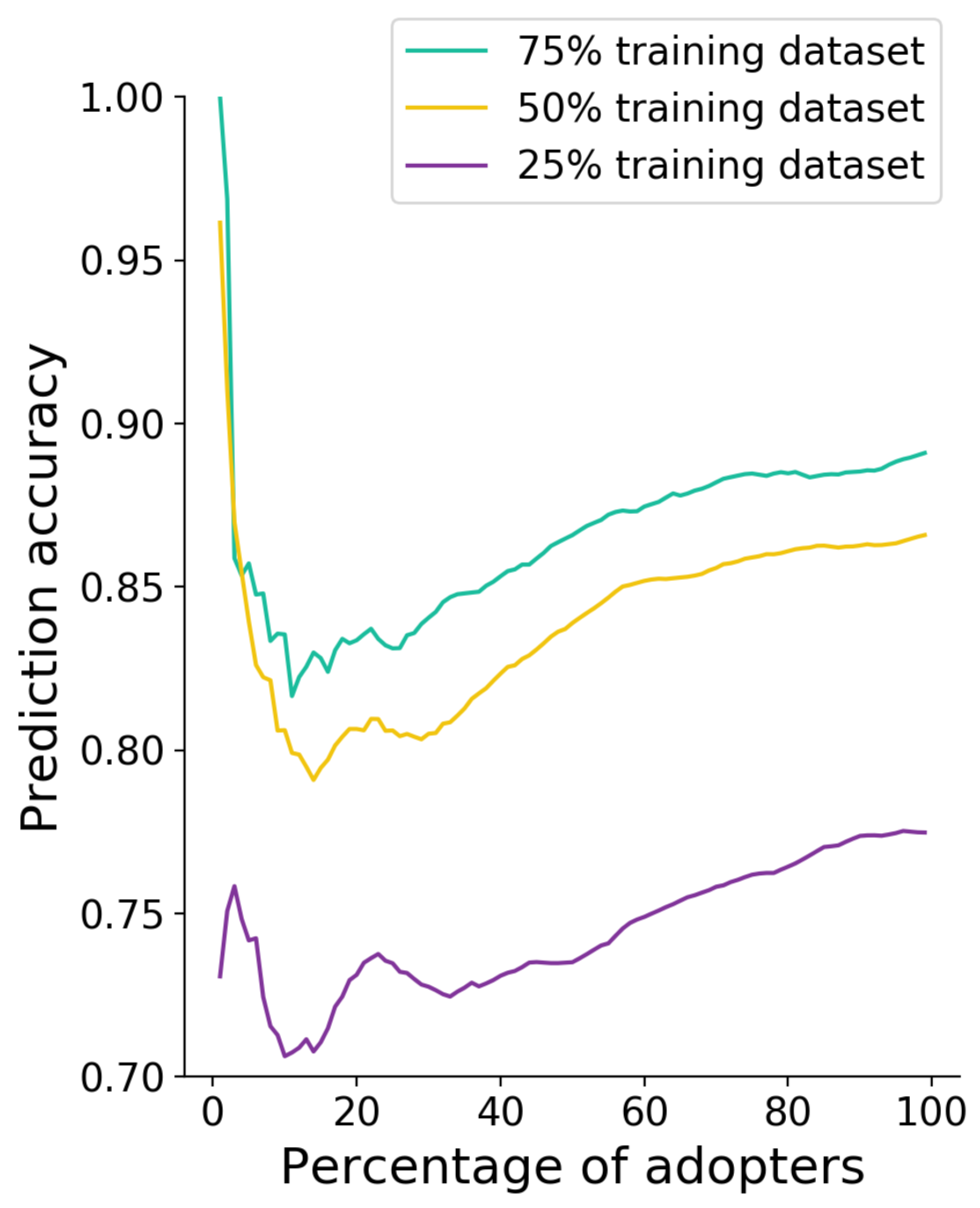
Apart from social activity, factor classification was performed with the use of incremental data about user activity within the system. Results are presented in
Figure 12. It shows that, for 50 and 70 training, the initial accuracy of the used low-fraction data at 1–3% of used data is very high due to innovator characteristics.
Additionally used data dropped accuracy to 80%. Subsequently, it grew with data acquisition. For the training set with the size of 75% of used products, the lowest accuracy was achieved after using data from 15% of adopters, and 65% accuracy for 50% of products with 15% of the adopter sample used. For all training-set sizes, accuracy continuously grew together with the increased number of adopters.
Detailed numerical results for classification based on incremental usage statistics represented by Experience Factors for each user are presented in
Table 5.
Table 6 shows classification-accuracy statistics with identified user groups as innovators, then innovators together with adopters, and extended by early majority, late majority, and laggards. For Activity Factors, this shows that even using data from only innovators (2.5% of first adopters) creates the ability to assign a product to one of five adoption classes. Innovators used together with adopters delivered results above 19% for training sets with 50% and 75% size. Classification based on the 25% training dataset delivered accuracy above 18%. Further connection of the adopter group slightly improved classification, but from a practical-application perspective, it delays the time during which product survival abilities are predicted and additional adopter targeting is performed. The worst results were obtained for Experience Factors, but they were still above 80% accuracy for the training sets with 50% and 75%.