Review

Ecological Tensions in Soil: Healthier Biopolymeric Solutions in Urban and Agricultural Land

by
Ioana Negru
1,2,
Laia Mogas-Soldevila
3,*,
Cătălina Sănduleanu
4 and
Genoveva Cojocaru
2
1
Plantesima SRL, 2 Aleea Poiana Cernei, 061552 Bucharest, Romania
2
Bionest Cluster, 14 Anastasia Doamna, 707035 Barnova, Romania
3
DumoLab Research (DLR), Department of Graduate Architecture, Stuart Weitzman School of Design, University of Pennsylvania, 210 South 34th Street, Philadelphia, PA 19104, USA
4
Department of Animal Resources and Technology, Faculty of Food and Animal Sciences, “Ion Ionescu de la Brad” Iasi University of Life Sciences, 3 Mihail Sadoveanu Alley, 700490 Iasi, Romania
*
Author to whom correspondence should be addressed.
Appl. Sci. 2026, 16(9), 4547; https://doi.org/10.3390/app16094547
Submission received: 21 February 2026 / Revised: 21 April 2026 / Accepted: 28 April 2026 / Published: 5 May 2026

Abstract

Soil degradation in both agricultural and urban environments is accelerating due to intensive land use, plastic pollution, construction practices, and climate change, threatening ecosystem stability, food security, and carbon storage capacity. This review synthesizes current advances in biopolymeric materials as regenerative alternatives to conventional soil management approaches. Biopolymers derived from natural sources—including polysaccharides, proteins, and lignin-based compounds—are examined for their multifunctional roles in improving soil structure, enhancing water retention, optimizing nutrient delivery, stabilizing slopes, and supporting pollutant immobilization. Recent developments highlight the emergence of stimuli-responsive hydrogels, controlled-release fertilizer matrices, and composite soil conditioners capable of simultaneously addressing water stress, salinity, erosion, and contamination. In parallel, biodegradable agricultural films and in-soil degradable materials offer pathways to reduce microplastic accumulation while maintaining agronomic performance. Beyond agriculture, bio-based construction materials and bio-receptive design strategies extend biopolymeric interventions into the built environment, promoting soil permeability, microbial diversity, and circular material flows. The review emphasizes the need for context-specific formulation, long-term field validation, and life-cycle assessment to ensure environmental safety and scalability. By integrating soil science, polymer chemistry, and regenerative design, biopolymeric systems are described here as tools for restoring soil health and fostering resilient urban–rural ecosystems under conditions of environmental change.

1. Introduction to Soil Health

Healthy soil is a vibrant, living system made up of minerals, organic matter, air, water, and countless organisms. It supports 95% of global food consumption and stores more carbon than the atmosphere and living things [1]. However, human activities have damaged 33% of Earth’s soils by deforestation, overgrazing, industrial agriculture, pollution, and unsustainable land use practices. These activities reduce soil fertility, increase erosion, and diminish the soil’s ability to retain water and nutrients. This ultimately threatens food security and ecosystem stability with alarming rates of soil erosion, in the US, China, and India [2].
Soil degradation is exacerbated by climate change and contributes significantly to it in a problematic cycle. As soils lose organic matter, they release stored carbon into the atmosphere, contributing to global warming. At the same time, poor soil reduces the resilience of communities to climate-related shocks like droughts and floods. Addressing soil health is not just an environmental issue—it is a global priority. Solutions demand action at the national, regional, and international levels by means of regenerative agriculture and urban planning. This should be conducted by revisiting indigenous practices and vernacular construction, reforestation, composting, reduced chemical use, and policies that promote sustainable land management [3,4].
Research on biopolymers used in agriculture has developed as a major topic of investigation due to the increasing environmental issues linked with traditional plastic use and the urgent need for sustainable agricultural techniques [5,6]. Over recent decades, the field has evolved from initial explorations of natural polymers like starch and cellulose to advanced applications involving biodegradable mulches, hydrogels, and controlled-release systems [7,8]. The practical significance is underscored by the global plastic pollution crisis, with agricultural plastics contributing substantially to soil contamination and greenhouse gas emissions [9]. Moreover, biopolymers offer potential benefits such as improved soil health, enhanced water retention, and reduced agrochemical inputs, aligning with global sustainability goals [10,11].
The literature included in this review was selected through a structured search of major scientific databases, including Scopus, Web of Science, and Google Scholar. The search targeted peer-reviewed articles, using combinations of keywords such as “biopolymers in soil,” “soil amendment,” “biodegradation,” “urban soil regeneration”, “regenerative architecture and soil health”, “bio-receptive architecture”, soil bioremediation”, “circular bioeconomy,” and “environmental impact.” Studies were selected based on their provision of experimental evidence or comprehensive analyses addressing biopolymer classification, degradation behavior, soil functionality, and ecological effects. The resulting body of literature was organized thematically to ensure a coherent synthesis, enabling systematic comparison across material types and application contexts, and supporting an integrated assessment of biopolymers in sustainable soil management.
We describe below local-to-regional practices in sustainable land management and initial attempts at regenerative architecture enabled by biopolymers. We focus on polysaccharides and proteins—and their blends with natural fibers and other biodegradable materials—used to bind soil particles or materials in contact with soil, thereby directly or indirectly promoting its long-term health and regeneration.

2. Biopolymeric Soil Amendments in Land Management

Research on biopolymer innovations in sustainable farming has emerged as a critical area of inquiry due to the urgent need to enhance agricultural productivity while minimizing environmental impact. Over recent decades, the field has evolved from basic applications of biodegradable polymers to advanced stimuli-responsive systems and nanocomposites that optimize nutrient delivery and soil health [12,13]. This evolution reflects growing concerns about plastic pollution, soil degradation, and food security, with global food demand projected to increase by 70% by 2050 [14]. Biopolymers such as starch, cellulose, chitosan, and alginate have gained prominence for their biodegradability, compatibility with green chemistry, and multifunctionality in agriculture [12]. Their integration into fertilizers, mulching films, and microbial carriers offers promising avenues to reduce chemical inputs and enhance resource efficiency [15].
The integration of biopolymers into soil management represents a paradigm shift from conventional chemical amendments toward nature-based solutions that harmonize environmental sustainability with technical performance. As we navigate the dual challenges of climate change and land degradation, biopolymeric interventions emerge not merely as alternatives but as promising solutions capable of addressing multiple soil health dimensions simultaneously.

2.1. Biopolymers for Soil Improvement

Biopolymers improve soil health by enhancing water retention, porosity, and nutrient use efficiency. The mechanism of action is governed by their intrinsic properties, inherently derived from their chemical structure. A remarkable feature of most biopolymers is the ability to form three-dimensional networks of polymer chains that can absorb and retain large amounts of water, called hydrogels. This water absorption or retention capacity is determined by the presence of multifunctional groups such as -OH, -NH2, and -COOH within the molecular structure of the polymer. Superabsorbent hydrogels based on natural polymers are widely studied for mitigating drought stress and improving soil moisture, showing positive effects on plant growth and yield [10,16,17,18,19].
Pot-scale experiments continue to provide insights into biopolymer–soil interactions and plant responses under controlled conditions. Waste-derived biopolymers, such as cellulose from rice straw, pectin from orange peel, and starch from potato peel, represent promising sources of biopolymeric nanomaterials with potential to mitigate salinity stress in agricultural systems. Greenhouse pot experiments revealed that these agricultural-waste-derived nanomaterials retained up to 81.8% of soluble sodium and 34.7% of exchanged sodium in saline sandy loam soils. The impact on tomato production was significant: fruit number increased by up to 6.3-fold and fresh weight by up to 12.0-fold under 5 dS/m salinity conditions. These biopolymers mitigated oxidative stress markers, reducing phenol content by 60.2% and flavonoid content by 40.9%, while decreasing catalase and peroxidase activities by 39.3% and 44.3%, respectively [20].
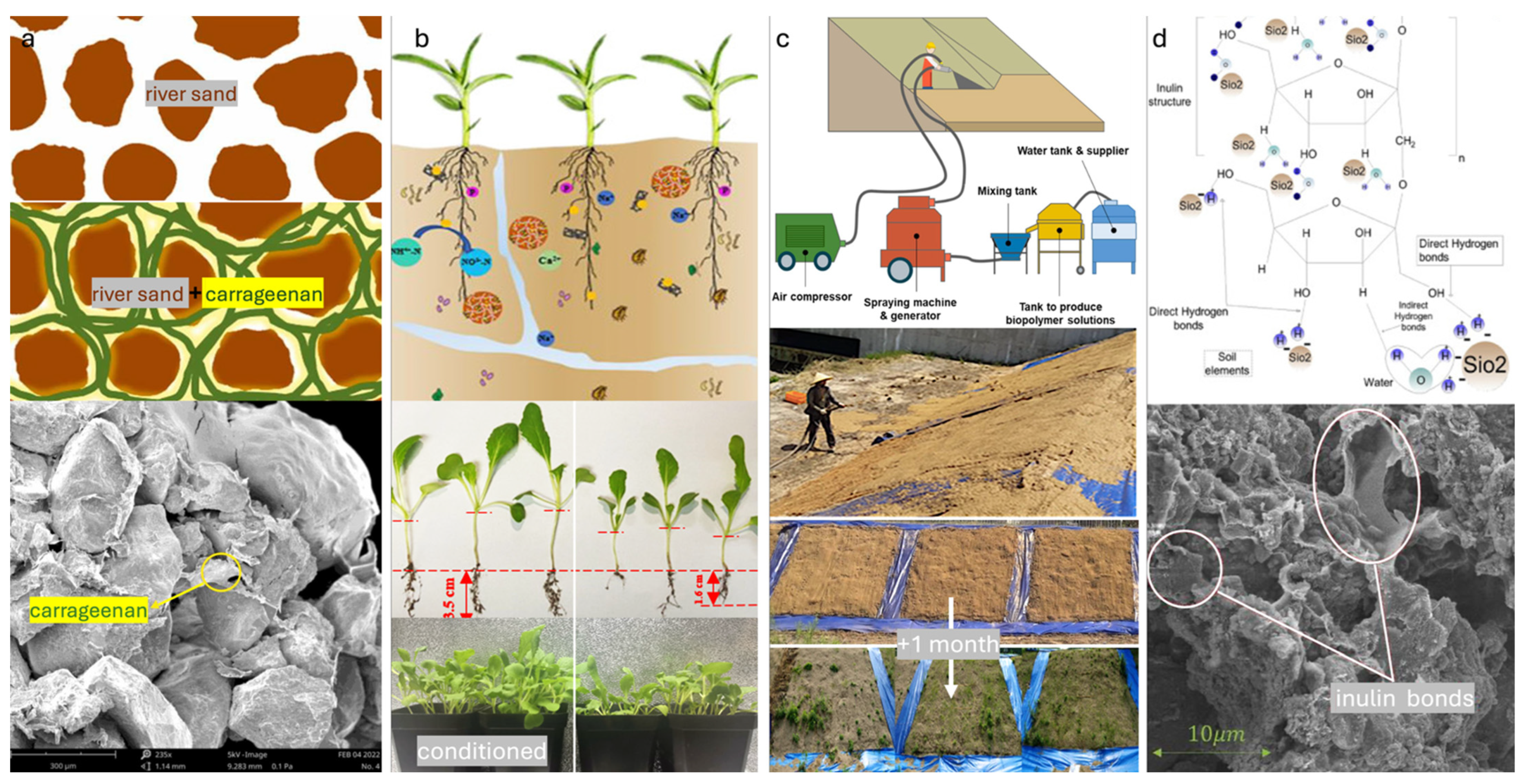
The development of multifunctional superabsorbent hydrogels based on potato starch–urea, synthesized via gamma irradiation, represents an innovative approach to advancing the frontiers of desert agriculture. Plant growth experiments in sandy soil validated the hydrogel’s capacity to enhance water retention, provide slow-release fertilization, and adsorb metal ions, particularly copper. The segmented urea-release kinetics and synergistic relationship between degradability and metal-ion adsorption represent a sophisticated approach to addressing multiple constraints in arid-land agriculture [21]. Remarkable results were also obtained in saline soil remediation over a 50-day experimental period using a pH-responsive sodium alginate/biomass charcoal soil conditioner. The composite material decreased pH by 15.2% and salt content by 29.8% while significantly increasing nutrient and organic matter content. The controlled release of humic acid through pH-responsive mechanisms demonstrates the potential for “smart” biopolymeric systems that respond dynamically to soil conditions [22] (Figure 1b).
Greenhouse trials and field trials represent successive stages in validating biopolymer applications, each with distinct strengths and limitations. Greenhouse experiments provide a controlled yet biologically relevant environment, allowing partial scaling beyond laboratory conditions while still regulating variables such as temperature, moisture, and soil composition. This makes them valuable for bridging mechanistic insights with early-stage application testing. However, variability in pot size, plant species, and management practices often leads to inconsistencies across studies, limiting direct comparability. In contrast, field trials offer real-world validation under natural environmental fluctuations, capturing long-term processes such as weathering, hydrological dynamics, and soil heterogeneity. While they provide the most reliable assessment of practical performance, field studies are often constrained by cost, time, and limited control over confounding factors, which can introduce high variability in results. Consequently, discrepancies between greenhouse and field outcomes are common, with laboratory and greenhouse conditions frequently overestimating performance compared to field applications, underscoring the need for multi-scale validation approaches.
The transition to field-scale applications represents the main test of biopolymer viability under uncontrolled environmental conditions. In this context, recent studies have demonstrated practical implementation strategies for biopolymer-based soil stabilization. An in situ wet-spraying methodology for biopolymer-based soil treatment (BPST) on slopes demonstrated practical application techniques for surface protection. Field implementation verified strengthening effects under actual environmental exposure, establishing protocols for large-scale deployment [23] (Figure 1c). Similarly, advances in alkaline-induced cation cross-linking of xanthan gum and starch compound biopolymers for slope surface protection at bridge abutments have enabled field implementation. One-year field monitoring demonstrated that both compaction and pressurized spraying methods maintained sufficient stability against detachment and scouring, with treated slopes exhibiting higher soil hardness indices than natural slopes throughout the monitoring period [24]. These findings highlight the durability and long-term stability of biopolymer treatments under field conditions, addressing a key limitation often observed in laboratory and greenhouse studies.
Regional applications reveal both context-specific opportunities and inherent constraints in biopolymer-based soil management. Case studies from Egyptian saline agricultural soils [20], Montana mine tailing remediation [25], and Iranian dust-prone areas [26] illustrate that biopolymer selection and application protocols must be carefully tailored to local soil properties, climatic conditions, and contamination profiles. While these studies demonstrate strong performance under specific regional settings, they also highlight variability in outcomes due to environmental heterogeneity and differing implementation strategies. For example, Deylaghian et al. showed that inulin biopolymer derived from agricultural waste sources achieved a 40-fold increase in unconfined compressive strength (up to 8 MPa) at a 2% dosage in dust-prone soils of southwest Iran, while maintaining excellent durability with only 0.22% weight loss after ten wetting–drying cycles [26] (Figure 1d). Despite such promising results, inconsistencies across regions and scaling challenges remain, particularly when translating laboratory- or pilot-scale performance to field conditions, underscoring the need for site-specific optimization and long-term validation.
The most recent innovations integrate multiple functions within single-biopolymeric systems. pH-responsive materials [22], multifunctional superabsorbent hydrogels [21], and composite biopolymer–biochar systems [27] represent a shift from simple soil binding toward sophisticated materials that sense and respond to soil conditions, deliver nutrients on demand, and provide multiple ecosystem services simultaneously. Scientists have tools to tune the polymer architecture to achieve a specific pore structure and an appropriate cross-linking density relative to the size of the nutrient molecules, all of which facilitate nutrient mobility. Current synthesis technologies allow to design systems that enable the gradual breakdown of the polymer matrix (via hydrolysis or enzymatic activity), incorporate functional groups that govern polymer–nutrient interactions, and tune the hydrogel’s responsiveness (swelling/deswelling) to external stimuli. These factors collectively regulate mass transport and enable sustained and predictable nutrient delivery.
Figure 1. Biopolymeric soil amendments: (a) carrageenan as sustainable treatment with high mechanical performance and water cycle durability used in fine-grained soils [28]; (b) controlled-release, pH-responsive sodium alginate–biomass charcoal soil conditioner to remediate saline soils by lowering pH and salinity while enhancing nutrient availability and organic matter [22]; (c) in situ wet spraying of biopolymer-based soil treatment applied on slopes, demonstrating effective surface stabilization under real environmental conditions [23]; (d) application of a waste-derived inulin biopolymer presenting strong bonds with increase in soil compressive strength and high durability under wetting–drying conditions [26].
Applsci 16 04547 g001

2.2. Biopolymers for Soil Stabilization

Commercial biopolymers have been investigated for geotechnical stabilization, with xanthan gum, guar gum, chitosan, and sodium alginate emerging as leading candidates. The performance characteristics of these materials are well documented across diverse soil types, with applications ranging from the stabilization of muddy soils to enhancing moisture content and water retention in sandy soils. Recent studies, some of them detailed later in the text, have shown the ability of biopolymers to bridge the voids within the soil particles resulting in a stiffer soil structure with increased strength.
Recent studies highlight that stabilization performance is strongly influenced by both biopolymer type and soil characteristics. Xanthan gum and carrageenan were compared in laboratory studies by [28]. Unconfined compressive tests, static triaxial experiments, FTIR analysis, and scanning electron microscopy showed that carrageenan significantly improved compressive strength of untreated soils—achieving 3.4-fold improvement for 0.5% (wb/ws) biopolymer in kaolinite silt and sand mixtures. Carrageenan performed considerably better than xanthan gum in both compressive and shear strength, especially in fine-grained soils with higher kaolinite proportions. The material also demonstrated enhanced durability under wet–dry cycles [28] (Figure 1a). Another study advanced chitosan optimization through systematic investigation of acid concentration, temperature, and long-term strength development. Unconfined compression strength and static triaxial testing identified optimal curing temperatures of 45–65 °C (depending on soil type) and acid concentrations of 0.5–1%. SEM examination revealed that chitosan efficiently coated soil particles and filled void spaces, with strengthening attributed to hydrogen bonds and electrostatic interactions [22]. Tragacanth gum (Gond Katira) has shown significant effectiveness in stabilizing sandy soil, resulting in impressive increases of 462.5% to 562.5% in cohesion values, along with enhancements of 41% to 51% in the internal friction angle over curing periods of 1, 3, and 7 days. The stabilization mechanism involves tragacanth particles bonding with soil particles while simultaneously filling and reducing soil pores [29].
Sodium alginate, a biopolymer derived from brown seaweed, was evaluated for its efficacy in stabilizing alluvial soil across a range of concentrations, specifically 0.5%, 1.0%, 2.0%, and 3.0%. The primary objective of this investigation was to ascertain the most effective dosage that would enhance the soil’s physical and mechanical properties. The experimental results indicated that the optimal performance was achieved at a sodium alginate concentration of 3.0%. At this dosage, significant improvements were noted in several key parameters: the optimal moisture content was maximized, indicating a favorable balance between water retention and soil workability; the maximum dry density was elevated, suggesting a denser and more compacted soil structure; and the California Bearing Ratio (CBR) values, both in unsoaked and soaked conditions, exhibited substantial increases, reflecting enhanced load-bearing capacity and resilience against water saturation. Furthermore, the unconfined compressive strength, a critical measure of soil stability under load, also reached its peak at the 3.0% sodium alginate level [30]. These findings underscore the potential of sodium alginate as an effective soil stabilizer, capable of significantly improving the engineering properties of alluvial soils, thereby enhancing their suitability for construction and other civil engineering applications.
A breakthrough in understanding biopolymer performance under challenging saline and arid conditions was achieved through a “micro to macro” approach that links molecular-scale interactions to macroscopic soil behavior. Using locust bean gum (LB) biopolymer with mine tailings and sand under varying salinity (NaCl, 0–2.5 M) and temperatures (25 °C, 40 °C), a remarkable UCS peak of 5033 kPa with 1.25 M NaCl after 7 days of curing at 40 °C was achieved. Subsequent Membrane-Enabled Bio-mineral Affinity Screening and Mineral Binding Characterization revealed that the critical Fe2O3–LB interaction in saltwater exhibited “high affinity” at the molecular level and “high strength” at the geotechnical level. This was attributed to biopolymer binding groups’ increased availability through “salting-in” as NaCl concentrations rose to 1.25 M, then “salting-out” at higher concentrations [31].
Bio-based substances, including commercially produced and naturally derived biopolymers, offer a sustainable alternative to conventional soil additives due to their biodegradability, renewability, and multifunctional behavior. Naturally derived biopolymers often show batch-to-batch variability, while commercial formulations may not fully replicate laboratory-grade performance under field conditions. In practice, a recurring limitation is the gap between controlled experimental results and real-world applications, where factors such as soil heterogeneity, microbial activity, and climatic fluctuations can significantly reduce effectiveness. These limitations emphasize the need for standardized characterization methods and long-term field validation to ensure reliable and scalable deployment of bio-based soil amendment technologies.
The main strength of agricultural-waste-derived biopolymers lies in their environmental and economic advantages, as well as their potential to deliver functional performance in soil stabilization, water retention, and pollutant adsorption comparable to conventional biopolymers. Bagheri et al. [32] investigated lignin biopolymer for erosion control and slope stability enhancement in silty soils. Their laboratory tests (UU triaxial, UCS, and soaking) combined with flume experiments demonstrated that lignin-treated samples at 1% and 3.0% by weight exhibited enhanced resistance to surface erosion and improved prevention of slope failure. Key improvements included enhanced shear stress, cohesion, stiffness, and resistance to water infiltration [32]. Lignin, a major component of lignocellulosic biomass and a byproduct of pulp and paper industries, represents an abundant, underutilized resource.
Recent research reveals that cross-linking biopolymers or combining them with complementary materials can enhance performance beyond single-biopolymer systems. Anusha et al. explored guar gum and gellan gum combinations for clayey soil stabilization, finding that these biopolymers form hydrogels when activated, enhancing bonding between soil particles. Treatment increased dry unit weight, decreased optimum moisture content, and improved compressive strength and load-bearing capacity with curing time. The permeability reduction was attributed to decreased void ratios [33].

2.3. Biopolymers for Soil Pollution Removal

The remediation of contaminated soils through biopolymeric interventions represents one of the most promising yet complex applications, requiring careful consideration of contaminant type, soil characteristics, and remediation mechanisms. Recent research has expanded our understanding of how biopolymers can immobilize, adsorb, or facilitate the removal of various pollutants across diverse soil types.
Mine soils present particularly challenging remediation scenarios due to extreme pH conditions, high heavy metal concentrations, and poor physical structure. The research trajectory from Looper’s (1998) pioneering greenhouse work to recent field-scale applications demonstrates substantial progress [25].
Correia et al. advanced mine residue soil remediation by combining biopolymers with bioremediation techniques. Their comparison of xanthan gum and carboxymethyl cellulose revealed that carboxymethyl cellulose achieved superior results, increasing unconfined compressive strength by up to 109% when applied individually at 1% content. While biostimulation proved ineffective, bioaugmentation combined with xanthan gum led to unconfined compressive strength improvements of up to 27% [34]. This work illustrates the potential for integrated biological–chemical approaches.
Heavy metal contamination requires approaches that either immobilize metals to reduce bioavailability and leaching or facilitate phytoextraction through enhanced plant growth. Biopolymers offer multiple mechanisms for addressing these challenges. An in situ mercury remediation approach using xanthan gum as delivery matrix for reactive sulfide reagents demonstrated high efficiency in batch and column experiments with artificially contaminated sand. The system achieved up to 88% recovery of the initially injected particle-suspension and a reduction of up to 97% in aqueous elemental mercury concentration, particularly with the PIAX xanthate organosulfur compound. Critically, all solutions effectively transformed liquid mercury droplets into cinnabar, a stable mercury sulfide mineral [35].
Desertified and degraded soils represent a major global environmental challenge, affecting more than 2 billion hectares worldwide and severely limiting ecosystem productivity and agricultural use. In this context, biopolymeric interventions are increasingly explored as promising restoration tools due to their ability to improve key soil functions. Multifunctional potato soluble starch–urea superabsorbent hydrogels for desert agriculture represent a sophisticated approach integrating water retention, slow-release fertilization, and metal-ion adsorption. The segmented urea-release kinetics and synergy between degradability and metal-ion adsorption capacity demonstrate the potential for multifunctional materials that address multiple constraints simultaneously [21].
Deylaghian et al.’s work with inulin biopolymer in dust-prone areas of southwest Iran achieved remarkable strength improvements (40-fold increase in UCS to 8 MPa with 2% inulin) with excellent durability (0.22% weight loss after ten wetting–drying cycles). This performance in wind-erosion-susceptible soils demonstrates the potential for biopolymers to stabilize degraded lands while supporting revegetation [26].
This section maps the research landscape of the literature on comprehensive review of biopolymers used in agriculture, encompassing diverse biopolymer types, their chemical and structural classifications, and multifaceted applications in agricultural systems. The studies collectively emphasize sustainable agricultural practices through soil conditioning, water retention, crop protection, and controlled nutrient release, often highlighting biodegradable and bio-based polymers. Methodologies range from literature reviews to experimental evaluations, with a strong focus on environmental impact and technological innovations such as hydrogels and nanostructured composites. This comparative analysis addresses key research questions on biopolymer sources, mechanisms of action, biodegradability, environmental implications, and advances in biopolymer technologies for agriculture (Table 1).
Table 1. Summarized strengths and weaknesses in critical aspects of biopolymeric solutions in agricultural land management.
StudyBiopolymer
Classification
Agricultural FunctionalityBiodegradability ProfilesEnvironmental ImpactTechnological Innovation
(Fuente et al., 2023) [5]Renewable and fossil-based polymers, structural properties detailedSoil conditioning, mulch films, seed coatings, fertilizer deliveryVaried biodegradation rates influenced by polymer and environmentDiscusses environmental implications and toxicityModification processes to enhance biodegradability
(Merino et al., 2021) [7]Green materials including polymeric biomaterialsDelivery systems, biodegradable pots, mulching filmsNot deeply focused on biodegradabilityHighlights environmental safety and regulationAdvances in phytoactive delivery and coatings
(Saha et al., 2024) [10]Biopolymer composites from renewable resourcesSoil conditioners, nutrient efficiency, plant growthBiodegradability emphasized for compositesLow cost, eco-friendly, enhances soil healthFertilizer-coated composites and hydrogels
(Valle et al., 2024) [11]Biopolymers from agri-food waste and microbial fermentationMulching films, soil stabilizers, hydrogels, seed coatingsBiodegradable and non-toxic biopolymersCircular economy approach, sustainabilityUse of waste for biopolymer production
(Tariq et al., 2023) [16]Biopolymeric hydrogels from starch, chitosan, lignin, alginateWater retention, soil conditioning, fertilizer deliveryBiocompatible and biodegradable hydrogelsSustainable water management in agricultureSynthesis and swelling behavior analysis
(Henn et al., 2025) [17]Cellulose, starch, chitosan, alginate hydrogelsWater absorption capacity, fertilizer carriersBiodegradability and environmental toxicity concernsEco-friendly synthesis alternativesCross-linking agents and hydrogel composition
(Azeem, 2025) [12]Starch-based biopolymer coatingsControlled-release fertilizers, stimuli-responsiveBiodegradability under field conditionsEnvironmental responsibility and food securityFunctionalization and nanocomposite integration
(Riseh et al., 2024) [15]Nano/micro-structural supramolecular biopolymersControlled bioactive release, moisture retention, root growthBiodegradability supporting eco-friendly agricultureCrop protection and biosensing capabilitiesStimuli-responsive and self-healing materials
(Lewicka et al., 2024) [6]Conventional and bio-based polymers in agricultureMulching films, fertilizers, water absorbents, seed coatingsSoil contamination concerns from polymer residuesLegislative and ecological considerationsBio-based polymer adoption trends
(Yu et al., 2024) [36]Soil-biodegradable plastic mulch filmsAgronomic performance and in-field degradationVariable biodegradability and residue concernsPotential ecosystem impactsRecommendations for sustainable use
(Plackett, 2011) [8]Biopolymers for films and coatingsPackaging and agricultural filmsBiodegradability and sustainability focusEnvironmental benefits of bio-derived polymersNanocomposites and bio-based films
(Abbate et al., 2023) [9]Biodegradable plastic mulches in soilWeed control, soil moisture, microbial biodiversityDegradation in soil and microbial effectsSustainable management and reduced agrochemicalsEconomic importance and history
(Li et al., 2023) [13]Biodegradable agricultural mulches from renewable resourcesPolysaccharide- and protein-based filmsCompostable and biodegradable mulch filmsSustainable agriculture and cost-effectivenessPhysical properties and production advances
(Dingley et al., 2024) [19]Superabsorbent natural polymers (SAPs)Soil amendment, fertilizer encapsulation, seed coatingNatural SAPs as alternatives to syntheticSustainable agriculture and reduced toxicityAdoption of natural SAPs in farming
Future research priorities include developing biopolymer formulations optimized for specific contaminant–soil combinations, understanding long-term stability of immobilized contaminants, assessing potential for contaminant remobilization under changing environmental conditions, and scaling up from laboratory to field applications with cost-effective delivery systems.

2.4. Case Study in Circular Bioeconomy

The ecological tensions embedded in modern agricultural soils are stark and urgent. Conventional agricultural plastics—particularly polyethylene mulch films, plant guards, and synthetic fertilizer coatings—have become indispensable tools for enhancing crop productivity. However, they simultaneously degrade the very soil ecosystems they are meant to improve. Global agricultural plastic consumption exceeds 6.5 million tons annually. Polyethylene mulches accumulate in soils, altering carbon cycling, and generating persistent microplastic pollution that threatens soil biodiversity and water quality [37]. Field studies reveal that polyethylene mulch treatments accumulate less soil organic carbon than un-mulched controls. This effect is likely due to elevated soil temperatures and moisture driving increased mineralization, thereby undermining long-term soil health [38]. Moreover, the physical removal of conventional plastic mulches is labor-intensive and incomplete. Residual fragments persist for decades and contribute to the growing burden of microplastics in agricultural landscapes [9]. This paradox—where tools designed to boost yields simultaneously compromise the ecological integrity of soils—demands transformative solutions that reconcile productivity with environmental stewardship.
Degradation rates of biopolymers in soil exhibit distinct patterns. Chitosan-, cellulose-, and starch-based biopolymers generally degrade rapidly, within weeks to a few months, with higher microbial activity and favorable moisture conditions accelerating the process [39,40,41]. Polyhydroxyalkanoates (PHAs), such as poly-3-hydroxybutyrate (P3HB), show intermediate degradation, typically occurring over several months as microbial activity and enzyme production increase, though complete degradation may not be achieved at higher application rates [42,43,44]. In contrast, lignin-based biopolymers and certain synthetic biodegradable polyesters, including polylactic acid (PLA) and polybutylene adipate terephthalate (PBAT), degrade slowly, with studies reporting minimal breakdown over six to nine months [45,46,47]. Degradation rates are also strongly influenced by soil characteristics: fertile agricultural soils with abundant microbial biomass tend to promote faster polymer decomposition [48], whereas sandy or contaminated soils slow the process [42,45]. Additionally, higher biopolymer concentrations, generally above 1–3% by weight, can result in incomplete degradation and potential accumulation, which may impact soil organic matter dynamics [41,42] (Table 2).
Table 2. Comparative degradation rates of biopolymers in soil.
StudyBiopolymer
Type
Degradation Rate/TimeSoil ConditionsMeasurement Method
(Reis et al. 2013) [39]Chitosan films76–136% increase in microbial biomass C in 7–15 days; cellulase production observed at 15 daysGarden soil, 5.0 g sample massMicrobial biomass carbon, soil respiration, cellulase activity
(Haddad et al. 2023) [40]Cellulose (rice straw)Enhanced decomposition in biochar-amended soils; variable rates in clay vs. sandy soilsPeri-urban agricultural soils (clay and sandy)Cellulose decomposition assay
(Paluch et al. 2024) [42]P3HBStimulated enzyme production; excessive biodegradation of soil organic matter at 0.1–3% concentrationsVarious soil types (Phaeozem, others)Enzyme activities, CO2 evolution, organic matter analysis
(Brtnicky et al. 2022) [43]P3HBEnhanced dehydrogenase and urease activities; boosted microbial activity especially in 60–80% sand content soilsSoils with varying sand loads (60–80%)Dehydrogenase, urease, soil respiration
(Aqsa et al. 2023) [45]PBAT Enhanced soil microbial richness and diversity; degradation products affected Proteobacteria and actinomycetesAgricultural soilShannon diversity index, microbial community analysis
(Lichocik et al. 2012) [48]PBSA (Bionolle)Initial increase in microorganisms (bacteria, actinomycetes, fungi to 6.2 × 10⁵ cfu/g), then decrease; faster in agricultural vs. garden soilGarden and agricultural soilsColony-forming units (cfu/g)
(Smagin et al. 2023) [44]Gel-forming superabsorbentsBiodegradation kinetics assessed via CO2 emissions; variable rates depending on polymer compositionSoil conditioning applicationsCO2 evolution measurement
(Sun et al. 2022) [46]Biodegradable films (general)Decreased soil microbial biomass C from 1703 to 1183 ng/g; decreased soil organic matter mineralization from 558 to 499 µg OM/gAgricultural soilsMicrobial biomass carbon, organic matter mineralization
(Know et al. 2010) [49]Biopolymers with sorbed metalsMinimal CO2 release over 6 months; decreased biodegradation in presence of metalsAquatic/soil interfaceCO2 release, bacterial density
(Begheri et al. 2023) [47]Lignin biopolymerOnly 23% viscosity reduction at 50% degradation after 9 months; minimal degradation expectedEngineering applications (road, slope stabilization)Viscosity measurements
(Haiyan et al. 2021) [41]Ecoflex and celluloseFaster biodegradation in PE than PS; dehydrogenase activity increased (0.84–0.91 higher); Metabolic Index increased (3.12–3.81 higher)Soil with oat and red radishEnzyme activities, Metabolic Index
Against this backdrop, the INSOIL project emerges as an exemplary model of how circular bioeconomy principles can resolve these tensions through innovative biopolymeric solutions. Funded with €6.58 million under the European Union’s Circular Bio-based Europe Joint Undertaking (CBE JU), INSOIL brings together 16 partners from nine European countries. Over a 48-month period they will develop safe, bio-based, and in-soil biodegradable alternatives to conventional single-use agricultural plastics. The project’s core innovation lies in its use of sustainable feedstocks including agricultural residues, lignin, and microbial biomasses such as polyhydroxyalkanoate biopolymers. These feedstocks are used to produce biodegradable mulch films, plant guards, and controlled-release fertilizers (CRFs) that are specifically engineered to degrade in soil after fulfilling their agronomic functions. Recent research underscores the promise of PHA-based materials, which biodegrade relatively rapidly in soil environments and can be preferentially assimilated by soil microbiota when blended with other biopolymers such as polylactic acid (PLA), accelerating mechanical breakdown and integration into soil carbon cycles [50]. By enriching these products with active bioproducts—organic NPK fertilizers, microalgae-derived biostimulants, and bio-based plant protection agents—INSOIL not only replaces harmful plastics but also actively enhances soil and plant health, embodying a regenerative rather than extractive approach to agricultural innovation.
The project’s commitment to programmed in-soil biodegradation, tailored to specific climates and crop requirements, addresses one of the most critical challenges facing biodegradable agricultural plastics: the often-unpredictable and incomplete degradation observed in field conditions. Laboratory biodegradation tests typically overestimate in situ degradation rates, and field studies have documented that some commercial biodegradable mulches, particularly those containing PBAT blends, can leave measurable macro- and microplastic residues in soil, with solvent-extractable residual film representing up to 23% of initial film mass after more than a year of burial [51]. INSOIL employs digital biodegradation models to optimize product formulations. Validation at Technology Readiness Levels (TRL) 7–8 through field trials across Southern and Northern Europe directly addresses the gap between laboratory promise and field reality. This rigorous, context-sensitive approach ensures that biodegradation timing aligns with cropping cycles and local soil microbial communities, minimizing the risk of unintended residues and ecological disruption [52,53]. Furthermore, the project’s adherence to Safe and Sustainable by Design (SSbD) principles reflects a holistic understanding that biodegradability alone is insufficient; the materials must also be non-toxic, support soil microbial diversity, and integrate seamlessly into circular value chains.
The anticipated impacts of INSOIL’s commercialization strategy are both substantial and multifaceted, demonstrating the scalability of biopolymeric solutions in addressing agri-plastic pollution. By 2035, the project aims to replace 5820 tons of conventional plastic materials, reduce 2153 tons of microplastic pollution, substitute 4000 tons of synthetic agrochemicals, and cut 16,000 tons of CO2 emissions, while generating cost savings of €17.4 million for European farmers. These projections are grounded in the growing body of evidence that biodegradable mulches can deliver agronomic performance comparable to polyethylene films—conserving soil moisture, suppressing weeds, and boosting yields—while eliminating the need for labor-intensive removal and the environmental burden of plastic residues [37,54]. However, the project also acknowledges the nuanced ecological considerations that accompany the introduction of biodegradable polymers into soil systems. Studies have shown that the incorporation of PLA-containing residues can transiently reduce soil nitrate levels [55]. In low-fertility soils, this could lead to yield reductions of up to 16% due to nitrogen immobilization, highlighting the importance of context-specific deployment and nutrient management strategies [55]. Similarly, rapid biodegradation of some biopolymer mulches has been associated with shifts in microbial community composition, including reduced fungal saprotroph abundance and decreased fungal network complexity, which may have longer-term implications for soil ecosystem stability [36]. By integrating these considerations into its design and testing protocols, INSOIL exemplifies a science-informed, adaptive approach that seeks to maximize benefits while mitigating unintended consequences.
Beyond its technical innovations, INSOIL’s broader significance lies in its contribution to the systemic transformation required to address ecological tensions in agricultural soils. The project actively engages stakeholders—including farmers, policymakers, and industry partners—to co-develop standards, regulatory frameworks, and business models that support the adoption of biodegradable agricultural plastics at scale. This participatory approach is essential because the transition from conventional to bio-based materials is not merely a technological substitution but a reconfiguration of agricultural practices, supply chains, and economic incentives. The use of circular feedstocks, such as agricultural residues and microbial biomasses, reduces reliance on fossil resources and valorizes waste streams, creating new economic opportunities within the bioeconomy while reducing greenhouse gas emissions [52,53]. Moreover, INSOIL’s emphasis on controlled-release fertilizers exemplifies the potential for biopolymers to serve dual functions—delivering nutrients in synchrony with plant uptake while biodegrading to enrich soil organic matter and support microbial activity. Research on PHA-based CRFs has shown measurable improvements in plant growth parameters and soil microbial responses, suggesting that these materials can simultaneously address nutrient management challenges and plastic pollution [53]. INSOIL demonstrates that biodegradable agricultural plastics can be economically viable and ecologically beneficial. As such, it provides a replicable model for regions facing similar tensions between productivity and sustainability.
The INSOIL project represents a paradigm shift in how we conceive of agricultural plastics—not as disposable tools that externalize environmental costs, but as functional materials that integrate into soil ecosystems and contribute to their health and resilience. Its success will depend not only on the technical performance of its biopolymeric products but also on the broader institutional, economic, and cultural changes necessary to embed circular bioeconomy principles into agricultural practice. As we confront the escalating crises of soil degradation, biodiversity loss, and climate change, initiatives like INSOIL offer a hopeful vision: one in which innovation serves not to deepen ecological tensions but to resolve them, fostering agricultural systems that are productive, regenerative, and just. The project’s rigorous field validation, stakeholder engagement, and commitment to Safe and Sustainable by Design principles provide a blueprint for scaling biopolymeric solutions across Europe and beyond, transforming the way we steward the soils upon which our food systems and ecosystems depend.

2.5. Critical Analysis and Synthesis

The reviewed literature on biopolymers in agriculture reveals a comprehensive exploration of their types, properties, and applications, highlighting their potential to enhance sustainability in agricultural practices. A recurring theme is the emphasis on biodegradability and environmental compatibility, which positions biopolymers as promising alternatives to conventional synthetic polymers. However, despite significant advancements, challenges remain in standardizing biodegradability assessments, scaling production, and fully understanding long-term environmental impacts. Furthermore, while innovations in biopolymer composites and nanostructures show promise, their practical implementation and economic feasibility require further validation. This synthesis critically evaluates these dimensions, balancing the strengths of current research with identified gaps and limitations (Table 3).
Table 3. Summary of strengths and weaknesses in critical aspects of biopolymeric solutions in agricultural land management.
AspectStrengthsWeaknesses
Diversity and Classification of BiopolymersThe literature provides extensive taxonomies of biopolymers based on origin and chemical structure, covering polysaccharides, proteins, and microbial sources, which facilitates targeted agricultural applications [10,15]. This classification supports the development of tailored materials for specific functions such as soil conditioning and crop protection.Despite detailed classifications, inconsistencies exist in nomenclature and overlap between natural and synthetic biopolymers, complicating comparative analyses. Some reviews lack clarity on the distinction between bio-based and biodegradable polymers, leading to potential confusion in application contexts [5].
Functional Roles in Soil and Crop ProductivityStudies robustly demonstrate biopolymers’ efficacy in improving soil moisture retention, nutrient use efficiency, and plant growth parameters, particularly through hydrogels and superabsorbent polymers (SAPs) [10,16]. The integration of biopolymer composites enhances soil structure and microbial activity, contributing to sustainable agriculture.Many functional assessments rely on controlled laboratory or greenhouse conditions, limiting extrapolation to diverse field environments. Long-term effects on soil ecosystems and crop yield variability under fluctuating climatic conditions remain underexplored [9].
Biodegradability and Environmental FateResearch highlights the biodegradability of biopolymers under various environmental conditions, emphasizing their reduced ecological footprint compared to synthetic plastics [5,14]. Advances in enzyme-embedded and microbial degradation technologies offer promising routes for ambient-condition degradation [56].There is a lack of standardized, universally accepted protocols for biodegradability testing in agricultural soils, leading to inconsistent data. Some biopolymers exhibit slow degradation rates or produce potentially harmful residues, raising concerns about soil health and microplastic formation [36].
Comparative Advantages over Synthetic PolymersBiopolymers offer superior biocompatibility, reduced toxicity, and renewable sourcing, aligning with circular economy principles [6,11]. Their multifunctionality, including controlled-release fertilizer coatings and seed protection, provides agronomic benefits unattainable by conventional polymers [12,30].Economic and mechanical performance limitations hinder widespread replacement of synthetic polymers. Biopolymers often have higher production costs, variable mechanical strength, and limited durability under field conditions, which restrict their commercial scalability [13].
Innovations in Biopolymer Composites and NanomaterialsEmerging research on nano/micro-structured supramolecular biopolymers and biopolymer-based nanocomposites demonstrates enhanced mechanical properties, stimuli-responsiveness, and multifunctionality for precision agriculture [15]. These materials enable targeted delivery of agrochemicals and improved crop protection.Despite promising laboratory results, the environmental safety, regulatory approval, and cost-effectiveness of nanostructured biopolymers remain insufficiently addressed. Potential nanoparticle toxicity and long-term soil accumulation require comprehensive risk assessments [15].
Application-Specific Technologies: Mulching and Fertilizer DeliveryBiodegradable mulch films and biopolymer-based slow/controlled-release fertilizers have been extensively studied, showing benefits in water conservation, weed control, and nutrient management [53]. These technologies contribute to reducing plastic pollution and enhancing crop yield.Challenges include incomplete degradation of mulch films, high costs, and potential negative impacts of degradation products on soil biota. Controlled-release fertilizer coatings face scalability issues and require optimization for diverse soil and crop types [36].
Research Gaps and Future DirectionsThe literature identifies critical gaps such as the need for field-scale validation, life-cycle assessments, and integration of biopolymer technologies with existing agricultural practices [3,10]. Calls for policy support and standardized regulations are emphasized to facilitate adoption.Many studies are fragmented, with limited interdisciplinary approaches combining material science, agronomy, and environmental science. The variability in raw material sources and production methods complicates reproducibility and industrial application [6].

3. Biopolymeric and Bio-Based Soil Amendments in Urban Settings

Building construction contributes to soil degradation through extensive land clearing, grading, and compaction. These processes disrupt soil structure, reduce porosity, and significantly diminish microbial diversity and carbon storage capacity. Construction activities also introduce contaminants such as heavy metals, cementitious residues, and hydrocarbons into surrounding soils [57,58]. These contaminants impair soil biogeochemical functioning and long-term ecosystem resilience. In recent years, regenerative architecture has emerged as a place-specific approach that not only minimizes environmental harm but aims at restoring and regenerating ecosystems [59]. This includes soils, which in traditional architectural discourse and practice were frequently marginalized, regarded primarily as a passive site condition conceptualized in utilitarian terms, functioning as media for load bearing, subsurface drainage, or thermal exchange. Within these boundaries, legal ownership often confers unrestricted rights to alter, excavate, or degrade existing soil ecosystems. This practice can lead to the disruption or irreversible loss of complex, long-established biological and geochemical processes [60]. The following subsections address early and current aims at correcting these issues in urban and building systems and Table 4 summarizes the strategies described.
Table 4. Biopolymeric interventions supporting soil health in urban and built environments: main biopolymers used, application context, mechanisms of soil interaction, benefits, and end-of-life behavior across architectural and product scales.
Application ScaleBiopolymeric
System
Primary Urban
Context
Soil Interaction MechanismEnvironmental/Soil BenefitEnd-of-Life
Behavior
Building materials
[61,62,63]
Natural gums (alginate, guar, xanthan), starches, celluloseEarthen walls, renders, compressed earth blocksParticle binding, pore structure regulation, moisture bufferingReduced soil sealing; improved permeability; non-toxic soil contactFully biodegradable; reintegration into soil cycles
Structural/enclosure systems
[64,65,66]
Mycelium-bound biomass, bacterial celluloseFaçades, insulation panels, modular blocksFungal hyphal binding; organic matter contributionCarbon sequestration; avoids mineral-fiber landfill pollutionCompostable; enhances microbial activity in soil
Urban surfaces
[67,68]
Bio-receptive mineral–biopolymer compositesFaçades, pavements adjacent to soilSupports moss, algae, lychen colonization on surfacesMoisture stabilization; vertical–horizontal soil ecologyGradual weathering; biogenic mineral enrichment
Landscape interfaces
[59,69]
Biopolymer-stabilized substrates, green-roof systemsRoofs, courtyards, bioswalesAggregate stabilization; nutrient retention; infiltrationStormwater absorption; urban soil regenerationSubstrate biodegradation supports soil formation
Portable remediation products
[70,71,72]
Fungal chitin/β-glucans; SAP hydrogelsBrownfields, sidewalks, urban farming sitesMycorrhizal binding of metals; water retention; aggregationHeavy metal immobilization; permeability increaseLiving systems integrate into surrounding soil
Temporary restoration devices
[73,74]
Biopolymeric hydrogels; morphing cellulose/wood compositesPost-construction land, degraded urban plotsAssisted seed burial; early-stage moisture controlAccelerated revegetation; reduced erosionDesigned for short-term biodegradation

3.1. Built Architecture Considering Soil Health

Recently built examples have started to consider soil health within building design. An example is the Bullitt Center by The Miller Hull Partnership (Seattle, WA, USA, 2013); it utilizes several strategies to promote soil health as part of its overall sustainable design. It features composting toilets that convert human waste into fertilizer, and a greywater system that treats water from sinks and showers on site. These systems minimize the need for conventional sewage treatment and contribute to the building’s net-zero water and wastewater goals. Similarly, the Omega Center for Sustainable Living by BNIM Architects (New York City, NY, USA, 2009) employs constructed wetlands that filter wastewater while rebuilding organic matter in adjacent soils. The PAE Living Building (ZGF Architects, Portland, OR, USA, 2021) integrates bioswales and rain gardens that reduce erosion and allow natural percolation, enriching the surrounding soil ecology. In agricultural contexts, regenerative architectural projects such as the Center for Agroecology at UCSC by Fernau & Hartman Architects (Santa Cruz, CA, USA, 2017) integrate composting systems, permaculture landscaping, and biodiverse plantings that regenerate topsoil and foster carbon sequestration.
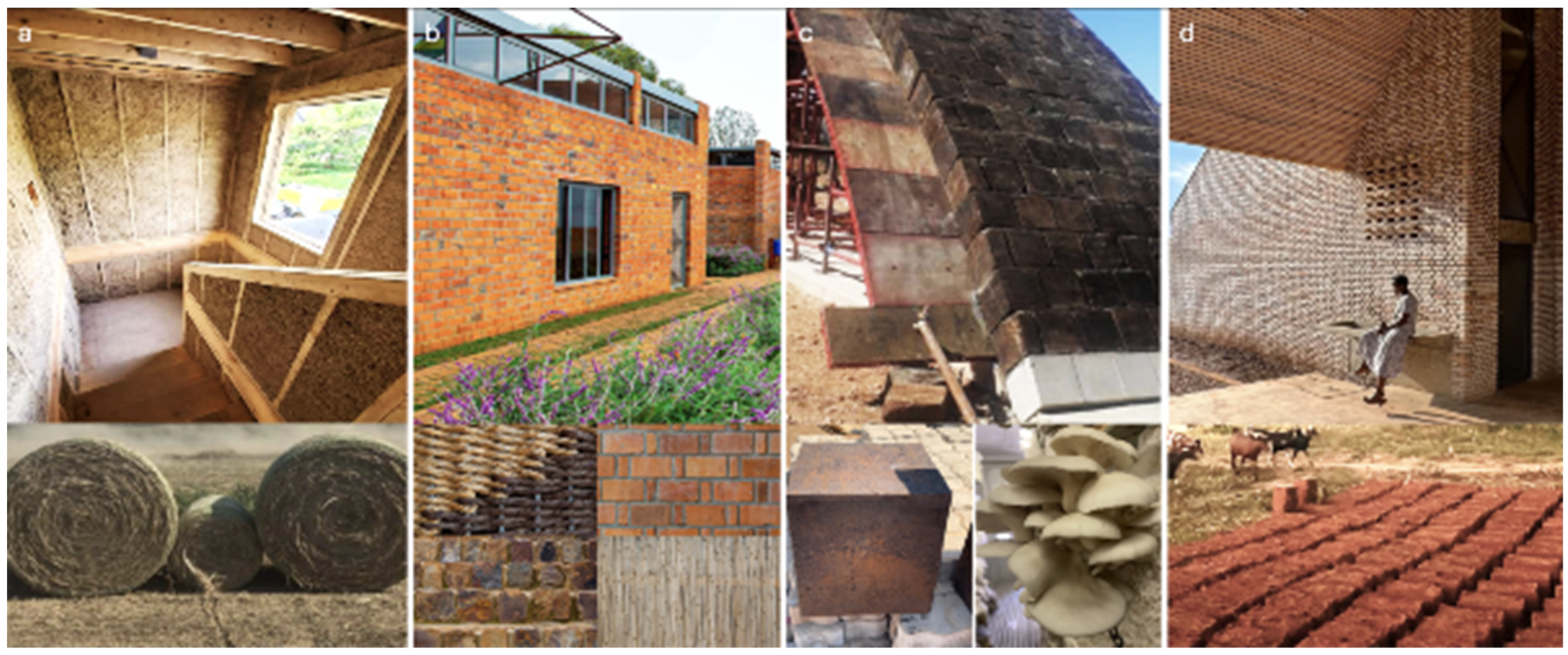
Regenerative urban projects increasingly emphasize soil health restoration through integrated ecological systems. In Switzerland, Basel’s mandatory green-roof policy has transformed urban rooftops into biodiverse habitats. These systems enhance stormwater absorption and support soil-like microbial processes. Similarly, the Max Planck Institute in Hamburg, Germany, features extensive green roofing that improves substrate nutrient cycling and fosters biodiversity [69]. In Rwanda, policy is revisiting locally sustained construction methods into a consistent architectural practice. Multiple projects embrace hyper-local construction as a practical response to the pressures of rising carbon footprint, unstable supply chains, and soil-depleting end-of-life of imported building materials. Instead, resources found close at hand like earth, stone, timber, and local labor are prioritized. For instance, the Komera Leadership Center by BE_Design (Rwinkwavu, Rwanda, 2022) employs roof forms from woven eucalyptus and at the Learning and Sports Center by General Architecture Collaborative (Masoro, Rwanda, 2020) screens are woven using local grasses and compressed soil structural blocks are made from excess excavation material [75,76,77] (Figure 2b,d). The Bedford Heritage Park is a large-scale project of land reclamation from limestone extraction turned into a regional green space, regenerating soil from degraded industrial land by extensive vegetation and runoff management supporting over 9000 tree species (Bedford, CA, USA, 2023). The HUMUS consortia promote healthy municipal soils throughout Europe: in urban France, the REVALS project in Roubaix converts brownfields into productive soils through community-led ecological farming, monitored via soil health accounting [78].
There is, however, still a need to rethink how architectural decision making considers ecological tensions in soil. Lessons can be extracted from vernacular practice in how construction materials are hyper-local, minimally processed, and intelligently assembled respecting soil dynamics during sourcing and construction as well as soil health at end-of-life. This is because vernacular construction has evolved in close relationship with local ecosystems, material cycles, and climatic conditions rather than industrial supply chains [79,80]. It often minimizes soil sealing and compaction by designing permeable courtyards, earthen floors, shaded landscapes, and integrated vegetation. Foundations are typically shallow and adapted to local ground conditions, reducing large-scale excavation, grading, and heavy machinery use that disrupt soil structure and microbial communities. Water-sensitive design strategies include raised plinths, permeable courtyards, earthen floors, and landscape grading that follows natural topography. These approaches help maintain infiltration, reduce erosion, and protect soil aggregates. This contrasts with modern hardscaping practices that increase runoff and degrade soil porosity. In contrast to industrial construction—often characterized by deep excavation, synthetic materials, soil sealing, and chemical leaching—vernacular architecture operates within ecological thresholds. By prioritizing permeability, biodegradability, local material cycles, and landscape integration, it supports soil as a living system rather than treating it as an inert substrate [81,82,83,84,85].
Recent research explores how existing and future biopolymers can allow bio-based and bio-receptive material systems to echo vernacular ones and be designed and integrated into modern buildings to support diverse soil restoration practices.
Figure 2. Built architecture considering soil health: (a) housing systems in Pennsylvania, USA [86], upcycling local hemp industry waste into biodegradable construction offsetting harmful disposal practices and returning biomass to soil upon demolition; (b,d) eucalyptus screens and fibrous bricks from local excavated soil and plants in Rwanda [76,77] which can help reduce extractive material demand, avoiding wasteful disposal, and enabling earthen materials to safely return to the ground within circular, non-contaminating material cycles; (c) structural blocks from invasive plants and mycelium roots from on-site fungi farm in Namibia [65,66] able to biodegrade naturally returning nutrients to local soils at end-of-life of buildings.
Applsci 16 04547 g002

3.2. Biopolymers in Construction for Soil Health

Bio-based construction solutions employ natural polymer materials to offer promising pathways for sustainable building practices, particularly those that are non-toxic and environmentally benign at the end of their service life. Materials such as natural fibers (e.g., hemp, flax, jute, sisal, bamboo), plant-derived binders (e.g., starches like corn, potato, or wheat; cellulose; gums like alginate, guar, or xanthan; proteins like soy or zein), and animal-origin biopolymers (e.g., chitosan, collagen, albumin, casein, fibroin) are increasingly used in bio-based construction. These materials are favored for their biodegradability, low embodied energy, and minimal ecological footprint [87,88,89,90]. Unlike synthetic or chemically stabilized alternatives, these materials can decompose safely at end-of-life without releasing harmful residues, thereby preserving soil health and enabling closed-loop material cycles. Additionally, their compatibility with composting and natural degradation processes makes them suitable for cradle-to-cradle construction models, aligning with regenerative design principles [63,86] (Figure 2a).
When used in experimental earthen architecture employing local soils, biopolymeric blends from locust bean gum, sodium alginate, guar gum, xanthan gum, and natural fiber powders [63,91,92,93,94,95] contribute to bio-stabilization and enhance mechanical performance. Importantly, deconstruction or decay at end-of-life does not contaminate the surrounding ecosystem [61], supporting both circular economy goals and soil ecosystem integrity. Other research beyond earthen systems aims at using only biopolymeric resources to bind and modify bio-based building systems. For instance, collagen-bound large-scale architectural panel assemblies demonstrate innovative grading techniques for 3D-printed composites that incorporate locally sourced and recycled materials from textile, forestry, and paper-making industries [90]. Biopolymeric materials from grown resources such as fungi and bacteria also contribute positively to soil health, but despite growing interest, substantial technical and systemic challenges must be resolved to enable a reliable transition toward a bio-based construction sector. Scaling these materials requires reconfiguration of cultivation methods, spatial infrastructure, fabrication tools, and post-processing workflows. These changes are necessary to meet structural, durability, and regulatory requirements of the built environment [96,97,98]. For instance, skins from bacterial cellulose can be grown to large scales to form tents benign to soil health during their entire life cycle, as well as panels from biomass and fungal mycelium that can substitute materials for acoustic insulation, specifically those made from synthetic mineral fibers such as glass wool, stone wool, and polystyrene, bypassing soil degradation in landfills [99].
Recent built projects successfully use these bio-based solutions in parts of their structures [100]. The Wales Institute for Sustainable Education by Buro Happold (Wales, UK, 2010) uses certified timber for the building frame, rammed earth for load-bearing walls and hempcrete (a mixture of lime and hemp fibers) for non-load-bearing walls. Straw and other agricultural fibers, used in straw bale walls or compressed earth blocks, can increase soil organic content when returned to the ground, as seen in Shugborough Visitor Centre by Citizens Design Bureau (Stafford, UK, 2024) made in part from straw bales, lime pargetting, lime render, and clay plaster that can use biopolymeric additives such as natural gums (guar, xanthan), seaweed extracts (alginates, carrageenan), or cellulose derivatives to improve the performance of these pastes in preventing cracking, reducing permeability, and accelerating setting, a vernacular practice dating from Roman times [62]. It can also be seen in the Welfare Building at The Heathland School by Wellspring Architecture (London, UK, 2024) using load-bearing straw bales, timber, wood fiber, lime render, rough sawn larch, clay plaster, local ash dado cladding, and recycled gypsum boards. Rammed earth and cob, built directly from local soils and minimal additives, preserve soil cycles while providing durable structures, exemplified by the now historic Earthship Brighton (Brighton, UK, 2006) using walls made from rammed earth within recycled tires and the cutting-edge 3D-printed Tecla House (Massa Lombarda, IT, USA, 2021) which uses local clay, soil, and rice straw with material mixing and wet additive manufacturing deposition performed on site minimizing carbon footprint. Finally, mycelium-based materials—where chopped agricultural waste is bound by fungal root biopolymers within brick or panel molded shapes—have started to enter the building construction arena demonstrating regenerative construction where the material can biologically cycle back into soil, enhancing microbial activity and nutrient content. Exemplar prototypes include the Hy-Fi Tower by The Living (MoMA, Queens, NY, USA, 2014) and The Growing Pavilion (Dutch Design Week, 2019) and initiatives such as bioHab by Redhouse Studio (Windhoek, Namibia, 2019) aim at more complex tectonic experiments and circular economies where large-format and high-mechanical-strength blocks are produced from biopolymeric hyphae in farmed-oyster binding chopped biomass from invasive encroacher bush [64,65,66] (Figure 2c).
Collectively, these projects illustrate how bio-based and bio-stabilized materials not only reduce environmental impact but actively foster soil health, demonstrating a practical bridge between ecological design and regenerative architecture.

3.3. Bio-Receptive Architecture and Soil Health

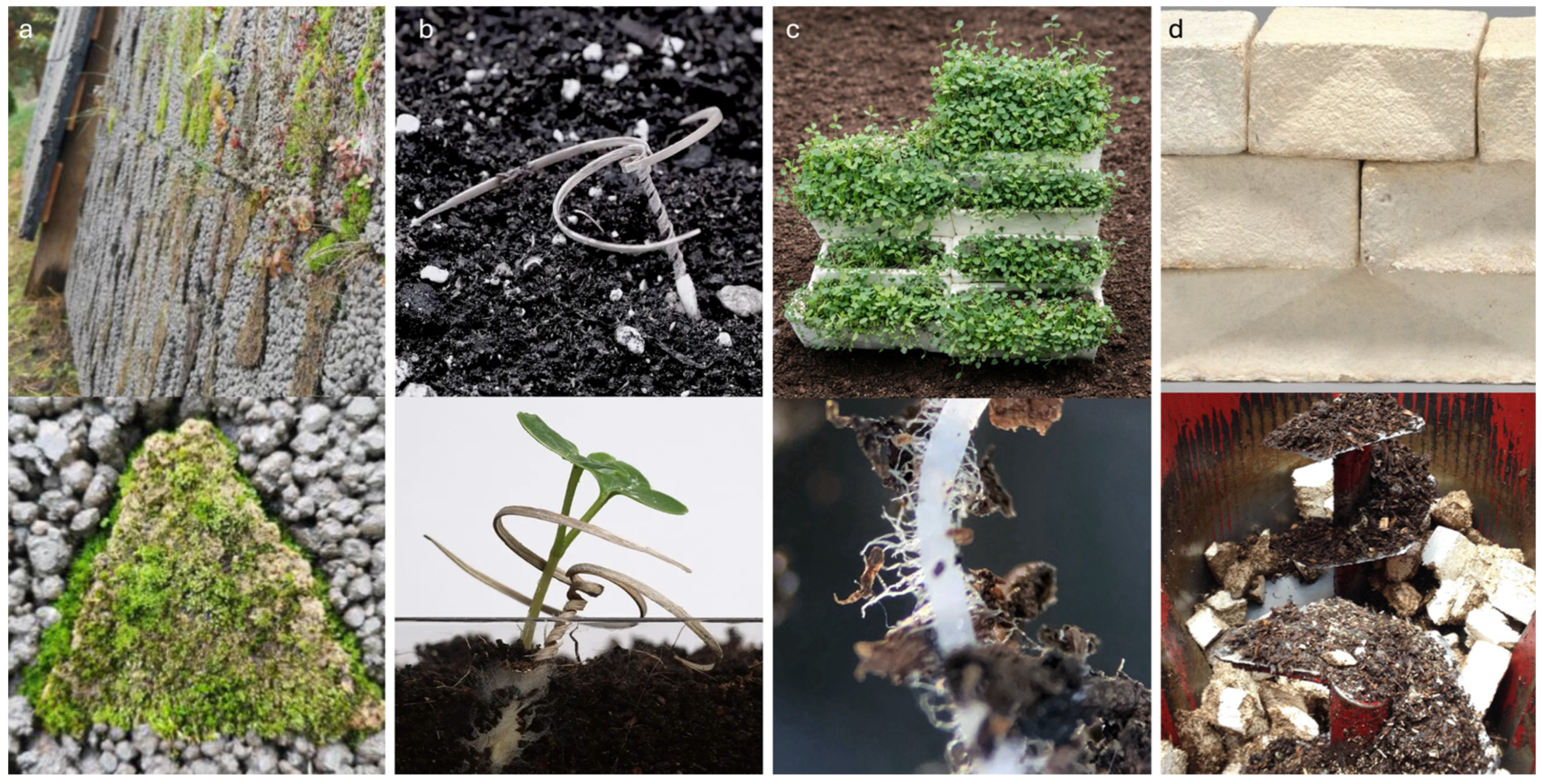
The emerging field of bio-receptive architecture—focused on designing building materials and surfaces to support the growth of living organisms—offers a novel pathway for enhancing soil health through integrative ecological design [56,67,97,101]. Traditionally, built environments are constructed in opposition to natural systems, often sealing off soil and disrupting biological activity through impermeable surfaces and pollutant-laden materials [102]. In contrast, bio-receptive materials and structures are designed to foster microbial, fungal, and plant colonization on architectural surfaces, creating dynamic interfaces between the built and natural worlds. When these systems are in contact with or adjacent to soil, they can contribute to soil health by promoting microbial diversity and enhancing nutrient cycling. They may also increase organic matter input through leaf litter, root exudates, or decomposed biogenic coatings via weathering. For example, walls or pavements that host mosses, lichens, or fungi can indirectly improve soil conditions by stabilizing moisture regimes and fostering symbiotic microbial exchanges at the soil interface [68] (Figure 3a). Furthermore, bio-receptive elements constructed from biodegradable or mineral-rich materials can gradually release beneficial compounds into adjacent soils as they weather, contributing to soil mineral balance without toxic residue.
Figure 3. Bio-receptive and bioremediating product design for soil health: (a) accelerated moss colonization of bio-receptive façades via panel design with biopolymeric bio-boosting sites [68]; (b) biodegradable and stimulus-responsive materials can support seed launch, navigation, and burial of seeds in degraded land [103]; (c) portable symbiotic bricks containing arbuscular mycorrhizal fungi and alfalfa plant able to remediate heavy metals in soil [70,72]; (d) bricks binding agricultural waste by saprophytic fungal digestion can build tall walls and nourish soils at end-of-life [104].
Applsci 16 04547 g003
Projects that explicitly combine bio-receptive architectural systems with ground-level soil regeneration are emerging at the intersection of façade ecology, fungal biomaterials, and regenerative landscape design [101]. For example, the BIQ House algae façade prototype (Hamburg, GR, USA, 2013), integrates flat-panel microalgae bioreactors that not only sequester carbon but generate biomass potentially usable as soil amendments on site [67]. Similarly, the pioneer Hy-Fi mycelium tower by The Living (MoMA PS1, Queens, NY, USA, 2014) (Figure 3d) demonstrates compostable mycelium bricks designed for full biological return to soil after disassembly, explicitly connecting architectural material cycles to soil regeneration. More recently, research on bio-receptive concrete façades documents algal biofilm green façade systems seeded with local soil crust microorganisms, establishing a vertical–horizontal ecological continuum between façade colonization and ground-level soil biodiversity [68]. Additionally, regenerative material frameworks outlined in [105] advocate for earth-based and mycelium-bound systems that reintegrate building envelopes with soil metabolism through compostability, moisture buffering, and erosion reduction. Together, these projects push bio-receptive urban surfaces toward closed-loop ecological systems, where façades act as living interfaces that sequester carbon, cultivate microbial life, and ultimately feed nutrients back to regenerate urban soils.

3.4. Portable Product Design for Soil Bioremediation

At smaller scales, and with faster results via direct soil restoration, engineered product design powered by biopolymers has also recently contributed to regenerative mechanisms aiming to solve current challenges with harsh environmental conditions making conventional seeding efforts costly and ineffective [73,106]. Biodegradable, stimulus-responsive morphing materials can improve ecological restoration by autonomously supporting seed launch, navigation, burial and early care. Inspired by natural systems like the squirting cucumber, Impatiens pods, dandelion pappus and Erodium awns, engineers have built devices such as cavitation-powered seed launchers, hydrogel steam-explosion planters and delayed-jumping metashells for timed dispersal. After landing, biohybrid crawlers modeled on wild-oat awns navigate to soil crevices, while porous parachute-like fliers enable gentle settling. Self-drilling wood-veneer carriers achieve high burial success, and degradable reef structures sequentially float, sink and unfold to anchor seedlings and protect early growth in aquatic environments [74,103] (Figure 3b).
In another example, SimbioBrick, a portable, biologically active building system designed to restore degraded urban soils, embeds plant–fungi symbiosis into modular brick units that function as living infrastructures for bioremediation and soil regeneration [70] (Figure 3c) instead of using inert materials. Specifically, arbuscular mycorrhizal fungi (AMF) produce biopolymeric hyphae from structural chitin and β-glucans [71,72] attaching to the roots of a partner plant, in this case perennial alfalfa chosen for its dense and fast-growing root network that increases the likelihood of contact with fungal spores. It addresses heavy metal contamination, poor microbial diversity, and limited permeability in soils such as those neighboring historic smelters [107,108] to turn them into urban orchards and water-absorbing surfaces. SimbioBricks are porous to support plant–fungi partnership, procuring water and minerals for plants and carbohydrates and vitamins for fungi. Inside the brick, these interactions are supported by fine-tuned growing medium using superabsorbent polymer hydrogel, biopolymeric nutrient solution, and mycorrhizal inoculant. This enhances soil aggregation, improves nutrient uptake into grown plants, increases water retention, and stabilizes carbon. Open-bottom configurations allow AMF root networks to extend into surrounding soils, helping bind heavy metals and reduce pollutant mobility. Durable porcelain encases the biopolymeric system to avoid petrochemical toxicity of traditional potting while maintaining biologically supportive geometries. Deployed as pavers, vegetated walls, or urban planter systems, SimbioBrick transforms hardscaped areas into permeable, green infrastructures that promote microbial recovery, improve stormwater infiltration, and prepare contaminated soils for safer long-term use [98]. SimbioBrick remains a work in progress toward realizing passive bioremediation in architecture; scaling production from lab-based additive manufacturing to industrial techniques may present both difficulties in precision and opportunities for streamlined molding. These issues require further testing, refinement, and collaboration with industrial partners before broader adoption.
Policy support is crucial for biopolymer-based and bioremediating construction, including standardizing testing and certification of hybrid systems that combine biological and architectural technologies [87,109]. Such frameworks will facilitate municipal adoption and allow the field to move from academic innovation to real-world urban deployment.

4. Conclusions Towards Healthier Soils via Biopolymeric Interventions

This review has examined biopolymeric materials as emerging, multifunctional tools for enhancing soil health across both agricultural and urban contexts. By synthesizing research from soil science, polymer chemistry, regenerative agriculture, and architecture, the article highlights how biopolymers derived from natural, waste-based, and microbial sources can improve soil structure, water retention, nutrient delivery, erosion resistance, and contaminant immobilization while reducing reliance on conventional synthetic polymers (Table 5).
Across agricultural applications, biopolymeric amendments—including hydrogels, controlled-release fertilizer carriers, and soil stabilizers—demonstrate measurable improvements in plant performance and soil function under conditions of water stress, salinity, and degradation. In parallel, research in urban and construction settings illustrates how bio-based binders, bio-stabilized earthen materials, bio-receptive surfaces, and portable remediation systems can re-establish soil permeability, microbial activity, and circular material flows within the built environment.
Taken together, the reviewed studies indicate that biopolymers operate most effectively when understood not as isolated materials but as components of interconnected soil–material–biological systems. Their capacity to interface with soil physics, chemistry, and biology positions them as enabling technologies for regenerative land management and environmentally responsive design. This synthesis underscores the importance of cross-scale and cross-disciplinary approaches, linking laboratory innovation to field application and architectural integration.
By consolidating evidence across diverse applications and scales, this review clarifies the current state of biopolymeric soil interventions and situates them within broader ecological and material frameworks. In doing so, it establishes a foundation for evaluating biopolymers not only in terms of performance, but in their capacity to support healthier, more resilient soil systems aligned with sustainable agricultural practices and regenerative urban development.

5. Future Perspectives

The body of research reviewed in this article indicates that biopolymeric systems hold significant potential to address the escalating ecological tensions affecting soils in both agricultural and urban environments. However, the transition from experimental validation to widespread application remains contingent on overcoming several interrelated scientific and practical challenges identified throughout the literature.
Future efforts must prioritize context-specific biopolymer formulation, as studies consistently demonstrate that performance depends strongly on soil type, climatic conditions, contamination profiles, and land use practices. Materials that perform effectively in laboratory or controlled greenhouse settings often exhibit variable outcomes under field conditions, underscoring the need for long-term, site-adapted field trials. Emphasis on multifunctional systems—such as hydrogels combining water retention, nutrient delivery, and pollutant adsorption—should continue, as these approaches address multiple soil stressors simultaneously and align with regenerative land management strategies.
A key research direction involves improving understanding of the long-term environmental fate of biopolymers in soil. While biodegradability represents a central advantage over conventional plastics, degradation rates and byproducts remain difficult to predict under real soil conditions. The reviewed studies highlight the necessity for standardized assessment protocols to evaluate biodegradation, potential residue accumulation, and impacts on soil microbial communities over extended timescales.
The integration of biopolymers into circular bioeconomy models also warrants further development. Recent projects illustrate how agricultural residues, lignin, and microbial biopolymers can be transformed into in-soil degradable products that replace conventional plastics while enhancing soil function. Scaling these approaches will require improved life-cycle assessment, validation at higher technology readiness levels, and alignment with Safe and Sustainable by Design principles to ensure environmental safety and economic viability.
In urban contexts, future applications should expand the incorporation of biopolymers into regenerative architecture, bio-receptive materials, and urban soil remediation systems. As demonstrated in recent building projects and product-based interventions, bio-based building materials can support soil permeability, microbial diversity, and closed material cycles when integrated intentionally into design and construction processes. Built examples employing fibrous and earthen materials stabilized with natural gums, mycelium-bound biomass, and bio-based binders illustrate how structural and non-structural components can return safely to soil at end-of-life without introducing toxic residues. Similarly, bio-receptive façades, green roofs, and living infrastructural elements seeded with local microorganisms extend soil processes vertically into the built environment, fostering continuous ecological exchange between architecture and ground substrates. Portable systems such as modular bioremediating bricks further demonstrate how biopolymeric materials can actively support soil regeneration in contaminated urban sites, enabling incremental, place-based restoration while maintaining functionality within dense urban fabrics.
Overall, advancing biopolymeric interventions will depend on continued interdisciplinary collaboration across soil science, polymer chemistry, regenerative agriculture, architecture, and urban planning. By embedding biopolymeric innovation within broader socio-ecological frameworks, future research can move beyond short-term remediation toward soil systems that are resilient, multifunctional, and capable of sustaining ecosystem services under accelerating environmental change.

Author Contributions

Conceptualization, L.M.-S. and I.N.; methodology, I.N., L.M.-S., C.S. and G.C.; data curation, I.N., L.M.-S., C.S. and G.C.; writing—original draft preparation, I.N., L.M.-S., C.S. and G.C.; writing—review and editing, I.N., L.M.-S., C.S. and G.C.; visualization, L.M.-S. All authors have read and agreed to the published version of the manuscript.

Funding

This research received no external funding.

Institutional Review Board Statement

Not applicable.

Informed Consent Statement

Not applicable.

Data Availability Statement

No new data were created or analyzed in this study.

Conflicts of Interest

Author Ioana Negru and Genoveva Cojocaru were employed by the company Plantesima SRL and Bionest Cluster respectively. The remaining authors declare that the research was conducted in the absence of any commercial and financial relationships that could be counted as a potential conflict of interest.

References

  1. Scharlemann, J.P.W.; Tanner, E.V.; Hiederer, R.; Kapos, V. Global soil carbon: Understanding and managing the largest terrestrial carbon pool. Carbon Manag. 2014, 5, 81–91. [Google Scholar] [CrossRef]
  2. Fao. Global Soil Partnership 2012–2022—Sustainable Soil Management in Action; Food and Agriculture Organization of the United Nations: Rome, Italy, 2022; pp. 1–28. [Google Scholar]
  3. Handelsman, J. A World Without Soil: The Past, Present, and Precarious Future of the Earth Beneath Our Feet; Yale University Press: New Haven, CT, USA, 2021. [Google Scholar]
  4. United Nations Convention to Combat Desertification. The Global Land Outlook; UNCCD: Bonn, Germany, 2017. [Google Scholar]
  5. La Fuente, C.I.A.; Maniglia, B.C.; Tadini, C.C. Biodegradable polymers: A review about biodegradation and its implications and applications. Packag. Technol. Sci. 2023, 36, 81–95. [Google Scholar] [CrossRef]
  6. Lewicka, K.; Szymanek, I.; Rogacz, D.; Wrzalik, M.; Łagiewka, J.; Nowik-Zając, A.; Zawierucha, I.; Coseri, S.; Puiu, I.; Falfushynska, H.; et al. Current Trends of Polymer Materials’ Application in Agriculture. Sustainability 2024, 16, 8439. [Google Scholar] [CrossRef]
  7. Merino, D.; Alvarez, V.A. 8-Advanced applications of green materials in agriculture. In Applications of Advanced Green Materials; Ahmed, S., Ed.; Woodhead Publishing: London, UK, 2021; pp. 193–222. [Google Scholar]
  8. Plackett, D. Introductory Overview. In Biopolymers—New Materials for Sustainable Films and Coatings; John Wiley & Sons: Hoboken, NJ, USA, 2011; pp. 1–14. [Google Scholar]
  9. Abbate, C.; Scavo, A.; Pesce, G.R.; Fontanazza, S.; Restuccia, A.; Mauromicale, G. Soil Bioplastic Mulches for Agroecosystem Sustainability: A Comprehensive Review. Agriculture 2023, 13, 197. [Google Scholar] [CrossRef]
  10. Saha, A.; Sreedeep, S.; Manna, U. Role of Biopolymers and Their Composites in Sustainable Agriculture: Recent Developments and Future Perspectives. In Applications of Biopolymers in Science, Biotechnology, and Engineering; John Wiley & Sons: Hoboken, NJ, USA, 2024; pp. 57–87. [Google Scholar]
  11. Valle, C.; Voss, M.; Gaudino, E.C.; Forte, C.; Cravotto, G.; Tabasso, S. Harnessing Agri-Food Waste as a Source of Biopolymers for Agriculture. Appl. Sci. 2024, 14, 4089. [Google Scholar] [CrossRef]
  12. Azeem, B. Stimuli-Responsive Starch-Based Biopolymer Coatings for Smart and Sustainable Fertilizers. Gels 2025, 11, 681. [Google Scholar] [CrossRef]
  13. Li, Y.; Liu, C.; Wei, H.; Gai, X.; Lei, T.; Wang, Y.; Li, Q.; Xiao, H. Recent Advances of Biodegradable Agricultural Mulches from Renewable Resources. ACS Sustain. Chem. Eng. 2023, 11, 14866–14885. [Google Scholar] [CrossRef]
  14. Merino, D. Embracing nature’s clockwork: Crafting plastics for degradation in plant agricultural systems. ACS Mater. Au 2024, 4, 450–458. [Google Scholar] [CrossRef]
  15. Saberi Riseh, R.; Hassanisaadi, M.; Vatankhah, M.; Varma, R.S.; Thakur, V.K. Nano/Micro-Structural Supramolecular Biopolymers: Innovative Networks with the Boundless Potential in Sustainable Agriculture. Nano-Micro Lett. 2024, 16, 147. [Google Scholar] [CrossRef]
  16. Tariq, Z.; Iqbal, D.N.; Rizwan, M.; Ahmad, M.; Faheem, M.; Ahmed, M. Significance of biopolymer-based hydrogels and their applications in agriculture: A review in perspective of synthesis and their degree of swelling for water holding. RSC Adv. 2023, 13, 24731–24754. [Google Scholar] [CrossRef]
  17. Schwingel Henn, G.; Schmitz, C.; Fontana, L.B.; Corrêa, H.V.N.; Lehn, D.N.; de Souza, C.F.V. Water Absorption Capacity and Agricultural Utility of Biopolymer-Based Hydrogels: A Systematic Review and Meta-Analysis. ACS Polym. Au 2025, 5, 325–342. [Google Scholar] [CrossRef]
  18. Wang, A.; Zhu, Y. Superabsorbent Polymers: Synthesis, Properties and Applications; Royal Society of Chemistry: London, UK, 2025. [Google Scholar]
  19. Dingley, C.; Cass, P.; Adhikari, B.; Daver, F. Application of superabsorbent natural polymers in agriculture. Polym. Renew. Resour. 2024, 15, 210–255. [Google Scholar] [CrossRef]
  20. Ahmed, S.S.; Khan, T.K.; El-Aziz, G.H.A.; Shoala, T.; El-Garhy, H.A.S.; Fahmy, A.H. Implementation of Biopolymeric Nanomaterials to Reduce the Negative Impacts of Salinity on Tomato Quantity and Quality. Molecules 2023, 28, 1594. [Google Scholar] [CrossRef]
  21. Zhou, X.; Lin, L.; Wang, F.; Ke, Y.; Cao, L.; Wu, G.; Li, L.; Li, J. Multifunctional biodegradable potato soluble starch-urea superabsorbent hydrogels for desert agriculture: Irradiation synthesis and their plant growth promotion and degradation properties. Int. J. Biol. Macromol. 2026, 348, 150787. [Google Scholar] [CrossRef]
  22. Wang, W.; Qu, K.; Zhang, X.; Teng, M.; Huang, Z. Integrated Instillation Technology for the Synthesis of a pH-Responsive Sodium Alginate/Biomass Charcoal Soil Conditioner for Controlled Release of Humic Acid and Soil Remediation. J. Agric. Food Chem. 2021, 69, 13386–13397. [Google Scholar] [CrossRef] [PubMed]
  23. Seo, S.; Lee, M.; Im, J.; Kwon, Y.-M.; Chung, M.-K.; Cho, G.-C.; Chang, I. Site application of biopolymer-based soil treatment (BPST) for slope surface protection: In-situ wet-spraying method and strengthening effect verification. Constr. Build. Mater. 2021, 307, 124983. [Google Scholar] [CrossRef]
  24. Lee, M.; Chang, I.; Kang, S.; Lee, D.; Gye-Chun, C. Alkaline induced-cation crosslinking biopolymer soil treatment and field implementation for slope surface protection. Geomech. Eng. 2023, 33, 29–40. [Google Scholar]
  25. Looper, T.L. Phytostabilization of Mine Tailings Piles Utilizing Biopolymer and Industrial Byproducts. Ph.D. Thesis, The University of Montana, Missoula, MT, USA, 1998. [Google Scholar]
  26. Deylaghian, S.; Nikooee, E.; Habibagahi, G.; Nagel, T. Inulin biopolymer as a novel material for sustainable soil stabilization. Sci. Rep. 2024, 14, 31078. [Google Scholar] [CrossRef] [PubMed]
  27. Ding, H.; Geng, X. Water retention characteristics and mechanical properties of vegetated biopolymer and biochar-reinforced sandy loam. Can. Geotech. J. 2024, 62, 1–15. [Google Scholar] [CrossRef]
  28. Fatehi, H.; Ong, D.E.; Yu, J.; Chang, I. Sustainable soil treatment: Investigating the efficacy of carrageenan biopolymer on the geotechnical properties of soil. Constr. Build. Mater. 2024, 411, 134627. [Google Scholar] [CrossRef]
  29. Zangeneh, S.; Tabarsa, A.; Bagheri, Y. Investigation of Sandy Soil Stabilization Using Tragacanth Gum Biopolymer as Sustainable Materials. SSRN 4536022. Available online: https://papers.ssrn.com/sol3/papers.cfm?abstract_id=4536022 (accessed on 2 April 2026).
  30. Raj, S. Stabilization of Soil Using Sodium Alginate Biopolymer. Int. J. Res. Appl. Sci. Eng. Technol. 2025, 13, 270–278. [Google Scholar] [CrossRef]
  31. Armistead, S.J.; Smith, C.C.; Staniland, S.S. Sustainable biopolymer soil stabilization in saline rich, arid conditions: A ‘micro to macro’ approach. Sci. Rep. 2022, 12, 2880. [Google Scholar] [CrossRef]
  32. Bagheri, P.; Gratchev, I.; Zolghadr, M.; Son, S.; Kim, J.M. Mitigation of Soil Erosion and Enhancement of Slope Stability through the Utilization of Lignin Biopolymer. Polymers 2024, 16, 1300. [Google Scholar] [CrossRef]
  33. Anusha, S.; Harikrishna, P.R. Guar Gum, Gellan Gum Biopolymer Soil Stabilization; EDP Sciences: Les Ulis, France, 2024. [Google Scholar]
  34. Correia, A.A.S.; Caldeira, J.B.; Branco, R.; Morais, P.V. Enhancing the Strength of Mine Residue Soil by Bioremediation Combined with Biopolymers. Appl. Sci. 2023, 13, 10550. [Google Scholar] [CrossRef]
  35. Davarzani, D.; Derikvand, Z.; Betelu, S.; Colombano, S.; Nascimento, M.; Ignatiadis, I.; Hubé, D. Biopolymer-enhanced delivery of reactive sulfide reagents for in-situ mercury remediation of heterogeneous contaminated soils. Sci. Total Environ. 2024, 949, 174901. [Google Scholar] [CrossRef] [PubMed]
  36. Yu, Y.; Velandia, M.; Hayes, D.G.; DeVetter, L.W.; Miles, C.A.; Flury, M. Chapter Three—Biodegradable plastics as alternatives for polyethylene mulch films. In Advances in Agronomy; Sparks, D.L., Ed.; Academic Press: Cambridge, MA, USA, 2024; pp. 121–192. [Google Scholar]
  37. Kasirajan, S.; Ngouajio, M. Polyethylene and biodegradable mulches for agricultural applications: A review. Agron. Sustain. Dev. 2012, 32, 501–529. [Google Scholar] [CrossRef]
  38. English, M.E. The Role of Biodegradable Plastic Mulches in Soil Organic Carbon Cycling. Master’s Thesis, University of Tennessee, Knoxville, TN, USA, 2019. [Google Scholar]
  39. Reis, A.B.; Yoshida, C.M.P.; Vilela, E.S.D.; Nascimento, R.S.; Melo, I.S.; Franco, T.T. Biodegradability kraft paper coated with films emulsified chitosan and palmitic acid. J. Res. Updat. Polym. Sci. 2013, 2, 122–131. [Google Scholar] [CrossRef]
  40. Haddad, S.A.; Abdelmageed, H.; Saleh, A.; Ahmed, S.; Abd El-Azeim, M.M.; Lemanowicz, J.; Eldesoky, G.E.; Saad, O. Response of Cellulose Decomposition and Nodulation in Soils Amended with Biochar for Peri-Urban Agriculture. Sustainability 2023, 15, 10003. [Google Scholar] [CrossRef]
  41. Haiyan, L.; Wang, F.; Chen, H.; Fang, H.; Feng, W.; Wei, Y.; Wang, F.; Su, H.; Mi, Y.; Zhou, M.; et al. Specific biotests to assess eco-toxicity of biodegradable polymer materials in soil. J. Environ. Sci. 2021, 103, 377–388. [Google Scholar] [CrossRef]
  42. Paluch, N.; Fojt, J.; Holátko, J.; Hammerschmiedt, T.; Kintl, A.; Brtnický, M.; Řezáčová, V.; De Winter, K.; Uitterhaegen, E.; Kučerík, J. Does poly-3-hydroxybutyrate biodegradation affect the quality of soil organic matter? Chemosphere 2024, 352, 141300. [Google Scholar] [CrossRef]
  43. Brtnicky, M.; Pecina, V.; Holatko, J.; Hammerschmiedt, T.; Mustafa, A.; Kintl, A.; Fojt, J.; Baltazar, T.; Kucerik, J. Effect of biodegradable poly-3-hydroxybutyrate amendment on the soil biochemical properties and fertility under varying sand loads. Chem. Biol. Technol. Agric. 2022, 9, 75. [Google Scholar] [CrossRef]
  44. Smagin, A.V.; Sadovnikova, N.B.; Belyaeva, E.A.; Korchagina, C.V. Biodegradability of Gel-Forming Superabsorbents for Soil Conditioning: Kinetic Assessment Based on CO2 Emissions. Polymers 2023, 15, 3582. [Google Scholar] [CrossRef]
  45. Kanwal, A.; Zhang, M.; Sharaf, F.; Rani, A.; Khan, B.; Farooq, S. Poly (Butylene Adipate Terephthalate) Degradation Products and Their Influence on Plant Progression and Soil Microbial Diversity. 2023. Available online: https://www.researchsquare.com/article/rs-2930961/v1 (accessed on 2 April 2026).
  46. Sun, Y.; Yang, W.; Shi, H.; Tanveer, S.K.; Hai, J. Past, present, and future perspectives of biodegradable films for soil: A 30-year systematic review. Front. Bioeng. Biotechnol. 2022, 10, 1006388. [Google Scholar] [CrossRef] [PubMed]
  47. Bagheri, P.; Gratchev, I.; Son, S.; Rybachuk, M. Durability, Strength, and Erosion Resistance Assessment of Lignin Biopolymer Treated Soil. Polymers 2023, 15, 1556. [Google Scholar] [CrossRef]
  48. Lichocik, M.; Owczarek, M.; Miros, P.; Guzińska, K.; Gutowska, A.; Ciechańska, D.; Krucińska, I.; Siwek, P. Impact of PBSA (Bionolle) biodegradation products on the soil microbiological structure. Fibres Text. East. Eur. 2012, 20, 179–185. Available online: https://yadda.icm.edu.pl/baztech/element/bwmeta1.element.baztech-9c842665-fbd6-4506-867b-b8ab40db7f0d (accessed on 5 February 2026).
  49. Knox, A.S.; Petrisor, I.G.; Turick, C.E.; Roberts, J.; Paller, M.H.; Reible, D.D.; Forrest, C.R. Life span of biopolymer sequestering agents for contaminant removal and erosion resistance. In Biopolymers; El-Nashar, M., Ed.; IntechOpen: London, UK, 2010. [Google Scholar] [CrossRef]
  50. Dharmalingam, S.; Hayes, D.G.; Wadsworth, L.C.; Dunlap, R.N.; DeBruyn, J.M.; Lee, J.; Wszelaki, A.L. Soil Degradation of Polylactic Acid/Polyhydroxyalkanoate-Based Nonwoven Mulches. J. Polym. Environ. 2015, 23, 302–315. [Google Scholar] [CrossRef]
  51. Arn, S.; Wille, F.; Cerri, M.; Kägi, R.; Bucheli, T.; Widmer, F.; McNeill, K.; Sander, M. Biodegradation of commercial mulch films in Swiss agricultural soils: Results from combined laboratory, mesocosm and field incubations. In Proceedings of the 25th EGU General Assembly, Vienna, Austria, 23–28 April 2023. [Google Scholar]
  52. Merino, D.; Zych, A.; Athanassiou, A. Biodegradable and Biobased Mulch Films: Highly Stretchable PLA Composites with Different Industrial Vegetable Waste. ACS Appl. Mater. Interfaces 2022, 14, 46920–46931. [Google Scholar] [CrossRef] [PubMed]
  53. Li, X.; Zheng, G.; Li, Z.; Fu, P. Formulation, performance and environmental/agricultural benefit analysis of biomass-based biodegradable mulch films: A review. Eur. Polym. J. 2024, 203, 112663. [Google Scholar] [CrossRef]
  54. Ramadhani, A.M.; Nassary, E.K.; Rwehumbiza, F.B.; Massawe, B.H.J.; Nchimbi-Msolla, S. Potentials of synthetic biodegradable mulch for improved livelihoods on smallholder farmers: A systematic review. Front. Agron. 2024, 6, 1454060. [Google Scholar] [CrossRef]
  55. Reid, E.V.; Samuelson, M.B.; Blanco-Canqui, H.; Drijber, R.; Kadoma, I.; Wortman, S.E. Biodegradable and biobased mulch residues had limited impacts on soil properties but reduced yield of the following crop in a low fertility soil. Renew. Agric. Food Syst. 2022, 37, 490–503. [Google Scholar] [CrossRef]
  56. Armstrong, R. Towards the microbial home: An overview of developments in next-generation sustainable architecture. Microb. Biotechnol. 2023, 16, 1112–1130. [Google Scholar] [CrossRef] [PubMed]
  57. Monib, A.; Niazi, P.; Azizi, A.; Sediqi, S.; Baseer, A. Heavy Metal Contamination in Urban Soils: Health Impacts on Humans and Plants: A Review. Eur. J. Theor. Appl. Sci. 2024, 2, 546–565. [Google Scholar] [CrossRef] [PubMed]
  58. Liu, L.; Barberán, A.; Gao, C.; Zhang, Z.; Wang, M.; Wurzburger, N.; Wang, X.; Zhang, R.; Li, J.; Zhang, J. Impact of Urbanization on Soil Microbial Diversity and Composition in the Megacity of Shanghai. Land Degrad. Dev. 2022, 33, 282–293. [Google Scholar] [CrossRef]
  59. Mang, P.; Reed, B. Designing from place: A regenerative framework and methodology. Build. Res. Inf. 2012, 40, 23–38. [Google Scholar] [CrossRef]
  60. Lokko, M.-l. Soil Sisters: Emerging Intersectoral Material Designs For Soil Health. J. Archit. Educ. 2025, 79, 122–134. [Google Scholar] [CrossRef]
  61. Sesay, T.; Xie, Y.; Chen, Y.; Xue, J. Bio-Based Stabilization of Natural Soil for Rammed Earth Construction: A Review on Mechanical and Water Durability Performance. Polymers 2025, 17, 1170. [Google Scholar] [CrossRef]
  62. Plank, J. Applications of Biopolymers in Construction Engineering. In Biopolymers Online; John Wiley & Sons, Ltd.: Hoboken, NJ, USA, 2005. [Google Scholar]
  63. Ben-Alon, L.; Loftness, V.; Harries, K.A.; DiPietro, G.; Hameen, E.C. Cradle to Site Life Cycle Assessment (LCA) of Natural vs. Conventional Building Materials: A Case Study on Cob Earthen Material. Build. Environ. 2019, 160, 106150. [Google Scholar] [CrossRef]
  64. Rothschild, L.J.; Lima, I.G.P.; Senesky, D.; Wipat, A.; Head, J., III. Myco-Architecture off Planet: Growing Surface Structures at Destination; NASA NTRS: Hampton, VA, USA, 2019. [Google Scholar]
  65. Brown, B. Fight Back with Fungi: How Mushrooms Can Help Solve the Global Housing Crisis. Healthy Materials Lab. 2024. Available online: https://architizer.com/blog/inspiration/stories/mycelium-fungi-architecture-mycohab/ (accessed on 5 February 2026).
  66. Bio-Habitat. MYCOhab: Clearing the Namibian Encroacher Bush to Make Food and Materials. Namibia. 2019. Available online: https://www.bio-hab.org/materials (accessed on 5 February 2026).
  67. Cruz, M.; Beckett, R. Bioreceptive design: A novel approach to biodigital materiality. Arq. Archit. Res. Q. 2016, 20, 51–64. [Google Scholar] [CrossRef]
  68. Jakubovskis, R. Biophilic Façades: The Potentiality of Bioreceptive Concrete. Buildings 2025, 15, 3646. [Google Scholar] [CrossRef]
  69. Sommese, F.; Diana, L.; Colajanni, S.; Bellomo, M.; Sciuto, G.; Lombardo, G. Towards a Regenerative and Climate-Resilient Built Environment: Greening Lessons from European Cities. Buildings 2025, 15, 1878. [Google Scholar] [CrossRef]
  70. Bae, J.Y.; Aviv, D.; Mogas-Soldevila, L. SimbioBrick. In Scalable Disruptors; Springer Nature: Cham, Switzerland, 2024. [Google Scholar]
  71. Finlay, R.D. Ecological aspects of mycorrhizal symbiosis: With special emphasis on the functional diversity of interactions involving the extraradical mycelium. J. Exp. Bot. 2008, 59, 1115–1126. [Google Scholar] [CrossRef]
  72. Paré, L.; Banchini, C.; Hamel, C.; Bernier, L.; Stefani, F. A simple and low-cost technique to initiate single-spore cultures of arbuscular mycorrhizal fungi using a superabsorbent polymer. Symbiosis 2022, 88, 61–73. [Google Scholar] [CrossRef]
  73. Luo, D.; Maheshwari, A.; Danielescu, A.; Li, J.; Yang, Y.; Tao, Y.; Sun, L.; Patel, D.K.; Wang, G.; Yang, S.; et al. Autonomous Self-Burying Seed Carriers for Aerial Seeding. Nature 2023, 614, 463–470. [Google Scholar] [CrossRef]
  74. Lu, Q.; Yi, S.; Rae-Grant, T.; Yu, T.; Patel, D.K.; Yao, L. Morphing Matter to Support Ecological Restoration. Nat. Rev. Mater. 2026, 349–351. [Google Scholar] [CrossRef]
  75. Nduka, I. Hyperlocal Construction in Rwanda: Low Carbon Architecture. Arch. J. Available online: https://architizer.com/blog/inspiration/collections/hyperlocal-construction-in-rwanda/ (accessed on 28 March 2026).
  76. General Architecture Collaborative. Learning & Sports Center. Masoro, Rulindo District, Rwanda. 2022. Available online: https://ga-c.squarespace.com/projects/icdc (accessed on 5 February 2026).
  77. BE_Design. Komera Leadership Center. Rwanda. 2022. Available online: https://bruceengeldesign.com/new-p#/leadership-center/ (accessed on 5 February 2026).
  78. HuMUS, Healthy Municipal Soils. Available online: https://www.humus-project.eu/pilot-case-studies/ (accessed on 1 February 2026).
  79. Natural Energy and Vernacular Architecture: Principles and Examples with Reference to Hot Arid Climates; Fathy, H., Ed.; University of Chicago Press: London, UK, 1986; Available online: https://digitallibrary.un.org/record/196097 (accessed on 10 April 2026).
  80. Oliver, P. Built to Meet Needs: Cultural Issues in Vernacular Architecture; Routledge: London, UK, 2007. [Google Scholar] [CrossRef]
  81. Argüello, R. Maguey leaf kitchens in the Mezquital Valley, Hidalgo. J. Tradit. Build. Archit. Urban. 2022, 2022, 216–226. [Google Scholar]
  82. Espeland, M. A Proposed School for Traditional Building Arts & Crafts in Kalongo, Uganda. J. Tradit. Build. Archit. Urban. 2024, 258–269. [Google Scholar]
  83. Gandano, A. A new hut in Medina Sidonia, Cádiz Una nueva choza en Medina Sidonia, Cádiz Uma nova choça em Medina Sidonia, Cádiz. J. Tradit. Build. Archit. Urban. 2020, 1, 49–57. [Google Scholar]
  84. Vázquez Ó, R.C.; Luis, F.G.B. ‘Ear-Roofed’ Houses in Mixteca Baja, Puebla State: The Ñuu’Davi Traditional Building System. J. Tradit. Build. Archit. Urban. 2025, 6, 319–335. [Google Scholar]
  85. Vegas, F. Restoration of a barraca cottage in the Valencian Albufera. J. Tradit. Build. Archit. Urban. 2025, 6, 165–177. [Google Scholar]
  86. Healthy Materials Lab. DON Enterprise, PSU Housing Research Center, Americhanvre, and Pennsylvania Dept of Agriculture. 2023. PA Hemp Home: Case Study and Lessons Learned. Available online: https://healthymaterialslab.org/tool-guides/the-pa-hemp-home-lessons-learned (accessed on 28 March 2026).
  87. Dams, B.; Maskell, D.; Shea, A.; Allen, S.; Cascione, V.; Walker, P. Upscaling bio-based construction: Challenges and opportunities. Build. Res. Inf. 2023, 51, 764–782. [Google Scholar] [CrossRef]
  88. Duque-Acevedo, M.; Lancellotti, I.; Andreola, F.; Barbieri, L.; Belmonte-Ureña, L.J.; Camacho-Ferre, F. Management of agricultural waste biomass as raw material for the construction sector: An analysis of sustainable and circular alternatives. Environ. Sci. Eur. 2022, 34, 70. [Google Scholar] [CrossRef]
  89. Peñaloza, D.; Erlandsson, M.; Falk, A. Exploring the climate impact effects of increased use of bio-based materials in buildings. Constr. Build. Mater. 2016, 125, 219–226. [Google Scholar] [CrossRef]
  90. Ramsgaard Thomsen, M.; Rossi, G.; Daugaard, A.E.; Rech, A.; Nicholas, P. Extending the Circular Design Framework for Bio-Based Materials: Reconsidering Cascading and Agency Through the Case of Biopolymer Composites; Springer International Publishing: Cham, Switzerland, 2024. [Google Scholar]
  91. Akemah, T.; Ben-Alon, L. Developing 3D-Printed Natural Fiber-Based Mixtures. In Bio-Based Building Materials; Amziane, S., Merta, I., Page, J., Eds.; Springer Nature: Cham, Switzerland, 2023; pp. 555–572. [Google Scholar] [CrossRef]
  92. Carcassi, O.B.; Akemah, T.; Ben-Alon, L. 3D-Printed Lightweight Earth Fiber: From Tiles to Tessellations. 3D Print. Addit. Manuf. 2025, 12, 88–97. [Google Scholar] [CrossRef] [PubMed]
  93. Carcassi, O.B.; Maierdan, Y.; Akemah, T.; Kawashima, S.; Ben-Alon, L. Maximizing Fiber Content in 3D-Printed Earth Materials: Printability, Mechanical, Thermal and Environmental Assessments. Constr. Build. Mater. 2024, 425, 135891. [Google Scholar] [CrossRef]
  94. Maierdan, Y.; Armistead, S.J.; Mikofsky, R.A.; Huang, Q.; Ben-Alon, L.; Srubar, W.V.; Kawashima, S. Rheology and 3D Printing of Alginate Bio-Stabilized Earth Concrete. Cem. Concr. Res. 2024, 175, 107380. [Google Scholar] [CrossRef]
  95. Turco, C.; Carcassi, O.B.; Teixeira, E.; Mateus, R.; Ben-Alon, L. Thin Earth: Bio-Stabilised Pressed Thin Earth Elements for Building Applications. Constr. Build. Mater. 2025, 494, 143160. [Google Scholar] [CrossRef]
  96. Garcia-Holguera, M. From the Lab to the Land: Challenges of Upscaling Biobased Materials for Architecture. Appl. Sci. 2026, 16, 1990. [Google Scholar] [CrossRef]
  97. Mogas-Soldevila, L. Low Energy Adaptive Biological Material Skins from Nature to Buildings. In Advanced Materials in Smart Building Skins for Sustainability: From Nano to Macroscale; Wang, J., Shi, D., Song, Y., Eds.; Springer International Publishing: Cham, Switzerland, 2023; pp. 59–72. [Google Scholar] [CrossRef]
  98. Mogas-Soldevila, L.; Zhang, J.; Yoon Bae, J. SimbioBrick II: Portable Bioremediation Technology for Urban Farming and Environmental Justice. In Kleinman Policy Digest; Univeristy of Pennsylvania: Philadelphia, PA, USA, 2026. [Google Scholar]
  99. Mohseni, A.; Çapunaman, Ö.B.; Zamani, A.; Walter, N.; Gürsoy, B. Advanced Sustainable Architectural Acoustics Through Robotic Extrusion-Based Additive Manufacturing (EAM) of Fungal Biomaterials. Appl. Sci. 2025, 15, 5587. [Google Scholar] [CrossRef]
  100. Williams, F.; Wilson, R. It’s only Natural: Five Live Projects Made Using Natural Materials. Archit. J. Available online: https://www.architectsjournal.co.uk/buildings/its-only-natural-five-live-projects-made-using-natural-materials (accessed on 1 February 2026).
  101. Chayaamor-Heil, N.; Houette, T.; Demirci, Ö.; Badarnah, L. The Potential of Co-Designing with Living Organisms: Towards a New Ecological Paradigm in Architecture. Sustainability 2024, 16, 673. [Google Scholar] [CrossRef]
  102. Eichner, M.; Ivanova, Z. Climate Change and Eco-Anthropocentric Approach to Architectural and Urban Planning. IOP Conf. Ser. Mater. Sci. Eng. 2020, 953, 012055. [Google Scholar] [CrossRef]
  103. Spice, B. Engineered Magic: Wooden Seed Carriers Mimic the Behavior of Self-Burying Seeds. Pittsburg: CMU News. 2023. Available online: https://www.cmu.edu/news//stories/archives/2023/february/engineered-magic-wooden-seed-carriers-mimic-the-behavior-of-self-burying-seeds (accessed on 5 February 2026).
  104. The Living NY. Ecology of Mushroom-Brick Stacks up Perfectly. Sustainable Construction. New York City: Holcim Foundation. 2018. Available online: https://www.holcimfoundation.org/about/news/project-updates/ecology-of-mushroom-brick-stacks-up-perfectly (accessed on 5 February 2026).
  105. Bühler, M.; Hollenbach, P.; Köhler, L.; Armstrong, R. Unlocking resilience and sustainability with earth-based materials: A principled framework for urban transformation. Front. Built Environ. 2024, 10, 1385116. [Google Scholar] [CrossRef]
  106. Fiorello, I.; Ronzan, M.; Speck, T.; Sinibaldi, E.; Mazzolai, B. A Biohybrid Self-Dispersing Miniature Machine Using Wild Oat Fruit Awns for Reforestation and Precision Agriculture. Adv. Mater. 2024, 36, 2313906. [Google Scholar] [CrossRef]
  107. O’Shea, M.; Krekeler, M.P.S.; Vann, D.R.; Gieré, R. Investigation of Pb-contaminated soil and road dust in a polluted area of Philadelphia. Environ. Monit. Assess. 2021, 193, 440. [Google Scholar] [CrossRef] [PubMed]
  108. Tuccillo, M.E.; Blue, J.; Koplos, J.; Kelly, J.; Wilkin, R.T. Complexities in attributing lead contamination to specific sources in an industrial area of Philadelphia, PA. Heliyon 2023, 9, e15666. [Google Scholar] [CrossRef]
  109. Ladu, L.; Quitzow, R. Bio-Based Economy: Policy Framework and Foresight Thinking. In Food Waste Reduction and Valorisation: Sustainability Assessment and Policy Analysis; Morone, P., Papendiek, F., Tartiu, V.E., Eds.; Springer International Publishing: Cham, Switzerland, 2017; pp. 167–195. [Google Scholar]
Table 5. Key synthesis points on the role of biopolymers in regenerative soil health across agricultural and urban systems.
Strategic FocusSynthesis Statement
Regenerative Soil ManagementIntensifying ecological tensions in urban and agricultural soils require a transition from extractive soil management toward regenerative, bio-inspired design.
Multifunctional Material DesignFuture research should prioritize multifunctional biopolymeric materials that enhance soil structure and water retention while modulating microbial consortia, carbon stabilization pathways, and pollutant immobilization.
Circular Urban–Rural SystemsIntegrating biopolymers into circular urban–rural nutrient systems offers a pathway to address soil degradation, plastic pollution, and climate resilience simultaneously.
Scalability and CollaborationScalable implementation depends on cross-disciplinary collaboration among soil ecologists, polymer chemists, architects, urban planners, and farmers, supported by robust life-cycle assessments.
Socio-Ecological IntegrationEmbedding biopolymeric innovation within socio-ecological frameworks enables soil amendments to move beyond remediation toward adaptive, living infrastructures that sustain food security and urban ecosystem health.
Disclaimer/Publisher’s Note: The statements, opinions and data contained in all publications are solely those of the individual author(s) and contributor(s) and not of MDPI and/or the editor(s). MDPI and/or the editor(s) disclaim responsibility for any injury to people or property resulting from any ideas, methods, instructions or products referred to in the content.