Article

Modelling Prevention Policy Impacts on Local Authority-Funded Social Care Services in England: A System Dynamics Modelling Approach


1
Public Health Department, Kent County Council, Maidstone ME14 1XQ, UK
2
Herefordshire Council, Hereford HR4 0LE, UK
3
Public Health Consultant-Gloucestershire County Council, Shire Hall, Gloucester GL1 2TG, UK
4
Whole Systems Partnership, Bradford BD13 3TS, UK
5
Health Service Executive (HSE), D20 PT98 Dublin, Ireland
*
Author to whom correspondence should be addressed.
Appl. Sci. 2026, 16(9), 4436; https://doi.org/10.3390/app16094436
Submission received: 25 February 2026 / Revised: 18 March 2026 / Accepted: 20 March 2026 / Published: 1 May 2026

Featured Application

This study demonstrates how systems SDM can support local authorities in England in developing and informing ASC policies embedded in prevention. By simulating future demand and expenditure, this approach helps direct investments towards preventive interventions that promote independence and deliver sustainable services.

Abstract

England’s population is living longer, a sign of progress and better health, but adult social care (ASC) services must adapt to support a growing number of older residents, who may need help to remain independent, safe, and well. Kent County Council (KCC), in South East England, projects a 28% and 53% increase in its residents aged 65+ and 85+, respectively, over the next decade. This study aimed to inform the development of KCC’s ASC Prevention Framework using a System Dynamics Modelling (SDM) approach to evaluate the impact of preventive interventions on ASC demand and expenditure. Using linked local health and social care data and the Johns Hopkins ACG® tool, the 1.3 million adult population was stratified into Patient Needs Groups. Analyses showed that higher ASC costs were associated with being older females, living alone, deprivation, and frailty-related indicators such as dementia, history of falls, etc. Around 28% of older adults aged 65+ accounted for 80% of ASC costs within that cohort, and related scenario testing projected a 48% rise in ASC costs over 10 years without interventions, moderated to 33% with targeted prevention. These findings demonstrate the value of integrated data and modelling to inform strategic, prevention-focused ASC planning.

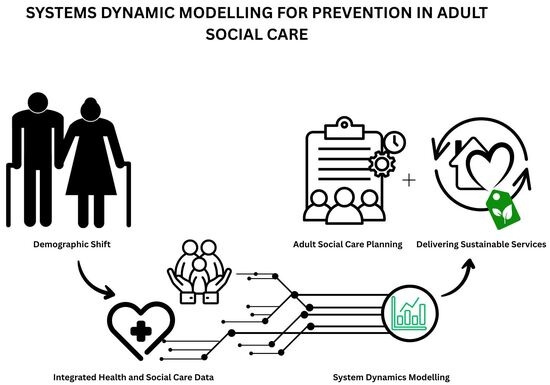
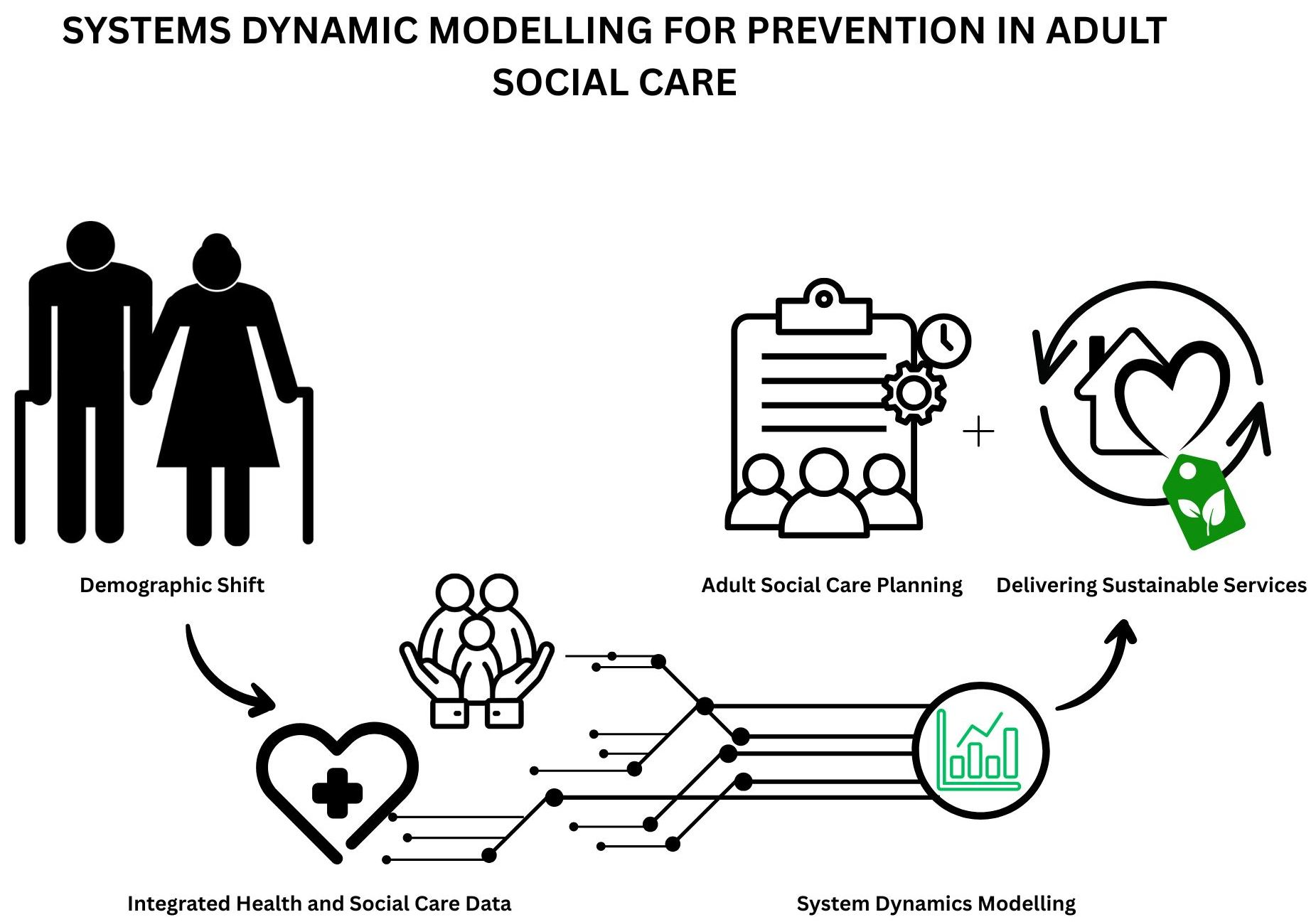
Graphical Abstract

1. Introduction

One of the most significant demographic shifts underway in many countries—especially high-income countries—is population ageing [1]. This trend carries significant social, economic, and healthcare implications that require proactive, inclusive policies and practices. In the UK, the population aged 67 and over is projected to grow from 12.3 million in 2018 to 12.8 million by 2028, a 4.1% increase, and is expected to reach 15.9 million by 2043, an overall rise of 29.3% [2]. The number of people aged 85 and over is anticipated to nearly double within 25 years, increasing from 1.6 million to 3 million [2]. Demographic change is frequently acknowledged in health service planning; however, it is equally vital that adult social care (ASC) systems are prepared to respond to the growing complexity and diversity of support needs across later life. As people live longer, the prevalence of long-term conditions, such as cancer, stroke, dementia, cardiovascular disease, and mental health challenges, tends to increase. Frailty, a state of heightened vulnerability due to age-associated decline has been identified as the strongest predictor of formal social care costs, with mean expenditures significantly higher for frail individuals [3]. These conditions often result in functional limitations that necessitate sustained, person-centred support. Ensuring that individuals can continue to live well with dignity, independence, and purpose for as long as possible is a compelling reason for ASC to fully embrace the potential of prevention and early intervention. Without this strategic shift, national projections suggest that the cost of community-based care and residential care in England will rise from 18.3 billion GBP in 2018 to 35.5 billion GBP by 2038. Over the same period, public-sector expenditure on formal long-term care is expected to increase by 95% [4,5].
There are 153 upper-tier local authorities (LAs) in England, each with a public health department responsible for addressing the health and social care needs of its population [6]. Under the Care Act of 2014, English councils are legally obligated to prevent, reduce, or delay the development and escalation of care and support needs [7]. This legislation also entrusts them with a broad mandate to promote the well-being of individuals who draw on support and ensure that a diverse range of high-quality social care services is accessible to those who need them [8]. Social care encompasses a broad spectrum of support, including assistance in people’s homes (such as home or domiciliary care), support offered in communities, care delivered in residential and nursing homes (care homes), reablement services designed to enable people to regain their independence, the supply of equipment and home adaptations, the provision of information and advice, and support for family or informal carers [9]. LAs assess individuals’ eligibility for social care, including conducting financial means testing, and those eligible receive publicly funded support, while others self-fund their care or rely on unpaid assistance from family or friends [9].
A financial imperative is that 81% of the LAs are expected to overspend their ASC budgets in 2025, amounting to 564 million GBP [10]. A joint research project demonstrated that for every 1 GBP invested in early and targeted preventive interventions for the right population cohort identified through evidence, councils could save 3.17 GBP in future social care costs while improving the quality of life for their residents. [11]. In line with national demographic trends, Kent County Council (KCC) in South East England projections show a 28% and 53% increase in their residents aged 65 and 85 years, respectively, over the next decade, and this can cause a significant surge in care needs while placing a substantial burden on local authority-funded ASC services [12]. To address this complex challenge, KCC has developed an Adult Social Care Prevention Framework that aims to foster independence and well-being, prevent or postpone the onset of care needs, and reduce long-term demand for care through an evidence-based approach to identify at-risk individuals and intervene with upstream preventive efforts.
Systems Dynamic Modelling (SDM) approach utilises computer simulation to understand how complex systems behave over time, particularly in response to interventions and policy changes, and it is well suited to address the dynamic complexities that characterise public health issues [13]. It has been applied to population health issues since the 1970s, and it has applications in topic areas like patient flows in emergency and extended care, health care capacity and delivery planning, and the interactions between public health capacity and disease epidemiology [14,15,16,17]. KCC has employed the SDM approach to support its evidence-based strategic planning and influence public health policy for its population of 1.6 million [18,19,20].
Recent initiatives, such as the remote monitoring pilot in East Kent, which utilised risk stratification approaches for patients with frail and complex needs, have generated positive feedback and demonstrated the practical value of advanced risk modelling in real-world settings [21]. The Johns Hopkins ACG® tool, specifically, has attracted attention as a means of predicting healthcare utilisation and social care costs, as it can also incorporate social care risk factors [22]. In this context, this study analyses the system-wide impact of preventive approaches within ASC using linked local electronic patient care records alongside regional and national datasets. The Johns Hopkins ACG® tool was used to stratify the population and risk factors associated with increased service access, and high ASC costs were identified. Further analysis focused on individuals aged 65 and over, with SDM applied to this stratified cohort, to generate what-if scenarios, comparing a baseline ‘do nothing’ approach with incremental, targeted, proactive preventive interventions. The study aimed to assess how linked health and social care data, combined with SDM, can inform proactive ASC planning and guide the development of evidence-based preventive strategies to improve population health outcomes and deliver sustainable ASC services.

2. Materials and Methods

This study was carried out by KCC using the Kent and Medway Care Record (KMCR), which links local health and social care records. This was supplemented by the Kent housing-led population forecast and local mortality data. A population cohort model using SDM was developed to provide evidence for preventive interventions and inform local priorities for KCC. The complete details and description can be found elsewhere, but a summary is provided below [19]. This model was co-produced by the working group within the local authority’s public health team, which included public health consultants, senior social care officers, the analytics team, and finance analysts. A data protection impact assessment (DPIA) was carried out to gain access to KMCR for analyses.

2.1. Data Source and Population Segmentation

KMCR is an integrated dataset that combines information from general practices, acute hospitals, community health, mental health services, and social care providers within the Kent and Medway Integrated Care System. It represents Kent’s adult population registered with a GP practice in the region, providing real-time data that enables health professionals to gain a unified view of a patient’s health and social care needs. Approximately 5% of the local population opted out of data sharing through the National Data Opt-out policy, and those individuals were therefore excluded from the study [23].
For this study, a de-identified, pseudonymised, and linked extract of the KMCR data (collected in March 2025) that included individuals aged 18 and over, with relevant health and social care encounters during the study period [March 2024–March 2025], was utilised. The presence of an active care plan was determined through pseudonymised linkage using a shared patient link ID. No direct identifiers were accessed by the research and analytics team.
Care needs were classified into three distinct categories: (a) Care home, (b) Home care combined with extra care, and (c) Other support (neither receiving home care nor in a care home). The unit costs (based on local estimates) were subsequently applied based on the average duration of services within each category to derive activity-specific costs. The costs were then aggregated into three age categories (65–74, 75–84, and 85 years and above) to enable age-stratified analysis. Following this, the Johns Hopkins ACG® tool was used to segment the population into mutually exclusive Patient Needs Groups (PNGs). Three out of the eleven groups generated, corresponding to children and pregnant women, were excluded from the analysis, as they fall outside the scope of adult social care [Table 1]. The variables employed by the tool include age, sex, diagnostic codes, and healthcare utilisation, which show patterns in risk profiles and comorbidities.

2.2. Flow Data Analysis

The net flow of people moving between each PNG was calculated over one year, serving as a snapshot of specified periods within the year. East Kent, which accounts for 50% of Kent’s older population, served as the basis for estimating the total Kent population because it is the only region with 12 months of longitudinal data at the time the analysis was conducted. An ageing chain was constructed within the population cohort, serving as the foundation for a baseline ‘do nothing’ scenario.

2.3. Model Structure

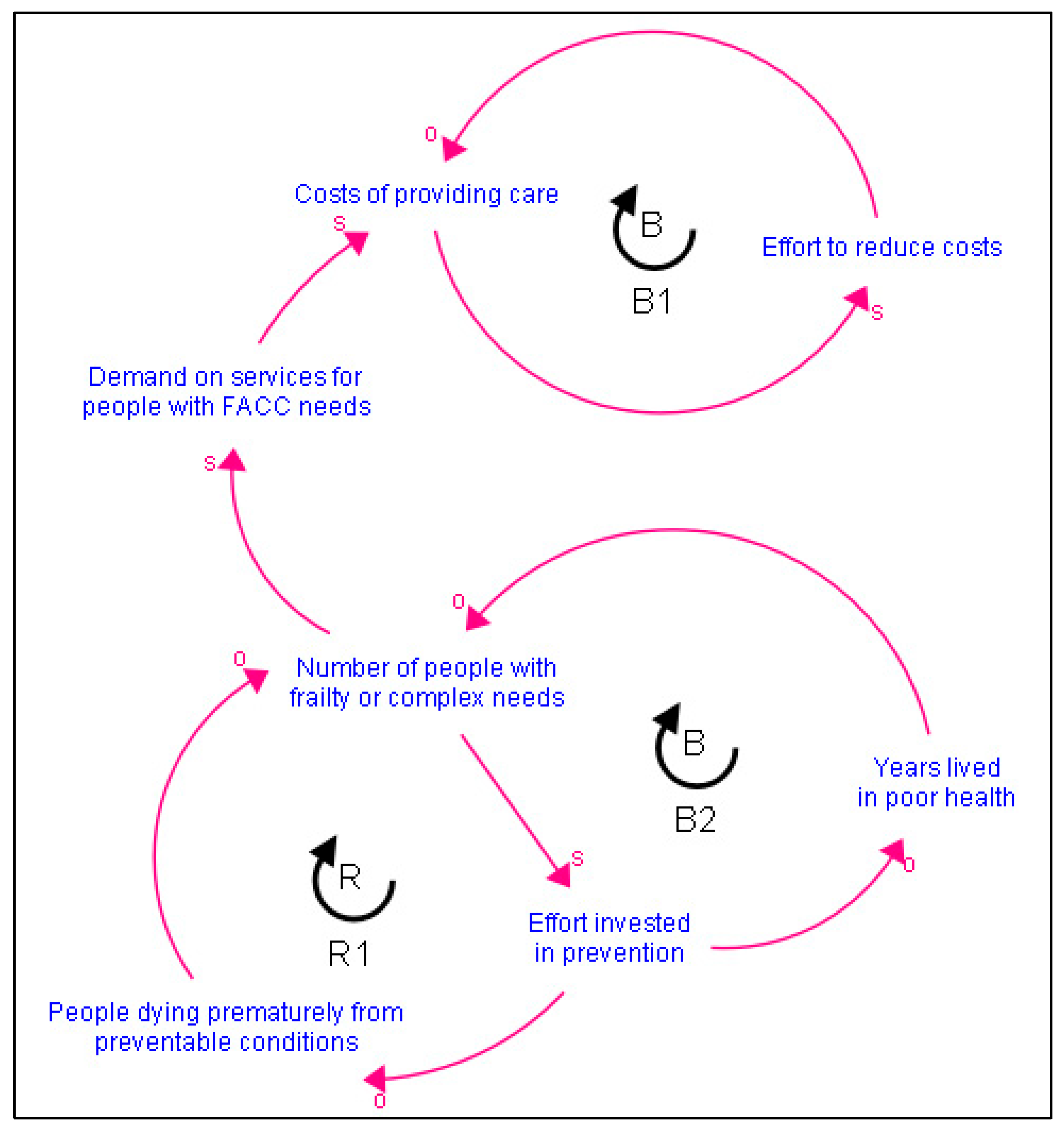
An SDM model consists of stocks (quantities or accumulations within the system, like the population), flows (rates of change into or out of stocks, such as growth and death rates), and feedback loops that can balance or reinforce the cause-and-effect relationships within the system. An example of a causal loop diagram visualising the relationships in the system has been represented in [Figure 1]. The rise in the number of people with frailty or complex care needs (FACC) represents a recognised national trend, which leads to greater demand for ASC services, driving up the costs of providing care. In response, the service providers inherently amplify cost-reduction efforts, which, in turn, help moderate overall costs. This constitutes a balancing loop (B1) where rising demand increases costs, prompting actions that aim to constrain further cost escalation. Concurrently, as the number of people with FACC needs increases, investment in prevention is likely to increase. Preventive efforts, if effective, reduce the ‘years lived in poor health’ and eventually lower the number of people with FACC needs, thus creating a second balancing loop (B2). Also, increased efforts in prevention may reduce ‘premature deaths from preventable conditions’, thereby decreasing the number of people with FACC needs and forming a reinforcing loop (R1).
While the competing influences of R1 and B2 loops cannot be quantitatively resolved (i.e., the number of people with FACC needs over time or future demand for services cannot be directly determined), their interplay provides a conceptual framework for understanding potential system behaviours in this SDM approach for this study. The purpose of the causal loop diagram is a conceptual representation of system feedback rather than a full quantitative loop dominance analysis. The final SDM model consisted of 8 stocks, 35 flows, and 52 converters, resulting in a total of 95 variables.

2.4. Targeted, Proactive Preventive Interventions

General preventative interventions are designed to benefit the entire community, regardless of individual risk levels, whereas targeted, proactive prevention focuses on specific individuals or at-risk groups. These targeted interventions aim to prevent the progression and escalation of care needs by intervening early with tailored, individualised support. Six interventions were selected for modelling across the various scenarios using SDM and were grouped into the following categories. The categorisation was developed through expert consultation based on professional judgement about the main areas where ASC demand and costs could be reduced. The categories reflect four distinct pathways through which preventive interventions could influence outcomes, such as promoting independence, reducing hospital admissions, or supporting recovery.
Within these categories, specific interventions were identified through an iterative process combining expert insight with evidence from the literature on what was effective in similar contexts. The effect sizes used in the model were not intended to represent precise estimates but are plausible ranges informed by the published literature and expert consultation. The targeted evidence review focused on identifying reliable and relevant evidence on intervention effectiveness, target populations, and outcomes. This approach ensured that the interventions and the modelled rates of reduction were grounded in both research evidence and practical nuances of what is feasible and effective within the council.
  • Improved health at 65 (these are outcomes)
Pre-retirement NHS Health Checks: In 2009, NHS England introduced population-level health checks to prevent the onset of long-term chronic conditions, such as diabetes and heart disease, through early assessment, awareness, and management of individual risk factors [24,25]. A UK Biobank matched cohort study showed that NHS Health Check attendance was associated with a reduced risk of multi-organ disease observed over 10 years, but it does not specify the age-wise impact of this programme [26].
Model assumption: In the SDM model, this intervention was represented as a shift in the initial distribution at age 65, with more people entering lower PNGs due to health checks before retirement, improving trends in underlying risk factors. The effect was assumed to build gradually over a 10-year period.
b.
Slowing progression through PNGs
(i)
Falls and related postural stability initiatives: Some key studies have demonstrated the effectiveness of targeted preventive interventions such as Hospital Elder Life Programme (HELP), environmental modifications (fall hazard reduction, assistive technology, home modifications, and education), physical exercise, and nutritional supplementation in reducing falls and physical frailty among older adults [27,28,29,30]. The reported effects include a 25–30% reduction in fall incidence and significant improvements in functional ability and balance.
(ii)
Comprehensive Geriatric Assessment (CGA): A multidimensional, multidisciplinary process performed by a team of professionals and designed to evaluate the medical, functional, social, and psychological capabilities and issues of older adults. It has been shown to reduce physical frailty in the community by 27% and unplanned hospital admissions by 17% [31,32]. In hospital settings, CGA reduced the risk of nursing home residency at 3–12 months post-discharge by 7–20% [33,34].
Model assumption: The combined effect of these interventions was represented as a reduction in progress rates to higher PNGs:
  • 10% reduction PNG3→4
  • 20% reduction PNG4→5, PNG5→9, PNG9→10
  • 30% reduction PNG10→11
This is applied across all age bands, phased in over three years from 2025.
c.
Demand Management
(i)
Reablement Services: They significantly enhanced an individual’s ability to stay at home with support, resulting in a 10% increase in home support over a three-year period. Key studies demonstrated that hospital-based reablement and improved functional abilities can reduce the need for institutional care [35,36].
(ii)
Carer and Community Support: These initiatives have led to a 20% increase in net home care over three years, and studies have highlighted the role of assistive technology and multicomponent interventions in reducing caregiving demand and delaying institutionalisation, particularly for those with dementia [37,38].
Model assumption: Since there was no robust evidence to directly link either of those interventions to reduced care home admissions, expert opinion was sought to generate conservative model assumptions. In the SDM, reablement was modelled as a 30% increase in people supported by home care with an equivalent reduction in care home admissions. Carer and community support was modelled as a 30% increase in people supported by ‘other services’ with an equivalent reduction in the reliance on home care and the net of reablement. These changes only apply to PNGs 10 and 11, affect all age bands, and are phased in over 3 years from 2025.
d.
Productivity
Implementing neighbourhood rounds has been associated with improved productivity in home care services. Supported by evidence from integrated care models, this study assumes a 10% increase in service capacity over two years across all home care provisions [39,40].

2.5. Scenario Testing

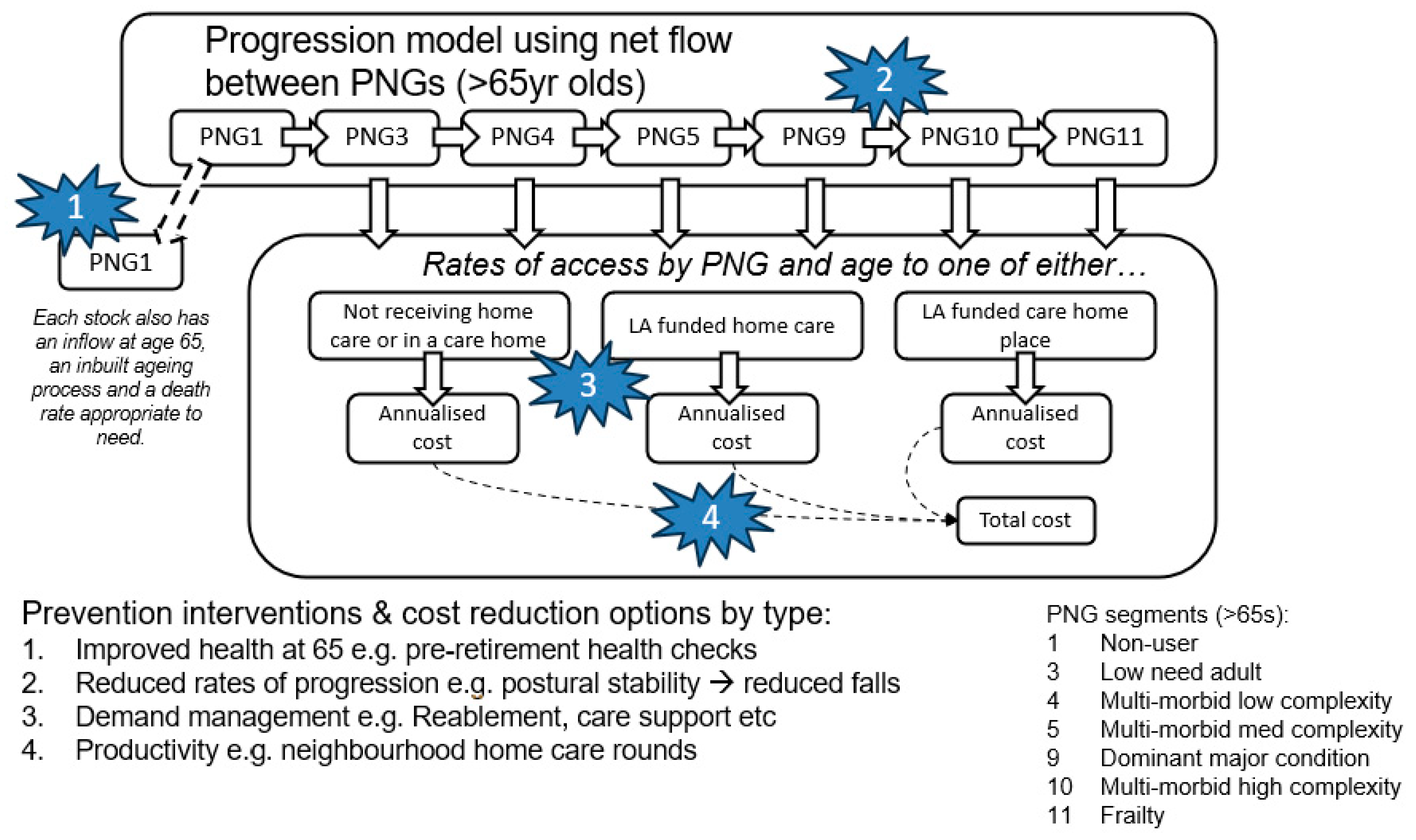
The SD model was constructed and simulated using Stella Architect Version 3.8 (isee systems, Lebanon, NH, USA). The baseline model featured an ageing chain constructed with population growth and mortality rates obtained from local and national datasets. Six scenarios were generated and tested using the SDM model, which has been illustrated in [Figure 2]. The baseline scenario assumed a ‘do nothing’ approach, with no preventive interventions implemented, while the final scenario combined multiple preventive interventions [Table 2]. The model ran for 10 years, and ASC costs were estimated for each scenario at 3-, 5-, and 10-year intervals using the ‘do nothing’ scenario as the reference point for comparison. This approach enabled the impact of multiple targeted, proactive, preventive interventions to be modelled and compared with the no-intervention scenario, with an emphasis on short-term impact.

2.6. Model Calibration

Calibration was carried out to ensure that the model reproduced observed population trends. The baseline population was derived by summing across all PNGs and compared against the Kent-housing-led population forecasts [41]. To align the trajectories, the difference was subtracted from the housing-led projections, which were subsequently used for validation. Mortality rates were initially estimated from the Primary Care Mortality Database by age group and year [42]. These were then adjusted by PNG, reflecting the consensus that mortality increases both with age and greater levels of care needs (e.g., an 85-year-old with frailty living in a care home has a higher risk than a 65-year-old with low needs living independently). Modifiers were refined iteratively until the modelled population trajectory closely matched housing-led forecasts, demonstrating agreement with observed projections.

2.7. Model Validity

The process of model validation was carried out using the framework provided by Yarnoff et al., with five distinct stages [43]. The first stage was face validation, achieved through model-building workshops with public health consultants and social care officers, alongside ongoing consultation with subject matter experts throughout the development process. The second stage was internal validation, in which a second modeller and analyst, independent from the design process, reviewed the model logic, flows, and calculations to confirm consistency and technical accuracy. Cross-validation could not be carried out as there were no directly comparable system dynamic models identified at the local authority level, but modelled population trajectories were benchmarked against housing-led forecasts, particularly the number of people reaching 65 years of age each year, providing a proxy check. The fourth stage was external validation, which compared mortality estimated with observed data from the Primary Care Mortality Database and aligned age-specific population patterns with observed projections. In addition, intervention parameters were drawn from peer-reviewed literature to ensure consistency with established evidence. Finally, predictive validation could not be performed, as the modelled interventions have not yet been implemented locally. However, the baseline population reproduced Kent housing-led forecasts with close agreements, and effect sizes derived from the academic literature support confidence in predictive performance.

2.8. Sensitivity Analysis

We conducted a sensitivity analysis on the flows between PNGs, as these inputs were considered less robust due to being derived only from only two data snapshots, which are limited in nature. A ±20% variation was applied to transition values (by age, starting PNG, and ending PNG), and 100 simulation runs were performed using Sobol Sequence sampling with a uniform distribution. Outputs were assessed for ‘Other Services’, ‘Home Care’, and ‘Care Homes’. The results showed narrow variation, with spreads of −4% to +3% for Other Support (SD 1.47%), −2 to +2% for Home Care (SD 0.91%), and −3% to +3% for Care Homes (SD 1.51%).

3. Results

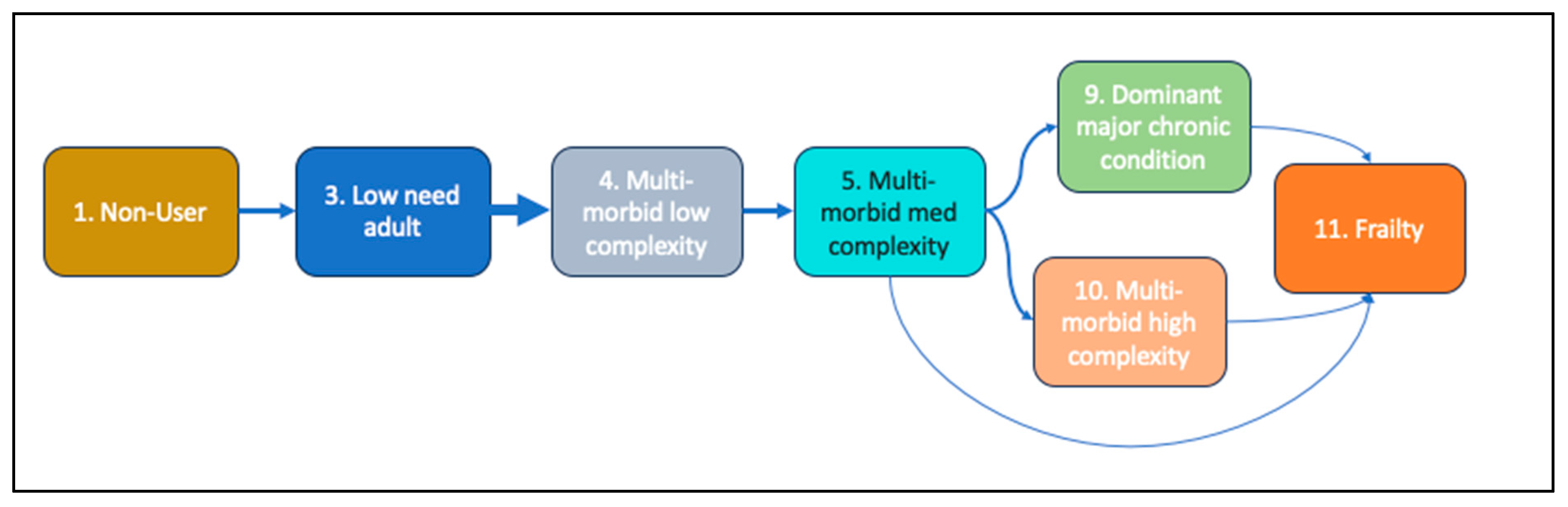
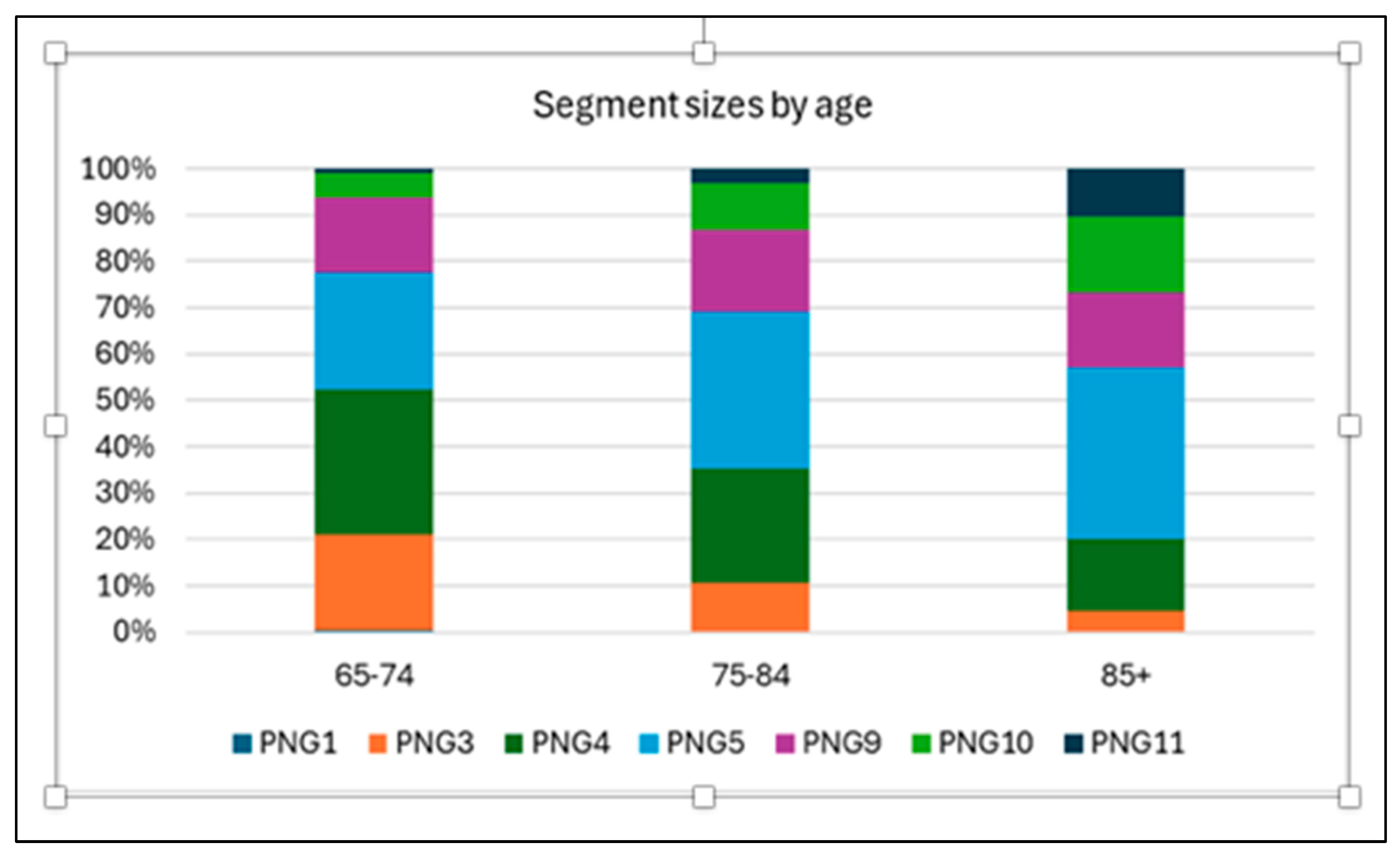
From the population segmentation using the Johns Hopkins ACG® tool, it was noted that individuals predominantly transitioned between PNGs 01, 03, 05, 09, 10, and 11 [Figure 3]. Additionally, a modest flow from PNGs 03–05 to PNG 08 was observed. This study did not consider groupings related to pregnancy, and subsequent analyses focused solely on the specified PNGs, which captured the flow of the Kent population. It was noted that PNGs 09–11 (high-complexity dominant single condition or frailty) accounted for 45% of the >85 years age band, 31% of the 75–84 years’ age band, and 22% of the 65–74 years’ age band [Figure 4].

3.1. Flow Data Findings

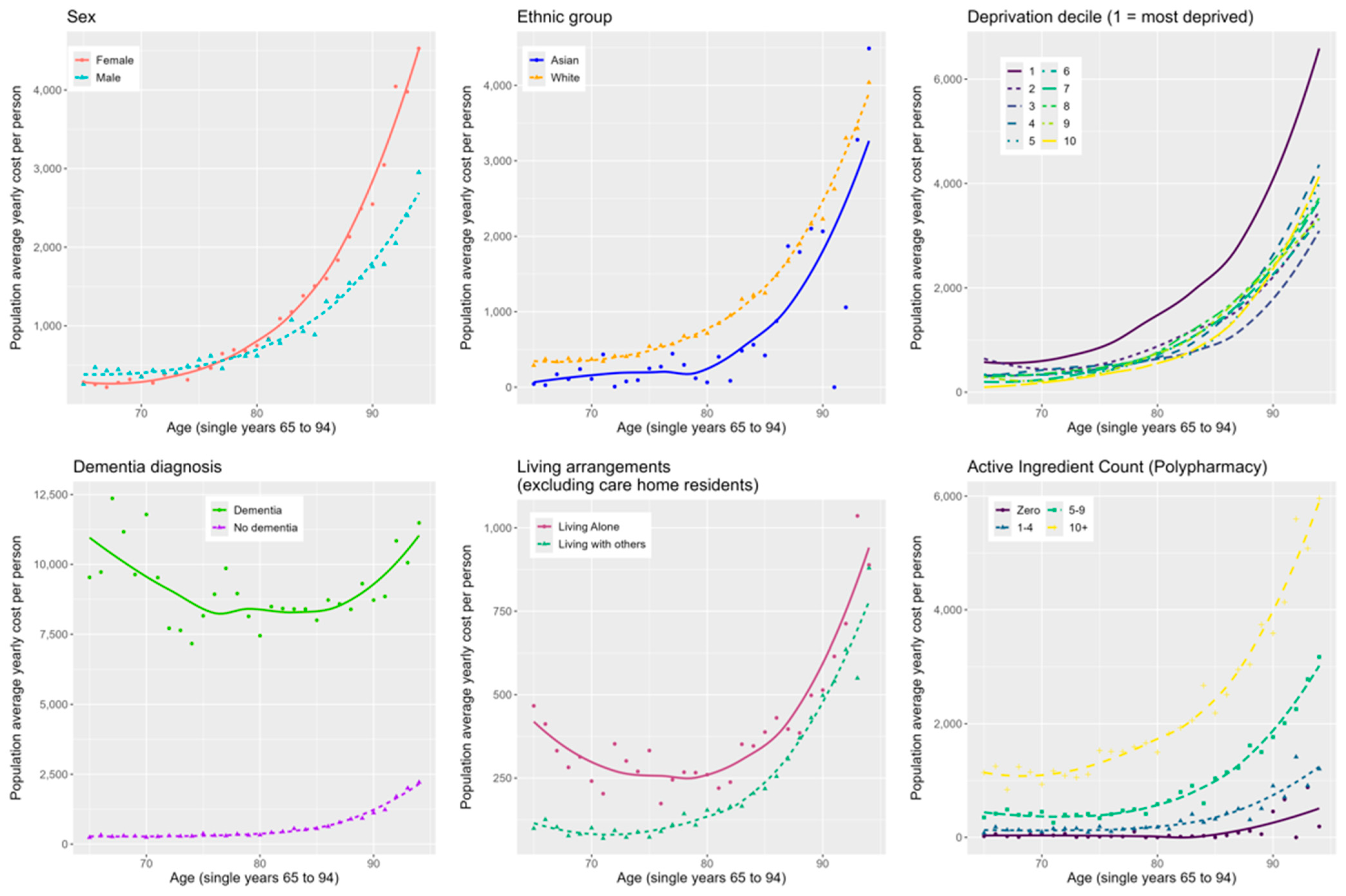
Risk factor profiling indicated that ASC costs varied according to demographic, social, and clinical characteristics. They increased exponentially, with advancing age and with higher expenditures observed in females aged 70 and above. In contrast, individuals of an Asian ethnic background exhibited lower average ASC costs. It was also noted that ASC costs were higher among individuals experiencing greater socioeconomic deprivation. The proportion of the 65+ population in the top three risk groups (PNG 09–11) was the highest in the Eastern Kent coastal districts of Thanet, Swale, and Canterbury compared with other districts in Kent (~25% to ~31%). Frailty-related indicators such as dementia, history of falls, and polypharmacy, as well as those with multiple medications, were all associated with increased costs of care. Living arrangements appeared to play a significant role, as individuals living alone had higher care costs, with this trend particularly being marked among those under 80 years [Figure 5].

3.2. PNGs Association with ASC Costs

The total over-65 population across Kent was estimated to be 319,100, with 88,700 elderly individuals (27.8%) categorised within PNGs 9–11. These groups included those with a dominant major condition (PNG 09), individuals with high-complexity multi-morbidities (PNG 10), and those whose primary condition was frailty (PNG 11). Though comprising just over a quarter of the over-65 age group, these individuals accounted for significantly higher care needs and social care spending. Of all the older adults in Kent with an active care plan, 76% of individuals belonged to PNGs 09–11. They were also associated with 80% of estimated annual ASC costs for the over-65 cohort [Table 3].

3.3. Scenario Testing Outcomes

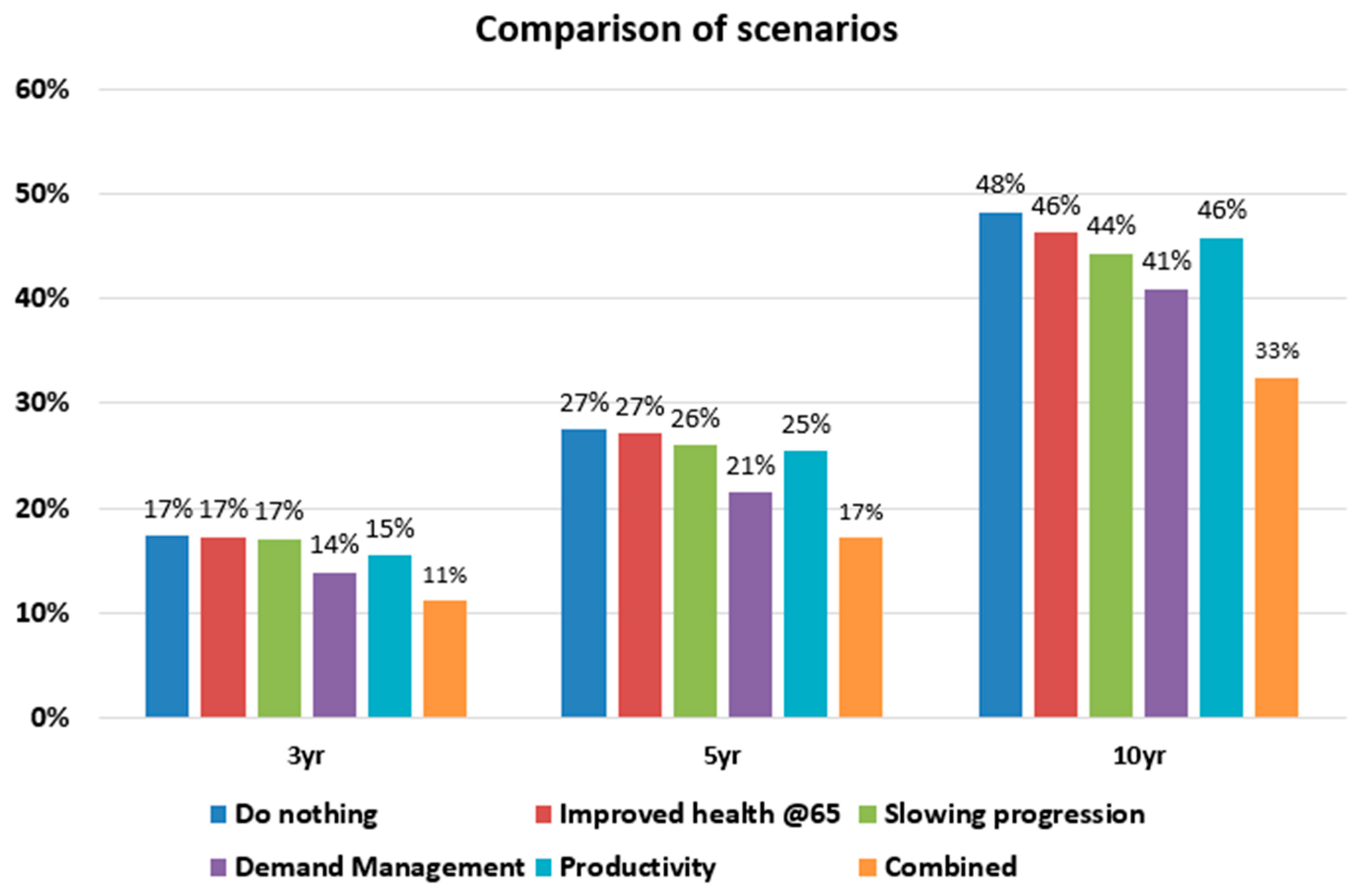
The projected cost analysis revealed significant differences in the rates of cost growth across all scenarios over 3, 5, and 10 years [Figure 6]. In the absence of any intervention (‘do nothing’ scenario), costs were expected to increase from 17% at 3 years to 27% at 5 years and reach 48% at 10 years, representing the steepest trajectory over time.
The other alternative intervention scenarios slowed the rate of cost growth compared to doing nothing. Specifically, at 10 years, the combined interventions resulted in the slowest cost growth, at 33%, followed by productivity improvements (41%), slowing progression across PNGs (44%), and improvements in both demand management and health at age 65 (46%). The percentage estimates presented should therefore be interpreted as indicative scenario outputs rather than precise forecasts. Overall, while cost increases were observed under all scenarios, the rate of growth was most attenuated with a combined approach, slowing the 10-year cost increase to 33%, compared to 48% with no intervention.

4. Discussion

Multiple factors have contributed to population ageing with a decline in fertility rates, an increase in life expectancy, and the post-World War II ‘baby boom’ which has driven the increase in the number of the over-65 population in England [44]. The extra years of life do not necessarily mean it is being spent in good health, and there is an increase in the prevalence of illness and disability, often involving complex comorbidities and difficulty in managing daily activities. Among an estimated 10 million individuals aged 65 and older, 36% of those between 65 and 74 years reported having a limiting illness or disability, increasing to 55% for individuals aged 75 and above from ONS data [45]. There is limited evidence in the literature on using tools such as Johns Hopkins ACG® to segment the population for identifying individuals with complex and long-term care needs. An older registry-based study in Norway reported that 16% of the population had a frailty flag, with 37.2% and 9% categorised in Resource Utilisation Bands (RUB) 4 and 5, respectively, similar to PNG 09–11 [46]. This KCC study is the first to segment the local population in England using the ACG® tool to inform evidence-based planning and decision making in ASC, and it showed that less than half of the over-85 population, 31% of the 75–84 age group, and 22% of the 65–74 age group belonged to PNG 09–11, indicative of complex health needs or frailty.
It is increasingly clear that ASC services will face significant challenges to cope with the demands of an ageing population, with the number of over-65s needing assistance with one or more daily living tasks projected to increase from 3.5 million to 5.2 million by 2038, representing a 48% increase [5]. The British Social Attitudes survey conducted in 2024 revealed that 53% of respondents were ‘very’ or ‘quite’ dissatisfied with social care in England [47]. Given these findings and public sentiment, it is prudent to understand the risk factors contributing to increased service use and costs. Targeting preventive interventions to those at risk can help alleviate the challenges posed by an ageing population. In this study, some observed risk factors include advancing age, females, and frailty indicators like dementia, mirroring findings from a retrospective cohort study conducted in two London boroughs on factors associated with long-term ASC access over a 12-month period [48]. Individuals in socioeconomically deprived areas were found to be at greater risk of higher ASC usage and costs; however, this is expected given that LA-funded social care is means-tested. Lower ASC costs seen among Asian ethnic groups may reflect a stronger reliance on informal family care and less use of formal care services, as highlighted in recent UK research. Data from the UK Household Longitudinal Study show that Pakistani and Bangladeshi carers are more likely to provide care within their household and for longer hours each week than White British carers, indicating greater reliance on unpaid family support [49].
In the UK, some studies and a systematic review have assessed the impact of multi-morbidity and frailty on healthcare utilisation costs, and significant associations were observed [50,51,52]. Chukwusa et al. used individual-level linked health and social care data across local authorities in England and reported that a higher prevalence of multiple long-term health conditions in the over-65 population increased social care expenditure [53]. To the best of our knowledge, this KCC study is the first in the UK to utilise linked health and social care data to assess the population-level association between multimorbidity and frailty and their system-wide impact on adult social care costs. One of the key findings in this study was that over a quarter of the over-65 population belonged to PNG 09–11 groups, representing about three quarters of the active care plans in the county, which translated to 80% of the total ASC annualised spend on the cohort. This observation should be interpreted with caution, as the costs reflect 2024 expenditure levels incurred by KCC, and minor discrepancies between the KMCR and Mosaic datasets may have influenced the analyses.
A systematic review by Cassidy et al. has reported that there is a growing body of research on the application of SDM to model health care systems for informing policy in a wide range of settings, with predominant focus on emergency and acute care, elderly care, and long-term care services primarily in high-income countries like England and Canada, with few studies carried out in low-income countries like Indonesia, Afghanistan, and Uganda [54]. In the existing literature, the SDM approach has been used to test the impact and potential spill-over effects, such as changes in health outcomes, economic consequences, and shifts in resource allocation, of alternative policy options or interventions, prior to implementation on service indicators. Desai at al. employed SDM to simulate the demand and delivery of ASC services in Hampshire County over five years, focusing on critical need patients and promoting home-based care over residential options [16]. This approach reduced ASC demand, and cost-saving policies, such as employing more unqualified care workers, were tested, though legal and practical challenges were acknowledged [16].
KCC’s ASC Prevention Framework incorporates evidence-based early interventions to address ASC demand and costs effectively. Our analysis revealed that, without preventive intervention, ASC costs were projected to rise by 48% over 10 years (equivalent to a 4% compound annual growth rate). This estimate is broadly in line with the Health Foundation’s ‘do nothing’ scenario, which projects a 3.1% annual uplift in funding needed through 2034/35 to meet increasing demand and costs, but it does not account for the impact of preventive interventions or cost-reduction innovations like digitalisation or AI-scheduling [55]. However, when combined preventive measures were implemented, our model showed that cost growth could be slowed to 33%. The exploratory nature of these projections and the uncertainty surrounding long-term demographic and intervention effects need to be emphasised and considered while interpreting the results. These findings are consistent with observations from the study conducted by Desai et al. [16], which suggested that strategic care delivery and workforce adjustments can mitigate demand and yield cost savings. Desai et al. modelled future demand for older people’s social care services using an SDM approach to simulate client flows through the care system over 5 years. It used administrative social care data from the Hampshire County Council social care data and segmented clients by age (65–74, 75–84, 85+), referral source (acute NHS/other source), and level of need (critical/substantial) [16]. This study utilised linked health and social care data to model the impact of preventive interventions on ASC demand and expenditure over 10 years and inform the ASC Prevention Framework by segmenting the population into PNGs using the Johns Hopkins ACG® risk stratification tool. They underscore the framework’s importance of integrated, preventive strategies in managing social care services.
Most local authorities in England have access to their local data like the ones used in our study and they do work with the local NHS to segment their population for targeted interventions. Hence, based on our paper and as part of our learning from peers, the authorities could replicate our modelling attempt for their local population.

Strengths and Limitations

This KCC study is novel in its use of linked health and social care data, employing population segmentation to identify risk factors for ASC demand and costs. It was also the first to apply the SDM approach to explore the long-term implications of preventive interventions on projected ASC costs over a 10-year time period, demonstrating the value of SDM in policy planning. Despite this, the model has some limitations. As stated earlier, predictive validation could not be performed as the modelled interventions have not been implemented. Hence, the model only provides exploratory insights to support strategic planning. Due to the narrow sensitivity analysis, there is always potential for additional structural uncertainty. Although the different formal care costs were included in this study, the factor of unpaid carers is not taken into account, which may impact the comprehensiveness of the care dynamics. Unpaid carers play a key role, and their importance cannot be underestimated. Due to a lack of available data, this was not included and we recommend that any future modelling work incorporate informal care dynamics. Our current model focuses specifically on local authority-funded services due to data availability in the KMCR. Such limitations, including missing parameters and the inability to simulate future system innovations, are typical in modelling [14,56,57,58]. Similar to other studies, this model did not cover potential advancements in service delivery or social care sub-sector behaviours due to inherent model boundaries [58,59]. The limitations of how preventive interventions were selected and used for modelling need to be noted. The effect sizes used in the model were not meant to be exact estimates but rather plausible ranges guided by existing research and expert opinion. The model should be interpreted as a scenario-exploration tool rather than a deterministic forecasting model. Our findings provide exploratory insights to inform strategic discussion rather than definitive evidence of intervention effectiveness.

5. Conclusions

This study demonstrates the value of the SDM approach for understanding and projecting future demand and costs in ASC. Using real-world linked health and social care data and expert-informed assumptions, the analysis highlighted the significant financial pressures facing ASC if no additional interventions are implemented, with costs projected to rise sharply over the next decade. Furthermore, the findings also indicate that the introduction of targeted, proactive, preventive strategies can moderate this growth and support more sustainable service delivery. Due to the various limitations and model constraints, whilst the findings may aid in policy development, they need to be interpreted with caution until further studies emerge on this subject. Our findings underscore the importance of integrating prevention into social care policy while also recognising the ongoing need for adaptation and robust evaluation as new interventions are introduced. Continued investment in data collection, integration, and modelling capacity will be essential to inform evidence-based decision-making in this rapidly shifting ASC sector.

Author Contributions

Conceptualisation—S.C., G.W., M.C., P.L. and A.B.; Project Administration—A.R.; Supervision—S.C., G.W. and M.C.; Methodology—A.B. and P.L.; Data Analysis and Curation—O.V., A.H. and A.B.; Writing—Original Draft Preparation—A.R.; Writing—Reviewing and Editing—S.C., G.W., M.C., P.B., A.G., A.B., P.L., A.R. and A.H.; Policy Advice and Strategic Input—P.B. and A.G. All authors have read and agreed to the published version of the manuscript.

Funding

This research was not part of any dedicated funding support and did not receive any external funding.

Institutional Review Board Statement

Not applicable.

Informed Consent Statement

Not applicable.

Data Availability Statement

The data presented in this study are available on request from the corresponding author due to data protection requirements.

Acknowledgments

The authors thank colleagues from the Adult Social Care team, Finance team, and wider Public Health team at Kent County Council for their support and valuable contributions to this work.

Conflicts of Interest

A.B., and P.L. are part of the Whole Systems Partnership, which provides support for partnership development and system redesign in health and social care, and one of the approaches they use is system dynamics modelling. S.C., G.W., M.C., P.B., A.R., O.V., A.H., and A.G. have no conflicts of interest to declare.

References

  1. Harper, S.; Klien, E. Forty Years of Global Action on Ageing: What Has Been Achieved? Popul. Ageing 2022, 15, 1–5. [Google Scholar] [CrossRef] [PubMed]
  2. Office for National Statistics. National Population Projections: 2018-Based. 2018. Available online: https://www.ons.gov.uk/peoplepopulationandcommunity/populationandmigration/populationprojections/bulletins/nationalpopulationprojections/2018based (accessed on 19 March 2026).
  3. Nikolova, S.; Heaven, A.; Hulme, C.; West, R.; Pendleton, N.; Humphrey, S.; Cundill, B.; Clegg, A. Social Care Costs for Community-dwelling Older People Living with Frailty. Health Soc. Care Comm. 2022, 30, e804–e811. [Google Scholar] [CrossRef] [PubMed]
  4. Kingston, A.; Wittenberg, R.; Hu, B.; Jagger, C. Projections of Dependency and Associated Social Care Expenditure for the Older Population in England to 2038: Effect of Varying Disability Progression. Age Ageing 2022, 51, afac158. [Google Scholar] [CrossRef] [PubMed]
  5. Hu, B.; Hancock, R.; Wittenberg, R. Projections of Adult Social Care Demand and Expenditure 2018 to 2038; Care Policy and Evaluation Centre: London, UK, 2020. [Google Scholar]
  6. Department of Health and Social Care. Public Health Grants to Local Authorities: 2024 to 2025. Available online: https://www.gov.uk/government/publications/public-health-grants-to-local-authorities-2024-to-2025 (accessed on 19 March 2026).
  7. Department of Health. Care and Support Statutory Guidance Issued Under the Care Act 2014; London. Available online: https://www.gov.uk/government/publications/care-act-statutory-guidance/care-and-support-statutory-guidance (accessed on 19 March 2026).
  8. Burn, E.; Redgate, S.; Needham, C.; Peckham, S. Implementing England’s Care Act 2014: Was the Act a Success and When Will We Know? Int. J. Care Caring 2024, 8, 47–63. [Google Scholar] [CrossRef]
  9. The King’s Fund. Key Facts and Figures About Adult Social Care. 2025. Available online: https://www.kingsfund.org.uk/insight-and-analysis/data-and-charts/key-facts-figures-adult-social-care (accessed on 19 March 2026).
  10. LGA; ADASS; Newton; Atlantic Customer Solutions. The Future of Prevention: The Financial Imperative. Available online: https://www.futureofprevention.com (accessed on 19 March 2026).
  11. LGA; ADASS; Social Care Institute for Excellence; Mencap; Skills for Care; Think Local Act Personal; The Care Provider Alliance; Social Care Future. Earlier Action and Support: The Case for Prevention in Adult Social Care and Beyond. 2024. Available online: https://www.local.gov.uk/publications/earlier-action-and-support-case-prevention-adult-social-care-and-beyond (accessed on 19 March 2026).
  12. Kent County Council. Population and Census. Available online: https://www.kent.gov.uk/about-the-council/information-and-data/facts-and-figures-about-kent/population-and-census (accessed on 19 March 2026).
  13. Homer, J.B.; Hirsch, G.B. System Dynamics Modeling for Public Health: Background and Opportunities. Am. J. Public Health 2006, 96, 452–458. [Google Scholar] [CrossRef]
  14. Ansah, J.P.; Eberlein, R.L.; Love, S.R.; Bautista, M.A.; Thompson, J.P.; Malhotra, R.; Matchar, D.B. Implications of Long-Term Care Capacity Response Policies for an Aging Population: A Simulation Analysis. Health Policy 2014, 116, 105–113. [Google Scholar] [CrossRef]
  15. Brailsford, S.C.; Lattimer, V.A.; Tarnaras, P.; Turnbull, J.C. Emergency and On-Demand Health Care: Modelling a Large Complex System. J. Oper. Res. Soc. 2004, 55, 34–42. [Google Scholar] [CrossRef]
  16. Desai, M.S.; Penn, M.L.; Brailsford, S.; Chipulu, M. Modelling of Hampshire Adult Services—Gearing up for Future Demands. Health Care Manag. Sci. 2008, 11, 167–176. [Google Scholar] [CrossRef]
  17. Haslett, T.; Walker, B.C. The Dynamics of Local Rules in Hospital Admission Processes. Aust. Health Rev. 2003, 26, 98. [Google Scholar] [CrossRef][Green Version]
  18. George, A.; Badrinath, P.; Newton, S.; Hooper, A.; Bhavsar, A.; Chambers, M.; Lacey, P.; Kulkarni-Johnston, R.; Whitlow, H. The Population Health Impacts of Changes to the National Health Service Health Check Programme: A System Dynamics Modelling Approach in a Local Authority in England. Systems 2025, 13, 101. [Google Scholar] [CrossRef]
  19. George, A.; Badrinath, P.; Lacey, P.; Harwood, C.; Gray, A.; Turner, P.; Springer, D. Use of System Dynamics Modelling for Evidence-Based Decision Making in Public Health Practice. Systems 2023, 11, 247. [Google Scholar] [CrossRef]
  20. George, A.; Lacey, P.; Badrinath, P.; Gray, A.; Turner, P.; Harwood, C.; Gregson, M. Planning for Healthcare Services during the COVID-19 Pandemic in the Southeast of England: A System Dynamics Modelling Approach. BMJ Open 2023, 13, e072975. [Google Scholar] [CrossRef]
  21. East Kent Extends Remote Monitoring Pilot for Complex and Frail Patients after Positive Feedback 2024. Available online: https://www.graphnethealth.com/knowledge-hub/news/east-kent-extends-remote-monitoring-pilot-for-complex-and-frail-patients-after-positive-feedback? (accessed on 19 March 2026).
  22. Tan, J.K.; Zhang, X.; Cheng, D.; Leong, I.Y.O.; Wong, C.S.; Tey, J.; Loh, S.C.; Soh, E.F.; Lim, W.Y. Using the Johns Hopkins ACG Case-Mix System for Population Segmentation in a Hospital-Based Adult Patient Population in Singapore. BMJ Open 2023, 13, e062786. [Google Scholar] [CrossRef]
  23. NHS Digital. National Data Opt-Out. Available online: https://digital.nhs.uk/services/national-data-opt-out (accessed on 19 March 2026).
  24. Office for Health Improvement & Disparities. Preventing Illness and Improving Health for All: A Review of the NHS Health Check Programme and Recommendations. Available online: https://www.gov.uk/government/publications/nhs-health-check-programme-review/preventing-illness-and-improving-health-for-all-a-review-of-the-nhs-health-check-programme-and-recommendations (accessed on 19 March 2026).
  25. Office for Health Improvement & Disparities. NHS Health Checks: Applying All Our Health. Available online: https://www.gov.uk/government/publications/nhs-health-checks-applying-all-our-health/nhs-health-checks-applying-all-our-health (accessed on 19 March 2026).
  26. McCracken, C.; Raisi-Estabragh, Z.; Szabo, L.; Robson, J.; Raman, B.; Topiwala, A.; Roca-Fernández, A.; Husain, M.; Petersen, S.E.; Neubauer, S.; et al. NHS Health Check Attendance Is Associated with Reduced Multiorgan Disease Risk: A Matched Cohort Study in the UK Biobank. BMC Med. 2024, 22, 1. [Google Scholar] [CrossRef]
  27. Hshieh, T.T.; Yang, T.; Gartaganis, S.L.; Yue, J.; Inouye, S.K. Hospital Elder Life Program: Systematic Review and Meta-Analysis of Effectiveness. Am. J. Geriatr. Psychiatry 2018, 26, 1015–1033. [Google Scholar] [CrossRef]
  28. Clemson, L.; Stark, S.; Pighills, A.C.; Fairhall, N.J.; Lamb, S.E.; Ali, J.; Sherrington, C. Environmental Interventions for Preventing Falls in Older People Living in the Community. Cochrane Database Syst. Rev. 2023, 2023, CD013258. [Google Scholar] [CrossRef]
  29. De Labra, C.; Guimaraes-Pinheiro, C.; Maseda, A.; Lorenzo, T.; Millán-Calenti, J.C. Effects of Physical Exercise Interventions in Frail Older Adults: A Systematic Review of Randomized Controlled Trials. BMC Geriatr. 2015, 15, 154. [Google Scholar] [CrossRef] [PubMed]
  30. Hewitt, J.; Goodall, S.; Clemson, L.; Henwood, T.; Refshauge, K. Progressive Resistance and Balance Training for Falls Prevention in Long-Term Residential Aged Care: A Cluster Randomized Trial of the Sunbeam Program. J. Am. Med. Dir. Assoc. 2018, 19, 361–369. [Google Scholar] [CrossRef] [PubMed]
  31. Veronese, N.; Custodero, C.; Demurtas, J.; Smith, L.; Barbagallo, M.; Maggi, S.; Cella, A.; Vanacore, N.; Aprile, P.L.; Ferrucci, L.; et al. Comprehensive Geriatric Assessment in Older People: An Umbrella Review of Health Outcomes. Age Ageing 2022, 51, afac104. [Google Scholar] [CrossRef]
  32. Briggs, R.; McDonough, A.; Ellis, G.; Bennett, K.; O’Neill, D.; Robinson, D. Comprehensive Geriatric Assessment for Community-Dwelling, High-Risk, Frail, Older People. Cochrane Database Syst. Rev. 2022, 2022, CD012705. [Google Scholar] [CrossRef]
  33. Ellis, G.; Gardner, M.; Tsiachristas, A.; Langhorne, P.; Burke, O.; Harwood, R.H.; Conroy, S.P.; Kircher, T.; Somme, D.; Saltvedt, I.; et al. Comprehensive Geriatric Assessment for Older Adults Admitted to Hospital. Cochrane Database Syst. Rev. 2017, 2017, CD006211. [Google Scholar] [CrossRef]
  34. Gardner, M.; Shepperd, S.; Godfrey, M.; Mäkelä, P.; Tsiachristas, A.; Singh-Mehta, A.; Ellis, G.; Khanna, P.; Langhorne, P.; Makin, S.; et al. Comprehensive Geriatric Assessment in Hospital and Hospital-at-Home Settings: A Mixed-Methods Study. Health Serv. Deliv. Res. 2019, 7, 1–206. [Google Scholar] [CrossRef]
  35. Peyrusqué, E.; Kergoat, M.-J.; Filali-Mouhim, A.; Veillette, N.; Fonseca, R.; Sirois, M.-J.; Aubertin-Leheudre, M. Effect of a Pragmatic Exercise Intervention Pilot Study on Preventing Functional and Physical Decline in Hospitalized Older Adults. Med. Sci. Sports Exerc. 2025, 57, 1570–1578. [Google Scholar] [CrossRef]
  36. Courtney, M.D.; Edwards, H.E.; Chang, A.M.; Parker, A.W.; Finlayson, K.; Bradbury, C.; Nielsen, Z. Improved Functional Ability and Independence in Activities of Daily Living for Older Adults at High Risk of Hospital Readmission: A Randomized Controlled Trial. Eval. Clin. Pract. 2012, 18, 128–134. [Google Scholar] [CrossRef] [PubMed]
  37. Marasinghe, K.M.; Chaurasia, A.; Adil, M.; Liu, Q.Y.; Nur, T.I.; Oremus, M. The Impact of Assistive Devices on Community-Dwelling Older Adults and Their Informal Caregivers: A Systematic Review. BMC Geriatr. 2022, 22, 897. [Google Scholar] [CrossRef]
  38. Dawson, A.; Bowes, A.; Kelly, F.; Velzke, K.; Ward, R. Evidence of What Works to Support and Sustain Care at Home for People with Dementia: A Literature Review with a Systematic Approach. BMC Geriatr. 2015, 15, 59. [Google Scholar] [CrossRef]
  39. Care City. Scheduling Matters: Improving Scheduling of District Nurses. Available online: https://www.carecity.org/projects/scheduling-matters/ (accessed on 19 March 2026).
  40. National Association of Primary Care. Creating Integrated Neighbourhood Teams. 2024. Available online: https://napc.co.uk/wp-content/uploads/2025/02/Creating-Integrated-Neighbourhood-Teams_Feb25.pdf (accessed on 19 March 2026).
  41. Kent County Council. Kent Councty Council Housing-Led Forecasts. 2021. Available online: https://www.kent.gov.uk/__data/assets/pdf_file/0005/211649/KCC-housing-led-summary.pdf (accessed on 19 March 2026).
  42. Kent County Council; Kent Public Health Observatory. Counts of Deaths by Broad Age Group and Calendar Year 2021 to 2023, 2025. (Unpublished).
  43. Yarnoff, B.; Honeycutt, A.; Bradley, C.; Khavjou, O.; Bates, L.; Bass, S.; Kaufmann, R.; Barker, L.; Briss, P. Validation of the Prevention Impacts Simulation Model (PRISM). Prev. Chronic Dis. 2021, 18, E09. [Google Scholar] [CrossRef]
  44. Department of Health and Social Care. Evidence Review for Adult Social Care Reform: Summary Report. 2021. Available online: https://www.gov.uk/government/publications/evidence-review-for-adult-social-care-reform/evidence-review-for-adult-social-care-reform-summary-report? (accessed on 19 March 2026).
  45. Office for National Statistics. Weighted and Un-Weighted Count by Extent of Activity Limitation from Annual Population Survey (APS), UK, 2014 to 2016. 2018. Available online: https://www.ons.gov.uk/peoplepopulationandcommunity/healthandsocialcare/disability/adhocs/008832weightedandunweightedcountbyextentofactivitylimitationfromannualpopulationsurveyapsuk2014to2016 (accessed on 19 March 2026).
  46. Hosar, R.; Steinsbekk, A. Identifying Individuals with Complex and Long-Term Health-Care Needs Using the Johns Hopkins Adjusted Clinical Groups System: A Comparison of Data from Primary and Specialist Health Care. Scand. J. Public Health 2024, 52, 607–615. [Google Scholar] [CrossRef]
  47. Taylor, B.; Lobont, C.; Dayan, M.; Leonora, M.; Jefferies, D.; Wellings, D. Public Satisfaction with the NHS and Social Care in 2024: Results from the British Social Attitudes Survey; The King’s Fund and Nuffield Trust: London, UK, 2025. [Google Scholar]
  48. Nakubulwa, M.; Junghans, C.; Novov, V.; Lyons-Amos, C.; Lovett, D.; Majeed, A.; Aylin, P.; Woodcock, T. Factors Associated with Accessing Long-Term Adult Social Care in People Aged 75 and over: A Retrospective Cohort Study. Age Ageing 2022, 51, afac038. [Google Scholar] [CrossRef] [PubMed]
  49. Wells, W.; Xue, B.; Lacey, R.; McMunn, A. Differences by Ethnicity in the Association between Unpaid Caring and Health Trajectories over 10 Years in the UK Household Longitudinal Study. J. Epidemiol. Community Health 2025, 79, 94–101. [Google Scholar] [CrossRef] [PubMed]
  50. Faitna, P.; Bottle, A.; Klaber, B.; Aylin, P.P. Has Multimorbidity and Frailty in Adult Hospital Admissions Changed over the Last 15 Years? A Retrospective Study of 107 Million Admissions in England. BMC Med. 2024, 22, 369. [Google Scholar] [CrossRef]
  51. Edwards, S.; Evans, M.; Ritchie, C.; Hahn-Pedersen, J.H.; Chan, M.S.; Bray, B.D.; Clark, A.; Wichmann, C.A.; Trepel, D. The Associations between Multimorbidity, Healthcare Resource Utilisation and Costs in Individuals with Alzheimer’s Disease Dementia. Aging Health Res. 2025, 5, 100234. [Google Scholar] [CrossRef]
  52. Soley-Bori, M.; Ashworth, M.; Bisquera, A.; Dodhia, H.; Lynch, R.; Wang, Y.; Fox-Rushby, J. Impact of Multimorbidity on Healthcare Costs and Utilisation: A Systematic Review of the UK Literature. Br. J. Gen. Pract. 2021, 71, e39–e46. [Google Scholar] [CrossRef]
  53. Chukwusa, E.; Font-Gilabert, P.; Manthorpe, J.; Healey, A. The Association between Social Care Expenditure and Multiple-Long Term Conditions: A Population-Based Area-Level Analysis. J. Multimorb. Comorbidity 2023, 13, 26335565231208994. [Google Scholar] [CrossRef] [PubMed]
  54. Cassidy, R.; Singh, N.S.; Schiratti, P.-R.; Semwanga, A.; Binyaruka, P.; Sachingongu, N.; Chama-Chiliba, C.M.; Chalabi, Z.; Borghi, J.; Blanchet, K. Mathematical Modelling for Health Systems Research: A Systematic Review of System Dynamics and Agent-Based Models. BMC Health Serv. Res. 2019, 19, 845. [Google Scholar] [CrossRef]
  55. Stevenson, G.; Elliott, J.; Rachet-Jacquet, L.; Allen, L.; Sameen, H. Adult Social Care Funding Pressures: 2023–35; The Health Foundation: London, UK, 2025. [Google Scholar]
  56. Mielczarek, B.; Zabawa, J. Modeling Healthcare Demand Using a Hybrid Simulation Approach; IEEE Press: Piscataway, NJ, USA, 2016; pp. 1535–1546. [Google Scholar]
  57. Cepoiu-Martin, M.; Bischak, D.P. Policy Choices in Dementia Care—An Exploratory Analysis of the ALberta Continuing Care System (ACCS) Using System Dynamics. Eval. Clin. Pract. 2018, 24, 278–284. [Google Scholar] [CrossRef]
  58. Rashwan, W.; Abo-Hamad, W.; Arisha, A. A System Dynamics View of the Acute Bed Blockage Problem in the Irish Healthcare System. Eur. J. Oper. Res. 2015, 247, 276–293. [Google Scholar] [CrossRef]
  59. Andrade, L.D.; Lynch, C.; Carvalho, E.; Rodrigues, C.G.; Vissoci, J.R.N.; Passos, G.F.; Pietrobon, R.; Nihei, O.K.; De Barros Carvalho, M.D. System Dynamics Modeling in the Evaluation of Delays of Care in ST-Segment Elevation Myocardial Infarction Patients within a Tiered Health System. PLoS ONE 2014, 9, e103577. [Google Scholar] [CrossRef]
Figure 1. Causal Loop Diagram showing relationships between FACC needs and Prevention.
Applsci 16 04436 g001
Figure 2. System Dynamics Model of Care Progression, Costs, and Preventive Interventions in Older Adults.
Applsci 16 04436 g002
Figure 3. Typical Patient Needs Groups (PNG) Progression in Adults.
Applsci 16 04436 g003
Figure 4. Distribution of Patient Needs Groups (PNG) by Age Bands.
Applsci 16 04436 g004
Figure 5. Risk factors associated with ASC Costs.
Applsci 16 04436 g005
Figure 6. Comparison of scenario-based cost reduction in ASC costs over 3, 5, and 10 years.
Applsci 16 04436 g006
Table 1. Johns Hopkins ACG Tool—Patient Needs Groups Classification and Holistic Profiling.
PNGAverage AgeKey ConditionsMedication UseMental Health/Behavioural IssuesFrailty/Functional IssuesSocial Need Markers
01 No recorded healthcare utilisation (no claims or visits)
02Child
(Excluded)
03 Few or no chronic conditions
0450 yearsHypertension w/o complications (24%)
Lipid metabolism disorders (11%)
Degenerative joint disease (12%)
Cardiovascular disease medication (35%)
Psychiatric/Behavioural medication (21%)
Gastrointestinal/Hepatic medication (23%)
Infections Medication (22%)
Typically taking 0–3 recent medications
Depression (15%)
Anxiety (14%)
0566 yearsHypertension w/o complications (45%)
Lipid metabolism disorders (21%)
Cardiac arrhythmia (13%)
Degenerative joint disease (28%)
Cardiovascular disease medication (67%)
Endocrine/Metabolic Medication (29%)
Psychiatric/Behavioural medication (30%)
Infections medication (40%)
Pain Medication (35%)
Typically taking 2–6 recent medications
Depression (19%)
Anxiety (15%)
Low back pain (13%)
MSK signs and symptoms 11%
06Pregnancy (Excluded)
07Pregnancy (Excluded)
0843 yearsCardio-vascular (67%)
Psychosocial (66%)
Musculo-skeletal (55.4%)
Neurologic (43.8%)
Psychiatric/Behavioural medication (78%)
Cardiovascular disease medication (76%)
Gastrointestinal/Hepatic medication (53%)
Major depression (32%)
Depression (28%)
Anxiety (15%)
Personality disorders (10%)
09 60 yearsHypertension w/o complications (38%)
Lipid metabolism disorders (18%)
Cardiac arrhythmia (8.5%)
Degenerative joint disease (23%)
Cardiovascular disease medication (60%)
Endocrine/Metabolic Medication (39%)
Psychiatric/Behavioural medication (35%)
Gastrointestinal/Hepatic Medication (47%)
Infections medication (36%)
Pain Medication (34%)
Typically taking 1–7 recent medications
Depression (17%)
Anxiety (13%)
Neurologic signs and symptoms (19%)
Low back pain (11%)
MSK Signs and Symptoms
1075 yearsHypertension w/o complications (60%)
Lipid metabolism disorders (30%)
Acute MI (16%)
IHD (excluding acute MI) (28%)
Stroke (26%)
Degenerative joint disease (39%)
Cardiovascular disease medication (88%)
Endocrine/Metabolic Medication (45%)
Psychiatric/Behavioural medication (46%)
Gastrointestinal/Hepatic Medication (73%)
Infections medication (59%)
Respiratory medication (41%)
Pain Medication (54%)
Typically taking 5–11 recent medications
Depression (24%)
Anxiety (14%)
Neurologic signs and symptoms (30%)
Low back pain (19%)
MSK Signs and Symptoms (16%)
Falls (4.4%)
Dementia (6.4%)
Social connection (4.4%)
1183 yearsHypertension w/o complications (62%)
Lipid metabolism disorders (28%)
Cardiac arrhythmia (27%)
Acute MI (16%)
IHD (excluding acute MI) (28%)
Stroke (26%)
Degenerative joint disease (39%)
Urinary Tract Infection (23%)
Urinary symptoms (22%)
Cardiovascular disease medication (85%)
Endocrine/Metabolic Medication (42%)
Psychiatric/Behavioural medication (53%)
Gastrointestinal/Hepatic Medication (78%)
Infections medication (64%)
Respiratory medication (34%)
Pain Medication (69%)
Typically taking 5–11 recent medications
Depression (21%)
Anxiety (11%)
Neurologic signs and symptoms (70%)
Falls (53%)
Dementia (50%) Difficult walking (45%)
Incontinence (41%)
Absence of faecal control (22%)
Loss of weight (15%)
Sleep problems (15%)
Debility and undue fatigue (55%)
Family and social problems (11%)
Social connection (26%)
PNG01—Non-user; PNG02—Low need-Child; PNG03—Low-need Adult; PNG04—Multimorbidity low complexity; PNG05—Multimorbidity medium complexity; PNG06—Pregnancy low complexity; PNG07—Pregnancy high complexity; PNG08—Dominant psychiatric condition (derived from a subsequent data extraction cycle); PNG09—dominant major chronic condition; PNG10—Multimorbidity high complexity; PNG11—Frailty.
Table 2. Summary of Scenarios Tested in the Adult Social Care SD model.
ScenarioInterventionsType of Intervention
1Do nothingNo intervention
2Improved healthPre-retirement NHS health checks at 65
3Slowing progression through PNGsFalls and Postural Stability Initiatives
Comprehensive Geriatric Assessment (CGA)
4Demand ManagementReablement services
Carer and Community Support
5ProductivityIntegrated Neighbourhood Teams-Neighbourhood rounds
6Combined interventionsCombination of the aforementioned preventive interventions
Table 3. PNG relationship with care needs and adult social care costs.
Patient Need GroupPopulation 65 PlusProportion with Active Care PlanProportion of All Active Care PlansEstimated Annual Yearly Cost Per Person for Whole Group (£)
01230,400
(72.2%)
0.10%0%10
030.20%1%50
040.40%4%100
051.20%15%250
083.60%5%1200
0988,700
(27.8%)
3.40%23%950
105.70%21%1400
1126%32%9700
Total319,100 13,660
Disclaimer/Publisher’s Note: The statements, opinions and data contained in all publications are solely those of the individual author(s) and contributor(s) and not of MDPI and/or the editor(s). MDPI and/or the editor(s) disclaim responsibility for any injury to people or property resulting from any ideas, methods, instructions or products referred to in the content.