1. Introduction
Despite rapid advances in Disaster Management (DM), Advanced Air Mobility (AAM), and Advanced Communication Systems (ACS), a coherent and operationally usable reference architecture that integrates these domains into a unified Internet of Things (IoT) System of Systems (SoS) is still not available. Existing frameworks may address isolated elements—such as UAS logistics, situational awareness tools, or communication standards—but do not provide a holistic architecture and development roadmap that synchronises AAM capabilities with ACS requirements for scalable, safe, and digitally enabled DM operations. This study addresses this gap by applying strategic foresight to define the essential components, interactions, and future development paths of a DM-AAM-ACS IoT SoS.
This study, based on several highly relevant applied research projects of the contributing authors, who are respectively active researchers and practitioners, is structured around the following guiding research questions:
- (1)
What SoS architecture is optimal to integrate AAM and ACS into DM?
- (2)
Which ACS developments are critical to letting this architecture become real within the next decade?
DM is the discipline for the organisation, planning, development, and application of measures for the preparation, response, and recovery from disasters, which vary in characteristics [
1]. The variety of disasters impacting Europe and neighbouring regions, including natural (e.g., earthquakes, volcanoes, hurricanes, floods, and wildfires) and human-made (e.g., wars, terrorist attacks, pollution, nuclear explosions and radiation, fires, hazardous materials exposures, explosions, transportation accidents, and industrial accidents) [
2], necessitates sophisticated DM frameworks. Each disaster type requires a unique set of technologies and protocols to ensure a timely, coordinated response. Thus, DM is a complex SoS, which involves emergency response services (first responders), their operators and vehicles, hospitals, communication and coordination systems, monitoring systems, weather forecasting, policy and decision-making entities, etc. In addition to DM, the term of Public Protection and Disaster Relief (PPDR) is also used. The former should be interpreted as a framework for a strategic and systematic approach, while the latter is the on-the-ground execution of some public safety and disaster-related strategies defined by the former, carried out by law enforcement, fire, and other emergency services, including routine activities, handling planned events, and responding to disaster situations.
Advanced Air Mobility (AAM) describes aerial systems, usually Unmanned Aircraft System (UAS) and Unmanned Aerial Vehicles (UAVs), that provide services in novel ways and in underutilised sectors or in fields that can benefit tremendously from the usage of aircraft for the achievement of their objectives. AAM—including electric Vertical Take-Off and Landing aircraft (eVTOLs) and other next generation aerial platforms—extends this capability by offering scalable, efficient, and potentially routine operations that can deliver supplies, personnel, or sensors to and from heritage areas quickly and with greater flexibility [
3]. However, the effectiveness of both UAS and respectively AAM relies fundamentally on Advanced Communication Systems (ACS): resilient aerial-based networks, e.g., UAV-enabled flying ad hoc networks or even High Altitude Platforms (HAP), can provide ultra-reliable, low-latency connectivity essential for coordinating real-time data transmission, drone swarming, and control—all critical for time-sensitive heritage protection [
4]. In sum, combining heritage preservation with UAS/AAM technologies and robust communication infrastructures offers a powerful, sustainable solution for proactive and reactive DM strategies, and specifically for cultural heritage preservation.
When emphasising AAM, this usually refers to the usage of UAVs as a crucial element of UAS. In addition to that, UAVs are being developed with automation towards autonomy in mind. The reason behind this is the fact that AAM is aimed towards servicing stakeholders and places, for example, in DM that require vast fleets of aircraft that need to be small, light, and safe to fulfil their role and obligations towards the communities they serve. Naturally, depending on the use case, the parameters and characteristics of an aerial vehicle can vary drastically; however, this paints a clear picture of what AAM implies. Additionally, depending on the type of aircraft and its mission, such systems can serve simultaneously multiple stakeholders in the same region or in vastly different regions that are hundreds of kilometres apart, within an SoS. The benefits of AAM and UAS can be summed up in their SoS integrity, flexibility, the amount of needed infrastructure, logistics, sustainability, decentralisation, new markets and jobs, efficiency coupled with renewable energy, and a vast array of possible use cases.
As an important application domain relevant to the work herein, heritage preservation is also a crucial aspect of DM, safeguarding cultural continuity, social identity, and historical knowledge, thus enabling communities to retain resilience and collective memory during and after catastrophic events from tangible heritage (e.g., historic buildings, monuments, and entire historic and protected architectural landscapes, etc.). UAS and, respectively, AAM represent decisive technological enablers of sustainable heritage protection: UAVs facilitate rapid, high-resolution, and safe documentation of fragile or inaccessible heritage sites, enabling accurate mapping, condition assessment, and 3D modelling—even under hazardous conditions [
5].
To combine DM, AAM, and ACS in a cohesive way, an SoS approach is needed for the development, implementation, and utilisation of sustainable methods and operations based on these disciplines. By definition, an SoS is a collection of independent systems integrated into a larger system that delivers unique capabilities, and these systems collaborate to produce a global behaviour that they cannot produce by themselves [
6]. For DM, there are: separate emergency services, sensing stations for various natural forces, various decision-making agencies, volunteers, hospitals, logistical and transportation networks, air traffic control, critical infrastructure sites, military units, etc. Alongside, there are the AAM and ACS domains and their systems: operators, UAS, logistical hubs, data centres, and communication systems, etc.
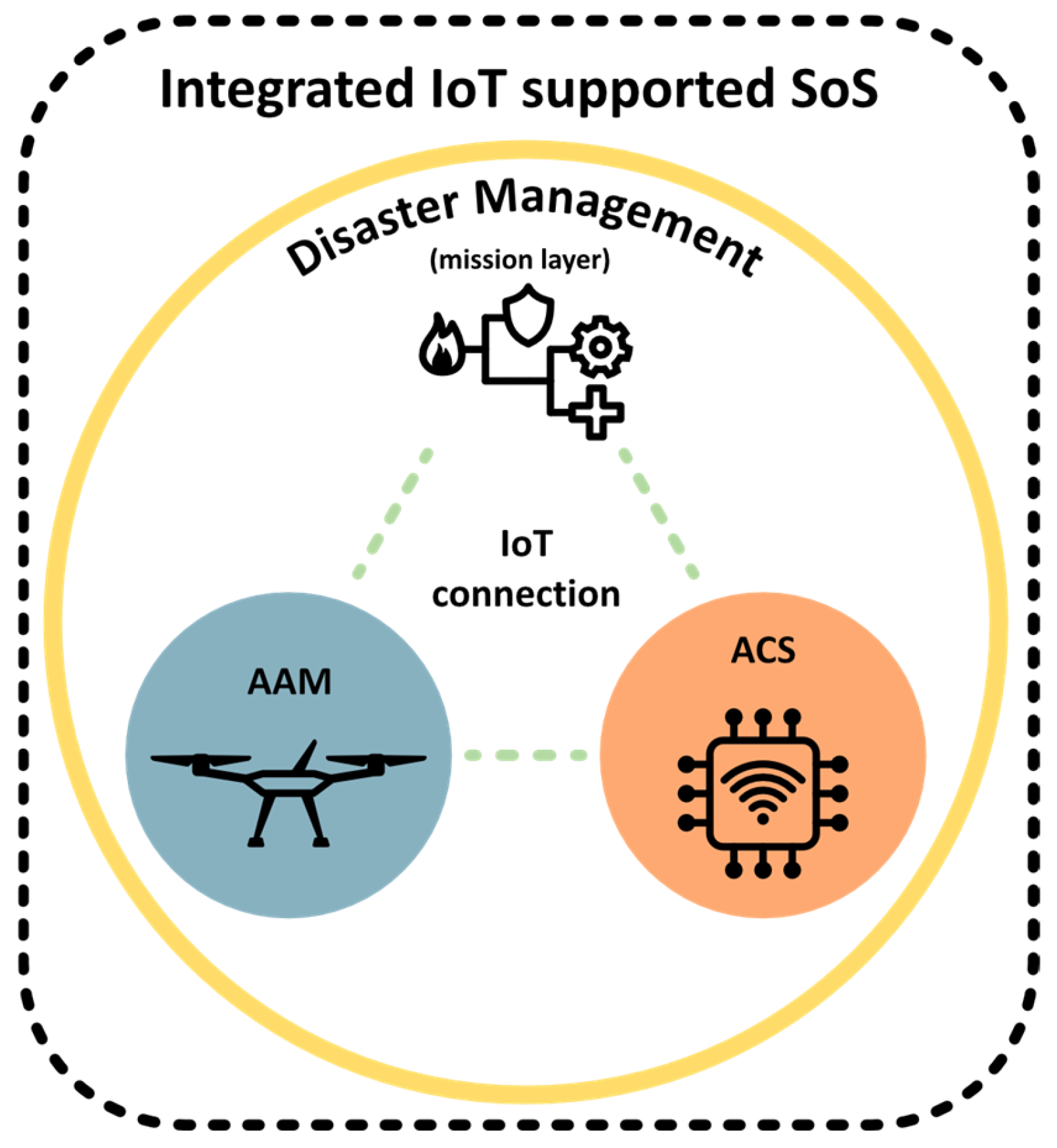
Therefore, DM, AAM, and ACS form a tightly coupled triad within an integrated SoS functioning on an IoT basis. DM constitutes the mission and orchestration layer, defining objectives, priorities, and decision-making processes across preparedness, response, and recovery. AAM functions as the mobility and actuation layer, translating and/or supporting DM decision-making into/by physical actions such as sensing, logistics, inspection, and intervention, particularly in inaccessible or disrupted environments. ACS provides the digital backbone, enabling reliable connectivity, real-time data exchange, positioning, sensing, and distributed computing required for both DM coordination and safe AAM operations. The relationship is inherently bidirectional and dynamic. DM requirements shape AAM deployment and ACS configurations like prioritised network slices and emergency Quality of Service, while ACS capabilities determine which AAM services can be safely and effectively operated. At the same time, AAM platforms can extend ACS itself by acting as aerial relays or temporary communication nodes. Only through the coordinated and interconnected co-design of these three domains can scalable, resilient, and sustainable disaster management operations be achieved.
To summarise: DM serves as the mission layer and the provider of “conventional” emergency and response subsystems; AAM provides increased mobility, monitoring, and response by allowing relatively easy, quick, and inexpensive access to the third dimension; and ACS serves as the high-tech digital backbone needed for reliable connectivity, decent coverage—especially in remote areas, communication between task forces, and real-time data exchange and sensing needed for efficient and effective DM operations.
DM and AAM are examples of complex SoS, which consist of many elements (sub-systems) and are affected by numerous external and internal factors. For this reason, their development needs to be planned with strong consideration for the synchronisation of their components’ development and long-term perspective, including guiding social, economic, and environmental factors. This is the reason why strategic foresight is going to be utilised as the research method in this paper. It allows for structured exploration of different possible development scenarios, alongside the opportunities and challenges they might tackle, and with that to assist in decision and policy making [
7]. Strategic foresight is a highly flexible format that is able to capture as many challenges and opportunities as possible, which in turn enables interdisciplinary solution creation and development. This is ideal for the topic of this paper, as the included domains are highly interdisciplinary—involving various social and engineering sciences.
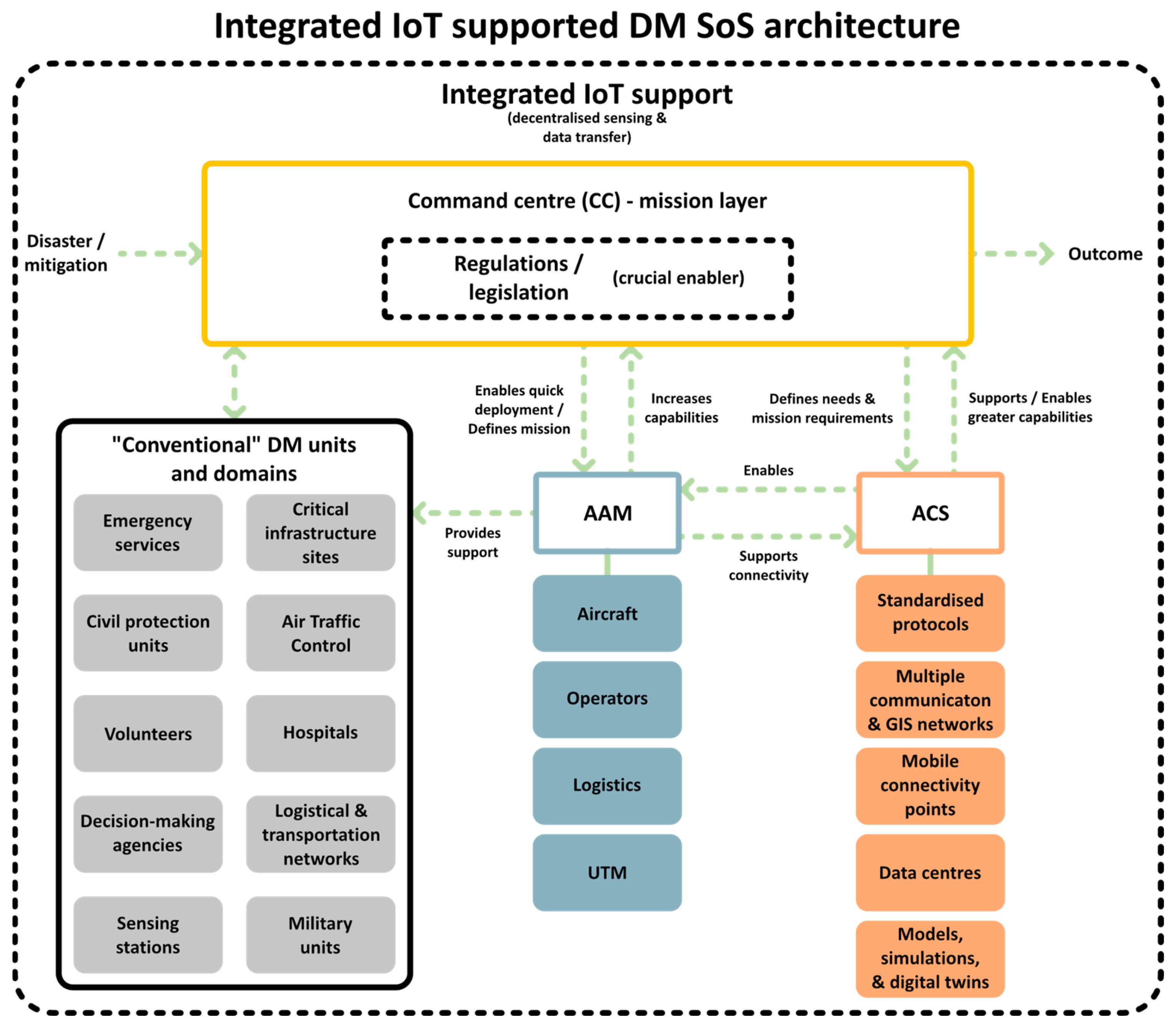
Our main aim is to present a clear path towards sustainable disaster and emergency situations management, including situational awareness and urgent high-added-value goods deliveries, greatly enabled by AAM, which finally is to be enabled to operate in the most sustainable and safe form by ACS. This includes the definition of the possible necessities, development paths, and education needed to achieve such a cohesive SoS. The main focus is on ACS, since efficient communication and coordination, enabled by novel digital technologies, will unlock new valuable capabilities and will allow for the efficient and effective use of all available resources at any given moment. For example, bottlenecks caused by inefficient or distorted communication along the decision-making chain could allow for faster reaction times in critical situations and moments, resulting in better outcomes. Therefore, the innovative point of this paper is the definition of an architecture that fundamentally combines DM, AAM, and ACS into an IoT-interconnected SoS that improves the decision-making support, reaction times, logistics, communications, and executive capabilities before, during, and after disaster management and emergency situations. A graphical summary of the envisioned IoT DM SoS and its main elements is presented in
Figure 1 at the end of this chapter.
The unique points of the proposed SoS herein, compared to existing systems, include the following: AI for decision-making support, management of the SoS and its elements, and continuous SoS improvement; higher involvement of IoT at various system levels; systemic AAM systems integration; and ACS as a key enabling subsystem and allowing high-tech digital solutions to be implemented and utilised.
Thus, this paper will also investigate the opportunities for ACS, including different novel technologies, operational and communication architectures, and expected benefits. The foresight will also present the identified challenges for the establishment of such an SoS in the context of DM and expected challenges during operation. Lastly, the paper will present what the next steps should be to overcome the identified challenges and will outline the foreseen development paths and future work in a clear manner.
The main sources of information for this paper are the results from several relevant projects where the contributing authors were involved. These are SUDEM, REGUAS, 5G!Drones, and ETHER. These projects are all relevant for the domains of DM, AAM (enabling a significant part of DM), and ACS (a crucial enabler for safe AAM operations), and their goals and results are presented in
Section 2. Naturally, multiple external relevant references and studies have been considered.
Section 3 outlines the key takeaways, which are relevant for achieving the goals of this strategic foresight, and presents the ACS development prospects relevant for AAM-supported DM. In
Section 4, the authors outline the challenges for implementation of the presented vision, so far observed obstacles and possible approaches to enhance the process.
2. Materials and Methods
This section explains how the envisioned SoS is elaborated and goes through all the domains in a structured manner by presenting all the relevant collected information and validated data, starting from foundational explanations and topics and working towards greater detail.
2.1. Foresight Methodology
The dynamic strategic foresight methodology applied in this study follows a structured, multi-stage process designed to synthesise expert knowledge, empirical project results, and system-level modelling into a coherent SoS architecture and development roadmap. It is a dynamic process, since the defined SoS and its elements are dynamically developing through current and planned future projects, and so are the involved applied research procedures, including simulation models and trial schemes. The process began with workshops, including relevant experts, and structured surveys conducted within involved projects, e.g., in REGUAS. These activities enabled the identification of current constraints, emerging technological opportunities, and interoperability challenges across the domains. In the second stage, a cross-project synthesis was carried out, combining empirical findings from partially simplified flight simulations and physical trials, ACS performance tests, digitalisation experiments, and DM process analyses to extract recurrent requirements and system patterns. Building on this evidence base, the third stage employed SoS modelling, including functional system mapping, interface identification, and cross-impact analysis, to evaluate alternative architectural configurations for integrating AAM and ACS into DM workflows. The fourth stage involved scenario exploration and roadmap construction, formulating plausible development pathways for ACS evolution (5G-Advanced, 6G, and hybrid TN-NTN), UAS-enabled DM services, and governance frameworks.
To ensure robustness and practical relevance, the proposed architecture and roadmap were validated through simulation-based assessments (e.g., energy modelling, coverage modelling, and data-fusion performance estimation) and real-life tests from the REGUAS, 5G!Drones and ALADIN demonstrations, as well as preliminary SUDEM pilot implementations. At SUDEM, a foresight was already performed to be able to have the exact useful and necessary contents defined for the future disaster management experts. The final selection of the SoS architecture and roadmap was based on three criteria: A. operational feasibility–ability to support DM tasks under realistic constraints; B. technological coherence–alignment with ongoing ACS and AAM standardisation and infrastructure evolution; and C. scalability and resilience–capability to operate across diverse hazard scenarios, geographies, and regulatory environments. Together, these methodological steps ensure that the resulting foresight outputs are transparent, reproducible, and grounded in both empirical evidence and expert consensus. This foresight will continue evolving as the subsystems do, and the detail level of the involved studies will accordingly increase, such as, for example, planned 4D simulations for the emphasised AAM operations.
The work herein represents the current state of the Foresight, and it is a complex, ever-evolving process, which the authors will continuously develop. It is a multi-year undertaking, and the authors are continuing the work within their next relevant projects on this highly relevant interdisciplinary domain, which is becoming increasingly recognised by the public and institutions. For example, the scenarios considered here are being validated by relevant stakeholders such as AFAD (Disaster and Emergency Management Authority of Turkey), where the main focus is on disaster monitoring and response in case of earthquakes. They are testing several systems: AI for management of the DM system and decision-making support; synthetic and real data are being used, evaluated, further generated, and improved; and simulation and process management models are being trained.
Additionally, through their expertise, project work, and scientific publications, the authors of the Foresight have concluded that such an IoT DM SoS does not yet exist. The sources and projects in the literature review in
Section 2 showcase the absence of such a complex system (for example, Aksit et al. [
8]). Moreover, through the projects, the authors built up the whole SoS here, and for each of these, there was a large-scale status quo research needed to motivate and get them approved for funding.
Currently, the Foresight research is limited to initial small-scale validation data and qualitative analysis; thus, the need for a multi-step Foresight development.
It has to be noted that for the synthesis of some paragraphs, based on information provided by the authors, and for productivity reasons, Large Language Models have been used during the development of this work.
2.2. Evaluation and Principles of the DM Framework
To evaluate efficiency and effectiveness in DM, which is highly needed for the proposed and investigated SoS, it is essential to establish criteria for qualifying, comparing, and selecting the best-performing alternatives. In the literature, Key Performance Indicators (KPIs) are widely used as metrics to assess an organisation’s progress toward defined goals and for the improvement of operational quality. However, to the best of our knowledge, there is a lack of substantial work on the definition and application of KPIs specifically for emergency and DM.
In Ref. [
8], 14 KPIs are proposed, grouped into three main categories: throughput, time performance, and supply and demand performance. These were involved in the overall DM SoS definition. The first one, throughput, measures the number of elements that are processed by the system per unit of time. The kind of element depends on the process, and throughput can be calculated for various kinds. Next, time performance refers to the processing of emergency conditions and is considered important since delays may lead to increased damages and casualties. It relates to the timeliness of handling emergency conditions. Lastly, supply and demand performance, where supply refers to the set of resources that are necessary for the execution and completion of disaster management tasks. For example, if supply is sufficient for the demand, then emergency conditions can be handled without unnecessary delays.
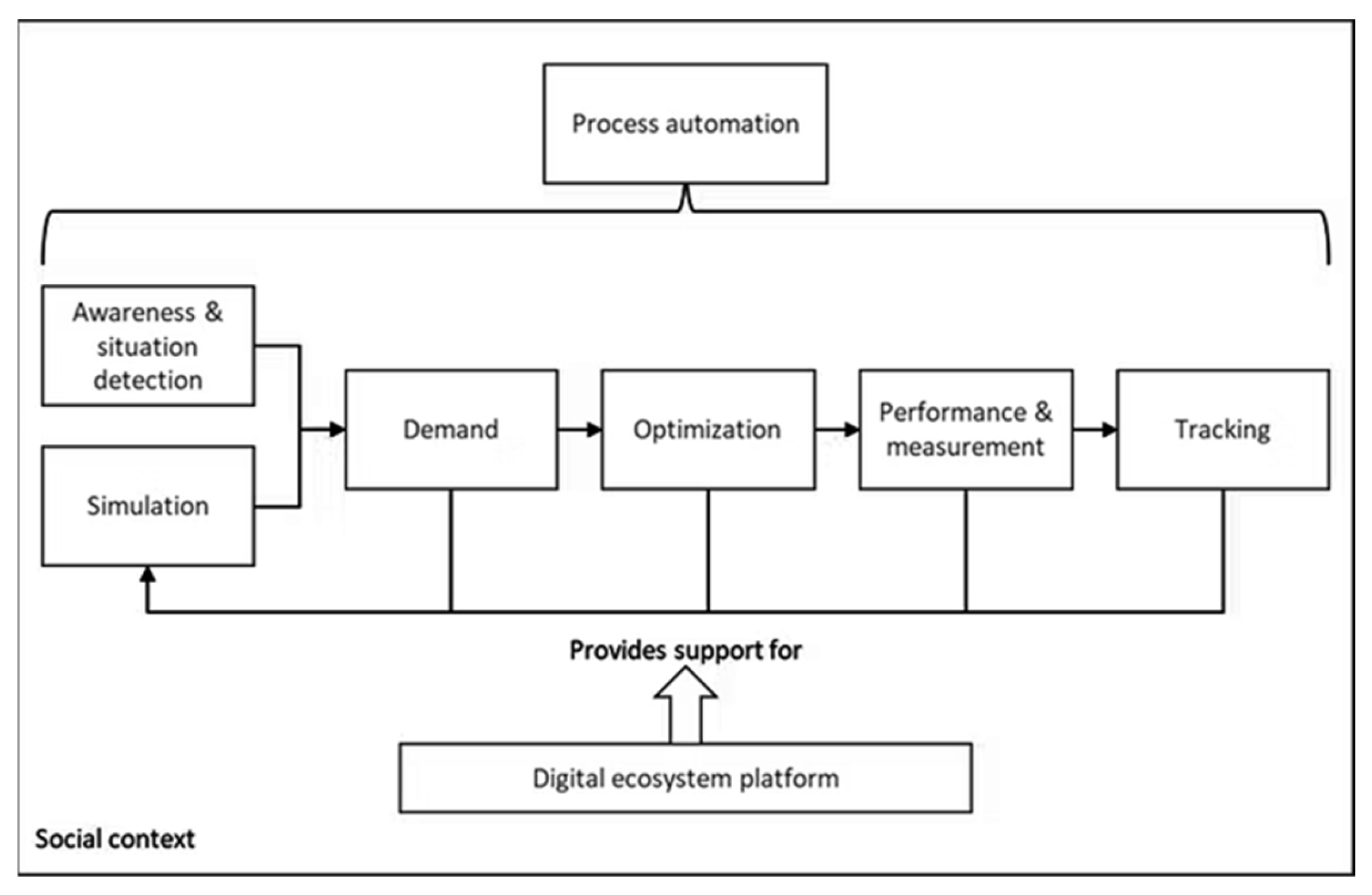
Additionally, DM operations supported by digital technologies (including Artificial Intelligence (AI) and UAVs, etc.) could be structured according to the ADOPT principles, which encapsulate six interrelated functions, as presented in
Figure 2.
The ADOPT principles structure Disaster Management (DM) as a continuous, data-driven operational cycle in which awareness, demand generation, optimisation, performance, tracking, and simulation are tightly coupled and iteratively refined. Each function is instantiated through specific digital, mobility, and communication capabilities, with ACS providing the information backbone and AAM enabling physical sensing and intervention.
- -
Awareness is established through multi-source situational sensing, integrating ground-based IoT sensors, satellite data, and AAM-enabled aerial observations. ACS ensures real-time data transmission, edge processing, and fusion, enabling a shared operational picture even in degraded network conditions.
- -
Demand generation translates situational awareness into actionable needs, such as rescue tasks, medical supply deliveries, or infrastructure inspection. Here, DM decision-support systems use ACS-enabled data aggregation and analytics, while AAM defines feasible spatial and temporal response options.
- -
Optimisation selects and schedules the most efficient allocation of resources, including task forces, aerial assets, and communication capacity. This function relies on ACS for prioritised connectivity and computational support and on AAM for flexible routing and mission execution under dynamic constraints.
- -
Performance evaluation assesses whether DM objectives are met in terms of time, coverage, reliability, and resource efficiency. ACS provides continuous telemetry and QoS monitoring, while AAM supplies operational feedback from the field.
- -
Tracking maintains real-time supervision of missions, assets, and network conditions, enabling adaptive reconfiguration of both AAM operations and ACS resources in response to evolving conditions. Simulation supports preparedness and post-event learning by enabling scenario-based testing, digital twins, and what-if analyses, informed by historical AAM mission data and ACS performance metrics.
Through ADOPT, DM is transformed from a linear response process into a closed-loop, adaptive system in which AAM acts as the physical executor and ACS as the cognitive and connective infrastructure that binds all operational functions together.
For effective and efficient DM operations during and after a disaster, emergency decision-making entities shall determine the effect of disasters precisely and in a timely manner. Different kinds of techniques and technologies, including different sources, can be used to collect data from disaster areas, such as sensors, cameras, and UAVs, in order to enhance situational awareness. For this purpose, AAM and ACS developments can provide new opportunities. However, due to the challenges related to the topological complexities of affected disaster areas and the number and variability of available data sources, a model-based analysis and synthesis framework has been used in paper [
10] to determine the optimal data fusion set before expensive implementation and installation activities are carried out.
For resource-efficient DM, the following work steps and domains are crucial; respectively, these shall be optimally covered by digital tools for their optimisation, and all of these need AAM as their crucial pillar:
Monitoring;
Irregular events detection;
Preparedness assurance;
Alert;
Reaction plan preparation;
Decision-making support;
Emergency preparation and planning;
Emergency coordination;
Post-disaster recovery;
Preparedness assurance after the event, based on the lessons learnt.
2.3. ACS-Enabled AAM
This study also focuses on the specific ACS capabilities that directly enable safe, scalable, and interoperable AAM operations within DM. Modern mobile network architectures (5G and emerging 6G) introduce four features essential for AAM-supported DM: A. network slicing, which allows dedicated, guaranteed-QoS communication channels for UAS command-and-control (C2), sensor data, and emergency traffic; B. ultra-reliable low-latency communication (URLLC) enabling real-time navigation, Unmanned Aircraft Systems Traffic Management (UTM) interaction, and time-critical situational awareness streams; C. integrated positioning and sensing, including GNSS-independent localisation and radio-based environment sensing, crucial for UAS navigation in degraded or GNSS-denied disaster zones; and D. seamless terrestrial-non-terrestrial network integration (TN-NTN) ensuring coverage continuity via LEO satellites, HAPs, or tethered drones when terrestrial infrastructure is damaged. Standardisation efforts also support exposure of network capabilities through APIs, enabling DM platforms and UTM systems to access network status, UAV location, and prioritisation mechanisms. These features provide the backbone for resilient multi-layer communication essential to an integrated DM-AAM SoS.
2.4. International Standardisation of ACS
Together, the findings from the various projects highlight the subset of ACS functionalities that are both technically validated and operationally relevant for building a future DM-AAM-ACS system of systems. The ACS subsystem is a key enabler of AAM SoS. While in the past (especially before the proliferation of UAS) aviation used separate and specific dedicated communication systems, the industry is currently evolving towards the use of communication systems using universal information and communication technologies derived from Internet technology. The mobile network based on 3rd Generation Partnership Project (3GPP) specifications, which is widely used in everyday life and in various professional industries worldwide, is seen as an attractive universal wireless communication platform providing a unified technology of Radio Access Network (RAN) and a multitude of functionalities that are able to meet the specific needs and requirements of various industries, including AAM. The evolution of mobile networks has been ongoing for decades. Its development has seen milestones, including digitalisation (1990s), the gradual introduction of packet data transmission services with increasingly high transmission speeds (2000s), and finally the implementation of the “All IP” principle, i.e., the concept of a network providing universal access in IP technology, on the basis of which all other services are implemented (2010s). However, with the achievement of 5th Generation (5G), the mobile network is based on several paradigms of ground-breaking importance for its support of unmanned aviation and AAM:
The general vision of the 5G System (5GS), i.e., IMT-2020—the mobile system for the 2020s, has been defined by the International Telecommunication Union (ITU) [
11,
12] and includes three usage scenarios: Enhanced Mobile Broadband (eMBB)—emphasis on transmission speed, Ultra-Reliable Low-Latency Communication (URLLC)—emphasis on reliability, and Massive Machine Type Communications (MMTC)—emphasis on high density of connected network devices. The performance requirements include: peak data rate of 20 Gb/s and a user-experienced data rate of 100 Mb/s, both in urban and sub-urban areas, at the latency (in RAN) of 1 ms; a connection density of 106 devices per km
2 and an area traffic capacity of 10 Mb/s per m
2; mobility of users up to 500 km/h; and reliability for urban URLLC of 99.999%. The vision also acknowledges the demand for location-based service applications, e.g., emergency rescue services, and precise ground-based navigation services for unmanned vehicles or drones.
The technical design of 5GS is developed and standardised by 3GPP in the approach that starts from the definition of service requirements: general ones (e.g., network slicing, capacity exposure, or positioning) [
13] and unmanned aviation-specific ones, including recognition of non-payload, i.e., command and control (C2) and UAV to UTM communication, in addition to payload (UAV flight purpose-oriented) ones, integration with UTM and its assistance by the mobile network, identification and tracking of UAV network devices, UAV safety, and flight path and zone restriction management [
14]. In the next step, 3GPP defines the architecture and system procedures of 5G that provide several features with increased importance for support of UAS [
15,
16,
17,
18,
19,
20], which are discussed below:
Network slice selection, admission control, and slice-specific authentication/authorisation are mechanisms crucial for isolation of connectivity dedicated for UAVs with Quality of Service (QoS) guarantee and joint authorisation of UAV network devices by mobile network and UTM. 5GS supports simultaneous connection of network devices to multiple different network slices. In addition to the three abovementioned basic usage scenarios defined by ITU (eMBB, URLLC, and MMTC), 5GS currently distinguishes also four additional slice service types: Vehicle to Everything (V2X), High-Performance Machine-Type Communications (HMTC), High Data Rate and Low Latency Communications (HDLLC), and Guaranteed Bit Rate Streaming Service (GBRSS) that emphasise various sets of QoS parameters. The User Plane (UP) traffic processing chain design of a network slice can be freely adapted to specific payload and non-payload communication requirements;
QoS model based on QoS Flows, which guarantees differentiated end-to-end (E2E) traffic fractions’ parameters within the individual, per network slice, network terminal session. Both Guaranteed Bit Rate (GBR) flows and non-GBR ones are supported; for the former ones, guaranteed/maximum bitrates and maximum packet loss rates can be defined separately for uplink and downlink. 3GPP has defined more than 30 default classes of flows relevant to requirements of various types of communication applications, both for Non-GBR, GBR, and delay-critical GBR flow types, providing their priority levels, packet delay budgets, and error rates, etc. In order to enable high-demand real-time URLLC applications, 5GS provides specific mechanisms supporting such concepts as Time-Sensitive Networking (TSN), time-sensitive communications, time synchronisation, and deterministic networking;
Network Control Plane (CP) exposure includes mechanisms of Network Exposure Function (NEF)—a generic interface for CP integration with external systems, e.g., those of vertical industries—and Application Function (AF)—an agent or “embassy” of the external system embedded within the mobile network CP; these are further extended with the specifications of Common Application Programming Interface (API) Framework for 3GPP Northbound APIs (CAPIF) [
21] and Service Enabler Architecture Layer for Verticals (SEAL) [
22];
Location Services framework supports aerial network device localisation mechanisms independent from the Global Navigation Satellite System (GNSS), which can, e.g., be used for validation of position reported by UAVs to UTM;
Dual connectivity (simultaneous connection of a network device to different RAN nodes) and redundant UP paths are crucial for the high reliability of services required by air traffic safety. These support redundancy of traffic, while virtualisaton, hardware, and transport network layers can provide their redundancy and reliability mechanisms;
Proximity-based services, ranging-based services, and sidelink positioning are based on direct connection between network devices (also those registered in different mobile networks) at distances of hundreds of metres [
23] for connectivity sharing, mutual distance determination, and positioning;
Specific support for UAS includes joint authentication and authorisation of a UAV with UTM for mobile network/services access; UAV tracking, presence monitoring, and listing of aerial devices in a geographic area; direct controller-UAV C2 communication; support for geofencing/geocaging, detect and avoid mechanism, UAV pre-mission flight planning, and in-mission flight monitoring, including early warning of communication loss risk;
Support of integration with edge computing, e.g., the commonly recognised European Telecommunications Standards Institute (ETSI) Multi-access Edge Computing (MEC) framework [
24], serves for implementation at the edge of applications demanding very low latency, e.g., UAV controller, First Person View (FPV) for the remote pilot, or situational awareness processing of video stream from UAV, etc.;
The 3GPP’s efforts are complemented by the activities of other industry associations. The Global System for Mobile Communications Alliance (GSMA) develops a Generic Network Slice Template specification, including the definition of various slice template attributes reflecting possible requirements in potential service use scenarios and standardised sets of attributes for defined service use scenarios [
25]—this way, interoperability will be provided in both national and international roaming scenarios (for entire national coverage provided jointly by multiple mobile networks and for cross-border aerial operations or operations outside of the country of registration). Within the framework of The Linux Foundation, the CAMARA project [
26] aims at a common definition of a service enablement platform, specifies service APIs, and transforms exposed low-level network capabilities into high-level abstractions for defined types of services. ETSI runs industry specification groups on zero-touch network and service management [
27] and experiential network intelligence [
28] to support full E2E network and services management automation, facing the expected explosion of future network complexity and number of coexisting networks, including a cognitive, context- and situation-aware approach to changes in user needs. A common project of the unmanned aviation and mobile telecommunications industries, the Aerial Connectivity Joint Activity group published several reports concerning mobile network mechanisms, network coverage data exchange, and methods of C2 link performance assessment to facilitate cooperation of UTM and mobile network ecosystems [
29].
2.5. Sensor Data Fusion Enabled by ACS
IoT-enabled sensors can provide continuous environmental data that can enhance situational awareness and enable rapid responses to emergent conditions. Machine learning and AI applications in DM, including predictive modelling and automated resource allocation, can allow emergency management teams to anticipate disaster impacts and deploy resources proactively.
The integration of heterogeneous information sources is a key enabler of effective DM. In line with the framework proposed by Aksit et al. [
10], this foresight confirms that model-based analysis and synthesis of data fusion alternatives can substantially improve the accuracy and timeliness of situational awareness. In disaster response operations, information collected from IoT-enabled ground sensors, aerial drones, and satellite imagery often differs in granularity, reliability, and cost. The model-based approach allows for selecting the most efficient fusion configuration by balancing detection precision, coverage requirements, budget constraints, and processing deadlines. Within the SUDEM SoS context, this ensures that emergency control centres can prioritise data sources dynamically, achieving robust monitoring while optimising limited computational and communication resources. Such a structured fusion strategy enhances the ability to detect disaster effects rapidly, locate survivors, and coordinate task forces effectively under varying operational conditions.
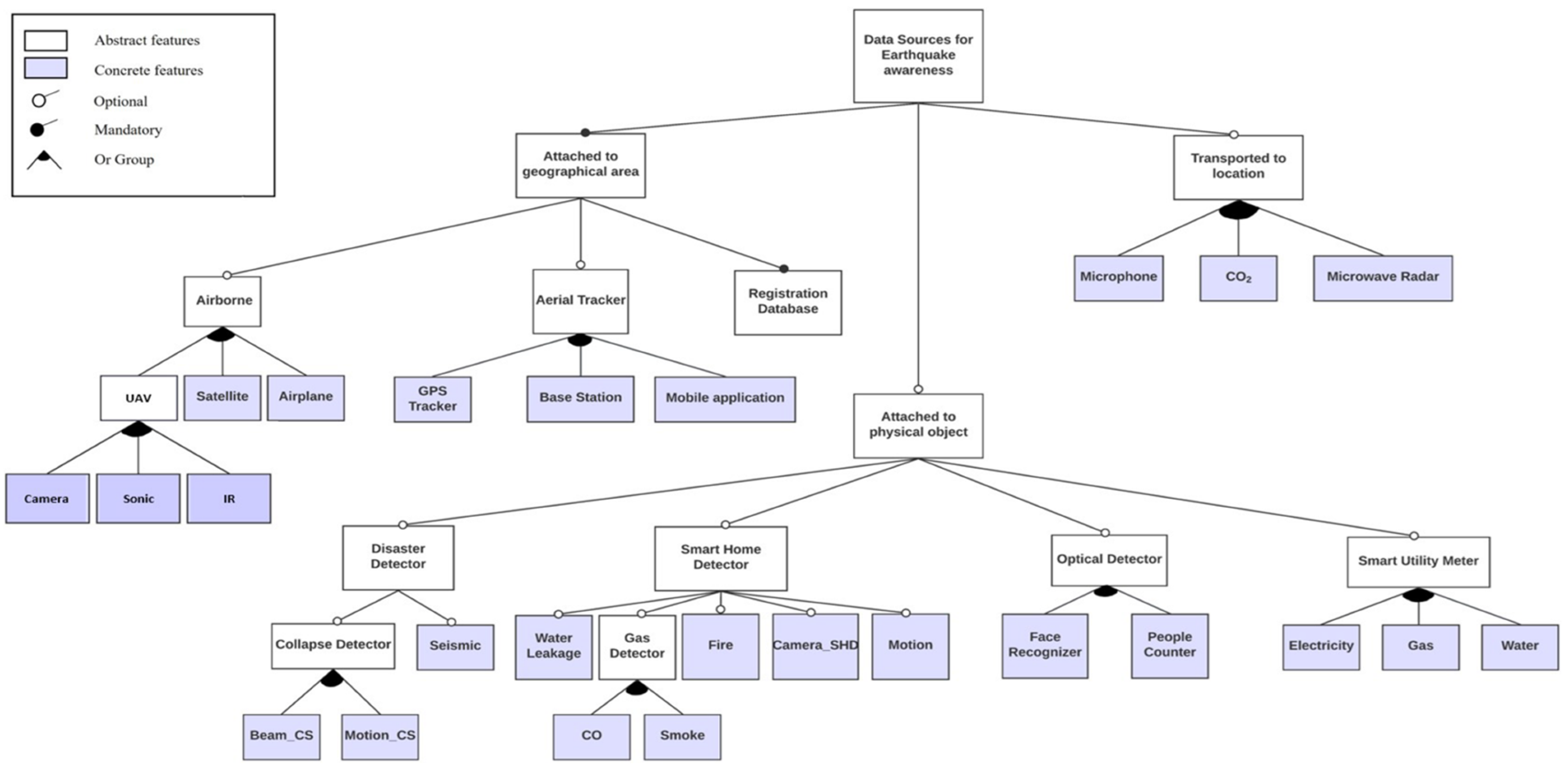
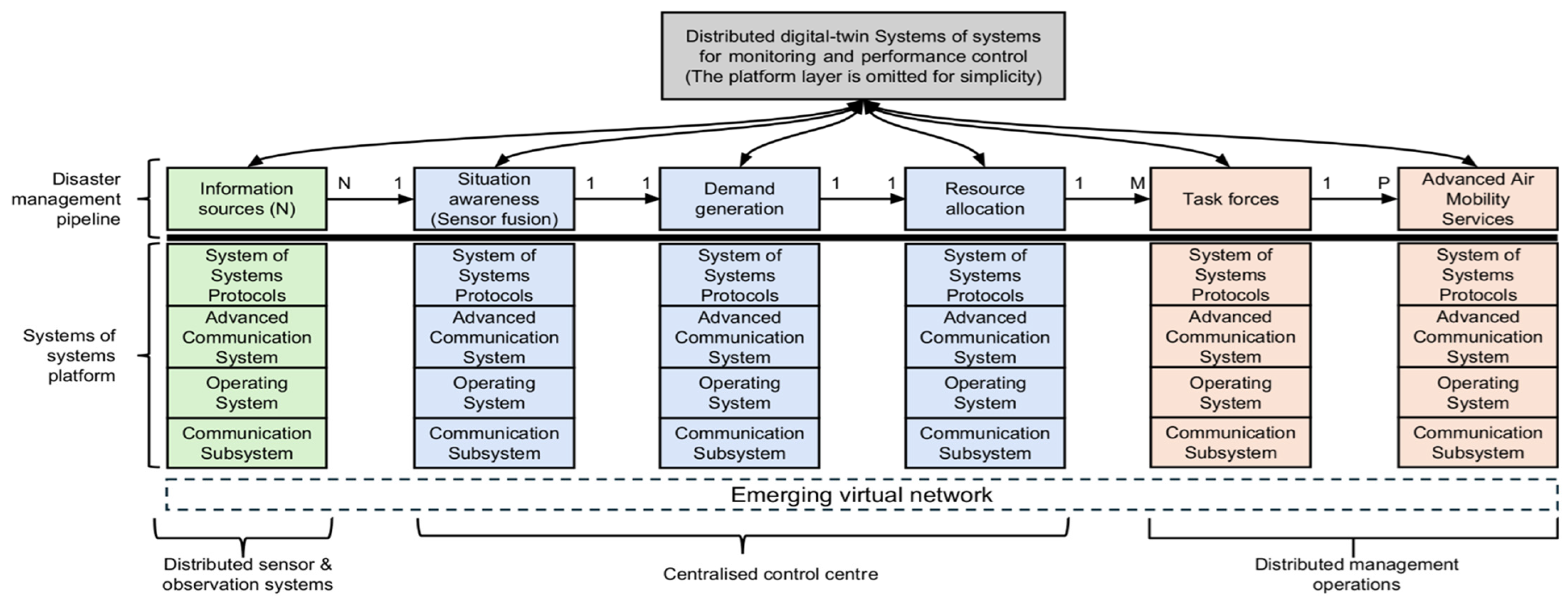
As illustrated in
Figure 3, the information sources are organised as an SoS, enabling mutual communication as well as interaction with the central control centre to support efficient and effective information fusion. Such architecture is critical for conducting timely and accurate post-disaster aid operations. For instance, following an earthquake, emergency control centres must rapidly assess the scale and severity of the impact to initiate appropriate response actions.
Information sources encompass a diverse set of data-gathering technologies—such as sensors, cameras, and UAVs—which can be deployed to collect data from affected areas. To enhance situational awareness, advanced data fusion techniques are applied to integrate information from these heterogeneous and distributed sources.
In Ref. [
10], a design environment is introduced for computing the optimal composition of information sources, subject to the following four constraints:
The disaster impact must be assessed with a defined level of precision;
The locations of surviving individuals must be determined within acceptable accuracy;
The overall cost of data fusion must remain within a predefined budget;
The fusion process must be completed within a specified detection deadline.
Another topic and a recurring theme across the countries analysed in the SUDEM.
Foresight is the need for standardised protocols to enable interoperability, particularly in cross-border disaster scenarios.
Additionally, the SUDEM Foresight report highlighted the need for advanced cybersecurity measures, including encryption, multi-factor authentication, and continuous threat monitoring. These security measures must be reinforced across all digital platforms, particularly in countries like the Netherlands and Germany, where critical infrastructure is heavily reliant on digital networks. A comprehensive cybersecurity strategy is essential to ensure the integrity of DM systems and to maintain public trust in these systems’ ability to operate reliably during crises.
2.5.1. ACS Development Roadmap
Future development roadmap in the ACS field will impact the future of AAM SoS. While the development of 5G standardisation continues until the end of the 2020s, the directional vision of a 6G System (6GS) framework (IMT-2030) has been published by ITU [
30]. Following the civilizational and industrial trends (sustainability, connecting the unconnected, security and resilience, and ubiquitous intelligence), the further proliferation of deeply fused communication, application computing, and AI is foreseen. Three usage scenarios of IMT-2020 are renamed and upgraded through an increase in their QoS targets. New scenarios will emerge (check
Figure 1 in [
30]), namely Integrated Sensing and Communication (ISAC), AI and Communication, and Ubiquitous Connectivity.
Table 1 presents the evolution of performance targets from 4th Generation (4G) to 6th Generation (6G). According to the ITU timeline [
31], the current phase of detailed minimum RAN technical performance requirements building (analogous to existing for IMT-2020 [
12]), followed by defining the evaluation criteria and methodology, is going to be concluded at the end of 2026. Next, the phase of technology proposal for IMT-2030, evaluation, consensus, and IMT-2030 specifications publishing is scheduled to be finished at the end of 2029.
The 3GPP roadmap for 6G development is only partially known, but unlike the ITU, 3GPP working documents are publicly available. Release 20, which was launched at the beginning of 2025 and the freeze of the entire set of its documents is scheduled in the middle of 2027, is dedicated—in addition to the further development of 5G-Advanced—to 6G studies. The 3GPP Release 21 will be the first to provide normative documents on the 6GS (architecture, procedures, and protocol specifications), but its timeline is expected to be no later than June 2026, and its freeze is no earlier than March 2029, thus able to deliver the first 3GPP normative 6GS specifications for IMT-2030 submission within the ITU schedule [
32]. The 3GPP study on 6G use cases and service requirements [
33] provides a list of 212 foreseen 6G use cases, among which the following are related to AAM and DM:
Network data exposure service—monitoring of human crowds and flows for public security management and real-time disaster response for evacuation;
Network resilience—zero-outage, network pre-configuration for fast disaster response adapted to forecasted situation; securing resources for critical communication during power outages, mutual sharing of resources by operators, and cooperative service continuity in disaster situations; mutual sharing of services by operators in areas with poor coverage;
AI-agents communication—AI agents, including those on board UAVs, cooperate on the collective accomplishment of tasks by means of mutual communication and sharing of locally available information;
Collaborative AI agents hosted by the network—offloading of UAV’s computing and power resources;
Intelligent UAV swarms—mutual sharing of on-board cameras, sensors, and lightweight computing resources;
Smart housekeeping—coordinated AI-driven actions with involvement of aerial visual monitoring provided by nearby UAVs in the air;
Flexible terminal-network coordination through AI agents—active detection of service capabilities in the entered area;
Real-time video super-resolution—active sharpening/resolution upgrade of real-time video streams for reduction in power consumption by terminals as well as latency and data rate minimisation;
AI-assisted and RAN sensing capabilities-supported location services—support search and rescue operations and missions in disaster areas;
High-resolution topographical maps/environment object reconstruction—support of building and continuously updating the environmental model—landscape, structures, forestation, dynamic objects—by ISAC capabilities;
Low-altitude UAV traffic supervision—UAV flight assistance service, including illegal UAV intrusion detection, UAV flight trajectory tracing, and UAV collision prediction by RAN sensing capabilities;
Advanced modern city transportation system—support of a metropolitan multi-modal Intelligent Transport System (ITS) with sensing-based tracking of transport means by RAN;
Infrastructure collapse monitoring—RAN sensing capabilities supported notifying disaster management, traffic management, public alerting, etc., systems;
Multi-sensor fusion-based sensing for UAV take-off and landing—enhancing the accuracy and reliability of navigation in highly urbanised areas, detection of obstacles, e.g., sudden swarms of birds or rainfalls, assessment of the landing area, and adjustment of the path in real time;
Safe and economic UAV transport—ISAC support for real-time airspace management of massive-scale Beyond Visual Line of Sight (BVLOS) flights for parcels, groceries, or rapid medicines delivery in both highly urbanised and remote areas, e.g., islands;
Network-assisted smart transportation—sensing, navigating, and positioning of autonomous UAVs for dynamic trajectory management and collision avoidance, off-loading of on-board resources;
UAV detection, classification, and counting—advanced support of safe and efficient airspace operations by RAN sensing capabilities;
Ubiquitous and resilient network—omnipresent connectivity for UAVs;
Resilient positioning in satellite networks—satellite access to support location services of mobile networks; 1 m vertical and horizontal accuracy for UAVs with a maximum speed of 160 km/h;
Disaster relief—extraordinary connectivity for UAVs used in disaster relief activities;
Low-altitude logistics supported by NTN—supplementing the white spots of TNs with LEO/HAP-based connectivity;
Hybrid TN and NTN positioning—support of UAV flights at speeds of up to 160 km/s with location service latency of tenths of a second;
Ubiquitous emergency rescue via UAVs—support of emergency response actions with application of drones equipped with intelligent rescue planning systems, high-resolution cameras, thermal imaging, and environmental sensors;
HAPs-based rapid deployable network for public safety and disaster response—fast network provisioning in disaster-affected areas where terrestrial communication is disrupted for emergency traffic of first responders and public safety devices;
Communication on board AAM aircraft—support of UAV passengers’ flight safety using external sensing information delivered by mobile network for on-board detect and avoid mechanisms and providing direct connectivity for passengers;
Immersive media services for AAM enabled by 6G NTN—on-board relays for AAM passengers;
Assisted airspace management of UAV and UAM aircraft—on demand of UTM, provisioning by the mobile network of services for individual aircraft: full coverage of communication services along the planned route, sensing services for flight trajectory tracing, collision prediction, high-accuracy positioning services, edge computing services, and storage service;
Service robots in smart communities—support of UAV patrol robots in crime prevention and medical assistance missions;
Remote and automatic construction—support of UAVs in pre-construction surveying and construction management activities.
Unlike previous ones, the 6GS will be designed to natively use access through both TNs and NTNs. The latter ones will be based on satellites and LAPs/HAPs.
Table 2 provides basic characteristics of the communication properties of satellite applications. LEO satellites provide the most attractive characteristics in terms of transmission delay and throughput (associated with their capacity to be shared over the lower footprint on the globe compared to MEO and GEO satellites). It should be noted, however, that LEO satellites’ visibility windows are on the order of minutes, and their very high tangential velocity (e.g., 7.5 km/s) requires special measures to compensate for the Doppler frequency shift. The necessity of frequent handovers increases the intensity of signalling exchange between the user device and the network related to mobility management. HAPs and LAPs provide lower delays than LEO satellites and are usually stationary, with the former located at altitudes beyond the cruising altitude of passenger aircraft (up to 50 km, typically 18–22 km) and the latter in the airspace below the cruising altitude of passenger aircraft, respectively [
34].
Although, as mentioned above, the 6GS will be defined during the future 3GPP Release 21, new mechanisms and concepts for its architecture are postulated by the research society that may impact AAM support [
35]:
Dynamic beamforming with Multiple Input Multiple Output (MIMO) antennas—individual signal beam to the UAV device to avoid momentary dominance of the signal from a distant BS due to antenna systems’ radiation pattern imperfections, causing unnecessary handovers;
Reconfigurable Intelligent Surfaces (RISs)—steerable beam reflectors (e.g., installed on facades of buildings) used for “brightening up the black spots” with poor coverage in areas with radio propagation obstacles;
Cell-free RAN—instead of a traditional cellular approach, i.e., BS responsibility for coverage in some area, forming a joint signal beam by multiple BSs individually for the specific user device (e.g., on board of UAV);
User-centric RAN—location of processing of the individual user traffic in softwarised RAN tailored to the demand type: various fractions of user traffic can be processed separately to optimise QoS parameters in focus;
Individual mobile networks per user device—instantiation of individual isolated E2E “micro-networks” per user—gain higher network reliability and agility, and the impact of failure and restoration by a simple restart without time-consuming root cause analysis is limited to a single user;
Intent-based interfaces for integration of communications platforms within multi-layer systems—interfacing of subsystems using Large Language Models (LLMs) to convert high-level requests of clients to low-level technology descriptions needed by the requested server [
36,
37].
The ITU and 3GPP visions of future 6GS address the needs of the PPDR use cases class with enhanced support (in comparison with 5GS) of mission-critical management and operation control through low-latency and extremely reliable (possibly, with deterministic guarantees) services heterogeneously combining the individual eMBB, URRLC, and mMTC traffic categories with mission-critical guarantees and omnipresent coverage provided by a unified TN- and NTN-based access. PPDR equipment, in the case of AAM field—UAVs, sets very high energy efficiency requirements, which are in focus of 6GS for its network terminals. Combining enhanced localisation capabilities with sensing capability, in line with the ISAC paradigm, will not only enable increased positioning precision but will also create the ability to scan and map the disaster site (especially one that has been dramatically changed by a natural cataclysm) in order to build its digital model for use in managing both PPDR operations and, in particular, AAM operations during disaster response. Additionally, this digital environment model can provide environmental awareness for RAN control mechanisms to actively improve coverage. Beamforming capabilities will be used to both scan the environment and track the network terminal being served. The software-based network’s reconfigurability will enable continuous response to changing conditions to maintain the required QoS. Native integration with AI (e.g., for network control and management, anomaly or intrusion detection) and enhanced security mechanisms will enable achieving a level of resilience that guarantees robustness to disturbances and thus safety of AAM and, more generally, PPDR operations. In these ways, the future 6GS addresses key societal values of DM/PPDR/AAM that will enable migration of PPDR services from heterogeneous wireless and land mobile systems (e.g., trunked radio) to a unified mobile network [
38].
2.5.2. Decision-Making Support Including AI
Based on the monitoring input data delivered by on-board sensors on drones, and after processing the data, decision-making support will be provided in the form of modular reaction and/or preparedness and/or emergency and/or recovery scenarios, generated by AI based on historic and synthetic data. AAM, supported by a solid ACS, will be a crucial provider of historic data, enabling a rapid self-optimisation of the emphasised SoS.
2.6. Involved Research Activities
Several relevant international (EU) and national applied research projects, as well as one knowledge definition and transfer project, most of which were operated by the authors of the current study, are used as sources for methodological approaches and learnings, highly important for this dynamic strategic foresight. This foresight provides a highly novel and interdisciplinary knowledge package by stepping on a basis of synthesised outcomes of these projects and defines an SoS for an IoT-based DM involving UAS, ACS, and other subsystems, and finally derives a roadmap for continuing to define, elaborate, deploy, and sustainably operate this SoS.
SUDEM contributed insights on digitalised DM processes, data-fusion requirements, and cross-agency workflows, as well as education and training on deploying and operating the emphasised SoS. REGUAS validated the energy and performance feasibility of UAS and the related SoS for high-value and emergency goods delivery in rural and obstructed terrains. 5G!Drones, ALADIN, and related initiatives demonstrated practical ACS-UAS integration, including 5G-enabled BVLOS control, remote piloting, and UAS-based situational awareness during public safety missions. ETHER and 6G-NTN projects provided evidence on TN-NTN interoperability, satellite-assisted continuity, and ACS resilience, crucial for DM operations where terrestrial networks are unavailable or overloaded.
It has to be noted that learnings from various projects and sources have been referenced and used in this work; however, only the REGUAS, SUDEM, 5G!Drones, and ETHER projects have been operated by or had involvement from the contributing authors of this work.
2.6.1. SUDEM
The ERASMUS+ KA220 project SUDEM (Sustainable Disaster and Emergency Management Processes Digitalisation) is establishing and validating a novel interdisciplinary higher education knowledge transfer model and curriculum, with a focus on the digitalisation of the overall disaster and emergency handling lifecycle [
39].
The international team embeds principles of practice and education from all relevant domains, including risk and disaster monitoring and management, decision-making support, disaster handling management, AI, Internet of Things (IoT), data science, remote sensing (satellites and drones), data fusion, and data management. SUDEM seeks to prepare students with the skills required to address the efficient management of relevant extreme events and disasters’ consequences and to improve the emergency processes. The overarching goal for Europe is to create a pool of DM experts with an adequately intensive focus on digital tools, through which the disaster-caused life and infrastructure losses will significantly decrease in the long-term perspective. The project unites a consortium of leading European higher education and research organisations, leveraging international collaboration to align academic programmes with the demands of the optimal DM, including decision-making support. SUDEM emphasises creating adaptable and accessible educational modules that can be implemented across diverse higher education and lifelong learning organisations. A crucial component of SUDEM is the developed Foresight study—a core project methodology element that presents identified demands, challenges, and solutions. It enables the elaboration and delivery of a relevant system architecture and an optimal future development scenario, including a higher education framework on DM process management, policy recommendations, and finally, a unique knowledge and training package—all as core results of the SUDEM project.
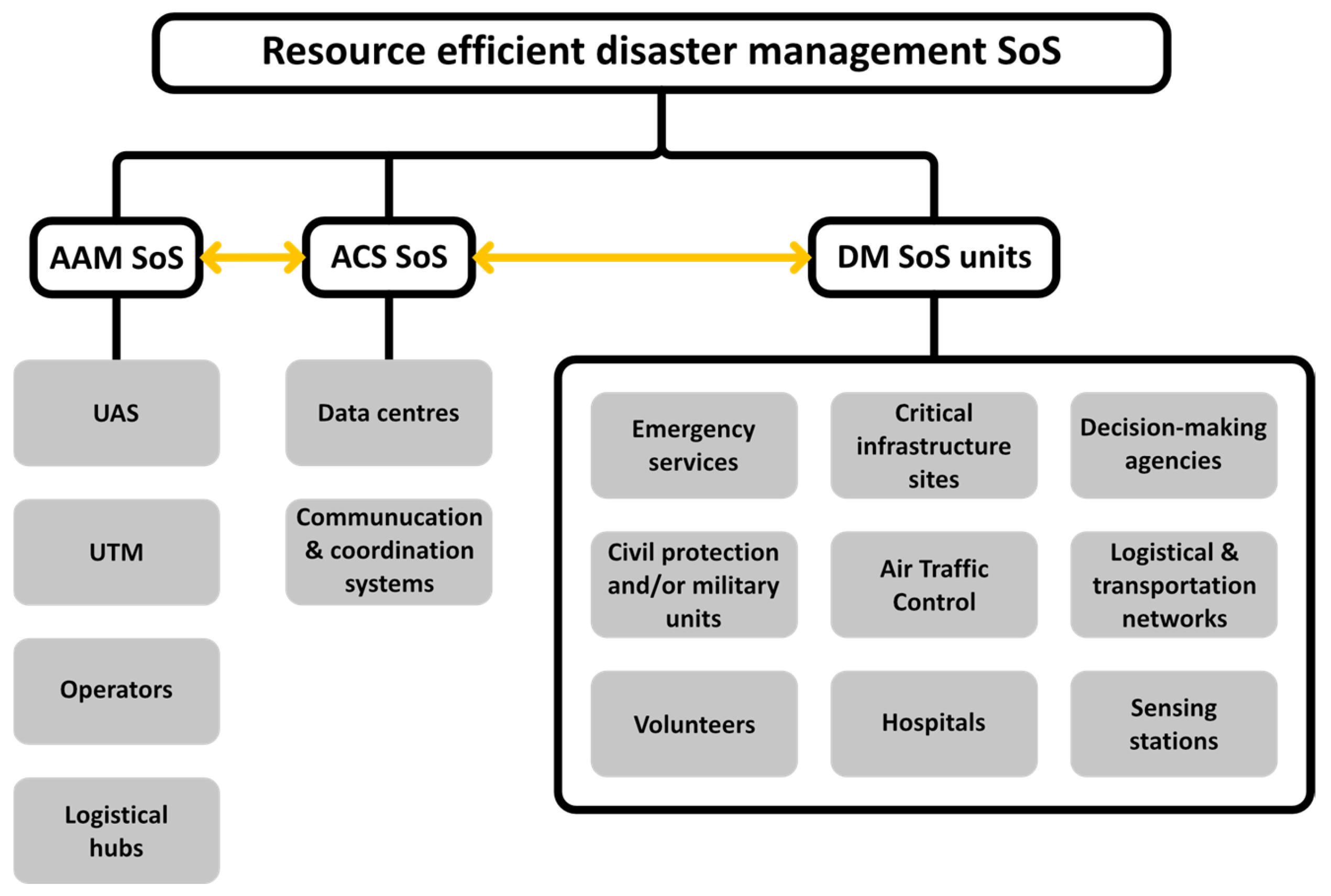
The SUDEM SoS approach, as presented in
Figure 4, consists of the already established DM systems and stakeholders, as well as the novel AAM SoS and the ACS SoS, with the ACSs envisioned as the key enablers of sustainable and efficient operations.
Part of the SUDEM Foresight investigation revealed that while many countries have established foundational digital infrastructures for DM, there is significant variability in the maturity and integration of these systems. For example, Germany and the Netherlands possess well-developed flood monitoring and predictive systems powered by IoT and AI, while Turkey has a robust network for seismic monitoring and early warning systems. However, each country faces specific challenges that hinder full digitisation, such as cybersecurity threats, data integration issues, and protocol inconsistencies across administrative regions.
2.6.2. REGUAS
The aim of the REGUAS joint project was to investigate how the supply of rural areas with high added value (and urgent) goods could be optimised in a regional context using UASs [
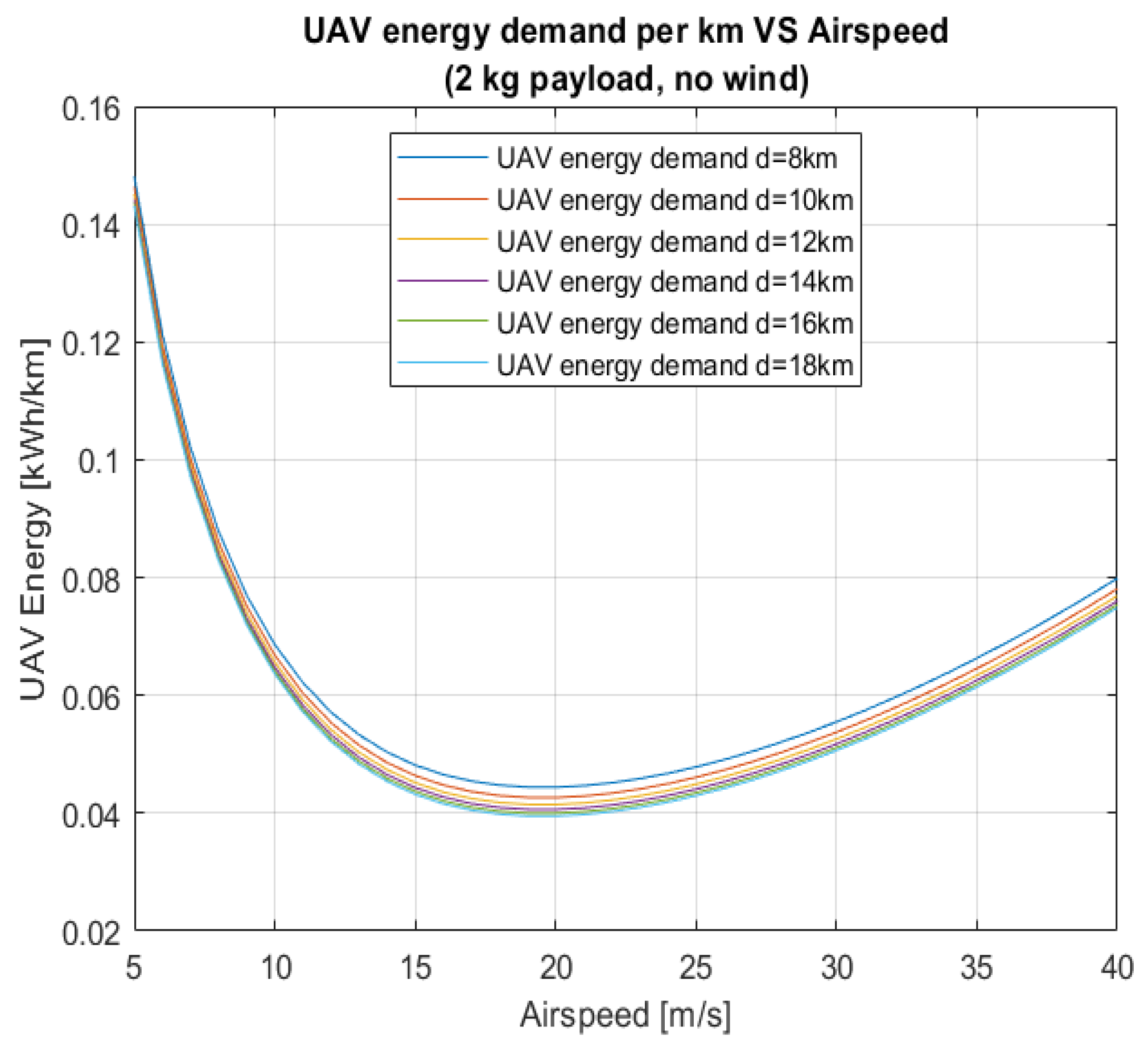
40]. The Northeast Hesse region, and more specifically the Bebra municipality, was selected for the project. The aim was to define and test the extent to which individualised goods deliveries can be mapped in such a way that emission reduction and delivery time targets, the expectations of citizens with regard to supply security and speed, and fail-safe transport alternatives are taken into account. Focus was placed on the goal to assess the feasibility of rural UAS logistics for high-added-value goods, with emphasis on multirotor UAS. The method used was through a flight simulation and then practical validation tests. The simulation was conducted by elaborating an energy model for multirotor drones in MATLAB Verson R2022a, which continues to advance—currently it operates with headwind only as a rudimentary operational parameter, and a more detailed and accurate version of it and other parameters will be added later, since the simulation model will evolve into a 4D UAS simulation ecosystem with a focus on energy efficiency and its optimisation during flight. The calculated characteristics were optimal flight speeds, energy required for different scenarios, and operational sustainability in terms of CO
2 emissions produced by the generation of energy required for charging the batteries. The required energy and optimal flight speed were calculated by the developed MATLAB estimation tool, which provided valuable information for the expected multirotor energy performance.
In the REGUAS project, the simulation phase focused on establishing a transparent and reproducible baseline energy and emission model for multirotor Unmanned Aerial Vehicles (UAVs) used in time-critical logistics. The UAV class considered corresponds to a medium-sized multirotor platform, representative of current UAS used for emergency and high-value goods delivery, with payload capacities on the order of a few kilograms and mission ranges of several kilometres. Rather than optimising a specific commercial platform, the objective was to derive generalizable performance trends applicable across comparable UAV classes.
Windless conditions were intentionally selected as the benchmark scenario to isolate the fundamental relationships between mission distance, payload mass, flight speed, and energy consumption. This modelling choice follows common practice in early-stage UAS performance and energy studies, where simplified atmospheric conditions are used to decouple aerodynamic and control effects from environmental disturbances. By removing wind as a variable, the model enables an unambiguous interpretation of how intrinsic mission parameters influence energy demand and CO2 emissions, forming a stable reference point for comparison.
In real disaster scenarios, wind can significantly affect UAV endurance and trajectory planning; however, its impact is highly scenario-dependent, stochastic, and directionally asymmetric. Including wind at the initial modelling stage would introduce additional degrees of freedom and uncertainty, potentially obscuring the core energy-performance trade-offs that the REGUAS study sought to quantify. The windless baseline, therefore, serves as a lower bound and reference case against which future extensions—such as steady wind, gust models, and turbulence—can be systematically introduced.
This baseline approach does not imply that wind effects are negligible in operational deployments. On the contrary, the established windless model provides the necessary foundation for subsequent 4D simulations and operational planning tools, where meteorological inputs will be integrated to assess robustness, safety margins, and contingency strategies under realistic disaster conditions.
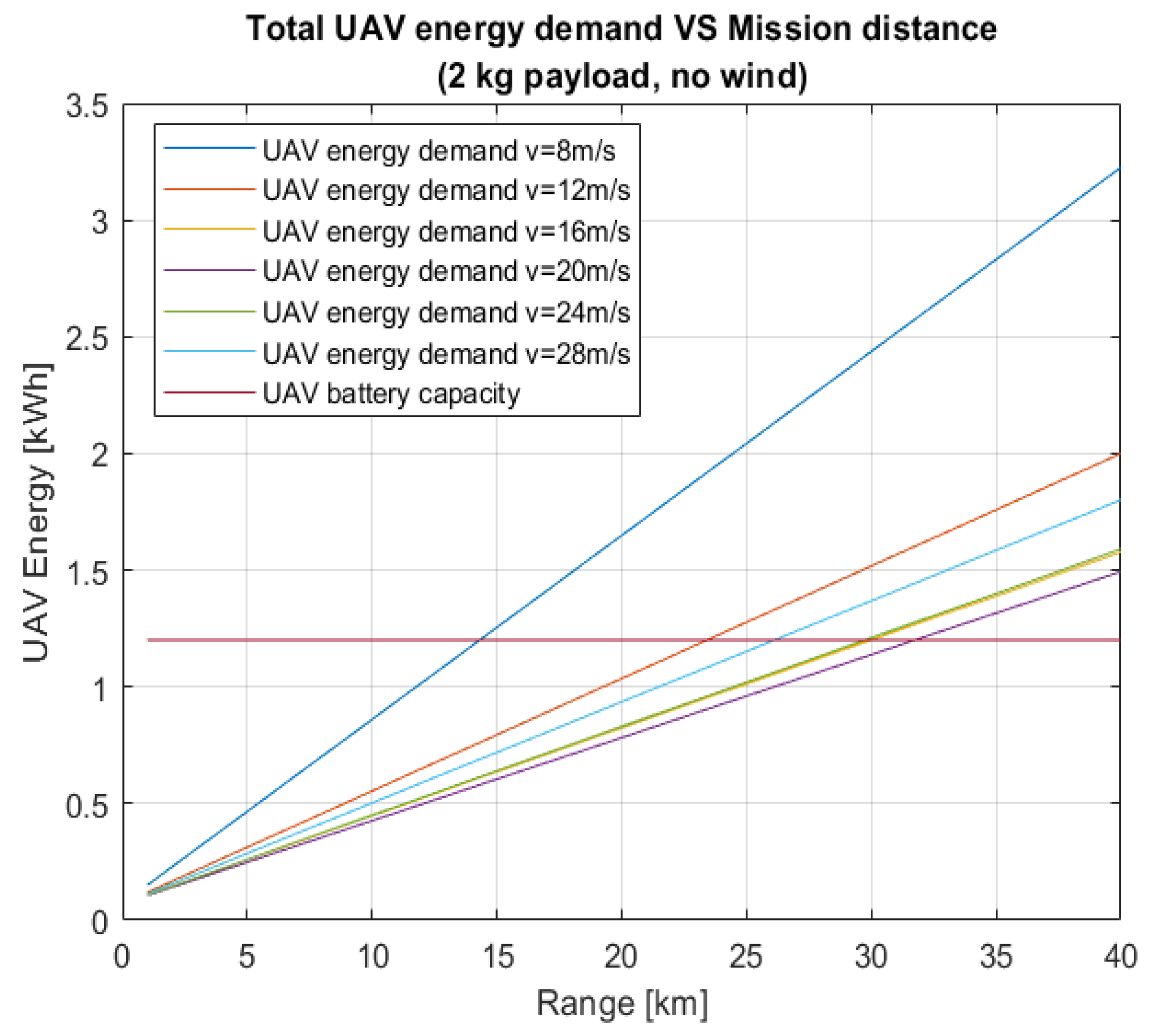
Considering a round trip between Bebra and Solz (a village in the municipality) of approximately 16 km, the airborne part of the proposed REGUAS UAS delivery system was concluded to be technically feasible with enough operational flexibility due to the amount of estimated energy required, especially at the optimal velocity. It appeared that medium-sized multirotor UAVs can perform reasonably well at medium ranges and in remote areas, with the added benefit of being able to carry payloads of useful sizes and weights. Results from the energy calculation model for the REGUAS project can be viewed in
Figure 5 and
Figure 6.
It has to be noted that overall system efficiency or response time was not the main subject of the REGUAS project and has not been observed in-depth.
If single high-value-added packages are to be considered, especially in more remote regions, then UAS provide considerable value compared to road vehicles. However, this is valid only for high-added-value goods, single packages, remote regions if the roads have many turns, and if the package needs to be delivered quickly.
The results from the REGUAS experts and stakeholders’ surveys can be summarised in the following points:
A total of 30 experts have been surveyed in order to gain critical knowledge into the perception and acceptance of professionals in terms of drone delivery systems, automation, related challenges, and the REGUAS concept:
- ○
Most respondents work in aviation, with a mix from other fields such as industry, education, and the public sector.
- ○
Most experts believe that the public will be open to the REGUAS project concept.
- ○
Most respondents are open to or view U-Space as a key enabler of BVLOS UAS operations, especially in terms of safety and reliability.
- ○
The majority of experts view autonomy and automation in UAS operation as possible and long-lasting.
- ○
However, the question about the effect of automation on the workforce is somewhat divisive.
- ○
Most of the experts have a positive outlook on the outcomes from the REGUAS project.
- ○
Most respondents are positive that for the REGUAS scenario, environmental protection and practicality can go hand-in-hand.
- ○
It should be noted that a significant portion of the experts are either negative or unsure regarding the possibility of the REGUAS concept to reactivate existing village centres.
- ○
For the surveyed experts, there are challenges on both the process management and technical sides.
- ○
Social and human values are seen as making the most sense for the REGUAS operations.
- ○
Sustainability, benefits, high social/added value, physical and mental health protection, and regional development are viewed as focus areas.
- ○
Aviation and logistics infrastructure are seen as the areas of biggest potential conflict.
- ○
Main barriers to AAM: regional planning and legislation, aviation and legislation, and lack of practical experience in interdisciplinary matters.
Data was also collected about the public’s perception towards the envisioned REGUAS drone operation in the form of a public survey:
- ○
The surveyed respondents are positive and open towards modern delivery services for various products and needs.
- ○
Regional sources of products are important to the respondents; however, they have to be at reasonable pricing levels.
- ○
The sustainability of everyday goods and products is important to all respondents, pointing towards the environmental responsibility of the products.
- ○
Medication is often needed urgently by the majority of the respondents.
- ○
Most are open to the idea that drones can make their everyday lives easier.
- ○
Delivery of high-added-value products or rescue services is seen as the most sensible type of drone operations by the respondents.
- ○
However, various products are seen as generally viable for online deliveries by drone.
- ○
Most are open towards the idea of the municipality implementing an innovative last-mile delivery service, which speaks in favour of the REGUAS project.
- ○
Most respondents see themselves as possible active elements of such a drone delivery system and would like to shape its functionalities.
2.6.3. 5G!Drones and ALADIN—UAS with 5G Connectivity
The issue of mobile network support for the UAS ecosystem is an important element of numerous research projects, including the Horizon programme projects sponsored by the European Commission. Among them, the 5G!Drones [
41] project is worth mentioning, which had the goal of trialling several UAV use cases covering various 5G services. The project’s main focus was running UAV vertical use cases on top of 5G facilities. The objectives were: (A) to validate 5G KPIs and (B) to evaluate and validate the performance of different UAV vertical applications. The project demonstrated the integration of the mobile network management and orchestration layer with UTM and C2 systems as well as the payload communication in various AAM-relevant use cases concerning goods delivery, public safety/saving lives (e.g., wildfires, search and rescue operations), situational awareness (including remote inspection, location services without satellite-based positioning—indoors, in tunnels, etc.), and UAV as an occasional base station (BS) in extraordinary cases. During its life cycle, the 5G!Drones project actively contributed to the activities of the ITU, 3GPP, and ACJA, as well as associations and standards-developing bodies of the UAS industry. The project results have been further developed and commercialised in the form of 5G cellular drones teleoperated at a distance of up to 100 km or performing autonomous logistics tasks, as well as tethered drones acting as occasional 5G BSs or broadcasting/jamming nodes [
42].
The national German project ALADIN, dedicated to advanced low-altitude data information systems for disaster relief, has showcased how a nomadic local 5G network installed in a van can be used in forest firefighting, providing connectivity for unmanned firefighting vehicle control and for reconnaissance drones used to give situational awareness to the operations centre and individual terminals of firefighters. In this way, it is possible not only to ensure communication in forest areas where the quality of mobile services is usually low but also to enable disaster relief in areas restricted from entering or driving through (e.g., burning toxic or explosive materials or areas contaminated with unexploded shells and ammunition parts lying in the ground) [
43].
2.6.4. ETHER and Other Projects on Satellite-Based Connectivity for UAS Provided by 5G and Beyond 5G Technologies
Extending 5G network coverage beyond metropolitan areas is key to “urbanising” rural and remote areas, which are currently “white spots” for AAM. Given the economic impossibility of achieving this using a Terrestrial Network (TN), plans are underway to integrate access via Non-Terrestrial Network (NTN) with TN to secure ubiquitous connectivity—using Low Earth Orbit (LEO), Medium Earth Orbit (MEO), or Geostationary Earth Orbit (GEO) satellites and Low Altitude Platforms (LAPs)/HAPs. In the case of LAP, especially in disaster relief circumstances, the carriers may be UAVs creating a communication mesh using direct connections or, in tethered mode, supplied from the ground with the connectivity to the IP data network, e.g., the Internet. Two current active Horizon Europe research projects discussed below will soon present demonstrations in this application area.
The ETHER project [
44] addresses the issue of vertical handovers from TN-NTN to guarantee QoS and service availability, LEO satellite swarms acting as a distributed antenna system to boost the energy balance of the radio link, enabling the use of a low-dimension integrated antenna in both TN and NTN connectivity, and uninterrupted connectivity for airspace safety-critical operations during the flight lifecycle. The project also conducted a techno-economic analysis of various mobile network implementation options for capacity-driven and coverage-driven scenarios [
45]. For the former, associated with highly urbanised areas, the best option providing the lowest Total Cost of Ownership (TCO) is based on terrestrial BSs in the 3.5 GHz band, having high capacity, with further densification of densely populated areas with small cells (check
Figure 4 in [
45]). For the latter, typical for remote areas, the lowest TCO is achieved with satellite BSs in the 28 GHz band, and the next option is utilisation of BSs in the 2.1 GHz band on board of HAPs (check
Figure 6 in [
45]).
The 6G-NTN project [
46] takes up, among others, the topic of UAS support by mobile NTN, demonstrating capabilities for AAM—on-demand creation of aerial corridors for last-mile delivery (pre-flight service), anti-collision/autonomous deconfliction, and emergency situation management (both in-flight services), as well as a selected UAS use case on situational awareness (long-range infrastructure inspection, both routine autonomous and manual ones).
The CELTIC-NEXT project 6G-SKY [
47] aims at the idea of “connected sky”—NTN support for both manned and unmanned aviation, including, i.a., AAM use cases (flying taxis/buses/cars and smart city/industry/logistics services) and integration with both manned and unmanned air traffic management systems.
2.6.5. UAS for Cultural Heritage Preservation
Preserving cultural heritage is another domain where UAS has great potential. Such historic and cultural sites are essential for understanding our history, identity, and achievements; however, due to natural and human-caused factors and disasters, these sites are becoming increasingly vulnerable. Thus, their preservation and documentation are paramount as mitigation measures against disasters. However, traditional methods of monitoring and documentation can be time-consuming, costly, and intrusive, with the risk of damage to the structures.
Drones, or UAS, have increasingly been present as a versatile solution for heritage preservation, offering an aerial perspective for data collection, being able to reach difficult-to-access areas, and offering insights without physical intervention. One of the ways through which UAS are invaluable for heritage preservation is high-resolution mapping and documentation. The aircraft can be equipped with high-resolution cameras, multispectral imaging units, and LiDAR scanners, which can capture millions of precise data points. These tools can be used for the 3D reconstruction of buildings, monuments, and landscapes for the planning of restoration works, assessment of damage, or the creation of digital archives. Additionally, drones can be deployed rapidly in emergency situations to assess damage without risking human lives, and they can be used as surveillance patrols for deterrence. Furthermore, they are relatively cost-effective compared to other aerial tools and vehicles, which makes them more accessible to a wider range of heritage preservation organisations [
48].
The project titled “An integral approach in creating digital twins of archaeological immovable monuments using innovative technologies” has been funded by the Bulgarian National Science Fund under the BNSF Fundamental Research Competition 2024 (KP-06-H82/1 from 6 December 2024). It explores innovative coded markers, advanced photogrammetric techniques, and precise 3D reconstruction workflows for documenting archaeological and architectural heritage using terrestrial, aerial, and underwater imaging modalities. The research demonstrates how the combination of UAS-based photogrammetry, pattern recognition algorithms, and cross-platform marker identification significantly enhances the accuracy, automation, and reliability of field data acquisition. These methodologies follow the ADOPT principles, especially Awareness and Situation Detection. The project demonstrates operations with high-fidelity spatial information, multi-sensor data fusion, scaling, georeferencing challenges, and workflow optimisation in heterogeneous operational environments. It also shows how UAS-enabled mapping can provide accurate 3D digital twins and objective spatial metrics, which can be useful in various domains.
A different study [
49], consisting of an inspection of the Requejo bridge in Spain using drones, also confirms that UAS are a highly effective tool for detailed visual observation for both accessible and inaccessible components. In the case of this study, the drones eliminated the need for costly and complex access methods, and they also improved sustainability by reducing resource consumption, minimising material waste, and lowering the environmental impact of traditional inspection methods. The use of UAS improved safety as well, with reduced need for risky manual inspections. The study also concludes that this method allows for more precise data-driven maintenance planning, and this data can be used for the generation of detailed technical reports.
Moreover, a study on digital technologies for architectural heritage risk management [
50] has concluded that technologies like GIS and BIM collaborate effectively with newer approaches such as digital twins, augmented reality (AR), and artificial intelligence (AI). However, challenges remain, such as interoperability and a lack of unified data standards, which limit seamless technology interaction and real-world applications. The study also identifies challenges and issues, such as limited integration of digital technologies with traditional risk management methods and data standardisation. Additionally, future research should focus on the development and improvement of integrated platforms, predictive capabilities, and global heritage information data-sharing networks.
2.6.6. Public Trials and Commercial Implementations of 5GS and UAS Integration
An example of the usefulness of UAS as mobile communication stations has also been showcased by Deutsche Telekom, which used a fixed-wing drone to provide mobile network coverage to customers on a live commercial network. From an altitude of 2.3 km, a drone with an integrated mobile BS provided coverage on the slopes at the Jizerská 50 race. Deutsche Telekom teamed up with Primoco UAV SE to jointly develop and test the unique solution for temporary mobile coverage. During its first deployment, the drone provided continuous coverage under favourable weather conditions for 4 h over an uncovered six-kilometre stretch of the race’s route. Without interfering with the nature reserve, T-Mobile Czech Republic could ensure that the 4460 participants in the 50 km main race were always connected—reaching download speeds of up to 95 Mbps and an uplink of up to 34 Mbps [
51].
Moreover, there is currently a project in Germany testing out the feasibility of using multirotor drone swarms for firefighting purposes. Due to the significant increase in forest and vegetation fires worldwide in recent decades, the project’s mission is to develop a firefighting drone system together with experts from the fire department that will revolutionise firefighting and provide an efficient supplement to conventional extinguishing methods. The proposed solution of the PEELIKAN project is a swarm of drones that will fly from a mobile supply station to a fire site up to 5 km away. The drones will be controlled via satellite technology; their batteries and extinguishing agent will be automatically swapped and refuelled, respectively. The swarm is 100% electrically driven with capabilities of 24 h non-stop operations [
52].
For drones used for long-duration missions, where the payload is also characterised by significant both mass and electrical power consumption, the efficiency of the power supply system becomes paramount. In the case of stationary operation (hovering at a specific point), e.g., carrying an occasional mobile network BS equipped with an antenna system in disaster recovery or special event circumstances, tethering is possible—power and connectivity for the drone can be supplied from the ground via an integrated electrical-fibre optic cable. While the cable mass, related to the power consumption of both UAV and payload, will contribute to the total payload mass, influencing, e.g., the maximum achievable altitude and therefore the coverage radius, ensuring uninterrupted operation in these circumstances will be a key advantage of tethering. For comparison, the power consumption of a terrestrial 3-sector 5G macrocell providing coverage within a radius of several kms is approximately 1 kW, while for a terrestrial 1-sector microcell with a radius of a maximum of 500 m, the power consumption is around 100 W [
53]. With high voltage powering and, thus, limiting the supply current, hence the required cross-section of the power supply cables, it is even possible to limit the weight of the integrated power supply (electric) and transmission (fibre optic) tethering cable to 400 g per 100 m, providing the maximum UAV operation altitude of 500 m AGL [
41].
3. Results
This section presents the optimal development path. The emphasised SoS is yet an ideal vision, and the current foresight aims to explain why it needs to be developed in its optimal form and how crucial the AAM, supported by ACS, is. The monitoring and reliable, fast, high-added-value goods delivery can be assured only by implementing AAM, which is to be constantly enabled and supported by ACS.
3.1. Synthesised Cross-Project Learnings
Across the reference projects SUDEM, REGUAS, 5G!Drones, ALADIN (not one of the co-authors), and ETHER, several overarching insights emerge that define the prerequisites and constraints for integrating AAM and ACS into future Disaster Management (DM) systems.
Resource Efficiency Requires Integrated Planning Tools and SoS Coordination. All projects confirm that UAS can enhance the efficiency of DM logistics—particularly high-value goods delivery, remote sensing, and rapid reconnaissance—but only when embedded in a coordinated SoS. Energy models (REGUAS) show that UAS missions are feasible for medium-range and time-critical operations, while SUDEM’s process analyses demonstrate that gains are maximised when flight planning, data collection, and resource allocation are synchronised through shared digital platforms. Fragmented planning tools or non-standardised operational procedures significantly reduce efficiency, highlighting the need for unified digital workflows that integrate UTM, DM command systems, and ACS routing intelligence;
Connectivity Is the Primary Enabler-and the Primary Vulnerability. 5G!Drones, ALADIN, and ETHER consistently show that reliable communication is the decisive factor for safe UAS operations in DM. Results converge on three requirements: A. multi-layer connectivity (terrestrial 5G/6G, NTN, and tactical/temporary cells), B. URLLC-grade links for C2 and real-time sensing, and C. continuous situational awareness of network conditions by UTM/DM systems. Demonstrations indicate that even short-lived communication degradation can cascade into safety risks or operational delays. At the same time, TN-NTN integration and tethered or mobile base stations prove effective for restoring coverage during disasters. The cross-project lesson is clear: resilience through redundancy must be designed into the SoS, not added ad hoc;
Regulatory Bottlenecks Limit Deployment Speed and Scalability. All projects identified regulatory fragmentation—across aviation, telecommunications, and emergency management—as a major inhibitor of real-world deployment. U-space/UTM rules are advancing but still poorly aligned with 5G/6G capability exposure, cross-border flight operations, and data-sharing requirements in emergencies. DM agencies often lack the authority to activate temporary UAS corridors or prioritised communication slices across networks. Moreover, the absence of standards for data fusion, network priority management, and interagency interfaces slows integration and hinders reproducibility. The collective evidence suggests that regulatory innovation must accompany technical innovation, especially regarding emergency authorisations, data governance, and spectrum prioritisation for public safety;
Systemic Value Emerges Only When These Domains Converge. Individually, each project validates specific technical components-UAS endurance, 5G coverage, remote piloting, satellite augmentation, and data fusion. But combined analysis reveals that the true performance gains in DM arise when resource efficiency, connectivity resilience, and regulatory alignment operate as a unified SoS. This triad forms the structural foundation of the DM-AAM-ACS architecture proposed in this paper and informs the roadmap toward 2030.
In
Table 3, below, is provided a summary of the main aspects of each underlying project and how the work and results from each project contribute to the overall SoS layer.
To summarise, an SoS approach is needed for the DM domain together with AAM and ACS in order to improve process efficiency and decision-making support. These improvements will be achieved by combining data from various sensors (land and water sensors, aerial sensors, weather sensors, satellite constellations, etc.), which will be used to plan adequate and effective resource allocation for optimal response and prevention of tragic outcomes.
Considering the findings of the REGUAS project, it should be noted that in the context of DM, the usefulness of UAS could be increased further due to the presence of extreme emergency conditions. Rubble from buildings or landslides, collapsed infrastructure, or simply geographic inaccessibility could prevent land vehicles from being able to deliver much-needed supplies. In such cases, the need for adequate public service outweighs the need for better energy efficiency, since drones can bypass obstacles and treacherous terrain to deliver emergency goods and also to perform much-needed monitoring of the given disaster situation. UAS, equipped with imaging technology and sensors, can play a crucial role in situational assessment, especially in disaster zones that are inaccessible by traditional means.
REGUAS shows that deliveries of high-added-value goods in the DM and emergency context can be operationally sustainable and efficient. However, for this to happen, there need to be ready, resilient, and redundant ACSs. For example, for UAS DM and emergency operations, such as situational awareness and goods delivery, UTM would be required for efficiency, safety, and reliability, which would be enabled by various ACS. Additionally, the efficiency of AAM operations in this context will be enhanced further by utilising digital planning and routing tools, similar to those used in the REGUAS project.
Figure 7 illustrates the AAM-supported SoS architecture for DM, based on a SoS control centre approach. This reference architecture encapsulates the foundational concepts presented in this article. The architecture is organised into three horizontal system layers:
Emerging Virtual Network (bottom layer): Formed through the complex interaction patterns among constituent systems, enabling adaptive and decentralised connectivity;
SoS Platform (middle layer): Provides a dynamically configurable execution environment that supports the orchestration and coordination of higher-level DM components. Each system in this layer consists of four layers. The bottom two layers are also adopted in conventional systems, which provide the basic distributed computation services. The top two layers provide generic systems of systems protocols for coordination and advanced management services for dynamic communication;
DM Pipeline (top layer): Responsible for executing E2E DM tasks, including detection, demand generation, resource allocation, and activating task forces that utilise Advanced Mobility Services.
At the top of
Figure 7, the systems of the DM pipeline are monitored and evaluated by the distributed digital twin SoSs according to the predefined KPIs. If necessary, corrective actions are executed on the pipeline. The architecture can also be viewed in terms of three groups of cooperating vertical systems:
Distributed Information Sources (N): A set of N distributed data sources that provide critical input for sensor fusion, enabling accurate and timely situational awareness;
Control Centre Systems: A set of interoperable subsystems within one or more control centres, causally interconnected to perform the core functions of DM. Multiple control centres can operate concurrently, ensuring robustness and scalability;
Task Forces (M): A collection of M operational units, such as firefighting teams, search-and-rescue squads, medical emergency responders, and security forces. These task forces leverage P different AAM services tailored to the specific requirements of their missions.
1 represents each integrated data or action stream along the DM pipeline.
Figure 7 shows how a digital-twin SoS architecture can be structured for AAM; however, it has to be noted that this is an example that can be adapted for other DM domains and units.
3.2. Identified Action Items for Full-Scale IoT-SoS Implementation
In this section, the most important items, links, and/or units are synthesised that are identified from the contributing projects and that are needed for the full-scale implementation of a DM-AAM-ACS IoT-supported SoS.
Clear and standardised SoS and operational structure;
- ○
There should be clear organisational and operational DM structures, which are not slowed down by cumbersome bureaucratic procedures and are able to issue direct commands to relevant units in the context of disaster management. This is crucially important for situations where timely reactions are of the essence and can mean preventing catastrophic outcomes.
- ○
For a coordinated SoS, there should be shared and synchronised digital platforms and workflows, unified planning tools, and standardised operational procedures.
Regulation/legislation;
- ○
Most of the technological capabilities needed for the envisioned DM-AAM-ACS SoS are already present; however, regulatory procedures and legislation make the use of some of these technologies, e.g., AAM, procedurally time-consuming or unfeasible—especially in emergency scenarios.
Institutional digitalisation;
- ○
Increased focus should be placed on the digitalisation of systems and processes in public institutions. This is important for the envisioned DM SoS to work as efficiently and effectively as possible; there would be severe bottlenecks in task execution times and simply an inability to provide certain operational capabilities.
- ○
Sensing and monitoring capabilities should be added to various institutions and sites (critical infrastructure, hospitals, emergency services, etc.) to allow for automatic and real-time data provision about available resources and situational awareness.
Connectivity, communication, and coordination—and their standardisation;
- ○
For the envisioned IoT-supported SoS system to be feasible, effective, and efficient, especially in emergency/disaster situations, there needs to be reliable and redundant connectivity between units for timely task communication and resource coordination.
- ○
The future development directions, to address the full digitalisation challenges, should be focused on the need for standardised protocols, enhanced cybersecurity measures, and advanced predictive capabilities. The optimal future envisioned in this report involves a fully integrated DM framework where real-time data sharing, predictive analytics, and autonomous decision-making systems operate seamlessly across borders—enabled by standardised protocols. This would, in turn, enable a cohesive and rapid response to a wide range of disaster types, including floods, earthquakes, wildfires, and industrial accidents, leveraging technologies to automate and enhance resilience in disaster response.
- ○
Standardisation would address one of the primary challenges—disparate data collection and processing practices—which currently limit the effectiveness of real-time data sharing and cross-agency coordination. The European Union could play a pivotal role in facilitating these efforts by establishing region-wide data and protocol standards, drawing on the Modular Warning System (MoWaS) [
54] in Germany and the AYDES platform [
55] in Turkey as models for integrated, standardised DM systems.
- ○
Safe and reliable connectivity is vital for AAM DM operations, with the requirements that will enable this being: multi-layer connectivity, URLLC-grade links for C2 and real-time sensing, and continuous situational awareness of network conditions by UTM/DM systems. Resilience through redundancy must be designed into the underlying SoS requirements from the beginning as an integral part.
Education: the main educational domains that should be the focus of future DM developments are:
- ○
DM fundamentals: Workflow and risk mitigation, disaster monitoring, multi-agent decision-making processes, system resilience, nuclear safety, and DM;
- ○
Digitalisation: Data-driven decision-making support, IoT, AI, Edge Computing;
- ○
Train-the-Trainers: Towards long-term sustainable increase in the pool of highly capable experts and trainers in the DM domain.
3.3. Envisioned IoT-Based DM SoS Architecture
The envisioned DM SoS architecture is derived from the learnings from the contributing projects and the action items that are needed for its full-scale implementation. The architecture is presented in
Figure 8, and all elements needed for effective and efficient operation have been considered. The command centre defines missions and tasks for the other DM units towards desired outcomes based on occurring disasters or mitigations that need to be achieved. AAM and ACS act as additional tools together with the already established “conventional” DM units, and they increase the effectiveness and reach of operations as well as the overall resource efficiency. The missions and operations defined by the command centre are crucially enabled by the right set of regulations and legislation. ACS enables AAM and provides greater capabilities and support for the command centre. AAM can support the ACS connectivity, increase the capabilities of the DM command centre, and provide support to the other DM units.
3.4. A Roadmap for the Envisioned IoT-SoS (DM-AAM-ACS)
This foresight identifies a three-phase development pathway toward a mature Disaster Management-Advanced Air Mobility-Advanced Communication Systems (DM-AAM-ACS) System of Systems (SoS). Evidence from REGUAS, 5G!Drones, ALADIN, and ETHER inform the technical steps, while SUDEM contributes the educational and organisational foundations required for adoption. The formulated roadmap, explaining how to realise the foreseen SoS, always observes the goals and the work steps in the technical, governance, and organisational/educational aspects. The roadmap’s synthesis is as follows:
Phase I—Foundational Interoperability
Goal: establish the minimum technical, regulatory, and organisational conditions for integrating AAM into DM.
- ○
Technical:
- ▪
Deploy initial multi-layer ACS (5G with early NTN support; tactical cells);
- ▪
Provide basic network metrics (latency, reliability, and link quality) to UTM/DM systems;
- ▪
Define essential data-fusion structures for UAS, IoT, and alternative localisation inputs.
- ○
Governance:
- ▪
Introduce emergency-use procedures for UAS corridors, temporary base stations, and communication prioritisation;
- ▪
Start aligning U-space services with ACS features such as slicing and prioritisation APIs.
- ○
Organisational/Educational (SUDEM):
- ▪
Embed digital-competence modules and process modelling into DM training;
- ▪
Begin scenario-based exercises on UAS-supported DM workflows.
Phase II—Integrated and Resilient Operations
Goal: achieve functional SoS integration that works reliably under realistic disaster constraints.
- ○
Technical:
- ▪
Mature hybrid TN-NTN connectivity for coverage continuity;
- ▪
Integrate real-time network-state awareness into UTM/DM planning tools;
- ▪
Implement interoperable multi-source data-fusion pipelines.
- ○
Governance:
- ▪
Harmonise cross-border U-space procedures;
- ▪
Establish shared data-governance and cybersecurity standards;
- ▪
Define operator-agnostic ACS prioritisation rules for crises.
- ○
Organisational/Educational:
- ▪
Embed AAM-ACS in civil protection training cycles;
- ▪
Create regional competence hubs to support agencies with limited capacity;
- ▪
Expand operational mission profiles (delivery, sensing, comms restoration).
Phase III—Scaled, Autonomous SoS
Goal: enable large-scale, adaptive, cross-border DM operations supported by advanced AAM and 6G-based ACS.
- ○
Technical:
- ▪
Adopt 6G-native features (joint sensing/communication, AI orchestration);
- ▪
Deploy self-organising communication layers (drone relays, dynamic NTNs);
- ▪
Apply AI-driven SoS coordination for autonomous routing and logistics.
- ○
Governance:
- ▪
Establish a pan-European DM-AAM-ACS interoperability framework under UCPM;
- ▪
Codify dynamic spectrum and prioritisation mechanisms;
- ▪
Integrate SoS requirements into national and EU infrastructure strategies.
- ○
Organisational/Educational:
- ▪
Continue advanced training for AI-enabled SoS operation;
- ▪
Standardise cross-border DM exercises;
- ▪
Use SoS performance indicators for long-term resilience planning.
The roadmap shows that SoS maturity requires parallel progress in technology (connectivity and data fusion), governance (authorisation, interoperability, and data standards), and organisational capacity (training and workflows). Technical validation stems from REGUAS, 5G!Drones, ALADIN, and ETHER, while SUDEM ensures organisational readiness, providing the competence frameworks and process models needed for effective adoption.
It should be noted that more specific and implementable hierarchical responses will be proposed during the next steps of the Foresight development. The results of future projects from the authors and the validation conducted by AFAD will be used to further expand on the roadmap and create detailed and more actionable propositions.
4. Discussion
The integration of IoT, AI, advanced data management technologies, and UAS technologies offers transformative potential to manage floods, wildfires, earthquakes, and human-caused accidents more effectively. However, these technologies present challenges, including the need for robust data integration frameworks to combine information from diverse sources and the necessity of cybersecurity measures to protect against data breaches and system vulnerabilities.
In order to achieve such a high level of digital integration, sustained investment in digital infrastructure, robust policy support, and a commitment to continuous innovation are required. As climate change intensifies and new threats emerge, the pressure to adopt agile, technology-driven DM practices will only increase.
A core element to achieve an effective DM SoS is the ACS architecture, which will connect various systems, agencies, volunteers, emergency response units, decision-making bodies, and AAM operators. An effective response to any disaster or emergency situation is strongly correlated to how efficient and straightforward the communication is between these systems. Additionally, disasters are highly complex scenarios requiring vast coordination efforts from numerous actors. Due to this, ACS should be the cornerstone for an effective DM SoS. This, however, includes the software, hardware, and operational architecture in order to achieve the desired increase in effectiveness.
ACS frameworks should be based on common standards that can be easily understood by national and international operators, as well as efficiently interpreted by various hardware suppliers. ACS hardware should also be based on common standards in order to assure reliability, fair acquisition and operational costs, and ease of operation by relevant DM actors. Naturally, in order for the ACS to work and create an efficient and effective DM SoS, there needs to be a clear and straightforward operational communications architecture. It will allow for everyone in the SoS to know who is responsible for what, how, when, and with whom to communicate, and, thus, to know where available resources should be allocated.
The proposed AAM-ACS-DM SoS faces several constraints that affect feasibility and scalability. Infrastructure gaps persist: despite advances in 5G/6G and TN-NTN integration, reliable coverage and redundancy remain uneven, especially in rural or mountainous areas. Regulatory fragmentation across aviation, telecommunications, and civil protection creates uncertainty regarding emergency airspace activation, network prioritisation, and cross-border UAS operations. Interoperability and data-governance issues—including non-standardised data formats, proprietary UTM/DM interfaces, and insufficient cybersecurity safeguards—limit real-time data fusion and expose critical systems to cyber risks. Finally, cost and capacity barriers may hinder adoption by smaller or resource-constrained authorities. These risks highlight the need for coordinated governance, shared standards, and sustained investment.
The SoS concept aligns closely with key objectives of the Sendai Framework and the EU Civil Protection Mechanism (UCPM). It supports Sendai’s priorities by improving risk understanding (via UAS sensing and integrated data fusion), reinforcing governance and coordination (through shared ACS-enabled platforms), and enhancing preparedness and response (through resilient communications and rapid aerial logistics). Similarly, it advances UCPM goals by enabling interoperable, cross-border situational awareness and scalable emergency support capabilities. Remaining gaps concern the lack of harmonised procedures for emergency UAS corridors, shared ACS prioritisation across operators, and common data-exchange standards-areas where policy updates are needed to fully integrate AAM and ACS into European civil protection practice.
This evolving foresight study is based on dynamically developing domains and our respective R&D activities on the emphasised SoS and its elements and will advance accordingly in unison with the subject. Until now, the validation was performed in the form of expert interviews and qualitative opinion collection, which have been quantitatively evaluated. The future will provide validation of the precisely defined use cases of the DM SoS with multiple institutional stakeholders and subsystems in order to have data more representative of real-world scenarios. More concrete quantitative validation data will be provided in future study papers, based on ongoing projects relevant to this Foresight, so that a more advanced state and results of this work can be presented. Most importantly, because this interdisciplinary domain is highly important for the global research and experts’ community and the safety and well-being of our societies, as well as the high novelty level of this foresight, the authors are now presenting the current state of the work.




 ,
,